

Participatory Rural Appraisal (PRA): A Comprehensive Approach to Rural Development
Introduction
Participatory Rural Appraisal (PRA) is a methodology used to enable rural people to share, enhance, and analyze their knowledge of life and conditions, allowing them to plan and act for their development. It is rooted in the principles of participation, flexibility, and empowerment, encouraging communities to take control of their development processes. PRA has gained prominence as an effective tool for rural development, particularly because it fosters collaboration between local communities, development practitioners, and other stakeholders.
Historical Background
PRA evolved from earlier methodologies such as Rapid Rural Appraisal (RRA), developed in the 1970s as an alternative to traditional survey methods. RRA aimed to provide quick, cost-effective, and relevant information on rural conditions. However, PRA goes beyond RRA by involving rural communities in the process of data collection, analysis, and decision-making. It recognizes that local people, due to their everyday experiences, possess valuable insights into their environment and are best positioned to identify their own needs and solutions.
PRA was developed in the 1980s and 1990s by development practitioners, including Robert Chambers, who emphasized the need for “putting the last first”—a shift in focus towards the most marginalized communities in rural areas. Since then, PRA has been widely adopted in development projects across Asia, Africa, and Latin America.
Key Principles of PRA
1. Participation: PRA involves the active participation of community members, ensuring that they play a central role in gathering information, identifying problems, and proposing solutions. It empowers local people to be agents of their own development rather than passive recipients of aid.
2. Flexibility: PRA is not a rigid, one-size-fits-all approach. It adapts to the specific cultural, social, and economic conditions of a community. PRA tools and methods are selected based on local context, ensuring relevance and appropriateness.
3. Empowerment: One of the core goals of PRA is to empower rural people by valuing their knowledge and perspectives. By involving them in decision-making, PRA enhances their confidence and capacity to manage their development efforts.
4. Learning and Sharing: PRA is based on a two-way learning process between community members and external facilitators. It encourages open dialogue, where both parties share knowledge and perspectives, fostering mutual respect and collaboration.
5. Holistic Approach: PRA takes a comprehensive view of rural development, considering economic, social, environmental, and cultural dimensions. It promotes integrated solutions that address multiple aspects of rural life.
PRA Techniques and Tools
PRA uses a range of visual, interactive, and participatory methods that enable communities to articulate their realities in ways that are easy to understand and act upon. Some common tools used in PRA include:
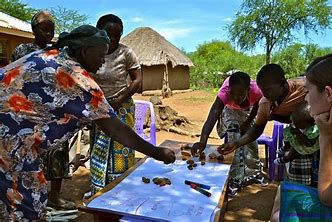
1. Mapping: Communities create maps of their village or locality, identifying resources, infrastructure, land use, and important landmarks. Mapping helps in understanding spatial relationships, identifying problems, and planning interventions.
2. Transect Walks: Facilitators walk with community members through their village or surrounding areas to observe and discuss various aspects of rural life, such as agriculture, water sources, and housing. This method helps in gaining a deeper understanding of the community’s environment.
3. Seasonal Calendars: Communities create calendars showing changes in key variables (e.g., rainfall, crop cycles, labor demand) throughout the year. Seasonal calendars help identify patterns and challenges related to food security, labor, and income.
4. Ranking and Scoring: Participants rank or score different issues, resources, or options based on their importance or preference. This method helps in prioritizing community needs or evaluating the effectiveness of interventions.
5. Venn Diagrams: Communities use Venn diagrams to represent relationships between individuals, groups, institutions, and resources. This helps in understanding power dynamics, social networks, and decision-making processes within the community.
6. Timelines: Timelines document significant events or changes in the community over time. This tool helps in understanding historical trends, identifying causes of problems, and recognizing shifts in community dynamics.
7. Focus Group Discussions: Small groups of community members discuss specific issues in a structured format, providing detailed insights and opinions. Focus groups allow for the exploration of topics such as health, education, or livelihood strategies.
Applications of PRA
PRA has been applied in various sectors of rural development, including agriculture, health, education, natural resource management, and disaster risk reduction. Some of its common applications include:
1. Agricultural Planning: PRA has been used to improve agricultural productivity by involving farmers in identifying constraints, such as soil degradation or water shortages, and developing sustainable farming techniques.
2. Community Health: PRA techniques help identify health challenges, such as access to clean water or prevalence of diseases, and develop locally appropriate solutions, like promoting sanitation practices or introducing community-based health workers.
3. Natural Resource Management: Communities use PRA tools to analyze the state of local ecosystems, such as forests or rivers, and develop conservation strategies. This participatory approach ensures that resource management plans align with the needs and knowledge of local people.
4. Disaster Risk Reduction: PRA helps communities assess their vulnerabilities to natural disasters, such as floods or droughts, and create disaster preparedness plans that build resilience to future risks.
Benefits of PRA
1. Community Ownership: Since PRA involves local people in every stage of the development process, it promotes a strong sense of ownership over the projects and interventions. This often leads to greater sustainability and long-term impact.
2. Empowerment and Capacity Building: PRA not only generates valuable data but also builds the capacity of local people to analyze and address their own challenges. It fosters leadership and self-reliance within communities.
3. Culturally Appropriate Solutions: PRA ensures that solutions are tailored to local conditions, customs, and needs. This reduces the risk of external interventions being inappropriate or ineffective.
4. Building Trust and Collaboration: PRA promotes trust and cooperation between external facilitators and local communities. By involving communities in decision-making, it strengthens relationships and ensures that development initiatives are more inclusive.
Challenges and Criticisms of PRA
While PRA has numerous benefits, it also faces certain challenges and criticisms:
1. Time-Intensive: PRA is often time-consuming compared to traditional data collection methods. The participatory nature of PRA requires facilitators to spend significant time building relationships with the community, facilitating discussions, and analyzing data together.
2. Risk of Elite Capture: In some cases, powerful individuals or groups within the community may dominate the PRA process, leading to biased outcomes. This can undermine the inclusive nature of PRA, especially when marginalized groups are not adequately represented.
3. Quality of Facilitation: The success of PRA depends heavily on the skills and attitudes of facilitators. Poor facilitation can lead to misrepresentation of community views, shallow analysis, or disengagement of participants.
4. Limited Generalizability: Since PRA is context-specific, its findings may not be easily generalizable to other communities or regions. This can limit its utility for large-scale development planning or policy-making.
Conclusion
Participatory Rural Appraisal represents a shift in development practice from top-down, expert-driven models to a more inclusive, bottom-up approach. It recognizes that rural communities are not merely beneficiaries of development but possess rich knowledge and resources that can drive sustainable change. Despite some challenges, PRA has proven to be an invaluable tool in fostering community participation, ownership, and empowerment in rural development initiatives. By promoting local solutions to local problems, PRA continues to shape the future of rural development in a more equitable and sustainable way.
 Eduindex
You must be logged in to post a comment.