



By Kavita Dehalwar
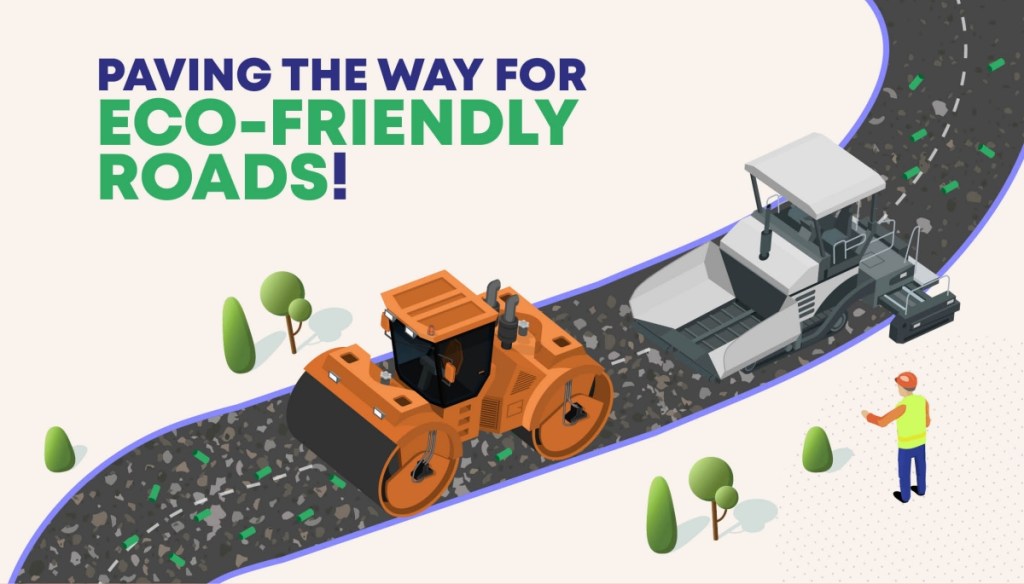
The use of recycled and secondary materials in road construction has emerged as an essential practice for achieving sustainability in the infrastructure sector. These materials not only reduce the demand for natural resources but also mitigate environmental impacts by repurposing waste products. Below is a detailed examination of the topic, highlighting types of materials, benefits, challenges, and future directions.
1. Types of Recycled and Secondary Materials
Several recycled and secondary materials can be used in road construction, including:
- Recycled Asphalt Pavement (RAP): Milled material from existing roads, used as a cost-effective substitute for virgin asphalt.
- Recycled Concrete Aggregate (RCA): Crushed concrete from demolished structures, utilized in sub-base layers or as aggregate in new concrete.
- Steel Slag: A byproduct of steel production, known for its strength and skid resistance, suitable for aggregates in base layers.
- Crushed Glass (Glassphalt): Recycled glass incorporated into asphalt mixtures.
- Rubberized Asphalt: Ground rubber from waste tires mixed with asphalt binders to enhance durability and flexibility.
- Fly Ash and Bottom Ash: Byproducts of coal combustion, often used as fillers or stabilizers in subgrade soils.
- Plastic Waste: Melted or shredded plastics incorporated into asphalt mixes to improve durability and resistance to cracking.
2. Benefits
- Environmental Sustainability:
- Reduces the need for virgin materials, conserving natural resources like aggregates and bitumen.
- Diverts waste from landfills and reduces pollution.
- Lowers greenhouse gas emissions by minimizing the extraction and transportation of raw materials.
- Economic Advantages:
- Cost savings from using readily available waste materials.
- Extended lifespan of roads due to enhanced properties of recycled materials (e.g., rubberized asphalt reduces cracking and maintenance needs).
- Performance Improvements:
- Some materials, such as steel slag and rubberized asphalt, improve road strength, flexibility, and resistance to wear.
3. Challenges
- Material Quality and Consistency:
Recycled materials can vary in composition and quality, leading to potential performance issues if not properly processed and tested. - Technical Limitations:
- Compatibility of recycled materials with traditional road construction processes can be challenging.
- Limited research on long-term durability for some innovative materials (e.g., recycled plastics).
- Regulatory and Standardization Barriers:
- Lack of universal standards and guidelines for incorporating recycled materials into road construction.
- Hesitation among contractors and governments due to the perceived risks associated with new materials.
- Economic Factors:
- Initial costs of processing and testing recycled materials can be high.
- In some regions, the availability of virgin materials at low cost reduces the economic incentive to use alternatives.
4. Case Studies
- Rubberized Asphalt in the United States: States like California and Arizona have successfully used rubberized asphalt in highway projects, reducing waste tires and improving road durability.
- Plastic Roads in India: Cities like Chennai have pioneered the use of shredded plastic in road asphalt, offering a sustainable solution to plastic waste while enhancing road performance.
- Steel Slag Roads in Europe: Countries such as the Netherlands have utilized steel slag aggregates for base layers, demonstrating improved load-bearing capacity and lifespan.
5. Future Directions
- Innovation in Material Processing:
Advances in processing technologies can improve the quality and consistency of recycled materials, making them more viable for widespread use. - Lifecycle Analysis and Circular Economy:
Conducting comprehensive lifecycle assessments to quantify the environmental and economic benefits of recycled materials will support their adoption. - Policy Support and Incentives:
Governments can promote the use of recycled materials through subsidies, tax incentives, and mandatory quotas in public infrastructure projects. - Research and Development:
Continued R&D into novel materials, such as bio-based binders and composite materials, can provide sustainable alternatives to traditional road construction inputs.
Conclusion
Incorporating recycled and secondary materials in road construction is a promising pathway to sustainable infrastructure development. While challenges exist, ongoing advancements in technology, coupled with supportive policies, can pave the way for broader adoption. This approach not only addresses environmental concerns but also contributes to economic efficiency and enhanced road performance, making it a win-win solution for modern societies.
References
Kassim, T. A., Simoneit, B. R., & Williamson, K. J. (2005). Recycling solid wastes as road construction materials: An environmentally sustainable approach. Water Pollution: Environmental Impact Assessment of Recycled Wastes on Surface and Ground Waters, 59-181.
Marinković, M., Zavadskas, E. K., Matić, B., Jovanović, S., Das, D. K., & Sremac, S. (2022). Application of wasted and recycled materials for production of stabilized layers of road structures. Buildings, 12(5), 552.
Nunes, M. C. M., Bridges, M. G., & Dawson, A. R. (1996). Assessment of secondary materials for pavement construction: Technical and environmental aspects. Waste Management, 16(1-3), 87-96.
Petkovic, G., Engelsen, C. J., Håøya, A. O., & Breedveld, G. (2004). Environmental impact from the use of recycled materials in road construction: method for decision-making in Norway. Resources, Conservation and Recycling, 42(3), 249-264.
Sharma, S. N., Prajapati, R., Jaiswal, A., & Dehalwar, K. (2024, June). A Comparative Study of the Applications and Prospects of Self-healing Concrete/Biocrete and Self-Sensing Concrete. In IOP Conference Series: Earth and Environmental Science (Vol. 1326, No. 1, p. 012090). IOP Publishing.
Sharma, S. N., Lodhi, A. S., Dehalwar, K., & Jaiswal, A. (2024, June). Life Cycle Assessment (LCA) of Recycled & Secondary Materials in the Construction of Roads. In IOP Conference Series: Earth and Environmental Science (Vol. 1326, No. 1, p. 012102). IOP Publishing.
 Eduindex
You must be logged in to post a comment.