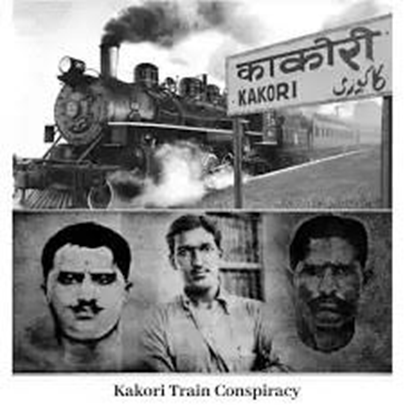
I am a senior citizen, and in my school days, in different classes, I read that India had freedom because of ‘mainly two families’, which is known to all. However, the historical fact is that millions of people participated in the freedom movement. Of them, many lost their lives, were physically disabled, or suffered in many ways. I am highlighting the Kakori Train Action case, a train ‘robbery’ committed by the revolutionaries of the Indian independence movement against the British Raj on August 9, 1925, in a village called Kakori near Lucknow. I visited the place when I visited Lucknow for some academic activities. My eyes were full of tears as young people were hanged because they were against colonial rule (British rulers). The British rulers came thousands of miles away to exploit Indian resources, including human resources. Anyway, the Kakori Train Action was carried out by ten revolutionaries, including Hindustan Republican Association’s (HRA) revolutionary Ram Prasad Bismil, Ashfaqulla Khan, Rajendra Lahiri, Keshav Chakraborty, Mukundi Lal, and Banwari Lal. Hindustan Republic Association (HRA) was formed 1923 by Ram Prasad Bismil. Later, it was renamed as Hindustan Socialist Republican Association (HSRA). Ram Prasad Bismil, Ashfaqulla Khan, Rajendra Lahiri, Chandrashekhar Azad, Sachindra Bakshi, Keshab Chakravarty, Manmathnath Gupta, Murari Lal Gupta (Murari Lal Khanna), Mukundi Lal (Mukundi Lal Gupta) and Banwari Lal were the leading revolutionaries involved in the Kakori Incident. The freedom fighters Ram Prasad Bismil, Ashfaqullah Khan and Roshan Singh were hanged on December 19, 1927 for their involvement in the Conspiracy. On 19 December 19, 1927, Ram Prasad ‘Bismil’ was hanged at Gorakhpur Jail, Roshan Singh at Naini Allahabad Jail, and Ashfaqulla Khan at Faizabad Jail. They were all in their late 20s or early 30s. It is pertinent to mention that Rajendra Nath Lahiri, known simply as Rajendra Lahiri, was hanged in the Gonda district jail on December 17, 1927, two days before the scheduled date. The martyrs are remembered today as symbols of courage and sacrifice. They placed freedom and patriotism above their comfort and lives. I am a senior citizen, and although the British Raj killed them, they are still in the hearts of many Indians today. I offer them my Pronam because we now live in a democratic country and because of the sacrifices made by millions of freedom fighters, including them. Prof Shankar Chatterjee, Hyderabad
The Central Teacher Eligibility Test (CTET) is a national-level examination conducted by the Central Board of Secondary Education (CBSE) to assess candidates’ eligibility for teaching positions in schools. Qualifying CTET opens the door to various teaching opportunities in both government and private schools across India. This article provides a comprehensive overview of the career prospects available after clearing the CTET exam.
Why CTET is Important?
Mandatory Qualification: CTET is a prerequisite for applying to teaching positions in central government schools like Kendriya Vidyalayas (KVs) and Navodaya Vidyalayas (NVs).
Enhanced Credibility: CTET certification adds weight to a candidate’s profile, even in private and unaided schools.
Nationwide Acceptance: The CTET score is recognized by schools across India, providing broader career opportunities.
Teaching Opportunities After CTET
1. Central Government Schools
Examples: Kendriya Vidyalayas (KVs), Navodaya Vidyalayas (NVs), Tibetan Schools, and other schools under the administrative control of the central government.
Roles:
Primary Teacher (PRT) for Classes I-V.
Trained Graduate Teacher (TGT) for Classes VI-VIII (requires additional qualifications).
Benefits:
Competitive salary.
Job security and pension benefits.
Opportunities for professional development.
2. State Government Schools
Many state governments consider CTET scores for recruitment in state-run and aided schools.
Candidates may need to meet specific state eligibility criteria, such as proficiency in the local language.
3. Private and Unaided Schools
Role: Teachers in reputed private schools often prioritize candidates with CTET certification.
Advantages:
Higher chances of selection due to CTET qualification.
Negotiable salary packages in high-ranking schools.
4. Education Departments
Role: Educational officers or trainers for teacher training programs.
Scope: Opportunities to work in curriculum development, teacher training, and educational policy implementation.
5. Special Category Schools
Examples: Schools run by the Ministry of Defence, such as Army Public Schools and Air Force Schools.
Role: Primary and secondary teachers for children of defense personnel.
6. E-Learning and EdTech Platforms
Role: Content developers, online tutors, or subject matter experts in educational technology companies.
Scope: Creating teaching material, video lessons, or conducting live classes.
7. International Schools
Some international schools in India and abroad recognize CTET and prioritize candidates with this qualification for teaching positions.
Non-Teaching Opportunities After CTET
Educational Content Development
Designing teaching aids, lesson plans, and curriculum resources for publishers and educational organizations.
Teacher Training
Assisting in the professional development of teachers by conducting workshops and training sessions.
Education Consultant
Advising schools or educational bodies on curriculum design, teaching methodologies, and assessment practices.
Salary Prospects After CTET
Government Schools:
Primary Teacher (PRT): ₹35,000 to ₹50,000 per month.
Trained Graduate Teacher (TGT): ₹40,000 to ₹60,000 per month.
Post Graduate Teacher (PGT): ₹50,000 to ₹70,000 per month.
Private Schools:
Salaries vary based on the school’s reputation and location, ranging from ₹20,000 to ₹60,000 per month.
EdTech Platforms:
Online tutors or content developers may earn ₹25,000 to ₹75,000 per month, depending on experience.
Career Advancement Opportunities
Promotions:
With experience, teachers can advance to positions like Head of Department (HOD), Vice Principal, or Principal.
Further Qualifications:
Pursue courses like Bachelor of Education (B.Ed.), Master of Education (M.Ed.), or specialized certifications to enhance career prospects.
Research and Higher Studies:
Opportunities to work in educational research or pursue higher studies in pedagogy and child development.
Preparation for Further Exams
CTET qualification also makes candidates eligible to apply for other competitive exams, such as:
State TET Exams: To qualify for state-level teaching positions.
KVS/NVS Recruitment Exams: For higher-level positions in central government schools.
NET (National Eligibility Test): For college and university-level teaching positions.
Conclusion
Qualifying CTET is a significant milestone for aspiring teachers. It not only opens the doors to rewarding teaching positions in government and private schools but also provides opportunities in diverse educational roles. With the growing emphasis on quality education, the demand for CTET-qualified teachers is set to rise. Those passionate about teaching can look forward to a fulfilling and impactful career.
The Staff Selection Commission (SSC) is one of the most prestigious organizations in India, conducting various competitive exams for recruitment into government departments and organizations. Clearing SSC exams opens the door to secure, respectable, and well-paying jobs in the public sector. This article provides a detailed overview of the job opportunities available after qualifying in SSC exams.
Major SSC Exams and Their Scope
1. SSC Combined Graduate Level (CGL) Exam
The SSC CGL exam is conducted for graduate-level candidates and offers positions in Group B and Group C posts in various government departments.
Job Roles After SSC CGL:
Assistant Section Officer (ASO): In ministries, departments, and organizations.
Inspector (Income Tax, Customs, GST): Enforcement and compliance roles in financial departments.
Sub-Inspector (CBI, NIA): Investigative positions in security and intelligence agencies.
Auditor/Accountant: Roles in offices under the Comptroller and Auditor General (CAG) or other departments.
Statistical Investigator: For candidates with expertise in statistics and analysis.
The SSC CHSL exam is conducted for candidates who have completed their higher secondary education (10+2).
Job Roles After SSC CHSL:
Lower Division Clerk (LDC): Administrative support roles in various departments.
Data Entry Operator (DEO): Handling data and maintaining records.
Postal Assistant/Sorting Assistant: Managing postal services and sorting operations.
Court Clerk: Assisting judicial officers in courts.
Key Benefits:
Entry into government service at an early age.
Opportunities for further education and promotions.
3. SSC JE (Junior Engineer) Exam
This exam is conducted for candidates with a background in engineering disciplines.
Job Roles After SSC JE:
Junior Engineer (Civil, Electrical, Mechanical): Technical roles in government construction and maintenance projects.
Engineering Assistant: Support in implementing technical solutions in departments like CPWD, MES, and BRO.
Key Benefits:
Lucrative salary and perks.
Involvement in national infrastructure projects.
4. SSC MTS (Multi-Tasking Staff) Exam
The SSC MTS exam recruits for Group C posts suitable for candidates who have passed the 10th standard.
Job Roles After SSC MTS:
Peon, Daftary, Chowkidar: Supporting administrative and operational functions.
Junior Gestetner Operator: Handling duplicating and copying equipment.
Gardener, Gatekeeper: Maintenance and security roles.
Key Benefits:
Easy entry-level jobs in government sectors.
Scope for career progression through departmental promotions.
5. SSC Stenographer Exam
This exam is for candidates proficient in stenography, providing opportunities in Group C and D posts.
Job Roles After SSC Stenographer Exam:
Stenographer in Ministries and Departments: Assisting in documentation and correspondence.
Personal Assistant: High-profile roles assisting senior officers.
Key Benefits:
Direct interaction with senior government officials.
Opportunities to work in prestigious government offices.
6. SSC GD Constable Exam
This exam is for recruitment into paramilitary forces and CAPFs.
Job Roles After SSC GD Constable Exam:
Constable in BSF, CRPF, ITBP, CISF, and SSB: Security and law enforcement roles.
Rifleman in Assam Rifles: Regional security roles.
Key Benefits:
Respectable job in national defense and security.
Adventure and opportunities to serve the nation.
7. SSC CPO (Central Police Organization) Exam
This exam recruits candidates for sub-inspector and assistant sub-inspector roles in police forces and paramilitary organizations.
Job Roles After SSC CPO Exam:
Sub-Inspector in Delhi Police, CAPFs: Crime investigation and law enforcement.
Assistant Sub-Inspector in CISF: Administrative support in industrial security.
Key Benefits:
Hands-on involvement in maintaining law and order.
Prospects for promotions to higher ranks like Inspector or Assistant Commissioner of Police (ACP).
Advantages of Jobs Through SSC Exams
Job Security: Permanent roles in government sectors with stability.
Attractive Salary: Competitive pay scales, allowances, and pension benefits.
Work-Life Balance: Fixed working hours with ample leave provisions.
Social Prestige: High regard for government employees in society.
Career Growth: Opportunities for promotion through departmental exams and seniority.
Preparation Tips for SSC Exams
Understand the Syllabus: Analyze the exam pattern and topics thoroughly.
Practice Mock Tests: Regular practice improves speed and accuracy.
Stay Updated: General awareness and current affairs are crucial for success.
Time Management: Allocate time wisely during preparation and in exams.
Conclusion
Qualifying SSC exams opens doors to diverse career opportunities in the government sector, offering job security, financial stability, and societal respect. Whether you are a graduate, a 10+2 candidate, or have a technical background, there’s an SSC exam tailored for you. With diligent preparation and dedication, a rewarding career in the public sector awaits.






 Eduindex
You must be logged in to post a comment.