

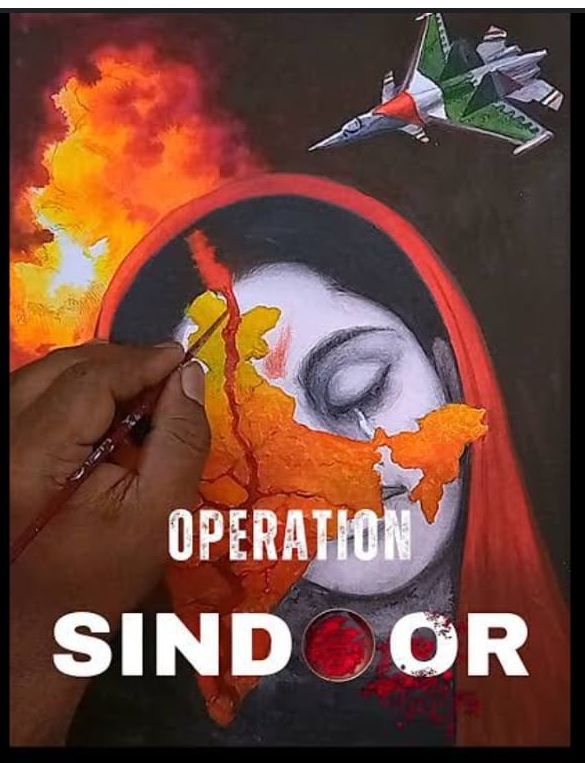
- Origins and Name: Launched on May 7, 2025, Operation Sindoor was India’s calibrated military response to the Pahalgam terror attack of April 22, 2025, in which 26 predominantly Hindu male tourists were killed. The codename holds cultural symbolism—’sindoor’ is the vermillion worn by married Hindu women as a sign of their husband’s presence, evoking themes of loss, justice, and national resolve Wikipedia+15Wikipedia+15The Times of India+15Indiatimes+1Indiatimes+1.
🎯 Objectives & Execution
- Targeted Strikes: India carried out a 23-minute precision strike on nine terror infrastructure sites in Pakistan and Pakistan‑administered Kashmir, using weapons such as Rafale jets with SCALP missiles and Hammer glide bombs, BrahMos cruise missiles, Akash missiles, and loitering drones—without breaching international borders Al Jazeera+4Wikipedia+4Indiatimes+4.
- Intelligence & Surveillance: The operation relied on real-time satellite intel from ISRO and integrated air‑defense coordination across branches The Times of India+15DD News+15The Economic Times+15.
⚙️ Technological & Strategic Highlights
- Drone and Missile Warfare: Operation Sindoor marked a shift toward drone-enabled, precision counterterrorism. It showcased tactical innovation with minimal collateral impact Wikipedia+15LinkedIn+15Wikipedia+15.
- Logistics Emphasis: Defence Minister Rajnath Singh credited logistics and backstage support—as part of the ‘PM Gati Shakti’ initiative—as crucial to the mission’s success The Times of India+2MENAFN+2The Times of India+2.
📌 Strategic & Political Outcomes
- Claims of Success:
- India asserted that over 100 terrorists were neutralized across the nine targeted sites, with no damage reported in Indian territory Indiatimes+4War on the Rocks+4Indiatimes+4.
- PM Modi stated that India shot down nearly 1,000 Pakistani drones and missiles on May 9, reaffirming independent action and denial of foreign mediation The Economic Times+2Wikipedia+2Indiatimes+2.
- International and Domestic Reactions:
- Analysts like John Spencer of the U.S. called it a “decisive victory” that redefined deterrence doctrine and exceeded strategic aims The Tribune+1ICCT+1www.ndtv.com.
- Indian policymakers emphasized restraint, precision, and self-reliance, contrasting Pakistani dependency on Chinese military exports Consulate General of India, Istanbul+2DD News+2The Times of India+2.
- Political Debate in India:
- Opposition leaders, including Rahul Gandhi, challenged the timing of the ceasefire and alleged imagery of Indian losses. PM Modi refuted claims of U.S. pressure and maintained India’s autonomous decision-making The Times of India+15theaustraliatoday.com.au+15The Times of India+15Indiatimes+1The Times of India+1.
- MPs like Jaya Bachchan questioned the symbolic naming, pointing out the emotional impact on widows whose ‘sindoor’ was lost The Tribune+1Indiatimes+1.
- Walkouts and heated speeches marked parliamentary sessions on accountability and tone of debate The Times of Indiawww.ndtv.com.
🗓 Timeline Summary
| Date | Event |
|---|---|
| April 22, 2025 | Pahalgam terror attack kills 26 civilians |
| May 7, 2025 | Operation Sindoor initiated—precision strikes begin |
| May 9, 2025 | India intercepts ~1,000 enemy drones/missiles |
| May 10, 2025 | Ceasefire agreed via DGMO hotline, mediated diplomatically |
| Late May – July | Ongoing political debate, promotions of key officers |
⚖️ Strategic Significance
- Doctrine Evolution: Marked a shift from reactive to proactive, technology-driven counterterrorism.
- Technological Edge: Reinforced Make-in-India advances in missile, drone, and logistics systems.
- Message to Global Audience: Reaffirmed India’s sovereignty in decision-making, non-escalatory posture, and precision warfare credibility
🧭 Key Takeaways
- Operation Sindoor was a calibrated, high-precision response designed to uphold national dignity without escalation.
- Named with cultural symbolism, it combined strategic deterrence, military preparedness, and political messaging.
- The aftermath revealed deeper debates about sovereignty, foreign influence, and the future of asymmetric warfare.
 Eduindex
You must be logged in to post a comment.