As the festive season approaches, markets across the country are filling up with colourful boxes of sweets. But health experts are sounding a note of caution: think twice before buying sweets that have been stored for days, especially those kept in open display counters.
According to food safety officers, many traditional sweets — such as laddoos, barfis, and milk-based delicacies — have a short shelf life due to their high moisture content. “During festivals, demand surges and some shops prepare large batches in advance. If stored improperly, these sweets can develop harmful bacteria or fungus,” says Dr. Anjali Verma, a nutritionist. “Consuming such items can lead to food poisoning, stomach infections, and other digestive issues.”
Several recent inspections have revealed sweets being sold past their recommended consumption date, sometimes without proper refrigeration. The Food Safety and Standards Authority of India (FSSAI) has also urged consumers to check for manufacturing dates, storage conditions, and hygiene standards before making purchases.
As an alternative, experts are encouraging people to prepare treats at home — with cookies emerging as a safer and more versatile option. Homemade cookies not only allow control over ingredients and sweetness levels, but they also last longer when stored properly. “Cookies can be made using whole grains, nuts, and natural sweeteners, making them healthier than many market sweets,” Dr. Verma adds.
Food blogger Ritu Sharma, who runs a popular recipe channel, says, “Baking cookies together as a family can be a festive activity in itself. You get freshness, flavor, and a sense of togetherness that store-bought sweets can’t offer.”
With the rising concern over adulteration and spoilage in ready-made festive foods, consumers may find that the warmth of home-baked cookies brings not just sweetness to the celebration, but also peace of mind.
India, with its rich tapestry of festivals and traditions, celebrates many occasions that reflect its cultural depth and spiritual significance. Among these, Raksha Bandhan holds a special place in the hearts of Indians. Celebrated with great enthusiasm across the country and even by the Indian diaspora worldwide, Raksha Bandhan—literally meaning “the bond of protection”—honors the cherished relationship between brothers and sisters.
But where did this beloved tradition begin? What are its historical roots? Let us explore the origin, mythology, and evolution of Raksha Bandhan in Indian culture.
🌸 What is Raksha Bandhan?
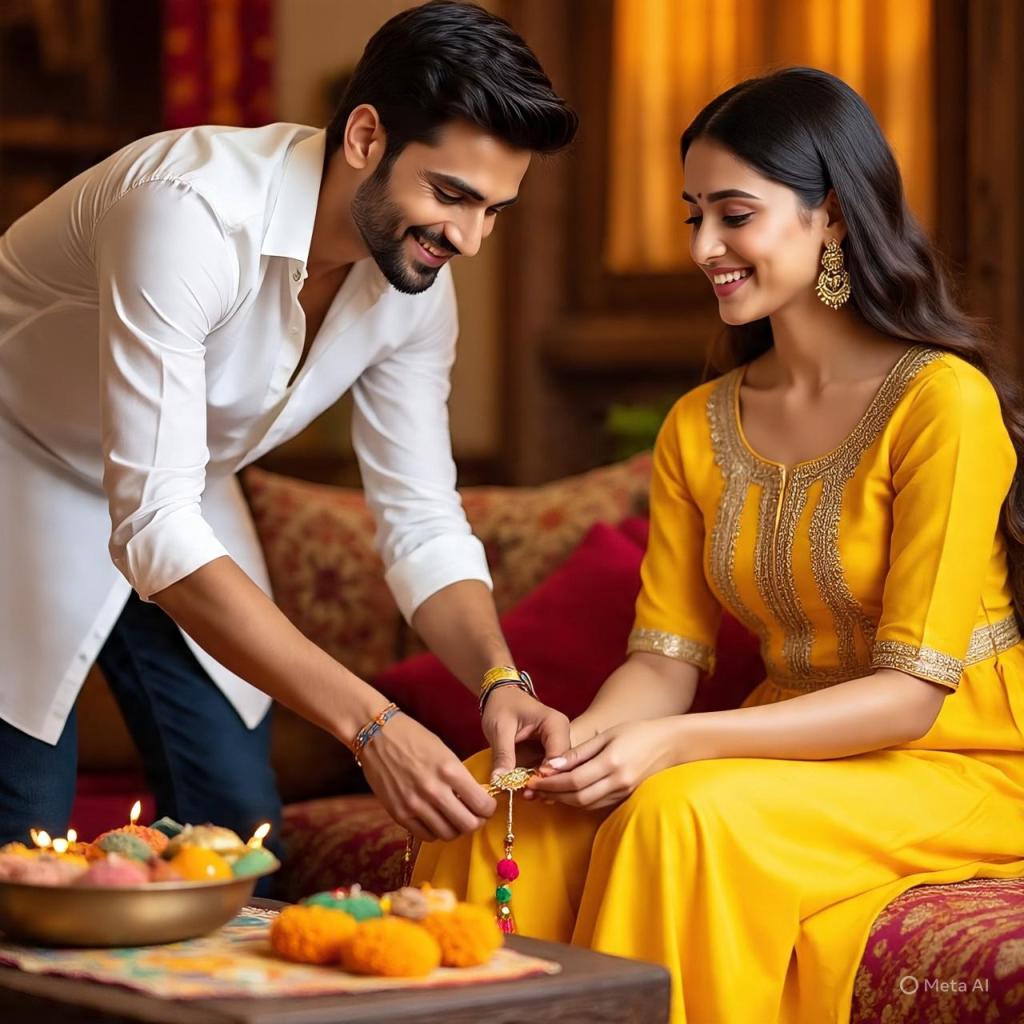
Raksha Bandhan is celebrated on the full moon day (Purnima) in the month of Shravana (July–August) according to the Hindu lunar calendar. On this day, a sister ties a sacred thread called rakhi around her brother’s wrist, praying for his long life and happiness. In return, the brother pledges to protect her from all harm and gives her a token of love, often in the form of gifts or money.
🕉️ Mythological Origins of Raksha Bandhan
Several stories from Hindu mythology give insight into the roots of Raksha Bandhan:
1. Draupadi and Lord Krishna
Perhaps the most popular story comes from the Mahabharata. When Krishna cut his finger while handling the Sudarshana Chakra, Draupadi, the wife of the Pandavas, tore a piece of her sari and tied it around his finger to stop the bleeding. Touched by this act of sisterly affection, Krishna vowed to protect her in times of need. This is often cited as the true spirit behind Raksha Bandhan.
2. Yama and Yamuna
According to another legend, Yamuna, the sister of Yama, the god of death, tied a rakhi to him. In return, he granted her immortality and promised to visit her once every year. Touched by her affection, he also declared that any brother who receives a rakhi from his sister and gives her protection in return would be blessed with a long life.
3. Indra and Indrani
In the Vedic texts, during a war between gods and demons, Indrani, wife of Indra, prepared a sacred thread and tied it around her husband’s wrist, praying for his victory. This act of protection, though not exactly between siblings, is believed to be one of the earliest references to Raksha Bandhan-like rituals.
🏰 Historical References of Raksha Bandhan
1. Rani Karnavati and Emperor Humayun
One of the most well-known historical accounts of Raksha Bandhan involves Rani Karnavati, the widowed queen of Chittor, and Mughal emperor Humayun. When Bahadur Shah of Gujarat attacked her kingdom, she sent a rakhi to Humayun, seeking protection. Moved by this gesture, Humayun immediately set out with his troops to defend her, although he reached too late. This event is often cited as a symbol of Hindu-Muslim unity and the power of the rakhi as a call for help and solidarity.
2. Rabindranath Tagore’s Rakhi Utsav
During the Partition of Bengal in 1905, Nobel laureate Rabindranath Tagore used the symbolism of Raksha Bandhan to promote harmony between Hindus and Muslims. He organized Rakhi Utsavs where people tied rakhis to one another, irrespective of religion, to foster a sense of brotherhood and unity during a politically tense time.
🌿 Cultural Evolution and Regional Variations
Over time, the meaning and practice of Raksha Bandhan have evolved:
In modern India, it has grown into a national celebration of love and trust among siblings.
In some communities, rakhis are tied not only to biological brothers but also to friends, neighbors, or even soldiers and leaders, signifying universal protection and goodwill.
In Maharashtra, the day is also celebrated as Narali Purnima, where fishermen offer coconuts to the sea.
In South India, Raksha Bandhan is not as widely celebrated, but where it is observed, it blends with local customs and traditions.
✨ Symbolism and Contemporary Significance
Today, Raksha Bandhan transcends its original familial boundaries and has become a symbol of universal love, trust, and duty. Sisters living far away now send rakhis by post or online, while brothers send gifts across the globe. Many people also tie rakhis to members of the armed forces or political leaders, reaffirming collective security and unity.
With changing social dynamics, Raksha Bandhan is also evolving:
Many women tie rakhis to other women, asserting solidarity and mutual support.
Children are taught about the values of empathy, responsibility, and care through this tradition.
🪔 Conclusion
The festival of Raksha Bandhan is not just a simple act of tying a thread—it is a celebration of relationships, protection, promises, and unity. Rooted in mythology, nourished by history, and embraced by evolving society, it continues to resonate with people from all walks of life.
As we celebrate Raksha Bandhan today, let us remember that the true essence lies not in rituals, but in the spirit of care, responsibility, and unconditional love that binds us together as a society.
References
Arulmani, M., & Latha, V. H. (2014). RAKSHA BANDHAN CULTURE?…(A New theory on “Kachcha Thread”). International Journal of Engineering Research and Development, 10(8).
Hazen, W. (2003). Hindu Celebrations and Holy Places: Inside Hinduism. Milliken Publishing Company.
Howard, C. (2005). The Hindu festival of Raksha Bandhan. Practical Pre-School, 2005(54), 1-2.
Mahaseth, H., & Mishra, A. (2021). Indian courts need to be gender sensitised. The Leaflet.
Sehgal, K., & Sehgal, S. (2018). Thread of love. Simon and Schuster.



 Eduindex
You must be logged in to post a comment.