As the festive season approaches, markets across the country are filling up with colourful boxes of sweets. But health experts are sounding a note of caution: think twice before buying sweets that have been stored for days, especially those kept in open display counters.
According to food safety officers, many traditional sweets — such as laddoos, barfis, and milk-based delicacies — have a short shelf life due to their high moisture content. “During festivals, demand surges and some shops prepare large batches in advance. If stored improperly, these sweets can develop harmful bacteria or fungus,” says Dr. Anjali Verma, a nutritionist. “Consuming such items can lead to food poisoning, stomach infections, and other digestive issues.”
Several recent inspections have revealed sweets being sold past their recommended consumption date, sometimes without proper refrigeration. The Food Safety and Standards Authority of India (FSSAI) has also urged consumers to check for manufacturing dates, storage conditions, and hygiene standards before making purchases.
As an alternative, experts are encouraging people to prepare treats at home — with cookies emerging as a safer and more versatile option. Homemade cookies not only allow control over ingredients and sweetness levels, but they also last longer when stored properly. “Cookies can be made using whole grains, nuts, and natural sweeteners, making them healthier than many market sweets,” Dr. Verma adds.
Food blogger Ritu Sharma, who runs a popular recipe channel, says, “Baking cookies together as a family can be a festive activity in itself. You get freshness, flavor, and a sense of togetherness that store-bought sweets can’t offer.”
With the rising concern over adulteration and spoilage in ready-made festive foods, consumers may find that the warmth of home-baked cookies brings not just sweetness to the celebration, but also peace of mind.
India, with its rich tapestry of festivals and traditions, celebrates many occasions that reflect its cultural depth and spiritual significance. Among these, Raksha Bandhan holds a special place in the hearts of Indians. Celebrated with great enthusiasm across the country and even by the Indian diaspora worldwide, Raksha Bandhan—literally meaning “the bond of protection”—honors the cherished relationship between brothers and sisters.
But where did this beloved tradition begin? What are its historical roots? Let us explore the origin, mythology, and evolution of Raksha Bandhan in Indian culture.
🌸 What is Raksha Bandhan?
Raksha Bandhan is celebrated on the full moon day (Purnima) in the month of Shravana (July–August) according to the Hindu lunar calendar. On this day, a sister ties a sacred thread called rakhi around her brother’s wrist, praying for his long life and happiness. In return, the brother pledges to protect her from all harm and gives her a token of love, often in the form of gifts or money.
🕉️ Mythological Origins of Raksha Bandhan
Several stories from Hindu mythology give insight into the roots of Raksha Bandhan:
1. Draupadi and Lord Krishna
Perhaps the most popular story comes from the Mahabharata. When Krishna cut his finger while handling the Sudarshana Chakra, Draupadi, the wife of the Pandavas, tore a piece of her sari and tied it around his finger to stop the bleeding. Touched by this act of sisterly affection, Krishna vowed to protect her in times of need. This is often cited as the true spirit behind Raksha Bandhan.
2. Yama and Yamuna
According to another legend, Yamuna, the sister of Yama, the god of death, tied a rakhi to him. In return, he granted her immortality and promised to visit her once every year. Touched by her affection, he also declared that any brother who receives a rakhi from his sister and gives her protection in return would be blessed with a long life.
3. Indra and Indrani
In the Vedic texts, during a war between gods and demons, Indrani, wife of Indra, prepared a sacred thread and tied it around her husband’s wrist, praying for his victory. This act of protection, though not exactly between siblings, is believed to be one of the earliest references to Raksha Bandhan-like rituals.
🏰 Historical References of Raksha Bandhan
1. Rani Karnavati and Emperor Humayun
One of the most well-known historical accounts of Raksha Bandhan involves Rani Karnavati, the widowed queen of Chittor, and Mughal emperor Humayun. When Bahadur Shah of Gujarat attacked her kingdom, she sent a rakhi to Humayun, seeking protection. Moved by this gesture, Humayun immediately set out with his troops to defend her, although he reached too late. This event is often cited as a symbol of Hindu-Muslim unity and the power of the rakhi as a call for help and solidarity.
2. Rabindranath Tagore’s Rakhi Utsav
During the Partition of Bengal in 1905, Nobel laureate Rabindranath Tagore used the symbolism of Raksha Bandhan to promote harmony between Hindus and Muslims. He organized Rakhi Utsavs where people tied rakhis to one another, irrespective of religion, to foster a sense of brotherhood and unity during a politically tense time.
🌿 Cultural Evolution and Regional Variations
Over time, the meaning and practice of Raksha Bandhan have evolved:
In modern India, it has grown into a national celebration of love and trust among siblings.
In some communities, rakhis are tied not only to biological brothers but also to friends, neighbors, or even soldiers and leaders, signifying universal protection and goodwill.
In Maharashtra, the day is also celebrated as Narali Purnima, where fishermen offer coconuts to the sea.
In South India, Raksha Bandhan is not as widely celebrated, but where it is observed, it blends with local customs and traditions.
✨ Symbolism and Contemporary Significance
Today, Raksha Bandhan transcends its original familial boundaries and has become a symbol of universal love, trust, and duty. Sisters living far away now send rakhis by post or online, while brothers send gifts across the globe. Many people also tie rakhis to members of the armed forces or political leaders, reaffirming collective security and unity.
With changing social dynamics, Raksha Bandhan is also evolving:
Many women tie rakhis to other women, asserting solidarity and mutual support.
Children are taught about the values of empathy, responsibility, and care through this tradition.
🪔 Conclusion
The festival of Raksha Bandhan is not just a simple act of tying a thread—it is a celebration of relationships, protection, promises, and unity. Rooted in mythology, nourished by history, and embraced by evolving society, it continues to resonate with people from all walks of life.
As we celebrate Raksha Bandhan today, let us remember that the true essence lies not in rituals, but in the spirit of care, responsibility, and unconditional love that binds us together as a society.
References
Arulmani, M., & Latha, V. H. (2014). RAKSHA BANDHAN CULTURE?…(A New theory on “Kachcha Thread”). International Journal of Engineering Research and Development, 10(8).
Hazen, W. (2003). Hindu Celebrations and Holy Places: Inside Hinduism. Milliken Publishing Company.
Howard, C. (2005). The Hindu festival of Raksha Bandhan. Practical Pre-School, 2005(54), 1-2.
Mahaseth, H., & Mishra, A. (2021). Indian courts need to be gender sensitised. The Leaflet.
Sehgal, K., & Sehgal, S. (2018). Thread of love. Simon and Schuster.
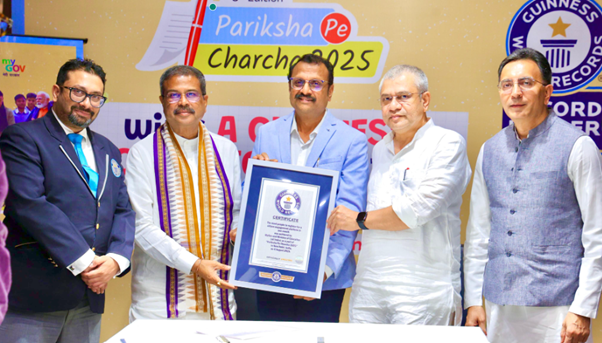
Prime Minister Shri Narendra Modi’s flagship initiative, Pariksha Pe Charcha (PPC), which has been successfully organised by the Ministry of Education in collaboration with MyGov since 2018, has been conferred with the Guinness World Record for the “Most people registered on a Citizen Engagement Platform in one month.” This recognition celebrates the unprecedented achievement of 3.53 crore valid registrations received during the 8th edition of the programme, hosted on the MyGov platform.
Pariksha Pe Charcha is a unique global platform conceptualised and led by Prime Minister Shri Narendra Modi, where he directly interacts with students, teachers, and parents. The initiative transforms the examination season into a festival of positivity, preparation, and purposeful learning, making exams a time for encouragement rather than stress.
The official Guinness World Record certificate was formally presented at a ceremony held in New Delhi. The event was graced by the Union Education Minister Shri Dharmendra Pradhan; Union Minister of Electronics and Information Technology, Railways and Information & Broadcasting Shri Ashwini Vaishnaw; Union Minister of State for Electronics and IT, Shri Jitin Prasada; Secretary, Department of School Education and Literacy, Shri Sanjay Kumar; CEO of MyGov, Shri Nand Kumarum; and senior officials from the Ministries of Education and Electronics & IT, along with other key stakeholders. The record was validated and announced by Shri Rishi Nath, official adjudicator of Guinness World Records.
Speaking on the occasion, Shri Dharmendra Pradhan said that under the visionary leadership of Prime Minister Shri Narendra Modi, Pariksha Pe Charcha has been redefined as a national approach to examinations by turning stress into a festival of learning. Shri Pradhan informed that the 8th edition of PPC saw a total of 21+ crore viewership across all media platforms in 2025. The overwhelming participation in PPC 2025 is seen as a reflection of the country’s collective commitment to holistic and inclusive education and alignment with the vision of a Viksit Bharat, he added.
While addressing the occasion, Shri Ashwini Vaishnaw called Pariksha Pe Charcha a unique initiative by PM Shri Narendra Modi that brings together students, parents, and teachers to promote well-being and stress-free learning. He highlighted the wide range of career opportunities available to students in this Amrit Kaal and said that the Guinness World Record for highest registrations demonstrates the strong public trust in the initiative, he added.
Shri Jitin Prasada also commended MyGov for its efforts in making governance more participatory. He remarked that the Guinness World Record highlights how MyGov has leveraged technology to deepen citizen engagement and scale the reach of Pariksha Pe Charcha nationwide.
NEP 2020 lays emphasis on stress-free and joyful learning. It encourages moving away from learning-by-rote to developing critical cognitive skills based upon experiential learning. Since its inception, Pariksha Pe Charcha has evolved into a nationwide movement that transforms examinations into opportunities for self-expression and growth. Through personal interactions, Prime Minister Shri Narendra Modi addresses key challenges such as time management, digital distractions, mindfulness, and emotional resilience, providing practical guidance and motivation to students, parents, and teachers alike.
The success of PPC 2025 is a collective achievement, and all stakeholders, educational institutions, and citizens who contributed to this milestone have been appreciated by the Ministers. The commitment to further strengthen participatory governance and holistic education remains steadfast.
The programme’s inclusivity, digital reach, and innovative approaches ensure its continued success as a cornerstone of student engagement in India. With each passing year, PPC reinforces the message that exams are not the end but a beginning.
In the modern education landscape, an institution’s identity is more than just a name. It is a valuable intellectual property that distinguishes one institution from another. As competition in the education sector grows, safeguarding the identity of an educational institution becomes essential.
A trademark is a legally recognized sign, symbol, word, or phrase that distinguishes the services or goods of one entity from others. In the context of educational institutions, trademarks can include:
The name of the institution
Logos or emblems used on marketing and official documents
Taglines and slogans
Names of specific educational programs or digital platforms
Reasons to Register a Trademark for Educational Institutions
Educational institutions should consider trademark registration for several important reasons:
1. Legal Ownership of Brand Identity
Registering a trademark grants the institution exclusive rights to use its name and related identifiers. This prevents others from using similar names that may mislead students or damage the reputation of the institution.
2. Prevention of Duplication and Imitation
Trademark registration helps avoid confusion among students, parents, and academic collaborators by ensuring that no other institution can legally use a similar or identical name or logo.
3. Legal Protection in Case of Disputes
If another institution or business uses your institution’s identity without permission, a registered trademark provides a strong legal foundation to initiate action and claim damages.
4. Enhanced Trust and Recognition
A registered trademark reflects professionalism and strengthens the credibility of an institution in the eyes of stakeholders, including students, faculty, regulators, and the public.
5. Requirement in Collaborations and Accreditations
Many educational bodies, funding agencies, and academic ranking authorities expect institutions to secure their intellectual property rights, including trademarks.
Practical Examples
Several reputed Indian institutions, such as the Indian Institutes of Technology (IITs) and Indian Institutes of Management (IIMs), have secured trademark registrations for their names and logos.
Private universities and ed-tech startups also increasingly register course names and online platforms to protect their brand identity.
How to Register for a Trademark?
Trademark registration in India is governed by the Trademarks Act, 1999. The process includes:
Conducting a trademark search to ensure uniqueness
Filing Form TM-A with the appropriate class (educational services fall under Class 41)
Examination and publication in the Trademark Journal
Receiving the registration certificate upon successful clearance
For institutions seeking expert support, service providers like RegisterKaro offer professional guidance to register for a trademark and complete the process smoothly.
Conclusion
Trademarks are not limited to commercial enterprises. They play a critical role in the education sector as well. Registering a trademark helps protect the identity, reputation, and future growth of an educational institution. It also ensures that students and stakeholders can clearly distinguish your institution from others in a crowded educational environment.
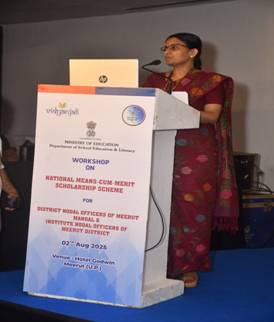
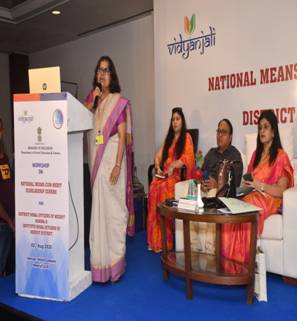
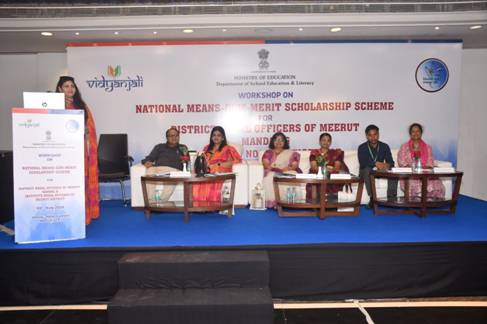
The Department of School Education and Literacy, (DoSEL) Ministry of Education organised an Awareness Session on the Central Sector scholarship scheme, National Means cum Merit Scholarship Scheme (NMMSS) with the District Nodal Officers (DNOs) and School Heads and teachers under the Chairmanship of Smt. A. Srija, Economic Advisor, DoSEL on August 2, 2025.
The awareness session in Uttar Pradesh covered the Districts of Baghpat, Bulandshahr, Gautam Buddh Nagar, Ghaziabad, Hapur, Meerut, Muzaffarnagar, Saharanpur, Shamli.
In her Welcome Address the Chairperson highlighted that the NMMSS is a merit scholarship scheme implemented to help children from economically weaker sections complete their schooling especially at the secondary level from Class IX to XII. She pointed that the State of Uttar Pradesh has the highest allotted quota of 15000 fresh scholarships annually and asked the officials to focus on the timely verification of the student’s applications on the National Scholarship Portal (NSP) so that the deserving children receive their scholarship.
The NMMSS is onboarded on the National Scholarship Portal since 2018-19 and the students selected on merit after class VIII based on written exam are to get themselves registered on the National Scholarship Portal in Class IX using theirs or either of their parent’s Aadhaar card. The students are to first get their One Time Registration done on the NSP portal after which they are to apply for the scholarship of their choice. Apart from NMMSS, the scholarship schemes of other Central Ministries and States/UTs are onboarded on the portal. To avoid duplication of scholarship benefits to the same students, the NSP had introduced the OTR in 2024-25.
During the Awareness Session, DoSEL explained and demonstrated the process of registering on the NSP, the common errors that are to be avoided by the students while applying for the OTR and applying for the scholarship. The session also covered the process of registration and verification by the Nodal Officers (teachers) at the school level, who undertake the first level of verification of the students’ applications on the NSP and the second level of verification which is done at the District level by the District Nodal Officers.
Under NMMSS there are only two levels of verification one at the school level and the other at the district level following which the applications get reflected on the NSP. While the students apply for fresh scholarships at class IX, the students of class X, XI and XII apply for renewal scholarships on the portal. States/UTs conduct selection exams every year to select fresh students eligible for the merit scholarship while the renewal students become eligible based on the 60% marks scored by them and get promoted to the next class level.
The NMMSS is a pre matric scholarship scheme open only to students studying in government and government aided schools and excludes KVS, NVS and other govt residential schools. To facilitate the selected children register and apply for the scholarship on the NSP using biometric authentication with their Aadhhar card, and the two level verification to be done on the portal after biometric authentication of the Nodal Officers using their Aadhaar card, the Department has embarked on conducting Orientation Sessions with the States/UTs to familiarise them with the procedure for operating through the NSP for availing the scholarship.
The scholarship amount of Rs.12000 per annum is disbursed as Direct Benefit Transfer using Aadhaar Payment Bridge either into the bank account of the students or their parents, for which the bank account is to be linked with Aadhhar Number and Aadhaar seeded.
A total of 210 participants attended the workshop from the Meerut Mandal, marking a significant representation from across the Mandal. Among the other participants from DoSEL included Ms. Sreekala P Venugopal, Director, Ms. Hema Malini, Under Secretary, Mr. Ram Singh, Deputy Director, Prof. Bharti Kaushik, CIET, NCERT and other team members.
Apart from NMMSS, the Department also gave Orientation to the participants on community mobilisation and CSR participation for strengthening school infrastructure and improving learning outcomes through Vidyanjali-The school Volunteer initiative, on the conduct of the School Challenge initiative on boarded on the MyGov portal to raise awareness about the ill effects of Tobacco consumption and on the Universal Design of Learning (UDL) textbooks being developed by NCERT.
That’s why clean weight support matters. You don’t want chemicals. You don’t want fake promises. You want results that last.
The best clean weight supplement supports your journey without harm. That’s the key to real progress.
A 2023 Nutrition Business Journal report showed a 14% growth in demand for natural weight support. That confirms what many people now understand. All that clean nutrition definitely works.
Can You Lose Weight Without Harsh Chemicals?
Yes, you can. Clean ingredients work when used the right way.
You should focus on metabolism, digestion, and cravings. That’s how true weight balance begins.
You also need energy. That helps you stay active and consistent.
Natural blends with herbs, fiber, and minerals do more than suppress appetite. They support your system without stress.
Want proof? Look at customer results on Sunwarrior Products. You’ll see users feeling better, not just lighter.
Which Natural Ingredients Actually Help?
You want ingredients that your body understands. Here’s what to look for:
Green tea extract for fat metabolism
Garcinia cambogia to reduce hunger
Glucomannan fiber for fullness
Probiotics for gut balance
CLA from safflower oil for fat burning
Apple cider vinegar for digestion
Each plays a role. Together, they support your goal. Therefore, we always say that you should read every label. That’s how you find the best management supplements with real value.
Why Is Protein Important for Weight Goals?
Protein builds muscle. It also supports fat loss. You feel full. You avoid snacking. You recover faster.
One Harvard study confirms that high-protein diets improve weight control over time. That supports long-term health.
You should choose plant-based options like Sunwarrior’s Warrior Blend. That avoids dairy, soy, and bloating.
You can mix it into water, smoothies, or breakfast bowls. That makes your daily routine simple and smart.
Do Greens and Superfoods Help in Weight Support?
Yes, they do. Your metabolism depends on micronutrients. Greens like spirulina, wheatgrass, and moringa support detox. That removes waste and boosts energy.
Chlorella and dandelion leaf support liver function. That helps burn fat faster. You get results that feel clean. You stay full with fewer cravings.
You can find these in many Sunwarrior Products designed for total wellness.
How Does Gut Health Connect to Weight?
Your gut controls more than digestion. It impacts hunger, mood, and fat storage. A balanced gut reduces bloating. It also sends signals to stop eating when full.
Probiotics and prebiotics restore good bacteria. That improves your metabolism.
You should use blends that combine probiotics with digestive enzymes and herbs. That helps your system run smoothly.
Looking for a deal? You can check Sunwarrior Sales for discounted gut and weight support bundles.
What Makes You Feel Good While Losing Weight?
It’s not just about numbers. It’s about energy. It’s about confidence.
Clean supplements support that. They reduce stress. They lift mood. They protect your body from harsh effects.
You avoid jitters, crashes, or sleep issues. You stay clear-headed and motivated.
That’s why people look for the best feel-good supplement with a focus on clean energy and recovery. Keep in mind that adaptogens like ashwagandha or rhodiola add that layer of balance.
How Do You Build a Clean Routine That Works?
You should start with three core steps:
Use plant-based protein daily
Add a greens or superfood blend
Take a probiotic or fiber capsule before meals
That forms a solid base. You can add a metabolism booster or appetite support later.
Track how your body feels. Note changes in energy, mood, and hunger. That shows what’s working.
Where Can You Find Clean and Trusted Options?
You don’t need to search all over. You can find everything in one place.
Sunwarrior Products offer weight, energy, and recovery blends. You get plant-based support without the guesswork.
Want to save? Check Sunwarrior Sales for limited-time offers and bundles. That helps you stay on budget.
You want simplicity. You want results. They offer both.
Why Should You Choose Clean Over Quick Fixes?
Quick fixes burn fast. Clean routines last. You want strength. You want peace of mind. You want real health.
The best clean weight supplement supports that. It helps you drop weight, feel good, and stay in control. That’s the journey that matters most.
GIAN is a program of the Ministry of Education, Government of India (formerly MHRD) launched in 2015 to tap the international talent pool of scientists, technologists, and entrepreneurs and engage them with Indian higher education institutes. Its broad aim is to augment existing academic resources, accelerate quality reform, and elevate India’s science and technology capacity to global excellence through short-term courses delivered by reputed international and national experts. gian.iitkgp.ac.ingian.iitkgp.ac.in
The nodal coordinating institute for the national portal is IIT Kharagpur, which houses the central GIAN portal and approves/monitors course proposals. gian.iitkgp.ac.in
Recent coverage indicates that the program has entered its Phase-IV or later iterations, with renewed calls and emphasis on restarting the scheme to further international academic collaboration. Vajiram & Ravi
2. Objectives
The explicit objectives of GIAN include:
Increasing footfalls of reputed international faculty in Indian academic institutes.
Providing opportunities for Indian faculty to learn new knowledge and pedagogical approaches.
Enabling Indian students to benefit directly from interaction with global experts.
Creating avenues for collaborative research with international faculty.
Enhancing participation and presence of international students.
Facilitating cross-institutional learning through niche, specialized courses.
Upgrading technical personnel from industry by exposure to cutting-edge topics.
Motivating top global experts to work on India-relevant problems. gian.iitkgp.ac.in
3. Course Structure and Modes
Duration & Credits: Typical approved course durations are either:
5 working days (normally 12–14 lecture hours) corresponding to a 1-credit equivalent, or
10 working days (24–28 lecture hours) for a 2-credit equivalent. Alternative credit structures need normalized equivalence explained in the proposal. gian.iitkgp.ac.ingian.iitkgp.ac.in
Mode: Courses can be conducted in in-person or virtual mode; in-person courses are generally given priority, though virtual delivery is permitted with its own specific guidelines (e.g., live streaming, recordings with attendee screenshots, etc.). gian.iitkgp.ac.inIndian Institute of Technology Jodhpur
Faculty Composition: Each course is to be delivered jointly by at least one international (foreign) expert and one or more host (Indian) faculty. Minimum 60% of the course content (lectures/tutorials) should be delivered by the foreign faculty for certain guidelines/versions. Indian Institute of Technology Jodhpur
4. Proposal Submission and Approval
Who can propose: Regular faculty of approved Indian higher education institutions (IITs, NITs, IISc, IISERs, IIMs, central/state universities with requisite rankings, etc.) submit course proposals through the online national GIAN portal via their Local Coordinator. gian.iitkgp.ac.inEducation Ministry of India
Process: Proposals are submitted in prescribed proforma; each goes to a Sectional Committee for review. The Chairperson may seek external reviews. Recommended proposals go to the GIAN Implementation Committee for final approval. gian.iitkgp.ac.inshastriinstitute.org
Timeline: While proposals can be submitted year-round, at least four months should be allowed for review to final approval. Indian Institute of Technology Roorkee
Eligibility of Foreign Faculty: Foreign faculty should hold foreign affiliation or passport (non-Indian) and be of international repute; their involvement is expected to seed longer-term collaboration. Indian Institute of Technology Jodhpur
Restrictions: A foreign expert is typically limited to a maximum of two distinctly different course proposals per year. Indian Institute of Technology Jodhpur
5. Funding and Financials
Funding Support (Typical, as per current Phase IV guidelines):
In-person courses: USD 8,000 for a 5-day course (12–14 lecture hours), USD 12,000 for a 10-day course (24–28 hours).
Virtual courses: USD 3,500 for a 5-day and USD 6,500 for a 10-day course. These amounts are intended to cover international and national expert travel (economy class), honoraria (foreign, national, and host faculty), video recording, incidental/contingency expenses, and related course development costs. Indian Institute of Technology Jodhpur
Exchange Rate Fixing: For financial year 2024–25, a fixed conversion of Rs. 83 per USD is applied for disbursement, subject to periodic review. Indian Institute of Technology Jodhpur
Disbursement: Sanction orders and advance funds are routed through PFMS; advance payment is released at least one month before course start. Hosts must submit utilization certificates and course completion reports shortly after the course. gian.iitkgp.ac.in
6. Participant Fees and Registration
Fee structure for participants varies by course and host institute. Examples (indicative, subject to change per course):
Students (including accommodation/food) have been charged around INR 5,000; host-institute students sometimes pay a nominal fee (e.g., INR 1,000 without boarding). Academic institutions’ participants had higher nominal fees (e.g., INR 10,000). Google Sites
Some GIAN courses (e.g., on certain portals) list token registration fees like ₹200 for students, ₹300 for faculty/researchers, and $20 for international participants—this can be course/host-specific. SPAV
(Users should always check the specific course brochure/announcement for exact current registration fees and inclusions such as accommodation, food, and materials.)
7. Roles, Deliverables, and Evaluation
Host Institute Responsibilities: Organize the course per approved plan, ensure mandatory video recording (and optional webcasting), manage participant registration/feedback, conduct examinations for credit-seeking participants, submit completion and financial reports, and handle logistics for foreign faculty (including invitation letters for visas). gian.iitkgp.ac.in
Course Content & Credit: Courses are often credit-bearing; the host institute and partnering institutions may enable credit transfer subject to their internal equivalence frameworks. shastriinstitute.org
Feedback & Dissemination: Participant feedback is mandatory via the portal. Lecture recordings are usually intended for sharing (with consent) through national platforms (e.g., SWAYAM, National Digital Library) to widen reach. shastriinstitute.org
8. Benefits
For Indian Faculty/Students: First-hand exposure to global expertise, enhanced teaching-learning, possible collaborative research seeds, and networking. gian.iitkgp.ac.in
For Foreign Experts: Opportunity to engage with Indian academia, explore India-specific research challenges, and build longer-term ties. gian.iitkgp.ac.in
For Host Institutions: Augmentation of academic quality, visibility through internationally co-taught specialized courses, and potential downstream collaborations. University of Mumbai
9. Recent / Live Course Examples & Updates
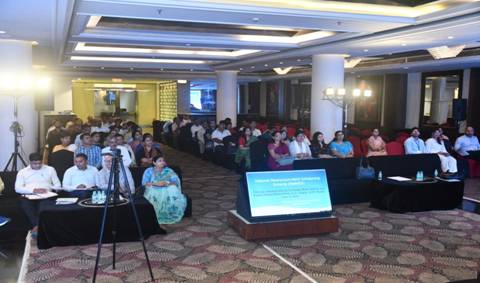
Upcoming specialized GIAN courses in 2025 include topics like “Cognitive Engineering and Human Factors” (Aug 3–7, 2025) and “GFRP Bar Reinforced Concrete Construction”, among others, showing active scheduling and diversity. GIAN
An example course held at IIT Dharwad in July 2025 was on “Modelling, Control, and Operation of Grid-Connected Green Hydrogen Energy Systems”, indicating ongoing implementation with in-person modality, set deadlines, and limited seats. IIT Dharwad
GIAN’s official social media (LinkedIn) reflects live course promotion such as a July–August 2025 course on Greenhouse Management and Technology at GBPUA&T Pantnagar. LinkedIn
10. Actionable Steps for Someone Wanting to Engage
To Propose a GIAN Course:
Identify a thematic niche with potential international expert(s) and collaborate with a host Indian faculty. NIT Meghalaya
Contact the Local Coordinator at an eligible host institute; prepare the proposal in the prescribed format on the national GIAN portal. gian.iitkgp.ac.inshastriinstitute.org
Undergo sectional review, receive sanction order, and follow through with logistics (advance, brochure publicity, participant registration). gian.iitkgp.ac.ingian.iitkgp.ac.in
To Participate:
Monitor the national portal or host institute announcements for open course registrations (some courses have very small or nominal participant fees). Google SitesSPAV
Complete registration, attend, provide feedback, and if opting for credit, sit for any prescribed evaluation/examination. gian.iitkgp.ac.in
11. Governance & Scale
Till date, over 2,163 courses have been approved through the central portal, indicating substantial past activity and scale. gian.iitkgp.ac.in
GIAN courses are a structured, funded mechanism to bring high-quality international academic engagement into India via short-term, credit-bearing courses. They are governed through a formal proposal-review pipeline, with clear financial support, defined roles for host and visiting faculty, and evolving modalities (including virtual). Active offerings continue in 2025 across institutions, and the scheme is positioned as a continuing flagship for academic globalization in Indian higher education. Vajiram & Ravigian.iitkgp.ac.ingian.iitkgp.ac.in
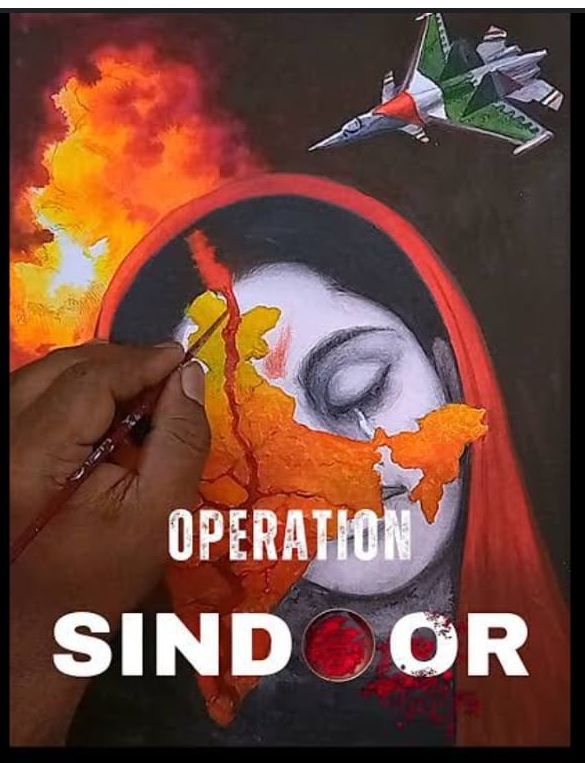
Origins and Name: Launched on May 7, 2025, Operation Sindoor was India’s calibrated military response to the Pahalgam terror attack of April 22, 2025, in which 26 predominantly Hindu male tourists were killed. The codename holds cultural symbolism—’sindoor’ is the vermillion worn by married Hindu women as a sign of their husband’s presence, evoking themes of loss, justice, and national resolve Wikipedia+15Wikipedia+15The Times of India+15Indiatimes+1Indiatimes+1.
🎯 Objectives & Execution
Targeted Strikes: India carried out a 23-minute precision strike on nine terror infrastructure sites in Pakistan and Pakistan‑administered Kashmir, using weapons such as Rafale jets with SCALP missiles and Hammer glide bombs, BrahMos cruise missiles, Akash missiles, and loitering drones—without breaching international borders Al Jazeera+4Wikipedia+4Indiatimes+4.
Drone and Missile Warfare: Operation Sindoor marked a shift toward drone-enabled, precision counterterrorism. It showcased tactical innovation with minimal collateral impact Wikipedia+15LinkedIn+15Wikipedia+15.
Logistics Emphasis: Defence Minister Rajnath Singh credited logistics and backstage support—as part of the ‘PM Gati Shakti’ initiative—as crucial to the mission’s success The Times of India+2MENAFN+2The Times of India+2.
📌 Strategic & Political Outcomes
Claims of Success:
India asserted that over 100 terrorists were neutralized across the nine targeted sites, with no damage reported in Indian territory Indiatimes+4War on the Rocks+4Indiatimes+4.
PM Modi stated that India shot down nearly 1,000 Pakistani drones and missiles on May 9, reaffirming independent action and denial of foreign mediation The Economic Times+2Wikipedia+2Indiatimes+2.
International and Domestic Reactions:
Analysts like John Spencer of the U.S. called it a “decisive victory” that redefined deterrence doctrine and exceeded strategic aims The Tribune+1ICCT+1www.ndtv.com.






 Eduindex
You must be logged in to post a comment.