

By Ashu Ahirwar


4
The Contemporary Scenario of the Ancient Indian Ayurvedic Tradition:
With Special Reference to the Sahariya Tribe
The ancient Indian Ayurvedic tradition represents one of the world’s oldest holistic systems of health and well-being. Rooted in the principles of balance between body, mind, and nature, Ayurveda has evolved over thousands of years through classical texts as well as rich folk and tribal knowledge systems. In the contemporary context, while institutionalized Ayurveda has gained global recognition, indigenous and community-based practices continue to survive largely through tribal traditions. Among these, the Sahariya tribe offers a significant example of how ancient Ayurvedic knowledge remains embedded in everyday life, health practices, and cultural belief systems.
Traditionally inhabiting forested and semi-arid regions of central India, the Sahariya community has developed a deep relationship with its natural environment. Their health practices are closely linked to locally available medicinal plants, roots, barks, leaves, and minerals. Unlike classical Ayurveda, which is text-based and codified, Sahariya medicinal knowledge is primarily oral, experiential, and practice-oriented. It is transmitted across generations through elders, healers, and community rituals, making it a living form of Ayurveda rather than a formal medical system.
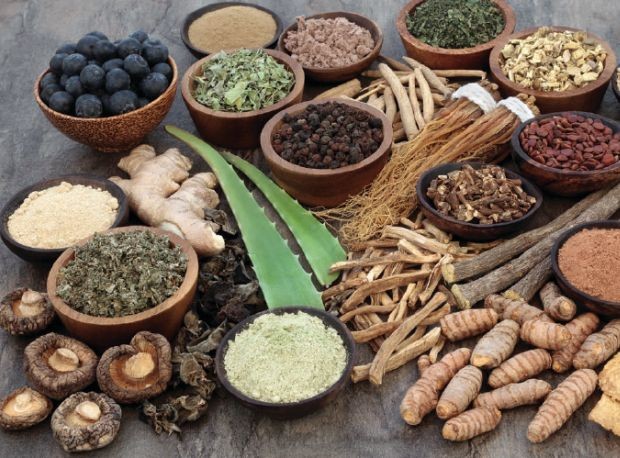
In the present scenario, Sahariya health practices continue to reflect core Ayurvedic concepts such as balance of bodily elements, seasonal adaptation, and preventive care. Common ailments like fever, digestive disorders, skin diseases, respiratory problems, and bone pain are treated using herbal formulations prepared from forest resources. The use of decoctions, pastes, powders, and oils aligns closely with Ayurvedic modes of treatment, though expressed in localized terminology and cultural understanding. Healing is not seen as merely physical; spiritual elements, rituals, and community participation often accompany treatment, reflecting Ayurveda’s holistic philosophy.
However, the contemporary landscape poses significant challenges to the survival of this traditional knowledge. Deforestation, loss of biodiversity, displacement, poverty, and limited access to forests have directly affected the availability of medicinal plants. Additionally, increasing dependence on modern allopathic healthcare systems, government health schemes, and external medical interventions has gradually reduced reliance on traditional healers. Younger generations of the Sahariya community are often less interested in learning ancestral healing practices due to changing aspirations, education patterns, and socio-economic pressures.
At the same time, there is a renewed interest at the national and global levels in traditional medicine, including Ayurveda, herbal drugs, and ethnomedicine. This creates an opportunity to recognize and document Sahariya medicinal knowledge as part of India’s intangible cultural heritage. Integrating tribal Ayurvedic practices with public health systems—while respecting community ownership and intellectual rights—can contribute to inclusive and sustainable healthcare models. Ethical documentation, participatory research, and benefit-sharing mechanisms are crucial to ensure that tribal communities are not exploited in the process of knowledge commercialization.
In conclusion, the present scenario of the ancient Indian Ayurvedic tradition, viewed through the lens of the Sahariya tribe, reveals both continuity and vulnerability. While core Ayurvedic principles remain alive in Sahariya health practices, they face serious threats from environmental degradation and socio-cultural change. Preserving and revitalizing this knowledge requires not only policy support and academic engagement but also respect for tribal autonomy, culture, and lived experience. The Sahariya tradition thus stands as a vital reminder that Ayurveda is not only a classical science but also a community-based, living heritage deeply connected to nature and indigenous wisdom.
Reference
अहिरवार, . आषु . (2025). प्राचीन भारतीय आयुर्वेदिक परम्परा का वर्तमान परिदृष्य: सहरिया जनजाति के विषेष संदर्भ में. Sahitya Samhita, 11(12), 16–21. https://doi.org/10.5281/zenodo.18047137
Rao, V. G., Bhat, J., Yadav, R., Muniyandi, M., Sharma, R., & Bhondeley, M. K. (2015). Pulmonary tuberculosis-a health problem amongst Saharia tribe in Madhya Pradesh. Indian Journal of Medical Research, 141(5), 630-635.
Rao, K. M., Kumar, R. H., Venkaiah, K., & Brahmam, G. N. V. (2006). Nutritional status of Saharia-A primitive tribe of Rajasthan. J Hum ecol, 19(2), 117-123.
Mandal, D. (1998). Social structure and cultural change in the Saharia Tribe. MD Publications Pvt. Ltd..
 Eduindex