



Citation
Wagh, B. S., & Tambe, S. S. (2026). Traditional Uses and Conservation Status of Ceropegia Species in Satana Tehsil of the Northern Western Ghats. International Journal of Research, 13(13), 56–62. https://doi.org/10.26643/ijr/2026/s13/5
Bhushan S. Wagh1, Satish S. Tambe2
Department of Botany, L.V.H. Arts, Science & Commerce College, Panchavati, Nashik.
Bhushan49wagh@gmail.com (corresponding author)
Abstract
India has a diverse basin of flowering and medicinal plants with four biodiversity hotspots. The use of plants as medicine was traced to the Vedic period. From ancient times,the value of Plants shows an enormous ability to tackle diseases. Humans are dependent on medicinal plants for various purposes, such as medicines,cosmetics,and other resources. In modern days, tribal communities like Kokana, Bhilla, Koli, and others are completely reliant on medicinal plants to fulfill theirdaily needs.
Ceropegia L. belongs to the family Asclepiadaceae, native to Africa, Southern Asia, and Australia. It is a botanically curious genus, mainly distributed in the Western Ghats. The genus comprises 200 species found throughout the world, mainly distributed in subtropical and tropical Asia. In India, 55 species are reported, of which 28 are endemic to Peninsular India.A total of 6 species and 2 varieties of this genus have been recorded in the Nashik district.The pharmacological importance of the genus is mainly due to the presence of ‘cerpegin’, a pyridine alkaloid, apart from the different potential phytoconstituents such as steroids, terpenoids, anthocyanins, anthracene glycosides, coumarins, flavonoids, fatty acids, phenolic compounds, alkaloids, and carotenoids.The given study explores the important ethnobotanical uses of the genus Ceropegia.
Keywords– Ceropegia L., Asclepiadaceae,Ethnobotany, Medicinal plants, Western Ghats
Introduction–
The occurrence of Ceropegia is very restricted to a narrow range of habitats. As they prefer to grow in moist, shady, and isolated regions.Ceropegia L., with more than 200 species, is distributed in tropical and subtropical regions of the world. Maximum diversity of Ceropegia occurs in southeastern Asia, India, Madagascar, tropical Arabia, South Africa, and Kenya (Meve 2002). The genus is represented by 53 species, two subspecies, and six varieties in India, of which 41 taxa are endemic to India. A majority of the species are under threat as per Kambale & Yadav (2019).The hilly region of Satana tehsil is one of the natural hubs for threatened plant species.Villages likeSalher, Mulher, Bhilwada, Antapur, etc has great diversity of medicinally important plants. Most species of Ceropegia were categorized as endangered in the Red Data Book of Indian plants.(The Indian Plant Red Data Book-I, 1984.)As per(Wagh, Tambe, 2025.)the ceropegias like to grow at high altitude, about 926m.
Despite the rich ethnobotanical knowledge in the Satana tehsil, Ceropegia species are still very poorly studied, especially regarding their local uses and indigenous knowledge. These plants are known to have pharmacological importance due to the presence of alkaloid compounds such as cerpegin and other ingredients, including flavonoids, terpenoids, and anthocyanins (Nikam et al., 2018). So, studying how local communities in Satana tehsil identify, collect, and use Ceropegia plants in traditional medicine is both important and timely. Many Ceropegia species found in the Western Ghats and Nashik district are reported to be threatened or endangered due to habitat loss, grazing, and human activities, which highlights the need to document traditional plant knowledge for conservation and sustainable use (Sangale et al., 2024).
This study will be helpful to documenting the uses of Ceropegia and local medicinal knowledge to understand its importance and need for conservation.
Methodology–
In the present ethnobotanical study on the genus Ceropegia, carried out in Satana tehsil, Nashik district, Maharashtra. The study area includes hilly regions, forests, and tribal villages where Ceropegia species are naturally distributed. Fieldwork was conducted during the monsoon season of 2025 to record maximum plant diversity and traditional ethnobotanical knowledge.
Ethnobotanical information was collected through regular field visits and interaction with local tribal communities. Informants included elderly villagersknown for their knowledge of medicinal plants. Interviews questionary was used to collect information simply. Details such as the local name of the plant, plant parts used, method of preparation, mode of administration, and traditional uses were carefully noted.
Regular field visits were conducted with knowledgeable informants to locate Ceropegia plants in their natural habitats. During these explorations, plants were observed and photographed. The collected ethnobotanical data were organized and analyzed to understand the importance of different Ceropegia species in local healthcare practices. The methodology followed standard ethnobotanical guidelines to ensure authenticity and reliability of the recorded information (Jain, 1995; Martin, 2004).
Resultand Discussion –
| Plant Name | Local Name | Plant Part Used | Traditional Use | Medicinal Properties |
| Ceropegia bulbosa Roxb. | Kadu khardi | Tuber, leaves | Consumed for diarrhea, dysentery, and kidney stones; used as a tonic | Digestive, anti-urolithic, antioxidant |
| Ceropegia lushii Graham | Kadu khardi | Tuber | Eaten raw/cooked to relieve stomach pain and weakness | Nutritive, cooling, digestive |
| Ceropegia vincaefolia Hook. | Dudhi khardi | Tuber | Used as food during scarcity; treatment of gastric troubles | Energy-giving, stomachic |
| Ceropegia mahabalei Hemadri | Madhu khardi | Tuber | Consumed for general health and vitality, increases fertility in women. | Tonic, nutritive |
| Ceropegia hirsuta Wight &Arn. | Madhu khardi | Tuber | Used for indigestion and body weakness | Digestive, restorative |
The present ethnobotanical study carried out in Satana tehsil of the northern Western Ghats of Maharashtra highlights the rich traditional knowledge associated with selected species of the genus Ceropegia. Interactions with tribal and rural communities revealed that Ceropegia bulbosa, C. lushii, C. vincaefolia, C. mahabalei, and C. hirsuta are mainly valued for their underground tubers, which are used both as food and medicine. Among these, Ceropegia bulbosa was found to be the most frequently used species. Its tubers are commonly consumed to treat digestive problems, diarrhea, dysentery, and urinary ailments such as kidney stones, and are also considered a general health tonic. Other species, particularly C. lushii and C. vincaefolia, are eaten raw or cooked to relieve stomach pain, weakness, and dehydration, especially during times of food scarcity. The tubers of C. mahabalei and C. hirsuta are known for their nutritive, cooling, and restorative properties and are therefore used as energy-giving foods by local people (Jagtap & Singh, 1999; Yadav & Sardesai, 2002; Patil, 2013).
The widespread use of tubers across all recorded species shows their importance as survival foods and traditional remedies in the semi-arid and hilly regions of Satana tehsil. However, information shared by local informants also pointed to a noticeable decline in natural populations of these plants. This decline is mainly due to habitat destruction, grazing pressure, forest clearance, and excessive collection of tubers before the plants can produce seeds. Many of the documented species are narrow endemics of the Western Ghats and fall under threatened categories of the IUCN Red List. Ceropegia mahabalei and C. hirsuta are classified as Endangered, while C. lushii and C. vincaefolia are considered Vulnerable because of their limited distribution and decreasing populations. Although C. bulbosa has a comparatively wider distribution, local overexploitation has raised concerns about its future survival (IUCN, 2023).
Ceropegia species play an important role in the traditional healthcare system and food security of tribal communities in Satana tehsil. At the same time, unsustainable use poses a serious threat to their conservation. There is an urgent need to create awareness among local communities, promote in situ conservation, encourage cultivation trials, and adopt community-based management practices. Combining traditional ethnobotanical knowledge with conservation planning can help protect these valuable and endemic plant species of the Western Ghats.
The findings emphasize that while Ceropegia species play a crucial role in traditional healthcare and food security of tribal communities in Satana tehsil, unsustainable use poses a serious threat to their conservation. There is an urgent need for awareness programs, in situ conservation, cultivation trials, and community-based management strategies to ensure sustainable utilization. Integrating ethnobotanical knowledge with conservation planning can help protect these ecologically and medicinally important endemic plants of the Western Ghats.
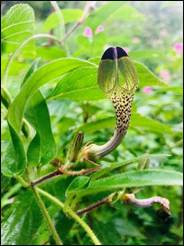
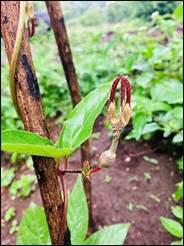
Image 1. Ceropegiahirsuta Image 2. Ceropegiavincaefolia
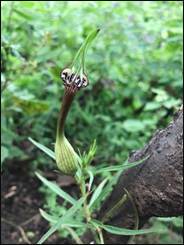
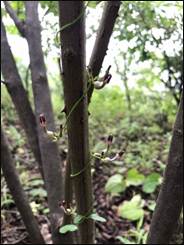
Image 3. Ceropegiamahabalei Image 4. Ceropegiabulbosa
Acknowledgement –
The author wishes to express sincere gratitude to the Principal, L.V.H. Arts, Science & Commerce College, Panchvati, Nashik, for providing the necessary facilities, encouragement, and institutional support to carry out the present ethnobotanical research. Special thanks are extended to the tribal and rural communities of Satana tehsil, Nashik district, for generously sharing their valuable traditional knowledge and cooperation during fieldwork. The support and guidance received from all those who directly or indirectly contributed to this work are gratefully acknowledged.
References –
IUCN. (2023). The IUCN Red List of Threatened Species. International Union for Conservation of Nature.
Jagtap, A. P., & Singh, N. P. (1999). Folk medicinal plants of India. Scientific Publishers, Jodhpur.
Jain, S. K. (1995). A manual of ethnobotany. Scientific Publishers, Jodhpur.
Kambale, S. S., & Yadav, S. R. (2019). Taxonomic revision of Ceropegia (Apocynaceae: Ceropegieae) in India. Rheedea, 29(1), 1–115.
Martin, G. J. (2004). Ethnobotany: A methods manual. Earthscan Publications, London.
Meve, U. (2002). Ceropegia, pp. 63–106. In: Albers, F. & U. Meve (eds.), Illustrated handbook of succulent plants: Asclepiadaceae. Springer, Berlin, 274 pp.
Nikam, T. D., Ebrahimi, M., & Patil, V. A. (2018). Phytochemistry and pharmacological potential of the genus Ceropegia: A review. Journal of Pharmacognosy and Phytochemistry, 7(3), 1234–1242.
Patil, D. A. (2013). Ethnobotany of Maharashtra. Daya Publishing House, New Delhi.
Sangale, et al. (2024). Several Ceropegia species from the Western Ghats are reported to be threatened, highlighting the need for conservation.
The Indian Plant Red Data Book–I. (1984).
Wagh, B. S. (2025). A short note on new distributional record of Ceropegia mahabalei from Dhule District of Maharashtra. https://doi.org/10.11609/ijar.3103
Yadav, S. R., & Sardesai, M. M. (2002). Flora of Kolhapur District. Shivaji University, Kolhapur.

 Eduindex
You must be logged in to post a comment.