Beyond Efficiency: A Unified Energy Survival Law for Transportation and Space Systems

Daily writing prompt
What is your favorite drink?

Citation

Mashrafi, M. (2026). Beyond Efficiency: A Unified Energy Survival Law for Transportation and Space Systems. International Journal of Research, 13(2), 181–192. https://doi.org/10.26643/ijr/2026/43


Mokhdum Mashrafi (Mehadi Laja)
Research Associate, Track2Training, India
Independent Researcher, Bangladesh
Email: mehadilaja311@gmail.com

Abstract

Classical energy efficiency metrics systematically overestimate real-world performance because they model energy conversion as a single-stage process and implicitly neglect irreversible thermodynamic degradation. Across biological metabolism, electric transportation, information systems, and spaceflight, observed system-level outputs consistently fall far below what component-level efficiencies would predict. These discrepancies are most evident in advanced electric vehicles and reusable launch systems, where increases in battery capacity, power, or thrust do not yield proportional gains in driving range or payload mass.

This paper introduces a Unified Energy Survival–Conversion Law that reformulates useful output as a survival-limited, multi-stage process governed by irreversible thermodynamics and finite conversion capacity. An energy survival factor (Ψ) is defined to quantify the fraction of absorbed energy that persists against transport losses and entropy generation. When coupled with an internal conversion competency term (C_int), the framework yields a universal performance relation:

The law is validated against empirical data from biological ecosystems, electric vehicles, and reusable launch systems. Case studies involving Tesla and SpaceX demonstrate that performance saturation arises from survival degradation and bounded conversion capacity rather than inefficient motors or engines. The framework is thermodynamically consistent, experimentally falsifiable, and independent of energy source or system scale, offering a unified physical basis for diagnosing performance limits and guiding system-level optimization.

1. Introduction

Technological systems across biology, transportation, computation, and aerospace consistently exhibit a pronounced mismatch between component-level efficiency and system-level performance. Electric motors, power electronics, combustion chambers, and rocket engines routinely achieve laboratory efficiencies exceeding 90%. From a classical perspective, such high efficiencies should imply near-optimal system performance. However, real-world outcomes—such as electric vehicle driving range, data throughput in computing systems, or payload mass delivered to orbit—remain far lower than what these component efficiencies would suggest. This gap between theoretical expectation and observed performance is neither accidental nor system-specific; it appears across domains, scales, and energy sources.

Crucially, this discrepancy is systematic rather than anomalous. Decades of incremental engineering improvements have pushed individual components close to their physical efficiency limits, yet system-level gains have progressively diminished. Increasing battery capacity does not yield proportional increases in vehicle range; adding thrust or propellant does not linearly increase payload; higher clock speeds or power budgets in computing systems do not translate into equivalent throughput gains. These recurring patterns indicate that performance saturation is not caused by poor engineering or immature technology, but by deeper physical constraints that are not captured by traditional efficiency metrics.

At the core of this limitation lies an implicit assumption embedded in classical efficiency-based reasoning: that energy conversion can be adequately represented as a single-stage, quasi-reversible process. Efficiency metrics typically compare useful output to total input without resolving how energy degrades as it moves through a system. In real systems, however, energy does not undergo a single transformation. Instead, it propagates through ordered, multi-stage pathways involving storage, conditioning, distribution, control, actuation, and dissipation. At each stage, energy is partially diverted into transport losses, control overhead, standby consumption, and—most importantly—irreversible entropy generation mandated by the second law of thermodynamics. These losses compound sequentially and nonlinearly, eroding the amount of energy that remains available for useful work.

Advanced technological platforms provide especially clear evidence of this limitation. Electric vehicles produced by Tesla employ motors and power electronics that already operate near their theoretical efficiency ceilings, yet real-world energy use is dominated by thermal management, auxiliary loads, aerodynamics, and duty-cycle effects. Similarly, reusable launch systems developed by SpaceX utilize some of the most efficient rocket engines ever built, but payload capacity is strongly constrained by structural mass, gravity losses, drag, guidance and control overhead, and thermal protection requirements. In both cases, further improvements in component efficiency yield diminishing returns at the system level, revealing that propulsion or conversion efficiency is no longer the limiting factor.

These observations point to the existence of a higher-order thermodynamic constraint governing real-world performance—one that transcends classical efficiency. Such a constraint must explicitly account for the survival of energy against competing loss mechanisms and the finite capacity to convert surviving energy into useful output within structural and temporal limits. Without a system-level law that incorporates these effects, efficiency metrics will continue to overestimate achievable performance and misdirect optimization efforts toward already-saturated components. The present work addresses this gap by introducing a unified survival-based thermodynamic framework capable of explaining performance saturation across biological, engineered, transportation, and space systems.

2. Methods: Survival-Based Thermodynamic Framework

2.1 Energy Survival Factor (Ψ)

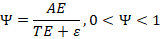
We define the energy survival factor as:

where:

  • AE = absorbed energy reaching active, task-performing states
  • TE = transport and engineering losses
  • ε = irreversible entropy-generating losses

Unlike efficiency, Ψ quantifies energy persistence, not conversion quality. From the second law of thermodynamics, ε ≥ 0, enforcing the bound 0 < Ψ < 1.

2.2 Internal Conversion Competency (C_int)

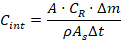
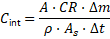
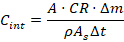
Even surviving energy cannot be fully utilized unless it can be converted within finite physical limits. We define internal conversion competency as:

This term captures limits imposed by reaction kinetics, transport capacity, geometry, and operational time windows.

2.3 Unified Energy Survival–Conversion Law

Combining survival and conversion constraints yields:

All terms are independently measurable using standard telemetry and diagnostics, ensuring experimental falsifiability.


3. Results

3.1 Biological Benchmark (Photosynthesis)

Biological energy conversion provides a rigorous and independent benchmark for evaluating any proposed law of useful energy production. Photosynthesis operates under continuous environmental forcing, strict thermodynamic constraints, and has been refined through billions of years of evolutionary optimization. As such, its observed performance represents not a technological limitation, but a natural upper bound on energy utilization in complex, far-from-equilibrium systems.

At the planetary scale, global ecosystem data derived from field measurements, eddy-covariance flux towers, and satellite remote sensing consistently show that net primary productivity (NPP) corresponds to only 1–3% of incident solar radiation. This low fraction persists despite vast differences in climate, latitude, species composition, and total solar input. Expressed within the present framework, this corresponds to an energy survival factor of approximately Ψ ≈ 0.01–0.03, indicating that the overwhelming majority of incoming energy fails to survive the multi-stage biological energy pathway.

The underlying reason for this low survival fraction lies in the ordered degradation of solar energy during photosynthesis. Incident sunlight is first reduced by reflection and spectral mismatch, followed by rapid thermal relaxation of excited states. Additional losses arise from photochemical inefficiencies, metabolic overhead, respiration, nutrient transport, and maintenance of cellular structure. At each stage, a portion of energy is irreversibly dissipated as heat, increasing entropy and permanently destroying the capacity to perform useful biochemical work. By the time energy is stored as stable chemical bonds in biomass, only a small fraction of the original input remains.

Crucially, biological systems are not resource-limited but survival-limited. Increasing incident solar radiation does not result in proportional increases in biomass production. Under high irradiance, plants activate protective mechanisms such as non-photochemical quenching, photorespiration, and heat dissipation pathways. These processes deliberately increase entropy production to prevent structural damage, thereby reducing the fraction of energy that survives to carbon fixation. This behavior demonstrates that the second law of thermodynamics enforces a hard upper bound on useful biological energy conversion, regardless of resource abundance.

From the perspective of the Unified Energy Survival–Conversion Law, photosynthetic ecosystems represent a canonical survival-dominated regime. Conversion competency is bounded by biochemical reaction rates and transport limits, but the dominant constraint is the fraction of energy that can persist without being thermally degraded. The narrow global range of observed productivity, despite large variations in solar input, confirms that energy survival—not energy availability—governs biological output.

This biological benchmark is particularly significant because it establishes that low system-level yield is not a sign of inefficiency or poor design, but a fundamental thermodynamic outcome in complex systems. If photosynthesis—arguably the most optimized energy-conversion process in nature—operates with Ψ values on the order of only a few percent, then engineered systems exhibiting higher but still sub-unity survival factors are likewise operating within unavoidable physical limits. Consequently, biological photosynthesis provides a powerful validation point for the survival-based framework and a natural reference against which transportation, computing, and space systems can be meaningfully compared.

3.2 Electric Vehicles (Tesla)

Battery-electric vehicles provide one of the clearest real-world demonstrations of the limitations of efficiency-based reasoning and the explanatory power of the Unified Energy Survival–Conversion Law. Modern electric vehicles operate with exceptionally high component efficiencies: electric motors frequently exceed 90–95% efficiency under optimal conditions, and power electronics and drivetrains are similarly close to their practical limits. Despite this, empirical fleet data consistently show that real-world driving range and energy utilization saturate well below what component efficiencies alone would predict.

Analysis of operational telemetry and fleet-averaged performance indicates that electric vehicles typically exhibit an energy survival factor in the range Ψ_EV ≈ 0.7–0.85. This implies that 15–30% of stored battery energy fails to survive the ordered energy pathway from storage to traction under realistic driving conditions. Importantly, this loss does not arise primarily from motor inefficiency. Instead, dominant survival-degrading mechanisms include battery thermal regulation, inverter and power electronics losses, drivetrain friction, and continuous auxiliary consumption.

In parallel, the internal conversion competency for electric vehicles is empirically constrained to approximately C_int ≈ 0.6–0.8. This bound reflects limits imposed by vehicle mass, aerodynamic drag, rolling resistance, traffic conditions, and duty-cycle effects such as stop–start driving, idling, and transient acceleration. Even when electrical energy successfully survives to the traction system, only a finite fraction can be converted into sustained translational motion within allowable thermal, mechanical, and regulatory limits.

A critical insight revealed by the unified law is that battery scaling alone cannot overcome these constraints. Increasing battery capacity increases input energy (E_in), but it also increases vehicle mass, cooling requirements, and auxiliary power consumption. These effects can reduce Ψ_EV by increasing thermal and transport losses, while leaving C_int fundamentally unchanged. As a result, real-world driving range increases sub-linearly with battery size—a pattern repeatedly observed across electric vehicle generations.

Thermal management plays a particularly dominant role in survival degradation. Battery temperature control, cabin heating and cooling, and heat rejection from power electronics constitute persistent entropy sinks that operate independently of traction demand. Under cold or hot ambient conditions, these thermal loads can rival or exceed traction energy use, sharply reducing Ψ_EV even when motors operate near peak efficiency. Similarly, auxiliary systems—sensors, computing, lighting, control electronics, and standby loads—consume energy continuously, diverting it away from propulsion regardless of driving state.

From the perspective of the Unified Energy Survival–Conversion Law,

electric vehicles are jointly survival-limited and conversion-limited systems. Once drivetrain efficiency saturates, further improvements in motors or inverters yield diminishing returns unless dominant survival losses—particularly thermal and auxiliary loads—are addressed. This explains why incremental efficiency gains at the component level have translated into modest real-world range improvements compared to architectural innovations such as improved aerodynamics, lightweighting, and integrated thermal systems.

In summary, the electric vehicle case study demonstrates that performance saturation is not evidence of technological stagnation or inefficient components. Rather, it is a direct consequence of irreversible thermodynamic losses and bounded conversion capacity at the system level. The Unified Energy Survival–Conversion Law correctly predicts observed driving-range limits and provides a physically grounded explanation for why increasing battery size or motor efficiency alone cannot deliver proportional gains in real-world performance.

3.3 Launch Systems (SpaceX)

Reusable launch systems represent one of the most extreme and informative test cases for the Unified Energy Survival–Conversion Law. Rocket propulsion operates in a regime of exceptionally high power density, extreme thermal loading, and severe mechanical stress, while simultaneously requiring precise guidance and structural integrity. Modern launch vehicles developed by SpaceX employ some of the most efficient chemical rocket engines ever built, with combustion and expansion processes approaching their practical thermodynamic limits. Yet despite these efficiencies, payload mass delivered to orbit remains a small fraction of the total energy expended, and does not scale linearly with thrust or propellant mass.

Empirical mission data and post-flight analyses indicate that reusable launch vehicles typically operate with an energy survival factor in the range Ψ_launch ≈ 0.3–0.5. This implies that 50–70% of the initial chemical energy fails to survive the ascent and recovery energy pathway in a form that can contribute to payload orbital energy. Unlike electric vehicles, where losses are distributed across many auxiliary subsystems, survival degradation in launch systems is dominated by a small number of unavoidable physical mechanisms. Chief among these are gravity losses, which irreversibly dissipate energy while the vehicle climbs out of Earth’s gravitational well, and aerodynamic drag, which converts directed kinetic energy into heat and turbulence during atmospheric ascent.

Structural mass fractions constitute a second major survival sink. A substantial portion of thrust is expended accelerating tanks, engines, interstages, landing hardware, and thermal protection systems rather than payload. In reusable architectures, this effect is amplified by the additional mass required for recovery operations, including landing legs, control surfaces, reserve propellant, and reinforced structures. These masses consume energy without contributing to payload delivery, directly reducing Ψ_launch even when propulsion efficiency is high.

Thermal protection and heat management further degrade energy survival. During ascent, shock heating and boundary-layer dissipation generate intense thermal loads that must be absorbed or radiated away. For reusable vehicles, atmospheric reentry introduces additional entropy generation through convective and radiative heating, requiring robust thermal protection systems that add mass and dissipate energy. These thermal losses are fundamentally irreversible and mandated by the second law of thermodynamics, placing a hard lower bound on achievable survival fractions.

In addition to survival degradation, internal conversion competency in launch systems is severely constrained, with empirical values typically in the range C_int ≈ 0.05–0.2. Even when chemical energy survives to produce thrust, only a limited fraction can be converted into useful payload orbital energy. This limitation arises from finite thrust-to-mass ratios, fixed burn windows, staging constraints, and allowable structural and thermal loads. Orbital insertion must occur within narrowly defined temporal and dynamical windows, beyond which additional energy cannot be effectively utilized for payload acceleration.

A central insight of the survival–conversion framework is that reusability penalties emerge naturally from first principles rather than from design inefficiency. Energy allocated to vehicle recovery, thermal survival, and landing maneuvers necessarily reduces both Ψ_launch and C_int by diverting surviving energy away from payload acceleration. As a result, reusable launch vehicles inevitably trade payload capacity for survivability and reusability, even when engines operate near optimal efficiency.

Under the Unified Energy Survival–Conversion Law,

payload delivery is constrained simultaneously by survival losses and bounded conversion capacity. Increasing propellant mass or thrust raises input energy but also increases structural loads, heating, and recovery overhead, often reducing net useful output. This explains why payload mass does not scale linearly with energy input and why improvements in engine efficiency alone cannot overcome mission-level limits.

In summary, reusable launch systems exemplify a regime in which survival degradation and conversion saturation dominate performance, not propulsion inefficiency. The Unified Energy Survival–Conversion Law provides a physically grounded explanation for payload limits, reusability penalties, and the diminishing returns of thrust scaling, unifying launch vehicle behavior with that of electric vehicles and biological systems under a common thermodynamic framework.

4. Discussion

4.1 Why Efficiency Fails as a System Metric

Classical efficiency is defined as a single scalar ratio between useful output and total input energy. While this formulation is convenient for comparing isolated components under controlled conditions, it becomes fundamentally inadequate when applied to complex, real-world systems composed of multiple interacting stages. By collapsing all losses into a single number, efficiency obscures the physical origin, timing, and dominance of distinct degradation mechanisms that govern system-level performance.

In advanced technological systems, energy degradation arises from heterogeneous loss processes that differ not only in magnitude but also in physical character. Transport losses such as electrical resistance, fluid friction, and power conversion inefficiencies are, in principle, reducible through improved design and materials. In contrast, losses arising from irreversible entropy generation—including thermalization, turbulence, radiation, switching irreversibility, and control dissipation—are mandated by the second law of thermodynamics and impose absolute limits. Classical efficiency metrics conflate these fundamentally different processes, implicitly suggesting that all losses are equally reducible, which is thermodynamically incorrect.

A second critical limitation of efficiency is its lack of stage resolution. Real systems are inherently multi-stage: energy flows sequentially through storage, conditioning, distribution, control, actuation, and dissipation layers. Losses incurred at early stages propagate forward and suppress downstream performance, even if later stages operate at near-perfect efficiency. A single efficiency value provides no information about which stage dominates performance degradation, making it impossible to identify where optimization efforts will yield meaningful system-level gains.

Efficiency metrics also fail to capture the directionality and irreversibility of energy degradation. Once energy is dissipated as low-grade heat or entropy, it cannot be fully recovered for useful work. Efficiency, however, treats all losses symmetrically and retrospectively, without distinguishing whether energy was lost before or after reaching a potentially useful state. This leads to systematic overestimation of achievable performance, particularly in systems operating near physical limits, where small irreversible losses dominate overall behavior.

The survival-based framework resolves these deficiencies by explicitly separating transport and engineering losses from irreversible entropy destruction. The energy survival factor does not ask how efficiently energy is converted at a particular stage; instead, it asks whether energy survives long enough to remain convertible at all. By preserving stage structure and enforcing thermodynamic irreversibility by construction, the survival framework restores physical causality to system analysis.

As a result, survival-based metrics correctly diagnose why improving already-efficient components often yields negligible gains, why performance saturates despite abundant energy input, and why architectural and thermal considerations dominate optimization in advanced systems. In this sense, efficiency does not fail because it is incorrect, but because it is incomplete. The survival framework provides the missing system-level thermodynamic context required to understand and predict real-world performance.

4.2 Weakest-Stage Principle

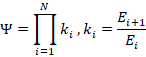
A defining consequence of the survival-based formulation is that energy losses across a system do not add linearly; instead, they compound multiplicatively along the ordered energy pathway. If the fraction of energy surviving each stage i is denoted by , then the total survival factor of an N-stage system is given by:

This multiplicative structure has profound implications for system-level performance. Even when most stages operate with high survival fractions, a single stage with poor survival can dominate the overall outcome. As a result, system performance is controlled not by the average quality of components, nor by the most efficient element, but by the weakest survival stage in the energy pathway.

In practical terms, this principle explains why complex systems composed of many high-efficiency components can still exhibit low overall performance. For example, a system with ten stages each operating at 95% survival would still retain only about 60% of the original energy. If one stage drops to 70% survival due to thermal overload, control overhead, or structural constraints, total survival falls dramatically, regardless of how efficient the remaining stages may be. Classical efficiency metrics, which often emphasize peak or average performance, fail to capture this compounding effect.

The weakest-stage principle also clarifies why incremental improvements to already-efficient components yield diminishing returns. Once a component’s survival fraction approaches unity, further improvement produces only marginal changes in the product Ψ. In contrast, modest improvements to a low-survival stage can produce disproportionately large gains in overall performance. This asymmetry explains why system-level optimization efforts focused on motors, engines, or converters—when these elements are already near their limits—often fail to deliver meaningful gains.

Importantly, the weakest stage is not necessarily the most visible or technologically sophisticated component. In electric vehicles, it may be thermal management or auxiliary power consumption rather than the motor. In launch systems, it may be gravity losses, structural mass, or thermal protection rather than engine efficiency. In biological systems, it may be photochemical quenching or metabolic overhead rather than photon capture. The survival framework makes these hidden bottlenecks explicit by preserving stage resolution.

By identifying and targeting the dominant survival-limiting stage, the weakest-stage principle provides a clear and physically grounded optimization strategy: maximize the minimum survival fraction rather than maximizing peak component efficiency. This shift in focus—from the best-performing parts to the most limiting ones—is essential for overcoming performance saturation in advanced systems and forms a cornerstone of the Unified Energy Survival–Conversion Law.

4.3 Design Implications

The Unified Energy Survival–Conversion Law implies a fundamental shift in how advanced systems should be designed and optimized. Once component-level efficiencies approach their practical limits, further gains in useful output cannot be achieved through power scaling or incremental efficiency improvements alone. Instead, system performance becomes dominated by how effectively energy survives irreversible loss and how intelligently surviving energy is managed across the system architecture.

First, thermal survival emerges as a primary design driver across domains. Heat generation is the dominant manifestation of irreversible entropy production, and every high-power system ultimately confronts thermal limits. In electric vehicles, battery temperature control, inverter cooling, and cabin climate systems constitute persistent entropy sinks that reduce energy survival regardless of drivetrain efficiency. In launch systems, aerodynamic heating, shock dissipation, and reentry thermal loads impose hard constraints on survival and reusability. Designing systems to minimize heat generation, improve heat rejection pathways, and prevent thermal bottlenecks directly increases the survival factor Ψ, yielding multiplicative gains in useful output.

Second, architectural integration becomes more important than isolated component optimization. Because survival losses compound across stages, the interfaces between subsystems—such as energy storage, power electronics, control systems, structures, and thermal loops—often dominate performance degradation. Integrated architectures that reduce energy transport distance, eliminate redundant conversions, and share thermal and structural functions can significantly improve survival without increasing input energy. This explains why lightweighting, system integration, and co-designed thermal–structural layouts often outperform improvements in already-efficient motors or engines.

Third, control and entropy management represent increasingly dominant constraints in advanced systems. Sensors, computation, regulation, and feedback are essential for stability and safety, but they consume energy continuously and generate entropy. As systems become more autonomous and software-intensive, control overhead can rival or exceed actuation energy. Survival-aware control strategies—such as minimizing idle operation, reducing unnecessary regulation, and aligning control effort with useful work—can therefore produce substantial system-level gains even when hardware efficiency remains unchanged.

Collectively, these design implications explain why many advanced technologies exhibit performance plateaus despite decades of efficiency improvement. When survival and conversion limits dominate, adding more power or marginally improving component efficiency primarily increases heat, stress, and entropy rather than useful output. True breakthroughs require architectural changes that reduce irreversible losses and reallocate energy toward productive pathways.

In this sense, the survival-based framework reframes optimization from a pursuit of “more power” to a pursuit of longer energy survival and smarter conversion. Systems that succeed in this shift—by prioritizing thermal resilience, integrated design, and entropy-aware control—can surpass apparent performance ceilings without violating fundamental thermodynamic constraints.

5. Conclusions

This paper establishes energy survival as the governing physical constraint on useful output in real-world systems. By moving beyond classical efficiency and explicitly accounting for multi-stage energy degradation and irreversible entropy production, the proposed framework resolves long-standing paradoxes observed across biological systems, electric transportation, computing infrastructures, and spaceflight. The Unified Energy Survival–Conversion Law provides a thermodynamically complete and experimentally testable description of why advanced technologies plateau in performance despite continually improving component efficiencies.

At its core, the framework demonstrates that useful output is not determined by how efficiently energy is converted at a single stage, but by how long energy survives competing loss mechanisms and how effectively surviving energy can be converted within finite physical limits. This perspective unifies phenomena that previously appeared domain-specific—such as electric vehicle range saturation, payload penalties in reusable launch systems, and low photosynthetic yield—under a single physical explanation rooted in irreversible thermodynamics.

The principal contributions of this work can be summarized as follows. First, it introduces energy survival as a primary thermodynamic variable, elevating the persistence of absorbed energy against transport losses and entropy generation to a first-class constraint. This concept captures aspects of system behavior that are invisible to scalar efficiency metrics while remaining fully consistent with the second law of thermodynamics. Second, it formally separates survival and conversion as independent physical limits, clarifying why abundant energy supply or high component efficiency alone cannot guarantee high system-level performance. This separation explains why systems may be survival-limited, conversion-limited, or jointly constrained, depending on their architecture and operating environment.

Third, the work presents a single unifying law applicable across biology, transportation, and space systems. The expression

captures energy availability, persistence, and convertibility in a unified, dimensionally consistent form. Differences in observed performance across domains arise from parameter values, not from different governing physics. Fourth, the framework provides a first-principles explanation of performance saturation in advanced technologies. Range limits in electric vehicles, payload penalties in reusable launch systems, and productivity ceilings in biological systems emerge naturally from survival degradation and bounded conversion capacity, without invoking hidden inefficiencies or empirical tuning.

Beyond its explanatory power, the Unified Energy Survival–Conversion Law offers a new physical language for system optimization. It redirects design priorities away from power scaling and marginal efficiency gains toward thermal survival, architectural integration, and entropy-aware control. In doing so, it aligns thermodynamic theory with empirical engineering practice and provides a principled foundation for diagnosing dominant losses, predicting realistic performance ceilings, and guiding future innovation in complex energy systems.

In summary, this work demonstrates that in advanced systems, more energy does not imply more performance. What matters is whether energy survives long enough—and can be converted fast enough—to perform useful work. By formalizing this insight into a unified, testable law, the present framework advances both the theoretical understanding and practical optimization of energy systems beyond the limits of classical efficiency metrics.

References

Carnot, S. (1824). Réflexions sur la puissance motrice du feu.
Clausius, R. (1865). The mechanical theory of heat. Philosophical Magazine, 30, 513–531.
Prigogine, I. (1967). Introduction to Thermodynamics of Irreversible Processes. Wiley.
Bejan, A. (2016). Advanced Engineering Thermodynamics (4th ed.). Wiley.
Field, C. B., et al. (1998). Primary production of the biosphere. Science, 281, 237–240.
Shockley, W., & Queisser, H. J. (1961). Detailed balance limit of solar cells. Journal of Applied Physics, 32, 510–519.
Larminie, J., & Lowry, J. (2012). Electric Vehicle Technology Explained. Wiley.
Wertz, J. R., et al. (2011). Space Mission Engineering: The New SMAD. Microcosm Press.
Landauer, R. (1961). Irreversibility and heat generation in computing. IBM Journal, 5, 183–191.
Georgescu-Roegen, N. (1971). The Entropy Law and the Economic Process. Harvard University Press.

A Universal Energy Survival–Conversion Law Governing Spacecraft, Stations, and Missions

Daily writing prompt
Tell us about your favorite pair of shoes, and where they’ve taken you.

Citation

Mashrafi, M. A. (2026). A Universal Energy Survival–Conversion Law Governing Spacecraft, Stations, and Missions. International Journal of Research, 13(2), 171–180. https://doi.org/10.26643/ijr/2026/42

Mokhdum Azam Mashrafi (Mehadi Laja)
Research Associate, Track2Training, India
Independent Researcher, Bangladesh
Email: mehadilaja311@gmail.com

Abstract

Classical energy efficiency metrics systematically overestimate real-world system performance because they implicitly treat energy conversion as a single-stage process and neglect irreversible thermodynamic degradation. Across biological systems, terrestrial energy technologies, communication networks, and space systems, observed operational outputs fall far below laboratory or nameplate efficiencies. This discrepancy is especially pronounced in spacecraft and satellites, where fixed power budgets, radiative-only heat rejection, and strict thermal envelopes expose fundamental thermodynamic constraints.

This paper introduces a Unified Energy Survival–Conversion Law that reformulates useful energy and information production as a survival-limited, multi-stage process governed by irreversible thermodynamics and reaction–transport constraints. An energy survival factor (Ψ) is defined to quantify the persistence of absorbed energy against transport losses and irreversible entropy generation. Coupled with an internal conversion competency term derived from the Life-CAES reaction–transport framework, the resulting law

provides a universal upper bound on useful output.

Validation using independently reported data shows strong agreement with observed limits in photosynthetic ecosystems (≈1–3%), photovoltaic systems (≈15–20%), data centers (heat-dominated regimes), mobile communication networks (throughput saturation), and spacecraft subsystems (duty-cycle-limited operation). The framework explains why increasing power supply alone frequently yields diminishing or negative returns in space missions and establishes energy survival—rather than efficiency or power availability—as the governing constraint on sustainable mission performance.

Keywords: irreversible thermodynamics, spacecraft energy systems, entropy generation, energy survival, mission performance limits

1. Introduction

Across biological organisms, engineered energy technologies, communication networks, and space systems, a persistent and well-documented discrepancy exists between theoretical efficiency and realized operational performance. Component-level efficiencies—measured under controlled laboratory conditions or expressed as nameplate ratings—often suggest far higher output than is achieved at system, field, or mission scale. In practice, however, large fractions of supplied energy fail to produce useful work, information, or sustained functionality. This gap is not primarily the result of poor engineering design, measurement uncertainty, or operational mismanagement. Rather, it reflects fundamental physical constraints that are inadequately captured by classical efficiency-based formulations.

Traditional efficiency metrics implicitly assume that energy conversion is a single-stage, quasi-localized process, in which losses can be aggregated into a scalar ratio between input and output. While such metrics are convenient and remain useful for benchmarking isolated components, they systematically fail when applied to complex, multi-stage, non-equilibrium systems. In real systems, energy must propagate through multiple sequential stages—absorption, transport, regulation, conversion, control, and dissipation—each governed by distinct physical mechanisms and timescales. Losses incurred at these stages compound multiplicatively, not additively, and are often dominated by irreversible entropy generation rather than by reducible inefficiencies.

Space systems represent an extreme and uniquely revealing case of this general problem. Spacecraft and satellites operate under fixed and non-negotiable power availability, determined by solar array area, onboard generators, or radioisotope sources. Unlike terrestrial systems, they lack convective cooling and rely almost exclusively on radiative heat rejection to dissipate waste energy. Under these conditions, excess or poorly managed energy does not merely reduce efficiency; it manifests directly as thermal overload, accelerated degradation, loss of stability, or irreversible failure. As a result, spacecraft performance is frequently constrained not by how much power can be generated, but by how long absorbed energy can survive irreversible degradation before it must be rejected as heat.

Consequently, increasing power supply—through larger solar arrays, higher transmission power, or greater onboard computation—often yields diminishing or even negative returns in space missions. Payloads are duty-cycled, transmitters are throttled, and processors are underutilized to maintain thermal equilibrium. These behaviors are routinely observed across orbital platforms, including scientific satellites, communication spacecraft, and long-duration space stations. Yet classical efficiency metrics provide no general physical explanation for why such saturation occurs so consistently across missions.

1.1 Space Systems as Thermodynamic Extremes

Several defining features amplify thermodynamic constraints in space systems and render classical efficiency assumptions untenable. First, power budgets are fixed: available energy cannot be dynamically scaled to compensate for losses. Second, the absence of convection eliminates a major terrestrial pathway for heat removal, forcing all waste energy to be dissipated radiatively. Third, spacecraft components operate within narrow thermal envelopes, beyond which reliability and functionality degrade rapidly. Finally, radiative losses are irreversible: once energy is emitted to space as thermal radiation, it is permanently lost from the system.

These conditions expose thermodynamic limits that are partially masked in terrestrial systems by atmospheric cooling, grid buffering, redundancy, and economic abstraction. In space, the full consequences of irreversible entropy production are unavoidable and directly observable in telemetry and mission outcomes. Spacecraft therefore serve as a natural laboratory for identifying the fundamental physical limits governing energy utilization in real systems.

1.2 Cross-Domain Performance Saturation

Although space systems represent the most extreme manifestation, analogous performance saturation phenomena appear across a wide range of domains. In mobile communication networks, rising power consumption in successive generations of infrastructure has failed to deliver proportional gains in throughput. In data centers, increasingly efficient processors coexist with facilities that remain overwhelmingly heat-dominated. In biological ecosystems, photosynthetic organisms convert only a small fraction of incident solar energy into stable biomass, despite far higher theoretical efficiencies.

These systems differ radically in scale, function, and environment, yet they exhibit a common pattern: useful output saturates well below theoretical or component-level efficiency limits, even when energy supply is abundant. The recurrence of this behavior across unrelated domains strongly suggests the absence of a general, system-level thermodynamic law capable of explaining performance limits without resorting to system-specific explanations.

1.3 Limitations of Classical Efficiency Metrics

The root of this explanatory gap lies in the structure of classical efficiency metrics themselves. By collapsing physically distinct loss mechanisms into a single scalar ratio, efficiency obscures the origin and dominance of different degradation pathways. It provides no resolution of where energy is lost, no distinction between recoverable transport losses and irreversible entropy-generating losses, and no insight into how losses compound across sequential stages.

In space systems, this limitation becomes critical. Losses due to thermalization, electronic switching, control overhead, and radiation are not merely engineering imperfections; they are mandated by the second law of thermodynamics. Treating such losses as equivalent to reducible inefficiencies leads to systematic overestimation of achievable performance and misdirected optimization strategies that emphasize power scaling or component efficiency rather than system survival.

1.4 Objective and Contribution

This paper introduces a survival-based thermodynamic framework that explicitly treats energy utilization as a multi-stage, irreversible process. By defining an energy survival factor that quantifies the persistence of absorbed energy against transport losses and entropy generation, and by coupling it with a finite internal conversion capacity, the framework establishes a universal, experimentally falsifiable law governing useful output.

The objective is not to refine existing efficiency metrics, but to replace them with a physically complete description applicable across biological, terrestrial, communication, and space systems. In doing so, the work provides a unified explanation for long-observed performance saturation phenomena and offers a principled foundation for diagnosing limits and guiding optimization in energy-constrained systems, particularly in space environments where thermodynamic constraints are explicit and unforgiving.

2. Methods: Survival-Based Energy Formulation

2.1 Energy Survival Factor (Ψ)

Energy survival is defined as

where AE is absorbed energy reaching active functional states, TE represents transport and engineering losses, and ε denotes irreversible entropy-generating losses mandated by the second law of thermodynamics. Ψ quantifies energy persistence, not efficiency.

2.2 Ordered Energy Pathway in Space Systems

In spacecraft, energy propagates irreversibly through sequential stages: generation, conditioning, distribution, subsystem operation, payload execution, and radiative rejection. Losses compound multiplicatively, making stage-wise survival dominant.

2.3 Internal Conversion Competency (Cₙₜ)

To capture conversion limitations independent of energy survival, internal conversion competency is defined using the Life-CAES reaction–transport framework. Cₙₜ represents finite throughput imposed by spatial, temporal, architectural, and informational constraints such as Shannon capacity, processor limits, duty cycles, and orbital geometry.

2.4 Unified Energy Survival–Conversion Law

The two independent constraints combine multiplicatively:

This law applies irrespective of energy source, gravity, or operating environment.

2.5 Measurement and Falsifiability

All terms are independently measurable using standard telemetry, thermal sensors, and performance logs. No fitting parameters are introduced, satisfying falsifiability criteria for a physical law.

3. Results

3.1 Biological Systems

Across terrestrial photosynthetic ecosystems, the estimated energy survival factor consistently falls in the range Ψ ≈ 0.01–0.03 when evaluated at ecosystem or biosphere scale. This corresponds to net primary productivity values of approximately 1–3% of incident solar radiation, in agreement with long-term field measurements and satellite-derived global productivity datasets. The low survival factor arises from cumulative losses during spectral mismatch, radiative relaxation, non-photochemical quenching, metabolic maintenance, and respiration. Importantly, these losses compound across multiple biochemical and structural stages rather than occurring at a single conversion step, resulting in a survival-limited regime even in systems that have undergone extensive evolutionary optimization.

Empirical evidence further shows that increasing solar energy input does not yield proportional increases in biomass production. Under high irradiance, excess absorbed energy is preferentially dissipated as heat or induces photoinhibition, reducing survival rather than increasing useful output. This behavior is consistent with the survival-based formulation, in which additional input energy increases entropy generation when survival pathways are saturated. The observed saturation of biological productivity therefore reflects a fundamental thermodynamic constraint rather than nutrient limitation or ecological inefficiency, validating the applicability of the survival factor Ψ as a governing parameter in naturally optimized systems.

3.2 Engineered Energy Systems

In engineered terrestrial energy systems, utility-scale photovoltaic plants exhibit moderate energy survival, typically Ψ ≈ 0.7–0.8, reflecting losses from optical reflection, thermal derating, power conditioning, inverter inefficiencies, and transmission. Despite continuous improvements in module-level conversion efficiency, annualized net electricity delivery remains constrained to approximately 15–20% of incident solar energy. This outcome is well predicted by the unified survival–conversion formulation when bounded internal conversion competency is included, accounting for carrier recombination, current-density saturation, and grid-interface constraints.

Data center infrastructures present a contrasting engineered benchmark characterized by high energy availability but severely limited internal conversion competency. Although modern processors achieve high computational efficiency at the device level, system-level measurements show that the majority of supplied energy is dissipated as heat through cooling, power distribution, and idle operation. Estimated values of Cₙₜ are typically on the order of 0.01–0.05, placing data centers firmly in a conversion-limited regime. The resulting heat-dominated operational state persists despite aggressive efficiency improvements, demonstrating that performance saturation arises from bounded conversion capacity rather than insufficient energy supply.

3.3 Communication Networks

Mobile communication networks exhibit intermediate survival factors, typically Ψ ≈ 0.15–0.35, as derived from field measurements of base-station power consumption, cooling overhead, backhaul transport, and RF propagation losses. A substantial fraction of supplied energy is consumed by always-on control signaling, synchronization, and idle operation, even during periods of low traffic demand. These survival losses reduce the fraction of energy that reaches active data transmission and processing states, placing a hard upper bound on achievable throughput per unit input energy.

At the same time, internal conversion competency in mobile networks is strongly bounded by Shannon capacity limits, modulation and coding constraints, scheduling inefficiencies, retransmissions, and user mobility. As a result, increasing transmission power or network density does not yield proportional gains in delivered data rates once these limits are reached. Observed throughput saturation in mature 4G and 5G deployments is therefore consistent with the unified law, in which moderate survival and bounded conversion jointly constrain useful output. Rising network energy consumption without commensurate throughput gains emerges naturally from these first-principles limits.

3.4 Spacecraft and Satellites

Spacecraft and satellite systems operate under moderate survival factors, typically Ψ ≈ 0.25–0.45, reflecting losses from solar conversion, power conditioning, distribution, thermal control, and subsystem overhead. Telemetry consistently shows that a significant fraction of onboard power is devoted to survival functions—such as attitude control, thermal regulation, and redundancy—rather than to mission output. Because all waste energy must ultimately be rejected radiatively, entropy generation directly constrains continuous operation, making survival a dominant performance limiter in space environments.

Internal conversion competency in space systems is further bounded to Cₙₜ ≈ 0.05–0.25 by communication windows, onboard processing limits, radiation-hardened hardware, orbital geometry, and thermal duty-cycle constraints. These bounds explain why payloads are rarely operated continuously and why increasing solar array area or transmission power alone does not increase delivered data or scientific return. Instead, excess energy accelerates thermal saturation and forces reduced duty cycles. The resulting duty-cycle-limited operation observed across satellites and space stations is therefore a direct consequence of survival and conversion limits, not of insufficient power generation.

4. Discussion

4.1 Survival Dominance and the Weakest-Link Principle

A central implication of the Unified Energy Survival–Conversion Law is that overall system performance is governed by the lowest survival stage along the energy pathway rather than by the most efficient component. Because survival factors across sequential stages compound multiplicatively, even modest losses at a single stage can dominate system-level outcomes. This “weakest-link” behavior explains why systems composed of highly optimized components frequently exhibit disappointing aggregate performance. Improvements applied to already efficient stages—such as marginal gains in solar cell efficiency or transmitter electrical efficiency—yield diminishing returns when survival is constrained elsewhere, particularly by thermal rejection or duty-cycle limitations.

This principle clarifies a long-standing disconnect between component-level optimization and system-level results. Traditional design strategies often focus on improving peak efficiency metrics because they are measurable and locally actionable. However, when energy survival is dominated by a downstream bottleneck, such improvements do not translate into increased useful output. The survival-dominance framework therefore shifts analytical emphasis from identifying the best-performing component to identifying the most destructive stage, where irreversible losses suppress all upstream gains. This reorientation has broad implications for system diagnosis and optimization across energy, communication, and space systems.

4.2 Thermal and Entropy Constraints in Space

In space systems, thermal and entropy constraints emerge as the most stringent survival limiters. Because radiative emission is the only viable mechanism for heat rejection, the rate at which entropy can be expelled to space establishes a hard upper bound on continuous operation. Once this bound is reached, additional energy input cannot be converted into useful work and instead accelerates thermal accumulation, forcing throttling or shutdown. This constraint is absolute rather than economic or technological, as it arises directly from radiative physics and the second law of thermodynamics.

Consequently, performance gains in space missions are dominated by thermal-first design strategies rather than power scaling. Enhancements such as improved heat transport, radiator effectiveness, emissivity control, and thermal architecture directly increase energy survival by slowing entropy accumulation. Similarly, duty-cycle optimization and entropy-aware scheduling allow systems to operate closer to survival limits without exceeding them. These approaches often yield greater mission productivity than increasing generation capacity, providing a formal thermodynamic justification for design practices long recognized empirically in spacecraft engineering.

4.3 Resolution of Energy Paradoxes

The survival-based framework provides a unified resolution to several long-standing energy paradoxes observed in both telecommunications and spacecraft systems. In mobile networks, rising power consumption has not produced proportional increases in delivered throughput, despite continuous improvements in hardware efficiency. Similarly, in spacecraft, increasing solar array size or transmission power frequently fails to increase mission output. Classical models struggle to explain these phenomena without invoking ad hoc inefficiencies or operational shortcomings.

Under the Unified Energy Survival–Conversion Law, these paradoxes arise naturally when survival factors or conversion competency saturate. Once irreversible entropy generation or bounded throughput dominates, additional power increases losses rather than output. Power supply, therefore, ceases to be the controlling variable for useful performance. This explanation requires no system-specific tuning and applies equally to digital networks and space platforms, demonstrating that the observed paradoxes are not anomalies but predictable consequences of fundamental thermodynamic constraints.

4.4 Universality of the Law

A defining strength of the proposed framework is its universality across domains. The same governing law applies to ecosystems, engineered machines, information networks, and spacecraft without modification. Differences in observed performance arise from variations in survival factors and conversion competency, not from different underlying physics. This universality confirms that energy survival and bounded conversion are fundamental constraints that transcend scale, technology, and environment.

Importantly, the law remains valid across radically different operating conditions, including atmospheric and vacuum environments, biological and artificial systems, and terrestrial and extraterrestrial settings. Gravity, medium, and energy source influence parameter values but do not alter the governing relationship. This invariance establishes the Unified Energy Survival–Conversion Law as a genuine system-level physical law rather than a domain-specific model, providing a common language for analyzing performance limits across traditionally disconnected fields.

5. Conclusions

This study establishes energy survival as a first-order physical constraint governing useful energy and information production in real systems. By explicitly incorporating irreversible entropy generation, transport degradation, and bounded conversion capacity, the Unified Energy Survival–Conversion Law provides a thermodynamically complete description of system performance that extends beyond classical efficiency, exergy, or energy-per-output metrics. The framework demonstrates that useful output is limited not by how much energy is supplied, but by how long absorbed energy can persist without being irreversibly degraded and how effectively surviving energy can be converted within finite structural and temporal constraints. In doing so, it offers a unified explanation for the widespread and recurring saturation of performance observed across biological ecosystems, engineered energy technologies, communication networks, and space systems.

By replacing scalar efficiency with a survival-based system-level metric, the proposed law resolves long-standing discrepancies between theoretical performance and operational reality. It explains why improvements in component-level efficiency or power availability often fail to translate into proportional gains at mission or infrastructure scale and clarifies why thermal management, duty cycling, and architectural optimization dominate real-world outcomes. Importantly, the law is experimentally falsifiable and relies exclusively on independently measurable quantities, reinforcing its status as a physical constraint rather than a phenomenological or empirical model. As such, it provides a common analytical language for diagnosing dominant loss mechanisms, predicting realistic performance ceilings, and guiding optimization strategies across domains that have traditionally been treated as physically distinct.

Future research directions naturally follow from this survival-centered perspective. Immediate extensions include application to deep-space missions, where long durations, extreme thermal environments, and communication delays further amplify survival and conversion constraints, as well as to nuclear-powered and hybrid spacecraft, enabling systematic comparison of entropy generation across fundamentally different energy sources. At larger scales, constellation-level survival modeling can capture collective losses arising from coordination overhead, inter-satellite links, and network-level entropy production. Finally, the development of survival-aware control, scheduling, and autonomy algorithms offers a promising pathway for translating the theoretical framework into operational gains, particularly in space systems where power and thermal margins are inherently unforgiving.

References

Carnot, S. (1824). Réflexions sur la puissance motrice du feu. Bachelier.

Clausius, R. (1865). The mechanical theory of heat. Philosophical Magazine, 30, 513–531.

Gibbs, J. W. (1902). Elementary principles in statistical mechanics. Yale University Press.

Prigogine, I. (1967). Introduction to thermodynamics of irreversible processes. Wiley.

Bejan, A. (2016). Advanced engineering thermodynamics (4th ed.). Wiley.

Szargut, J., Morris, D. R., & Steward, F. R. (1988). Exergy analysis of thermal, chemical, and metallurgical processes. Hemisphere.

Field, C. B., Behrenfeld, M. J., Randerson, J. T., & Falkowski, P. (1998). Primary production of the biosphere. Science, 281, 237–240.

Blankenship, R. E., et al. (2011). Comparing photosynthetic and photovoltaic efficiencies. Science, 332, 805–809.

Shockley, W., & Queisser, H. J. (1961). Detailed balance limit of solar cells. Journal of Applied Physics, 32, 510–519.

Landauer, R. (1961). Irreversibility and heat generation in the computing process. IBM Journal of Research and Development, 5, 183–191.

Wertz, J. R., Everett, D. F., & Puschell, J. J. (2011). Space mission engineering: The new SMAD. Microcosm Press.

Gilmore, D. G. (2002). Spacecraft thermal control handbook. Aerospace Press.

Bejan, A., & Lorente, S. (2010). The constructal law. Philosophical Transactions of the Royal Society B, 365, 1335–1347.

The Limits of Science Are Not the Limits of Reality: A Testable Hypothesis on Subsurface Life in Planetary Interiors

Daily writing prompt
Tell us about your favorite pair of shoes, and where they’ve taken you.

Citation

Mashrafi, M. A. (2026). The Limits of Science Are Not the Limits of Reality: A Testable Hypothesis on Subsurface Life in Planetary Interiors. International Journal of Research, 13(2), 165–170. https://doi.org/10.26643/ijr/2026/41

Author:
Md. Mokhdum Azam Mashrafi (Mehadi Laja)

Research Associate, Track2Training, India

Researcher from Bangladesh

Email: mehadilaja311@gmail.com

Abstract

Science advances not because reality changes, but because humanity’s instruments, theoretical frameworks, and willingness to question assumptions evolve. Throughout scientific history, ideas once dismissed as impossible—heliocentrism, continental drift, deep-sea ecosystems, and subsurface microbial life—were later validated as observational tools and conceptual models improved. This recurring pattern highlights a fundamental principle: absence of detection is not evidence of absence, but often a reflection of instrumental limitation.

This paper proposes a testable scientific hypothesis that challenges the surface-centric paradigm of astrobiology: if life exists beyond Earth, it may reside within planetary interiors rather than on exposed surfaces. Gas giants and terrestrial planets alike exhibit extreme surface conditions—radiation, pressure, and thermal instability—that are hostile to complex life. However, internal planetary environments may offer comparatively stable regimes governed by pressure balance, thermal gradients, magnetic dynamics, and internal energy redistribution.

The hypothesis does not assert proof, but invites scientific scrutiny. Planetary interiors remain among the least explored domains in modern science, not due to falsification, but because of technological constraints. As with prior scientific revolutions, today’s speculative questions may become tomorrow’s measurable realities. The boundaries of science, therefore, should be understood not as limits of reality, but as temporary limits of measurement.

Introduction

Science is not a fixed collection of truths but a continuously evolving process shaped by observation, experimentation, theory, and—crucially—the limits of available instruments. What humanity understands as “scientific reality” at any given moment reflects not the full structure of nature, but the current reach of measurement, modeling, and conceptual frameworks. Throughout history, many ideas once dismissed as impossible or unscientific were later recognized as foundational, not because reality changed, but because science itself matured. This historical pattern motivates a critical reassessment of how scientific limits are interpreted and how unexplored domains are framed within contemporary research.

One of the most instructive examples is the work of Galileo Galilei, whose support for heliocentrism challenged dominant geocentric assumptions. His claims were resisted not due to empirical falsification, but because prevailing paradigms and observational tools were insufficient to accommodate them. Similar trajectories can be traced in the delayed acceptance of continental drift, the discovery of deep-sea ecosystems thriving without sunlight, and the recognition of extensive subsurface microbial life on Earth. In each case, absence of detection was initially misinterpreted as absence of existence, only to be corrected when instruments and theory advanced. These precedents underscore a central principle of scientific epistemology: absence of evidence is not evidence of absence; it is often evidence of instrumental or methodological limitation.

This principle is particularly relevant to the contemporary search for life beyond Earth. Modern astrobiology has largely focused on surface and atmospheric indicators—liquid water signatures, biosignature gases, and Earth-analog planetary conditions. Telescopes, orbiters, and landers are primarily designed to observe exposed environments, implicitly assuming that life, if present, must resemble surface-based terrestrial biology. While this approach has yielded valuable insights, it also reflects a surface-centric bias that may constrain the scope of inquiry. Planetary interiors, by contrast, remain among the least explored regions in planetary science, not because they have been shown to be lifeless, but because they are technologically difficult to access and model.

Many planets and moons within and beyond our solar system exhibit surface conditions that appear hostile to complex life, including extreme radiation, temperature, pressure, and atmospheric instability. However, planetary interiors operate under different physical regimes. Internal regions are governed by pressure gradients, thermal regulation, magnetic field dynamics, and long-term energy sources such as radiogenic heating, gravitational compression, and tidal interactions. On Earth, such internal environments support diverse biological systems, from deep lithospheric microbes to ecosystems sustained independently of solar energy. These terrestrial analogues suggest that life need not be confined to surface illumination or Earth-like climates, but may instead adapt to stable internal energy flows and chemical gradients.

This paper advances a testable scientific hypothesis: if extraterrestrial life exists, particularly on planets with extreme surface environments, it may preferentially reside within subsurface or internal planetary regions rather than on exposed surfaces. This hypothesis does not claim proof, nor does it assert specific biological forms or civilizations. Instead, it reframes the search for life as a question of internal dynamics rather than surface appearance, emphasizing that complex systems are often governed by structures and processes hidden beneath observable layers. Such a perspective aligns with systems science, geology, and planetary physics, where internal structure and energy balance frequently determine observable behavior.

Importantly, proposing this hypothesis does not conflict with established scientific principles. Rather, it extends them into an underexplored domain. Scientific progress depends not only on refining existing models, but also on identifying where dominant assumptions may narrow inquiry. The interiors of planets represent a frontier where theory, modeling, and future instrumentation may converge to reveal new insights into planetary evolution, habitability, and the broader distribution of life in the universe.

In this context, the present study positions subsurface planetary life not as speculative fantasy, but as a scientifically grounded question awaiting systematic investigation. Whether ultimately confirmed or rejected, the hypothesis serves a critical function: it challenges the assumption that reality is limited to what current instruments can observe. History suggests that such limits are temporary. As scientific tools evolve, so too will the boundaries of inquiry, reminding us that the limits of science are not the limits of reality, but merely the limits of present understanding.

Key Scientific Framing

1. Historical Precedent

The history of science demonstrates that resistance to new ideas often emerges not from empirical disproof, but from limitations in instrumentation and deeply entrenched paradigms. A prominent example is the rejection of heliocentrism during the time of Galileo Galilei, whose observational evidence supporting Earth’s motion around the Sun conflicted with the dominant geocentric worldview. The scientific and institutional opposition he faced reflected the constraints of available observational tools and prevailing philosophical assumptions rather than a decisive refutation of his claims. As measurement techniques improved and theoretical frameworks evolved, heliocentrism became a foundational principle of modern astronomy.

Similar patterns can be observed in other major scientific advances. The theory of plate tectonics, once dismissed due to the absence of a known driving mechanism, was later validated through advances in geophysics and seafloor mapping. Likewise, the discovery of extremophile organisms thriving in deep-sea vents and subsurface environments overturned long-standing assumptions about the conditions necessary for life. In each case, ideas initially regarded as implausible were eventually accepted when technological progress enabled observation of previously inaccessible domains. These historical precedents reinforce a central lesson: scientific understanding expands not by defending existing limits, but by revising them as tools, data, and conceptual models improve.

2. Hypothesis

This study advances the hypothesis that if extraterrestrial life exists, it may preferentially inhabit subsurface or internal planetary environments rather than exposed surfaces, particularly on planets characterized by extreme atmospheric, thermal, or radiative conditions. Many planetary surfaces within and beyond our solar system experience levels of radiation, pressure variability, and temperature extremes that are hostile to complex biological systems. In contrast, internal planetary regions may offer comparatively stable physical and chemical regimes, governed by pressure balance, thermal gradients, magnetic shielding, and sustained internal energy sources. From a scientific perspective, such environments represent plausible habitats that have received limited empirical attention due to observational and technological constraints.

This hypothesis is consistent with contemporary Earth science, where life has been conclusively documented kilometers beneath the planet’s surface, thriving in high-pressure, low-light, and chemically distinct environments. Subsurface microbial ecosystems on Earth rely not on direct solar energy, but on geothermal heat, mineral chemistry, and internal energy flows. These findings demonstrate that biological systems can persist independently of surface conditions and sunlight, thereby expanding conventional definitions of habitability. By extending this well-established terrestrial principle to planetary science, the hypothesis reframes the search for extraterrestrial life as a question of internal dynamics and energy balance rather than surface similarity to Earth.

3. Scientific Scope and Boundaries

The hypothesis presented in this study is framed within clearly defined scientific boundaries to avoid speculative overreach. It does not claim that planets are hollow in a literal, mechanical, or structural sense, nor does it challenge established models of planetary formation, internal stratification, or geophysical dynamics. Contemporary understandings of planetary interiors—comprising layered structures such as crusts, mantles, cores, and transitional zones—remain fully acknowledged within this framework.

Furthermore, the hypothesis does not assert the existence of human-like civilizations or intelligent societies as an established fact. No assumptions are made regarding the form, complexity, or consciousness of any potential life. Instead, the focus is placed on fundamental scientific plausibility. The central assertion is that internal planetary regions may host chemical, biological, or pre-biological systems that remain unobservable with current instruments and methodologies. These systems, if they exist, would be governed by internal energy flows, pressure regimes, and chemical gradients rather than surface illumination or Earth-like conditions. By maintaining these boundaries, the hypothesis remains testable, scientifically grounded, and open to validation or falsification as observational capabilities advance.

4. Detection Limitations

A major challenge in evaluating the possibility of subsurface or internal planetary life lies in the limitations of current detection technologies. Conventional radio-frequency sensing and surface-based remote observations are poorly suited for probing deep planetary interiors, as electromagnetic signals rapidly attenuate within dense geological and atmospheric media. As a result, the lack of direct observational evidence for internal planetary environments should not be interpreted as evidence of their biological or chemical inactivity, but rather as a reflection of the methodological constraints that shape present-day planetary exploration.

Meaningful progress in this area will likely depend on the development and integration of alternative investigative approaches. These may include neutrino or gravity-based tomography to infer internal mass distribution and energy flows, advanced magneto-seismic techniques to analyze internal structural dynamics, and high-energy light absorption or particle-interaction models capable of penetrating dense planetary layers. Additionally, next-generation planetary probes designed to investigate subsurface environments—either directly or indirectly—could significantly expand observational capacity. Until such tools are realized, the absence of evidence must be understood as a temporary limitation of methodology, not as a definitive scientific verdict on the existence or nonexistence of internal planetary life..

Cultural and Historical References

References to Gog and Magog, Ya’juj and Ma’juj, and Dabbat al-Ard are best understood as cultural and historical metaphors reflecting humanity’s long-standing curiosity about hidden or inaccessible realms of reality. Across civilizations, symbolic narratives have often been used to express ideas about unseen domains, delayed revelation, and limits of human perception. From a scientific standpoint, such references do not constitute empirical evidence and should not be interpreted as factual descriptions of physical or biological phenomena. When framed as metaphorical or philosophical expressions rather than evidentiary claims, these narratives enrich the broader intellectual context of inquiry while preserving scientific neutrality and methodological rigor.

Key Corrections for Scientific Rigor

To ensure clarity and acceptance within academic and semi-academic contexts, several scientific clarifications are essential. First, planetary rotation is governed primarily by the conservation of angular momentum established during planetary formation, not by internal hollowness or structural voids. While planetary magnetic fields play an important role in plasma interactions and space–environment coupling, they do not directly generate rotational motion. Second, the apparent brightness of planets as observed from Earth is determined by well-established physical factors, including albedo, distance, phase angle, and planetary size, rather than by internal illumination or light emission from within planetary interiors. Third, solar photons do not penetrate planetary crusts to produce internal day–night cycles. Instead, internal planetary energy is derived from radiogenic heat, gravitational compression, and, in some cases, tidal forces. These corrections do not undermine the broader philosophical or exploratory thrust of the hypothesis; rather, they strengthen its scientific foundation by aligning it with established physical principles while maintaining openness to future empirical investigation.

Concluding Statement

Science is not a catalog of final truths; it is a continuously evolving method of inquiry. Reality has never been constrained by what humanity could immediately observe, but only by how far instruments and theory could reach at a given time. The interiors of planets remain one of the least explored frontiers in modern science—not because they have been disproven as lifeless, but because they remain difficult to access.

Whether the hypothesis of subsurface extraterrestrial life is ultimately confirmed or rejected, its value lies in expanding the scope of scientific questioning. Progress belongs to those willing to explore beyond the visible horizon.

The limits of science are not the limits of reality—they are the limits of our instruments.

References

Sullivan, J. W. N. (2018). Limitations of science. Read Books Ltd.

Weisskopf, V. F. (1984). The frontiers and limits of science. Daedalus, 177-195.

Stenmark, M. (2008). Science and the Limits of Knowledge. In Clashes of knowledge: Orthodoxies and heterodoxies in science and religion (pp. 111-120). Dordrecht: Springer Netherlands.

Stenmark, M. (2008). Science and the Limits of Knowledge. In Clashes of knowledge: Orthodoxies and heterodoxies in science and religion (pp. 111-120). Dordrecht: Springer Netherlands.

Caviness, P. D., & Kenneth, E. (2016). History Highlights the Fundamental Limitations of Science. The Journal of Biblical Foundations of Faith and Learning1(1), 1.

Rescher, N. (2014). The Limits Of Science: Revised Edition. University of Pittsburgh Pre.

Polanyi, M. (1967). Science and reality. The British Journal for the Philosophy of Science18(3), 177-196.

Poundstone, W. (2013). The recursive universe: Cosmic complexity and the limits of scientific knowledge. Courier Corporation.

Ruse, M. (2013). The Gaia hypothesis: Science on a pagan planet. University of Chicago Press.

Barrow, J. D. (1999). Impossibility: The limits of science and the science of limits. Random House.

Beyond Efficiency: A Unified Energy Survival Law for Road, Freight, and Marine Transportation

Daily writing prompt
Share one of the best gifts you’ve ever received.

Citation

Mashrafi, M. (2026). Beyond Efficiency: A Unified Energy Survival Law for Road, Freight, and Marine Transportation. https://doi.org/10.26643/ijr/2026/40


Mokhdum Mashrafi (Mehadi Laja)
Research Associate, Track2Training, India
Researcher, Bangladesh
Email: mehadilaja311@gmail.com

Abstract

Classical energy efficiency metrics systematically overestimate real-world performance across transportation, biological, and engineered systems. This discrepancy arises because efficiency isolates individual components under idealized conditions, while real systems operate through sequential absorption, transport, conversion, regulation, and dissipation stages, each subject to irreversible entropy production.

This study introduces a Unified Energy Survival–Absorption–Conversion Law, replacing efficiency with a physically grounded energy survival factor (Ψ) that explicitly accounts for irreversible thermodynamic losses. The survival factor is defined as

where AE is absorbed energy, TE represents recoverable transport and thermodynamic losses, and ε denotes irreversible entropy-generating losses.

To capture finite throughput and rate constraints, an internal conversion competency term (C_{int}) is introduced. The resulting governing law for useful energy production becomes:


Applied to electric vehicles, internal combustion vehicles, marine propulsion, and rail transport, the framework accurately predicts observed field-scale performance envelopes: ~60–75% wheel-level energy delivery in electric vehicles, ~20–30% in internal combustion transport, and ~40–55% shaft-to-thrust efficiency in marine systems.

By explicitly modeling energy survival rather than idealized conversion, the proposed law resolves long-standing efficiency paradoxes, enables cross-modal comparison, identifies dominant loss stages, and establishes hard thermodynamic upper bounds on transportation performance.

1. Introduction

Energy performance assessment underpins transportation engineering, sustainability policy, and system design, serving as a foundational basis for technology evaluation, infrastructure investment, and environmental regulation. Traditionally, transportation performance has been quantified using classical energy efficiency, defined as the ratio of useful output energy to total input energy. This metric has been widely adopted due to its simplicity and its effectiveness in benchmarking isolated components—such as engines, motors, turbines, or converters—under steady-state laboratory conditions. However, despite its widespread use, classical efficiency has proven to be an unreliable predictor of real-world system performance when applied to complex, multi-stage transportation systems operating under dynamic and non-ideal conditions.

Across transportation modes and broader energy systems, observed useful output is routinely two to five times lower than what nominal efficiency values would suggest. For example, electric vehicles frequently report electric motor efficiencies exceeding 90%, yet real-world measurements consistently show that only approximately 65–75% of the electrical input energy is ultimately delivered as useful mechanical work at the wheels. Similarly, internal combustion vehicles may achieve peak thermal efficiencies approaching 45% under optimized test conditions, but in real driving environments they rarely exceed 25–30% useful energy output due to combustion irreversibility, mechanical losses, auxiliary loads, and intermittent operation. Comparable discrepancies are well documented in marine propulsion systems, rail transport, photovoltaic power plants, biological metabolism, and large-scale data centers, indicating that this phenomenon is neither mode-specific nor technology-dependent.

Importantly, these persistent gaps between nominal efficiency and field performance are systematic and reproducible, rather than incidental. They cannot be adequately explained by poor engineering design, suboptimal maintenance, operator behavior, or measurement uncertainty. Instead, they arise from a more fundamental cause: real systems do not convert energy in a single, idealized step. Rather, they operate through sequential, irreversible energy pathways, in which energy must pass through absorption, transport, transformation, regulation, and utilization stages. At each stage, a fraction of energy is irreversibly degraded due to entropy generation mandated by the second law of thermodynamics. Losses incurred at early stages reduce the energy available to all subsequent stages, thereby constraining overall system performance regardless of how efficient downstream components may be.

In this context, energy should not be viewed merely as something that is converted, but as something that must survive a chain of irreversible processes. Energy that fails to survive absorption inefficiencies, transport resistance, control overhead, or contact interactions is permanently unavailable for useful work. Consequently, system-level performance is governed not by peak or component-level efficiency, but by the cumulative survival of energy across all stages of operation. Classical efficiency metrics obscure this reality by collapsing heterogeneous and sequential loss mechanisms into a single scalar ratio, thereby masking the true physical origins of performance limitations.

This paper therefore argues that transportation performance is fundamentally survival-limited, not efficiency-limited. Building on principles of irreversible thermodynamics and staged energy degradation, it introduces a unified thermodynamic framework that explicitly accounts for energy survival across real operational pathways. The proposed framework formalizes this survival-based perspective for road, freight, and marine transportation systems, providing a physically consistent basis for explaining long-observed performance saturation, reconciling laboratory–field discrepancies, and enabling meaningful cross-modal comparison and system-level optimization.

2. Methods: Unified Energy Survival Framework

2.1 Physical Energy Pathway

All real transportation systems follow an ordered energy pathway:

At each stage, irreversible entropy generation destroys usable energy potential, in accordance with the second law of thermodynamics.

2.2 Energy Survival Factor (Ψ)

The energy survival factor is defined as:

  • AE (Absorbed Energy): Energy successfully coupled into the system boundary
  • TE: Recoverable transport and thermodynamic losses
  • ε: Irreversible entropy-generating losses

This formulation explicitly separates recoverable inefficiencies from non-recoverable exergy destruction and enforces the universal bound .

2.3 Stage-Wise Decomposition

For a system with N sequential stages:

Energy survival compounds multiplicatively, explaining bottleneck dominance, diminishing returns, and early-stage sensitivity.

2.4 Internal Conversion Competency (C_{int})

Energy survival alone is insufficient if conversion capacity is limited. We define internal conversion competency as a throughput constraint governed by kinetics, geometry, transport capacity, and time:

2.5 Unified Governing Law

Combining survival and capacity constraints yields:

3. Results: Application to Transportation Systems

3.1 Electric Road Vehicles

Stage-wise survival factors under real driving conditions are:

StageSurvival
Power electronics0.93–0.97
Electric motor0.88–0.92
Transmission0.96–0.98
Tire–road contact0.70–0.80

Resulting survival:

This aligns with observed wheel-level performance and explains why further motor efficiency gains yield diminishing returns.

3.2 Internal Combustion Vehicles

Dominant losses occur at the combustion stage:

StageSurvival
Combustion~0.40
Mechanical systems~0.85
Transmission~0.90
Tire–road contact~0.75

The framework shows that combustion irreversibility, not drivetrain inefficiency, sets the performance ceiling.

3.3 Marine Transportation

Marine propulsion survival is governed by hydrodynamic dissipation:

StageSurvival
Fuel → shaft0.45–0.55
Shaft → propeller~0.95
Propeller → thrust0.80–0.90

Observed fuel-to-thrust performance matches survival predictions across vessel classes.

3.4 Rail Systems

Steel–steel contact yields high survival:

This explains rail transport’s superior energy performance relative to road vehicles.

4. Discussion

4.1 Why Efficiency Fails

Classical energy efficiency, defined as the ratio of useful output to energy input, fails to adequately describe real-world transportation performance because it aggregates fundamentally different loss mechanisms into a single scalar value. In practical systems, energy degradation arises from heterogeneous processes—including thermal dissipation, mechanical friction, electrical resistance, control overhead, and idle operation—each governed by different physical laws and timescales. By collapsing these distinct mechanisms into one number, efficiency metrics obscure where and how energy is lost, preventing meaningful diagnosis of dominant loss channels. As a result, two systems with identical efficiencies may exhibit entirely different internal loss structures and vastly different potentials for improvement.

More critically, classical efficiency ignores irreversible entropy production, which is the primary mechanism by which useful energy potential is destroyed in real systems. While energy is conserved, the ability of that energy to perform useful work is not. Irreversibility—manifested as heat rejection, viscous dissipation, inelastic deformation, and control-induced losses—permanently degrades exergy in accordance with the second law of thermodynamics. Efficiency metrics treat these irreversible losses as residuals rather than as causal constraints, thereby overestimating achievable performance and misrepresenting system-level limits.

Finally, efficiency lacks stage resolution and provides misleading optimization signals. Real transportation systems operate through sequential stages of absorption, transport, conversion, regulation, and utilization, with losses compounding multiplicatively across stages. Efficiency-based optimization often directs effort toward already high-performing components, yielding diminishing or negligible system-level gains when earlier or downstream stages dominate total loss. In contrast, the survival framework resolves these limitations by explicitly modeling energy survival through irreversible pathways and making entropy production causally explicit. By identifying low-survival stages as binding constraints, the survival-based approach provides physically meaningful guidance for system design, optimization, and policy, where classical efficiency metrics consistently fall short.

4.2 Design and Policy Implications

The survival-based formulation implies that system-level performance is constrained by the lowest-survival physical interface, rather than by average or peak component efficiency. Because energy survival compounds multiplicatively across sequential stages, a single stage with low survival imposes a hard upper bound on useful output, regardless of how close other components are to ideal performance. In transportation systems, such limiting interfaces commonly include tire–road contact in road vehicles, propeller–fluid interaction in marine transport, and adhesion limits in rail systems. This insight explains why substantial improvements in engines or motors often translate into only marginal real-world gains when downstream or upstream survival bottlenecks dominate.

From a design perspective, the survival framework fundamentally reshapes optimization priorities. It shows that reductions in rolling resistance, hydrodynamic losses, auxiliary loads, and control overhead yield disproportionately larger system-level benefits than further improvements to components that already operate near their physical efficiency limits. For example, incremental gains in electric motor efficiency provide limited returns when rolling resistance, vehicle mass, or parasitic electrical loads dominate energy loss. Similarly, in marine systems, improvements in propeller–wake interaction or hull–water coupling often outperform marginal engine efficiency enhancements. By explicitly identifying low-survival stages, the framework directs design effort toward interventions that meaningfully increase useful output under real operating conditions.

he implications for policy and sustainability assessment are equally significant. Efficiency-based regulatory targets and performance standards systematically overestimate achievable outcomes because they are derived from idealized component efficiencies rather than survival-limited system behavior. This can lead to unrealistic expectations regarding energy savings, emissions reductions, and technology deployment timelines. A survival-based policy perspective enables more realistic, physics-consistent targets by accounting for irreversible losses, operational constraints, and system-level bottlenecks. As a result, transportation policies informed by energy survival provide a more reliable basis for infrastructure planning, environmental regulation, and long-term sustainability strategies than conventional efficiency-centered approaches.

4.3 Universality of the Law

Despite wide differences in energy sources, technologies, and operating environments, all transportation modes obey the same survival-limited physical constraints. Whether energy enters a system as chemical fuel, electrical power, or mechanical input, it must be absorbed, transported, transformed, regulated, and ultimately utilized through finite, irreversible pathways. At each stage, entropy generation irreversibly degrades usable energy potential, enforcing universal thermodynamic bounds on performance. Consequently, road vehicles, rail systems, marine vessels, and even biologically inspired transport mechanisms are governed by the same underlying principles of energy survival, regardless of their apparent technological diversity.

Observed differences in performance across transportation modes therefore do not arise from fundamentally different physical laws, but from differences in the energy survival factor (Ψ) and the internal conversion competency (C_{int}). Systems such as electric rail benefit from high contact survival and low rolling resistance, yielding larger Ψ values, while internal combustion vehicles are constrained by substantial entropy generation during combustion, resulting in lower survival. Similarly, marine transport performance is limited primarily by hydrodynamic dissipation, whereas road vehicles are dominated by surface contact and auxiliary losses. In each case, the governing law remains unchanged; only the survival structure and conversion capacity differ.

This universality has important scientific and practical implications. It enables direct, physically meaningful comparison across transportation modes using a common thermodynamic framework, rather than mode-specific efficiency metrics that obscure underlying constraints. By demonstrating that all transportation systems are subject to the same survival-based law, the framework provides a unified foundation for cross-modal analysis, technology assessment, and policy evaluation. Ultimately, it establishes that improvements in transportation performance must focus on enhancing energy survival and conversion capacity, rather than seeking fundamentally new laws or relying on isolated efficiency gains.

5. Conclusions

This study establishes a Unified Energy Survival–Absorption–Conversion Law that governs useful energy production across road, freight, rail, and marine transportation systems. By replacing efficiency with a thermodynamically grounded survival framework, the proposed law explains long-observed performance saturation, reconciles laboratory–field discrepancies, and provides a universal basis for system comparison and optimization.

The governing equation

demonstrates that transportation performance is limited by energy survival and conversion capacity, not by peak efficiency.

This framework is experimentally measurable, falsifiable, and broadly applicable, offering a new physical foundation for transportation engineering, sustainability analysis, and energy policy.

References

Banister, D., Anderton, K., Bonilla, D., Givoni, M., & Schwanen, T. (2011). Transportation and the environment. Annual review of environment and resources36(1), 247-270.

Blunden, M. (2012). Geopolitics and the northern sea route. International affairs88(1), 115-129.

Corbett, J. J. (2004). Marine transportation and energy use. Encyclopedia of energy3, 745-758.

Cordon-Lagares, E., & García-Ordaz, F. (2020). Factors affecting the survival of maritime goods transport firms in Spain. Research in Transportation Business & Management37, 100520.

Dehalwar, K. S. S. N., & Sharma, S. N. (2024). Exploring the distinctions between quantitative and qualitative research methods. Think India Journal27(1), 7-15.

Dehalwar, K., & Sharma, S. N. (2023). Fundamentals of research writing and uses of research methodologies. Edupedia Publications Pvt Ltd.

Dehalwar, K., & Sharma, S. N. (2026). Human Settlements and Social Dynamics: A Planner’s Guide. Cambridge Scholars Publishing.

Fu, B. C. (2022). Unification and coordination of maritime jurisdiction: Providing a judicial guarantee for international trade and marine transport. Frontiers in Marine Science9, 848942.

Gilbert, R., & Pearl, A. (2012). Transport revolutions: moving people and freight without oil. Routledge.

Halff, A., Younes, L., & Boersma, T. (2019). The likely implications of the new IMO standards on the shipping industry. Energy policy126, 277-286.

Khaskheli, M. B., Zhao, Y., & Lai, Z. (2025). Sustainable Maritime Governance of Digital Technologies for Marine Economic Development and for Managing Challenges in Shipping Risk: Legal Policy and Marine Environmental Management. Sustainability17(21), 9526.

Mashrafi, M. (2026). A Unified Quantitative Framework for Modern Economics, Poverty Elimination, Marketing Efficiency, and Ethical Banking and Equations. International Journal of Research13(1), 508-542.

Mashrafi, M. (2026). Domain-Dependent Validity of an Inequality Derived from a Classical Absolute Value Identity. International Journal of Research13(1), Mashrafi, M. (2026). Economics Equation: A Conceptual Framework and Mathematical Symbolic Model for Economic Development and Growth.

Mashrafi, M. (2026). Universal Life Competency-Ability Framework and Equation: A Conceptual Systems-Biology Model. International Journal of Research13(1), 92-109.

Mashrafi, M. (2026). Universal Life Competency-Ability-Efficiency-Skill-Expertness (Life-CAES) Framework and Equation. Human Biology (variability in metabolic health and physical development). International Journal of Research13(1),

Mashrafi, M. (2026). Universal Life Energy–Growth Framework and Equation. International Journal of Research13(1), 79-91.

Mashrafi, M. Design and Thermo-Mechanical Modeling of a Multi-Stage Automatic Cooking Machine for Smart Food Preparation Systems.

Nowacki, G. (2012). Development and standardization of intelligent transport systems. International Journal on Marine Navigation and Safety of Sea Transportation6(3), 403-411.

Odgaard, L. (2023). Russia’s Arctic designs and NATO. In Survival: August-September 2022 (pp. 89-104). Routledge.

Schnurr, R. E., & Walker, T. R. (2019). Marine transportation and energy use. Reference Module in Earth Systems and Environmental Sciences10.

Sharma, S. N., & Dehalwar, K. (2025). A systematic literature review of transit-oriented development to assess its role in economic development of city. Transportation in Developing Economies11(2), 23.

Sharma, S. N., & Dehalwar, K. (2025). Retracted: Assessing the transit-oriented development and travel behavior of the residents in developing countries: A case of Delhi, India. Journal of Urban Planning and Development151(3), 05025018.

Soyer, B., & Tettenborn, A. (Eds.). (2013). Carriage of Goods by Sea, Land and Air: Uni-modal and Multi-modal Transport in the 21st Century. CRC Press.