

Metal Roofing Is Its Own Discipline
There is a common assumption that a contractor who is good at installing asphalt shingles is qualified to install metal roofing. This is not accurate. Metal roofing systems — particularly standing seam — involve fundamentally different physics, techniques, tools, and failure modes than shingle roofing. The thermal expansion and contraction of metal panels, the requirements for concealed fastening systems, and the precision required at seams, valleys, and penetrations all demand specific training and experience that most general roofers simply do not have.
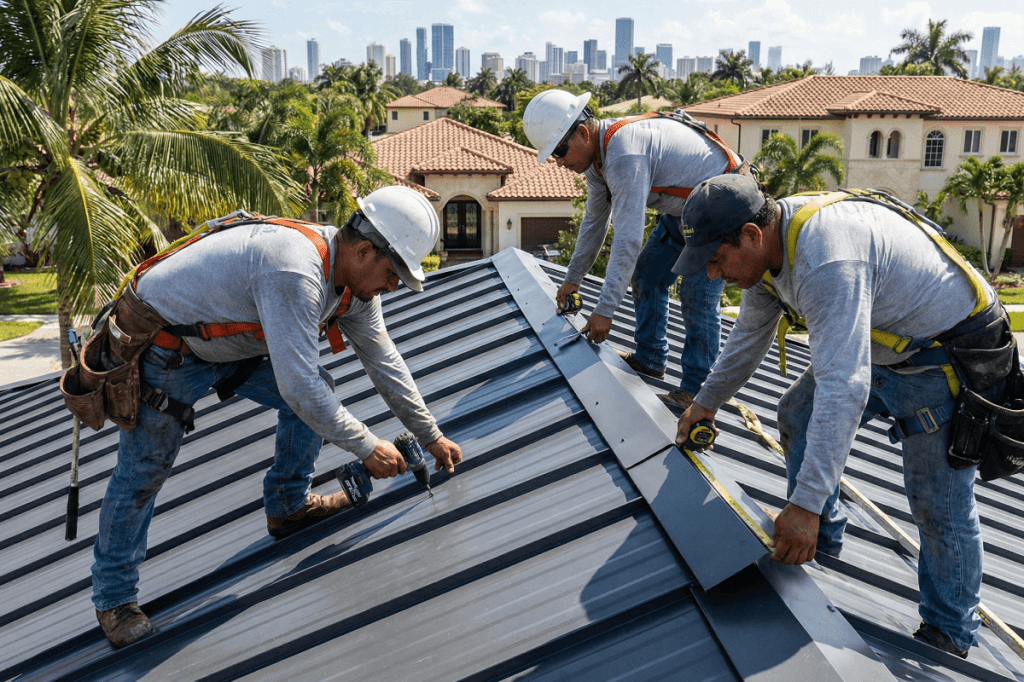
What Proper Metal Roof Installation Involves
A properly installed metal roof begins with a thorough assessment of the existing structure and deck. The deck must be flat, sound, and properly prepared before any metal panels are installed. Underlayment selection is critical — the wrong underlayment can create noise, condensation, or corrosion problems. Panel installation requires precise alignment, proper clip spacing to accommodate thermal movement, and correct seaming technique. Flashing at eaves, rakes, valleys, penetrations, and ridge must be engineered and installed to shed water reliably for decades. Every detail matters because every detail is load-bearing in terms of the roof’s long-term performance.
The Importance of Manufacturer Certification
Leading metal roofing manufacturers — including Metal Sales Manufacturing, ATAS International, Drexel Metals, and others — offer installer certification programs that ensure contractors are trained in the specific installation requirements of their products. Certification matters for two reasons. First, it confirms that the installer has received proper training. Second, it is often a prerequisite for the manufacturer’s enhanced warranty — sometimes including fifty-year or even lifetime product warranties. Hiring an experienced metal roofer with current manufacturer certifications unlocks warranty protection that uncertified installers cannot offer their customers.
Questions to Ask a Metal Roofer Before Hiring
When interviewing metal roofer candidates, ask how many metal roofs they have installed specifically (not total roofing projects). Ask which manufacturers’ certification programs they participate in and whether their certifications are current. Ask to see a portfolio of metal roofing projects they have completed, and request references from past metal roofing clients specifically. Ask them to explain how they handle thermal movement in the specific system they are recommending for your project. Their ability to answer these questions with specificity and confidence tells you a great deal about their actual expertise.
The Cost of Hiring a Non-Specialist
The consequences of having metal roofing installed by a contractor without adequate training and experience are serious. Oil-canning — the waviness of metal panels that results from improper installation — is largely a cosmetic issue, but it signals that the installation was not done correctly. Fastener failures, seam failures, and improper flashing that allow water infiltration are not cosmetic — they lead to expensive damage that may not become apparent until the warranty period has ended. The additional cost of hiring a genuine specialist is a small fraction of the cost of remediation.
Finding the Right Metal Roofer
Start with manufacturer referral programs — most major metal roofing manufacturers maintain lists of their certified installers, searchable by region. Ask for references from recent metal roofing projects specifically. Visit an installation in person if possible. Get written estimates that specify the exact product, installation system, and warranty coverage. A specialist will be transparent about all of these details and will welcome your due diligence as evidence that you are a serious, informed client.
 Eduindex
You must be logged in to post a comment.