



J. V. Fulpagare and *S. S. Patole
Research Scholler, Zoology Research Laboratory VVMS’s. S. G. Patil Arts, Commerce and Science
College – Sakri, District – Dhule
*Dept of Zoology, Principal, Sudam Barku Wagh Arts and Science College, Khandbara.
Corresponding Author: jyotifulpagare@gmail.com
Abstract
The main purpose of current study was to analyses biochemical composition (protein, lipid and moisture) appropriate amount of entire body wet weight tissue of 19 fish species which were previously recorded from four different stations i.e. Sakri, Kasare, Dahivel and Pimpalner during May, 2024 to April, 2025. The mined outcome was showed difference in diverse fish species with their biochemical composition. Protein was found in between (21.40 ± 01.25) to (11.05 ± 01.65), lipid ranges in (09.30 ± 01.80) to (01.10 ± 00.85) whereas moisture content ranges in (82.60 ± 01.15) to (70.50 ± 02.15). In all nineteen species of fishes had been recorded higher caloric value. Mystus bleekeri, Channa punctata and Mastacembellus armatus are more nutritionally beneficial fishes as compare to other 16 species.
Key words: Kasare, Caloric value, Mystus bleekeri, Dahivel.
Introduction:
Fish food is a highly proteinoids in nature. A large percentage of people consume it due to its low cholesterol, tender meat, and great taste. It is the cheapest source of animal protein and other vital nutrients that are important in the human diet, predominantly in low- and middle-income groups and it has been widely accepted as a good source of protein and other elements for maintaining a healthy body (Andrew, 2001).
The importance of fish as a source of high-quality, balanced and easily digestible protein, vitamins and polyunsaturated fatty acids and other organic products is well understood3. It is the most important source of animal protein. (Kumar et. al., 2020). The chemical composition of proteins and lipids has traditionally been used as an indicator of the nutritional value of fish as well as their physiological condition and habitat (Prakash and Verma, 2018)
The nature and quality of nutrients in maximum animals depend mostly on their food type. Besides, the feeding habit of an individual fish species significantly affects the nutritional composition of its flesh. Almost 85-90% fish protein is digestible and all the dietetic vital amino acids is found in the fish meet. The amount of roughly proximate composition together with protein and fats content is often essential to ensure the food monitoring necessities.
Material and Methods:
Present study was conducted at four selected stations from Sakri and Sakri Tahsil i.e. Sakri, Kasare, Dahivel and Pimpalner during June, 2023 to May, 2025. The geographical location of the study area has Sakri- (20059’25” N and 74018’52” E), Kasare- (20056’57” N and 74015’33” E), Dahivel- (20059’25” N and 74018’52” E), Pimpalner- (17050’55” N and 74052’30” E) (Google Earth,2015).
During the study, healthy, appropriately sized fresh fish specimens brought from fishermen. The entire sample was covered with inverted box for keeping freshness, brought them to laboratory. The fish were de-scaled wherever essential, their abdomens were cut open and they were washed two to three times with distilled water. Photographs were taken for identification and taxonomic studies. Fish were identified using various literature viz., Day (1994); Jayaram (2002); Talwar and Jhingran (1991). Proper amount of whole-body wet weight tissue of the fish was taken for biochemical analysis. The tissues were homogenized and centrifuged at 3000 rpm for 10 minutes for estimation of protein, lipid and moisture. Subjecting the body tissues to a solvent mixture of ethyl ether and ethanol (3:1) Bloor mixture. Six observations were made on each chemical analysis. The mean and standard deviation were calculated over the two-year study period. The estimated parameters content was determined by Protein by- Lowry O.H. (1951) method, lipid by – Jayaraman J. (1981) method Whereas total moisture by oven dried method – Anonymous, (1996) method.
Result and Discussion:
The existing study was carried out in total 19 previously recorded fish species from four different stations of Sakri Tahsil. Total 19 species were collected, which belonging to 6 orders followed by 10 families, 18 genera and species. Order Cypriniforms were dominated with 11 species and Family Cyprinidae with 10 species.
From Sakri (Tor khudree, Mystus bleekeri, Opsarius bendelisis, Devario aequipinnatus, Paracanthocobitis botia), from Kasare (Salmostoma bacaila, Labeo boggut, Mastacembelus armatus, Systomus sarana, Channa punctata, Puntius sophore, Oreochromis niloticus, Garra mullya), from Dahivel (Notopterus synurus, Mystus bleekeri, Cirrhinus reba) however from Pimpalner (Ompok bimaculatus, Hypophthalmichthys molitrix, Corica soborna) were identified. Analyzed nutritive values of Protein, Lipid and Moisture were estimated immediately on same day of collection. Six observations were taken of each parameter in two years study from June, 2023 to May, 2025. Mean and standard deviation were calculated and the values are shown in (Table no.-1) however graphical representation mentioned in fig. 1 to 4 with different stations.
Total Protein (%): As compare to others, protein is most leading biochemical parameter. Consumers gain from fishes near about 16% of animal protein. Protein is the second major component in muscle tissues of fish and is generally present in the range ranged in between 15 to 20 g/100g tissue. In some species lower or higher than this percentage of protein was found. Protein content of fish is considered low if it is below 15%. The extent of variations in protein level is comparatively low. Feeding habits, spawning cycle etc. affect the level of protein in the tissues. These results demonstrate that in good quality of protein is present in all fish species to fulfil the need of healthy diet. Higher content of protein evaluated in Mastacembelus armatus (21.40 ± 01.25)Least count of protein content estimated in Garra mullya (11.05 ± 01.65). Remaining 16 fish species shown protein range in between (11.10 ± 01.20) to (20.15 ± 01.05). Our findings are corroborated with Acharya et al. (2018).
Total Lipid (%): Lipids include a wide heterogeneous group of compounds. Lipids are defined as the fraction of any biological material extractable by solvents of low polarity. Variations in the lipid content are much wider than that in protein. Fish with fat content as low as 0.5% and as high as 16 18% are of common occurrence. In many species, there is a build-up of lipids during the feeding season and decrease during spawning (Bheem Rao and Sanjeevaiah, 2023). Percentage of Lipid shown variation in 19 fish species, stated in Lipids are most vital constituent of fish egg as reserve energy source, (Pal et al., 2011). The maximum percentage of lipid shown in Corica soborna (08.85 ± 00.70), followed by Mastacembelus armatus (07.90 ± 00.85). Least count of protein content estimated in Mystus bleekeri (01.15 ± 00.85), Remaining 16 fish species protein ranges in between (01.35 ± 00.15) to (05.90 ± 01.40). Our study was corelated with some researchers, (Arunachalam et al., 2017)
Total Moisture (%): Water is essential for all living systems. Body fluids act as medium of transport of nutrients, metabolites etc. and water is the major component in these fluids. It is required for the normal functioning of many biological molecules.According to (Daniel, 2015) this type of relationship between moisture and fat is accurate for various body tissues as well as for whole body tissues. If moisture content increases, then fat content decreases, Praveen et al. (2018). Estimated percentage of the moisture ranges from (80.75± 01.60) to (45.45 ± 02.10) found in Hypophthalmichthys molitrix and Mastacembelus armatus respectively. Remaining 16 species are followed by (81.00 ± 02.80) to(60.00 ± 01.25).
The biochemical composition of the fish muscle generally indicates the fish quality. Therefore, proximate biochemical composition of a species helps to assess its nutritional and edible values. Although several studies dealing with the proximate composition of biochemical components of many commercially important food fishes have been reported. Khalili and Sabine(2018) investigate lipids, protein, vitamins and minerals percentage in some fish species. Singh et al. (2016) stated that the amount of protein showed higher in liver due to greater concentration of enzymes. Kumar et al. (2020) analyses the effect of dietary vitamin-C on biochemical and morphometric parameters of Labeo rohita. Ali et al. (2020) estimated biochemical composition of some marine edible fish species from Kasimedu fish lading centre of Chennai. Patil and Patole (2025) estimated biochemical profile (Glycogen Protein, Lipid ad Moisture) of fresh water fishes from Nakana lake.
Conclusion
Generally, fish quality depends upon biochemical composition of the whole body which is revealing decline of energy reserves and storage of energy. Hence assessment of their edible and nutritional values related to energy element judge with other species. These values are noticeably varied within species. Based on the results of this research, it was observed that the diversity of fish fauna is more in Kasare village as compare to remaining three stations i.e. Sakri, Dahivel and Pimpalner. All nutritious fishes found in Kasare Village. It is recommended that further the reservoir can be consider being in good condition for fish production.
References
- Acharya, K.V., Shandage, A., Dadhaniya, P. (2018): Medicinal, Nutritional and Biochemical Values of Fishes, J. of Emerg. Techno. and Inno. Res., 5(7): 343-347.
- Ali, SSR, Abdhakir, E.S., Muthukkaruppan, R., Sheriff, M.A., Ambasankar, K. (2020): Nutrient Composition of Some Marine Edible Fish Species from Kasimedu Fish Landing Centre, Chennai (TN), India., Int. J. of Biol. Inno., 2(2):165-173. https://doi.org/10.46505/IJBI.2020.2213.
- Andrew A.E (2001). Fish processing Technology. University of Horin press. Nigeria, 7-8.
- Anonymous, (1996): Loss on drying, in Indian pharmacopeia, New Delhi: Controller of publication.
- Arunachalam, A., Nanthini, N., Malathi, S. and Ragapriya, A. (2017): Biochemical Analysis of Fresh Water Fish Species of Veeranam Lake, Cuddalore Dist., Tamil Nadu, India, Int. J. of Zool. and Appl. Biosci., 2(4):202-206. https://doi.org/10.5281/zenodo.1311976.
- Bheem Rao T. and Sanjeevaiah, A. (2023): Biochemical Composition in Different Tissues of Heteropneustes Fossilis (Bloch), IJCRT, 11(10): 237-245.
- Danial Imoubong, E., (2015): Proximate composition of three commercial fishes commonly consumed in Akwa Ibom State, Nigeria, Int. J. of Multi. Acad. Res. S.,3 (1), ISSN 2309-3218.
- Dey, F. (1994): The fishes of India, Burma Ceylon, fourth Indian reprint, Vol. I and II Jagmandar book agency, New Delhi.
- Jayaram, K.C. (2002): The freshwater fishes of the Indian region. Narendra Publication House, Delhi, pp., 551.
- Jayaraman, J., (1981): In: Laboratory Manual in Biochemistry. Wiley eastern ltd., New Delhi, 96.
- Khalili, T. S. and Sabine, S. (2018): Nutritional Value of Fish: Lipids, Proteins, Vitamins, and Minerals. Reviews in Fisheries Sci. & Aqua., 26(2):243-253.
- Kumar A, Bajpayee A.K., Yadav C.B. (2020): Effects of Dietary vitamin-C on Biochemical and Morphometric parameters of Labeo rohita., Int. J. of Biol. Inno., 2(2):174-177. https://doi.org/10.46505/IJBI.2020.2214.
- Lowry, O. H., Rosen Brough, N. J., Farr, A. L., Randall, R. J., (1951): Protein measurement with the Folin phenol reagent. J. Biol. Chem., 193:265-75.
- Pal, M., Mukhopadhyay, T. and Ghosh, S., (2011): Proximate, fatty acid, and amino acid composition of fish muscle and egg tissue of Hilsa (Tenualosa ilisha). J. Aqua. Food Prod. Technol., 20: 160-171.
- Patil Manisha and Patole, S. S. (2025): Biochemical profile of freshwater fishes from Nakana lake, Dist.- Dhule (MS) India, B. Aadhar, Int. Peer Reviewed Indexed Journal. DXXI- 521, 147-150.
- Prakash, S., Verma, A.K. (2018): Effect of synthetic detergent on biochemical constitutions of freshwater major carp, Labeo rohita, Int. J. on Agri. Sci., 9(1): 56-59.
- Praveen, D. R., Rushinadha, R. K., Krishna, P., Durga Prasad, D. Sreeramulu, K. (2018): A study on proximate composition of selected three fresh water fishes (Labeo Rohita, Channa Striata and Mastacembelus Armatus) of Tammileru reservoir, West Godavari district, Int. J. of Basic and Rec., 8(7): 650-666.
- Singh, S., Dixit, P. K. and Patra, A.K. (2016): Biochemical Analysis of Lipids and Proteins in three Freshwater Teleosts (Clarias batrachus, Channa punctatus, Anabas testudineus) Res. J. of Rec. Sci., 5(6): 24-33.
- Talwar, P.K. and Jhingran, A.G. (1991): Inland fishes of India and adjacent countries. Oxford and IBH Publishers, New Delhi.
| Table-1, Biochemical Assessment (Protein, Lipid and Moisture) of freshwater fishes from four different stations of Sakri Tahsil. Dist.- Dhule, during June, 2023 to May, 2025. | |||||
| Sr. No. | Station | Name of the Fish Species | Protein % | Lipid % | Moisture % |
| 1 | Sakri | Tor khudree | 13.10 ± 01.10 | 01.35 ± 00.65 | 80.30 ± 03.20 |
| 2 | Mystus bleekeri | 12.95 ± 01.35 | 01.50 ± 00.40 | 70.50 ± 02.15 | |
| 3 | Opsarius bendelisis | 13.10 ± 01.75 | 01.45 ± 00.90 | 82.60 ± 01.15 | |
| 4 | Devario aequipinnatus | 12.13 ± 01.40 | 01.15 ± 01.05 | 70.30 ± 02.15 | |
| 5 | Paracanthocobitis botia | 15.10 ± 01.65 | 02.30 ± 01.55 | 70.90 ± 03.40 | |
| 6 | Kasare | Salmostoma bacaila | 16.20 ± 00.90 | 02.80 ± 00.75 | 75.05 ± 02.10 |
| 7 | Labeo boggut | 17.20 ± 00.90 | 02.20 ± 00.60 | 70.30 ± 02.10 | |
| 8 | Mastacembellus armatus | 21.40 ± 01.25 | 07.90 ± 00.85 | 45.45 ± 02.10 | |
| 9 | Systomus sarana | 11.35 ± 00.95 | 00.85 ± 00.15 | 60.00 ± 01.25 | |
| 10 | Channa punctata | 20.15 ± 01.05 | 05.90 ± 01.40 | 65.00 ± 03.55 | |
| 11 | Puntius sophore | 14.95 ± 01.30 | 01.90 ± 00.45 | 70.30 ± 00.30 | |
| 12 | Oreochromis niloticus | 13.60 ± 00.70 | 01.30 ± 00.40 | 75.00 ± 02.80 | |
| 13 | Garra mullya | 11.05 ± 01.65 | 01.95 ± 02.15 | 71.20 ± 03.20 | |
| 14 | Dahivel | Mystus bleekeri | 11.10 ± 01.20 | 01.15 ± 00.85 | 72.35 ± 01.90 |
| 15 | Notopterus synurus | 15.90 ± 01.50 | 02.45 ± 00.25 | 80.10 ± 02.80 | |
| 16 | Cirrhinus reba | 17.30 ± 00.90 | 02.60 ± 01.80 | 76.00 ± 03.80 | |
| 17 | Pimpalner | Ompok bimaculatus | 14.60 ± 01.30 | 01.10 ± 00.85 | 81.00 ± 02.80 |
| 18 | Hypophthalmichthys molitrix | 12.55 ± 01.30 | 01.90 ± 00.70 | 80.20 ± 02.20 | |
| 19 | Corica soborna | 17.90 ± 01.20 | 02.10 ± 00.10 | 70.30 ± 04.50 | |
Note- all values expressed in mg/ 100g wet weight tissues and mean S.D. of six observations during two years- June, 2023 to May, 2025.
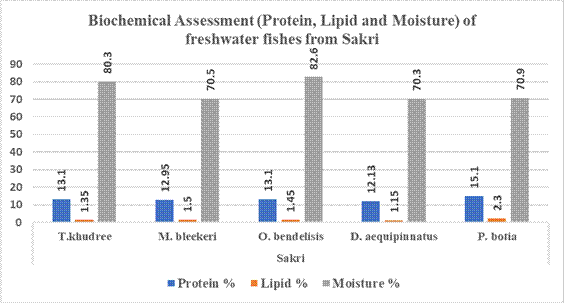
Fig.-1, Graphical representation of biochemical Assessment (Protein, Lipid and Moisture) of freshwater fishes from Sakri.
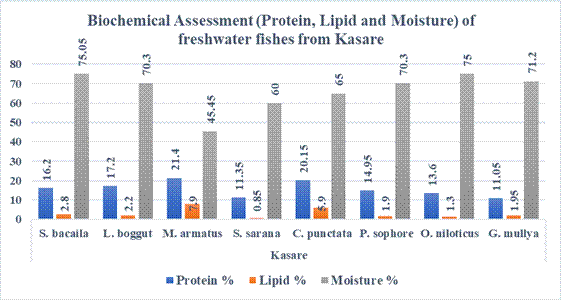
Fig.-2, Graphical representation of biochemical Assessment (Protein, Lipid and Moisture) of freshwater fishes from Kasare.
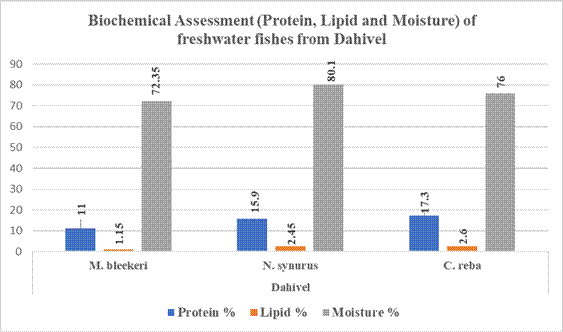
Fig.-3, Graphical representation of biochemical Assessment (Protein, Lipid and Moisture) of freshwater fishes from Dahivel.
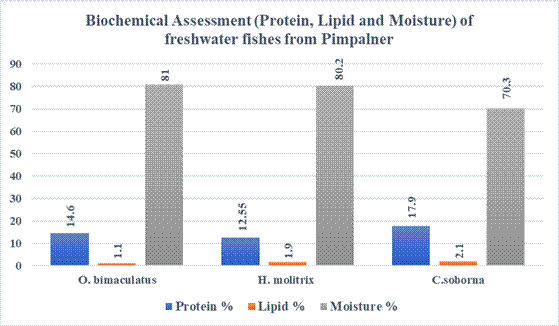
Fig.-4, Graphical representation of biochemical Assessment (Protein, Lipid and Moisture) of freshwater fishes from Pimpalner.


You must be logged in to post a comment.