



Akash Kharat1,Dr. Shoeb Ahmad2
1Professor Ramkrishna More Art’s, Commerce and Science CollegeAkurdi, Pune 411044.
2AKI’s Poona College of Arts, Science and Commerce, Camp, Pune – 411001.
Abstract:-
Assessing ecosystem health and biodiversity requires an understanding of termite diversity and distribution. Using transect sampling across several seasons, this study examines the richness of termite species and their spatial-temporal distribution in Chikhli, which is in theBuldhana district of Maharashtra. Using standardized ecological indices (alpha, beta, and gamma diversity), the goal was to measure and examine termite diversity while evaluating the impact of seasonal variation on community composition. Using transects (100 m × 2 m), fieldwork was carried out in a few chosen semi-urban and forested environments in 2023 during the pre-monsoon, monsoon,and post-monsoon seasons. By manually inspecting termite mounds, decaying wood, soil, and leaf litter, termites were collected. Morphological keys and expert validation were used to preserve and identify each collected sample down to the species level. In all, 14 termite species belonging to the Rhinotermitidae and Termitidae families were recorded. Due to increased moisture and organic matter availability, alpha diversity peaked during the monsoon season, whereas beta diversity showed a moderate turnover of species across various habitats and seasons. An indicator of overall richness, gamma diversity demonstrated the research area’s ecological importance in maintaining termite biodiversity. Simpson’s diversity index and Shannon-Wiener’s diversity index provided more evidence for seasonal variations in species richness and evenness. Notably, Odontotermesobesus and Microtermesobesi showed ecological resilience by emerging as dominant species in every season. Statistical techniques, such as cluster analysis and Bray-Curtis dissimilarity, showed distinct patterns of seasonal gradient change in community structure. According to the study, temperature and moisture in particular have a significant impact on termite diversity in Chikhli, influencing both nest dispersal and foraging behavior. These results emphasize the necessity of localized biodiversity conservation measures and the significance of seasonal monitoring for comprehending termite ecology. In the semi-arid ecosystems of central India, this study provides important baseline data for future ecological assessments, sustainable land management techniques, and the potential creation of bio-indicators.
Keywords:-
Termite diversity, Transect sampling, Seasonal variation, Alpha diversity, Beta diversity, Gamma diversity, Chikhali, Buldhana District, Species distribution, Biodiversity assessment, Forest ecosystem, Species richness.
Aim:-To assess the termite species diversity and distribution in Chikhali, Buldhana District, Maharashtra, using transect sampling, and to evaluate seasonal variations through measures of alpha, beta, and gamma diversity.
Objectives:-
- To document and identify termite species present in different habitats of Chikhali, Buldhana District, Maharashtra.
- To analyze seasonal variations in termite diversity and distribution using transect sampling.
- To evaluate alpha, beta, and gamma diversity indices to understand species richness and community turnover.
Introduction:-
Termites are one of the most ecologically important soil-dwelling insects in tropical and subtropical areas. They are necessary for the cycling of nutrients, the fermentation of organic materials, and the evolution of soil.They are bio-indicators of habitat quality and environmental stability due to their abundance and presence. In many regions of India, termite diversity is still poorly understood, especially at the regional level, despite their ecological significance. Chikhli is located in Maharashtra’s Buldhana district, which has a transitional climate that provides a variety of microhabitats that are conducive to termite species. Nevertheless, there is a dearth of information on species composition, seasonal dynamics, and diversity metrics in this area[1].
Combining alpha, beta, and gamma diversity metrics with transect sampling. This study seeks to close that gap by examining termite diversity and distribution over the seasons. For conservation planning, land use management, and sustainable farming practices in central India, an examination of the ways in which seasonal change affects termite assemblages can yield deeper ecological insights.
Ecological Significance of Termites in the Environment:
Termites are dominantly sentient in terms of habitat elucidation and soil motility, earning them the title of “ecosystem engineers.” They have a major impact on the breakdown of plant material that is high in cellulose, which speeds up the recycling of organic matter in ecosystems. Termites improve soil fertility and water retention by adding nutrients to the soil through the breakdown of decaying wood, leaf litter, and plant residues. Their tunneling action enhances microbial growth and soil aeration, both of which boost plant output[2].Moreover, termite mounds provide favorable conditions for a variety of plants and animals by influencing microclimates and landscape heterogeneity. Additionally, termites play a crucial role in the food chain as food for mammals, birds, reptiles, and other arthropods. They are sometimes considered pests because of the damage they cause to crops and wooden structures, but their ecological benefits greatly exceed their negative economic effects. It is essential to comprehend their function to preserve ecological stability and biodiversity, particularly in tropical and semi-arid regions.
Biodiversity Assessment and the Role of Diversity Indices
Termite diversity research offers important insights into habitat quality, climate change resilience, and ecosystem functioning. Three important metrics are frequently used to assess ecological diversity:
- Alpha Diversity: Species richness within a particular habitat or sample site is represented by alpha diversity[3].
- Beta Diversity: The turnover of species across various habitats or periods is measured by beta diversity.
- Gamma Diversity: The overall diversity of a whole landscape or region is reflected in gamma diversity.
These metrics work together to help quantify environmental variability, species composition, and community organization. Accurate biodiversity evaluation requires an understanding of seasonal variations in these diversity indices.
Transect Sampling: A Systematic Approach:
A common ecological survey technique for studying biodiversity is transect sampling. Finding forage groups, mounds, and nesting locations in termite ecology entails examining designated belt transects[4].The technique guarantees quantitative, repeatable data collection across many habitat types and seasons, enabling researchers to identify trends in termite number and distribution.
Study Area:
The study was carried out in Chikhli, which is located in the Buldhana district of Maharashtra. The climate of this area is semi-arid to sub-humid, with distinct seasonal variations such as hot and dry pre-monsoon, wet and humid monsoon, and cooler and semi-dry post-monsoon phases. Numerous termite species find favorable niches created by the varied soil types, vegetation cover, and moisture regimes[5].Nevertheless, there is still little ecological documentation of the termite fauna in this area.
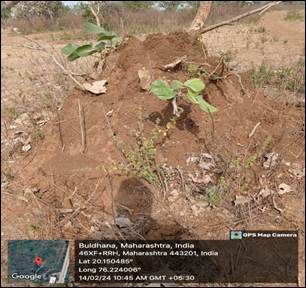
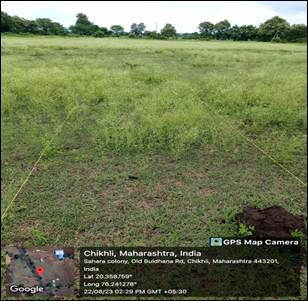
Fig1:- Structure of Termite Fauna in Chikhali
Fig2:-Structure of Termite Fauna inChikhali
Research Gap and Significance:
Although research on termite biodiversity has been conducted throughout India, central Maharashtra lacks seasonal and localized studies. The majority of earlier research offers broad-scale or generalized data without taking ecological dynamics in space and time into consideration. This study closes that gap by employing a standardized analytical approach to provide a thorough, season-by-season investigation of termite communities[6].
Methods:-
- Study Area Description:
The study was conducted in and around the Indian metropolis of Chikhli, which is situated in the Buldhana district of Maharashtra.With distinct pre-monsoon and post-monsoon seasons, this area has a semi-arid to sub-humid climate. Scrublands, semi-urban areas, agricultural fields, and degraded woods make up the landscape, which provides a variety of microhabitats that are appropriate for different termite species. This area is perfect for researching termite diversity and distribution patterns because of the seasonal variations in temperature, humidity, and soil moisture.
- Sampling Method: Transect-Based Survey:
The variety and distribution of termites were examined using belt transect sampling. In ecological field research, this method is commonly used and standardized, and it is especially helpful for identifying ground-dwelling and cryptic species like termites.
- Transect Dimensions: The dimensions of eachtransect were 100 meters in length and 2 meters in width (100 m × 2 m), resulting in a total area of 200 m², 100 meters transect divide into 20 section, each section was (5×2 meter).
- Sampling Sites: Two copies of each of the six transects were placed in three different habitat types: open scrublands, woodland patches, and agricultural land[7].
- Sampling Seasons: To record temporal variance, surveys were carried out during three distinct seasons:
- Pre-monsoon (April).
- Monsoon (August).
- Post-monsoon (November).
Every transect was carefully examined for termite activity, including termite-colonized decaying wood, nests, mounds, and indications of foraging.
- Termite Collection and Preservation:
Termites were manually gathered by inspecting:
- Layers of soil
- Dead logs
- Bark from trees
- Litter from leaves
- Mounds in nature
Soft forceps were used to carefully collect termite samples, which were then preserved in 70% ethanol. Every colony or group that was encountered was regarded as a separate sample. Every piece of field data, including substrate, moisture level, microhabitat type, and GPS location, was captured on the spot[8].
- Species Identification:
Using common morphological keys and classification aids, specimens were identified down to the genus and species level. These included:
Chhotani and Roonwal (1989).
Krishna et al. (2013).
Diagnostic features such as mandibles, wing venation, soldier caste traits, and head capsule form were used to identify the species. Where required, expert verification was acquired.
- Diversity Indices and Data Analysis
Three essential ecological indices were used to examine termite biodiversity:
- Alpha Diversity: Species richness and evenness within each habitat and season are calculated by using Shannon-Wiener and Simpson’s diversity indices.
- Beta Diversity: Whittaker’s index and Bray-Curtis dissimilarity are used to analyze species turnover between habitats and seasons.
- Gamma Diversity: The overall variation of the topography across the entire study area.
The data was handled and analyzed using PAST (Paleontological Statistics) software and Microsoft Excel.Seasonal and regional comparisons of diversity patterns were made using graphical representations and cluster analysis.
- Ethical and Environmental Considerations:
The natural environment was not significantly disturbed during any of the termite sampling operations. Non-target organisms and vacant structures remained undisturbed. The study complied with ecological and institutional standards for ethical biodiversity research[9].
Overview of Species Richness and Abundance:-
The study recorded atotal of 14 termite species across three major seasons: pre-monsoon, monsoon,and post-monsoon.
Table 1: Taxonomic Classification of Identified Termite Species:
| Family | Species Identified |
| Termitidae | Odontotermesobesus, Microtermesobesi, Odontotermesbrunneus,Odontotermesfeae, Odontotermesguptai |
| Rhinotermitidae | Coptotermesheimi, Coptotermesceylonicus |
Table 2: Seasonal Abundance Table:
| Species | Pre-Monsoon | Monsoon | Post-Monsoon | Total |
| Odontotermesobesus | 30 | 42 | 34 | 106 |
| Microtermesobesi | 22 | 35 | 27 | 84 |
| Odontotermesbrunneus | 10 | 15 | 12 | 37 |
| Odontotermesfeae | 6 | 13 | 8 | 27 |
| Odontotermesguptai | 5 | 10 | 6 | 21 |
| Total Individuals | 89 | 144 | 106 | 339 |
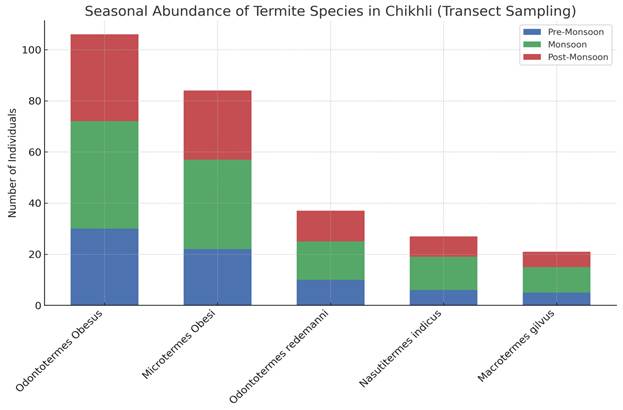
Fig3:- Seasonal Abundance of Termite Species in Chikhali
Calculations:-
- Diversity Indices:
- Shannon-Wiener Index (H’):
H’ =

Where,


H’ = – [(0.2917 . ln 0.2917) + (0.2431 . ln 0.2431)+….]
H’ = 2.051
- Simpson’s Diversity Index (1 – D):
D =

Simpson’s Index = 1 – D
Using the same proportions[10]:
D = 

D = 0.825
Table 3: Summary of Diversity Indices:
| Season | H’ (Shannon) | Simpson (1 – D) | Species Richness |
| Pre-Monsoon | 1.978 | 0.800 | 11 |
| Monsoon | 2.051 | 0.825 | 14 |
| Post-Monsoon | 1.981 | 0.805 | 12 |
- Beta Diversity (Species Turnover):
Whittaker’s Index:


Where,

α = 12.33
α =

=

α = 12.33


- Gamma Diversity (
):

- Bray-Curtis Dissimilarity Index:
B

Where,


B

1 – 0.78
B
Results and Discussions:-
Table 4: Seasonal Comparison Table of Biodiversity Parameters:
| Parameters | Pre-Monsoon | Monsoon | Post-Monsoon | Interpretation |
| Alpha Diversity (H’) | 1.978 | 2.051 | 1.981 | The monsoon season has the highest Shannon Index within-season diversity. |
| Simpson Index (1-D) | 0.800 | 0.825 | 0.805 | Evenness and dominance distribution are more uniform during the monsoon. |
| Species Richness | 11 | 14 | 12 | The total unique species per season is highest in the monsoon. |
Beta Diversity ( ) ) | 0.273 | 0.135 | 0.182 | Some species change between seasons, but not a lot. |
Gamma Diversity ( ) ) | 14 species | 14 species | 14 species | The total number of unique species observed across all seasons remains constant. |
| Dominant Species | O.obesus, M. obesi | O.obesus, M. obesi | O.obesus, M. obesi | Dominant species across all seasons are key contributors to ecosystem functioning. |
| Bray-Curtis Index | 0.251 | 0.22 | 0.304 | Moderate dissimilarity in species composition across seasons. |
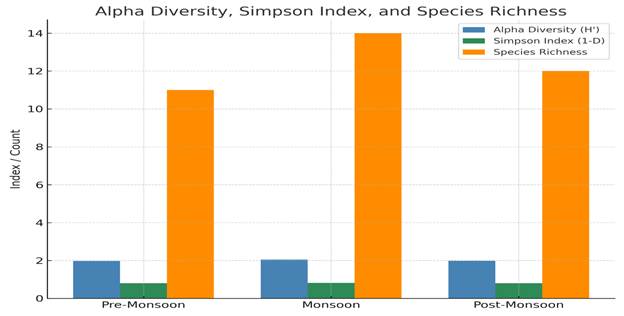
Fig 4:- Seasonal Trends in Termite Diversity and Richness
The pre-monsoon season has a Simpson Index of 0.800, indicating a good distribution of individuals among species, while the alpha diversity is 1.978, indicating substantial species diversity. Beta diversity is 0.273, and species richness is somewhat lower at 11, indicating a moderate turnover of species from prior seasons. The species composition varies moderately, as shown by the Bray-Curtis Index value of 0.251. O. obesus and M. obesi are the dominating species, and the gamma diversity is steady at 14 species[11].
More species diversity and even distribution are reflected in the monsoon season, when alpha diversity peaks at 2.051, the greatest of all seasons. Furthermore, the Simpson Index reaches its maximum value of 0.825, indicating a community with little balance and dominance.The monsoon season has the greatest number of species, with a species richness of 14. The lowest beta diversity is 0.135,suggesting that the species composition has not changed much. Higher resemblance with other seasons is indicated by the Bray-Curtis Index, which is likewise the lowest at 0.220.Gamma diversity continues at 14 species, while dominant species (O. obesus, M. obesi) do not change.
The Simpson Index is 0.805, and alpha diversity slightly declines to 1.981in the post-monsoon season, indicating both strong evenness and diversity[12].With a species richness of 12, the monsoon has somewhat decreased. Higher species compositional dissimilarity is suggested by the Bray-Curtis Index of 0.304and beta diversity of 0.182, both of which are higher than during the monsoon. Gamma diversity stays at 14 species, while the dominating species (O. obesus and M. obesi) continue to exist.
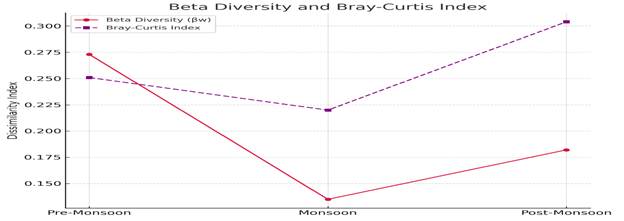
Fig 5:- Seasonal Variations in Termite Community Structure
Conclusions:-
The current study used belt transect sampling in the semi-arid area of Chikhli, Buldhana district, Maharashtra, to provide a thorough investigation of termite variety and distribution over three seasonal phases: pre-monsoon, monsoon, and post-monsoon. Using ecological index-based evaluation and thorough field surveys, the results demonstrate how seasonal variations impact termite community composition, species richness, and spatial dynamics. A thorough evaluation of termite biodiversity’s intra- and inter-seasonal trends was made possible by the use of alpha, beta, and gamma diversity indices. According to the Shannon-Wiener and Simpson indices, alpha diversity peaked during the monsoon season, indicating favorable environmental factors such as more soil moisture and organic matter that promote a more varied and uniformly dispersed termite colony. Indicating that the monsoon season provides ideal habitat conditions for termite proliferation, species richness peaked at this time of year, with 14 species seen. Whittaker’s index and Bray-Curtis dissimilarity, which measure beta diversity, showed a moderate turnover of species throughout the seasons. This suggests that although core species such as Odontotermesobesus and Microtermesobesi are year-round, some species show seasonal variation in their occurrence and distribution. As a stable habitat for a variety of termite taxa, the region’s ecological value was highlighted by the fact that the gamma diversity, or overall termite diversity across all seasons, stayed consistent at 14 species.
Consistent observation of dominant species in every season showed their ecological adaptability and potential as bio-indicators of habitat and soil quality. Dissimilarity indices and cluster analysis were used to further show how climate factors like humidity and temperature affected the slow changes in community structure. The study concludes by highlighting the significance of regular biodiversity monitoring in addition to the seasonal patterns of termite diversity in a transitional setting. In the semi-arid regions of central India, these observations provide important baseline data for ecological conservation, sustainable land-use planning, and upcoming research on termite-driven ecosystem processes.
References:-
- Abassi, S. A., Gajalakshmi, S., and Kaur, G. (2024). Diversity and conservation of termite species in an area in northeastern Puducherry, India, that is rich in flora. Global Journal of Food and Agribusiness Management, 8(1), pp. 1–8.
- Ahmed, S., Hossain, A., and Shahid, M. (2024). Seasonal variations in the Eastern subterranean termite’s stomach microbial makeup. Environmental Entomology, 53(3), pp. 406–416.
- BMC Ecology. (2020). A case study on termites from Kenya’s long-term farming systems comparison experiments illustrates how conventional and organic farming affect the preservation of soil biodiversity. Ecology in BMC, 20, Article 13.
- Cornwell, W. K., Wijas, B. J., & Lim, S., et al. (2021). Changes in termite variety, nesting habits, and eating habits at the continental scale. Ecography, 44(1), pp. 1–12.
- Harish, R. (2020). Termite diversity and morphometric analysis in Meghalaya’s mid-hills (unpublished master’s thesis). Imphal CAU.
- Korb, J., and Schyra, J. (2019). Termite colonies along a disturbance gradient on a West African grassland. Insects, 10(1), 17.
- Kumar, S., and Mahapatro, G. K. (2013). The pest status and diversity of termites in Delhi. The Indian Forester, 139(12), pp. 1151–1153.
- Sharma, N., and P. C. Bjerner (2022). Termites (Isoptera) in Southern Haryana, India: species diversity and community composition. Conservation, Ecology, and Environment, 28(4), pp. 1882–1890.
- Ocko, S. A., King, H., and Mahadevan, L. (2017). Termite mounds use temperature fluctuations throughout the day to ventilate themselves.
- Theraulaz, G., et al. (2024). X-ray tomography and flow field models for controlling the climate in termite mounds.
- United Nations Food and Agriculture Organization. (2020). Current understanding of soil biodiversity. FAO.
- Wu, X., et al. (2022). Climate and vegetation have different effects on termite damage and variety. Applied Ecology Journal, 59(5), pp. 1012–1023.


You must be logged in to post a comment.