a,*SSVPS late. Dr. P.R.Ghogrey Science College Deopur, Dhule- 424 002, Maharashtra, India
bS. S. M. M. Arts, Science and Commerce College, Pachora- 424 201, Maharashtra, India
c*Nanomaterials Research Laboratory, Department of Physics, Shri. V. S. Naik, A.C.S. College, Raver,425508, India
Abstract:
ZnSnO₃ is a promising ternary oxide semiconductor owing to its favorable structural, electrical, and optoelectronic properties. In this work, ZnSnO₃ samples were synthesized using a simple and cost-effective technique and characterized through thermoelectric power (TEP), electrical, and photosensing studies. Thermoelectric power measurements revealed a positive Seebeck coefficient, indicating p-type conductivity and dominant hole transport. Electrical studies showed temperature-dependent conductivity, confirming the semiconducting behavior of ZnSnO₃. Photosensing measurements under ultraviolet (UV) illumination demonstrated a significant enhancement in photocurrent compared to dark current, along with stable and repeatable photoresponse. The observed photosensing behavior is attributed to efficient generation of charge carriers and surface-related trapping mechanisms under light illumination. The combined results highlight the potential of ZnSnO₃ for applications in photodetectors and optoelectronic devices.
1.Introduction
Researchers are very interested in ternary oxide semiconductors because they can change their physical properties and can be used in many different ways in optoelectronics, sensing, and energy devices. Zinc stannate (ZnSnO₃) has become a promising material because of its unique electrical and structural properties. ZnSnO₃ usually crystallises in a structure linked to perovskite that is orthorhombic. By changing the conditions under which it is made, you can change its phase purity, crystallinity, and microstructure. Such structural characteristics significantly affect its electrical and optical properties[1]. X-ray diffraction (XRD) is a typical way to study the structural properties of ZnSnO₃. It shows that the phases are forming and the crystals are of good quality. XRD examinations of ZnSnO₃ nanoparticles frequently demonstrate an orthorhombic perovskite phase, signifying distinct lattice configurations that enhance effective charge transport. [1]Additionally, synthesis parameters like pH, precipitation conditions, and calcination temperature have a big effect on the size of the crystallites and the strain in the lattice, which in turn affects the optoelectronic performance[2]. ZnSnO₃ has a broad band gap in the near-UV region, which makes it great for detecting ultraviolet light and for use in clear electronic devices. Studies using UV-visible spectroscopy have found that the band gap values for ZnSnO₃ nanoparticles are between 3.5 and 3.7 eV, which is compatible with how wide-bandgap semiconductors work. This broad band gap lets UV light be absorbed well while keeping the visible spectrum clear, which is critical for optoelectronic devices like UV photodetectors and clear conductors[3]. The optoelectronic characteristics of ZnSnO₃ are intricately associated with its charge carrier dynamics and photodetection abilities. Photogenerated carriers improve electrical conductivity when exposed to UV light. This effect is used in photodetectors and photoresponsive sensors. Recent investigations show that ZnSnO₃-based structures have a strong photoresponse, which is similar to other wide band gap oxide semiconductors. This shows that ZnSnO₃ could be useful for high-performance photosensing applications[4]. ZnSnO₃ is still being studied for use in sophisticated optoelectronic and sensing technologies because it has a stable structure, a large optical band gap, and reacts to light. Nonetheless, comprehending the interaction among crystal structure, defect densities, and carrier transport is essential for enhancing device performance[6-11].
2.Experimental details
2.1. Preparation of ZnO-SnO2 nanocomposites and pervoskite ZnSnO3 thin films
Nanocomposite and perovskite thin films have been synthesized on glass substrates by employing spray pyrolysis technique. To create nanocomposite thin films of ZnO-SnO2 and perovskite ZnSnO3 on a glass substrate that has been preheated, zinc chloride (ZnCl2 from Merck, extra pure) and tin (II) chloride pentahydrate (SnCl2.5H2O from Merck, extra pure) were utilized. Table 1 shows the results of mixing zinc chloride with tin (II) chloride pentahydrate in various ratios, including 25:75, 50:50, and 75:25 (1:3, 1:1, and 3:1).
Table 1: Varying amount of reactants and spraying solutions
Thin film Sample
ZnCl2(cm3)
SnCl2.5H2O (cm3)
VolumeRatio
Reactants
S1
25
75
1:3
ZnO-SnO2
S2
50
50
1:1
ZnO-SnO2
S3
75
25
3:1
ZnSnO3
Based on the composition, the prepared films were label as S1 and S2 (both nanocomposites ZnO-SnO2), and S3 (perovskite based ZnSnO3 thin films). Depending on the size of the droplets, the chemical reaction, droplet landing, and solvent evaporation all play a critical role in the creation of the film. We optimized the synthesis parameters are listed in Table 2. The carrier gas pressure, to and fro nozzle movement and substrate temperature were kept constant during the process. Notably, the point during which the droplet approaches the glass substrate sufficiently for the solvent to completely evaporate is the optimal condition for film creation. The synthesized nanocomposites ZnO-SnO2 and perovskite ZnSnO3 thin films samples were annealed at 500 0C for 1 h in the presence of air to enhance its electrical, morphological, microstructure properties and gas sensing capabilities.
3. Characterization of thin films:
3.1Electrical properties:
A) TEP measurement
Figure 1: Temperature dependence of thermoelectric power measurement.
An Arrhenius plot of ZnO-SnO2 and ZnSnO3 thin films is shown in Fig. 2. Figure 3.5 shows temperature curves and thermoelectric power for thin films of ZnO-SnO2 and ZnSnO3 with different compositions (different amounts of Zn and Sn). Figure 2 clearly shows that the thermoelectric power of all samples goes up as the temperature goes up. TEP is negative for all samples in the temperature range of 320–424 K, indicating n-type conductivity [15,16]. All of the samples act like semiconductors. The difference in temperature in the thermoemf measurement makes a carrier migrate from the hot end to the cold end. This generates an electric field that calculates the thermal voltage. The difference in temperature across the semiconductor is exactly equal to this voltage that is created by heat. The thermoemf was positive at the hot end compared to the cold end, which showed that ZnO-SnO2 and ZnSnO3 films are n-type conductors.
B) Electrical conductivity
The electrical conductivity of the nanocrystalline thin films was measured using the DC two-probe method in the temperature range of 298–423 K. The conductivity (σ) was evaluated using the Arrhenius-type relation (1):
——— (1)
where σ0 is the pre-exponential factor, ΔE is the activation energy, k is the Boltzmann constant, and T is the absolute temperature.
Figure 2. Variation of log (σ) with inverse of operating temperature (K)
Figure 3 shows the variation of log(σ) with the inverse of temperature (1000/T). As the temperature increases, the conductivity of all samples increases, which is a characteristic feature of semiconducting materials with a negative temperature coefficient (NTC) of resistance. This confirms that the nanocrystalline thin films exhibit semiconducting behaviour [13].
The conductivity studies reveal two distinct activation energy regions, corresponding to low- and high-temperature ranges at 323-373 K and 373-423 K respectively. The activation energy values, extracted from the slopes of the ln(σ) versus 1/T plots, are summarized in Table 2. The presence of two activation energies indicates two donor levels – one deep and one shallow – located near the conduction band edge. At higher temperatures (423 K), the activation energy decreases slightly, which can be attributed to oxygen adsorption at the film surface. The adsorbed oxygen atoms capture free electrons from the conduction band and form weak bonds with zinc atoms, thereby affecting the conduction process through surface states.
Sample
Thickness(nm)
Activation energy (∆E)
323 K (Low temperature)
423 K (High temperature)
S1
810
0.23 eV
0.19 eV
S2
843
0.17 eV
0.14 eV
S3
839
0.19 eV
0.17 eV
Table 2: Measurement of thickness with activation energy
It is evident from Table 2 that the activation energy decreases with increasing film thickness (S1 to S2). This behavior is likely due to improved crystallinity and grain growth with thickness, which reduces grain boundary scattering and enhances carrier mobility. However, for sample S3, although the thickness decreases slightly compared to S2, the activation energy increases. This anomalous behavior may be associated with structural modifications, possibly the formation of a perovskite-like phase, which alters the electronic structure and increases the barrier for conduction [14].Thus, the combined analysis of conductivity behavior and activation energy trends highlights the role of microstructural features and surface states in governing the charge transport mechanism in the nanocrystalline thin films.
3.3.Photosensing of ZnO-SnO2 and ZnSnO3 sample:
Figure 3. Dark current (pA) vs DC voltage (V) for three samples (S1, S2, S3).
Figure demonstrates how the dark current changes when different DC voltages are applied to samples S1, S2, and S3. For all samples, the dark current goes up steadily as the voltage goes up. This shows that the electrical conduction is stable and the electrode contact is good. S3 has the most dark current of the three samples, whereas S1 has the least current across the whole measured voltage range. The behaviour shown can be explained by differences in the concentration of charge carriers and the density of defects in the samples. The low dark current seen in sample S1 is very useful for photosensing applications because it improves the signal-to-noise ratio when there is light[16].
Figure 5. Illumination current (pA) Vs DC voltage (V) for three samples (S1, S2, S3).
When light is shown on them, all of the samples show a clear increase in current when the DC voltage goes up, which shows that they are photosensitive. Sample S3 exhibits the largest photocurrent, which is ascribed to an increased density of photogenerated carriers and diminished grain boundary barriers. In contrast, sample S1 has a relatively lower photocurrent but higher stability[17]. The clear difference between the dark and lighted current shows that the samples being studied are good at detecting light.
Conclusion:
The research shows that thin films of ZnO-SnO2 and ZnSnO3 made by spray pyrolysis have good structural and morphological properties. The size of the crystals gets smaller as the Zn-to-Sn ratio changes. Dark and lit I–V measurements validate robust photosensing characteristics in all samples. Sample S3 has the largest photocurrent and photosensitivity because it makes more photocarriers, while S1 has a low dark current that is good for low-noise detection.
Acknowledgement:
The authors thank Shri. V.S. Naik, the Principal of the Art, Commerce, and Science College in Raver, for giving them access to the lab for this work.
I. M. El Radaf Promising novel transparent conductive F-doped ZnSnO3 thin films for optoelectronic applications, J. Mater. Sci.: Mater. Electron., 2023,
N. Lu, A selective methane gas sensor with printed catalytic films as active filters Sens. Actuat. B Chem (2021)
T. Hübert, Hydrogen sensors – A review Sens Actuators B Chem, (2011)
L.N. Acquaroli et al. Innovative design for optical porous silicon gas sensor Sens Actuators B Chem (2010)
Y. Triana, Application of boron doped diamond electrodes to electrochemical gas sensor Curr Opin Electrochem,(2022)
Sagarika Panda,Savita Mehlawat,Neeraj Dhariwal,Ashwani Kumar, Amit Sanger, Materials Science and Engineering: B Volume 308, (2024), 117616
Chenghong Wei, Ziyi Guo, Heng Wang, Shiqi Zhang, Dandan Hao and Jia Huang, Recent progress of gas sensors based on perovskites, Material Horizons,2(2025)
U.R. Shwetha, M.S. Latha, C.R. Rajith Kumar, M.S. Kiran, V.S. Betageri, Facile synthesis of zinc oxide nanoparticles using novel Areca catechu leaves extract and their in vitro antidiabetic and anticancer studies, J. Inorg. Organomet. Polym. Mater. 30 (12) (2020) 4876–4883.
U.R. Shwetha, M.S. Latha, C.R. Rajith Kumar, M.S. Kiran, V.S. Betageri, Facile synthesis of zinc oxide nanoparticles using novel Areca catechu leaves extract and their in vitro antidiabetic and anticancer studies, J. Inorg. Organomet. Polym. Mater. 30 (12) (2020) 4876–4883.
S. Deepa, K. Prasanna Kumari, B. Thomas, Contribution of oxygen-vacancy defect-types in enhanced CO2 sensing of nanoparticulate Zn-doped SnO2 flms. Ceram. Int. 43, 17128–17141 (2017). https://doi.org/10.1016/j.ceramint. 2017.09.134
J. Wang, Z. Chen, Y. Liu, C.-H. Shek, C.M.L. Wu et al., Heterojunctions and optical properties of ZnO/SnO2 nanocomposites adorned with quantum dots. Sol. Energy Mater. Sol.Cells 128, 254–259 (2014). https://doi.org/10.1016/j.solmat.2014.05.038
Author(s). (2024). High-performance solar-blind photodetectors based on Ta-doped ZnSnO₃ single crystal thin films, Journal of Alloys and Compounds, 997, 174854. https://doi.org/10.1016/j.jallcom.2024.174854 C. Hu, L. Chen, Y. Hu, A. Chen, L. Chen et al., Light-motivated SnO2/TiO2 heterojunctions enabling the breakthrough in energy density for lithium-ion batteries. Adv. Mater. 33, e2103558 (2021). https://doi.org/10.1002/adma.202103558
Author(s). (2022). Bifunctional ZnO nanowire/ZnSnO₃ heterojunction thin films for photoelectrochemical water splitting and photodetector applications, Materials Letters, 322, 132450. https://doi.org/10.1016/j.matlet.2022.132450
In a fast-growing city where work pressure, food habits, and lifestyle changes often collide, many people start looking for gentler and more personalized healthcare options. This is where ayurvedic doctors in Ahmedabad for Ayurveda consultation often come into the picture, especially for those who feel that quick fixes are not addressing the root of their problems. People here deal with digestive discomfort, stress-related issues, skin concerns, joint stiffness, and hormonal imbalances, sometimes all at once. Ayurveda feels familiar yet deep, traditional yet surprisingly practical.
Living in Ahmedabad also means exposure to extreme heat, irregular meals, and long screen hours. Over time, these factors quietly disturb digestion, sleep, and energy levels. Many residents start searching for holistic guidance that looks at the whole body and not just one symptom, and that is usually when Ayurvedic consultation becomes relevant.
Ayurveda works on the idea that your body has its own intelligence. Instead of suppressing symptoms, it tries to understand why something is happening in the first place. An Ayurvedic consultation usually involves a detailed discussion about digestion, sleep, stress, food habits, bowel patterns, and even emotional state. It sounds simple, but the connections are often eye-opening.
Rather than one standard treatment for everyone, advice is personalized. Two people with similar complaints may get very different guidance. This approach feels slower to some, but for many it finally makes sense of long-standing issues that never fully resolved before.
Why people search for this topic
Most people start searching after months or years of trying different treatments. They might feel tired all the time, have recurring acidity, stubborn weight gain, or frequent colds. Some are just looking for preventive care, not a cure, which is becoming more common lately. There is also a growing curiosity about natural methods that can be followed long-term without feeling dependent on medication.
Ayurveda perspective
Ayurvedic principles involved
Ayurveda explains health through balance, mainly of digestion, daily rhythm, and mental calm. When digestion weakens, toxins can build up slowly. When sleep is irregular, the nervous system suffers. When stress stays unchecked, everything else follows. These ideas are explained in very patient-friendly ways during consultations, no heavy theory unless you want it.
The focus is usually on restoring balance using food adjustments, routine changes, simple herbs, and mind-body practices. It is less about fighting disease and more about supporting the body so it can heal itself.
Typical patterns people notice in real life
Many people notice small but meaningful changes first. Better sleep within weeks, lighter digestion, fewer mood swings, or more stable energy during the day. Some improvements are subtle and gradual, which can feel strange if you are used to instant results. Still, over time these small shifts add up, even though progress may not be perfectly linear.
Practical guidance
Daily routine tips (dinacharya-style, simple)
A consistent wake-up time, even on weekends, makes a big difference. Drinking warm water in the morning, taking a few quiet minutes before checking the phone, and eating meals at roughly the same times daily are often suggested. These habits sound basic, but many people realize they stopped doing them years ago.
Food and lifestyle suggestions
Ayurveda usually favors warm, freshly cooked meals over cold or processed foods. Eating slowly, without screens, and stopping before feeling overly full helps digestion more than most people expect. Light movement, like walking after meals or gentle stretching, supports circulation and metabolism without overexertion.
What to avoid
Skipping meals, late-night eating, constant snacking, and self-prescribing herbal products are common mistakes. Mixing too many remedies at once can confuse the body instead of helping it. Ayurveda works best when changes are introduced gradually, not all at once.
Safety and when to seek medical help
Ayurveda is generally gentle, but it is not meant to replace emergency or critical care. Sudden weight loss, persistent pain, unexplained bleeding, high fever, or severe weakness should always be evaluated by a medical doctor first. Ayurveda can often complement conventional treatment, but coordination matters.
Avoid taking strong herbal formulations without proper guidance, especially if you are pregnant, managing chronic illness, or already on long-term medication. A responsible consultation will always respect these limits and never promise miracles, even if some claims online sound tempting.
Conclusion
Ayurveda offers a thoughtful, structured way to understand your body beyond symptoms. For many people in Ahmedabad, it becomes a long-term health companion rather than a short treatment. Starting with simple routines, mindful eating, and professional guidance can bring steady improvements over time. If this approach resonates with you, try safe Ayurvedic basics, share this article with someone who might benefit, and explore more holistic health resources to stay informed.
FAQs
Is Ayurveda suitable for modern lifestyle problems like stress and digestion issues?
Yes, many people use it specifically for stress, poor digestion, sleep trouble, and lifestyle-related concerns.
How long does it usually take to see results?
Some changes appear within weeks, others take a few months. It depends on consistency and the nature of the issue.
Can Ayurveda be combined with regular medicine?
Often yes, but it should be done with transparency so both systems work safely together.
Do Ayurvedic consultations only focus on herbs?
No. Routine, food habits, sleep, and stress management are usually discussed even more than herbs.
Is it safe to follow online Ayurveda advice without consultation?
General lifestyle tips are fine, but stronger remedies should not be taken without guidance.
Why do consultations feel longer compared to other systems?
Because they aim to understand the full picture, not just one complaint.
Is Ayurveda only for people with health problems?
Not at all. Many people use it preventively to maintain energy, immunity, and balance.
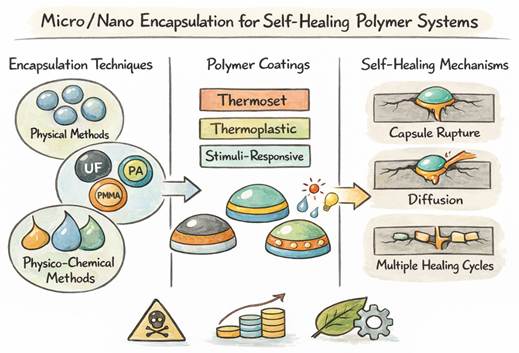
Self-healing materials have garnered significant interest for their ability to autonomously repair damage, improve reliability, and extend the service life of polymer systems. Among various strategies, micro- and nano-encapsulation of healing agents combined with polymeric coatings has emerged as an effective approach, enabling controlled release, protection of active agents, and enhanced mechanical performance. This review highlights recent advances in encapsulation techniques, including physical, chemical, and physico-chemical methods, and examines the influence of capsule size, shell thickness, and morphology on healing efficiency. The selection of polymer coatings thermoset, thermoplastic, and stimuli-responsive is discussed in relation to mechanical reinforcement, environmental resistance, and triggerable release mechanisms. Key self-healing mechanisms, such as capsule rupture, diffusion-based repair, and multi-cycle healing, are summarized. Current challenges, including material compatibility, environmental concerns, cost, and scalability, are addressed, along with future perspectives on sustainable materials, multi-functional coatings, and smart self-healing systems for applications in composites, coatings, electronics, and biomedical devices.
The growing demand for durable, reliable, and sustainable materials has driven extensive research into self-healing polymer systems capable of autonomously repairing damage and restoring functionality [1,2]. Microcracks generated during service are often precursors to catastrophic failure in polymeric materials and composites, particularly in structural, coating, and electronic applications [3]. Conventional repair strategies are typically labor-intensive, costly, and impractical for inaccessible or microscale damage, motivating the development of materials with intrinsic or extrinsic self-healing capabilities. Among the various self-healing approaches, the encapsulation of healing agents within micro- or nano-sized containers represents one of the most widely investigated and practically viable strategies [2,4]. In encapsulation-based self-healing systems, liquid or solid healing agents are stored within discrete capsules embedded in a polymer matrix. Upon crack initiation and propagation, these capsules rupture or activate, releasing the healing agent into the damaged region where it undergoes polymerization, crosslinking, or physical consolidation, thereby sealing the crack and partially or fully restoring mechanical integrity [5,6].
Micro‑ and nano‑encapsulation offers several advantages over other self‑healing strategies, including effective protection of sensitive healing agents, controlled release behavior, and compatibility with a broad range of polymer matrices [5]. Capsule size plays a critical role in determining healing efficiency, dispersion uniformity, and mechanical performance of the host material. While microcapsules are effective for delivering sufficient quantities of healing agents, nanocapsules provide improved dispersion, reduced stress concentration, and the potential for multiple healing events [7]. Polymer coating or shell materials are a key component of encapsulation‑based self‑healing systems, as they govern capsule stability, mechanical strength, interfacial adhesion, and rupture behavior [2,8]. Commonly employed polymer shells include urea–formaldehyde, melamine–formaldehyde, polyurethane, polyurea, and hybrid shells decorated with inorganic nanolayers for enhanced stability [9]. Recent research has increasingly focused on tailoring polymer coatings through chemical modification or the use of stimuli-responsive polymers to enhance healing efficiency and durability under complex service conditions [8,9]. Despite significant progress, several challenges remain in the large-scale implementation of polymer-coated micro/nano-encapsulation systems, including synthesis scalability, capsule–matrix compatibility, long-term stability, and environmental concerns associated with certain shell materials [2,10]. Therefore, a comprehensive understanding of encapsulation synthesis methods, polymer coating strategies, and their influence on self-healing performance is essential.
This review aims to summarize and critically discuss recent advances in micro- and nano-encapsulation techniques and polymer coating materials used for self-healing applications. Emphasis is placed on synthesis methodologies, structure-property relationships, and practical applications in polymer composites and coatings, while highlighting current limitations and future research directions.
2. Micro/Nano Encapsulation Techniques
Micro- and nano-encapsulation techniques employed for self-healing applications are generally classified into physical, chemical, and physico-chemical methods based on the mechanism of capsule formation. The choice of encapsulation technique significantly influences capsule size, shell morphology, mechanical robustness, and release behavior of the healing agent, thereby affecting overall self-healing efficiency [11,12].
2.1 Physical Methods
Physical encapsulation methods rely primarily on mechanical or thermodynamic processes without involving chemical reactions for shell formation. Common techniques include spray drying, solvent evaporation, phase separation, and melt dispersion [13]. In spray drying, a solution or emulsion containing the healing agent and shell material is atomized into a heated chamber, leading to rapid solvent evaporation and capsule formation. This method is attractive due to its simplicity, scalability, and industrial compatibility; however, it often produces capsules with relatively broad size distributions and limited control over shell thickness [14].
Solvent evaporation and phase separation techniques are widely used for encapsulating liquid healing agents within polymer shells. In these methods, an oil-in-water or water-in-oil emulsion is prepared, followed by controlled solvent removal to induce polymer precipitation around the core material. Although physical methods are cost-effective and easy to implement, the resulting capsules may exhibit lower mechanical strength and reduced stability under long-term service conditions compared to chemically synthesized shells [13].
2.2 Chemical Methods
Chemical encapsulation methods rely on in situ chemical reactions to form polymeric shells around healing agent cores, offering excellent control over capsule size, shell thickness, and mechanical properties, which makes them widely used in self-healing polymer systems [15]. Common approaches include in situ polymerization, interfacial polymerization, and emulsion polymerization. Urea–formaldehyde (UF) and melamine–formaldehyde capsules formed via in situ polymerization exhibit high mechanical strength, thermal stability, and effective rupture during crack propagation [16]. Interfacial polymerization enables the formation of robust polyurethane, polyurea, and polyamide shells, while emulsion polymerization is often employed to produce PMMA shells with uniform morphology. Although chemical methods allow precise tuning of capsule characteristics, the use of toxic monomers and complex reaction conditions raises environmental and safety concerns [15,17].
Figure 1: Schematic representation of chemical encapsulation methods showing polymeric shell formation around core materials [15,16].
2.3 Physico-Chemical Methods
Physico-chemical encapsulation methods combine elements of both physical and chemical processes to form capsules with tailored properties. Coacervation, sol–gel techniques, and layer-by-layer (LbL) assembly are prominent examples [11,18]. Complex coacervation, based on electrostatic interactions between oppositely charged polymers, enables the formation of capsules with high encapsulation efficiency and relatively uniform size distribution. This method is particularly suitable for temperature-sensitive healing agents.
Sol–gel encapsulation involves the hydrolysis and condensation of inorganic precursors to form hybrid organic–inorganic shells, offering enhanced thermal and chemical stability. Layer-by-layer assembly allows precise control over shell thickness and functionality through sequential deposition of polymeric or inorganic layers, making it attractive for stimuli-responsive and multi-functional self-healing systems. Despite their versatility, physico-chemical methods may face challenges related to processing complexity and scalability [18].
Polymer Coating Materials and Strategies
Polymer coatings are widely applied in protective, functional, and controlled-release systems. Selection of coating material and strategy depends on mechanical properties, thermal behavior, and responsiveness to stimuli. Major polymer classes used are thermoset polymers, thermoplastic polymers, and stimuli-responsive polymers.
3.1Thermoset Polymers
Thermoset polymers are crosslinked materials that form rigid, insoluble, and heat-resistant structures upon curing. The crosslinking process creates a three-dimensional network that imparts excellent mechanical strength, chemical stability, and dimensional integrity. Common examples of thermosets include epoxy resins, polyurethane, and phenolic resins. Due to their robust properties, thermoset polymers are widely employed in protective coatings, corrosion-resistant layers, electrical insulation, adhesives, and even self-healing systems. Their inherent rigidity and resistance to deformation make them ideal for applications where durability under mechanical or chemical stress is critical. However, the irreversible crosslinking reaction also limits their reprocessability; once cured, thermosets cannot be remelted, reshaped, or recycled like thermoplastics. This characteristic necessitates careful processing and design considerations during manufacturing to ensure optimal performance. Advances in thermoset chemistry, including the development of reprocessable or partially reversible networks, are emerging to address these limitations [19].
3.2 Thermoplastic Polymers
In contrast, thermoplastic polymers are linear or slightly branched materials that soften upon heating and solidify when cooled, making them highly processable and recyclable. Common thermoplastics used in coatings include polyethylene (PE), polypropylene (PP), poly(methyl methacrylate) (PMMA), and polyvinyl alcohol (PVA). Their reversible thermal behavior allows for reshaping, extrusion, and molding into complex geometries. Thermoplastic coatings offer advantages such as flexibility, ease of fabrication, and potential for material recovery at the end of life. However, they generally exhibit lower chemical, thermal, and mechanical resistance compared to thermosets, limiting their use in highly demanding environments. Innovations in thermoplastic blends, composites, and nanofiller incorporation aim to improve their performance, particularly for protective and functional coatings [20].
3.3 Stimuli-Responsive Polymers
Stimuli-responsive or “smart” polymers are materials that undergo reversible changes in their physical or chemical properties in response to external stimuli such as temperature, pH, light, or magnetic fields. For example, poly(N-isopropylacrylamide) (PNIPAM) exhibits thermo-responsive behavior, contracting or swelling with temperature variations, while chitosan and alginate derivatives respond to pH changes for controlled release applications. These polymers are particularly valuable for advanced coating systems, drug delivery platforms, and adaptive surfaces, where dynamic responses to environmental changes are required. By tuning the polymer composition and architecture, it is possible to achieve precise control over release rates, adhesion, permeability, and other functional properties, opening new avenues for smart material design and multifunctional coatings [21].
Self-Healing Mechanisms Enabled by Encapsulation
Encapsulation-based self-healing strategies improve the autonomous repair of materials by storing healing agents within micro- or nano-capsules, which are released upon damage. The primary mechanisms include capsule rupture-based healing, diffusion-based healing, and multiple healing cycles.
4.1 Capsule Rupture-Based Healing
Capsule rupture-based self-healing relies on microcapsules embedded within a polymer matrix that release healing agents upon mechanical damage. When a crack propagates through the material, it ruptures the microcapsules, releasing the encapsulated agent into the damaged region. This healing agent subsequently reacts, often in the presence of a catalyst dispersed within the matrix, to polymerize and seal the crack. Commonly used systems include urea-formaldehyde or melamine-formaldehyde microcapsules filled with epoxy, polyurethane, or other reactive monomers. The primary advantage of capsule rupture mechanisms is the rapid, localized repair they provide, which can restore mechanical integrity soon after damage occurs. However, this approach is inherently single-use, as the microcapsules are consumed during the healing event. Once a capsule is depleted, the same site cannot be healed again, limiting the material’s long-term self-healing capability. Researchers have explored methods to improve capsule efficiency and optimize agent loading, ensuring that cracks encounter sufficient healing material to restore strength and prevent crack propagation [22].
4.2 Diffusion-Based Healing
Diffusion-based self-healing strategies rely on the controlled migration of healing agents from internal reservoirs, such as vascular networks, hollow fibers, or nanocapsules, into damaged regions over time. Unlike rupture-based systems, which act only at the moment of mechanical failure, diffusion mechanisms allow continuous, gradual repair and can address more extensive or distributed damage. Healing agents move through the matrix either passively, driven by concentration gradients, or actively in response to external triggers. Integration with stimuli-responsive polymers enhances this approach; for example, changes in temperature, pH, moisture, or light can accelerate or direct the diffusion process. This controlled delivery ensures that healing occurs precisely where and when it is needed, improving durability and extending the operational lifetime of the material [23].
Multiple Healing Cycles
Single-use capsule systems are limited by their inability to repair recurrent damage. To address this, multi-capsule arrangements or interconnected microvascular networks have been developed, providing fresh healing agents for repeated healing events. In such systems, cracks can access new reservoirs, enabling multiple repair cycles and significantly prolonging the service life of the polymer. Advanced designs combine capsule and vascular strategies or exploit reversible chemistries, such as Diels–Alder reactions or supramolecular bonding, which allow healing agents to re-form after reaction. These multi-cycle systems are particularly advantageous for high-stress environments or structural applications, where damage may occur repeatedly over time. By integrating both material design and delivery architecture, researchers have created self-healing polymers capable of responding to diverse damage scenarios, making them more practical for industrial and commercial applications [24].
4.4 Comparative Overview of Self-Healing Strategies
Each self-healing approach offers unique advantages and limitations depending on the application. Capsule rupture-based systems provide fast, localized repair and are relatively simple to implement, but their single-use nature restricts long-term effectiveness. Diffusion-based mechanisms, in contrast, allow continuous or delayed healing over larger areas and can be finely tuned using stimuli-responsive polymers; however, their repair rate may be slower, and precise control over agent migration may be challenging [25]. Multi-cycle healing systems address the limitations of single-use capsules by providing repeated access to fresh healing agents, either through microvascular networks or reversible chemistries, enhancing durability and structural longevity. By carefully selecting and combining these strategies, materials can be engineered for specific operational requirements-for instance, rapid localized repair for low-damage risk environments, sustained healing for slow-degrading materials, or multiple-cycle systems for critical load-bearing applications. The ongoing development of hybrid approaches, such as integrating capsule rupture with vascular delivery or embedding smart stimuli-responsive agents, offers the potential to achieve both immediate and long-term self-healing performance, making polymers more reliable and resilient for industrial, aerospace, and biomedical applications [26].
Applications in Polymer Composites
Structural Materials:
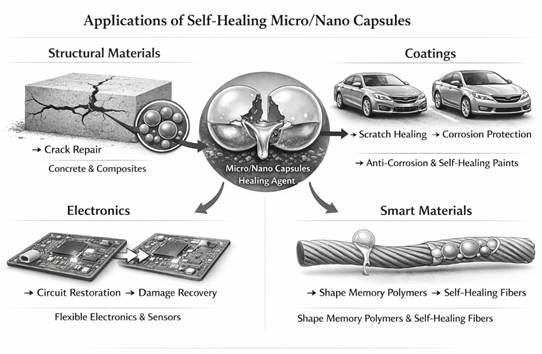
Diffusion-based self-healing is particularly valuable in structural polymer composites, where the formation of microcracks over time can severely compromise mechanical integrity and lead to premature failure. Unlike single-use capsule systems, diffusion-based mechanisms allow healing agents to gradually migrate into damaged regions, enabling continuous or repeated repair even in areas that are difficult to access. This property is especially important in aerospace, automotive, and civil engineering applications, where components are subject to cyclic loading, environmental degradation, and complex stress distributions. By maintaining the integrity of the polymer matrix, diffusion-based healing reduces the risk of crack coalescence and catastrophic failure, effectively extending the service life of high-performance materials. Advanced designs often integrate stimuli-responsive polymers, where temperature, moisture, or mechanical stress can trigger or accelerate the diffusion of healing agents, ensuring timely repair. Additionally, diffusion-based systems can be combined with fiber-reinforced composites or microvascular networks to optimize the distribution of healing agents throughout large, load-bearing structures, providing both durability and resilience in demanding operational environments [27].
Coatings:
In protective coatings, self-healing polymers play a critical role in restoring barrier properties against environmental degradation, chemical attack, corrosion, or mechanical wear. Diffusion-based mechanisms are particularly advantageous in this context, as they allow healing agents to gradually migrate into damaged or scratched regions without requiring external intervention, maintaining the continuity and integrity of the coating. This ensures that the underlying substrate remains shielded from moisture, oxygen, or corrosive agents, which is especially important in metal structures, pipelines, and marine equipment. Stimuli-responsive coatings further enhance performance by activating healing processes in response to environmental triggers such as changes in moisture, pH, temperature, or even UV exposure. For instance, pH-sensitive coatings can release corrosion inhibitors when exposed to acidic conditions, while moisture-responsive systems can accelerate polymerization to seal microcracks. Incorporating nanocapsules or microvascular networks into these coatings can improve the distribution and availability of healing agents, allowing repeated or localized repairs and prolonging the operational life of protective surfaces in harsh industrial, marine, or infrastructure environments [28].
Electronics & Smart Materials:
Self-healing polymer composites are increasingly being adopted in flexible electronics, wearable devices, sensors, and other smart materials, where mechanical integrity and consistent performance are critical. Diffusion-based healing mechanisms play a key role in these applications by allowing healing agents to migrate into microcracks or damaged regions, restoring both the structural and functional properties of the material without external intervention. This ensures that minor mechanical damages—such as bending, stretching, or accidental scratches do not disrupt electrical pathways or compromise device functionality. When combined with stimuli-responsive polymers, the self-healing process can be precisely triggered by environmental or operational signals, such as temperature changes, light exposure, or electrical currents. Such targeted healing not only repairs physical damage but also preserves conductivity, sensor sensitivity, and overall device performance. Additionally, integrating nanocapsules, conductive fillers, or microvascular networks within the polymer matrix enhances the efficiency and speed of repair, supporting long-term reliability. These diffusion-enabled, smart self-healing systems are particularly important for next-generation electronics, soft robotics, and adaptive materials, where durability, resilience, and uninterrupted functionality are essential under repeated deformation or harsh operating conditions [29].
Figure 2: Applications of Self-Healing Micro/Nano Capsules in Structural Materials, Coatings, Electronics & Smart Materials.
Challenges and Future Perspectives
Despite significant advances in micro/nano encapsulation and self-healing polymer systems, several challenges remain that limit their widespread application. One major issue is the compatibility and stability of the encapsulated agents within the polymer matrix; Premature leakage, aggregation, or chemical degradation of the core material can reduce healing efficiency and long-term performance. Achieving uniform capsule size, shell thickness, and mechanical robustness, particularly at the nanoscale, also remains difficult, directly impacting reproducibility and release kinetics. Additionally, many chemical encapsulation processes rely on toxic monomers or organic solvents, raising environmental and safety concerns. The cost and scalability of producing high-quality micro/nano capsules and self-healing polymers is another limiting factor, preventing large-scale commercialization [30].
Future developments in the field are focused on addressing these limitations. The use of biodegradable polymers, water-based systems, and non-toxic monomers can reduce environmental impact while maintaining functional performance. Integration of stimuli-responsive polymers, multi-agent encapsulation, and nanoengineered shells offers potential for more precise controlled release, repeated healing cycles, and targeted delivery. Advances in fabrication techniques, including microfluidics, 3D printing, and layer-by-layer assembly, promise improved precision, reproducibility, and scalability. Finally, combining self-healing polymers with sensing technologies, electronics, or biomedical devices could enable the development of autonomous, adaptive, and multifunctional materials, paving the way for next-generation applications in a variety of industries.
Conclusion
Micro- and nano-encapsulation of healing agents, combined with tailored polymer coatings, represents a highly effective strategy for developing autonomous self-healing polymer systems. Physical, chemical, and physico-chemical encapsulation techniques allow precise control over capsule size, shell thickness, and release behavior, while thermoset, thermoplastic, and stimuli-responsive coatings enhance mechanical strength, environmental stability, and controlled activation of healing. Capsule rupture, diffusion-driven repair, and multi-cycle healing mechanisms demonstrate the versatility and practical applicability of these systems in polymers, composites, coatings, and biomedical materials. Despite significant progress, challenges such as material compatibility, environmental impact, scalability, and cost remain. Future research should focus on sustainable polymers, multi-functional coatings, and integration with smart and adaptive systems to achieve repeated healing, improved efficiency, and commercial viability. Overall, encapsulation-based self-healing strategies hold great promise for extending the service life and reliability of polymeric materials in diverse applications.
Acknowledgement: Rahul Patil sincerely acknowledges Kavayitri Bahinabai Chaudhari North Maharashtra University, Jalgaon, for awarding the Vice-Chancellor Research Motivation Scheme (VCRMS), which supported the research project.
References:
White, S. R., Sottos, N. R., Geubelle, P. H., Moore, J. S., Kessler, M. R., Sriram, S. R., Viswanathan, S. (2001). Autonomic healing of polymer composites. Nature, 409(6822), 794–797. https://doi.org/10.1038/35057232.
Nayak, S., Vaidhun, B., & Kedar, K. (2024). Applications of microcapsules in self-healing polymeric materials. Current Nanoscience, 2, 218–241.
Zehra, S., Mobin, M., Aslam, R., & Bhat, S. u. I. (2023). Nanocontainers: A comprehensive review on their application in stimuli-responsive smart functional coatings. Progress in Organic Coatings, 176, 107389. https://doi.org/10.1016/j.porgcoat.2023.107389.
Montemor, M. F. (2024). Advanced micro/nanocapsules for self-healing coatings. Applied Sciences, 14(18), 8396. https://doi.org/10.3390/app14188396.
Yuan, Y., et al. (2023). Self‑healing poly(urea formaldehyde) microcapsules: Synthesis and characterization. Polymers, 15(7), 1668. https://doi.org/10.3390/polym15071668
Jiang, Y., Yao, J., & Zhu, C. (2022). Improving the dispersibility of poly(urea‑formaldehyde) microcapsules for self‑healing coatings using preparation process. Journal of Renewable Materials, 10(1), 135–148. https://doi.org/10.32604/jrm.2021.016304
Montemor, M. F. (2014). Functional and smart coatings for corrosion protection: A review of recent advances. Surface and Coatings Technology, 258, 17–37. https://doi.org/10.1016/j.surfcoat.2014.06.031.
Preparation and properties of melamine urea-formaldehyde microcapsules for self-healing of cementitious materials. (2017). PubMed. https://pubmed.ncbi.nlm.nih.gov/28773280/.
Zhu, Y., Ye, X., Rong, M. Z., & Zhang, M. Q. (2015). Self-healing polymeric materials based on microencapsulated healing agents: From design to preparation. Progress in Polymer Science, 49–50, 175–220. https://doi.org/10.1016/j.progpolymsci.2015.07.002.
Blaiszik, B. J., Kramer, S. L. B., Olugebefola, S. C., Moore, J. S., Sottos, N. R., & White, S. R. (2010). Self-healing polymers and composites. Annual Review of Materials Research, 40, 179–211. https://doi.org/10.1146/annurev-matsci-070909-104532.
Zuidema, J. M., Rivet, C. J., Gilbert, R. J., & Morrison, F. A. (2014). A review of microencapsulation techniques for self-healing materials. Journal of Materials Chemistry A, 2(27), 10964–10977. https://doi.org/10.1039/C4TA00643F.
Gharsallaoui, A., Roudaut, G., Chambin, O., Voilley, A., & Saurel, R. (2007). Applications of spray-drying in microencapsulation of food ingredients: An overview. Food Research International, 40(9), 1107–1121. https://doi.org/10.1016/j.foodres.2007.07.004.
Brown, E. N., White, S. R., & Sottos, N. R. (2004). Microcapsule induced toughening in a self-healing polymer composite. Journal of Materials Science, 39(5), 1703–1710. https://doi.org/10.1023/B:JMSC.0000016173.73733.dc.
Yuan, Y. C., Rong, M. Z., & Zhang, M. Q. (2008). Preparation and characterization of microencapsulated polythiol. Polymer, 49(10), 2531–2541. https://doi.org/10.1016/j.polymer.2008.03.042.
Pascault, J. P., Sautereau, H., Verdu, J., & Williams, R. J. J. (2002). Thermosetting polymers. CRC Press.
Kumar, R., & Varadarajan, K. M. (2015). Thermoplastic polymers: Processing, properties, and applications. Polymer Reviews, 55(3), 395–429. https://doi.org/10.1080/15583724.2015.1029494.
Brown, E. N., Kessler, M. R., Sottos, N. R., & White, S. R. (2005). In situ poly(urea-formaldehyde) microencapsulation of dicyclopentadiene. Journal of Microencapsulation, 22(6), 619–632. https://doi.org/10.1080/02652040500413581.
Toohey, K. S., Sottos, N. R., Lewis, J. A., Moore, J. S., & White, S. R. (2007). Self-healing materials with microvascular networks. Nature Materials, 6(8), 581–585. https://doi.org/10.1038/nmat1944.
Liu, B., Wu, M., Du, W., Jiang, L., Li, H., Wang, L., & Ding, Q. (2023). The application of self-healing microcapsule technology in the field of cement-based materials: A review and prospect. Polymers, 15(12), 2718. https://doi.org/10.3390/polym15122718.
Amaral, A. J. R., & Pasparakis, G. (2017). Stimuli responsive self-healing polymers: gels, elastomers and membranes. Polymer Chemistry, 8, 6464–6484. https://doi.org/10.1039/c7py01386h.
1. Blaiszik, B. J., Kramer, S. L. B., Olugebefola, S. C., Moore, J. S., Sottos, N. R., & White, S. R. (2010). Self healing polymers and composites. Annual Review of Materials Research, 40, 179–211. https://doi.org/10.1146/annurev-matsci-070909-104532.
Zhang, Y., Li, X., & Chen, Z. (2023). Self-healing polymer-based coatings: Mechanisms and applications. Polymers, 17(23), 3154. https://doi.org/10.3390/polym17233154.
Choi, K., Noh, A., Kim, J., Hong, P. H., Ko, M. J., & Hong, S. W. (2023). Properties and applications of self-healing polymeric materials: A review. Polymers, 15(22), 4408. https://doi.org/10.3390/polym15224408.
Stuart, M. A. C., Huck, W. T. S., Genzer, J., Müller, M., Ober, C., Stamm, M., Sukhorukov, G. B., Szleifer, I., Tsukruk, V. V., Urban, M., Winnik, F., Zauscher, S., Luzinov, I., & Minko, S. (2010). Emerging applications of stimuli-responsive polymer materials. Nature Materials, 9(2), 101–113. https://doi.org/10.1038/nmat2614.
Gawai, D. G. S. (2026). “The AnalyticalImpact of the Indira MahilaYojana on the Socio-Economic Status of Women SHG’s in Maharashtra”. International Journal of Research, 13(13), 138–144. https://doi.org/10.26643/ijr/2026/s13/15
Dr.Gopal S. Gawai
Assistant Professor
PSGVPM’S, Arts, Science and Commerce College, Shahada, Dist. Nandurbar.
The experiment of SHG was firstly started by Mysore Resettlement and Development Agency (MYRADA) in India on the basis of SHG development in Bangladesh and after that the movement of SHGs spared all over the India.
The self-help groups have ancient traditions in India historical as well as prehistoric era, there is evidence that such groups existed. Thousands of such groups are operating in rural and urban areas of India. The aim of self-help groups to eradicate poverty and unemployment, establishing such groups on the basis of self-reliance and mutual support rather than waiting for someone else. In India, job creation is a major problem and it is impossible for everyone to get permanent jobs in the organized sector. In India, there are two major types of self-help group’s i. e. Micro finance group and self-help groups.The micro finance groups work in savings and debt allocation while self-help groups do other programs to increase their incomes with regular savings. It mainly works for the production of garments, food processing, and production of products by using local technology. The role of non-governmental organizations or NGOs or similar mechanisms is very important in this type of entrepreneurship. In India, such organizations are doing well in various states.
Therefore, it is imperative to increase their income through self-help groups to increase their family income, increase their living of standards, self-esteem, self-reliance, decision making and fearlessness. Lastly it helps women to become economically, socially and politically empowered through SHGs.
Keywords:SHG’S, Entrepreneurship, Women Entrepreneurship, MAVIM and Economic Development.
Review of Related Literature:
A. Venkatachalam and A. Jeyapragash (2004) in their work, “Self Help Groups in Dindigul District,” found that the total savings of the SHG members in Dindigul District amount to Rs.622.99 lakhs. The Sangha Loan sanctioned to its members is in tune of 4.3 times of savings. In words, the total amount of Sangha loan sanctioned is Rs.27.20 lakhs. The SHGs in Dindigul District have made a silent revolution for the economic empowerment of poor rural women.
M. Soundarapandian (2006) in his study “Micro Finance for Rural Entrepreneurs Issues and Strategies” made an attempt to analyses the growth of the SHGs and the role of microfinance in developing the rural entrepreneurship. The study suggests that though there is a positive growth rate of the SHGs in states get in terms of growth of the SHGs there is wide variation among states. Linkages of banks with the SHGs are found impossible for this variation.
Ravindra C. Satpute (2012) in his research on“Micro-Finance: A Critical Study of Need, Practices and Future Trends (With Special Reference to Self Help Groups of Amravati District)”, he selected the sample of 400 SHGs in activities like Phenile making, Candle, Agarbatti making, Pickle and Papad making, etc. and found that the maximum number 273 (69.46%) of respondents joined the group for their overall economic development. he further stated that loan amount used by the respondents for domestic purpose, asset building and agriculture respectively. Only 63.07% of the total SHG’s get the benefits from various government schemes.
Objectives of the Study:
To analyze the growth of Indira MahilaYojana andSwayamsidha scheme forwomen SHG’s in Maharashtra.
To study the socio-economic status of women SHG’s under Swayamsidha scheme in Maharashtra
To study the effective support of the government on women SHG’s.
Indira MahilaYojana:
According to the report of director of MAVIM “the Indira MahilaYojana was implemented by the Central Government from 1994 and the MahilaSamruddhi Programme was merged with it and a revised Swayamsiddha Programme was declared for implementation for 5 years from 2001 – 2002 onwards. MAVIM implements the Swayamsiddha Programme in 19 districts and 36 Blocks in Maharashtra. Out of 36 blocks, 21 blocks (old) of Indira MahilaYojana and 15 new blocks were selected. A target of forming 3,500 self-help groups was to be formed by the end of 2006, in 19 districts where the programme operated” and “sauchalayaswere to be constructed with 40% contribution by the members of the village and 60% contribution from Company’s own funds obtained from Government of Maharashtra under Swayamsidha scheme.”
At the end of “March 2005, 3797 SHG groups were formed and 47760women were organised. The women saved `2.42 crores and generated internal lending of `2.34 crores. They obtained bank loans of `87 lakhs. 2237 women started their own business.”
According to the report of MAVIM “at the end of March 2007, 3943 SHG groups were formed and 50,066 women were organised. The SHG members saved `5.70 crores and generated an internal lending of `10.31 crores. They obtained bank loans of `12.65 crores and 17,734 women started their own business.”
Year wise Growth of SHG under Swayamsidhha Scheme of MAVIM
According to the data table (4.7) growth of SHGs were ranged from76.69% to 0.00% during the years 2003 to 2017. The highest ratio of SHGsformed by MAVIM under Swayamsidhha scheme in Maharashtra was into the year of 2004 i.e. 76.69% whereas the negative growth was observed during 2007, 2008, 2010, 2011, 2012, 2014 and 2015 (i.e.-0.53%, -12.90%, -6.09%, -2.65%, -11.66%, -18.92% and -23.47%).
Source: 1.Report of The Comptroller and Auditor General of India, for the year ended 2009
2. Economic Survey of Maharashtra (2008-09 to 2013-14)
3. Reports of MAVIM (2014 to 2017)
Table no.1: Profile of Women’s Entrepreneurs in Aurangabad District
Manufacturing
Trading
Service
Overall
No.
%
No.
%
No.
%
No.
%
Age group
Below 25
1
7%
0
0%
0
0%
1
2
25 – 30
4
27%
3
21%
9
43%
17
33.3
31 – 40
6
40%
4
29%
4
19%
14
27.5
41 – 50
2
13%
6
43%
5
24%
13
25.5
51 and Above
2
13%
1
7%
3
14%
6
11.8
Community
SC
1
7%
1
7%
1
5%
3
6
ST
2
13%
1
7%
6
29%
9
18
OBC
3
20%
2
14%
2
10%
7
14
VJNT
5
33%
7
50%
1
5%
13
26
Open
4
27%
3
21%
11
52%
18
36
General education
Not attended the school
4
27%
3
21%
4
19%
11
22
Primary
3
20%
1
7%
0
0%
4
8
Secondary
1
7%
5
36%
14
67%
20
40
Higher secondary
5
33%
1
7%
0
0%
6
12
Graduation
2
13%
3
21%
3
14%
8
16
Post-Graduation
0
0%
1
7%
0
0%
1
2
Technical education of women entrepreneurs
Nil
9
60%
11
79%
13
62%
33
66
Certificate
5
33%
3
21%
7
33%
15
30
Diploma
1
7%
0
0%
1
5%
2
4
SHG members trained
Not Trained
1
7%
0
0%
2
10%
3
6
1 to 5
4
27%
6
43%
2
10%
12
24
6 to 10
8
53%
7
50%
12
57%
27
54
Above 10
2
13%
1
7%
5
24%
8
16
Source: Field survey
The MAVIM implemented Swayamsiddha programme under the assistant of women and child development department ministry in Maharashtra. The manufacturing activities carried out by respondents had ratio of 2.0%, 8.0%, 18.0% and 2.0% related to the garments manufacturing, agriculture, livelihood and other manufacturing activities respectively. The trading related activities such as fancy and general stores, cloth and garments, ladies’ accessories and other trading activities had ratio of 6.0%, 8.0%, 10.0%, and 4.0%. The ratio of 14.0%, 4.0%, 20.0%, 2.0% and 2.0% respondents had into beauty parlors, caterings, tailoring and training institute, floriculture and other service activities related to the service sector.The age group of women in Swayamsidha had ratio of 2.0% (1), 33.3% (17), 27.5% (14), 25.5% (13) and 11.8% (6) respondents had into the age group of below 25, 25 – 30, 31 – 40, 41 – 50 and 51 and above respectively.The category of women had ratio of 6.0% (3), 18.0% (9), 14.0% (7), 26.0% (13) and 36.0% (18) respondents into the category of SC, ST, OBC, NT and Open respectively.The respondents had ratio of 22.0%, 8.0%, 40.0%, 12.0%, 16.0% and 2.0% respondent’s illiterate, Primary, Secondary, Higher secondary, Graduation and Post-graduation education completed.
Table no.4: Amount of Sales,Capital Invested and Loan borrow
Manufacturing
Trading
Service
Overall
No.
%
No.
%
No.
%
No.
%
Amount of Sales at the initial stage
0-`10000
1
7%
3
21%
3
14%
7
14
`10000-30000
2
13%
4
29%
3
14%
9
18
`30000-50000
2
13%
3
21%
1
5%
6
12
`50000-70000
7
47%
2
14%
9
43%
18
36
Above `70000
3
20%
2
14%
5
24%
10
20
Amount of Capital Invested (Rs. in lakhs)
Upto 1
2
13%
5
36%
2
10%
9
18
1 to 2
0
0%
0
0%
1
5%
1
2
2 to 3
1
7%
1
7%
2
10%
4
8
3 to 5
3
20%
2
14%
2
10%
7
14
5 and above
9
60%
6
43%
14
67%
29
58
Source: Field survey
The Amount of Sales at the initial stage under Swayamsidha scheme ratio of 14.0% (7), 18.0% (9), 12.0% (6), 36.0% (18) and 20.0% (10) respondents had sale into the group of up to `10000, `10000-30000, `30000-50000, `50000-70000 and Above `70000 respectively.The Amount of Capital Invested (Rs. in lakhs) hadratio of 18.0% (9), 2.0% (1), 8.0% (4), 14.0% (7) and 58.0% (29)respondents invested amount of capital up to `20000, `20000-30000, `30000-40000, `40000-50000 and Above `50000 respectively.
Conclusion
According to the data table it is well seen that the participation of women in economic activities increased and also positively seen their entrepreneurial development in Maharashtra. The number of members does not increase under scheme due to norms of MAVIM. Lastly, we can conclude that MAVIM putting its effort at great extents to upliftment of women and bringing them into the main stream of economic development.
Bibliography:
A. Venkatachalam and A. Jeyaprakash, (2004), “Self Help Groups in Dindigul District”, Kisan World, October Vol. 31, No. 10, pp. 29-30.
Soundarapandian M. (2006), “Micro Finance for Rural Entrepreneurs Issues and Strategies”, Kurukshetra.
Ravindra C. Satpute (2012), “Micro-Finance: A Critical Study Of Need, Practices And Future Trends (With Special Reference To Self Help Groups Of Amravati District)”, Thesis Submitted to Commerce, SantGadge Baba Amravati University, Amravati, Jan. – 2012.
Director’s Report, MahilaArthikVikasMahamandal Ltd, 31st March 2005. (www.sansco.net)
Report of The Comptroller and Auditor General of India, For the year ended 31 March 2009, Government of Maharashtra (www.cag.gov.in) pp-48
Director’s Report, MahilaArthikVikasMahamandal Ltd, 31st March 2005. (www.sansco.net)







You must be logged in to post a comment.