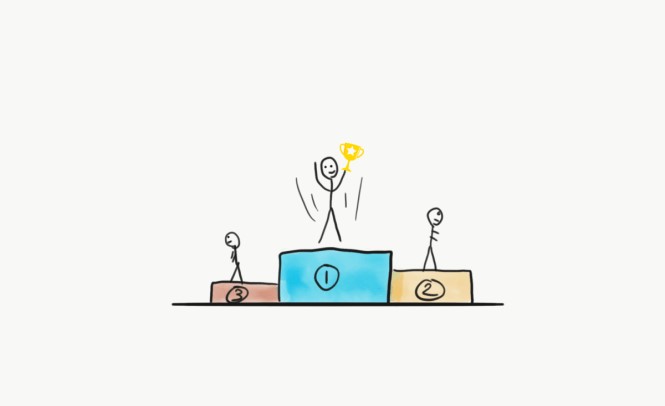
In ancient times, the rules of nature were easy. If you didn’t compete for food, shelter or women, you would die. We still compete for those things, but the competition actually makes us weaker.
When we compete, two negative things can happen.
We start imitating the competition
We focus too much on our competitor, instead of our business
In our personal lives, we often imitate our competitors. We all compete on some level with colleagues, friends, and family. This will make you lose your identity and dignity. True power comes from within. Don’t compete with others. You don’t have to have a better car.
You can also apply this to business. When Microsoft and Google were focussing on each other, Apple became one of the biggest tech companies in the world. Microsoft dropped the ball because they only focused on Apple. In the meantime, Apple focused on innovation and creating value.
In life and business, it’s not a case of “best” so and so. That’s only true in sports. But in life, most things are subjective. Being different is what matters more. And in business, the ones who are first win.
Competition itself is bad because it’s not the point. Focus on the value that you add, not on how much better you are compared to someone else.
“Your competition is not other people but the time you kill, the ill will you create, the knowledge you neglect to learn, the connections you fail to build, the health you sacrifice along the path, your inability to generate ideas, the people around you who don’t support and love your efforts, and whatever god you curse for your bad luck.” – James Altucher
One of my readers recently replied this to one of my weekly newsletter emails:
“How are you so positive?”
I thought to myself, “Haven’t I written about this before?” I went through all my articles and the answer is no. I have written about the importance of having a positive mindset a lot.
But after 6 years of blogging, this was the first time I got that question. And it’s so on point. Sometimes we take things for granted. Even though I’ve experienced many challenges in life (like almost every other human being), I never gave up my positive mindset.
Often, we look at the world and consider it negative. That’s not a surprise. Because taking one glance at a news website will make the steadiest person depressed. It happens to me too. But calling the world negative is a misjudgment.
That will only cause frustration. The Stoic philosopher Epictetus made that evident in his teachings, two thousand years ago (quote is from The Good Life Handbook):
“So when we are frustrated, angry or unhappy, let’s hold ourselves responsible for these emotions because they are the result of our judgments.”
The Stoic perspective is all about being objective in your perceptions. When your thoughts become negative “because” of something, you’re making misjudgments. Epictetus continues:
“No one else is responsible for them. When you blame others for your negative feelings, you are being ignorant. When you blame yourself for your negative feelings, you are making progress. You are being wise when you stop blaming yourself or others.”
Not blaming others nor yourself is one of the most important things if you want to stay positive. But there are also 4 other things I do to stay positive. Here they are.
1. Practice gratitude
Taking a few moments every day to write down a few things you’re grateful for changes your perspective. The funny thing about this practice is that when you read about it, you think, “It can’t be THAT effective!”
I was exactly the same. But once I started actively practicing gratitude, I felt more in control of my life. A while back, I stopped writing about the things that make me feel grateful. For the first few weeks, I didn’t feel any different.
But after a few months, I noticed that I complained more than usual. I was also more frustrated compared to before. When I started practicing gratitude again, I went back to being consistent. Consistently calm, that is.
A lot of our frustration comes from what other people do or say. “OMG! I can’t believe he said that! How does he dare?!”
Well, maybe it’s time to lighten up a bit. We overanalyze every single thing people say and do. Sometimes, people just do dumb things. Not everything people do is personal.
If you want to live a good life, you can’t take everything personally. Understand that there are more important things to life—things like your health, family, and career.
A partner that doesn’t listen to you, colleagues who piss you off, a landlord that doesn’t fix the drain, the loud neighbors, you name it. No one’s life is perfect and tranquil.
That’s something we really need to understand. But that took me many years. I always thought that you could achieve some kind of magic place in life where you would have no stress and annoying responsibilities.
But then I grew up. Life is basically one challenge after the other. We can’t let that get the best of us. That’s why we need to let it all out.
All your anger, frustration, anxiety, insecurity—it needs to get out of your system. Whether you do that by journaling, talking to a friend, or going to therapy is your choice. Just make sure you don’t keep all those things inside yourself.
4. Focus on improvement
Look, life’s not always pretty. And we tend to overemphasize the bad times. When we experience a setback or negativity, we blow it up in our minds. “This is the worst thing ever.”
Think about it. Is it really? Or is there a way you can improve your life situation? Because that’s how I like to look at it.
Where you are now is a temporary situation. No matter how good or bad it is—this very moment will pass. Do you realize that?
Because if you do, you know that you have a chance to improve your life. And to me, that’s the best use of your time and energy.
Don’t spend one second on feeling sorry for yourself and focus on what you can do NOW to improve something about your life. It doesn’t even matter what it is.
Go for a walk. Take a shower. Shave. Start a journal. Fix something in your house. Write down some ideas. Set a goal.
You can even do those things while you’re feeling bad. Because that’s not the point. As am I writing this article, I’m not feeling well. I ate something bad two days ago, and I have food poisoning symptoms since yesterday morning.
I feel weak. And yet, I feel better mentally after I wrote this article.
In the back of my mind, I know I will recover. I understand this is a small example and much worse things happen in life. But when you practice a positive attitude on the small stuff, you will be better at dealing with the big stuff.
I like how Napoleon Hill, the author of the famous self-help book, Think And Grow Rich, put it:
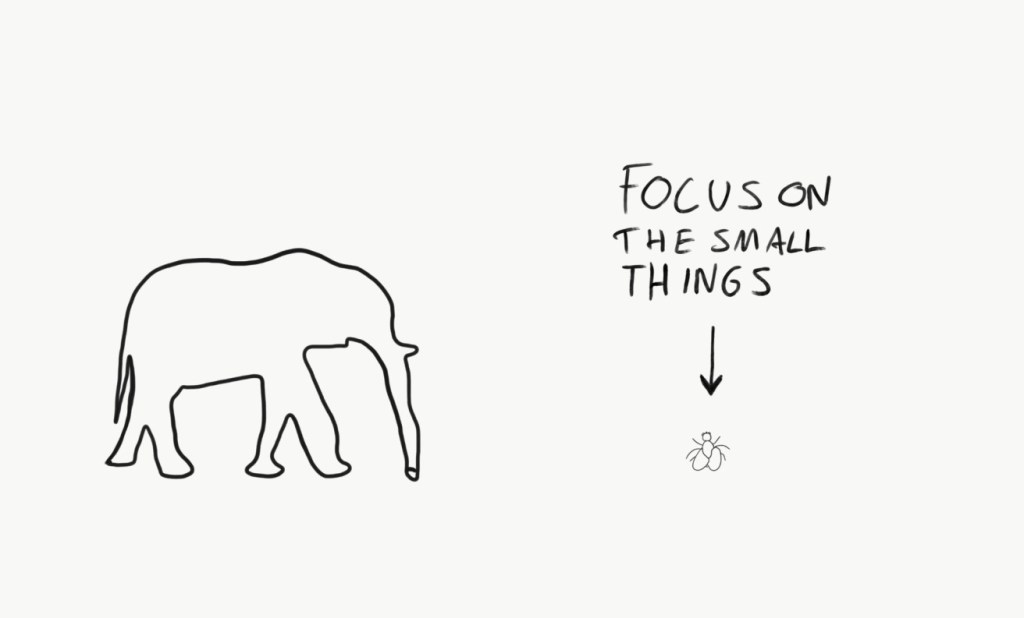
“If you cannot do great things, do small things in a great way.”
It’s unquestionable: Doing small things will make you feel better. But you don’t need to believe me. Just go and do a small thing now and see it for yourself.
We all thought this was a temporary thing. But here we are. People are already calling this the “COVID era” as if they are reading about it in a history book. But we’re still going through it.
For most of my friends and family, the social distancing and handwashing aren’t that bad. We got used to that stuff quickly. The tough part about this era is that life has changed permanently for many folks.
Rifts are created between people with different beliefs on wearing a mask. Complete industries are swept away and will probably never be the same. The world has truly changed.
In this article, I’m sharing 19 lessons I’ve learned from observing all these changes. Hopefully, these short reminders will make life during this era easier for you. These things surely have helped me a lot.
It’s hard on everybody I know your life is hard. But so is the life of your neighbor. That puts us all in the same boat. So go easy on yourself and others.
Nothing is forever It seems like this will last forever. But everything dies. And so will pandemics.
Accept it as if you chose this This is the only form of useful lying in the world. Trick yourself into believing you wanted a more tranquil and solitary life. This is a classic Stoic exercise. Simply accept everything that’s outside of your control as something you wanted. Life will be a lot rosier.
Take a breather Literally. Take a moment for yourself and breeeeath…. Aaaah. Yes, that’s the feeling.
Exercise every day Stay in shape. If you’re not injured or ill, it’s your duty to take care of your body. Never take this lightly.
Get off social media It’s a waste of your time. “Always?” Pretty much.
Read books This is a better use of your time. We all have reading lists with hundreds of books on them. And we’re not going to live 200 years. That means you need to make some tough choices. Which books will you read before you die?
Learn new skills Technology is improving and changing so fast that we’re not aware what’s going on. We just learn it after the fact. But that’s too late. So stay on top of your field and keep learning new skills you need to do good work.
Keep a daily journal This will probably be one of the weirdest times of our lives. Don’t you want to document this? Even if you never read it again, it’s still worth writing because it makes you a better thinker.
Inspiration comes from within “I need to go to Paris for inspiration.” Replace Paris with any city or place in the world. Why do we think inspiration comes from the outside? Look inside!
Good food improves your mood One of the few pleasures that you never get used to. Research new recipes, be creative, and cook food that makes you go, “Hmmmmnn.”
Objects will not make you happy STOP BUYING CRAP ONLINE! I had to tell myself that after a few too many useless purchases.
More money is not the answer Look, I’m not going to lie. Having a little bit of money will lighten the load. So start that online business or side-gig you’ve been thinking about. But don’t expect that money will make you happy. It just solves your money problems. Nothing else.
Do work you enjoy Just because you need to survive, don’t say yes to the first available job you encounter. And also don’t start some kind of soulless online business so you can make a few bucks. Find something you enjoy and pays the bills.
Appreciate what you have The grass is always greener. We tend to forget. So here’s a reminder: If you’re reading this on your smartphone in the comfort of your house, your life isn’t so bad.
Give back Do something altruistic. It’s fine to give money to charity. But I’m not talking about that. Talk to your elderly neighbors, hold the door for someone, share your hard-earned lessons with others. Small things that have a positive impact on people.
Change is good This is a difficult period if your industry got swept away. But remember, change is a part of life. And in the long-term, it’s good. We just don’t see the sunshine when we’re going through a storm.
Stop consuming—Start creating
The world never changed for the better by doing nothing. Right now, our biggest challenge is paralysis by consumption. We’re over-consuming everything: News, food, clothes, entertainment, you name it.
To get through this era, we need more action. So stop sitting there and go create something. Without creation, there’s no progress.
We believe that we always have to say yes to opportunities. We fear that saying no leads us to miss out on money, fun, and other experiences. But by always saying yes, we don’t value our time.
Blindly we say yes to everything that comes our way. We often don’t look at saying “no” as a skill. If we are at work and our manager asks you to hand in a report before the end of the day, we say, “sure thing.” It interrupts our work, and we often have to push other things aside.
There was never any fear for me, no fear of failure. If I miss a shot, so what? – Michael Jordan
We say yes in our personal lives all the time. When friends ask us to go out while we have other things to do, we say yes. We friends or acquaintances a favor, without thinking about it. We even say yes to bigger things that we don’t want. We take jobs we don’t like. We start relationships with people who we are not in love with.
Why do we do this? We are afraid to say no, to let people down, to avoid confrontation. The stress of saying no often makes us say yes automatically. And then we complain or blame ourselves, “why couldn’t I just say no.” And with relationships, we are afraid that if we turn down an opportunity to settle down, another one maybe won’t show up.
I see this often with relationships at work. You spend time with a person at work so often and if you feel physically attracted to each other it easy to start a relationship. If you start a relationship, you cannot ‘kind of’ want it. No, you should be in love. Saying yes doesn’t always make you happy.
Other People’s Expectations
Learning to say no can save us a lot of time and stress. While we are afraid that we have to let people down, the opposite is true. People will start respecting you more when you start saying no. People perceive that as a strong character trait.
It’s time to stop doing things to live up to other people’s expectations. You don’t have to do things you don’t like. If you don’t start saying no, and keep doing things you don’t want to do, you begin to dislike the person you are trying to please. Saying no is not only for your benefit but actually by saying no, you are thinking about other people as well.
If you say yes to a night out with your spouse and you don’t feel like it, you probably won’t be in a great mood. It’s not fair for your spouse if you are not present mentally. If you rather go out the next day because you are tired tonight, say so. Your partner will respect you for that. If she doesn’t, we have to explain why we say no. And encourage them to say no when they don’t want to do something as well.
Conforming to other people expectations can impact your life’s outcome. When you say yes to one night out, when you don’t feel like it, doesn’t have huge life consequences. But sometimes it is about choices that will influence our life outcome. When parents expect their children to go to university, the children often give into that.
We are all unique and have things we want from life, asking people to do something they don’t like is not fair. If you don’t wish to go to university because of a good reason, then don’t. We have to follow our passion and make our own path.
Say No To Noise
We should say no to everything that is noise. Greg Mckeown, writes in his book Essentialism about how the ‘disciplined pursuit of less’ allows us to regain control over our choices. Mckeown says that many successful people in history were ‘essentialist’, people who can separate the essential from the non-essential in life. Saying no is a way of showing what you consider ‘essential’ by saying no to everything that is noise.
About the importance of saying no, Mckeown says, “ yet as hard as it can be to say no to someone, failing to do so can cause us to miss out on something far more important.” When we have a purpose in life, everything that doesn’t contribute to our purpose, becomes noise.
When we want to live a stress-free life, we have to choose “no”. Saying blindly yes to invitations from our colleagues, friends or family causes us stress. We often regret saying yes for days. We worry about damaging our relationships. We worry that we burn bridges. We worry about what people would think if we say no. We live in an abundant world. By saying no you don’t miss anything. The world is filled with opportunity and beauty.
We think we are not good friends or colleagues when we say no. You’re not a bad person when you say no. Once we start saying no, we lose the fear of disappointing people and find out that it wasn’t that hard. We find that we replace the noise with silence and clarity. We enjoy the things we do say yes to more. We become more present and happy.
Have you ever met an idiot and thought “What an idiot?” Well, don’t be so quick to judge — idiots can teach you a lot about life.
A few years ago I went to Shangai. When I boarded the plane in Amsterdam, I met a first class idiot as soon as I stepped foot on the aircraft.
When I got to my seat, the overhead bin was already full, so I had to store my bag on the other side. But when I tried to do that, an idiot came from nowhere and started screaming at me. I didn’t understand him, but I got his message: “That’s my seat, and I want to store my bag there.”
I grabbed my bag, walked two rows down, asked the person who was sitting there if it was ok I placed my bag in his overhead bin; he said yes, I stored my bag, walked down to my seat, and sat down.
Was that difficult? No. Could the idiot have done that? Yes. He didn’t have to make a scene.
“People are surprised to find out that an awful lot of people think that they’re idiots.” – Eric Schmidt
In my life, I’ve had many other encounters with people that had bad behavior — let’s call them idiots.
You know what I’m talking about, right? Idiot bosses, coworkers, strangers, friends. Idiots do things that are not cool. It’s not bad to be an idiot — I sometimes do idiotic things, everyone does.
Dealing With Idiots
Is it cool to call people idiots? Yes, I call myself an idiot sometimes. People think they should only learn from successful people — billionaires, entrepreneurs, athletes.
But that’s not the only way to learn. How many billionaires and athletes do you know? We all know idiots. From them, we can learn how we should not behave.
Maybe someone at work stabs you in the back. Maybe your girlfriend cheats on you with your best friend. Maybe someone wants to start a fight with you. Maybe someone bullies you.
Without a doubt, people in your life have, or will, let you down. There’s no escaping that. What’s more important is your response. Do you become bitter about people? Do you think that all people are bad?
If someone does something bad to you, don’t see it as a reason to justify that behavior. For example, when I first started working for a major corporation, I noticed quickly that people accept backstabbing. You screw someone over on one day, and get promoted the next day.
Is that good? Is that bad? It’s neither, as Shakespeare put it: “There is nothing either good or bad but thinking makes it so.”
However, it’s also not a ‘get out of jail free card’. We have to watch ourselves that we do not become what we despise. No one on this planet is born an idiot — we become one. So choose not to.
When people behave like idiots, don’t be offended, don’t take it personally, study them instead.
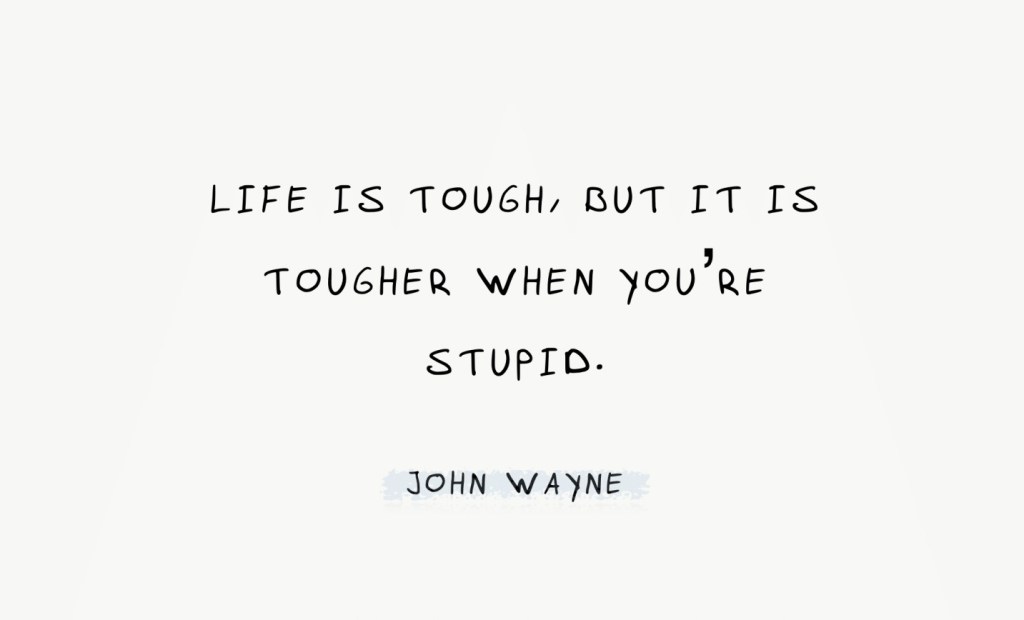
“Life is tough, but it’s tougher when you’re stupid.” – John Wayne
I observe idiots doing bad stuff like cheat, lie, be aggressive, rude or anything else that is not ok to me. Then, I consciously decide to not be like them.
By observing behavior that you don’t want to associate yourself with, you will become clear on the type of person you do want to be.
Just answer to yourself: What is ok, and what isn’t? For example, stabbing people in the back for a promotion — not ok.
In the end, do whatever you think is right. Always make sure you do the right thing — but please, don’t be an idiot.
Many people have a job they don’t like. Many take jobs they don’t like. The reason we take jobs we don’t like is because we need money. I can’t think of any other reason people would waste their time doing something that is not passionate about. I challenge you to find your dream job—a job that you love doing 7 days a week. Work that doesn’t feel like work. In that way, you are not only living for the weekend.
Many of us only live on the weekend and after 5 pm on weekdays. ‘The American Time Use Survey’ shows that we spend almost 40% of our time at work. Would you waste 40% of your money? I’ve never heard an average person saying, “I have $10.000 in savings, I’ll just throw $4.000 away.”
Time is more valuable than money. So why would you give away your time? By doing what you love to do, you are doing something of meaning. Stop the busy work and find your dream job! Here are 9 steps that you can use as a guideline.
Decide exactly what kind of job you want. If the job doesn’t exist, create it.
Choose the company or person you want to work for.
Study your potential future employer
Find out what kind of competencies you need to be successful
Do a strengths/weaknesses analysis of yourself. You have to be clear about what kind of value you can offer.
Create a plan of how you’re going to develop your competencies you need further.
Now, apply. Forget about job openings or vacancies. If you can add value to a company, they would be idiots not hiring you.
Once you know what job you want, what the company needs, what competencies you have, and what value you can add, put it on paper. Hire a copywriter or who can help you with his. Or have someone who is in sales look at it. You have to be persuasive.
Find out who has the ‘power’ to hire you. Browse LinkedIn for the senior manager of the department you want to work for. If it is a smaller company, contact the CEO.
This method may take you longer and more analysis of your skills. But it’s worth it to find your dream job. Financially and mentally. By doing something you love you will save yourself many headaches in the long run. You’ll probably earn more money as well. If you follow the standard hierarchy and climb the ladder like everybody else, you will earn exactly the same as everybody else.
Learn More About Finding Your Dream Job
If you’re interested in learning more about finding your dream job, feel free to check out my course.
We live in a uniquely safe, risk-free, and good time.
Mortality rate is at an all-time low. Poverty is decreasing year over year. Diseases are treatable. You get to live longer. And technology makes life easier and safer.
Evolution is a beautiful thing (if you only look at the facts).
However, that’s not the full story. People are still miserable. Suicide rates increase. People have more depressions and burnouts. More and more people are on meds. I’m not going to flush you with all the hard statistics. It’s not pretty.
Because to me, that’s what I think everybody is doing: Dancing around all the time and saying, “I’m alive! I’m alive.” I can’t be more wrong than that.
The reality is that we, humans, are ungrateful idiots. Always have been.
The Greek Stoic philosopher Epictetus, who lived between AD 50–135, put it best:
“Do not spoil what you have by desiring what you have not; remember that what you now have was once among the things you only hoped for.”
Why do we always desire what we don’t have? Desiring things you don’t have is not necessarily a bad thing. That same trait is also the reason the world developed the way it did. If we didn’t desire unattainable stuff, the world probably wouldn’t advance one bit.
But when I read about historical figures such as Christopher Columbus, the Wright Brothers, or Nikola Tesla, they used that desire for good things. They didn’t complain and had an innate desire to achieve things.
Can you image Columbus saying: “Fuck this stupid boat. Let’s sail back home, I want to chill out.”
And that the Wright Brothers said to each other: “Man, screw this flying thing. Let’s play checkers and drink beer.”
Or that Tesla would say: “Who cares about current? Let Edison and his stupid DC current win. I’m going for a swim in the lake.”
Of course not.
Just Be Thankful For Goodness Sake.
Two words. That’s all.
Say it. Believe it.
Thank you.
Easy.
Or you can go with a casual “thanks.” You can say it to people, but more importantly, you can also say it to random things.
When I wake up, I just say: “Thanks.”
I don’t even know who I’m thanking. God? The universe? Life? I’m just happy to be alive. And that mindset changes everything in your life. When you say thank you, and you truly believe it, you become a grateful person.
Gratitude changes the way you:
Think
Behave
Talk
Walk
Eat
Love
You can also say it to people. When your mother, father, brother, sister, spouse, boyfriend, girlfriend, friend, colleague, manager, does something for you (no matter how small), say: “Thank you.”
What you will find is that people appreciate you too. Gratitude goes both ways.
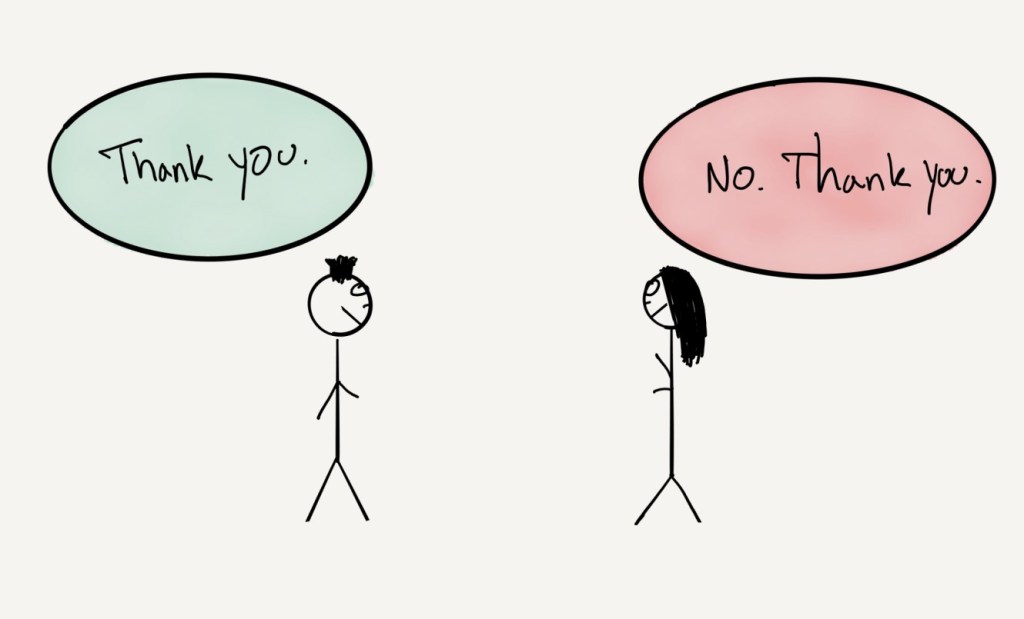
“Thank you.”
“No. Thank you.”
Saying thank you is a habit. It shows that you appreciate everything. Big things and little things. And appreciation is an important aspect of a happy life.
The French philosopher Voltaire put it well:
“Appreciation is a wonderful thing. It makes what is excellent in others belong to us as well.”
If you want to enjoy life, start by appreciating it.
Do you ever get upset about the nasty behavior of your co-workers, friends, or even family? Well, if you let others upset you, it’s not their fault.
“It’s not me, it’s him!” is what most of us say. We’re always quick to blame others for how we feel.
We say that others make us feel that way. But that’s false. You decide how you feel about the things that happen in your life.
Events can’t harm us. Our perception of an event harms us. That’s one of the most important ideas of Stoic philosophy.
In other words, you decide what meaning you give to the things that happen in your life. If your friend tells lies about you behind your back, and you get upset, that’s because you decided to get upset.
After all, you don’t control others. That’s why who you spend your time with is a matter of life and death.
The great Stoic philosopher, Epictetus, said this in his Manual For Living:
“Avoid fraternizing with people who don’t share your values. Prolonged association with those with false ideas can only tarnish your thinking.”
It’s something I truly live by. I’ve seen others destroy people’s lives too often to take this idea carelessly.
And I bet that you’ve had your share of, for lack of a better term, “toxic” people in your life.
There Are Two Kinds Of People
People with values
People without values
I think that less than 1% of the population has values. Values entail nothing more than answers to questions like:
How do you treat people?
How do you treat yourself?
What’s right and what’s wrong?
Here’s an easy way to detect people without values: When you see that someone becomes an entirely different person in a heartbeat — that’s when you know someone has no values.
For example, at our company, we recently hired a toxic intern. The intern turned out to be a different person from the person we thought we hired.
Of course, that’s our mistake. Even though we talked extensively about values during the interview process, we didn’t detect any warning signals.
And everything was fine during the first week. But as soon as the intern found a partner in one of our other interns, things started to change.
All of a sudden, with this new-found support, the intern started gossiping, trying to manipulate others, and causing mayhem. Fortunately, we identified it quickly and communicated that we have a zero-tolerance policy for toxic behavior.
When you lack values, you automatically gravitate towards natural human behavior. And that’s very dark. I recently read 12 Rules For Life by Dr. Jordan Peterson, a clinical psychologist, and a professor at the University of Toronto.
His fundamental proposition is that people are malevolent and that life is suffering. To prove that statement, Peterson shares compelling examples of human history with us.
He’s right. People have always lied, killed, and deceived their way through life.
But There’s An Alternative
Look, you can easily go down the rabbit hole of nasty behavior. Just spend enough time with bad people — eventually, you will become one of them.
You can also fill your days with gossiping, lying, and manipulating others. And you’ll probably also feel good when you do it. A sense of power, no matter how it’s achieved, gives people satisfaction. That’s how our minds work.
So when you recognize someone who doesn’t have principles, shows nasty behavior, and has multiple personalities — step away.
Instead, surround yourself with people who want the best for you.
Not with people who are jealous, can’t see your success, and thrive off negativity. I think this is important to realize for anyone who wants to live a good life.
A few years ago, when I started to live a conscious life, I had to say goodbye to people who only wanted to live a life of pleasure.
And I’ve also seen other friends that started to change their life for the better but were dragged back into the bottomless pit of darkness by others.
But as you and I both know, life is also full of warm and caring people. It’s not all bad.
Be Stingy With Your Time
“You’re the average of the five people you spend your time with.” It has become such a cliché. But I don’t think that we truly understand the impact that other people can have on us.
Like Epictetus said, others can tarnish your thinking. Is that worth it?
Look at it this way. Would you give $1000 to the people in your life if they asked for it? If the answer is no, stop giving the people who don’t share the same values as you, your time.
I’ve narrowed down the list of people I spend 90% of my time with to my direct family and my two best friends. Other than that, I spend my time working and exercising. That’s what I mostly do. And I’ve never enjoyed my life this much.
So if you have a job you love, and a few people in your life who you love, you don’t even have more time to spend.
Nothing else gives more satisfaction than having a meaningful career and a strong family.
“But what if my family is toxic?”
Inspire them to change for the better. I don’t give up on my family. Even if it takes 10 years, I will still try to help them.
Create Your Values, And Stick To Them
To live a virtuous life, you need principles. Without principles (or values), we have no character. And without character, we’re nothing.
“Who cares!”
Well, you should care. You’re the one who looks in the mirror every day. Are you happy with what you see?
That’s the only measure I have for my life. I must like the person I see in the mirror. If I don’t like that guy, I’ll change. That’s what I’ve always done. And that’s what I still do every day.
Improve Yourself
What’s the alternative? Like Peterson concludes in his 12 Rules For Life, there’s no other viable option for life.
You recharge your phone when it runs out of juice. You refill your gas tank when you’re running on empty. But sometimes, you forget to take a break and recharge your most precious possession: Your body (and the brain that’s inside of it).
Whether you love what you do, are in between jobs, or have a job you hate: You’re working. Living is also a job. A pretty tough one, actually. Just the act of getting up in the morning can be a daunting task. And I’m not even talking about all the responsibilities we have.
So why do you make your life even more challenging by not taking a vacation to recharge? I’m not talking about your weekends that are packed with activities, or holidays where you do more work than relax.
No, that type of “free time” only costs energy. I’m talking about resting with a very specific reason: To recharge your battery so you can get back to living a productive life.
A break reduces stress and improves productivity.
Scientific research shows that a vacation decreases perceived job stress and burnout. Now, that’s a pretty solid benefit of taking a few days off. But there’s more.
As you may know, I’m always interested in productivity. In the case of resting or a vacation, my question is:
Will I get more things done when I get back?
The answer is yes, but there’s one major thing to keep in mind. But let’s back up a bit: What does it mean to get more done? Getting things done has nothing to do with time—if you work more hours, you don’t necessarily get more done.
In fact, research shows that working more hours general means less productivity.
Why? Well, we often waste time if we have a lot of it. It’s simple: If I say to you, you have a year to write an article. What would you do? Put it off until tomorrow, right?
But what if I tell you that you only have 2 hours? You’ll probably get started right away. So in a way, having more days off, and fewer days to work, forces you to be more effective with your time.
Research shows that a vacation in itself won’t make you more productive, but when you have more days off, you have a strong desire to get more things done in less time.
And that’s a win-win situation for everybody: You, your business, or your job. You take off a few days, recharge, spend time with your family or friends, and when you come back, you’re more productive.
Sounds great. But wait, there’s a caveat.
When your vacation is stressful, the positive benefits go away. So keep the stress at a minimum on your holiday. Otherwise, you’ve wasted a perfect opportunity to relax and boost your overall productivity.
I recently felt I needed a break for several reasons. I had a few injuries that didn’t seem to go away and had less energy. I could have powered through, but instead, I decided to go on a vacation with my family. For a week, I did absolutely no work. And when I came back, I was full of energy.
Here are a few tips that might help you to take a break that fully recharges you.
1. Do What You Want
There are no rules for taking vacations and everybody relaxes in a different way. If you like to plan your holiday, just do it. If you want to go with the flow, then do that.
Want to wake up early? Do it. Don’t like waking up early? Sleep in. Even if you go on a vacation with your partner, friends, or family, you don’t have to be together 24/7. You can also sometimes do things that you enjoy.
The key is to not have expectations on your vacation. Let go of everything. I also don’t like to post vacation pictures on social media. Otherwise, I’m constantly thinking about taking a cool picture so I can impress others.
You’ll probably even do things you wouldn’t do just to take a picture. “I really need to rent a jet ski so I can take a picture with it.” No, you don’t.
Who cares? Focus on enjoying the moments you experience. Whatever those moments may be.
2. Read
Bill Gates is famous for his voracious reading habit. He is also known for his ‘Think Week’ where does nothing else but read and think.
You don’t have to be Bill Gates to think about your life and career. We all have our daily, weekly, and monthly routines. Usually, routines and habits work very well. However, you can also get stuck inside a loop.
That’s why I recommend you to step back from your daily life and career. If you do that, two things can happen: When you step away, you miss your daily life and can’t wait to pick up where you left off.
Or, the opposite will happen. You don’t want to go back. See that as a sign that you need to make a change. Either way, a break always serves a purpose. It doesn’t only help you to recharge, it will also make you think.
That’s why I like to read for hours on my vacation.
3. Get Bored
One of my favorite strategies for finding new ideas is to get bored out of my mind. It sounds easier than it is because of distractions.
In the past, I would do everything to NOT get bored: Watch TV, go out, browse Facebook, etc. But did you know that you can use boredom to your advantage?
Instead of giving into distractions, just give into the boredom and see it leads your mind to. In fact, one of my favorite artists of all time, Andy Warhol, embraced boredom. You can tell by the boring films he made or the references he made in The Philosophy Of Andy Warhol about getting bored.
Whenever I hit a creative wall, I just do nothing. Literally, nothing. Try it sometime. It’s a great strategy; maybe you come up with the next best thing in your industry.
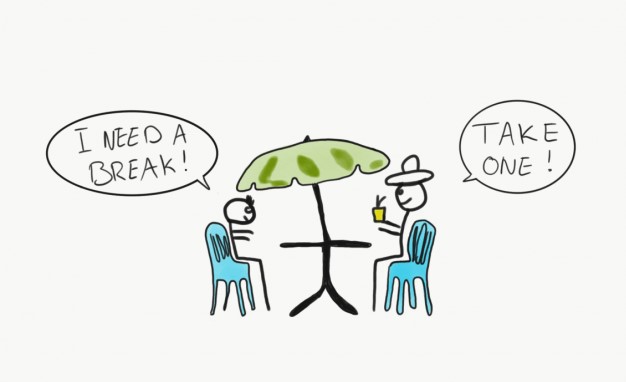
It’s never a good time to take a break.
“I just need to finish this project.”
“My boss will never accept it.”
“People will think I’m lazy.”
“I don’t have time.”
“My family needs me.”
Yeah, yeah, I’ve been there too. But what would you rather: Continue to work without resting and burn out? Or take some rest before you’re tired?
So before you use all those valid reasons to not take a break, think about what all the people in your life have to do if you’re not here anymore. Yes, you’re important. So take care of yourself. Take a break and come back with more energy.
Just admit it, you’ve thought about it before. Social media is great and all. But you and I both know that it also sucks.
Does this scenario sound familiar?
It’s late at night, you’re in bed, you dread waking up early tomorrow because you have to go to work, so you grab your smartphone, you open up Instagram (or whatever app you’re addicted to).
And you start browsing, you go from one picture to the next, you watch some videos, you start feeling bad about your life, because all the other people have fun, and you have to go to work in the morning.
Alright, we’re at a very bad place right now in that scenario. Because now the existentialism creeps in slowly. And finally, you think:
“My life is shitty compared to these other people. They look amazing, have money, travel the world, and they are important too. Who am I? I’m nothing. What have I done? Nothing! FML.”
And what do you do besides feeling like shit? Nothing. You just go on with your life and repeat that whole process the next day. And some days you counter the posts from other people by ‘crafting’ your own cool posts.
Just admit it, this whole thing is not cool. Of course, I’m exaggerating, and social media is not the source of all our problems. Don’t expect that your life will be awesome when you get rid of social media. I don’t believe in fairy tales.
But you get my point. Social media has a negative impact on many of us. Some people love it. If that’s you, there’s no need to read this article. But if you ever thought about quitting social media, keep reading.
Actually, just stop reading, and go on and delete the apps that make you unhappy.
Just follow the example of Louis C.K. When asked about why he quit Twitter in an interview, he said:
“It didn’t make me feel good. It made me feel bad instead. So I stopped doing it.”
That makes it very simple. If something makes you feel bad, stop using it.
It’s the opposite of the scientific approach to quitting social media that Cal Newport took. He makes some good points about why social media is bad for you.
But to me, that’s way too rational. And we’re not rational beings. We’re emotional. That’s why I like the approach of Louis C.K.
Here’s why I got rid of my social media.
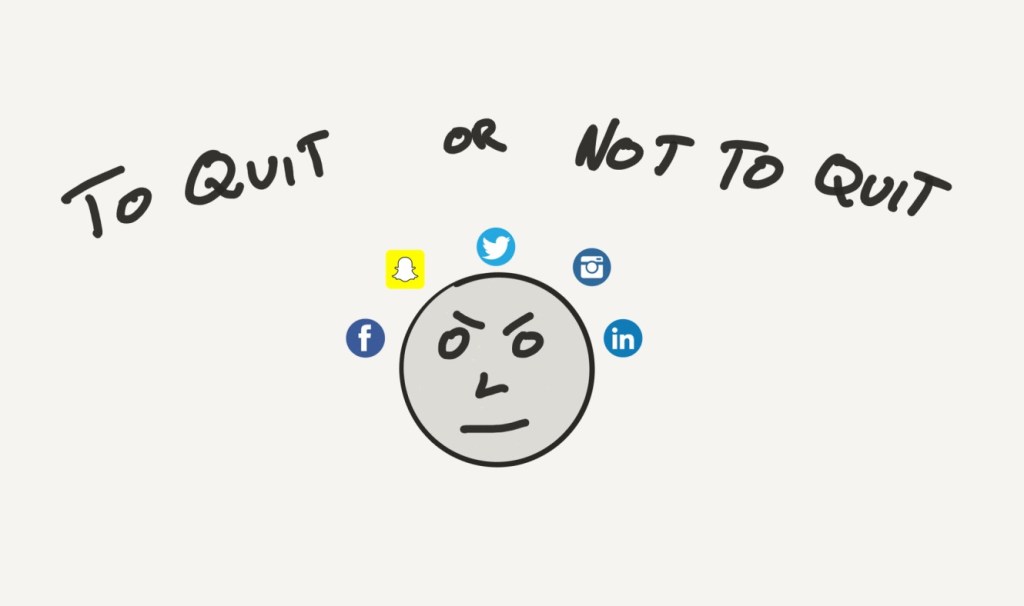
I only used it for self-promotion. And I don’t like that. I don’t think that’s fair to people who follow you. So I got rid of my Instagram, Facebook, and Snapchat. I only have Twitter and LinkedIn (for now). But if I don’t use them, I’ll get rid of them too.
This article is not about convincing you to do the same. Or about getting rid of all your social media profiles. All I’m saying is this: If you ever thought about quitting social media, just do it already.
You’re limiting yourself by not pulling the trigger. Now, you might say: “It’s just social media. Who cares?”
But you’re not getting off that easily. If you want to live a happy and stress-free life, you have to be decisive. When things linger in your head, it’s all dead weight. And you don’t want that.
What’s it going to be? Do you use social media or not? Does it make you happy? Does it improve your life or business?
I know what you’re thinking. “What if I ever need it?”
You don’t need anything for business or your career.
People who have stakes in social media will never tell you to stop using it. Why? Because their career depends on it.
But what did you think people did before social media? It’s all a matter of perspective. Many successful entrepreneurs I know have never used social media.
Is that why they’re doing well? There’s no way to tell. One thing is sure: You can do well in life with and without social media.
It’s up to you to decide. And it comes down to self-awareness. It’s also about simplifying life. Because it’s already complicated enough. Get rid of shit that doesn’t contribute anything to your life.
So what’s your perspective? Have you ever thought about quitting social media? Why did you never pull the trigger? Let me know in the comments.
If you believe that only stupid people make these common mistakes, you’re as wrong as I was. The truth is that everyone makes mistakes. Smart people admit that. Stupid people do not.
What’s more, the smartest and most successful people in history have made the most mistakes. Are those two things connected? I think so. This Albert Einstein quote says it all:
“Anyone who has never made a mistake has never tried anything new.”
I used to blame myself for making mistakes in life. I think that’s how our society is. As a kid, you’re punished for making mistakes in school and life. And because of that, we think it’s normal to punish each other as adults.
But why would you punish yourself or another person for making silly mistakes? Most things in life are reversible and small (I’m not talking about committing crimes or adultery here). What matters is that we learn from our mistakes.
One of the best traits one can have in life is to be forgiving. You must go easy on yourself when you screw up. The same is true for the people in our lives. Alexander Pope put it best:
“To err is human, to forgive, divine.”
And when people really cross the line—just move on. No need to make things complicated.
Here are 5 of those mistakes that smart people make. Remember that you don’t have to make these mistakes yourself. It’s better to learn from other people’s mistakes. They have made them, so we don’t have to.
1. Chasing money
I recently read How To Get Rich by Felix Dennis, who owned one of the biggest magazine publishers in the UK. Contrary to the title, the book actually tries to discourage you to chase money.
Many rich people will tell you the same. The funny thing is that we all know there is more to life than money. And yet, we make it our sole purpose. Dennis writes:
“People who get trapped in the tunnel vision of making money think that is all there is to life.”
There’s nothing wrong with wanting to get rich. We just have to remind ourselves that making money beyond a certain amount has little impact on our happiness. But somehow, we get tunnel vision. Again, trying to get rich is not a mistake. However, it is a mistake if you expect that it’s the answer to all your problems.
2. Ignoring sleep
When you get excited about something, you want to spend all your time on it. That’s a great feeling.
But when your excitement prevents you from having quality sleep, you want to change that. It’s one of my biggest pitfalls. I can read and work all day long—well into the night.
But even when I go to bed at 2 AM and wake up 8 hours later, I still feel tired. Somehow, it’s different when I hit the sack at 11 and wake up at 7. I feel much more energized.
For the past year, I’ve been taking my sleep more seriously. I wake up at the same time every morning. And I turn off my devices exactly one hour before I want to sleep. That means no work or heavy mental activity before bedtime. Just some light reading or journaling.
3. Being connected too much
The past decade has been great for technology. Almost everyone has a smartphone with access to the internet. Within a few years, the whole world will be connected. Even the less developed countries.
Modern technology has changed the world. These developments are great. But remember that too much of a good thing becomes bad.
That also applies to your smartphone, tablet, and laptop. Recent research shows that Generation Z (born after 1995) is distressed and anxious. The American Psychological Association even says they have “the worst mental health of any generation.”
One of the biggest reasons for their mental state? All the signs point towards their smartphones and connectedness. For years, I’ve been limiting my smartphone usage.
And inspired by Cal Newport’s new book, Digital Minimalism, I’m only getting more strict with this.
Do you have a list of priorities or goals that you want to achieve this year? And do you struggle with allocating time to them? Time blocking might be helpful.
It certainly helped me. Look, I’m not any different from you. Life can be messy. Most of us juggle a lot of different things at the same time. Even though the simple solution is to stop juggling, it’s not always realistic. Or even needed.
What if you could do more things without losing your time? It’s possible. But you must work in an organized way.
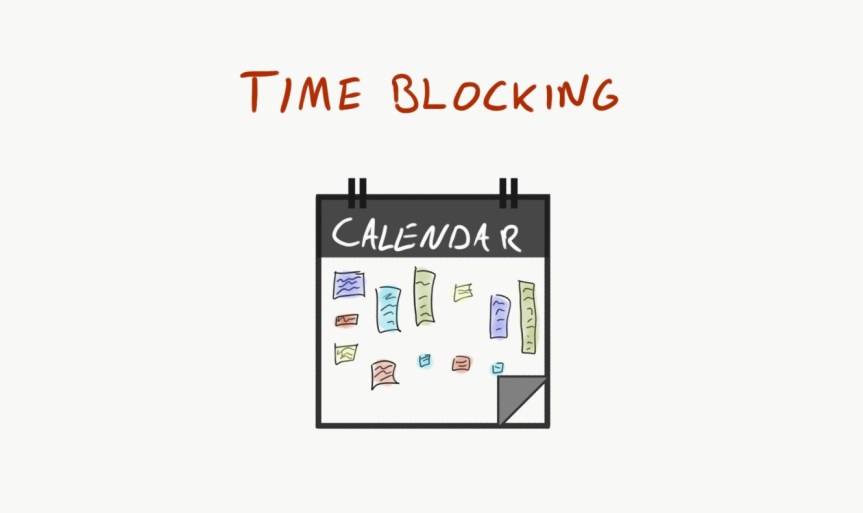
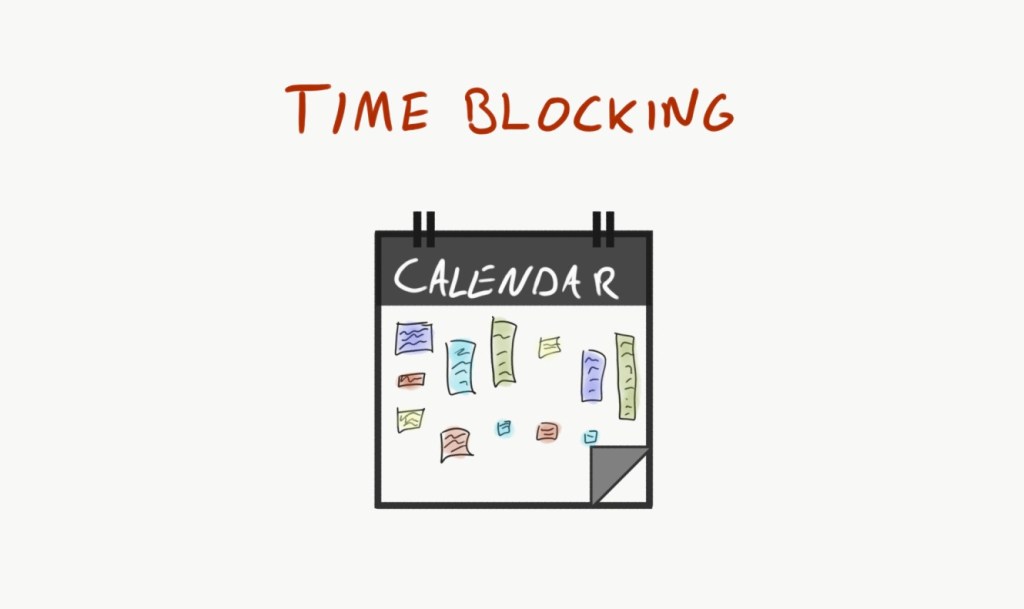
Time Blocking a simple productivity exercise that many people use. It’s not fancy or revolutionary. The only thing you need is a calendar, which is something everyone with a smartphone and computer has.
Time Blocking is simply using your calendar to block time for your most important priorities. During that time, you only work on that one thing. And, you let your calendar lead the way. That way, you don’t have to think, “What should I do next?”
But Time Blocking is more than just a productivity tool. It’s about self-awareness.
The road to high productivity starts with awareness.
For instance, one of my priorities this year is to write a book on pragmatic thinking. However, there’s a problem: I haven’t been writing.
How did I come to this conclusion? I simply looked at my list of priorities for 2017, and I then I looked at my calendar.
I hadn’t scheduled any time for writing in a while. Now, you might think, “do you really have to look at your calendar to realize that?”
Yes, I do. I’m not some kind of supercomputer that remembers everything. I’m a regular human being. I think of something to do, start working on it, life gets in the way, and then I FORGET about it.
It happens to all of us. We need self-awareness and tools that keep us in check. And that’s why I like Time Blocking.
Some people love Time Blocking. Some people hate it.
Computer science professor and author of Deep Work, Cal Newport, also uses time blocking. He says:
“I take time blocking seriously, dedicating ten to twenty minutes every evening to building my schedule for the next day. During this planning process I consult my task lists and calendars, as well as my weekly and quarterly planning notes. My goal is to make sure progress is being made on the right things at the right pace for the relevant deadlines.”
The last sentence is exactly why I schedule everything I want to do. Working is not the same thing as making progress. And Time Blocking helps me to improve my focus so I can get meaningful things done. Things that have an actual impact on my life.
I know there are a lot of successful people who work with empty calendars. I’ve read the articles. They simply work two, three or four hours per day.
And to be honest, that sounds very attractive to me too. However, one must look at his/her own life situation.
What are you trying to achieve?
And more importantly: What resources do you have?
Often, people who don’t have a lot of money, do have a lot of time. So why not use it wisely? Either way, I think that planning serves a purpose.
I plan my days and weeks in advance because I want to make sure I’m working on the RIGHT things. Too often, I get lost in completing daily tasks.
But there are many different areas of my life: My family business, my blog, podcast, online courses, relationship, friends, investments, etc.
It might sound like I’m doing many different things. But it depends on how you look at it. Everything I do leads to one thing: Living a meaningful and independent life.
But let’s not get philosophical here. If you’re lacking focus, not making progress, and want to work in a more organized way, give time blocking a try.
Here are some things I’ve learned that may help:
Take 10 minutes every evening and plan your next day. Rearrange blocks if you must create time for other important things.
Use recurring blocks for recurring tasks. For instance, I’ve scheduled two hours to write my new book every Tuesday and Thursday.
Don’t over-schedule. Realistically, you can’t be productive 10 hours straight. Give yourself some time between tasks.
And always schedule more time than you think you need.
“Wow, time blocking sounds like too much planning to me.”
No problem. Plan less. There’s always a counter-movement for everything. People who do the exact opposite and advocate an anti-productivity lifestyle. You know, folks who claim they have empty calendars and don’t care about anything.
People who pretend they are always “enjoying” themselves. They like to go with the flow and daydream.
You know what that reminds me of? Those kids in school always said, “Ah dude, I didn’t have time to study for this class,” but always ended up getting straight A’s.
People just want to make you believe they don’t work hard. It’s facade. And when they do well in life, it seems like it came easy.
As far as I know, achieving meaningful things is hard. I don’t think there’s anything cool about pretending it’s easy. Nor do I believe that it’s cool to work yourself to death.
I often think of this question: Are you an amateur or a pro?
It’s Steven Pressfield’s famous analogy, from his book The War Of Art, for getting work done.
The amateur-only works when inspiration strikes. The pro sits down every day and puts in steady work. The key is steady. Not irregular or extreme.
Pressfield says:
“The sure sign of an amateur is he has a million plans and they all start tomorrow.”
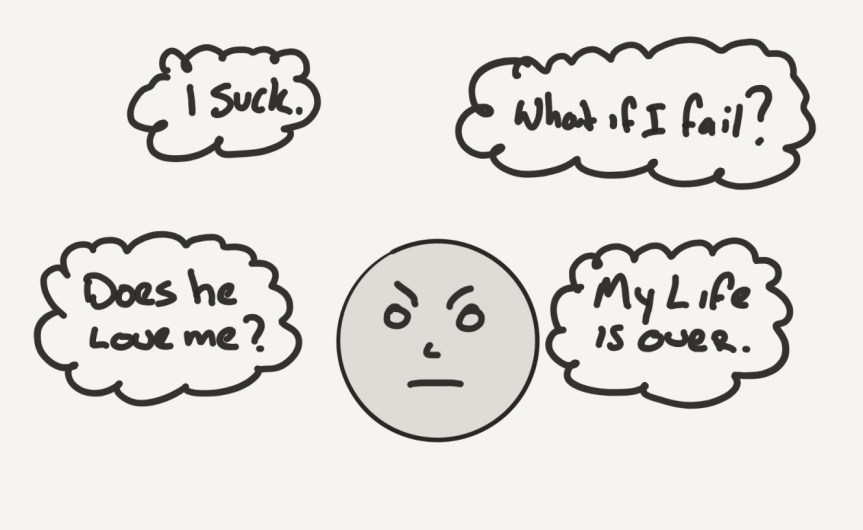
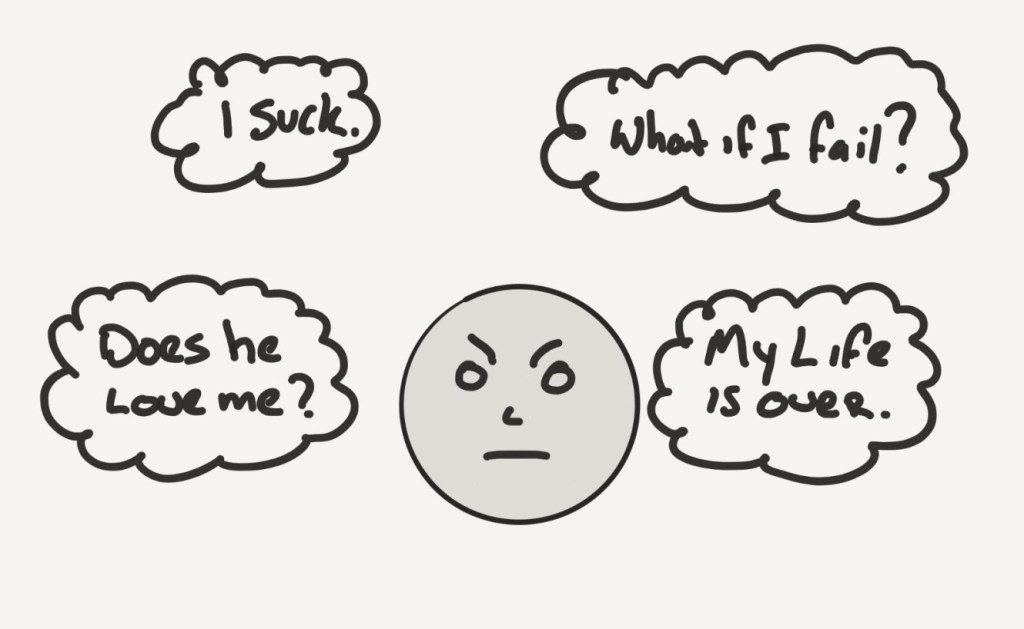
I know something about you without knowing you. I bet you spend A LOT of time in your head.
You know, thinking, worrying, stressing, freaking out — call it whatever you want. I call it a preoccupied mind. And with what?
99% of your thoughts are useless. William James put it best:
“A great many people think they are thinking when they are merely rearranging their prejudices.”
All my life I’ve been obsessed with practical things. Practical philosophy, practical knowledge, practical books, practical work, and practical advice.
That idea comes from Pragmatism, a philosophical tradition that started in the 19th century in America. Charles Sanders Peirce, who was a Harvard professor, is considered as the “father of Pragmatism.”
But it was William James, a trained physician turned philosopher, who really defined the philosophy.
About thoughts, worry, and stress, William James says:
“The greatest weapon against stress is our ability to choose one thought over another.”
Pragmatism believes that a mind is a tool. Your mind should work for you, not against you. People who don’t master their mind, don’t believe it’s possible.
They say: “I can’t help but thinking these things.”
Well, you can with enough practice. It’s a skill.
In other words: You have the ability to decide what you think. Or, you can choose NOT to think.
And that is one of the most important and most practical things you can learn in life. Before I learned that skill, I would spend hours and hours inside my head.
Just think about how much you think.
“I wonder what my boss thinks?”
“What happens if I screw up and lose my job?”
“Does she love me?”
“I think he doesn’t care about me.”
“I just keep failing.”
“Why does my life suck?”
“Why is my life awesome, and other people’s lives are not?”
“What if I get cancer?”
“I don’t care about my job. Is there something wrong with me?”
“I can’t finish anything. What’s wrong with me?”
And the list goes on. That is all REAL shit. That’s stuff people tell me when I ask them what they worry about.
Do you know what those thoughts do to you? Guilt, anger, suffering.
I just have one question for you: What’s the practical use of your thoughts?
Yes? I’m waiting. Still no answer? Exactly.
Thoughts have no use. 99% of them that is.
Which thoughts are useful?
Thinking about how you can solve problems. A problem is just an unanswered question. Put your brain to use and think about how you can solve problems. There are a lot of those on this earth.
Understanding knowledge. That means this: Try to internalize knowledge and think about how you can use that knowledge to improve your life, career, work, relationships, etc.
That’s it. You can ignore every other thought.
If you’re constantly thinking, it’s because you haven’t’ trained your mind yet. You HAVE to get out of your head.
If not, you go mental. Everyone will. No exception.
Also, you’re probably thinking so much that you’re missing out on life. Did you notice the sunshine this morning when you woke up? Or the raindrops? Did you notice the smell of your coffee? Did you feel the texture of your cereals?
If your answer is no, you definitely need to get out of your head. Stop thinking and start feeling.
Now, you might think: “How do I train myself to stop thinking useless thoughts?”
Awareness.
That’s where it starts. Every time you start drifting off, become aware of it. Just observe your brain. Step outside yourself and just observe the crazy shit you’re thinking about.
Don’t judge. Don’t think you’re stupid. If you do that, you’re thinking again.
No, what you want to do is say this to yourself: “Ah that’s a cute thought. Now, let’s get back to reality.”
“If you can change your mind, you can change your life.” ― William James
Are you back to reality? Do you feel your eyes reading the letters on your screen? Do you feel your phone in your hand? Are you thinking about how you’re going to apply this information to your life?
Great. You’re USING your mind, and it’s not the other way around. Now, keep using that brain of yours.
Because I’ll tell you this: It’s the most powerful tool on earth.
To improve your decisions, you want to look at your process for making a decision. Most people assume that good decision making is a matter of picking a course of action that leads to the desired outcome.
That’s a misconception. Decision making refers to your cognitive process. It’s about how you end up with your decision, not what the decision leads to.
Good decision making can lead to bad outcomes. The opposite is also true. Bad decision making doesn’t mean you always get bad results. For every decision, there are external factors that influence your outcomes.
So how can we improve our decisions? By focusing on the process, not the outcome. The best method for improving your decision making process is to ask yourself critical questions. It’s not enough to ask obvious questions like, “What are my alternatives? What has worked for others? What are the consequences?”
While it’s good to ask yourself those questions, it will not change your decision making process. Those questions only look at what you already know.
I found a list of six thought-provoking questions in Annie Duke’s book, Thinking In Bets. Notice what the theme is.
Why might my belief not be true?
What other evidence might be out there bearing on my belief?
Are there similar areas I can look toward to gauge whether similar beliefs to mine are true?
What sources of information could I have missed or minimized on the way to reaching my belief?
What are the reasons someone else could have a different belief, what’s their support, and why might they be right instead of me?
What other perspectives are there as to why things turned out the way they did?
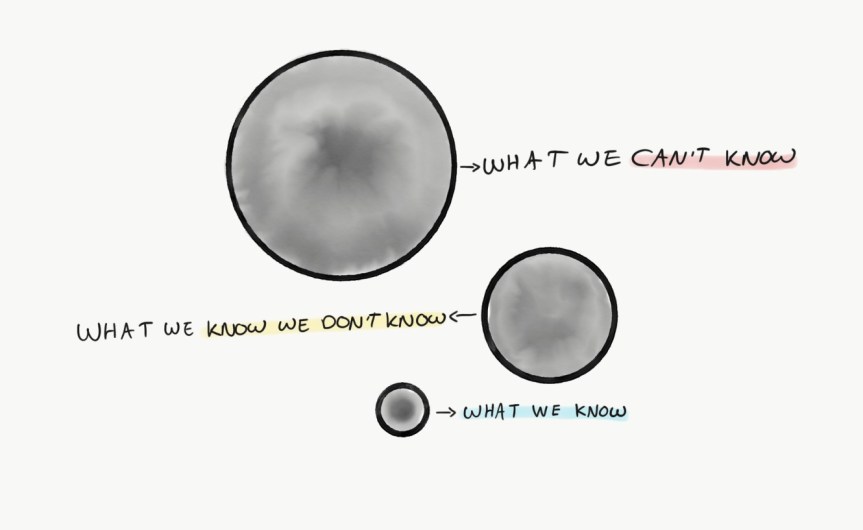
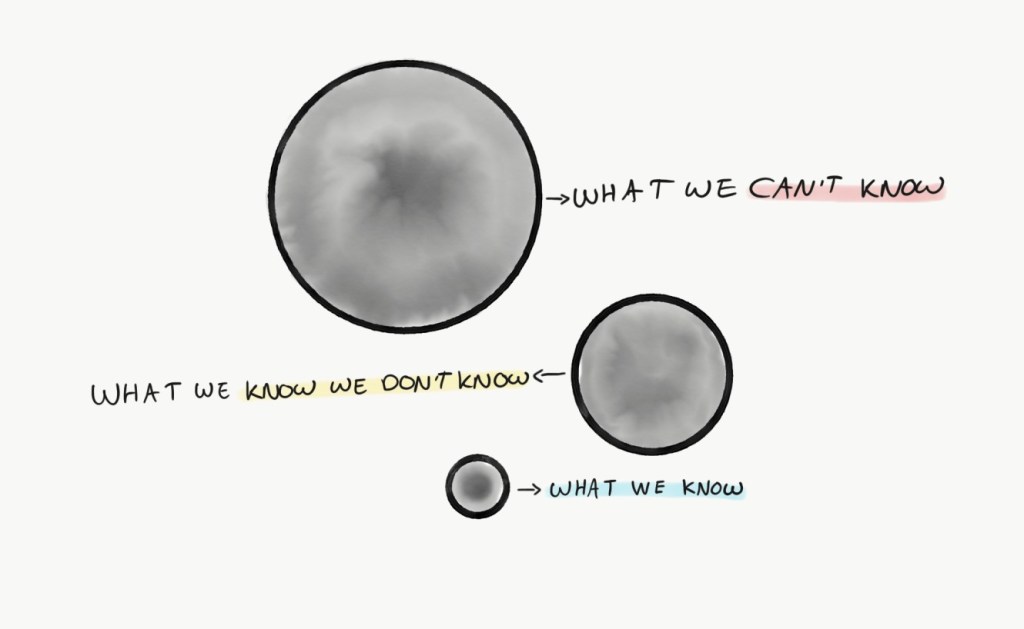
Think About What You Can’t Know
The reason I like these questions from Annie Duke is because they force you to think about what you can’t know. In my experience, that’s what drastically improves your decisions.
We all know the feeling of talking to an experienced person who shares some insights with us, and we go, “Aha! I didn’t realize that.” That’s what you want. Duke writes the following in Thinking In Bets:
”Just by asking ourselves these questions, we are taking a big step toward calibration. But there is only so much we can do to answer these questions on our own. We only get exposed to the information we have been exposed to, only live the experiences we have experienced, only think of the hypotheses that we can conceive of.”
This is the reason I often turn to my friends, mentors, communities, books, courses, and podcasts for insights that come outside of myself. I want to learn about things I can’t know.
It’s impossible to know and see everything. We haven’t had the experiences of other people. Most of us keep making the same decisions because we never get an outside point of view. We don’t make an effort to improve our decisions.
Open To Beliefs—Not Gullible
To improve your decisions, ask yourself questions that challenge your existing beliefs. I highly recommend saving those six questions in your note-taking app. I’ve done it and when I face a decision, I often go through these questions and my other notes on decision making.
As you become open to other beliefs and perspectives, keep in mind that other people also don’t have all the answers. Adopt the mindset of a skeptic. Be open to other beliefs, but don’t believe everything instantly.
Keep looking for evidence and other perspectives. When you have collected enough information, make your decisions. Sometimes people assume you have to listen to everything “experts” have to say. This will only make us gullible. If there’s one thing that harms our decisions, it’s that.
We should always make our own decisions after going through a process. We should avoid making rash decisions based on the opinions of others.
Common Decision Making Pitfalls
Here’s what you should watch for when you’re making decisions (no matter how big or small):
Analysis paralysis—This is very common. At some point you get stuck in the process and you can’t make a decision. You go over the process over and over again. This is a big risk. You can NEVER have 100% of the information you need. It also helps that your decisions are not about the outcomes. Don’t let your fear of making the “right” decision paralyze you. There’s no right or wrong outcome. Just outcomes. Deal with it later.
Extinction by instinct—The opposite of the above. It’s the belief that instincts are a useful tool in decision making. This leads to rash decisions.
Information overload—This is when you ask too many people for their opinion or insights. Stick to trustworthy sources and keep them at a minimum. More information is not better. Reliable information is.
I’m not a fan of complicated theoretical decision-making frameworks to improve your decisions. Those types of formal frameworks might work for large institutions, but for you and me, it’s just not useful. Who makes time to read an 800-page textbook on statistical decision theory? And if you do study it, you probably can’t remember all of that theory. Instead, work with what you have.
When you face a problem, simply look at your options, collect some information, think about what you can’t know (the six questions at the top), evaluate everything, and pull the trigger. Done. Then, move on to the next one.
Life is a series of games. Sometimes you lose, sometimes you win. We all know this. And yet, we often keep on playing games we lose. Why not play to win? Don’t you enjoy winning? I do. You know what I don’t like? Losing.
I don’t mind losing a few games, but overall, I want to win. And I don’t think you’re any different. I’ve never met a person who said, “I LOVE to lose.”
That person doesn’t exist. People who pretend they don’t mind losing gave up on life years ago. I get it. Life is hard and when you lose a lot, you become numb. That’s why this concept is so important.
Losing Hurts
Look, you can be the most optimistic and thick-skinned person in the world, but if you always lose, you’ll go crazy. You can read as many self-help books as you want, and master any kind of subtle art you want, but if you lose, all that shit goes out the window.
I don’t understand why people are never honest about losing. It hurts. And this is coming from a person who’s not even that competitive.
I always played sports as a kid. And even though I was pissed off when I lost, I could let it go. I had friends who were so competitive that they couldn’t stop before they won something.
Didn’t matter what it was: 1 on 1 basketball, video games, table tennis, foosball, whatever.
It’s not in our nature to be happy when we lose. You know how most people solve this problem? They give up!
That’s the saddest thing I’m currently seeing. And I see this a lot. Every time talented people give up their career and become minimalist yoga practitioners who live off the land, I see someone who stopped playing.
Of course, this is not the case for everyone. But let’s be real. I’ve been there before. When I started my business in 2010, I hit a wall after three years. I stopped playing the entrepreneurship game and decided to climb the corporate ladder.
When I worked at a corporation, I realized that it was not a game I was good at. I stopped climbing the corporate ladder.
Find A Different Game
To be honest, if you’re not good at a particular game, it’s better to stop. Go and find a different game you can win at. But don’t give up and live in the woods.
Jerry Seinfeld explained this concept best in an episode of Comedians In Cars Getting Coffee. In the episode with Eddie Murphy, they talked about why companies that are in second place should just quit. Jerry said:
“All these companies that are in second place that hang in there. Why don’t you just quit? Avis, Colgate, RC Cola, just quit. How sad is it to work at these places? You’re never going to catch them [the #1 company]. Pepsi… You’re never gonna catch them.”
Obviously, Jerry is joking here. But there’s a lot of wisdom there. If you can’t be number one, why play? If you can’t win, it’s just a hobby (nothing wrong with hobbies, though). Quit that game and start playing a game you can win.
Let me give you a recent example. A lot of people told me I should make YouTube videos. I’ve been teaching productivity and writing for several years. And I also have a podcast.
It didn’t sound like a bad idea to me. So I got into the YouTube game. I’ve published 38 videos on my channel and tried many different strategies to reach more people. My conclusion? I wasn’t even close to the top perfomers on YouTube in my field. So I quit.
Same thing is true for my podcast. The difference is that my podcast takes less time and is more fun to create. But still, I never came close to the top podcasts in my category. That’s why I allocate less time and resources to it.
Win More Than You Lose
When it comes to content creation and monetization, my main focus is on blogging, teaching, and publishing books. I’m good at those things and the results are much better—and so are the rewards.
For example, my book Think Straighthas been consistently sitting at the top of its category. And even though I might not be #1 in certain categories, I’m very close.
That’s the key. Seinfeld was joking when he said that Pepsi should quit. I think he’s more referring to the players that are not even at the top. In this case, Pepsi is pretty close to Coca-Cola. Will they ever catch them? We don’t know but they are up there.
Can you see the top of your field? Can you finish in the top 10? If so, you have a chance to win. And sometimes, you don’t even have to be #1. If you’re at the top, you will still reap the benefits, just like Avis, Pepsi, etc.
But if you can’t be at the top, I would find a different game. In This Is Marketing, Seth Godin wrote about how we only see the winners in any given field:
“We hear about the outliers, the kids who make millions of dollars a year with their YouTube channel or the fashionista with millions of followers. But becoming an outlier isn’t a strategy. It’s a wish.”
We don’t see all the people who lost. The winners are highly visible—especially in desirable fields. Those folks are the famous outliers. But that doesn’t mean you can’t win at other games.
It’s pretty harsh. And a lot of people don’t agree with this theory (I already received a bunch of emails from angry people). But that’s not a surprise. Just look at how many people work at places that don’t even compete.
Pick Your Games Wisely
There are a lot of games that I lost—which is never a good feeling. When I realized I didn’t even come close to success on YouTube, I had to pull the plug. It simply wasn’t yielding any significant results.
Sometimes, you don’t need to go on forever to draw conclusions. “But what about persistence?” Well, you can’t be persistent with everything. I’d rather be persistent with one or two games that I’m good at. You only have so much energy every day. Can you do it all?
I don’t know about you, but I certainly can’t. This concept is not for everyone. There will always be delusional people who say, “Look at how often Thomas Edison failed!” Sure, but he played the invention game and was winning overall.
There’s nothing wrong with quitting so you can win at something else. Just don’t settle for average. Again, Seth Godin has excellent thoughts on this:
“Quit or be exceptional. Average is for losers.”
And you know what? Maybe it’s not the right time to win. Maybe you’ll lose at something and come back at a later stage. So when you quit a game, it’s not forever. Sometimes you have to quit to get better so you can win later.
Either way, when I focus on too many things at the same time, I start dropping the ball more often. I make mistakes, I forget things, I slack off. You can’t have that if you want to win.
Winning ain’t easy. And there’s little room at the top. But that doesn’t mean you can’t be at the top of your game. You just have to pick a game you can win at.









 Eduindex
You must be logged in to post a comment.