Every Breath by Nicholas Sparks

The master of romance Nicholas Sparks returned with another novel titled Every Breath in 2018 after a break of two years. Every Breath is Sparks’ 21st novel. It is a touching story of Tru and Hope who are undergoing their own issues in life. They have a chance meeting at Sunset Beach, North Carolina and fall in love under hopeless circumstances but, fate has something else in store for them.


Tru Walls is a 42-year-old safari guide from Zimbabwe; Hope is a 36-year-old emergency room nurse from North Carolina. Tru travels from Zimbabwe to Sunset Beach, North Carolina for the first time in his life to discover his late mother’s early years, after he received a letter from a man who claims to be his biological father. While Hope Anderson is going through a personal crisis—she has been dating her boyfriend for six years with no wedding plans yet, and recently her father was diagnosed with ALS—and decides to take a break and to make some important decisions of her life at her family’s cottage at Sunset Beach, North Carolina. Their paths cross during a chance encounter on the beach, and there is an instant connection between Tru and Hope which changes their lives forever. But, Hope is divided between her feelings for her boyfriend of six years and Tru, whom she falls in love with.

What’s interesting to note is that though Tru and Hope are fictional characters, the story is inspired from a real-life mailbox ‘Kindred Spirit’ which is located on a secluded part of Sunset Beach in North Carolina, where people have left their love-letters for many years for others to read and share. Sparks also reveals on his website that Tru’s character is inspired from his recent trip to Africa, as he writes, “I then came up with the character of Tru when I was travelling in Africa. I was so impressed with the welcoming people, the exotic landscape, and the natural beauty and wildlife that I wanted to find a way to include a character from Zimbabwe into one of my books.”
Spread across many years and continents, Every Breath is a bittersweet contemporary story of love at first-sight, circumstances and destiny which will warm your heart.

How critics view the book:

USA Today writes in a review, “What makes “Every Breath” rise above mere pleasurable manipulation is its unpredictability and strong character development, especially with Tru.”

Sara Lawrence for the Dailymail.co.uk writes in an article, “The tussle between Hope’s head and heart is deeply moving and I was captivated.”

Horace as a Critic

Quintus Horatius Flaccus (65 BCE–8 BCE ), more commonly known as Horace, was a Roman poet, best known for his satires and his lyric odes.

His letters in verse, particularly his Ars Poetica: Epistle to the Pisos, outline his beliefs about the art and craft of poetry. His main contribution to the traditions of literary theory we are exploring lie in his articulation of the purpose of poetry, or literature in general: it is dulce et utile, sweet and useful.

Horace insists that literature serves the didactic purpose which had been Plato’s main concern, and that it provides pleasure; the two goals are not incompatible, as Plato had feared. Poetry is a useful teaching tool, Horace argues, precisely because it is pleasurable. The pleasure of poetry makes it popular and accessible, and its lessons thus can be widely learned. Like Plato, Horace sees nature as the primary source for poetry, but he argues that poets should imitate other authors as well as imitating nature. Horace thus establishes the importance of a poet knowing a literary tradition, and respecting inherited forms and conventions, as well as creating new works.

Except for a few late Roman and early medieval writers who contributed to the discussion of theories about literature, such as Plotinus (204–70), Boethius (480–524), St. Thomas Aquinas (1225–74), and Dante Alighieri (1265–1321), the writings of Plato, Aristotle, and Horace pretty much defined the parameters of thought about literature from the ancient world until the Renaissance.

The explosion of art, literature, and science which we think of as the hallmark of the European Renaissance in the fourteenth to the sixteenth centuries prompted not only a deluge of literary texts, including the works of such luminaries as Shakespeare, but also a torrent of writings about the purpose, form, and importance of literature. The Renaissance discourse on literary theory was stimulated at least in part by the rediscovery of Aristotle’s Poetics, a text which had been lost to Western culture during the Dark Ages.

How to sleep better

Can’t figure out how to sleep better? Below are the best techniques for getting better sleep, from sleep experts and neurologists.

1. Keep Clocks Out of Your Bedroom

What’s the biggest change you can make to get more sleep? Don’t look at the clock during sleeping hours, says sleep expert Terry Cralle. Without a clock, the “chore” of falling asleep goes away. You won’t start doing math in your head and worrying about how little sleep you’re getting. If your room is dark and cool and you’re “in the dark” about how much sleep you’ve missed, you’ll most often fall back to sleep soon.

2. Follow a Sleep Schedule

One of the biggest reasons we don’t sleep is that we don’t respect it. “People say they only have time for 4–5 hours a night,” says Cralle. “But that can be dangerous, with studies showing metabolic changes after just a few nights of short sleeping.”

Wondering, “When should I wake up?” Or, “What time should I go to bed?” Try to go to bed as close to the first full darkness as you can, and rise with the sun. Going to sleep at 9pm, 10pm, or 11pm matters less than keeping the same sleep schedule every night.

Is 6 hours of sleep enough?

Getting 6 hours of sleep a night will sap your focus, moods, health, and well-being. Always get 7–9 hours of in-the-bed sleep time, even if you’re awake for some of it. Even if you feel fine after six hours of sleep, your effectiveness suffers.

3. Get More Daylight

Numerous studies show getting more natural light is one of the top techniques for how to sleep better. Yet we’ve got ever brighter screens in laptops and phones. Those screens—and our brightly-lit homes—are sending silent messages to our brains that say, “It’s morning! Go to sleep 12 hours from now.” Trying to override those messages can be like eating a 32-ounce porterhouse steak right after Thanksgiving dinner. Your body will say, “Nope.”

The upside? One-third of US employees work from home at least sometime during the week. That gives us a tremendous opportunity to work on a porch, park bench or in an outdoor cafe. In winter, sit near a window for a few hours in the morning.

4. Have a Coffee Cutoff Time

Tired of being tired? Try switching to decaf after 2pm. Studies show that even drinking coffee 6 hours before bedtime can rob your sleep time.

5. Try Audiobooks

Listening to an audiobook can help you sleep. Turn the volume down and set the playback to its slowest speed. Then set a timer so it shuts off in an hour. Most phones can set a “stop playback” alarm. Here’s how on iPhone and Android.

6. Distraction Techniques

When your mind has a tricky “job to do,” it stays alert. “Some people fall asleep better with a distraction,” says Cralle. So, here are a few tips for how to sleep better with distractions:

The Navy SEAL Technique

Why is sleep important for Navy SEALs? Imagine trying to sleep in the rain, cold, or in a fire zone, when your life depends on being rested. Thankfully, these hardened warriors have a trick that helps them drift off in two minutes.

How to fall asleep:

  1. Sit on the edge of your bed.
  2. Relax the muscles of your face, jaw, tongue, and eyes.
  3. Let your shoulders and arm muscles go slack.
  4. Breathe out. Relax your chest, then thighs, calves, feet, and toes.
  5. Clear your mind for 10 seconds.
  6. Picture one of these three images:
    1. You’re lying in a pit room in a black velvet hammock.
    2. You’re in a canoe on a calm lake with blue sky above.
    3. You repeat the words “don’t think,” for 10 seconds.

The 2-minute Navy SEAL sleep technique works for 96% of sleepers. The downside? It can take six weeks of practice.

Popular myths!

Set Learning Styles

There’s no research to support learning styles. 
How to learn: Match your content to the process – students should learn music by listening to music, while students should learn reading by doing more reading.

Rereading Material

How to learn: Instead of rereading, highlighting, or underlining important information, ask yourself:

  • What is the author trying to say?’ 
  • How is this different from other things I’ve read?’ 
  • How does this relate to other material I know?’ 
Focusing On One Subject At A Time

When it comes to learning a difficult subject, people often believe you should practice one thing at a time.
How to learn: Mixing it up, however, is a better approach. In mixed learning, you get a chance to see the core idea below it.

Sticking With The First Answer

In school, many of us were taught that if you put an answer on a test you shouldn’t change it, but we’re better off reconsidering. We need time to deliberate and reflect to understand something.
How to learn: While facts are important, how you use them is key. To solve new problems and come up with ideas, you need analogies and systems of how things relate to each other.

More Time For Learning

Putting in a lot of hours doesn’t always mean you’ll become good at something. People tend to be blissfully unaware of their incompetence.
How to learn: What works instead isn’t just time; it’s outside advice and input. That’s why hiring coaches and tutors are so beneficial to learning.

Reference

https://www.fastcompany.com/40420472/five-popular-myths-about-learning-that-are-completely-wrong

TEENS AND THEIR SLEEP CYCLE

Ever wondered why even after a busy day you couldn’t sleep at night ?

Most of todays generation is found awake for late nights, sleepless.This is because their brains naturally work on late schedules.This change takes place because the teen brains create the sleep hormone melatonin later at night than kids and adults do.

Among the teenagers, the body’s internal sleep cycle is reset to fall asleep later at night and wake up later in the morning. The sleep wake cycle is so crucial that it affects the regular activities of a person.There are several other reasons why teens lose sleep though. Considering the pandemic, the world functions on several devices which release blue light and delays the release of melatonin making It even harder to sleep.

Reasons of having Insomnia :

  • Feeling uncomfortable or sick due to a stuffy nose or headache or so on
  • Uncomfortable sleeping environment
  • Emotional trouble
  • Stress or Anxiety
  • Depression
  • Poor Sleeping habits
  • Lack of friends
  • Not speaking their thoughts out

How to improve ones sleep cycle:

To get at least 8 hours of sleep is very important among the teenagers for their regular mental and physical activities to be executed at their best capacity. Therefore, one should start picking up some habits and practice them regularly.

Here are some tips:

1.Electronics: It is advised to keep the electronic devices away from you while you sleep and stop with the homework or turn off all screens one hour before you go to bed.

2.Bed Time routine: Try practicing a relaxing bed time routine like a warm bath or shower or reading or listening to music

3.Caffeine: Avoid caffeine in the late afternoon hours or evening hours. It leads to absolute withdrawing of sleep.

4.Exercise: Practice regular exercise during the day but not anytime close to the sleeping hours. It makes your mind feel relaxed and also offers good practice in life.

Also avoid taking long naps during the day. Even on a tiring day a short nap not more than one hour should be taken. It is better to keep the bedroom dark, quite and cool.

Therefore, the teens today should adopt different methods to improve their sleep cycle which otherwise leads to many health ailments and also makes it difficult for them to complete their regular activities at the best of their capacity.

How to review your year?

Reviewing Your Year

It is a healthy activity to reflect on the time gone by, objectively, before making plans for the year ahead. However, most of us are moving towards one of the two extremes:

  • Self-ridicule or lamenting the stuff we didn’t do or did wrong.
  • Self-congratulation of patting oneself on the back for all the great stuff we did, while ignoring the mistakes.
Reviewing The Year: Achievement And Effort

While reflecting on the past, we normally look at our achievements and appreciate what we have been successful at.
Despite our best efforts, we sometimes do not get success due to other factors like luck, timing etc. The right approach is to learn from the experiences and to appreciate one’s effort.
Example: Going for various interviews that didn’t go well wasted a lot of our time, energy, effort and resources, but we still have to appreciate our effort and what all we learned from the rejections.

Reviewing The Year: Self-Change

If we learned and changed during the past year/decade, we are on the path towards growth, even though it may not be visible or tangible as of now.
Personal growth means your experiments are paying results. The troubling thing would be to remain completely unchanged, as stagnancy is a cause for concern.

Reviewing The Year: The Boss-Like Evaluation

It’s a great idea to have an objective assessment for one’s achievements and efforts, reviewing them like a supportive boss would do while providing an appraisal.
To maintain an ideal balance, give yourself constructive feedback (25 per cent) and appreciate the hard work and achieved goals (75 per cent).

“Follow effective action with quiet reflection. From the quiet reflection will come even more effective action.” – Peter Drucker

Reviewing The Year: Understand What Worked

Sometimes the reason for your success is the failure you endured. The good night’s sleep that helped you shine the next day for the interview, is an important aspect of success.
Most of the time it is our self-care and other unidentified reasons that become a cause for our eventual success, and one needs to think holistically while reflecting to find the hidden reasons.

reference

https://www.forbes.com/sites/sophiamatveeva/2019/12/24/how-to-review-your-year/?sh=28c36ae4140a

How to rebuild your confidence?

Building and rebuilding confidence

Rebuilding confidence is not the same as building confidence.

  • When building confidence, you’re trying to do something you’re not sure you can do.
  • However, rebuilding confidence means you used to be good but failed at some point. Getting back is much harder to do.
Confidence is essentially about expectations

You think you’ll excel, but considering the probability of success and feeling confident is not that easy.
Framing effects happen when the same thing looks different when the context change. If you’re a good student in a mediocre class, you feel smarter than if you’re a good student in an elite class.

Relearning confidence

When practising a skill that you have forgotten, you may lack the confidence to pick it up again.
However, those doubts are exaggerated. Not remembering is normal, and relearning happens faster than you may expect. Yet, you may still lack self-confidence, which will undermine your self-image and motivation.

Play over Performance

When we improve in a skill, our mindset will start to shift from play to performance. Rebuilding confidence requires you to relive that initial play mindset.

  • Make failures painless. Your first practice should have zero consequences. Do warm-up exercises for low stakes before you put on pressure to perform. However, if you review your skill but continue to get everything wrong, it is a signal to stop.
  • Expect frustration and failure. When you expect failure, it won’t bother you so much when performance suffers. Set the bar lower.
  • Trust the rebuilding process. You don’t need confidence that you will excel, just confidence that you’ll eventually rebuild your confidence.
  • Reframe your expectations. You have no responsibility to live up to other people’s expectations of you.
reference

https://www.scotthyoung.com/blog/2020/07/20/rebuild-confidence/

Time management techniques

Automate Decisions
  • Transfer money to your savings account every time you receive a paycheck
  • Choose all your outfits for your week on Sunday and hang them in the closet in order
  • Subscribe to a weekly fresh delivery of organic vegetables and fruits to your home
  • Standardize the typical daily meals you like the most, saving time in cooking and grocery shopping
  • Prepare your sports bag every night and put it in your car. If you prefer running in the morning, leave your running shoes near the bed
  • Automate all electronic gadgets to go into sleep mode at a certain hour

“Time management is not a peripheral activity or skill. It is the core skill upon which everything else in life depends.” – Brian Tracy

Work Around Your Energy Levels

Productivity is directly related to your energy level.
Find your most productive hours — the time of your peak energy — and schedule Deep Work for those periods. Do low-value and low-energy tasks (also known as shallow work), such as responding to emails or unimportant meetings, in between those hours.

Plan Your Day the Night Before

Before going to bed, spend 5 minutes writing your to-do list for the next day. These tasks should help you move towards your professional and personal goals.
You’ll be better prepared mentally for the challenges ahead before waking up and there won’t be any room for procrastination in the morning. As a result, you’ll work faster and smoother than ever before.

Start the Day with Critical Work

A golden time management technique: Find your most important task (MIT) for the day and tackle it first. 
Your MIT should be the one thing that creates the most impact on your work. Getting it done will give you the momentum and sense of accomplishment early in the day. That’s how big life goals are achieved: small continuous efforts, day after day.

Prioritize Tasks
  • Write down all your tasks.
  • Identify what’s urgent and what’s important. After each task, mark them with “U” for Urgent and “I” for Important. 
  • Assess value: look at your “I” tasks and identify the high-value drivers of your work. You want to find which tasks have priority over others and how many people are impacted by your work
  • Estimate time to complete each task. Order them from the most effort to the least effort.
Delegate or Outsource Tasks
  • Find the right person: he should have all the necessary skills and is capable of doing the job
  • Provide clear instructions: write down the tasks in a step-by-step manual be as specific as possible
  • Define success: be specific about what the expected outcome is and the deadline to have the task completed
  • Clarity: have the tasks explained back to you and offer clarification when something is unclear, rewriting the specifications if needed
Automate Repetitive Tasks

Putting some of your daily tasks on autopilot is key to working smarter.

  • Create canned responses for emails you keep writing over and over again
  • Set reminders in your calendar so you never forget anything
  • Proofread your writing automatically
  • Schedule and automate your social media posts in advance
  • Automatically fill online forms,  saving all your passwords in one place
  • Create spreadsheet templates for reports you have to do weekly/monthly.
Set Time Constraints

Set deadlines even when you don’t need to. Schedule less time to complete tasks and force your brain to focus.
Parkinson’s law states: “work expands to fill the time available for its completion”. So, if you reduce the time you have to complete a task, you force your brain to focus and complete it.

Eliminate Distractions
  • Turn off all notifications on your phone, computer, and tablet
  • Leave your phone in odd places that prevent you from immediately finding it
  • Work with headphones as people are less likely to approach you.
  • If you find interesting articles, save them  to read later, such as during the commute
  • Turn off your Wi-Fi when your tasks don’t require internet connectivity
  • Don’t browse social media at work at all. 
  • Use “Do Not Disturb” functions on chat systems.
  • If you have an office, shut the door.
Track Your Time

Track your time to have real data on your work and uncover insights on how you can improve your productivity.
After a couple of weeks, you’ll start noticing patterns and knowing where and how your time is leaking. By being aware of how exactly you are using your time, you can devise a plan to attack your leaks and how to get rid of them.

The 2-Minute Rule
  • If it can be done in two minutes, just do it. Don’t add it to your to-do list, put it aside for later, or delegate it to someone else. Just do it.
  • If it takes more than two minutes, start it. Once you start acting on small tasks, you can keep the ball rolling. Simply working on it for two minutes will help you break the first barrier of procrastination.
Say No More Often Than Yes

Say “no” by default to anything that doesn’t contribute to your top 5 career goals.
Your time is a limited resource and you can’t let people set your agenda in life.

Use “Gap Time” Effectively:
  • Learn a new skill, either for your professional or personal life
  • Read books or articles you saved for later
  • Organize your computer, folders, calendar or work
  • Plan your week, tomorrow, or the rest of your day
  • Listen to a podcast
  • Learn a language
  • Take a walk and think and let your mind wander
  • Take a productive pause to clear your mind.
80/20 Your Time

The 80 20 rule states that “80% of the output or results will come from 20% of the input or action”. In other words, the little things are the ones that account for the majority of the results.
Use the 80/20 rule in your life and work to prioritize the input that brings the majority of the output.

Break Down Big Tasks

Break down big tasks into smaller ones to avoid procrastinating and help you stay on track to achieve your final goal.
Never put a huge project down as just one to-do on your list. Instead, put bite-sized to-dos that you can do one at a time. Take it to step by step.

Work From the Calendar

Schedule tasks, working from your calendar instead of the to-do list. When an event is consistently scheduled on your calendar, it’s much more likely to transform into an unconscious habit
Using your calendar forces you to rethink your work from tasks to time units. That small change increases the likelihood of getting things done.

reference

https://dansilvestre.com/time-management-techniques/amp/

Indira Gandhi-First Woman Prime Minister Of India

Indira Gandhi, in full Indira Priyadarshini Gandhi, née Nehru, (born November 19, 1917, Allahabad, India—died October 31, 1984, New Delhi), Indian politician who was the first female prime minister of India, serving for three consecutive terms (1966–77) and a fourth term from 1980 until she was assassinated in 1984.

Indira Nehru was the only child of Jawaharlal Nehru, who was one of the chief figures in India’s struggle to achieve independence from Britain, was a top leader of the powerful and long-dominant Indian National Congress (Congress Party), and was the first prime minister (1947–64) of independent India. Her grandfather Motilal Nehru was one of the pioneers of the independence movement and was a close associate of Mohandas (“Mahatma”) Gandhi. She attended, for one year each, Visva-Bharati University in Shantiniketan (now in Bolpur, West Bengal state) and then the University of Oxford in England. She joined the Congress Party in 1938.

Gandhi’s biggest achievement following the 1971 election came in December 1971 with India’s decisive victory over Pakistan in the Indo-Pakistani War that occurred in the last two weeks of the Bangladesh Liberation War, which led to the formation of independent Bangladesh.

She married Feroze Gandhi at the age of 25, in 1942. Their marriage lasted 18 years until he died of a heart attack in 1960.[218] They had two sons—Rajiv (b. 1944) and Sanjay (b. 1946). Initially, her younger son Sanjay had been her chosen heir, but after his death in a flying accident in June 1980, Gandhi persuaded her reluctant elder son Rajiv to quit his job as a pilot and enter politics in February 1981. Rajiv took office as prime minister following his mother’s assassination in 1984; he served until December 1989. Rajiv Gandhi himself was assassinated by a suicide bomber working on behalf of LTTE on 21 May 1991.[219]Gandhi’s yoga guru, Dhirendra Brahmachari, helped her in making certain decisions and also executed certain top level political tasks on her behalf, especially from 1975 to 1977 when Gandhi “declared a state of emergency and suspended civil liberties.

Garibi Hatao Desh Bachao (“Remove poverty, rescue the country”) was the theme and slogan of Indira Gandhi’s 1971 election campaign.It was a famous slogan given by her.

she died on 31 October, 1984.Indian Prime Minister Indira Gandhi was assassinated at 9:29 a.m. on 31 October 1984 at her residence in Safdarjung Road, New Delhi. She was killed by her Sikh bodyguards Satwant Singh and Beant Singh in the aftermath of Operation Blue Star.She was attacked by a gun..38 (9.1mm) revolver and Sterling submachine gun

Salma Sultan gave the first news of the assassination of Gandhi on Doordarshan’s evening news on 31 October 1984, more than ten hours after she was killed.It is alleged by the Indian government that Gandhi’s secretary R. K. Dhawan overruled intelligence and security officials who had ordered the removal of policemen as a security threat, including her assassins.

Pandit Jawahar Lal Nehru- The First Prime Minister Of India

Pandit Jawaharlal Nehru was a leading figure in the Indian Independence struggle. He was the first Prime Minister of Independent India. He had initiated socio-economic policies of the idealistic socialist kind. He was a prolific writer and authored books such as ‘The Discovery of India’ and ‘Glimpses of the World History’

Quick Facts⭕

⭕Born on: 14 November, 1889

⭕Place of Birth: Allahabad, Uttar Pradesh

⭕ IndiaFather’s Name: Motilal Nehru

⭕Mother’s Name: Swarup Rani Nehru

⭕Spouse: Kamala NehruChildren: Indira Gandhi

⭕Education: Harrow School, London; Trinity College, Cambridge; Inns of Court School of Law, London

⭕Occupation: Barrister, Writer, and PoliticianPolitical party:

⭕ Indian National CongressPolitical Ideology: Nationalism, Socialism, Democracy

⭕Award: Bharat RatnaPublications/

⭕Works: The Discovery of India, Glimpses of World History, Jawaharlal Nehru’s Autobiography, Letters from a Father to his Daughter, etc

⭕.Died: 27 May 1964

⭕Place of Death: New Delhi

Children’s Day 2021: It is also known as ‘Bal Diwas’. It is celebrated on November 14, 2021, to commemorate the birth anniversary of India’s first Prime Minister Pandit Jawaharlal Nehru.The day is also recognised across the country to raise awareness about the rights, care, and education of children.

Since 1956, India has been celebrating Children’s Day on November 20. Originally, on November 20, Children’s Day was observed as Universal Children’s Day by the United Nations.After the death of Chacha Nehru in 1964, his birth anniversary began to be celebrated as Children’s Day in the country. His popularity among children was considered and a resolution was passed in parliament to celebrate National Children’s Day in his honour on November 14.

Chacha Nehru was a strong advocate for children’s education and always believed that a newly independent country could only flourish alongside the prosperity of its children. He believed that children were the real strength of a nation and the foundation of society.

How to properly plan out your week

Become more organized

To be successful and reach your goals, you need to be organized.
One first step in this direction refers to starting your day planning: choosing the agenda that works best for you can be a game-changer.

Practice a lot

Acquiring organizational skills, as in getting better at planning, can take a while. While finding the appropriate agenda is essential, making a habit out of using it is just as important.

Plan important moments monthly

When preparing your schedule monthly, make sure to add not only the daily tasks and objectives but also the big moments.
For instance, integrating your friends’ birthdays can prove both useful and time saving for the future.

Establish a day for planning your schedule

Establishing a certain day, when you can sit and plan your next week can prove extremely useful.
For instance, choosing Friday to be that day, seems pretty clever, as this day marks both the end of a working week and, why not, the beginning of another one.

Manage priorities first

To have successful days at work and not only, make sure you keep track of your tasks. Furthermore, taking care first of the priorities should be on everybody’s calendar.

Necessities are the real thing

Whenever you plan your schedule, write down whatever you need to do, but not everything you need to do.
Some tasks do not require being noted down, as they have become part of a daily ritual and can not be forgotten.

Use colours to plan your agenda or not

You choose how you want your planning to look like, therefore avoid trusting too much others’ opinions, but rather choose to prioritize your own.
For instance, using colour appeals to many individuals, but not to everybody. Just choose your style and get started.

reference

https://www.domino.com/content/how-to-plan-your-week/

APJ ABDUL KALAM – The Missile Man Of India

APJ Abdul Kalam Biography, Early Life, Achievements, Quotes will be discussed here. Avul Pakir Jainulabdeen Abdul Kalam, often known as APJ Abdul Kalam, was an outstanding scientist who rose to become India’s 11th President from 2002 to 2007. Kalam worked as a scientific administrator and scientist for over four decades, mainly at the Indian Space Research Organization (ISRO) and the Defence Research and Development Organization (DRDO). He was deeply involved in India’s military missile development activities as well as its civilian space program.

⭕APJ Abdul Kalam Biography⭕

He was given the moniker ‘The Missile Man of India’ to launch technology and ballistic missile development. APJ Abdul Kalam was a key figure in the Pokhran-II Nuclear Tests in 1998. On October 15, 1931, APJ Abdul Kalam was born into an impoverished Tamil Muslim family in the pilgrimage town of Rameswaram, Tamil Nadu. Ashiamma was a homemaker, while his father, Jainulabdeen, was a boat owner and an imam at a local mosque.

⭕APJ Abdul Kalam Early Life⭕

He was an average student at school, but he had a tremendous desire to study and work hard. He loved mathematics and would spend hours studying it. In 1954, he graduated from ‘Saint Joseph’s College, Tiruchirappalli,’ after attending ‘Schwartz Higher Secondary School.’He aspired to be a fighter pilot, but his ambition was dashed when the IAF only had eight seats available, and he was assigned to the ninth.

⭕APJ Abdul Kalam Career⭕

As a researcher, While on the ‘INCOSPAR’ committee, Kalam worked under the great space scientist Vikram Sarabhai. After joining the ‘Defence Research and Development Service,’ he graduated from the ‘Madras Institute of Technology in 1960 and worked as a scientist at the ‘Aeronautical Development Establishment.’ In 1969, Kalam was sent to the Indian Space Research Organization (ISRO). He rose to the project manager position for the country’s most advanced satellite launch vehicle (SLV-III). Under Kalam’s direction, SLV-III successfully launched the ‘Rohini’ satellite into near-Earth orbit in July 1980.In 1970, Kalam took part in a variety of initiatives, including ‘Project Devil.’ He was also a part of the ‘Project Valiant’ group. Despite the project’s failure, it established the groundwork for creating the ‘Prithvi Missile’ in 1980.

⭕APJ Abdul Kalam Achievements⭕

He was a crucial figure in India’s ‘Porkhran-II’ nuclear tests, which took place in May 1998. Kalam became a national hero due to the success of these nuclear tests, and his popularity skyrocketed.He provided various proposals to make India a developed country by 2020 as a technical visionary in technology advancements, agriculture, and nuclear energy.As President, The governing National Democratic Alliance (NDA) nominated Kalam for President in 2002, and he was elected President. On July 25, 2002, he became India’s 11th President, a post he held until July 25, 2007. He was also the third President of India to be awarded the ‘Bharat Ratna’ before taking office.He was popularly known as ‘The People’s President’ because of his working manner and interactions with ordinary people, particularly the young. The signing of the ‘Office of Profit Bill,’ according to Dr. Kalam, was the most difficult choice he made during his presidency.During his presidency, he was chastised for his lack of action in deciding on the fate of mercy petitions that were sent to him. Only one of the 21 mercy requests received his attention. He advocated President’s rule in Bihar in 2005, which was also a contentious choice.

What Is Journalism And Mass Communication ?

Journalism is the activity of gathering, assessing, creating, and presenting news and information. Basically, writing about recent developments. Mass communication is the study of spreading information to a large audience through various means of communication.If mass communication is the activity of dispersing news, journalism is concerned with collection and dissemination of news through the print media as well as the electronic media. This involves various areas of works like reporting, writing, editing, photographing, broadcasting or cable casting news items.  Journalism includes investigating, analysing and reporting local as well as world events, trends, current affairs, and so on. In recent years, the field of mass media and communication has evolved into a partially interactive concept that touches almost every aspect of human life. And, with the sheer proliferation of media into our lives through newspaper, television, and the internet the field of mass communication is gaining popularity like never.

*Why should you pursue a degree in Journalism and Mass Communication?*

📍A degree in Journalism and Mass Communication brings an opportunity to work under/with creative, well-educated people who inspire you to do well. The scope of mass media as a field is increasing and there is never a dearth of job opportunities. One gets the taste of name, fame & money and also travel while working.

⭕Rewarding career

⭕Broaden your network

⭕Social prestige

⭕Travel and gain new experiences

⭕Ample career opportunities

⭕Social networking

⭕Glamour

⭕Brings creativity

⭕Gain skills

⭕Freelancing

*List of Top 10 career options in Journalism and Communication:* *1️⃣Television* *

2️⃣Journalist* *

3️⃣. Digital Marketing Expert* *

4️⃣Radio Jockey(Rj)* *

5️⃣Social Media Executive* *

6️⃣Content Creator/Developer* *

7️⃣Publicity/Advertising Industry* *

8️⃣Public Relations Professionals*

*9️⃣Event Manager*

🔟 *Broadcasting and Production*

 A degree in mass communication opens doors of opportunities in Journalism, Public Relations, Reporting, News Analysis and Advertising.

⭕Teacher’s Day⭕

TEACHER: Talented Educated Adorable Charming Helpful Encouraging Responsible📍Every year on September 5, the birth anniversary of Dr Sarvepalli Radhakrishnan is being celebrated as Teachers’ Day across the country. Radhakrishnan was born in a poor Brahmin family in Andhra Pradesh’s Tiruttani in 1888. He was a bright student and through scholarships completed his studies. A great scholar, philosopher and a Bharat Ratna recipient, Radhakrishnan was the first Vice President and second President of independent India.During his tenure as a President of India (from 1962-67), his students and friends requested him to celebrate his birthday. He replied, “Instead of celebrating my birthday, it would be my proud privilege if September 5 is observed as Teachers’ Day.” Since then, his birthday has been observed as Teachers’ Day. *Fun Games And Activities To Celebrate Teacher’s Day This Year* Teachers play very important roles in shaping the future of your child. Activities for Teacher’s day celebrations are a way to celebrate the unparalleled contribution of the teachers in your child’s life. Teachers love the activities performed and the fun games hosted by students on this day. It gives an opportunity to your child to come closer to her teacher and develop a strong bonding.

⚫ “`Stage Performances“`

⚫Teacher’s Day Games

⚫Arrange Informal Chatting Sessions

⚫ “` “`Thanking The Teachers“`

⚫Arrange A Picnic

⚫ “`Decorate“`

⭕GIFT ITMES To Teachers

1️⃣ Books

2️⃣A Pack of Chocolates

3️⃣Diary

4️⃣Pen Stand

5️⃣Greetings Card

6️⃣A Hand-written Note

7️⃣Cake

8️⃣Perfume And many more.

This is why and how we celebrate teachers day.

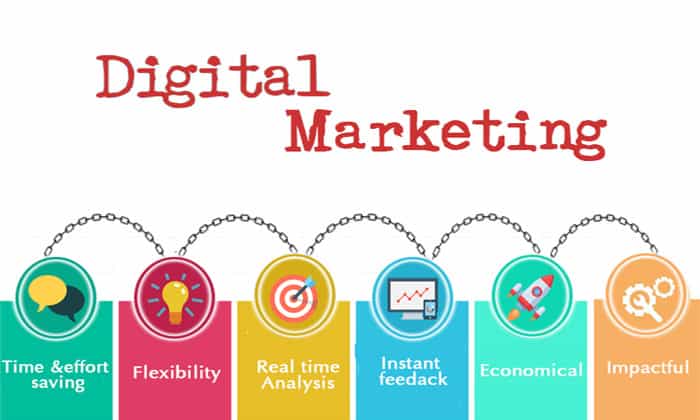
10 Advantages Of Digital Marketing

According to HubSpot’s report, digital marketing can help companies achieve a better cost of leads (CPL) than traditional marketing or even telemarketing. Business owners can easily achieve better results by incorporating technology-driven strategies into their marketing.

Companies use various digital marketing activities such as search engine optimization (SEO), social media marketing (SMM), email marketing, search engine marketing (SEM), content creation, and more to promote their brand to potential consumers or build loyalty. clients. More and more small businesses are implementing digital marketing strategies to reach their target consumers online effectively. Many companies, new or established, use digital marketing strategies to reach their target audience online.

As such, online marketing is a great way for a small business or startup to launch their own marketing plans. Digital online marketing saves a lot of money for businesses and companies to reach their target audience compared to traditional marketing.

Targeted and well-planned digital advertising and marketing campaigns can reach the right users in less time and at a lower cost. The greatest benefit of digital marketing is that you can reach your target audience in a cost-effective and measurable way. You can connect with people who match your ideal customers with targeted advertising, stay connected with current customers, and get noticed by people who are actively searching for your products or services online. With traditional marketing, you never know who your investments will reach because results are difficult to measure.

This is difficult for your budget because you can’t change it while the campaign is active for better results. Whereas in the case of traditional marketing, you would have to wait weeks or even months to assess the credibility of the campaign.

Unlike traditional methods, you can see in real-time what’s working and what’s not working for your online business. You can engage in real-time to gain a good understanding of how customers perceive your brand. By optimizing your content in the digital space, you can reach more buyers of your products online. Using relevant keywords can help you describe what you have to offer.

In fact, over time, your website’s traffic will increase and so will your conversion rate. This is a valuable marketing strategy, especially for businesses located in restricted areas like restaurants. Small brands can drive traffic locally and nationally to reach targeted consumers.

According to the report, by 2020, 26 billion gadgets, including smartphones, tablets, home appliances, shoes, glasses and other accessories, are expected to be integrated into a global online ecosystem, which speaks to the importance of digital marketing. Today, over 7.7 billion people around the world use the Internet to find, buy and promote products/services.

Digital platforms are increasingly associated with marketing schemes and everyday life. In today’s digital age, building an online presence and investing in internet marketing versus traditional marketing is essential for a business to survive and thrive. Today, hundreds of thousands of companies are engaged in digital marketing, because it is easier and more convenient for them to reach a large number of people in this way.

Traditionally, businesses reach their target audience through channels such as television, radio, magazines, events, and direct mail. Now that people are spending more time online, companies are trying to reach potential buyers through digital channels. In the age of digitalization, your best strategy would be to meet your customers online, where they already spend a lot of time.

Online marketing is great for businesses as it offers consumers a better and more convenient shopping experience. This high adaptability of online marketing is an important advantage that businesses can take advantage of to offer their consumers the best shopping experience. With online marketing, companies can deliver content to their customers through personalized and low-cost communication.

With all the benefits internet marketing can bring to your business, running a professional internet marketing campaign can further expand your business by bringing in more customers for your product or brand. Internet marketing is a great opportunity to grow your business and get more valuable traffic and sales. Even if you don’t have the budget for SEO or pay-per-click (PPC) advertising, businesses can still use digital marketing to build and connect with their audience.

Social media is one of the most convenient digital marketing methods used to distribute content and increase visibility for your business. Every social media profile you add to your marketing mix is ​​a gateway to your website, and every content you post is another opportunity to acquire a new customer.

Without the use of social media as part of your marketing strategy, it will be much harder for you to connect with anyone outside of your circle of loyal customers. You need to reach people who are interested in your business and want to hear from you.

Of all the benefits, the most significant benefit of online marketing is the ability to target people in a targeted manner. The main advantage of digital marketing is the ability to reach target audiences in a cost-effective and measurable way. Reduce costs: A properly planned and targeted digital marketing campaign can reach the right customers at a fraction of the cost of traditional marketing methods.

Trackable and measurable results. Measuring your online marketing with web analytics and other online tools makes it easy to determine the effectiveness of your campaign. With Google Analytics, you can track statistics and information on your marketing website.

By showing a breakdown of all of this traffic information, these analytics can help you prioritize your marketing channels. Real-time analytics give you a better understanding of the effectiveness of your marketing strategies. With access to this information, you can also optimize your marketing budget by investing in effective marketing campaigns. Digital Online Advertising and Marketing introduces you to these channels and strategies so your potential buyers can see you, learn more about you, and find out what’s important to deliver.

Digital online advertising and marketing help organizations and individuals easily reach audiences around the world. If your business is not limited to a specific location, you can use digital marketing to reach your target audience around the world. Unlike mass marketing, which effectively engages local audiences through radio, newspapers, and print media, Internet marketing allows businesses to build more personal relationships with consumers around the world. You can connect with potential customers online through various digital marketing channels, such as social media platforms (Facebook, Twitter, Google+, LinkedIn, etc.), SEO, email marketing, videos, etc.

As you can see, digital marketing has many benefits that can change how your business reaches and attracts your target market. With our digital marketing training courses, you can learn how to use digital marketing to create a steady stream of new customers and sales every day, regardless of your product, price range, or market. Our team will help your business reap the many benefits of digital marketing by providing various effective services such as Search Engine Optimization (SEO), PPC Management, and Social Media Management.