Foods with preventive powers

There are a lot of benefits some foods serve us. Like mustard contains manganese and phosphorus, which contribute to strong bones and teeth so help prevent osteoporosis. Many other foods have similar preventive powers such as:

Asparagus for high blood pressure.

Image result for asparagus
Asparagus contains the natural diuretic asparagine, which helps your body get rid of excess salt and fluid. For people with oedema caused by high blood pressure, eating asparagus can be very helpful. Asparagus also has B-vitamins that help fight early cognitive decline and depression.

Onions For lung cancer

Image result for onion
Studies have found that dietary flavonoids that are found in onions, reduce risk of lung cancer. Onions may also help boost your good cholesterol.

Cheese for dental health.

Image result for cheese
The fat that is naturally present in cheese coats your teeth and acts like a natural barrier against bacteria. Cheese also contains caesin, a protein that provides protection.

Lemons and limes for kidney stones

Lemons and lime contain citric acid that helps reduce the excretion of calcium in urine so it prevents kidney stones from forming. Lemon rinds are also rich in a component called rutin, which helps strengthen the walls of the capillaries, potentially reducing the pain and severity of varicose veins.

Papayas for arthritis

Image result for papaya
Papaya is an excellent source for vitamin C. Thus help prevent the ailment, if consumed regularly.

Beets for a better brain.

Beets produce nitric oxide, which helps blood flow throughout your body and brain. Which decreases the risk of developing Alzheimer’s disease and vascular dementia.

This Too Shall Pass

Exam Dp For WhatsApp | Downlaod Exam Images | Exam quotes, Exam dp for  whatsapp, Exam quotes funny

As the new year of 2022 has arrived after a long triumphant journey of 2021, we all now have the opportunity to write a new story for ourselves. As we start with the first month of January, we all are at the same time gearing up for exams that are going to start very soon. I do not know how many are feeling the stress the moment I say the word “exams” but I for sure feel it every time I think about it. Now that everyone is aware of what I am going to talk about let, we get straight to it. The article is going to be about exam stress and the things we can do to make the situation of exams better for ourselves as individuals.

Why do we stress during exams?

To be very frank and I am not here to blame any government the past or the present, the problem of stress with exams is not just limited to the individual’s ideas and perspectives but the system of education also plays a very important role in it. Today the situation has come to such that if one mug up everything from the textbook and do not understand what they are reading and score well, then people see these individuals with the presumption that they are smart and intelligent. The stress of exams comes from a place of scoring well and not from the place of understanding the subject. I have often heard people saying that if the person has done their entire studying well, then they will not stress about exams. This is not at all true. Every child will stress about exams and it is natural with the competition they are constantly dealing with but what people forget is that each child is different; therefore, the intensity of stressing about exams will also be different. A little amount of stress is good. It helps us be alert and makes sure that we do not take things for granting and put our effort and hard work towards our exams. On the other hand, too much stress about the exam is not good for anybody. It not only affects us emotionally but, also physically and mentally. It might seem very conventional but even till today across the world under so many circumstances students feel a sense of identification with the marks that they score. Therefore, the stress of doing well in exams to meet the expectation of society still exists in the minds of people. I am not saying that people should fail or people should not do well in their exams. What I am saying is that the stress of performing well in exams should not be so much that it creates a sense of fear or over-expectation that will result in something negative. There are several other reasons why one stresses during an exam. It could be personal, familial, cultural, environmental, and so many more. I am not blaming anybody. I am just stating things that are still present in society while we can see slow change and improvement in it. Not many people will agree with what I say and that is completely understandable but it does not mean that this does not exist. It is important for people preparing for exams to understand that exams are not their final ones. We have so much more to learn, understand, and face practically in the real world.

There are so many exams one is going to write in their lives. One cannot be stressing about every exam excessively as it will be harmful to their health not just during that time but in the future as well.

326,783 Exam Photos - Free & Royalty-Free Stock Photos from Dreamstime

Things individuals can do to reduce their stress during exams

  1. Understanding the concept: It is very important to understand and learn the concept while reading any subject. Be it math, English, or science. When an individual understands the concept, they will not only be able to answer the direct questions that come during exams but also the twisted or indirect questions that come from the topic. When you understand the concept, you do not learn it only for the period rather you will always remember it and be able to use it practically in the real world.
  2. Clear your doubts beforehand: Make it a point to clear all your doubts before the exams. This way the stress of exams reduces because there is very little space for confusion. When all the clarifications are done the concept becomes clear and easy to understand. Do not ask a doubt because everyone is asking and if you do not ask then you will look like a fool. Do not stop yourself from asking doubts because no one is asking and if you do then you will like a fool. It is time we get past these notions.
  3. Take small breaks: Exams can be very hectic and stressful. Therefore, we must remove the notion that taking small breaks is waste of time because that is not true. Small gaps of break are necessary for our brains to grasp the information and retrieve everything that we understand and learn. A small break helps us to relax and stretch our bodies a little before we start studying again. It has been under the recommendation that taking a 20-minute break during our long hours of study helps us a lot.
  4. Do not skip your meals: Often when people are stressing about something their appetite decreases and they tend to eat less. This factor should come to such a level where people do not eat their meals on time or skip the meal and stressfully study for their exams. Three meals a day is very important because we as individuals tend to use more energy when we are studying. Therefore, to study efficiently we must provide enough amount of food to our bodies.
  5. Do things that you like and make you confident: when a person does things they like and makes, them confident regarding their exams it tends to reduce their stress about it. For example, some people like to write and learn which makes them confident about what they learn for exams while some people like to listen to calming music so that they can learn things peacefully which makes them confident about their exams thereby reducing stress about it. I leave it to the individual of doing the things they like, which makes them confident for their exams and reduces their stress regarding it.

I have mentioned some of the things people can do to reduce their stress during exams. There are so many more things that people can do to make exams less stressful for themselves.

Before I end this article, I would like my readers to remember that many exams shall come and go. Even if you do not do well in one exam, it is not the end of the world. I am not asking you to fail your exams, but even if by chance you do then it is completely okay. As long as you as an individual know that, you have put in your hard work and 100 percent that is that matters. I would like to conclude with a quote that is very important and it says, “Do not be afraid to fail. Be afraid not to try.”

References

  1. Google search for quotes and images

A Resolution On Priority

7 Tips to Make Sure You Actually Keep Your New Year's Resolution This Time  | Inc.com

As we are moving ahead to a new and better year, we all have made some kind of decisions or resolutions to make our lives better, more progressive, and more successful. Some people have made decisions regarding their physical health betterment. However, how many of us have been making resolutions or decisions to make ourselves better internally and mentally? The numbers are few and it is growing slowly which I am really happy and glad about. Therefore, my article today is going to be about how it is time for us to look after ourselves not just physically but, also emotionally and mentally. It is important to do this because we have no idea how 2022 is going to pan out for all of us. This year the pandemic is teaching us something important which is, putting aside our industrialized and mechanized world and starting caring for ourselves. Before I start a quote by Jack Kornfield, where he says, “If your compassion does not include yourself then it is incomplete”  

The importance of prioritizing oneself.

There have always been constant assumptions that if one prioritizes them then are arrogant and selfish. This is not true in all cases. It is important to look after one emotionally and mentally as if they do of themselves physically. Let me ask you this question if you are physically incapable of doing things will you take a rest and get better by seeking medications and other help or will you just go about it until it gets worse? I am sure most of you will take a rest and relax until you feel better. Then why does no one do the same when they are mentally and emotionally not in the state to do something? People must start asking these questions to themselves and attempt to do things better for themselves internally. Self-care, self –preservation, and self-indulgence do not make an individual evil, bad, selfish, arrogant, or anything else that they are put in association with. When an individual prioritizes, one then they not only makes themselves better but they also make the society and environment a better place to live for others as well.

When an individual spends time with himself or herself they understand how they can make themselves better to deal and cope with things, it helps them work on their strength and weaknesses, helps them deal with issues and problems, not just the ones they are facing outside but even the ones internally as well. These are just some of them that have been put here but there are many more things that happen during the process.  When one learns to prioritize themselves, they become more confident, strong, powerful, trustworthy, etc with themselves, which is such an important to have as human beings. One of the most important things is when we prioritize ourselves, we see ourselves as human beings and not machines. We learn to be understanding, easy, and compassionate to ourselves just like how we are with others.

The reason I am specifying more on emotional and mental health is that even though we are getting progressive and developing we tend not to give enough importance to our mental and emotional health. Yes, with changing years, things are getting better but we can still do more. We often seem to acknowledge our physical health and problems whether they are big or small however, we do not do the same kind of acknowledgment to our mental and emotional health. There are various reasons for it such as cultural or ethnicity bias, societal taboo, fear, and so many more things that play a role in the way we see things. It is time we get over these and start prioritizing and bettering ourselves positively before it is too late. 

An Important Priority during the Pandemic

As we are moving to 2022 and the Pandemic is coming along with us, it becomes even more important for us to look after our overall health of ourselves. The pandemic is somewhere responsible for us to create more importance and awareness towards better mental health. During the pandemic, we all were confiding into four walls. It is during that time that we realized that time how important it is to take a break from our hectic scheduled life and give some time of relaxation ourselves. This was the time when people realized that things can be overwhelming for everybody and it does not make anyone weak. We realized that anyone can have mental problems and it is not bad to have one and seclude them away from society. The taboo of mental health problems and emotional problems has been reducing over the past years because the problems are increasing and people can come over the myths and disbelief that they are holding mental health and that is thanks to information, awareness, and openness to experience change. Prioritizing things that we like and love has been one of the most important things in the lockdown. It could be the simplest thing as cleaning your house, cupboard, or rearranging your clothes, etc, or more intense such as getting back to things one is passionate about such as painting, singing, drawing, etc. It could even be just relaxing oneself and binge-watching shows. Whatever one does it should make them feel better and relaxing. The pandemic has been responsible for really sad, disheartening, and big scars in our lives, which will never leave us, but it has also taught us some important lessons of life, which we should never forget.

My article is not going to be long and it is not going to tell everybody what he or she should do to prioritize themselves. Rather what I am going to tell them is that they should make a point to put it on their resolution list or just a reminder into their daily lives so that we can make this world and ourselves a better place and people to live. We must realize that money, power, success is not the only things that keep our world running and moving ahead. It is also kindness, generosity, compassion, trust that are responsible for keeping this world and people ahead towards a brighter future. To conclude with a beautiful quote by Mandy Hale where she says, “It is not selfish to love yourself, take care of yourself, and to make your happiness a priority. It is necessary”

References

  1. Google Image and Searches

Investment in manufacturing of EVs, batteries and high technology automotive components in India

 The Ministry of Heavy Industries (MHI) has been continuously working towards making the auto sector in India ‘Aatmanirbhar’ by augmenting ’Make in India’ efforts of the Government and to position India as an alternative manufacturing hub for automobiles and its components. The key initiatives of Ministry of Heavy Industries during the year are as under:

  1. Faster Adoption and Manufacturing of Electric Vehicles in India Phase II (FAME India II) Scheme has been launched with an outlay of Rs 10,000 crore to incentivize demand for Electric Vehicles (EVs) by providing upfront subsidies and creating EV charging infrastructure. 1 million Electric 2 Wheelers, 5 lakh Electric 3 Wheelers, 55,000 Electric Cars and 7,090 Electric Buses are to be supported under FAME II through subsidies. Allocation of Rs 1000 crore has also been made under FAME II for provision of EV charging stations.
  • FAME India II Scheme was redesigned in June 2021 based on experience particularly during Covid-19 pandemic and feedback from industry and users. The redesigned scheme aims at faster proliferation of Electric Vehicles by lowering the upfront costs. Following amendments have been made in the scheme:
  • Demand incentive for Electric 2 Wheelers has been increased from Rs 10,000/KWh to Rs 15,000/KWh with maximum cap increased from 20% to 40% of the cost of vehicles. 
  • For Electric 3 Wheelers, aggregation will be the key method to bring the upfront cost at an affordable level and at par with ICE-3 Wheelers. Energy Efficiency Services Limited (EESL) will aggregate demand for 3 lakh Electric 3 Wheelers for multiple user segments.
  • For Electric Buses, 9 cities with over 4 million population (Mumbai, Delhi, Bangalore, Hyderabad, Ahmedabad, Chennai, Kolkata, Surat and Pune) will be targeted. EESL will aggregate the demand in these 9 cities for remaining Electric Buses under the scheme on OPEX basis.
  • Further the scheme has been extended for further period of 2 years i.e. upto March 31, 2024 

After remodeling of FAME II in June 2021 sale of electric two wheelers has increased to over 5000 per week from 700 per week before remodeling.

Achievements under FAME India II scheme in this year

    • In calendar year 2021, total 1.4 lakh Electric vehicles (1.19 Lakh electric two wheelers, 20.42 K electric three wheelers and 580 electric four wheelers) have been incentivized upto 16 December 2021 amounting to incentive of about Rs 500 Crore under Phase-11 of FAME. Total 1.85 lakh Electric Vehicles have been incentivized under FAME II till now.
    • 835 Electric buses have been deployed (314 in Mumbai, 150 in Navi Mumbai, 90 in Ahmadabad, 105 in UP, 30 in Goa, 25 in Patna, 49 in Surat, 16 in Rajkot, 25 in Delhi, 11 in Chandigarh, 10 in silvassa and 10 in Dehradun), in this year till 16 December 2021. Total 861 Electric buses have been deployed under FAME II.
    • 50 Electric Buses have been sanctioned to GSRTC for deployment in Kewadia a place of national importance.
    • City/State Transport undertakings have issued supply order for 1040 Electric buses in this year till 16 December 2021 (100 in Goa, 100 for intercity bus operation by MS RTC, 40 in the city of Chandigarh, 300 in Delhi by DTC, 300 in Bangalore, 50 for intracity and 50 for intercity bus operation in the city of Tirupati, 100 for intercity bus operation by GSRTC). Total supply orders have been issued for 3428 Electric Buses under FAME
    • Timeline extension has been granted to STUs/CTUs undertakings as per their request to issue Supply Order/Letter of award by STUs/CTUs for 1040 electric buses in this year (100 in Goa, 100 for intercity bus operation by MSRTC, 40 in the city of Chandigarh, 300 in Bangalore, 50 for intra-city and 50 for intercity bus operation in the city of Tirupati, 100 in Rajkot, 150 in Surat, 50 each to KSRTC & NWKSRTC, 50 to Navi Mumbai).
    • 1576 EV charging stations have been sanctioned and Letters of Award have been issued across 9 Expressways and 16 Highways in this year till 1 6 Dec 2021.
    • Letters of Award (LOA) issued for 35 Charging stations have been issued till 1 6 Dec 2021 (25 in the city of Coimbatore and 10 in Erode). Total LOA have been issued for 1797 Charging stations in cities under FAME II.
    • Total 104 EV charging stations have been commissioned in this year till 1 6 December 2021 [91 under FAME I (9 on Delhi – Chandigarh, 3 on Mumbai-Pune Expressways, 12 in Bangalore, 4 in Ranchi, 10 in Goa, 45 in Hyderabad, 6 in Agra and 2 in Shimla) and 13 under FAME —II (4 in the city of Chennai, 3 in Delhi 4 in Nagpur and 2 in Ahmedabad)]
  1. Union Cabinet on May 12, 2021 approved the National Programme on Advanced Chemistry Cell (ACC) with an outlay of Rs 18,100 crore to incentivize setting up of manufacturing facilities in the country for 50 Giga Watt Hour of ACC and 5 GWh of “Niche” ACC. As of now ACC are imported in the country. The scheme was notified on June 9, 2021
  • Through this Scheme, the Government intends to optimally incentivize potential investors, both domestic and overseas, to set- up Giga-scale ACC manufacturing facilities with emphasis on maximum value addition and quality output and achieving pre-committed capacity level within a pre-defined time-period.
  • Total investment of Rs 45,000 crore is envisaged under this scheme. The scheme will reduce the import bills of ACC by Rs 1,50,000 crore.
  • Request for Proposal (RFP) has been issued on October 22, 202 I for inviting proposals from domestic and international manufactures for setting up manufacturing facilities for ACC Battery Storage in India. Pre-Proposal Conference was held on Nov 12, 2021 which was attended by over 100 participants representing over 20 domestic and international manufactures.
  1. Union Cabinet on Sep’ 15, 2021 approved the Productivity Linked Incentive (PLI) scheme for Automobile and Auto Components with an outlay of Rs 25,938 crore to incentivize manufacturing of Advanced Automotive Technology products and attract investments in the Automotive Manufacturing value chain. Its prime objectives include overcoming cost disabilities, creating economies of scale and building a robust supply chain in areas of Advanced Automotive Technology products.
  • It is estimated that over a period of five years, the PLI Scheme for Automobile and Auto Components Industry will attract fresh investment of over 142,500 crore, incremental production of over 12.3 lakh crore and will create additional employment opportunities of over 7.5 lakh jobs.
  • This scheme will facilitate the Automobile Industry to move up the value chain into higher value added products and increase India’s share in global automotive trade.
  • The PLI Scheme is open to existing automotive companies as well as new investors who are currently not in automobile or auto component manufacturing business.
  • The scheme has two components viz Champion OEM Incentive Scheme and Component Champion Incentive Scheme. The Champion OEM Incentive scheme is a ‘sales value linked’ scheme, applicable on Battery Electric Vehicles and Hydrogen Fuel Cell Vehicles of all segments and any other advanced automotive technology as specified by Ministry of Heavy Industries. The Component Champion Incentive scheme is a ‘sales value linked’ scheme, applicable on Advanced Automotive Technology components of vehicles, Completely Knocked Down (CKD)/ Semi Knocked Down (SKD) kits, Vehicle aggregates of 2-Wheelers, 3-Wheelers, passenger vehicles, commercial vehicles and tractors etc. Incentives are applicable both on domestic sales as well as on exports of the eligible products.
  • The scheme provides incentive of 13- 18% on Electric Vehicles, Hydrogen Fuel Cell Vehicles and their components and incentive of 8-13% on Advanced Automotive Technology products related to safety, emission control, shared, convenience, efficiency etc. The incentives will be available for five-year period from FY 2022-23 to FY 2026-27.
  • The PLI scheme for Automobile and Auto components and the Guidelines have been notified on Sep 23, 2021. Application Form for PLI Scheme, List of Advanced Automotive Technology Products and Window for Notice Inviting Applications has been notified on Nov 9, 2021. Window for Notice Inviting Applications is open for 60 days from Nov 11, 2021 to Jan 9, 2022.
  1. Ministry of Heavy Industries organized Round Table on December 4, 2021 in Goa under chairmanship of Dr Mahendra Nath Pandey, Minister for Heavy Industries with all stake holders from Central Government, State Governments & UTs, leaders of Auto OEMs & Automotive Component Manufacturers, Start Ups and Technical Experts to work out strategies to promote adoption of Electric Vehicles in India and attract investment in manufacturing of EVs, batteries and high technology automotive components in India.

Other Initiatives

A 11 .3 km long, Asia’s longest high-speed track (HST) was inaugurated at NATRAX, Indore, Madhya Pradesh by Hon’ble Minister (HI&PE) on June 29, 2021. This will be a one stop solution for all sorts of high speed performance tests for automobiles within the country. Availability of NATRAX HST will encourage indigenous development of wide variety of automobiles.

  1. NATRIP is one of the most significant initiatives of the Govt of India for the growth of Automobile sector in India and includes setting up of “State of the Art” automotive Homogenization, Testing, Certification and R&D infrastructure at three new centers at GARC, Chennai, NATRAX Indore, NIAIMT Silchar and upgradation of three existing centers at ARAI Pune, VRDE Ahmadnagar and ICAT Manesar (Gurugram). This project has been completed on Mar’3l 2021 and subsequently taken over by National Automotive Board (NAB).

In compliance of directives of Cabinet Secretariat for digitization of official records, the work of digitization of more than 15 Lakh pages (accumulated since inception of the project) were completed in Nov 2021 for NAB (NATRIP)/HQ. This is a major work accomplished by NAB (NATRIP) organization in time bound manner.

  1. Issue of GST Concession Certificate to orthopedic disabled persons is one of the important services provided by MHI under its Citizen’s Charter. As a step towards Digital India, an online portal for issuing Aadhar Authenticated GST concession certificate was launched by MHI in Nov 2020. The development of online portal has improved the quality of service rendered by this Ministry. This IT enabled initiative has helped streamlining the process and facilitated issue of 1942 GST Concession Certificate in 10 months period from Jan’21 to Dec’21 (highest ever in the last five year period). This portal has helped the beneficiaries to avail benefits even during Covid- 19 pandemic scenario in 2021.
  1. In order to address the skill gaps and infrastructure development and technology needs for the Capital Goods Sector, Phase I of the Capital Goods scheme was rolled out by the Department in 2014. Phase I of the scheme fostered partnerships between Academia and Industry for engendering technology development with Government support.
    • The outcomes of the Scheme have proved the efficacy of the strategies deployed for technology and industrial infrastructure development.
    • Fifteen Common Engineering Facility Centres(CEFCs) including four Industry 4.0 SAMARTH centres and 6 Technology Innovation Platforms, Eight Centres of Excellence (COEs) for Technology Development, A 500 acres world class Machine Tool Park in Tuiuakuru, Karnataka in partnership with the Government of Karnataka has been established under the scheme. 25 new technologies in the field of machine tools, textile machinery, earth moving machinery, nano and sensor technologies, are being developed at national research institutes of eminence such as IITs, IISc, CMTI, etc. and some of these technologies are undergoing commercialization.
    • 74 workshops, webinars, awareness sessions etc have been organized under the theme Azadi Ka Amrit Mahotsav by SAMARTH Centers, Technology Innovation Platforms, CoEs, and Capital Goods Industry Association in this year.
  1. Development of web based open manufacturing technology innovation platforms: The Ministry of Heavy Industries has developed web based open manufacturing technology innovation platforms under the ongoing Capital Goods Scheme. These platforms wilt help in bringing all India’s technical resources and the concerned Industry on to one platform to kick start and facilitate identification of technology problems faced by Indian Industry and crowd source solutions for the same in a systematic manner so as to facilitate start-ups and angel funding of India innovations. This includes the development of the key ‘mother’ manufacturing technologies’ indigenously through ‘Grand Challenges’ on the Platforms to help achieve the vision of an Aatmanirbhar Bharat and a globally competitive manufacturing sector in India. Hon’ble Minister of Heavy I ndustr les inaugurated the Technology Innovation Platforms on July 2, 2021 (through virtual mode). Details are as below:
    • Six Technology Platforms have been developed by IIT Madras, Central Manufacturing Technology Institute (CMTI), International Centre for Automotive Technology (ICAT), Automotive Research Association of India(ARAI), BHEL and HMT in association with IISc Bangalore. These platforms will focus on development of technologies for the globally competitive manufacturing in India. These platforms will facilitate industry (including OEMs, Tier 1 Tier 2 & Tier companies & Raw Material Manufacturers), start-ups, domain experts/professionals, R&D institutions and academia (colleges & universities), to provide technology solutions, suggestions, expert opinions etc. on issues involving manufacturing technologies. Further, it will facilitate exchange of knowledge with respect to research & development and other technological aspects.
    • Online registration on the Technology Platforms can be done at following url: https://aspire.icat.inhttps://sanrachna.bhe1.in/https://technovuus.araiindia.coin/https://techport.hmtmachinetoo1s.comhttps://kite.iitm.ac.in/, htrps://drishti.cmti.res.in/. Over 60,000 Students, Experts, Institutes, Industries and labs have already registered on these platforms.
  1. MHI is in the process of launching the Phase 2 of the ‘Enhancement of Competitiveness in the Indian Capital Goods Sector’ which will further lead to indigenization of products and technology. The Scheme proposal with total financial outlay of Rs. 1207 cr including Government Budgetary support of Rs. 975 crore is under approval.


****

Electricity (Promotion of generation of Electricity from Must-Run Power Plant) Rules, 2021

 The Ministry of Power in the current year has undertaken an array of reforms. Union Minister for Power and NRE Shri R.K Singh highlighting the reforms said that we have put in place rules and procedures for ease of doing business and ease of living. As a result of the reforms, power sector is poised for greater growth and more reforms are on the anvil in the next year, he remarked.

Shri Singh mentioned that the power sector has shown strong growth in demand in 2021 as it is 14 percent higher than in the previous year, this is indicative of the fact that our economy is recovering and the 28 million new consumers we have added are adding more appliances. The minister noted that the government has continued with reforms in the power sector and efforts also continue to keep the price of power low.

The reforms can be placed in the following categories:

  1. Reforms and Restructuring (R&R)
  • Electricity (Rights of Consumers) Rules, 2020

The Ministry of Power has notified Electricity (Rights of Consumers) Rules, 2020 on 31.12.2020 under section 176 of the Electricity Act, 2003. These Rules shall empower the consumers of electricity and emanate from the conviction that the power systems exist to serve the consumers and the consumers have rights to get the reliable services and quality electricity.  

Implementation of these Rules shall ensure that new electricity connections, refunds and other services are given in a time bound manner.  Wilful disregard to consumer rights will result in levying penalties on service providers.

An amendment to Electricity (Rights of Consumers) Rules, 2020 was also notified on 29.09.2021 wherein the limit for net metering was increased to 500KW from 10KW.

  • Late Payment Surcharge Rules 2021

Electricity (Late Payment Surcharge) Rules, 2021 have been notified by the Central Government on 22nd February, 2021.Late Payment Surcharge means the charges payable by a distribution company to a generating company or electricity trader for power procured from it, or by a user of a transmission system to a transmission licensee on account of delay in payment of monthly charges beyond the due date. Late Payment Surcharge shall be payable on the payment outstanding after the due date at the base rate of Late Payment Surcharge applicable for the period for the first month of default.

  • Waiver of ISTS Transmission Charges and Losses for Solar & Wind Power

In Order to promote generation from renewable sources of energy, Ministry of Power has issued an Order on 5th August 2020 for extension of waiver of Inter State Transmission System (ISTS) charges and losses for transmission of the electricity generated from solar and wind projects commissioned till 30th June 2023.Further an order was issued on 21.06.2021 for extension of waiver of Inter State Transmission System (ISTS) charges for transmission of the electricity generated from solar and wind projects up to 30.06.2025.Moreover vide this order the waiver of ISTS charges shall also be allowed for Hydro Pumped Storage Plant(PSP) and Battery Energy Storage System(BESS).

  • Issuance of Renewable Purchase Obligations (RPO) Trajectory

Long term RPO growth trajectory for the period 2016-17 to 2018-19 has been notified by Ministry of Power on 22.7.2016. .An order on RPO Trajectory for a further period of three years i.e. from 2019-20 to 2021-22 under the provisions of Tariff Policy has been issued by Ministry of Power on 14.06.2018. In super-session of orders dated 22.7.2016 and 14.06.2018, Ministry of Power has specified new RPO trajectory vide order dated 29.01.2021. Trajectory for HPO has also been issued through this order.

This would help in meeting the renewable energy generation targets set by the Central Government.

  • Introduction of Green Day Ahead Market (GDAM)

Green Day Ahead Market (GDAM) is a marketplace for trading of renewable power on a day-ahead basis. This would facilitate accomplishment of green targets as well as support integration of green energy in a most efficient, competitive and transparent manner. GDAM was launched on 25.10.2021.

The Green day Ahead Market will be available through the Power Exchanges. The GDAM market structure will be within the existing Day Ahead Market (DAM) structure but will create a separate clearing mechanism and price discovery for renewable and conventional energy sources.

It will give opportunity to the RE generators to sell their power and reduce curtailment and also the buyer of RE to transparently purchase green power from the market. It would also facilitate the obligated entities to meet its Renewable Purchase Obligation (RPO).

  • Electricity (Timely Recovery of Costs due to Change in Law) Rules, 2021

Timely recovery of the costs due to change in law is having importance as the investment in the power sector largely depends upon the timely payments. At present the pass through under change of law is taking a lot of time, forcing the drying of the investment in the power sector. If payment is not made in time, it impacts the viability of the sector and the developers get financially stressed. If this is not addressed now, the investment will not come and the electricity consumers may face shortages of power once again. In order to address this issue, Ministry of Power has notified Electricity (Timely Recovery of Costs due to Change in Law) Rules, 2021 on 22.10.2021.

  • Electricity (Promotion of generation of Electricity from Must-Run Power Plant) Rules, 2021

Ministry of Power has notified Electricity (Promotion of generation of Electricity from Must-Run Power Plant) Rules, 2021 on 22.10.2021. This rule is mainly to achieve this goal and will help in promotion of the generation from renewable sources. This will ensure that the consumers get green and clean power and secure a healthy environment for the future generation. 

  • Implementation of Phase- 1 of Market Based Economic Despatch (MBED)

With the objective of Redesigning of present market mechanism for lowering the cost of power purchase to Consumers, Framework for Implementation of Phase1 of Market Based Economic Despatch (MBED) wherein mandatory participation by ISGS ( Inter State Generation Stations) plants and voluntary participation by other generators, was communicated to CERC for  implementation from 1st  April, 2022.

  • Redesigning the Renewable Energy Certificate(REC) Mechanism 

Ministry of Power assent was given to make amendment in the existing Renewable Energy Certificate (REC) mechanism, in order to  align the  present REC mechanism with the emerging changes in the power scenario and also to promote new renewable technologies.

  1. Power Market Reforms:
  • Green Term-Ahead Market (GTAM):Pan-India Green Term-Ahead Market in electricity was launched on 1st September, 2020. As a market segment, it has provided one more avenue to renewable to trade electricity which will, inter-alia, help to achieve ambitious renewable energy capacity addition targets of the Government of India. GTAM Contracts will enable obligated entities to procure renewable power at competitive prices at the power exchanges and help meet RPOs.  This would also reduce burden on renewable rich States which can trade the surplus renewable generation generated within the State pan-India. The total cleared volume in G-TAM was 785.83 MU in 2020-2021. In 2021-22, till September, 2021, the total cleared volume was 2744 MU.
  • Green Day Ahead Market (GDAM): After the successful launch of Green Term-Ahead Market (GTAM) in August 2020, “Green Day Ahead Market (GDAM) – a Marketplace for trading of renewable power on a day-ahead basis” has been launched by Sh. R K Singh, Hon’ble Minister of Power and New & Renewable Energy on 25th October, 2021. The intent is to promote merchant green power plants and provide additional sale avenues to existing renewable power plants that are either facing payment risk with the distribution companies (DISCOM) under the existing PPA or have surplus energy. Expected Benefits from the introduction of GDAM are deepening the Green Market, Accelerating the addition of Renewable Capacity, Shift from PPA based Contract to Market-Based Models and Reduction of Curtailment of Green Power. In the Green Day Ahead market launched in October 2021 about 211 MU have been traded from 27.10.2021 to 07.12.2021 at average Price Rs.4.52 per unit.
  • Govt. has introduced Pan India Real Time Market (RTM) of electricity on 3rd June 2020. The introduction of RTMas an organized platform for energy trade closer to real time to the buyers and sellers has not only facilitated grid integration of renewables but also brought greater market efficiency. With RTM, Buyers/sellers have the option of placing buy/sell bids for each 15-minute time block. RTM is benefitting all stakeholders viz. generators including renewable generators having opportunity to sell their surpluses, better management of variability of renewable generation, better utilization of transmission systems, opportunity for distribution utilities to buy or sell power closer to real time and finally consumer getting reliable power supply.In FY 2020-21, the total cleared volume in Real Time Market was 9467.96MU. In FY 2021-22, the total cleared volume in Real Time Market was 9933.4 MU till September, 2021. The highest daily volume of 98.334 MU was traded on 28thAugust, 2021.
  • Despite the Covid 19 pandemic,All India demand continued to achieve the new benchmarks. The highest All India demand of 200570 MW was achieved on 07th July 2021.
  1.   Integrated Power Development Scheme (IPDS)

Government of India notified “Integrated Power Development Scheme” (IPDS) in December’14 to extend financial assistance against capital expenditure to address the gaps in sub transmission and distribution network and metering in urban areas to supplement the resources of Discoms/ Power Departments.

The scheme has an outlay of Rs. 32,612 crore including a budgetary support of Rs 25,354 crore from Government of India during the entire implementation period.

Progress (From 01.11.2020  to 31.10.2021)

  • Total funds invested under the IPDS by GOI + States in this period: around Rs.  3800Cr. with around Rs. 2,290 Cr released as GOI grant from MOP
  • System strengthening of sub-transmission and distribution network has been completed in over 70 circles covering over 500 towns inspite of COVID Pandemic and addition of following infrastructure:
        • 45 new Power Sub-Stations commissioned;
        • Capacity augmentation of more than 50 exiting Power Sub-Stations completed
        • More than 7,000 ckm of Aerial Bunched/Underground cables laid to reduce losses
        • About 3,000 new Distribution Transformers charged for improving power supply in towns
        • Around 1MwP of Solar Panels installed on Govt buildings and Substations as contribution towards green energy
      • Gas Insulated Switchgear (GIS) Substations commissioned for first time in NE States, Haryana; works completed in 25 Substations of AP, Assam, Bihar, Haryana, Rajasthan & Uttarakhand
      • Major projects completed–Underground cabling work under IPDS in Varanasi andKumbh Area, Haridwar
      • Rs.240 Cr approved for around 1000ckm of Underground cabling in Ayodhya
      • Over 5Lakh Smart Meters installed in Andaman Nicobar Islands, Bihar, HP, MP, Punjab& Rajasthan etc.
      • IT enablement of smaller towns completed in 6Discoms&Enterprise Resource Planning (ERP) for improvement in Operational Efficiencies of Discoms completed/upgraded in 5 Discoms during this period.
      • Overall IPDS has contributed in increase in hours of Power supply in urban areas to 22 hours/day and improved consumer convenience though Digital payments etc.

Further, Revamped Reforms Based and Results Linked Distribution Sector Scheme has been approved by Ministry of Power in July 2021 with an outlay of Rs. 3,03,758 crore over a period of five years from FY 2021-22 to FY 2025-26 for providing conditional financial assistance for supporting DISCOMs to undertake reforms and improve performance in a time bound manner with following objectives

      • Improve the quality, reliability and affordability of power supply to consumers through a financially sustainable and operationally efficient Distribution Sector
      • Reduce the AT&C losses to pan-India levels of 12-15% by 2024-25
      • Reduce ACS-ARR gap to zero by 2024-25
  1.    Hydro Power Development:
    • Guidelines for providing Budgetary support for Flood Moderation / Storage Hydro Electric Power projects and Cost of Enabling Infrastructure i.e. roads and bridges were issued by the Ministry on 28.09.2021 to promote the Hydro Sector.
    • All the 04 units of Kameng Hydro Power Project (600 MW) constructed by NEEPCO in Arunachal Pradesh have been fully commissioned and have commenced their operation from 12.02.2021.
    • Luhri Stage-I HEP (210 MW): Investment Approval accorded by GoI on 20.11.2020. Award of EPC package for Civil and HM works awarded on 24.11.2020 and EM works awarded on 16.07.2021.
    • Dhaulasidh HEP (66 MW): Investment Approval accorded by GoI on 01.10.2020. Award of EPC package for Civil and HM works awarded on 06.05.2021.
    • The Model Contract Document for Dispute Avoidance Mechanism in Hydro CPSUs through “Independent Engineer” has been issued vide O.M. dated 27.09.2021.
    • Kholongchhu (600 MW) Hydro Electric Project in Bhutan

The Concession Agreement for the project was signed between Royal Government of Bhutan (RGoB) and Kholongchhu Hydro Energy Limited (KHEL) [Joint Venture (JV) Company of SJVN Ltd (Indian CPSU) & DGPC Bhutan (RGoB PSU)] at Bhutan in the presence of Hon’ble Minister of External Affairs, GoI and Hon’ble Foreign Minister, RGoB on 29.06.2020.  All three main Civil works packages have been awarded on 04.03.2021 & the project is scheduled to be commissioned by Feb., 2026.

    • Lower Arun Hydro Electric Project (679 MW) in Nepal

Lower Arun project was allotted to SJVN Ltd by Government of Nepal (GoN) on Build Own Operate and Transfer (BOOT) basis through international competitive bidding on 04.02.2021.  MoU has been signed for the development of 679 MW Lower Arun HEP between SJVN Ltd and Investment Board Nepal (IBN) on 11th July 2021. 

    • Investment approval for 850 MW Ratle Hydro Electric Project has been accorded on 11.02.2021 with an estimated project cost of Rs. 5281.94 crore (November 2018 PL). The project is scheduled to be completed within 60 months from the date of investment approval.
    • Investment approval for 120 MW Rangit-IV Hydroelectric Project has been accorded on 30.03.2021 with an estimated project cost of Rs.938.29 crore (October 2019 PL). The project is scheduled to be completed within 60 months from the date of investment approval.
  1. Thermal Power:
  • Revised/New Coal Stocking Norms in Coal Based Thermal Power Plants

Central Electricity Authority (CEA), monitors the coal stocks being maintained at the power stations along with their daily coal consumption requirements. The earlier coal stocking norms were advisory in nature, at times; power plants do not maintain coal stock as per the norms, which is not desirable for a sustained plant operation. In view of this, the existing coal stocking norms have been revised and issued by Central Electricity Authority (CEA) on 06.12.2021 to ensure more fuel security to the power plants, reflect true picture of the stocks being maintained at each power stations and ensure sufficient coal stock even during the period of less supply by CIL/SCCL during the month of July to September.

The revised norms mandates 12 to 17 days of coal stock at pit head stations and 20 to 26 days coal stock at non-pit head stations with month-wise variation based on coal despatch/coal consumption pattern during the year corresponding to 85% PLF, and prescribes the coal stocks to be mandatorily maintained by the power plants and penalty mechanism for not maintaining the stocking norms. The coal stock for 17 days at pit head plants and 26 days stocks at non-pit head power plants have been made mandatory during February to June every year.

The power plants are graded as red, yellow and green for not maintaining the coal stocks; and would be penalized for not maintaining their normative availability due to reduced coal stocks and their fixed charges shall be reduced in a graded manner.

  • National Mission on use of Biomass in coal based power plants:

Ministry of Power on 17th November, 2017 issued Policy on biomass utilization for power generation through co-firing in coal based power plants. In this earlier Policy, it was advised in the policy that coal based thermal power plants, except those having ball and tube mill, of power generation utilities, to endeavor to use 5-10% blend of biomass pellets made, primarily, of agro residue along with coal after assessing the technical feasibility, viz. safety aspect etc.   In order to support the energy transition in the country and to achieve the target of cleaner energy sources, the policy has been modified and issued on 08.10.2021. This modified policy would provide the necessary direction in achieving the desired goals.

  • Fuel Linkages under SHAKTI:

Govt. of India, Ministry of Coal had approved a new coal linkage allocation policy on May 17, 2017 named SHAKTI (Scheme for Harnessing & Allocating Koyala Transparently in India). Linkages granted under SHAKTI Policy in the last one year:

Shakti Policy Para B (ii) –  Linkage on auction basis for Independent Power Producers (lPPs) with PPA based on domestic coal. Under clause B(ii) of the SHAKTI Policy, the lPPs participating in auction bid for discount on existing tariff.

    • 4th round auction got completed on 28.09.2021 by PFCCL wherein 3.1983 MT (G11 Grade) was provisionally allocated.

Shakti Policy Para B(viii)(a) – Linkage on auction basis for non-PPA capacity for Short Term & DAM: Ministry of Power issued a methodology in this regard on 02.12.2019 to carry out such auction at every quarter to cater to the dynamic requirements of short term and day-ahead markets (DAM). Amendment to the methodology was issued on 12.05.2020.

    • Till date 5.39 MTs (G13 grade equivalent) of coal have been allocated to various power plants in auctions held for six quarters viz. Apr-June’20, July-Sep’20 and Oct-Dec’20, Jan-Mar’21, Apl-June’21 and July-Sep’21.

    Pilot project for procurement of 2500 MW power:

In order to address the problem of lack of Power Purchase Agreements (PPAs) in the country, the Ministry of Power had notified a scheme for procurement of 2500 MW on competitive basis for a period of 3 years from the generators with commissioned projects having untied capacity.

2nd Round (2500 MW):

    • 21 Bidders (Generating Companies) submitted their Technical and Financial Bid. Financial Bids were opened on 07.02.2020. After e-Reverse Auction Rs 3.26/kWh (Fixed Charge of Rs 1.63 per unit and Variable Charge of Rs 1.63 per unit) tariff was discovered.
    • As per Status report provided by PTC on 10.11.2021, PTC have executed PPAs with the Bidders to whom PFCCL have issued LOAs and PSAs with Utilities/Discoms for a total quantum of 820 MW.
  • Stressed Assets in Thermal Power Sector

Department of Financial Services (DFS) sent a list of stressed projects in the power sector on 22.03.17 to Ministry of Power (MoP). The 34 non-captive coal based power projects mentioned in the DFS list are mostly private and have a total installed capacity of 40,130 MW. Status of 34 thermal power projects of capacity 40,130 MW which are under stress as reported by DFS is as follows:

    1. 17 projects with a total capacity of 20,290 MW have been resolved.
    2. 7 projects with a total capacity of 9,310 MW are at various stages of resolution.
    3. 10 projects with a total capacity of 10,530 MW are at very initial stage of construction and are totally stalled. Such projects have either been ordered to be liquidated or heading towards liquidation.
  1. Highlights under Energy Efficiency :
  • Energy Efficiency Initiatives Launched under the Bharat ka Azadi Ka Amrit Mahotsav
    • With an objective to accelerate Energy Transition in Industrial Sectors, Union Minister of Power released “User Manuals” for different stakeholders of PAT scheme such as BEE, CERC, POSOCO etc. through Video Conferencing on 1st March, 2021.
    • The detailed outcome of PAT Cycle-II including energy savings, investment reported, technology up gradation as well as reduction in CO2 emission was documented by BEE as “Pathways for Accelerated Transformation in Industry Sector” and was released on 1st March 2021 by the Union Minister.
    • Under the vision for ‘Aatmanirbhar Bharat’ Union Minister of Power launched “Energy Efficiency Enterprise (E3) Certifications Programme for Brick manufacturing Sector” in March, 2021 .
    • “Aiming for Sustainable Habitat: New Initiatives in Building Energy Efficiency 2021”Union Minister of Power announced various initiatives being taken by Government of India towards energy efficiency in the building sector on 16th July, 2021. The initiatives launched included:
    • Specifying code compliance approaches and minimum energy performance requirements for building services, and verification framework with Eco Niwas Samhita 2021.
    • The web-based platform ‘The Handbook of Replicable Designs for Energy Efficient Residential Buildings’ as a learning tool, which can be used to create a pool of ready-to-use resources of replicable designs to construct energy-efficient homes in India.
    • Creating an Online Directory of Building Materials that would envisage the process of establishing Standards for energy efficient building materials.
    • Announcement of NEERMAN Awards, (National Energy Efficiency Roadmap for Movement towards Affordable & Natural Habitat), with the goal of encouraging exceptionally efficient building designs complying with BEE’s Energy Conservation Building Codes.
    • Online Star Rating tool for Energy Efficient Homes created to improve energy-efficiency and reduce energy consumption in individual homes. It provides performance analysis to help professionals decide the best options to pick for energy-efficiency of their homes.
    • Training of over 15,000 Architects, Engineers and Government officials on Energy Conservation Building Code (ECBC) 2017 and Eco Niwas Samhita (ENS) 2021).
  • Energy Efficiency in Industry Sector:
    • PAT cycle –II ended on 31st March 2019 wherein 621 Designated Consumers (DCs) from 11 sectors have achieved total energy savings of about 14.08Million tonnes of Oil Equivalent (MTOE) translating into avoiding of about 66 million tonnes of Carbon dioxide. These savings exceeded the notified target by about 18%.The energy saving of PAT Cycle II have been converted to Energy Saving Certificates (ESCerts) tradable at the Power Exchanges. Under the second cycle of PAT, a total of 57.38 lacs ESCerts to 349 industrial units have been issued and 193 industrial units are entitled to purchase 36.68 lacs ESCerts.
    • PAT Cycle –VII has been notified commencing from 2022-23 to 2024-2025 wherein 509 Designated Consumers from 9 sectors have been notified with total energy consumption reduction target of 6.627 MTOE.
  • Energy Efficiency in SME
    • 600 Small Scale Projects have been implemented in 5 Sectors (Ceramics, Dairy, Foundry, Hand Tools, Brass) leading to savingsof about 11452 toe of energy, mitigating 61515 Tonne of CO2 emission, attracted investment of 88 Crs so far. The project is currently in scale-up phase in 23 Clusters.
  • Energy Efficiency in Appliance Sector:
    • 28 appliances in labelling programme.10 Mandatory appliances and 18 Voluntary Appliances.
    • Voluntary star labelling program for UHD TV and Air Compressor launched on 11th January, 2021.
    • Amendment Notification of Tubular Fluorescent Lamps (TFL), LED, Storage Water Heater, Room Air Conditioners, ColorTV  and Refrigerators (FFR and DFR) notified.
    • Existing energy consumption standards for Chillers, Washing Machines, Microwave Ovens has been extended by a period of 1 year starting from 1st January, 2022 to 31st December, 2022.
  • Energy Efficiency in Building Sector:
    • 20 States and Uts namely, Rajasthan, Odisha, Uttarakhand, Punjab, Karnataka, Haryana, Himachal Pradesh, Kerala, Andhra Pradesh, Telangana, Tripura, West Bengal, Uttar Pradesh, Arunachal Pradesh, Sikkim, Assam, Mizoram, Madhya Pradesh and Union Territories (Uts) of Andaman & Nicobar and Puducherry have notified ECBC for their states.
    • Energy Conservation Building Code (ECBC) Cells of BEE, housed at State Designated Agencies (SDAs), are supporting implementation of ECBC at State level. As on 31s October, 2021, 48 ULBs from 8 States have incorporated provisions of ECBC for building approval process.
    • As on 31st October,2021, 264 buildings have been awarded star rating under various categories.
  • Energy Efficiency in Transport Sector:
    • Hon’ble Minister for Road Transport & Highways and Union Minister of Power, launched the “Go Electric” Campaign on 19th February, 2021 to spread awareness on the benefits of e-mobility and EV Charging Infrastructure in India. The launch witnessed the unveiling of “Go Electric” logo which depicts the evolution of e-mobility eco-system.
    • BEE conducted 9 stakeholder consultationwith EV stakeholders to address the challenges faced by implementing agencies in deployment of charging infrastructure.
    • Under the Go- Electric Campaign, State Nodal Agencies / State Designated Agencies have conducted 15 roadshows, 35 webinars and various other awareness activities radio jingles, EV Carnival, hoardings, pamphlets advertisements on electricity bills in multiple states across the country.
  • Strenghthening Energy accounting in DISCOMs:
    • Amendment in exiting Notification: Ministry of Power issued a notification to include all the Electricity Distribution Companies (DISCOMs) under the preview of EC Act. As per the notification (S.O. 3445(E) dated 28th September, 2020), which was formulated in consultation with BEE “All entities have been issued distribution license by State/Joint Electricity Regulatory Commission under the Electricity Act, 2003 (36 of 2003)” are notified as Designated Consumers (DCs). Earlier, the DISCOMs whose annual energy losses were equal to or above 1000 MU were only covered as Designated Consumers.
    • Regulation under EC Act notified by BEE on 6th Oct, 2021 to mandate Energy Accounting by DISCOMs.
  • State Designated Agencies
    • State-wise Actions on Annual targets and Headways on Energy Efficiency (SAATHEE) Portal Launched on 11th January, 2021. It is an interactive web portal for SDAs and will be helpful in capturing physical and financial progress of energy efficiency activities being implemented by States/ Uts across the country.
    • Union Minister for Power chaired a virtual meeting on 22nd October, 2021 with senior officials from State Governments and industry partners to review the current level of activities in the field of energy efficiency and clean energy transition being implemented by State Agencies.   During the meeting, the following reports were released as given below:
      • State Energy Efficiency Index – 2020 – The report of State Energy Efficiency Index – 2020 to help the states in monitoring their programmes by contributing for National Climate Action Goals
    • eBook on Best Operating Practices by SDAs –The e-book on best energy efficiency practices of State Designated Agencies to facilitate the coordination of peer groups and adoption of best practices by other states.
  1. Initiatives for strengthening  Transmission infrastructure
  • Formation of Central Transmission Utility of lndia Ltd (CTUIL): Central Transmission Utility of lndia Ltd (CTUIL), a 100o/o subsidiary of Power Grid Corporation of lndia Ltd, has been notified as the Central Transmission Utility under Section 38 of the Electricity Act 2003 on 9th March 2021 and CTUIL has started functioning w.e.f. 1st April 2021. In due course it will be fully independent and 100% Government owned company.
    • Monetisation of Transmission Assets of Power Grid Corporation of lndia (PGCIL) through lnfrastructure lnvestment Trust (lnvlT)

Based on approval of the CCEA conveyed by MoP vide order 15.09.2020, PGCIL monetised five TBCB projects through POWERGRID lnfrastructure lnvestment Trust (PGlnvlT) in May’21. This is the 1’t lnvlT sponsored by a CPSE and largest public offer by any lnvlT/RelT. PGCIL received Rs.7,735 crore. As per National Monetisation Plan issued by NlTl Aayog, POWERGRID is targeted for carrying out monetisation of Rs. 45,200 crore of assets during FY 2021-22 lo FY 2024-25 (including Rs. 7735 crore already raised during FY 2021-22).

Rules/Policies adopted for robust transmission infrastructure 

  1. MoP Letter dated 06-08-2021 regarding Revised Guidelines and SBDs for procurement of ISTS through TBCB process along with Standard Bidding Documents (SBDs) issued on 06.08.2021 includes Standard Single Stage Request for Proposal for Selection of TSP through TBCB process to establish ISTS projects and Standard Transmission Service Agreement for Development and Operation of ISTS System for Transmission of Electricity through TBCB Route
    • Ministry of Power, in August 2021, has released the revised the Standard Bid Documents (SBDs), containing Request for Proposal (RfP) and Transmission Service Agreement (TSA) for award of Inter-State Transmission System (ISTS) Projects on TBCB. Last SBDs were issued in 2008. Similarly, Ministry of Power had earlier notified “Tariff Based Competitive Bidding (TBCB) Guidelines for Transmission Service” and “Guidelines for Encouraging Competition in Development of Transmission Projects” in April 2006. These Guidelines were also revised and notified in August 2021.
  1. MoP Resolution on Guidelines on Encouraging Competition in Development of Transmission Projects and on TBCB Guidelines as published in Gazette of India on dated 10th Aug 2021
    • Based on extensive stakeholders’ consultation, revised SBDs for award of ISTS systems on TBCB and revised Guidelines have been prepared.   Revised SBD and revised Guidelines would promote ease of doing business for private developers in transmission sector, address concerns of developers on risk sharing, encourage competition in transmission, and facilitate timely completion of transmission lines. All these provisions would bring in more private investment in transmission sector.

3) Electricity (Transmission Planning, Development and Recovery of ISTS Transmission Charges) Rules, 2021 issued on 01.10.2021

    • The Central Government has promulgated the above Rules  paving the way for complete overhauling of transmission system planning to give power sector utilities easier access to electricity transmission network across the country. The rules underpin a system of transmission access which is termed as a General Network Access in the inter-state transmission system.  This providesz flexibility to the States as well as the generating stations to acquire, hold and transfer transmission capacity as per their requirements. Thus, the rules will bring in rationality, responsibility and fairness in the process of transmission planning as well as its costs. 

4) MoP order dated 20.10.2021 for dissolution of 5 Regional Power Committees (Transmission Planning)

    • Prior to this order, regional consultation for planning of ISTS system is done at Regional Power Committee (Transmission Planning) [RPC-TP] and Regional Power Committee [RPC]. In order to fast-track the ISTS planning process, it was agreed to have regional consultation on planning of ISTS system only with RPC and to dissolve RPC-TP. Accordingly, the order will facilitate doing away with dual consultation with regional constituents during ISTS planning process.

5) MoP advisory to all states dated 1.9.2021, along with the Report, for bringing 33 kV system under Transmission for performance improvement of sub-transmission system

    • Ministry of Power had constituted a Committee under the Chairmanship of CMD, POWERGRID, with representatives from Central Electricity Authority, State Transmission Utilities of Haryana, Maharashtra and Odisha and Central Transmission Utility of India Ltd to suggest measures for reduction of losses in the sub-transmission system & for ensuring reliability and efficient performance and to make recommendation for promoting investment in sub-transmission system. The Committee had observed high losses and outage rate at 33 kV level compared to higher voltage level.

Accordingly, to improve the performance of 33 kV system, Ministry of Power has issued advisory to State/Uts on 01.09.2021 to take following actions:

i)33 kV system should be the handed over from DISCOMs to the STU for better planning, loss reduction and increased supply reliability. It can be done in phased manner. In the first phase, incremental assets in 33 kV network and existing overloaded assets/assets can be handed over to STUs.

ii)State Govt. would need to provide financial assistance to STU for upgrading/modernizing their 33 kV assets.

iii)In the event, the State Govt. is not in a position to provide financial assistance to STU, then STU can be asked to form JV with POWERGRID on 50:50 equity basis for mobilising their financial resources.

6) MoP order for Re-constitution of the “National Committee on Transmission” (NCT)

    • As a part of energy transition goal, India has set a target of 500 GW of Renewable Energy capacity by 2030. In view of shorter gestation period required for construction of Renewable Energy Sources compared to that of transmission system, the transmission planning and approval process has been revamped by Ministry of Power to reduce the time taken for planning and approval of transmission system required for evacuation of power from Renewable Energy sources especially.

In order to simplify the process of Inter State Transmission System (ISTS) planning and approval to further facilitate RE development in the country in consonance with energy transition goal, Terms of reference of National Committee on Transmission (NCT) have been modified on 28.10.2021 with delegation of powers to CTU and NCT among others to fast-track ISTS meant for RE.

7) MoP Letter to State & Uts on Report of Task Force on Cyclone Resilient Robust Electricity Trans & Distribution Infrastructure in the Coastal Areas along with Report of Task Force  on Cyclone Resilient Robust Electricity Transmission & Distribution Infrastructure in Coastal Area

    • On the basis of representation received from State, a Task Force was constituted by this Ministry, vide order dated 02.06.2020 to recommend preventive and mitigation measures for minimizing the damages to transmission and distribution infrastructures due to Cyclone in coastal areas of the country.

The task force suggested a multi-pronged approach, which encompasses the change in design philosophy, better planning and adoption of modern technological solutions required to safeguard the T&D infrastructure 

from natural disasters and to increase resilience, reliability and availability of the system. 

After acceptance of the Report by the Ministry, the Report was shared with coastal States and UTs vide MoP’s letter dated 10 June 2021 with a request that each Coastal States/Uts may mark out areas prone to cyclones within 20-30 kms of Coast line and any new construction / reconstruction of Power systems in these areas will follow the design parameters laid down in this report.

***

Enhanced Mining Surveillance Activity Under Satellite Based Monitoring


  • Policy Initiatives

Amendment to Act & Rules


  • The Mines and Minerals (Development and Regulation) Act, 1957 (MMDR Act) has been amended through the Mines and Minerals (Development and Regulation) Amendment Act, 2021, which has been notified on 28.03.2021, for giving boost to mineral production, improving ease of doing business in the country and increasing contribution of mineral production to Gross Domestic Product (GDP). Some of the major reforms brought in the Amendment Act, 2021 are as under:
  • Removed the distinction between captive and merchant mines. It allows all captive mines to sell up to 50% of the minerals produced during the year after meeting the requirement of attached plant subject to the payment of additional amount as prescribed under sixth schedule of the MMDR Act. Further, all future auctions will be without any end use restrictions.
  • Resolved all pending cases under section 10A (2) (b) of the Act. 
  • Statutory clearances to be valid even after expiry or termination of mining lease and shall be transferred to the successful bidder in the auction.
  • To ensure ease of doing business,restriction on transfer of mineral concessions are removed and now mineral concession can be transferred without any transfer charge. 
  • Additional amount hasto bepaid by government companies on grant of new lease or extension of lease which will ensure additional revenue to State Government.
  • Central Government is empowered to conduct auction in cases where the States face challenges in conduct of auction or fail to conduct auction within prescribed time fixed in consultation with State Government. The revenue from auctions will accrue to State Government. 
  • Empowered the Central Government to issue directions regarding   composition and utilization of funds under District Mineral Foundation (DMF).  Direction to include the MPs, MLAs and MLCs in the Governing Council was issued in April, 2021.
  • Simplification of exploration regime – (I) National Mineral Exploration Trust (NMET) shall be an autonomous body; (ii) Private entities may be notified under Section 4(1) of the MMDR Act for conducting exploration; (iii) Enable funding of eligible private exploration agencies from NMET; (iv) Provision for seamless PL-cum-ML (composite licence).
  • In order to implement the amendments made in the MMDR Amendment Act, 2021 Ministry of Mines has notified the following Rules:
  • The Minerals (Evidence of Mineral Contents) Rules, 2015 amended through the Minerals (Evidence of Mineral Contents) Amendment Rules, 2021 for simplifying the exploration norms prescribed in the rules for certain category of mineral deposits and benchmarking the MEMC Rules with globally accepted classification standards.
  • Relaxation of Exploration Norms- 
  1. ML for limestone, iron ore and bauxite having surficial deposit can be granted at G3 level of exploration.
  2.  Reassessment of resources in respect of expired, terminated, surrendered or lapsed mines on the basis of available reports of exploration before auction.
  3. Auction of composite licence (PL-Cum-ML) at G4 level for all minerals.
  4. Definition of various stages of exploration, etc., exploration norms for different types of deposits and reporting template.

    • Mineral (Auction) Rules, 2015 amended through Mineral (Auction) Third Amendment Rules, 2021.  The highlights of amendments in the Rules are as follows:
    • Definition of Value of Estimated Resources (VER) clarified to enable its calculation in case average sale price of any mineral is not published for any month.
    • To facilitate auction of CL for minerals (other than placer deposits) whose VER cannot be assessed, but have mining potentiality.
    • To provide for sale of 50% of mineral from auctioned captive mines.
    • Cap on Net Worth requirement for ML – Rs. 200 Cr. and for CL – Rs. 100 Cr.
    • Upfront payment – instalments changed from existing 10%, 10% and 80% to 20%, 20% and 60%.
    • Time-lines added for ML for submission of 1st instalment of upfront payment and for issue of LoI by the State Government.
    • Time-lines added for CL for submission of Performance Security – 15 days (extendable by further 15 days), for issue of LoI by the State Government – 15 days and execution of PL deed of CL – 1 year (extendable by further 6 months) from issue of LoI.
    • The MCR, 2016 has been amended through Minerals (Other than Atomic and Hydro Carbons Energy Mineral) Concession (Fourth Amendment) Rules, 2021 on 2nd November, 2021. The highlights of amendments in the Rules are as follows: 
  1. New rules inserted to provide manner of sale of 50% of mineral produced from the captive leases. With this amendment, the Government has paved the way for releasing of additional minerals in the market by greater utilization of mining capacities of captive mines. The allowance for sale of prescribed quantity of mineral shall also motivate the lessees to enhance the production from the captive mines. Further, payment of additional premium amount, royalty and other statutory payments in respect of the quantity sold shall boost the revenue of the State Governments. 
  1. Provision added to allow disposal of overburden/ waste rock/ mineral below the threshold value, which is generated during the course of mining or beneficiation of the mineral. This will enable ease of doing business for the miners. 
  2. Minimum area for grant of mining lease has been revised from 5 ha. to 4 ha. For certain specific deposits, minimum 2 ha. is provided. 
  3. Part surrender of mining lease area allowed in all cases. Presently, part surrender was allowed only in case of non-grant of forest clearance. 
  4. Rules amended to allow transfer of composite licence or mining lease of all types of mine. 
  5. New rules inserted to provide for mutation of ML/ CL in favour legal heirs on death of the lessee or licence. 
  6. Interest on delayed payments revised from existing 24% to 12%. 
  7. Rules regarding period of mining lease granted to Government companies and their payments incorporated in the MCR, 2016.
  8. Penalty provisions in the rules have been rationalized. Previously, the rules provided for penalty of imprisonment up to 2 years or fine up to 5 lakh rupees or both for violation of each and every rule irrespective of the severity of the violation. Amendment in the rules categorized the violations of the rules under the following major heads: (a) Major Violations: Penalty of imprisonment, fine or both. (b) Minor Violations: Penalty reduced. Penalty of only fine for such violations prescribed. (c) Violation of other rules has been decriminalized. These rules did not cast any significant obligation on the concession holder or any other person. Thus, violation of 49 rules has been decriminalized.  
    • Ministry of Mines has notified the Mineral Conservation and Development (Amendment) Rules, 2021 on 3rd November, 2021 to amend the Mineral Conservation and Development Rules, 2017 [MCDR] to provide rules regarding conservation of minerals, systematic and scientific mining, development of the mineral in the country and for the protection of environment. The highlights of amendments in the Rules are as follows: 

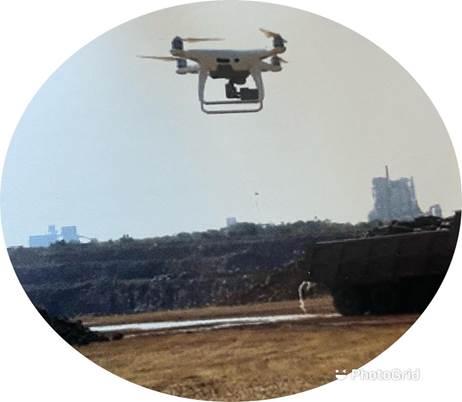
(I) Rules prescribed that that all plans and sections related to mine shall be prepared by combination of Digital Global Positioning System (DGPS) or Total Station or by drone survey in relation to certain or all leases as may be specified by Indian Bureau of Mines (IBM). 

(ii) New Rule inserted to provide for submission of digital images of mining area by lessees and Letter of Intent holders. Lessees having annual excavation plan of 1 million tonne or more or having leased area of 50 hectare or more are required to submit drone survey images of leased area and up to 100 metres outside the lease boundary every year. Other lessees to submit high resolution satellite images. This step will not only improve mine planning practices, security and safety in the mines but also ensure better supervision of mining operations. 

(iii) Requirement of submitting satellite images obtained from CARTOSAT-2 satellite LISS-IV sensor on the scale of cadastral map deleted in view of the insertion of provision for submission of high resolution Georeferenced Ortho-rectified Multispectral satellite and use of drone survey as per Rule 34A. 

(iv) Provision of daily return omitted to reduce compliance burden. Power of taking action against incomplete or wrong or false information in monthly or annual returns given to IBM, in addition to State Govt. 

(v) Allowed engagement of a part-time mining engineer or a part-time geologist for category ‘A’ mines having leased area below 25 hectares. This will ease compliance burden for small miners. 

(vi) In order to increase employment opportunity, diploma in mining and mine surveying granted by duly recognised institute along with a second class certificate of competency issued by the Director General of Mines Safety is added in qualification for full time Mining Engineer. Also, qualification for part time Mining Engineer added. 

(vii) Provision of forfeiture of financial assurance or performance security of the lease holder added in case of non-submission of final mine closure plan within the period specified. 

(viii) Amount of financial assurance increased to five lakh rupees for Category ‘A’ mines and three lakh rupees for Category ‘B’ mines from existing three and two lakh rupees, respectively. 

    • In addition to the above amendments, the Ministry has notified rescission of two rules, namely, Minerals (Transfer of Mining Leases Granted Otherwise than through Auction for Captive Purpose) Rules, 2016 and Mineral (Mining by Government Company), Rules, 2015. These rules had become obsolete in view of the above amendment in the MMDR Act and the MCR, 2016.
    1. Exploration Initiatives
  1. Geological Survey of India (GSI)
  2. GSI has completed 8,577 sq. km Specialized Thematic Mapping (on 1:25,000 scale) out of 23000 sq. km target during Annual Programme  2021-22 till the end of November 2021.
  1. GSI has completed 77,395.1 sq. km National Geochemical Mapping (on 1:50,000 scale) out of 240,000 sq. km target during Annual Programme 2021-22 till the end of November 2021.
  2. GSI has completed 35,220 sq. km National Geophysical Mapping (on 1:50,000 scale) out of 1,00,000 sq. km target during Annual Programme 2021-22 till the end of November 2021.
  3. GSI has completed preliminary marine mineral investigation for 3485 sq. km in Exclusive Economic Zone (EEZ) out of 4,000 sq. km target during Annual Programme 2021-22 till the end of November 2021.
  4. GSI has been engaged in 6 programmes of National Landslide Susceptibility Mapping (NLSM on 1: 50,000 scale) during 2021-22.  GSI has covered 18,640 sq. km by Landslide Susceptibility Mapping out of 35,147 sq. km target during Annual Programme 2021-22 till the end of November 2021.
  5. As per the dissemination policy 2019 of GSI, all reports of mineral exploration, baseline data generation and fundamental geosciences are made available to all stakeholders through GSI portal.
  6. GSI has taken up about 250 mineral exploration projects during 2021-22.
  7. GSI has handed over 43 (G3/G2) reports to the State Government in 2021. Of these, 14 blocks are of limestone, 4 blocks are of base metal, 4 blocks of bauxite, 3 blocks of gluconate, 6 blocks of manganese, 6 blocks of iron ore and one each of diamond, float iron ore, flux grade dunite (MgO), magnetite, PGE and graphite & vanadium.
  1. The state of Odisha has the largest contribution with 11 blocks followed by Rajasthan (6 blocks) and Jharkhand (6 blocks). The other contributing states are Madhya Pradesh- 4 blocks, Meghalaya- 3 blocks, Chhattisgarh- 3 blocks, Bihar- 3 blocks, Gujarat- 2 blocks, Tamil Nadu 2 blocks. Andhra Pradesh, Assam and Karnataka have contributed one block each.
  1. GSI has also handed over 100 potential G4 stage blocks in phase I for auction as Composite Licence to the State Governments in the month of September, 2021 and 52 potential G4 stage blocks in phase II in the month of November, 2021.


(b) Mineral Exploration Corporation Limited (MECL)

 During the year 2021 (Till Nov-21), MECL has submitted 39 nos. of Geological Reports of different minerals commodities e.g. Coal, Lignite, Copper, Limestone, Iron ore, Manganese, Magnesite etc. and added 10,414.36 million tonnes of resources to National Mineral Inventory out of which 17 Geological Reports have been submitted to NMET.

  1. MoU has been signed with Odisha Mineral Exploration Corporation Limited (OMECL), Bhubaneshwar for carrying out detailed exploration and allied works in the state of Odisha.
  2. MoU signed with Department of Mines & Geology (DMG), Rajasthan and Rajashtan State Mines and Minerals Limited (RSMML) for taking up feasibility study for solution mining of potash and pilot plant construction in Rajasthan.
  3. MECL signed MoU with Central Mine Planning and Design Institute (CMPDIL), Ranchi for detailed Energy & Non-Coal exploration in CMPDIL blocks.
  4. MECL signed MoU with Directorate of Mines & Geology (DGM), Goa to expedite assessment of mineral resources and take-up exploration of mineral acreage for carrying out mineral block for its auction.
  5. MoU signed with Directorate of Geology and Mining (DGM), Madhya Pradesh and Madhya Pradesh State Mining Corporation Limited (MPSMCL) for carrying out exploration and allied works for Mineral Acreages in the state of Madhya Pradesh.
  6. Under modernization program, MECL has taken steps on advent of Technological Innovations and adoption of advanced software and equipment etc. such as DATAMINE Studio-RM, Geovia Minex & Geo SURPAC (Dassault System, France), Arc GIS, ERDAS IMAGINE, Slimhole Geophysical logging system, Core scanner, XRF, ICP MS, ICP OES etc
  7. Under strategic diversification program, to increase sustainability and profitability MECL is diversifying its activities in both areas viz. business level and corporate level diversification. MECL has been engaged as Program Manager for carrying out various activities at BGML including appointment of Consultant for its techno-commercial feasibility studies and future action plan of BGML. In addition, MECL has been engaged by Government of Rajasthan as a Program Manager to carry out feasibility study for solution mining of the Potash. Further MECL is also providing consultancy to State Government for technical support to study the feasibility of mineral block for its auction purpose. MECL has deputed nodal officers for various states and posted its geological officials in the state of Madhya Pradesh, Jharkhand, Rajasthan, Karnataka and Goa.
  8.   MECL is also providing geochemical analysis services as a referee agency to various State Governments, CPSEs and other agencies.
    • Union Minister of Coal, Mines and Parliamentary Affairs, Shri Pralhad Joshi inaugurated the 5th National Conclave on Mines and Minerals-2021 in November and felicitated 149 mines obtaining five-star rating under star rating of Mines for the performance year 2017-18 to 2019-20. The Minister also handed over 52 potential mineral blocks carved out of G4 stage mineral investigations to the State Governments. This was in addition to hundred mineral blocks handed over to different state governments earlier in September this year.


    • A technical session with panel discussions was conducted during the Mines and Minerals Conclave to present and discuss about the recent amendments in Mining Laws for easing the process of auctions of Mineral Blocks and mineral exploration. An online portal of Accreditation Scheme developed by Ministry of Mines through QCI-NABET for Exploration Agencies in Mineral Sector has also been launched during the Conclave.
  1. Indian Bureau of Mines (IBM)

Besides IBM’s core charter of functions, i.e. carrying out various field inspections, Ore Dressing investigations, some of the major achievements are;

  1. .Union Minister of Coal, Mines and Parliamentary Affairs, inaugurated 5th National Conclave on Mines and Minerals-2021 on 23.11.2021 and felicitated 149 mines obtaining five star rating under star rating of Mines for the performance year 2017-18 to 2019-20.
  2. Mining Surveillance System (MSS) is a satellite-based monitoring system which aims to establish a regime of responsive mineral administration by curbing instances of illegal mining activity through automatic remote sensing detection technology. Using the Mining Surveillance System, 52 major mineral triggers have been detected across the country in second phase. Out of which 45 have been verified by the State Governments and in 5 cases unauthorized mining activities have been identified. Similarly, in respect of minor minerals, 130 triggers have been generated, out of which 104 have been verified and in 9 cases unauthorized mining activities have been identified. The training programmes to State Government officers for its adoption of the MSS for minor minerals have also been done.  In the third phase in 2020-21, out of the 119 triggers generated for major minerals across the States, 62 triggers have so far been verified by the State Governments and 9 cases are observed as unauthorized Mining after field verification by respective State Governments. 
  3. Total 164 Officers from various States participated in the training of Mining Surveillance System. 
  4. Under Mining Tenement System, Modules of MTS Project viz. PMKKKY, Registration and Daily Returns were already launched. Daily Return and Monthly Return are live to view and submit the returns. 
  1. During the current year, Average Sale Price (ASP) for Minerals up to September, 2021 and of Metals up to October, 2021 have been hosted on IBM website.
  1. IBM has brought out important publications like Indian Minerals Year Book 2019 (vol. I to III), Half Yearly Bulletin on mineral Information for the period Oct.19 to Mar.20 & April 2020 to September, 2020 issues, Statistical Profiles of Minerals for the Year 2018-19 issue, Indian Mineral Industry at a Glance 2016-17 and 2017-18 issues, Bulletin on Mining Lease and Prospecting Licenses 2019 and Monthly Statistics of Mineral Production (MSMP) up to March 2020 issue to disseminate the technical data for interest of all stakeholders.
  2. As part of the capacity building of human resources, conducted 8 online training courses for IBM employees through VC-NIC wherein a total 292 IBM officials participated.
  1. During 2020-21, the IBM offices observed Swachhata Pakhwada during 16th-30th November 2020 in office premises as well in mining site areas, nearby villages and schools.
  2. Initiatives Towards Self- Reliance in Strategic Minerals. 

Khanij Bidesh India Limited (KABIL) 

Under the aegis of Ministry of Mines, a Joint Venture company namely the Khanij Bidesh India Ltd. (KABIL) of NALCO, HCL & MECL has been established. With the objective to ensure mineral security of the country, KABIL is mandated to identify & acquire overseas mineral assets of critical & strategic minerals so as to ensure supply side assurance of energy minerals – primarily the critical & strategic minerals such as Lithium, Cobalt & others. Based on commissioned study and selection criteria various countries have been shortlisted for exploring the mineral asset acquisition abroad.

Engagement of KABIL is underway with select source countries such as Australia, Argentina, Bolivia and Chile etc. which are endowed with the cited critical & strategic minerals. The primary interface has been the respective Embassies & Missions of India in those countries for sharing of information with respect to prospective mineral acreages primarily with state owned organizations for taking up due diligence and investment decisions. 

It is foreseen that securing supply side assurance of the critical & strategic minerals such as Lithium, Cobalt etc. to start with will offer the intended impetus to the “Atma Nirbhar Bharat” initiative of Government of India and will cater to several sectors such as e-mobility, renewable energy, medicine, aerospace, aviation, etc. 

  1. National Aluminium Company Limited (NALCO)
    • Performance Highlights for FY 2020-21:
    • Despite the adverse conditions prevailing due to Covid pandemic, NALCO’s Net Profit for FY 2020-21 has jumped by 840% to Rs.1299.53 crore compared to Rs.138 crore in FY2019-20.
    • Achieved highest ever Bauxite production (73.65 Lakh tonne) since inception in FY 2020-21.
    • Highest ever export metal sale of 1.92 lakh tonne achieved surpassing the previous best of 1.47 lakh tonne achieved decade back in 2009-10.
    • Mining Lease deed of Utkal-D Coal block executed in March, 2021.
    • Total procurement through GeM portal is Rs. 343.19 Crores in FY 2020-21, against Rs. 8.42 crores achieved in 2019-20. 
    • Against mandated procurement target of 25% from MSEs, NALCO achieved 30.42% of total procurement in FY 2020-21.
    • Performance Highlights for FY 2021-22 (Till Nov’2021)
    • The Company achieved Net Profit of Rs.1, 095 Crore during H1 FY 2021-22 against Rs.124 Crore achieved in corresponding period of previous year. 
    • Highest ever Aluminium cast metal production of 2,26,029 MT since inception surpassing the previous H1 highest of 2,21,208 MT in the FY 2010-11.
    • Lean Slurry ash disposal system of CPP to mines void has been commissioned in July’2021. This facilitates environment friendly ash disposal.
    • NALCO’s Panchpatmali Bauxite Mines was awarded 5 Star Rating by Ministry of Mines for sustainable Mining in Nov’2021.
    • Alumina Refinery bagged the CII EXIM Bank Business Excellence Platinum award & Panchpatmali Bauxite Mines received the award in Gold plus category at CII National Quality Summit.
    • NALCO has been granted mining lease of Utkal-E coal block over an area of 523.73 Ha by the Department of Steel & Mines, Government of Odisha on 12.04.2021.
    • NALCO has bagged the Non-Ferrous Best Performance Award 2020-21 instituted by the Indian Institute of Metals (IIM), under the large scale manufacturing unit category in Nov’21.
    • NALCO’s Panchpatmali Bauxite Mine has been awarded the prestigious Pollution Control Excellence Award 2021 by the State Pollution Control Board, Odisha, for effective pollution control measures and sound environment management practices.


    • Major Activities taken up by the Company to help in fighting the Covid-19 Pandemic:
    • NALCO contributed Rs. 7.6 crore (including one-day salary of employees amounting to Rs.2.6 crore) to PM CARES Fund. The Company also contributed one-day salary of employees amounting to Rs.2.6 crore to CM’s Relief Fund, Odisha. Total contribution toward COVID-19 relief fund is Rs. 10.2 crore.
    • Funded 200 bedded exclusive COVID-19 hospital at Nabarangpur and 70 bedded SLNM College & Hospital at Koraput, Odisha.
    • NALCO in convergence with Govt of Odisha, funded 150 Bedded District Covid Hospital at Angul District, Odisha.
    • Set up two exclusive COVID Care Centres (50 bed each), one each at Damanjodi and Angul and one COVID Care Centre at Bhubaneswar (20 bed).
    • 25,70,000 capacity (dose) Covid vaccine Refrigerated Truck, two Ventilator Ambulance and Digital x-ray machine donated to Govt. of Odisha.
    • NALCO’s contribution to the commemoration of Azadi Ka Amrit Mahotsav.
    • NALCO to support and build 300 smart e-class rooms in Odisha as an academic developmental initiative.
    • NALCO, in association with NALCO Foundation reached out to an Old Age Home at Bhubaneswar and donated electronic utility items like refrigerator & mixer grinder, monthly ration, masks and sanitizers.
    • NALCO is celebrating the Azadi Ka Amrit Mahotsav by organizing a number of activities among the school children.  
  1. Hindustan Copper Limited (HCL)
    • Physical Performance Highlights for FY 2020-21:
    • Total copper metal sales of the company were 32,997 tonne in 2020-21.
    • Financial Performance Highlights for FY 2020-21:
    • During 2020-21, the turnover of the Company was Rs.1760.84 crore as against Rs. 803.17 crore during FY 2019-20 registering an increase of 119%. The Profit/(Loss) After Tax from continuing & discontinuing operation during FY 2020-21 was Rs 109.98 crore.


    • Highlights of other Achievements:
    • HCL being the first non-banking PSU to raise capital of Rs.500 Crore from the market for the ongoing capital expenditure project through QIP (qualified Institutional Placement) route in April 2021.
    • HCL facilitated Govt. of India to disinvest GoI shareholding by around 6.62% through OFS (Offer For Sale) route in Sept’2021.
    • HCL procured 41.12% of total procurement from MSME vendors in FY 2020-21 against the mandatory target of 25%. 
    • Power Purchase agreement (PPA) has been signed with party for installation of 4.5 MWp solar plant at MCP Unit. 
    • The Malanjkhand underground mining project has achieved important milestones i.e interconnection of north and south mines at 240 mRL & 295 mRL. This has created readiness for taking out ore production through decline from underground mines.
    • HCL has signed a long-term sale agreement with a domestic primary copper producer for sale of around 60% of its total quantity of annual copper concentrate production. 
    • Awards & Accolades:
    • DGMS, Ministry of Labour & Employment, GoI, intimated HCL about selection of National Safety Award (Mines) – 2017(Winner) & 2018 (Runner both LIFRM-type-6 category) for Kolihan Mine,
    • National Safety Award (Mines) 2018 (Winner-LIFRM-type-6 category) and 2019 (Runner-LAFP -type-6 category) for Khetri Mine,
    • National Safety Award (Mines)- 2020 (Runner) (LAFP- type -4 category) for Malanjkhand mine,
    • Khetri mine of HCL was adjudged as five star rated mine for the year 2017-18 and the award has been given by Hon’ble Minister of Mines on 23.11.2021 in the 5th National conclave on Mines & minerals at New Delhi.

  Research & Development (R&D) Initiatives 

 Jawaharlal Nehru Aluminium Research Development & Design Centre (JNARDDC)

  1. During 2021 JNARDDC was granted one patent for novel R&D process.  

Patent no. 340231 dated 02.07.2020 (Inventor – Dr Md Najar PA) for “Development of process for selective in-situ dissolution of alumina & silica bearing mineral phases in bauxite at room temperature for geo–analytical application”.  The selective and self-sustained dissolution of alumina (Al2O3) and silica (SiO2) bearing mineral phases in bauxite such as gibbsite and kaolinite at room temperature enable rapid determination of the mineral constituents both at the exploration site as well laboratory with comparable accuracy. The distinguished advantage of the process is its easy flexibility and portability to remote mining sites for quick assessment of bauxite and laterite samples and need of minimum infrastructural support. 

  1. JNARDDC successfully upgraded its NABL accreditation from ISO/IEC 17025:2005 to ISO/IEC 17025:2017 with inclusion of new scope covering all parameters of chemical testing of chromite ore which is expected to enhance the business opportunities.
  2. Setting up of Coal Characterization and Research Laboratory (CCRL) in record time (to test coke/coal samples for various parameters through proximate analysis – fixed carbon, moisture, volatile matter and ash & gross calorific value by prescribed IS/ASTM methods), acquiring NABL accreditation for CCRL (ISO/IEC 17025:2017) and substantial inflow of coal referee samples for analysis which will provide major boost to the earnings of the Centre in the times to come. 
  3. Developing expertise for providing end to end technology solutions (optimized die design, fabricated dies with process parameters by process integration) for small and medium enterprises for manufacturing of critical extrusion profiles. Currently, critical extrusion profiles are developed based on implicit knowledge of shop floor personnel gained on basis of hit and run trials which are not only costly but also time consuming. In order to effectively utilize the extrusion facilities, Centre is focusing on new end user applications such as profiles used in automobiles, building and construction, aerospace so that prototype can be made and demonstrated to end user industries to promote consumption. 
  4. Bureau of Energy Efficiency (BEE), Ministry of Power renewed the nomination of JNARDDC as a sector expert for the aluminium sector under the PAT (Perform, Achieve & Trade) Scheme in National Mission for Enhanced Energy Efficiency (NMEEE) under Climate Change Project
  5. Nomination and authorization of JNARDDC by Ministry of Mines (MoM), Govt of India to carry out the functions earmarked for Metal Recycling Authority as stipulated in the “National Non-Ferrous Metal Scrap Recycling Framework 2020” (excluding statutory functions) till a regular authority is notified. JNARDDC will work under the supervision of Ministry of Mines and closely co-ordinate with MoEF & CC, CPCB/SPCB’s, Dept. of Consumer Affairs, Bureau of Indian Standards and other Stakeholders for performing various activities related to Non-Ferrous Metal (namely Al, Cu, Zn and Pb) Recycling which ensures proper guidelines for scrap handling, processing, quality, certification and environmental norms etc. A platform will be devised to bring all the stakeholders including recyclers, OEMs, scrap traders, generators etc. for reporting or registration in an organized manner under one umbrella. The Centre has initiated the activities to ensure that the desired frame work is in place and implemented.


  1. National Institute of Rock Mechanics (NIRM)

 NIRM Established as an R&D support and expertise to Mining Sector. NIRM deals with field and laboratory investigations, basic and applied research and solving complex problems in almost entire spectrum of Rock Mechanics and Rock Engineering related to Mining and Civil engineering activities. 

  1. During the period affected by Pandemic due to covid-19 NIRM had taken all efforts to complete its scientific investigations and the scientific initiatives were involved in major mines (coal and metal). NIRM through advanced geological, in-situ stress measurements, numerical modelling, excavation design, engineering geophysical investigations, advanced monitoring of underground structures and stability of excavations have provided tailor made scientific services that resulted in significant advantages in terms of time, money, safety and productivity in the civil and mining industries.
  2. Engineering geophysical investigations in the old, abandoned mines areas (8 locations) in the state of Madhya Pradesh have led to mapping the old remnant huge cavity pockets that were hazardous to surface buildings including residential colonies. This prevented untoward safety incidents and environmental hazards associated with such abandoned mines. 
  3. The in-situ stress measurements of NIRM have vital for design and excavation of underground caverns of defence sector in Visakhapatnam. NIRM is continuing to provide its expertise for the classification and identification of suitable rock for armour rocks for ports and naval base near Visakhapatnam.
  4. The 3D numerical model analysis of underground excavations in Arun 3 HEP, Nepal and Punatsangchu HEP in Bhutan identified the zones of rockmass for critical displacements and behavioural trend for more efficient design for long term stability of the underground structures.  
  5. For the new and upcoming units of Kudankulam nuclear power plant (KKNPP), Tamil Nadu (2 x 1000 MW) near operating units 1 and 2, NIRM technical guidance led to completion of rock excavation and about 0.14 lakhs cubic meter of hard rock was excavated safely.
  1. Key scientific initiatives for various upcoming hydel and mining projects within the country and abroad are taken up to continue the scientific contribution for civil, mining and infrastructure sectors.
  2. NIRM made various scientific publications in national and international journals. A large participation of NIRM scientists is scheduled for the international conference at Malaysia – on Geotechnical challenges in Mining, Tunneling & Underground structures.

*******

Key Initiatives and Achievements of Ministry of Rural Development

 Deendayal Antyodaya Yojana – National Rural Livelihoods Mission (DAY-NRLM)

  1. Launched in 2011, the Deendayal Antyodaya Yojana – National Rural Livelihoods Mission (DAY-NRLM) aims at mobilizing about 9-10 crore rural poor households into Self Help Groups (SHGs) in a phased manner and provide them long-term support such that they diversify their livelihoods, improve their incomes and quality of life.


As on 30th November 2021, Mission has its footprints in 6769 blocks of 706 districts in 30 states and 6 UTs. It has mobilised a total of 8.01 Crore women from poor and vulnerable communities into 73.19 lakhs SHGs and formed 4,24,189 Village organisation and 32,406 CLFsIn the current year, 248 blocks have been covered with the mobilization of 41.02 lakh households into 3.81 lakh SHGs.


These community institutions have been provided Capitalization Support fund in the form of Revolving Fund (RF) and Community Investment Fund (CIF) to the tune of Rs 15,661.13 Crore. In the current FY, Rs. 2241.90 Crore have been provided as RF and CIF.


Around 3.5 lakhs community resource persons (CRPs[1]) have been developed for providing capacity building and technical support to community institutions.


DAY NRLM has been able to facilitate a total of Rs. 4.35 lakh crore of Bank Loan to the SHGs from April 2013 till 30th November, 2021. The Non-performing Assets (NPA) is just 2.57% which shows the remarkable repayments culture in the SHG members under DAY-NRLM and also the confidence of women in the program. To provide last mile delivery of financial services, 55079 SHG members have been deployed as BC Sakhi (Business Correspondents/BC Points). The BC Sakhi provide last mile financial services including deposit, credit, remittance, disbursement of pensions & scholarships, payment of MGNREGA wages and enrollment under insurance and pension schemes.


On Livelihood front, 1.44 crore Mahila Kisans have been covered under DAY- NRLM, out of which 30 lakh have been covered in the current Financial Year. A total of 182 Producer Enterprises/Farmer Producer Organisations (PEs/FPOs) have been formed for organized livelihoods. A total of 22,292 Custom Hiring Centers/Tool banks of agricultural implements have been established, out of which 2629 CHCs have been formed in the current year.


A total of 1,78,328 small enterprises have been facilitated for SHG members or their family members under the Start-up Village Entrepreneurship Programme (SVEP), a sub-scheme of DAY-NRLM. 22783 enterprises were formed in the current year.


Major events held during the year

  1. DAY-NRLM National Awards are intended to provide public recognition to the outstanding performance of the community institutions- Self-Help Groups and Village Organizations promoted under DAY-NRLM. 


  1. Through an online platform, the Prime Minister interacted with the SHG members of DAY-NRLM on the 12th of August’21 to know about the work being done by them. The event was also utilized for supporting the work of SHGs by releasing funds to the SHGs members. A compendium of 75 inspirational success stories by SHG women was also released by the Prime Minister.


In addition, the Prime Minister also released funds to the SHGs under DAY-NRLM:

    1. Release of 25 Cr to 7,500 SHG members under PMFME
    2. Release of first instalment of Rs. 4.13 Crore to 75 FPOs
    3. Release of Rs.1,625 Cr of Capitalization support to 4.07 Lakh SHGs in 30 states and UTs


Deen Dayal Upadhyaya Grameen Kaushalya Yojana (DDU-GKY) RSETI:


A total of 39.17 lakh candidates have been trained under RSETIs in 64 courses [59 National Skill Qualification Framework (NSQF) aligned and 5 MoRD approved] and 27.34 lakh candidates settled in either self-employment or wage employment till November, 2021. Around 3.06 lakh candidates have trained under the programme between 01.01.2021 and 30.11.2021, while 1.88 lakh candidates have been settled between the same duration. The programme is currently being implemented in 27 States and 6 UTs with 585 RSETIs sponsored by 23 leading Banks. 


Building on to the schemes’ objective of training and settlement of candidates, either through self-employment or wage employment, new initiatives are introduced time and again. This allows for knowledge sharing with various schemes and paves the way for new learnings. Some of the initiatives that were introduced this year include establishing an ‘Assessment & Certification Board of RSETIs’ for independent assessment of trainees of RSETI to ensure credibility to their trainings. 


DDU-GKY:


The DDU-GKY program is currently being implemented in 27 States and 4 UTs and has over 2369 Training Centres in 1891 projects, in partnership with over 877 Project Implementing Agencies conducting training across 57 sectors, and over 616 job-roles. During FY 2021-22, a total of 23,186 candidates have been trained and 22,067 candidates have been placed till 30.11.2021. 


Progress since Inception under DDU GKY (2014-15) – Total of 11.23 lakh candidates have been trained and 7.13 lakh placed (till 30.11.2021).


Year-wise performance of DDUGKY

Year

Total no. of candidates trained under DDU-GKY

Total no. of candidates placed under DDU-GKY

2014-15

43,038

21,446

2015-16

2,36,471

1,09,512

2016-17

1,62,586

1,47,883

2017-18

1,31,527

75,787

2018-19

2,41,509

1,37,251

2019-20 

2,47,177

1,50,214

2020-21

38,289

49,563

2021-22(till Nov’21)

23,186

22,067

Total

11,23,783

7,13,723


75 PwD candidates from DDU-GKY & RSETI schemes were given out ‘Hunarbaaz Awards’ on the occasion of Antyodaya Diwas. The virtual event was jointly organised by MoRD and NIRD in association with State Rural Livelihood Missions (SRLMs) and Rural Self-employment Training Institutes. CEOs of SRLMs and Directors of RSETIs handed over the awards at the respective states to the specially-abled achievers. Some of the candidates who received the awards addressed the audience and recounted their life journey and the difference that skill training brought to their lives. Employers and training partners also shared their experiences of skilling and employing the candidates and also put forth suggestions to explore newer directions in the journey of inclusion


Pradhan Mantri Gram Sadak Yojana (PMGSY)

  1. 2,067 Habitations connected with all weather reoads.
  2. 42,305 Km road length and 788 bridges sanctioned
  3. 40,931 Km road length completed, despite Covid related lock-downs, as compared to 31,736 Km in the year 2020 and 38,006 in year 2019.
  4. 13,969 Km road length completed using new and green technologies.


Saansad Adarsh Gram Yojana (SAGY)


Saansad Adarsh Gram Yojana (SAGY) is a unique scheme of the Ministry of Rural Development wherein, for the first time, the leadership, capacity, commitment and energy of the Members of Parliament are being leveraged directly for development at the Gram Panchayat level. Saansad Adarsh Gram Yojana (SAGY) was launched on 11 October 2014 with the aim of creating holistically developed model Gram Panchayats across the country. Primarily, the goal is to develop three Adarsh Grams by March 2019, of which one would be achieved by 2016. Thereafter, five such Adarsh Grams (one per year) will be selected and developed by 2024. These ‘Adarsh Grams’ serve as ‘nucleus of health, cleanliness, greenery and cordiality’ within the village community and, become schools of local development and governance, inspiring neighboring Gram Panchayats.


The role of Members of Parliament is that of a catalyst. They identify the Gram Panchayat to be developed into Adarsh Gram Panchayat, engage with the community, help propagate the values of the scheme, enable the initiation of start-up activities to build up the right environment and facilitate the planning process. The District Collector is the nodal officer for implementing SAGY. The District collectors conduct a monthly review meeting with representatives of the participating line departments. The Members of Parliament concerned chair the review meetings. The heads of the Gram Panchayats concerned also are invited for these monthly meetings.


Achievements :

Identification of Gram Panchayats 
The Members of Parliament adopted 1,011 Gram Panchayats under SAGY-II (2019-24). In addition, 703 Gram Panchayats across the country were identified under Phase-I of SAGY. Further, 502 Gram Panchayats have been taken up under the Phase-II and 305 Gram Panchayats under Phase-III for development under SAGY as on 29 December 2020. 

Phase-wise status of identification of GPs under SAGY, based on information available on the SAGY portal (saanjhi.gov.in) as on 29 December 2021


Sl

Year

No. of SAGY GPs

1

Phase – I (2014-16)

703

2

Phase – II (2016-19)

502

3

Phase – III (2017-19)

305

4

Phase – IV (2019-20)

451

5

Phase – V (2020-21)

250

6

Phase – VI (2021-22)

146

  1. Village Development Plan
    The Gram Panchayats adopted under SAGY prepare Village Development Plans (VDP) containing prioritised time-bound activities to achieve holistic progress of the village, through convergence of resources. Under SAGY, VDPs have been prepared for 1,824 GPs and works are under progress. In order to keep track of the progress of projects listed in the VDP, a Tracking Template has been developed and the progress is monitored online. As on 29 December 2021, 54,701 projects have been completed and 6,732 projects are in progress in these Gram Panchayats. 


Sl

Phase

No. of SAGY GPs

No. of GPs that uploaded VDP

No. of GPs that updated VDP progress

No. of projects planned

No. of projects completed

No. of projects in-progress

1

Phase-I (2014-16)

703

689

672

41104

27880

3296

2

Phase-II (2016-19)

502

431

392

21648

15693

1204

3

Phase-III (2016-19)

305

245

225

9048

6411

689

4

Phase-IV (2019-20)

451

295

209

8845

3811

1047

5

Phase-V

(2020-21)

249

118

50

3519

834

338

6

Phase- VI

(2021-22)

146

46

11

941

72

158


  1. Capacity Building of the Charge Officers under SAGY

Considering the COVID-19 pandemic, SAGY Division has organised capacity building programmes on SAGY in coordination with NIRD&PR through webinars for the Charge Officers and other stakeholders of SAGY GPs during 27-29 May 2021, 29-31 July, 2021 and 28-30 September 2021. A total of 440 Charge Officers have participated in this programme from various States/UTs.


  1. Documentation of Success Stories 

The Ministry of Rural Development has documented many success stories from SAGY Gram Panchayats based on inputs shared by the respective State Governments and made them available for public access on the programme website (https://saanjhi.gov.in/SuccessStory.aspx). A few successful initiatives have also been video documented by the Division (https://saanjhi.gov.in/Success.aspx) as well as Doordarshan, Rajya Sabha TV and other broadcasters. 


  1. SAGY awards have been conceptualised

As per the Chapter 17 of SAGY Guidelines, awards have been proposed to be given in the following categories and the criteria for the awards have been finalized: 

i. Best practices

ii. Best Charge Officers

iii.Best District Collectors

iv.Best Adarsh Grams


  1. Creation of MP Dashboard for the Members of Parliament

A new MP Dashboard has been created for the use of Members of Parliament with information relevant to their constituency/ state. There are similar Dashboards available on saanjhi portal, for the state and district administration, for easy monitoring and evaluation.


  1. SAGY online module for Integrated Government Online Training (iGOT)

A detailed online training module on SAGY was created and published on the Integrated Government Online Training (iGOT) platform, recently launched by the Department of Personnel and Training (DoPT).


  1. Orientation programme on SAGY for Personal Assistants / Representatives of MPs

An orientation programme on SAGY for the Personal Assistants / Representatives of Members of Parlaiment was organised at Krishi Bhawan, New Delhi on 20th and 21st December, 2021. It was attended by over 100 participants. 


Pradhan Mantri Awaas Yojana-Gramin (PMAY-G)

Pradhan Mantri AwaasYojana-Gramin (PMAY-G) is one of the flagship schemes of the Government of India launched on 20th November, 2016 which aims to provide “Housing for All” through the provision of pucca house with basic amenities to all houseless households and households living in kutcha and dilapidated house in rural areas by March 2024. As on 27.12.2021, a total of 2.15 Crore houses have been sanctioned and 1.68 Crore houses have been completed. Against the total target of completion of 44.09 lakh houses in the FY 2021-22, a total of 31 lakh houses has been completed till 27th December 2021.

Key Initiatives 

The program is being implemented and monitored through end to end e-governance solution, AwaasSoft and AwaasApp. AwaasSoft provides functionalities for data entry and monitoring of multiple indicators related to implementation aspects of the scheme. These statistics include, physical progress (registrations, sanctions, house completion and release of instalments etc.), financial progress, status of convergence etc. Since launch of the scheme in 2016, efforts are being taken to make the software more user friendly. New modules have been added in the software for making it more accessible and maintaining transparency in the implementation of the programme. 

The major initiative taken by the Ministry in the context of introducing new modules in the Awaassoft is as below:

  • Landless Module – The scheme has also taken care of landless households in the permanent waitlist (PWL). The State Government must ensure provision of land to landless households on priority as they are the neediest ones. Further, to map landless beneficiaries in the PWL of PMAY-G and to capture the status of availing land or financial assistance for land purchase to the landless beneficiaries, a module on landless has been developed. The module captures the status of land provided to landless beneficiaries either financially assisted or provided land in physical. 
  • E-Ticketing system – A Ticketing System is developed on AwaasSoft, with an aim to resolve/quantify all issue received from States/UTs in technical/policy category whenever faced by them while implementing the scheme of PMAYG. A grievance redressal mechanism is in process of setting up at different levels of administrations such as Gram Panchayat, Block, District, and the State. Issues raised by States/UTs are to be resolved within a stipulated time frame for immediate resolution. The module is available 24X7 and all days of the week. Head of technical team and RH Division are registered on the platform to have a closer look on the issues raised by the States/UTs. 


  • Adhaar Based Payment System –ABPS allows Direct Benefit Transfer (DBT) to the PMAY-G beneficiary in his/ her bank account linked with the Aadhaar number of the concerned beneficiary for safe and authentic transaction.
  • Convergence Module- Convergence module has been developed to monitor the status of benefit availed by PMAYG beneficiary under other Government Schemes focusing on toilet construction, LPG, Drinking water, MGNREGA employment, involvement of SHG etc.
  • In addition to above, a training module on understanding the features of PMAYG, from design to execution, is also available on iGOT platform, which is an e-learning platform intended for capacity building of stakeholders of PMAY-G. 


Shyama Prasad Mukherji Rurban Mission (SPMRM)


The Shyama Prasad Mukherji Rurban Mission was launched by the Prime Minister on February 21st, 2016 with an outlay of Rs. 5142.08 crores. This is a unique programme, designed to deliver catalytic interventions to rural areas on the threshold of growth. 300 Rurban clusters with thematic economic growth points, are being developed across the country under this Mission, with a funding support of up to 30% of the estimated investment for each Rurban cluster, given as Critical Gap Funding (CGF), while 70% of the funds is mobilized by the States through convergence with synergic State and Central programmes as well as private investment and institutional funding. Upon being re-classified as a Centrally Sponsored Scheme, the CGF is now shared between the Centre and the State in a ratio of 60:40 for Plain area States and 90:10 for Himalayan and NE States. The following points which reflect the progress of the Mission, is being highlighted for your understanding:

Progress of the Mission at the National Level

  • The Mission has progressed at a fast pace since the launch in 2016, with Rs. 2,196.85 crore of Central Share of CGF, Rs. 1,159 crore as corresponding State share of CGF and Rs. 103.60 crore of Administrative Funding, released to 28 States and 6 Union Territories over the last five financial years
  • Till date, of the mandated 300 clusters, 299 clusters have been identified and approved across the country. Further, through intense engagements with the States, 291 Integrated Cluster Action Plans (ICAPs), which are the blue prints of investment for each cluster, have been approved for 28 States and 6 UTs
  • Rs. 27,716 crore of investment has been estimated in the approved 291 ICAPs, to be met by the funds mobilized through Convergence as well as the Central and State share of CGF. The reported expenditure on works grounded till date is Rs. 15,167 crore, out of which the CGF is the tune of Rs. 2,506 crore and Rs. 12,661 crore is under Convergence 
  • Of the total investment proposed, nearly 79% is targeted towards saturation of Economic and Basic Amenities. Various Thematic Areas have been identified for saturation of Economic Amenities, such as Agri Services and Processing, followed by Skill development to promote Small and Medium Scale Enterprises and Tourism activities

Mission achievement and Key activities undertaken: 

1. Spatial Planning:

    1. Spatial planning is being carried out using remote sensing and GIS technology under SPMRM. Spatial Planning for rural areas, being new subject, requires handholding support and therefore States were asked to nominate Mentor Institute by DoRD. 33 States/UTs have nominated mentor institutes for spatial plan preparation of which Mentor Institute for 30 States have been approved and others are in process. 
    2. Spatial Planning Platform having spatial plan preparation module has been prepared by BISAG – N under an MoU between Minsitry of Rural Development, Ministry of Panchayati Raj and Bhaskaracharya National Institute of Space Application and Geo-Informatics (BISAG-N). Spatial Planning module for preparation of Economic Plan, Social Infrastructure plan, land use plan, Disaster Management, Utility plan have been developed. On 3rd August 2021, the same was presented to the Secretary, Rural Development. Pilot study for Talabasta, Nirbhoypur and Singarayakonda Clusters is underway. 
    3. The platform has 101 layers detailing out topographical, agro – climatic zone, environmental, socio – economic – infrastructural layers suitable to prepare plan ranging from national to cluster level and further develop plan from Cluster to Village level.Apart from creating 101 layers in the Spatial Planning platform, API integration with PMGSY, Mission Antyodaya, PMAY – G and other schemes are in progress.
    4. Learning management system is being developed for stakeholder training and capacity development in spatial planing, ICAP and DPR preparation, carrying out research and innovation.
    5. A Spatial Planning Expert committee has been approved and members consent has been undertaken. Committee involves technical institutes of repute and other Ministries working in the field. 
    6. Spatial planning being a new subject required an in-depth study to prepare guidelines/ handbooks. A concept note on spatial plan duly approved by the competent authority has been prepared. Further, to handhold stakeholder to prepare the plan a Handbook for Spatial plan preparation of Rurban Clusters is under finalization.

2. RurbanSoft- PFMS Integration and Geo-Rurban App:Real time progress is being captured under the Mission through RurbanSoft (a MIS platform under SPMRM). RurbanSoft has been integrated with PFMS to capture real time financial progress.

    1. All States/UTs are targeted for onboarding PFMS Integration and as per current status, 32 States/UTs have already on-boarded payment through RurbanSoft-PFMS integration.
    2. Geo-Rurban App: An app for Geo-Tagging of the all the assets being constructed under the Mission has been launched in February 2020. Usage of mobile application is leading to geo-tagging of all assets created under the Mission and further helping the Ministry to monitor the physical monitoring of the assets created in the Mission, as well as ensure increased transparency.
    3. Dynamic ranking of Rurban clusters have been initiated on the basis of performance based indicators on RurbanSoft portal. This will enhance the spirit of competition among the States/UTs.

4. To strengthen the financial management system, fund pooling mechanism at State/UT level is being implemented to reduce parking of funds at State Nodal accounts and also the progressive clusters need not wait for Ministry level fund releases

5. Regular review and follow up with States/UTs on engagement of resource at State Project Management Unit, District Project Management Unit /Cluster Development Management Unit professionals for Mission implementation.

6. Capacity building under Rurban Mission:

  1. Regular trainings are organised by the Program Division for all the key officials and professionals at the State and District levels. In this year, trainings have included topics such as experience sharing and peer learning by the States/Clusters, as well as multiple trainings and hand-holding sessions/workshops for the purpose of onboarding the RurbanSoft platform, PFMS integration etc.
  2. Organized development of clusters by rural community and efficient handholding of these clusters by Rurban functionaries is a key aspiration of SPMRM. Dedicated support on spatial planning, Strengthening bottom-up institutions and need for research and innovation for Rurban are amongst the principle learning from NITI Aayog`s evaluation. Specifically, the need for Capacity Building revolves around spatial planning as well as comprehensive aspects pertaining to Rurban Mission to all stakeholders, from bottom-up.
  3. A Knowledge Platform and collaborative ecosystem development for providing clusters stakeholders with capacity building, leadership development and technical support is planned through setting up a dedicated Rurban specific Centre at NIRD&PR, Delhi. The platform will ensure that the support and guidance to Clusters is provided through virtual and in-person interface in the appropriate regional language. Further, this platform shall also provide a regular platform for citizens of the Clusters to participate in the Mission’s implementation through community feedback on various services and initiatives. 


DISHA


            Achievements of the calendar year 2021 are as under : 


  1. Constitution of DISHA Committees:- DISHA Committees have been constituted in 13 more Districts under the Chairmanship of Member of Parliament representing to ensure expeditious development of all the sectors with enhanced community participation and accountability. Thus, DISHA Committees have now been constituted in 711 Districts. 


  1. Meetings of DISHA Committee: DISHA Committee is mandated to monitor the implementation of the Central Government programmes in accordance with prescribed procedures and guidelines and promote synergy and convergence for greater impact through its quarterly meetings convened for the purpose. In the year 2021, 626 DISHA meetings have been held under the Chairpmanship of  Members of Parliament. 


  1. Formation of DISHA Monitoring Cell: To ensure effective, time-bound and result-oriented work of the DISHA Committees, Monitoring Cell at National Level has been formed to coordinate with State Nodal officers for regular conduct of DISHA meetings and follow up of action items decided in the DISHA meetings.


  1. Amendment Modification in Guidelines for Nomination of Members of Parliament in State Level DISHA Committee:  To make State Level DISHA Committee more representative, Para 3 of State Level DISHA Committee Guidelines modified in consultation with Ministry of Parliamentary Affairs and 200 Members of Parliament have been nominated to the State Level DISHA Committees. 


  1. State Level Meeting Reporting Module: To support the operations of DISHA Committee, facilitate structured and effective meetings, a web portal called ‘Meeting Reporting Module’ (https://rural.nic.in/en/disha) has been developed for State Level DISHA meeting. It has salient features such as Notice Board, Proceedings of Meeting and Summary for state and district level meetings which contains schedules meeting date, time, venue, and agenda, meeting notices and minutes and assign action points. 


  1. Social Media Platform for fast Communication: A ‘State DISHA Committee meeting’ Social Media group is created for quick dissemination of important communication from Ministry of Rural Development and capturing the DISHA State Committee meeting information held in States. Similarly 31 State-wise Social Media groups also created to exchange the important communication between districts and MoRD. 


  1. Enhancement in User Experience in DISHA Dashboard: The DISHA dashboard has been developed to create a data-based government solution for planning, monitoring and evaluating various parameters of various schemes under DISHA. DISHA application is envisaged as a single source of information regarding schemes being run by various ministries from different levels to the Gram Panchayat level. To enhance the user experience, recently following activities completed towards facelift of DISHA Dashboard:
  • Landing page developed to improve User Interface containing DISHA introduction, 12 schemes outcome trends, DISHA Meeting reports, Chairman details, Guidelines, Photo-gallery, Circulars and Links of all available schemes on dashboard 
  • Dashboard summary page redesigned completely with new parameters 
  • Improved visualization of scheme’s widgets, added new analytical charts, uniformity/consistency across pages, colour theme enhanced, added sliding navigation panel, heat map, more descriptive titles and labels, increased granularity, added AC/PC view, optimization of Dashboard Application to improve the speed.


International Co-operation


A. Training 


  • Online Training on “Agricultural Engineering Technologies for Enhancing Productivity and Profitability in Agriculture Sector”, ICAR-Central Institute of Agricultural Engineering (CIAE), Bhopal, India, 06 -17 December, 2021
  • Invitation for Talkshow and Seminar virtually held by Indonesia on Thursday, 18th November, 2021
  • AARDO-KOICA joint online Training on “Sustainable Rural Development”(SRD), 27 September-8 October, 2021
  • AARDO-BARD International Online Training Workshop on “Achieving Sustainable Development Goals (SDGs): Financial Inclusion and Rural Transformation”, Bangladesh academy for Rural Development (BARD), Bangladesh, 03-12 August, 2021.
  • AARDO-FERO Online Training Programme on “Sustainable Practices for Smart Agriculture and Livelihood in African-Asian Countries”, 25-29 October 2021, R.O. Korea
  • International Online Training Programme on “Green Innovation in Agriculture and Rural Development”, Rural Development Academy (RDA), Bogura, Bangladesh, 21-30 September 2021
  • Online International Training Programme on “Advanced Techniques ion Fishing and Fish Processing” in ICAR-CIFT, Kochi, India on 31 August-09 September, 2021
  • Online International Training Programme on “Value Chain Management in Fisheries” in ICAR-CIFT, Kochi, India on 13-16 September, 2021
  • Invitation of nominees for the Online 148th Regular Session on “Agricultural development and Policy”, scheduled to be hosted by the International Centre for Land Policy Studies and Training (ICLPST), Taiwan, R.O. China, during 17 September – 10 December 2021
  • International Online Training Workshop on “Achieving Sustainable Development Goals (SDGs): Financial Inclusion and Rural Transformation”, BARD, Cumilla, Bangladesh, 03-12 August, 2021
  • AARDO-MARDI Joint Online programme during July-August 2021, MARDI, Malaysia
  • AARDO International Online Training Programme on “Climate change-Implications and Adaptation” AHKNRD, Islamabad, Pakistan, 31 May to 04 June, 2021
  • Online International Training Programme on “A Panorama of Affordable Innovative, Technologies and Solutions for Rural Development” at IIT Madras (IITM), India on 22 March – 01 April, 2021
  • International Online Training Programme on “Recent Advances in Agricultural Surveys: Remote Sensing and GIS Applications”, ICAR-Indian Agricultural Statistics Research Institute (IASRI), New Delhi, India, 16-26 March, 2021 
  • Online Internation Training Programme on “Natural Resource Management and Climate Change Adaptation”, National Institute of Rural Development & Panchayati Raj (NIRD&PR), Hyderabad, India, 15-24 February, 2021


B. Meeting/Conference


  • Meeting of Dr. Manoj Nardeosingh, Secretary General, AARDO with Minister (Rural Development) on 25th October, 2021 at 12.30 P.M. at Krishi Bhawan
  • 77th Session of Liaison Committee (LC) of AARDO was held on Thursday, 07th October, 2021 at 07th October, 2021.
  • Seventy Second (72nd) Session of Executive Committee (EC) of AARDO was held on 24-25 November, 2021.
  • Seventy Third (73rd) Session of Executive Committee (EC) of AARDO was held on 06-07 December, 2021.
  • 20th General Session of AARDO Conference was held on 08-09 December, 2021.
  • Seventy Fourth (74th) Session of Executive Committee (EC) of AARDO was held on 10 December, 2021.


C. MoU


  • This Ministry had provided additional contribution of USD 6,00,000 (USD 2,00,000 per annum) for the triennium 2009-2011 and the same has been extended for the triennium 2012-2014 and 2015–2017. Additional contribution for the triennium 2021-23 has been signed on 03 December, 2021. Under this programme, five fully funded slots of PGDRDM course of one year in NIRD and eight fully funded training programmes. India has conferred Ambassador Status to Secretary General, AARDO.


D. Membership Contribution


  • Payment of Rs. 1, 00, 00,000/- equivalent to US $ 1,34,862 at the exchange rate of US$ 1 = INR 74.15 (subject to fluctuation), to the African-Asian Rural Development Organization (AARDO), Chanakyapuri, New Delhi on account of 1st Installment of India’s annual membership contribution for the calendar year 2021.
  • Payment of Rs. 68,00,000/- to the Centre on Integrated Rural Development for Asia and the Pacific (CIRDAP), Dhaka, Bangladesh on account of 1st Installment of India’s annual membership contribution for the calendar year 2021.


Freedom2Walk & Cycle Challenges for City Leaders & Citizens

 As part of ‘Azaadi ka Amrit Mahotsav’ (AKAM) celebrations, Smart Cities Mission of the Ministry of Housing and Urban Affairs (MoHUA) is launching two unique national level challenges between 1st to 26th January 2022, viz.  “Freedom 2 Walk & Cycle Challenge for City Leaders”, and “Inter-City Freedom 2 Walk & Cycle Challenge for Citizens”.  The challenges aim to build on the successful nationwide campaign titled “Azadi Ka Amrit Mahotsav- Freedom 2 Walk & Cycle” that was held between October 1-3, 2021. During this event, 100 Smart Cities had actively hosted over 220+ events, to promote walking and cycling. The events ranged from activities to empower women & children to walk, run and cycle, to bring more pedestrians and cyclists to the streets, testing temporary interventions and more. 


The events will build on the momentum of the earlier event, with the intent to develop long-term behavioral change in citizens towards taking up walking and cycling and to make city leaders as walking and cycling champions in each city. 75 cities have registered so far for the Inter-City Citizen’s Challenge. 65 cities and 232 leaders, comprising Commissioners, Additional/Joint/Deputy Commissioners, Smart City CEOs and Key SPV Officials, have signed up so far for the City Leaders campaign.

During the 3 weeks running up to 26 January, 2022, the participants will be required to track their walk, run & cycle activities daily and the best performing cities will be awarded at the end of the challenge. Citizens interested to join the Freedom 2 Walk & Cycle Inter-City Challenge can register for their respective city through the website: https://www.allforsport.in/challenges or through the registration links shared by the official social media handle of the city ULBs.

“I have started cycling more often to work and for recreation over the last couple of years. Not only have I become more physically and mentally fit, it has given me a different perspective towards looking at the city and its needs. Cycling is a humble yet, very powerful tool that can transform the cities we live in. I urge all city leaders to experience their cities through walk and cycle and become champions who inspire others”

– Kunal Kumar, Joint Secretary, Smart Cities Mission, MoHUA


Azadi Ka Amrit Mahotsav

Azadi Ka Amrit Mahotsav is an initiative of the Government of India to celebrate and commemorate 75 years of progressive India and the glorious history of its people, culture and achievements. This Mahotsav is dedicated to the people of India who have not only been instrumental in bringing India thus far in its evolutionary journey but also hold within them the power and potential to enable Prime Minister Modi’s vision of activating India 2.0, fuelled by the spirit of Atmanirbhar Bharat.

Azadi ka Amrit Mahotsav is an embodiment of all that is progressive about India’s socio-cultural, political, and economic identity. The official journey of “Azadi ka Amrit Mahotsav” commenced on 12th March 2021 which starts a 75-week countdown to our 75th anniversary of Independence and will end post a year on 15th August 2022.

MoHUA is organizing a series of events under the clarion call of AKAM to commemorate the 75th anniversary of Independence. As part of this initiative, a two-day Conference on the theme- “Smart Cities, Smart Urbanization” is being organized by MoHUA on 4-5 February 2022 in Surat, Gujarat. These will be preceded by celebration of AKAM through activities organized by MoHUA from 1-31st January 2022 reflecting one or more of five themes namely Freedom Struggle, Actions@75, Achievements@75, Ideas@75 and Resolve@75.

CAUVERY RIVER

The Kaveri is an Indian river flowing through the states of Karnataka and Tamil Nadu. The Cauvery River rises in the Western Ghats and flows in eastwardly direction passing through the states of Karnataka, Tamil Nadu, Kerala and Pondicherry before it drains into Bay of Bengal.The total length of the river from source to its outfall into Bay of Bengal is about 800 km.The Cauvery basin extends over states of Tamil Nadu, Karnataka, Kerala and Union Territory of Puducherry draining an area of 81,155 Sq.km which is nearly 2.7% of the total geographical area of the country with a maximum length and width of about 560 km and 245 km.


Cauvery river is the largest river in tamil nadu occupying 765 km.The Kaveri is a sacred river to the people of South India and is worshipped as the Goddess Kaveriamma. The primary uses of the Kaveri is providing water for irrigation, water for household consumption and the generation of electricity.In February 2020, Tamil Nadu assembly passed bill to declare Cauvery Delta as Protected Agricultural Zone, includes Thanjavur, Thirvarur, Nagapattinam and five blocks in Cuddalore and Pudukottai. The bill fails to include Tiruchirappalli, Ariyalur and Karur which are geographically included in the Cauvery Delta.The cauvery river is the main source for the delta region for irrigation.It ends in the bay of Bengal.

On 22 June 2018, despite opposition from Karnataka, the Central government constituted the Cauvery Water Regulation Committee (CWRC) as per the provisions in the Kaveri Management Scheme laid down by the Supreme Court.

Acting on the Supreme Court’s direction, the Centre constituted a Cauvery Water Management Authority (CWMA) on 1 June 2018 to address the dispute over sharing of river water among Tamil Nadu, Karnataka, Kerala and Puducherry.The central government failed to adhere with the top court’s deadline of within six weeks of deliverance of judgement.

IMPORTANCE OF EDUCATION:-

Education is one of the important thing in this world.Without education we cannot lead a good life.Education is the key to success in life.

Education plays the significant role in the human race.Educated people are responsible for the better future for Society and country.An educated person has the ability to decision making.Education teaches us writing and reading.Reading and writing is the first step in education.Education improves the person mentally to handle the difficult situation.

Education improve the humans personality.Educated person is brave, confident to face any situation.Most of the well known persons are educated.Education helps in the development and innovation of technology.

The technology,science, millitary all are improved because of the education.Without education nothing happened in this world.Education help us to acquire knowledge.knowledge can be used to make better living.Education is the weapon which cannot be break by anyone.

Education teaches us to be honest and polite.Educated peoples are always respected in the society.

Education teaches us to be civilized. Education helps us to understand the feelings.It provides the manpower like police, doctor and millitary.Education improves us mentally strong to face the hard situation in both outer and inner life.Education brings peace in the world.

Contact us

 Write mail to news@edutimes.org for publication on our news portal. 

.contact-form-widget{margin-left:auto;margin-right:auto;width:600px;max-width:100%;padding:25px;background:#fff}.contact-title{text-align:center;font:41px fantasy;color:#121212;margin-bottom:25px}.contactf-name,.contactf-email{float:left;width:47%}.contactf-name{margin-right:6%}.name-icon img,.email-icon img{background:transparent!important;border:medium none!important;box-shadow:none!important;padding:11px 0!important;width:16px !important;height:16px !important;}.name-icon,.email-icon{position:absolute;z-index:1}.contact-form-name,.contact-form-email,.contact-form-email-message,.contact-form-name:hover,.contact-form-name:focus,.contact-form-email:hover,.contact-form-email:focus,.contact-form-email-message:hover,.contact-form-email-message:focus{width:100%;max-width:100%;margin:0 0 25px;padding:10px 10px 10px 25px;font:bold 16px cursive;text-shadow:0 1px 2px #ddd;color:#121212;background:transparent!important;border-color:#121212;border-width:0 0 2.5px;-webkit-box-shadow:none;-moz-box-shadow:none;box-shadow:none}.contact-form-name,.contact-form-email{height:40px}.contact-form-email-message,.contact-form-email-message:hover,.contact-form-email-message:focus{padding:10px!important}.contact-form-email-message{height:150px;border-width:2.5px!important}.contact-form-button-submit,.contact-form-button-submit:hover{background:#121212!important;width:30%;height:37px;font:bold 13px “Lucida Grande”;letter-spacing:2px;color:#fff;text-align:center;border:medium none;cursor:pointer;display:block;margin:0 auto;outline:none}.contact-form-cross{border:medium none!important;box-shadow:none!important;padding:0!important;width:11px !important;height:11px !important;}

Get in touch.

Guest Posting Services


Organic Visibility with Premium Guest Posting Services

Guest posting is a proven method to build authority backlinks to your website, boost brand awareness and establish a strong online presence. When you guest post on high DA/DR sites catering to a similar niche, your brand gets the “expert status” in front of your target audience who can become potential customers. 

At Edutimes, we perform all the heavy lifting without breaking your bank to ensure your SEO efforts are headed in the right direction. With our qualified guest posting services, your business can get visibility in the least possible time, attract a brand new target audience and climb to the top of search engine rankings; supercharging the number of qualified leads. At Edutimes, we uncover hundreds of guest blogging opportunities for your business every single month; no matter how competitive the industry or domain.


Per post, maximum two links in a post

Domain

Price in Dollar

https://internationaljournalofresearch.com

20

https://www.edutimes.org 

                                10

For detailed guidelines. Visit us at http://www.pen2print.org/p/guest-post-offer.html   

FOR GUEST POST OPPORTUNITIES, DROP A MAIL TO editor@pen2print.org

Laser marking on metal

Metals are inorganic materials with high thermal and electrical conductivity. Metals can be rolled to form plates or sheets, or they can be cast or machined to form more complex shapes. Metals can be pure elements such as iron or chrome. Metals can also be alloys, or mixtures of two or more elements. For example, stainless steel contains both iron and chrome. Laser marking is a common application for metals. Laser cutting and engraving are also possible with sufficient laser power.

For almost any metals, fiber laser machines provide readable marks quickly and efficiently. They’re ideal for engraving all types of metal surfaces. Examples include aluminum, anodized aluminum, steel, stainless steel, magnesium, lead, and zinc.

Fiber laser machines are low maintenance, use no consumables, and create high-contrast marks. You can use them to permanently mark data matrix codes, QR codes, serial numbers, barcodes, logos, and more.

Laser engraving metals with barcodes, serial numbers, and logos are very popular marking applications on both CO2 and fiber laser systems.

Thanks to their long operational life, lack of required maintenance and relatively low cost, fiber lasers are an ideal choice for industrial marking applications. These types of lasers produce a high-contrast, permanent mark that does not affect part integrity. 

When marking bare metal in a CO2 laser, a special spray (or paste) is used to treat the metal prior to engraving. The heat from the CO2 laser bonds the marking agent to the bare metal, resulting in a permanent mark. Fast and affordable, CO2 lasers can also mark other types of materials – such as woods, acrylics, natural stone, and more.The laser has been serving well for many years, particularly when it comes to laser engraving and laser marking metals. Not only soft metals, such as aluminum but steel or very hard alloys can also be marked accurately, legibly and quickly using a laser. With certain metals, such as steel alloys, it is even possible to implement corrosion-resistant markings without damaging the surface structure using annealing marking. Products made of metal are marked with lasers in a wide range of industries: The applications range from the marking of industrially produced series products for traceability to the personalization of promotional items with logos or names.

Laserbeschriftung Metall is useful for working with metals and is mostly used in the manufacturing and construction industry.

Main Processing Types

Cutting

Laser light irradiates a fixed point, usually with repetition to melt the material. The laser can easily melt through thin metals, fabrics, and leather. Because there is no contact, it does not cause a reaction with the item processed. Deformation and cracking is kept to a minimum. In addition, because it is possible to specify processing areas in extreme detail, it is possible to create localized holes or cuts in places where traditional cutting tools cannot fit.

Soldering

Laser irradiation is used to heat solder paste that then joins metals. This irradiation is highly localized allowing for extremely precise soldering compared to traditional methods. This precision also reduces the head effected zone on the parts.

Solder Barrier

Electronics continue to get smaller and thinner. As a result, connector terminals need solder barriers (nickel barriers) to stop the soldering from expanding. Conventionally, masking was used on locations where electroplating was not necessary. However, removing the mask material took time and effort. Surface layer removal using laser light is effective in these cases.

Welding

Laser welding irradiates two targets at the focal point and joins them together by melting and the soldifying the metal. It is possible to irradiate a pinpoint with high density energy and complete the process at high speeds. Material distortion due to heat is kept to a minimum. In the past, deformation occurred easily, but now even thin materials can be welded.


Suitable metals for laser marking and engraving:

  • Stainless Steel
  • Aluminum
  • Anodized aluminum
  • Hardened metals
  • Alloyed steels
  • High-speed steels
  • Titanium, titanium alloys
  • Carbides
  • Brass
  • Copper
  • Precious metals (e.g. silver, gold)
  • Coated metals

Manually Loaded Laser Marking Machines 

  • Flex laser marking workstation

    Flex Workstation

    The Flex is our simplest turnkey machine since it includes the least amount of automation, but it can be automated with minimal upgrade any time. It is ideal when a fast marking time isn’t a priority, or when part loading represents a minor portion of the total marking time.

    VIEW MACHINE

  • Rotary-Table Workstation

    Rotary-Table Workstation

    Designed to minimize the impact of part loading on your cycle time, this machine uses a rotary table to allow multiple operations at the same time. The operator can load and unload parts, trigger table rotations, and start laser marking. 

    VIEW MACHINE

Fully Automated Laser Marking Machines 

  • Rotary-Table Machine

    Rotary-Table Machine

    With challenging requirements, the key to prevent bottlenecks is to mark in hidden time. This machine achieves this using a rotary table. While a robot arm loads a part, another part is engraved at the same time.

    VIEW MACHINE

  • Open-Air Machine

    Open-Air Machine

    Robots used for multiple operations can be leveraged by opting for an open-air design, where the robot moves parts between stations and hold them during marking. This design easily supports multiple parts and cavities.

    VIEW MACHINE

  • Door Machine

    Door Machine 

    With a flexible door machine design, markings can be positioned anywhere, and robot arms can load parts from any direction. These machines are perfect when the robot needs to perform other  tasks during the marking operation.

    VIEW MACHINE

  • Automative conveyor laser marking machine

    Conveyor Machine  

    Conveyor machines can account for all types of positioning variations that occur on conveyors. They can mark parts on the fly or while the conveyor is stopped for other processes like quality control, bundling, or weighting.

    VIEW MACHINE


Time To Go Wild For Wildlife

Buy 5 Ace World Wildlife Day M Sticker Poster|Save Earth|Save Nature|globar  Warming|Size:12x18 inch|Multicolor Online at Low Prices in India - Amazon.in

Ever wondered what will happen if all the dense forests and wildlife vanished from this world? The answer is simple. Everything will be destroyed which will be impossible to control. The heading of this article makes it very clear what this article is going to be. A meaningful quote by Anthony Douglas Williams where says, “Animals should not require our permission to live on Earth. Animals were given the right to be here long before we arrived.” This has so much value and importance because this is a very fact.

Over the years, humans have grown and are moving forward towards development, progression, industrialization, mechanization and so much more. However, during this process what we have also brought is climate change, an increase in natural disasters, deforestation, scarcity of daily requirements, and so many more problems. The things that we as living beings get from nature, people take it for undeniable grant and constantly misuse it and pollute it with toxicants whether it is air, water, or land. Imagine the time when you are taking a stroll on the beach and you let the cool seawater flow on your feet. Now, imagine the same thing with plastic, waste thrown everywhere would you be able to feel the same beauty and aura of the beautiful sea and land? Well, the answer is no. The way pollution and overconsumption by humans are in a high increase so much so that things are getting very bad not just for us but also for those living creatures who have no role to play in this devastation.

World Animal Day 2021: History, Significance, Quotes and Wishes | The  Indian Nation

The threat of wildlife in the water

The seas, ponds, rivers, ocean everything is into pollution day by day. It has become a means of monetary value, and great economy when people are getting to see clear water and fish in it. This is the sad condition of our present times, which needs to change. Not just the water animals that we can see even animals that are deep down in the ocean are also in threatening condition by human activities. Human consumption and production are taking over nature drastically. Let us take some instances, crocodiles, and alligators, which were once common animals, are now in a threatening position because of human activities. Wondering how? Well, many companies make exotic leather out of crocodile and alligator skin. These leathers are in use for the most common accessory such as shoes. It is also commonly used for making handbags, belts, watchbands, wallets, briefcases, jackets, and furniture. Dolphins are supposedly smarter than humans are and are the most beautiful, loving, caring, amazing water mammal we can think of. We do not think twice when we are hurting this harmless mammal while making products such as coats, bags, jackets, waterproof boots and so many more products for human consumption and development. These are just some of the animals that I have put awareness out for their misuse and harm. Many more animals like fishes, sea lions, sharks, whales, corals, octopuses, crabs, squids, and pearls are constantly in use by humans for the production of not just exotic and expensive accessories and items but also for human food consumption. They are put into cultivation in various farms under extremely terrible conditions just for human consumption. I am not saying consumption of seafood is bad. However, I am only asking you to think about the need for expensive and exotic food that is manufactured every day just for the sake of high human consumption.

The threat of wildlife in the land

Words are less to speak about the extinction and pathetic condition of wildlife in the land. All animals in the land are slowly becoming extinct and endangered because of human activities. It is sad to know the kind of things people do for money. I do not even know where to start. Elephants that are considered the creators of the jungle and that hold respect and value among the animal kingdom itself are constantly killed for tusks that are in use for ornaments, and many other things. Lions the kings of the jungle are poached or are even killed just to show power among people. They are killed for their magnificent mane. Tigers, which were once on the brink of being extinct due to excessive killing and poaching, are now slowly regaining their population in the wild due to constant work of protection, awareness, funding, programs and so much more has brought about some change. It is time we start acting for the rest of the animals so that they do not go through the process again. Rhinoceros are strong well-built creatures that are in constant threat every day for their powerful horns and even their hooves.  It is disheartening to see how the actions of some human beings have a grave negative consequence on other people and the ecology overall. There are many more animals I can name such as the cheetahs, leopards, jaguars, panthers, deer, snakes, and other animals that are constantly in danger for their natural gift of beauty. This is not fair for these animals because there is no fault of their yet they suffer the most

The threat of wildlife in the air

Everyone must be wondering how animal species that do not stay very close to us be in the danger. Let me give you an instance. When was the last time you saw sparrows in the city or even fireflies in the evening or colorful butterflies fluttering around early in the morning? All of this sounds like a dream or fantasy. The reason it does is that not all of the things that used to happen before happen anymore and there are several factors for it. Sparrows and common green parrots were captured and then sold as pet animals. Due to the horrible conditions, they were kept in many of these birds died. Crows that were once seen in huge numbers are in small numbers because of the increase of heat in the atmosphere and due to their black feather, they die of exhaustion and stroke. Ostriches, emus, and kiwis are birds that cannot fly are also endangered by humans and their activities. Peacocks, which are the national bird of India, are also not spared. They are killed for their beautiful feathers for human activity. These are just some of the commonly known birds that I have named. Many more birds are exotic and are rare species that have also come under the human radar that is very displeasing.

The reason I have named common wild animals that we might have seen and heard is so that people understand the importance of the problem and take some immediate action. This is necessary so that the animals that we see now do not end up just in pictures for our future generation. I am not saying that development, progress, or industrialization is wrong. However, it does become bad and questionable when other species and animals are endangered, threatened, abused, or at the close end of extinction. Many more animals that are exotic and birds need our attention. I will conclude with a thought-provoking quote that says, “This Earth is made for all beings, not just human beings.”

References

  1. Google searches for quotes and images.