The Bittersweetness of Nostalgia 

Nostalgia is one strong feeling. Perhaps, one of the strongest. 

It can make you travel back in time, take you back to the bitter and sweet memories where you can almost hear your mother calling for you in the distance so that you don’t miss the school bus. You can almost feel the dejection you felt when your best friend doesn’t come to school, the fear when you forget your notebook at home. You can almost feel your mother’s arms wrapped around you, shielding you from any harm that comes your way. 

You can almost feel all these emotions but still can’t reach them. There is a wall that impedes you to truly and wholly be in those memories and that wall is reality. 

Nostalgia is always asserted with a miniscule of woe that constantly reminds you that you can never truly travel back in time. If only we could be a part of those foggy memories, we would feel complete. If only we could go back to the times when you fought with your sibling over the T.V. remote, we would be satisfied, our thirst for absolute satisfaction would be quenched.

But isn’t it this yearning, this longing that makes memories what they are, makes us value and treasure those moments as much as we do. If we could, in reality go back in time we wouldn’t value them enough, we would start to treat them the way we treat a myriad of things.

That pain, that longing is an evergoing epiphany, whispering into your ear, reminding you of the distance that exists between you and the past. That reminder makes you want to grip harder onto those memories, making you want to stay there.

That reminder also stops you from taking things for granted. That doesn’t mean that you have to be extremely conscious of every moment you experience or every step you take, it just means that you have to cherish them at the time of their occurrence. Maybe you can remind yourself of all these things when you are in a foul mood or maybe even value the people more, take care of them and appreciate them. Tell them how you feel about them because they too, will go away someday and never come back.

It is not necessary that we all would be able to appreciate and cherish anything in our lives after reading an article, in fact these realisations will occur out of the blue, at times you don’t expect. It could be a time of grief for you, or visiting your old house, a breakup or just a conversation with an old friend which can ultimately driving you down a road of deep thought, maybe even leaving you confused.

Nothing can remedy this woe, no one should even try to remedy it, let yourself feel this woe, dive into those memories, dwell into those moments but don’t let them consume you for you still have a multitude of memories to make and reminisce over in future.

7 facial care tips for men

1. CTM IS ESSENTIAL
Like women, the CTM routine (cleansing, toning and moisturising) is just as important for men. They are exposed to pollution, car exhaust, cigarette smoke and other pollutants on a daily basis, which damage the skin. Also, men tend to have oilier and thicker skin than women. They need to use a good facial cleanser that works on all kinds of skin.

shutterstock_584453854 (1) 800

Cleansing is essential to sanitize your skin and eliminate dead skin cells. Use mild cleanser that cleanses the skin without drying it. Men are lazy to wash their face before going to the bed and that causes comedone. Cleansing is must to avoid whitehead, blackhead and acne. And for toning, you can even use a basic rose water potion.

And moisturizing helps to treat to prevents cracks, dry and dull skin. Itchy skin is painful and to heal such skin type it is important to apply thick moisturizing cream on your skin and body. Thick moisturizer doesn’t mean greasy formula, there are moisturizers that are light and keep your skin protected for long hours.

2. ALWAYS APPLY SUNSCREEN
Another thing men tend to ignore is the sunscreen. You must apply a sunscreen with minimum SPF 30. It is not the heat that causes tanning but the sun rays that spoils the colour and texture of your skin. To minimize tanning, apply it on your face as well as hands. Make sure you apply the suncreen 15 minutes before heading out, so it gets absorbed better.

3. EXFOLIATE DAILY

Exfoliation is crucial to eliminate dead skin cells from accumulating and causing bacterial infection on your skin. If you do not scrub your skin, your pores will build up dirt, causing your skin to break out more often. Acing the list of ‘beauty tips for men’ is exfoliating the skin. Removing dead cells from the skin’s surface leaves the face radiant and healthy. Once a week, one should use a gentle but granulated face scrub to help smoothen the skin and eliminate dullness. Another advantage of exfoliating the face is that it softens the hair follicles, which results in a smoother shave and minimal irritation. For normal to combination skin type, use a cream-based scrub or a gel-based scrub to eliminate dirt from your face.

4. AVOID WRINKLES

The skin around the eyes, especially, lacks in sweat and oil glands; making it highly susceptible to under-eye dehydration. This manifests as fine lines and wrinkles eventually. To prevent this, dab a little hydrating eye cream around your peepers every morning and before bedtime. Choose from the various men’s eye creams available in the market.

shutterstock_618438461 (1) 800


5. LIPS AGE FAST

You need to pay attention to your lips as well. They also tan and get chapped and can look bad. A good lip balm is a must to cure all these problems; it also makes them soft and supple. Also, did you know that lips age with time? Look closely in the mirror, and you will notice the fine lines. As the years go by, the lips start looking chapped. Men don’t have the advantage of makeup to hide this effect. They should always apply a lip balm with a high SPF during the day, and a hydrating and nourishing lip balm at night.

6. MANICURE FOR MEN

Manicure is not meant for just women. Even men should keep a close watch on their hands. The nails must be neatly trimmed and hands cleaned. Include this in your list of ‘beauty tips for men’and notice the change.

7. KEEP YOUR BEARD CLEAN

It’s perfectly fine to sport a beard, if you think that makes a style statement. But ensure that you keep it clean, so that fears about itchiness don’t come between you and your loved one while you enjoy your conversation and meal. Simply follow a few basic hygiene measures. The best thing to do is to wash your beard with a face wash or shampoo. But ensure that you don’t over shampoo your beard. It may completely remove natural oils that keep your beard healthy and moisturised. You may also apply some beard oil with fragrance after washing it.

Source : Times Of India

How are men’s soaps different from others?

If you’ve ever looked closely when pouring water into an oil-laden frying pan in your sink, you’ve noticed that water beads up on the oily surface. Likewise, if you’ve ever poured a little oil into a bowl of water, you noticed the oil beading up and refusing to mix with the water. But why is this, and what does it have to do with soap?

Dirt that clings to your skin is usually a fat- or oil-based substance. When you wash with water alone, non-oily dirt is carried off the skin while oils or lipids stay on. Since oil and water don’t mix, water passes over your skin without bonding to the grime.

Soap brings the two together. Soap is a cleansing agent formed from a mix of sodium salts derived from naturally occurring fatty acids. One end of a soap molecule is attracted to water, while the other end of the same molecule is attracted to oils and lipids. Each end has its preference, and it’s a strong preference — soap molecules turn and stand on end when placed in water, as the water-loving end burrows downward and the water-loathing end juts out of the water. When you rub soapy water over your skin, the dirt-attracting end of the soap molecule attaches to the dirt, while the other end of the molecule remains firmly rooted in the water. If the dirt shifts during the course of washing, exposing a new surface that previously had been facing the skin, the dirt-loving end of the soap molecule will attach to it, eventually surrounding the dirt entirely in a sort of protective cocoon. Dirt now becomes the protected occupant of a soapy submarine that travels freely through the water without letting the water touch the cargo. And this is how soap removes dirt from your skin.

Regularly stripping away oils and fats isn’t a good long-term strategy for maintaining a healthy, attractive appearance. That’s why soaps contain any number of moisturizers, non-detergent cleansers and exfoliating agents, in addition to whatever synthetic cleansers, preservatives and fillers that the manufacturer has added.

Men can benefit from using soap tailored specifically for their skin, and men’s skin has its own unique properties, along with individual differences. So how are men’s soaps different from others? Keep reading to find out.

Soap for the Skin You’re In

Ideally, men’s soap should account for the unique qualities of men’s skin. Compared to females, males have skin that’s thicker, sweatier and oilier. These are good traits to have when it comes to extending the shelf life of attractive-looking skin. The signs of facial aging are caused, in part, by your skin’s thinning collagen. Men have more collagen than women, helping hold wrinkles at bay for longer. However, due to their thicker skin, men can have a buildup of dead skin cells. For this reason, find a men’s soap that has a humectant such as sorbitol that facilitates desquamation (shedding of the outer layer of skin).

Men’s skin produces more sweat and oil, which helps form a protective layer that prevents damage from pollutants and toxins. However, this extra sweat and oil also means that men are more likely to have bad acne breakouts. Once this oil has been stripped away, it’s important for an added moisturizer in the soap — such as glycerin — to provide a protective covering while sealing moisture into the skin.

Washing your face with standard hand soap isn’t recommended. While perfectly good for washing hands, normal soap can be irritating to the more sensitive skin of the face. Men who use a “traditional” or basic soap are more apt to have dry, tight-feeling skin.

Men with sensitive skin may discover that many soaps contain additives that can cause irritation. An easy rule of thumb: The shorter the ingredients list, the better. There are also many companies that produce all-natural and organic soaps for men, and soaps without fragrances.

When we talk about the differences between men’s soap and women’s soap, the most obvious are in packaging and fragrance. Women’s soaps usually come in packaging that evokes thoughts of riding a swan into a fluffy cloud of clean babies, while men’s packaging usually is pretty basic, featuring a solid color and often a masculine word, such as “power” or “blast.”

Women’s fragrances are generally fruity, and they come in countless variations. You won’t see such scents as Juniper Breeze or Cotton Blossom used in soaps marketed toward men. Men’s soaps come in scents more associated with masculinity, such as sandalwood or musk, or none at all.

The Ultimate Productivity Hack is Saying No

The ultimate productivity hack is saying no.

Not doing something will always be faster than doing it. This statement reminds me of the old computer programming saying, “Remember that there is no code faster than no code.”

The same philosophy applies in other areas of life. For example, there is no meeting that goes faster than not having a meeting at all.

This is not to say you should never attend another meeting, but the truth is that we say yes to many things we don’t actually want to do. There are many meetings held that don’t need to be held. There is a lot of code written that could be deleted.

How often do people ask you to do something and you just reply, “Sure thing.” Three days later, you’re overwhelmed by how much is on your to-do list. We become frustrated by our obligations even though we were the ones who said yes to them in the first place.

It’s worth asking if things are necessary. Many of them are not, and a simple “no” will be more productive than whatever work the most efficient person can muster.

But if the benefits of saying no are so obvious, then why do we say yes so often?

Why We Say Yes

We agree to many requests not because we want to do them, but because we don’t want to be seen as rude, arrogant, or unhelpful. Often, you have to consider saying no to someone you will interact with again in the future—your co-worker, your spouse, your family and friends.

Saying no to these people can be particularly difficult because we like them and want to support them. (Not to mention, we often need their help too.) Collaborating with others is an important element of life. The thought of straining the relationship outweighs the commitment of our time and energy.

For this reason, it can be helpful to be gracious in your response. Do whatever favors you can, and be warm-hearted and direct when you have to say no.

But even after we have accounted for these social considerations, many of us still seem to do a poor job of managing the tradeoff between yes and no. We find ourselves over-committed to things that don’t meaningfully improve or support those around us, and certainly don’t improve our own lives.

Perhaps one issue is how we think about the meaning of yes and no.

The Difference Between Yes and No

The words “yes” and “no” get used in comparison to each other so often that it feels like they carry equal weight in conversation. In reality, they are not just opposite in meaning, but of entirely different magnitudes in commitment.

When you say no, you are only saying no to one option. When you say yes, you are saying no to every other option.

I like how the economist Tim Harford put it, “Every time we say yes to a request, we are also saying no to anything else we might accomplish with the time.” Once you have committed to something, you have already decided how that future block of time will be spent.

In other words, saying no saves you time in the future. Saying yes costs you time in the future. No is a form of time credit. You retain the ability to spend your future time however you want. Yes is a form of time debt. You have to pay back your commitment at some point.

No is a decision. Yes is a responsibility.

Effects of Emotional Intelligence Training on Adolescent Mental Health

Purpose

To analyze the effects that an emotional intelligence (EI) educational program based on the EI ability model had on adolescent mental health immediately and 6 months after completion of the training.

Methods

A pretest–posttest quasi-experimental design with a treatment and a control group was used; 479 Spanish adolescents (47.4% male, mean age of 13 years) were involved in the study. Adolescents were recruited through several schools in three Spanish cities. The 2-year training program involved 24 sessions lasting 1 hour each, conducted `weekly during 6 months of 2009 and 2010. Data on psychological adjustment, mental health, and negative affect were collected at baseline, at the end of the training program, and 6 months later. Data were analyzed by multivariate analysis of covariance.

Results

Students who participated in the EI educational program reported fewer clinical symptoms compared with students in the control group, and these differences persisted 6 months after the conclusion of the program.

Conclusions

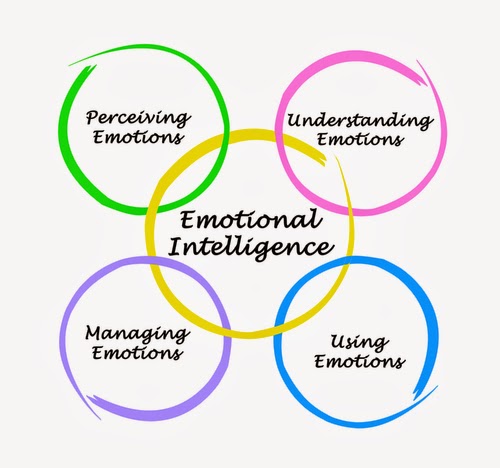
These results suggest that EI programs created to develop skills in perceiving, facilitating, understanding, and managing emotions can be effective at promoting mental health in adolescents.

Child Marriage legalised on Rajsthan

Currently, Rajasthan govt released an amendment “Rajasthan compulsory Registration of Marriage Amendment Bill 2021” it allowed registration of child marriages, it’s 21 century and we all are aware of how heinous child marriage is, here are some of my views on this act

In my views law is not wrong
Those who commit or help in child marriage will still be punished, but those who already had marriage were not allowed to have registration and so they were not able to avail all govt schemes and benefits, those saying it will make it easier to do child marriage remember availing govt benefits are everyones fundamental rights.

Those saying it’s illegal look it like this rape is illegal but rape victim and culprit both have some rights that we can’t snatch, like culprit must be allowed to go court etc, ofcourse child marriage is as heinous as rape and here victims are both boy and girl but why they suffer whole life for it, they can’t get rashion, jobs, water, now as everything is more and more digitalizing and you can’t prove you’re married, it will become more hard to avail services like jacha bacha Suraksha and this are thee parents who most need it.

Also one negative point is it will make child marriage easier, but many people will not be able to avail fundamental rights isn’t it totally wrong also we can make child marriage hard by making strong rules. As we have data of child marriage we can ask govt employee who are posted there why they let it happen like police or magistrate, they will become more accountable this way.

If I’m missing some points or you want to share your views here’s my email soni362002@gmail.com

Test your ‘MYTHS VS FACTS’ knowledge

Isn’t it amazing when your friends are talking about something that is a myth but you know the real fact about it and you can actually brag about it. Everyone thinks you are a genius but you know that it is something you read somewhere. It’s hard sometimes to think about thousands of myth and facts which we just don’t know and continue to believe what we know about it. When I was small my mother once told me that if you see your face in the mirror at night your face will get wrinkles. Yeah… like that doesn’t even make sense but she told me anyway because she was getting ready and I was In the way. And I know you too have come across some bizarre myths that I believe are made up. But there are myths that people actually believe and are common to everyone like black cats are unlucky. They are not!! I have a black cat and I love her the most.

Photo by Helena Lopes on Pexels.com

It’s modern time and people want facts if you want them to believe something. Science has progressed and has answer to almost everything but there are things which even science is unable to answer for e.g., why are women always right? And how moms are able to find anything when we ask them and we can’t. How?? Okay, I will pull my hair out and still won’t get any answer so let’s move on to our myths vs facts quiz. I will give you some common beliefs and you will have to identify it as a myth or a fact and at the end I will answer them.

READY, SET, GO…

  1. You have to drink at least 8 glasses of water a day.
  2. Bulls get angry when they see red color
  3. Only animals that blush are humans
  4. Dogs only see black and white. Poor doggos. (Simple huh?? Real questions start now.)
  5. If you swallow gum it will sit for 7 years in your stomach.
  6. Pineapple is a natural meat tenderizer.
  7. To boil water faster add salt to it.

Answers

(Myth) No you don’t have to. There are many factors involved as of how much water you should consume. Drink when you feel like drinking. Not too less not too much. 3 to 4 litres work perfectly fine. According to The U.S. National Academies of Sciences, Engineering, and Medicine, the adequate intake of fluids for men is 3.7 L and for women it is 2.7L. about 50 to 70 % of our body is made up of water and it is important for:

  • Keeping temperature normal.
  • Getting rid of body waste

(Myth) I’ve spent my life getting scared and hiding my red clothes whenever I saw bulls. Whoever made this myth hated red color. Everyone believed this because of that red cloth used by matadors in bull fights but American science guide says that bulls are red green colorblind. The actual reason for bulls’ anger was the movement of the cape. Feeling stupid? Yeah me too. We are in this together.

(Fact) Isn’t it amazing how our cheeks turn red when someone compliments us or when we are embarrassed of saying something stupid. humans are the only animals who are capable of blushing, and as Darwin states “the most peculiar and the most human of all expressions.” It’s still unknown how it happens voluntarily but in terms of science it is caused by the dilation of blood vessels in the facial skin.

(Myth) Here is a good fact dogs don’t see in black and white. Our friend is actually capable of seeing colors not many but can distinguish between them. The can see blue, yellow and some shades of grey. They may not see the true color of an object but they definitely see the color of love. Dogs are pure souls.

Photo by Andrea Piacquadio on Pexels.com

(Myth) “Oh my god! I just swallowed a gum, it will get stuck to my intestines now. (screaming in fear).” You can understand this, right? From fruit seeds to chewing gums we have avoided gulping them. But you will laugh after knowing that neither plants were going to grow from your stomach nor the gum will hijack your guts because your gut can’t digest it. If you anyhow swallow it, it will pass through you in a couple of days. Although a large amount of gum can result in intestinal blockage.

(Fact) Bromelain enzyme in pineapple is digests protein and softens the tissues in meat, hence, goes well with beef, pork and some types of fish. This is the reason why it stings our tongue, it breaks down the surface tissues thankfully our body regenerates cells and repairs the tongue. If you want to soften it you can bake it or soak it in salty water.

(Myth) Adding salt to water will increase the temperature of water fast but it’s boiling point will remain same. Even if you add a spoonful of salt the boiling point will change from 100° to hardly 100.4°.

I hope you enjoyed the quiz, if you know some more myths and facts do tell in the comments below also tell me how much you scored today.

An Electoral System That Neglects The Youth?

Since the inception of democracy in 507 B.C, the axiom that the people of a nation play a pivotal role in upholding it has stood firm through the test of time. While the question of which members of society would play this role has historically been a contentious issue in many countries, it was never a major problem in India. The Constituent Assembly ensured that universal adult franchise was provided for in the Constitution from the very beginning. While there was some opposition to universal adult franchise, based on concerns that the right to vote was being given too early, the possibility of inadequate education, knowledge, patriotism towards the country amongst the voters, a majority of members supported it. This meant that, once a citizen of India reached a certain age, they would be entitled to vote irrespective of their gender, religion, caste, education, income, or any other factor.

The provision of adult franchise has become more inclusive over time. When it was first written, article 326 of the Constitution allowed citizens who were 21 years of age or above, to vote in their local, state Legislative Assembly and national Lok Sabha elections. The age limit was reduced to 18 years of age or above after the Sixty-first Amendment Act, 1988. However, this seemingly innocuous provision contains a major problem. Article 326 gives the appropriate legislature the ability to set a date before which a citizen must turn 18 years of age, in order to be eligible to vote. 

According to the Election Commission of India (ECI), attaining the age of 18 years on or before the qualifying date of the year of revision of the electoral roll is a requirement to register in the electoral roll. According to Article 14 (b) of the Representation of the People Act, 1950, the qualifying date is “The 1st day of January”. This is a significant impediment to the participation of youth in the electoral process as it means that a citizen turning 18 years of age on or after the 2nd of January in the year of an election, is ineligible to vote in that election, even if they turn 18 years of age before any of the elections are actually held. This means that there are a very large number of 18 year olds who will get to vote in a major election only after 5 years, which is a very long time after they have technically reached the correct age to vote. 

In May 2016, D. V. Sadananda Gowda, the Minister of Law and Justice at the time stated that the government had plans to add more than one qualifying date in a year before which a citizen may be eligible to vote. Furthermore, the ECI has suggested the elimination of the qualifying date and allowing citizens to be eligible to vote as soon as they turn 18. While having only one qualifying date made sense in the past as electoral rolls were updated manually, it makes absolutely no sense now as online voter registration is an established process. Despite this, no action has been taken to remove this blatant hindrance to the participation of youth voters in a critical democratic process. 

Let’s take a look at the participation of “young voters” in recent elections. An Indian citizen aged 18-19 years and voting for the first time is considered a young voter. According to data from the ECI, approximately 15 million young voters participated in the 2019 national elections. However, this ostensibly large number is sadly only about 30% of the estimated population of young voters (48.5 million). It is also a lower number than the 23 million young voters that participated in the 2014 national elections, which contradicts the fact that the total electorate increased from about 815 million in 2014 to about 900 million in 2019. The percentage of young voters that actually voted is abysmal, especially when India has the largest youth population in the world, according to the UN (356 million). 

There could be a variety of reasons for this ignominious participation of youth in the electoral process. Without a doubt, the youth do consider voting in general as well as their vote to be important. However, many do not apply for a voter ID, either because they don’t know how to, or because they don’t prioritize it over other things important to them, such as college applications and driver licences. This problem is being addressed by the various grassroot level and large scale campaigns to increase awareness on the importance of participating in the electoral process organised by various NGOs as well as the ECI. Nowadays, political parties use special tactics to enlarge their youth voter base. Although a quixotic change in the near future, the introduction of online voting systems would significantly increase the participation of youth in the electoral process.

Another impediment to youth participation in the electoral process is the obnoxious amount of influence that money and corruption have in an election. The youth are more interested in policies that would improve their quality of life, their education and their job opportunities rather than flashy and expensive election campaigns carried out by an inaccessible pantheon. Besides this, the lack of candidates that reflect the aspirations of the youth makes them avoid the electoral process. While article 84 (b) of the Constitution states that a citizen above the age of 25 can contest in the Lok Sabha election, the youngest MP is 27 years old and there are only 4 MPs between the ages of 27 and 30. This is equivalent to about 0.75% of the 536 sitting members of the Lok Sabha, which is incongruously unrepresentative of the age demographics of India. In response to a Public Interest Litigation that called for the reduction of the age limit for contesting an election to 21 years of age, the Supreme Court of India chose to stress on experience rather than representation, by stating that citizens must have a certain amount of experience before they can contest an election. Furthermore, in 2018 the Supreme Court responded to a PIL that called for the reduction of the age limit for contesting an election to 18 years of age by stating that parliament must deliberate and make a decision. 

There seems to be some light at the end of the tunnel. For instance, in the recent Tamil Nadu legislative assembly elections, 21.86% of the total electorate were between the ages of 18 and 29, accentuating the growing importance of youth in politics. While making their voices heard by casting their vote is not the only step, it is nevertheless a crucial one in moving towards a country in which the youth are adequately represented in state and national leadership. With citizens aged below 25 comprising more than half of our total population, it is time that the youth is at the helm of decision making that has an impact on their future. It is also time for ancient laws, such as the qualifying date, to be modified, so that we can begin to change this behemoth of an electoral system that neglects the youth. 

How Caste Continues To Affect Our Education System

The caste system has always been ubiquitous. Whether it’s politics, economics, the law, religion, the media, or even education, the seemingly immutable caste system affects all spheres of our society. Schisms along caste lines are ingrained into public discourse and cause discrimination, hatred, and violence. The caste system divided society into the Brahmins (priests and scholars), the Kshatriyas (rulers and warriors), Vaishyas (merchants and traders), Shudras (artisans, labourers, and servants), and the Untouchables. While untouchability was abolished by the Constitution, it is still prevalent in Modern India. Despite valiant efforts, most notably by B.R Ambedkar, to eradicate the caste system post independence, the over 3000 years old system continues to divide Indian society. As we’ll see, the caste system has significant effects on modern-day education; it is as extensive as it is pernicious, leaving its victims helpless. 

The caste system meant that every aspect of one’s life was controlled by “the accident of birth”. Therefore, every caste had specific jobs assigned to them. This meant that children were only taught skills that helped them do jobs that their caste did, even if they could do other work. The strictures of the caste system meant that one is confined to the social status associated with one’s caste. This is discordant with the modern notion that education is the “great equaliser” and it gives everyone and anyone the “ability to rise” because of their hardwork and not their social status and uncontrollable factors such as gender, religion, caste, etc. 

While the Right to Education Act guarantees education for students aged 6 to 14, the quality of that education is usually determined by caste. Students that belong to lower castes receive poor quality and inadequate education in schools that lack basic facilities. This makes it difficult for them to cope at higher levels of education. Ostensibly fair systems such as entrance tests don’t take into account existing disparities that prevent poor lower-caste students from attending coaching classes, studying without frequent interruptions, and preparing adequately for these tests.  

Students belonging to lower castes, especially Dalits, are often ostracized from the education system as they are deemed to be unworthy of education. Their education is hampered as they are more likely to be forced into child labour than other students. They have lower attendance rates and higher dropout rates too. When in school, they face discrimination, not only from other students but also from teachers. They are forced to sit separately, eat separately, and clean classrooms and toilets. They are physically and verbally abused. 

This constant discrimination leads to psychological problems, such as low-self esteem and depression, leading to further exclusion from the education system. This countervails any attempt to make our education system equitable and inclusive. Lower caste families are disproportionately affected by poverty as their members are less likely to get a good job even after receiving an education. This fuels a vicious cycle of poverty and caste-based discrimination. 

In an attempt to alleviate caste-based discrimination through affirmative action, the concept of reservation was introduced. A certain number of seats are reserved for the marginalised castes in public education institutes. The Constitution [Article 16(4)], as well as the Constituent Assembly debates, emphasize that reservation was intended to prevent the formation of caste monopolies in the public sector. However, critiques of reservation call it excessively subservient to lower castes. They suggest that once members of a particular caste become affluent, they no longer deserve reservation. They say that students should earn their place in an educational institution based on merit. 

This meritocratic approach is unfair and flawed as it does not consider centuries of discrimination and underrepresentation that lower castes have had to suffer through. Inherent in any meritocratic system is the premise that all participants start from the same starting line and play on an even playing field. According to the meritocratic approach, everyone has an equal chance to climb the ladder of success. But it would be foolish if we didn’t ask ourselves the question – is the distance between the rungs of everyone’s ladder the same? As we have seen, caste-based discrimination occludes students of lower castes from competing on an even playing field and the distance between the rungs of their ladders of success is miles longer than those of the other students. 

Undoubtedly, the potency of caste-based discrimination has been reduced in urban India. Intermingling between castes, at school, office, public spaces, and even through marriage are common. However, in rural areas and small towns, the caste system’s pervasive nature foments unscrupulous discrimination. The fact that we still have caste-based discrimination, even after it has been outlawed, shows that it is an entrenched and institutional form of discrimination, not an anomaly that can be brushed aside. Along with reservation, we need comprehensive social and economic changes to debilitate this atavistic system. 

We have taken a few steps towards a more egalitarian society. 

Millions have benefitted from our education system and have ended the cycle of poverty and exclusion. The possibility of India ever having a Dalit Chief Justice and two Dalit Presidents would have been ludicrous pre-Independence. However, it is a far cry to say our country is free from discrimination at all levels. The values that students learn from their education determine the character and behaviour that they espouse in the future. Educational institutions cannot continue to remain passive during incidents of caste-based discrimination, so that we can work towards a more inclusive society.  

We must remember that equity is not limited to equality of opportunity. It involves enabling marginalised groups to live in conditions that allow them to access these opportunities. Completely erasing centuries of disadvantage and discrimination, while desirable, may not be possible in the immediate future. But, creating an inclusive education system is something we can start doing right now.  

Disrupt, Divide, and Develop – The Effects of Covid-19 on Education

The pervasive nature of the Covid-19 pandemic has created one of the largest disruptions of education in human history, countervailing all efforts to provide education for all children. It caused unprecedented changes and continues to change numerous aspects of education that we took for granted. In March 2020, schools around India began closing to avoid the spread of Covid-19. These sudden closures led to confusion and uncertainty amongst students, especially those who were appearing for their board exams. For other students, these abrupt closures brought about a perplexing break from school. These ostensibly temporary closures were made permanent once the nationwide lockdown was effectuated and students were separated from their schools.

According to data by UNICEF and UNESCO, more than 1 billion children were at risk of falling behind due to school closures during the pandemic. Schools for more than 168 million children globally have been completely closed for almost an entire year. Around 214 million children globally, which is equivalent to 1 in 7 children, have missed more than three-quarters of their in-person learning. Furthermore, more than 888 million children worldwide continue to face disruptions to their education due to full and partial school closures. 

In India, the closure of 1.5 million schools in 2020 impacted 247 million children enrolled in elementary and secondary schools. In early March 2021, only eight States and Union Territories had reopened classes 1 to 12; 11 had reopened classes 6-12 and 15 had reopened classes 9-12. However, the ongoing second wave has caused the complete closure of schools yet again, as well as either the cancellation or postponement of board exams, competitive exams, and entrance exams. 

We began a new academic year like never before – from our homes. To continue the process of education, schools were compelled to adapt, adopt, and evolve. The biggest change has been the abandonment of traditional notions of schooling and the shift to online learning and teaching. Teachers have had to adapt to teaching online, a complete shift for those who’ve had many years of traditional classroom teaching experience. The fun and exciting trip to school has been diminished to clicking a link to join our classes. Interactive classes have become eerily similar to videos on our laptop or phone screen with a tincture of interaction arising when teachers ask us whether we’re present. The extreme sport of completing notes just before the teacher calls out our names has become the tedious process of scanning our notes and sending them as a pdf. Eating with our friends in the school canteen has been replaced with us eating alone during classes. Our classmates have become little rectangles on our screens. Outdoor sports have disappeared from the list of extracurriculars that we did in school. The end of school or college life is marked by video calls instead of grand graduation ceremonies. A lot has changed. 

These changes have led to some pernicious problems. The blurring of lines between school and home has led to students feeling overworked. This holds true for teachers too as they answer questions, clear doubts, and create lesson plans at all hours of the day. Students often have to study and sleep in the same rooms now. According to scientific studies, this often leads to a decrease in productivity and concentration. Students, especially younger ones, are easily distracted during online classes, despite attempts to marshal concentration and focus, as a classroom atmosphere is non-existent. Teachers are unable to pick up cues such as body language and facial expressions, making it challenging to connect with and understand their students. Problems such as eye strain and headaches are more common now due to the drastic and unavoidable increase in screen time for students. Online classes are often disrupted by copious internet problems, power cuts, background noise, and vexing software problems. All forms of practical education have been eliminated. A lack of clarity on important events such as board exam and entrance exam dates has led to the upheaval of students’ plans that were formulated before the pandemic began, fueling a rise in students’ anxiety and uncertainty.  

Covid-19 has also been a catalyst to the widening of socio-economic gaps in society on numerous fronts. While the virus cossets no one, the fact that it has disproportionately affected students belonging to less affluent households, especially those in rural India, is indubitable. Undoubtedly, access to the internet and an appropriate device are the lifelines of online education. 

A UNICEF report from August 2020 highlighted that only 24% of Indian households have access to the internet. While television and radio were purported as an alternative, there is no substitute for an actual teacher. A more recent survey conducted by Learning Spiral in February 2021 revealed that more than 50% of Indian students in rural and urban areas don’t have access to the internet. Moreover, only 47% of the households that have access to the internet own a device that can access the internet. It also revealed that, while 27% of all Indian households have access to the internet, only 28% of those are in rural India, even though rural India comprises of nearly 71% of India’s households.

Families in rural India are plagued with other impediments to online education –  insufficient or no smartphones, having to borrow smartphones (and therefore may not get them at the time needed), not having enough money to buy an appropriate internet package, and patchy connectivity even if they have internet access. The severity of these problems is incalculable and more prevalent than in urban households.   

Assuming that the problems stop here would be specious. The closure of schools has obstructed the “Mid Day Meal Scheme”. India has about 120 million children enrolled in the scheme in over 1.26 million schools across the country. However, due to the disruptions caused by Covid-19, many States and Union Territories have been forced to stop this initiative, depriving children of their basic nutritional needs. This scheme also serves as a huge incentive for children to attend school. Therefore, its removal may negatively impact both their health and their education. Furthermore, incidents of domestic abuse and child labour have drastically increased as students can no longer be protected by going to school. 

The Covid-19 pandemic has been atrocious but there has been a silver lining. The pandemic has led to an “academic revolution” that, unfortunately worsened certain differences in our society, but has also alleviated certain differences. 

Even before Covid-19, there was high growth in and adoption of education technology. Projections have shown that the overall market for online education may be valued at $350 Billion by 2025. There has been a significant surge in the usage of language apps, virtual tutoring, video conferencing tools, online learning software, etc. This is not only providing alternative paths for education but it is also future-proofing education. Through programs such as Coursera and edX, students can attend classes that they normally wouldn’t have had access to. India is considered the largest marketplace for Massive Open Online Courses (MOOCs) after the USA.

In certain aspects, online learning has made school more inclusive and obviated numerous hindrances to education. The use of videos in class greatly benefits visual learners. The use of tools such as online polling and chats have improved the class participation of those who otherwise may have hesitated to speak up. Notes, videos, and other study material that are sent to students can be reviewed anytime so the pressure on students to complete their work “before the bell” has been reduced. Furthermore, differently-abled students who found it difficult to attend school in-person can now attend classes with their friends from their homes. 

As students are attending classes from their homes, commuting to school no longer blocks their schedules. This gives them more time for extracurriculars such as internships, online courses, and online competitions. It also allows them more time to do the things they enjoy such as singing, cooking, writing, and painting. Students are also honing their online collaborative skills and improving their digital literacy, this will immensely benefit them in the future as the entire world shifts online.    

Hopefully, the move to online learning creates a new, permanent, and more effective method of educating students. While this “new normal” has had certain benefits, we must remember the value of education for all and prudentially strive to shrink the divide caused by this unavoidable transition to online learning.     

The Flaws In Our Education System

Historically, the concept of education involved the sharing of knowledge and values between people. This form of education ensured that valuable knowledge was promulgated within a society, from one society to another, and from generation to generation. It focused on the importance of culture and taught skills needed to positively contribute to society through hands-on learning and observation. Children were given the freedom to explore on their own because this supported their natural ways of learning. Moreover, it bolstered unity as the teachers were always members of the same community that they were teaching. We would not be aware of countless facets of history, such as the Egyptian civilization, the Mesopotamian civilization, and the Hunter-gatherer culture if this form of education did not exist.   

So how did it all go wrong? 

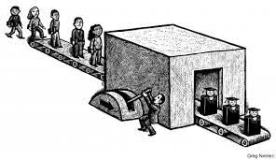
The popularisation of the standardised education system as we know it today, in which children are corralled into classes based on their age and study in institutions known as schools, can be traced back to the Industrial Revolution. Nowadays, it is suitably referred to as the “one shoe fits all approach to education” and the “factory model of education”. However, if we consider the prevailing socio-economic conditions of that time, creating a standardised education system was ineluctable and economically beneficial. 

Schools were tasked with transforming their attendees from students to efficient workers who would eventually increase the quantity and quality of the labour force. The need to encourage unique skills and individuality did not exist as students would grow up to do monotonous and regulated work. As Alvin Toffler put it “the whole idea of assembling masses of students (raw material) to be processed by teachers (workers) in a centrally located school (factory) was a stroke of industrial genius”. At the time, it was thought that the best to produce efficient workers was through the teaching of certain subjects that curricula makers deemed “crucial” using the same method and pace for all students. Students were compelled to utilize rote learning and take graded exams that decided their “intelligence” and potential in life.   

The egregious problem arises when we notice that schools continue to espouse this myopic view on education even after over a hundred years. A hundred years ago, things like the radio, jet engines, helicopters, credit cards, car seat belts, personal computers, smartphones, and the internet did not exist. In a world that undergoes major transformations constantly, how can we be satisfied with this archaic and pernicious education system in the 21st century? 

In today’s world of modernity, complexity, fastidiousness, globalization, and innovation, the flaws of our education system are more conspicuous than ever. No two students are the same. This monolithic and iniquitous system neglects the fact that students have different skill-sets, they learn at different paces, they come from different backgrounds, and wish to pursue different careers in their lives. Undoubtedly, there are numerous instances in which students benefit from and even thrive in the current education system. There are also countless children that long to go to school but don’t have the opportunities or resources to do so. However, there are too many instances in which students, despite arduous effort, struggle in and are lobotomized by this sclerotic education system. They are made to feel inadequate. They are made to believe that they are “slow” and will always flounder.    

Students acquiescently regurgitate vast amounts of information on exams with minimal innovation. These exams, more often than not, test the memorization skills of students, rather than serve as a platform on which they can showcase their understanding of a concept. Students who do well in these exams have the hubristic belief that they are “winners” because society says so and those who don’t do well are humiliated and considered “losers” by society. While it is understood that learning requires the amassing and retention of information, any information that is not understood becomes an undigested burden. The misconception that good grades are the only path to success causes unnecessary pressure on students. 

The strictures imposed by this education system curtails creativity and originally. Concurrently, it encourages conformity, rigidity, and conventionality. It assiduously ignores essential modern-day lessons, such as financial literacy, life skills, mental health, critical thinking, empathy, collaboration, and countless others. This results in students feeling disconcerted when they face the precarious reality of after-school life. It provides students with a series of conclusions, rather than a way of thinking. 

To truly change this standardised educational system, we have to abandon the ostensible idea that it is still a product of logical necessity or scientific insight. The hunter-gatherers adapted their education system to their needs. The education system was modified to cater to the needs of the industrial revolution. Likewise, our education system must change too so that students can truly be prepared for the future. This will certainly alleviate any antipathy held by students towards education and will make education and learning synonymous again. 

Empathy vs. Covid-19

The Covid-19 pandemic has affected everyone disproportionately and unfairly. Health care workers face the harsh realities of the virus head-on. Teachers have had to adapt their years of experience gained from conventional teaching to suit online classes. Millions face the harsh reality of poverty and hunger everyday. Millions have lost their hard-earned jobs. Businesses have been forced to shut down. Hate crimes against groups of society that are baselessly and cruelly accused of spreading the virus have drastically increased. Mental health issues have risen and fueled by isolation, anxiety, uncertainty, and fear. More than 150 million people have gone and continue to battle with this invincible enemy. More than 3 million people have lost their lives because of this virus. Families have lost their loved ones and the world has lost countless dreamers. This virus cossets no one.  

Early notions such as the pandemic would be ephemeral and infections were punitive for those who flouted the necessary precautions and rules have diminished during the ongoing second wave of the Covid-19 pandemic. In my opinion, this is due to a rise in empathy amongst the people of India. Simply put, empathy is the ability of a living being to understand and share the feelings of another living being. Colloquially, it is referred to as “putting oneself in someone else’s shoes” 

The Government of India has had no shortage of opportunities to show empathy and alleviate the suffering of Indians. The Government has neglected its duty to serve the country and as Arundhati Roy put it, has committed a crime against humanity. The government has failed on many fronts. I would like to highlight a few that showcase an egregious lack of empathy. 

Firstly, the poorly planned nationwide lockdown, which was imposed with a mere 4 hours of notice, left thousands of migrant workers helpless, stranded, and vulnerable. With no help from the government, these migrant workers bravely decided to walk back to their villages. This lockdown was stained by police brutality and hate crimes against people that just wanted to survive. The lack of condemnation and apology by the government showcases a lack of empathy. 

Secondly, in an attempt to alleviate the suffering of Indians, the government launched the risibly named PM CARES (Citizens Assistance and Relief in Emergency Situations) fund and its primary objective was “to deal with any kind of emergency or distress situation, like posed by the COVID-19 pandemic and to provide relief to the affected”. The fact that a government that has never shied away from repeatedly putting their plans such as “Make in India”, “Swachh Bharat”, “Beti Bachao Beti Padhao”, etc on the highest possible pedestal has created such an opaque and inaccessible fund shows a lack of empathy. 

Thirdly, the government’s actions before the second wave hit can be described as complacent, incompetent, and overconfident. On the 21st of February 2021, a resolution was passed in the BJP National Office Bearers meeting that “unequivocally hails its leadership for introducing India to the world as a proud and victorious nation in the fight against Covid”. Additionally, the government decided to export vaccines to other countries without ensuring adequate supply was available for Indian citizens. This not only leaves Indian citizens in danger but also betrays all the countries that depended on “the pharmacy of the world” as vaccine exports were abruptly stopped. None of this would’ve happened if the government showed empathy towards the people of India and established appropriate contingent plans.

Fourthly, while the second wave virulently spread and claimed thousands of lives, the government showed no empathy. While a strong case can be made to prohibit sitting union ministers from campaigning in elections that they are not contesting during a crisis, a complete stop to the democratic process would have been detrimental. The occurrence of huge rallies during a pandemic is untenable and all politicians are guilty of this. The myopic and unsympathetic nature of the government is accentuated by the needless comments that they have made throughout the pandemic.  

Finally, the iniquitous lack of cooperation between the centre and states to fight this pandemic showcases a pathetic lack of empathy. The failure to come up with a comprehensive and transparent plan for the distribution and supply of oxygen and vaccines has caused unimaginable suffering to the people of India. Any attempt by the government to set aside pride and partisanship, as leaders have done before when facing a crisis, and listen to good advice and imploration would be a sign of empathy. No such attempt has been made. Their lack of action and belated action have had fatal effects, but the government has not shown a sign of remorse or empathy.    

But all is not lost. There have been instances in which the government has shown empathy. Most states have decided to offer a Covid-19 vaccine for free for different age groups. The central government also has plans to allow final-year MBBS students to join Covid duty before completing the NEET exam. This will drastically reduce the strain faced by health care workers taking care of Covid patients. The government of Karnataka also announced that it would form a team of 15,000 civil defence volunteers in Bengaluru for tracking and tracing Covid-19 patients. This is a significantly more empathetic and humane approach to managing the crisis than the sadistic and vicious approach used last year that made victims of Covid-19 feel like criminals.

However, none of these actions are as consequential and empathetic as the profound empathy amongst the ordinary people of India. Early displays of empathy were seen when people started taking care of stray animals during the lockdown. Furthermore, countless rations and donations were given to the stranded migrant workers to help them cope with the dire situation they faced. From providing meals, oxygen, assistance to the elderly and handling cremations, Gurudwaras around the country have been the perfect embodiment of empathy. Conspicuously, the empathy and equanimity shown by the youth of India has truly been remarkable. With the help of social media, the relentless youth are constantly doing their part by helping those in need. 

Empathy also provides a strong basis for our everyday fight against Covid-19. Precautions like wearing a mask, staying indoors as much as possible, social distancing when outside, and getting vaccinated as soon as possible would not be flouted if people were more empathetic. For those of us who have not been directly affected by the virus yet, empathy goes a long way in helping and caring about those who have. 

Perhaps, the most optimistic and quixotic change that we can hope for during this precarious and seemingly inexorable situation is the crippling of traditional barriers that have separated us before. If we, as ordinary citizens of India, continue to disregard gender, caste, religion, wealth, age, ethnicity, language, political ideology, and other barriers when helping those affected by this pandemic, we could truly be united in this fight against the invisible enemy. Together, we shall overcome.  

Say ‘YES’ to these habits

Internet has made our lives easy, everything is available there from assignments to math problems but can internet do Everything for us? No, ultimately it’s us, students, who have to study, write for exams and get through this phase of our life. It’s very easy for all of us to get distracted with just one notification on our phone, or thought of our crush😉.
Not everyone can study with all that is going around and concentrate, so many students opt for night time as their study time. But you won’t disagree with fhe fact that it affects our daily routine, makes us feel exhausted for the rest of the day. Night time is for dreaming!! It’s important to rest for our body and our mind. If you are not satisfied with your daily routine, change it. Start with small changes like waking up early, eating healthy and being productive etc,. You don’t have to have a very strict routine, chill you are just a student few ‘habits’ are enough for you.

Photo by cottonbro on Pexels.com

START FRESH🐓

You must have heard your parents saying that you never forget whatever you learn in the morning, can’t bet on it’s authenticity but it’s true that mornings are good to start learning. From my experience it is because there is no or very less disturbance with your family sleeping peacefully it’s easy to concentrate. And you know when you start early most of your work is done by the time others wake up. Your reasons for not exercising are eliminated. It also helps in protecting you against:

  • Stress
  • Respiratory issues
  • Obesity
  • Bad mood

DISTRACT THE DISTRACTION 🥷

Do you find it hard to concentrate while studying? Everytime you open your book your phone calls you and asks to scroll for 5 more mintues? Or your mind starts wandering to some wonderland? Well, it’s normal but it makes the study time difficult. Thankfully you can actually eliminate these small distractions. Let’s start with phone. Keep you phone one silent or block the apps for the time being, download website and app blockers from playstore. Keep your away from the place you’re studying so that you don’t pick up your phone everytime you have the urge to check msgs.
Start with the topic that you find most interesting and make a time period for every subject. Don’t include the boring ones together and study when you feel it.

Make good habits and they will make you

Parks Cousins

TAKE A BREAK

It’s so important to just forget about everything and enjoy for a moment. You can plan a family trip to some nearby hill station or a dinner or you can ask your friends for a weekend reunion. It will help you in keeping your study tension side for a day or two. You will stay up to date with your loved ones and you will have people to share your story. You can explore new things like, a dish, a new restro or a new friend you met online. Just get out of the house feel free, dump everything from your head make it ready for the next week. You don’t wanna start your week burdened with stress of the last one.

SLEEP ON TIME😴

As students we often ignore the importance of sleep and how much it affects us. Lack of sleep can cause many serious issues affecting our brain function and body. It will cause you to feel exhausted all day long and lower your productivity. It can lead to stress and a greater risk of heart attack. A good 7 hour sleep is a must as our brain and body rest at that time. In simple words you have all the reasons in the world to get a good sleep. To keep you healthy, working, efficient, happy. What else reason do you need?? It is the ultimate solution to all your problems. Start sleeping on time and you will discover the ultimate change in your lifestyle. You will have all the time to do you daily chores and still have time in your sleeves to relax.

Reference : https://www.helathline.com

10 things to Know about U-Design

What Is User Experience (UX) Design? 

User experience design is an extremely vast, multidisciplinary and fascinating field. It shapes the products and services we use on a daily basis, and can make or break the success of a business or brand.

career in UX design is fast-paced and challenging, requiring a highly diverse skillset. If you want to break into this field, there’s plenty to learn!

1. What is user experience (UX) design?

User experience (UX) refers to any interaction a user has with a product or service. UX design considers each and every element that shapes this experience, how it makes the user feel, and how easy it is for the user to accomplish their desired tasks. This could be anything from how a physical product feels in your hand, to how straightforward the checkout process is when buying something online. The goal of UX design is to create easy, efficient, relevant and all-round pleasant experiences for the user.

“User experience encompasses all aspects of the end-user’s interaction with the company, its services, and its products.”
— Don Norman, Cognitive Scientist & User Experience Architect

UX designers combine market research, product development, strategy and design to create seamless user experiences for products, services and processes. They build a bridge to the customer, helping the company to better understand — and fulfil — their needs and expectations.

The difference between UX and UI design

When talking about UX, the term user interface (UI) design will inevitably crop up. However, it’s important to recognize that, despite often being used interchangeably, UX and UI are two different things.

“UX is focused on the user’s journey to solve a problem; UI is focused on how a product’s surfaces look and function.”
— Ken Norton, Partner at Google Ventures, Ex-Product Manager at Google

User interface design is not the same as UX. UI refers to the actual interface of a product; the visual design of the screens a user navigates through when using a mobile app, or the buttons they click when browsing a website. UI design is concerned with all the visual and interactive elements of a product interface, covering everything from typography and color palettes to animations and navigational touch points (such as buttons and scrollbars).

UX and UI go hand-in-hand, and the design of the product interface has a huge impact on the overall user experience. 

UX design is everywhere: the layout of a supermarket, the ergonomics of a vehicle, the usability of a mobile app. While the term “user experience” was first coined by Don Norman in the 90s, the concept of UX has been around for much longer.

To understand the principles of UX design, it helps to explore the history behind it.

2. The history of UX design

Some of the most basic tenets of UX can be traced as far back as 4000 BC to the ancient Chinese philosophy of Feng Shui, which focuses on arranging your surroundings in the most optimal, harmonious or user-friendly way. There is also evidence to suggest that, as early as the 5th century BC, Ancient Greek civilizations designed their tools and workplaces based on ergonomic principles.

In the late 19th century, great thinkers and industrialists like Frederick Winslow Taylor and Henry Ford began integrating basic experience design principles into their production processes. On a mission to make human labor more efficient, Taylor conducted extensive research into the interactions between workers and their tools — just like UX designers today investigate how users interact with products and services.

Another key figure in the history of UX is industrial engineer Henry Dreyfuss. In his book Designing for People (1955), Dreyfuss provides a very accurate description of what we now know as UX design:

“When the point of contact between the product and the people becomes a point of friction, then the [designer] has failed. On the other hand, if people are made safer, more comfortable, more eager to purchase, more efficient — or just plain happier — by contact with the product, then the designer has succeeded.”
— Henry Dreyfuss, Industrial Engineer

In the early 90s, cognitive scientist Don Norman joined the team at Apple as their User Experience Architect, making him the first person to have UX in his job title. He came up with the term “user experience design” because he wanted to “cover all aspects of the person’s experience with a system, including industrial design, graphics, the interface, the physical interaction, and the manual.” Since then, each of these areas have expanded into specializations of their own. These days, there’s a growing tendency for companies to hire for very specific roles, such as UX researcher or interaction designer, to cover all of the different aspects of user experience.

For centuries, humans have been seeking to optimize their surroundings for maximum user comfort. These days, the term UX design has strong digital connotations, often referring to apps, websites, software, gadgets and technology.

3. UX design disciplines: The quadrant model

UX is a broad umbrella term that can be divided up into four main disciplines: Experience Strategy (ExS), Interaction Design (IxD), User Research (UR) and Information Architecture (IA).

Experience Strategy (ExS)

UX design is not just about the end user; it also brings huge value to the business providing the product or service. Experience strategy is all about devising a holistic business strategy, incorporating both the customer’s needs and those of the company.

Interaction Design (IxD)

Interaction design looks at how the user interacts with a system, considering all interactive elements such as buttons, page transitions and animations. Interaction designers seek to create intuitive designs that allow the user to effortlessly complete core tasks and actions.

User Research (UR)

UX design is all about identifying a problem and designing the solution. This requires extensive research and feedback from existing or potential customers. During the research phase, UX designers will launch surveys, conduct interviews and usability testing, and create user personas in order to understand the end user’s needs and objectives. They gather both qualitative and quantitative data and use this to make good design decisions. 

Information Architecture (IA)

This is crucial in helping the user to navigate their way around a product. To determine the IA of any given product, information architects consider the relationship between different sets of content. They also pay close attention to the language used and ensure that it is both convincing and consistent.

Within these four areas, there is a whole host of sub-disciplines. As you can see in the following graphic, user experience design is so much more than just a case of sketching and wireframing. It’s a multidisciplinary field, drawing upon elements of cognitive science and psychology, computer science, communication design, usability engineering and more.

Now let’s take a look at how these disciplines translate into the day-to-day work of a UX designer.

4. What does a UX designer do?

“How do I explain what I do at a party? The short version is that I say I humanize technology.”
— Fred Beecher, Director of UX, The Nerdery

UX designers seek to make everyday products, services and technology as user-friendly and accessible as possible. They employ design thinking to reconcile the user’s desires with technical feasibility and business viability. The diagram below shows the Design Thinking Process, adapted from the d.school. The Design Thinking Process can be broken down into four different stages: inspirationconceptualizationiteration and exposition.

During the inspiration stage, the UX designer seeks to understand and observe. To do this, they conduct extensive research and competitor analysis in order to fully grasp the problem or challenge they are setting out to solve. This involves interviewing those who are, or will be, directly engaged with the product.

The designer then uses this feedback to identify the user’s goals, emotions, pain-points and behaviors. All of this information helps to form user personas. The next step is to consider what these personas are trying to accomplish when using a particular product, and the journey they will take to do so. The designer considers information architecture and uses various techniques, such as card sorting, to map out user flows.

Once the user flows have been determined, the designer knows what steps the user needs to take to complete their desired tasks. They will visually brainstorm solutions for each of these steps, creating wireframes and prototypes of what the final product might look like.

With prototypes to hand, the UX designer will then conduct usability tests to see how users interact with the product. This shows whether or not the user is able to complete their desired tasks, or if changes need to be made.

UX designers not only come up with solutions to user problems; they also need to present their ideas and designs to key stakeholders as part of their day-to-day work.

Larger companies might employ a team of designers, with each focusing on a specific aspect of the process such as research or visual design. In smaller companies and startups, it’s not unusual for the UX designer to wear many different hats and take on the whole spectrum of tasks.

No matter what product or service they are designing, or what stage of the process they are at, UX designers will ask themselves the following questions:

  • Is the product usable? Is it logical, self-explanatory and easy to use?
  • Does the product or service solve an existing user problem?
  • Is it accessible for different categories of users? You can read more about accessibility in design below.
  • Is the product or service desirable? Does it create a positive experience which the user would be happy to repeat?

What tools do UX designers use?

UX designers rely on a number of different tools as they go about their work. At the research and inspiration stage, they will use survey and polling tools as well as video chat software to interview users and gather as much information as possible. There are also specific programs for wireframing, prototyping and usability testing, with Balsamiq, InVision and UsabilityHub among the most popular in the industry. In addition to design-specific programs, designers also use communication and project management tools to keep track of their work at all times. 

What kinds of projects do UX designers work on?

As the tech industry grows, the field of UX design is becoming increasingly varied. UX designers can find themselves working on a wide range of projects within various contexts. Here are just some applications for UX design.

Website, app, and software design

In the age of the internet and smartphones, the usability of a website, mobile app or piece of software will largely determine its success on the market. Together with UI designers, UX designers are responsible for ensuring a smooth online experience for the user. From ecommerce websites to dating apps, from CRM software to web-based email clients, each and every online journey you take has been carefully designed by a UX professional.

Voice design

 In the U.S., around 50% of adults use voice search on a daily basis, and ComScore estimates that, in the early 2020s, 50% of all searches will be voice-based. UX designers have a huge role to play in the rise of voice, as products like Amazon Alexa can only be successful if they are user-friendly and accessible for the masses. Designing for voice requires a slightly different approach to that of websites and apps: 

Virtual reality (VR) and augmented reality (AR)

 UX designers will increasingly be required to design immersive experiences. Likewise, since the Pokemon Go craze hit, augmented reality has also been working its way into the mainstream. More and more, UX designers will have to adapt their approach to ensure the latest technologies are accessible and user-friendly.

Service design

UX design doesn’t only apply to tangible objects and digital products; experiences need to be designed, too. This is where service design comes in. As explained on Wikipedia: “Service design is the activity of planning and organizing people, infrastructure, communication and material components of a service in order to improve its quality and the interaction between the service provider and its customers. Service design may function as a way to inform changes to an existing service or create a new service entirely.”

Whenever you buy a coffee, stay in a hotel or use public transport, your experience is the result of service design, and service design methodology is very similar to that of classic UX design.

5. The value of UX design

Among the many UX myths and misconceptions is the erroneous assumption that UX design is “just a fad.” But in reality, the value of UX design is immense; not only for the end user, but also for the business or brand behind the user experience.

From a user perspective, good UX design ultimately enables us to go about our daily lives as effortlessly as possible. From setting an alarm to chatting with friends online, listening to music or using a calendar app, the ease with which we complete these actions is the result of good design.

When designing these experiences, UX designers must consider how they can bring value to all kinds of users. They do this by practicing inclusive design—otherwise known as universal or accessible design.

Universal design (UD)

As  “designing and building everything to be accessed, enjoyed and understood to its fullest extent, by everyone, regardless of their size, their age, their ability, or their perceived ability.”

Universal design follows seven key principles:

  1. Equitable use: The design is useful and marketable to people with diverse abilities.
  2. Flexibility in use: The design accommodates a wide range of individual preferences and abilities.
  3. Simple and intuitive use: Use of the design is easy to understand, regardless of the user’s experience, knowledge, language skills, or current concentration level.
  4. Perceptible information: The design communicates necessary information effectively to the user, regardless of ambient conditions or the user’s sensory abilities.
  5. Tolerance for error: The design minimizes hazards and the adverse consequences of accidental or unintended actions.
  6. Low physical effort: The design can be used efficiently and comfortably and with a minimum of fatigue.
  7. Size and space for approach and use: Appropriate size and space is provided for approach, reach, manipulation, and use regardless of user’s body size, posture, or mobility.

Good design is good business

From a business perspective, designing first-class user experiences is absolutely key to ensuring customer satisfaction and building brand loyalty. Only if a product or service is hassle-free and enjoyable will the user want to return.

“Good design is good business.”
 Thomas Watson Jr., CEO, IBM

The competitive advantage of design-driven companies

Furthermore, a study commissioned by Adobe found that design thinking in business creates a measurable competitive advantage. Design-led companies reported 41% higher market share, 50% more loyal customers, and 46% competitive advantage overall.

User-friendly, universal design is beneficial to everyone, and UX designers are in a position to truly shape the world around us.

6. How to become a UX designer

As we have seen, UX design is an extremely multifaceted field. Working in UX requires a highly diverse skillset coupled with a passion for user-centric design. A career in UX can be very varied, challenging and financially rewarding; according to Glassdoor, the average salary for a User Experience Designer in the United States is $97,460.

There is no standard background or path that leads to a career in UX. However, the best UX designers typically share certain qualities and attributes, including:

  • An ability to think both creatively and analytically
  • A strong gift for empathy and a user-first mindset
  • An interest in technology and how humans interact with it
  • Strong problem-solving skills
  • Strong communication skills and ability to collaborate

What are the most important UX design skills?

UX designers come from all walks of life, and you don’t necessarily need a university degree to break into the field. Employers tend to look for a mixture of design skills, business acumen and soft skills. Some requirements you will often see in UX designer job descriptions include:

  • Proficiency in creating user stories, personas, sitemaps, wireframes, prototypes and storyboards
  • Ability to plan and conduct user testing, surveys, and formal evaluations
  • Ability to iterate your work based on user testing data and qualitative feedback
  • Understanding of interaction design principles and information architecture
  • Ability to translate goals, objectives, and data into digital experiences
  • Understanding of business metrics, and how your designs contribute to performance
  • Strong communication and presentation skills; an ability to articulate and discuss your design decisions with clients and stakeholders (storytelling is key)
  • Flexibility and adaptability

What counts as essential or desirable will vary depending on both the company and on the nature of the role. 

Learning UX design

Many people switch to UX design after gaining experience in another field — like psychology, computer science, marketing or customer service. To get started in UX design, it’s important to do plenty of reading and research, to get to know the UX workflow, familiarize yourself with industry tools and build up a solid design portfolio. The most effective way to prepare for a career in UX is by taking a structured course and working on practical projects.