A Galaxy of Possibilities: Unlocking the Potential of GLAX Coin

 In the fast-evolving landscape of cryptocurrency, where new coins are introduced frequently, one digital currency that has been creating waves and garnering attention is GLAX Coin. With its innovative technology, unique features, and promising potential, GLAX Coin is not just another cryptocurrency; it’s a galaxy of possibilities that could redefine the future of digital finance. Exploring the vast realm of GLAX Coin in ‘A Galaxy of Possibilities,’ one can truly appreciate the intricacies of online trading platforms like www.immediatetradepro.org/, which simplify the navigation of such expansive financial universes.

What is GLAX Coin?

At its core, GLAX Coin is a decentralized digital currency built on the foundation of blockchain technology. This technology ensures transparency, security, and immutability of transactions, addressing some of the key challenges faced by traditional financial systems. But what truly sets GLAX Coin apart is its groundbreaking approach to scalability and sustainability.

Photo by Karolina Grabowska on Pexels.com

Scalability Redefined with GLAX Coin

Scalability has been a persistent issue in the world of cryptocurrencies, often leading to slow transaction speeds and high fees during periods of high demand. GLAX Coin tackles this problem head-on with its advanced consensus mechanism that allows for lightning-fast transactions, even during peak usage. This is achieved through a unique combination of sharding and protocol enhancements, making GLAX Coin one of the fastest and most efficient cryptocurrencies in existence.

Sustainability at the Heart of GLAX Coin

Another remarkable aspect of GLAX Coin is its commitment to environmental sustainability. Unlike some energy-intensive proof-of-work cryptocurrencies, GLAX Coin utilizes a cutting-edge proof-of-stake consensus mechanism. This means that instead of relying on energy-hungry mining operations, GLAX Coin holders can participate in the validation process and earn rewards by staking their coins. This not only reduces the carbon footprint associated with cryptocurrency mining but also empowers the community and promotes wider coin distribution.

The Galaxy of Use Cases

GLAX Coin isn’t just a technological marvel; it’s a versatile asset with a multitude of potential use cases across various industries. Let’s explore some of the exciting possibilities that this coin unlocks:

Decentralized Finance (DeFi) Revolution

GLAX Coin is poised to revolutionize the DeFi space by offering a platform for decentralized lending, borrowing, and trading. Its high throughput and low transaction fees make it an ideal choice for DeFi enthusiasts looking for an efficient and cost-effective solution.

Supply Chain Transparency and Traceability

The transparency of blockchain technology, combined with GLAX Coin’s scalability, can address the challenges of supply chain management. By creating an immutable record of goods’ journey from origin to destination, GLAX Coin can enhance transparency, reduce fraud, and ensure the authenticity of products.

Real Estate Tokenization

The real estate industry is also set to benefit from GLAX Coin’s potential. Through tokenization, properties can be divided into tradable fractions, making real estate investment more accessible to a wider audience. Smart contracts enabled by GLAX Coin’s technology could streamline rental agreements and property transfers, further revolutionizing the sector.

Navigating the GLAX Ecosystem

To harness the full potential of GLAX Coin, users can explore its ecosystem, which includes:

GLAX Wallet

Securely store and manage GLAX Coins using the official GLAX Wallet. This user-friendly wallet provides a seamless and intuitive interface, making transactions and coin management a breeze.

GLAX Marketplace

Discover a diverse range of goods and services that can be purchased using GLAX Coin. From e-commerce platforms to service providers, the GLAX Marketplace offers a growing ecosystem of businesses that accept GLAX Coin as a form of payment.

GLAX Community

Join a vibrant and passionate community of GLAX Coin enthusiasts and experts. Engage in discussions, share insights, and stay updated on the latest developments within the GLAX ecosystem.

Embracing the Future

As the digital landscape continues to evolve, GLAX Coin stands as a shining example of innovation and progress. Its unique combination of scalability, sustainability, and diverse use cases positions it as a frontrunner in the world of cryptocurrencies. Whether you’re a seasoned crypto investor or someone exploring the possibilities of digital finance for the first time, GLAX Coin offers a galaxy of opportunities waiting to be explored.

Conclusion

In conclusion, GLAX Coin is not just a cryptocurrency; it’s a visionary concept that has the potential to redefine the way we think about finance, technology, and the future. With its advanced features, commitment to sustainability, and wide-ranging applications, GLAX Coin is a force to be reckoned with in the ever-expanding universe of cryptocurrencies.

Findora (FRA) vs. Traditional Finance: Bridging the Gap

 In today’s rapidly changing world, the financial landscape is undergoing a transformative shift with the rise of blockchain technology and decentralized finance (DeFi) platforms. Findora (FRA), a groundbreaking blockchain project, is at the forefront of this revolution, aiming to bridge the gap between traditional finance and the innovative realm of cryptocurrencies. Exploring the evolving dynamics between Findora and traditional finance, https://bitiq-fr.com/ offers a window into the current state of online trading.

Understanding Findora (FRA)

Discover Findora (FRA): More than a mere cryptocurrency, Findora stands as a holistic financial infrastructure meticulously crafted to cater to the intricate requirements of contemporary economies. Rooted in cutting-edge cryptographic methodologies, Findora seamlessly amalgamates the robust security and transparency inherent in blockchain technology with the adaptable traits of conventional financial systems. This innovative framework not only facilitates the development of intricate financial instruments but also upholds the imperatives of regulatory adherence and the sanctity of data privacy.

Photo by Alesia Kozik on Pexels.com

The Advantages of Findora

Findora offers several key advantages that set it apart from both traditional finance and other blockchain projects:

Privacy and Confidentiality

In the world of finance, privacy is of utmost importance. Findora addresses this concern through its innovative approach to privacy preservation. Utilizing zero-knowledge proofs, Findora enables transaction validation without revealing sensitive information. This opens doors to confidential transactions, a feature that can revolutionize industries reliant on discretion, such as healthcare and legal services.

Scalability and Throughput

One of the major criticisms of blockchain technology is its scalability limitations. Findora tackles this challenge head-on by employing a unique sharding mechanism. Sharding allows the network to process multiple transactions simultaneously, significantly increasing throughput and reducing latency. This scalability ensures that Findora can handle the demands of a global financial ecosystem.

Interoperability

Findora recognizes the importance of collaboration between different financial systems. Through its interoperability features, Findora facilitates seamless communication between various blockchain networks and traditional financial platforms. This paves the way for a unified and interconnected global financial network.

Challenges and Opportunities in Bridging the Gap

Although Findora holds the potential to address the shortcomings of conventional financial systems, its path forward is marked by noteworthy challenges. Navigating through regulatory complexities, surmounting barriers to widespread adoption, and contending with skepticism emanating from well-established financial entities comprise a subset of the obstacles on its trajectory. Nevertheless, it’s essential to recognize that these very challenges also serve as catalysts for fostering growth and nurturing innovation within the Findora ecosystem.

Findora’s Impact on Traditional Finance

Decentralization and Empowerment

Traditional finance has long been criticized for its centralized nature, which can lead to inequality and exclusion. Findora’s decentralized model empowers individuals by granting them greater control over their financial assets and data. This shift aligns with the principles of financial inclusion and democratization.

Efficiency and Cost Savings

The conventional financial framework frequently entails intermediaries and convoluted procedures, leading to inefficacies and elevated expenses. Findora’s meticulously refined and automated protocols hold the promise of substantially diminishing transaction costs and processing durations. This bodes well for the interests of both enterprises and consumers, fostering a more cost-effective and expedient financial landscape.

Access to Global Markets

In the contemporary interconnected landscape, unfettered entry into global markets assumes paramount significance in fueling economic expansion. Findora’s innate borderlessness dismantles geographic impediments, empowering both enterprises and individuals to seamlessly partake in transnational dealings. This transformative capability has the potential to invigorate the realm of international trade and catalyze heightened levels of cross-border investments.

The Road Ahead: Collaboration and Innovation

As Findora continues to push the boundaries of what is possible in the realm of finance, collaboration will play a pivotal role. Partnerships between Findora and traditional financial institutions can lead to the development of hybrid solutions that combine the strengths of both worlds. Moreover, ongoing research and innovation will drive the evolution of Findora’s capabilities, ensuring its relevance in an ever-changing landscape.

Conclusion: Embracing the Future of Finance

In conclusion, Findora (FRA) stands as a beacon of innovation, illuminating the path towards a more inclusive, efficient, and interconnected financial ecosystem. By bridging the gap between traditional finance and blockchain technology, Findora has the potential to reshape industries, empower individuals, and drive global economic progress. As we navigate this exciting journey, it is clear that Findora’s impact will extend far beyond the realm of finance, influencing the way we conduct business, exchange value, and shape the future.

Connecting Communities: How POB Token Fosters Collaboration

 In today’s fast-paced and interconnected world, the power of collaboration cannot be understated. As businesses and individuals seek innovative ways to connect and engage, blockchain technology has emerged as a transformative force, enabling new avenues for collaboration and community building. One such example is the emergence of the Proof of Belonging (POB) token, a digital asset that goes beyond traditional cryptocurrencies to foster collaboration and strengthen communities. In this article, we delve into the intricate web of connections that the POB token weaves, exploring its role in connecting communities and driving collaborative efforts. Circle everything out and just focus on crypto trading and leave the hard work at Immediate Peak Platform which is cutting edge technology based online trading platform. 

The Genesis of POB Token: Reinventing Community Engagement

Embracing the Power of Blockchain

Blockchain technology has revolutionized various industries by introducing transparency, security, and decentralized control. The POB token takes these principles a step further by focusing on the concept of “belonging.” Unlike conventional cryptocurrencies that primarily serve as a means of exchange, the POB token is a symbol of affiliation and participation within a specific community.

Photo by RDNE Stock project on Pexels.com

Nurturing Digital Ecosystems

At the heart of the POB token lies the idea of nurturing digital ecosystems. Communities, whether centered around a shared interest, project, or vision, can create their own unique tokens to represent membership and involvement. These tokens serve as a testament to one’s contribution and commitment, effectively bridging the gap between virtual interactions and real-world impact.

Building Bridges: The Mechanics of Collaboration

Token Distribution and Accessibility

Collaboration thrives when individuals have equal opportunities to participate. The POB token achieves this by employing a fair distribution model, ensuring that access is not limited to a select few. Through mechanisms like airdrops and community-driven initiatives, the token reaches a wide audience, creating a diverse and vibrant ecosystem.

Encouraging Contribution and Engagement

Merely possessing tokens is insufficient to cultivate effective collaboration. The POB token introduces inventive strategies aimed at stimulating proactive involvement. Community participants have the opportunity to accrue tokens through the generation of valuable content, involvement in discussions, or assistance provided to fellow members. This serves a dual purpose of acknowledging individual contributions while also propelling an ongoing cycle of meaningful interaction and cooperation.

Beyond Borders: POB Token in Action

Uniting Creative Minds

The realm of artistic pursuits frequently thrives on cooperative efforts and reciprocal motivation. Within this creative domain, the POB token assumes a significant role by facilitating connections and assistance among artists, writers, musicians, and various other creative individuals. Be it through collaborative projects, constructive critique exchanges, or mutual promotional endeavors, the token emerges as a driving force that fosters a vibrant and flourishing artistic community.

Knowledge Sharing and Learning

The inclusion of the POB token provides substantial advantages to communities centered around shared knowledge. Platforms dedicated to education, forums, and online courses have the opportunity to incorporate this token as a means of acknowledging valuable contributions. In this context, learners transform from passive recipients into engaged contributors, actively molding the collective comprehension through purposeful and substantive interactions.

Looking Ahead: The Future of Collaborative Communities

The trajectory of the POB token is currently unfolding in its initial stages, yet its influence has already made a considerable impression. As blockchain technology advances further, a wide array of imaginative applications is poised to emerge, enriching the landscape of community building and collaborative initiatives. The POB token serves as a tangible embodiment of the evolving role of digital currencies, extending beyond conventional financial transactions and ushering in an era where inclusivity and cooperative efforts lie at the heart of technological progress.

In the dynamic realm of blockchain and digital currencies, the POB token stands as a testament to the potential for transformative change. As it continues to shape interactions and transactions, its early impact underscores the promising direction in which technology is headed. This journey not only exemplifies the adaptability of digital currencies but also underscores the pivotal role they play in shaping a more interconnected and collaborative technological future.

Conclusion

In conclusion, the Proof of Belonging (POB) token stands as a beacon of collaboration in the digital age. By leveraging the power of blockchain and embracing the concept of belonging, it paves the way for communities to connect, engage, and thrive in unprecedented ways. As we navigate the ever-changing landscape of technology, the POB token reminds us about the true magic that happens when we come together, united by a shared purpose and a digital token that signifies our place in a vibrant and interconnected world.

Diary of a final year student

 Due to Corona pandamic I received a mail, that University will be closed for a month and asked us to pack our things from hostel. Our wardens told us to book tickets so that we can reach our homes as soon as possible. Whole hostel is celebrating this unexpected pandamic vacation while I was thinking when will be my final year farewell party. As I went into my room I saw my friends packing their stuffs. I took my keys to open my cupboard to pack my stuffs along with them.

The last supper of my university life with my friends. Tomorrow we all will be leaving to the our native places. We hugged tightly one last time and walked around our campus. This is my Online Diary

28th April

All the classes which we left half way are completed as online classes. Final year project reviews are also conducted on online. Basically all my classes and exams are over.

5th May

Those who are placed on campus placements are suddenly started getting mails like work as an intern or will call you after this pandamic over. Only few managed to stay placed. I planned to do higher studies in abroad and now I am left with no job in my hand.

1st June

My goals are changed. I am leading my life in a new path which I can’t even dream before this pandamic. I started preparing for civil services examination. I am a volunteering teacher in a village school. I am teaching online class to the underprivileged children.
Never in my all 21 years of life I taught I will have a goal to become a civil services officer, because my past goal is used to be. To study masters in a Ivy league college and to do further researches in my dream field.
But there is a saying,

“Once you replace negative thoughts with positive ones, you’ll start having positive results.”
            

— Willie Nelson

15th June

This pandamic made me realise that I am a person who is filled with lots of emotion and craving for satisfaction in all the things that I am doing. My frozen heart which always runs towards money is now running towards humanity. 

22nd June

Everything changed from what it used to before corona. There is still a chance to follow my past dreams or I can pursuit my new goals. Eventhough thousands of questions arises in my mind and everything is not hundred percent perfect I am confident in myself that I can overcome this.

30th June

I am finally graduated! No farewell… No graduation ceremony… No job fair… All these things are telling me situation is not normal yet. But I am proud of myself that I faced everything which I couldn’t even dare to imagine a year before.

“I always like to look on the optimistic side of life, but I am realistic enough to know that life is a complex matter.”     

-Walt Disney

What Is Foreign Exchange (Forex)?

 Foreign Exchange (forex or FX) is the trading of one currency for another. For example, one can swap the U.S. dollar for the euro. Foreign exchange transactions can take place on the foreign exchange market, also known as the forex market.

The forex market is the largest, most liquid market in the world, with trillions of dollars changing hands every day. There is no centralized location. Rather, the forex market is an electronic network of banks, brokers, institutions, and individual traders (mostly trading through brokers or banks).

Understanding Foreign Exchange 

The market determines the value, also known as an exchange rate, of the majority of currencies. Foreign exchange can be as simple as changing one currency for another at a local bank. It can also involve trading currency on the foreign exchange market. For example, a trader is betting a central bank will ease or tighten monetary policy and that one currency will strengthen versus the other.In the forex market, currencies trade in lots, called micro, mini, and standard lots. A micro lot is 1,000 worth of a given currency, a mini lot is 10,000, and a standard lot is 100,000. This is different than when you go to a bank and want $450 exchanged for your trip. When trading in the electronic forex market, trades take place in set blocks of currency, but you can trade as many blocks as you like. For example, you can trade seven micro lots (7,000), three mini lots (30,000), or 75 standard lots (7,500,000).

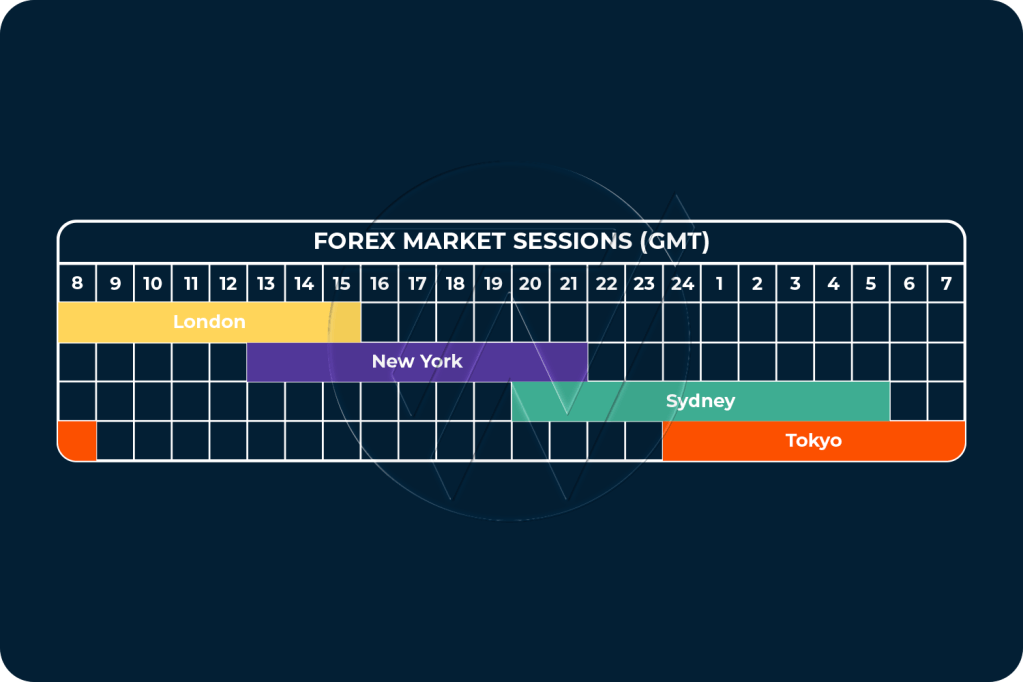
Images created and referenced from Trade Nation – What time does the forex market open. All distribution rights belong to the publisher and cannot be used without written permission.

The foreign exchange market is unique for several reasons, mainly because of its size. Trading volume in the forex market is generally very large. As an example, trading in foreign exchange markets averaged $6.6 trillion per day in April 2019, according to the Bank for International Settlements, which is owned by 63 central banks and is used to work in monetary and financial responsibility. The largest trading centers are London, New York, Singapore, Hong Kong, and Tokyo.

Trading in the Foreign Exchange Market 

The market is open 24 hours a day, five days a week across major financial centers across the globe. This means that you can buy or sell currencies at any time during the day.

The foreign exchange market isn’t exactly a one-stop-shop. There are a whole variety of different avenues that an investor can go through in order to execute forex trades. You can go through different dealers or through different financial centers which use a host of electronic networks.

From a historical standpoint, foreign exchange was once a concept for governments, large companies, and hedge funds. But in today’s world, trading currencies is as easy as a click of a mouse—accessibility is not an issue, which means anyone can do it. Many investment companies offer the chance for individuals to open accounts and trade currencies however and whenever they choose.

When you’re making trades in the forex market, you’re basically buying or selling the currency of a particular country. But there’s no physical exchange of money from one hand to another. That’s contrary to what happens at a foreign exchange kiosk—think of a tourist visiting Times Square in New York City from Japan. They may be converting their (physical) yen to actual U.S. dollar cash (and may be charged a commission fee to do so) so they can spend their money while they’re traveling.

But in the world of electronic markets, traders are usually taking a position in a specific currency, with the hope that there will be some upward movement and strength in the currency that they’re buying (or weakness if they’re selling) so they can make a profit. Get the latest 1 US Dollar to Turkish Lira rate for FREE with the original Universal Currency Converter. 

<img alt="" class="wp-image-91684" data-attachment-id="91684" data-comments-opened="1" data-image-caption="

Photo by RODNAE Productions on Pexels.com

” data-image-description=”” data-image-meta=”{“aperture”:”0″,”credit”:””,”camera”:””,”caption”:””,”created_timestamp”:”0″,”copyright”:””,”focal_length”:”0″,”iso”:”0″,”shutter_speed”:”0″,”title”:””,”orientation”:”0″}” data-image-title=”woman in black and white stripe long sleeve shirt sitting on chair” data-large-file=”https://eduindex.org/wp-content/uploads/2022/03/pexels-photo-8370328.jpeg?w=863&#8243; data-medium-file=”https://eduindex.org/wp-content/uploads/2022/03/pexels-photo-8370328.jpeg?w=300&#8243; data-orig-file=”https://eduindex.org/wp-content/uploads/2022/03/pexels-photo-8370328.jpeg&#8221; data-orig-size=”1880,1253″ data-permalink=”https://edupediapublications.org/2022/03/26/what-is-foreign-exchange-forex/pexels-photo-8370328/&#8221; height=”1253″ sizes=”(max-width: 1880px) 100vw, 1880px” src=”https://eduindex.org/wp-content/uploads/2022/03/pexels-photo-8370328.jpeg&#8221; srcset=”https://eduindex.org/wp-content/uploads/2022/03/pexels-photo-8370328.jpeg 1880w, https://eduindex.org/wp-content/uploads/2022/03/pexels-photo-8370328.jpeg?w=150&h=100 150w, https://eduindex.org/wp-content/uploads/2022/03/pexels-photo-8370328.jpeg?w=300&h=200 300w, https://eduindex.org/wp-content/uploads/2022/03/pexels-photo-8370328.jpeg?w=768&h=512 768w, https://eduindex.org/wp-content/uploads/2022/03/pexels-photo-8370328.jpeg?w=1024&h=682 1024w” style=”border: 0px; box-sizing: border-box; display: block; height: auto; max-width: 100%; vertical-align: bottom;” width=”1880″ />

Photo by RODNAE Productions on Pexels.com

Differences in the Forex Markets 

There are some fundamental differences between foreign exchange and other markets. First of all, there are fewer rules, which means investors aren’t held to as strict standards or regulations as those in the stock, futures, or options markets. That means there are no clearing houses and no central bodies that oversee the forex market.

Second, since trades don’t take place on a traditional exchange, you won’t find the same fees or commissions that you would on another market. Next, there’s no cutoff as to when you can and cannot trade. Because the market is open 24 hours a day, you can trade at any time of day. Finally, because it’s such a liquid market, you can get in and out whenever you want and you can buy as much currency as you can afford.

The Spot Market 

Spot for most currencies is two business days; the major exception is the U.S. dollar versus the Canadian dollar, which settles on the next business day. Other pairs settle in two business days. During periods that have multiple holidays, such as Easter or Christmas, spot transactions can take as long as six days to settle. The price is established on the trade date, but money is exchanged on the value date.

Per an April 2019 foreign exchange report from the BIS, the U.S. dollar is the most actively traded currency.3 The most common pairs are the USD versus the euro, Japanese yen, British pound, and Australian dollar.4 Trading pairs that do not include the dollar are referred to as crosses. The most common crosses are the euro versus the pound and yen.

The spot market can be very volatile. Movement in the short term is dominated by technical trading, which focuses on direction and speed of movement. People who focus on technicals are often referred to as chartists. Long-term currency moves are driven by fundamental factors such as relative interest rates and economic growth.

The Forward Market 

A forward trade is any trade that settles further in the future than spot. The forward price is a combination of the spot rate plus or minus forward points that represent the interest rate differential between the two currencies. Most have a maturity of less than a year in the future but longer is possible. Like with a spot, the price is set on the transaction date, but money is exchanged on the maturity date.

A forward contract is tailor-made to the requirements of the counterparties. They can be for any amount and settle on any date that is not a weekend or holiday in one of the countries.

The Futures Market 

A futures transaction is similar to a forward in that it settles later than a spot deal, but is for standard size and settlement date and is traded on a commodities market. The exchange acts as the counterparty.

Example of Foreign Exchange 

A trader thinks that the European Central Bank (ECB) will be easing its monetary policy in the coming months as the Eurozone’s economy slows. As a result, the trader bets that the euro will fall against the U.S. dollar and sells short €100,000 at an exchange rate of 1.15. Over the next several weeks the ECB signals that it may indeed ease its monetary policy. That causes the exchange rate for the euro to fall to 1.10 versus the dollar. It creates a profit for the trader of $5,000.

By shorting €100,000, the trader took in $115,000 for the short sale. When the euro fell, and the trader covered their short, it cost the trader only $110,000 to repurchase the currency. The difference between the money received on the short-sale and the buy to cover it is the profit. Had the euro strengthened versus the dollar, it would have resulted in a loss.

How Big Is the Foreign Exchange Market?

The foreign exchange market is extremely liquid and dwarfs, by a huge amount, the daily trading volume of the stock and bond markets. According to the latest triennial survey conducted by the Bank for International Settlements (BIS), trading in foreign exchange markets averaged $6.6 trillion per day in 2019.2 By contrast, the total notional value of U.S. equity markets on Dec. 31, 2021, was approximately $393 billion.5 The largest forex trading centers are London, New York, Singapore, Hong Kong, and Tokyo.

What Is Foreign Exchange Trading?

When you’re making trades in the forex market, you’re basically buying the currency of a particular country and simultaneously selling the currency of another country. But there’s no physical exchange of money from one hand to another. Traders are usually taking a position in a specific currency, with the hope that there will be some strength in the currency, relative to the other currency, that they’re buying (or weakness if they’re selling) so they can make a profit. In today’s world of electronic markets, trading currencies is as easy as a click of a mouse.

How Does Foreign Exchange Differ From Other Markets?

There are some fundamental differences between foreign exchange and other markets. There are no clearing houses and no central bodies to oversee the forex market which means investors aren’t held to the strict standards or regulations as those in the stock, futures, or options markets. Second, there aren’t the fees or commissions that exist for other markets that have traditional exchanges. There is no cutoff time for trading, aside from the weekend, so one can trade at any time of day. Finally, its liquidity lends to its ease of trading access.

Halloween as Rituals: A Case from a Gated Community in Hyderabad, India

 From time to time, people across the world, irrespective of religion, celebrate different festivals or other religious functions/rituals. We all know the different religious festivals, programmes, functions, rituals, etc., but Halloween is not common among people. So, I am presenting my experience. For several years in the gated community where I live, children, irrespective of age and gender, celebrate different festivals and rituals, including Halloween. I, as a senior citizen, enjoy their enthusiasm and joyousness. So, before writing about the Halloween rituals by our campus children, let me highlight a few points about Halloween that have been collected from Britannica (britannica.com/story/why-do-we-celebrate-halloween). “Halloween has been around for more than a thousand years. Originally a religious observance, it became increasingly secular over the centuries until its religious trappings disappeared. Today, Halloween is considered a holiday for dress-up and fun, especially for children.

Halloween’s origins can be traced back to the ancient Celtic festival known as Samhain, held on November 1 in contemporary calendars. It was believed that on that day, the souls of the dead returned to their homes, so people dressed in costumes and lit bonfires to ward off spirits. This way, popular Halloween tropes such as witches, ghosts, and goblins became associated with the holiday.
In the 7th century CE, Pope Boniface IV created All Saints Day, originally celebrated on May 13. A century later, Pope Gregory III moved the holiday to November 1, likely as a Christian substitute for the pagan festival of Samhain. The day before, the saintly celebration became known as All Hallows Eve or Halloween. Though the holiday began in Celtic regions of Ireland, the United Kingdom, and France, it quickly spread to other parts of the world. The first American colonists in New England were forbidden to celebrate it for religious reasons, though it enjoyed some popularity in the Southern colonies. By the 1800s, fall festivals marking the seasonal harvest incorporated Halloween elements, and Irish immigrants escaping the devastating Potato Famine brought with them many Halloween traditions that remain today.”
In one gated community of Hyderabad known as Libdom Luxury Villas (Raj Reddy Valley), Bandlaguda Jagir, children, irrespective of age, enjoyed Halloween rituals by dressing vis-à-vis wearing masks like ghosts, vampires, witches, animals, and others. For the benefit of readers, I wish to mention that this gated community is spread over around 17 acres of land with indoor and outdoor games, a gym, a park, a swimming pool, a function hall, etc. Altogether, 190 families (a few might be unoccupied) live in this gated community; each has a duplex house and surroundings little land. In the land, all nurture flowers, some vegetables, etc. The most highlighting point is that this gated campus consists of different religions, castes, and languages (people of different States), representing a mini-India in the true sense, and residents celebrate all festivals amicably. Anyway, as a part of Halloween rituals, around 70 children, irrespective of age and gender, participated in the programme. It is noteworthy to mention that kids and teenagers, by forming groups – each group consisting of 7 to 8 children based on their age group and friendship enthusiastically visited almost every villa, and elders of each villa spontaneously provided each child candy, chocolate, and other sweets. I, as a senior citizen, thoroughly enjoyed their enthusiasm, happiness, joy, and cheerfulness. I read in my school days a German proverb that I recollect now, “You can do anything with children if you only play with them.” I firmly believe that the children of our campus are our great resources.
(I express my gratitude to Mrs. Sreelatha, Villa-49, and Mrs Ramya Reddy, Villa-16, for providing me necessary inputs to write the article).
Prof Shankar Chatterjee, Hyderabad

The Jetting Valve Evolution – Changing the Game in Fluid Dispensing

 Undoubtedly, the jetting valve is a novel tech that has revolutionised the fluid dispensing industry. The ground-breaking innovation has opened up an entirely new level of accuracy, paired with exceptional speed and precision in the field. Thanks to it, its users can dispense fluids faster and more accurately than ever. Explore how it changed the game in fluid dispensing, from the first jetting valve designs to the most modern models.

Understanding Traditional Fluid Dispensing 

Arguably, fluid dispensing has a long history before exploring jetting valves. For a long time, manual syringe and contact dispensing were the top options to accurately dispense liquids across various sectors.

Manual syringe dispensing had someone in charge of using a syringe to control the release of the liquid. While there was some control, accuracy and precision were limited. It needed someone with talent and stability to ensure identical results.

On the other hand, contact dispensing presented a more accurate and consistent option for fluid dispensing systems. It turned out particularly efficient in medicine and science where exigent volume dosing was necessary. Such systems use a specialised dispenser that makes contact with the fluid surface to remove air bubbles and impurities, making a crucial impact in applications with micro variations in volume.

Despite having certain merits, the two methods were deficient in many areas. Some disadvantages included slow speed, human mistakes, and lack of precision and uniformity required in some industries.

The Emergence of Jetting Valves in the Industry

The introduction of jetting valves revolutionised the fluid dispensing industry. It was an inconceivable breakthrough in precision and accuracy. Seeking quicker and more precise fluid dispensing sparked the development of this technology, now widely used in multiple industries.

Of course, traditional approaches provided adequate results. Still, they lacked speed, precision, and reliability. It necessitated skilled personnel, took more time, and was prone to human error. That’s why companies needing high accuracy and consistency had to search for better solutions.

The jetting valve emerged as the answer to these issues with its cutting-edge technology and microprocessor-controlled algorithms. By creating well-regulated pulses of liquid, it enabled faster, more precise, and consistent dispensing of fluids. This mechanism revolutionised the field, unleashing countless new opportunities and increasing productivity. Moreover, it opened up new possibilities that increased the overall productivity in every industry.

Undoubtedly, the emergence of jetting valves paved the way for advancements in electronics manufacturing, automotive assembly, pharmaceuticals, and many more. From micro dot dispensing to high-speed line dispensing, they became the backbone of fluid dispensing processes across various industries.

The Key Features of Jetting Valves and How They Work

Jetting valves are unique in the fluid dispensing industry due to their remarkable features. These valves are designed with cutting-edge technology and boast exceptional accuracy, precision, and speed in the dispensing process. Let’s peek at some of the critical components of jetting valves and how they operate.

Speedy Actuators

Jetting valves feature high-speed actuators that manage the dispensing of liquids. These actuators provide rapid and exact movements, guaranteeing that the ideal amount of fluid is discharged accurately and on time. 

Microprocessor-controlled Algorithms

Jetting valves are powered by microprocessors that utilise complex algorithms to generate controlled fluid pulses. These algorithms calculate the optimal timing and duration for dispensing, resulting in accurate and consistent droplet or line formation.

Flexible for Many Industries

Jetting valves are perfect for various fluids, such as cyanoacrylates, solder pastes, and lubricants, making them well-suited for multiple sectors and uses. This allows manufacturers to have the flexibility they need.

Precise Results

Jetting valves make possible the generation of accurate, even pulses, ensuring identical droplets and lines are dispersed accurately. This degree of exactness is essential in fields where minor variation may bring significant results.

Rapid and Effective

Notoriously known for their speedy dispensing, jetting valves feature swift actuator movements and managed fluid stream. This allows for faster distribution, thus raising output and decreasing production time.

Advantages and Drawbacks

While jetting valves have revolutionised the fluid dispensing industry, it’s important to acknowledge their advantages and limitations. Here, we’ll explore the benefits and drawbacks of using jetting valves for liquid dispensing.

Advantages

  • Accuracy and Precision: Jetting valves offer unparalleled accuracy and precision in fluid dispensing. The controlled fluid pulses ensure that the desired amount is applied consistently, leading to higher quality and reduced waste.
  • Speed and Efficiency: With their high-speed actuators and microprocessor-controlled algorithms, jetting valves enable faster dispensing, resulting in increased productivity and reduced production time.
  • Versatility: Jetting valves are compatible with various fluids, making them suitable for multiple industries and applications. These valves can handle different viscosities and types of liquids, from adhesives to solder pastes.
  • Improved Consistency: Each droplet or line dispensed by a jetting valve is identical, leading to consistent results and eliminating variations that can occur with manual dispensing techniques.

Drawbacks

  • Potential for Clogging: Jetting valves can be prone to clogging if not adequately maintained. Regular cleaning and monitoring of the valve is necessary to prevent any buildup or blockages that could affect performance.
  • Cost: Jetting valves can be more expensive than traditional fluid dispensing techniques. Their design’s advanced technology and precision contribute to their higher price point.

Types of Jetting Valves Available in the Market Today

Selecting the best jetting valve for your liquid delivery requirements necessitates careful consideration of the types of valves accessible. Each one supplies exclusive qualities and benefits to locate the perfect valve for your project. Here are some popular types of jetting valves you may find:

Pneumatic Jetting Valves

Pneumatic Jetting Valves boast fast, precise liquid release using compressed air. Ideal for rapid operations, these valves usually serve in the automotive and electronics sectors.  Furthermore, they have created a positive reputation for their decent performance.

Piezoelectric Jetting Valves

Piezoelectric jetting valves utilise piezoelectric crystals, which expand or contract when subjected to an electric field. As the volume of the valve changes, it generates the necessary pressure for fluid dispensing. These valves offer excellent accuracy and repeatability, making them suitable for applications that require extremely precise fluid dispensing, such as microdot deposition and fine-line dispensing in the electronics industry.

Ultrasonic Valves

As the name suggests, ultrasonic jetting valves use high-frequency sound waves as a fluid dispensing technique. Using vibration from the sound waves, the valves open and close, allowing the dispensing of small volumes of fluid with high accuracy. Some common applications for this contactless jetting valve type are semiconductor manufacturing and biomedical research.

Magnetic Valves         

Magnetic jetting valves use a magnetic field, which applies to a ferromagnetic material in the valve. The pressure causes the valve to open or close, making it a a simple yet efficient contactless dispensing solution for automated assembly systems and laboratory equipment.

Optical Jetting Valves

Optical valves use the power of light and light reflection to detect and monitor the presence of fluid and control its flow. The technique involves a sensor, which “tells” the valve when to open or close based on the amount of reflected light. The mechanism of optical valves makes them suitable for fuel sensors and industrial automation systems.

Choosing the Right Jetting Valve for Your Dispensing Needs

Selecting the correct jetting valve is pivotal for reaching excellent outcomes and satisfying your liquid dispensing desires. As many choices are accessible, deciding which valve will fulfil your purpose can be challenging. To help make the decision, here are several things to consider when selecting a jetting valve:

Fluid Viscosity

Depending on the fluid type, certain valves may handle different viscosity better. Typically, low-viscosity fluids require a certain kind of valve, while high-viscosity liquids demand another. In this regard, selecting a valve that can efficiently handle the fluid’s viscosity range is essential.

Dispense Volume

Evaluate the required dispense volume for your application. Some valves are designed for micro dot dispensing with small volumes, while others can dispense larger volumes. Choose a valve that can accommodate the dispense volume you need to ensure accurate and consistent results.

Dispense Speed

Consider the desired dispense speed for your application. Typically, some valves are suitable for high-speed dispensing, making them perfect for applications with rapid production cycles. Other valves may offer slower dispensing speeds, which can be advantageous for precise and controlled dispensing.

Fluid Compatibility

Ensure that the jetting valve you choose is compatible with the specific type of fluid you will be dispensing. Different valves may be better suited for adhesives, solder pastes, or other types of liquids. Check the valve specifications to verify its compatibility with your desired fluid.

Application Requirements

Consider the unique requirements of your application. Some valves may offer additional features, like dispensing multiple fluids simultaneously or adjusting the dispensing pattern. Evaluate your application needs and select a valve that can meet those requirements.

Manufacturer Reputation

Research the reputation and track record of the valve manufacturer. Look for a reputable manufacturer that is known for producing high-quality and reliable jetting valves. Reading customer reviews and testimonials can tell you a lot about the performance and durability of different valves.

6 Maintenance Tips to Ensure Optimal Performance

Maintaining your jetting valve is crucial for ensuring optimal performance and longevity. By following these maintenance tips, you can keep your valve in top condition and avoid any disruptions in your fluid dispensing process.

  1. Frequent Cleaning: It is vital to routinely clean your jetting valve to keep any blockage or buildup away. Use a suitable cleaner as the manufacturer prescribes to eliminate any remains or trash from the valve and its components. Focus on the nozzle and other essential elements.
  2. Adequate Storage: Store your jetting valve in a clean and dry place when it is not in use. Shield it from dust, moisture, and fluctuating temperatures, as these conditions can alter its efficiency.
  3. Inspect and Change Seals: Over time, the seals of your jetting valve might deteriorate or be ruined. Assess the seals regularly and change them to preserve a secure closure and prevent leaks.
  4. Calibration and Adjustment: Periodically calibrate and adjust your jetting valve to ensure accurate dispensing. Follow the manufacturer’s instructions for calibration and make any necessary adjustments to maintain consistency and precision in your dispensing process.
  5. Measure Air Pressure: Accurate air pressure is vital for the correct functioning of your jetting valve. Examine and adjust the air pressure periodically to guarantee it stays in the specified range. Unstable or lower air pressure can result in unreliable dispensing or other complications.
  6. Stock Extra Parts: It is advisable to have extra parts of your jetting valve in stock. This comprises seals, nozzles, actuators, and other significant features. Keeping these parts close by will decrease the time lost in case of any unpredicted breakdowns or deterioration.

Final Thoughts

Undoubtedly, jetting valves have dramatically changed the fluid dispensing industry with their innovative capabilities. They have evolved from early beginnings to a viable solution to traditional dispensing techniques. Moreover, they have become famous for their precision and efficiency across many industries. 

The advancements in jetting valves have greatly increased speed, accuracy, versatility, and waste reduction. Thanks to products like Technodigm™’s PDos X1 jetting valve, manufacturers can now reach unmatched speeds and precision. The results are cutting-edge accuracy and efficiency that elevates a wide range of industries to another level of quality. 

 Pixels and Payoffs: Navigating the Enigmatic Realm Where Xbox One and Casinos Converge


In the vast digital landscape where the pixels of video games and the payoffs of gambling intertwine, a fascinating nexus has emerged, blurring the lines between the console screen and the casino floor. This is not a mere collision of worlds but a meticulous fusion, a tapestry where the immersive narratives of gaming seamlessly meld with the thrilling uncertainties of gambling. Join me as we embark on a journey through the enigmatic intersection where Xbox One and casinos converge, unraveling the intricacies of this captivating marriage of pixels and payoffs.

The Evolutionary Tango: Xbox One and the Casino Connection

The evolution of gaming has taken a quantum leap with the advent of consoles like Xbox One, transcending the conventional boundaries of entertainment. Simultaneously, the world of gambling has seen a digital renaissance, with virtual casinos becoming the new frontier for risk-takers and thrill-seekers. The convergence of these two realms is more than a trend; it’s a transformative evolution, where the escapism of gaming collides with the adrenaline rush of the casino experience.

Pixelated Pleasures: The Rise of Xbox One Casino Games

Enter the realm of Xbox One casino games – a domain where the digital delight of gaming meets the pulsating energy of gambling. These games go beyond the traditional console experience, inviting players to roll the dice, spin the wheel, and try their luck in an expansive digital casino universe. From virtual slot machines to digital poker tables, Xbox One casino games redefine the gaming landscape, transforming the console into a gateway to pixelated pleasures with the potential for real-world payoffs.

Narrative Nuances: Xbox One Casino Games with a Twist

What sets these games apart is the infusion of narrative nuances that elevate the gaming experience beyond mere chance. Picture navigating the neon-lit streets of a digital city, not just as a player but as a character with a storyline intricately woven into the casino gameplay. Xbox One casino games like “Four Kings Casino and Slots” take storytelling to a new level, creating a synergy where the narrative and the roll of the dice coalesce into an immersive adventure.

Strategic Stakes: Beyond the Poker Table on Xbox One

While chance remains a pivotal player in the casino game, Xbox One introduces an element of strategy that adds depth to the experience. Whether you’re trying your hand at digital blackjack or engaging in a high-stakes poker match, the console environment provides a platform for players to showcase their strategic acumen. The controller becomes a conduit for calculated moves, turning the digital casino into a realm where skill and luck intertwine in a tantalizing dance.

Multiplayer Majesty: Xbox One’s Social Casino Scene

Gaming has always been a social activity, and Xbox One casino games amplify this communal aspect. The multiplayer features of these games turn the console into a virtual casino floor, where players from around the globe converge to test their luck and skill. The avatars at the poker table or the digital slot machines become vessels for real human interaction, bringing the social allure of the casino into the living rooms of players.

Challenges and Charms: Navigating the Nexus

As with any intersection of worlds, challenges and charms emerge. The allure of Xbox One casino games comes with a caveat – the potential for blurred boundaries between entertainment and excess. Responsible gaming discussions gain new dimensions in this digital casino landscape, prompting a reflection on the balance between the thrill of the game and the potential risks involved.

 Pixels to Payoffs, A Digital Odyssey

In this digital odyssey where Xbox One meets casinos, the journey is as significant as the destination. The convergence of gaming and gambling on the console screen is not a passing fancy but a transformative evolution in the world of entertainment. Xbox One casino games beckon players to a realm where pixels and payoffs engage in a mesmerizing dance, creating an experience that transcends the confines of traditional gaming.

As technology propels us further into the digital age, the intersection of Xbox One and casinos stands as a testament to the ever-expanding horizons of entertainment. It’s a realm where pixels transform into payoffs, and the console becomes a portal to a digital casino universe. So, whether you’re a gaming aficionado or a casino connoisseur, this is a journey worth embarking on – where pixels and payoffs coalesce in a captivating symphony of virtual delight.

Call for Book Chapter – Recent Researches in Business and Management Studies

Book Title: Recent Researches in Business and Management Studies

ISBN: [to be allotted]

Submission Deadline: December 24, 2023

Publication: Free

Print Copy Purchase Available

The field of business and management continually evolves, shaping global industries and organizational strategies. We invite scholars, researchers, and practitioners to contribute to an upcoming book focusing on cutting-edge research in Business and Management Studies. This publication aims to showcase innovative perspectives, methodologies, and insights shaping the contemporary landscape of business practices.

Themes and Sub-themes for Book Chapters:

1. Strategic Management and Innovation

  • Strategic Planning in Dynamic Markets
  • Innovation Strategies for Sustainable Development
  • Technology Integration in Business Strategy

2. Marketing and Consumer Behavior

  • Digital Marketing Trends and Practices
  • Consumer Psychology and Decision Making
  • Brand Management in a Globalized Market

3. Organizational Behavior and Human Resource Management

  • Leadership in Diverse Work Environments
  • Employee Engagement and Motivation
  • Diversity and Inclusion in Modern Organizations

4. Financial Management and Economic Perspectives

  • Financial Strategies for Emerging Markets
  • Economic Policy and Business Impact
  • Risk Management in Financial Decision Making

5. Entrepreneurship and Small Business Management

  • Startup Ecosystems and Innovation Hubs
  • Entrepreneurial Finance and Investment
  • Sustainable Practices in Small Business Ventures

Submission Guidelines:

  • Original, unpublished contributions in English.
  • Chapter length: 6,000 – 8,000 words (including references).
  • APA or MLA style for citations and references.
  • Submission via email to editor@pen2print.org in MS Word format.
  • Include a brief author bio and contact information.

Selected chapters will be peer-reviewed and published in the book. Participants can obtain a print copy through a link provided by our editor post-publication.

For inquiries and submission, please contact editor@pen2print.org.

Join us in shaping the discourse of contemporary business and management studies with your valuable research contributions!

Warm regards,

Call for Papers: International Journal for Social Studies (IJSS)

 The International Journal for Social Studies (IJSS) invites submissions for its forthcoming issues. As a distinguished forum for Social Studies scholars worldwide, IJSS aims to foster dialogue and exploration of common concerns within the realm of social education.

Journal Focus:
At IJSS, we strive to raise awareness about the international, global, and transnational dimensions of issues in social education. We are committed to providing a platform for educators, researchers, teacher educators, and classroom teachers from diverse backgrounds to engage in rigorous discussions and share impactful research on their practices.

Scope:
The journal welcomes submissions that address a wide spectrum of topics impacting the classroom teaching of Social Studies on a global scale. We encourage contributions from various social science disciplines, including but not limited to sociology, political science, ethics, civics, international relations, and related interdisciplinary fields.

Submission Guidelines:
Manuscripts should adhere to scholarly standards and originality, contributing valuable insights to the field of Social Studies education. Submissions should be sent for review to editor@pen2print.org. Detailed submission guidelines are available on the journal’s website.

Access the Journal:
The International Journal for Social Studies is an open-access platform accessible through the following link: IJSS Journal Link

Important Dates:

  • Submission Deadline: 10th of each month.
  • Notification of Acceptance: within a week of receipt of the paper.
Join the Discourse:
Participate in shaping the discourse on Social Studies education. Contribute your research, innovative practices, and perspectives to IJSS to make an impact on the global stage of social education.

For inquiries or more information, please contact the editorial team at editor@pen2print.org.

Be part of the global conversation in Social Studies education with IJSS!

ISBN no for Conference Proceedings

 Using ISBNs (International Standard Book Numbers) for conference proceedings and reports provided by Eduindex offers numerous advantages that significantly benefit both the organizers and participants. These benefits range from enhancing the credibility and accessibility of the proceedings to streamlining cataloging and distribution processes.

Firstly, assigning ISBNs to conference proceedings and reports lends them a unique identification code, allowing for easy and precise cataloging in libraries, databases, and book-selling platforms. This distinct identifier aids researchers, scholars, and students in efficiently locating and referencing these materials, contributing to increased visibility and recognition within academic circles.

Moreover, the inclusion of ISBNs elevates the perceived quality and credibility of conference proceedings. It establishes a level of professionalism and standardization, signaling that the content has undergone a formal process and adheres to publishing norms. This, in turn, enhances the reputation of the conference and its contributors, fostering a greater willingness among academics to participate and engage with the scholarly work presented.

Another advantage lies in the improved accessibility and global reach facilitated by ISBNs. These unique numbers enable easy dissemination of conference proceedings across various platforms and geographic locations. This accessibility encourages wider readership and knowledge dissemination, transcending geographical boundaries and ensuring that valuable research reaches a broader audience.

The streamlined process of obtaining ISBNs through Eduindex further adds to the advantages. The affordable cost and prompt allotment within a week of the request make it convenient for conference organizers to ensure their proceedings are properly registered and identified, without incurring significant expenses or delays.

In conclusion, the utilization of ISBNs in conference proceedings and reports offered by Eduindex offers a multitude of benefits. From enhancing credibility and visibility to facilitating efficient cataloging and global accessibility, the inclusion of these unique identifiers significantly augments the value of academic content. For those interested in availing themselves of these benefits, reaching out to editor@pen2print.org can be the first step toward acquiring ISBNs and maximizing the impact and reach of scholarly work.

Free Book Publication Offer for Members

 Publishing a book can be an incredible milestone for authors, offering a plethora of benefits that extend beyond mere recognition. At Eduindex, the free book publication service offers a comprehensive package that goes beyond the norm, aiming to support authors in various ways.


Benefits of Book Publication:

  1. Professional Recognition: Publication offers credibility and acknowledgment of an author’s expertise and contribution to their field of study.

  2. Dissemination of Knowledge: Sharing insights and research through a book allows wider dissemination of knowledge, impacting scholars, students, and enthusiasts globally.

  3. Academic Validation: Publications contribute to academic profiles, aiding in career advancement and establishing authority within a subject area.

  4. Networking Opportunities: Being a published author can open doors to collaborations, conferences, and speaking engagements, expanding one’s professional network.

  5. Long-term Impact: Books have enduring value, remaining accessible for years and impacting successive generations of readers.

Eduindex’s Free Book Publication Service:

  1. ISBN and DOI Allotment: Providing International Standard Book Numbers (ISBN) and Digital Object Identifiers (DOI) ensures your book is properly cataloged and easily searchable.


  2. Live Link to Book: Offering a live link to the book enhances accessibility, allowing readers to easily find and access the publication online.

  3. Certificate of Publication: Recognizing the effort and dedication of authors with a Certificate of Publication adds a formal acknowledgment of their achievement.


  4. Listing as Open Access Book: Hosting books as open access on edupediapublications.org ensures wider reach, especially for scholars from regions with limited access to scholarly resources.


  5. Offer for Scholars from Africa and Low-Income Countries: Providing this service for the first 100 books within a year is a generous initiative, supporting authors who might face financial constraints in getting their work published.


  6. Optional Additional Services: Authors have the flexibility to opt for additional services tailored to their specific needs, enhancing the publication process as required.


  7. Manuscript Review: Authors can submit their manuscripts for review to

  8. editor@pen2print.org, ensuring a comprehensive evaluation before the publication process begins.

Overall, this initiative by Eduindex aims to democratize access to publishing opportunities, supporting scholars from diverse backgrounds and regions. By offering these services free of charge for the initial 100 books within a year and providing additional optional services, they’re empowering authors to share their knowledge and research without financial barriers.

This commitment to inclusivity and support for scholars from regions with fewer resources is a commendable step towards fostering academic growth and sharing knowledge on a global scale.

Interested Scholars can submit a Brief note on book to editor@pen2print.org or fill the form given below:

Call for Papers in IJR 2023

 IJR is dedicated to publishing high-quality, original research across diverse disciplines. With a robust peer-review process and a commitment to academic excellence, we aim to promote interdisciplinary dialogue and innovation across various fields.

Key Features:

  • Open access publication ensuring global accessibility to your research
  • Rapid publication process with a promise of publication within one month
  • DOI (Digital Object Identifier) assignment for every published paper, ensuring permanent identification and citation
  • Rigorous peer-review ensuring scholarly integrity and credibility
  • Multidisciplinary scope welcoming contributions from various academic domains

Why Publish with IJR?

  • Wide global readership and visibility
  • Opportunity to contribute to the advancement of diverse fields
  • High standards of publication ethics and academic integrity
  • Supportive and collaborative editorial team

Call for Papers:
We invite original research papers, review articles, case studies, and scholarly contributions across disciplines including but not limited to:

  • Science and Technology
  • Social Sciences
  • Humanities
  • Business and Economics
  • Health and Medicine
  • Arts and Literature
  • Education
  • Interdisciplinary Studies

Publication Guarantee:
We assure a swift review process and a 50% acceptance rate, ensuring the publication of quality research within a month of acceptance.

Submission Guidelines:

  • Manuscripts should adhere to our submission guidelines available on our website.
  • Please submit your papers via our online submission system.
  • For any queries, feel free to contact the editorial team at editor@pen2print.org

Join us in contributing to the scholarly discourse and fostering interdisciplinary collaboration through International Journal of Research.

We eagerly await your valuable contributions!

Warm regards,

Editorial Team

Creative Minds of Tomorrow'(CMOT) initiative

 Government of India is committed to employment generation, boosting the creator economy, mentoring outstanding artists and encouraging youngsters to achieve excellence in the field of films, said Shri Anurag Singh Thakur, Union Minister of Information & Broadcasting and Youth Affairs & Sports while launching the ‘48-Hour Film making Challenge’ for winners of ’75 Creative Minds of Tomorrow'(CMOT) initiative. Applauding the role of ‘Creative Minds of Tomorrow’ in fostering a strong creative community of passionate individuals, the Minister congratulated the top 75 participants of the initiative selected through a rigorous jury process.

The Minister further said that CMOT is part of Government’s effort to encourage and mentor young minds from far flung corners of the country. “This year’s 75 Creative Minds of Tomorrow hail from as many as 19 different states and Union Territories of India, including places such as Bishnupur (Manipur), Jagatsinghpur (Odisha), and Sardarpur (Madhya Pradesh). The initiative aims to provide them with unparalleled opportunities in the realm of Media and Entertainment,” he added.

Shri Thakur recounted the poignant tale of a young aspirant from Tamil Nadu who participated in CMOT last year. “Initially her parents were not sure about sending her all the way to Goa. After understanding the intense selection process and incredible opportunities that awaited her at CMOT, her parents were thrilled to allow her to chase her dreams. This girl and her team went on to win the 53-hour Challenge last year with a cash prize of Rs.2,25,000. The winning film, Dear Diary, highlighted how women’s safety would be a new normal in the future. Success stories like these are what this platform aspires to write,” he elaborated.

The Minister also shared achievements from previous editions of CMOT, showcasing the impact of the initiative on participants’ careers. Notable mentions included Subarna Dash whose animated film got featured at Toronto International Film Festival, 2023 and youngsters like Bhasker Vishwanathan and Digantra Bose who co-edited and edited films which feature in Indian Panorama at IFFI this year.

Film production is not only about content creation, it is also about marketing and distributing it to a larger audience. To encourage and enable networking and collaboration amongst our young minds and the industry, the Minister informed that this year, IFFI is organizing a Talent Camp, where the 75 Creative Minds will get to meet, interact and connect with representatives of several well-known production houses, studios and OTT platforms.

Focusing on the support extended by government towards Start-ups, the Minister said that with the new Start-up policy, India emerged as the third largest start-up ecosystem in the world with more than one lakh start-ups in the country. “Every day there is a new startup coming up. When even big companies are struggling during Covid19 pandemic, fifty startups in India got elevated to the level of unicorns, demonstrating the power of Indian youth,” he concluded. The Minister distributed certificates to the participants of 75 Creative Minds of Tomorrow.

The event saw the presence of esteemed guests including Carter Pilcher, CEO and Founder of Shorts TV, Dennis Ruh, Director of the European Film Market, Jon Goldwater, Executive Producer, The Archies, Neerja Sekhar, Additional Secretary, Ministry of Information & Broadcasting and Prithul Kumar, Joint Secretary (Films), Ministry of Information & Broadcasting and Managing Director, NFDC. The ‘48 Hour challenge’ is organized as part of CMOT by National Film Development Corporation in association with Shorts TV.

As part of the Film Challenge, 75 CMOT participants were divided into five teams who will make short films on the topic ‘Mission Life’ in 48 hours. During the film festival, the CMOT participants will also attend workshops and masterclass sessions curated by the masters of world cinema. 


Global Fisheries Conference India 2023

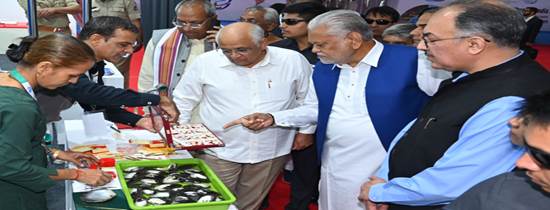
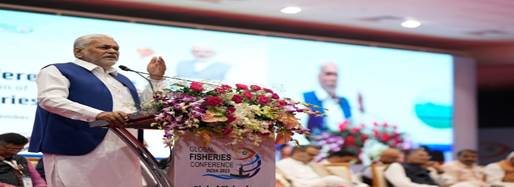
 On the occasion of World Fisheries Day, Dept. of Fisheries, GoI is organising two day Global Fisheries Conference India 2023 which began at Gujarat Science City, Ahmedabad, Gujarat today.  Union Minister for Fisheries, Animal Husbandry & Dairying Shri Parshottam Rupala inaugurated the Special Pavilion and main Exhibition of Global Fisheries Conference India 2023Minister of States for Fisheries, Animal Husbandry & Dairying Dr. Sanjeev K. Balyan, and Dr. L Murugan, Chief Minister of Gujarat, Shri Bhupendra Rajnikant Patel, Ministers of various states, Ambassador of various countries, other dignitaries and heads of various organisations and fisheries research institutes were present in the event.

Union Minister Shri Parshottam Rupala released the “State Fishes of India Booklet” to encourage each state in India to adopt a fish and conserve its biodiversity. The booklet contains details of 21 fish species adopted as State Fish and declared as State Aquatic Animal. The other key publication released was “Handbook on Fisheries Statistics year 2022” that aims at providing key data points and performance indicators for the Fisheries sector making accurate and reliable fisheries data available to all.

Further, Union Minister Shri Rupala distributed Group Accident Insurance Scheme (GAIS) claim cheques (Rs 5 lakhs each) to beneficiaries /legal heirs from states of Odisha and Puducherry, Kisan Credit Card (KCC) to eligible beneficiaries with the loan amount of Rs 35 thousand to Rs 3 lakhs for beneficiaries from Gujarat, Green Fuel conversion kit for sustainable development of fisheries sector that included beneficiaries from Kerala and transponders for beneficiaries from Gujarat.

In his address, Union Minister Shri Parshottam Rupala welcomed all the guests and lauded the efforts for getting together diversified national and global experts and stakeholders on one platform on important matters of deliberation terming the event to be historic. He encouraged that the series of state fish declaration by major states of UP, Maharashtra and Gujarat make fish rearing an interesting subject for the general public. He further hoped that new products and innovation for sustainable development continues to enhance.

At the event,  the Inland Reservoir Lease Portal of Government of Gujarat was launched by Chief Minister of Gujarat Shri Bhupendra Rajnikant Patel. The reservoir leasing will now be done on online using the portal through e-tender/ e-auction for transparency in lease allocation procedure with priority given to Fisheries cooperatives, FFPO, SHGs etc. Chief Minister of Gujarat also digitaly launched Black spotted Crocker (commonly known as Ghol) as the State Fish of Gujarat.

Chief Minister of Gujarat in his keynote address welcomed all guests and highlighted that as a leading fish production and exporting state in India, it is a great opportunity for Gujarat to host this mega event. Gujarat is a policy-vision state hence along with the existing progressive programs and initiatives, Blue economy is being prioritised as a key focus area.

MoS Dr. Sanjeev K. Balyan welcomed all the dignitaries and highlighted that the Indian Fisheries sector has expanded from the coastal states to the Northern states and inland fisheries and aquaculture particularly shrimp aquaculture is getting popular in the Northern states of India. Provisions should thus be made to continue with the momentum through infrastructure support.

MoS Dr. L Murugan congratulated all on occasion of World Fisheries day. He informed that a unique outreach program undertaken by Union Minister Shri Parshottam Rupala covering the 8000 kms coastline of India is progressing towards completion. He highlighted that the achievements of the Fisheries sector are in line with the vision of Prime Minister of Aatmanirbhar Bharat and Made in India as Indian products and services are being popularised to achieve self-sufficiency and of best quality.

Mr. Takayuki Hagiwara, Head of Food and Agriculture Organization of the UN (FAO) in India congratulated all on occasion of World Fisheries Day prioritising healthy ecosystem and healthy stocks as a key FAO strategy. He exhibited confidence that India can champion the Blue Transformation initiatives as it has the potential to expand sustainably and FAO gladly extends its support to India in its initiatives for innovative value chain development, reduction of illegal and unregulated fishing etc.

Minister for Agri, AH, Cow-Breeding, Fisheries, RH & RD, Govt. of Gujarat, Shri Raghavjibhai Patel in his special address thanked all the participants for coming and highlighted that the state of Gujarat has been progressive and under Digital India has launched online systems that create transparency and make immediate transfers possible to beneficiaries directly. He envisioned an aqua park in Gujarat in time to come.

Secretary, Department of Fisheries, Dr. Abhilaksh Likhi welcomed all the guests and informed that the Department of Fisheries, GoI has four focus areas namely improvement of production and productivity, infrastructure development and strengthening market linkages, technology infusion and ease of Doing business as done under the Coastal Aquaculture Authority (CAA) Act amendment.

Towards the end, a message by Governor of Gujarat Shri Acharya Devvrat was shared with the audience where he expressed his best wishes on occasion of World Fisheries day and hoped that the conference achieves its objectives of bringing in diverse perspectives.

Joint Secretary for DoF, Shri Sagar Mehra highlighted that the Department of Fisheries organized the event of this scale and magnitude for the first time. He said it is moment of pride for DoF (MoFAH&D, GoI) to host 10 foreign missions from the countries of France, New Zealand, Norway, Australia, Russia, Spain, Zimbabwe, Angola, Brazil and Greece along with International organisations namely Food and Agriculture Organisation (UN-FAO), Asian Development Bank (ADB), Deutsche Gesellschaft für Internationale Zusammenarbeit (GIZ), Bay of Bengal Program (BoBP), Marine Stewardship Council India (MSC), Ministers from the States/UTs of Arunachal Pradesh, Haryana, Uttar Pradesh, Himanchal Pradesh, Meghalaya, Nagaland, Tripura, Goa and Andhra Pradesh.

The delegation interacted with the exhibitors in the special pavilion that included demonstration of aquariums, Artificial reefs, Seaweed Cultivation, capture fisheries, marine cage culture, biofloc, RAS, fish feed, LPG converter kits, pearl extraction and nucleus implantation, model of Setcom satellite terminals communication system, eco-friendly movable kiosks, mutli-species hatchery etc.

In line with the past years, on occasion of the World Fisheries Day, awards were distributed by the dignitaries. Andhra Pradesh was awarded as the Best Marine State, Uttar Pradesh awarded as the Best Inland State award, Assam as the Best Himalayan region and North Easter State award. Ramanathapuram (Tamil Nadu) was awarded as the Best Marine District, Seoni (Madhya Pradesh), Kamrup (Assam) won the Best Inland District and the Best Himalayan and North Eastern District respectively and Anantnag (Jammu and Kashmir) won the Best District in the Union Territories category. Awards for Best Fish Farmers, Best Fisheries Cooperatives and the Best Fisheries Enterprises were also distributed during the function.

*****