EduPub (Edupedia Publications Pvt Ltd) is a company dedicated to the development of the education, learning, research and innovation in the field of the research and books publication. We are pioneer in providing wide range of services to educational institutions, government agencies, individuals and corporates in the field of training and education, research and development, research and innovation. research and publication.
Pets come with some powerful health benefits. Here’s how caring for a dog, cat, or another animal can help relieve depression and anxiety, lower stress, and improve your heart health.
The benefits of pets
Most pet owners are clear about the immediate joys that come with sharing their lives with companion animals. However, many of us remain unaware of the physical and mental health benefits that can also accompany the pleasure of snuggling up to a furry friend. It’s only recently that studies have begun to scientifically explore the benefits of the human-animal bond.
Pets have evolved to become acutely attuned to humans and our behaviour and emotions. Dogs, for example, are able to understand many of the words we use, but they’re even better at interpreting our tone of voice, body language, and gestures. And like any good human friend, a loyal dog will look into your eyes to gauge your emotional state and try to understand what you’re thinking and feeling (and to work out when the next walk or treat might be coming, of course).
Pets, especially dogs and cats can reduce stress, anxiety, and depression, ease loneliness, encourage exercise and playfulness, and even improve your cardiovascular health. Caring for an animal can help children grow up more secure and active. Pets also provide valuable companionship for older adults. Perhaps most importantly, though, a pet can add real joy and unconditional love to your life.
Any pet can improve your health
While it’s true that people with pets often experience greater health benefits than those without, a pet doesn’t necessarily have to be a dog or a cat. A rabbit could be ideal if you’re allergic to other animals or have limited space but still want a furry friend to snuggle with. Birds can encourage social interaction and help keep your mind sharp if you’re an older adult. Snakes, lizards, and other reptiles can make for exotic companions. Even watching fish in an aquarium can help reduce muscle tension and lower your pulse rate.
Studies have shown that:
Pet owners are less likely to suffer from depression than those without pets.
People with pets have lower blood pressure in stressful situations than those without pets. One study even found that when people with borderline hypertension adopted dogs from a shelter, their blood pressure declined significantly within five months.
Playing with a dog, cat, or other pet can elevate levels of serotonin and dopamine, which calm and relax.
Pet owners have lower triglyceride and cholesterol levels (indicators of heart disease) than those without pets.
Heart attack patients with pets survive longer than those without.
Pet owners over age 65 make 30 per cent fewer visits to their doctors than those without pets.
One of the reasons for these therapeutic effects is that pets fulfil the basic human need for touch. Even hardened criminals in prison show long-term changes in their behaviour after interacting with pets, many of them experiencing mutual affection for the first time. Stroking, hugging, or otherwise touching a loving animal can rapidly calm and soothe you when you’re stressed or anxious. The companionship of a pet can also ease loneliness, and most dogs are a great stimulus for healthy exercise, which can substantially boost your mood and ease depression.
Ultimately, when choosing a pet, be honest with yourself about the lifestyle you enjoy and the kind of pet you’d like to care for. If you’re in doubt about caring for a larger animal, start small, get a fish or a smaller, caged animal. See how it fits and go from there.
Everyone gets 24 hours a day but those who have ability to get maximum out of these 24 hours are classified as successful. Time management is the key to convert 24 hours into 25 hours. In simple words time management is process of organizing and dividing your time into various activities.
It’s about simplifying how you work and getting things done better and faster. It’s about working smarter. It is a game of choices. You have to make a choice about how you want to use your precious time. So if you are interested in improving your time management skills, check out these cool techniques.
Eat that frog
Brian Tracy says “You cannot eat every tadpole and frog in the pond. But you can eat the biggest and ugliest one, and that will be enough, at least for the time being.”
Identify your most important task of the day, this is your frog. It is the most impactful task of your day so begin your day by tackling this frog. Start this work and do this without any interruptions. This will bring an early win in your day which will build the momentum and sense of accomplishment.
But what if you have multiple frogs? Eat the biggest frog first. So instead of doing easy tasks first, do the difficult ones.
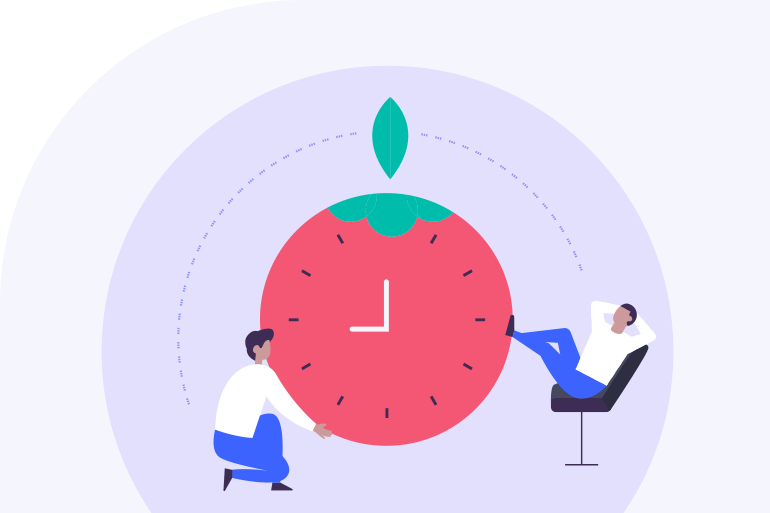
The Pomodoro technique
It is one of the most simple yet effective time management technique. This technique forces you to do single task so that your brain can focus on only one thing at a time as switching between tasks reduces productivity.
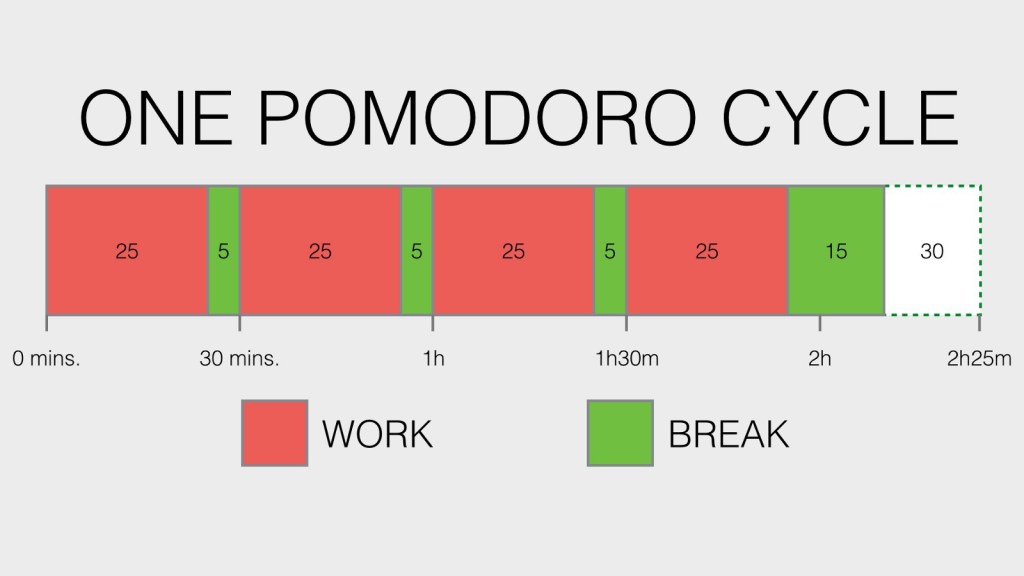
According to this technique turn off all distractions and set a timer for 25 minutes. During that time you will only focus on that work. After 25 minutes take a break of 5 minutes. After repeating this process for 4 times, take a long break.
The reason why it is successful is that it creates a sense of urgency as you have only 25 minutes to make as much progress as you can. Also it forces you to take a break which keeps you fresh throughout the day.
The Eisenhower Matrix
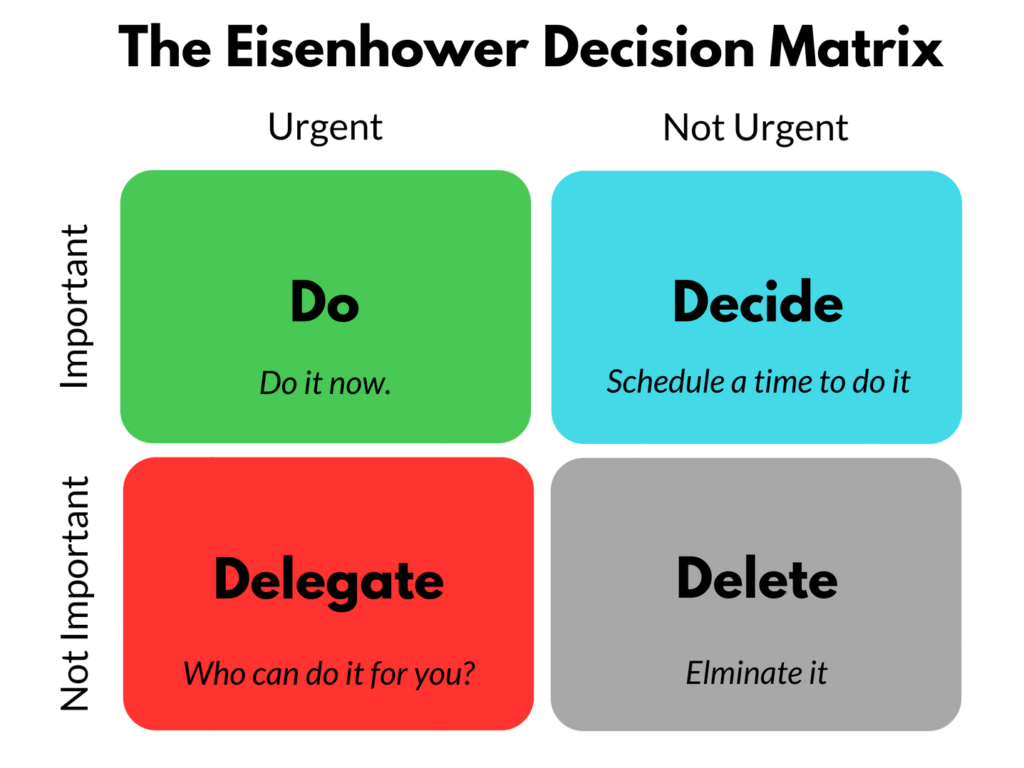
Prioritizing your tasks is a crucial part of time management as you may be spending hours doing useless things. The Eisenhower Matrix( urgent-important matrix) helps you in discovering your important tasks.
This matrix divides all your tasks into 4 quadrants:
Urgent and important: These are the most important tasks of your day. You have to do these tasks at any cost. This quadrant include crisis and deadline driven tasks.
Not urgent and important: These are important tasks but can be delegated like business planning, building relationships. As these tasks are not urgent you can schedule them in near future.
Urgent and not important: These are tasks like interruptions, non important email etc. As these tasks are not important delegate them instead of completing them now.
Non important and non urgent: These tasks are distractions and time wasters like playing video games. Just eliminate these tasks and focus on important ones.
To make this matrix, write down all your task and insert each task in respective quadrant. To be more productive spend more time on Not urgent but important activities as these tasks are meaningful to you but not urgent.
So these are some time management techniques, try to implement them every morning and get the best out of your precious time.
Anna was a 9-year-old girl from the small village. She finished attending elementary school till 4th grade at her village. For the 5th grade onwards, she will have to get an admission in a school at a city nearby. She got very happy knowing that she was accepted in a very reputed school in a city. Today was the first day of her school and she was waiting for her school bus. Once the bus came, she got in it quickly. She was very excited.
Once the bus reached to her school, all students started going to their classes. Anna also made it to her classroom after asking fellow students for direction. Upon seeing her simple clothing and knowing she is from a small village, other students started making fun of her. The teacher soon arrived and she asked everyone to keep quiet. She introduced Anna to the class and told that she will be studying with them only from today.
Then the teacher told the students to be ready for the surprise test now! She told everyone to write down the 7 wonders of the world. Everyone started writing the answer quickly. Anna started to write the answer slowly.
When everyone except Anna had submitted their answer paper, the teacher came and asked Anna, “What happened Dear? Don’t worry, Just write what you know as other students have learned about it just a couple of days back”.
Anna replied, “I was thinking that there are so many things, which 7 I can pick to write!” And, then she handed her answer paper to the teacher. The teacher started reading everyone’s answers and the majority had answered them correctly such as The Great Wall of China, Colosseum, Stonehedge, Great Pyramid of Giza, Leaning Tower of Pisa, Tajmahal, Hanging Gardens of Babylon etc.
The teacher was happy as students had remembered what she had taught them. At last the teacher picked up Anna’s answer paper and started reading.
“The 7 Wonders are – To be able to See, To be able to Hear, To be able to Feel, To Laugh, To Think, To be Kind, To Love!”
The teacher stood stunned and the whole class was speechless. Today, a girl from the small village reminded them about the precious gifts that god has given us, which are truly a wonder.
Moral: Value what you have, use what you have, trust what you have. You don’t always have to look away to find an inspiration. God has given you all the strength to reach your goals.
Whether you’re a businessman looking for a new technology for your startup or business idea or a tech enthusiast looking for a new tech skill to learn to give your career a boost in 2021, you’re at the right place. Here you’ll learn about the top 10 fast-growing technologies in 2021.
2020 has taught us many things. One of these things is that technology, if used right, can help improve our lives in numerous ways.
When banks, offices, and practically everything else was shut down due to the pandemic, it was the technology that saved us from going insane.
We managed to survive the worst with the help of video calls, group meetings, digital money transfer, video streaming, and other tech solutions. And now when the worst is over, it’s time to upgrade ourselves to include the newest technologies in both our work and our life.
So, what are the new and upcoming technologies that are worth considering for those looking to create next-gen solutions as well as for those looking to upgrade their career skills?
Let’s find out.
HIGHLIGHTS
Block chain & DeFi
2. Artificial Intelligence
3. Virtual Reality and Augmented Reality(AR&VR)
4. Cyber Security
5. 5G Network
6. IOT (Internet of Things)
7. Machine Learning(ML)
8. Fintech
9. Cloud Computing
10. Voice Assistaance
11. Conclusion
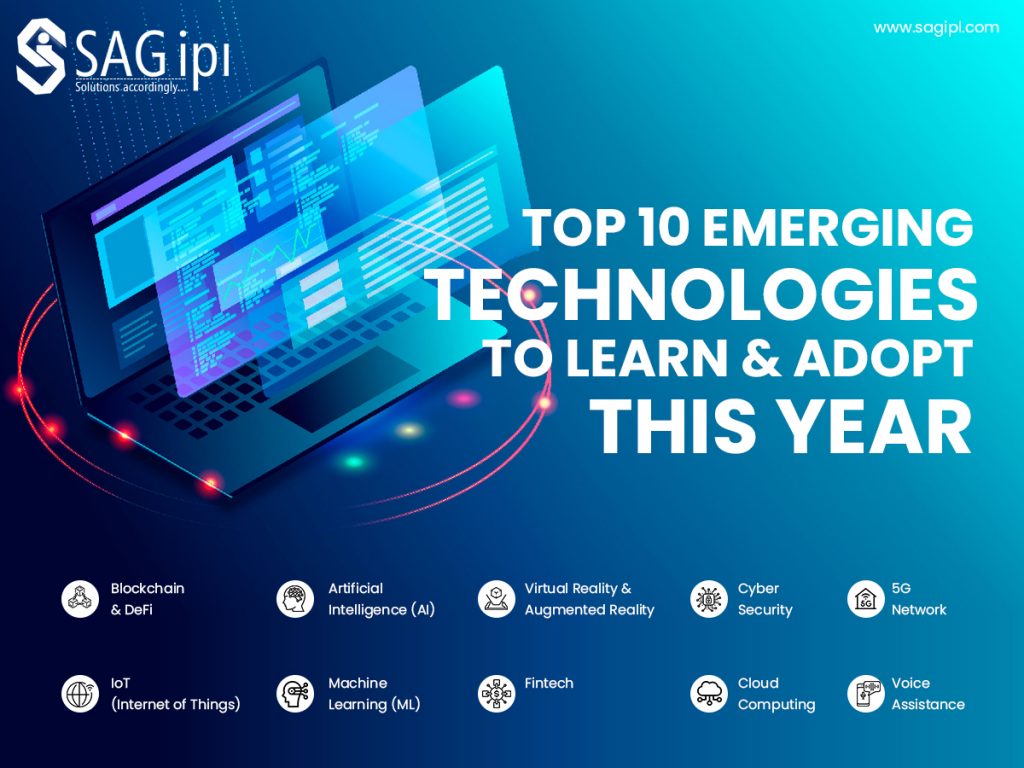
Top 10 Emerging Technologies To Learn & Adopt In 2021
Emerging technology is something that has great future potential but is still vastly unexplored in terms of practical applications.
For instance, blockchain is a life-changing technology that can effectively disrupt not just finance but any industry that deals with digital transactions and security.
Even though people are aware of the potential of blockchain, it’s applications are yet to be realized, which makes it a wonderful technology for anyone looking to learn to upgrade their skills or planning to create a futuristic application.
So, here are the top 10 futuristic technologies with high potential that anyone can consider adopting for their next tech venture.
1. Blockchain & DeFi
Blockchain is probably one of the dearest technologies of today. After all, we badly need a system that is free of middlemen and intermediaries and is fully transparent. And blockchain offers exactly that.
Blockchain is a digital ecosystem that is managed solely by its users. There are no owners or intermediaries in a blockchain network.
It’s a distributed, decentralized network that consists of thousands of nodes (computers) that are interconnected.
Each transaction in a blockchain network is processed through and verified by all the nodes in the network, which means the probability of failure or human error is nil.
Also, the blockchain network is public and, therefore, fully transparent. It’s not governed or managed by any single/centralized entity.
Blockchain technology has potential applications in a variety of sectors, including finance, digital security, voting, cloud computing, medicine, cross-border payments, identity security, cryptocurrency exchange, security tokenization, and more.
Along with blockchain, another system or technology that has emerged as a winner in the modern times is DeFi, or Decentralized Finance, which refers to the use of decentralized technology such as blockchain in the finance market.
Possible Defi applications include peer-to-peer lending and borrowing, p2p investments, p2p shopping, and others.
Turn your blockchain idea into a successful app with our expert blockchain development services & solutions made to fit everyone’s budget.
2. Artificial Intelligence (AI)
Artificial Intelligence is one of the technologies that we have all been hearing about for a decade or so, but even this technology has not been fully explored yet. There is so much you can do or create using AI.
Artificial Intelligence refers to the integration of intelligence (or the power to think) in machines. In other words, it’s the process of teaching machines to think and act like humans.
AI is going to be at the forefront of tech evolutions in the coming years. Experts estimate the AI market value to cross $400 billion by the next few years. AI can present itself as useful in a number of industries.
For instance, we have already been seeing mobile/smartphone devices inspired by AI that can learn from the user experience and adapt their offerings accordingly.
You can create your mobile app on Artificial Intelligence, build a next-gen, AI-based trading & investment system, or create an AI-powdered trading platform. The opportunities are truly unlimited.
3. Virtual Reality & Augmented Reality (AR & VR)
AR & VR when first introduced about a decade back were expected to be game-changing innovation in the technology field.
Sadly, we are still very far away from seeing mass application or utilization of these futuristic technologies.
As of now, Virtual Reality & Augmented Reality are mostly used in the fields of education and training (presentation), gaming, entertainment, among others.
AR or Augmented Reality refers to the integration of real-world objects into the digital world for the better conveyance of information through text, graphics, audio, and other virtual enhancements.
VR, on the other hand, refers to the creation of a computer-generated artificial three-dimensional environment, with which a user can interact using electronic devices.
We are already seeing the use of AR & VR in the gaming, education, and entertainment industries.
There are now available VR devices from leading companies like Google and Apple. There are games being developed using AR and VR technologies, and it’s only the start.
4. Cyber Security
As the growth of the internet is apparent, so is the probability of cyber threats. Cyber Security is the technology aspect that deals with the security of users and data from a range of internet threats such as hacking, malware, phishing, DoS attack, and others.
Cybersecurity is as important, or maybe more, as the internet itself. In the last decade or so, we have come across many cases of cybercrimes.
There are even designated police to handle such crimes related to cybersecurity. So, the need for cybersecurity is apparent and so is the need for applications and platforms that deal with cybersecurity.
Whether you are looking to build your business on next-gen technology or planning to learn new technology to upgrade your career, Cyber Security is one of the best options today.
5. 5G Network
5G, which stands for the 5th Generation mobile network technology, is an upcoming technology that will offer the internet at a faster speed with the ability to connect multiple devices at the same time with a single hub.
The 5G technology is almost here, which makes it the best time to start creating applications or next-gen solutions on 5G.
The 5G technology when combined with other state-of-the-art techs such as robotics and IoT can present numerous business opportunities.
It will boost the performance of IoT networks by providing a more stable and high-performance internet connection.
Other possible use cases include 5G cloud robotics, machine remote control, autonomous vehicles, industrial automation, and more.
Depending on your particular expertise or industry, you can start building 5G applications to help your customers and boost your business growth.
6. IoT (Internet Of Things)
Internet of Things (IoT) is a term coined first in 1999, which refers to a network consisting of a variety of physical objects.
In the modern world, that network is often referred to as the internet that connects multiple devices and, therefore, allows different devices in the same network to communicate (for the purpose of exchanging data) with each other.
The best modern example of IoT would be Smart Homes, where multiple objects or devices such as TV, refrigerator, smartphone, AC, etc.
Are connected through the home network (internet) and can be controlled using a common interface, both through physical means and voice guidance.
IoT is one of the biggest technology revolutions of our time. It has numerous applications in a variety of niches. If realized properly, it can make processes more effective and cost-efficient.
Build your next application or business on IoT using our expert IoT development services.
7. Machine Learning (ML)
Machine Learning is similar to AI. However, instead of focusing on developing smart machines (with the ability to think), ML deals with creating the ability for machines to learn from past data.
In other words, it allows machines to automatically learn new things and adapt themselves using past data and/or experiences.
Machine Learning has huge scope in a range of sectors, including medical, finance, image recognition, speed recognition, education, classification, traffic prediction, product recommendation based on purchase history, e-commerce, pattern recognition, data analytics, and others.
For instance, a machine or program can be developed that can provide product recommendations to the user based on his/her past purchase history.
Machine Learning isn’t the future, it’s now! Build successful ML applications and products with SAGIPL.
8. Fintech
Fintech is another revolutionary technology that we were blessed to know about in the past decade.
The term ‘Fintech’ is an amalgam of the words Finance and Technology, and it refers to the use of the latest technologies to improve the way financial transactions are performed and/or managed.
The latest and most common applications/examples of Fintech include cryptocurrency (digital currency), global payment transfer (PayPal, etc.), UPI, internet banking, etc.
All these applications deal with the use of technologies like blockchain and UPI to make digital payments faster, more affordable, and secure.
The good thing is that there is still a lot more to achieve in the Fintech industry, and the opportunities to build new solutions and apps inspired by Fintech are numerous.
For instance, you can create a digital payments app like PayPal but using cryptocurrencies as the default way of payment.
9. Cloud Computing
Cloud Computing is rather old technology and has been around for some years now, yet we decided to include it in our list of the top 10 high-potential technologies for 2021 because we believe cloud computing is a futuristic technology and still has miles to go.
Cloud Computing refers to the availability and use of computer resources over the internet (cloud).
It allows users to access and use state-of-the-art computing facilities without the hassle of managing them. It’s like renting the computer power on the cloud for a fee.
Besides data storage, cloud computing can be used for a range of purposes, including easy & secure communication, team meetings, live training, distance learning, real-time collaboration, social marketing, and more.
If you have an idea for a business that can run on the internet and will benefit from secure, low-cost cloud computing or storage, Cloud Computing is for you.
10. Voice Assistance
Voice assistance software and platforms are highly popular these days. With big companies like Amazon (Alexa), Microsoft (Cortana), Apple (Siri), and Google having their own Voice Assistant programs, people using all these platforms now have the ability to send commands using voice.
Voice-based commands are easier and faster to execute. Now, you can make a search on Google using your voice, ask Alexa to play a particular song for you, and much more. Basically, it’s a revolutionary technology with huge opportunities for everyone involved.
AI-driven voice assistance can also be used for analyzing user experience and providing personalized services accordingly.
So, there is huge scope for companies and entrepreneurs that want to build their next applications on Voice Assistance. Also, it’s a cool enough technology for tech-enthusiasts to learn for career-upgrade in 2021.
Conclusion
I hope you like our list of the top 10 fastest-growing technologies for 2021 & beyond. The technology paradigm is shifting very fast, and if you want to keep up with it, make sure that your business is utilizing the latest and the best of modern technologies.
Technology has always been an integral part of our lives, and its role in our overall growth is only going to increase in the coming future.
It is only by accepting the new technology evolutions and adapting ourselves and our business processes according to them can we ensure optimal future growth.
Luis Guzman came into this world on 28th August, 1956. He was born in Cayey, Puerto Rico. He was nurtured in New York’s Greenwich Village. His Family consisted of his mother Rosa who worked in a hospital, his stepfather Benjamin Cardona who used to work as a TV serviceman. Presently he lives in Vermont, US with his wife Angelita Galarza-Guzman, and five children Cemi, Yemaya, Yoruba, Margarita, and Luna. He completed his graduation from The American University. Just after which he started his career as a social worker. Currently Luis works as an Actor in the Hollywood Film Industry. Some of his greatest work include the HBO’s Original series ‘How to make it in America’ and one of the most popular Netflix’s series ‘Narcos’. He is frequently and usually casted by two directors Steven Soderbergh, and Paul Thomas Anderson. Some of his other works are in 2003 Luis briefly owned a TV series at Fox called Luis, Short Eyes in 1977, No Picnic in 1986, Q&A in 1990, McBain in 1991, Journey 2: The Mysterious Island in 2021, Ana Maria in Novela Land in 2015, The Birthday Cake in 2021, and many more. He has also been a part of some popular TV shows such as The Equalizer released in 1985, Hunter released in 1990, House of Buggin’ released in 1995, Roadies released in 2016, and many more. He is available on social media but doesn’t seem to be that active.
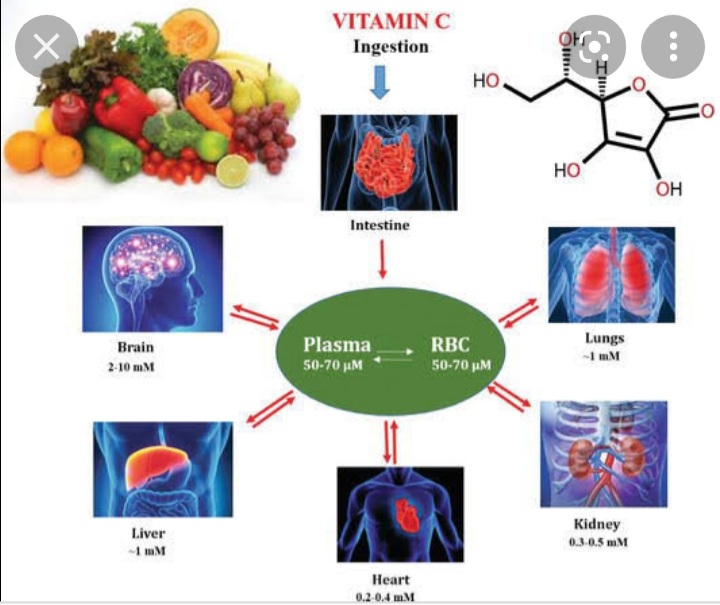
Vitamins are complex organic compounds, whose presence in trace amount in the food is essential for growth and other physiological activities. Vitamins do not have any energy value. However they are essential for controlling energy yielding processes. The identified Vitamins are classified as A,B,C,D,E and K. Of these, Vitamins B and C are water soluble in nature. Vegetables and fruits containing these Vitamins it washed in water as cut pieces would loose them easily. Vitamins A,D,E and K,if consumed beyond required level may cause defects, commonly referred to as vitaminosis .
Of the various vitamins, vitamin D or calciferol on exposure to sunlight can be synthesised by our body through the lipid compound called ergosterol,found below our skin. Hence it is known as ‘sunshine vitamin’.
The most functions of vitamins include
Physiological processes
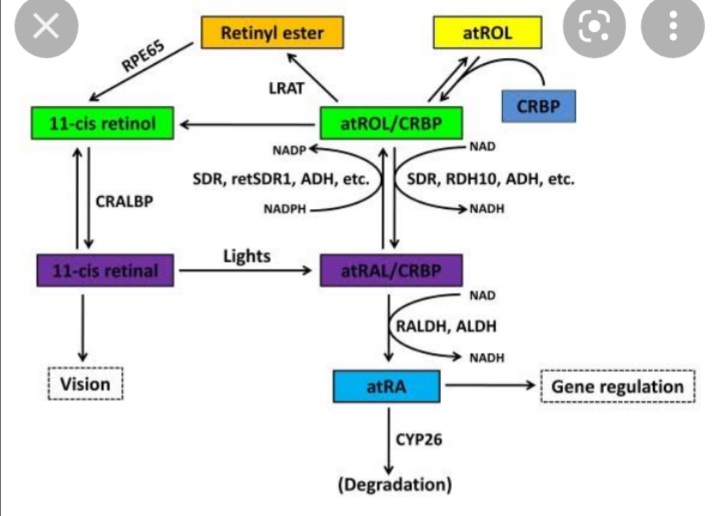
Vitamin A plays a very important role in visual perception. Vitamin E might ensure fertility in animals. The clotting of blood is aided by Vitamin K. Vitamin C provides Immunity against infections and it may also support processes of growth.
Maintenance of body tissues
The epithelial tissue of the body are maintained by vitamin A and B2. The growth of bones is ensured by vitaminD. Vitamin E plays a role in the rejuvenation of tissues. Nourishment to nerve cells is provided by vitamin B1. The process of maturation of erythrocytes is due to vitamin B12.
Metabolic processes
The process of calcium and phosphorus metabolism happens due to the presence of vitamin D. Vitamin E is an antioxidant. Vitamin B1 remains as a co-enzyme in tissue metabolism and it is found useful in the process of oxidation of glucose in CNS. Vitamin B2 is essential for carbohydrate metabolism. Niacin ( vitamin B) plays a role as a co-enzyme and is essential for oxidation-reduction reactions. Normal metabolism of amino acids and fat are due to vitamin B6. Biotin (vitamin B) serves as a co-enzyme and co-factor in oxidative metabolism. Vitamin C activates certain intra-cellular enzymes.
Vitamin Deficiency Ailments
Vitamin A
1. Atrophy of lacrymal glands of the eye and reduction in tear secretion.
2. Corneal epithilium becomes red and dry (xerosis). It may also become wrinkled and keratinised ( xeropthalmia). Appearance of Bitot’s spot in the cornea might happen.
Vitamin D
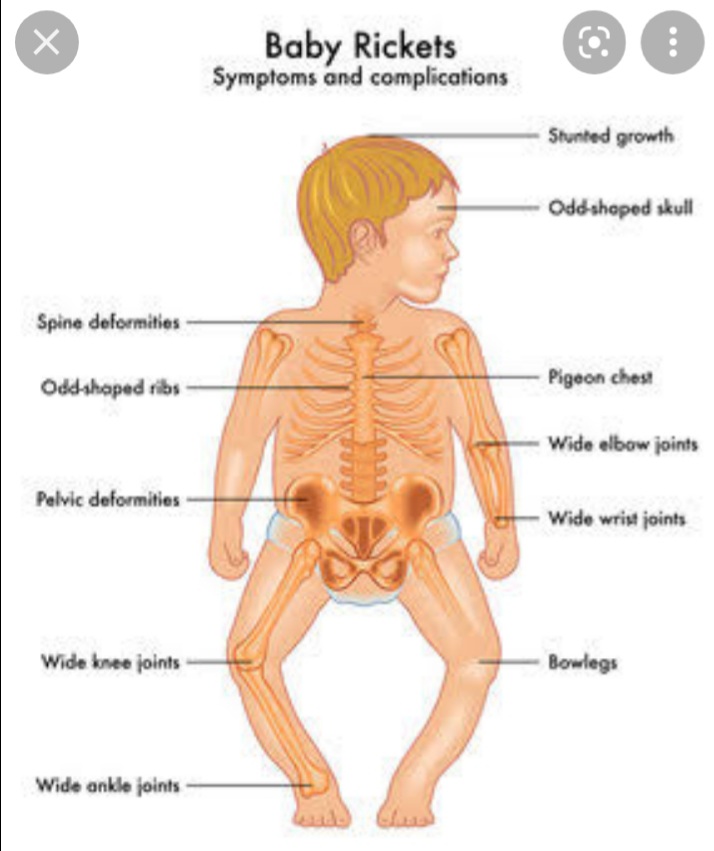
Defective calcification of bone,deficiency of vitamins-D,causes rickets in growing children and osteomalacia in adults.
Vitamin E
Rare in human, sterility in experimental animals.
Vitamin K
1. Lack of vitamin K leads to defect in blood coagulation.
2. In humans,vitamin-K deficiency leads to haemorrhagic manifestations.
Vitamin B1
Gross deficiency of vitamins B1,leads to a condition known as beri beri. Beriberi affects nervous and cardiovascular systems. In children and infants the onset is acute.
Vitamin B2
Loss of appetite and other gastro-intestinal symptoms, soreness and burning of lips,mouth and tongue. Fissures appear at edges of the mouth.
Vitamin Niacin
Its deficiency leads to pellagra. The principal symptoms of pellagra include mental changes, (dementia) dermatitis and stomatitis. The tongue becomes smooth, red and painful.
Vitamin C
Its deficiency in the body leads to scurvy, a disease charaterised by bleeding gums,loosening and falling out of teeth and intra muscular haemorrages. In the absence of this vitamin the collagen and connective tissue proteins are not synthesised properly.
Mental health includes psychological, emotional and social well-being. It affects the way we act, think, feel and react to certain things. It helps us to assess how we take decisions, handle stressful situations and make choices. It is an important element of human life which matters throughout the entire life of a person, not at just some particular point of time.
Today, almost everyone leads a competitive life with busy schedules Everyone is in such a hurry that we often tend to forget to keep check on our mental state. And this is not a healthy habit. Just as our physical health, our mental health is also very important, and one should not ignore it.
Determinants of mental health
Multiple psychological, social and biological factors determine the level of the mental health of a person. For instance, person who lives in a stressful or disturbing environment is at higher risk of having poor mental health. Similarly, poor physical health, unhealthy lifestyle and biological factors genetics can also be reason of one’s bad mental health.
Netaji, as he was popularly known was born in Cuttack, Orissa on January 23. His father Janaki Nath Bose was a noted lawyer and his mother Prabhadevi was from a well-known family of Hathkola. They believed in English education alone, though they ignited in him a love for the motherland.
Subhash Chandra Bose was very brilliant and he passed his Bachelors of Arts Exam with Honours. In 1919, on September 15, he went to study at Cambridge in England to fulfill his father’s wish of appearing for the Indian Civil Services Examination. This period had a lasting effect on him, as at Cambridge there were students from various British colonies and there ensued a free discussion of problems faced by different countries. Subhash also noticed the way people lived in free countries and this left a great impact on him.
Under British rule people always lived in fear and insecurity. He also got to know the nature and the values of British people, who were not aware of the imperialistic nature of the rule which destroyed the values of India. The British people were not aware of how the British ruled in these countries giving the British a bad name back home. Though he was selected for the Indian Civil Services, he decided against joining the British government. Instead, he met Mahatma Gandhi and decided to join the Indian National Congress. His first activity was the boycott of the visit of Prince Wales to India. For this, he was arrested and sent to jail in Calcutta in December 1921.
Netaji realizes the potential of the youth of the country. Though an active member of the Congress he did not agree to some of Gandhiji’s principles and policies. His was a more revolutionary approach. He used to organize groups of young as volunteer corps and trained them on military lines. These men were dressed in military uniforms and used to maintain Law and Order at locations where Congress sessions were held. Groups like the Hindustan Republican Armed Group led by Bhagat Singh, the Anusilan Samiti, and many other revolutionary groups realized that Netaji was their supporter and held him in high regard. He was the unspoken leader of the youth and as the President of the Trade Union Congress, he realized the strength of the working classes in India for the freedom struggle. He was elected as the Mayor of Calcutta in 1930 and he was also elected as the President of the session on the Indian Nation Congress in 1938.
Netaji resigned as the President of the All India Congress in 1939. His views were opposed to Gandhiji’s and they had their individual supporters. Netaji believed in more forceful action while Gandhiji’s methods were ‘non-violence’ and ‘co-operation’. Subhash Candra Bose eventually resigned from the post after efforts to solve the dispute between him and Gandhiji failed. In May 1939, he formed the Forward Block within Congress. They opposed the non-violence policy of the Congress and after the outbreak of violence of the Second World war in September 1939, he launched more forceful anti-British and anti-war campaigns all over India.
In 1940, after his arrest, he disappeared from his home in January 1941. He went to Germany to try and to enlist their support as they too were anti-British. He formed the Azad Hind Fauz (Indian National Army) and recruited Indian prisoners of War. He also enlisted support from the Japanese, for creating an army big enough to liberate India. He also assumed command of the Indian National Army at Singapore on October 21, 1943. He took over the Andaman and Nicobar Islands with the help of the Japanese government who decided to hand over these islands to India. The INA crossed the Burma-India border in 1944 and marched into the Imphal and Kohima area of Manipur. However, due to the surrender of Japan during the Second World War, the INA was isolated and did not receive any help from Japan. Hence they had to call off the war.
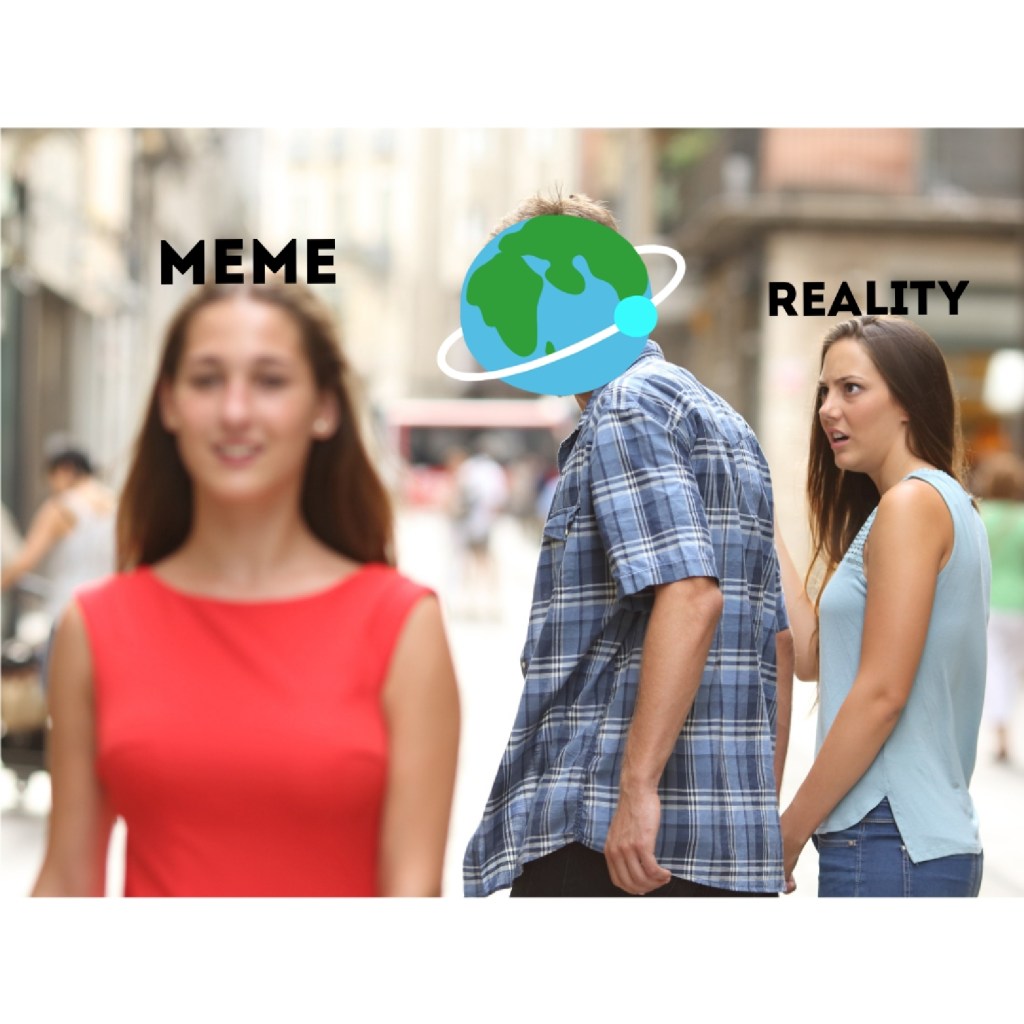
I feel in today’s time, you are truly successful if a meme is based on you.
brainyquote.com
Made this meme as soon as I decided to write on this topic.
What is a meme?
The word meme is the short form of greek word mīmēma which means ‘imitated thing’. According to Wikipedia, a humorous image, video or text that is copied and rapidly spread by the internet users. It has become a lifestyle through which people give out their creativity. The reason it has become so popular is the connection viewers feel between them and the events portrayed. With the rise in meme culture, meme makers that are known as memers have increased incredibly since, its not a tough task to make a meme, but being consistent and up to date is an important and must to have skill. With the decline in humour of COMEDY industry memes have come as life saviors.
How it came into existence
Memes have literally evolved with the internet and they became a thing in the mid 1990s. Memes in the form of short clips were shared by peope in usenet forums. People put their humor into the right place or as we see a right template. Earlier they were shared via mails, messages or even newspapers and as the electronics took over social media became a meme hub. It has become an important aspect of marketing strategy. Whenever a movie is about to be released, memes related to it are all over the internet, a very smart move by the marketing people because what’s better than meme when you want your stuff to be known by the audience.
Pros of meme
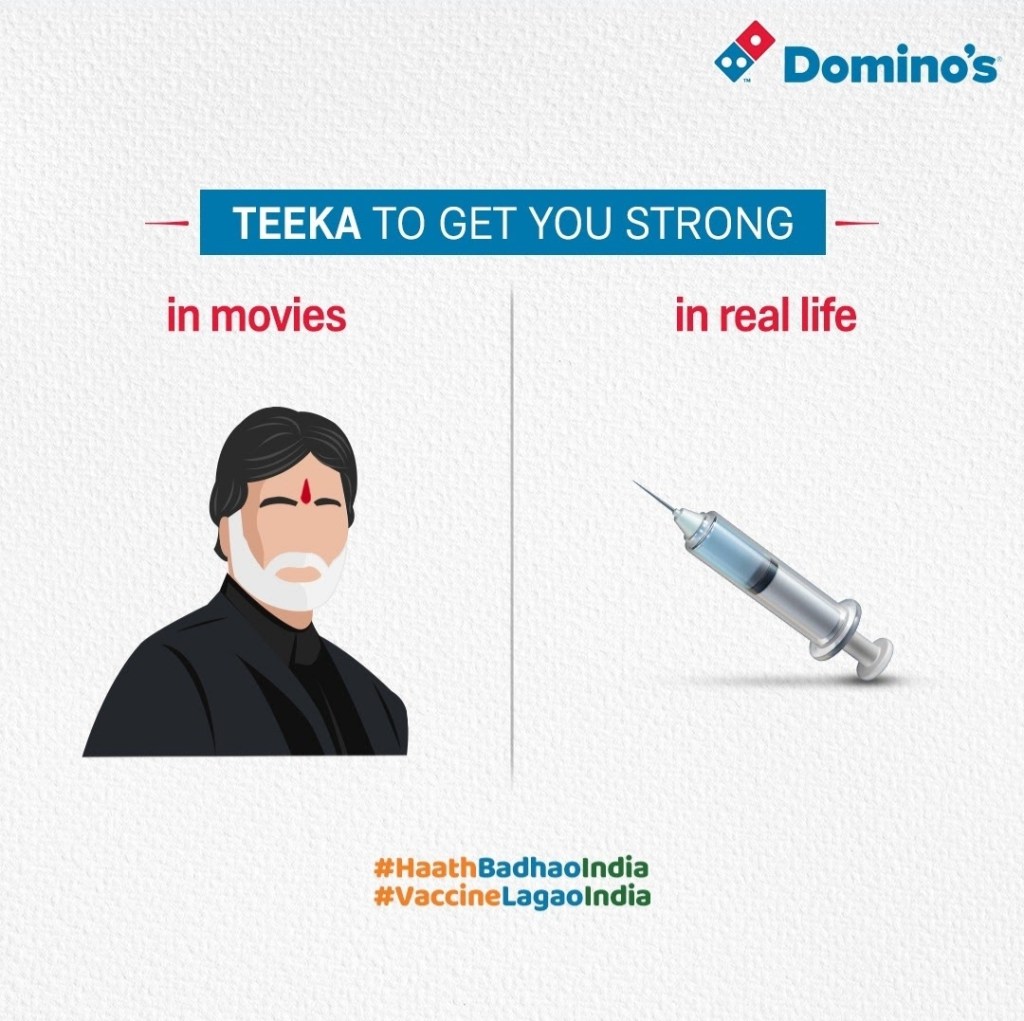
Meme shared by Dominos_india on twitter.
Gives us a reason to SMILE: Feeling bored? Scroll through social media memes. Sad? Obviously memes!! Sometimes we are feeling down and really have someone to talk to, thats when people start looking for relatable things and memes provide them the feeling of satisfaction that there are others just like us, who go through similar things. They are meant to be funny even with the darkest of humor.
A source of income: Big brands like Domino’s, IPL, are hiring professionals memers for their marketing. It helps them in popularity and also gives their fans a chance to interact with them via internet. Not only brand but celebrities share memes nowadays. Big meme pages get paid promotions regularly. Meme accounts, which these people started a few years ago have become a good source of income for them.
A link between friends: You can’t talk to your friends everyday but you can share memes. Sharing memes has become a trend. There are groups for this single purpose where this small happiness is shared everyday and people connect to each other without having a proper conversation.
Free of cost! This is the best thing about memes. You can get them anywhere and anytime without spending a single penny. Who doesn’t like to get things free?
pic courtesy: pinterest
According to psychologist paul Thagard in a 2013 web article, memes are not a good way to express extreme thoughts.
Cons of memes
Offensive: memes that are funny to some might be offensive to others. With time they have become controversial, though hurting other’s sentiments should be avoided but you never know what can hurt people. This offensive side of meme culture gets unnoticed. People don’t understand the depth of it.
Negativity: lately everything that goes viral becomes a meme and with it goes hate. People hate on others who they dislike or disagree with. For example, few days ago a lady was seen slapping a guy and soon as the matter was discovered, people got their fresh meme material much of which was funny but a small portion if it was purely bad taste. Abusing or hating should never be considered right in memes.
Short lived: memes get famous for a short period of time and are replaces by others as soon as something new comes in market. They are forgotten easily and sometimes you just get bored of them because there are so many similar memes they don’t appeal to us the same way others do.
Conclusion
Despite the pros and cons, it’s important for the public especially youngsters to understand that memes are just a means of making people laugh but within the limits. We need to understand that mocking others or using the memes to laugh on sensitive topics should be avoided. There have been many incidents in the past where people have made meme without acknowledging the seriousness of the matter. Just yesterday I saw a meme on people who got killed by clinging to the plane in Afghanistan. On the other hand there have been cases where memes have saved people in their gloomy days. And they have also been helpful in spreading information on a wide scale. We get the news of an earthquake from meme fater than the media. Funny but true. Meme culture can have repercussions on our mental well being, it affects the way we see our society and sometimes stops us from changing by approving our toxic traits.
Let’s not make this world a meme and keep it real. Laugh at funny but be serious when required. Laughing about negative aspects of human life is not ok. Making memes on suicide, depression and other such matters is not ok. Turning these serious matters into trivial ones is not ok!! Let’s enjoy memes that are really funny and within the limits.
We all in need some form of motivation in our lives to keep on living to our fullest and ensure that we make sure that we do our best all the time. We wake up everyday with a motivation in our mind to seize the day.Ranging from the desire to finish a project on time, to wanting to shed those extra pounds, motivation is quite essential for us so that we remain consistent in our efforts to achieve our dreams and make them a reality. However, sometimes we may not feel good or may not able to perform to the maximum of our potential. We may sometimes slack off or laze out our days instead of getting that project finished before the deadline or study for that important text that may define our grades. In such cases, we really need that extra dose of motivation to get the task done smoothly and efficiently.
If you too are feeling low on motivation, try some of the tips discussed below that may help you to get it back so that you can do your best and follow your goals. They are as follows:-
#1 PLAN OUT YOUR SCHEDULE
If we want to achieve a goal smoothly, we need to make consistent efforts to ensure it. In such cases, spontaneous bursts of energy may be quite useful but they do not work out in the longer run. Here comes the importance of planning; organising and making map of your entire game plan before beginning with the preparation may be extremely useful and make our work a lot easier. This ensures that we know exactly what we are doing and that in the end, we don’t get loaded with all the pending work. Furthermore, we get time on our hands so that we can remain calm and collected instead of panicking at the last second.
#2 MAKE GROUPS
Becoming a part of study groups online or offline, can really help you to be consistent. This is due to the fact that these groups are highly motivating and influential in a way that they hold us accountable for our progress and we also get platform where we can talk about certain blocks we might be facing and even get solutions to any problems we may face.
#3 TAKE BREAKS
One of the major reasons why people back-out from things is simple: burnout, due to excessive work load. People often tend to over work themselves and get exhausted, losing any further willingness to complete their task. In such situations, it is advisable to take break and chill out, instead of going on-and-on with your work. Not only this, it may also help improve our productivity to a higher level. We may not feel tired from our work and perform to our maximum potential if we give ourselves time to rest and recover. Often, consistent efforts are required rather that doing all hr work at once and then not proceeding with it at all.
So, make sure to take care of yourself and work smarter not harder!
Hurricane! A hurricane is a huge storm, that generally forms over warm ocean waters.. ..near the equator. The warm air above the ocean rises upward.. ..thus creating an area of low pressure, below! Air from the surrounding areas.. ..push in and try to fill the area with low air pressure. Which now becomes warm and moist. And, rises too.
As the moist air rises, the surrounding air again, tries to fill in. And, this process continues, till the water in the air forms clouds! Soon the clouds and winds spin around.. ..fueled by the oceans heat and water vapor. Therefore, hurricanes could also be called, Giant Engines. That use warm and moist air as their fuel! When we see from the top,.. ..hurricanes can be as huge as 300 miles wide. The center of the hurricane is called ‘The Eye’ of the hurricane.
Which is the calmest part. The ‘Eye Wall’ surrounds the eye. Where the most damaging winds are found. It can range anywhere, from 5-30 Miles. Then comes ‘The Rain Bands’. Which surround the eye wall. These bands are a series of dense clouds.. ..that give a pin wheel like appearance to the hurricane. Which range from 50-300 Miles. Hurricanes are divided into 5 categories. Depending on the speed of their wind. Here, take a look. Category 3, 4 and 5 are the most dangerous ones. TRIVIA TIME. A huge hurricane can release energy.. ..equivalent to 10 atomic bombs per second. Hurricanes in the Pacific Ocean are know as Typhoons!…
Hello Friends , we are going to talk about NYKAA If you are a girl or if you have a girlfriend or if you have a sister, You may have heard about this NYKAA is an ecommerce store Who provides cosmetics Cream, shampoo, lipstick They provide stuff like these If you are a female, then do tell me in the comments Whether you order things from NYKAA or not If you are male then also comment if you have ever used it You must be aware that cosmetic market is a profitable market. After a lot of research You get a 30-70% discount on normal products. Means this much commission Now they are dealing with high end products. Like MAC Whose foundation cream is worth 3k So in this, they may get More commission in this But right since childhood I’ve hearing this that margin is high in cosmetics And they brought it online Means you don’t need to go to stores You can order online.
Brands like MAC etc If i am not pronouncing their names well I am punjabi, understand it :p When you go to their stores You can imagine the amount of money they spend on infrastructure. So if you want to spend this much money And people get free makeup from there Like come and try this lipstick It’s a part of your expenses. And this was the problem they catered. So it’s a nice business model. NYKAA was started by Falguni in 2012 She was an investment banker Means investment work and after that she started NYKAA and after 5 years, she reached Break even Means No profit No loss Means before that she was in loss In starting, it took 1000 to acquire one customer. Means Online marketing If you have heard about them, then it’s from their online campaign .
They don’t advertise much on tv. They give sponsorship in femina Means 1000 for one customer. Which is reduced to 200-300 And the cart size of this industry Means the amount people add is between 1250-1500 Which is upto US standard You can imagine the high exclusive audience. They like expensive makeup and are switching towards NYKAA> They don’t have time to go to stores To buy a lipstick They can order online easily and delivery is fast They have a fast delivery system Why because they have an inventory model Means you already have all the products in bulk and they can directly send the product from their warehouse directly And delivery process is fast. If you’ll visit their website. their monthly traffic is around 10M and according to their CEO 50% customers are repeated Repeat customer means Now they don’t need to spend much on acquisition.
Those 50% customers will buy things without any ads And other 50% customers. We need to show them ads via social media. Affliate They have to spend on those 50% and one more thing If you want to open an ecommerce store You should have an advantage, their advantage is They are buying directly from the brands and don’t offer discounts on their own. Unless Until brands offers it. Whenever you see a discount on their site. Those discounts are from brands itself. If you receive a gift from them, it’s from brand not from NYKAA> So it’s an advantage, Now they have started their own product line. Every ecommerce department is doing it. Here you already had a marketplace and an audience who likes buying a lot of products. You have shown them your products.
And they tried your products. If your product quality turned out to be good. You created a new set of audience. You want to buy your products in the inventory model. and earlier company was giving you commission BUt here profit is yours They are opening their own stores. Their idea is to open 30 stores till 2020 They may open more than 30 stores because recently they received funding and have reached break even. If you ask them about IPO She was an investment banker means she knew about IPO But according to her, unless until her profit reaches 200 crore. They won’t launch IPO talking about their revenue. Their revenue in last year was 214 crore. and now have increased to 570 crore You can imagine their growth And have already reached break even meanns profit!!!! Expenses are less.
Whether salary cost or maintaince cost or in marketing. NOw that they have reached break even, profitablility is high Let’s talk about financial stats They have received funding in 6 rounds. From 9 investors and they have received 69 Million dollar funding and it’s a maharashtra based company that’s it. If you need more info, you can check on crunchbase about their financial stats. One more thing, in starting .
They faced a lot of issues in order to convince brands. Imagine They are selling nivea to a high end product If they are shown together SO they faced issues in the starting. then after some time Brand understood their pitch They want to create a platform where every audience get their desired products. Their biggest competitor is SEPHORA What do they do They only sell high end products. NYKAA on the other side sells both type of products. and we’ll target all the audience. so according to me, business model is profitable You tell me in the comments about their business model.
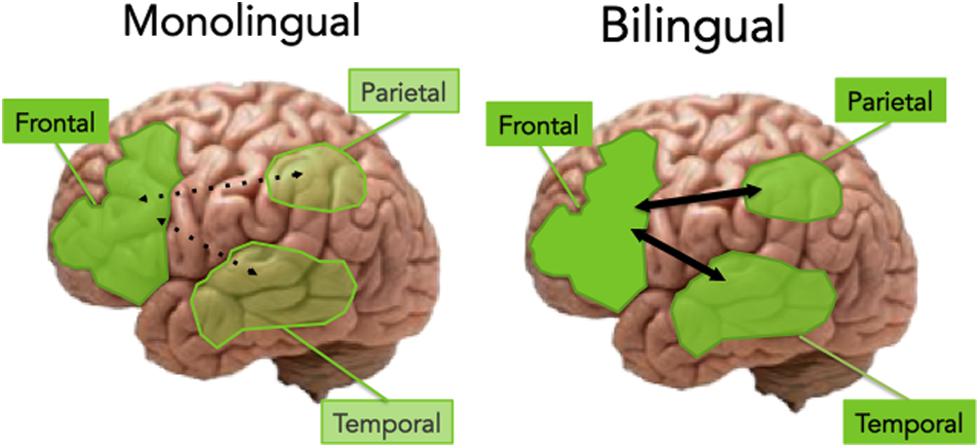
Hello Friends !… And besides having an easier time traveling or watching movies without subtitles, knowing two or more languages means that your brain may actually look and work differently than those of your monolingual friends. So what does it really mean to know a language? Language ability is typically measured in two active parts, speaking and writing, and two passive parts, listening and reading. While a balanced bilingual has near equal abilities across the board in two languages, most bilinguals around the world know and use their languages in varying proportions. And depending on their situation and how they acquired each language, they can be classified into three general types. For example, let’s take Gabriella, whose family immigrates to the US from Peru when she’s two-years old.
As a compound bilingual, Gabriella develops two linguistic codes simultaneously, with a single set of concepts, learning both English and Spanish as she begins to process the world around her. Her teenage brother, on the other hand, might be a coordinate bilingual, working with two sets of concepts, learning English in school, while continuing to speak Spanish at home and with friends. Finally, Gabriella’s parents are likely to be subordinate bilinguals who learn a secondary language by filtering it through their primary language. Because all types of bilingual people can become fully proficient in a language regardless of accent or pronunciation, the difference may not be apparent to a casual observer.
But recent advances in brain imaging technology have given neurolinguists a glimpse into how specific aspects of language learning affect the bilingual brain. It’s well known that the brain’s left hemisphere is more dominant and analytical in logical processes, while the right hemisphere is more active in emotional and social ones, though this is a matter of degree, not an absolute split. The fact that language involves both types of functions while lateralization develops gradually with age, has lead to the critical period hypothesis. According to this theory, children learn languages more easily because the plasticity of their developing brains lets them use both hemispheres in language acquisition, while in most adults, language is lateralized to one hemisphere, usually the left.
If this is true, learning a language in childhood may give you a more holistic grasp of its social and emotional contexts. Conversely, recent research showed that people who learned a second language in adulthood exhibit less emotional bias and a more rational approach when confronting problems in the second language than in their native one. But regardless of when you acquire additional languages, being multilingual gives your brain some remarkable advantages. Some of these are even visible, such as higher density of the grey matter that contains most of your brain’s neurons and synapses, and more activity in certain regions when engaging a second language.
The heightened workout a bilingual brain receives throughout its life can also help delay the onset of diseases, like Alzheimer’s and dementia by as much as five years. The idea of major cognitive benefits to bilingualism may seem intuitive now, but it would have surprised earlier experts. Before the 1960s, bilingualism was considered a handicap that slowed a child’s development by forcing them to spend too much energy distinguishing between languages, a view based largely on flawed studies.
And while a more recent study did show that reaction times and errors increase for some bilingual students in cross-language tests, it also showed that the effort and attention needed to switch between languages triggered more activity in, and potentially strengthened, the dorsolateral prefrontal cortex. This is the part of the brain that plays a large role in executive function, problem solving, switching between tasks, and focusing while filtering out irrelevant information.
So, while bilingualism may not necessarily make you smarter, it does make your brain more healthy, complex and actively engaged, and even if you didn’t have the good fortune of learning a second language as a child, it’s never too late to do yourself a favor and make the linguistic leap from, “Hello,” to, “Hola,” “Bonjour” or “你好’s” because when it comes to our brains a little exercise can go a long way.
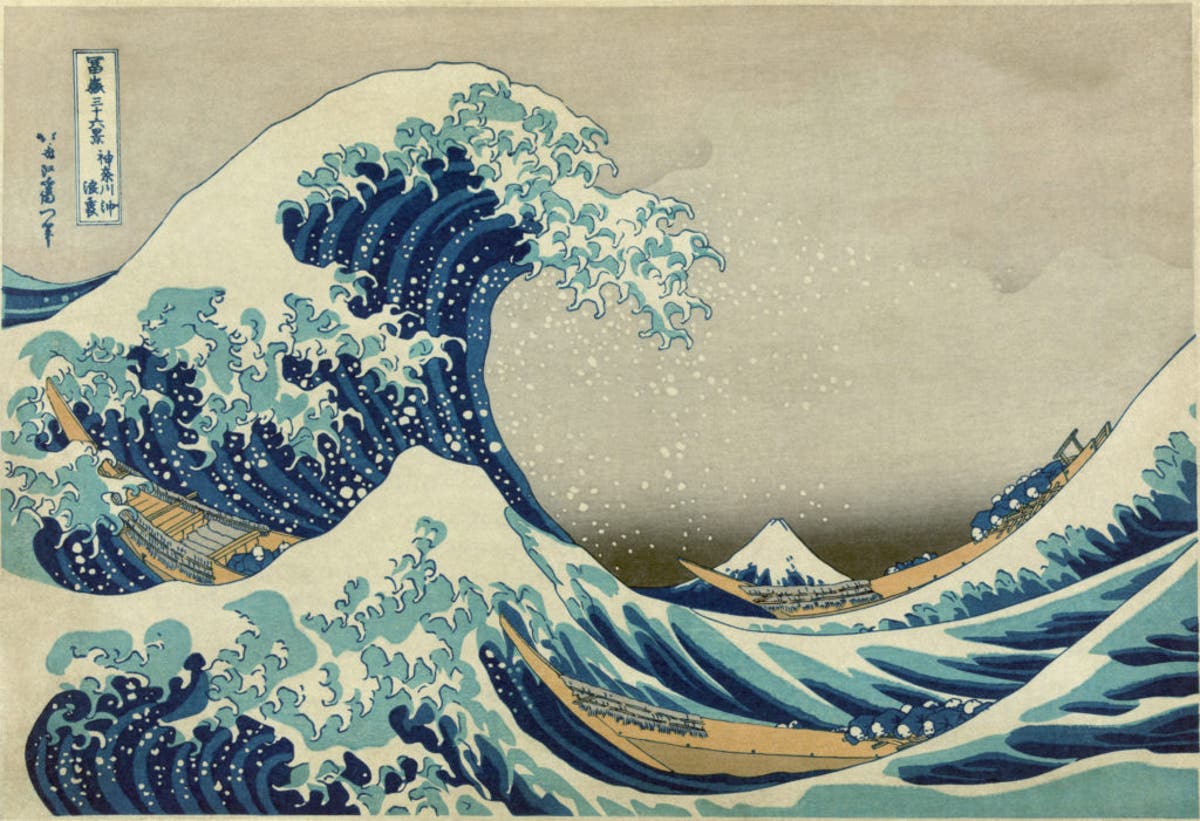
Hello Friends , In 479 BC, when Persian soldiers besieged the Greek city of Potidaea, the tide retreated much farther than usual, leaving a convenient invasion route. But this wasn’t a stroke of luck. Before they had crossed halfway, the water returned in a wave higher than anyone had ever seen, drowning the attackers. The Potiidaeans believed they had been saved by the wrath of Poseidon. But what really saved them was likely the same phenomenon that has destroyed countless others: a tsunami. Although tsunamis are commonly known as tidal waves, they’re actually unrelated to the tidal activity caused by the gravitational forces of the Sun and Moon.
In many ways, tsunamis are just larger versions of regular waves. They have a trough and a crest, and consist not of moving water, but the movement of energy through water. The difference is in where this energy comes from. For normal ocean waves, it comes from wind. Because this only affects the surface, the waves are limited in size and speed. But tsunamis are caused by energy originating underwater, from a volcanic eruption, a submarine landslide, or most commonly, an earthquake on the ocean floor caused when the tectonic plates of the Earth’s surface slip, releasing a massive amount of energy into the water. This energy travels up to the surface, displacing water and raising it above the normal sea level, but gravity pulls it back down, which makes the energy ripple outwards horizontally.
Thus, the tsunami is born, moving at over 500 miles per hour. When it’s far from shore, a tsunami can be barely detectable since it moves through the entire depth of the water. But when it reaches shallow water, something called wave shoaling occurs. Because there is less water to move through, this still massive amount of energy is compressed. The wave’s speed slows down, while its height rises to as much as 100 feet. The word tsunami, Japanese for “harbor wave,” comes from the fact that it only seems to appear near the coast. If the trough of a tsunami reaches shore first, the water will withdraw farther than normal before the wave hits, which can be misleadingly dangerous.
A tsunami will not only drown people near the coast, but level buildings and trees for a mile inland or more, especially in low-lying areas. As if that weren’t enough, the water then retreats, dragging with it the newly created debris, and anything, or anyone, unfortunate enough to be caught in its path. The 2004 Indian Ocean tsunami was one of the deadliest natural disasters in history, killing over 200,000 people throughout South Asia. So how can we protect ourselves against this destructive force of nature? People in some areas have attempted to stop tsunamis with sea walls, flood gates, and channels to divert the water. But these are not always effective.
In 2011, a tsunami surpassed the flood wall protecting Japan’s Fukushima Power Plant, causing a nuclear disaster in addition to claiming over 18,000 lives. Many scientists and policy makers are instead focusing on early detection, monitoring underwater pressure and seismic activity, and establishing global communication networks for quickly distributing alerts. When nature is too powerful to stop, the safest course is to get out of its way.
Hello Friends So, let me add to the complexity of the situation we find ourselves in. At the same time that we’re solving for climate change, we’re going to be building cities for three billion people. That’s a doubling of the urban environment. If we don’t get that right, I’m not sure all the climate solutions in the world will save mankind, because so much depends on how we shape our cities: not just environmental impacts, but our social well-being, our economic vitality, our sense of community and connectedness. Fundamentally, the way we shape cities is a manifestation of the kind of humanity we bring to bear. And so getting it right is, I think, the order of the day. And to a certain degree, getting it right can help us solve climate change, because in the end, it’s our behavior that seems to be driving the problem. The problem isn’t free-floating, and it isn’t just ExxonMobil and oil companies.
It’s us; how we live. How we live. There’s a villain in this story. It’s called sprawl, and I’ll be upfront about that. But it’s not just the kind of sprawl you think of, or many people think of, as low-density development out at the periphery of the metropolitan area. Actually, I think sprawl can happen anywhere, at any density. The key attribute is that it isolates people. It segregates people into economic enclaves and land-use enclaves. It separates them from nature. It doesn’t allow the cross-fertilization, the interaction, that make cities great places and that make society thrive. So the antidote to sprawl is really what we all need to be thinking about, especially when we’re taking on this massive construction project. So let me take you through one exercise. We developed the model for the state of California so they could get on with reducing carbon emissions. We did a whole series of scenarios for how the state could grow, and this is just one overly simplified one. We mixed different development prototypes and said they’re going to carry us through the year 2050, 10 million new crew in our state of California. And one was sprawl. It’s just more of the same: shopping malls, subdivisions, office parks.
The other one was dominated by, not everybody moving to the city, but just compact development, what we used to think of as streetcar suburbs, walkable neighborhoods, low-rise, but integrated, mixed-used environments. And the results are astounding. They’re astounding not just for the scale of the difference of this one shift in our city-making habit but also because each one represents a special interest group, a special interest group that used to advocate for their concerns one at a time. They did not see the, what I call, “co-benefits” of urban form that allows them to join with others. So, land consumption: environmentalists are really concerned about this, so are farmers; there’s a whole range of people, and, of course, neighborhood groups that want open space nearby.
The sprawl version of California almost doubles the urban physical footprint. Greenhouse gas: tremendous savings, because in California, our biggest carbon emission comes from cars, and cities that don’t depend on cars as much obviously create huge savings. Vehicle miles traveled: that’s what I was just talking about. Just reducing the average 10,000 miles per household per year, from somewhere in the mid-26,000 per household, has a huge impact not just on air quality and carbon but also on the household pocketbook. It’s very expensive to drive that much, and as we’ve seen, the middle class is struggling to hold on. Health care: we were talking about how do you fix it once we broke it
— clean the air. Why not just stop polluting? Why not just use our feet and bikes more? And that’s a function of the kinds of cities that we shape. Household costs: 2008 was a mark in time, not of just the financial industry running amok. It was that we were trying to sell too many of the wrong kind of housing: large lot, single family, distant, too expensive for the average middle-class family to afford and, quite frankly, not a good fit to their lifestyle anymore. But in order to move inventory, you can discount the financing and get it sold. I think that’s a lot of what happened. Reducing cost by 10,000 dollars
— remember, in California the median is 50,000
— this is a big element. That’s just cars and utility costs. So the affordable housing advocates, who often sit off in their silos separate from the environmentalists, separate from the politicians, everybody fighting with everyone, now begin to see common cause, and I think the common cause is what really brings about the change. Los Angeles, as a result of these efforts, has now decided to transform itself into a more transit-oriented environment. As a matter of fact, since ’08, they’ve voted in 400 billion dollars of bonds for transit and zero dollars for new highways. What a transformation: LA becomes a city of walkers and transit, not a city of cars. (Applause) How does it happen?
You take the least desirable land, the strip, you add where there’s space, transit and then you infill mixed-use development, you satisfy new housing demands and you make the existing neighborhoods all around it more complex, more interesting, more walkable. Here’s another kind of sprawl: China, high-density sprawl, what you think of as an oxymoron, but the same problems, everything isolated in superblocks, and of course this amazing smog that was just spoken to. Twelve percent of GDP in China now is spent on the health impacts of that. The history, of course, of Chinese cities is robust. It’s like any other place. Community was all about small, local shops and local services and walking, interacting with your neighbors. It may sound utopian, but it’s not. It’s actually what people really want. The new superblocks
— these are blocks that would have 5,000 units in them, and they’re gated as well, because nobody knows anybody else. And of course, there isn’t even a sidewalk, no ground floor shops
— a very sterile environment. I found this one case here in one of the superblocks where people had illicitly set up shops in their garages so that they could have that kind of local service economy. The desire of people to get it right is there. We just have to get the planners on board and the politicians. All right. Some technical planning stuff. Chongqing is a city of 30 million people. It’s almost as big as California. This is a small growth area. They wanted us to test the alternative to sprawl in several cities across China. This is for four-and-a-half million people. What the takeaway from this image is, every one of those circles is a walking radius around a transit station
— massive investment in metro and BRT, and a distribution that allows everybody to work within walking distance of that. The red area, this is a blow-up. All of a sudden, our principles called for green space preserving the important ecological features. And then those other streets in there are auto-free streets. So instead of bulldozing, leveling the site and building right up to the river, this green edge was something that really wasn’t normative in China until these set of practices began experimentation there. The urban fabric, small blocks, maybe 500 families per block. They know each other. The street perimeter has shops so there’s local destinations. And the streets themselves become smaller, because there are more of them. Very simple, straightforward urban design. Now, here you have something I dearly love. Think of the logic. If only a third of the people have cars, why do we give 100 percent of our streets to cars? What if we gave 70 percent of the streets to car-free, to everybody else, so that the transit could move well for them, so that they could walk, so they could bike? Why not have
— (Applause) geographic equity in our circulation system? And quite frankly, cities would function better. No matter what they do, no matter how many ring roads they build in Beijing, they just can’t overcome complete gridlock. So this is an auto-free street, mixed use along the edge. It has transit running down the middle. I’m happy to make that transit autonomous vehicles, but maybe I’ll have a chance to talk about that later. So there are seven principles that have now been adopted by the highest levels in the Chinese government, and they’re moving to implement them. And they’re simple, and they are globally, I think, universal principles. One is to preserve the natural environment, the history and the critical agriculture. Second is mix. Mixed use is popular, but when I say mixed, I mean mixed incomes, mixed age groups as well as mixed-land use. Walk.
There’s no great city that you don’t enjoy walking in. You don’t go there. The places you go on vacation are places you can walk. Why not make it everywhere? Bike is the most efficient means of transportation we know. China has now adopted policies that put six meters of bike lane on every street. They’re serious about getting back to their biking history. (Applause) Complicated planner-ese here: connect. It’s a street network that allows many routes instead of singular routes and provides many kinds of streets instead of just one. Ride. We have to invest more in transit. There’s no silver bullet. Autonomous vehicles are not going to solve this for us. As a matter of fact, they’re going to generate more traffic, more VMT, than the alternative. And focus. We have a hierarchy of the city based on transit rather than the old armature of freeways. It’s a big paradigm shift, but those two things have to get reconnected in ways that really shape the structure of the city. So I’m very hopeful. In California, the United States, China
— these changes are well accepted. I’m hopeful for two reasons. One is, most people get it. They understand intrinsically what a great city can and should be. The second is that the kind of analysis we can bring to bear now allows people to connect the dots, allows people to shape political coalitions that didn’t exist in the past. That allows them to bring into being the kinds of communities we all need. Thank you. (Applause) Chris Anderson: So, OK: autonomous driving, self-driving cars. A lot of people here are very excited about them. What are your concerns or issues about them? Peter Calthorpe: Well, I think there’s almost too much hype here. First is, everybody says we’re going to get rid of a lot of cars. What they don’t say is you’re going to get a lot more vehicle miles. You’re going to get a lot more cars moving on streets. There will be more congestion.
























 Eduindex
You must be logged in to post a comment.