Compilation of motivational speeches of Prime Minister Shri Narendra Modi Volume-2 and 3 'Sabka Saath, Sabka Vikas, Sabka Vishwas' released

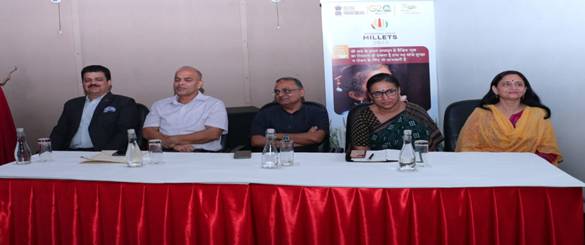
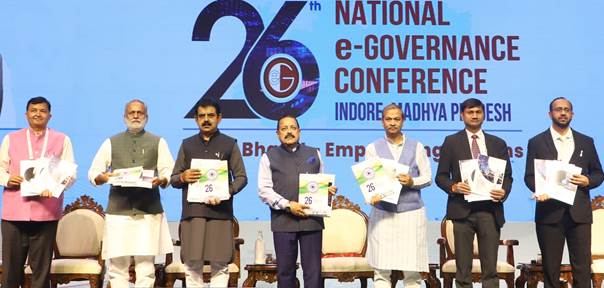
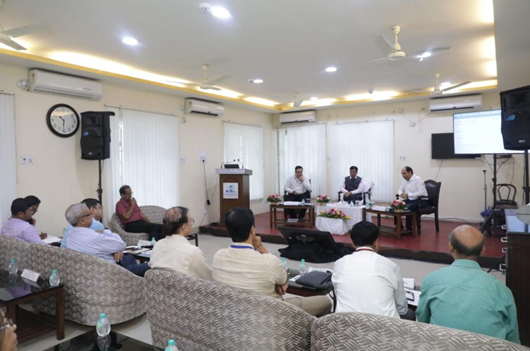
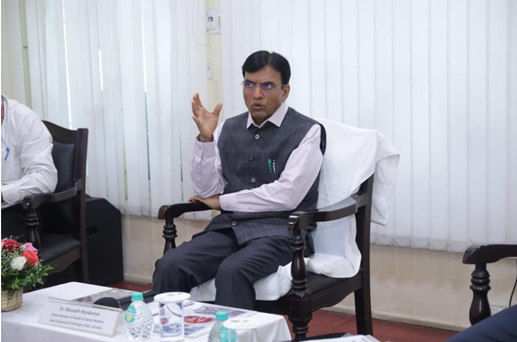
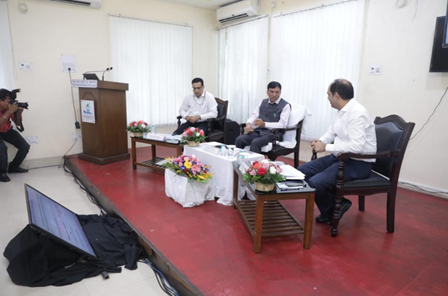
 Union Minister for Information and Broadcasting, Youth Affairs & Sports Shri Anurag Thakur and Chief Minister Shri Shivraj Singh Chouhan released the two-volume book ‘Sabka Saath, Sabka Vikas, Sabka Vishwas’ compiled from the speeches and addresses given by Prime Minister Shri Narendra Modi during his successful second term from June 2020 to May 2021 and June 2021 to May 2022 at Kushabhav Thakre International Convention Centre in Bhopal today. These books have been compiled by the Publications Division of the Ministry of Information and Broadcasting.

In his address on the occasion, Union Minister for Information and Broadcasting, Youth Affairs & Sports Shri Anurag Thakur highlighted that Prime Minister Narendra Modi’s addresses have consistently served as a source of inspiration.

Each of his speeches contains valuable lessons to be learned. It has been challenging to select speeches from among them to compose the book due to the abundance of insightful content.

The Minister said that 86 inspirational speeches have been included in one section of this book and 80 inspirational speeches in the other section. Selected speeches of Prime Minister Narendra Modi have been compiled on many important topics.  The speeches included the Prime Minister’s address to the common citizens on topics like Startup India, Good Governance, Women Empowerment, Nation Power, Self-reliant India, Jai Vigyan, Jai Kisan etc.

The Minister further urged the youth and researchers that they must read this book. There is a lot to know and learn in these. Shri Thakur also commended the remarkable achievement of the successful landing of the Vikram Lander on the Moon’s South Pole for the first time, marking India’s endeavor in this significant feat.

Referring to apps like UPI and BHIM app, the Union Minister said that in the world of digital payments, now 46 percent of the maximum transactions take place in India.

He noted that compared to earlier, over 45 crore bank accounts have been opened, with amounts now efficiently reaching beneficiaries through the Direct Benefit Transfer (DBT) system.

Highlighting the pivotal role of youth, Shri Thakur said that the youth of India have now become job givers. India has more than one lakh startups in comparison to the world.

Shri Thakur said that the cheapest data in the world is now available in India. The nation has made its own 5G technology and is going to make 6G technology in future. He said that in the 75th year of Amrit Mahotsav, India has become the fifth largest economy in the world. 

Lauding the progress made by state Madhya Pradesh, Shri. Thakur expressed that earlier Madhya Pradesh was called Bimaru, but after the formation of the new government, the state has emerged as one of the leading and progressive states in the country.

He said that we have progressed a lot in education in our mother tongue and only in Madhya Pradesh the syllabus for medical studies has been prepared in Hindi. The Minister said that the Seekho Kamao Yojana is a unique scheme and more than 86 thousand registrations have been done so far and also Madhya Pradesh had successfully organized the Khelo India Youth Games.

In his address at the function, Hon’ble Chief Minister Shri Shivraj Singh Chouhan appealed to the youth to read this book. This is a priceless treasure and pearls of wisdom will be found in it. 

He noted that the Prime Minister’s ‘Mann Ki Baat’ is a voice of common citizens offering a platform to address pressing social issues. It is a wonderful initiative carrying within it the very essence of inspiration of the Prime Minister.

The Chief Minister appealed to definitely read this book describing the Hon’ble Prime Minister Shri Narendra Modi as a visionary Prime Minister, and cherished his memories with him.

He said that Indore has been honored with the prestigious Best Smart City award, establishing its excellence in the realm of smart cities nationwide. At the same time, Madhya Pradesh has been bestowed with the distinguished Best State Award in the Indian Smart City category. It’s worth noting that Indore has consistently secured the top position in the cleanliness surveys.

The event commenced with a warm welcome address by Shri Vikram Sahay, Joint Secretary, Ministry of Information and Broadcasting followed by the screening of a short film based on the books. Khajuraho MP Shri VD Sharma also graced the occasion. The vote of thanks was given by Ms. Anupama Bhatnagar, Director General, Publications Division.

Union Minister Shri Anurag Thakur inaugurated the multi-media exhibition organized by the Central Bureau of Communication on the theme ‘Naya Bharat: Sashakta Bharat’ along with ‘9 Years: Seva, Sushasan aur Garib Kalyan’ before the launch of the program along with the hon’ble Chief Minister Shivraj Singh Chouhan.

During this event, a stall was set up by the Publications Department showcasing an array of their published books, providing attendees to explore and purchase them.


***

True Leader stands by his people through every circumstance

 Union Home Minister and Minister of Cooperation Shri Amit Shah has said that a true leader stands by his people through every circumstance. In a series of his post on X, Shri Amit Shah said, Prime Minister Shri Narendra Modi ji flew directly to Bengaluru from Greece this morning, to meet the ISRO scientists behind India’s successful moon mission, Chandrayaan 3. His inspiring address to the scientists in Bengaluru was an ode to India’s stupendous achievement that reached the skies.

Union Home Minister and Minister of Cooperation said that the 23rd of August is a historic day for India, as it marks the accomplishment of its lunar mission Chandrayaan 3. Today, Prime Minister Shri Narendra Modi ji announced it as ‘National Space Day’, so that the story of India’s scientists’ success behind this mission reaches every future generation. This decision will continue to inspire Indian scientists to achieve newer heights in the realm of space exploration, holding the pride of the ‘Tiranga’ aloft.

Shri Amit Shah said that with the historic success of India’s lunar mission, our scientists have imprinted an indelible mark on the sands of time. To commemorate this achievement, Prime Minister Shri Narendra Modi ji named the landing spot of Chandrayaan-3 ‘Shivshakti,’ and the location where Chandrayaan-2 fell ‘Tiranga’, to remind us that ‘No failure is permanent.’

***

Two-day training programme for chefs/cooks serving at various paramilitary and other government canteens

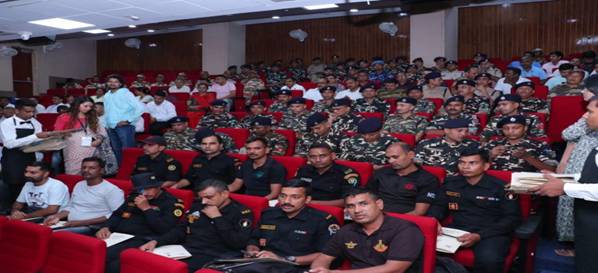
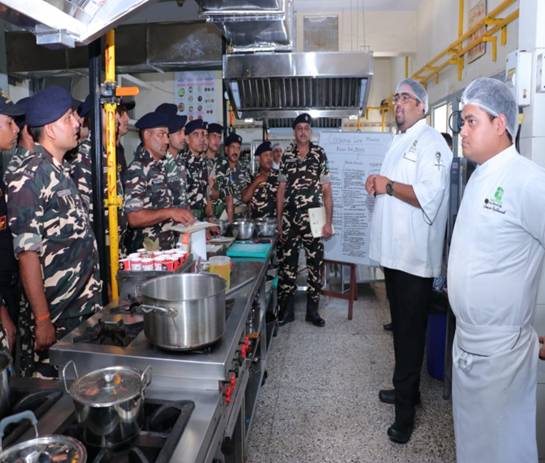
 Department of Agriculture and Farmers’ Welfare is organizing an immersive two-day training programme inviting more than 200 chefs/cooks serving at various paramilitary and other government canteens, focusing on millet-based recipes. The training programme commencing today, aims at encouraging the participant chefs to include simple yet nutritious millet-based items in their respective menus and promote the consumption of millets across wider population. It will familiarize the participants to a variety of millet-based recipes, ranging from simple snacks to wholesome meals, and will encourage them to include it in respective canteens that they work with.

Additional Secretary, Shri Faiz Ahmed Kidwai, Additional Secretary, Smt. Maninder Kaur Dwivedi, and JS (Crops) DA&FW, Smt. Shubha Thakur, along with the other officials attended the event and encouraged the participants to adopt millets in their daily diet and join the ‘millet movement’ of the nation for the benefit of consumer, cultivator and climate.

2.jpeg

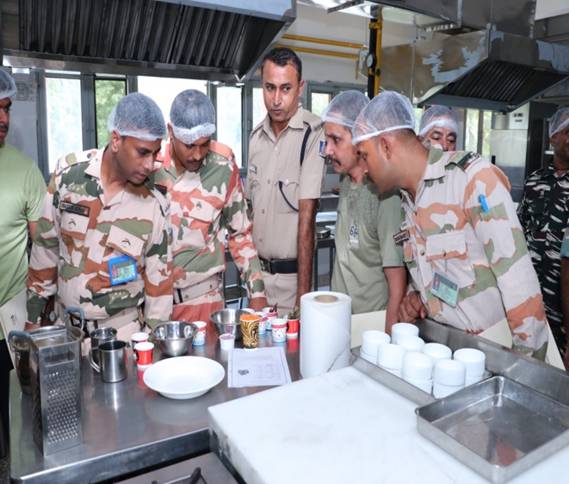
A culinary training session for more than 200 chefs and cooks working with the paramilitary forces, namely, Assam Rifles, Border Security Force (BSF), Central Industrial Security Force (CISF), Central Reserve Police Force (CRPF), Indo-Tibetan Border Police, National Security Guard, Sashastra Seema Bal, and various government canteens is being organized at the Institute of Hotel Management (IHM), PUSA, by the Department of Agriculture and Farmers’ Welfare (DA&FW), Ministry of Agriculture and Farmers’ Welfare.

 1.jpeg

Shri K.K. Pant, Principal, IHM welcomed dignitaries and participants in the auditorium and emphasized millets’ role in meeting holistic nutritional demands of the paramilitary forces. This training has been designed to cater to more than 100 participants each day. After the momentous decision taken by the Ministry of Home Affairs’ (MHA) to introduce Millets (Shree Anna) in the meals of all the forces, the training session will further amplify the overall ‘millet movement’ of India. The decision by MHA to introduce 30% Millets in the meals was taken to champion Millets as an energy-dense food option for paramilitary personnel and aid their physically strenuous routine. Millets are collectively considered to be a ‘superfood’, packed with fibre, minerals, antioxidants, and other essential nutrients critical to human health. The participation of chefs/cooks from the paramilitary forces will ensure that millets become a regular, healthy and delicious component of their diet.

3.jpeg

The participants learnt many interesting recipes, including Bajra Bisi belle Bhaat, Foxtail Millet Poori, Proso Millet Kofta Curry, Brown top Millet Pulao and Ragi Halwa. The training is also being attended by FPOs that displayed the samples of their various millet-based ready-to-cook and ready-to-eat items. It will further expose those present to the versatility of millets as a kitchen ingredient and the ways in which they can be put to culinary use.

  4.jpeg

The training is a part of the ongoing series of events that align with the celebration of 2023 as the International Year of Millets (IYM), undertaken by DA&FW. Millets thrive with minimal intervention, even in water scarce regions, making them a reliable ‘climate-friendly’ alternative to conventional crops. India is trying to encourage the consumption of millets in the country, integrating it with the regular diet of people.

****

Chandrayaan-3 has proved India's capability for cost-effective Space missions

 “Chandrayaan-3 has proved India’s capability for cost-effective Space missions”.

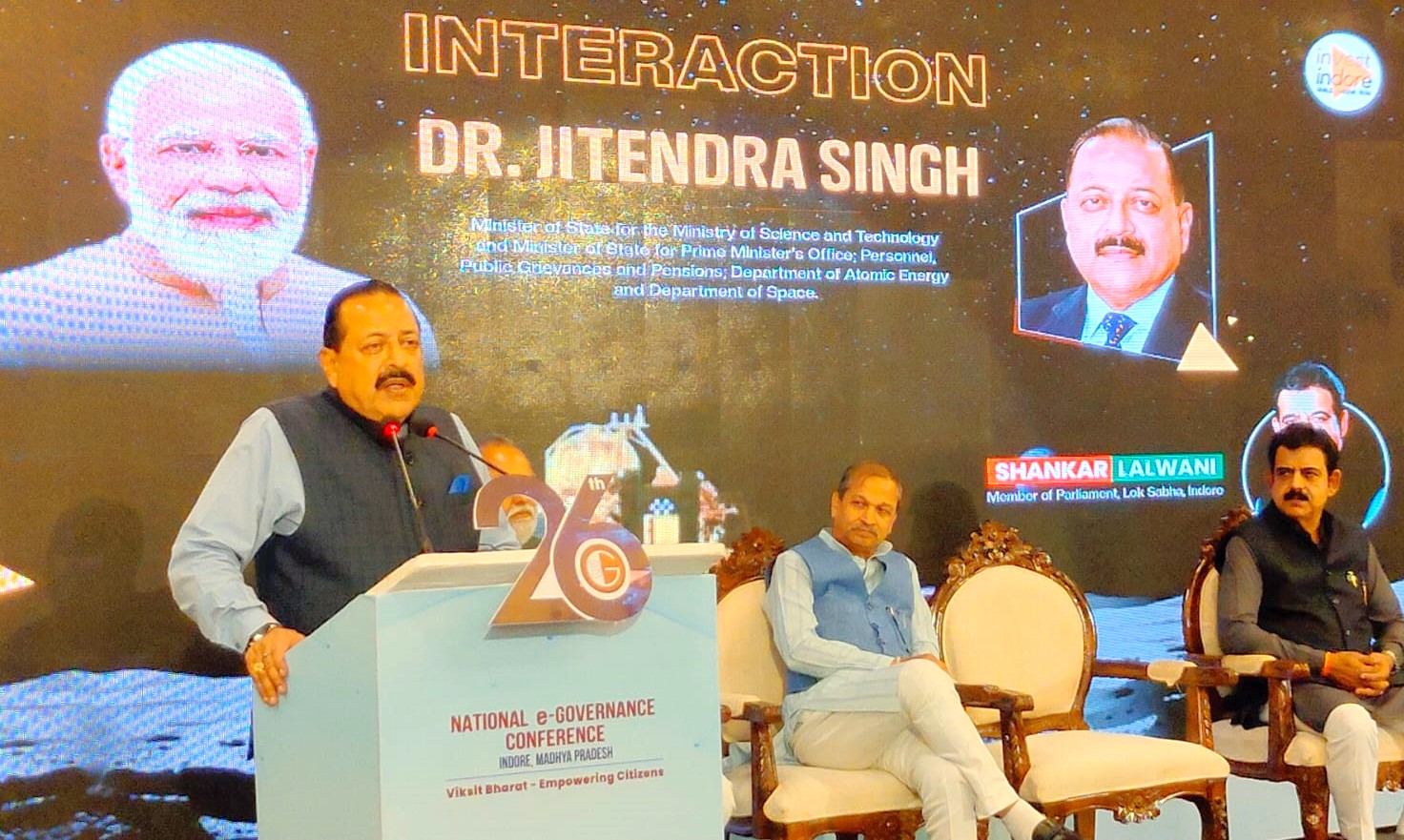
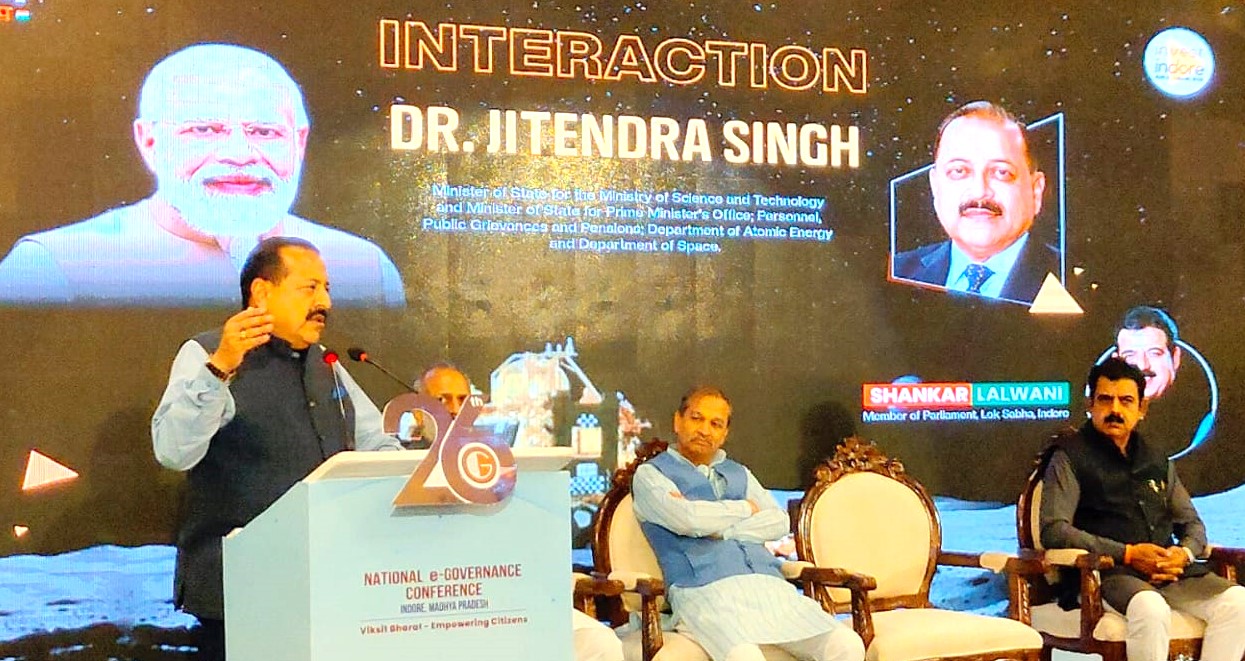
This was stated by Union Minister of State for Space, Dr. Jitendra Singh, while speaking at an interactive meet of intellectuals, prominent citizens and media persons in Indore.

He said, India’s space missions are designed to be cost effective.

The Minister further elaborated saying, “The Russian moon mission, that was unsuccessful, cost Rs.16,000 crore, and our (Chandrayaan-3) mission cost just around Rs.600 crore. Consider, Hollywood films based on Moon & Space Missions cost over Rs.600 crore”.

We have learnt to compensate for cost through our skills, said Dr Jitendra Singh, who is also the Union Minister of State (Independent Charge) Science & Technology; MoS PMO, Personnel, Public Grievances, Pensions, and Atomic Energy.

“Questions will arise, how? We made use of gravitational forces, the spacecraft made about 20 orbits of the earth, each rising in parabola, until it escaped and was captured in the Moon’s gravity and it made 70-80 revolutions of the moon before landing at the designated spot,” he said.

Dr Jitendra Singh said, in order to involve the private sector in R&D efforts, Prime Minister Shri Narendra Modi came out with the “Anusandhan National Research Foundation” Bill, passed by the Lok Sabha in the last session of Parliament, with a budget of Rs.50,000 crore over five years.

“When it is implemented fully, it will be a game-changer. We are planning a unique Public Private Partnership (PPP) entity for which ₹36,000 Cr of the research funding is to come from the private sector, mostly industry whereas the Government will put ₹14,000 crore,” he said.

Dr Jitendra Singh said, under PM Modi India launched a unique initiative which even the US and other countries would envy.

“Two years ago, a provision was made that companies can earmark 10% of their CSR (Corporate Social Responsibility) budget on R&D, earlier this was not so,” he said.

Calling for collective synergy, Dr Jitendra Singh said, we have to get rid of this mutual scepticism between the public and private sector. We can never emerge successful in the geopolitical race by working in silos, the minister said.

“We have to take this off our minds that the Government will and should do everything, those countries that stand developed did not achieve it by depending solely on their government. If today NASA sends rockets for the US, the maximum contribution to such missions is made by private agencies and industry, ” he said.

Stating that no government can provide a Sarkari Naukri to every individual, the Minister said, a responsible government creates job opportunities like PM Modi has done.

“From 350 Startups (in 2014), we now have over one lakh Startups, Startups have sprung up even in Governance technology, which nobody could have imagined earlier. Under Mudra scheme, easy loans of Rs.10-20 lakh are made available to the youth, without mortgage; so, a whole environment has been created to trigger innovation,” he said.

*****

Chandrayaan-3 has proved India's capability for cost-effective Space missions

 “Chandrayaan-3 has proved India’s capability for cost-effective Space missions”.

This was stated by Union Minister of State for Space, Dr. Jitendra Singh, while speaking at an interactive meet of intellectuals, prominent citizens and media persons in Indore.

He said, India’s space missions are designed to be cost effective.

The Minister further elaborated saying, “The Russian moon mission, that was unsuccessful, cost Rs.16,000 crore, and our (Chandrayaan-3) mission cost just around Rs.600 crore. Consider, Hollywood films based on Moon & Space Missions cost over Rs.600 crore”.

We have learnt to compensate for cost through our skills, said Dr Jitendra Singh, who is also the Union Minister of State (Independent Charge) Science & Technology; MoS PMO, Personnel, Public Grievances, Pensions, and Atomic Energy.

“Questions will arise, how? We made use of gravitational forces, the spacecraft made about 20 orbits of the earth, each rising in parabola, until it escaped and was captured in the Moon’s gravity and it made 70-80 revolutions of the moon before landing at the designated spot,” he said.

Dr Jitendra Singh said, in order to involve the private sector in R&D efforts, Prime Minister Shri Narendra Modi came out with the “Anusandhan National Research Foundation” Bill, passed by the Lok Sabha in the last session of Parliament, with a budget of Rs.50,000 crore over five years.

“When it is implemented fully, it will be a game-changer. We are planning a unique Public Private Partnership (PPP) entity for which ₹36,000 Cr of the research funding is to come from the private sector, mostly industry whereas the Government will put ₹14,000 crore,” he said.

Dr Jitendra Singh said, under PM Modi India launched a unique initiative which even the US and other countries would envy.

“Two years ago, a provision was made that companies can earmark 10% of their CSR (Corporate Social Responsibility) budget on R&D, earlier this was not so,” he said.

Calling for collective synergy, Dr Jitendra Singh said, we have to get rid of this mutual scepticism between the public and private sector. We can never emerge successful in the geopolitical race by working in silos, the minister said.

“We have to take this off our minds that the Government will and should do everything, those countries that stand developed did not achieve it by depending solely on their government. If today NASA sends rockets for the US, the maximum contribution to such missions is made by private agencies and industry, ” he said.

Stating that no government can provide a Sarkari Naukri to every individual, the Minister said, a responsible government creates job opportunities like PM Modi has done.

“From 350 Startups (in 2014), we now have over one lakh Startups, Startups have sprung up even in Governance technology, which nobody could have imagined earlier. Under Mudra scheme, easy loans of Rs.10-20 lakh are made available to the youth, without mortgage; so, a whole environment has been created to trigger innovation,” he said.

<

p dir=”ltr”>*****

Rich flora of Himalayan region can unlock potential in Ayush sector

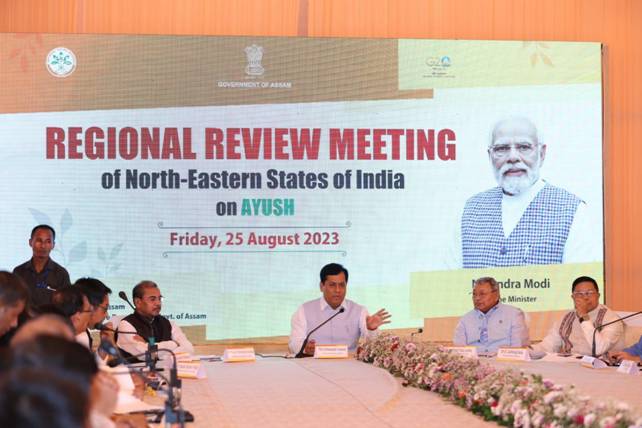
 The Regional Review Meeting of NERern states of India was ceremonially inaugurated by the Union Minister of Ports, Shipping & Waterways and Ayush, Sarbananda Sonowal along with Chief Minister of Assam, Dr Himanta Biswa Sarma here today. The ceremony was also attended by health ministers of Assam, Arunachal Pradesh, Manipur, Mizoram, Sikkim, Tripura along with senior officials from Meghalaya, Nagaland as well as other states of the region. The Union Minister of State for Ayush and Women & Child Development, Dr. Mahendrabhai Munjapara along with Secretary of Ministry of Ayush, Vaidya Rajesh Kotecha and other senior officials from the ministry, state governments were also present.

The Union Ayush Minister, Sarbananda Sonowal chaired the Regional Review Meeting of NERern states here today. During the meeting, all the participating states – Assam, Arunachal Pradesh, Manipur, Meghalaya, Mizoram, Nagaland, Sikkim & Tripura presented detailed presentations on the state of Ayush and progress of leading Ayush programmes under implementation. The Health Ministers of the states who physically attended and deliberated in the brainstorming session were Alo Libang of Arunachal Pradesh; Dr Sapam Ranjan Singh of Manipur; Dr R Lalthangliana of Mizoram; Kunga Nima Lepcha of Sikkim and Finance Minister of Tripura, Pranajit Singha Roy.

Speaking on the occasion, the Union Minister, Sarbananda Sonowal said, “Today, we had a very fruitful discussion on the promotion and propagation of Ayush system of medicine in the country. Along with the rest of the world, the importance and popularity of traditional system of medicine has risen significantly in our beautiful Himalayan region. Under the visionary leadership of Prime Minister, Shri Narendra Modi ji, India has made significant progress in reinventing the age old and proven benefits of traditional system of medicine to enrich the quality of lives of the people. Modi ji has not only encouraged the use of traditional medicine in India but has also led a global movement to invest, innovate and integrate traditional medicine with modern medicine to develop a holistic line of healthcare solutions. In this spirit, I would like to call all the states of NER India to explore the possibility of setting up an Integrated Ayush Department in all its leading state hospitals, in line with the setting up of similar departments in all 19 AIIMS, under the guidance of Modi ji. Today, we are presented with this unique opportunity to kick start a movement to set up integrated medicine departments in all our leading state hospitals, thereby popularising and implementing the concept of Integrated medicine to be emulated by the whole country. We can realise the vision of Modi ji by further boosting traditional medicine practices and become hub of an Ayush led economic growth, promoting employment & trade, especially in the Himalayan region of our country.”

During the deliberations, the Health Minister of Arunachal Pradesh, Alo Libang said that the state is planning to set up a full fledged Directorate of Ayush Healthcare Services to promote traditional medicine in the Himalayan state. A Special Panchakarma Centre in the middle of Loktak lake was proposed to be set up, as confirmed by the Health Minister of Manipur, Dr Sapam Ranjan Singh. The Mizoram Health Minister, Dr R Lalthangliana also applauded the benefit of traditional medicine and how Ayush gram initiative and Jan Arogya Samiti is popularising the Ayush system of medicine in the state. 

Ministry of Ayush is supporting the efforts of State/UT Governments for implementation of different activities as proposed by the States through their respective State Annual Action Plans (SAAPs) through Centrally Sponsored Scheme (CSS) of National Ayush Mission (NAM). NAM is the flagship scheme of Ministry of Ayush, Govt of India.

***

India is hosting the G20 Group

  “India has arrived,” said Union Minister Dr Jitendra Singh today, adding, “This is one of the most auspicious times happening in India.”

“India is hosting the G20 Group this year, we will be hosting the G20 summit in New Delhi’s Bharat Mandapam after few days; International Year of Millets is also being observed this year, this is the second occasion such an event is being held at the behest of India and Prime Minister Shri Narendra Modi after the International Day of Yoga, and after 75 years (of India’s Independence) on the 15th August, we have entered the Amrit Kaal, and this week, just two days ago, Chandrayaan happened,” he said.

Dr Jitendra Singh said that now the time has come when India not only stands even with other countries, but has proven that it can lead the world.

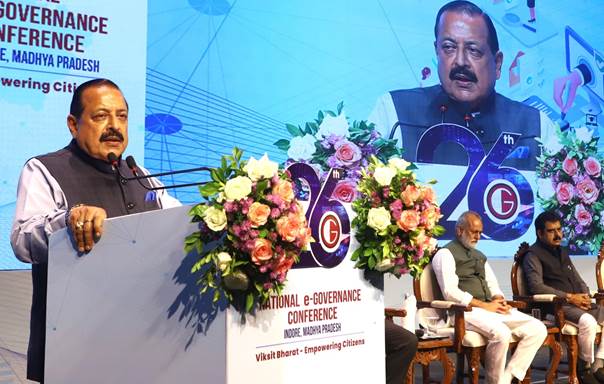
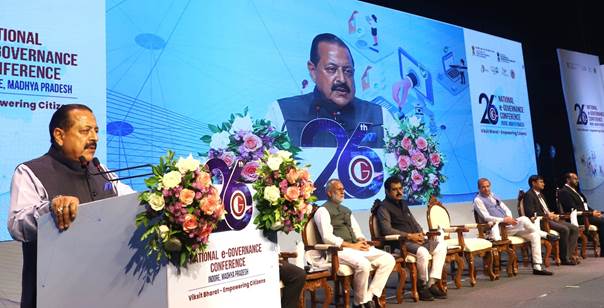
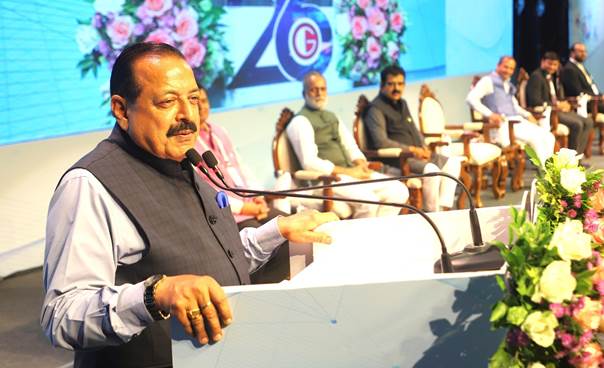
The Union Minister of State (Independent Charge) Science & Technology; MoS PMO, Personnel, Public Grievances, Pensions, Atomic Energy and Space, was addressing the Valedictory Session of the two-day 26th National Conference on e- Governance in Indore.


Dr Jitendra Singh said PM Modi has broken shackles of the past and set India free on the path to development.

“PM Modi opened the Space sector, and today there are more than 150 private Startups,” he said.

Dwelling on Administrative Reforms, Dr. Jitendra Singh said many reforms have been initiated by PM Modi in the last nine years.

“During the Covid period, life came to a standstill, but there was no delay in the Government of India’s administrative machinery, because we had already gone digital while others were just preparing for it,” he said, referring to transfer of benefits to the common man through DBT.


Dr Jitendra Singh said the Prime Minister gave us the mantra of ‘Minimum Government – Maximum Governance’. The DARPG took initiatives such as the practice of Attestation by Gazetted officers was done away with, Interviews were scrapped abolishing malpractices. Most of the functioning was converted online and in order to bring in transparency, accountability and citizen participation, the human interface was reduced to the bare minimum.

The Minister said, DoPPW introduced Digital Life Certificate (DLC) and later the Aadhar based scheme for online submission of DLC. Initially submission of DLCs was through biometric devices and now the Face-Authentication Technology-based system based on UIDAI Aadhaar software has been introduced.


Speaking about the transparency and accountability in the governance, the Minister said that the benchmark for clean and effective government is the robust grievance redressal mechanism. The CPGRAMS receives about 20 lakh grievances every year in comparison to just 2 lakhs annually earlier because this government followed a policy of time bound redressal and gained the confidence of the people.

Dr Jitendra Singh listed DigiLocker and SVAMITVA scheme bringing transparency in land registry, among technology driven reforms towards Ease of Living.

“Our goal is to gear up and work towards making India a developed nation by 2047, and we will accomplish this with speed and scale, leveraging the potential of digital transformations in e-governance,” he said.


***

Nagarnar Steel Plant scripts history as it rolls out the first Hot Rolled coil

 In what is being described in steel circles as unprecedented, the Nagarnar Steel Plant yesterday, achieved the feat of producing its final product of HR (Hot Rolled) Coil, 9 days after the production of Hot Metal. This feat by NMDC is nothing less than astounding, considering that the mining major doesn’t have prior experience of steel making.

“NMDC joins the coveted league of Indian steel makers. This is the fulfillment of a dream that the local community of Bastar had long looked forward to.”, Sh. Amitava Mukherjee, Chairman-Cum-Managing Director of NMDC, mentioned. Industry veterans remarked that it is a rare feat to commission three critical units in the hot zone – Blast Furnace, Steel Melting Shop and the Mills (Thin Slab Caster – Hot Strip Mill) in such a short period of time. 


Nagarnar Steel Plant 

The 3 million tonne per annum capacity steel plant has been built at a cost of approximately ₹24,000 crores. The Plant is set to establish its mark in the Hot Rolled market with its repertoire of high grade Hot Rolled (HR) steel that is slated to meet the requirements of several key consuming sectors on the strength of its technology that includes its most modern Mill. Nagarnar Steel Plant’s competitive advantage also stems from its iron ore supply linkage with Bailadila mines, barely 100 kms. from Nagarnar.  

The product mix of Nagarnar Steel Plant consists of low carbon steel, HSLA & Dual Phase Steel and API quality steel that can be rolled into a thickness range from 1mm to 16mm. With its capability to roll 1650 mm wide HR, the Thin Slab caster at Nagarnar Steel Plant is the widest Mill in the public sector. HR Coils, Sheets and Plates coming off from India’s latest and most modern mill are expected to meet the growing demand for quality HR required in the manufacturing of LPG cylinders, bridges, steel structures, ships, large diameter pipes, storage tanks, boilers, railway wagons and pressure vessels and in construction of tanks, railway cars, bicycle frames, engineering and military equipment, automobile & truck wheels, frames and body parts. The plant will also be producing a special type of steel to be used in manufacture of generators, motors, transformers and automobiles at a later stage.  

Domestic Steel Industry calls it an unprecedented achievement 

Nagarnar Steel Plant has the unique distinction of internationally being the only steel plant to be set up by a mining company. With the roll out of the first Hot Rolled coil yesterday, 9 days after hot metal production began on 15th August, Nagarnar steel plant has managed to set another precedent, feel industry veterans.  

It may be recalled that Nagarnar Steel Plant had conducted cold trials of its Steel Melting Shop, months before initiating the commissioning of blast furnace. Though there have been instances of faster steel making, Nagarnar Steel Plant’s production of HR Coil within nine days of hot metal production is unusual. This was made possible by testing the capability of the Mills by rolling slabs and producing HR Coil even as preparations were underway for commissioning of the blast furnace.

Generally it takes a couple of weeks for the functioning of the blast furnace itself to stabilize which is followed by the synchronization of blast furnace production with the working of the Steel Melting Shop. This being a very dangerous zone, it is approached with extra caution after which the production process at the Mills is stabilized. That this was successfully accomplished in such a short duration attests to the latest equipment and technology used, as also the expertise of involved  professionals.  

With the production of HR Coil initiated yesterday, the Plant is engaged in stabilization of the production process to ensure that its produce is commercialized at the earliest. It is felt that the rapid commercialization of the Plants’ produce is expected to greatly minimize, or even offset the losses that a green-field steel plant generally suffers in the first year of its commissioning.  


******

National Action for Mechanised Sanitation Ecosystem (NAMASTE)

 Although, with the efforts under Self Employment Scheme for Rehabilitation of Manual Scavengers (SRMS) and other efforts of the Government, the menace of manual scavenging has been almost eliminated, a number of sewer/septic tank related deaths due to hazardous cleaning of sewers and septic tanks, are reported in the press from time to time. Such cases are taken up with the concerned State Government for payment of compensation of Rs.10 lakh as per Supreme Court orders. Thus, the main problem these days is hazardous cleaning of Sewer and Septic tanks and non observance of safety precautions due to which precious human life is lost. To eliminate hazardous cleaning, stop deaths of sewer and septic tank workers and ensure their safety and dignity, Ministry of Social Justice and Empowerment (MoSJE) and Ministry of Housing and Urban Affairs (MoHUA) have jointly formulated a Scheme namely National Action for Mechanised Sanitation Ecosystem (NAMASTE). The existing components of SRMS have been kept as components of NAMASTE Scheme. The scheme is to be implemented in all 4800+ Urban Local Bodies (ULBs) of the country, during the three years upto 2025-26 with an outlay of Rs. 349.70 crore.

Interventions of NAMASTE Component:

  1. Profiling of SSWs: NAMASTE envisages profiling of the Sewer/Septic Tank Workers (SSWs). List of SSWs would be obtained from the concerned ULBs and thereafter detailed profiling of the SSWs would be undertaken through profiling camps.
  2. Occupational Safety Training and distribution of Personal Protective Equipment (PPE) Kits to SSWs
  3. Assistance for Safety Devices to Sanitation Response Units (SRUs) for hazardous cleaning operations.
  4. Extending Health Insurance Scheme Benefits: For providing a safety net to identified SSWs and their families, they will be covered under the Ayushman Bharat- Pradhan Mantri Jan Arogya Yojana (AB-PMJAY). The premium for AB-PMJAY for those identified Manual scavengers and SSWs families who are not covered earlier shall be borne under NAMASTE.
  5. Livelihood Assistance: The Action Plan will promote mechanization and enterprise development. National Safai Karamcharis Finance & Development Corporation (NSKFDC) will provide funding support and capital subsidy to the Manual Scavengers, sanitation workers and their dependents to procure sanitation related equipment and vehicles under Swachhata Udyami Yojana (SUY) to make them “Saniprenure”. In addition to this, providing capital subsidy to identified manual scavengers and their dependents for self employment project will be continued.
  6. Identified manual scavengers and their dependents will be provided skill development training for a period upto two years with monthly stipend of Rs.3000/-.
  7. Convergence of Programmes of MoSJE & MoHUA: The safety of SSWs is a joint responsibility of MoSJE and MoHUA. Hence, the intent of NAMASTE is to strengthen convergence amongst both Ministries for governance and implementation of the NAMASTE components. The Action Plan leverages the available financial allocations of existing SRMS, Swachh Bharat Mission (SBM), Deendayal Antyodaya Yojana-National Urban Livelihoods Mission (DAY-NULM) and NSKFDC and brings in a focused approach to provide occupational, social and financial safety nets to the SSWs.
  8. IEC Campaign: Massive campaigns would be undertaken jointly by the ULBs & NSKFDC to spread awareness about the interventions of NAMASTE. Electronic and print media and hoardings at prominent locations shall be used for the campaign in local language and English/Hindi. Maximum use of social media during the publicity would be ensured.
  9. MIS and Website: There will be strong MIS implementation and monitoring with the help of dedicated website for NAMASTE.

Link for the following achievements have been made under erstwhile Self Employment Scheme for Rehabilitation of Manual Scavengers (SRMS) during the last 9 years under :

Link for the Silent feature, In order to implement NAMASTE Scheme, following action needs to be taken by States/UTs and ULBs: 


*****

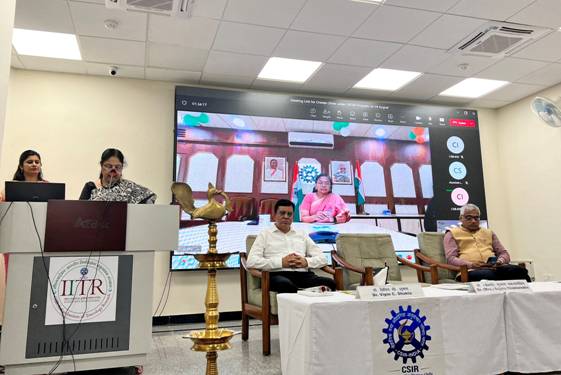
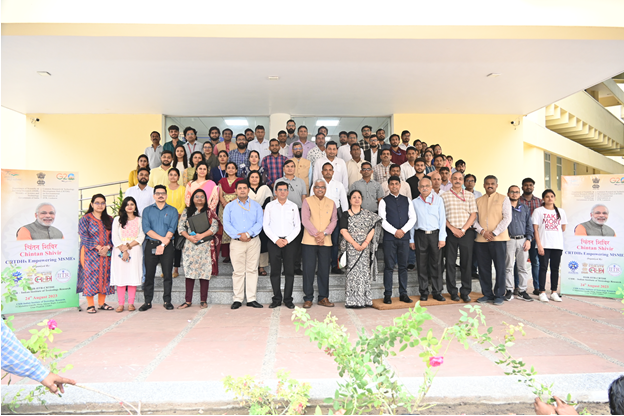
One day Chintan Shivir on “CRTDH Empowering MSMEs

 On August 24, 2023, DSIR-CRTDH-IITR, Lucknow organised a day long second “Chintan Shivir on CRTDHs Empowering MSMEs” under Common Research and Technology Development Hub (CRTDH) programme of the Department of Scientific and Industrial Research (DSIR), Ministry of Science and Technology. The goal of this Chintan Shivir was to fortify relationships between academics and industry by stressing that this cooperation plays an important in promoting industrial R&D and fostering a culture that strengthens information sharing, collaborative research, and technical innovation. The CRTDH promotes R&D operations in the nation and offers extensive support and guidance and hence plays a crucial role in bolstering the MSME sector, encouraging a growth-friendly climate, and advancing technological breakthroughs to achieve long cherished goal of ‘Atmanirbhar Bharat’.

Dr. N. Kalaiselvi, Secretary, DSIR and Director General, Council of Scientific & Industrial Research (CSIR), Dr. Bhaskar Narayan, Director, Indian Institute of Toxicology Research (IITR), Lucknow and Dr. Sujata Chaklanobis, Head-CRTDH, DSIR spoke during the Chintan Shivir’s inaugural session. Dr. N. Kalaiselvi stressed the importance of DSIR and CRTDHs in enabling MSMEs, startups, and innovators to carry out the Prime Minister Shri Narendra Modi’s vision of creating “Atmanirbhar Bharat” in her remarks at the opening ceremony. Dr. Bhaskar Narayan praised DSIR-CRTDH-IITR, Lucknow’s efforts to assist diverse stakeholders in completing their R&D projects. Dr. Sujata Chaklanobis gave an overview of Chintan Shivir, she emphasized the need for innovation and asserted that MSMEs, as a key component of the innovation ecosystem, can significantly contribute in building India as a hub for R&D and manufacturing on a global scale. On this occasion, Dr. Sujata Chaklanobis and Dr. Bhaskar Narayan inaugurated the DSIR-CRTDH-IITR facility at the Technology Development and Innovation Centre and launched the updated version of the DSIR-IITR-CRTDH website. Two MoUs with DSIR-CRTDH-IITR and MSMEs were signed. 

The Director of the CSIR-IITR, Lucknow provided an overview of futuristic technology interventions at DSIR-CRTDH-IITR and highlighted importance of synergy between academia and MSMEs during the thematic sessions. Dr. Parthasarathi and Dr. B Sreekanth provided a briefing on the activities carried out under DSIR-IITR-CRTDH and its efforts to explore opportunities for MSMEs. Participants from the MSMEs/Start-ups/innovators were divided into five groups to brainstorm on challenges faced by them in perusing their R&D goals followed by a brief presentation on it. Thematic session was continued to “Samvad” which was coordinated by Dr. Vipin C. Shukla, Scientist-F, DSIR. During ‘Samvad’, major difficulties faced by MSMEs, startups, and innovators were discussed and potential solutions were addressed by the PI, DSIR-CRTDH-IITR, Lucknow.

The event was attended by senior officers Dr Ranjeet Bairwa and Dr Kailash Petkar from DSIR along entire team of DSIR-CRTDH-IITR. Large number of representatives from Micro, Small and Medium Enterprises (MSMEs), start-ups, UP state district resource persons, individual innovators, and delegates from the Chambers of Commerce, industry associations, Assocham also participated in this important event to get the benefits of CRTDH in their R&D endeavors.

Finally, Dr. Kailash C. Petkar, Scientist, DSIR presented a vote of gratitude to dignitaries, organizers, all stakeholders, press and media personnel to conclude the event.

Image

Open Day and Skill Development Event

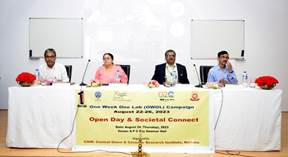
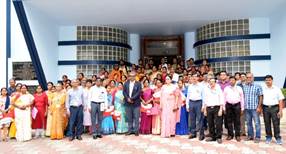
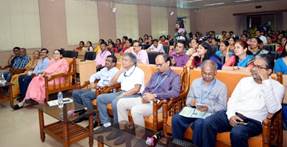
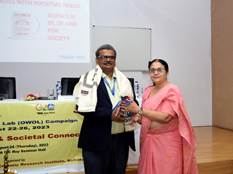
 As a part of “One Week One Lab (OWOL)” programme, CSIR-Central Glass and Ceramic Research Institute (CGCRI), Kolkata organized an Open Day and Skill Development event on 24.08.2023, with an aim of creating awareness in S&T among common people and artisans. Dr Suman Kumari Mishra, Director, CSIR-CGCRI welcomed the participants. Dr. Ramanuj Naryan, Director, CSIR- Institute of Minerals and Materials Technology graced the occasion as Chief Guest, delivering a lecture highlighting the connection between science and society. Around 100 participants from rural and urban areas participated in the programme and underwent skill development/demonstration on making terracotta potteries. CSIR-CGCRI products and technologies were also showcased during the event.            


*****

SNC/PK

(Release ID: 1952014) Visitor Counter : 149 

Ayushman Bharat Health and Wellness Centres

  “We are committed to providing quality healthcare services to all citizens of West Bengal. Government of India under the leadership of Prime Minister Shri Narendra Modi is committed to providing quality healthcare services to all citizens of the state. The State Government should implement Ayushman Bharat at the ground level for benefit to the people of West Bengal. We are taking all necessary steps to ensure that the health services in the state are of the highest quality.” This was stated by the Union Minister of Health & Family Welfare Dr. Mansukh Mandaviya, during his visit to West Bengal. The Union Health Minister reviewed various programmes delivering health services in the state today. 

During his visit, he reviewed the Ayushman Bharat Health & Wellness Centres, National TB Elimination Program, status of funds released under National Health Mission (NHM), Pradhan Mantri Ayushman Bharat Health Infrastructure Mission (PM-ABHIM), Telemedicine services, Medical Education, and Sickle Cell Anemia Elimination Program.

Speaking on the occasion, Dr. Mandaviya referred to the Ayushman Bharat Health & Wellness Centre and stated “The Ayushman Bharat Health & Wellness Centre is a great initiative to provide comprehensive primary healthcare services to people near their homes.” 

Dr. Mandaviya further added that the following resources have been provided to West Bengal under National Health Mission:

  1. 800 Sub-Centres have been approved at the cost of Rs. 288.72 crores.
  2. 2 Urban Community Health Centres approved at the cost of Rs. 10 crores and 37 new urban PHCs at the cost of Rs. 27.75 crores. 
  3. 404 Ayushman Bharat Urban Health and Wellness Centers have been approved


The Union Health Minister also reviewed the National Tuberculosis Elimination Program and the status of funds released under the National Health Mission. He further added, “Government of India is committed to eliminating Tuberculosis by 2025 and emphasized that we are taking all necessary steps to ensure that the funds released under the National Health Mission are utilized effectively.” 

Dr Mandaviya further added that under the 15th Finance Commission, 223 Block Public Health Units have been approved at the cost of Rs. 180.12 crores and 719 sub-centres have been approved at the cost of Rs. 290 crores in the state. He added that West Bengal has witnessed 10,358 Ayushman Bharat Health and Wellness Centres being operationalized with a footfall of 16,82,87,430 and 2,08,42,397 teleconsultations have been carried out.

With reference to the Pradhan Mantri Ayushman Bharat Health Infrastructure Mission (PM-ABHIM) and the Telemedicine services, Dr. Mandaviya stated “The PM-ABHIM is a great initiative to provide quality healthcare services to the people of West Bengal. We are also working to ensure that the Telemedicine services are available to all citizens of the state.” Highlighting the growth and development in this sphere in the state, Dr. Mandaviya mentioned that 

  1. 22 Critical Care Blocks have been sanctioned for a cost of Rs. 727 crores. 
  2. 23 Integrated Public Health Labs that have been sanctioned for a cost of Rs. 47.38 crores.
  3. 510 Urban Health and Wellness Centres have been approved at a cost of Rs. 535.50 crores

In his review of the Medical Education and the Sickle Cell Anemia Elimination Program, he stated, “We are committed to providing quality medical education to the people of West Bengal. We are also taking all necessary steps to ensure that the Sickle Cell Anemia Elimination Program is successful.”

                                                                       ****

Innovative Work Behaviour, Leadership, and Performance of Public Tertiary Institutions: A Proposed Framework

 Michael Olalekan Adeoti & Yabagi, Bala Ahmed

Department of Business Administration, Federal Polytechnic, Bida, Nigeria.

Abstract

The aim of this study is to propose a framework and state propositions to be tested empirically in future studies. The researcher reviewed scholarly articles on the variables with the aim of stating propositions that are in agreement with theoretical perspectives and extant literature. Drawing from social exchange theory, this study proposed that there would be a positive relationship between innovative work behaviour and performance of public tertiary institutions. Further, a positive relationship between leadership styles (transformational and ethical) and performance of public tertiary institutions is predicted. This study recommends that management of public tertiary institutions and policy makers need to pay adequate attention to enhance productivity via encouragement of positive work attitudes and display of transformational abilities by the management of public tertiary institutions. In conclusion, this paper extends research on organizational performance by proposing a model that has the tendency to create a positive improvement in public sector educational institutions. However, there is a need for empirical studies to test the proposed relationships.            

Keywords: Innovative work behaviour, transformational leadership, ethical leadership, and organizational performance.


Introduction    

Innovative work behavior has a significant impact on company performance, indicating that the intentional application of new ideas within a company can greatly benefit its success. Innovation plays a crucial role in attracting customers, enabling a company to adapt, thrive, and remain competitive amidst various business challenges. According to Iqbal, Abid, Contreras, Hassan, and Zafar (2020), innovative work behaviour refers to the creation, introduction, and deliberate implementation of new ideas within a work role, group, or organization, with the aim of enhancing overall performance. The importance of fostering innovative work behavior can be supported by three key principles. First, employees often identify problems and propose creative solutions. Second, individuals who thrive in their work are more energized, increasing their propensity to engage in innovative behaviors. Third, creative individuals generate solutions that can be applied to similar situations, leading to improved performance. 

This theory is supported by research conducted by Bos-Nehles and Veenendaal (2019) which highlighted the significant impact of innovative work behaviour on company performance. Further, encouraging employees to engage in innovative work behavior can have a positive and profound effect on a company’s overall success.

Research has demonstrated that changes in the workplace can foster innovative work behavior. Innovation involves the introduction of new ideas, practices, procedures, and techniques to individuals, groups, and organizations (Amirudin & Nugroho, 2022). This highlights the importance of leaders as role models in establishing an ethical work environment and cultivating a strong organizational reputation. However, without the presence of innovative behaviour, there can be a negative impact on employee performance. Even innovative companies can fail to reap the benefits of their innovative practices if they are not effectively implemented. A research conducted by Iqbal et al. (2020) have found that ethical leadership does not influence company performance with innovative work behaviour serving as the mediating variable.

Similarly, leadership determines the success and failure of any organization. The world is shifting towards an economy where the essential resource of an organization is its knowledge (Popli & Rizvi, 2016). Leadership style is the manner in which people are directed and motivated by a leader to achieve organizational goals. Leadership style in an organization is one of the key factors that play significant role in enhancing or retarding the interest and commitment of the individuals in the organization (Obiwuru, Okwu, & Nwankere, 2021). The leadership style adopted by organization enhances the achievement of corporate goals. 

Empirically, Ojokuku, Odetayo and Sajuyigbe (2012) observed that leadership style is one of the determinants of the success and failure of any proactive organization. Also, Lawal, Kio, and Adebayo (2000) agreed that good leadership is a condition for effective accomplishment of organizational goals and objectives. Effective leadership style of management is a pre-requisite to organizational accomplishment (Uchenwamgbe, 2013). All over the world, organizations attribute their successes to leadership efficiency, that is, the leadership style of the supervisors has a considerable effect on organizational performance (Sun, 2019). 

In a study conducted by McGrath and MacMillan (2000), it was reported that there is a significant relationship between leadership styles and organizational performance. Relationship between leadership style and organizational performance has been discussed often. Most research showed that leadership style has a significant effect on organizational performance, and different leadership styles may have a positive correlation or negative correlation with the organizational performance, depending on the variables used by the researchers (Ojokuku, Odetayo, & Sajuyigbe, 2012). The focus of the present study is on transformational and ethical leadership styles. It is imperative to choose these two styles because of the probability that the duo may influence organizational performance positively.

Ethical leadership has a significant impact on company performance due to its role as a coordinator, motivator, and catalyst that drives a company towards success. Ethical leadership is crucial and necessary for supporting a company’s achievement. Ethical leaders exhibit moral behaviour based on a set of values that guide their actions and behaviours, particularly when they hold positions of authority.

Many researchers have worked on leadership styles to estimate their effect on organizational performance (Ogbeide, Groves, & Cho, 2008). For instance, when the leaders give autonomy to the employees, they would be more loyal and motivated to perform efficiently which would enhance organizational productivity with better outcomes (Kim & Beehr, 2018). 

Previous studies have focused on the relationship between leadership styles and employees’ productivity in private sectors (Arnett, Sandvik, & Sandvik, 2018; Roundy, Harrison, Khavul, PérezNordtvedt, & McGee, 2018). The researcher is of the view that there is no one best leadership style, the circumstance surrounding the leaders would dictate the right leadership style to adopt, whether transformational or ethical. Hence, the need to focus on how leadership styles affect organizational performance in the public sector in Nigeria.

Also, extant literature focused on negative behaviours such as employees’ deviant behaviour, counterproductive behaviour and intentions to quit among faculty members (Adeoti, Shamsudin & Wan, 2017; Geidam, Njoku, & Bako, 2010; Kura, Shamsudin, & Chauhan, 2015; Kura, Shamsudin, & Chauhan, 2016), but the present study focused on employees’ innovative work behaviour among faculty members and how such behaviours can enhance the performance of public tertiary institutions. Hence, the present study focused on positive work behaviour among faculty members instead of negative behaviours studied by previous researchers. 

Conceptual Framework

Organizational Performance    

Corporate performance and organizational efficacy are sometimes used interchangeably. Organizational effectiveness assesses how successfully a social system with constrained means and resources, like an organization, accomplishes its objectives without placing an undue burden on its members. When assessing performance, factors including productivity, flexibility, and inter-organizational conflicts are taken into account (Alshebami, 2021). An organization’s performance can be used to measure its level of production and efficacy. Leaders can determine whether these achievements have been realized or not by comprehending the overall performance of the company. Knowing the state of the business will make it simpler for you to create policies. Thus, company proprietors can manage and organize the business better. Business owners can promptly make decisions to enhance organizational functions if there are deficiencies.   

Innovative Work Behaviour

Innovation is a complex process with many hazards, positive leadership behavior is considered a key factor in encouraging employee innovation (Hidayati et al., 2019). In this situation, employing innovative work behavior is seen as having benefits for the organization. It is also considered that companies cannot rely solely on the culture that has existed for a long time, but must construct a culture while maintaining the core values of the company. Then, as a driver of innovation within the company, employees are also expected to demonstrate innovative work behavior that can help the company accomplish its objectives and survive in the corporate world. Employees do this to maintain their positions in the company (Kuswati et al., 2021).     

Change is an unavoidable thing in human lives. Innovation brings about undesired outcomes (Khan et al., 2022). Khan et al. (2022) propose that adopting an adhocratic culture can foster both innovation and performance, which are crucial for sustainable organizational success in today’s competitive markets.

Leadership

Leaders play a crucial role in ensuring stability, efficiency, and guiding organizations towards their goals. However, the traditional approach to leadership alone may no longer be sufficient in today’s society, as it can lead to ethical issues and social problems. In response, ethical leadership has emerged as a new requirement for leaders in modern organizations (Rosida & Wajdi, 2023). Ethical leadership encompasses both personal and interpersonal aspects, encompassing behaviors, decision-making processes, and relationships that adhere to ethical norms and values (Waskito et al., 2019). 

Ethical leadership plays a significant role in providing purpose and motivation to followers within an organization, fostering their adaptability to change and enhancing the quality of work. It encompasses qualities, actions, and behaviors exhibited by leaders that have positive impacts on others. Key characteristics of ethical leaders include honesty, reliability, compassion, and fairness (Ahmad et al., 2022). In today’s dynamic work environment, where high performance is expected from employees, leaders must be responsive to the demands of change, including cultivating an organizational culture that embraces a distinct creative orientation.

Molnár et al. (2021) suggest that ethical leadership plays a role in motivating employees to channel their efforts and abilities towards their work and foster innovation. Ethical leaders emphasize factors that inspire employees to be creative and innovative in order to achieve collective objectives for the betterment of the team and the organization. Leaders are expected to meet the demands of change, which include fostering creativity and innovation. Previous research conducted by Iqbal et al. (2020) supports the notion that ethical leadership has an impact on promoting innovative work behavior.

Theoretical Framework

Social exchange theory

Exchange theorists suggest that human interactions are characterized by social economics, where people are concerned about the inputs they invest in relationships and the outcomes they receive from these relationships (Blau, 1964; Homans, 1961).

Blau’ s perspective is more economic. He argued that social interaction depends much on the anticipated reward. In other words, the next move one makes in enhancing (or degrading) the social relationship depends on what reward is likely to be received. In this manner, Blau argued that people learn to view and value the social relationships more and decide whether the social interaction should be maintained or otherwise. 

In the official settings, the rewards could take the forms of supportive leadership, ftraining and development, compensation packages, career advancement, job security, accelerated promotion and more. It is the value of the rewards that determine people’s behaviour and responses toward the social relationship, which means that social relationships are governed by the norms of reciprocity (Gouldner, 1960). That is, people should return benefits given to them in a relationship.

In the present study, the researcher is of the view that the leadership styles exhibited by the management of public tertiary institutions (either transformational or ethical) may determine whether employees will contribute meaningfully or less to the organizational productivity. For instance, norm of reciprocity explains that if employees perceive that the leaders are supportive and ethical towards the employees; all things being equal, such employees may contribute positively to the enhancement of organizational performance.  

Trait Theory

Trait theory of leadership is one of the earliest theories of leadership. It focused on the personal attributes of leaders, which comprise physical and personality characteristics, competencies and values. It views leadership mainly from the perspective of the individual leader. Basis of this approach is the assumption that traits produce patterns of behaviour that are coherent amidst the situations. Therefore, leadership traits are considered to be embedded characteristics that people are born with and that remain relatively stable over time. (Mumford, Zaccaro, Harding, Fleishman, & Reiter-Palmon, 2015).

Prior trait scholars studied the personality attributes that they believed were related to leadership effectiveness; an interest on researching exceptional historical figures. According to Fleenor (2021), early researchers viewed leadership as a uni-dimensional personality trait that could be reliably measured and was distributed normally throughout the population; that is an individual difference variable. Many of the early studies on the trait approach focused on the systematic investigation of the significant differences between leaders and followers. It assumes that individuals in higher-level positions possess more leadership traits than those in lower-level positions. To further buttress the fact, a large number of studies were conducted in an attempt to develop reliable and valid measures of leadership traits.

In the present study, transformational ability of a leader is a rare trait in most leaders but if public institutions must reclaim their lost glories, the leaders must be transformational. Also, the level of moral decadence in public tertiary institutions call for concerns. The researcher is of the opinion that ethical leadership is highly essential for improved productivity. Surprisingly, ethical traits are missing in most heads of public institutions in Nigeria as most Vice-Chancellors, Rectors, and College Provosts see their positions as means of financial enrichment for themselves, their family members and close allies.

Relationship between innovative work behaviour and organizational performance

According to Iqbal et al. (2020), Innovative Work Behavior (IWB) can be described as the purposeful generation, introduction, and application of fresh ideas within a work role, group, or organization, with the intention of enhancing the performance of that specific role, group, or organization. Individuals who perceive themselves as thriving in their work tend to exhibit greater levels of IWB compared to those who do not thrive. The presence of innovative work behavior has been shown in previous studies, including research by Iqbal et al. (2020), to have an impact on company performance.

Proposition 1: There is no relationship between innovative work behaviour and organizational performance

Relationship between leadership and organizational performance

According to Ukaidi (2016), leadership style and systemic behavior shifted away from the characteristics of the leader to the style the leader adopted. According to Rowe (2019), records from the style approach recommend that leaders who are devoted to democratic or participatory leadership style seem more successful, compared to managers that adopt autocratic or laissez faire leadership style of management. Complementing Rowe (2019), Yukl (2012) opined that participatory leadership is the best style of leadership in managing an organizational system of any type, and maintained that people react favorably to it in organizations by increased productivity, lower unit cost, good morale and improved labor management relation. However, Yukl (2012) hinted that the worst style of leadership is autocratic or authoritative leadership style which gives rise to high labor management conflicts.

There are different reasons why there should be relationship between leadership style and organizational performance. Today’s intensive and dynamic markets characterize innovation-based competition, price-performance rivalry, decreasing returns and the creative destruction of existing competencies (Venkata-raman 2018). Several studies have suggested that effective leadership behaviors can facilitate the improvement of performance when organizations face these new challenges (McGrath & MacMillan 2000; Teece, Pisano & Shuen 2018). Reviewing the effects of leadership on performance is paramount because leadership is viewed by some scholars as one of the key driving forces for improving a firm’s performance and productivity. According to (Avolio 1999 and Rowe 2019), effective leadership is seen as a major source of management development and sustained competitive advantage for organizational performance improvement (Obiwuru et al. 2021).

Zhu, Chew and Spangler (2005) opined that transactional leadership assists firms to actualize their objectives more efficiently by relating job performance to valued rewards and by guaranteeing that em-ployees have the resources needed to get the job done. McShane & Von-Glinow [2019] stressed that visionary leaders create a strategic insight of some future states, communicate that vision through fram-ing and use of metaphor, model the vision by acting consistently, and build commitment towards the vision (Obiwuru et al. 2021). Zhu et al. (2005) recommended that visionary leadership will result in high levels of cohesion, commitment, trust, motivation, and hence performance in the new organizational environments.

Prior studies have explored the impact of leadership and adhocracy culture in different contexts. Sanchez-Famoso et al. (2023) conducted research in small and medium-sized family companies, examining the integration of ethical leadership, internal social capital, and company performance. Gao, Zhao, and Qu (2020) investigated the effect of person-organization (PO) adhocracy value congruence on employee creativity using fit theory. Alheet et al. (2021) examined the influence of leadership style on innovative work.

According to Sarwar et al. (2020), an ethical leader is an individual who demonstrates moral behaviour both personally and within the corporate setting. Moral behavior is guided by a set of values that influence the actions and conduct of those in positions of authority. When leaders are perceived as trustworthy, considerate, and selfless, employees are more likely to connect with them, engage in positive interactions, and align their interests with the organization’s goals. Previous research by Kim and Thapa (2018) supports this theory, indicating that ethical leadership has a beneficial impact on firm performance.

According to a study by Sarwar et al. (2020), ethical leadership refers to individuals who demonstrate moral behavior both personally and within the organization. This theory is supported by research conducted by Kim and Thapa (2018), which found a positive impact of ethical leadership on firm performance.

Extant literature agreed that ethical leadership has significant impact on innovative work and organizational performance. Ethical leadership sets the tone for a culture that encourages and supports innovation among employees (Molnár et al., 2021; Jia et al., 2022).

Proposition 2: There is no relationship between transformational leadership style and organizational performance

Proposition 3: There is no relationship between ethical leadership style and organizational performance


Method

This research follows a quantitative approach to examine the relationship between innovative work behaviour, leadership style and organizational performance. Quantitative research is a research method rooted in positivism, which involves studying specific population or samples and gathering data via questionnaires (Bougie & Sekaran, 2017). However, the present study aims to make propositions because it is a conceptual paper in nature. Hence, the researcher explored electronic databases such as Google scholar, EBSCOhost, Emerald management plus and other related databases for scholarly articles on the variables with the aim of raising propositions in line with theoretical perspectives. 

Research framework

Social exchange theory and past empirical studies agreed with the proposed conceptual framework. Specifically, social exchange theory (Blau, 1964) explains the positive relationship between leadership activities and organizational performance. Further, it is the value of leadership and people’s innovative behaviour and responses that determine the outputs of corporate entities. In other words, social relations are governed by the norms of reciprocity (Gouldner, 1960), which simply states that people would return benefits given to them or values they receive in a relationship. Figure 1.1 presents the conceptual framework.

Organizational performance

Innovative work behaviour


Leadership:

-Transformational

-Ethical leadership


Figure 1.

Conceptual framework


Conclusion

The implications of this research are significant for entities seeking to understand the effects of innovative work behaviour and both transformational and ethical leadership on organizational performance. The findings will provide valuable information for decision-making processes aimed at enhancing corporate performance and organizational success. For future research, it is recommended that future studies should focus on variables such as economic pressure and employees’ commitment, which were not examined in this study.

This study has proposed a framework guided by social exchange theory (Blau, 1964) with the aim of encouraging innovative work behaviour among faculty members in Nigerian public tertiary institutions. More so, management of public tertiary institutions are encouraged to adopt both transformational and ethical leadership approaches to instill innovative work behaviour that may enhance productivity among staff members. Lastly, the researcher is optimistic that future researchers will test the proposed model empirically.


References              

Abasilim, U. D. (2014). Transformational leadership style and its relationship with organizational performance in Nigerian work context: A review. IOSR Journal of Business and Management, 16(9), 1-5.

Abasilim, U., Gberevbie, D., & Osibanjo, A. (2018b). Does leadership styles relate with personnel commitment in private organizations in Nigeria? Paper presented at the 14th European Conference on Management, Leadership and Governance at HU University of Applied Sciences, Utrecht, The Netherlands.

Adeoti, M. O., Shamsudin, F.M., & Wan, C.Y.  (2017a). Effects of occupational stress and workplace spirituality on workplace deviance in academia: A conceptual paper. Asian Journal of Multidisciplinary Studies5(9), 100-106.   

Adeoti, M. O., Shamsudin, F. M., & Wan, C. Y. (2017b). Workload, work pressure and interpersonal deviance in academia: The mediating role of neutralization. International Journal of Human Resource Studies7(4), 1-22.

Alheet, A. F., Adwan, A. Al, Areiqat, A. Y., Zamil, Ahmad. M. A., & Saleh, M. A. (2021). The effect of leadership styles on employees’ innovative work behavior. Management Science Letters, 239–246. 

Amirudin, R. U., & Nugroho, S. P. (2022). Effect of Ethical Leadership on Employee Performance and Innovation with Internal Motivation as Intervening Variable (Empirical Study of Small and Medium Industries (IKM) in Klaten Regency)

Adeyemi, O., & Bolarinwa R. (2013). Principals’ leadership styles and student academic performance in secondary schools in Ekiti State, Nigeria. International Journal of Academic Research in Progressive Education and Development, 2 (1), 1-14. 

Behery, M. (2008). Leadership behaviors that really count in an organization’s performance in the Middle-East: The case of Dubai. Journal of Leadership Studies, 2, 6-21.

Belonio, J. (2012). Effect of leadership style on employee satisfaction and performance of Bank Employees in Bangkok. AU-GSB E-Journal, 5 (2), 111- 116

Binfor, F., Boateng, S., Osei, A., Swanzy, K., & Garbrah, T. (2013). Effect of leadership styles and motivation on employee performance in public institution: evidence from Ghana. International Journal of Current Research, 5(9), 2667-2670.

Bos-Nehles, A. C., & Veenendaal, A. A. R. (2019). Perceptions of HR practices and innovative work behavior: the moderating effect of an innovative climate. International Journal of Human Resource Management30(18), 2661–2683. 

Geidam, A. D., Njoku, A. E., & Bako, B. (2011). Prevalence and nature of sexual assault among female students in a tertiary institution in Maiduguri, Nigeria: A cross sectional study. International Journal of Health Research, 3(4), 199-203.

Iqbal, Z. A., Abid, G., Contreras, F., Hassan, Q., & Zafar, R. (2020). Ethical leadership and innovative work behavior: The mediating role of individual attributes. Journal of Open Innovation: Technology, Market, and Complexity6(3), 18-41

Jia, K., Zhu, T., Zhang, W., Rasool, S. F., Asghar, A., & Chin, T. (2022). The Linkage between Ethical Leadership, Well-Being, Work Engagement, and Innovative Work Behavior: The Empirical Evidence from the Higher Education Sector of China. International Journal of Environmental Research and Public Health19(9), 15-34.

Kim, M. S., & Thapa, B. (2018). Relationship of ethical leadership, corporate social responsibility and organizational performance. Sustainability (Switzerland)10(2). 

Koech, P., & Namusonge, G. (2012). The effect of leadership styles on organizational performance of state corporations in Kenya. International Journal of Business and Commerce, 2(1), 1-12.

Kura, K. M., Shamsudin, F. M., & Chauhan, A. (2016). Organisational trust as a mediator between perceived organisational support and constructive deviance. International Journal of Business and Society17(1), 1-16.

Kura, K. M., Shamsudin, F. M., & Chauhan, A. (2015). Does self-regulatory efficacy matter? Effects of punishment certainty and punishment severity on organizational deviance. Sage Open. 1-14. 

Obiwuru .T, Okwu. A, Akpa. V., & Nwankere I. (2021). Effects of leadership style on organizational performance: A survey of selected small scale enterprises in Ikosi –Ketu Council development area of Lagos State, Nigeria. Australian Journal of Business and Management Research, 1(7), 74-87.

Sarwar, H., Ishaq, M. I., Amin, A., & Ahmed, R. (2020a). Ethical leadership, work engagement, employees’ well-being, and performance: a cross-cultural comparison. Journal of Sustainable Tourism28(12), 2008–2026. 

Rad, A., & Yarmohammadian, M. (2017). A study of relationship between managers’ leadership style and employees job satisfaction. Leadership in Health Service. 19(2).11-28.

Rejas, L., Ponce, E., Almonte, M., & Ponce, J. (2016). Transformational and transactional leadership: A study of their influence in small companies. Ingeniare-Revista Chilena De Ingeria, 14(2), 156-166.

<

p class=”MsoNormal” style=”font-family: Calibri, sans-serif;font-size: 11pt;line-height: 16.866667px;margin: 0cm 0cm 8pt”> 

The Managers’ Autocratic Leadership Style and Performance of Employees in Commercial Banks

Kavishemi, S

Assistant Lecturer, Department of Management, Faculty of Commerce and Management, Eastern University, Sri Lanka. 

Abstract

This study’s primary goal is to look into the relationship between autocratic, leadership style and employees’ performance in commercial banks in the Eastern Province. 250 workers from 559 commercial banks in the Eastern Province replied for this study. Additionally, the researcher designs the sample using a simple random sampling procedure. Five Point Likert structured questionnaire was used as the data gathering tool. The performance of the employees was taken as the dependent variable and the autocratic leadership style was considered as independent variable. Univariate and correlation analysis were also performed on the obtained data using the SPSS version 23 software. The results indicated that, there is medium positive correlation between autocratic leadership style and employee performance. 


Keywords: Autocratic leadership style, Employees’ performance


INTRODUCTION

Major managerial changes are being emerged in various organizations for ensuring their sustainability in the challenging world. In this perspective, manager needs to be competent person to manage these changes. Managers’ jobs are complex and varied, and they require a certain set of talents to carry out their responsibilities. It is impossible to overstate the significance of leadership in companies. The idea is important much as it affects an organization’s effectiveness and sustenance in the present and the future (Makambe & Moeng, 2020). 


Leadership style plays a crucial role in administration since the way in which the manager uses the resources under their control to achieve goals is crucial (Adeyemi, 2004). In essence, these successes in organizations depend on three distinguishable leadership styles (Lunenberg & Ornstein, 1991). Therefore, there is no question that bank managers in the Eastern Province are under increasing pressure from different leadership styles. However, it appears that a lot of managers do not think about their leadership styles as factors in branch manager performance. The results of this study will help bank managers and community members everywhere improve leadership techniques in their workplaces. It will result in a positive effect on employees’ performance. It has been determined that managers are a key factor in the banks’ ongoing development, and as a result, the wellbeing of societies can also be strengthened through time. Leadership style is a leader’s approach to providing direction, implementing plans, and motivating people. Lewin (1939), determined that there were three basic leadership styles: Authoritarian (Autocratic), Participative (Democratic) and Delegative (Laissez-Faire). 


In this situation, banks must build successful leadership using the right leadership styles. Different leadership styles have been implemented at the chosen banks, however this has led to conflict between managers and employees and, in some cases, a demotivation of workers. While some employees were resistant to various leadership styles because they didn’t understand how the styles affected employee performance, some managers opposed the adoption of certain leadership styles because they thought they diminished their authority. When compared to other banks, certain banks’ employees perform exceedingly poorly. As we have taken Eastern Province almost all there is no considerable insights or other reasons that affect employees’ performance, the substantial reason is bank managers’ leadership styles. There are insufficient number of studies that observe the relationship of the variables in the specialized context of banking sector. This indicates there is a clear empirical gap exists in this topic that needs to be evaluated. In Sri Lankan context, there are no studies regarding the managers’ autocratic leadership styles and Performance of Employees in Commercial Banks in The Eastern Province. This show there is a population gap in the related topic. Therefore, the study attempts to achieve the objectives below;

·      To determine the level of autocratic leadership style of managers and performance of employees in commercial banks in the Eastern Province

·      To identify the significant relationship between the autocratic leadership style of managers and performance of employees in commercial banks in the Eastern Province.


LITERATURE REVIEW

Autocratic Leadership Style: The terms “autocratic” and “authoritarian style” both refer to the kind of rulers who demand quick compliance without question (Iqbal, Anwar & Haiden, 2015). A system that fully empowers the leader while requiring little from the followers is known as an autocratic leadership style. According to Portugal & Yukul (1994), authoritarian leaders frequently exhibit the following five traits: They don’t consult the rest of the group while making decisions, the leaders decide all policies, how work will be done, what the followers’ responsibilities will be, and how technical and performance evaluation will be done. The authoritarian leadership style is another name for the autocratic leadership style, in which the leader has complete control over all decisions. The group’s leader instructs the members of the group on how to carry out tasks but does not keep open lines of communication with them. He or she neither delegated power to others nor allowed subordinates to influence policy (John, 2002).


Employee Performance: Performance is an important assessment for companies so that the company’s sustainability can be guaranteed (Zhang, 2010). Employee performance includes behavior that is under control but provides limits for irrelevant behavior. Meanwhile, the performance also assesses the active role of employees in carrying out obligations according to the formal contract given to them by the company (Biswas, 2009).  


Manager: The manager is the center of power in this arrangement, and they are the only ones with the authority to decide on policies, practices, work assignments, and the administration of rewards and punishments (Mullins & Syam, 2014). Managers are members of an organization that either oversee one team or numerous teams in order to plan activities and boost productivity. Even if they aren’t senior leadership or executives, they effectively manage their teams to interpret and carry out senior leadership agendas (Risher, 2010).


CONCEPTUAL FRAMEWORK

Figure 1: Conceptual Framework

Performance of Employees

Autocratic Leadership Style


Independent Variable                                      Dependent Variable


(Source: Basit et al., 2017)


RESEARCH METHODOLOGY

250 employees of commercial banks in the Eastern Province were surveyed using a standardized questionnaire to get primary data about their performance and the management style. Three categories are covered in the questionnaire: personal traits, leadership style, and employees’ performance. The questionnaire was also written in English.


Part I of the questionnaire asks for personal information, and Parts II and III ask for research-related information. Gender, civil status, the number of family members, and service years are all listed in Part I. Parts II and III discuss the study variables, autocratic leadership style and employee performance, respectively. Data were gathered by closed-ended statements, and the degree of agreement was determined using a 5-point Likert scale from 1 to 5 from each client’s perspective. According to the Likert scale, respondents’ levels of agreement with the following statements:

            1 – Strongly Disagree

            2 – Disagree

            3 – Neutral

            4 – Agree

            5 – Strongly Agree


In this study, the Cronbach’s Alpha Coefficient (CAC) has been used for analyzing the reliability instrument. In order to achieve the objectives of the study, this has employed univariate and bivariate analysis to analyze the collected data in SPSS.


RESULTS AND DISCUSSION

Authoritarian leadership style is also common in the banks of the Eastern province (MV=2.38914, SD=0.27426). This demonstrates that in some circumstances in the Eastern Province’s banks, authoritarianism is pervasive. Correlation (r) between autocratic leadership style and employees’ performance is 0.415 and significance at 0.01 levels (2-tailed) is 0.000. It is concluded that there is a medium positive relationship between autocratic leadership style and employees’ performance in Commercial Banks in Eastern Province. 


According to David & Obadia (2017), authoritarian leadership is acquired by punishment, threat, demands, instructions, rules, and regulations. Authoritarian followers’ responsibilities include blindly and unquestioningly carrying out their leader’s orders. The duties of an authoritarian leader include the creation of unilateral rules, work delegation, and issue solving. Authoritarian leadership is acceptable when there is a constant influx of new employees, when there aren’t enough resources or time to make decisions, and when there is a need for close collaboration with other groups and organizations. Having an autocratic leadership style has little effect on how well staff in commercial banks in the Eastern Province perform. Due to the managers’ limited ability to control large groups of people, the employees’ familiarity with the banking environment, and the employees’ long-term employment up until retirement from service. 


CONCLUSION

Autocratic leadership styles offer structure to organizations, establish clear rules, and can streamline communications. People who work under an autocratic leader will know exactly who to talk to and who they should ask for approval. Not only can this lead to improved organizational efficiency, it can enhance accountability. The style of autocratic leadership has obstructive impact on employee performance. This means the productivity of workers would not increase by adopting an autocratic strategy. In addition to it; employees who are now becoming more knowledgeable, independent and competent can no longer accept autocratic leadership style.


LIST OF REFERENCES

Adeyemi, T.O. (2004). Educational Administration, an Introduction, Ado-Ekiti Green line Publishers.

Basit, A., Sebastian, V., & Hassan, Z. (2017). Impact of leadership style on employee performance (A Case study on a private organization in Malaysia). International Journal of Accounting & Business Management, 5(2), 112-130.

Biswas, S. (2009). HR practices as a mediator between organizational culture and transformational leadership: Implications for employee performance. Psychological Studies, 54, 114-123.

David A. O. Aunga and Obadia Masare (2017) Effect of leadership styles on teacher’s performance in primary schools of Arusha District Tanzania. International Journal of Educational Policy Research and Review 4(4), 42-52 Retrieved from ://www.journalissues.org/IJEPRR/https://doi.org/10.15739/IJEPRR.17.006 ISSN 2360-7076, retrieved on June 2017.

Iqbal, N., Anwar, S., & Haider, N. (2015). Effect of leadership style on employee performance. Arabian journal of business and management review5(5), 1-6.

John, C.M. (2002). Million leaders Mandate. Notebook one. Equip Publishers, America.

Lewin, K., Lippitt, R., & White, R. K. (1939). Patterns of aggressive behavior in experimentally created “social climates”. The Journal of social psychology, 10(2), 269-299.

Lewin, K., Lippitt, R., & White, R. K. (1939). Patterns of aggressive behavior in experimentally created “social climates”. The Journal of social psychology, 10(2), 269-299.

Lunenberg, F.C. & Ornstein, A.C. (1991). Educational Administration Concepts and Practices.Belmont, C.A.: Wadworth. 

Makambe, U., & Moeng, G. J. M. (2020). The effects of leadership styles on employee performance: a case of a selected commercial bank in Botswana. Annals of Management and Organization Research1(1), 39-50.

Mullins, R., & Syam, N. (2014). Manager–salesperson congruence in customer orientation and job outcomes: The bright and dark sides of leadership in aligning values. Journal of Personal Selling & Sales Management, 34(3), 188-205.

Portugal, E., & Yukl, G. (1994). Perspectives on environmental leadership. The Leadership Quarterly, 5(3-4), 271-276.

Risher, H. (2010). Don’t overlook frontline supervisors. Public Manager, 39(3), 74.

<

p class=”MsoNormal” style=”line-height: 24px;margin-left: 36pt;text-align: justify;text-indent: -36pt”>Zhang, J. (2010). Employee orientation and performance: An exploration of the mediating role of customer orientation. Journal of Business Ethics, 91, 111-121.

Nature and Extent of Nutrition Education Being Imparted to the Rural School Children by the Selected Stakeholders

 Ankit Pal1, Lenin Venu2, Satyapriya3, Ananda K R*4, Alok Dube5

1, 2, 3 Research Scholar, Agricultural Extension, ICAR- Indian Agricultural Research Institute, New Delhi.

4, 5 Research Scholar, Agricultural Extension, ICAR- Indian Agricultural Research Institute, New Delhi.


ABSTRACT

With an emphasis on the responsibilities played by teachers, parents, and Anganwadi workers, this study intends to analyse the existing practises of nutrition teaching in rural schools in Bihar, India. An ex-post facto research design was used for the study, which was carried out in the Bihar district of Arwal. Teachers, parents, and Anganwadi staff made up the 240 participants who were drawn at random. Data collection was done using questionnaires, which were pretested for validity and reliability. As well as identifying any gaps or areas for improvement, the obtained data were analysed to ascertain the common tactics and methodology utilised by educators, parents, and Anganwadi staff in delivering nutrition education. According to the study, parents used a variety of tactics to promote healthy eating habits in their kids, including giving them choices, giving nutritious foods catchy names, and making food appealing to the eye. For nutrition teaching, teachers mostly used lectures, discussions, and visual aids like nutrition charts and posters.

However, there were still certain areas that required improvement, such as more active parental involvement, student involvement in cooking projects, and teaching children how to read food labels. The study gives suggestions and ideas to improve the calibre and scope of nutrition education programmes in rural Bihar and offers insightful analyses of the practises of nutrition education currently in use. This study adds to the creation of focused interventions and support systems for boosting nutrition instruction in rural schools by filling in information gaps and identifying areas for improvement.

Keywords: Nutrition education, Rural schools, Teaching materials, Teachers, Parents, Anganwadi workers. 


INTRODUCTION

It is impossible to exaggerate the value of nutrition education, particularly for the growth and development of children in rural regions. Understanding the type and scope of nutrition education being given to schoolchildren in Bihar, an Indian state noted for its primarily rural population, is of utmost importance. In this study, nutrition instruction in rural schools will be examined, with an emphasis on the responsibilities that teachers, parents, and Anganwadi workers play in this process. In order to encourage healthy eating habits, minimise malnutrition, and support general growth and development in children, nutrition education is essential. The need of education is even greater in rural communities when access to adequate healthcare and nutritional resources may be limited. To create effective methods for enhancing nutrition education among rural schoolchildren in Bihar, an evaluation of the current initiatives and the identification of potential gaps are important effective schools with pleasant school environments have made a big effort to connect with the families of their students in order to create outstanding cooperation. Maintain that for schools to be effective, there must be a strong and cooperative interaction between students, parents, teachers, and the community. (Sanders, 2009).

Teachers play a crucial role in determining how children learn in rural schools. They have the capacity to contribute significantly to the dissemination of nutrition information and the encouragement of wholesome eating practises. Designing targeted interventions and support systems requires a thorough understanding of how instructors integrate nutrition education into their curricula and the methods they use.

The eating habits and nutritional intake of a child are significantly influenced by parents as well. They are essential in preparing meals and setting up a setting that encourages healthy eating at home. We may learn more about the degree of awareness and engagement in families and pinpoint areas for development by examining the role of parents in nutrition education.  A child’s eating habits will continue to improve if the family models the improvements in behaviour and shares the same influences. (Epstein et al., 2001).

Additionally, community health workers known as Anganwadi workers who are in charge of offering fundamental nutrition and health services play a critical role in rural areas. They frequently collaborate closely with schools and families, offering assistance and direction on numerous facets of young children’s nutrition and health. It can be useful to discover chances for collaboration and increase the overall impact of such initiatives by evaluating the involvement and training of Anganwadi staff in providing nutrition education.

In terms of nutrition and education, school gardens can assist kids and their families in both rural and urban settings. As a platform for learning, school gardens should be viewed as a way to promote nutrition and education rather than as a way to produce vast amounts of food or money. Students can learn how to grow, care for, harvest, and prepare healthful seasonal vegetables in the classroom, the garden, the kitchen, the school cafeteria, and the home. The experience increases the school community’s environmental, social, and physical wellness while fostering a greater understanding of how the natural world sustains us. The concept is supported by links to backyard gardens, which also provide opportunity for the school and the community to exchange information and expertise. (FAO, 2010 and 2015).

This study aims to fill the knowledge gap about the type and scope of nutrition instruction provided to rural Bihar schoolchildren. Its goal is to shed light on current practises and point out potential areas for change by looking at the responsibilities of teachers, parents, and Anganwadi workers. The results of this study can help stakeholders, including policymakers, educators, and educators, establish comprehensive and successful programmes to support nutrition education and enhance the general wellbeing of rural schoolchildren in Bihar.

STATEMENT OF PROBLEM

In order to encourage healthy eating habits and prevent malnutrition among schoolchildren, nutrition education is essential. However, there is a dearth of thorough knowledge about the type and scope of nutrition education being provided to schoolchildren by teachers, parents, and Anganwadi workers in rural areas of Bihar where malnutrition rates are frighteningly high. The efficacy of the current programmes for nutrition education and the degree of cooperation amongst various stakeholders are still unknown.

PURPOSE OF THE STUDY

1. Assess the nature and extent of nutrition education being delivered to rural school children, including the curriculum, teaching materials, and instructional approaches employed by teachers, parents, and Anganwadi workers.

2. Provide recommendations and strategies to enhance the quality and reach of nutrition education programs in rural Bihar.

RESEARCH QUESTION

1.  To determine the nature and extent of nutrition education being imparted to the rural school children by the Parents?

2. To determine the nature and extent of nutrition education being imparted to the rural school children by the Teachers?

3. To determine the nature and extent of nutrition education being imparted to the rural school children by Anganwadi workers?

AREA OF THE STUDY

The research was conducted in the Arwal district of Bihar.

METHODOLOGY

The present study, with the main aim of determine the of nature and extent of nutrition education being imparted to the rural school children in Arwal district of Bihar was conducted adopting an ex-post facto research design. An ex-post factoresearch is a systematic empirical enquiry in which the researcher does not have direct control over the variables because their manifestations have already occurred or because they are inherently not manipulatable (Kerlinger, 1964).

Arwal district was purposively selected for the study.  There are five blocks in the district. Three blocks will be randomly selected. From each block a cluster of rural schools was randomly selected and from each school cluster 30 children were randomly selected. Besides this, 90 parents of these selected children will be randomly selected. In addition, 30 teachers will be selected from these 3 schools clusters. Further 30 Anganwadi workers will be randomly selected. Total sample size of the study was 240.

Reading articles and examining textbooks helped create a question (item) bank, which was then thoroughly examined with the assistance of subject-matter specialists. The purpose of the questions was to assess the type and quantity of nutrition instruction being provided to rural schoolchildren. There were 43 items made in total for the relevance test. A knowledgeable panel of judges reviewed the item statements to determine their applicability and chose those that would be tested in the final exam. The 43 items were presented to a panel of 30 judges who were experts in extension education with the request that they evaluate the application of each item. The judges were asked to react using a five-point scale with ratings of 5, 4, 3, and 1, highly relevant, relevant, undecided, less relevant, and not relevant. The relevancy score for each item was calculated by adding the ratings on the scale for each judge’s comments. Two types of tests—relevancy percentage and frequency—were computed from the data for each item. The choices were made from the items that satisfied the minimum parameters (Relevancy% > 70, Relevancy Weightage > 0, and Mean relevancy score > 3.0). There were 17 total items chosen for parents, 16 for Parents and Anganwadi workers. The target population’s knowledge, practises, and behaviours about nutrition were to be evaluated through the use of these questions. Each question had two options for answers: “yes” or “no,” allowing for a binary response.

A representative sample of teachers, parents, and Anganwadi workers in rural Bihar were given the questionnaire as part of the data collection procedure. The questionnaire was pretested on a small pilot sample before to the actual data collection in order to improve the reliability and validity of the results. This made it easier to spot any questions that had questions that were unclear or had problems, which were then fixed to make the questions accurate and clear.


DATA ANALYSIS AND PRESENTATION

Table 1 Nature and Extent of Nutrition Education Provided by the Parents (N=90)

Sl.no

Statement

f

%

Mean score

Rank

1

Do you allow your children to make choice between the healthy food?

54

60

0.60

VII

2

Do you use interesting names (word-play) for healthy food?

57

 63.33

0.63

VI

3

Do you use red cherry, nuts, butter and cream on the food to make it very attractive?

84

93.33

0.93

I

4

Do you ever give the opportunity to children to help you in the kitchen?

69

76.66

0.76

III

5

Do you keep more healthy nutritious food rather than junk food in the almirah or fridge?

60

66.66

0.66

V

6

Do you give any rewards/ bait for eating healthy food?

63

70

0.70

IV

7

Do you tell the story of your children to encourage them to consume Bitter gourd, Bottle gourd, Pumpkin and other vegetables which don’t look good but very nutritious?

 33

 36.66

0.36

 XII

8

Do you take the help of Tv programme (cartoon), Tv advertisement to aware your children about healthy food?

63

70

0.70

IV

9

Do you convince your children to keep fast on the eve of festivals?

24

26.66

0.26

XIV

10

When you go for trip with your children do you brings home made food with you?

36

40

0.40

XI

11

Does your children have breakfast, lunch and dinner with you?

27

30

0.30

XIII

12

Does your children watching Tv while eating food?

48

53.33

0.53

IX

13

Do you pray for God before eating food?

42

46.66

0.46

X

14

Do you give junk food in few quantities in order to force your children to eat more fruits, vegetables and dry products?

51

56.66

0.56

VIII

15

Do you stop your children when they eating more than enough?

51

56.66

0.56

VIII

16

While you making the healthy food do you pay attention on colour, appearance and taste of food?

60

66.66

0.66

V

17

Do you apply the tactic that if you finish your milk daily then we will go for fair?

75

83.33

0.83

II


According to the findings in table 1, a significant portion of parents (93.33%) admitted to using red cherries, nuts, butter, and cream on food to make it more aesthetically pleasing. This finding suggests that attempts have been made to increase the appeal of nutritious food. According to 83.33% of parents, the strategy of promising a trip to a fair if the child finishes their milk each day may encourage milk consumption. 

A sizable percentage of parents (76.66%) gave their kids the chance to assist in meal preparation, showing a favourable interest in this activity. In order to promote healthy eating among their children, a sizable portion of parents (70%) used TV shows and commercials.


Table 2 Nature and Extent of Nutrition Education Provided by the Teachers (N=30)                                                                                                                                    

Sl.no

Statements

f

%

Mean score

Rank

1

Do you use any Nutrition chart, poster or other visual tools to teach the students?

27

90

0.9

II

2

Do you take the help of books to teach the children about nutrition education?

26

86.66

0.86

III

3

Do you offer the various types of games to enhance the nutritional knowledge of the children?

24

80

0.80

V

4

Do you arrange any nutritional program or nutritional week to provide the nutrition education?

25

83.33

0.83

IV

5

Do you ever bring the students in the garden to aware them about nutritious food?

18

60

0.60

VII

6

Do you take the help of Anganwadi workers to provide the nutrition education of the students?

25

83.33

0.83

IV

7

Do you engage students with cooking projects?

16

53.33

0.53

IX

8

Do you ever arrange the meeting with parents of students to aware them about nutritious food?

17

56.66

0.56

VIII

9

Do you deliver lecture to teach the students?

28

93.33

0.93

I

10

Do you arrange any debates on the topic of healthy food among the children?

28

93.33

0.93

I

11

Do you provide any type of rewards/ Bait of children to consume the healthy food?

26

86.66

0.86

III

12

Do you give any type of punishment / threat, If student consume unhealthy food?

19

63.33

0.63

VI

13

Do you send the learning materials (related from nutrition) to parents to teach the children?

18

60

0.60

VII

14

Do you bring local chefs to your school to teach student about healthy eating practice and local foods?

25

83.33

0.83

IV

15

Do you teach the students that how to read food label so they have the skills to make healthy choices at the grocery store or home?

15

50

0.50

X

16

Do you apply taste-test method on the students to aware them about various nutritious food?

12

40

0.40

XI


Table 2 demonstrates the prevalence of lectures as a teaching strategy, with 93.33% of instructors using lectures to instruct students about nutrition. Similarly, 93.33% of teachers organised discussions among the students on issues related to healthy eating. 

90% of educators said they instruct children about nutrition using charts, posters, or other visual aids. 86.66% of teachers who addressed the topic indicated using books as a resource for nutrition instruction. 86.66% of teachers said they offered incentives or rewards to entice kids to eat healthy.

Only 40% of teachers used the taste-test technique to inform students about different nutrient-dense foods. Lessons on how to read food labels so that consumers can make healthy choices at the grocery store or at home were only cited by 50% of teachers.


Table 3 Nature and Extent of Nutrition Education Provided by the Anganwadi Workers (N=30)       

S.no

Statements

f

%

Mean score

Rank

1

Do you use any Nutrition chart, poster or other visual tools to teach the students?

30

100

1

I

2

Do you take the help of books to teach the children about nutrition education?

30

100

1

I

3

Do you offer the various types of games to enhance the nutritional knowledge of the children?

29

96.66

0.96

II

4

Do you arrange any nutritional program or nutritional week to provide the nutrition education?

17

56.66

0.56

VII

5

Do you ever bring the students in the garden to aware them about nutritious food?

12

40

0.40

X

6

Do you take the help of Anganwadi workers to provide the nutrition education of the students?

24

80

0.80

V

7

Do you engage students with cooking projects?

13

43.33

0.43

IX

8

Do you ever arrange the meeting with parents of students to aware them about nutritious food?

29

96.66

0.96

II

9

Do you deliver lecture to teach the students?

30

100

1

I

10

Do you arrange any debates on the topic of healthy food among the children?

25

83.33

0.83

IV

11

Do you provide any type of rewards/ Bait of children to consume the healthy food?

24

80

0.80

V

12

Do you give any type of punishment / threat, if student consume unhealthy food?

15

50

0.50

VIII

13

Do you send the learning materials (related from nutrition) to parents to teach the children?

19

63.33

0.63

VI

14

Do you bring local chefs to your school to teach student about healthy eating practice and local foods?

27

90

0.90

III

15

Do you teach the students that how to read food label so they have the skills to make healthy choices at the grocery store or home?

12

40

0.40

X

16

Do you apply taste-test method on the students to aware them about various nutritious food?

12

40

0.40

X


Table 3 reveals that (100%) of the Anganwadi staff members claimed to have taught the pupils about nutrition using charts, posters, or other visual aids. Similarly, 100% of the employees said they used books to teach kids about nutrition education. All of the employees (100%) stated that they gave lectures to pupils about nutrition. 

Ninety-six percent (96%) of the staff reported using different games to improve the kids’ dietary awareness. Organising meetings with parents to spread awareness of nutrient-dense foods was reported by a sizable majority of employees (96.66%). 90% of the staff members indicated that the school invited local chefs to teach kids about good eating habits and regional foods.


DISCUSSION OF THE RESULT

The eating habits and nutritional awareness of children are greatly influenced by parents. The findings show that parents use a variety of methods to teach their children about nutrition. Parents frequently use techniques like letting kids make choices, giving nutritious food intriguing names, and making food look appealing. These procedures show a sincere effort to involve kids and make eating well interesting to them. The less frequent use of storytelling and persuading kids to keep fasts on festival eves, however, raises the possibility that these strategies may not be generally acknowledged or prioritised by parents. Similar studies from the FAO (2010, 2015) imply that the home, kitchen, cafeteria at school, and garden are all educational settings where children can learn how to domesticate, care for, harvest, and prepare healthful seasonal vegetables.

The results also provide insight into the practises now used by teachers, who are also very important in nutrition instruction. The findings demonstrate how nutrition education is delivered through a variety of resources, including visual aids, books, games, and programmes. This result is consistent with Kim and Kim’s (2014) study that there were differences in the goals, topics, delivery methods, and effective strategies used in nutrition education for kids. In terms of nutrition education, the needs of teachers and parents were very different.

These strategies show off a thorough and engaging teaching strategy. But there is still opportunity for development in some areas. For instance, only a small portion of teachers assign cooking projects to their pupils, despite the fact that this might give them excellent hands-on experience. To improve the efficacy of nutrition education, additional emphasis can be placed on engaging parents and teaching kids how to read food labels.

The research on nutrition education given by Anganwadi personnel reveals a wide range of methods. The usage of nutrition charts, posters, books, and lectures shows that nutrition education is delivered in an organised manner. Additionally, efforts to give hands-on and interactive learning opportunities are indicated by the planning of nutritional programmes, participation in cooking projects, and involvement of local chefs. Although less frequently reported, setting up parent meetings and using taste-testing techniques both point to possible areas for improvement in the overall nutrition education programme. This result is in line with Murlidharan’s (1984) assertion that the majority of parents are unable to provide their children with much stimulation due to their own limitations. Therefore, if we want these kids to succeed in adulthood, compensating schooling for them seems to be crucial.


CONCLUSION

With a focus on the responsibilities played by teachers, parents, and Anganwadi workers, this research study sought to analyse the existing practises of nutrition teaching in rural Bihar schools. The findings showed that parents use a variety of tactics to encourage their kids to eat well. However, certain customs were less widespread, such as fasting on the eves of festivals or promoting the eating of healthy vegetables through storytelling. These results underline the necessity of focused initiatives to improve parental nutrition education procedures. It was discovered that teachers use a variety of teaching techniques to impart nutrition knowledge, including the use of visual aids, books, games, and debates. By offering fundamental nutrition and health services, Anganwadi workers have a big impact in rural communities.

It is important to highlight that while this study was carried out in the Bihar district of Arwal, it is possible that the conclusions cannot be applied to other areas. Gaining a more thorough grasp of nutrition education practises in rural India might benefit from additional research in various districts and states.

RECOMMENDATION

1. To persuade educators and Anganwadi workers to keep using these tools, and to equip them with additional resources to increase their efficiency.

2. Teachers and Anganwadi staff members must to be encouraged to include such activities in their curricula and make use of regional resources, such planning field trips to area gardens or inviting local chefs, to generate interesting learning opportunities.

3. By offering training courses and chances for professional growth, you can provide them the abilities and information they need to conduct nutrition education successfully.

4. It is advised to incorporate nutrition principles across many courses and situations to create a thorough approach to nutrition teaching.


REFRENCE

Epstein LH, Gordy CC, Raynor HA. (2001). Increasing fruit and vegetable intake and decreasing fat and sugar intake in families at risk for childhood obesity. Obesity research (serial on the Internet).;9(3):171–8.

Food and Agriculture Organization of the United Nations (FAO) (2010). A new deal for school gardens. FAO: Rome. http://www. fao.org/docrep/013/i1689e/i1689e00.pdf.

Food and Agriculture Organization of the United Nations (FAO), Swensson LFJ. (2015). Institutional Procurement of Food from Smallholder Farmers: The Case of Brazil. FAO: Rome. http://www.fao.org/3/a-bc569e.pdf.

Kerlinger, F.M. Foundations of behavioral research. New York: Holt, Rinehart, & Winstron, 1964.

Kim, N.H. and Kim, M.H. (2014). The Comparison of Perceptions and Needs for Nutrition Education between Early Childhood Teachers and Parents. The Korean Journal of Food and Nutrition, 27(1):66–74. Retrieved on 04.12.2021 from https://doi.org/10.9799/KSFAN.2014.27.1.066

Murlidharan,R.(1984).Preschool Education: Profile of Child in India. Report of Early Childhood Education. National Institute of Public Cooperation and Child Development, NIPCCD New Delhi.

Sanders, M. G. & Sheldon, S. B. (2009). Principals matter: A guide to school, family, and community partnerships. Corwin: A SAGE Company.


<

p class=”MsoNormal” style=”font-family: Calibri, sans-serif;font-size: 11pt;line-height: 16.866667px;margin: 0cm 0cm 8pt;text-align: justify”>