NAXALITE ACTIVITIES

As per Seventh Schedule of the Constitution of India, subjects of Police and Public Order are with the State Governments. However, the Government of India (GoI) has been supplementing the efforts of States affected by left wing extremism. To address the issue of Left Wing Extremism (LWE) holistically, a National Policy and Action Plan to address  Left  Wing  Extremism (LWE) was  approved  in 2015. It  envisages    a   multi-pronged     strategy     involving   security    related measures, development interventions, ensuring rights and entitlements of local communities etc. While on security front, the Central Government assists the LWE affected State Government by providing Central Armed Police Forces battalions, training, provision of funds through schemes like Security Related Expenditure (SRE) and Special Infrastructure Scheme (SIS), funds for modernization of State police forces, equipment & arms, sharing of intelligence, construction of Fortified Police Stations etc; on development side, the Central Government has taken various measures including construction of roads, installation of mobile towers, improving network of banks, post offices, health and education facilities in the LWE areas.

Under Security Related Expenditure (SRE) Scheme funds are provided to LWE affected states for capacity building of the States through provisions of ex-gratia to the family of civilian/security forces killed in LWE violence, training and operational needs of security forces, rehabilitation of surrendered LWE cadre, community policing, compensation to security force personnel/civilians for property damage by left wing extremists, etc. Under the scheme, funds are not released district-wise but state-wise. Balaghat, Mandla and Dindori districts of Madhya Pradesh and Gadchiroli district of Maharashtra are covered under the scheme. Rs.1485 crore have been released to the LWE affected states in last 05 years. This includes Rs.14.05 crore for Madhya Pradesh and Rs.91.63 crore for Maharashtra.

Under Special Infrastructure Scheme (SIS), funds are provided to States for the following purposes:

  1. Strengthening of their Special Forces (SFs) Special Intelligence Branches (SIBs) for LWE operations only.
  2. Strengthening/construction of Fortified Police Stations.
  3. Strengthening of district police.

Under the scheme, funds are not released district-wise but state- wise. Balaghat, Mandla and Dindori districts of Madhya Pradesh and Gadchiroli district of Maharashtra are covered under the scheme. A total of Rs.324.90 crore have been released to the LWE affected states since 2018-19.  This include Rs.0.71 crore for Madhya Pradesh and Rs.12.85 crore for Maharashtra.

To give further impetus for development in the most LWE affected districts, funds are provided to the States under ‘Special Central Assistance (SCA)’ to fill the  critical  gaps  in  public  infrastructure  and services.  Rs.3120.74 crore  has been released to the States since 2018-19. The details of funds (in Rs.crore) released to the districts of Madhya Pradesh and Maharashtra are as under:

StateFunds released
Balaghat (MP)20
Mandla (MP)2.5
Gadchiroli (Maharashtra)69.88

On development front, apart from flagship schemes of Government of India (GoI) has taken several specific initiatives in LWE affected States, with special thrust on expansion of road network, improving Telecom connectivity, skill development and financial inclusion:

  • For expansion of road network, 13234 km roads have been constructed. Of which 250 km of roads in Madhya Pradesh and 869 km in Maharashtra have been constructed.
  • To improve telecom connectivity, 2343 mobile towers are installed in phase-I of the Mobile Tower Project. Of which 22 in Madhya Pradesh     and     65     in     Maharashtra     have     been     installed.
  • Under phase-II of the Mobile Tower Project, 2542 Mobile Towers are under installation. Of these, 23 are for Madhya Pradesh and 125 are for Maharashtra.  In additional to this, 05 more towers have been approved for Madhya Pradesh in May, 2023.
  • For financial inclusion of the local populace in these areas 927 Bank Branches (Maharashtra 81), 944 ATMs (Maharashtra 42) and 27513 Banking Correspondents (Maharashtra 699) in 30 Most LWE Affected Districts since April-2015.
  • 4903 new Post Offices in 90 districts have been opened during last 08 years. Of these 511 are opened in Madhya Pradesh and 829 are opened in Maharashtra.
  • For skill development 43 ITIs (Madhya Pradesh- 01) and 38 Skill Development Centres (SDCs) (Madhya Pradesh- 02) have been made functional in LWE affected districts.
  • For quality education in tribal blocks of LWE affected districts 125 Eklavya Model Residential Schools (EMRSs) have been made functional in 90 LWE affected districts, of which 11 are in Madhya Pradesh and 09 are in Maharashtra.

Steadfast implementation of this policy has resulted in consistent decline in LWE violence across the nation. The  number  of  LWE related violent incidents have come down by 76% in 2022 in comparison of high of 2010. The number of resultant deaths (Security Forces + Civilians) have also reduced by 90% from all time high of 1005 in 2010 to 98 in 2022. Details of LWE violence in LWE affected States during the last five years (year-wise) are as under: –

Parameter/Year201820192020202120222023(till July 15)
Incidents833670665361*148**413*118**273*63**
Deaths(Civilians & Security Forces)2402021831479879

* Incidents perpetrated by Left Wing Extremists

** Incidents Initiated by Security Forces

From 2022, the data is maintained separately for number of incidents perpetrated by Left Wing Extremists & Incidents initiated by Security Forces.

   The geographical spread of LWE violence has also been constricted and the districts reporting violence also reduced from 96 (2010) to 45 (2022).

Book Review: If I Never Forever Endeavor


If I Never Forever Endeavor cover

This book was about a bird who didn’t yet know how to fly.

The bird has to decide if it will try to fly, but it was not sure if it wants to. The bird thought, “If I never forever endeavor” then I won’t ever learn. On one wing, he worries he might fail and on the other wing he thinks of how he may succeed. He worries that if he tries, he may get lost in the world. That makes him want to stay in his nest where he’s safe.

I think this book would help other children to learn that trying new things can be scary, but sometimes when we try, we can find things that make us happy too. And this book will help others know that mistakes are okay and part of learning.

My favorite part is that the bird tried and learned that she could fly. I also liked that I read this book because it gave me a chance to talk to mom about making mistakes and how I don’t like making them. Then I learned they are good and part of learning.

Boys and girls who are 3 to 8 years old would like this book because it teaches about trying a new thing and how it’s important to get past being scared so you can learn new things.

I give the book 5 stars since I think it’s important for other children to learn about courage.

Book Review Writing

 If you love to read, at some point you will want to share a book you love with others. You may already do this by talking about books with friends. If you want to share your ideas with more people than your circle of friends, the way you do that is by writing a review. By publishing the reviews you write, you can share your ideas about books with other readers around the world.

It’s natural for young readers to confuse book reviews with book reports, yet writing a book review is a very different process from writing a book report. Book reports focus on the plot of the book. Frequently, the purpose of book reports is to demonstrate that the books were read, and they are often done for an assignment.

A book review is a totally different task. A book review’s purpose is to help people decide whether or not the book would interest them enough to read it. Reviews are a sneak peek at a book, not a summary. Like wonderful smells wafting from a kitchen, book reviews lure readers to want to taste the book themselves.

This guide is designed to help you become a strong book reviewer, a reader who can read a book and then cook up a review designed to whet the reading appetites of other book lovers.

Form: What should the review look like?

How Long Should It Be?

The first question we usually ask when writing something is “How long should it be?” The best answer is “As long as it takes,” but that’s a frustrating answer. A general guideline is that the longer the book, the longer the review, and a review shouldn’t be fewer than 100 words or so. For a long book, the review may be 500 words or even more.

If a review is too short, the review may not be able to fulfill its purpose. Too long, and the review may stray into too much plot summary or lose the reader’s interest.

The best guide is to focus less on how long to write and more on fulfilling the purpose of the review.

How Do You Create A Title?

The title of the review should convey your overall impression and not be overly general. Strong titles include these examples:

  • “Full of action and complex characters”
  • “A nail-biter that will keep you up all night”
  • “Beautiful illustrations with a story to match”
  • “Perfect for animal lovers”

Weak titles may look like this:

  • “Really good book”
  • “Three stars”
  • “Pretty good”
  • “Quick read”

The Storm Whale cover

How Should It Begin?

Although many reviews begin with a short summary of the book (This book is about…), there are other options as well, so feel free to vary the way you begin your reviews.

In an introductory summary, be careful not to tell too much. If you retell the entire story, the reader won’t feel the need to read it him/herself, and no one appreciates a spoiler (telling the end). Here are some examples of summaries reviewers from The New York Times have written:

“A new picture book tells a magically simple tale of a lonely boy, a stranded whale and a dad who rises to the occasion.”

“In this middle-grade novel, a girl finds a way forward after the loss of her mother.”

“Reared by ghosts, werewolves and other residents of the hillside cemetery he calls home, an orphan named Nobody Owens wonders how he will manage to survive among the living having learned all his lessons from the dead. And the man Jack — who killed the rest of Nobody’s family — is itching to finish the job.”

“In vivid poems that reflect the joy of finding her voice through writing stories, an award-winning author shares what it was like to grow up in the 1960s and 1970s in both the North and the South.” Other ways to begin a review include:

  • Quote: A striking quote from the book (“It was a bright cold day in April, and the clocks were striking thirteen.”) can make for a powerful beginning. This quote begins George Orwell’s novel 1984.
  • Background: What makes this book important or interesting? Is the author famous? Is it a series? This is This is how Amazon introduces Divergent: “This first book in Veronica Roth’s #1 New York Times bestselling Divergent trilogy is the novel the inspired the major motion picture.”
  • Interesting Fact: For nonfiction books in particular, an interesting fact from the book may create a powerful opening for a review. In this review of The Middle East by Philip Steele, Zander H. of Mid-America Mensa asks, “Did you know that the Saudi Arabia’s Rub’ al-Khali desert reaches temperatures of 140 degrees Fahrenheit in the day and plummets to the freezing point at night?”
  • Explanation of a term: If a word or phrase in the book or title is confusing or vitally important to understand, you may wish to begin the review explaining that term.

Process: What should I write about?

Deciding what to say about the book can be challenging. Use the following ideas as a guide, but remember that you should not put all of this into a single review — that would make for a very long review! Choose the things that fit this particular book best.

General Information
What the reader ought to know

  • What kind of book is it? (Picture book? Historical fiction? Nonfiction? Fantasy? Adventure?)
  • Does the book belong to a series?
  • How long is the book? Is it an easy or a challenging read?
  • Is there anything that would be helpful for the reader to know about the author? For instance, is the author an expert in the field, the author of other popular books, or a first-time author?
  • How does the book compare to other books on the same topic or in the same genre?
  • Is the book written in a formal or informal style? Is the language remarkable in any way?
  • What ages is the book geared to?
  • Is the book written in normal prose? If it is written in poetic form, does it rhyme?

Plot
What happens?

Writing about the plot is the trickiest part of a review because you want to give the reader a feel for what the book is about without spoiling the book for future readers. The most important thing to remember is that you must never give away the ending. No one likes a spoiler.

One possibility for doing this is to set up the premise (A brother and a sister find themselves lost in the woods at the mercy of an evil witch. Will they be able to outsmart her and escape?). Another possibility is to set up the major conflict in the book and leave it unresolved (Sometimes the waiting is the hardest part or He didn’t know what he stood to lose or Finding your purpose in life can be as easy as finding a true friend.)

Try to avoid using the tired phrase “This book is about…” Instead, just jump right in (The stuffed rabbit wanted more than anything to live in the big old house with the wild oak trees.)

The Storm Whale cover

Characters
Who lives in the book?

Reviews should answer questions about the characters in fiction books or non-fiction books about people. Some possible questions to answer include:

  • Who are the main characters? Include the protagonist and antagonist.
  • What makes them interesting?
  • Do they act like real people act or are they too good or too evil to be believable?
  • Are they human?
  • What conflicts do they face?
  • Are they likeable or understandable?
  • How do they connect with each other?
  • Do they appear in other books?
  • Could you relate to any of the characters in the story?
  • What problems did the main characters face?
  • Who was your favorite character, and why?
  • We learn about characters from things they do and say, as well as things other characters say about them. You may wish to include examples of these things.

Theme
What is the book about at its heart?

What is the book really about? This isn’t the plot, but rather the ideas behind the story. Is it about the triumph of good over evil or friendship or love or hope? Some common themes include: change, desire to escape, facing a challenge, heroism, the quest for power, and human weaknesses.

Sometimes a book will have a moral — a lesson to learn. If so, the theme is usually connected to that moral. As you write about the theme, try to identify what makes the book worth reading. What will the reader think about long after the book is finished? Ask yourself if there any particular lines in the book that strike you as meaningful.

Setting
Where are we?

The setting is the time and place the story occurs. When you write about the setting in a review, include more than just the location. Some things to consider:

  • Is the book set in the past, present or future?
  • Is it set in the world we know or is it a fantastical world?
  • Is it mostly realistic with elements of fantasy (animals that can talk, for example)?
  • Is the setting unclear and fuzzy, or can you easily make the movie in your mind?
  • How much does the author draw you into the setting and how does s/he accomplish that?

The Storm Whale cover

Opinion & Analysis
What do you really think?

This is where the reviewer shares his/her reactions to the book that go beyond the essential points described above. You may spend half of the review on this section. Some possible questions to address include:

  • Why do you think other readers would enjoy it? Why did you enjoy it (if you did) or why didn’t you (if you didn’t).
  • What ages or types of readers do you think would like the book?
  • How does it compare with other books that are in the same genre or by the same author?
  • Does the book engage your emotions? If a book made you laugh or cry or think about it for days, be sure to include that.
  • What do you like or dislike about the author’s writing style? Is it funny? Is it hard to follow? Is it engaging and conversational in tone?
  • How well do you think the author achieved what s/he was going for in the writing of the book? Do you think you felt what the author was hoping you would feel?
  • Did the book feel complete, or did it feel as though key elements were left out?
  • How does the book compare to other books like it you’ve read?

Are there parts that are simply not believable, even allowing for the reader’s understanding that it is fiction or even fantasy?

  • Are there mistakes?
  • Would you describe the book as for entertainment, self-improvement, or information?
  • What was your favorite part of the book?
  • Would you have done anything differently had you been the author?
  • Would any reader enjoy this book? If not, to what ages or type of reader would it appeal?

Special situations: Nonfiction and young reviewers

Some of the tips and ideas above work best for fiction, and some of it is a little too complicated for very young reviewers.

Nonfiction
What to do if it’s real

When reviewing a book of nonfiction, you will want to consider these questions:

  • What was the author’s purpose in writing the book? Did the author accomplish that purpose?
  • Who is the target audience for the book?
  • What do you think is the book’s greatest value? What makes it special or worthwhile?
  • Are the facts shared accurate?
  • Is the book interesting and hold your attention?
  • Would it be a useful addition to a school or public library?
  • If the book is a biography or autobiography, how sympathetic is the subject?
  • Is it easy to understand the ideas?
  • Are there extra features that add to the enjoyment of the book, such as maps, indexes, glossaries, or other materials?
  • Are the illustrations helpful?

Young Reviewers
Keeping it simple

Reviewing a book can be fun, and it’s not hard at all. Just ask yourself these questions:

  • What is the book about? You don’t need to tell the whole story over — just give an idea of what it’s about.
  • Do you think other people would like it?
  • Did you think it was funny or sad?
  • Did you learn something from the book?
  • l Did you think it was interesting?
  • Would you want to read it again?
  • Would you want to read other books by the same author or about the same subject?
  • What was your favorite part?
  • Did you like the pictures?

Remember! Don’t give away the ending. Let’s keep that a surprise.

General Tips & Ideas

Use a few quotes or phrases (keep them short) from the book to illustrate the points you make about the book. If there are illustrations, be sure to comment on those. Are they well done? Has the illustrator done other well-known books?

Make sure you include a conclusion to the review — don’t leave it hanging. The conclusion can be just one sentence (Overall, this book is a terrific choice for those who…).

You can use the transition word handout at the end of the Writer’s Toolbox to find ideas for words to connect the ideas in your review. If you would like to read some well-written reviews, look for reviews of books for young people at The New York Times or National Public Radio.

Rating Books
How to award stars?

Most places you post reviews ask you to rate the book using a star system, typically in a range of from one to five stars. In your rating, you should consider how the book compares to other books like it. Don’t compare a long novel to a short poetry book — that’s not a valid comparison.

It’s important to remember that it’s not asking you to only give five stars to the very best books ever written.

  • 5 Stars: I’m glad I read it or I loved it (this doesn’t mean it was your favorite book ever).
  • 4 Stars: I like it. It’s worth reading.
  • 3 Stars: It wasn’t very good.
  • 2 Stars: I don’t like it at all.
  • 1 Star: I hate it.

Burden of One's Desire

The cherished seed of desire in one’s heart is not a burden. It’s a misty road of salvation that one travels on their own accord.

Karma or act defines our purpose of existence. As in a war,’ a general marches his troops to their grave or the pinnacle of victory !’ who can say that?
the only fact is here that our deeds & motive drove us to the end which fits our stature.
Here stature is not determined by birth but by karma.
The only thing in this ominous universe under our complete control.
We are prone to our instincts. So sometimes we get lost in a dense forest of thoughts where ill thoughts give birth to a state of mind where we lose the foresight to take care of two crucial things.
The health and the wellbeing of mind.
Smile at the trouble and take a few deep breaths now and then. It helps rejuvenate not only the mind but the soul too.
Sit back in this treacherous endeavor of life & enjoy the ride with a smile. 

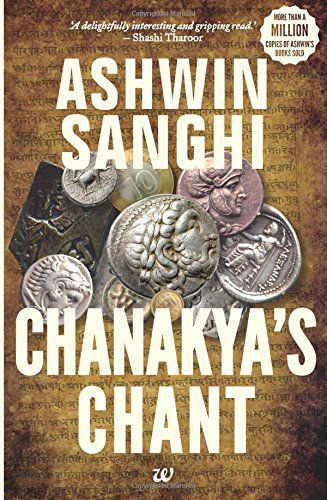
Book Review – Chanakya Chant

“Chanakya’s Chant” is a gripping historical thriller that weaves together two parallel narratives set in ancient and modern India. Written by the talented author Ashwin Sanghi, this book is the second installment in the Bharat Series, and it takes readers on an enthralling journey through time and politics.
The novel skillfully entangles the tales of two extraordinary strategists: Chanakya, the brilliant ancient Indian political strategist and philosopher, and Pandit Gangasagar Mishra, a contemporary political mastermind. The narrative alternates between these two characters, beautifully juxtaposing the political intrigues of the past with the machinations of the present.

The first thread of the story transports readers to the ancient world of Chanakya, where we witness his rise from a humble Brahmin to the mastermind behind the establishment of the Mauryan Empire. Sanghi meticulously paints a vivid picture of the historical period, recreating the courts, palaces, and battlefields of ancient India. The portrayal of Chanakya as a shrewd and cunning strategist is both captivating and insightful, making readers appreciate the brilliant mind of this historical figure.
In the contemporary storyline, we follow the life of Pandit Gangasagar Mishra, a modern-day political strategist who possesses the same intellect and ambition as Chanakya. Gangasagar’s journey to power is filled with twists and turns, as he navigates the complex world of Indian politics, corruption, and power struggles. The author deftly explores the dynamics of modern politics, presenting a realistic and engaging portrayal of the political landscape in India.
One of the most commendable aspects of “Chanakya’s Chant” is Ashwin Sanghi’s meticulous research and attention to historical and political details. The seamless interweaving of past and present demonstrates the timeless relevance of Chanakya’s principles and strategies. Sanghi’s writing style is fluid and captivating, keeping readers engrossed throughout the book’s 476 pages.
Moreover, the characters in the novel are well-crafted and multi-dimensional, adding depth to the plot. Both Chanakya and Pandit Gangasagar Mishra are complex individuals driven by their ambitions, making them relatable despite the vast differences in their eras.
The book’s pacing is near flawless, striking a balance between action-packed sequences and moments of contemplation. As the two narratives converge, the suspense intensifies, leaving readers eager to unravel the ultimate connections between the ancient and modern sagas.
“Chanakya’s Chant” is not just a historical thriller but also a thought-provoking exploration of power, ambition, and the pursuit of greatness. It reminds us that human nature remains constant over time, and the strategies employed in the past are still relevant in shaping the present.
In conclusion, Ashwin Sanghi’s “Chanakya’s Chant” is a masterfully crafted novel that effortlessly bridges the gap between history and contemporary politics. With its gripping narrative, well-researched backdrop, and compelling characters, the book is a must-read for fans of historical fiction and political thrillers alike. This engaging tale of cunning and power will undoubtedly leave a lasting impression on its readers.

SureShotPOST Online Publishing

ShureShotPOST Online Publishing is an imprint of Eduepedia Publications Pvt Ltd. 

SureShotPOST Online Publishing is a dynamic and innovative platform that revolutionizes the world of digital content creation and distribution. It provides a comprehensive suite of tools and services for authors, bloggers, content creators, and publishers to create, manage, and share their work with a global audience.

Key Features:
Intuitive Content Creation Interface: SureShotPOST offers a user-friendly and intuitive content creation interface that allows writers to draft, edit, and format their content effortlessly. The platform supports various media types, including text, images, videos, and interactive elements, enabling creators to craft engaging and multimedia-rich content.
Seamless Collaboration: SureShotPOST understands the importance of collaboration in the content creation process. Authors and publishers can collaborate in real-time, share feedback, and work together to refine and enhance the content. This feature fosters a sense of teamwork and ensures that the final product is of the highest quality.
Content Management System: The platform comes equipped with a robust content management system that organizes and categorizes content effectively. Authors can manage their drafts, published articles, and past works in an orderly manner, making it easier to access and update their creations.
Advanced Analytics: Understanding how content performs is crucial for content creators and publishers. SureShotPOST provides detailed analytics and performance metrics, allowing users to track their content’s reach, engagement, and overall impact. These insights help creators tailor their content strategies to maximize their audience reach.
Monetization Opportunities: SureShotPOST supports various monetization models, allowing authors and publishers to earn from their content. Whether through subscription-based access, ad revenue sharing, or sponsored content, creators have the flexibility to choose the monetization method that aligns with their goals.
Distribution Channels: SureShotPOST facilitates broad content distribution across various online platforms and social media channels. This ensures that content reaches a wider audience, enhancing its visibility and potential for monetization.
Content Security and Copyright Protection: Protecting intellectual property is paramount in the digital age. SureShotPOST employs robust security measures to safeguard content from unauthorized usage or plagiarism. Authors can confidently publish their work, knowing that their creations are protected.
Community Engagement: The platform fosters a vibrant community of content creators, readers, and publishers. Users can interact through comments, feedback, and sharing, fostering an engaged and supportive ecosystem.
Mobile Accessibility: SureShotPOST is accessible on various devices, including smartphones and tablets, enabling creators to work on their content anytime, anywhere.
SureShotPOST Online Publishing is a game-changer for content creators and publishers alike. By offering a suite of powerful tools, collaboration features, and monetization options, the platform empowers writers to unleash their creativity while connecting them with a global audience. With its emphasis on security, analytics, and community engagement, SureShotPOST is undoubtedly at the forefront of the digital content publishing revolution.

Top Book Genre or Categories to Get your Book Top Selling on Amazon

  1. Fictional Bestsellers: Books with gripping narratives, strong characters, and emotional depth that captivate readers and keep them engaged until the very last page.

  2. Thrillers and Suspense: Heart-pounding tales filled with twists, turns, and unexpected revelations that keep readers on the edge of their seats.
  3. Mystery Novels: Enigmatic stories that challenge readers to solve the puzzle alongside the protagonist.
  4. Romance Novels: Heartwarming or steamy love stories that evoke emotions and leave readers swooning.
  5. Fantasy and Science Fiction: Imaginative worlds and thrilling adventures that transport readers to extraordinary realms.
  6. Self-Help and Personal Development: Inspirational books that offer valuable insights, strategies, and motivation for personal growth.
  7. Biography and Memoirs: Compelling life stories of prominent figures or ordinary individuals who have overcome challenges and achieved greatness.
  8. Cookbooks: Mouthwatering collections of recipes and culinary techniques to delight food enthusiasts.
  9. Children’s Books: Delightful tales that entertain, educate, and inspire young minds.
  10. Young Adult Novels: Engaging stories that resonate with teenagers and young adults, exploring themes of identity, friendship, and coming-of-age.
  11. Business and Leadership Books: Informative guides and case studies that offer practical advice for professional success.
  12. Historical Fiction: Novels that transport readers to different eras, combining real events with fictional characters and narratives.
  13. Non-Fiction Bestsellers: Books that shed light on current affairs, science, philosophy, or other relevant topics, appealing to curious minds.
  14. Inspirational Literature: Uplifting stories and essays that provide hope, wisdom, and encouragement.
  15. Poetry Collections: Expressive verses that delve into the depths of human emotions and experiences.
  16. Psychological Thrillers: Books that explore the complexities of the human mind and emotions, often blurring the lines between reality and imagination.
  17. Dystopian Fiction: Speculative tales set in bleak future worlds, often reflecting contemporary societal issues.
  18. True Crime: Gripping accounts of real-life criminal cases and the efforts to solve them.
  19. Science and Nature Books: Informative works that delve into the wonders of the natural world and scientific discoveries.
  20. Health and Wellness: Books focusing on physical and mental well-being, providing strategies for a balanced and healthy lifestyle.
Keep in mind that book popularity can vary over time, and individual preferences play a significant role in determining which books make it to the top of the Amazon bestseller list. When exploring the top books on Amazon, consider reading reviews and synopses to find the ones that resonate with your interests and preferences.

Third G20 Finance Ministers and Central Bank Governors Meeting

All G20 Finance Ministers and Central Bank Governors agreed to paragraphs 1, 4, and paragraphs 6 to 26 along with Annexes 1 and 2.

  1. We, the Finance Ministers and Central Bank Governors of G20 countries, met on 17-18 July 2023, in Gandhinagar, India. Under the Indian Presidency’s theme of “One Earth, One Family, One Future”, we pledge to prioritize the well-being of our people and the planet and reaffirm our commitment to enhancing international economic cooperation, strengthening global development for all and steering the global economy towards strong, sustainable, balanced, and inclusive growth (SSBIG).
  2. 1 2Since February 2022, we have also witnessed the war in Ukraine further adversely impact the global economy. There was a discussion on the issue. We reiterated our national positions as expressed in other fora, including the UN Security Council and the UN General Assembly, which, in Resolution No. ES- 11/1 dated 2 March 2022, as adopted by majority vote (141 votes for, 5 against, 35 abstentions, 12 absent), deplores in the strongest terms the aggression by the Russian Federation against Ukraine and demands its complete and unconditional withdrawal from the territory of Ukraine. Most members strongly condemned the war in Ukraine and stressed that it is causing immense human suffering and exacerbating existing fragilities in the global economy constraining growth, increasing inflation, disrupting supply chains, heightening energy and food insecurity, and elevating financial stability risks. There were other views and different assessments of the situation and sanctions. Recognising that the G20 is not the forum to resolve security issues, we acknowledge that security issues can have significant consequences for the global economy.
  3. It is essential to uphold international law and the multilateral system that safeguards peace and stability. This includes defending all the Purposes and Principles enshrined in the Charter of the United Nations and adhering to international humanitarian law, including the protection of civilians and infrastructure in armed conflicts. The use or threat of use of nuclear weapons is inadmissible. The peaceful resolution of conflicts, efforts to address crises, as well as diplomacy and dialogue are vital. Today’s era must not be of war.

1 China stated that the G20 FMCBG meeting is not the right forum to discuss geopolitical issues.

2 Russia dissociated itself from the status of this document as a common outcome because of references in paragraphs 2, 3 and 5.

  1. Global economic growth is below its long-run average and remains uneven. The uncertainty around the outlook remains high. With notable tightening in global financial conditions, which could worsen debt vulnerabilities, persistent inflation and geoeconomic tensions, the balance of risks remains tilted to the downside. We, therefore, reiterate the need for well-calibrated monetary, fiscal, financial, and structural policies to promote growth, reduce inequalities and maintain macroeconomic and financial stability. We will continue to enhance macro policy cooperation and support the progress towards the 2030 Agenda for Sustainable Development. We reaffirm that achieving SSBIG will require policymakers to stay agile and flexible in their policy response, as evidenced during the recent banking turbulence in a few advanced economies where expeditious action by relevant authorities helped to maintain financial stability and manage spillovers. We welcome the initial steps taken by the Financial Stability Board (FSB), Standard Setting Bodies (SSBs) and in certain jurisdictions to examine what lessons can be learned from this recent banking turbulence and encourage them to advance their ongoing work. We will use macroprudential policies, where required, to safeguard against downside risks. Central banks remain strongly committed to achieving price stability in line with their respective mandates. They will ensure that inflation expectations remain well anchored and will clearly communicate policy stances to help limit negative cross-country spillovers. Central bank independence is crucial to maintaining policy credibility. We will prioritise temporary and targeted fiscal measures to protect the poor and the most vulnerable, while maintaining medium-term fiscal sustainability. We will ensure the coherence of the overall monetary and fiscal stances. We recognise the importance of supply-side policies, especially policies that increase labour supply and enhance productivity to boost growth and alleviate price pressures. We reaffirm our April 2021 exchange rate commitments. We also reaffirm the importance of the rules-based, non-discriminatory, fair, open, inclusive, equitable, sustainable and transparent multilateral trading system with the World Trade Organization (WTO) at its core in restoring growth and job creation and reiterate our commitment to fight protectionism and encourage concerted efforts for reform of the WTO.
  2. While global food and energy prices have fallen from their peak levels, the potential for high levels of volatility in food and energy markets remains, given the uncertainties in the global economy. In this context, we welcome the G20 Report on Macroeconomic Impacts of Food and Energy Insecurity and their Implications for the Global Economy, informed by policy experiences shared by members and supported by analysis from the International Monetary Fund (IMF), World Bank Group (WBG), International Energy Agency (IEA) and Food and Agriculture Organisation (FAO) and take note of its voluntary and non-binding policy learnings. We look forward to an ambitious replenishment of the International Fund for Agricultural Development (IFAD) resources at the end of the year by IFAD members, to support IFAD’s fight against food insecurity.
  3. We also take note of the discussions on assessing macroeconomic risks to SSBIG, including those stemming from climate change and various transition policies considering country-specific circumstances and different levels of development. The macroeconomic costs of the physical impacts of climate change are significant at an aggregate level and the cost of inaction substantially outweighs that of orderly and just climate transitions. We recognise the importance of international dialogue and cooperation, including in the areas of finance and technology, and timely policy action consistent with country- specific circumstances. It is also critical to assess and account for the short, medium and long-term macroeconomic impact of both the physical impact of climate change and transition policies, including on growth, inflation, and unemployment. We endorse the G20 Report on Macroeconomic Risks Stemming from Climate Change and Transition Pathways that presents an evidence-based assessment informed by policy experiences shared by members and technical inputs from the IMF, IEA, and the Network of Central Banks and Supervisors for Greening the Financial System (NGFS). Building on analysis in this Report, we will consider further work on the macroeconomic implications, as appropriate, particularly as relevant for fiscal and monetary policies, drawing on the inputs from a diverse set of stakeholders.
  4. We remain committed to pursuing ambitious efforts to evolve and strengthen Multilateral Development Banks (MDBs) to address the global challenges of the 21st century with a continued focus on addressing the development needs of low- and middle-income countries.
  5. Following up on the mandate from our Leaders in Bali in November 2022 and based on the updates from MDBs in Spring 2023, a G20 Roadmap for Implementing the Recommendations of the G20 Independent Review of MDBs Capital Adequacy Frameworks (CAFs) has been developed. We endorse this Roadmap and call for its ambitious implementation, within MDBs’ own governance frameworks while safeguarding their long-term financial sustainability, robust credit ratings and preferred creditor status. We also call for a regular review of the progress of implementation on a rolling basis including through engaging with MDBs, subject experts and shareholders. We commend the MDBs for their progress in implementing the CAF recommendations, especially with respect to adapting definitions of risk appetite and financial innovation. At the same time, we emphasise the need to give an additional push to CAF implementation. We appreciate the ongoing collaboration among MDBs on the timely release of Global Emerging Markets (GEMs) data and the launch of GEMs 2.0 as a stand-alone entity by early 2024. Going forward, we also encourage MDBs to collaborate in areas such as hybrid capital, callable capital, and guarantees. We appreciate the enhanced dialogue between the MDBs, Credit Rating Agencies and shareholders and encourage continued transparency in the exchange of information and rating methodologies. We take note that initial CAF measures, including those under implementation and consideration, could potentially yield additional lending headroom of approximately USD 200 billion over the next decade, as estimated in the G20 CAF Roadmap. While these are encouraging first steps, we will need continued and further impetus on CAF implementation.
  6. Furthermore, we reiterate our call for the MDBs to undertake comprehensive efforts to evolve their vision, incentive structures, operational approaches and financial capacities so that they are better equipped to maximize their impact in addressing a wide range of global challenges, while being consistent with their mandate and commitment to accelerate progress towards Sustainable Development Goals (SDGs). Recognising the urgent need to strengthen and evolve the MDB ecosystem for the 21st century, we appreciate the efforts of the G20 Independent Expert Group on Strengthening MDBs in preparing Volume 1 of the Report, and we will examine it in conjunction with Volume 2 expected in October 2023. We take note of Volume 1’s recommendations and the MDBs may choose to discuss these recommendations as relevant and appropriate, within their governance frameworks, in due course, with a view to enhancing the effectiveness of MDBs. We look forward to a High-Level Seminar, on the sidelines of the Fourth FMCBG meeting in October 2023 on strengthening the financial capacity of MDBs. We encourage MDBs to update the International Financial Architecture Working Group (IFA WG) on their evolution efforts to better address global challenges. We welcome the March 2023 Report on Evolution of the World Bank Group and call on the World Bank to advance the implementation of the agreed actions and continue to develop further proposals that can contribute to significant progress of the Bank’s evolution exercise by the IMF/WBG 2023 Annual Meetings in Marrakech. Recognising other multilateral efforts in this area, we take note of the Summit for a New Global Financing Pact. We also look forward to an ambitious IDA21 replenishment. We acknowledge the concluding report on the 2020 Shareholding Review of the International Bank for Reconstruction and Development (IBRD) and look forward to the 2025 Shareholding Review.
  7. We reiterate our commitment to a strong, quota-based, and adequately resourced IMF at the centre of the global financial safety net. We remain committed to revisiting the adequacy of quotas and will continue the process of IMF governance reform under the 16th General Review of Quotas (GRQ), including a new quota formula as a guide, and ensure the primary role of quotas in IMF resources, to be concluded by December 15, 2023. In this context, we support at least maintaining the IMF’s current resource envelope. We welcome the landmark achievement of the global ambition of USD 100 billion of voluntary contributions (in SDRs or equivalent) and USD 2.6 billion of grants in pledges for countries most in need and call for the swift delivery of pending pledges. We welcome the progress achieved under the Resilience and Sustainability Trust (RST) and Poverty Reduction and Growth Trust (PRGT) with pledges for the RST amounting to about USD 45.5 billion and for the PRGT to about USD 24.2 billion in loan resources and nearly USD 1.9 billion in subsidy resources, respectively, through the voluntary channelling of Special Drawing Rights (SDRs) or equivalent contributions. We call for further voluntary subsidy and loan pledges to the PRGT by the IMF/WBG 2023 Annual Meetings in Marrakech to meet the first stage PRGT fundraising needs. We look forward to the IMF delivering a preliminary analysis, by the 2023 IMF/WBG Annual Meetings, of the range of options to put the PRGT on a sustainable footing with a view to meeting the growing needs of low-income countries in the coming years. The G20 reiterates its continued support to Africa, including through the G20 Compact with Africa. We will continue to monitor progress on channelling SDRs or equivalent contributions from countries with strong external positions and look forward to the IMF Ex-Post Report on the use of SDRs in September. We will continue to monitor the effectiveness of RST supported programs and look forward to interim review scheduled for April 2024. We look forward to further progress on the exploration of viable options for channelling SDRs through MDBs, while respecting relevant legal frameworks and the need to preserve the reserve asset character and status of SDRs. We look forward to the review of precautionary arrangements (FCL, PLL and SLL) and take note of the discussions held on the IMF surcharge policy.
  8. We welcome discussions on the potential macro-financial implications arising from the introduction and adoption of Central Bank Digital Currencies (CBDCs), notably on cross-border payments as well as on the international monetary and financial system. We welcome the BIS Innovation Hub (BISIH) Report on Lessons Learnt on CBDCs and look forward to the IMF Report on Potential macro-financial implications of widespread adoption of CBDCs to advance the discussion on this issue. We also look forward to continued discussions on the implementation of international frameworks for the use of different tools in addressing capital flow volatility based on the policy updates by the IMF, the OECD, and the BIS while being mindful of their original purpose. We reiterate our commitment to promote sustainable capital flows. To this effect, we note the OECD’s Report on Towards Orderly Green Transition – Investment Requirements and Managing Risks to Capital Flows.
  9. We re-emphasise the importance of addressing debt vulnerabilities in low and middle-income countries in an effective, comprehensive and systematic manner. We continue to stand by all the commitments made in the Common Framework for Debt Treatments beyond the DSSI, including those in the second and final paragraphs, as agreed on November 13, 2020, and step up the implementation of the Common Framework in a predictable, timely, orderly and coordinated manner. To this end, we ask the G20 International Financial Architecture Working Group (IFA WG) to continue discussing policy-related issues linked to implementation of the Common Framework and make appropriate recommendations. We welcome the recent agreement between the Government of Zambia and official creditor committee on a debt treatment and look forward to a swift resolution. We welcome the formation of an official creditor committee for Ghana and look forward to an agreement on a debt treatment as soon as possible. We also call for a swift conclusion of the debt treatment for Ethiopia. Beyond the Common Framework, we welcome all efforts for timely resolution of the debt situation of Sri Lanka, including the formation of the official creditor committee, and we call for the resolution as soon as possible. Noting the work in developing the G20 Note on the Global Debt Landscape in a fair and comprehensive manner, we ask the G20 IFA WG to continue the development expeditiously. We encourage the efforts of the Global Sovereign Debt Roundtable (GSDR) participants to strengthen communication and foster a common understanding among key stakeholders, both within and outside the Common Framework, for facilitating effective debt treatments.
  10. We welcome joint efforts by all stakeholders, including private creditors, to continue working towards enhancing debt transparency. We note the results of the voluntary stocktaking exercise of data sharing with International Financial Institutions. We welcome the efforts of private sector lenders who have already contributed data to the joint Institute of International Finance (IIF)/OECD Data Repository Portal and continue to encourage others to also contribute on a voluntary basis.
  11. We emphasise the need for enhanced mobilisation of finances and efficient use of existing resources in our efforts to make the cities of tomorrow inclusive, resilient, and sustainable. To this effect, we endorse the G20 Principles for Financing Cities of Tomorrow, which are voluntary and non-binding in nature and the G20/OECD Report on Financing Cities of Tomorrow, which provides a financing strategy as well as presents a compendium of innovative urban planning and financing models. We encourage stakeholders, including the Development Financial Institutions and the MDBs, to explore the potential of drawing upon these principles in their planning and financing of urban infrastructure wherever applicable and share experiences from early pilot cases. We note the progress in outlining the enablers of inclusive cities. We also note the customisable G20/ADB Framework on Capacity Building of Urban Administration to guide local governments in assessing and enhancing their overall institutional capacity for the effective delivery of public services. We note the ongoing pilot application of the voluntary and non-binding Quality Infrastructure Investment (QII) Indicators and look forward to further discussion on their application considering the country circumstances. We thank the Global Infrastructure Hub for supporting the G20’s multi-year infrastructure agenda since 2014. We note that the GIH Board and shareholders are currently engaged in exploring a way to best sustain the value created so far. We look forward to the outcome report of the 2023 Infrastructure Investors Dialogue focused on integrating the private sector perspective in designing policies for financing cities of tomorrow.
  12. We continue to reaffirm our steadfast commitment to strengthening the full and effective implementation of the United Nations Framework Convention on Climate Change (UNFCCC) and the Paris Agreement. We recall and reaffirm the commitment made by developed countries to the goal of mobilising jointly USD 100 billion climate finance per year by 2020, and annually through 2025, to address the needs of developing countries, in the context of meaningful mitigation action and transparency in implementation. Developed country- contributors expect this goal to be met for the first time in 2023. In this context, we also support continued deliberations on an ambitious new collective quantified goal of climate finance from a floor of USD 100 billion per year to support developing countries, that helps in fulfilling the objective of the UNFCCC and implementation of the Paris Agreement.
  13. We welcome the Sustainable Finance Working Group (SFWG) recommendations on the mechanisms to support the timely and adequate mobilisation of resources for climate finance, while ensuring support for transition activities in line with country circumstances. We also recognise the significant role of public finance, as an important enabler of climate actions such as leveraging much-needed private finance through blended financial instruments, mechanisms and risk-sharing facilities, to address both adaptation and mitigation efforts in a balanced manner for reaching the ambitious Nationally Determined Contributions (NDCs), carbon neutrality and net-zero considering different national circumstances. We welcome the recommendations for scaling up blended finance and risk-sharing facilities, including the enhanced role of MDBs in mobilizing climate finance. We underscore the importance of maximizing the effect of concessional resources, such as those of the multilateral climate funds to support developing countries’ implementation of the Paris Agreement and look forward to an ambitious replenishment of the Green Climate Fund (GCF) this year. Recognizing the importance of supporting the commercialization of early-stage technologies that avoid, abate and remove greenhouse gas emissions and facilitate adaptation, we note the recommendations on financial solutions, policies, and incentives to encourage greater private flows for the rapid development, demonstration, and deployment of green and low-carbon technologies. We reiterate the importance of a policy mix consisting of fiscal, market and regulatory mechanisms including, as appropriate, the use of carbon pricing and non-pricing mechanisms and incentives, toward carbon neutrality and net zero. We look forward to the early finalisation of the Compendium comprising the discussions on Non-Pricing Policy Levers to Support Sustainable Investment.
  14. We reiterate our commitment to take action to scale up sustainable finance. In line with the G20 Sustainable Finance Roadmap, we welcome the analytical framework for SDG-aligned finance, and voluntary recommendations for scaling-up adoption of social impact investment instruments and improving nature-related data and reporting, informed by the stocktaking analyses, considering country circumstances. We encourage all relevant stakeholders to consider these recommendations in their actions and support for the 2030 Agenda.
  15. We endorse the multi-year G20 Technical Assistance Action Plan (TAAP) and the voluntary recommendations made to overcome data-related barriers to climate investments. We encourage the implementation of TAAP by relevant jurisdictions and stakeholders in line with the national circumstances. We look forward to reporting on the progress made by members, international organisations, networks and initiatives in the implementation of the G20 Sustainable Finance Roadmap, which is voluntary and flexible in nature, and call for further efforts to advance the Roadmap’s recommended actions that will scale up sustainable finance, including among others the implementation of the Transition Finance Framework. We look forward to the finalisation of the 2023 G20 Sustainable Finance Report, including a review of the implementation of the G20 Sustainable Finance Roadmap. We welcome finalization of the sustainability and climate-related disclosure standards published by the International Sustainability Standards Board (ISSB) in June 2023, which provide the mechanisms that address proportionality and promote interoperability. It is important that flexibility, to take into account country- specific circumstances, is preserved in the implementation of those standards. When put into practice as above, those standards will help to support globally comparable and reliable disclosures.
  16. We remain committed to strengthening the global health architecture for pandemic prevention, preparedness and response (PPR) through enhanced collaboration between Finance and Health Ministries under the Joint Finance and Health Task Force (JFHTF). Under the JFHTF, we welcome the participation of invited key regional organisations in the Task Force meetings as they enhance the voice of low-income countries. We welcome the discussion on the Framework on Economic Vulnerabilities and Risks (FEVR) and the initial Report for Economic Vulnerabilities and Risks arising from pandemics, created through collaboration between World Health Organisation (WHO), World Bank, IMF, and European Investment Bank (EIB). We call on the Task Force to continue refining this Framework over its multi-year work plan in order to regularly assess economic vulnerabilities and risks due to evolving pandemic threats, taking into account country-specific circumstances. We welcome the Report on Best Practices from Finance Health Institutional Arrangements during Covid-19 that will contribute towards joint finance-health sector readiness to support our response to future pandemics. We welcome the Report on Mapping Pandemic Response Financing Options and Gaps developed by the WHO and World Bank and look forward to further deliberations on how financing mechanisms could be optimized, better coordinated and, when necessary, suitably enhanced, to deploy the necessary financing quickly and efficiently, duly considering discussions in other global forums. The analysis provided by these three reports will offer important inputs for discussion in the Joint Finance-Health Ministerial Meeting in August on global response to the next pandemic threat. We welcome the conclusion of the call for proposals by the Pandemic Fund and look forward to the first round of funding in the coming months.
  17. We reaffirm our commitment to continue cooperation towards a globally fair, sustainable and modern international tax system appropriate to the needs of the 21st century. We welcome the delivery of a text of a Multilateral Convention (MLC) on Amount A, significant progress of work on Amount B and the completion of the work on the development of the Subject to Tax Rule (STTR) and its implementation framework as set out in the July 2023 Outcome Statement of the OECD/G20 Inclusive Framework on BEPS (Inclusive Framework). We call on the Inclusive Framework to swiftly resolve the few pending issues relating to the MLC with a view to prepare the MLC for signature in the second half of 2023 and complete the work on Amount B by end of 2023. We welcome the steps taken by various countries to implement the Global Anti-Base Erosion (GloBE) Rules as a common approach. We recognise the need for coordinated efforts towards capacity building to implement the two-pillar international tax package effectively and in particular, welcome a plan for additional support and technical assistance for developing countries. We welcome the launch of the pilot programme of the South Asia Academy in India for tax and financial crime investigation in collaboration with OECD. We note the 2023 update of the G20/OECD Roadmap on Developing Countries and International Taxation. We note the Update on the Implementation of the 2021 Strategy on Unleashing the Potential of Automatic Exchange of Information for Developing Countries by the Global Forum on Transparency and Exchange of Information for Tax Purposes (“Global Forum”). We call for the swift implementation of the Crypto-Asset Reporting Framework (“CARF”) and amendments to the CRS. We ask the Global Forum to identify an appropriate and coordinated timeline to commence exchanges by relevant jurisdictions, noting the aspiration of a significant number of these jurisdictions to start CARF exchanges by 2027, and to report to our future meetings on the progress of its work. We note the OECD Report on Enhancing International Tax Transparency on Real Estate and the Global Forum Report on Facilitating the Use of Tax-Treaty-Exchanged Information for Non-Tax Purposes. We note the discussions held at the G20 High-Level Tax Symposium on Combatting Tax Evasion, Corruption and Money Laundering.
  18. We continue to closely monitor the risks of the fast-paced developments in the crypto-asset ecosystem. We endorse the Financial Stability Board’s (FSB’s) high-level recommendations for the regulation, supervision and oversight of crypto-assets activities and markets and of global stablecoin arrangements. We ask the FSB and standard-setting bodies (SSBs) to promote the effective and timely implementation of these recommendations in a consistent manner globally to avoid regulatory arbitrage. We welcome the shared FSB and SSBs workplan for crypto assets. We look forward to receiving the IMF-FSB Synthesis Paper, including a Roadmap, before the Leaders’ Summit in September 2023, to support a coordinated and comprehensive policy and regulatory framework taking into account the full range of risks, and risks specific to the emerging market and developing economies (EMDEs) and ongoing global implementation of FATF standards to address money laundering and terrorism financing risks. In this context, we note the Presidency Note as an important input for the Synthesis Paper. We also welcome the BIS Report on The Crypto Ecosystem: Key Elements and Risks.
  19. We continue to strongly support the work of the FSB and SSBs to address vulnerabilities and enhance the resilience of non-bank financial intermediation (NBFI) from a systemic perspective while monitoring evolving developments in NBFI. We welcome the FSB’s consultation report on revisions to the FSB 2017 recommendations on addressing liquidity mismatch in open-ended funds, and we support work to promote implementation of the FSB money market fund proposals, enhance margining practices, and address vulnerabilities from non-bank leverage. We welcome the FSB’s recommendations to achieve greater convergence in cyber incident reporting, updates to the Cyber Lexicon and Concept Note for a Format for Incident Reporting Exchange (FIRE). We look forward to the FSB’s work to identify the reporting needs and the prerequisites for and feasibility of the development of FIRE, and we ask the FSB to develop an action plan with appropriate timelines.
  20. We welcome the FSB’s consultation Report on Enhancing Third-party Risk Management and Oversight. We expect the toolkit to support efforts in enhancing the operational resilience of financial institutions, addressing the challenges arising from their growing reliance on critical third-party service providers including BigTechs and FinTechs, as well as reducing fragmentation in regulatory and supervisory approaches across jurisdictions and in different areas of the financial services sector. We reaffirm our commitment to the effective implementation of the prioritised actions for the next phase of the G20 Roadmap for Enhancing Cross-border Payments and welcome the initiatives undertaken by SSBs and international organisations in this direction. To that end, we look forward to the FSB’s progress report in October on the implementation of this roadmap. We look forward to the G20 TechSprint 2023, a joint initiative with the BIS Innovation Hub, which will promote innovative solutions aimed at improving cross-border payments. We welcome the annual progress Report on the FSB’s Roadmap for Addressing Financial Risks from Climate Change. We endorse the revised G20/OECD Principles of Corporate Governance with the aim to strengthen policy and regulatory frameworks for corporate governance that support sustainability and access to finance from capital markets, which in turn can contribute to the resilience of the broader economy.
  21. We welcome the progress made by the Global Partnership for Financial Inclusion (GPFI) towards the completion of the deliverables under the G20 2020 Financial Inclusion Action Plan (FIAP). We welcome the 2023 Update to Leaders on Progress towards the G20 Remittance Target and endorse the Regulatory Toolkit for Enhanced Digital Financial Inclusion of Micro, Small and Medium Enterprises (MSMEs). We endorse the voluntary and non-binding G20 Policy Recommendations for Advancing Financial Inclusion and Productivity Gains through Digital Public Infrastructure. We take note of the significant role of digital public infrastructure in helping to advance financial inclusion in support of inclusive growth and sustainable development. We also encourage the continuous development and responsible use of technological innovations including innovative payment systems, to achieve financial inclusion of the last mile and progress towards reducing the cost of remittances in line with the G20 Leaders’ directions. We also support continuous efforts to strengthen digital financial literacy and consumer protection. We endorse the G20 2023 FIAP, which provides an action-oriented and forward-looking roadmap for rapidly accelerating the financial inclusion of individuals and MSMEs, particularly vulnerable and underserved groups in the G20 countries and beyond. We also endorse the 2023 Updated GPFI Terms of Reference.
  22. We recognise the importance of delivering on the strategic priorities of the Financial Action Task Force (FATF) and FATF Style Regional Bodies. We commit to supporting their increasing resource needs and encourage others to do the same, including for the next round of mutual evaluations. We remain committed to the timely and global implementation of the revised FATF Standards on the transparency of beneficial ownership of legal persons and legal arrangements to make it more difficult for criminals to hide and launder ill- gotten gains. We welcome the ongoing work of the FATF to enhance global efforts to recover criminal proceeds, in particular, the progress made by the FATF towards revising its standards on asset recovery and reinforcing global asset recovery networks. We reiterate the importance of countries developing and implementing effective regulatory and supervisory frameworks to mitigate risks associated with virtual assets in line with FATF Standards especially for terrorism financing, money laundering, and proliferation financing risks. In this regard, we support the FATF’s initiative to accelerate the global implementation of its standards, including the “travel rule”, and its work on risks of emerging technologies and innovations, including decentralised finance (DeFi) arrangements and peer-to-peer transactions. We look forward to the completion of FATF’s work on the use of crowdfunding for terrorism financing and on money laundering related to cyber-enabled fraud.
  23. With a vision reminiscent of Mahatma Gandhi’s teachings, we, the Finance Ministers and Central Bank Governors of G20 countries, envisage a future in which every nation thrives, prosperity is widely shared, and the well-being of humanity and the planet are harmoniously intertwined.


Annex I: Issues for further work

This Annex lists the deliverables from various G20 Finance Track workstreams following the July FMCBG meeting.

Framework Working Group

  • G20 IMF Report on Strong, Sustainable, Balanced and Inclusive Growth, October 2023, in the context of increasing vulnerabilities associated with macroeconomic instabilities and financial globalisation.

International Financial Architecture Working Group

· Volume 2 of the Report of G20 Expert Group on Strengthening MDBs

  • Regular review of the progress of implementation of CAF recommendations on a rolling basis including through engaging with MDBs, subject experts and shareholders

· Updates from IMF on the progress of the 16th General Review of Quotas

  • Update from the IMF on the ex-post assessment of 2021 SDR allocation
  • Continued exploration of opportunities for a “User manual” for the Common

Framework presenting the experience of the first cases.

  • G20 IFA WG to continue developing expeditiously the G20 Note on the Global Debt Landscape in a fair and comprehensive manner.
  • IFA WG to continue discussing policy-related issues linked to implementation of the Common Framework and make appropriate recommendations
  • Technical workshops to be held under the ambit of GSDR, such as the one on Comparability of Treatment (CoT).
  • Improvements to sovereign debt restructuring by continuing the discussion on some specific debt instruments, including potential best practices for LICs on collateralised financing practices, exploring ways to increase private sector involvement, in particular regarding the restructuring of syndicated loans, collective action clauses, assessing the benefits and complications of state- contingent debt instruments (SCDI), and climate-resilient debt clauses in international sovereign bonds and in official bilateral lending.
  • IMF Report on the potential macro-financial implication of widespread adoption of CBDCs, in September 2023.

Infrastructure

  • Continuation of the InfraTracker 2.0 to track planned infrastructure investments across G20 member economies using publicly available sources and transition it to an online tool.
  • Compilation of the scope and taxonomies related to infrastructure across G-20 economies and International Organisations.

Sustainable Finance Working Group

  • Monitoring and reporting of progress on G20 Sustainable Finance Roadmap on the SFWG online dashboard.
  • Finalisation of the 2023 G20 Sustainable Finance Report.
  • Compendium of case studies for financing SDGs.

International Taxation

  • A Handbook by the OECD on Pillar Two to facilitate implementation through a common approach, especially to assist capacity-constrained jurisdictions and present the Handbook by October 2023.

Financial Sector Issues

  • A joint synthesis paper by the IMF and the FSB integrating the macroeconomic and regulatory perspectives of crypto assets to be submitted in September 2023.
  • An interim report by the BIS Committee on Payments and Market Infrastructures (CPMI) on Fast Payment Systems (FPS) interlinking governance, risk management and oversight considerations; and the final report on ISO 20022 harmonisation requirements for cross-border payments in October 2023.
  • FSB to provide a report on the financial stability implications of leverage in NBFI in September 2023.
  • FSB to provide an overall progress report on enhancing the resilience of NBFI in September 2023.
  • FSB to provide its Annual Report on Promoting Global Financial Stability in October 2023.
  • FSB to report in October 2023 its progress on the implementation of the G20 Roadmap for Enhancing Cross-Border Payments.
  • FSB, in coordination with the ISSB and IOSCO, to prepare a report on the progress of jurisdictions and firms on climate-related financial disclosures by October 2023.

Global Partnership for Financial Inclusion

  • GPFI will continue work to complete the Second Update of National Remittance Plans and present a case-study on the impact of digital remittances in reducing the cost of remittances.
  • GPFI will report on progress in implementing the G20 GPFI High-Level Principles on Digital Financial Inclusion.
  • GPFI to work on SME best practices and innovative instruments to overcome common constraints in SME financing based on GPFI SME living database.


Annex 2: Reports and Documents received

  1. G20 Report on Macroeconomic Impacts of Food and Energy Insecurity and their implications for the global economy
  2. G20 Report on Macroeconomic risks stemming from climate change and transition pathways
  3. G20 Roadmap for implementing the recommendations of the G20 Independent Review of MDBs Capital Adequacy Frameworks (CAFs)
  4. Volume 1 of the G20 Expert Group on Strengthening MDBs
  5. BIS Innovation Hub (BISIH) Report on “Lessons learnt on CBDCs”
  6. OECD’s report on “Towards Orderly Green Transition – Investment Requirements and Managing Risks to Capital Flows
  7. G20 note on the total global ambition of USD 100bn of voluntary contributions for countries most in need
  8. G20 Principles for Financing Cities of Tomorrow: inclusive, resilient and sustainable
  9. G20/OECD Report on Financing Cities of Tomorrow
  10. G20/ADB Framework on Capacity Building of Urban Administration
  11. G20 Sustainable Finance Working Group Deliverables
  12. Framework on Economic Vulnerabilities and Risks (FEVR) and the initial Report for economic vulnerabilities and risks arising from pandemics
  13. Report on Best Practices from Finance Health Institutional Arrangements during Covid-19
  14. Report on Mapping Pandemic Response Financing Options and Gaps developed by the WHO and World Bank
  15. G20/OECD Roadmap on Developing Countries and International Taxation Update 2023
  16. OECD Report on ‘Enhancing International Tax Transparency on Real Estate’
  17. Global Forum Report on ‘Facilitating the Use of Tax-Treaty-Exchanged Information for Non-Tax Purposes’
  18. Global Forum Update on the implementation of the 2021 Strategy on Unleashing the Potential of Automatic Exchange of Information for Developing Countries
  19. FSB Chair’s Letters to G20 Finance Ministers and Central Bank Governors, April and July 2023.
  20. FSB’s global regulatory framework for crypto-asset activities: Umbrella public note to accompany final framework
  21. FSB’s high-level recommendations for the regulation, supervision, and oversight of crypto-asset activities and markets
  22. FSB’s high-level recommendations for the regulation, supervision, and oversight of global stablecoin arrangements
  23. BIS Report on “The crypto ecosystem: key elements and risks”.
  24. FSB Consultation report on addressing liquidity mismatch in open-ended funds-Revisions to the FSB 2017 policy recommendations
  25. FSB Report on Enhancing Third-Party Risk Management and Oversight: A toolkit for financial institutions and financial authorities
  26. FSB Roadmap for Addressing Financial Risks from Climate Change: 2023 Progress Report
  27. FSB Recommendations to Achieve Greater Convergence in Cyber Incident Reporting: Final Report
  28. FSB Concept Note on Format for Incident Reporting Exchange (FIRE) – A possible way forward
  29. Revised G20/OECD Principles of Corporate Governance
  30. G20 Policy Recommendations for Advancing Financial Inclusion and Productivity Gains through Digital Public Infrastructure
  31. 2023 Update to Leaders on Progress towards the G20 Remittance Target
  32. Regulatory Toolkit for Enhanced Digital Financial Inclusion of Micro, Small and Medium Enterprises (MSMEs)
  33. G20 2023 FIAP
  34. 2023 Updated GPFI Terms of Reference.
  35. 2023 GPFI Progress Report to G20 Leaders
  36. G20 Financial Inclusion Action Plan Progress Report 2021-23
  37. FATF Report- Countering Ransomware Financing Report (March 2023)
  38. Targeted Update on the Implementation of the FATF Standards for Virtual Assets (June 2023)
  39. FATF Report on Guidance on Beneficial Ownership Transparency for Legal Persons (March 2023)

****

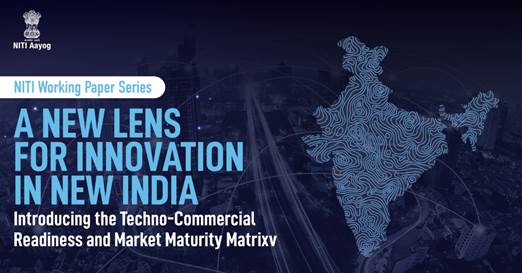
TCRM Matrix Framework to Revolutionize Technology Assessment and drive Innovation in India

 NITI Aayog today released the Techno-Commercial Readiness and Market Maturity Matrix (TCRM Matrix) Framework to Drive Innovation and Entrepreneurship in India.

New Delhi, [18.07.2023] – The NITI Aayog, released, under the NITI Working Paper series, the Techno-Commercial Readiness and Market Maturity Matrix (TCRM Matrix) framework, a pioneering assessment tool designed to revolutionize technology evaluation, foster innovation, and fuel entrepreneurship in India.

The Working Paper casts light on the historical evolution of technology assessment frameworks, including the Technology Readiness Level (TRL), Commercialization Readiness Level (CRL), and Market Readiness Level (MRL) scales. By building upon these frameworks’ core principles, the TCRM Matrix framework presents an integrated assessment model that offers in-depth insights and actionable intelligence to stakeholders at every stage of the technology development cycle.

The working paper provides clear guidelines for integrating the TCRM Matrix framework within the broader innovation ecosystem. By doing so, policymakers, strategists, academicians, and investors can unlock its full potential and drive meaningful change. The adoption of the TCRM Matrix framework necessitates a comprehensive analysis and contextualization within the unique national and sectoral innovation landscapes.

“The introduction of the Techno-Commercial Readiness and Market Maturity Matrix (TCRM Matrix) framework is a significant milestone for India’s innovation and entrepreneurship landscape,” said Dr. V.K. Saraswat, Member (Science & Technology), NITI Aayog. “By providing a robust assessment tool, we aim to empower stakeholders across the nation to make informed decisions, enhance technology commercialization prospects, and propel India towards becoming a global leader in innovation.”

The working paper is authored by Dr. V.K. Saraswat, Member, NITI Aayog along with Dr. Neeraj Sinha, Senior Adviser, Sh. Naman Agrawal, Specialist, Ms. Naba Suroor, Associate and Sh. Siddhey G Shinde, Young Professional, NITI Aayog.

The Government of India, through NITI Aayog, remains steadfast in its commitment to fostering innovation and entrepreneurship. The release of this working paper is a testament to the government’s continuous efforts to drive technological advancements and economic growth. The TCRM Matrix framework is set to play a pivotal role in catalyzing India’s innovation ecosystem and creating a conducive environment for transformative ideas.

The link of the said working paper can be accessed here <<https://niti.gov.in/sites/default/files/2023-07/TCRM-Matrix-Framework-FAD3.pdf>>.

********

Top Ten Books to Read on Education

Some highly recommended books in the field of education that cover a wide range of topics and perspectives:
“Pedagogy of the Oppressed” by Paulo Freire: A classic work in critical pedagogy, this book examines the relationship between education and oppression. Freire advocates for a liberatory approach to education that empowers learners to critically engage with their world and transform social injustices.

“The Death and Life of the Great American School System” by Diane Ravitch: Ravitch, a renowned education historian, critiques the education reform movement in the United States and discusses the detrimental effects of standardized testing, market-based reforms, and privatization on public education.
“Mindset: The New Psychology of Success” by Carol S. Dweck: Dweck explores the concept of mindset and how it impacts learning and achievement. She presents research on the power of a growth mindset, which embraces effort, resilience, and the belief that abilities can be developed.
“Why Don’t Students Like School?” by Daniel T. Willingham: Willingham, a cognitive scientist, delves into the principles of learning and explains why certain teaching methods work better than others. He offers practical insights and strategies for engaging students’ minds and enhancing learning experiences.
“Teaching to Transgress: Education as the Practice of Freedom” by bell hooks: hooks, a prominent feminist scholar, advocates for a transformative and inclusive education. She encourages critical thinking, dialogue, and the dismantling of oppressive systems in the classroom to create a more liberating learning environment.
“The Courage to Teach: Exploring the Inner Landscape of a Teacher’s Life” by Parker J. Palmer: Palmer reflects on the inner dimensions of teaching and emphasizes the importance of teachers’ authenticity, self-reflection, and connection with students. The book explores the personal and professional challenges teachers face and offers insights for sustaining a meaningful teaching practice.
“Educated: A Memoir” by Tara Westover: In this memoir, Westover shares her personal journey from growing up in a strict and isolated household to pursuing education against all odds. The book raises important questions about the transformative power of education and the pursuit of knowledge.
“The First Days of School: How to Be an Effective Teacher” by Harry K. Wong and Rosemary T. Wong: This practical guide provides valuable advice and strategies for new and experienced teachers alike. It covers classroom management, lesson planning, establishing routines, and building positive relationships with students.
“Visible Learning for Teachers: Maximizing Impact on Learning” by John Hattie: Hattie synthesizes decades of educational research to identify the most effective teaching practices that positively impact student learning. The book offers practical insights and strategies for teachers to enhance their instructional effectiveness.
“The Smartest Kids in the World: And How They Got That Way” by Amanda Ripley: Ripley examines the education systems of countries with high-performing students and delves into the cultural, societal, and pedagogical factors that contribute to their success. The book provides valuable insights and comparisons for improving education worldwide.
These books offer diverse perspectives, research-based insights, and thought-provoking ideas in the field of education. Whether you’re an educator, student, or interested in the field, they provide valuable knowledge and inspiration for understanding and transforming education.

Book review

Praesidium, penned by McKinley Aspen, is a captivating and thought-provoking book that takes readers on an exhilarating journey into a world of intrigue, suspense, and ethical dilemmas. Aspen’s skillful storytelling and vivid imagination create a narrative that lingers in the mind long after the final page is turned.

Set in a dystopian future, Praesidium immerses readers in a society where advanced technology and authoritarian control coexist. The protagonist, a resilient and determined individual, finds themselves at the center of a high-stakes conspiracy that challenges their beliefs and tests their loyalty.

What makes Praesidium stand out is Aspen’s ability to tackle complex themes with nuance and depth. The exploration of power dynamics, personal identity, and the consequences of individual choices is masterfully woven into the narrative. The author’s attention to detail and world-building effortlessly transport readers into this dystopian realm, where they can’t help but become emotionally invested in the characters’ struggles.

As the story unfolds, the surprises and twists keep readers engaged, constantly questioning motives and allegiances. Aspen’s skillful pacing ensures a balance between action-packed sequences and quieter moments of introspection, allowing readers to connect with the characters on a deeper level.

One aspect that particularly impressed me was Aspen’s ability to capture the moral dilemmas faced by the characters. Through their journeys, the book raises thought-provoking questions about the nature of power, the price of freedom, and the lengths individuals are willing to go to protect what they hold dear. These contemplative moments provide a refreshing depth to the story, encouraging readers to reflect on their own values and the world around them.

While the book delves into weighty themes, it never loses its sense of excitement and adventure. The plot is well-constructed, and the writing is crisp and engaging, making it difficult to put down. Aspen’s prose is both evocative and accessible, effortlessly drawing readers into the story and keeping them invested until the very end.

In conclusion, Praesidium is a remarkable novel that combines thrilling storytelling with introspective themes. McKinley Aspen’s skill as a writer shines through in this thought-provoking and engrossing tale. I highly recommend this book to readers who enjoy dystopian fiction, intricate world-building, and narratives that challenge the status quo. Prepare to be captivated by Praesidium and the moral quandaries it presents.

Kendriya Vidyalayas (KVs)

 Kendriya Vidyalayas (KVs) are a system of central government schools in India under the auspices of the Ministry of Education, Government of India. These schools were established to cater primarily to the educational needs of children of transferable central government employees, including defense and paramilitary personnel, by providing a common educational platform across the country.

Key Features of Kendriya Vidyalayas:

  1. Uniform Curriculum: KVs follow a standardized curriculum prescribed by the Central Board of Secondary Education (CBSE). This ensures consistency in education across all KVs, regardless of their location.

  2. Availability Across Locations: Kendriya Vidyalayas are located in various parts of the country, including remote areas and defense stations, providing quality education to children whose parents are frequently transferred.

  3. Affordable Education: The schools aim to provide quality education at a reasonable cost, making it accessible to children from diverse socio-economic backgrounds.

  4. Language Policy: While the medium of instruction in KVs is primarily Hindi and English, efforts are made to promote multilingualism, allowing students to learn multiple languages.

  5. Holistic Education: Alongside academics, KVs focus on holistic development, offering various extracurricular activities such as sports, arts, music, debates, and science exhibitions.

  6. Qualified Faculty: KVs typically have well-qualified and experienced teachers who undergo regular training and professional development programs.

  7. Priority for Government Employees’ Children: Children of central government employees, including defense and paramilitary personnel, receive priority in admission to KVs. However, a certain number of seats are often available for non-government employee children through open admission processes.

  8. Innovative Teaching Methods: KVs often adopt modern teaching methods and technology to enhance the learning experience of students.

  9. Community Involvement: These schools often foster a sense of community and inclusivity, involving parents, local communities, and alumni in various school activities.

  10. Strong Academic Record: KVs have a track record of producing well-rounded individuals who excel not only academically but also in various fields like sports, arts, and sciences.

Kendriya Vidyalayas play a vital role in providing quality education, particularly to the wards of central government employees. They aim to create an environment conducive to learning, fostering the overall development of students and preparing them for the challenges of the future.

10.14 lakh new members enrolled with EPFO during June 2023

  EPFO’s provisional payroll data released on 20th August, 2023 highlights that EPFO has added 17.89 lakh net members in the month of June, 2023. The data reveals that 3,491 establishments have extended social security cover of EPFO to their employees by remitting their first ECR during the month. Month-on month comparison of payroll data shows a growing trend in enrollment with an increase of around 9.71% net members over the previous month of May, 2023.The overall remittance also testifies the highest numbers in the last eleven months, since August, 2022.

The data indicates that around 10.14 lakh new members have enrolled during June, 2023 which is highest since August, 2022. Among the newly joined members, the age-group of 18-25 years constitutes 57.87% of total new members added during the month. This demonstrates an increasing trend in youth enrollment, who are mostly first-time job seekers joining the organized sector workforce of the country. 

Payroll data suggests that approximately 12.65 lakh members exited but rejoined EPFO. These members switched their jobs and re-joined the establishments covered under EPFO and opted to transfer their accumulations instead of applying for final settlement thus, extending their social security protection.

Gender-wise analysis of payroll data represents that out of the total 10.14 lakh new members added during the month, around 2.81 lakh are new female members, joining EPFO for the first time. The percentage of new female members joining the organized workforce has been highest in the last 11 months. Also, the net female member addition during the month stood at around 3.93 lakh, which is also the highest since August, 2022.

State-wise analysis of payroll data denote that net member addition is highest in the 5 states of Maharashtra, Tamil Nadu, Karnataka, Gujarat and Haryana. These states constitute around 60.40% of net member addition, adding a total of 10.80 lakh members during the month. Of all the states, Maharashtra is leading by adding 20.54% of net members during the month.

Month-on-month comparison of industry-wise data displays significant growth in the members working in establishments engaged in Trading-Commercial Establishments, Building & Construction Industry, Electrical, Mechanical and General Engineering Products. This was followed by Textiles, Financing Establishment, Schools, Hospitals etc. Of the total net membership, around 40.36% addition is from expert services (consisting of manpower suppliers, normal contractors, security services, miscellaneous activities etc.).

The above payroll data is provisional since the data generation is a continuous exercise, as updating employee record is a continuous process. The previous data hence gets updated every month. From the month of April-2018, EPFO has been releasing payroll data covering the period September, 2017 onwards. In monthly payroll data, the count of members joining EPFO for the first time through Aadhaar validated Universal Account Number (UAN), existing members exiting from coverage of EPFO and those who exited but re-joining as members, is taken to arrive at net monthly payroll.

****

Top Coaching for Engineering Exams

 Absolutely, India hosts numerous coaching institutes known for their quality education and preparation for engineering entrance exams like JEE (Joint Entrance Examination) Main and Advanced. Here are some of the top coaching institutes in India renowned for their excellence in engineering exam preparation:

  1. FIITJEE: FIITJEE is highly regarded for its coaching programs for JEE Main and Advanced. It offers comprehensive study materials, experienced faculty, and rigorous preparation modules.

  2. Allen Career Institute: Known for its success rate in engineering entrance exams, Allen provides structured coaching, test series, and personalized attention to students preparing for JEE.

  3. Resonance: Resonance is known for its holistic coaching approach, providing comprehensive study materials, regular assessments, and personalized guidance to students aiming for JEE.

  4. Vibrant Academy: Vibrant Academy is recognized for its quality teaching and results. It offers integrated classroom programs and advanced study materials for JEE preparation.

  5. Aakash Institute: Aakash offers coaching programs for JEE Main and Advanced, providing both classroom coaching and online courses, along with test series and doubt-solving sessions.

  6. Bansal Classes: Bansal Classes is well-known for its dedicated faculty and focused approach in coaching students for JEE. It provides a competitive environment and structured courses.

  7. Career Point: Career Point provides coaching for JEE Main and Advanced through classroom programs, study materials, and online resources. It emphasizes concept clarity and practice.

  8. Narayana Institute: While prominent for medical coaching, Narayana also offers coaching for JEE Main and Advanced. It provides a strong foundation and conceptual understanding for students.

  9. Vidyamandir Classes: Vidyamandir is recognized for its teaching methodology and conceptual clarity. It offers comprehensive study materials and regular assessments for JEE aspirants.

  10. PACE IIT & Medical: PACE provides coaching for JEE Main and Advanced with a focus on building a strong foundation in subjects crucial for engineering aspirants.

When considering coaching institutes for engineering exams, students often assess factors such as faculty expertise, teaching methodology, study materials, success rate, infrastructure, and past performance before making a decision. These coaching centers have consistently produced successful engineering