Goodwill Ambassador

A Goodwill Ambassador is an individual, often a public figure or celebrity, appointed by an organization, typically a United Nations agency, non-governmental organization (NGO), or humanitarian group, to advocate and promote specific causes, raise awareness, and support the organization’s mission through their influence and public presence.

Key aspects of a Goodwill Ambassador:

  1. Advocacy and Representation: Goodwill Ambassadors represent an organization or cause, using their public platform, visibility, and influence to raise awareness about critical issues such as human rights, education, health, environmental conservation, or humanitarian crises.

  2. Awareness Campaigns: They participate in campaigns, events, and initiatives to draw attention to important issues, delivering speeches, conducting media interviews, and engaging with the public to promote understanding and action.

  3. Fundraising and Support: Goodwill Ambassadors may assist in fundraising efforts, mobilizing resources, and rallying support from individuals, corporations, and governments to support the organization’s initiatives.

  4. Field Visits and Engagement: They often visit project sites, communities, or regions affected by issues they advocate for, witnessing firsthand the challenges and successes related to the cause they support.

  5. Bridge between Organizations and Public: Goodwill Ambassadors act as a bridge between the organization they represent and the public, conveying the organization’s messages, goals, and impact to a broader audience.

  6. Long-term Commitment: Many Goodwill Ambassadors maintain long-term commitments to their causes, advocating for sustained action and working closely with organizations over extended periods.

Examples of prominent Goodwill Ambassadors include celebrities, activists, athletes, and influential personalities who leverage their fame and status to drive positive change. They contribute significantly to raising awareness, garnering support, and generating momentum for social, environmental, and humanitarian causes globally.

Goodwill Ambassadors play a crucial role in amplifying the impact of organizations and campaigns, using their platforms to advocate for positive change and mobilize resources toward addressing some of the world’s most pressing issues.

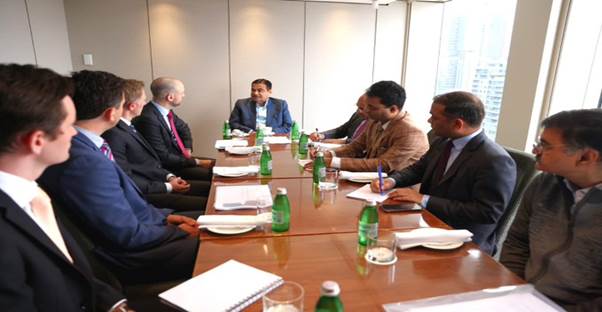
Australian Industry delegates at Industry Roundtable conference focusing on partnership & collaboration between India and Australia

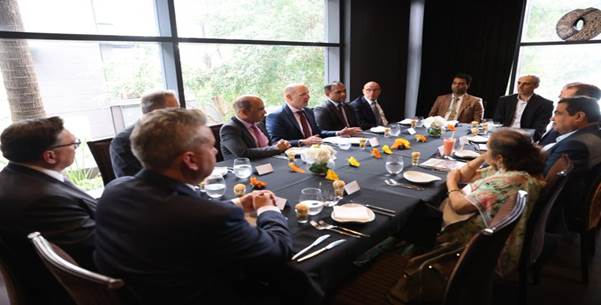
  Union Minister for Road Transport and Highways Shri Nitin Gadkari had a fruitful interaction & discussion with the Australian Industry delegates at Industry Roundtable conference, organized by Austrade in Sydney today.The roundtable conference focused on partnership & collaboration between India and Australia in emerging opportunities such as Infrastructure Firms, Road safety, IT Solutions and Road Infrastructure.

Image

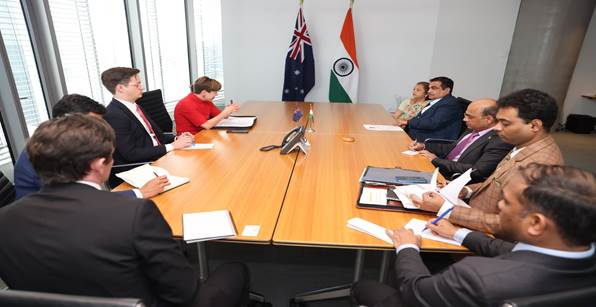
Shri Gadkari had  interaction with the Australian Senator Ms. Jenny McAllister, Assistant Minister for Climate Change & Energy. Shri Gadkari  & Ms. McAllister  discussed about the opportunities to deepen the bilateral investment ties between India & Australia especially in the field of net zero emission, transportation and related infrastructure development.

Image

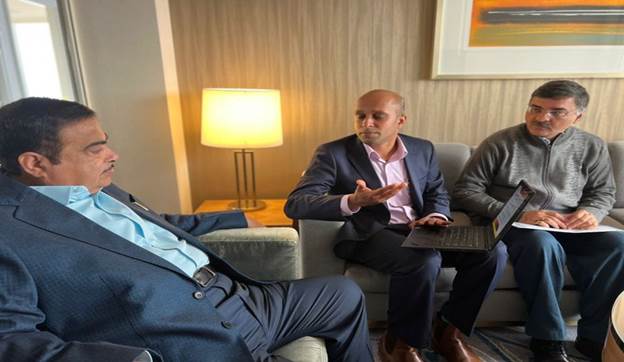
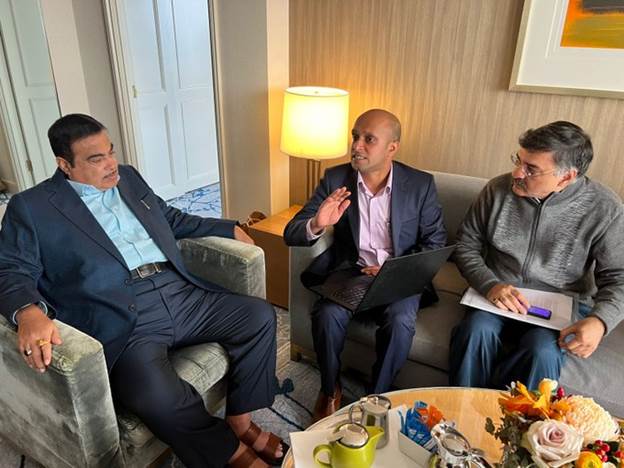
Shri Gadkari had an interactive discussion with Mr. Frank Kwok, Asia Pacific Head, Macquarie Asset Management & his team .The investment landscape & potential collaboration between the two countries were discussed.

Image

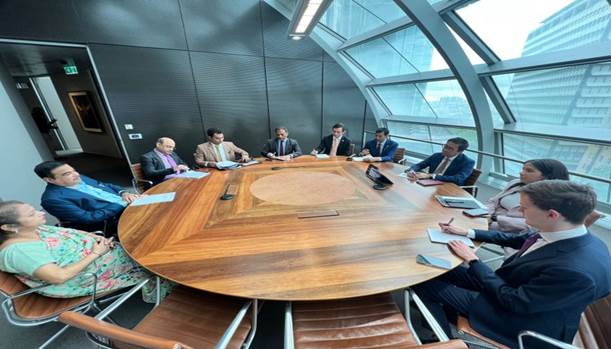
Shri Nitin Gadkari held a meeting with Mr. Adam Copp, Chief Executive, Infrastructure Australia and his team wherein the opportunities and potential collaborations in Indian Infrastructure and Transport Sector with the Australian infrastructure industry leaders were discussed.

Image

Shri Gadkari also held a meeting with UNSW Professor Shri Vinayak Dixit  & IAHE Director Shri Sanjeev Kumar .The Minister was briefed on the progress of Centre for Advanced Transportation Technology and Systems (CATTS) that ensued after IAHE had signed a pact with University of New South Wales (UNSW) for setting up this Centre of Excellence at IAHE in Noida.This project will help to improve the road safety scenario in our Country.

Image 

Image


Bangladesh and India complement, not compete in garment sector export

Absolutely, Bangladesh and India often complement each other rather than directly compete in the garment sector export despite both being major players in the global textile and apparel industry. Here’s how they do so:

  1. Different Niches: Bangladesh primarily focuses on ready-made garments, especially knitwear, and is known for its cost-effective manufacturing processes. India, on the other hand, has a diverse textile industry, excelling in various segments like traditional textiles, technical textiles, and high-end fashion.

  2. Different Markets: Both countries serve different markets and have distinct strengths. Bangladesh often caters to mass-market retailers and has been a key supplier for fast-fashion brands due to its cost competitiveness. India targets a more diverse market, including luxury, high-end fashion, and technical textiles, leveraging its quality, craftsmanship, and diverse product range.

  3. Supply Chain Collaboration: There are instances where companies in both countries collaborate within the textile supply chain. Indian companies might supply raw materials, textiles, or machinery to Bangladesh for garment manufacturing, fostering a collaborative rather than competitive relationship.

  4. Complementary Factors: Factors like labor costs, infrastructure, and specific expertise in certain garment types or processes differ between the two countries, allowing them to complement each other rather than directly compete.

  5. Trade and Investment: Both countries engage in trade and investment partnerships within the textile industry. Indian companies might invest in or collaborate with Bangladeshi garment manufacturers to leverage each other’s strengths and markets.

  6. Global Industry Dynamics: The global textile and apparel industry is vast and diverse, allowing room for both Bangladesh and India to thrive without intense direct competition. Factors like consumer preferences, geopolitical situations, and trade policies influence their respective positions in the global market.

Overall, while there might be some level of competition, the textile and garment industries of Bangladesh and India often find ways to complement each other by capitalizing on their unique strengths, targeting different market segments, and collaborating within the global supply chain. This collaboration often proves more beneficial than direct competition in the highly dynamic and diverse textile industry.

Swachh Sarvekshan Awards

The Swachh Survekshan (Cleanliness Survey) Awards are part of the Swachh Bharat Abhiyan (Clean India Mission), an initiative launched by the Government of India to promote cleanliness, sanitation, and hygiene across the country. The awards are aimed at encouraging cities and towns to improve their cleanliness standards and promote healthy competition among them.

Key aspects of the Swachh Survekshan Awards:

  1. Objective: The awards aim to assess and rank cities and towns based on their cleanliness and sanitation efforts, including waste management, open defecation-free initiatives, public and household toilet availability, and overall cleanliness practices.

  2. Annual Survey: The Swachh Survekshan survey is conducted annually by the Ministry of Housing and Urban Affairs, Government of India. It involves extensive assessments, surveys, and data collection across participating cities.

  3. Parameters for Evaluation: The evaluation criteria include waste collection and processing, waste segregation, construction of public and community toilets, availability of sanitation infrastructure, citizen feedback, innovation and best practices, and overall progress in cleanliness initiatives.

  4. Categories of Awards: The awards are categorized based on city population, promoting competition within different population brackets, ensuring both large and small cities have a chance to be recognized for their efforts.

  5. Recognition and Incentives: Winning cities receive recognition for their efforts in the form of awards, certificates, and public acknowledgment. Additionally, these awards often lead to increased funding or incentives for further sanitation and cleanliness projects.

  6. Promotion of Cleanliness: The awards aim to promote a culture of cleanliness, encourage citizen participation, and incentivize municipalities and local bodies to improve their sanitation infrastructure and practices.

  7. Transparency and Accountability: The survey process is designed to be transparent, with publicly available rankings and assessments to encourage accountability and encourage cities to strive for continuous improvement.

The Swachh Survekshan Awards serve as a means to not only recognize the achievements of cities in maintaining cleanliness but also to motivate and incentivize ongoing efforts towards achieving the goals of the Swachh Bharat Abhiyan, ultimately contributing to a cleaner and healthier India.

Rajmata Vijayaraje Scindia Gwalior Airport

The Rajmata Vijayaraje Scindia Airport, formerly known as the Gwalior Airport, is an important airport located in the city of Gwalior in the Indian state of Madhya Pradesh. The airport was renamed in honor of Rajmata Vijayaraje Scindia, a prominent political figure and royal member of the Scindia family.

Key features of the Rajmata Vijayaraje Scindia Airport:

  1. Location: The airport is situated approximately 10 kilometers to the southeast of Gwalior’s city center, facilitating convenient access for travelers.

  2. Connectivity: It serves as a domestic airport, connecting Gwalior to various cities across India. It handles a mix of scheduled commercial flights and charter services.

  3. Facilities: The airport offers basic facilities for passengers, including waiting lounges, baggage handling services, check-in counters, and other essential amenities for travelers.

  4. Air Traffic: It primarily handles domestic flights operated by various airlines, providing connections to major cities such as Delhi, Mumbai, Indore, and others.

  5. Renaming: The airport was renamed in honor of Rajmata Vijayaraje Scindia to commemorate her contributions to politics and her significance in the region’s history.

The Rajmata Vijayaraje Scindia Airport plays a crucial role in providing air connectivity to the city of Gwalior and the surrounding regions, contributing to regional development, tourism, and transportation accessibility.

Showcasing Technological Advancements

Showcasing technological advancements can be done in various ways depending on the specific industry, innovation, or technology being highlighted. Here are some effective methods:

  1. Tech Exhibitions and Conferences: Participate in or organize tech exhibitions, trade shows, and conferences where companies, innovators, and researchers showcase their latest technologies, products, and advancements. Events like CES (Consumer Electronics Show) and TechCrunch Disrupt are examples.

  2. Demonstrations and Workshops: Conduct live demonstrations or workshops to showcase how a technology works, its applications, and its benefits. These can be virtual or physical events where attendees can interact with the technology.

  3. Online Platforms and Webinars: Utilize online platforms to host webinars, live streams, or virtual tours demonstrating technological advancements. This allows a global audience to engage and learn about innovations remotely.

  4. Case Studies and Success Stories: Share case studies and success stories of how technological advancements have positively impacted industries or society. Highlighting real-world applications can effectively showcase the value of the technology.

  5. Media Coverage and Press Releases: Engage with media outlets to cover technological advancements through articles, press releases, interviews, or features. This helps reach a wider audience and gain visibility.

  6. Open Houses and Innovation Centers: Establish innovation centers or open houses where visitors can explore and interact with cutting-edge technologies firsthand. This provides a more immersive experience.

  7. Collaborations and Partnerships: Collaborate with other organizations, universities, or research institutions to showcase joint technological advancements or projects. This fosters credibility and expands the audience base.

  8. Social Media and Online Content: Leverage social media platforms, blogs, videos, and infographics to share information about technological advancements. Engaging content can go viral and attract attention.

  9. Industry Reports and Whitepapers: Publish industry reports, whitepapers, or research findings detailing technological advancements, their impact, and future trends. This establishes authority and informs stakeholders.

  10. Interactive Tools and Apps: Develop interactive tools, apps, or simulations that allow users to experience the technology virtually, providing a hands-on understanding of its capabilities.

The key is to tailor the showcasing method to the audience, ensuring that the technological advancements are presented in a way that’s informative, engaging, and relevant to their interests or needs.

Swachh Sarvekshan Awards 2022

The survey typically involves comprehensive assessments, data collection, and citizen feedback mechanisms to evaluate the cleanliness and sanitation initiatives undertaken by cities across India. The results are used to rank cities and incentivize them to improve their sanitation infrastructure and practices.

Garment sector export

The garment sector export is a significant contributor to the global economy, encompassing the export of clothing, textiles, and related products manufactured by the garment industry. Here are key points about garment sector exports:

  1. Major Exporters: Countries like China, Bangladesh, Vietnam, India, and others are prominent players in the global garment sector, exporting large volumes of clothing and textiles to various markets worldwide.

  2. Supply Chains: The garment industry operates on complex global supply chains, involving raw material sourcing, manufacturing, and distribution across multiple countries. These supply chains often involve outsourcing of labor-intensive processes to countries with lower production costs.

  3. Export Markets: Garment exports are shipped to diverse international markets, including the United States, European Union countries, Japan, and other regions, catering to different consumer preferences and demands.

  4. Product Range: Garment sector exports encompass a wide range of products, including ready-made clothing, knitwear, woven garments, sportswear, fashion apparel, and accessories.

  5. Competitive Advantages: Various factors contribute to the competitiveness of garment sector exports, such as cost-effective labor, skilled workforce, production efficiency, trade agreements, quality standards, and innovation in design and manufacturing.

  6. Challenges: The industry faces challenges such as compliance with labor standards, fluctuating raw material prices, sustainability concerns, market demands for faster turnarounds, and competition from emerging manufacturing hubs.

  7. Impact on Economies: Garment sector exports significantly contribute to the GDP of exporting countries, generate employment, and play a crucial role in poverty alleviation and economic development, especially in developing nations.

  8. Technology and Innovation: The industry continually adopts new technologies, automation, and digitalization to enhance efficiency, reduce production costs, and meet evolving consumer demands for sustainable and high-quality products.

  9. Sustainability: There’s a growing emphasis on sustainable practices within the garment sector, including eco-friendly materials, ethical manufacturing processes, reducing waste, and improving working conditions.

  10. Market Trends: Garment sector exports are influenced by market trends, fashion cycles, consumer behavior, and geopolitical factors, requiring adaptability and responsiveness from manufacturers and exporters.

The garment sector’s export plays a vital role in the global economy, impacting trade, employment, and consumer markets worldwide. It’s a dynamic industry that constantly evolves to meet changing consumer preferences, technological advancements, and sustainability goals.

Bangladesh and India Relations

Bangladesh and India share a historically significant and multifaceted relationship, characterized by cultural, economic, geographical, and political ties. Here are key aspects of their relations:

  1. Historical Ties: The two countries share a complex history, including the struggle for independence from British rule. India played a crucial role in supporting Bangladesh’s independence movement, leading to Bangladesh’s liberation in 1971.

  2. Geopolitical Relations: India was the first country to recognize Bangladesh’s independence. Since then, the nations have maintained close diplomatic relations, marked by mutual respect and cooperation on various regional and international issues.

  3. Trade and Economic Collaboration: Economic cooperation between Bangladesh and India has grown significantly. Both countries engage in trade partnerships, with India being one of Bangladesh’s major trading partners. Efforts to enhance trade relations have led to agreements aimed at boosting economic ties and reducing trade barriers.

  4. Connectivity and Infrastructure: Efforts are underway to improve connectivity between the two countries through various initiatives, including road, rail, and waterway projects. Projects like the Agartala-Akhaura rail link and inland waterways aim to facilitate easier movement of goods and people.

  5. People-to-People Contacts: Cultural exchanges, educational collaborations, and tourism contribute to fostering people-to-people contacts and strengthening cultural ties between Bangladesh and India.

  6. Security and Defense: Both nations collaborate on security issues, including counter-terrorism efforts, intelligence sharing, and joint military exercises, aiming to ensure regional stability and security.

  7. Water Sharing: The issue of water sharing, particularly concerning rivers like the Ganges and Teesta, has been a point of contention at times, but efforts are ongoing to find mutually acceptable solutions.

  8. Regional Cooperation: Both countries are active members of regional groupings like SAARC (South Asian Association for Regional Cooperation) and BIMSTEC (Bay of Bengal Initiative for Multi-Sectoral Technical and Economic Cooperation), working together on regional development and cooperation.

  9. Challenges: Despite the strong relations, occasional disagreements on issues like border disputes, water sharing, and trade barriers have surfaced, requiring diplomatic efforts to address.

Overall, the relationship between Bangladesh and India is marked by shared cultural heritage, economic collaboration, and mutual cooperation on various fronts. Both nations continue to work towards strengthening their ties, resolving differences through dialogue, and fostering regional stability and development.

Football for Schools program to reach schools in all 700+ districts across India, Navodaya Vidyalaya Samiti to be the nodal agency

  Union Education and Skill Development Minister Shri Dharmendra Pradhan today met Secretary-General, FIFA, Ms. Fatma Samoura ahead of FIFA U-17 World Cup. MoS, Sports, Shri Nisith Pramanik; President, All India Football Federation, Shri Kalyan Chaubey; Secretary General, AIFF, Shri Shaji Prabhakaran and officials of Ministry of Education, Ministry of Sports and Youth Affairs NVS, CBSE and SAI also attended the programme.

  2022-10-10 18:18:48.465000

Discussions centred around collaboration with FIFA & UNESCO’s Football for Schools Programme in the schools across the country.

In a joint press conference after the meeting, Shri Pradhan said that the Football for Schools movement espouses the spirit of NEP 2020 and promotes sports-integrated learning. It will boost culture of sports in India and help in developing skills of our students, he further added.

He said that the Government of India is committed to promote sports and create a mass movement for football, especially among school children, in line with Prime Minister Narendra Modi’s vision of developing India as a sporting superpower as well as ensuring a Fit India.

Keeping in view the large network of schools, Ms. Samoura and the Minister agreed to take the Football for Schools programme to all the 700+ districts in India. Shri Pradhan informed that Navodaya Vidyalaya Samiti will be the nodal agency on behalf of the Ministry of Education to take this initiative forward.

Speaking on the occasion, Shri Nishith Pramanik said that this initiative will be a game changer for the future of football game. He also said that Sports Authority of India will extend all support for this initiative.


*****

IInvenTiv to emerge as a key forum which will provide solutions to complex global problems

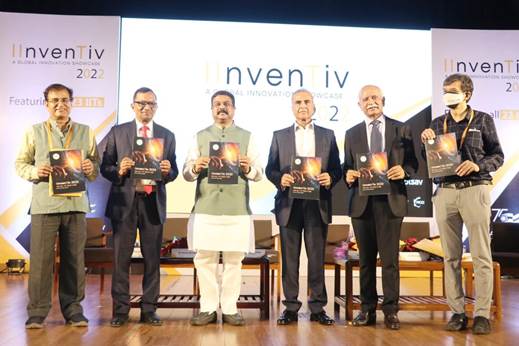
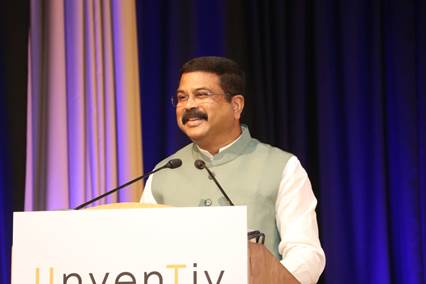
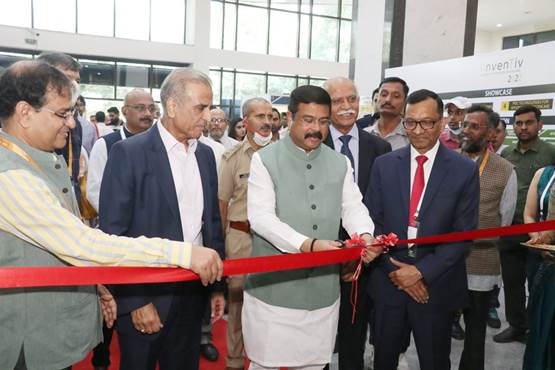
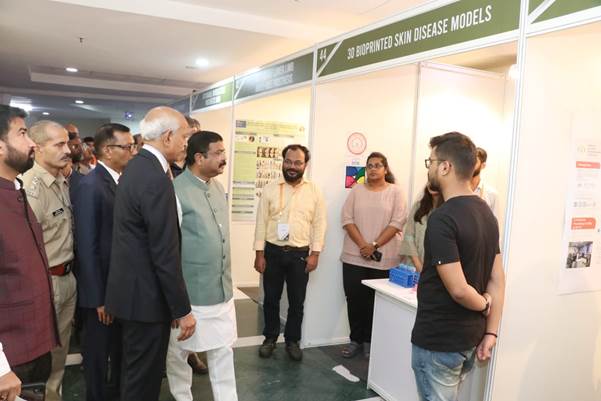
 Union Minister for Education and Skill Development and Patron-in-Chief of IInvenTiv Shri Dharmendra Pradhan, today inaugurated IInvenTiv – the first-ever all-IITs R&D Showcase at the Indian Institute of Technology, Delhi. The two-day event that would conclude on October 15th brings academia and industry under one roof to showcase India’s global R&D strength. A brochure for IInvenTiv was also launched by the Minister, followed by a visit to the exhibition booths.

The inaugural session was also graced by Mr Sunil Bharti Mittal, Founder and Chairperson Bharti Enterprises, as the Guest of Honour, accompanied by Dr. Pawan Goenka, Chairman, Steering Committee IInvenTiv; Dr. BVR Mohan Reddy, Co-Chairman, Steering Committee IInvenTiv; and Dr. Subhasis Chaudhuri, Director IIT Bombay, and Convener, Steering Committee IInvenTiv. 
https://static.pib.gov.in/WriteReadData/userfiles/image/image001H7BS.jpg

https://static.pib.gov.in/WriteReadData/userfiles/image/image002858I.jpg

Speaking on the occasion Shri Dharmendra Pradhan expressed his happiness to be part of this historic-first event that bears testimony to Prime Minister Shri Narendra Modi’s mantra of ‘Jai Anusandhan’ to build an Aatmanirbhar Bharat. The Minister said that IITs are no more just Indian Institutes of Technology, but today, they have become Instruments of Transformation. IITs are the repositories of knowledge & experience and bridge to the future, he added.

Shri Pradhan highlighted that the Covid pandemic has clearly shown us the impact of what happens when technology driven research commits itself to the service of human race. Whether, it is development of Indian vaccines within a short span of time that not only benefitted Indians but millions of people across the world. It has all been possible because of brilliant minds like yours, he added. He further said that these are the signs of an Atmanirbhar Bharat and we have to encourage the relationship of Academic R&D – new age technology – industry- Society even more to take research and innovation to the zenith so that no one is left behind.

The Minister said that our IITs have to move beyond being just engineering colleges. We have to stop benchmarking IITs on the basis of placement packages. IITs should redefine parameters and benchmark on number of innovations brought in the market, innovations monetised, and number of job creators created. He also said that technology will drive the next phase of growth and development with IT and communications technology among the front runners. The world today will invest more vigorously on India. India’s talent, digital-first attitude, market size, emerging purchasing power and growing aspirations is a heady mix to take India forward at an unprecedented speed and scale. Our IITs should seize this opportunity, he added.

Shri Pradhan stated that in the AmritKaal, the anusandhan-led Bharat would be propelled by innovations at the grass roots level and it would seek the participation of all, especially the rural sector. IInvenTiv shall be the start of such a revolution and emerge as a key forum which will provide solutions to complex global problems.

The R&D Fair is being organized in commemoration of the 75th year of India’s Independence in line with the Azadi ka Amrit Mahotsav initiative. It has brought over 300 representatives from industry, including startups, along with government, and embassy officials, and global IIT-alumni. Apart from that, overall footfall of around 1500 attendees is expected throughout the event, which includes faculty, students, and research scholars from various institutions, among others.

There are 75 projects and 6 Showcase projects on diverse themes such as, Defence and aerospace, Healthcare (including devices and digital health), Environment and Sustainability (including air, water, rivers), Clean Energy & Renewables (including Hydrogen and EV), Manufacturing (including smart, advanced and industry 4.0), AI/ML/Blockchain technologies (including quantum computing), Smart Cities & Infrastructure (including smart mobility), Communication Technologies (including education and 5G), Robotics, Sensors & Actuators, and Semiconductors, Flexible electronics & Nanotechnology, being exhibited at the event. The projects are aligned with the vision of Make in India, Digital India, and Atmanirbhar Bharat, and are aimed at impacting the lives of all sections of society.

The two-day event would host representatives from Confederation of Indian Industry (CII), Federation of Indian Chambers of Commerce & Industry (FICCI) and National Association of Software and Service Companies (NASSCOM), along with students, global IIT alumni, faculties of various CFTIs, scientists from DRDO, ISRO, CSIR and ICAR, and so on.
https://static.pib.gov.in/WriteReadData/userfiles/image/image003BJU0.jpg

https://static.pib.gov.in/WriteReadData/userfiles/image/image0041XGO.jpg


****

Would You Rather 500 Questions

Would you rather have a boring hen party or a fab, giggle-filled evening really getting to know the girls with a hilarious hen game? Yep, we thought so!

At GoHen, we’ve put together a list of ‘Would you rather…’ questions ranging from the funny and the weird to the cheeky and downright outrageous (“I can’t believe you asked that!” “I can’t believe you answered!?!”).

Book Title: Would You Rather 500 questions
Author: The 500 club

ISBN no. : 978-81-951122-2-7

Published in 2022

Link to buy from Amazon

Recession Proof Recipes

When times are tough, the dollar-menu at fast food restauranteurs can be rather alluring. Sure, it’s not a very healthy option, but when you’re really in a pinch, calories are calories. But it is possible to give Mickie D’s a run for its money and cook cheaply at home. So for those looking for drive-thru alternatives, I’m providing you with some cheap, tasty, and relatively healthy meals that neither come from a box, nor break the bank. In fact, these meals all come in at just under a few dollars per serving–or in fast food terms–less than the cost of a value fry, burger, and drink. So, enjoy some of my “recession specials.”


Book Title: Recession Proof Recipes
Author: Oliver Lawson
ISBN no. 978-81-951122-3-4
Published in 2022

Link to Book on Amazon