Story of Eduindex

Once upon a time, there was a small educational research organization called Eduindex. The organization was founded by a group of passionate educators who wanted to make a difference in the field of education.

Eduindex started by conducting research studies and publishing academic journals focused on a wide range of educational topics. The organization quickly gained a following, and their publications became highly respected in the academic community.

However, the founders of Eduindex wanted to do more. They believed that education should be accessible to everyone, regardless of their socioeconomic status or location. They decided to launch a new initiative, focused on providing free educational resources to underserved communities around the world.

The initiative was a huge success. Eduindex began partnering with schools, libraries, and community organizations in rural and urban areas, providing free access to educational materials and resources. They also launched an online platform, where anyone with an internet connection could access their materials.

The Eduindex platform provided free access to textbooks, articles, videos, and other educational resources. The materials covered a wide range of topics, from basic literacy and numeracy to advanced scientific research. The platform quickly gained popularity, with millions of users from all over the world accessing the materials.

As Eduindex grew, they continued to innovate and expand their offerings. They launched online courses and webinars, providing free education and training to individuals and organizations. They also began working with governments and international organizations to improve education policies and practices, advocating for more equitable and inclusive education systems.

Years later, Eduindex had become a global leader in education research and advocacy. The organization had helped millions of people around the world to access quality education, and had inspired a new generation of educators and advocates to work towards a more just and equitable world.

The founders of Eduindex were proud of what they had accomplished, and their dedication to making education accessible to everyone had changed the face of the education industry forever.

Story of IJR

Once upon a time, there was a small research journal called IJR, or the International Journal of Research. The journal was founded by a group of academics who were passionate about advancing knowledge and understanding in their respective fields.

IJR started by publishing articles and papers focused on a wide range of topics, from medicine and science to literature and the arts. The journal quickly gained a reputation for publishing high-quality research, and its articles were frequently cited by other academics around the world.

However, the founders of IJR wanted to do more. They believed that research should be accessible to everyone, not just those who had access to expensive academic journals. They decided to launch a new initiative, focused on providing open access to research publications.

The initiative was a huge success. IJR began offering free access to its articles and papers, making research accessible to anyone with an internet connection. The journal also launched an online platform, where anyone could submit their research for publication.

The IJR platform became a hub for researchers and academics from all over the world. It provided a space for them to share their research and collaborate with others in their field. The platform also offered tools and resources to help researchers improve the quality and impact of their work.

As IJR grew, they continued to innovate and expand their offerings. They launched special issues and conference proceedings, providing a platform for researchers to share their work on specific topics. They also began working with universities and research institutions to improve research practices and promote open access to research publications.

Years later, IJR had become a global leader in research publication and open access. The journal had helped millions of researchers and academics around the world to share their work and advance knowledge and understanding in their respective fields.

The founders of IJR were proud of what they had accomplished, and their dedication to promoting open access to research had changed the face of the academic publishing industry forever.

Edupedia Publications Pvt Ltd

Once upon a time, there was a small publishing company called Edupedia Publications Pvt Ltd. The company was founded by a group of educators who were passionate about creating quality educational materials that were accessible to everyone.

Edupedia Publications started by publishing textbooks and reference materials for students in India. The company quickly gained a reputation for producing high-quality books that were both informative and engaging. Their materials were well-received by students, teachers, and parents alike.

However, the founders of Edupedia Publications wanted to do more. They believed that education should be accessible to everyone, regardless of their location or socioeconomic status. They decided to launch a new initiative, focused on providing free educational resources to underserved communities in India and around the world.

The initiative was a huge success. Edupedia Publications began partnering with schools, libraries, and community organizations, providing free access to their textbooks and reference materials. They also launched an online platform, where anyone with an internet connection could access their materials.

The Edupedia platform provided free access to textbooks, reference materials, and other educational resources in a wide range of languages. The materials covered a variety of subjects, from basic literacy and numeracy to advanced scientific research. The platform quickly gained popularity, with millions of users from all over the world accessing the materials.

As Edupedia Publications grew, they continued to innovate and expand their offerings. They launched online courses, providing free education and training to individuals and organizations. They also began working with governments and international organizations to improve education policies and practices, advocating for more equitable and inclusive education systems.

Years later, Edupedia Publications had become a global leader in educational publishing and advocacy. The company had helped millions of people around the world to access quality education, and had inspired a new generation of educators and advocates to work towards a more just and equitable world.

The founders of Edupedia Publications were proud of what they had accomplished, and their dedication to making education accessible to everyone had changed the face of the education industry forever.
Story of Sahitya Samhita

Once upon a time, there was a literary society called Sahitya Samhita. The society was founded by a group of writers and poets who were passionate about promoting literature and art in their community.

Sahitya Samhita started by hosting poetry readings and literary events, bringing together local writers and artists to share their work. The society quickly gained popularity, with people from all over the region attending their events and participating in their activities.

However, the founders of Sahitya Samhita wanted to do more. They believed that literature and art had the power to inspire and transform society, and they wanted to create a platform to showcase the work of emerging and established writers and artists from all over the world.

They decided to launch a new initiative, focused on publishing a literary magazine that would feature the work of writers and artists from all over the world. They named the magazine Sahitya Samhita, after their society, and began accepting submissions from writers and artists.

The magazine was a huge success. It featured a wide range of literature and art, including poetry, short stories, essays, and visual art. The magazine quickly gained a reputation for publishing high-quality work, and its contributors were frequently recognized for their achievements.

As Sahitya Samhita grew, they continued to innovate and expand their offerings. They launched online workshops and courses, providing education and training to writers and artists. They also began hosting literary and artistic events, bringing together people from all over the world to celebrate and showcase their work.

Years later, Sahitya Samhita had become a global leader in literary and artistic publication and advocacy. The society had helped thousands of writers and artists from all over the world to showcase their work, and had inspired a new generation of creatives to pursue their passions and make a difference in their communities.

The founders of Sahitya Samhita were proud of what they had accomplished, and their dedication to promoting literature and art had changed the face of the artistic community forever.

A Mystery Story

It was a dark and stormy night when two kids, Jack and Emily, decided to explore an old abandoned mansion on the outskirts of their town. They had heard stories about the mansion being haunted, and were eager to uncover the secrets that lay within.

As they made their way through the old mansion, Jack and Emily noticed that the walls were adorned with strange symbols and markings. They couldn’t make out what they meant, but they had a feeling that they were important.

Suddenly, they heard a loud noise coming from upstairs. Jack and Emily looked at each other nervously, but decided to investigate. As they climbed the stairs, they noticed that the symbols on the walls were getting more and more intricate.

When they reached the top of the stairs, they saw a door that was slightly ajar. They cautiously pushed it open, and were shocked to see an old man sitting in a room filled with strange artifacts and relics.

The old man looked up and saw Jack and Emily, and beckoned them to come closer. He told them that he had been searching for something for many years, and that he believed they could help him find it.

Jack and Emily were skeptical, but they decided to hear him out. The old man told them that he was looking for an ancient artifact, a talisman that had been hidden in the mansion many years ago. He believed that the symbols on the walls held the key to finding it.

Jack and Emily were intrigued, and decided to help the old man in his search. They spent hours deciphering the symbols on the walls, and eventually discovered a hidden passage that led to a secret chamber.

In the chamber, they found the talisman, a small but intricate piece of jewelry that glowed with an otherworldly light. The old man was ecstatic, and thanked Jack and Emily for their help.

As they made their way out of the mansion, Jack and Emily couldn’t help but feel that something wasn’t right. They had a feeling that the old man wasn’t telling them the whole truth, and that there was more to the story than they had been led to believe.

The mystery of the old mansion and the strange artifacts remained unsolved, but Jack and Emily had learned that sometimes the truth is not what it seems, and that some mysteries are better left unsolved.

Funny Story of a Girl

Once upon a time, there was a girl named Sarah who was known for her sense of humor. She loved making people laugh and was always up for a good joke.

One day, Sarah decided to play a prank on her best friend, Emma. She snuck into Emma’s house and replaced all of the pictures in her photo albums with pictures of cats.

The next day, Emma came over to Sarah’s house, fuming. “What did you do to my photo albums?!” she exclaimed.

Sarah couldn’t contain her laughter and burst out giggling. “I replaced all of the pictures with pictures of cats!” she admitted.

Emma was initially angry, but couldn’t help but laugh at the ridiculousness of it all. She even admitted that the pictures of cats were pretty cute.

However, Sarah’s prank didn’t stop there. She continued to play practical jokes on Emma, such as putting fake spiders in her bed or switching out her shampoo with maple syrup.

Despite being annoyed at times, Emma couldn’t help but appreciate Sarah’s sense of humor. She knew that Sarah never meant any harm, and that her jokes were always in good fun.

In the end, Sarah and Emma’s friendship grew stronger because of their shared sense of humor. They continued to play pranks on each other, always trying to outdo the last one. And even though they may have driven each other crazy at times, they knew that they could always count on each other for a good laugh.

Story of Earth

Once upon a time, the Earth was a beautiful and thriving planet, full of life and wonder. However, as time went on, humans began to pollute the planet with their waste and disregard for the environment.

The skies grew darker and the air grew thick with smog, making it difficult to breathe. The once crystal-clear rivers and lakes became contaminated with chemicals and waste, killing off the fish and other aquatic life.

The animals on the planet began to suffer as well, as their habitats were destroyed and their food sources depleted. Forests were cut down for human expansion, leaving many animals homeless and struggling to survive.

As the pollution continued to worsen, the Earth grew sadder and sadder. The once vibrant colors of nature began to fade, and the planet was left with a dull and lifeless appearance.

Despite the warnings of scientists and environmentalists, humans continued to prioritize their own comfort and convenience over the well-being of the planet. They continued to burn fossil fuels and release toxic chemicals into the environment, further damaging the Earth and all its inhabitants.

But even in the midst of this despair, there was still hope. People began to wake up to the devastating effects of pollution, and efforts were made to reduce waste and protect the environment.

Slowly but surely, the Earth began to heal. The skies cleared, the waters ran clean, and the animals began to thrive once again. Though the scars of pollution were still visible, the planet began to regain its beauty and vitality.

It was a reminder that the Earth is a precious and fragile place, and that we must all do our part to protect and preserve it for generations to come.

What is machine learning?

Today’s digital world
relies heavily on our ability to build intelligent and smart systems by
deploying artificial intelligence successfully. One of the applications of AI
is Machine Learning which supports systems and enables them to learn and
improve from experience. It focuses on developing programs that can access data
and use it to draw decisions without being programmed as such. In the growing
field of data science, machine learning has tremendous applications. By using
statistical methods, programmers write algorithms and train them to classify
data and make predictions. It is used to uncover deep data insights and use
them to drive decisions. Machine Learning has a growing impact on global
business applications and with greater impact, comes a greater scope for job
opportunities in this field.

How does machine learning work?

According to UC
Berkley, the algorithm of a machine learning model that enables the system to
make predictions is divided into three parts

1. A Decision
Process –
Making predictions
or classifying data is the first step of a machine learning model. Depending on
what data we input, it is possible to label it by producing an estimate about
patterns in data and how closely they are related to something that the model
has seen before.

2. An Error
Function –
It serves to
evaluate the accuracy of the model by checking if the prediction is correct.

3. An Model
Optimization Process –
In
order to fit the machine learning model to the data points used in the training
set, we can adjust the weights to get rid of the inconsistency in the
predictions. The algorithm is trained such that it will repeat this process to
optimize the model.

Applications of machine learning

There are numerous
applications of machine learning including:

1. Speech recognition
This model is used in
converting speech to text and visa-versa and uses a natural language process to
process speech into a written format. A common example of this is included in
many mobile phones to perform a voice search. For e.g. Siri, Alexa, etc.

2. Customer Service
With the introduction of
online chatbots, the services have improved across businesses. Redundant tasks
are recognized and replaced with bots to provide a better and seamless flow to
users. They answer all frequently asked questions and take the place of a
virtual assistant to make our lives easier.

3. Computer Vision
The advancement of AI
technology has led programmers to derive useful information from digital
images, assets, videos, and visual inputs. Computer vision helps in taking the
action based on the inputs and is powered by convolutional neural networks.
This technology is being used in computer vision applications such as photo
tagging, radiology imaging, etc.

Best Machine Learning courses in the
market

1. Google AI – ML
Crash Course

2. Coursera – Machine
Learning with Python

3. Coursera – Deep
Learning Specialization

4. EdX – Machine
Learning

5. Fast.ai –
Introduction to Machine Learning for Coders

6. Coursera – Advanced
Machine Learning Specialization

7. Udemy – Machine
Learning

8. Udacity – Machine
Learning for Beginners


What is Make in India?

When it comes to
manufacturing a product or mass producing it, the go-to country for foreign
investors and companies looking to establish manufacturing and assembling plants
is “China”. China is the major competitor India has when it comes to
outsourcing and manufacturing business, but china was still favorable due to
ease of doing business and low manufacturing costs. India’s ailing
infrastructure, the bureaucratic approach adopted by the former government,
defunct logistics, lack of a proper transportation network, and widespread
corruption were the main reasons why companies found it difficult to do
business in India. These were the reasons
why the Modi government launched the ‘Make in India’ campaign to help transform
India into a manufacturing hub.


The Make in India Vision

The Manufacturing sector
in India accounts for around 16% of the GDP. The campaign aims to bring this
number to around 25% of total GDP contribution and also to generate employment
opportunities and attract foreign investors along the way to help transform
India into the number 1 manufacturing hub in the world.

Inspired by the
‘Ashoka Chakra’, the logo for the make in India campaign is a Lion and the
prime minister decided to dedicate the campaign to
Pandit
Deen Dayal Upadhyaya born in 1916 on the same date.


Main objectives of this initiative

1) To increase the
growth rate of our manufacturing sector to 12-14% per annum

2) To increase the
total GDP contributions of the manufacturing sector from 16% to 25%

3) To create around
100 million job opportunities in the manufacturing sector alone.

4) One of the
objectives was to improve India’s rank in the ease of doing business index by
the World Bank.

5) To improve India’s
export-led growth

6) To attract foreign
investments and develop the industrial base in order to surpass china.


Challenges faced by the government

1.     
Shell
companies: –
shell companies
are a major problem as they account for the majority of the FDI inflow and are suspected
to be investing their black money.

2.     
Productivity:
low productivity of the
manufacturing sector, as well as the skilled labor force, is highly
insufficient. On average the Indian workforce is almost four to five times less
productive when compared to china or Thailand.

3.     
Small
Industries:-
small size of our
industrial units was also a challenge as they fail to meet desired economies of
scale. Due to their small size, they cannot afford to invest in modern machinery
and develop their supply chains.

4.     
Complicated
labor laws: –
complexity of
our labor laws for companies with more than 100 employees which requires
special approval to lay off their employees was also one of the main reasons.

5.     
Electricity:-
even though the per unit cost
of electricity is practically the same in India and China, India experiences
far more outages which can cause delays in meeting the demand.

6.     
Transportation:– the average speed in India is 60km/h which is
far less than china’s 100km/h speed. What India lacks in speed it overcomes in
terms of overloading trucks and having one of the best ports.


MARINE ECOSYSTEM

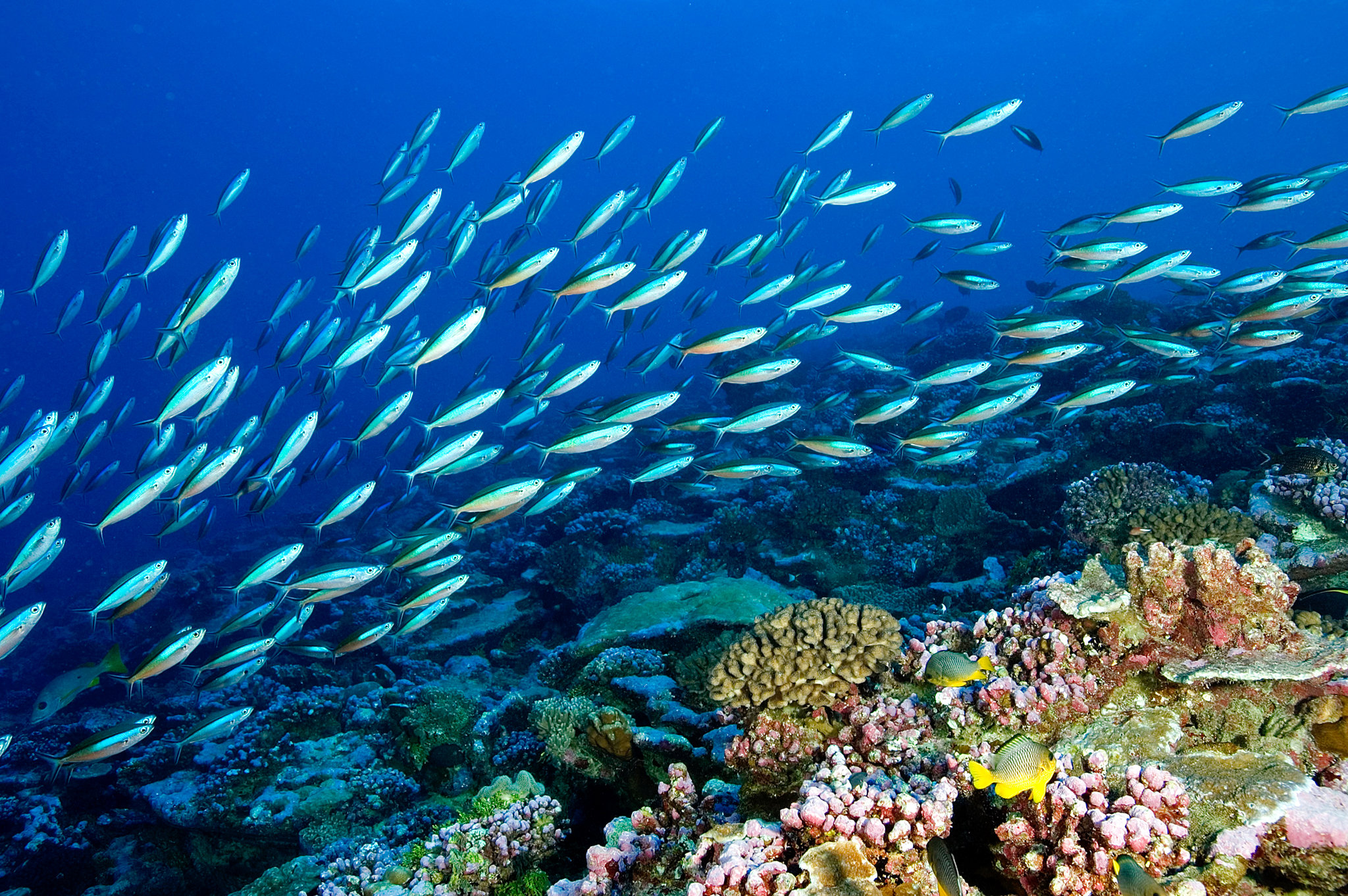
Marine ecosystems are aquatic environments with high levels of dissolved salt. These include the open ocean, the deep-sea ocean, and coastal marine ecosystems, each of which has different physical and biological characteristics. Marine ecosystems are defined by their unique biotic (living) and abiotic (nonliving) factors. Biotic factors include plants, animals, and microbes; important abiotic factors include the amount of sunlight in the ecosystem, the amount of oxygen and nutrients dissolved in the water, proximity to land, depth, and temperature.
Sunlight is one of the most important abiotic factors for marine ecosystems. It’s so important that scientists classify parts of marine ecosystems—up to three—by the amount of light they receive. The topmost part of a marine ecosystem is the euphotic zone, extending down as far as 200 meters (656 feet) below the surface. At this depth, there is sufficient light for regular photosynthetic activity. Most marine life inhabits this zone. Below the euphotic zone is the dysphotic zone, which can reach from 200 to as deep as 1,000 meters (656 to 3,280 feet) below the surface. At these depths, sunlight is still available, but only enough to facilitate some photosynthesis. Below the dysphotic zone lies the aphotic zone, which does not receive any sunlight.

Types of Marine Ecosystem

Marine ecosystems types include open deep sea, salt water wet-land, coral reefs, estuary, mangroves, sandy beach, kelp forest, polar marine and rocky marine ecosystem

Open Marine Ecosystem:
Whenever you think of the marine ecosystem, the first picture that comes to your mind is the open water surface. This open water surface is known as the marine ecosystem; This is the upper layer of the ocean where sun rays reach quite easily.
The open marine ecosystem extends up to 150 meters from the ocean surface. The open marine ecosystem provides habitat to various sea creatures such as plankton, algae, whales, jellyfish, etc.

Deep-Sea Marine Ecosystem:
The ecosystem deep inside the oceans at its floor is known as the deep sea marine ecosystem. Deep-sea marine ecosystem inhabiting various animal species in the seabed up to 1000 meters depth underwater.
Sunlight is one of the big challenges to penetrate at the seafloor; however, the species have adapted the marine environment of this region. A huge range of animal species is found in deep-sea marine ecosystems such as squids, fishes, elephant seals, sperm whales, crabs, worms, some sharks, etc.

Coral Reef Marine Ecosystem:
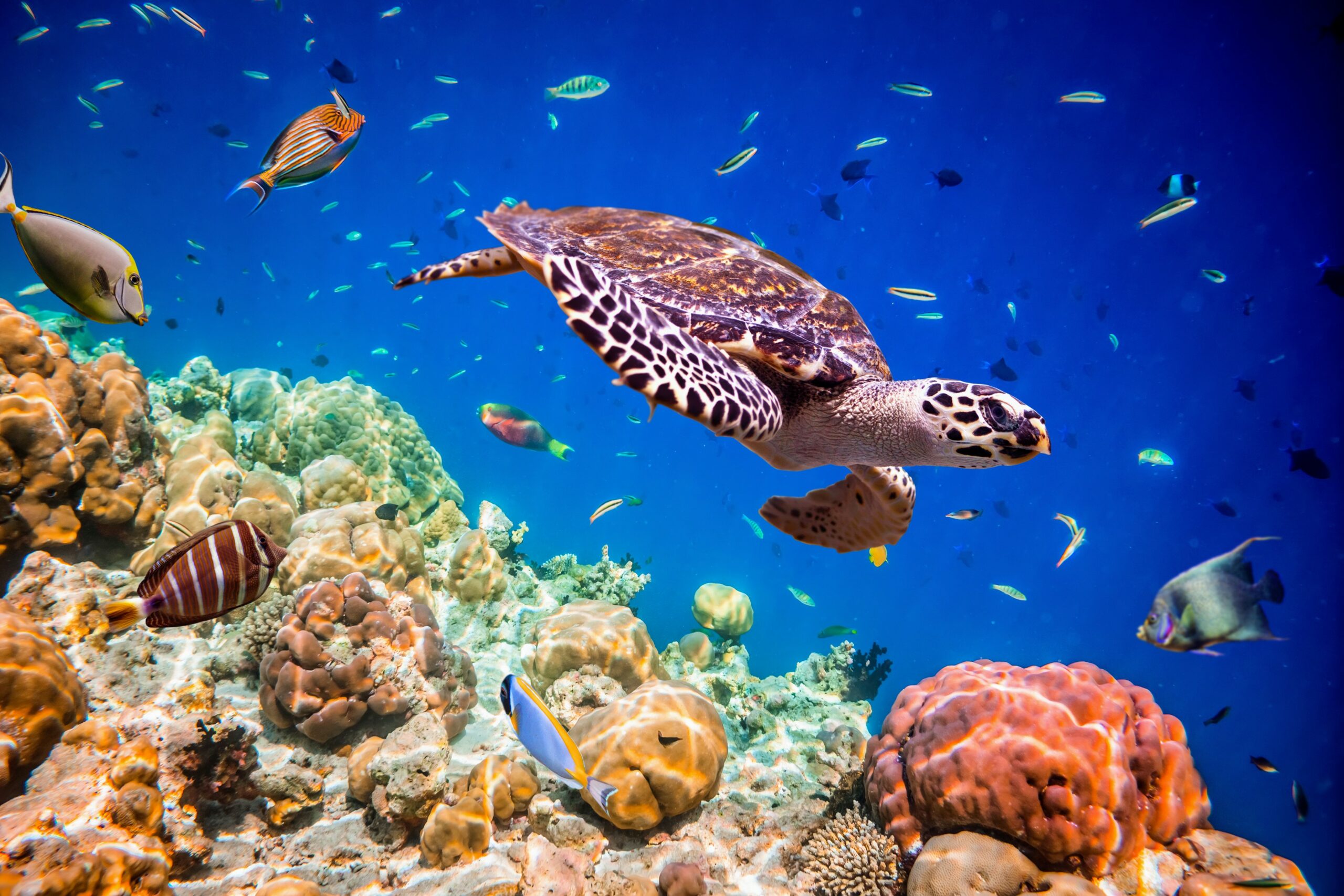
Coral reefs are special type of marine ecosystem found in the seafloor. This ecosystem is mostly found in tropical waters and is quite a productive ecosystem found on the Earth. The coral reefs are the skeleton made up of limestone i.e., calcium carbonate. The coral reef ecosystem provides food and shelter to almost ¼ of marine water species. Coral reefs attract exotic color fishes like sponges, snails, seahorses, sometimes large animals like sharks & dolphins, etc.

Saltwater Wetland Marine Ecosystem:
The coastal areas of oceans and seas are known as the saltwater wetland ecosystem. The saltwater wetland marine ecosystem is again classified into two types – saltwater swamps and salt marshes.
Saltwater swamps are regions dominated with trees, whereas salt marshes are covered with grasses. Commonly found water species of saltwater wetland ecosystem are amphibians, reptiles, some migratory birds, shellfishes, few fishes, etc.

Estuary Marine Ecosystem:
The area around the river mouth where it merges with marine water is usually termed as an estuary marine ecosystem. The salinity in this ecosystem varies with the tides. The estuary ecosystem does not support a variety of species.
Mostly the species of the neighbouring ecosystem are found in the Estuary marine ecosystem. This ecosystem also plays an essential role in nurseries for various kinds of fishes, shrimps, etc.

Mangrove Marine Ecosystem:
In some tropical and sub-tropical coastal regions, a special type of saltwater swamp is found, which is known as mangroves. Mangrove swamps are home for special types of trees that can survive in the saline ecosystem.
These mangroves are characterized by a special kind of roots to absorb oxygen to survive. The roots are extended above the water surface. Mangrove ecosystem provides shelter to various species such as shrimps, jellyfish, birds, sponges, crabs, fish, crocodiles, etc.

Sandy Beach Ecosystem:
Sandy’s ecosystem is quite poor in terms of biodiversity as compared to different marine ecosystems. The environment in the sandy beach ecosystem varies a lot. However, the species that are found in the sandy beach ecosystem are very much adapted to a constantly variable environment.

Kelp Forest Marine Ecosystem:
The kelp forest ecosystem is found in comparative cooler water. The average temperature of this ecosystem ranges from 42-72 degrees Fahrenheit with depth up to 60-90 feet.
Kelp forest ecosystem supports various animal species such as seabirds, shorebirds, invertebrates (like crabs, sea stars, snails, etc.), fishes, mammals (like sea lions, seals, whales, sea otter, etc.

Polar Marine Ecosystem:
As the climate of Polar Regions is extremely cold; thus, the temperature of this type of marine ecosystem is also too cold. The species found in the polar marine ecosystem have adapted to the adverse climatic conditions of this region.
The most common species found in the polar marine ecosystem includes planktons, algae, birds like penguins, polar bears, seals, walruses, etc.

Rocky Marine Ecosystem:
The rock shores, rock cliffs, boulders, tide pools, etc. combine to make rocky marine ecosystems. The biodiversity of rocky marine ecosystem generally have species like lichens, birds, invertebrate (lobsters, urchins, barnacles, sea stars, sea squirts, seal, etc.

The marine ecosystem is a unique ecosystem that supports various plant and animal lives. All these species set an excellent example of a great food chain as compared to other ecosystems.
The sad part is that we are spoiling such an amazing ecosystem by polluting it through disposing of unwanted wastes. We are disposing of our wastes into the oceans and seas that are affecting the marine ecology big time.

INDIAN NATIONAL MOVEMENT

The history of India and Indian national movement is resolvable in understanding. The Indian independence movement was a series of historic events during the British Raj with the ultimate aim of ending British rule in India on the Indian subcontinent. It lasted from 1857 to 1947.

The Revolt of 1857: The first movement for freedom first broke in Bengal.The Revolt of 1857 was started on May 10, 1857, at Meerut. It was the first-ever war for Indian Independence. It was the first large-scale rebellion against the East India Company. The Revolt was unsuccessful but it made a major impact on the public and stirred the entire Independence Movement in India. Mangal Pandey was one of the major parts of the revolution as he declared rebellion against his commanders and fired the first shot on the British officer.

Swadeshi Boycott Movement:
At the beginning of the 20th century, the Britishers announced the partition of Bengal with a motive to weaken the unity of nationalists. Amongst the prime Indian national movements, the Swadeshi Boycott Movement surfaced in the year 1903 as a reaction against the partition of Bengal but was formally announced in July 1905 and fully came into force from October 1905.

Anti-Partition Movement :
Led by moderates like Surendranath Benerjee, K.K.Mitra and Dada Bhai Naraoji, the initial stage of this Indian National Movement took place from 1903-1905. The Anti-partition movement was carried out through public meetings, memoranda, petitions etc.

Swadeshi and Boycott Movement:
From 1905 to 1908, the Swadeshi and Boycott movement was started by extremists like Bipin Chandra Pal, Tila, Lala Lajpat Rai and Aurobindo Ghosh. The general public was asked to refrain from the use of foreign goods and motivated to substitute them with the Indian homemade goods. Prominent events like Indian festivals, songs, poetries and paintings were used to propagate this Indian national movement.
Home Rule League Movement
To convey and propagate the feeling of self-governance into the common man, this Indian National movement was carried out in India as it simultaneously happened in Ireland. Majorly, the below-mentioned leagues pivotally contributed to the group of the Home Rule League Movement using newspapers, posters, pamphlets etc

Bal Gangadhar Tilak started this league in April 1916 and spread out to Maharashtra, Karnataka, Berar and Central Provinces.
Annie Besant’s League began in September 1916 in various other parts of the country.

Satyagraha movement:
The first Satyagraha Movement was led by Mahatma Gandhi in the Champaran District of Bihar in the year 1917. Champaran district had tens of thousands of landless serfs. One of the suppressed Indigo cultivators, Pandit Raj Kumar Shukla persuaded Gandhi to lead this movement. This led to other Satyagraha Movements.
Khilafat Non-Cooperation Movement
The Non-Cooperation Movement was one of the most famous and crucial phases in the Indian freedom struggle against the Britishers.
Ill-treatment of the Khalifa, the spiritual leader of the Muslims by the Britishers agitated the entire Muslim community in India and around the world.
Deteriorating economic conditions in the country along with the major incidents like Jallianwala Bagh Massacre, Rowlatt Act, etc were the main reasons behind how it emerged to be a pivotal Indian national movement.
This are the one of the important reason for the rise of this movement. The Non-Cooperation Movement was officially launched by the Khilafat Committee in August 1920. Also, the Indian National Congress adopted the movement in December 1920 after their Nagpur session. After which a complete boycott of government goods, schools, colleges, food, clothing etc happened and emphasis was laid on studying at national schools and khadi products were used.
On February 5, 1922, Chauri Chaura incident took place wherein the police station along with 22 policemen inside it was burnt. This led to call-off of this Indian National Movement by Mahatama Gandhi.

Civil Disobedience Movement :
One of the most prominent Indian national movements, the Civil Disobedience phase is classified into two stages:
First Civil Disobedience Movement
The Civil Disobedience Movement was launched along with the Dandi March by Mahatma Gandhi on 12th March 1930. Ultimately, it ended on April 6 when Gandhi broke the Salt Law at Dandi. Afterwards, the movement was proceeded by C.Raja Gopalachari.
Mass participation of women, peasants and merchants happened and was succeeded by salt satyagraha, no-tex movement and no-rent movement as this Indian national movement spread across the country. Later on, it got withdrawn in March 1931 because of the Gandhi-Irwin Pact.

Second Civil Disobedience Movement:
The failed treaty of the second roundtable conference led to the start of the second Civil Disobedience Movement stretching from December 1931 to April 1934. This lead to varied practices like protests in front of liquor stores, salt satyagraha, forest law violations happened. But the British Government was aware of the upcoming incidents, thus, it imposed martial law with a ban on gatherings outside Gandhi’s Ashrams.
Quit India Movement
The main reason behind the launch of the Quit India Movement in 1942 as it became one of the powerful Indian National Movements include:
The failure of the Cripps proposal become the awakening call for the Indians
The discontent of the general public with hardships brought by the world war.
After going through so many hardships in order to redeem the motherland from foreign and save the religion and self-esteem, India received it’s freedom from British on the night of 15th August 1947, 12:02 am from the British to become a Sovereign and Democratic country.

INSURANCE

Insurance is a legal agreement between the insurance company and the individual. When you buy Insurance it is a way you protect against unexpected financial losses. The insurance company pays your and your family, when some bad happens to you. When a person
pays a insurance company, the company promises to pay the money if the person becomes injured or passed away.The Insurance company pays the value of property lost damaged. If no insurance, then you might be the responsible for all related costs at hard time.

In India, the insurance types are classified to Life insurance, Health insurance, Educational insurance, Home insurance and Car insurance.

Health Insurance: Insurance is for
medical costs for expensive treatments. You can buy a generic health insurance policy. There are policies for specific diseases. The premium paid towards health insurance pay the hospital, treatment and medication costs.

Educational insurance: Educational insurance is specially designed as a save tool for children’s education. Education insurance provides a lump amount of money when your child reaches the age for higher education. The child’s life is assured under this is the insurance while the parent / legal guardian is the owner of the policy.

Home Insurance:Home insurance can help with covering the loss or damage of house by fire or other natural disasters like earthquake flood, and lighting

Car Insurance:Car insurance is important for every car owner.It protects you against any sudden incidents like accident.

Some policies compensate the damage towards your during natural disasters. It ensures your families financial stability. It reduces stress during our hard time of our life. Insurance are for safety and security. But apart from that there are also income tax benefits that are avail. It is our choice to choose the way to insurance.It is also our responsibility to keep our family in a safe guard even in a hard time.

HISTORY OF RED FORT

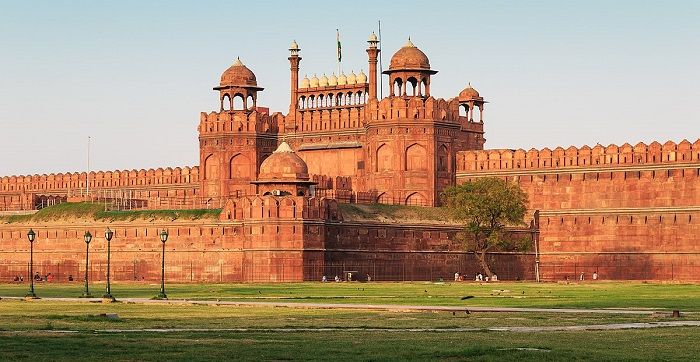
The Red Fort, which is also known as the Lal Qila, was constructed by one of the most famous Mughal emperors, Shah Jahan. Built on the banks of river Yamuna, the fortress-palace was designed by architect Ustad Ahmad Lahauri. It took 8 years and 10 months to build the magnificent fort. The fort served as the royal residence of the Mughal emperors from 1648 to 1857. It took over the honor of royal residence from the famous Agra Fort when Shah Jahan decided to shift his capital from Agra to Delhi.

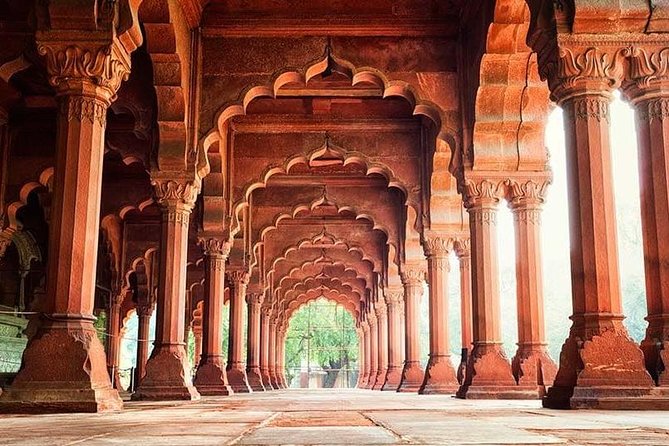
The Red Fort derives its name from the red-sandstone walls, which make the fort almost impregnable. The fort, which is located at Old Delhi, is one of the massive and prominent structures of India and is a fine example of Mughal architecture. It is often considered as the pinnacle of Mughal creativity. In modern times, the fort is of importance to the people of India as the Indian Prime Minister delivers his Independence Day speech from the fort, every year on August 15. In 2007, it was declared as UNESCO World Heritage Site.

History
Shah Jahan, the then Mughal emperor decided to build the Red Fort as the citadel of Shahjahanabad, his new capital at Delhi. The fort, which was completely constructed in the year 1648, remained the residence of the Mughal emperors until 1857. Post the reign of Aurangzeb, the Mughal dynasty grew weaker in every aspect and that started taking a toll on the fort. When Farrukhsiyar, the ninth Mughal emperor, took over the reign from Jahandar Shah after murdering him, the fort began to lose its luster, quite literally. During his reign, the silver ceiling of the fort was replaced with copper in order to raise money. This was probably the beginning of the plunder that would go on for years to come. In 1739, Nadir Shah, the Persian emperor defeated the Mughals and took with him some of the valuables belonging to the fort, including the famous peacock throne, which had served as the royal throne of the Mughals. The weakened Mughals had no other option but to sign a treaty with the Marathas, who had promised to protect them and the fort. In 1760, when Ahmed Shah Durrani of the Durrani dynasty threatened to capture Delhi, the Marathas dug out the silver ceiling of Diwan-i-Khas to strengthen their army. However, Ahmed Shah Durrani defeated the Marathas in the third battle of Panipat and took over the fort. The Marathas reconquered the fort in 1771 and stalled Shah Alam II as the 16th Mughal emperor. In 1788, the Marathas occupied the fort and ruled over Delhi for the next 20 years before the British defeated them during the Second Anglo-Maratha War in 1803.
The fort now was occupied by the British, who even built a residence of their own within the fort. During the Indian rebellion of 1857, Bahadur Shah II, was arrested by the British and later exiled to Rangoon. With Bahadur Shah II, the Mughal Empire came to an end and this opened a window of opportunity for the British to loot valuables from the fort. Almost all furniture were either destroyed or shipped to England. Many edifices and landmarks within the fort were destroyed and barracks of stone replaced them. Many priceless possessions like the Koh-i-Noor diamond, the crown of Bahadur Shah and the wine cup of Shah Jahan were sent to the British government. After independence, the Indian Army occupied a major part of the fort before handing it over to the Archaeological Survey of India (ASA) for restoration purposes.
The Red Fort is the largest historical structure in Delhi. Every year, the Prime Minister of India hoists the tricolor flag on every Independence Day. Security around the fort during the Independence Day celebrations is tightened as the place was attacked by terrorists on 22 December in the year 2000. The fort also serves as a major tourist attraction and witnesses thousands of visitors throughout the year. Though many buildings are not in great shape, some are still in good condition and efforts are being taken to conserve what is left of the fort. Three museums namely the museum of blood paintings, war-memorial museum and archaeological museum have been set up inside the fort.In the newly released currency note of rupees 500, the fort appears on the back of the note, implying its importance even in the post-independence era.

HUMAN IMMUNODEFICIENCY VIRUS(HIV): TRANSMISSION, SYMPTOMS AND PREVENTION

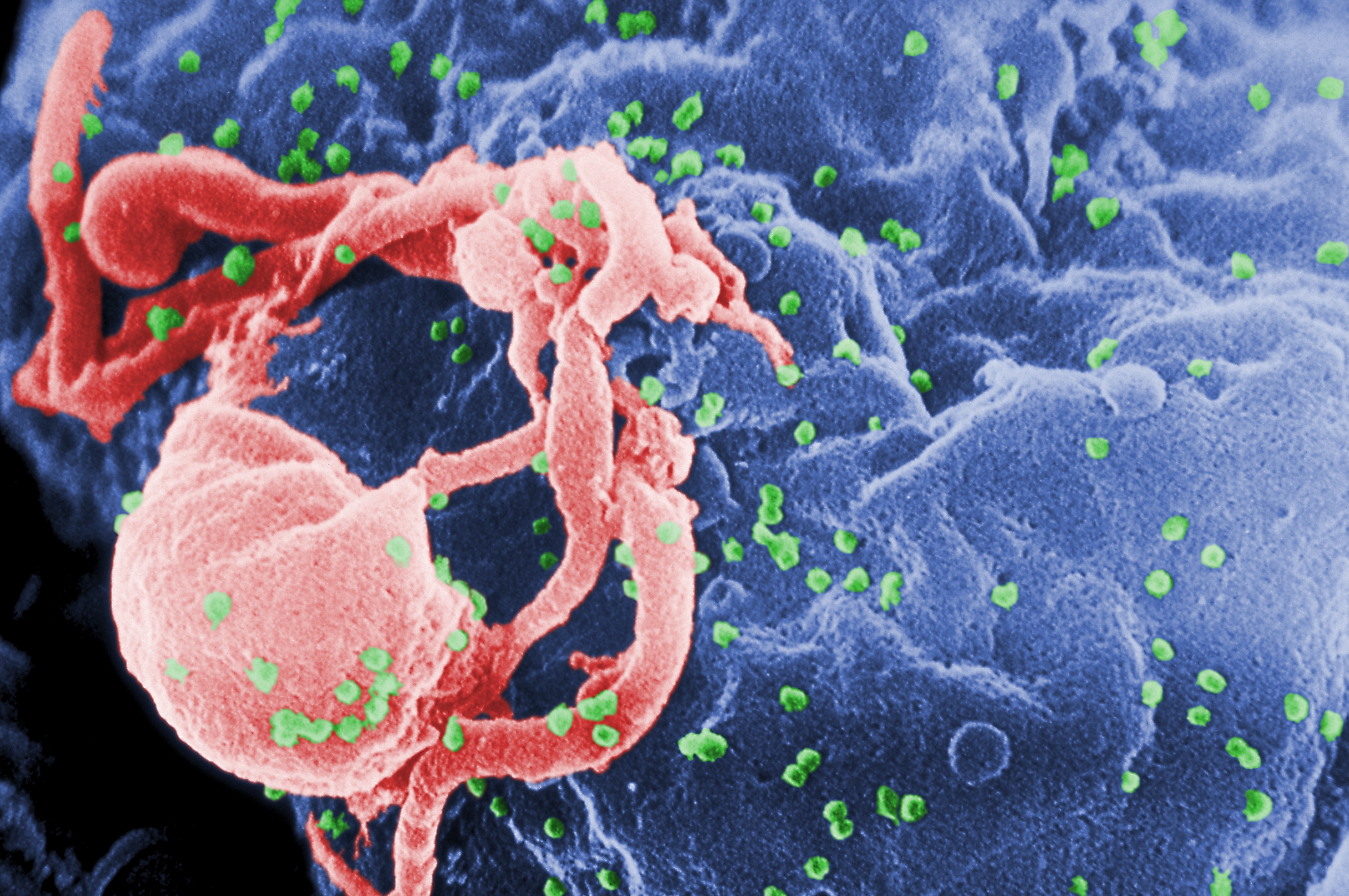
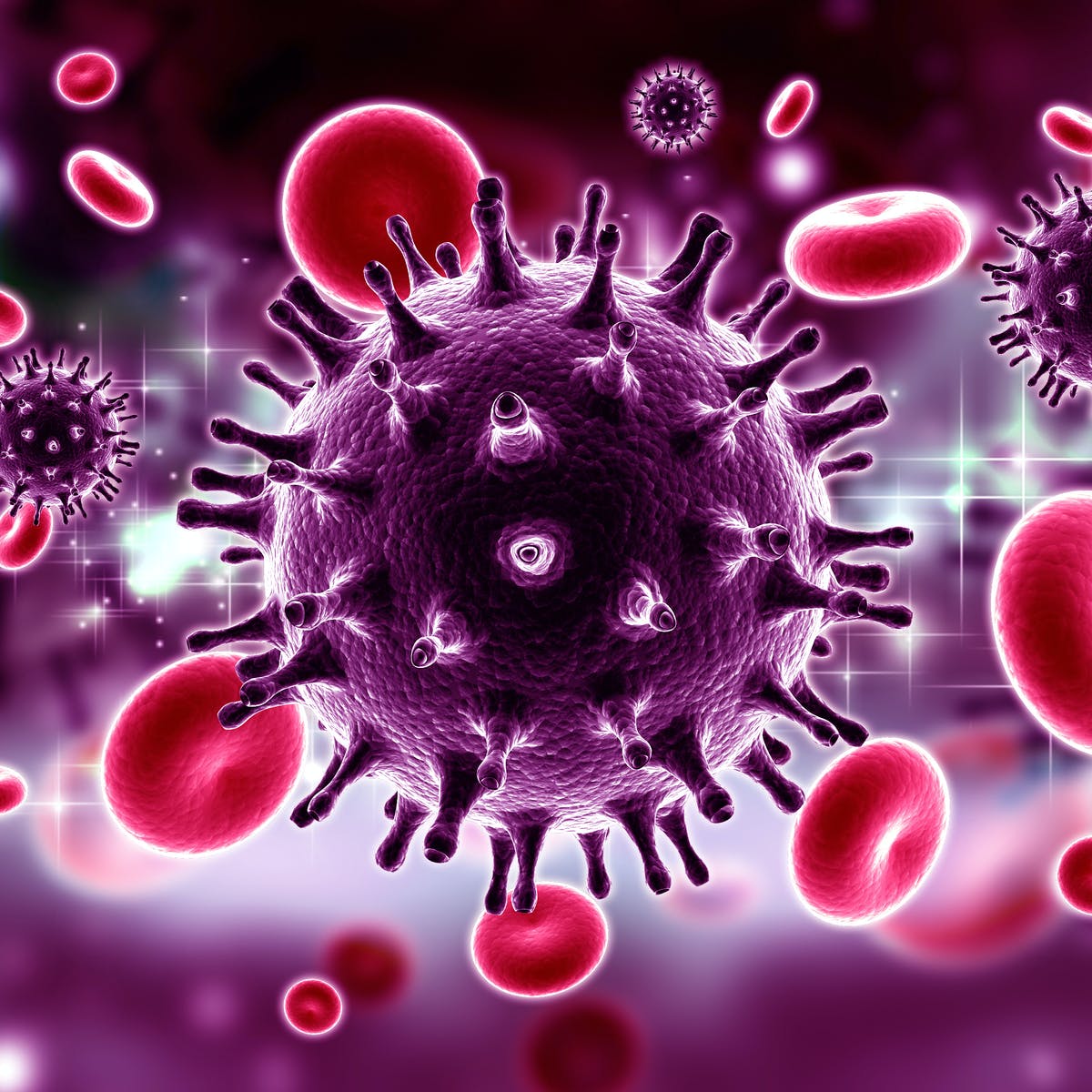
Human Immunodeficiency virus (HIV), a member of the retrovirus family, is the causative agent of Acquired immune deficiency syndrome (AIDS).
The human immunodeficiency virus (HIV) targets the immune system and weakens people’s defense against many infections and some types of cancer that people with healthy immune systems can more easily fight off. As the virus destroys and impairs the function of immune cells, infected individuals gradually become immunodeficient. Immune function is typically measured by CD4 cell count.
The most advanced stage of HIV infection is acquired immunodeficiency syndrome (AIDS), which can take many years to develop if not treated, depending on the individual. AIDS is defined by the development of certain cancers, infections or other severe long-term clinical manifestations.

Transmission:
HIV is a sexually transmitted infection (STI). It can also be spread by contact with infected blood and from illicit injection drug use or sharing needles. It can also be spread from mother to child during pregnancy, childbirth or breastfeeding. Without medication, it may take years before HIV weakens your immune system to the point that you have AIDS.
There’s no cure for HIV/AIDS, but medications can control the infection and prevent progression of the disease. Antiviral treatments for HIV have reduced AIDS deaths around the world, and international organizations are working to increase the availability of prevention measures and treatment in resource-poor countries.

Signs and symptoms:
The symptoms of HIV vary depending on the stage of infection. Though people living with HIV tend to be most infectious in the first few months after being infected, many are unaware of their status until the later stages. In the first few weeks after initial infection people may experience no symptoms or an influenza-like illness including fever, headache, rash or sore throat.
As the infection progressively weakens the immune system, they can develop other signs and symptoms, such as swollen lymph nodes, weight loss, fever, diarrhoea and cough. Without treatment, they could also develop severe illnesses such as tuberculosis (TB), cryptococcal meningitis, severe bacterial infections, and cancers such as lymphomas and Kaposi’s sarcoma.

Prevention
Individuals can reduce the risk of HIV infection by limiting exposure to risk factors. Key approaches for HIV prevention, which are often used in combination, include:
• male and female condom use;
• prevention, testing and counselling for HIV and STIs;
• voluntary medical male circumcision (VMMC);
• use of antiretroviral drugs (ARVs) for prevention (oral PrEP and long acting products), the dapivirine vaginal ring and injectable long-acting cabotegravir;
• harm reduction for people who inject and use drugs; and
• elimination of mother-to-child transmission (MTCT) of HIV.
HIV is not transmitted if a person’s sexual partner is virally suppressed on ART, so increasing access to testing and supporting linkage to ART is an important component of HIV prevention.
This are the few prevention methods to prevent HIV as there is no cure for this disease, but it can be controlled and prevented.

MAJOR CROPS OF INDIA

India has a great history of agrarian culture. Agriculture is the soul of rural India. It is an ancient form of economic activity in our country. It also contributes a significant figure to the Gross Domestic Product (GDP).

Major Crops
A variety of food and non-food crops are grown in different parts of our country.

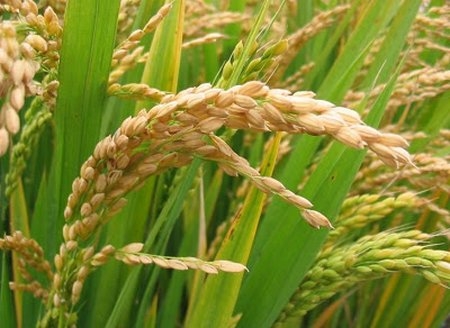
Few crops are: Rice
It is grown in the plains of north and in the parts of north-eastern India; it is also cultivated in coastal and deltaic regions. India is the second largest producer in the world after China. Areas of less rainfall, such as Punjab, Haryana and Western Uttar Pradesh and parts of Rajasthan have been made appropriate for cultivation of rice with the development of canal and irrigation tubewells.

Maize
It is a kharif crop which in both used as food and fodder. Karnataka, Uttar-Pradesh, Bihar, Andhra Pradesh and Madhya Pradesh are the major maize-producing states of India. Production of maize have increased with the use of modern inputs such as HYV seeds, fertilizers and irrigation.

Millets
The coarse grains, such as, jowar, bagra and ragi are major millets produced in India. Maharashtra is the largest producer of jowar. Other than this, Karnataka, Andhra Pradesh and Madhya Pradesh are other leading producer of jowar.
Bajra is grown in Rajasthan, which is the largest producer of bajra, followed by Uttar Pradesh, Maharashtra, Gujarat and Haryana.

Ragi
Ragi is grown in dry regions and Karnataka is its largest producer followed by Tamil Nadu, Himachal Pradesh, Uttarakhand, Sikkim, Jharkhand and Arunachal Pradesh.

Wheat
It is the second most important cereal crop after rice and the two important wheat-growing zones of India are the Ganga- satluj plains in north-west and black soil region of the Deccan. Punjab, Haryana, Uttar Pradesh, Bihar, Rajasthan and Madhya Pradesh are the leading producers of wheat.

Pulses
India is the largest producer and consumer of pulses in the world. Major pulses grown are tur, Urad, moong, masur, peas and gram. The leading states producing pulses are Madhya Pradesh, Uttar Pradesh, Rajasthan, Maharashtra and Karnataka.

Sugarcane
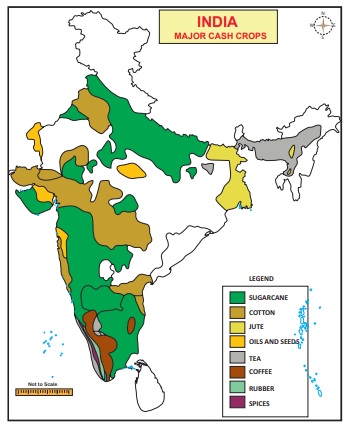
India is the second largest producer of sugarcane after Brazil. Sugarcane is the main source of sugar, gur, khandsari and molasses. Uttar Pradesh, Maharashtra, Karnataka, Tamil Nadu, Andhra Pradesh, Bihar, Punjab and Haryana are the sugarcane producing States of India.

Oil Seeds
Main oil-seeds of India includes mustard, groundnut, coconut, Sesamum (til), soyabean, caster seeds, cotton seeds, linseed and sunflower, in which some are edible and used in cooking. Also, some are used a raw material for the production of soap, cosmetics and ointments.
Groundnut is the major oil seed produced in Andhra Pradesh, Tamil Nadu, Karnataka, Gujarat and Maharashtra. Sesamum is a kharif crop in north and caster seed is grown both as rabi and kharif crop.

Tea
Tea was introduced by British in our country, which grows well in tropical and sub-tropical climates endowed with deep and fertile well-drained soil.
Tea is processed in a tea garden to maintain its freshness and requires huge labour for its cultivation. The hills of Darjeeling and Jalpaiguri, Assam, West Bengal, Tamil Nadu and Kerala are the largest producers of tea in India. Some other tea producing states are Himachal Pradesh, Uttaranchal, Meghalaya, Andhra Pradesh and Tripura.

Coffee
The varieties of India coffee has a demand all over the world mostly for its good quality. The Arabica variety, which is brought from Yemen, is produced in India which was initially introduced on the Baba Budan Hills and now-a-days, it is confined to Nilgiri in Karnataka.

Horticulture crops
India is very famous for its fruits and vegetables around the would and is the largest producer as well.
The fruits like Mangoes, which is mostly produced in Maharashtra, Andhra Pradesh, Uttar Pradesh and West Bengal, Oranges which are produced in Nagpur and Cherrapunjee, Bananas of Kerala, Mizoram, Maharastra and Tamil Nadu, Lichi and guava which is grown in Uttar Pradesh and Bihar are demanded all over the world. The other fruits of great demand are Pineapples of Meghalaya, grapes of Andhra Pradesh, Maharastra; Aplles, pears, Apricots and Walnuts of Jammu and Kashmir and Himachal Pradesh.