India and its neighborhood- relations

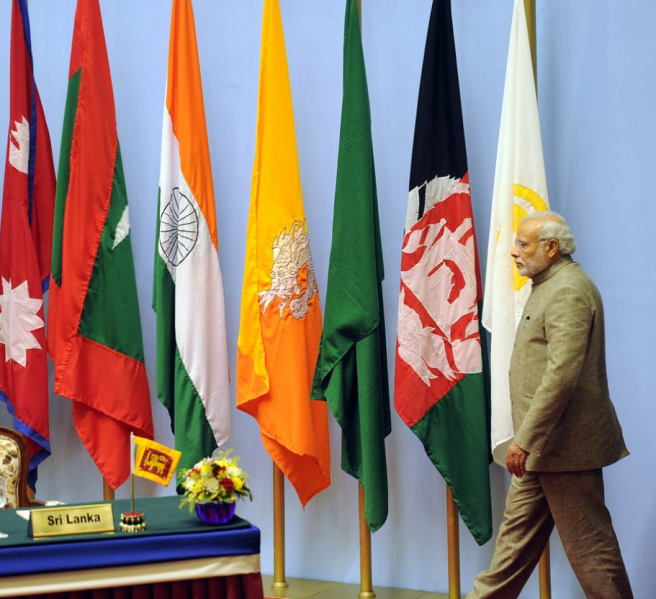
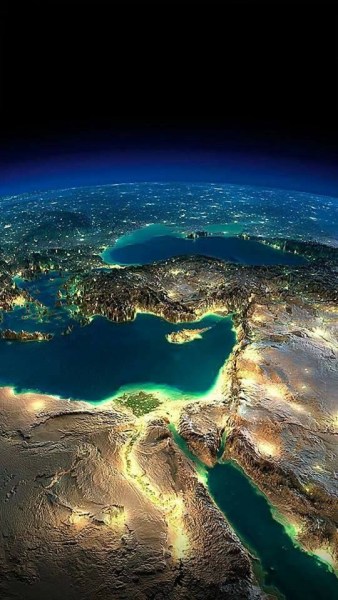
India shares geographical boundary with eight countries namely Pakistan, Afghanistan, China, Nepal, Bhutan, Bangladesh and Sri Lanka. Since the inception of our foreign policy, India has aimed at building trust with its neighbors. It aims at peaceful friendly relations and mutual economic development by enhanced trade and investments.

•Pakistan: Improving relations with Pakistan has been among top priorities in Indian foreign policy. After the visit of Pakistan former Prime Minister Parvez Musharaff in 2004, there has been a vacuum in our talks. It seems that radical groups in Pakistan took undue advantage of this vacuum and consequently there has been increased reports of cross-border terrorism activities. 26/11 attack is an unwashable strain on the fabric of friendship between India and Pakistan. But as it is said that ‘time heals all wounds’. The recently elected Narendra Modi led National Democratic alliance government’s attitude is worth appreciation. Indian Prime minister invited his Pakistani counterpart in his swearing in ceremony in New Delhi. This is a clear indication that both Nations are willing to take their relations on newer heights. In this aspect changed outlook India should try to adopt a sustainable foreign policy towards Pakistan. Smaller initiatives like Indo-Pak trade fair at Jalandhar, Punjab (India) needs to be encouraged. Healthy trade relations will help both sides equally.

•Nepal: Since the birth of democratic institution in Nepal, India has increasingly tried to have good relations with Nepal. Currently a joint hydro power project is being built on Sharda River. This power plant is thought to mutually help both India and Nepal with respect to electricity production and irrigation facilities. From the environmental perspective, there are a number of Tiger reserves along Indo-Nepal border. Both countries have identified their importance and are helping each other to sustain the existing ones and creating new ones. •China: China being manufacturing hub of world, is strategically very important to India. In fact China has become a role model for development. India needs to build strong trade relations with China. Increasing Foreign Direct Investment caps in various sectors has been one such step of India to invite investors from abroad.Apart from these bilateral relations, India has been active on various other forums as well which provides for greater engagement with its neighbors. For example India has been one of the pioneering advocate of TAPI (Turkmenistan, Afghanistan, Pakistan and India). This project aimed at bringing gas from Gulf countries and distribute it in TAPI countries.

India is an active member in BRICS (Brazil, Russia, India China and South Africa). BRICS is emerging a one of the significant union in world. BRICS nations represent 40 per cent of world population and has approximately sixteen trillion dollars as its Nominal Gross Domestic Product (GDP). BRICS nation contributes around eighteen per cent of world economy. The recent BRICS summit held at Brazil in July 2014.
One of the German intellectual has rightly said that ‘For economic development of a nation, peace with its neighbors is a pre-requisite’. India not only recognizes this statement but also conforms to it. Going by the mood of current Indian government in India, Union government too knows the importance of its neighbors. If India wants to be a super-power then maintaining friendly relations with its neighbors is a first step of ladder in this direction.


India has always wanted friendly ties with its neighbours, there can be no debate around it. We want to live in harmony and peace.

-Narendra Modi

Role of civil services in a democracy .

In the process of governance, which involves several sets of activities to deliver effective services to people, civil services play a pivotal role in providing shape to policies that reflect people’s needs and put their suggestive, analytical and informative roles to implement the
policies. It is recognized that civil services play a crucial role in all societies. In the modern administrative state, public administration has become so significant that our development, upliftment and progress depend mainly upon the efficient functioning of civil services that are
the bedrock of public administration. Civil services have assumed more important role in democracy to ensure good governance, both in developing and developed countries. Civil Services form a part of bureaucracy, wherein the roles of civil servants are determined by
written rules. It’s an impersonal system operating on the basis of calculable rules and staffed by full time appointed officials. Usually, the civil servants are selected on basis of their technical
qualifications, receive fixed salaries, have a defined sphere of competence and work under a clearly defined hierarchy of offices.

The role of Civil Servants across the domains of policy making and policy implementation is critical to the development process. They assist in identifying major policy areas such as preparing major policy proposals, analyzing various alternatives and solutions to societal problems requiring urgent attention, dividing the major policies into sub-policies, determining
program of action and suggesting modification in the existing policy on the basis of its experience on the implementation front.Civil services carry on the governance when governments change due to elections etc. Ramsay
Muir has remarked that while governments may come and go, ministers may rise and fall, the administration of a country goes on forever. It is needless to say that civil services form the backbone of administration. E.g. In India, when the President’s Rule is imposed in a state, the
Governor runs the state through the Chief Secretary and other civil servants.The civil servants are responsible to the ministers of the departments in which they serve. The ministers are accountable to the people through the Parliament or State Legislatures, and the civil servants are accountable to the ministers. They should ideally serve the elected government of the day, as government policies are the functions of the civil services. However, an impartial civil servant is also accountable to the Constitution of India on which he has taken an oath of allegiance.

In India, bureaucracy or civil services is permanent and does not change with the government. The recruitment is based on merit and through competitive exams. This is in contrast to the system followed in the US, where civil servants, especially in the higher echelons, change with the government. This is called the spoils system where people who are close to the government of the day get posts.


With bad laws and good civil servants it’s still possible to govern. But with bad civil servants even the best laws can’t help.

   -Otto von Bismarck.

Physical Geography

Physical geography is one of the two branches of geography viz., physical geography and human ge­ography. In fact, the study of physical aspects of the earth represents the core of spatial science i.e., geogra­phy. Most of geographers have pleaded for bifurcation of geography into physical and human geography but it is rather unwise to ignore biotic aspect of the biospheric ecosystem of the earth and hence there should be trifurcation of geography into physical ge­ography, human geography and biogeographyPhysi­cal geography in terms of its meaning and definition, scope (subject matter) and methods of study has under­gone sea-change in the past few decades. In the begin­ning, physical geography was defined as the study of only physical environment (namely reliefs, air and water) of the earth e.g., ‘the study of physical environ­ment by itself is physical geography which includes consideration of surface relief of the globe (geomorphology), of the seas and the oceans (ocea­nography) and of the air (meteorology and climatol­ogy) (Arthur Holmes).

Physical geography was considered as the ag­glomeration of different branches of earth sciences or natural sciences viz., sciences of atmosphere (meteor­ology and climatology); science of seas and oceans (oceanography); science of solid earth (geology); sci­ence of soil (pedology); science of plants (botany) and science of landforms (geomorphology).As a distinct branch of geography physical geography studies the spatial patterns and spatial relationships of environmental components of the globe in regional context, it also studies the causes of regional patterns of such spatial relationships, simultaneously it incorporates the ex­planation of spatial and temporal changes of environ­mental components and causes thereof.The study of features resulting from the interac­tions between endogenetic and exogenetic forces in­volves the discussion of mode of denudational proc­esses (weathering and erosion), hetherto termed as geomorphic processes, their mechanism of operation (machanism of erosion, transportation and deposition by running water-river, groundwater, sea waves, wind, glacier and periglacial agent) and resultant landforms.

The discipline of physical geography has evolved through successive stages of its development in terms of methodology and approaches to study. After taking its birth in the philosophical ideas and reports of ancient thinkers, philosophers and historians of the ancient seats of civilization and culture e.g., Greece, Rome and Egypt, the science of physical environment attained its present status wherein different compo­nents were added from time to time.

Geography is also memory. And loss of physical geography is also loss of narrative memory.

Nanotechnology

Nanotechnology is defined as fabrication of devices with atomic or molecular scale precision. Devices with minimum feature sizes less than 100 nanometers (nm) are considered to be products of nanotechnology. A nanometer is one billionth of a meter (10-9 m) and is the unit of length that is generally most appropriate for describing the size of single molecules.The nanoscale marks the nebulous boundary between the classical and quantum mechanical worlds; thus, realization of nanotechnology promises to bring revolutionary capabilities. Fabrication of nanomachines, nanoelectronics and other nanodevices will undoubtedly solve an enormous amount of the problems faced by mankind today.Nanotechnology is currently in a very infantile stage. However, we now have the ability to organize matter on the atomic scale and there are already numerous products available as a direct result of our rapidly increasing ability to fabricate and characterize feature sizes less than 100 nm. Mirrors that don’t fog, biomimetic paint with a contact angle near 180°, gene chips and fat soluble vitamins in aqueous beverages are some of the first manifestations of nanotechnology. However, immenant breakthroughs in computer science and medicine will be where the real potential of nanotechnology will first be achieved.

Nanoscience is an interdisciplinary field that seeks to bring about mature nanotechnology. Focusing on the nanoscale intersection of fields such as physics, biology, engineering, chemistry, computer science and more, nanoscience is rapidly expanding. Nanotechnology centers are popping up around the world as more funding is provided and nanotechnology market share increases. The rapid progress is apparent by the increasing appearance of the prefix “nano” in scientific journals and the news. Thus, as we increase our ability to fabricate computer chips with smaller features and improve our ability to cure disease at the molecular level, nanotechnology is herestorage (or other uses) is enormous. As first described in a lecture titled, ‘There’s Plenty of Room at the Bottom’ in 1959 by Richard P. Feynman, there is nothing besides our clumsy size that keeps us from using this space. In his time, it was not possible for us to manipulate single atoms or molecules because they were far too small for our tools. Thus, his
speech was completely theoretical and seemingly fantastic. He described how the laws of physics do not limit our ability to manipulate single atoms and molecules. Instead, it was our lack of the appropriate methods for doing so. However, he correctly predicted that the time would come in which atomically precise manipulation of matter would inevitably arrive.Nanomachines can also be incorporated into various materials to make those materials respond to their environment, or to outside commands. Examples of such materials would be “smart” fabrics that respond to the environment to become warmer or cooler, or walls and furniture that can move or change shape on command. Nanomachines could also be used as tools both in industry and by consumers. Such tools could cut apart or glue together material far more efficiently than anything large-scale that is used today. Nanomachines could also repair cars, furniture, applicances, or almost anything else quickly and efficiently. Or these objects could be designed with nanomachines to repair themselves should the need arise. Life would be greatly simplified by relieving people of the need to repair objects at home or at work.


In thinking about nanotecnolog today, what’s most important is understanding where it leads, what nanotechnology will look like after we reach the assembler breakthrough.

-Eric Drexler

Agriculture

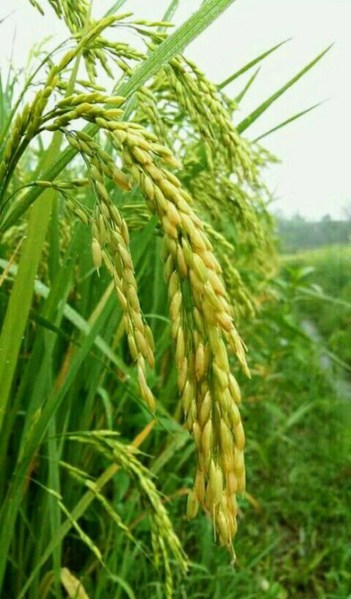
The word “Agriculture” has no rigid definition. It has been explained by many people very comprehensively. Agriculture has been defined as the science and art of cultivating the soil, and this definition emphasizes the primary nature of plant production in agriculture.Moreover, it is so frequent that the same person performs both the primary functions of growing plants and the secondary one of feeding the plants to livestock that these two industries are grouped together as agriculture. Therefore, it may be said that agriculture includes not only the production of crops by the cultivation of the soil, but also the rearing of livestock.
Thus, milk, meat and wool are as much agricultural products as are wheat, rice and cotton. In the words of George O’Brien, therefore, the word agriculture includes, “every industry which aims at producing vegetables or animals by the cultivation of the soil.”So, agriculture is the business of raising products from the land. The products raised may either be plants and their products or animals and their products. The former are the direct products while the latter are the indirect products of the land. Agricultural products are complex and diverse, in nature, and as such, agriculture may be regarded as complex industry.Modern agriculture is such broader in scope than merely the art and science of cultivating the land. It is the whole business of supplying food and fiber for a growing population at home and abroad. Again in agriculture we include all forms of soil production, from forestry to glass-house culture, from fishery to artificial insemination, and from breeding to horticulture.

Primi­tive men must have begun as food gatherers, eating whatever fruits, leaves and roots they could obtain. Nature must have been bountiful in those days when human numbers were so small and wild plants grew everywhere. As time passed and human numbers grew, fishing and hunting became increasingly im­portant in supplementing what was lacking in the field, and an endless search for food ensued.It was soon realized that some form of food pro­duction was necessary if men were to live long and secure. Animals were tamed, first to provide meat, milk and skin; later for use as draught animals. Seeds were sown in ploughed fields, carefully tended and harvested when the time came.Men were then able to live in settled communities. Because they were no longer continually moving they had time to develop the various arts, crafts and skills that formed the basis of modern industries and also evolved religious and political ideas. Without a settled agriculture, a meas­urable degree of civilization is not possible.


Agriculture
is not farming
it’s feeding

Concept of Agricultural Marketing

The term market is derived from the Latin term’ marcatus ‘ which means trade or place where business is conducted.

In real terms ; market is defined as place where the sellers of particular good or service can meet with buyer of that good and services where there is potential for transaction to occur.

Agricultural marketing is study of all activities, agencies and policies that are involved in procurement of farm inputs by farmers and movement of agricultural products from farm to ultimate consumers. So it can be said to serve as link between farm 🚜🐄🌾 and non farm sector.

Thus it is a collaborative effort including marketing functions from post – harvest handling to pre- sowing; assembling, handling, storage, transport, processing, retailing, wholesaling, export of agricultural commodities and purchasing inputs for next agricultural season. It also includes marketing services as market information, weighing, standardization, financing, price risk mechanism and institutional development.

Dimension of agricultural marketing system includes market structure, it’s conduct and performance. The purpose of marketing is to find the right place, right time, right product and right time to make it selling superfluous.

Importance of agricultural marketing :

Agricultural market plays a important role in various ways to increase farm income, provide employment opportunities, optimum utilisation of resources, creation of utility and growth of agro-based industries.

The agricultural product differ from industrial product in many ways:

1.Nature of product: Most agricultural products are perishable in nature and hence cannot be stored for longer duration while industrial products can be stored for longer duration .

2.Weather and Season dependent: Most agricultural products are season bound and produced in particular season whereas industrial products are available throughout the year.

3.Bulkiness in nature : Agricultural products are bulky in nature and are difficult to handle, transport, storage etc. which adds to transportation cost.

4. Supply lag: As agricultural commodities are season bound so there is difference in supply and demand of goods.

5. Requirements of land area: For production of agricultural goods we needs more land as compared to industrial products like cultivation practices etc.

So from this role of agricultural markets can be determined as they hold separate importance in the economy .

Write Book Review and Suggest your Book

How to write a review of a book

Step 1. Provide a summary

Have you ever watched a movie only to realize that all the good bits were already in the trailer? Well, you don’t want the review to do that. What you do want the summary to do is reveal the genre, theme, main conflict, and main characters in the story — without giving away spoilers or revealing how the story ends.

A good rule of thumb is not to mention anything that happens beyond the midpoint. Set the stage and give readers a sense of the book without explaining how the central issue is resolved.


Emily W. Thompson’s review of The Crossing:

In [Michael] Doane’s debut novel, a young man embarks on a journey of self-discovery with surprising results.

An unnamed protagonist (The Narrator) is dealing with heartbreak. His love, determined to see the world, sets out for Portland, Oregon. But he’s a small-town boy who hasn’t traveled much. So, the Narrator mourns her loss and hides from life, throwing himself into rehabbing an old motorcycle. Until one day, he takes a leap; he packs his bike and a few belongings and heads out to find the Girl. Read more…

Non-fiction summary tip: The primary goal of a non-fiction summary is to provide context: what problems or issues has the book spotted, and how does it go about addressing them? Be sure to mention the authors of the title and what experience or expertise they bring to the title. Check Stefan Kløvning’s review of Creativity Cycling for an example of a summary that establishes the framework of the book within the context of its field.

Step 2. Present your evaluation

While you should absolutely weave your own personal take of a book into the review, your evaluation shouldn’t only be based on your subjective opinion. Along with presenting how you reacted to the story and how it affected you, you should also try to objectively critique the stronger and weaker elements of the story, and provide examples from the text to back up your points.

To help you write your evaluation, you should record your reactions and thoughts as you work your way through a novel you’re planning on reviewing. Here are some aspects of the book to keep in mind as you do.

Your evaluation might focus heartily on the book’s prose:

Donald Barker’s review of Mercenary

Such are the bones of the story. But, of course, it is the manner in which Mr Gaughran puts the bones back together and fills them with life that makes “Mercenary” such a great read. The author’s style seems plain; it seems straightforward and even simple. But an attempt at imitation or emulation quickly proves that simple it is not. He employs short, punchy sentences that generate excellent dialogue dripping with irony, deadpan humour and wit. This, mixed with good descriptive prose, draws the characters – and what characters they are – along with the tumultuous events in which they participated amidst the stinking, steaming heat of the South American jungle, out from the past to the present; alive, scheming, drinking, womanising and fighting, onto the written page.

You can give readers a sense of the book by drawing comparisons to other well-known titles or authors:

Laura Hartman’s review of The Mystery of Ruby’s Mistletoe:

Reading Ms. Donovan’s book is reminiscent to one of my favorite authors, Dame Agatha Christie. Setting up the suspects in a snowbound house, asking them to meet in the drawing room and the cleverly satisfying conclusion was extremely gratifying. I can picture Miss Marple and Hercule Poirot nodding at Ms. Donovan saying “Well done!”

Not everyone’s tastes are the same, and you can always acknowledge this by calling out specific story elements in your evaluation: 

Kevin R. Dickinson’s review of The Heart of Stone:

Whether you enjoy Galley’s worldbuilding will depend heavily on preference. Galley delivers information piecemeal, letting the characters, not the author, navigate the reader through Hartlund. A notable example is the magic system, an enigmatic force that lacks the ridge structures of, say, a Brandon Sanderson novel. While the world’s magical workings are explained, you only learn what the characters know and many mysteries remain by the end. Similar choices throughout make the world feel expansive and authentic.

Non-fiction evaluation tip: A book’s topic is only as compelling as its supporting arguments. Your evaluation of a nonfiction book should address that: how clearly and effectively are the points communicated? Turn back to Stefan’s critique for an example of a non-fiction critique that covers key takeaways and readability, without giving away any “big reveals.”

Step 3. Give your recommendation 

At the end of the day, your critique needs to answer this question: is this a book you would (or wouldn’t) recommend to other readers? You might wrap up by comparing it to other books in the same genre, or authors with similar styles, such as: “Fans of so-and-so will enjoy this book.” 

Let’s take a look at a few more tips:

You don’t need to write, “I recommend this book” — you can make it clear by highlighting your favorable opinion:

Emily W. Thompson’s review of The Crossing:

Following in the footsteps of Jack Kerouac and William Least Heat-Moon, Doane offers a coming of age story about a man finding himself on the backroads of America. Doane’s a gifted writer with fluid prose and insightful observations, using The Narrator’s personal interactions to illuminate the diversity of the United States.

Despite his flaws, it’s a pleasure to accompany The Narrator on his physical and emotional journey. The unexpected ending is a fitting denouement to an epic and memorable road trip.

Add more punch to your rating by mentioning what kind of audience will or won’t enjoy the book:

Charleigh Aleyna Reid’s review of The King of FU:

I would recommend this book to anyone who grew up in the 90’s and would like to reminisce about the time, someone who is interested to see what it was like to be a 90’s kid, or perhaps anyone who is looking for a unique, funny story about someone’s life.

Unless you found the title absolutely abhorrent, a good way to balance out a less favorable book review it to share what you did like about the book — before ultimately stating why you wouldn’t recommend the novel:

Nicola O’s review of Secrets of the Sea Lord:

Overall, there are plenty of enjoyable elements in this story and fans of Atlantis and mer mythology should give it a try. Despite this, it does not rise above a three-star rating, and while I had some difficulty pinning down why this is, I concluded that it comes from a surprisingly unsophisticated vocabulary. There are a couple of graphic sex scenes, which is absolutely fine in a paranormal romance, but if they were removed, I could easily imagine this as an appealing story for middle-schoolers.

Non-fiction recommendation tip: As with fiction book reviews, share why you did or didn’t enjoy the title. However, in one of the starkest divergences from fiction book reviews it’s more important than ever that you mention your expectations coming into the non-fiction book. For instance, if you’re a cow farmer who’s reading a book on the benefits of becoming a vegetarian, you’re coming in with a large and inherent bias that the book will struggle to alter. So your recommendation should cover your thoughts about the book, while clearly taking account your perspective before you started reading. Let’s look once more at Stefan’s review for an example of a rating that includes an explanation of the reviewer’s own bias.

Bonus tips for writing a book review

Let’s wrap up with a few final tips for writing a compelling review.

  • Remember, this isn’t a book report.If someone wants the summary of a book, they can read the synopsis. People turn to book reviews for a fellow reader’s take on the book. And for that reason…
  • Have an opinion. Even if your opinion is totally middle-of-the-line — you didn’t hate the book but you didn’t love it either — state that clearly, and explain why.
  • Make your stance clear from the outset. Don’t save your opinion just for the evaluation/recommendation. Weave your thoughts about the book into your summary as well, so that readers have an idea of your opinion from the outset.
  • Back up your points. Instead of just saying, “the prose was evocative” — show readers by providing an actual passage that displays this. Same goes for negative points — don’t simply tell readers you found a character unbelievable, reference a certain (non-spoiler) scene that backs this up.
  • Provide the details. Don’t forget to weave the book’s information into the review: is this a debut author? Is this one installment of a series? What types of books has the author written before? What is their background? How many pages does the book have? Who published the book? What is the book’s price?
  • Follow guidelines. Is the review you’re writing for Goodreads? For The New York Times? The content and tone of your review will vary a good deal from publication to publication.
  • Learn from others. One of the best ways to learn how to write a great review is to read other reviews! To help you out with that, we’ve published a post all about book review examples.

Writing book reviews can be a rewarding experience! As a book-lover yourself, it’s a great opportunity to help guide readers to their next favorite title. If you’re just getting started as a reviewer and could use a couple more tips and nudges in the right direction, check out our comprehensive blog post on how to become a book reviewer. And if you want to find out which review community is the right fit for you, we recommend taking this quick quiz:


Write your Book Review and Get Published on this portal for free. Send mail to editor@eindex.org

India and its neighborhood- relations

India shares geographical boundary with eight countries namely Pakistan, Afghanistan, China, Nepal, Bhutan, Bangladesh and Sri Lanka. Since the inception of our foreign policy, India has aimed at building trust with its neighbors. It aims at peaceful friendly relations and mutual economic development by enhanced trade and investments.

•Pakistan: Improving relations with Pakistan has been among top priorities in Indian foreign policy. After the visit of Pakistan former Prime Minister Parvez Musharaff in 2004, there has been a vacuum in our talks. It seems that radical groups in Pakistan took undue advantage of this vacuum and consequently there has been increased reports of cross-border terrorism activities. 26/11 attack is an unwashable strain on the fabric of friendship between India and Pakistan. But as it is said that ‘time heals all wounds’. The recently elected Narendra Modi led National Democratic alliance government’s attitude is worth appreciation. Indian Prime minister invited his Pakistani counterpart in his swearing in ceremony in New Delhi. This is a clear indication that both Nations are willing to take their relations on newer heights. In this aspect changed outlook India should try to adopt a sustainable foreign policy towards Pakistan. Smaller initiatives like Indo-Pak trade fair at Jalandhar, Punjab (India) needs to be encouraged. Healthy trade relations will help both sides equally.

•Nepal: Since the birth of democratic institution in Nepal, India has increasingly tried to have good relations with Nepal. Currently a joint hydro power project is being built on Sharda River. This power plant is thought to mutually help both India and Nepal with respect to electricity production and irrigation facilities. From the environmental perspective, there are a number of Tiger reserves along Indo-Nepal border. Both countries have identified their importance and are helping each other to sustain the existing ones and creating new ones. •China: China being manufacturing hub of world, is strategically very important to India. In fact China has become a role model for development. India needs to build strong trade relations with China. Increasing Foreign Direct Investment caps in various sectors has been one such step of India to invite investors from abroad.Apart from these bilateral relations, India has been active on various other forums as well which provides for greater engagement with its neighbors. For example India has been one of the pioneering advocate of TAPI (Turkmenistan, Afghanistan, Pakistan and India). This project aimed at bringing gas from Gulf countries and distribute it in TAPI countries.

India is an active member in BRICS (Brazil, Russia, India China and South Africa). BRICS is emerging a one of the significant union in world. BRICS nations represent 40 per cent of world population and has approximately sixteen trillion dollars as its Nominal Gross Domestic Product (GDP). BRICS nation contributes around eighteen per cent of world economy. The recent BRICS summit held at Brazil in July 2014.
One of the German intellectual has rightly said that ‘For economic development of a nation, peace with its neighbors is a pre-requisite’. India not only recognizes this statement but also conforms to it. Going by the mood of current Indian government in India, Union government too knows the importance of its neighbors. If India wants to be a super-power then maintaining friendly relations with its neighbors is a first step of ladder in this direction.


India has always wanted friendly ties with its neighbours, there can be no debate around it. We want to live in harmony and peace.

-Narendra Modi

Why insurance is important for living?

Who else won’t crave for a safe fence around their life in this uncertain world? Insurance is one of the safest fences a human being ever has. Various kinds of insurances are rooting into our society. People are confused over the selection of insurance .Some of them are still doubted in types of insurance and how this insurance act as a benefactor .Let us discuss about 5 important insurance that you must know and its allies below.

TYPES OF INSURANCES LIFE INSURANCE

LIFE INSURANCE

Life insurance offers a protection over the family members of the policy holder’s .This will help mostly the one who is going for an adventurous trip or something risky or rather some of them who are facing a life threatening disease .Usually in this insurance there will be a nominee. Nominee is the person who experience the money which policy is pointing

HEALTH INSURANCE

There is always a doubt prevails among the common people is health insurance and life insurance is same. It is a kind of medical insurance which covers the entire medical expenses of the party (policy holder) and risk of the treatment.

DISABILITY INSURANCE

Disability insurance shortly called as DI. This insurance helps a differently abled person who cannot work properly to meet their daily requirements behalf of this disability. There are two kinds of disability benefits .One is short term disability benefit and other is long term benefits

AUTO INSURANCE

This Insurance policy shields from the financial loss held during an accident or theft. Auto insurance provide for property (including damages caused by theft), liability (having legal responsibility to other for injuring body parts or damaging property), medical (the amount of treating wounds extending to funeral expenses)

TRAVEL INSURANCE
Travel insurance takes off liability of a risky travelling. Medical expenses, lost luggage, flight cancellations, and other losses a traveler might face is factored into this policy. The right time to set off the insurance is from the date which travel begins to till it ends

Demography

Demography is the study of human population dynamics. Population is shaped by a number of factors including fertility, mortality, migration and urbanization. Significant demographic changes have been shown in many parts of the world. The world population growth has been decelerating since 1970s. Fertility rates in more developed countries (MDCs) have been showing a declining trend, whereas an increasing one in the less developed countries (LDCs). Mortality rates have gone down in both MDCs and LDCs due to medical advancement. Consequently, the population of the countries with low fertility rates aged more quickly, and the world population growth will be concentrated in those developing countries where fertility rates remain high. Uneven population growth among nations accelerated the migration of people across nation borders and the growth of cities. The changes of these interrelated factors with their causes and problems of each of the factors will be discussed, followed by some possible plans and opportunities that may benefit from these changes.Human birth rate (natality) is the fertility expressed as the average number of live births per thousand populations per year. Since not all age groups in a population have equal fertility, demographers often use more specialized measures of birth rates that relate to age groups.Human mortality rate is the average number of individuals who die per thousand populations per year.

Again, demographers often use more sensitive measures, for different mortality rates. Both the very young and the very old segments of the population have higher mortality rates than are found in other age groups.Human population shows uneven or clumping pattern of distri­bution on earth. The density of human population in a village, district, city, province, country or any area can be obtained by di­viding the total number of persons living in the given region by the total land area of that region.The average number of people per square unit of land area tells us how dense or sparse is the popu­lation in a giver, area. The average population density of the world is calculated about 27 persons per square kilometre.insurance agents to determine life insurance rates.

These early demographic studies were mostly concerned with mortality. However, in the 19th century, studies showed that there was a decline in the number of births, and researchers began to study fertility as well as mortality. These studies led to the idea of “differential fertility.” Differential fertility suggests that different groups within a population have different numbers of children due to factors, such as religion, cultural attitudes, poverty, and employment. Migration of people is the last main factor in demographic studies. It is these three variables (mortality, fertility, and migration) that contribute to population change.Demographers gather data mainly through government censuses and government registries of births and deaths. However, these sources can be inaccurate depending on the precision of government records. Demographers also gather data indirectly through surveying smaller groups within a population. These samples are then examined using statistical models to draw conclusions about the whole population.


Demography is changing us as we are older societies, we’re living longer. How the generations balance each other out, how that affects education and health care.

Role of civil services in a democracy .

In the process of governance, which involves several sets of activities to deliver effective services to people, civil services play a pivotal role in providing shape to policies that reflect people’s needs and put their suggestive, analytical and informative roles to implement the
policies. It is recognized that civil services play a crucial role in all societies. In the modern administrative state, public administration has become so significant that our development, upliftment and progress depend mainly upon the efficient functioning of civil services that are
the bedrock of public administration. Civil services have assumed more important role in democracy to ensure good governance, both in developing and developed countries. Civil Services form a part of bureaucracy, wherein the roles of civil servants are determined by
written rules. It’s an impersonal system operating on the basis of calculable rules and staffed by full time appointed officials. Usually, the civil servants are selected on basis of their technical
qualifications, receive fixed salaries, have a defined sphere of competence and work under a clearly defined hierarchy of offices.

The role of Civil Servants across the domains of policy making and policy implementation is critical to the development process. They assist in identifying major policy areas such as preparing major policy proposals, analyzing various alternatives and solutions to societal problems requiring urgent attention, dividing the major policies into sub-policies, determining
program of action and suggesting modification in the existing policy on the basis of its experience on the implementation front.Civil services carry on the governance when governments change due to elections etc. Ramsay
Muir has remarked that while governments may come and go, ministers may rise and fall, the administration of a country goes on forever. It is needless to say that civil services form the backbone of administration. E.g. In India, when the President’s Rule is imposed in a state, the
Governor runs the state through the Chief Secretary and other civil servants.The civil servants are responsible to the ministers of the departments in which they serve. The ministers are accountable to the people through the Parliament or State Legislatures, and the civil servants are accountable to the ministers. They should ideally serve the elected government of the day, as government policies are the functions of the civil services. However, an impartial civil servant is also accountable to the Constitution of India on which he has taken an oath of allegiance.

In India, bureaucracy or civil services is permanent and does not change with the government. The recruitment is based on merit and through competitive exams. This is in contrast to the system followed in the US, where civil servants, especially in the higher echelons, change with the government. This is called the spoils system where people who are close to the government of the day get posts.


With bad laws and good civil servants it’s still possible to govern. But with bad civil servants even the best laws can’t help.

-Otto von Bismarck

Physical Geography

Physical geography is one of the two branches of geography viz., physical geography and human ge­ography. In fact, the study of physical aspects of the earth represents the core of spatial science i.e., geogra­phy. Most of geographers have pleaded for bifurcation of geography into physical and human geography but it is rather unwise to ignore biotic aspect of the biospheric ecosystem of the earth and hence there should be trifurcation of geography into physical ge­ography, human geography and biogeographyPhysi­cal geography in terms of its meaning and definition, scope (subject matter) and methods of study has under­gone sea-change in the past few decades. In the begin­ning, physical geography was defined as the study of only physical environment (namely reliefs, air and water) of the earth e.g., ‘the study of physical environ­ment by itself is physical geography which includes consideration of surface relief of the globe (geomorphology), of the seas and the oceans (ocea­nography) and of the air (meteorology and climatol­ogy) (Arthur Holmes).

Physical geography was considered as the ag­glomeration of different branches of earth sciences or natural sciences viz., sciences of atmosphere (meteor­ology and climatology); science of seas and oceans (oceanography); science of solid earth (geology); sci­ence of soil (pedology); science of plants (botany) and science of landforms (geomorphology).As a distinct branch of geography physical geography studies the spatial patterns and spatial relationships of environmental components of the globe in regional context, it also studies the causes of regional patterns of such spatial relationships, simultaneously it incorporates the ex­planation of spatial and temporal changes of environ­mental components and causes thereof.The study of features resulting from the interac­tions between endogenetic and exogenetic forces in­volves the discussion of mode of denudational proc­esses (weathering and erosion), hetherto termed as geomorphic processes, their mechanism of operation (machanism of erosion, transportation and deposition by running water-river, groundwater, sea waves, wind, glacier and periglacial agent) and resultant landforms.

The discipline of physical geography has evolved through successive stages of its development in terms of methodology and approaches to study. After taking its birth in the philosophical ideas and reports of ancient thinkers, philosophers and historians of the ancient seats of civilization and culture e.g., Greece, Rome and Egypt, the science of physical environment attained its present status wherein different compo­nents were added from time to time.


Geography is also memory. And loss of physical geography is also loss of narrative memory.

Nanotechnology

Nanotechnology is defined as fabrication of devices with atomic or molecular scale precision. Devices with minimum feature sizes less than 100 nanometers (nm) are considered to be products of nanotechnology. A nanometer is one billionth of a meter (10-9 m) and is the unit of length that is generally most appropriate for describing the size of single molecules.The nanoscale marks the nebulous boundary between the classical and quantum mechanical worlds; thus, realization of nanotechnology promises to bring revolutionary capabilities. Fabrication of nanomachines, nanoelectronics and other nanodevices will undoubtedly solve an enormous amount of the problems faced by mankind today.Nanotechnology is currently in a very infantile stage. However, we now have the ability to organize matter on the atomic scale and there are already numerous products available as a direct result of our rapidly increasing ability to fabricate and characterize feature sizes less than 100 nm. Mirrors that don’t fog, biomimetic paint with a contact angle near 180°, gene chips and fat soluble vitamins in aqueous beverages are some of the first manifestations of nanotechnology. However, immenant breakthroughs in computer science and medicine will be where the real potential of nanotechnology will first be achieved.

Nanoscience is an interdisciplinary field that seeks to bring about mature nanotechnology. Focusing on the nanoscale intersection of fields such as physics, biology, engineering, chemistry, computer science and more, nanoscience is rapidly expanding. Nanotechnology centers are popping up around the world as more funding is provided and nanotechnology market share increases. The rapid progress is apparent by the increasing appearance of the prefix “nano” in scientific journals and the news. Thus, as we increase our ability to fabricate computer chips with smaller features and improve our ability to cure disease at the molecular level, nanotechnology is herestorage (or other uses) is enormous. As first described in a lecture titled, ‘There’s Plenty of Room at the Bottom’ in 1959 by Richard P. Feynman, there is nothing besides our clumsy size that keeps us from using this space. In his time, it was not possible for us to manipulate single atoms or molecules because they were far too small for our tools. Thus, his
speech was completely theoretical and seemingly fantastic. He described how the laws of physics do not limit our ability to manipulate single atoms and molecules. Instead, it was our lack of the appropriate methods for doing so. However, he correctly predicted that the time would come in which atomically precise manipulation of matter would inevitably arrive.Nanomachines can also be incorporated into various materials to make those materials respond to their environment, or to outside commands. Examples of such materials would be “smart” fabrics that respond to the environment to become warmer or cooler, or walls and furniture that can move or change shape on command. Nanomachines could also be used as tools both in industry and by consumers. Such tools could cut apart or glue together material far more efficiently than anything large-scale that is used today. Nanomachines could also repair cars, furniture, applicances, or almost anything else quickly and efficiently. Or these objects could be designed with nanomachines to repair themselves should the need arise. Life would be greatly simplified by relieving people of the need to repair objects at home or at work.


In thinking about nanotecnolog today, what’s most important is understanding where it leads, what nanotechnology will look like after we reach the assembler breakthrough.

-K. Eric Drexler

Agriculture

The word “Agriculture” has no rigid definition. It has been explained by many people very comprehensively. Agriculture has been defined as the science and art of cultivating the soil, and this definition emphasizes the primary nature of plant production in agriculture.Moreover, it is so frequent that the same person performs both the primary functions of growing plants and the secondary one of feeding the plants to livestock that these two industries are grouped together as agriculture. Therefore, it may be said that agriculture includes not only the production of crops by the cultivation of the soil, but also the rearing of livestock.
Thus, milk, meat and wool are as much agricultural products as are wheat, rice and cotton. In the words of George O’Brien, therefore, the word agriculture includes, “every industry which aims at producing vegetables or animals by the cultivation of the soil.”So, agriculture is the business of raising products from the land. The products raised may either be plants and their products or animals and their products. The former are the direct products while the latter are the indirect products of the land. Agricultural products are complex and diverse, in nature, and as such, agriculture may be regarded as complex industry.Modern agriculture is such broader in scope than merely the art and science of cultivating the land. It is the whole business of supplying food and fiber for a growing population at home and abroad. Again in agriculture we include all forms of soil production, from forestry to glass-house culture, from fishery to artificial insemination, and from breeding to horticulture.

Primi­tive men must have begun as food gatherers, eating whatever fruits, leaves and roots they could obtain. Nature must have been bountiful in those days when human numbers were so small and wild plants grew everywhere. As time passed and human numbers grew, fishing and hunting became increasingly im­portant in supplementing what was lacking in the field, and an endless search for food ensued.It was soon realized that some form of food pro­duction was necessary if men were to live long and secure. Animals were tamed, first to provide meat, milk and skin; later for use as draught animals. Seeds were sown in ploughed fields, carefully tended and harvested when the time came.Men were then able to live in settled communities. Because they were no longer continually moving they had time to develop the various arts, crafts and skills that formed the basis of modern industries and also evolved religious and political ideas. Without a settled agriculture, a meas­urable degree of civilization is not possible.


Agriculture
is not farming
it’s feeding

God and Faith

The spiritual teachings in today’s life were not getting much attention in people’s minds. Everything man wished for was manifested by God, but without faith in God we feel better in our well-being but the result was violence. Peace is a gift of God when we want peace in our life, we should get into spiritual worship to god.

There are so many scientific proofs there about trust in spiritual powers. we will feel better when we are on that frequency of spiritual power. All the things around us came from that power.

The real thing that matters is when we are going ahead in life, all our sins will become come back to us without any doubt. What a man gives out will gradually come back to his own life. There are so many incidents to prove that our faith will keep up with our existence. Faith Faith Faith, everything belongs to faith.