Health and Nutrition

We all know that being healthy is real happiness, but most of us live a hectic lifestyle, rushing everything, pushing ourselves to earn money, studying hard and we forget about our health. Sometimes people forgot to eat or had forgotten they’ve eaten already. Some of us really do care about our diet, but we don’t know what is appropriate in order to stay fit . Speaking of food, it’s not only important to eat but also to eat a nutritious meal.

Weight loss and weight gain

Many of us are fascinated on seeing celebrities, how do they have such a fit body? how do they look young even at this age? We even try lot of diet and workout to look fit without knowing the basics of dieting and end up gaining all the weight we lost. People skip breakfast, thinking that might help them loose weight but it’s the other way round, skipping breakfast leads to a drop of blood sugar level, reduces your body metabolism which means your body doesn’t breakdown the food you intake, which obviously leads to weight gain. Some people try hard to gain weight, most of the time people gorge themselves leading to eating syndromes and other health issues.

Diet and Exercise

What can we eat to stay healthy? what kind of exercise makes me fit?, These kind of doubts would be arising in our minds while reading this article. There’s a simple way to understand this, our human body needs vitamins, minerals, protein, carbohydrate, fat, dietary fiber and water. It’s very important to note that all these nutrition should be taken in moderation to avoid disorders caused due to malnourishment or over nutrition. Exercise plays an important role in health, at least half an hour of exercise everyday is necessary to keep us fit. Remember to eat healthy and be active to lead a healthy and happy life , another interesting and effective way to stay healthy is facing all our problems with a smile and laugh out your stress, because laughing stimulates your heart which improves your cardiovascular health. Remember to begin your day with a smile.

The Indian Constitution: Indian Republic’s Sacred Book

The Indian Constitution is regarded as the most extensive evidence and cumbersome Constitution worldwide. It is a document that contains the structure of the Indian political system, rights, responsibilities, framework and confinements of the government, that are required to be followed by the government. The fundamental rights and duties of the citizens of India are also demonstrated. It is the absolute law i.e. lex loci in India, including the legislative, executive and the judiciary acquiring powers from it.  The Constitutional document holds objects, rights or obligations sacred in nature.

It consists of 395 articles in 22 parts and 8 Schedules. It also consists of a preamble which is the soul of the Constitution. The Preamble marks India as a secular country and it is governed and run by the Indians solely.

Individual freedom: The freedom of an individual was the result of constant political and sophisticated pursuit for over centuries. The demand for the freedom of press continued all round the British colonialism. The freedom of expression is considered as an essential element in the Constitution, while once basic denied in the Rowlatt Act.

Social Justice: The social justice was always linked to liberalism, as the reservation provisions for the Scheduled Tribes mentioned in the Constitution. It was believed that barely providing rights to equality and voting rights were not adequate. Thus, special provisions such as seat reservation in political and public offices were introduced in order to preserve the Sheduled Tribe’s interests.

Respect for diversity and minority rights: The Constitution makers found this a big challenge to encourage liberalism between communities and promoting equality in the then situation of conflict and order of pecking. Thus, in order to make sure that all the communities are at peace without any domination, it was obligatory to acknowledge rights on the basis of communities. As a result, a right such as right to religion was included in the Constitution.

Securalism: Although the term ‘secular’ was not mentioned in the Constitution but the Indian Constitution has been always secular. Securalism refers to mutual separation between an individual’s state and religion in order to preserve the morals such as rights to citizenship and freedom. The western conception of secularism proposed that the state should not interfere in the religious matter strictly. However, the then conditions of India was different, thus the Constitution makers had to form some other adequate measure. As a result, the makers introduced State’s Intervention power and rights of religious groups.

Universal Franchise: During the non-formal way of seeking the Indian constitutional drafting, it was declared by the author that any individual born in India had the authority to enter public offices and participate in nation’s affairs. Therefore, universal franchise was regarded as a beneficiary instrument to express nation’s will.

Federalism: The Constitution had formed a powerful central government but there were significant differences of constitutional origin between the status of law and various sub units under the same federation. Under Article 371, special provisions beneficial to various States were accorded. The Indian Constitution believed that there is nothing wrong in providing distinctive treatment.

National Identity: The Indian Constitution continues to fortify a common national identity. In the past, India endeavoured to hold on to religious identities along with national. Thus, the Indian Constitution has tried to maintain the balance among different identities but common identities were considered beneficial. The aim of the Constitution is to develop fraternity not unity evolved by force.

Thus, it can be concluded from the historical study of the Indian Constitution that the political parties are recurring but the Constitution remains persistent and the Constitution is considered as the Indian Republic’s sacred book.

Battle of nerves: Indian students in Ukraine pushed into a corner

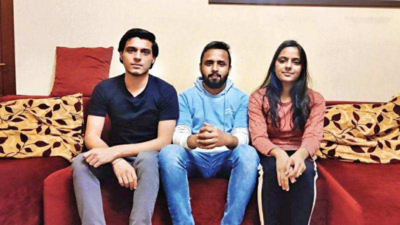
(From left) Rahul Dhankar, Naveen Shukla and Muskan Dabas in their flat in Ukraine

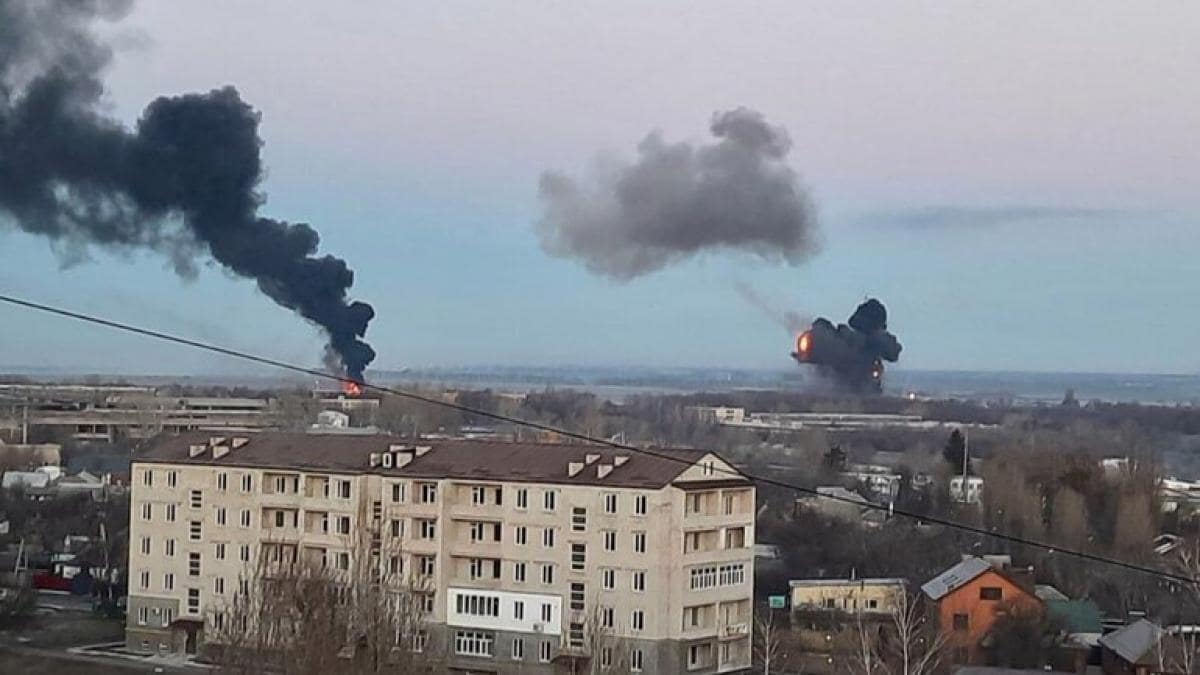
Shreya Singh, a medical student at Bogomolets National Medical University in Kyiv, woke up Thursday to the sound of explosions. “An orange haze hung over the city. We later heard the news Russia had destroyed Ukraine

‘s airbases. We are panicking as I had booked a flight to India for March 2, but I think it will be cancelled. We are waiting for updates on evacuation from the Indian embassy,” Singh, who is from Lucknow, told Priyangi Agarwal over phone.

Another medical student, Gargi Gupta, said, “We can hear the sound of military aircraft. We have been advised if an 11-minute-long siren is sounded, we should run for the bunkers (bomb shelters)”.

Most of the buildings, including student hostels, the subway and underground metro stations, in Ukraine have bunkers. “We are packing necessary items and documents so that we can leave immediately when the evacuation process begins,” said Gargi, a third-year medical student from Kanpur. 

Her friend, Mohammand Shafiuddin, said he had never imagined that such a situation could arise. A third-year student of Bogomolets National Medical University, Shafiuddin, who is from Hyderabad, stays with 11 friends at a rented house. “As most of my housemates are already in India, I had asked some other friends to stay with me as we are in a state of panic. Our landlord has provided basic facilities like water at the bunkers below our house,” he said. Most of the supermarkets in the city have run out of stocks, said Shafiuddin, and he, along with his friends, is planning to go to the outskirts to purchase groceries. Though he had booked a flight to India for March 12, his flight has been cancelled.

For the Indian medical students stuck in Ukraine, it’s a double whammy. Their studies have been disrupted and now they are worried about their exit route. Arvind Gehlawat of Rohtak, a second-year student at Kharkiv National Medical University, said, “From Thursday morning to noon, we have heard the sound of five explosions and we feel we are at risk. Our classes have been cancelled till Monday and we are confined to our hostel as we have been asked to go out of hostel only if it is necessary.”

Requesting the Indian government to ensure their safe evacuation soon, Sukas Pahal, who is from Panipat and studies in the same university, said, “The situation is tense and our scared parents are calling us repeatedly. I tried to convert Indian rupees to the Ukrainian currency, hryvnia, but it seems that the facility has been stopped.”

A third-year student at Bogomolets National Medical University, Rahul Dhankhar, who lives in a flat with his friends at Kyiv, is regretting his decision of not returning to India earlier. The student from Rohtak says he that thought the situation will get normalised. “We have now been told to make arrangements for ready-to-eat food for a week. There is a long queue outside ATMs and the supermarkets are flooded with people,” he said.

Some students who reached the Boryspil International Airport on Thursday were evacuated after Ukrainian authorities closed the airspace. A student from Gujarat, Vishwa Mehta, a first-year MBBS student at Bukovinian State Medical University, said, “A group of eight students reached the airport around midnight as we had a flight for India around 9.15 am Ukrainian time. However, at 4.30-5 am, we heard an explosion and the airport authorities vacated the entire airport. We were taken out to a safe place in a bus in Kyiv. Our university is around 580 kms from there, and hence, we are now going to the Indian Embassy on the advice of our seniors,” she told TOI on Thursday morning.

The uncertainty is unnerving for Gorakhpur’s Naveen Shukla. “We had no idea that bombing would happen so soon. We don’t know what will happen in the next few hours,” he said

Source Toi

Great Women Who Fought For Our Freedom

The road to freedom was a lengthy and messy affair for India. The number of people who fought for our country’s independence from the British Raj is countless. We celebrate the efforts and sacrifices made by the most prominent of them. Here are 7 of some of the great women who stood their ground against the British and fought for india’s independence:

Rani Velu Nachiyar

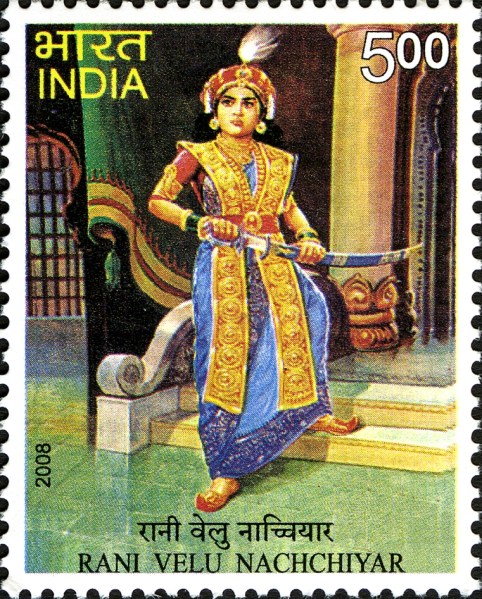
Rani Velu Nachiyar was the first queen in India to fight against the East India Company. She was the queen of the Sivaganga estate. Her husband was killed by British forces on 25 June 1772 which forced her to become a fugitive. After 8 years of planning and help from many feudal lords, she fought against the British and reclaimed her husband’s kingdom, and proceeded to rule it for 10 more years. The people of Tamil Nadu call her  Veeramangai (brave woman) in respect. The Indian Government released a commemorative postage stamp in her name in 2008.

Rani Lakshmibai

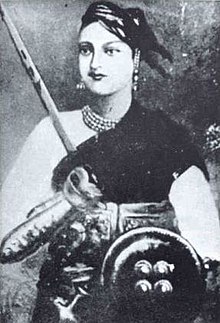
Rani Lakshmibai is well-known among the young and old in India for her brave fight against the British who sieged her kingdom. She was named Manikarnika and took up the name Lakshmibai after her marriage to the Maharaja of Jhansi, Gangadhar Rao Newalker in May 1842. Rani of Jhansi was a leading figure in the Rebellion against British Raj in 1857. A proficient horse-rider and fencer, she fought in the battle on horseback, with her adopted son tied to her back. She fought valiantly, resisting the British for 7 days with her small army and until her last breath.

Begum Hazrat Mahal

Begum Hazrat Mahal was another important character in the Indian Rebellion of 1857. After her husband, Nawab of Awadh Wajid Ali Shah was exiled to Calcutta by the British and the Indian Rebellion began, her army of supporters rebelled against the British Forces under the leadership of Raja Jalal Singh and seized control of Lucknow. She became the regent of Awadh from 1857-1858, taking power as the guardian of her minor son, whom she had declared as the ruler of Awadh. Later, she was forced to retreat and found asylum in Nepal, where she died in 1979.

Madam Bhikaji Cama

Born in a Parsi Zoroastrian family, Madam Bhikaji Cama was an important figure in the Indian freedom struggle. Living in Paris, she co-founded the Paris Indian Society in 1905. She wrote, published, and distributed revolutionary literature for the Indian Independence movement in Netherlands and Switzerland. She presented the “Indian Flag of Independence” at the second Socialist Congress at Stuttgart, Germany on 22 August 1907, in her appeal for human rights, equality, and autonomy from Great Britain. This flag which was co-designed by Cama and Vinayak Damodar Savarkar would serve as the template from which the current national flag was designed.

Umabai Kundapur

Umabai Kundapur was a teacher and fearless political activist from Karnataka. She led the “Tilak Kanya Shala”, a school for girls started by her father-in-law Ananda Rao. She took part in protests and campaigns against the British and founded “Bhagini Samaj”, an NGO for women. She also led the women’s wing of the Hindustani Seva Dal and encouraged girls and women across the country to join the freedom movement. She provided a safe house for freedom fighters from the British. A selfless personality, she rejected several honors and awards given to her, living her life silently after independence.

Kamaladevi Chattopadhyay

Kamaladevi Chattopadhyay was a freedom activist who was a part of the seven-member lead team in the Salt Satyagraha. She was a social reformer who is most known for her efforts in encouraging the growth of Indian handicrafts, handlooms, and theatre in independent India. She was the first woman in India to contest in elections in the Madras constituency, even though she lost the elections. Post-independence, she set up the National School of Drama and also headed the Sangeet Nataka Akademi. She has been awarded both the Padma Bhushan (1955) and the Padma Vibhushan (1987) as well as the Ramon Magsaysay Award (1966).

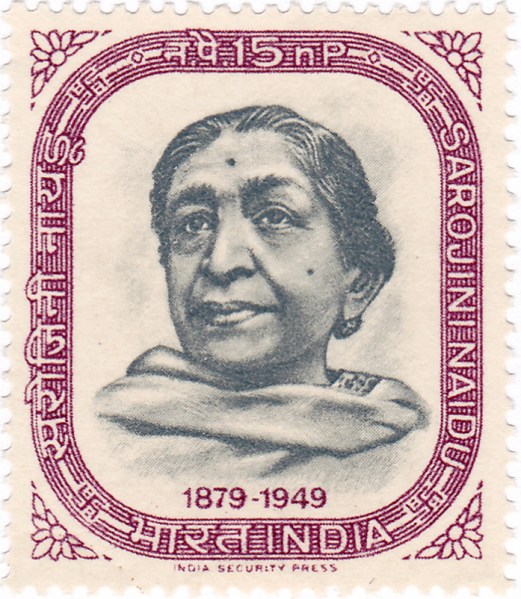
Sarojini Naidu

Sarojini Naidu was known as “the nightingale of India”, a nickname coined by Mahatma Gandhi for her work in poetry. She was an important political activist who took part in the Indian Nationalist Movement. Having close ties with personalities like Rabindranath Tagore, Mahatma Gandhi, and Gopal Krishna Gokhale, she participated in both the satyagraha movement and the Non-cooperation movement. She was appointed the President of the Indian National Congress in 1925 and later became the first woman to hold the office of Governor in the Union of India, as the Governor of the United Provinces in 1947.

Can Ozone layer be repaired?

Imagine that one day our Ozone layer was disappeared. What will happen? How long can we survive without it?  The Ozone layer is a region of Earth’s atmosphere that contains a high concentration of Ozone (O3). Ozone is a highly reactive gas composed of three oxygen atoms. It is found in the lower portion of Earth’s atmosphere. It absorbs 97 to 99 percent of the Sun’s ultraviolet rays. Direct exposure to UV rays can cause serious skin problems including sun burn, skin cancer, premature ageing of the skin, solar elastosis. It can also cause eye problems and can ruin our immune system.

  The depletion of ozone layer was first observed by a Dutch chemist Paul crutzen. He described the Ozone depletion by demonstrating the reaction of nitrogen oxide with oxygen atoms which slowing the creation of Ozone (O3). Later in 1974, American chemists Mario Molina and F. Sherwood Rowland observed that chlorofluorocarbon (CFC) molecules emitted by man-made machines like refrigerators, air conditioners and airplanes could be the major source of chlorine in the atmosphere. One chorine atom can destroy 100,000 ozone molecules. Not all chlorine molecules contribute to ozone layer depletion; chlorine from swimming pool, sea salt, industrial plants, and volcanoes does not reach the stratosphere. The ozone hole in Antarctica is one of the largest and deepest depletion which was discovered by the British scientists. This became worldwide headlines after that. According to NASA scientist Paul Newman, if this depletion continues in this rate our ozone layer can be likely disappeared in 2065. If that happens UV rays from sun directly reach earth and cause severe health issues, Humans can last 3 months and plants may die in 2 weeks because of heavy UV radiation. Thus Earth will become inhabitable.

 Fortunately in 1987, Montreal protocol was made that bans chlorofluorocarbon and other chemicals that cause ozone depletion. Surprisingly it works, researches made in 2018tells that the ozone layer is repairing itself at a rate of 1% to 3% per decade since 2000. Still it will take at least 50 years for complete recovery. The greenhouse effect allows the short wave radiation of sunlight to pass through the atmosphere to earth’s surface but makes it difficult for heat in the form of long wave radiation to escape. This effect blankets the earth and keeps our planet at a reasonable temperature to support life. Earth radiated energy, of which about 90 percent is absorbed by atmospheric gases like water vapor, carbon dioxide, ozone, methane, nitrous oxide, and others. Absorbed energy is radiated back to the surface and warms earth’s lower atmosphere.

The gases have come to be called greenhouse gases because they hold in light and heat, just as a greenhouse does for the sake of the plants inside. Greenhouse gases are essential to life, not only at an appropriate balance point. These gases increased during the 20t century due to industrial activity and fossil fuel emissions. For example, the concentration of carbon dioxide I the atmosphere have recently been growing by about 1.4 percent annually. This increase in greenhouse gases is one of the contributors to be observed patterns of global warming. On September 16thworld ozone day, we can celebrate our success. But we must all push to keep hold of these gains, in particular by remaining vigilant and tackling any illegal sources of ozone depleting substances as they arise, says UN ozonesecretariat. So without the Montreal protocol, life on earth could be a question mark, so keep working hard. “OZONE FOR LIFE”.

The History of Electric cars – Tesla cars.

In 1834, Robert Anderson of Scotland created the first electric car carriage. The following year, a small electric car was built by the team of professor Stratingh of Groningen, Holland and his assistant, Christopher Becker. More practical electric vehicles were brought onto the road by both American Thomas davenport and Scotsman Robert Davidson in 1842. Both of these inventors introduced non rechargeable electric cells in the electric car. The Parisian engineer Charles Jentaud fitted a carriage with an electric motor in 1881. William Edward Ayrton and John Perry, professors at the London’s city and guilds institute, began road trails with an electrical tricycle in 1882; Three years later a battery-driven electric cab serviced Brighton.

Around 1900, internal combustion engines were only one of three competing technologies for propelling cars. Steam engines were used, while electric vehicles were clean, quiet, and did not smell. In the United States, electric cabs dominated in major cities for several years. The electric vehicle did not fail because of the limited range of batteries or their weight. Historian Michel Schiffer and others maintain, rather, that failed business strategies were more important. Thus, most moor cars in the twentieth century relied on internal combustion, except for niche applications such as urban deliveries. At the end of the century, after several efforts from small manufactures, general motors’ made available on all electric vehicle called EV1 from 1996 to 2003. In the late 1990s, Toyota and Honda introduced hybrid vehicles combining internal combustion engines and batteries.

Entrepreneur Elon Musk is the man behind many modern innovations. It includes the digital payment service PayPal, the independent space travel company SpaceX, and the electric car company tesla motors. Tesla moors is named after Nikola Tesla, a Serbian American inventor who contributed to the development f alternating current electricity. In 2003 two Silicon Valley engineers, Martin Eberhard and Marc Tarpenning sold their eBook business for 187 million dollars and started Tesla to build a greener car. Elon musk joined as an early investor leading the series finance and taking on several other roles as well. Tesla’s plan was simple but potentially genius. They focused on lithium-ion batteries which they expected to get cheaper and more powerful for many years. They planned to start their journey with a high margin, high performance sports car. Tesla also planned to integrate energy generation and storage in the home and develop other emerging technologies like autonomous vehicles.

With this plan set, the company was ready to build a high performance low volume sports car, the roadster. Finally in 2008 Tesla motors released its first car, the completely electric roadster. In 2008, martin and marc left the company, and eventually Elon Musk took over as CEO. He made drastic changes, raising 40 million of debt financing and borrowed 465 million from the US government. In 2012 tesla started focusing on two new cars, model S and model X. beginning in 2012, tesla built stations called supercharges in the United States and Europe, designed for charging batteries quickly and at no extra cost to tesla owners. These two models were poised for success but the high cost of lithium ion batteries made it a luxury item. To compensate this, in 2013, tesla began building large factories called Gigafactories to produce lithium ion batteries and cars n large scale. It made tesla cars ultimately cheaper than gas powered vehicles. Then tesla gave autopilot system for its model S which gives semi autonomous capacities. By the end of 2017 tesla passed ford in market value. Tesla released another crossover he model Y, in 2020. The model Y was smaller and less expensive than the model X and shared many parts with the model 3. Tesla announced several models to be released in the future, including a second version of the Roadster, a Semi trailer truck, a Pick-up truck and the Cybertruck.


How deadly are Hydrogen bombs?

At 8:15 on the morning of the 6th august 1945, all people saw was a blinding light followed by complete darkness and destruction. It was the most powerful weapon ever created by mankind. It unleashed energy and radiation that killed a hundred and forty thousand people in the industrial city of Hiroshima, Japan. Today we have thermonuclear weapons, also called as the hydrogen bomb. Edward Teller, a Hungarian physicist, worked on the Manhattan project to produce the first atomic bomb based uranium fission, teller had long been interested in a hydrogen fusion bomb, but secrecy and the lack of access to computers contributed to slow progress. Stanislaw Ulam, a polish mathematician realized that a fission bomb could be used as a trigger for a fusion reaction. It is believed that teller seized on this for what became, in 1951, the “Teller-Ulam” design. Most sources agree that the H-bomb works in a series of stages, occurring in microseconds, one after the other. A narrow metal case houses two nuclear devices separated by polystyrene foam. One is ball shaped, the other is cylindrical. The ball is essentially a standard atomic fission bomb. When this is detonated, high energy radiation rushes out ahead of the blast.

How a hydrogen bomb works?

The first hydrogen bomb released the energy equivalent of 10 million tons of TNT. While the atomic bomb works on the principle of releasing energy through splitting of atoms called fission, a hydrogen bomb works by fusion of atoms together and it produce more energy than the atom bomb. Fusion is more powerful than fission. It is the same process that powers our sun. And when fission is combined with fusion in hydrogen, it creates energy orders of magnitude higher than fission alone which makes the hydrogen bomb hundreds to thousands of times more powerful than atomic bombs. The fusion portion of the bomb creates energy by combining two isotopes of hydrogen called deuterium and tritium to create helium. Unlike a natural hydrogen atom that is made of one electron orbiting around one proton, these isotopes have extra neutrons in the nuclei. A large amount of energy is released when these two isotopes fuse together to form helium, because a helium atom has much than these two isotopes combined. This excess energy is released. One of the main problems with creating the hydrogen bomb was obtaining the tritium. Scientists found that they can generate this inside the hydrogen bomb with a compound combining lithium and deuterium.

Scientist chose hydrogen for fusion, because it has only one proton and thus would have less electrical charge than atoms with multiple protons in their nuclei. It is possible to combine nuclei when the temperature is increased. Temperatures needed are astronomically higher than ever that at the center of our sun – 100 million degree Celsius. The center of the sun is 15 million degrees.  At this temperature the isotopes become a form of matter called plasma. Now the electrons orbiting are stripped away from the nucleus. At this temperature the nuclei combined with each other and form a helium nucleus and a free neutron. But how is a temperature of 100 million degrees achieved? This is where the fission or atomic bomb is inside the hydrogen bomb enclosures comes into play. This fission provides the energy needed to heat up the fusion reaction. A hydrogen bomb is actually three bombs in one. It contains an ordinary chemical bomb, a fission bomb and the fusion bomb. The chemical bomb initiates the fission bomb, which initiates the fusion bomb. All these events happens in only about 600 billionths of a second, 550 billionths of a second for the fission bomb implosion, and 50 billionths of a second for the fusion bomb. The result is an immense explosion with a 10 million ton yield, 700 times more powerful than an atom bomb. Only six countries have such bombs, china, France, India, Russia, the United Kingdom, and the United States. The world now has over 10,000 such bombs capable of easily destroying every single person on earth many times over.

“I don’t know what weapons countries might use to fight world war III, but wars after that will be fought with sticks and stones”. – Albert Einstein

Russia attacks Ukraine: Is this World War III?

Amid threats of the Russian invasion, netizens took to Twitter to share their fears that the Russia-Ukraine crisis might trigger a World War 3 like situation.

Russia-Ukraine war: Smoke rises in Kharkiv, the northeastern city of Ukraine (Twitter/@ahmermkhan)

Russia’s declaration of war on Ukraine has prompted outrage from across the world with nations and people alike condemning President Vladimir Putin’s act. 

While he has claimed that it’s a military action in Ukraine, explosions could be heard soon after in the capital Kyiv and other parts of the country. Putin also called on Ukrainian service members to “lay down their arms and go home”, adding that the special military action was meant for “demilitarisation and denazification” of Ukraine. 

As his statement comes amid Ukraine facing threats of the Russian invasion, netizens also took to Twitter to share their fears that the Russia-Ukraine crisis might trigger a World War 3 like situation.     While several shared a serious concern of Russia’s attack on Ukraine, others posted funny memes, trying to make light of the ensuing situation. null

The Russia-Ukraine crisis 

Russia declared war on Ukraine on Thursday, February 24 with Russian President Vladimir Putin calling it a military operation.

Putin has also warned other nations not to interfere with the Russian action as it would result in “consequences they have never seen”. Soon after his announcement, big explosions were witnessed in Ukraine’s Kyiv, Kharkiv and other regions.

Later, air sirens also went off in Kyiv, indicating that the capital is under attack. Meanwhile, Ukraine has closed its air space for civilian flights due to a “high risk” to safety amid Russia’s declaration of war on the country. Besides, The United Nations Security Council held an emergency meeting at the request of Ukraine on Wednesday night. 

On February 21, Russia recognised the independence of two separatist regions in eastern Ukraine after President Vladimir Putin signed decrees to recognise Ukraine’s regions of “Luhansk and Donetsk People’s Republics” as “independent”.  

The move escalated tensions in the region, heightening fears of Russia’s invasion of Ukraine. Putin also ordered Russian soldiers into eastern Ukraine in what the Kremlin termed a “peacekeeping” mission in the Moscow-backed regions.

Source: Google

Mental Health in India

Over the last two years in India, some of the most significant changes in thought and opinion, both positive and negative, were seen on the issue of mental health. Mental health refers to a person’s psychological, emotional, and social well-being. As individuals, we tend to be more focused on our physical well-being. But it is important to maintain a healthy body and a healthy mind as well.

When the COVID-19 pandemic hit the world, there was fear, panic, and a lot of confusion. People’s mental health took a heavy toll. The situation in India was not different either. According to a study by Lancet in 2020, there was an increase of 35% in the number of anxiety and depression cases reported in the country. Covid-19 patients often suffer from depression, anxiety, and post-traumatic stress related to the disease. Front-line workers and people in the healthcare system also face issues of stress and insomnia and may face a lot of stigma from their communities. The situation has obviously relaxed these days, but the lockdown days were definitely a difficult period for everyone. The general population also suffered from issues such as stress, anxiety, depression, and loneliness. Spending time in isolation or quarantine led to increased concerns regarding suicidal thoughts and suicidal ideation, particularly among the youth. There was increased alcohol consumption and drug use, even as many cases of people suffering from severe withdrawal symptoms were reported due to the sudden unavailability of alcohol and other addictive substances during the lockdown.

While there has been a lot of distress, the lockdown has been beneficial for a fraction of people too. For some, it gave them the opportunity to spend previously unavailable time at home with their family, with work and studies going online.

In India, mental illness has long had a perceived sense of judgment attached to it. Mental disorders are usually not considered a real problem that requires proper medical care and treatment. There is a lot of stigma regarding it in our society. While timely diagnosis, professional help, and therapy can be very helpful for patients with mental illnesses, many are not usually ready to seek the required help. They feel a sense of shame and embarrassment in having to seek medical help. Lack of awareness and education also makes it difficult for people to properly express their emotional distress in such cases. Many are not aware of disorders like PTSD, behavioral and eating disorders. Mental health services may also not be easily available or affordable for everyone. There is a major portion of the population whose mental issues go untreated.

Regardless, the pandemic period has evidently brought a change in the mentality of people regarding this topic. With more people talking openly about their mental health struggles, the conversation around this topic has become more mainstream. Many now understand the importance of opening up and seeking help for their mental issues. They also understand the Importance of supporting those who require help. In a study conducted by LiveLoveLaugh in 2020, 92% of those surveyed said that they would seek treatment and support those who seek treatment for mental illness. This is a definite increase from the 54% who were of this opinion in the same survey conducted in 2018.

The central and state governments have also done work in increasing the general awareness about mental health and improving the country’s mental health services. The Government of India has initiated two major programs to tackle this problem. The National Mental Health Program (NMHP) was launched by the Government in 1982 with the following objectives:

  • To ensure the availability and accessibility of minimum mental healthcare for all in the foreseeable future, particularly to the most vulnerable and underprivileged sections of the population
  • To encourage the application of mental health knowledge in general healthcare and in social development
  • To promote community participation in the mental health service development and to stimulate efforts towards self-help in the community.

Under NMPH, the District Mental Health Program (DMHP) was launched in 1996 which also concentrated on improving public awareness, providing training to professionals, and ensuring early detection and treatment of mental illnesses.

During the lockdown period, the three central mental health institutions- National Institute of Mental Health and Neuro-Sciences (NIMHANS), Central Institute of Psychiatry (CIP), and Lokopriya Gopinath Bordoloi Regional Institute of Mental Health (LGBRIMH), under the direction of Central Ministry of Health and Family Welfare, started a national helpline with the aim of supporting people with mental health concerns that arose out of the COVID-19 pandemic.

It is essential that such efforts and meaningful conversations regarding the topic of mental health take place in our society. Everyone should be educated and made aware of such issues, including children. They need to accept that mental health issues are normal. The important thing is to take action and reach out for professional help. A person seeking help for their mental health issues is not inferior or weird, and they require all the support they can get.

Why we need Space exploration? It it a waste of money?

Poverty still rising all over the world, COVID-19 pandemic made it even worse. About 1.89 billion people, or nearly 36% of the world’s population, lived in extreme poverty. Nearly half the population in developing countries lived on less than $1.25 a day. Why should we spend money on space exploration when we already have so many problems here on Earth? Is it really that important? It’s like What if our ancestors thought that it would be a waste of time to figure out agriculture while we can do hunting? Or why should we spend so much time on exploring new lands while we have so many problems in our land? Each year, space exploration contributes to a lot of innovations on earth. It gave answers to many fundamental questions about our existence, and a lot of questions there to be answered if only we could increase our investment on space exploration.

Benefits of space exploration

    Improves our day to day life

       Since 1969, Neil Armstrong became the first human to ever set foot on moon, our interest in science and technology has improved a lot. In 22nd February 1978, US space agency launched the first satellite for its program of global positioning system (GPS). Currently there are 31 global positioning system (GPS) satellites orbiting the earth.Space exploration helped us to create many inventions like television, camera phones, internet, laptops, LED’s, wireless gadgets, purifying system of water and many more that we are using in our day to day life. There are nearly 3,372 active satellites providing information on navigation, business & finance, weather, climate and environmental monitoring, communication and safety.

   Improving health care

       The international space station plays a vital role in health and medical advancements. The Astronauts who works on the ISS able to do experiments that aren’t possible on earth due to the difference in the gravity. The project of Exomedicine – the study of medicine and microgravity, gravity has an effect on a molecular level so working in an environment where it can be eliminated from the equation allows discoveries that would otherwise be impossible. Medical advancements due to space exploration include,

  • Diagnosis, treatment, and prevention of cardiovascular diseases
  • Treatment of chronic metabolic disorders
  • Better understanding of osteoporosis
  • Improvements in Breast cancer detection
  • Programmable pacemakers
  • Laser angioplasty
  • NASA’s device with Space technology for Asthma
  • ISS plays vital role in vaccine development
  • Early detection of immune changes prevents shingles
  • Development of MRIs and CT or CAT Scans
  • And invention of ear thermometers.

Need for space colonization

       Overpopulation is one of the major crises in our planet. Currently we have 7.8 billion people alive on earth. Experts predict that there will be 9.7 billion people by 2050 and 11 billion by 2100, our earth can carry only 9 billion to 12 billion people with the limited food and freshwater resources. That means we have to find an exoplanet with suitable conditions soon. We already went to moon 6 times, we already sent a rover to Mars. Robotic missions are cost efficient, but if one is considering the future of human race we have to go there ourselves. Elon Musk announced that SpaceX is going to send people to Mars I 2022. NASA planned to make a colony on Mars by 2030. These missions are not something we need at this moment. But it may play an important role on our future. Proxima Centauri b is an exoplanet which is 4.24 light years away from us. With our current technology, it is impossible to reach it in our lifetime. But we should make it as an aim for interstellar travel over the next 200 to 500 years. Stephen hawking said that the human race has existed as a separate species for about 2 million years. Civilization began about 10,000 years ago, and the rate of development has been steadily increasing. If the human race is to continue for another million years, we will have to boldly go where no one has gone before.

The day we stop exploring is the day we commit ourselves to live in a stagnant world, devoid of curiosity, empty of dreams. –Neil deGrasse Tyson

How new media act as a objective information provider:-

I totally agree with the statement that media act as a objective information provider as in the age of technology it’s very easy to have a connection with the world and that is possible only with the help of media that in the busy life of people media act as a informer it’s very easy to read news articles or any sensation going on with the help of our phones laptops newspaper etc The concept of media has reached to its new sensation there are different forms of media available now a days which is very easy access for example. 1.Facebook- Facebook is world’s largest social media network more than 1.55 billion people are monthly active users of Facebook. It helps you to exchange messages as well as update your photos and profile including updates of latest news and information and different advertisement of the brand pages are also included in this tool. 2.Blogging- These platforms help you how to make your writing a voice for the nation where you can discuss your ideas or show your opinion in favor or against of any specific topics for discussion. 3.Twitter- It is a platform which allows blogging and to stay connected with different updates of the world 4.Instagram- One of the famous app of this generation has to be Instagram which allows you to update your pictures with filters and frames as well as share your ideas for different social networking sites and issues in the world. 5.YouTube- It allows you to put creative content on the media platforms with a significant message which device helps people to understand things more clearly with the help of visual aids, characters and more added to it. Media acts as a catalyst for our democratic society and helps in development as it is said to be the “FOURTH PILLAR OF COUNTRY”, helping to make public participation meaningful. If media is honest and committed in its job, democracy is bound to function more efficiently. On the topic if media is biased, corrupt and favours only a particular party or few individuals, it can prove to be very dangerous for the smooth functioning of democracy. Media is one of the part and parcels of everyone’s life it helps people to get updated with the things going around the world. There are a lot of examples where media act as an information provider Media’s role during election:- Media access and covers elections for judging whether elections are fair. During election period media increasingly Practises a combination of statistical analysis and the techniques of media studies to measure media’s roles in an election. Media ensures democratic electoral processes like: 1. Media as transparency. 2. Media as public educator. 3. Media as open firm for debate and discussion/ public voice. It acts an intermediate between government and people which makes them aware about each other. It is one of the best ways to spread awareness on any political views ,issues and problems and helps the public in exercising their rights. It helps in exercising the freedom of speech. It covers the protest for different movements to answer the right and wrong like “BETI BACHAO BETI PADHAO” , `AATMNIRBHAR BHART’ ‘ Let’s talk about the second example India act as a information provider media’s role during covid-19:- When lockdown was imposed suddenly in the country , it created a havoc among the wage workers who were living far away from their home as they had to travel long miles walking as no transportation Facilities were available because of the lockdown. Here, media played a crucial role in covering the painful scenario of these wage workers as a result of which many people came forward to help these needy people reach their homes safely. But it is not true that always media acts as an information provider sometime media goes bias with their opinion which is the problem we were facing during the hathras case which I have mentioned below:- Recently, there was a case from Hathras, Uttar Pradesh where a teenager girl was raped there was no such high coverage for this news . Here, media acted ignorant and they were more distracted Towards the SSR case i.e. ”news for sale or news for TRP rather than news for awareness or news for justice”. But living in the age of internet media’s toil was taken by social media where people By their posts and tweets raised their voices for justice. The disadvantages of the media include a risk of inaccurate reporting and a loss of privacy. Sometime, in a rush to be the first to break a story, the media puts out incorrect or inaccurate information. Media is acting biased and ignorant whenever there is a coverage against the government. Nowadays, truth is overshadowed by the TRP of the news channels. Media are now more focused towards the news for sale than news for awareness. There are various positive feature of media we develop lots of ideas and knowledge it benefits us in a lot of waves with the magnification source of education in just seconds. It made communication easier distance are not a limitation now with the help of this it makes interaction very ease compared to other platforms. Another in advantage that it provides a platform for young aspiring artists to showcase their skills and talents. It provides possibilities of employment Serves Company who want to promote their trademarks. It is known as the hub of information; you can get all information throughout the world with just a snap. Having such a huge advantage social media has also lead to one of the most dangerous element of the society the use of social media control the whole aspect of your life it makes you isolated drives children as a victim of social anxiety the addiction of social media is very common in youth they cross any extremities to be recognized in these digital platforms they follow all the hypes and trends just to make them self-fit in the media world. Fake news disturbs the mind of the civilians people get obsessed with the media tools and become the victim of this hy The sensation of latest new trend of mass communication has both loss and gain it helps to create good knowledge skills but at the same time are dangerous for the youth to follow any hype to be fit it is easiest way of communication but one of the largest platforms to spread rumors and fake news. Things come down to, it is your choice to make it work as the benefited form of hub of knowledge or to get wrapped in the dark side of this world. As an informer it should supply information in true and unbiased form and let the public choose, what may be right in their interest. Media makes us aware of various social, political and economical activity happening around the world. It plays a crucial role in shaping a healthy democracy. It is like a mirror which shows us or strive to show us the bare truth and harsh realities. It is the backbone of democracy. No one can become perfect but the media can rise upon the aspirations of the people for which it is primarily meant.

SECRETS TO SELF MOTIVATION DURING COVID

Self motivation is the ability to drive oneself to take initiative and action to pursue goals and complete tasks. It’s an inner drive to take action — to create and to achieve. It’s what pushes a person to keep going on and pursue tasks, especially those you’re pursuing because you want to, not because someone told you to.

When reaching for a big goal, self-motivation plays a key role. But making a change in your life requires persistence, and many of us find it difficult to stay motivated over time.When we talk about self-motivation, we are going beyond basic motives. What we really mean is the ability to follow through ,on making a positive change in life — without giving up. Self-motivation requires that you believe in yourself, stay inspired, and keep going despite setbacks. In other words, we are talking about grit. 

Photo by Madison Inouye on Pexels.com

With the onstart of covid, also emerged lack of motivation. My quarantined self can rightly describe the experience of quarantine being like ” a monotonous vacation”and the whole self-isolation process comes with a lot of the same risks and challenges. It is easy to let go of usual routines of self-care, such as having a schedule, showering, dressing well and eating structured meals at regular times. While not all these patterns are risk factors for depression, they may affect your motivation and energy levels. After wiling away a considerable amount of precious time that most of us were always falling short of once can also become a factor in reducing one’s motivation in life in general.

Similarly, sleep patterns can become dysregulated, with either excess sleep or sleeping out of sync with the usual daily routine – going to sleep early morning and waking around lunch or later

CORONAVIRUS-MY STORY AND WHOM DOES THIS VIRUS AFFECT THE MOST

Three years down the lane Ashok at this time was busy getting ready to college, he closed the doors dusted his bicycle and was about to leave but he sensed something missing thought for a while and left without further ado and while on his way he realized he left his face-mask at his room but that didn’t bother him much and he felt relieved after realizing the thing he was missing and he reached his college on time and yes who could have gone back home just for a mask and be late for his English classes. Ofcourse no one.


Today,Ashok was going to the market for purchasing his usual fruits and vegetables,he took a clothbag, closed the door ,dusted his bicycle and was about to leave when he sensed something missing, the watch as usual was on his wrist, mobile as usual in the pocket, clothbag in the handle but still something was missing.He closed the gates being absorbed in that thought but when he saw his neighbour, he left his bicycle on the road and ran into his house, opened his door, took his face-mask and kept the sanitizer in his pocket and now he felt relieved not just of the thought that clouded his mind but of his, his family and his neighbourhood being safe.

 CORONAVIRUS-WHOM DOES IT AFFECT THE MOST THE RICH OR THE POOR ?

It was Wuhan Institute of Virology from where the Virus leaked but who in this world is affected the most?
You would have heard people say that Corona doesn’t differentiate between rich and poor and Yes you have heard that right it’s both that can be prone to it.
But how can you be prone to something if you evade it, yes that’s what the uber-rich or the multi-millionaires of India did, they escaped from the harrowing situation during the Second wave of Covid. No, I would be happy that they had an option to fly to distant part of the world and save them and their bosom ones when their own people were suffocating ,were gasping with low levels of oxygen. The country saw them leaving in masks and shield who were only to return when the situation would be suitable for them through their “private jets.”They evaded so they are not at risk from this deadly mutants.

Next comes the ones who are a little less rich, the upper class and the upper middle class people who are shamefully and utter negligently crowding in the hilly areas when our country is recovering from the second wave but on the gateway to the third one. If memory is what we are blessed with, then the ones now gathered at the top seem to be devoid of it. They seek respite not in villages with poor offering help but with buddies in Hills getting a life. They are the ones that are privileged, they are the ones who saw funeral pyres on television and social media sites but they neglect the truth.

The middle class and the poor suffered the most neither could they escape from this country neither could they relax after the second wave in hill stations. They lost their jobs, returned home empty-handed to their wives and children doing with just savings.

It’s just a rhetoric to say that Virus doesn’t differentiate between rich and poor. Reality is that the rich have an option and poor ones don’t.

National stock exchange of india.

National Stock Exchange of India Limited (NSE) is the leading stock exchange of India, located in Mumbai, Maharashtra. It is under the ownership of Some leading financial institutions, Banks, and Insurance companies. NSE was established in 1992 as the first dematerialized electronic exchange in the country. NSE was the first exchange in the country to provide a modern, fully automated screen-based electronic trading system that offered easy trading facilities to investors spread across the length and breadth of the country. Vikram Limaye is Managing Director & Chief Executive Officer of NSE.National Stock ExchangeNational Stock Exchange of India (NSE).

National Stock Exchange has a total market capitalization of more than US$3 trillion, making it the world’s 9th-largest stock exchange as of May 2021. NSE’s flagship index, the NIFTY 50, a 50 stock index is used extensively by investors in India and around the world as a barometer of the Indian capital market. The NIFTY 50 index was launched in 1996 by NSE.However, Vaidyanathan (2016) estimates that only about 4% of the Indian economy / GDP is actually derived from the stock exchanges in India.

history of NSE.

National Stock Exchange was incorporated in the year 1992 to bring about transparency in the Indian equity markets. Instead of trading memberships being confined to a group of brokers, NSE ensured that anyone who was qualified, experienced, and met the minimum financial requirements was allowed to trade. In this context, NSE was ahead of its time when it separated ownership and management of the exchange under SEBI’s supervision.

NSE was set up by a group of leading Indian financial institutions at the behest of the Government of India to bring transparency to the Indian capital market. Based on the recommendations laid out by the Pherwani committee, NSE was established with a diversified shareholding comprising domestic and global investors. The key domestic investors include Life Insurance Corporation, State Bank of India, IFCI Limited, IDFC Limited and Stock Holding Corporation of India Limited. Key global investors include Gagil FDI Limited, GS Strategic Investments Limited, SAIF II SE Investments Mauritius Limited, Aranda Investments (Mauritius) Pte Limited, and PI Opportunities Fund I.

The exchange was incorporated in 1992 as a tax-paying company and was recognized as a stock exchange in 1993 under the Securities Contracts (Regulation) Act, 1956, when P. V. Narasimha Rao was the Prime Minister of India and Manmohan Singh was the Finance Minister. NSE commenced operations in the Wholesale Debt Market (WDM) segment in June 1994. The capital market (equities) segment of the NSE commenced operations in November 1994, while operations in the derivatives segment commenced in June 2000. NSE offers trading, clearing and settlement services in equity, equity derivative, debt, commodity derivatives, and currency derivatives segments. It was the first exchange in India to introduce an electronic trading facility thus connecting the investor base of the entire country. NSE has 2500 VSATs and 3000 leased lines spread over more than 2000 cities across India.

Markets of NSE.

Equity Derivatives EditThe National Stock Exchange of India Limited (NSE) commenced trading in derivatives with the launch of index futures on 12 June 2000. The futures and options segment of NSE has made a global mark. In the Futures and Options segment, trading in the NIFTY 50 Index, NIFTY IT index, NIFTY Bank Index, NIFTY Next 50 index, and single stock futures are available. Trading in Mini Nifty Futures & Options and Long term Options on NIFTY 50 are also available.[14] The average daily turnover in the F&O Segment of the Exchange during the financial year April 2013 to March 2014 stood at ₹1.52236 trillion (US$21 billion).

Equity Derivatives.

The National Stock Exchange of India Limited (NSE) commenced trading in derivatives with the launch of index futures on 12 June 2000. The futures and options segment of NSE has made a global mark. In the Futures and Options segment, trading in the NIFTY 50 Index, NIFTY IT index, NIFTY Bank Index, NIFTY Next 50 index, and single stock futures are available. Trading in Mini Nifty Futures & Options and Long term Options on NIFTY 50 are also available.[14] The average daily turnover in the F&O Segment of the Exchange during the financial year April 2013 to March 2014 stood at ₹1.52236 trillion (US$21 billion).

On 29 August 2011, National Stock Exchange launched derivative contracts on the world’s most-followed equity indices, the S&P 500 and the Dow Jones Industrial Average. NSE is the first Indian exchange to launch global indices. This is also the first time in the world that futures contracts on the S&P 500 index were introduced and listed on an exchange outside of their home country, the USA. The new contracts include futures on both the DJIA and the S&P 500 and options on the S&P 50

Interest Rate Futures.

In December 2013, exchanges in India received approval from market regulator SEBI for launching interest rate futures (IRFs) on a single GOI bond or a basket of bonds that will be cash-settled. Market participants have been in favor of the product being cash-settled and being available on a single bond. NSE will launch the NSE Bond Futures on 21 January on highly liquid 7.16 percent and 8.83 percent 10-year GOI bonds. Interest Rate Futures were introduced in India by NSE on 31 August 2009, exactly one year after the launch of Currency Futures. NSE became the first stock exchange to get approval for interest-rate futures, as recommended by the SEBI-RBI committee.

Debt Market.

On 13 May 2013, NSE launched India’s first dedicated debt platform to provide a liquid and transparent trading platform for debt-related products

The Debt segment provides an opportunity for retail investors to invest in corporate bonds on a liquid and transparent exchange platform. It also helps institutions that are holders of corporate bonds. It is an ideal platform to buy and sell at optimum prices and help Corporates to get adequate demand when issue bonds.

Financial literacy of NSE.

NSE has collaborated with several universities like Gokhale Institute of Politics & Economics (GIPE), Pune, Bharati Vidyapeeth Deemed University (BVDU), Pune, Guru Gobind Singh Indraprastha University, Delhi, the Ravenshaw University of Cuttack and Punjabi University, Patiala, among others to offer MBA and BBA courses. NSE has also provided mock market simulation software called NSE Learn to Trade (NLT) to develop investment, trading, and portfolio management skills among the students.[20] The simulation software is very similar to the software currently being used by the market professionals and helps students to learn how to trade in the markets.

NSE also conducts online examinations and awards certification, under its Certification in Financial Markets (NCFM) programs.[21] At present, certifications are available in 46 modules, covering different sectors of financial and capital markets, both at the beginner and advanced levels. The list of various modules can be found at the official site of NSE India. In addition, since August 2009, it has offered a short-term course called NSE Certified Capital Market Professional (NCCMP).[22] The NCCMP or NSE Certified Capital Market Professional is a 100-hour program for over 3–4 months, conducted at the colleges, and covers theoretical and practical training in subjects related to the capital markets. NCCMP covers subjects like equity markets, debt markets, derivatives, macroeconomics, technical analysis, and fundamental analysis. Successful candidates are awarded joint certification from NSE and the concerned.


Covid-19

Due to covid-19 period there has been a lot of differences in real work as well as virtual work. As we know that due to pandemic the style of doing work in industries affected a lot and also changed the lifestyle of the people. But pandemic is just a one part which affect the style of work if we think of the other side that is developing technologies is the other concern for the future of work. Consider Artificial Intelligence which is automating several jobs in all the sectors, especially for the low skilled labors. So due this low-wage workers will become jobless. There is a need to reskill them to keep them employed. New technologies such as blockchain, Internet of things have so much of potential to create plenty of employment opportunities. The jobs which will be there in the future are present today but the main concern is that they are not accessible for all. There is need to bridge the skills gap. Otherwise ,rich-poor inequalities will increased at a rapid rate. Future jobs will demand more skills as compared to present jobs. Future jobs will be more of technology based and it will create new job opportunities for new recruitment. Example – Cybersecurity jobs, Food deliveries etc. At present many workers are fighting towards exploitation of workers and human work culture, it is expected that the future of work will be more humane. Most of the companies will follow ethical practices such as minimum wage rule, ethical work hours etc. The future companies will be more customer-centric. Customer Happiness will be the integral to the success of the company.

The Future of work demand upskilling and reskilling of many workers .It is important to train low-skilled and unskilled people to prevent them from becoming jobless. It is expected that the future of work is going to be more humane and ethical.