PUDUCHERRY, INDIA'S FRENCH-SPEAKING CITY

Pandit Jawaharlal Nehru, the late Prime Minister of India, referred to Puducherry as “the Window of French Culture.”

Once the French’s primary headquarters in India, Puducherry is often nicknamed “The Paris of the East”. For 138 years, the French governed the Union Territory. It once had solely French as its official language. The town’s distinctiveness is intricately bound to its exquisite city planning and Franco Tamil architecture. The city is modelled after a late-eighteenth-century fortified French port town, “bastide”. This magnificent destination has incredibly beautiful geography along the seashores, coconut trees, and a diverse range of fauna and vegetation.

The former French settlements- Puducherry, Karaikal, Mache, and Yanam are all part of the Union Territory of Puducherry. The states of Tamilnadu and Kerala surround Puducherry and Karaikal, whereas Kerala and Andhra Pradesh surround Mahe and Yanam. It has many scenic places to visit like:

Paradise Beach

Paradise Beach, often known as Plage Paradiso, is located near Pondicherry town in Chunnambar. The beach fringed with golden sand, is relatively undiscovered.  a 20- to 30-minute ferry ride over the backwaters is the only way to get here. The breathtaking ferry trip from the boathouse to the beach adds to the thrills; the backwaters on the way to the beach are lush and densely forested with mangrove plants.   A plethora of birds can be seen while on the journey. Early morning, Paradise Beach is a great spot to catch a glimpse of the eastern shore’s dawn. A number of water sports facilities are also available. Visitors can also try their hand at fishing by renting fishing rods and nets.

White Town

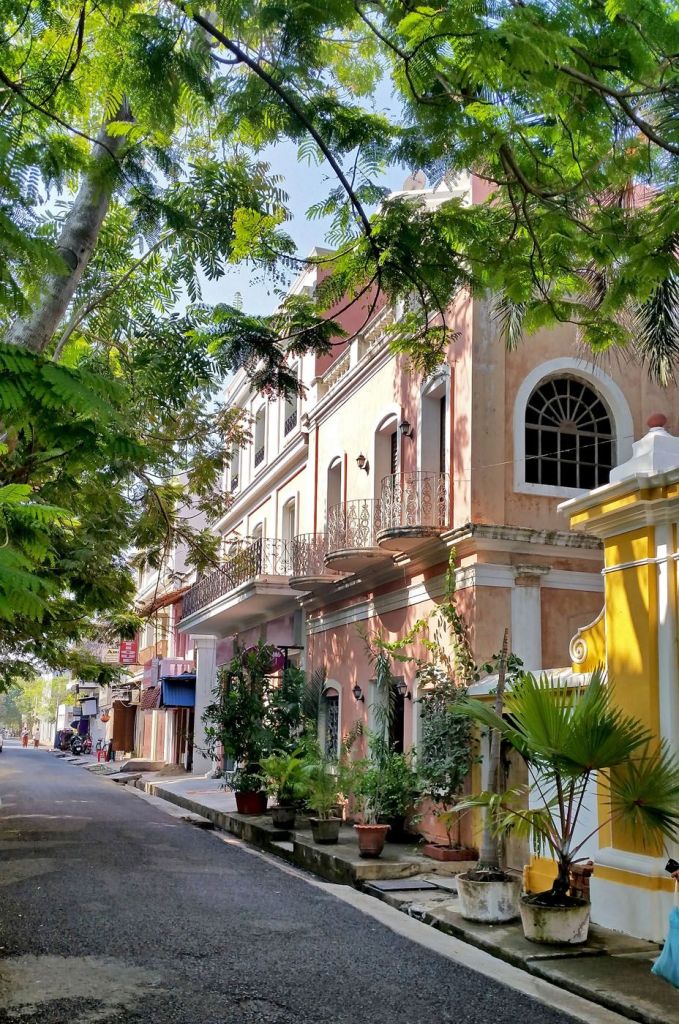
White Town, also dubbed as the French Colony of Puducherry, is a residential enclave in town with an intertwined culture of Tamils and primitive French families. The colony retains the old-world elegance, prettiness, and architecture of historic French Quarters, with cobblestone lanes and mustard yellow dwellings. The majority of them refurbished into vintage hotels, eateries, unique cafés, and art museums. The structures are typically painted in tones of pastel yellow, and the well-kept walkways are flanked with beautiful trees. White Town, known as the former French headquarters, borrows heavily from foreign culture, which is also a hallmark of the area. Furthermore, it is famed for its attractive but pricey marketplace, which is primarily comprised of boutiques, high-end labels, and stores that deal in highly customized stuff. The majority of those are still owned and operated by French nationalists.

Basilica of the Sacred Heart of Jesus

This church was built by French missionaries in 1908 and was accorded the status of Basilica in 2011. It is one of India’s 21 Basilicas and the only one in Pondicherry. The Church of the Sacred Heart of Jesus, one of Pondicherry’s most beautiful Catholic churches, is a stellar example of Gothic architecture. Biblical texts, as well as depictions of Jesus and Mother Mary, are etched in Latin on the entrance door. New Year’s Eve, Christmas Eve, and Easter Day are all lavishly celebrated in the church. The stained-glass panels of the architecture depict Christ’s life as well as the lives of the Catholic Church’s saints. The church is Pondicherry’s first basilica, the 6th in Tamil Nadu, the 20th in India, and the 50th in Asia.

Scuba Diving

Pondicherry, rich in stunning marine life, provides an unparalleled scuba diving expedition off the country’s Eastern Shore. A dive into the sea will allow you to see spectacular coral reefs as well as fascinating creatures including manta rays, kingfish, sea snakes, lionfish, butterflies, crustaceans, moray eels, and more. Whale sharks, sharks, dolphins, and turtles are all possible sightings. Pondicherry is an enticing diving destination.

Auroville Ashram

The Auroville Ashram dubbed the “Universal Town,” is an experimental township whose goal is to build a community wherein folks from all nationalities and faiths could dwell together in harmony. It was founded in 1926 by Sri Aurobindo and a disciple of Shri Aurobindo, a French Lady known as ‘Maa’ or ‘The Mother.’ The Indian government backed the initiative, and UNESCO praised it in a 1966 resolution, calling it “a project of vital importance to humanity’s future.” In 1968, the town was formally established.

The architecture of the city is as remarkable as the concept. With the famous Matrimandir in the core and gardens ringing it, the city is laid out in a circle with a radius of 1.25 kilometres. The city’s central business district, cultural corridor, peace zone, and residential zone are all located just beyond the city borders. The city is surrounded by a “green belt” that acts as a wildlife habitat, a food/timber source, and a buffer against urban development, among other things.

Child Labor

Not every work done by children ought to be named child labor that will be focused on for disposal. Children’s or alternately teenagers’ investment in work that doesn’t influence their wellbeing and self-awareness or meddle with their tutoring, is by and large viewed as being a positive thing. This incorporates exercises like aiding their folks around the home, aiding a privately-owned company or bringing in pocket cash outside school hours and during school occasions. These sorts of exercises add to children’s turn of events and to the government assistance of their families; they furnish them with abilities and experience, and help to set them up to be useful citizenry during their grown-up life.

The expression “child labor” is frequently characterized as work that denies children of their childhood, their latent capacity and their pride, and that is hurtful to physical and mental turn of events. It alludes to work that is intellectually, genuinely, socially or ethically hazardous and hurtful to children; and additionally meddles with their tutoring by: denying them of the chance to go to class; obliging them to leave school rashly; or expecting them to endeavor to consolidate school participation with unnecessarily long and substantial work.

Regardless of whether specific types of “work” can be designated “child labor” relies upon the child’s age, the sort and long periods of work played out, the conditions under which it is performed and the targets sought after by singular nations. The appropriate response differs from one country to another, just as among areas inside nations.

The most recent worldwide evaluations show that the quantity of children in child labor has ascended to 160 million around the world – an increment of 8.4 million children over the most recent four years. 63 million young ladies and 97 million young men were in child labor universally toward the start of 2020, representing very nearly 1 out of 10 of all children around the world.

This report cautions that worldwide advancement to end child labor has slowed down without precedent for a very long time. The quantity of children matured 5 to 17 years in dangerous work – characterized as work that is probably going to hurt their wellbeing, security or ethics – has ascended by 6.5 million to 79 million since 2016. In sub-Saharan Africa, populace development, outrageous destitution, and insufficient social assurance measures have prompted an extra 16.6 million children in child labor in the course of recent years.

Extra financial shocks and school terminations brought about by COVID-19 imply that children effectively in child labor might be working longer hours or under deteriorating conditions, while a lot more might be constrained into the most noticeably terrible types of child labor because of work and pay misfortunes among weak families. The report cautions that universally 9 million extra children are in danger of being driven into child labor before the finish of 2022 because of the pandemic.

Children in child labor are in danger of physical and mental damage. Child labor undermines children’s schooling, confining their rights and restricting their future chances, and prompts horrendous between generational patterns of destitution and child labor.

Who Holds the Highest Number of Olympic medal??

Olympic is one of the most prestigious game event. To secure even one Olympic is a matter of pride for sports men. Imagine how a athlete would feel , if he/ she have the highest number of Olympic medal. Michael Phelps have the privilege of knowing this feeling, with 28 medals in total.

Michael Fred Phelps born on 30th June 1985 is a former competitive swimmer of America. He holds the maximum number of medals in the history of Olympic games. In Beijing Games he won eight gold medals breaking Mark Spitz’s 1972 record of seven first place finishes at any single Olympic games. At 2004 summer Athens Olympics he won 8 medals — 6 gold and 2 bronze. At 2012 summer Olympics in London , Phelps won four gold medal and 2 silver and at Rio De Janeiro he won 5 gold medals and 1 silver. This made him the most successful athletes of the Games for fourth Olympics in row.

Phelps announced retirement after 2012 Olympics but made a come back in April 2014. In 2016 Olympics he was selected as flag bearer of United States. He announced his second retirement on August 2016 and has never participated ever since then. He is regarded as the greatest swimmer as well as athlete of the time.

Phelps began swimming at the age of 7 because of influence of his sister and to provide him outlet for his energy. He liked swimming since then. Following his retirement in 2016 , he said,”The only reason I got in the water was my mom wanted me to just learn how to swim . My sister and myself fell in love with the sport, and we decided to swim”.

Angela Merkel: A legendary personality.

Angela Merkel was born in Hamburg on July 17th, 1954. She is a German politician and serving as a Chancellor of Germany since 2005. After completing her higher education from Templin in the year 1973, studied physics at Leipzig university amd graduated in the year 1978 and was awarded a doctorate in the year 1986. Since 1990, she is an active member of the Christian democratic union of Germany (CDU). From 1991-1998 she administered as a deputy chairwoman of the CDU.

Merkel spent 35 years of her life as a quantum chemist and worked at a research institute in Soviet-controlled East Germany until the fall of the Berlin wall in 1989. This historic manifestation prompted Merkel to abandon the research field and develop an everlasting interest in politics. Merkel is the first woman and the first East German who, in the history of Germany, holds the nation highest elective office post.

She is straightforward, who doesn’t take too many risks that are the reason which makes her stand out in her long-serving political career. She never doubts her decision-making skills and believes in working quietly rather than standing in the political rallies and deliver long speeches to receive appreciation. She is a strong woman with high self-confidence and withstands death moments alone in her political career especially during the refugee crisis.

Merkel handled the refugee crisis with utter decisiveness that shaped the viewpoint of the world towards Europe and demonstrated how to act responsibly. She was viewed as “the woman who saved the dignity of Europe.”

Ectopic pregnancy

n a normal pregnancy, the fertilized egg implants and develops in the uterus. In most ectopic pregnancies, the egg settles in the fallopian tubes. This is why ectopic pregnancies are commonly called “tubal pregnancies.” The egg also can implant in the ovary, abdomen, or the cervix, so you also might hear these referred to as cervical or abdominal pregnancies.

None of these areas has as much space or nurturing tissue as a uterus for a pregnancy to develop. As the fetus grows, it will eventually burst the organ that contains it. This can cause severe bleeding and endanger the mother’s life. A classical ectopic pregnancy does not develop into a live birth.

SYMPTOMS

  • vaginal spotting
  • dizziness or fainting (caused by blood loss)
  • low blood pressure (also caused by blood loss)
  • lower back pain

TREATMENT

Treatment of an ectopic pregnancy varies, depending on how medically stable the woman is and the size and location of the pregnancy.

An early ectopic pregnancy can sometimes be treated with an injection of methotrexate, which stops the growth of the embryo.

If the pregnancy is farther along, a woman will likely need surgery to remove the abnormal pregnancy. In the past, this was a major operation, requiring a large incision across the pelvic area, and this can still be necessary in cases of emergency or extensive internal injury.

That being said there are some rare cases around the world where a mother has had an ectopic pregnancy and has safely given birth to a child, but in most cases the child has been born premature but has survived. However this is extremely rare and in case of ectopic pregnancy the best thing to do is medically terminate the foetus.

Aggressive Driving and Road Rage

For a long time, aggressive driving has been an issue on our roads, and it appears to be growing worse. Screaming, unpleasant gestures, and even violence have become commonplace on our highways, to the point where it has gained its own name: road rage. Find out what causes road rage, if you’re prone to it, and how you can help keep our roads safe by refusing to give in to it.

Photo by JESHOOTS.com on Pexels.com

Definition

After a series of shootings on many motorways throughout the city, local television station KTLA popularized the term “road rage.” The National Highway Traffic Safety Administration defines road rage as when a driver “commits moving traffic offences so as to endanger other persons or property; an assault with a motor vehicle or other dangerous weapon by the operator or passenger of one of one.

The National Highway Traffic Safety Administration distinguishes between road rage and aggressive driving, the former being a criminal offence and the latter a traffic violation, according to the NHTSA. The driver is held responsible in this definition.

Road Rage Factors

Here are some of the most typical circumstances that lead to road rage or aggressive driving behaviour.

Delays in traffic
Heavy traffic, waiting at stoplights, seeking for a parking spot, or even waiting for passengers can all contribute to a driver’s rage.

Late for a meeting
Drivers can become irritable if they are late for a meeting or appointment.

Anonymity
Drivers may feel more comfortable engaging in risky driving behavior’s such as tailgating, cutting people off, excessive honking, or making rude gestures if they believe they won’t see other drivers again.

Ignorance of others and the law
Some motorists may believe that the rules do not apply to them.

Learned or habitual conduct
Aggressive driving may be the norm for some drivers.

Forms of road rage

  • Tailgating
  • Yelling
  • Honking in anger
  • Making angry gestures
  • Trying to block another vehicle from changing lanes
  • Cutting off another vehicle on purpose
  • Getting out of the vehicle to confront another driver
  • Bumping or ramming another vehicle on purpose

How to avoid road rage

To protect yourself from aggressive drivers or if you become a victim of a road rage incident, make sure you have the right car insurance policy.

Take your time. Allow yourself plenty of time to get where you want to go; you’ll be less likely to become impatient and take unnecessary risks if you do.

Allow yourself to cool down. Take some time to relax if you’re upset.

Photo by Benjamin Suter on Pexels.com

The Diagnostic and Statistical Manual of Mental Disorders does not list road rage as a mental disorder (DSM). The behaviours commonly associated with road rage, according to an article published by the Associated Press in June 2006, can be the result of an illness known as intermittent explosive disorder, which is recognised by the DSM.

Between 2001 and 2003, polls of 9,200 adults in the United States yielded this conclusion. The National Institute of Mental Health provided funding for the surveys.

Road rage is a serious offence that may be considered a threat to public safety. However, because it is not always feasible to determine purpose by external observation, “road ragers” who are caught by police may face additional charges such as careless or reckless driving, as well as a fine.

Road ragers are potentially criminals.

Why you should never reuse the same needle.

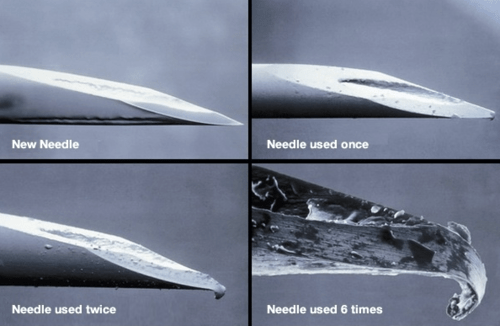
It’s common knowledge that you should never use needles more than once. For those of you that are unsure why here’s a brief overview. First of all the tip of a needle is sharp and fine, so that it goes into the skin easily when you inject. Every time you use a needle, it gets blunter and loses sharpness. The more times you use it, the blunter it gets. This makes it harder for the needle to pierce the skin, and thus more painful when you do the injection. This is not only done to avoid painful injections, but to ensure that you avoid infection by using a fresh, clean needle. This also reduces bleeding and bruising. The tip of a needle can also weaken and break off and get stuck under your skin. Most needles are designed to only be used once.

Also needles spread all sorts of diseases like Hepatitis A, Hepatitis B and so many other fatal diseases, so usage of the same needle for saving money is really not worth it.

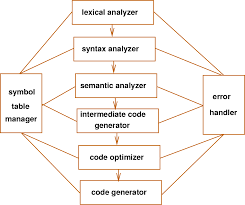
Computer Software :

🌟Software refers to a program that makes the computer to do something meaningful. It is the planned, step-by-step instructions required to turn data into information.

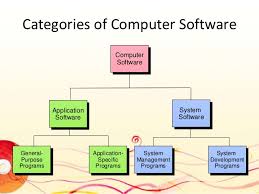
Software can be classified into two categories :
🔹️System Software
🔹️Application Software

🌟System Software consists of general programs written for a computer. These programs provide the environment to run the application programs. System software comprises programs, which interact with the hardware at a very basic level. They are the basic necessity of a computer system for its proper functionality. System software serves as the interface between hardware and the user. The operating system, compliers and utility programs are examples of system software.

🌟The most important type of system software is the operating system. An operating system is an integrated set of specialized programs that is used to manage the overall operations of a computer. It acts like an interface between the user, computer hardware and software. Every computer must have an operating system to run other programs. DOS (Disk Operating System), Unix, Linux and Windows are some of the common operating systems.

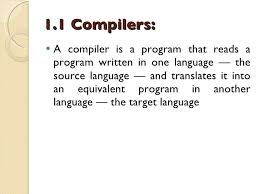
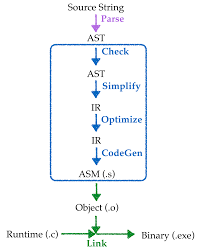
🌟The complier software translates the source program (user written program) into an object program (binary form). Specific compliers are available for computer programming languages like FORTRAN, COBOL, C, C++ etc. The utility programs support the computer for specific tasks like file copying, sorting, linking a object program, etc.

🌟An Application Software consists of programs designed to solve a user problem. It is used to accomplish specific tasks rather than just managing a computer system. Application software are inturn, controlled by system software which manages hardware devices.

🌟Some typical examples are : railway reservation system, game programs, word processing software, weather forecasting programs. Among the application software some are packaged for specific tasks. The commonly used Application software packages are word processor, spreadsheet, database management system and graphics.

🌟One of the most commonly used software package is word processing software. Anyone who has used a computer as a word processor knows that it is far more than a fancy typewriter. The great advantage of word processing over a typewriter is that you can make changes without retyping the entire document. The entire writing is transformed by this modern word processing software. This software lets you create, edit, format, store and print text and graphics. Some of the commonly used word processors are MicrosoftWord, WordStar, WordPerfect, etc.

🌟Spreadsheet software packages allows the user to manipulate numbers. Repetitive numeric calculations,use of related formulae and creation of graphics and charts are some of the basic tools. This capacity let’s business people try different combinations of numbers and obtain the results quickly. Lotus 1-2-3, Excel, etc. are some of the famous spreadsheet applications.

🌟A database management system is collection of programs that enable to store, modify and extract information from a database. A database organizes the information internally. Computerized banking system, Automated Teller Machine, Airlines and Railway reservation system etc., are some of the database applications.

The Concept Of Vicarious Liability

It is common knowledge that if a person commits a crime, he is the one who pays for it. That implies that the person responsible for specific wrong conduct will face damages, imprisonment, or punishment of any sort for the same. But is it possible that you can be held liable for the wrongdoings or mistakes of some other person?

It might seem a stupid question, but the matter of fact is that you can. This principle of Vicarious Liability is described under the Law of Torts.

In certain cases, one may be held for the act of the other if there exists a certain kind of relationship between the two persons concerned. But the act under inspection must have been done in connection with that ‘relationship’.

Common examples of such a relationship are 

  1. Liability of the principal for the tort of his agent
  2. Liability of partners of each other’s tort
  3. Liability of the master for the tort of his servant.

When an agent, in the course of performance of his duty as an agent, commits a wrongful act, the principal is the person held liable. The principal is made liable ‘vicariously’ because of the principal-agent relationship between the two. The same is the case in a master-servant relationship.

The doctrine followed in the above two conditions is based on the maxim of respondeat superior, which means ‘let the principal be liable’ and it puts the master in the same position as if he had done the act himself.

Does a natural question arise that who is a servant? Is the person in question a servant and should the master (so-called) be held liable?

A servant is a person employed by another to do work under the directions and controls of his master. As a general rule, the master is liable for the tort of his servant but not for the tort of an independent contractor.

Servant and independent contractor distinguished –  A servant is an agent who is subject to the control and supervision of his employer regarding how the work is to be done. Whereas the independent contractor is not subject to such control.

An employer is not liable for acts of an independent contractor.

Exceptions- 

The general rule that an employer is not liable for the acts of an independent contractor is subject to some exceptions. In the following cases, an employer can be made liable for the wrongs of the independent contractor.

  1. If an employer authorizes the doing of an illegal act or subsequently ratifies the same, he can be made liable for such an act. The real reason for such liability is that the employer himself is a party to the wrongful act, along with the independent contractor, and therefore, he is liable.
  2. An employer is liable for the act of an independent contractor in cases of strict liability. Also, if some hazardous work is engaged in, even then the employer is held liable.

Therefore, it is evident that one can be held liable for the actions of another. Such is the beauty of our law!

Heart attack

In one of my previous article I had talked about cardiac arrest and mentioned that it was different from heart attacks so today I will talk about heart attacks. A heart attack (also known as a myocardial infarction or MI) is the damage and death of heart muscle from the sudden blockage of a coronary artery by a blood clot. Coronary arteries are blood vessels that supply the heart muscle with blood and oxygen

SYMPTOMS

  • Pain, fullness, and/or squeezing sensation of the chest
  • Jaw pain, toothache and headache
  • Shortness of breath
  • Nausea, vomiting and/or general epigastric (upper middle abdomen) discomfort
  • Sweating
  • Heartburn and/or indigestion
  • Arm pain (more commonly the left arm, but may be either arm)
  • Upper back pain
  • General malaise (vague feeling of illness)
  • No symptoms (Approximately one quarter of all heart attacks are silent, without chest pain or new symptoms. Silent heart attacks are especially common among patients with diabetes mellitus.)

One cannot overemphasize the importance of seeking prompt medical attention in the presence of new symptoms that suggest a heart attack. Early diagnosis and treatment save lives, and delays in reaching medical assistance can be fatal.

Jobs for the Future

There are two reasons why students are interested in sustainable management studies.

Photo by Magnetme on Pexels.com

Youngsters are now facing the impact of climate change themselves. Many of them have experienced-led disasters such as floods and cyclones, more than their previous generation did.

Second, there is growing awareness on the regulatory requirement and the investor’s demand, said Jagdish Ratnani, a Professor.

Nevertheless, the fact is that many jobs of the future will require hordes of managerial talent who understand ESG. Its a great career opportunity, Aditya Shelar, a student at IIM Lucknow, thinks that business in future will think beyond numbers and they would need people who under- stand a range of issues.

The transition to electric vehicles, higher solar power adoption, green practices in real-estate as well as carbon neutral policies will all require manpower that drive these shifts.

Environment and sustainability will have to be embedded in both corporate thought and actions. Its a requirement for branding, for raising funds, and to capture young and aware consumers. Institutions will increasingly adopt that in the classroom and beyond. It was said by Gopal Sarangi of TERI Institute of Advance Studies.

Photo by Angela Roma on Pexels.com

Some firms want to evaluate if their manpower is conscious about ethical business strategies. Some firms want to evaluate if their manpower is conscious about ethical sourcing, environment reservation, SGD goals like equality at workspace, the side effects of child labour and fair wage.

All this will fuel demand for more courses in B- Schools.

Reference

http://www.intershala.com

http://www.timesofindia.com

A health professional checks blood pressure with a sphygmomanometer

Sphygmomanometer : An instrument for measuring blood pressure, particularly in arteries. The two types of sphygmomanometers are a mercury column and a gauge with a gauge with a dial face.

Sphygmomanometer, instrument for measuring blood pressure. It consists of an inflated rubber cuff, which is wrapped around the upper arm and is connected to an apparatus that records pressure, usually in terms of the height of a column of mercury or on a dial (an aneroid manometer).

An arterial blood pressure reading consists of two numbers, which typically may be recorded as x/y. The x is the systolic pressure, and y is the diastolic pressure.

Systole refers to the contraction of the ventricles of the heart, when blood is forced from the heart into the pulmonary and systemic arterial circulation, and diastole refers to the resting period, when the ventricles expand and receive another supply of blood from the atria.

At each heartbeat blood pressure is raised to the systolic level, and, between beats, it drops to the diastolic level. As the cuff is inflated with air, a stethoscope is placed against the skin at the crook of the arm.

As the air is released, the first sound heard marks the systolic pressure; as the release continues, a dribbling noise is heard. This marks the diastolic pressure, which is department on the elasticity of the arteries.

Based on long- term experience, blood pressure measurement using the mercury sphygmomanometer is regarded as the gold standard method for indirect measurement of blood pressure.

The use of the mercury sphygmomanometer has practical and technical limitations, and requires specific training.

In 1881, Von Basch created the sphygmomanometer and the first non-invasive BP measurements. However, in 1896, Scipione Riva-Rocco developed further the mercury sphygmomanometer, almost as we know it today.

HORTICULTURE

Horticulture is a branch of agriculture that deals with cultivation of fruits, vegetables and ornamental plants. Horticulture is the science and art of the development, sustainable production, marketing and use of high-value, intensively cultivated food and ornamental plants.

They are four main classes of Horticulture
✓Pomology (fruit farming)
✓Olericulture (vegetable farming)
✓Floriculture (flower farming)
✓Landscape gardening

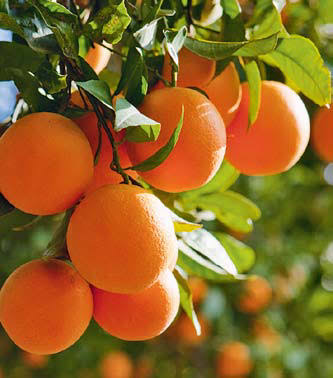
Pomology (fruit farming)

The term pomology is derived from the latin word ‘pomum’ means fruit and ‘logy’ means study. It deals with development, enhancement of fruit quality, cultivation techniques, regulation of production periods and reduction of production cost of fruits.

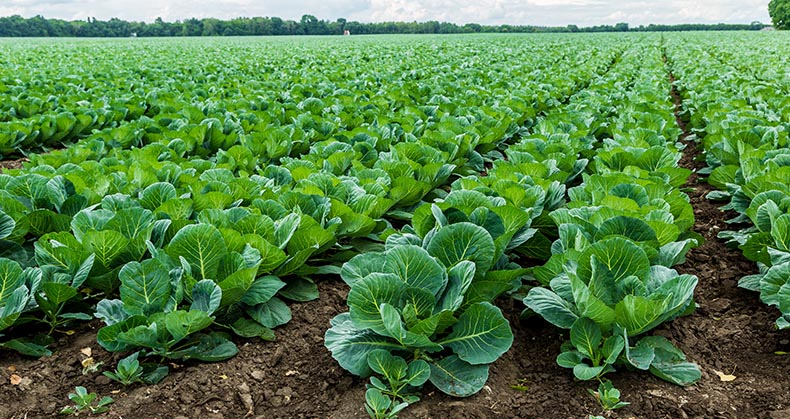
Olericulture (vegetable farming)

Olericulture is the science of growing vegetables. Vegetable farming can be classified into:
✓Kitchen or Nutrition gardening
✓Commercial gardening
✓Vegetable forcing

Kitchen gardening

Kitchen gardening is growing of vegetables in small scale at household. e.g. Beans, Cabbage, Lady’s finger, Tomato, Brinjal, Carrot, Spinach etc.

Commercial gardening

It is the production of vegetables in large scale to be sold in markets.

Vegetable forcing

It is the method of growing vegetables in buildings, green houses, cold farms or under other artificial growing conditions. It is the most intensive type of vegetable growing. e.g. Cabbage, Tomato, Brinjal etc.

Green House or Poly House

It is a framed structure covered with transparent material to grow crops under partiality or fully controlled environmental conditions to get optimum growth and productivity. It is the fastest growing sector in the agriculture worldwide.

Floriculture (Flower farming)

Floriculture is the art of cultivation of flowering and ornamental plants in garden for beauty of floristry. It is concerned with growing traditional flowers, cut flowers, bedding plants, foliage potted plants, arboriculture trees, turf grass for beautification and value added products like essential oils, pharmaceutical and nutraceutical compounds.

Landscape Gardening

Landscape horticulture is the study of designing and constructing landscapes in homes, business firms and public areas to imitate natural scenery.

The significance of children's rights

There are numerous purposes behind singling out children’s rights in a different common liberties Convention . Children are neither the assets of guardians nor of the state, nor are they simple individuals really taking shape; they have equivalent status as individuals from the human family.

Children start life as absolutely dependent creatures , Children should depend on grown-ups for the support and direction they need to develop towards freedom. Such support is undeniably found from grown-ups in children’s families, yet when essential grown-up parental figures can’t address children’s issues, it is up to the State as the essential obligation conveyor to track down an option to the greatest advantage of the child. The activities, or inactions, of government sway children more unequivocally than some other gathering in the public eye . Essentially every space of government strategy – from schooling to general wellbeing – influences children somewhat. Childish policymaking that neglects to consider children adversely affects the fate of all citizenry.

Children’s perspectives ought to be heard and considered in the political interaction , Children by and large don’t cast a ballot and don’t generally partake in political cycles. Without extraordinary thoughtfulness regarding the assessments of children – as communicated at home and in schools, in neighborhood networks and surprisingly in governments – children’s perspectives go unheard on the numerous significant issues that influence them now or will influence them later on. Numerous progressions in the public eye are having an unbalanced, and regularly adverse, sway on children . Change of the family structure, globalization, environmental change, digitalization, mass relocation, moving business designs and a contracting social government assistance net in numerous nations all emphatically affect children. The effect of these progressions can be especially decimating in circumstances of equipped clash and different crises.

The solid improvement of children is essential to the future prosperity of any general public. Since they are as yet creating, children are particularly defenseless – more so than grown-ups – to helpless day to day environments like destitution, insufficient medical services, nourishment, safe water, lodging and ecological contamination. The impacts of infection, hunger and neediness undermine the fate of children and hence the eventual fate of the social orders wherein they live. The expenses for society of bombing its children are colossal

Social examination discoveries show that children’s soonest encounters essentially impact their future turn of events. The course of their improvement decides their commitment, or cost, to society throughout their lives.

Caste Discrimination

Caste discrimination is one of the most exceedingly awful denials of basic freedoms on the planet today. It is minimal perceived and infrequently recognized, and influences in excess of 260 million individuals around the world. Through a hierarchical situation, the task of essential rights among different castes is profoundly inconsistent, with those at the top getting a charge out of most rights combined with least obligations and those at the base performing most obligations combined with no rights. The situation is kept up with through the inflexible implementation of social segregation (an arrangement of social and financial punishments).

Caste discrimination includes enormous infringement of common, political, financial, social and social rights. It is normal banned in nations influenced by it, yet an absence of execution of enactment and caste-inclination inside the equity frameworks to a great extent leave casualties without security.

The rejection of supposed ‘lower caste networks’ by different gatherings in the public eye and the intrinsic underlying disparity in these social connections lead to significant degrees of neediness among influenced populace gatherings. There is little admittance to advantages and improvement measures, and their position by and large blocks contribution in dynamic and significant investment openly and common life.India’s caste framework is maybe the world’s longest enduring social progressive system. A characterizing highlight of Hinduism, caste includes an unpredictable requesting of gatherings of people based on custom immaculateness. An individual is viewed as an individual from the caste into which the person in question is conceived and stays inside that caste til’ the very end, albeit the specific positioning of that caste might differ among areas and over the long run. Contrasts in status are generally advocated by the strict regulation of karma, a conviction that one’s place in life is controlled by one’s deeds in past lifetimes.

Conventional grant has portrayed this over 2,000-year-old framework inside the setting of the four head varnas, or enormous caste classes. Arranged by priority these are the Brahmins (ministers and educators), the Ksyatriyas (rulers and officers), the Vaisyas (dealers and merchants), and the Shudras (workers and craftsmans). A fifth classification falls outside the varna framework and comprises of those known as “untouchables” or Dalits; they are regularly appointed undertakings also customarily dirtying to justify incorporation inside the customary varna system.7 Almost indistinguishable designs are likewise noticeable in Nepal.

Regardless of its established abrogation in 1950, the act of “distance”- the inconvenience of social incapacities on people by reason of birth into a specific caste-stays a lot of a piece of rustic India. Addressing more than one-6th of India’s populace or exactly 160 million individuals Dalits suffer close to finish social segregation. “Untouchables” may not go too far isolating their piece of the town from that involved by higher castes. They may not utilize similar wells, visit similar sanctuaries, or drink from similar cups in tea slows down. Dalit youngsters are regularly made to sit at the rear of study halls. In what has been called India’s “covered up politically-sanctioned racial segregation,” whole towns in numerous Indian states remain totally isolated by caste.

“Distance” is supported by state portion of assets and offices; separate offices are accommodated separate caste-based areas. Dalits frequently get the less fortunate of the two, in the event that they get any whatsoever. In numerous towns, the state organization introduces power, disinfection offices, and water siphons in the upper-caste segment, however fails to do likewise in the adjoining, isolated Dalit region. Fundamental conveniences, for example, water taps and wells are additionally isolated, and clinical offices and the better, covered rooftop houses exist solely in the upper-caste province. As uncovered by the contextual analysis underneath on the tremor in Gujarat, these equivalent practices remain constant even in the midst of extraordinary cataclysmic event.