𝑷𝑨𝑻𝑹𝑰𝑶𝑻𝑰𝑺𝑴

” A MAN IS A PATRIOT IF HIS HEART BEATS TRUE TO THE COUNTRY”

Patriotism refers to the passionate love one has for their country. This virtue pushes to citizens of a country to work for their country selflessly and make it better. A truely  🅓︎🅔︎🅥︎🅔︎🅛︎🅞︎🅟︎🅔︎🅓︎ 🅒︎🅞︎🅤︎🅝︎🅣︎🅡︎🅨︎ is made up of true patriots. In other words, patriotism means keeping the country’s interest first and then thinking about oneself. Patriotism can be specifically seen during times of war. Moreover, it helps in building the nation stronger. There are other significances of patriotism as well.

Significance of Patriotism

Usually, we refer to our country as our motherland. This further proves that we must have the same love for our country as we have for our mother. After all, our country is no less than a mother; it nurtures us and helps us grow. Everyone must possess the virtue of patriotism as it makes it better.

In addition, it also enhances the life quality of the Ⓒ︎Ⓘ︎Ⓣ︎Ⓘ︎Ⓩ︎Ⓔ︎Ⓝ︎ It does that by making people work for the collective interest of the country. When everyone works for the betterment of the country, there would be no conflict of interest. Thus, a happier environment will prevail.

After that, peace and harmony will be maintained through patriotism. When the citizens have the spirit of brotherhood, they will support one another. Hence, it will make the country more harmonious.

In short, patriotism does have great importance in developing the country. It eliminates any selfish and harmful motives which in turn lessens corruption. Similarly, when the government becomes free of 𝙘𝙤𝙧𝙧𝙪𝙥𝙩𝙞𝙤𝙣 the country will develop faster.

Great Patriots of India:

  1. India has had a fair share of patriots from the very beginning. The struggle for independence gave birth to various patriots. These patriots have made a lot of sacrifices for the county to flourish and prosper. Their names have gone down in history and are still taken with respect and admiration. Some of the greatest patriots of India were Rani Lakshmi Bai, Shaheed Bhagat Singh, and Maulana Azad.

2. Rani Lakshmi Bai was one of the most famous patriots of the country. Her courage and bravery are still talked about. Her name always comes up in the revolt of 1857. She revolted against the British rule and to fight for independence. She gave her life fighting on the battlefield for our country.

3. Shaheed Bhagat Singh is another name that is synonymous with patriotism. He was determined to free India from the clutches of the British rule. He was a part of several freedom struggles. Similarly, he also started a revolution for the same. He dedicated his life to this mission and died as a martyr for the love of his country.

4. Maulana Azad was a true patriot. The first education minister of India played a great role in the freedom struggle. He traveled through cities and created awareness of the injustices by the British. He united people through his activism and led India to freedom.

Conclusion:

In conclusion, these are just a few who were patriots of the country. They lived for their country and did not hesitate before devoting their lives to it. These names are shining examples for the generations to come. We must possess patriotism and work for our motherland to see it succeed.

Ethical Business

“A business that makes nothing but money is poor business.” This is a well known and most commonly used quote of Henry Ford, an Amercian Industrialist and the founder of Ford Motor company. This quote clearly expresses that a business should not only aim for profit maximisation , there are various other responsibilties that one should bear. Ethical business not only means to have a good relationship with the customer but also to protect the health of consumers and other citizens. But how of many businesses are following such practices? How many are following the guidelines provided by the government? How many are ensuring the life protection of the workers?

A common agenda of most of the businesses these days is ‘profit-maximisation’ and in order to achieve this goal they tend to forget that if they are taking something from the society , they need to give something back. The enrionmental havoc that many industries are creating just to earn profit is beyond imagination and unfathomable. Top four industries that contribute to global warming and other environmental hazards are Fertilizer industry, Tannery industry , Pesticides industry, Chemical industry. Central Pollution Control Board classified The Indian Fertilzer Industry under ‘red catregory’ which is really a matter of concern. Not only this , CPCB also stated that out of 52% plants, assessed in study, 12 plants received directions or show cause and even closure notices for water pollution and air pollution and solid waste management. All these figures clearly indicates the irresponsibility and carelessness of businesses.

In the era where every industries and businesses focusses on gaining profit there are certain businesses which are balancing both ethics and profits.One of such corporation is Anand Milk Union Limited (Amul). Amul is really setting an example for ethical business by providing jobs to around 12 million small farmers. They do not lean on big farmers rather they collect milk from small farmers, benefitting both the service industry and the Corporation. These small producers are grouped in nearly 108547 village – level dairy corporation society. According to data, India’s milk production has increased from 21.2 million metric tons in 1968-69 to 88.1 million metric tons in 2003-2004. These figures are gradually increasing year by year. Not only Amul , in 2018 seven leading industries namely Adidas , Method, Norton Point, West Paw, Clifbar, Waitrose, Rubbermaid, took up ‘End Plastic Pollution’ Campaign in order lessen the plastic pollution.

All the above examples suggests that it is possible to do business keeping ethics in mind. In a run long for a business to survive and thrive , community service and profit should go hand in hand . There are many ways through which a business can cater service to the needy or environment. ‘Cleaning Campaigns’, ‘charitable works’, ‘donation,’ ‘providing jobs to the lower class people’ are some of the ways to balanace profit and ethics. If business follows “one must clean his own mess” rule it will not only gain public support and profit , but also it will set example for other businesses to follow.

Manchester United confirm Varane agreement with defender set for £41m Old Trafford switch

Manchester United have confirmed an agreement with Real Madrid for the signing of Raphael Varane.

The 28-year-old centre-back will become Ole Gunnar Solskjaer’s second major signing of the summer after the arrival of Jadon Sancho earlier in the month. 

The two clubs agreed a fee, understood to be £34million ($47m) plus add ons, on Monday and the deal is now subject to medical before Varane signs what will be a four-year contract at Old Trafford.

The two clubs have announced the 28-year-old defender will be moving to the Premier League, with final terms now being ironed out

DELUGE: A CONCERN

Every year, monsoon season occurs in various parts of the world. It has been coming sooner in recent years, accompanied by rising amounts of rainfall, or later than normal, with a considerably drier start. While monsoon-affected nations plan for the monsoons on a yearly basis, the changes due to covid-19 are making it more difficult for them to respond without help.

Recently, the heavens have opened up in the highlands of north India and along the coasts of western India in the last ten days, unleashing severe weather phenomena. More than 150 people have died because of landslides and flash floods across Himachal Pradesh, Uttarakhand, Maharashtra, and parts of Karnataka. At least 53 people were killed when a hilltop collapsed south of the city in Raigad, Maharashtra’s hardest-hit district. The floods in Goa are the worst since 1982. The Indian monsoon is rapidly becoming known for its unpredictable behavior of the elements. However, the country’s weather forecasters, planners, and lawmakers have yet to accept climate change as a threat. 

Most Indian cities, including Delhi and Mumbai, are ill-equipped to deal with such severe rains, with drainage systems blocked at many locations. The defense of city residents against weather oddities is jeopardized by urbanization that is uninformed by basic hydrological principles. 

Farmers in several areas have discovered that rain is falling in torrents rather than being evenly distributed throughout the season, resulting in floods and erosion, followed by times of drought. Increasing automation, on the other hand, entails heavy machinery tamping down soil and producing rutting, all of which are detrimental to the orchard and vineyard floor. Furthermore, Aquifers that used to recharge groundwater and convey rainfall to bigger water bodies have been replaced by concrete in most cities.

Therefore, it is vital to tackle this problem as soon as possible because these disasters affect the poor in return. The scale of the devastation witnessed in the preceding examples, as well as what occurred in the Bay of Bengal last year, demonstrate a lack of disaster preparedness and mitigation, an issue that affects most of the country’s metropolitan areas. 

We propose that the government develop long-term disaster management plans to reduce the impact of floods in Indian states. It is critical to enhance flood-forecasting techniques and install flood-warning systems in low-lying areas as a first step in this direction. Second, the government should devote greater resources to flood prevention, mitigation, and preparation. Third, river connection and the development of multifunctional structures and flood shelters in low-lying regions should be done on a mission-mode scale to assist minimize flood-related deaths. However, these methods will go a long way toward reducing and avoiding flood damage in Indian states. But its better to do something to prevent it all rather than sitting and watching the god’s show. 

Scholars in development studies have written on these issues, but in ecologically vulnerable places, the political costs of altering the current development paradigm are frequently substantial. The Gadgil committee report on the Western Ghats, for example, which recommended for controlling development operations, was met with opposition in the region and largely ignored by mainstream political parties. 

What Makes Some Countries Happier than Others?

What makes a country happy? A recent report found that people in the happiest countries have a higher per capita gross domestic product (GDP), and have less corruption, its citizens live longer and healthier lives, they have more social support and freedom to make life choices.

The nation of Bhutan was the first society to determine policy based on the happiness of its citizens, when the king of Bhutan famously claiming in 1972 that Gross National Happiness (GNH) was a more important measure of progress than Gross Domestic Product (GDP).

Some of the factors that enhances a country’s happiness are its human resources, standard of living, natural resources, capital formation, social and political factors, among various others. The most important thing for improving the overall development of the entire nation depends on the education system. The nations which focus towards serving people with quality education always contribute to the development of the country also.

From 2013 until today, every time the World Happiness Report has published its annual ranking of countries, the five Nordic countries – Finland, Denmark, Norway, Sweden, and Iceland, have all been in the top ten, with Nordic countries occupying the top three spots in 2017, 2018, and 2019. In Denmark, citizens enjoy tuition-free access to high-quality education and free public health care. The country comes up as having the happiest people in the world in almost every international survey conducted. Having a good education motivates the citizens to do something new, innovative and extraordinary from their daily lives thus raising their standard of living.

Professor Jeffrey Sachs, the director of the Earth Institute at Columbia University, said “Rather than taking a narrow approach focused solely on economic growth, we should promote societies that are prosperous and environmentally sustainable”. He said that the US focuses more on economic growth at the expense of happiness. “There is a very strong message for my country, the United States, which is very rich, has gotten a lot richer over the last 50 years, but has gotten no happier”, “The message for the United States is clear. For a society that just chases money, we are chasing the wrong things. Our social fabric is deteriorating, social trust is deteriorating, faith in government is deteriorating,” he explained.

Unlike the US, Costa Rica, a relatively poor Latin American country, came in 14th, ahead of many wealthier countries. This is perhaps due to its focus on human and environmental health, rather than economic growth alone. All of the countries that ranked in the top 10, have different political approach than in the United States. Lower levels of happiness in the United States could be driven by social conflict, lack of access to affordable health care, high tax rates and income inequality.

External factors like economic and political turmoil caused a significant drop in happiness levels in some countries like Greece, Italy, Spain, and Ukraine. Other countries that suffered economic crises or natural disasters, like Ireland, Iceland, and Japan, were able to maintain their happiness levels, perhaps because of high levels of social support.

Therefore, a government truly committed to enhancing the well-being of all its citizens can obviously do so, regardless of the size of its GDP, or political situation. But this commitment, can only be made by a government that is devoted to the broad public interest, instead of the narrow interests of the rich and powerful.

THE SOCIAL NOVEL

The Social Novel may be defined as a fictional narrative that focuses on the varieties of human behavior in society and the way in which the characters reflect or contradict the values of that society.

In this genre, the characters are seen in the background of their social milieu and culture. The inner life of the characters find the place in such novels, greater importance is given to their conflicts and collisions with classes and believes. The essence of a social novel is the conflict between the individual and the society that surrounds him based on different concepts of values.

Two Groups of Social Novel:

Social novels can be divided into two groups.

  • The novel of Manners.
  • The novel of Civilization.

The novel of Manners:

The novel of manners is concerned with social behavior and its correctness in a given society. The concept of behavior achieves some grant moral effect as we find in the novels of Jane Austen “Pride and Prejudice” and Emma are the best examples. The novelist is preoccupied with the niceties of social conduct and often, commerce by the employment of Irony and satire exposes undesirable passions like arrogance, hypocrisy, and snobbery. Henry James’ novel ‘The ambassador’ is a successful social novel of manners. It depicts with great humor and delicacy the reaction of different American types to a European environment. Evelyn Waugh’s “A handful of dust” is a social novel of manners that presents The vision of sin and guilt in the modern world. The social novel of manners has a satiric structure as we find in Jane Austen. Even modern novelists make use of the same formula. For instance, Philip Roth satirizes the self-protective attitude of the modern middle class in his novel ‘Goodbye Columbus’.

The novel of Civilization:

The social novel of Civilization takes a comprehensive view of the whole Civilization. The best examples are Charles Dickens’s “Little Dorrit” and Tolstoy’s “War and Peace” the novel Civilization aims at revealing the meanings, principles, and social styles that govern people’s lives. The action of individuals is examined in the light of the Civilization that surrounds them. In “Little Dorrit” Dickens explores the English society dominated by the corrupt business class. In the novel Civilization characters or viewed as part of the developing environment. The splendor or shame of their past is exploding. The significance of the character’s behavior becomes clear only in the background of the Civilization which he represents. In “War and Peace” Tolstoy presents the different stages in the development of each character. The novel Civilization, sometimes, depicts the different stages in the growth of the writer’s consciousness as in Marcel Proust’s ‘Remembrance of Things Past’. Sometimes it uses our family story as in Faulkner’s ‘Sartoris’ or Galsworthy’s ‘Forsyte Saga’.

The Social Novel is a technique in literature. In which the authors express and illustrate society, ethics, etiquette, and protocols. Nowadays, various authors are following this technique in their writings. Especially, to illustrate the Epic society, Dynasty, and fictional Mythologies. This literary form serves as a device to illustrate society.

The Detective Novels

The Gothic Novels

Powers and Duties of the President of India

Nature of the powers of the President:- The Constitution says that “executive powers of the Union shall be vested in the President”. The President of India shall thus be the head of the “Executive Powers” of the Union. The ambit of the executive powers has been thus explained by our Supreme court— it may be possible to frame an exact definition of what executive function means and implies. Ordinarily, the executive powers connote the residue of governmental functions that remain after legislative and judicial functions are taken away, subject, of course, to the provisions of the Constitution or of any law.

Limitations on President’s Powers:- Firstly, he must exercise these powers according to the Constitution [Article 53(1)]. Thus, Article 75(1) explicitly requires that Ministers can be appointed by the President only on the advice of the Prime Minister. If the President violates any mandatory provisions of the Constitution, he will be dismissed by impeachment. Secondly, the executive powers shall be exercised by the President of India only on the advice of the Council of Ministers [Article 74(1)].

Executive powers of the President are discussed under the following heads:-

(1) The Administrative Powers:- The President is the formal head of the administration. He shall not have any administrative function to discharge or to control or supervise the Department of Government. Though the President shall have the power to appoint —

• The Prime Minister of India

• Other Ministers of the Union

• The Attorney General of India

• The comptroller and Auditor General of India

• The Governor of a State

• The Finance Commission

• The Election Commission

• The judges of the Supreme Court

• The judges of the High Court

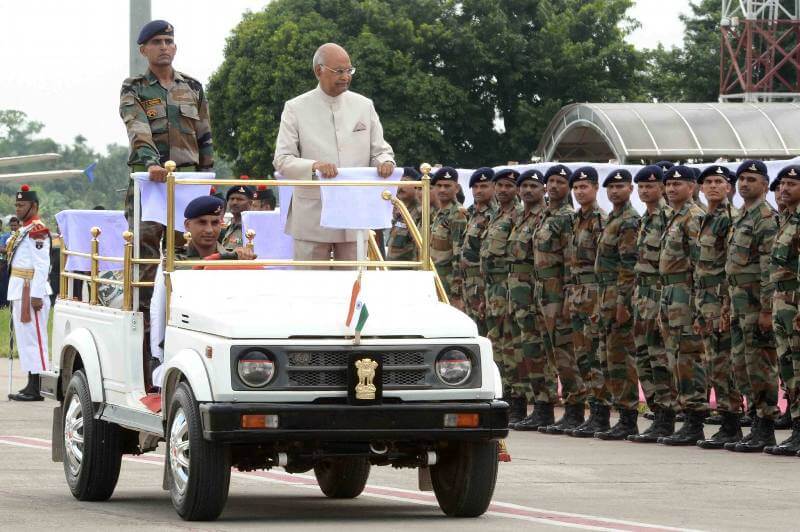
(2) The Military Powers:- The supreme command of the Defense Forces vested in the hand of the President of India, the powers regulated by [ Article 53(2)]. The President may have the powers for declaration of any war or peace or the employment of the Defense Forces.

(3) The Diplomatic Powers:- The task of negotiating treaties and agreements with other countries are subject to ratification by parliament, therefore belong to the President. The President of India represents India in International Affairs and has the powers to appoint Indian representatives for other countries and receiving diplomatic representatives of the other states, acknowledged by the Parliament.

(4) The Legislative Powers:- The Legislative powers of the President, indeed according to Ministerial advice [Article 74(1)] and may discuss in the following heads:

• Summoning, Prorogation, and Dissolution

• The Opening Address

• The right to Address and to send Messages

• Nominations of the members of the Houses

• Laying reports before the Parliament

• Previous sanction to Legislation

• Assent to Legislation and Veto power

• Disallowance of State Legislation

• The Ordinance-making power

(5) Pardoning Power:- The President of India has the power to grant a pardon in case of :

• Punishment by a court-martial.

• Offence against the laws made under the Union and Concurrent Lists.

• Pardoning a sentence of death.

(6) Emergency Powers:- The President of India shall have certain extraordinary powers to deal with emergencies, which deserve a separate treatment. These extraordinary powers of the President arise at the time of:

“Proclamation of Emergency” on the ground of threat to the security of the Nation or any part thereof by war, external aggression, or armed rebellion.

• Break down of the Constitutional machinery may take place either as a result of a political deadlock or the failure by a state to carry out the directions of the Union [Article 356,365].

• Financial stability or credit of India or any part thereof is threatened [Article 360].

COLD WAR

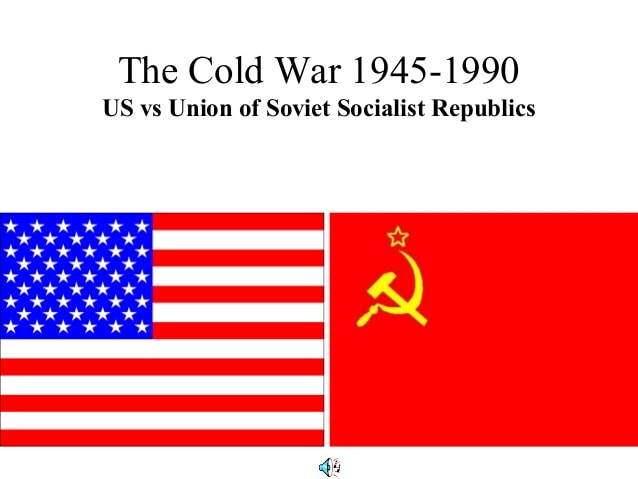
The Cold War is the term used to describe the extreme political and friendliness that existed from the end of world war II to the late eighties between groups of Communist and non communist countries. On one side with the USSR and its communist allies known as the Eastern bloc and walked and on the other side by the western powers of the USA and its allies.

There was mutual suspicion distressed and misunderstanding between two blocs. The USA and its allies felt that the USSR’s game of spreading communism throughout the world threatened their security. The soviets on the other hand accused the USA of practicing imperialism and after attempting to stop revolutionary activities in other Nations. Each bloc had its own political ideas which were diametrically opposed to the other.

THE BEGINNING OF COLD WAR:

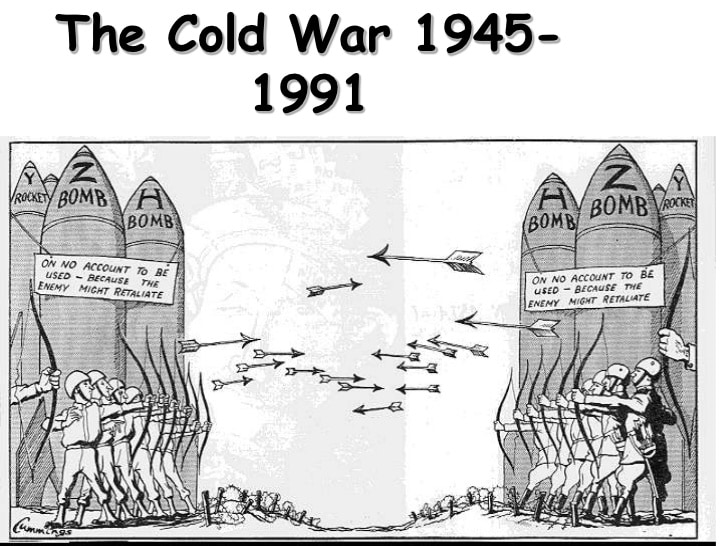
Soon after world War II the two great blocs were formed and the cold war began. It intensified during the 1940’s and 1950’s and reached its peak in the 1960’s. World peace was severely threatened the arms race begin a fresh with both sides experimenting with nuclear weapons at the same time there was a space race between the USA and USSR. The world was in astonishment as the Americans and the soviets try to outdo each other in conquering space. By the seventies both sides begin to realise the dangers involved in recklessly amazing powerful weapons that could wipe out large cities and populations in minutes. In the eighties many efforts were made to improve relations between the two superpowers.

HISTORIANS ABOUT THE COLD WAR:

Most historians agree that the cold war begin after the Yalta conference. The Big Three-President Franklin D Roosevelt of the USA, Premier Joseph Stalin of the USSR and the Prime Minister Winston Churchill of Great Britain met at the Yalta (Ukraine) in February in 1945 to plan for the peace that would follow the war. Stalin would not co-operate with the other leaders regarding the peacetime program. Great Britain join the USA in criticizing the USSR plan to spread communism in Eastern Europe.

IRON CURTAIN

During 1945 and 1946 the USSR broke off all contacts between west and the occupied territories of Eastern Europe in March 1946 Churchill want that an “Iron Curtain” had descended across the continent. The Berlin wall became a symbol of the confrontation between the two blocs.

NUCLEAR WEAPON:

In the 60 the world came dangerously close to a nuclear war. this time both block started to practice nuclear weapon and they started to treat each other with weapons many efforts made to improve relationship between both two superpowers. The cold war took a fresh turn in the eighties when Mikhail Gorbachev took over the leadership of the USSR. Glasnost ( openness) and Perestroika (reconstructio) were the terms which came to be associated with the campaign of Gobrachev to reform the economic and political missionary of the USSR.

GREAT BRITAIN:

Great Britain as one of the country’s belonging to The Western bloc, had to support the USA in any action that it took against the USSR. Britain had to pay a high price for the cold war she had to face every high military expenditure and there was uneasiness in the minds of the British that they were playing second fiddle to the USA. In the seventies Britain’s role as washington’s partner was reduced due to her economic deterioration.

MARGARET THATCHER:

Margaret Thatcher became the prime minister in 1979 and she paved the way for an economic revival and sought to avoid any public conflict with the USA. Through her personal friendship with President Reagan of the USA she was able to make Britain’s position more respectable. Up to 1982 to 83 Thatcher continue to repeat the anti-Soviet rhetoric of the Reagan administration. she was the “Iron Lady” in the USSR after she was re-elected in 1983 she changed her approach. The British government began to establish contact with the Warsaw pact countries. Thatcher paid a visit to Hungary and later she went to Moscow.

The Warsaw pact was a treaty signed by the communist nations of Europe that were under Soviet military command. They were Albania, Bulgaria, Czechoslovakia, East Germany, Hungary, Poland and Romania.

FRESH START BY THATCHER:

In 1984 she made a visit to the USA and the secured the Camp David pacts which said that the USA would not seek nuclear superiority over the Soviet member that played a major role in the negotiations leading to the signing of this treaty. President Reagan spoke of a fresh start in East West relationships.

BREAKING OF BERLIN WALL:

The breaking of the Berlin wall in 1989 was a symbolic act which site signalled the end of bitterness between the power blocs. The cold war become a thing of the past with the disintegration of the Soviet Union in 1991.

FAD DIETS

There is no single definition of what FAD DIET is. A fad diet is a diet that becomes popular for a short time, similar to fads in fashion, without being a standard dietary recommendation, and often making unreasonable claims for fast weight loss or health improvements. It is also called as “popular diet” or “diet cult”.

Some of the fad diet involve eliminating necessary nutrients that your body needs. While other involve eliminating dairy. Some eliminate certain foods at specific times of the day. It consists of unusual, expensive and unnecessary food products and ingredients. Fad diets are often highly restrictive. Often these diets aren’t well researched.

TYPES OF FAD DIET:

  • THE PALEO DIET:

It revolves around the food that our ancestors are thought to have hunted. It emphasizes on natural and not processed foods which involves meat, poultry, seafood, fruit, vegetables and nuts.

  • THE FLEITARIAN DIET:

A flexitarian follow a plant based diet but occasional eats meat when the heart urges.

  • KETOGENIC DIET:

It is a low carb, moderate protein, very high fat diet plan which involves cutting out key food groups. Some people have a medical need for a ketogenic diet to control epilepsy or other long-term conditions.

  • THE RAW FOOD DIET:

This involves consuming unprocessed plant-based foods in their raw state to retain the enzymes and vitamins that can be destroyed through cooking.

PROS OF FAD DIET:

  • It is effective in losing weight. As per research done by scientists from Tufts-New England Medical Center, fad diets can lead to a weight loss between 4.6 to 7.3 pounds within a year.
  • Fad diet comprises of plenty of fruits and vegetable in a range of meal plans.
  • Fad diet improves not only physical health but also one’s emotional health.

CONS OF FAD DIET:

  • Fad diet users lose weight very quickly. Losing weight healthy but if it happens too quickly, it may lead to various side effects.
  • It puts one’s health at risk as the amount of nutrients and calories to be consumed is restricted.
  • Fad diet have low adherence.

ONE COMMON THING ABOUT FAD DIET:

All fad diets have one thing in common: They propose a temporary solution for many people’s lifelong problem. Once the diet is stopped, the lost weight is usually regained quickly. Fad diets does not focus on lifestyle modification and these diets aren’t sustainable throughout ones life.

Even losing weight has to be done in the right way. The meal plans incorporated in fad diets are good. But, the goal of losing weight will be done better if it is combined with total lifestyle change.

Startup Story of Elon Musk

Elon Musk is the result of a combination of talent and dedication. He always gives new discoveries to this world by thinking about how to go from one success to another without thinking about his achievements. Through his Solar City company, he has made solar power available to the public at an affordable price and also provided an opportunity to drive an electric car through Tesla Motors. Not only this, he has also facilitated space travel through his company SpaceX. 


The journey of success we are going to see today is the journey of Elon Musk, the most talented entrepreneur in this world and the hard working man who aims to make all the people of this world live well.

The Birth and Adolescence of Elon Musk

Elon Reeve Musk was born on June 28, 1971, in Pretoria, South Africa. Born into a struggling family, his childhood was very difficult. Elon learned computer programming at an early age, which allowed him to sell his first program when he was 12 years old. He sold a space game called Blaster for $ 500. He briefly attended the University of Pretoria before moving to Canada aged 17 to attend Queen’s University. He transferred to the University of Pennsylvania two years later, where he received bachelor’s degrees in economics and physics. After graduation, Musk traveled to Stanford University to study for his PhD. But he barely started the program before leaving it. 


He deferred his admission after only two days in California, deciding to test his luck in the internet boom that was just getting underway. Elon Musk and his brother Kimbal, started a software company called Zip2 in 1995 using $ 28,000 from their father. Musk became a U.S citizen in 2002. As the website began to grow more detailed and faster, newspaper makers began to explore how it could be used. Musk’s company has signed contracts with local newspaper makers such as The New York Times and Chicago Tribune to start producing online city guides online. But Zip 2 started to get a lot of obstacles. Board was barred from becoming Musk’s CEO. The Board sold the company to CompaQ for $307 million + $34 million in stock options in 1999. Elon received 7%, or $ 22 million. 


Elon Musk started an online banking company called X.com as a co-founder, spending $ 10 million from the sale of Zip2. The next year the dot com bubble was fully formed and all the other tech companies backed out and bought another online banking company, X.com Confinity, and its money transfer services, PayPal. X.com decided to focus on this and renamed the company PayPal. It has grown from thousands of users to over 1 million users in just a few years and is loved by all as an easy online payment system.

The Board issue, however, was another issue for Elon Musk. He was fired as CEO due to technical issues surrounding the future of management. Again following this issue the company came to the point of being sold. This time the issue for eBay. At that time, a quarter of the transaction on eBay was completed by PayPal. In 2002, the stock traded for $ 1.5 billion, making it a huge sale compared to Internet company standards. Elon received $ 165 million for his 11.7% stake in PayPal. 


It was during this time that Musk began to think about space travel and thought of a miniature experimental greenhouse as Mars Land. Elon decided to start a company when it came to the return flight. He wanted to build a cheap rocket using Vertical Integration and Modular Approach of Software Integration. All of this led to the launch of SpaceX in 2002. This was Musk’s vision of a great vision. He funded the project with $ 100 million from his own network. But the company quickly began to make a profit. NASA awarded a contract to SpaceX to develop the Falcon 9 launch vehicle in 2006 and then raised $ 1.6 billion in 2008. He was, however, bent on meeting a more important need than headlines and profit. 


Tesla Motors is a brand that has made Musk world famous for its similar public idealism. Elon Musk came in as a leading investor in an early management and invested $ 7.5 million. In addition to his reputation, he took an active role in the company and instigated the use of carbon fiber bodies from Tesla Roadster as design in-charge. He subsequently invested further and became CEO of Tesla Motors in 2008. The company’s first car, the Tesla Roadster, has sold 2,500 vehicles in 31 countries. 


Elon Musk came up with the idea for Solar City while thinking about the production side of Energy Equation. In 2006 he and his cousins ​​Lyndon and Peter Rive all co-founded. The company provided the finance, design and installation for the solar panel. They also collaborated with Tesla Motors to construct electric car charging stations. In 2014, Solar City employed 6,000 people. Elon Musk promised to build a Solar City in Buffalo City, New York. The company is now the second largest provider of solar power in the US. Musk is its Largest Share Holder. Elon Musk is still investing in future generations.


In 2013, he proposed a concept called Hyper Loop. Developed a concept for a train to transport people from Los Angeles to San Francisco in just 35 minutes. He calls it the Hyperloop, and he estimates it would cost $ 6 billion to build.

No one has been able to stop Elon from successfully launching the 4th launch of SpaceX. Failures and losses became a major lesson for his future goals. Elon continues to travel towards his goals.

THE REAL STORY OF THE ANCIENT OLYMPIC GAMES

A short history of the winter olympic games | Sutori

The Olympic Games, which originated in ancient Greece as many as 3,000 years ago, were revived in the late 19th century and have become the world’s preeminent sporting competition. From the 8th century B.C. to the 4th century A.D., the Games were held every four years in Olympia, located in the western Peloponnese peninsula, in honor of the god Zeus. The first modern Olympics took place in 1896 in Athens, and featured 280 participants from 12 nations, competing in 43 events. Since 1994, the Summer and Winter Olympic Games have been held separately and have alternated every two years. The 2020 Summer Olympics, delayed one year because of the COVID-19 pandemic, will be held from July 23 to August 8, 2021 in Tokyo, Japan.

The Olympics Begin in Ancient Greece

The first written records of the ancient Olympic Games date to 776 B.C., when a cook named Coroebus won the only event—a 192-meter footrace called the stade (the origin of the modern “stadium”)—to become the first Olympic champion. However, it is generally believed that the Games had been going on for many years by that time. Legend has it that Heracles (the Roman Hercules), son of Zeus and the mortal woman Alcmene, founded the Games, which by the end of the 6th century B.C had become the most famous of all Greek sporting festivals. 

The ancient Olympics were held every four years between August 6 and September 19 during a religious festival honoring Zeus. The Games were named for their location at Olympia, a sacred site located near the western coast of the Peloponnese peninsula in southern Greece. Their influence was so great that ancient historians began to measure time by the four-year increments in between Olympic Games, which were known as Olympiads.

After 13 Olympiads, two more races joined the stade as Olympic events: the diaulos (roughly equal to today’s 400-meter race), and the dolichos (a longer-distance race, possibly comparable to the 1,500-meter or 5,000-meter event). The pentathlon (consisting of five events: a foot race, a long jump, discus and javelin throws and a wrestling match) was introduced in 708 B.C., boxing in 688 B.C. and chariot racing in 680 B.C. In 648 B.C., pankration, a combination of boxing and wrestling with virtually no rules, debuted as an Olympic event. Participation in the ancient Olympic Games was initially limited to freeborn male citizens of Greece; there were no women’s events, and married women were prohibited from attending the competition.

Tokyo Olympic Torch to be powered by hydrogen

Decline and Revival of the Olympic Tradition

After the Roman Empire conquered Greece in the mid-2nd century B.C., the Games continued, but their standards and quality declined. In one notorious example from A.D. 67, the decadent Emperor Nero entered an Olympic chariot race, only to disgrace himself by declaring himself the winner even after he fell off his chariot during the event. In A.D. 393, Emperor Theodosius I, a Christian, called for a ban on all “pagan” festivals, ending the ancient Olympic tradition after nearly 12 centuries.

It would be another 1,500 years before the Games would rise again, largely thanks to the efforts of Baron Pierre de Coubertin (1863-1937) of France. Dedicated to the promotion of physical education, the young baron became inspired by the idea of creating a modern Olympic Games after visiting the ancient Olympic site. In November 1892, at a meeting of the Union des Sports Athlétiques in Paris, Coubertin proposed the idea of reviving the Olympics as an international athletic competition held every four years. Two years later, he got the approval he needed to found the International Olympic Committee (IOC), which would become the governing body of the modern Olympic Games.

The Olympics Through the Years

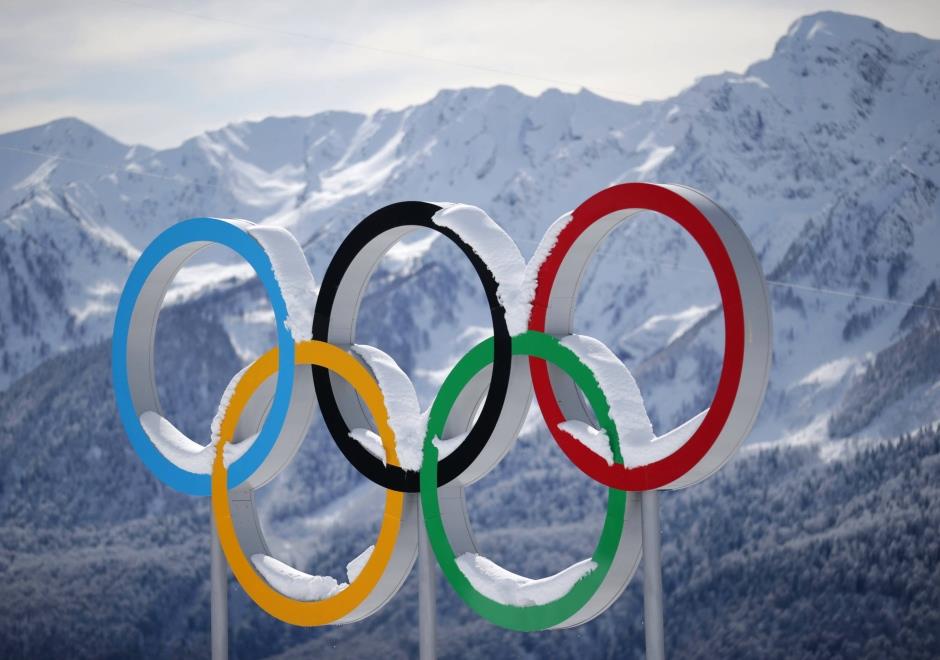
The first modern Olympics were held in Athens, Greece, in 1896. In the opening ceremony, King Georgios I and a crowd of 60,000 spectators welcomed 280 participants from 12 nations (all male), who would compete in 43 events, including track and field, gymnastics, swimming, wrestling, cycling, tennis, weightlifting, shooting and fencing. All subsequent Olympiads have been numbered even when no Games take place (as in 1916, during World War I, and in 1940 and 1944, during World War II). The official symbol of the modern Games is five interlocking colored rings, representing the continents of North and South America, Asia, Africa, Europe and Australia. The Olympic flag, featuring this symbol on a white background, flew for the first time at the Antwerp Games in 1920.

The Olympics truly took off as an international sporting event after 1924, when the VIII Games were held in Paris. Some 3,000 athletes (with more than 100 women among them) from 44 nations competed that year, and for the first time the Games featured a closing ceremony. The Winter Olympics debuted that year, including such events as figure skating, ice hockey, bobsledding and the biathlon. Eighty years later, when the 2004 Summer Olympics returned to Athens for the first time in more than a century, nearly 11,000 athletes from a record 201 countries competed. In a gesture that joined both ancient and modern Olympic traditions, the shotput competition that year was held at the site of the classical Games in Olympia.

INTERNSHIP IS THE NEED OF EVERY STUDENT RIGHT NOW !

An internship is the position of a student or trainee who works in an organization, sometimes without pay, in order to gain work experience or satisfy requirements for a qualification. A good degree with good marks will not take you to an organization , but internship will . you need the experience to get hands-on knowledge in your career field. In today’s labour market, employers rely heavily on CVs that demonstrate relevant work history, whether it is from actual job experience, volunteer work, or interning at a company. According to NACE’s Class of 2019 Student Survey, “More than half of all graduating seniors who applied for a full-time job (53.2%) received at least one job offer. Within this group, 57.5% of students who had an internship and 43.7% of graduating seniors who did not have an internship received a job offer.”

An internship is an official program offered by organizations to help train and provide work experience to students and recent graduates. The concept of working as an intern began a long time ago but has drastically evolved over the years. Internships first started as a labourer who would take on young individuals and teach them their art or trade. In exchange for being taught a skill, the trainee would agree to work for the labourer for a specific time. The skill taught there will help you in the real market scenarios , which will help you to solve real market problems .

Getting job experience is very important in today’s life . You can get an internship at a small company or get experience by freelancing. Any experience where you use skills that you can transfer to your future career is an excellent addition to your CV. It can help you demonstrate your commitment and capabilities to an employer while highlighting the skills that are both appropriate and transferable to the post you are applying for. An internship will give you the best experience regarding the job .

FIVE IMPORTANCE OF INTERNSHIP

  1. You will get an experience of the real market , the things which you have learnt in books , the things which you are having the book knowledge of , that book knowledge is used in the practical form .
  2. You will learn skills that will help you in your future jobs & these skills will let you fit in a better organization
  3. Internship allows you to learn about yourself , the more you will discover the job , the more you will get to know about yourself , your qualities & abilities.
  4. Internship allows you to gain competitive edge over others , those who have not done any internship will not get the exposure that you have received & will for sure lack the direction to do a specific work
  5. Internship helps you to build critical network connections because you are involve with them who are expert in that field .

Feminism

Feminism may be a movement that denotes the imbalance in society due to the unequal status of man and woman who are just like the two eyes within the face.

Like the bane of casteism in society, casteism which has created irrevocable divisions among people and which is that the greatest social evil, like religious intolerance, which may be a very unhealthy indication of man’s outlook, which creates cleavage between one segment of the population and another, the gender equation issue is assuming greater and greater proportions of gravity. The social awareness among women is that the indication of society’s advancement.

Spirited women whose blood boils as they’re mentally agitated by the domineering attitude of the lads folk who have long been nurtured within the unjust feeling that they’re superior, keep the flag flying. they need to flight to a finish and their unrelenting agitations for a change within the behavioral norms of the autocratic men folk will cause a far better order if not today but a minimum of within the near future.
Even now, even the enlightened aged women in society harass their daughters-in-law being far behind in time, being still during a bygone age when the mother-in-law and therefore the daughter-in-law clash was at its highest. The age-long confrontation between a mother-in-law and a daughter-in-law seems to be endless. Sometimes, a husband turns wild with anger at his meek wife and spurns her and spits on her.

Feminism may be a word that always finds an area within the newspapers and therefore the magazines. Feminism is that the subject of talk within the radio and therefore the television. Though the feminism is extremely active in countries just like the USA and Britain even there women are still given a back seat. it’s generally said that ladies belong to the weaker sex. they’re naturally gentle, soft-spoken and shy. But there are women who can outdo men in assertiveness, dominance and aggressiveness.

Nowadays the national scene has changed. There are many women graduates and postgraduates who are well-employed. they need begin into the social scene with a bang and therefore the day isn’t faraway once they will dominate the national scene. it’s true that ladies aren’t fit all types of jobs. Their presence within the military and therefore the police is restricted . But it’s very heartening to understand that there are all-women police stations. they’re as courageous as men. a number of the very best officers within the local department are women.
It is a long-standing demand that ladies should have equal opportunities in society as men. it’s incontrovertible fact that women criminals are ill-treated within the police lock-up and are sexually abused. they need to undergo the needs of the cops . In some offices they’re harassed by their colleagues. once they become meek they fall prey to the sexual instincts of the officers. In some homes the husband is extremely dominant and puts his wife to much embarrassment by his rude behaviour.

Women as a gaggle should raise their voices of protest against the injustices done to them. they ought to fight for his or her rights and will make men realize that they’re in no way inferior to them. they ought to fight till they’re treated equal with men in every department of life.

Basics of Communication

Introduction:
Communication happens when there is exchange or transfer of information between people through channels. The main elements for communication to happen is when there is a sender, a receiver a message and feedback. Communication is a very important part of a daily life and without communicating one cannot just go on spending their life without it. The communicator needs to make sure that the receiver or the audience understands the information and has no confusion. The 10 most important elements of communication are sender receiver, message, feedback, context, effect, noise, encoding, decoding and channel.

• Sender:
Sender is the one who is sending all the messages he/she is the one who addresses the audience and is also called speaker. The sender needs to be an effective communicator for the audience to understand them clearly. The speaker needs to be bold and for about what he is trying to convey.

• Receiver:
Receiver is the person who receives the message. They are also called the audience. The understand what the speaker is trying to convey and try to implement or interpret whatever they have understood. They are the ones who are capable of questioning the speaker if they are doubtful of something.

• Message:
What the speaker and receiver are communicating about is known as the message. This is the element which holds all the information about what the speaker is trying to convey and what the receiver is trying to understand. Messages can be many type it doesn’t always have to be formal or informal. The message depends on the audience and the speaker.

• Channel:
Channel refers to the medium in which they are communicating. It could be through Television, radio and newspapers or even to face to face communication. The receiver will understand the message even more clearly if it is face to face communication as the receiver can clear the doubts immediately. It also depends on how effective the speaker is.

• Encoding:
Encoding happens in the mind of the speaker when a message is about to be sent to the the audience. Encoding is an important process as if the speaker does not encode his information properly then the audience will not know what they are learning and there will be confusion among the audience. This might lead to communication gap and few misunderstandings.

• Decoding:
When the information is received by the audience from the speaker, they start to decode the message. This process happens so that they understand the message properly and clear about what they learnt. Decoding is a process of understanding the message sent to them. If this does not happen then the audience will not know what the speaker is trying to convey which might create problems.

• Noise:
Communication is also called the barrier to communication. This happens when, if a person is communicating with someone and there is an external disturbance, it is termed as noise. It will come in different forms like humans or things or nature etc.

• Effect:
Effect is what impact has been left on the audience. We get to see the effect in communication with the listener reacts to that information given by the speaker. The better the speaker, the better the impact or effect.

• Feedback:
Feedback is what the sender received by the audience. The audience lets them know if they were impactful and thoughtful enough through this process of feedback. This helps the speaker to better or advance his talents and skills.

• Context:
Context is what the speaker is trying to refer to while giving the speech. If there is no context to the speech, then the entire speed has no meaning to it.

Conclusion:
In communication, all the 10 elements are important and more than these, skills matter the most as if one is not skillful then no matter how useful the information is, it won’t leave the speaker in an effective way and it definitely will not reach the audience in an impactful manner.

Olympics

The Olympic Games are referred to as the world’s main athletic competition. Over two hundred countries take part on this occasion that takes place as soon as in four years. And in those 4 years, each years, they exchange with the Summer and Winter Olympics. There has additionally been the addition of the Paralympic Games, the Youth Olympic Games, the 5 Continental Games, Deaflympics, the Special Olympics, and the World Games. This is for the inclusion of all athletes, non-disabled, disabled, and one-of-a-kind age groups. The World Games is for sports activities that aren’t protected withinside the predominant Olympic Games. Different countries host the video games each Olympic. Some towns in which those Games had been held are Vancouver, London, Sochi, Rio de Janeiro, Pyeongchang, Tokyo, etc.

A body known as the International Olympic Committee oversees all matters regarding the Olympic Games. It is an event that garners worldwide attention and gives all athletes an opportunity to bring honor to their nation.

The video games are held in extraordinary international locations each 4 years. This does have a chief socio-monetary effect at the usa that isn’t always usually positive. This has been an trouble that has been added up earlier than the IOC. The video games are taken into consideration to be of the best honor via way of means of all of the international locations that participate. The Games are divided into the Summer and Winter Olympic Games. The former, because the call suggests, takes area for the duration of the summer time season and the latter in mid-February. Even the Olympic image of the 5 interlinked earrings speaks of harmony among the continents. The Olympic flame is symbolic of the hyperlink among the historic video games and the cutting-edge ones. The flames which can be lit on the primary day of the Games stay so till the ultimate day. The athletes additionally take an oath of right sportsmanship and to admire the regulations of the Games. There are approximately 38 video games withinside the Olympics so far. Laurel wreaths had been lauded to the Olympic heroes in historic times. Today it’s miles medals of Gold, Silver, and Bronze for first, 2nd, and 0.33 area, respectively. The country wide anthem is performed for the duration of the rite of the representative’s state that received first area. However, it’s miles vital to notice that it turned into most effective in 1904 that the medal for the primary prize turned into Gold. In 1896 it turned into silver first and gold 2nd because the latter’s fee turned into taken into consideration lesser than the former.

The Games even have a political impact, as visible through the boycott all through the Cold War, and additionally the participation of america of America and the Soviet Union collectively that passed off someday after. The boycotting of countries makes a full-size political statement. The addition of the Paralympic Games, the Youth Olympic Games, the 5 Continental Games, Deaflympics, the Special Olympics, and the World Games suggests inclusivity. Especially for the disabled community, who can now additionally take part with out being refrained from through the able-bodied community. The World Games consists of the ones sports activities that aren’t covered withinside the Winter and Summer Olympics. There is a experience of brotherhood and oneness that takes region all through the Games. There are local, country wide, or even worldwide groups which are fashioned, albeit temporarily, all through the Games. There is a experience of nationalism and patriotism that brings humans collectively. There is likewise a experience of camaraderie this is fashioned through the affection for a sport. Even folks that aren’t sportsmen come collectively to look at the Games with a experience of satisfaction for folks that take part. There is high-quality love and admire this is held for athletes who come domestic with medals through the country wide and the worldwide community.

The International Olympic Committee makes unique preparations for the games, the live, and the go back and forth of the athletes who’re taking part withinside the Games. The vicinity wherein the athletes live is known as the Olympic Village. The IOC makes positive that the host u . s . a . has made right preparations for all that stay there. The committee takes care in their live, safety, residing space, education grounds, transport, go back and forth, etc. The Black Day of the Olympic Games is fifth September 1972. The Games had been held in Munich, Germany. Unfortunately, terrorists took benefit of the big amassing of people, and numerous athletes had been killed that day. The Olympic Games are an exquisite occasion for bringing solidarity a few of the numerous international locations with the representatives that they ship that take part together. The Games sell solidarity and brotherhood, some thing this is critical on this political climate. The Games also are useful for sportsmen and sportswomen which can be mentioned for his or her tough paintings and capacity this is displayed withinside the Games. There is likewise a feel of country wide pleasure for those who cross domestic with medals. They acquire many accolades and awards from their domestic nations as well. The French Baron Pierre de Coubertin, who started the Games, could be proud to peer that his coronary heart and goal in the back of reviving the Games lives on even after such a lot of years. The equal feel of brotherhood that he preferred is visible clearly these days as well.