Towards the close to the 15th century Portugal became the first European power to establish a trade link with India. Rounding the Cape of Good Hope Vasco da Gama arrived in Calicut in 1498. Soon other European powers joined Portugal in establishing their presence in India. The European powers in India since 16th century are given below:
In the rivalry among four major European powers – Portuguese,Dutch,French and English – the English,after three Carnatic Wars, eliminated the French by the end of the eighteenth century. The British conquered all the regional powers, in particular the most potential challengers,the Mysore Sultans and the Marathas,by defeating them in three Anglo-Mysore and three Anglo-Maratha Wars. The conquest of the Gurkhas (1816), the Sindhis (1843) and the Sikhs (1849) enabled them to emerge as a territorial power in India.
The colonisation of Indian Economy
We can divide the process of the colonisation of India into three phases.
Phase I Mercantilist Capitalism
Phase II Industrial Capitalism
Phase III Financial Capitalism
Colonisation of Indian Economy: Mercantilist Phase (outright plunder;18th century).
At the beginning of the 18th century the East India Company was still a marginal force in India. It relied on concessions from Indian rulers for its trading posts along the coast. But soon it managed to establish strong ties with Indian merchants who sold their textiles and other goods from the interior. Before it gained dominion in India the East India Company carried on a very profitable business selling Indian-made cotton textiles and skills and printed cloth. According to the Indian nationalist economist R.C. Dutt, “weaving was the national industry of the people and spinning was the pursuit of millions of women”. Indian textiles went to England and other parts of Europe, to China and Japan and Burma and Arabia and Persia and parts of Africa. It was during this period that the textile lobby in Lancashire and Birmingham succeeded in making the parliament enact a law prohibiting the import of Indian textiles. Those who were found in possession of or dealing in Indian cotton goods were fined 200 pounds. In the 1750s and the early 1760s, Robert Clive gained control of the wealthiest part of the old Mughal
Robert Clive
Empire. The Company exacted concessions such as exemption of Company goods from transit duties, which even Indian merchants had to pay. After the Battle of Plassey (1757), the company got 1.2 million pounds out of which Clive himself took 31,500 pounds besides a jagir which provided an annual income of 27,000 pounds. After the Battle of Buxar(1796), the Murshidabad treasury was looted. The company acquired the Diwani right in 1765 and became the revenue farmer of the Mughal Emperor.
Feminism is the advocacy of the equality of the sexes. It does not seek exploitation and harassment of men by women in any field as many ‘intellectuals’ think! It only seeks to eradicate the violence against women and their poor treatment by their male counterparts wherever it is happening. People think feminism is giving women another superpower through which they can rule others , but this is not the true side , Feminism means equality in education & professional fields , equality in terms of rights , & this equality is not only for women but for men also . Feminism seeks to achieve the political, economic, personal, and social equality of BOTH the sex & not just females. Societies around the world often give exclusive rights and privileges to men (like standing up for themselves without being branded as being ‘loud’ and ‘bossy’, doing what they love to do, not being responsible for bringing up the kids and many more!) while women, in general, are treated unfairly. Feminism fights against gender stereotypes and seeks equal educational and professional opportunities for women. Feminists work for women’s rights, like the right to work, to remove the gender pay gap, to get an education, to have equal rights and respect within marriage, and to have paid maternity leave , to do what ever they want to , etc.
FIVE REASON WHY FEMINISM IS STILL A NEED OF THE HOUR ARE :
Gender inequality is very bad for women health : Gender inequality is bad for women health , it makes them think that they are not superior to others , which leads to bad mental health . Further mental health leads to many diseases like PCOD, heart diseases, etc.
Equal pay for all genders : Since work hours are same , so should be the pay range is the moto of feminism. Women are often paid less as compare to men & gives the reason that they work less , this belief should be removed & females should be paid equal to men .
Education : Girls are pressurized to marry , then what about their dreams & education ? This is why we need feminism , just like men are asked to study so do women should have been asked too .
Right to work : Still there is this stereotype in our brain that women can not do this job or this job is not meant for women . to remove this thinking from the society , feminisms is the need of the hour.
Have equal rights & respect within the marriage .
At last i would like to conclude this article with a quote , ” Feminism is not a dirty word. It does not mean you hate men. It does not mean you hate girls that have nice legs and a tan, and it does not mean you are a bitch or a dyke, it means you believe in equality.”
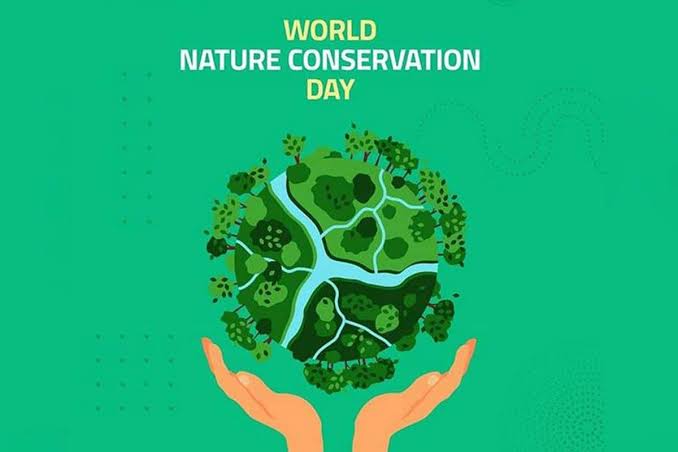
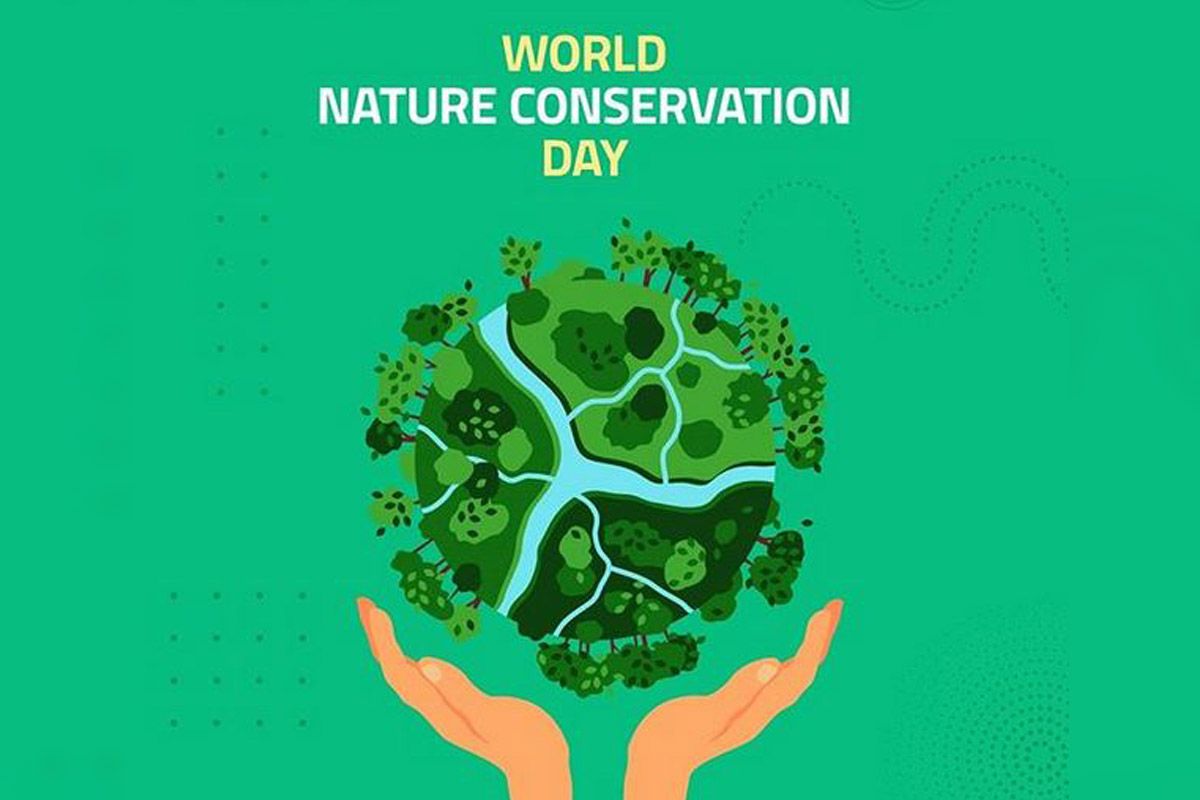
The main objective behind celebrating the day is to conserve trees and animals that are on the verge of going extinct from the natural environment of the Earth. World Nature Conservation Day is celebrated on 28 July every year. There are several initiatives that India has undertaken to conserve nature like Swachh Bharath Abhiyaan, Project Tiger, etc.
The day also recognises that a healthy environment is a foundation for a stable and productive society. This day also ensures the well-being of present and future generations. How nature can be conserved or how we can protect our nature?
“Earth provides enough to satisfy every man’s needs, but not every man’s greed.” ― Mahatma Gandhi
It is necessary to create a healthy environment to safeguard the present and future generations. There are several threats to nature like deforestation, illegal wildlife trade, pollution, using plastics, chemicals, etc. Earth has provided basic necessities to live like water, air, soil, minerals, trees, animals, food, etc. So, we should keep nature clean and healthy. Industrial development and several other factors are also responsible for the depletion of nature. Whatever we do affects the environment because the world is one and somehow linked together.
World Nature Conservation Day History:
The history and origin of World Nature Conservation Day are unknown but the main aim of celebrating it on 28 July is to come together and support nature, don’t exploit it. Conservation of nature is the wise management and utilization of natural resources. As we know that due to natural imbalance, we are facing several problems like global warming, various diseases, natural disasters, increased temperature, etc. Therefore, for the next generation, it is necessary to preserve it. So, it is important to raise awareness among people all over the world to understand the importance of saving resources, recycle it, preserve it, and also understand the consequences of damaging them.
“Conservation means the wise use of the earth and its resources for the lasting good of men”- Gifford Pinchot
What are the steps taken for the Conservation of Wildlife?
Methods to Conserve the Environment:
It is not mandatory that only the government and big companies conserve the environment. Everyone can participate and conserve nature which is a beautiful gift to us. Several ways are there by which we can conserve the environment like:
Recycling: Try to buy reusable and biodegradable products as much as possible. Recycle everything if it is possible.
It is necessary to reduce the consumption of water.
Reduce the use of electricity. When your work is done with an electric appliance then turn it off. In this way, energy and money will be saved.
Plant trees and make the planet green.
Grow vegetables. In the market vegetables that are available are grown with chemicals and pesticides. So, it is better to plant vegetables and eat organic food.
“Environment isn’t asking us to conserve her for her but for our future generations”- Mohith Agadi
To avoid littering it’s better to do composting.
As we know that batteries are dangerous for the environment so, it is better to use rechargeable batteries.
Don’t smoke. Smoking is injurious to health and sometimes it is seen that people after smoking don’t throw cigarettes in the dustbin but on the ground directly which is just pure littering.
Reduce pollution.
Aware people about the use of conservation of nature, environment, and energy.
There are also three essential words about the conservation of the environment that is reduce, recycle, and reuse.
Conservation of nature is very necessary, even scientists have also warned us about the mass extinctions in the near future. Several documentaries about nature show that resources are being wasted. Due to global warming temperature is increasing day by day, storms and the level of the sea are also increasing, freshwater glaciers are melting which threatens lives. We are connected to each other with natural resources. The natural world is facing an increasing threat from unsustainable practices and the challenge is how to preserve and conserve nature to achieve sustainable development.
Let us come together and make an effort to contribute to the local, national, or global levels in conserving nature. It will not only benefit our present generation but also future generations.
“Conservation is a cause that has no end. There is no point at which we will say our work is finished”- Rachel Carson
“Conservation is not merely a question of morality, but a question of our own survival” – Dalai Lama
We all know that the transition to electric automobiles is near, leading manufacturers have now taken drastic steps towards making this shift possible soon. Leading automakers have signaled their intention to scrap internal combustion engines by 2030 or cut back sharply on their production as the sector turns towards electric vehicles. Let’s take a look at what some of the leading automobile manufacturers have to say about this.
Firstly, let’s see BMW; this German luxury brand is intending sales of over 10 million electric vehicles within the next decade, a steep jump from its initial target of just four million vehicles. Although they already sell the i3 model it has lost market share to Tesla. Next, let’s take a look at Volvo, owned by a Chinese group. Volvo along with Bentley and Ford intends to no longer offer internal combustion models, including hybrids, by 2030. Volvo chief Hakan Samuelsson stated in March that by 2025, “half of our cars will be electric.”
Now let’s see what Renault and Toyota have to say in this regard; Renault expects EVs to account for more than 65 percent of its vehicles by 2025. Plans call for 10 new electric models by that date, including a new and affordable version of its classic compact, the Renault 5. Whereas Toyota is a hybrid pioneer and stuck to its guns for a long time before deciding to launch seven fully electric models by 2025. It expects 10 percent of European sales to be vehicles powered by electricity or hydrogen by then, along with 70 percent hybrids, 10 percent rechargeable hybrids, and 10 percent petrol.
Now Jaguar and Land Rover, iconic brands owned by the Indian group Tata, plans to devote a large part of its annual investment budget of £2.5 billion to electric vehicles. Jaguar expects to be completely electric by 2025.
Volkswagen, the German giant wants to be the global leader in electric vehicles. Its ID3 model, which was launched in late 2020, is battling Tesla for the top spot in the European electricity market. The company expects electric vehicles to represent half of all sales by 2030 and “almost 100 percent” by 2040 in its main markets. It has earmarked 73 billion euros in investments and, like Tesla, plans to create a global network of charging stations.
This was a brief idea on how leading automobile makers, want to shift to the electric era; reducing the burden on our environment.
The title of the movie The Hate U Give is directly inspired by the acronym THUG , which stands for “The Hate U Give” coined by late rapper Tupac Shakur (who had it tattooed across his torso). I had no idea about the movie until i see it.
ABOUT THE MOVIE:
The Hate U Give is a 2018 American drama film directed by George Tillman Jr based on the 2017 young adult novel of the same name by Angie Thomas. The movie follows the effects after Starr Carter a high school student witnesses a police shooting.
Starr Carter is constantly switching between two worlds -the poor, mostly black neighborhood where she lives and the wealthy, mostly white prep school that she attends. The uneasy balance between these worlds is soon shattered when she witnesses the fatal shooting of her childhood best friend at the hands of a police officer. Facing pressure from all sides of the community, Starr must find her voice and decide to stand up for what’s right.
THE PLOT:
Starr Carter is a teenager whose daily life goes on changing between her black community in Garden Heights and the prep school in the grand white and wealthy Williamson neighbourhood, her parents send her and her siblings. When Starr was nine years old her stern-voiced dad, Maverick used to teach his children what to do if a police officer stops the car they’re in. Put their hands on the dashboard; do as they say. The story then jumps forward to when Starr is a vibrant 16-year-old who plays on her school’s basketball team and finds love in a earnest white classmate named Chris . But the unintended consequence of having one foot in two different social circles is that you never really feel balanced in either. She feels out-of-place both at her white prep school where white kids love to use black slang. One day she attends a party with her cousin where she met her childhood crush Khalil. After a fight breaks in the party both of them start to head to their houses and also trying to escape from cops who arrived at the party after the fight. In the middle on their way they were stopped by cops for unexplained reason, and Khalil gets defensive. Starr tries to coach him through her father’s warnings. When the cop walks away to run Khalil’s license, the teenager carelessly reaches for his hairbrush to pass the time. Shots ring out, killing Khalil. The officer handcuffs Starr next to her dying friend. He had mistaken the hairbrush in the boy’s hand as a weapon and shot first before asking any questions. This incident affected the Starr a lot. She suffers from post traumatic stress and seems to wander the halls of her school, unsure of what’s she doing there at all. She begins breaking rank from one of her white girlfriends who really doesn’t understand what’s going on. Her boyfriend, Chris, stumbles through a crash course in how to be an ally, trying his hardest to help her. After all this, facing pressure from all sides of the community, Starr must find her voice and decide to stand up for her community, get justice for his death friend Khalil and to do what’s right.
I really loved the movie and how they were trying to show the life of black community. The idea of prep school and Garden heights to show their difference felt so realistic. But at some points, i felt that the story was revolving only around Starr. The movie is really worth watching.
Tagore‘s religious verse as given in the Gitanjali gained in the wake of award of the Nobel Prize had let people believe that he is a writer of spirituality and mysticism. Tagore‘s humanism is connected with his spiritualism. His spiritualism does not make him reluctant of the world and man, but brings him nearest to the man and something above God too. According to Tagore, spiritual life is a human affair and salvation is not through renunciation but through love, beauty, and service.
Salvation through love:
Tagore believe that man can get God only when he is in love as love is the ultimate meaning of everything around us. Love is considered as the true nature of one personality. Tagore suggest his follower that for finding God it‘s not necessary to visit any religious place nor meditating works efficiently but in nature in humanity one perceive his God. He says that “To get the intimacy of supreme consciousness through love of nature, to perceive the form less inform that I call the way to liberation. I am fascinated by the nature, and in that I get the taste of salvation.” It was his believe that Divinity is inherent in real love. His pure thinking also suggest that internal God is existing in human heart, where the internal love goes on. So when we give or take love we say the glimpse of infinity.
Salvation through action:
Tagore says love demands certain actions towards the object of our love. One should feel as well as do something for love. Love is a complete feelings and it‘s perfect in knowledge, action, and renunciation. Tagore says that the Upanishads never forbade us to work because the sages knew that the freedom of work lies in joy and the freedom of joy lies in ‗work‘.
Salvation through worships of beauty:
Tagore‘s faith was one of the affirmations of acceptance of life with joy. He believes that God does not want the world to be cheerless and dead like a desert and man to be regret ascetics but he want love for humanity and love for the nature so that man can attain joy and experience the love of the Supreme Being. According to him, we can, feel the present of internal existing God in beauty and love which is defused in whole world. Our sense organ is created by God so that he can enjoy an experience the form, colour, beauty, taste which are revealed in the nature. Tagore never ignores the importance of body or senses. He wants to enjoy each and every moral object of the world. He believes that “To look upon the world as joyful it is not to become a slave of pleasure. Pleasure is finite in nature, but joy is divine and infinite.”
Humanity and Divinity according to him are not two different order but they expect of same reality. Tagore is empathetic in ascertaining that the Devine is also in certain respect human. Tagore’s thinking was different and he believes that “I want to see my God in the temple where there are no rites, rituals and rigid practices” For realizing God‘s present in one‘s heart the rites rituals and rigid practices are considered as obstacles. He says that “Religion of man in which the infinite is define in humanity.” One’s religion must be his approach in a truth and the actual meaning of true religion is one’s humanity. The religion of man should be become like a man, behave like a man and except the value of man as the man and to love humanity. He believes and spreads the meaning of pure religion is that which accept the unity of all people instead of their different in religious faith. He calls religion as a “united force “and it has a power to make a man rise above the society, country and sect and it can‘t be judged by rites, rituals and superstitions. According to Tagore, man‘s salvation live in freezing his personality from the narrow limitation of selfhood. Man‘s ego makes him self- center and all his activities directed to the satisfaction of his own self. His finite nature is only revealing them. Therefore we can see that Tagore salvation is not in renunciation of the world but in perfecting human personality, when we realize divinity in us, we achieve salvation within this earthly frame.
Whatever we are doing in our life at this time is directly or indirectly related to only one ultimate goal and that is we all want to be happy in our life. But, are we really happy? Or why we are not happy? And how to become happy?? There are so many lots of questions that are searched on the internet related to happiness? Funny thing is that we are asking from the machines that how we become happy in our life?
We are the people of the generation that are unhappy so that they become happy. Everyone in one of his/ her childhood faces a question from someone that what do you want to become? And we gave so many options like maybe this or that but neither of us told us nor we realized that before become specialist in a different field first we become happy in our life. After reading this I am sure a question arises in your mind that before achieved financial independence how do we become happy? for one moment think that how you perform well when you are so much depressed? First, you should understand that being successful or being happy is two different goals so don’t mix two in one. Success is a goal but happiness is the thing that you need in this process.
People thought that if they become happy all the time, are they achieve success or not, so I think till now I have not read anywhere or heard from anyone that if you are happy you are not eligible for attaining success. So please don’t become so serious be punctual, be dedicated towards your goal.
And there are so many people in this world that are already trapped in the web of complex things and become unhappy so don’t try to become one of them, be happy for yourself, this is one of the best gifts that you give yourself. Whatever the situation of life is be happy and face that like a warrior,
If you are struggling in your life currently, please don’t become depressed, be happy because this happiness add some power to your confidence so that you face your struggle more valiantly,
There are lots of people in your nearby area they say that when this or that thing will complete they become so much happy, and after that, you saw that after goal achieved they become so much depressed and after asking they say that, this is not that thing what they want in their life, so don’t to be happy it is free of cost in every country. So please be happy,
Because this is a chain reaction when one person is happy, he/ she will never make someone’s life unhappy. So ultimately if you are happy you not only uplift your life you also provide little contributions towards the world’s happiness.
Life is a struggle, so accept it and enjoy your single moment on this planet. And before becoming anyone in any field, become happy in your life. And don’t depend on anyone for your happiness.
Being happy is a need that is required to achieve all the purposes of our life.
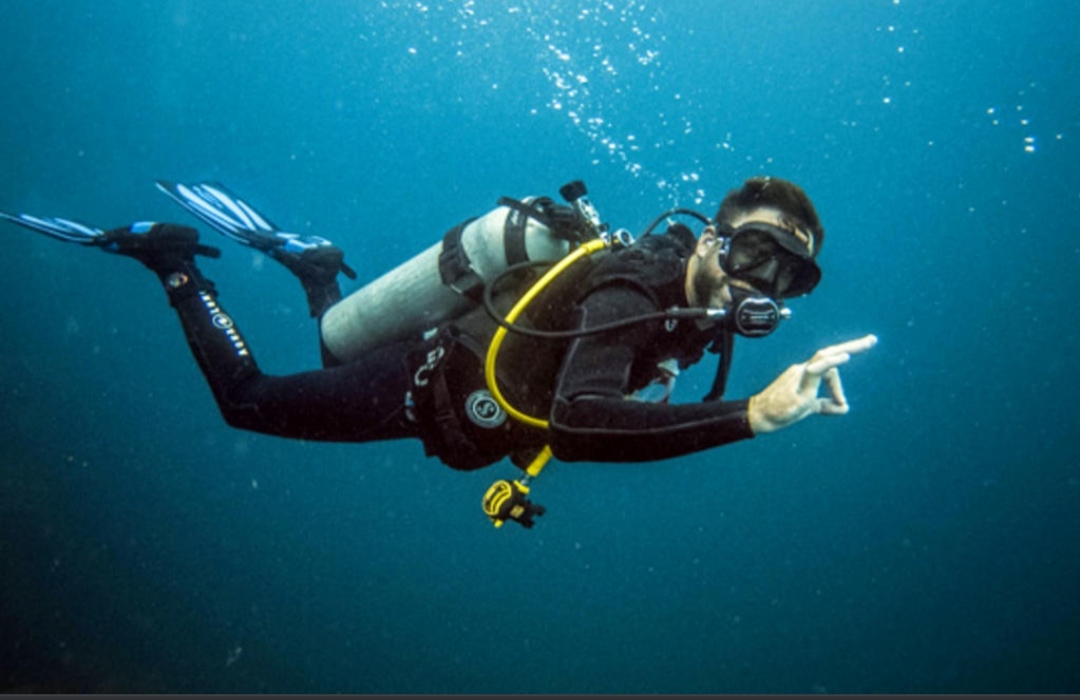
Here is some good news for all the watersport lovers in Vizag. A scuba diving academy will be coming up soon in the district, at Chintapalli. The city of beaches has been into the watersports trend, with activities like kayaking, snorkeling, jet skiing and scuba diving. Among these four, scuba diving is the more popular watersport. This watersport is not available at places in India such as Goa, Pondicherry, and the Andaman and Nicobar Islands. But fortunately, Vizag has adopted this highly thrilling and mesmerising underwater activity.
Taking a big step towards promoting tourism in Vizag, a scuba diving academy at Chintapalli village in Visakhapatnam District. The academy will be started by Livein Adventures, a Vizag-based adventure sports firm, which operates water sports activities in the city with the support of the Andhra Pradesh Tourism Development Corporation (APTDC). This will be a first-of-its-kind scuba diving academy in Andhra Pradesh and one among very few such academies in India. The academy will come up on four acres of land at chintapalli and will be built at an estimated budget of Rs 2 crore.
Speaking to Yo! Vizag, Balaram Naidu, of Livein Adventures, revealed, “The academy will have courses on basic diving, kayaking, and boating from October 2021. The courses will range from two days to 6 months in duration. Interested individuals, swimmers and non-swimmers, will be able to take globally certified courses on open water diving, rescue diving and advanced diving.”
The single and the biggest problem in communication is the illusion that has taken place which is called misunderstanding. If a man cannot understand the beauty of life, it is probably because life never understood the beauty of him.
“Misunderstanding is basically because, some have the unique ability to listen to one part of the story and understand the another part of it.”
You can’t control the way people understand your ideas and thoughts but you can control the words and tones you choose to convey them. Wonderful relationship is built on understanding and the same can also be destroyed by a single misunderstanding.
When people pull apart ,they usually use misunderstanding as a weapon to break their relationship. A beautiful relationship does not depend on how well you understand each other but it depends on how well you avoid misunderstandings.
It is better to understand little than to misunderstanding a lot. Believe that simple things really matters because even a simple misunderstanding can ruin great relationship.Problems comes from nothing it is because of the misunderstanding that does not even exist.
A single moment of misunderstanding is very poisonous that it makes us forget hundreds of loveable moments you have spent together within a minute. When a plant grows denser, we cut the branches and not whole plant, similarly when misunderstanding grows,cut your ego and not your relationship.
If you don’t clear your misunderstanding on time then they will become the reason for distance forever and ever.
Don’t build a relationship before understanding and don’t break a relationship because of a misunderstanding.
“Time and tide wait for no one,” as the saying goes. To be successful in all parts of life, a person must grasp the value of time. People who waste time are those who have not developed their own personality.
What is Time Management ?
Time management is the process of properly managing time so that the appropriate amount of time is allotted to the appropriate task.
Individuals who use effective time management can assign particular time slots to tasks based on their value.
Time management is the process of making the best use of one’s time, which is constantly finite.
Consider which activity is more essential and how much time should be devoted to it. Determine which tasks should be completed first and which may wait a bit longer. Time Management plays a very important role not only in organizations but also in our personal lives.
Time management includes the following:
Planning that works:- Make a detailed plan for your day. Make a To-Do List or a “TASK PLAN.” Make a list of the key tasks that must be completed in a single day, together with the amount of time that should be allotted to each task. High priority tasks should be prioritised first, followed by those that do not require much of your attention at the present. Complete all outstanding chores one by one. Do not start new work until you have completed your prior assignment. Tick the ones you’ve already finished. Make certain that you complete the assignments within the time period specified.
Establishing goals and objectives:- Working in an organisation without goals and aims is like to the captain of a ship being disoriented at sea. Yes, you’d be lost. Set goals for yourself and make sure they are reasonable and attainable.
Establishing deadlines:- Set deadlines for yourself and work hard to do projects ahead of time. Don’t wait for your bosses to ask you every time. Learn to accept responsibility for your job. You are the only one who has the authority to establish deadlines. Consider how much time and how many days you need to commit to a specific activity. Use a calendar to keep track of crucial dates and deadlines.
Responsibilities are delegated:- Learn to say “NO” at work. Don’t try to accomplish everything on your own. There are others as well. Accepting something that he knows is tough for him is not a good idea. Employees’ roles and duties must be allocated based on their interests and specialisations in order for them to complete assignments on time. A person who is unfamiliar with something requires more time than someone who is well-versed in the subject.
Organizing tasks according to their importance:- Sort the jobs according to their significance and urgency. Understand the distinction between significant and urgent tasks. Determine which chores should be completed within a day, which should be completed within a month, and so on. The most critical tasks should be completed first.
Investing the appropriate amount of time in the appropriate activity:- Make it a habit to do the right thing at the right time. Work completed at the wrong time is of little value. Don’t squander a whole day on something that can be completed in an hour or two. Also, set aside some time for personal calls or monitoring Facebook or Twitter updates. After all, a human is not a machine.
For Effective Time Management one needs to be:
Organized:- Keep piles of files and mounds of paper away from your desk. Throw away whatever you don’t need. Make folders for crucial papers. Keep the files in their designated drawers, with labels on the top of each file. It saves time that would otherwise be spent on ineffective searches.
Don’t misuse time:- Do not kill time by loitering or gossiping around. Concentrate on your work and finish assignments on time. Remember your organization is not paying you for playing games on computer or peeping into other’s cubicles. First complete your work and then do whatever you feel like doing. Don’t wait till the last moment.
Be Focussed:- One needs to be focused for effective time management.
Benefits of Time Management:
Time management teaches a person to be punctual and disciplined. As a result of efficient time management, one learns to work only when necessary. Individuals should construct a “TASK PLAN” or a “TO DO” List at the start of the day to jot down tasks that need to be done in a certain day based on their significance and urgency against the precise time slots allotted to each activity. A Task Plan provides employees with a feeling of direction at work. An individual understands how his day will unfold and works appropriately, resulting in greater productivity.
As a result of efficient time management, one gets more organised. Keeping things in their appropriate placements saves time spent searching for documents, essential files, folders, stationery items, and so on. Individuals maintain their workstations, study zones, cubicles, and meeting places clean and tidy to improve time management. People learn to manage their time well as a result of Time Management.
Effective time management increases a person’s morale and confidence. Individuals become well-known in their organisations and among their peers as a consequence of their ability to complete assignments within the time constraints imposed by Time Management. People who appreciate the value of time are the ones who stand out in a crowd. Individuals who complete their task on time are looked up to by others and are constantly the centre of attention.
Individuals that stick to a time schedule achieve their goals and objectives in the least amount of time. Effective time management enables staff to fulfil objectives well ahead of deadlines and complete tasks just when they are needed.
Effective time management enables an individual to reach the peak of success fast and to remain there for an extended period of time. An employee who works just for the purpose of working makes no impact and is never taken seriously at work. Effective time management is critical to enhancing an individual’s productivity. When people manage their time properly, their output improves significantly.
Better time management contributes to better planning and, ultimately, better forecasting. Individuals learn to prepare ahead of time and know where they stand in five years.
According to research, those who complete activities on time are less likely to experience stress and worry. Remember that spending time and cribbing afterwards is pointless. Finish any outstanding job on time, and you’ll have enough of time for your friends, relatives, and family members.
Time management allows a person to prioritise jobs and activities at work. It is stupid to continue to be overwhelmed. You should not accept everything that comes your way.
Time management enables an individual to take a methodical approach.
“Earth provides enough to satisfy every man’s needs, but not every man’s greed.” ― Mahatma Gandhi
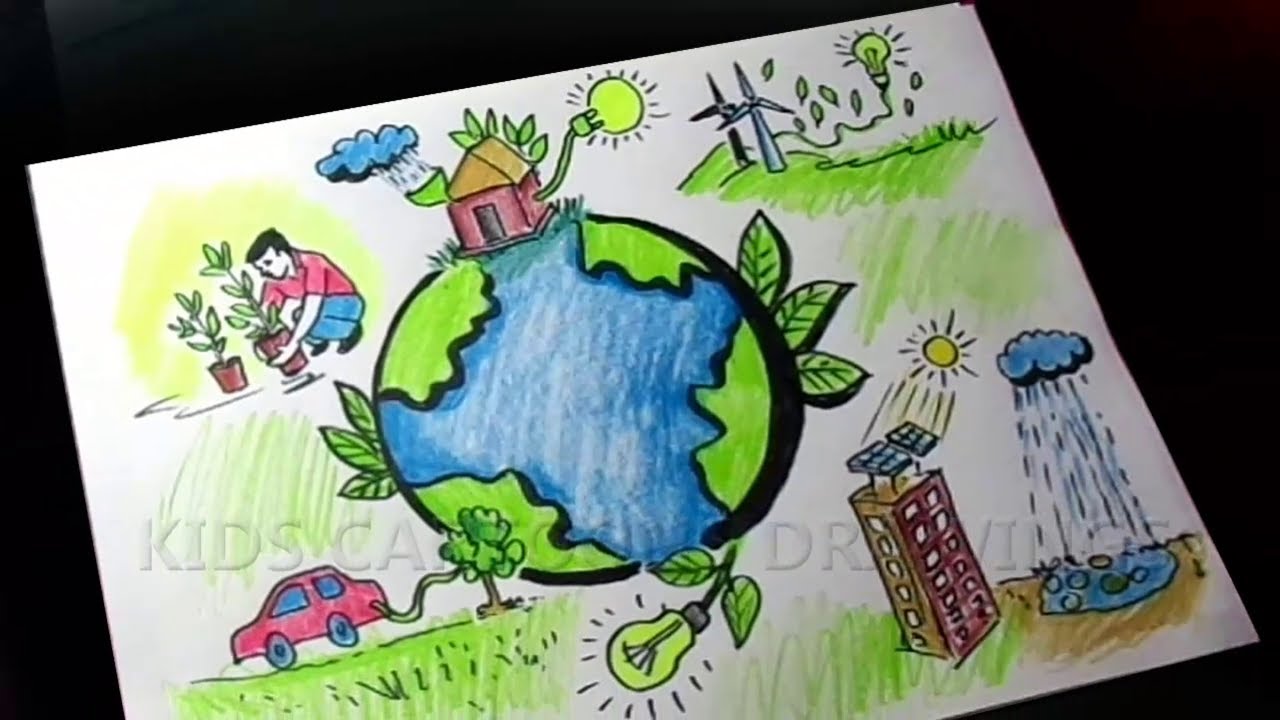
July 28 is celebrated as “World’s Nature Conservation Day” and reminds us that healthy environment is the foundation of a stable and productive society. This day is observed every year and is celebrated to educate people about the best techniques and practices adopted in different areas of the world to protect and preserve our natural resources as our planet has limited amount of resources left but the reliance on these resources is increasing day by day. This day aims to create and increase the awareness about the importance of natural resources and environment. It shows how we can live sustainably. This day encourages the people to save and protect the natural resources of earth because they are depleting in a rapid rate and are getting exploited and even misused.
This day recognizes that a healthy environment is the most vital part of stable and productive society. And sustainable practices are important for maintaining this stability and this environment for the future generations as well. The day reminds us about our responsibility as the child of the planet and urges us to be responsible and practice sustainable living practices and bring small changes in our lifestyle which can bring sustainability in our life style and lives. This day motivates us to find alternatives which could decrease our dependency on the natural resources.
This day ensures sustainability of present and future generation. How can we help in conserving the nature ? Lets have a look!
WATER CONSERVATION: Everything starts from home and can be done by using less water while showering and bathing. By practicing Rain water harvesting methods in home to reduce our dependency on other water sources and rely on rain water without wasting it. It is important to conserve water because it is estimated that 2050 we may run out of water.
PLANTING OF TREES : This helps in preventing soil erosion and promoting greenery. Home gardening, kitchen garden etc. can be practiced at home and at any scale for planting trees. Green roof is also one such initiative which helps in promoting greenery at homes. Spending few minutes in planting and amid nature can greatly promote mental well being too.
WASTE MANAGEMENT : Reduce, reuse and recycle waste. Practice rainwater harvesting and using wastewater treatment plants for treating the waste water. This waste water when treated can be used in landscaping purpose. Organics can also be used.
SUSTAINABLE COMMUNICATION : Sustainable communication can help in reducing the carbon footprint and lessen the pollution. It is good if people use public transport and sustainable modes of transport while commuting to different places as fewer vehicles will ensure lesser pollution.
Reduce your electricity consumption; switch off electrical appliances when not in use, or every time you walk out of a room.
REDUCE PAPER USE : Saving papers means saving trees and in todays digital age, all the devices are capable of taking notes which saves the need of print outs.
AVOID SINGLE USE OF PLASTIC : The plastics which we are using are getting discharged into the oceans and grasslands or forests etc. which is destroying the lifeforms, ecosystem as well as the natural resources. Single use plastic consumption has increased during the pandemic and the amount of gloves and face masks being used is also increasing. Landfills are getting filled with the large amount of plastics which is polluting the environment.
The main objective of the day is to be live, promotive consciousness and mindful living. The aim is reduce overexploitation of resources and reduce the non-essential travel and play our part of role in building a sustainable future.
The area referred to as the Bermuda Triangle, or Devil’s Triangle, covers about 500,000 square miles of Atlantic Ocean off the southeastern tip of Florida, bounded by Miami, Bermuda and Puerto Rico. When Christopher Columbus sailed through the area on his first voyage to the New World, he reported that a great flame of fire (probably a meteor) crashed into the sea one night and that a strange light appeared in the distance a few weeks later. He also wrote about erratic compass readings, perhaps because at that time a sliver of the Bermuda Triangle was one of the few places on Earth where true north and magnetic north lined up.
Did you know? After gaining widespread fame as the first person to sail solo around the globe, Joshua Slocum disappeared on a 1909 voyage from Martha’s Vineyard to South America. Though it’s unclear exactly what happened, many sources later attributed his death to the Bermuda Triangle.
Nonetheless, reports of unexplained disappearances did not really capture the public’s attention until the 20th century. An especially infamous tragedy occurred in March 1918 when the USS Cyclops, a 542-foot-long Navy cargo ship with over 300 men and 10,000 tons of manganese ore onboard, sank somewhere between Barbados and the Chesapeake Bay. The Cyclops never sent out an SOS distress call despite being equipped to do so, and an extensive search found no wreckage. “Only God and the sea know what happened to the great ship,” U.S. President Woodrow Wilson later said. In 1941 two of the Cyclops’ sister ships similarly vanished without a trace along nearly the same route.
A pattern allegedly began forming in which vessels traversing the Bermuda Triangle would either disappear or be found abandoned. Then, in December 1945, five Navy bombers carrying 14 men took off from a Fort Lauderdale, Florida, airfield in order to conduct practice bombing runs over some nearby shoals. But with his compasses apparently malfunctioning, the leader of the mission, known as Flight 19, got severely lost. All five planes flew aimlessly until they ran low on fuel and were forced to ditch at sea. That same day, a rescue plane and its 13-man crew also disappeared. After a massive weeks-long search failed to turn up any evidence, the official Navy report declared that it was “as if they had flown to Mars.”
Bermuda Triangle Theories and Counter-Theories
By the time author Vincent Gaddis coined the phrase “Bermuda Triangle” in a 1964 magazine article, additional mysterious accidents had occurred in the area, including three passenger planes that went down despite having just sent “all’s well” messages. Charles Berlitz, whose grandfather founded the Berlitz language schools, stoked the legend even further in 1974 with a sensational bestseller about the legend. Since then, scores of fellow paranormal writers have blamed the triangle’s supposed lethalness on everything from aliens, Atlantis and sea monsters to time warps and reverse gravity fields, whereas more scientifically minded theorists have pointed to magnetic anomalies, waterspouts or huge eruptions of methane gas from the ocean floor.
In all probability, however, there is no single theory that solves the mystery. As one skeptic put it, trying to find a common cause for every Bermuda Triangle disappearance is no more logical than trying to find a common cause for every automobile accident in Arizona. Moreover, although storms, reefs and the Gulf Stream can cause navigational challenges there, maritime insurance leader Lloyd’s of London does not recognize the Bermuda Triangle as an especially hazardous place. Neither does the U.S. Coast Guard, which says: “In a review of many aircraft and vessel losses in the area over the years, there has been nothing discovered that would indicate that casualties were the result of anything other than physical causes. No extraordinary factors have ever been identified.”
Feminism and the politics of childhood friends or foes? is written and edited by Rachel roshen and Katherine Twamley. The book consists of eighteen chapters in itself. The book is a contribution of many scholars, psychologists, professors and lecturers of education, catholic priest, activist and anthropologists.
Rachel Rosen is a senior lecturer in childhood in the department of social science at the UCL institute of Education and Katherine Twamley is a Leverhulme Trust Early Career Fellow in the department of social science at the UCL institute of Education.
The book discussed various kinds of feminism and children’s politics. It has an exploration of perceived commonalities and conflicts between the women and children. The whole book is in a dialogic method from a range of geographical contexts, social science discipline, activist organisations, and theoretical perspectives. The wide varieties of subjects include refugee camps, care labour, domestic violence and childcare and education. The author focuses on the local & global level and tries to drive the interconnection about the theoretical traditions.
Erica Burman found that the formulation of relation between women and children are representative. The responsibility of child caring is totally up to the mother as the bundling of women has been comprehensively critiqued. She also focused on the early care education of childhood. The book consists of childhood studies and women’s studies. Women and children are vulnerable victims or valorized as angelic innocents of home and hearth and the subject through which hope for national development flows. She said we should try to provide social and economical justice to the women and children.
The book discussed gender & society. Barrie Throne wanted to ask about feminism and the politics of childhood. Thrawn worked with various frameworks and theories such as intersectionality theory, psychosocial studies, and critical disability studies. Grassroots Women (GW) was an anti- imperialist, feminist organization in East Vancouver, Canada in early 1990s. The organization welcomed her members with their children. They said the presence of children makes their members also focused on their work. They consider universal childcare a woman’s right. In the end they said (GW) children and women are became great power if they united.
The book had a glance about the children and caretaker rights. Every child has the right of proper care and love. Radical feminism considers the children as the burden over the women and ground of oppression of women. They also discussed the challenges of/to feminist solidarity in the Sahrawi refugee camps (South Africa).
Marxist feminism focused over the renewed frame attention to social reproduction. They consider the women as the second and less paid workers. Taking care of the children should be the first job of women.
The concept of surrogacy is also shared here. The data is collected by the international commercial surrogacy. Here the practice of surrogacy is considered as the reproductive and productive laboring. Some feminist are in favor as some are in against. It directly impacts the child and women’s mental, emotional and physical condition. Decolonising childbearing and challenging the patriarchal nuclear family through indigenous knowledge is also shared here. In this chapter we discuss the role of men in child care and how the traditional value system of child bearing will guide the people to develop more effective programming for parent education and support family reunification. Child marriage practice is also criticized by the feminist. They share the world wide data of the early child marriage and its impact on the children and women.
The feminist is mean to be a fighter of social justice, they fight and struggle to get the social justice foe women and children. Domestic violence is a cycle of violence, a person tries to fill a woman or a child with a lot of guilt and shame so she could not try to stop the violence over her. Feminist also work in this sector too for give a save environment for them.
I chose this book for many reasons and one of them is this it discusses various feminism waves and theories. It gives a clear understanding of why we need feminism and the different context of women and children’s condition. Children and women are inseparable in order to provide strength to each other.
Reflection
The book is really Informative and interesting. It consists different view of feminism and feminist which going to help in my assessment too. The book had a broad number of examples, interviews and experiences about the challenges faced by the women and children at local and global level. Why we need feminist and how they struggle to achieve the goal of social justice for all. Here I also find the difference between radical feminism is different feminism. They consider child bearing as the ending of life or burden over the women or women does not want children or should not have children if they want to do something. The book gives a holistic perspective to think about geographical, social and economical impact on the condition of women and children. Everyone should go through the book once. They provide you with alternate theoretical constructs and practical examples of research on how best make sense of the importance of relation and thinking with complexity.
Poverty is about not having enough money to meet basic needs including food, clothing and shelter. However, poverty is more, much more than just not having enough money.
The World Bank Organization describes poverty in this way:
“Poverty is hunger. Poverty is lack of shelter. Poverty is being sick and not being able to see a doctor. Poverty is not having access to school and not knowing how to read. Poverty is not having a job, is fear for the future, living one day at a time.
Poverty has many faces, changing from place to place and across time, and has been described in many ways. Most often, poverty is a situation people want to escape. So poverty is a call to action — for the poor and the wealthy alike — a call to change the world so that many more may have enough to eat, adequate shelter, access to education and health, protection from violence, and a voice in what happens in their communities.”
In addition to a lack of money, poverty is about not being able to participate in recreational activities; not being able to send children on a day trip with their schoolmates or to a birthday party; not being able to pay for medications for an illness. These are all costs of being poor. Those people who are barely able to pay for food and shelter simply can’t consider these other expenses. When people are excluded within a society, when they are not well educated and when they have a higher incidence of illness, there are negative consequences for society. We all pay the price for poverty. The increased cost on the health system, the justice system and other systems that provide supports to those living in poverty has an impact on our economy.
While much progress has been made in measuring and analyzing poverty, the World Bank Organization is doing more work to identify indicators for the other dimensions of poverty. This work includes identifying social indicators to track education, health, access to services, vulnerability, and social exclusion.
There is no one cause of poverty, and the results of it are different in every case. Poverty varies considerably depending on the situation. Feeling poor in Canada is different from living in poverty in Russia or Zimbabwe. The differences between rich and poor within the borders of a country can also be great.
Despite the many definitions, one thing is certain; poverty is a complex societal issue. No matter how poverty is defined, it can be agreed that it is an issue that requires everyone’s attention. It is important that all members of our society work together to provide the opportunities for all our members to reach their full potential. It helps all of us to help one another.
On the basis of social, economical and political aspects, there are different ways to identify the type of Poverty:
Absolute poverty.
Relative Poverty.
Situational Poverty.
Generational Poverty.
Rural Poverty.
Urban Poverty.
Now let us understand them one by one:
1.Absolute poverty: Also known as extreme poverty or abject poverty, it involves the scarcity of basic food, clean water, health, shelter, education and information. Those who belong to absolute poverty tend to struggle to live and experience a lot of child deaths from preventable diseases like malaria, cholera and water-contamination related diseases. Absolute Poverty is usually uncommon in developed countries.
It was first introduced in 1990, the “dollar a day” poverty line measured absolute poverty by the standards of the world’s poorest countries. In October 2015, the World Bank reset it to $1.90 a day. This number is controversial; therefore each nation has its own threshold for absolute poverty line.
“It is a condition so limited by malnutrition, illiteracy, disease, squalid surroundings, high infant mortality, and low life expectancy as to be beneath any reasonable definition of human decency.” Said by Robert McNamara, the former president of the World Bank.
2.Relative Poverty: It is defined from the social perspective that is living standard compared to the economic standards of population living in surroundings. Hence it is a measure of income inequality. For example, a family can be considered poor if it cannot afford vacations, or cannot buy presents for children at Christmas, or cannot send its young to the university.
Usually, relative poverty is measured as the percentage of the population with income less than some fixed proportion of median income.
It is a widely used measure to ascertain poverty rates in wealthy developed nations.
In European Union the “relative poverty measure is the most prominent and most–quoted of the EU social inclusion indicators”
3.Situational Poverty: It is a temporary type of poverty based on occurrence of an adverse event like environmental disaster, job loss and severe health problem. People can help themselves even with a small assistance, as the poverty comes because of unfortunate event.
4.Generational Poverty: It is handed over to individual and families from one generation to the one. This is more complicated as there is no escape because the people are trapped in its cause and unable to access the tools required to get out of it.
“Occurs in families where at least two generations have been born into poverty. Families living in this type of poverty are not equipped with the tools to move out of their situation” (Jensen, 2009).
5.Rural Poverty: It occurs in rural areas with population below 50,000. It is the area where there are less job opportunities, less access to services, less support for disabilities and quality education opportunities. People are tending to live mostly on the farming and other menial work available to the surroundings.
The rural poverty rate is growing and has exceeded the urban rate every year since data collection began in the 1960s. The difference between the two poverty rates has averaged about 5 percent for the last 30 years, with urban rates near 10–15 percent and rural rates near 15–20 percent (Jolliffe, 2004).
6.Urban Poverty: It occurs in the metropolitan areas with population over 50,000. These are some major challenges faced by the Urban Poor:
• Limited access to health and education. • Inadequate housing and services. • Violent and unhealthy environment because of overcrowding. • Little or no social protection mechanism.
Qutub-Minar in red and buff sandstone is the highest tower in India.
Built in the 13th century, the magnificent tower stands in the capital, Delhi. It has a diameter of 14.32m at the base and about 2.75m on the top with a height of 72.5m. It is an architectural marvel of ancient India.
The complex has a number of other important monuments such as the gateway built in 1310, the Alai Darwaza, Quwwat-ul-Islam Mosque; the tombs of Altamish, Ala-ud-din Khalji and Imam Zamin; the Alai Minar, a 7m high Iron Pillar, etc.
Qutub-ud-Din Aibak of Slave Dynasty laid the foundation of Minar in A.D. 1199 for the use of mu’azzin (crier) to give calls for prayer and raised the first storey, to which were added three more storeys by his successor and son-in-law, Shams-ud-Din Itutmish (A.D. 1211-36). All the storeys are surrounded by a projected balcony encircling the minar and supported by stone brackets, which are decorated with honey-comb design, more conspicuously in the first storey.
Quwwat-ul-Islam Mosque, to the north-east of minar was built by Qutub-ud-Din Aibak in A.D. 1198. It is the earliest extant – mosque built by the Delhi Sultans. It consists of a rectangular courtyard enclosed by cloisters, erected with the carved columns and architectural members of 27 Hindu and Jaina temples, which were demolished by Qutub-ud-Din Aibak as recorded in his inscription on the main eastern entrance. Later, a lofty arched screen was erected and the mosque was enlarged, by Shams-ud- Din Itutmish (A.D. 1210-35) and Ala-ud-Din Khalji. The Iron Pillar in the courtyard bears an inscription in Sanskrit in Brahmi script of fourth century A.D., according to which the pillar was set up as a Vishnudhvaja (standard of god Vishnu) on the hill known as Vishnupada in memory of a mighty king named Chandra. A deep socket on the top of the ornate capital indicates that probably an image of Garuda was fixed into it.
The tomb of Itutmish (A.D. 1211-36) was built in A.D. 1235. It is a plain square chamber of red sandstone, profusely carved with inscriptions, geometrical and arabesque patterns in Saracenic tradition on the entrances and the whole of interior. Some of the motifs viz., the wheel, tassel, etc., are reminiscent of Hindu designs.
Alai- Darwaza, the southern gateway of the Quwwat-ul-Islam mosque was constructed by Ala-ud-Din Khalji in A.H. 710 (A.D. 1311) as recorded in the inscriptions engraved on it. This is the first building employing Islamic principles of construction and ornamentation.
Alai Minar, which stands to the north of Qutub-Minar, was commenced by Ala-ud-Din Khalji, with the intention of making it twice the size of earlier Minar. He could complete only the first storey, which now has an extant height of 25 m. The other remains in the Qutub complex comprise madrasa, graves, tombs, mosque and architectural members.
UNESCO has declared the highest stone tower in India as a world heritage.











 Eduindex
You must be logged in to post a comment.