Friendship is one of the greatest bonds anyone can ever wish for. Lucky are those who have friends they can trust. Friendship is a devoted relationship between two individuals. They both feel immense care and love for each other. Usually, a friendship is shared by two people who have similar interests and feelings.
You meet many along the way of life but only some stay with you forever. Those are your real friends who stay by your side through thick and thin. Friendship is the most beautiful gift you can present to anyone. It is one which stays with a person forever.
True Friendship
A person is acquainted with many persons in their life. However, the closest ones become our friends. You may have a large friend circle in school or college, but you know you can only count on one or two people with whom you share true friendship.
There are essentially two types of friends, one is good friends the other are true friends or best friends. They’re the ones with whom we have a special bond of love and affection. In other words, having a true friend makes our lives easier and full of happiness.
Most importantly, true friendship stands for a relationship free of any judgments. In a true friendship, a person can be themselves completely without the fear of being judged. It makes you feel loved and accepted. This kind of freedom is what every human strives to have in their lives.
In short, true friendship is what gives us reason to stay strong in life. Having a loving family and all is okay but you also need true friendship to be completely happy. Some people don’t even have families but they have friends who’re like their family only. Thus, we see having true friends means a lot to everyone.
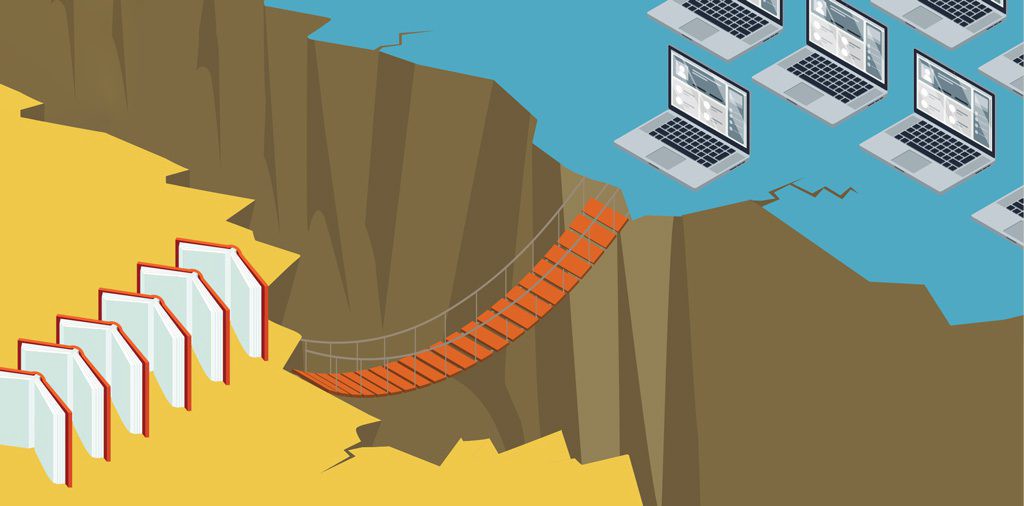
Covid-19 pandemic has exposed the deep fault lines that have created challenges for India’s march towards a digitally enabled society.
During the pandemic, several essential services, ranging from access to healthcare services (including vaccination) to education, livelihoods, and rations — have felt the effects of unequal distribution of technology in the country.
Thus, with increasing inequalities and the burden on systems, the need for digitally driven programmes is now more urgent than ever before.
Digital Challenge
Digitally Inaccessible Remote Communities: The first wave of Covid-19 brought with it an immediate and urgent need for the development sector to shift towards technology, when faced by the inability to access communities remotely.
A survey in June 2020 indicated that only about half of the respondents were aware of online classes being held in their communities.
The consequences of these gaps are likely dire – an estimated 10 million girls could drop out of school.
Unserved Remote Areas: With digital services not being uniformly distributed, communities in remote areas often require on-ground staff to deploy and supplement digital tools.
They may also face significant barriers in accessing funding for innovative and infrastructural digital solutions.
Digital Divide: During the second wave, urban Indians have consistently relied on social media platforms to seek life-saving medical supplies but rural Indian could not utilise it to the fullest.
Unequal access to the internet has also made accessing and registering for Covid-19 vaccines in India a challenge, leaving millions of Indians unable to even register for them.
Digital Illiteracy: It’s apparent that a majority of Indian citizens lack digital literacy and online safety is an alien concept to many who may have digital literacy.
Language and accessibility barriers and limited data and infrastructural systems further compound the scenario.
Social barriers and systemic inequality also play a large role in this — even today, mobile ownership among women is significantly lower than their male counterparts.
Moreover, communities continue to remain averse to mobile devices in the hands of young people, especially young women, to prevent them from disrupting existing patriarchal systems.
Way Forward
Need For Technology Enabled Development Sector: It is time for the development sector to shift towards technology-driven ecosystems, to enable a more systematic and concerted effort to bridge the present digital divide and help access remote communities digitally. NGO’s and CSO’s can play a vital role in this step.
Technological Intervention: The process of creating and implementing digital solutions is multi-layered and complex. According to many CSOs, the first step is to address the demands posed by technological interventions across a programme life cycle.
This calls for customised digital interventions. The issue gets complicated because CSOs need to work with local communities who face digital challenges themselves. Digital interventions have to factor in these imperatives.
Feedback from People: The success of technology-based programmes is ultimately contingent on the support for it on the ground, and community feedback is critical to driving successful and sustainable programmes.
Programmes, therefore, need to integrate and account for interpersonal mediation and the last-mile “human touch”.
Partnership with Stakeholders: To enable them to incorporate technology at scale, CSOs require more systematic partnerships with stakeholders across the development ecosystem.
Collaboration with the government and other civil society partners is vital to normalising the use of technology-based interventions at scale.
For example, the government and private sector service providers need to prioritise the availability of digital infrastructure and connectivity while civil society integrates programmatic responses into government priorities.
Documenting the Learning: There are no blanket solutions to the critical challenges that come with embracing technology in framing programmes for the development sector.
Documenting their learnings is an important first step in pushing for more open conversations with regard to digital interventions in India.
Conclusion
Recognising the essential role that digital tools, access and literacy will play in the months and years to come, Civil societies and NGOs can play a major role in bringing technological revolution in their working.
These days, all it takes is one surprise medical bill to send a patient into bankruptcy. The United States’ health care system operates differently from many others in the world with high costs for the individual as a distinguishing characteristic. In fact, the higher prices mean the U.S. spends more on health care than other “developed countries,”. According to a February 2020 survey, almost one in three Americans worries about affording health care. So, what exactly makes health care in the U.S. so expensive?
The most important reason is that U.S. health care is based on a “for-profit insurance system,” one of the only ones in the world, according to Carmen Balber, executive director of Consumer Watchdog, who’s advocated for reform in the health-insurance market. In the U.S, most health insurance is administered by private companies and individuals must pay for it themselves, even if their employer subsidizes some of it. The underlying motive to make money has a ripple effect that increases prices.
Similarly, Dr. Georges Benjamin, executive director of the American Public Health Association, pointed to a lack of universal health care, where everyone is guaranteed access without undergoing financial hardship, as a primary reason for high costs.”Part of our system is that everybody is … paying for somebody else’s underpayment, whether they like it or not,” he said. “Everybody is trying to figure out who else can pay for it instead of them.”
Pay per service
U.S. health care exists in a system where patients are charged based on the services they receive. In many parts of the healthcare ecosystem, people are paid for volume, and so that fuels an orientation toward, ‘Might as well get an extra scan.’ It’s in the economic interest of the hospital, the physician, the health care system when they’re being paid fee-for service, and the justification is that more is better.
As a result, there’s lower use of primary care, because the fee-for-service model “encourages overutilization.” Instead of taking people in a room, examining them, taking the history and spending the time talking to patients, doctors are quick to jump to getting a CAT scan or a diagnostic test when a history and physical exam would tell the answer. The fee-for-service creates an incentive to provide more procedures, instead of helping patients get healthier so that the nation as a whole needs fewer procedures.
Lack of government regulation
The companies that provide and charge for health care, like hospital systems and drug makers, have more power to keep costs high when they’re negotiating with multiple potential payers, like various private insurance companies. But when they must negotiate with a single payer, like the federal government, there’s more pressure to meet the demand in order to sell their services.
For example, a study found that private insurance companies paid almost two and a half times what Medicare would’ve paid for the same medical service at the same facility.
To make matters costlier, the U.S. government doesn’t regulate what most companies in the health care space can charge for their services, whether it’s insurance, drugs or care itself.
Consolidation of insurance and hospital systems
While the U.S. healthcare system itself may be fragmented, in many parts of the country, there’s only one or two companies providing health insurance or medical care. This means that, again, there’s little to no incentive for them to lower costs since patients don’t have much of a choice.
What’s more, health care providers are paid, on average, much more in the U.S. than in other countries. “Despite the enormous cost that we have in America for health care, we don’t get the same value of our health care dollar as other nations do,” Benjamin added. “If you get sick, this is the place to be, no doubt about that, but … we don’t have a system with everybody in and nobody out.”
It all started in France when that people decided o serve tiny portions of food for a very simple reason that is to make enough place for some dessert and a fancy coffee. When you eat a lot of food at once you tend to forgot the taste or get used to it that it doesn’t leave a mark i your memory. But the less amount of food that you eat you happen to remember the taste for a lot longer and appreciate it.
Most fancy restaurants have 3-6 course meals that makes it easy for you to try them all out . It would be a waste if you ordered a 6 course meal that consists of a large amount of food and not have enough space in your tummy to finish it off. People often happen to appreciate things that are rare and limited edition, therefore eating a tiny amount of luxurious food is somewhat pleasure seeking to the people.
The chefs don’t just make food, they make pieces of art. It is impossible to make food look art when it is served in a large amount as it might end up looking like ‘a meal that is made by emptying the fridge’. It also is very pleasing to the people when they eat something very elegant with shiny cutlery and pretty clothes, rather than eating something messy and huge with pretty clothes.
Fancy restaurants are all about dim lighting, pretty aura, and delicate fragrances. These aspects make the atmosphere look more comfortable and keeps you from leaving the place early. Whereas the scenario with tiny and cheap restaurants are that they are more prone to attract people’s gaze and are brightly lit, that makes the people cautious of what they eat, how they eat, and with who they eat.
Fun fact is that the fancy restaurants can make a new dish with the left over food and you wouldn’t know. They can actually save a large amount of food from being thrown away, that the fast food makers fail to do so.
Between 1970 and 2008, Cheng-Tong Lir Wang and Evan Schofer, two sociologists from the University of California discovered that the global divorce rate rose from 2.6 divorces for every 1,000 married people to 5.5 – the rate had more than doubled. Meanwhile, in 2017 India’s divorce rate — stood at 1%, according to a report from the Organisation for Economic Co-operation and Development. While the absolute number of divorces has gone up from 1 in 1,000 to 13 in 1,000 over the last decade or so, India still remains at the top of the list of countries with the lowest divorce rates. But why a sudden increase in divorce rates for a country where marriage holds the highest status and divorce is still a taboo?
Divorces are riddled with stigma in India with divorced women being looked down upon in society. One of the main reasons for the rise in divorce rates is women finally taking a stand against the injustice done to them for generations. Today, three billion women and girls live in a country where rape within marriage is not explicitly criminalized. But injustice and violations take other forms as well. In one out of five countries girls do not have the same inheritance rights as boys, while in others (a total of 19 countries) women are required by law to obey their husbands. Around one third of married women in developing countries report having little or no say over their own healthcare. A divorce gives them the opportunity to be more in control of their lives and not rely on anyone else.
Cheating and affairs are also major contributors to divorce in India. This issue has grown with the growth of a more digitalised world, with apps providing the ability to contact people at a ‘tap’ of a screen. Many Indian women in marriages are even aware of their husbands having affairs and ‘turn a blind-eye’ due to their age or years in the marriage. But it does not mean the dynamics of the marriage are happy anymore. Having an affair is the one thing that is destructive to a marriage, once found out. It destroys trust, love and care but for many, the marriage will carry on due to family and society pressures.
Indian marriages are influenced, supported and inspired by family. But also, sadly, marriages are destroyed by family too. Especially, extended family. The most common marital issue is that of the in-laws and the daughter-in-law. Breakdown of Indian marriages where the daughter-in-law is not good enough for the in-laws is one of the biggest reasons for divorce in India. From issues like ‘not enough dowry’ to ‘not being part of the family’ to ‘stealing the son from the family’ are all typical examples of the cause.
Divorce has led to the death of marriages which gives it a reputation of it being a negative word. But women are challenging that perception now and pushing for a change. Through stand-up comedies, spoken word poetry, Instagram accounts and support groups, they are fighting the stigma around divorce, one act, one verse, one post at a time. The end of a marriage could mean the beginning of a happy life and not necessarily the end of life itself.
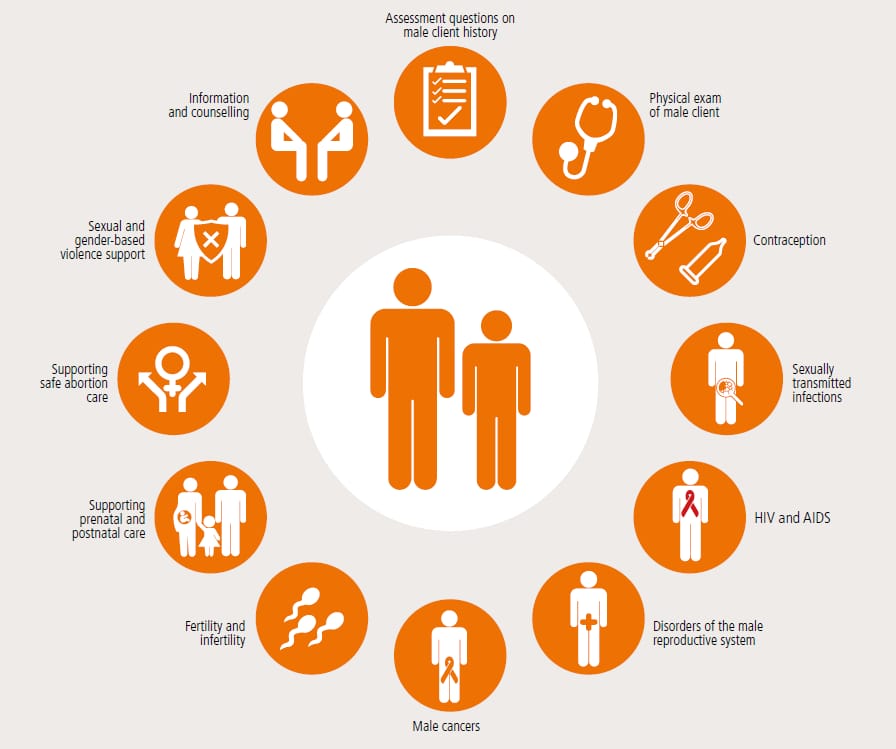
Total well being in all aspects of the reproduction such as physically mentally and emotionally is called Reproductive health.
All the reproductive organs should be healthy with normal function.
Major problems associated with reproductive health
Overpopulation
Overpopulation causes a scarcity of every basic need.
It affect the well-being of reproductive health also.
To overcome the problem of overpopulation India started family planning program in 1951.
Later it was changed to reproductive and Child Health Care program in 1997.
A rapid decline in death rate, maternal mortality rate and infant mortality rate leads to overpopulation.
Small family, happy family
Steps to control population explosion
People should be educated about the advantages of smaller family.
Raising the marriageable age of male and female is an effective way to control the population.
Couples should be motivated to family planning by adopting birth control measures.
Step under reproductive and Child Health Care program
Increase in awareness about disease related to reproductive system example – sexual transmitted disease (STDs).
Increase in awareness through the audio visual media.
Increase in awareness about different contraceptive methods.
Increase awareness about sex education.
Female foeticide
Female foeticide can affect reproductive and sexual health of a Woman.
Due to the use of amniocentesis cases of female foeticide increases.
Amniocentesis is the technique in which amniotic fluid is studied for any type of enzyme disorder, chromosomal disorder or other bio-chemical disorder.
Amniocentesis method is misused to know the sex of an Unborn baby.
Sex education
Due to lack of education, people are not concerned about safe and hygienic sexual practice.
Introduction of the education in school and colleges its another step to provide right information to the youth.
Sex education can save the young youth people from myths and misconceptions about sex related issues.
Should provide knowledge about birth control methods and care of mother and child.
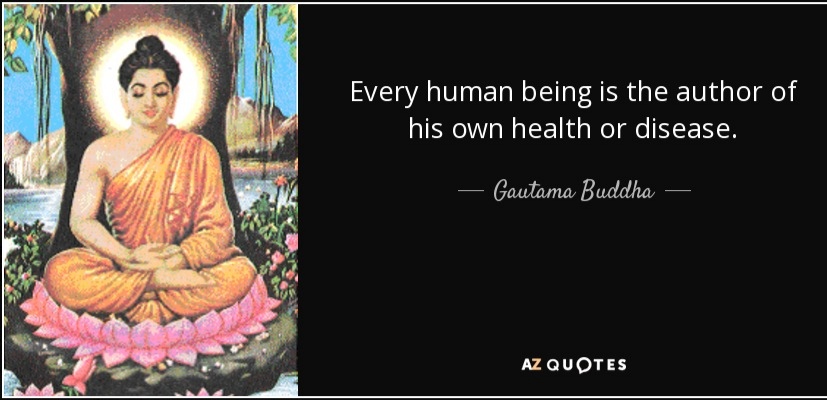
Our health is in our own hand…
Sexually transmitted disease
Chlamydiasis
Caused by Gram Negative bacteria Chlamydia trachomatis.
Causes urethritis which result in painful urination and pus discharge.
In male, it causes infertility by causing oligospermia.
It increases the chance of ectopic pregnancy.
Treatment –
Treated by antibiotics.
Gonorrhea
Causes by negative bacteria Neisseria Gonorrhea.
Causes inflammation of reproductive tract, urinary tract infection, and urethritis.
Treatment
Newly born child is given 1% AGNO3 dose to prevent eye. infection
Genital herpes
Causes by herpes simplex virus
Causes painful blisters
In male – glans penis and foreskin
In female – external genitalia
There is no proper treatment
Treatment is only to extend life.
Genital warts
Caused by human papiloma virus.
Causes Cancer of different organs such as-
cervical cancer
penile cancer
vaginal cancer
vulvar cancer
anal cancer
Treatment
Alpha interferon
cryotherapy
electrocautery
Sexually transmitted disease
It is very important to provide information to the couple or who are in marriageable age group about birth control methods, care of pregnant women, important of breastfeeding, equality to the gender and equal opportunity to the male and female child, reproductive tract infections etc.
The education of reproductive health should be provided to all
Everyone had struggled with confidence before and it’s completely normal. If you are wanting to come out of your comfort zone and do better in making friends or make a good first impression, then these tips are fair enough to help you today.
1) ASK QUESTIONS
People tend to lean towards the one who need help. If you are a person who asks a lot of questions then it is a way you are attracting a lot of people. It could also be a great way to start a conversation, but never over-ask because people might interpret you as a little annoying.
2) SHOW YOUR FLAWS
Never shy away from showing your flaws as it makes you more relatable and people often would feel comfortable around you. You will soon gain the trust of many people and get along well with people who have similar flaws.
3) SPREAD POSITIVITY
People often tend to find the happiest ones more attractive as they make sure to make everyone laugh and feel happy. If you have a positive aura then make sure you spread all those smiles and share those jokes that can create an atmosphere that is much lighter. Beware of faking emotions, it can lead to you loosing people as well.
4) CARE TRUTHFULLY
If you happen to help the ones who are in desperate need then you leave a good impression not only on that person but also on the ones who are silently watching you help. People feel gratitude towards the ones who tend to be more kind and caring. Make it genuine, and people will seek for you when they are in urgent need. Never expect anything in return!
5) A POSITIVE BODYLANGUAGE
A positive body language can decide your likability. If you always carry a smile on your face and are friendly then you will be able to gain more people’s attention. Remember to never fake your actions and build a bad impression on people. Words spread faster and can bring you bad luck.
Most importantlymake sure you are taking care of yourself as it is the most important aspect in life.
What we learn from our society we follow that and pass on the same to the generation which follows. In India, if anyone wants to make a change in the normal dynamical functioning of a society, they are generally demotivated by the statement that “What will happen by a SINGLE PERSON’s efforts”. This is what we have heard since ages and this is what is being passed on to us from the older generations. As people prefer security in every sense, whether it be life security, job or financial security. Because to make changes requires guts to stand alone and continue doing what one believes in.
Also, we inspire each other in the way we may have never thought of. How many of you after watching a sport inspired movies have at least once tried that sport? Inspiration lies in every corner of the world i.e. if you really open your eyes to see it.
This blog will tell you about some INDIANS who single handedly managed to bring a drastic change in the society.
JADAV PAYENG– Popularly known as the “FOREST MAN OF INDIA”, a title which was conferred to him by the vice Chancellor of the Jawaharlal Nehru University in 2012, Jadav is a man responsible for creating the forest that stands at 550 hectares today on the island of Majuli near Jorhat.
It all started when a teenager Jadav living in the state of Assam near the Brahmaputra river region noticed the decreasing number of reptiles and snakes from the forests near his house due to excessive cutting of the trees. The elders of his village told him that if a house is not made for the animals they will all die. He thought about how he will feel when instead of snakes, the number of human started to decrease. He knew he had to do something, so he went to the forest department with his problem which was actually everyone’s but it was conveniently ignored. The forest department then taunted him to start planting trees himself and that is what he did. He started planting saplings on a small deserted island near the Brahmaputra river for nearly three decades and now this full grown forests spread over many hectares of land.
People travel from across the globe to see his forest that is visited by 120 species of birds, including migratory ones; and elephants, rhinos, and tigers that visit from Kaziranga National Park. Also, a herd of 50 to 150 elephants remains in the forest for nearly three months a year. Locals call it ‘Mulai forest’; Mulai is Jadav’s nickname.
While rest of his friends have a stable , comfortable life in the cities, Jadav refused to leave the forests which was his home and live with his wife and 3 children in a hut in the village. He says that his awards are his wealth.
2.SUDHANSHU BISWAS- A revolutionary freedom fighter who was one of those many unsung heroes who were the support to the ones at front on the battlefront, is the founder of 18 schools which educates poor and orphan children with the aim of giving them a brighter life. After India gained Independence , Biswas wen toff to Himalayas to understand true purpose of life and when he came back , there was a new mission he decided to embark upon. Biswas established two Ashrams in South 24 Parganas. Later, in 1973, he set up Sri Ramakrishna Sevashram near Baruipur. By 1996, he had built 18 free schools for the poor and downtrodden in the most underdeveloped areas of Sundarbans. He also has a old age home for people from nearby villages .
It is truthfully said that a REVOLUTIONARY NEVER DIES. Now in his 90s, Biswas still continues to run the schools and even teaches mathematics to the students. Biswas has proved that Age is just a number, it is the will power that matters.
3. RITU BIYANI – After having suffered and recovered from Breast cancer herself, she made it a point to educate the women living in the tribal , urban and rural areas to educate them about Breast cancer and help them find adequate treatment for the same. In India, women generally tends to ignore their health problems as they do not wish to disturb the dynamics of her family by bringing forth her health issue. The reason being that In Indian households women carry the ultimate responsibility of the family from feeding to taking care of everyone. In the process of fulfilling their responsibilities , they often tend to care about themselves and this carelessness then leads to dangerous consequences.
Many women doesn’t know or fail to notice the early signs of breast cancer and even if they do , they fail to get proper help for the same. Ritu Biyani holds a LIMCA BOOK OF RECORDS recognition in being the only woman to travel across the four points of the country to spread awareness about the same. If she might also have “minded with her own business” after getting recovered, then the many whose lives have been saved because of her efforts may have died.
Her BREAST CANCER AWARENESS CAMPAIGN continues to help those who have been living under darkness and scaredness of this disease taking them away soon.
4.GANGADHARA TILAK KATNAM-Once on a rainy day in Hyderabad, the car driven by Mr. Tilak suddenly fell, into a pothole and he ended up accidentally spoiling the uniform of kids standing nearby. He felt so ashamed for the same but again it was not his fault. Gangadhar like many other Indians could have left the matter at this but no he decided to find a solution by himself as such things which are the responsibility of the authorities are blatantly ignored by them. Now, a retired railway officer at 67, instead of enjoying his retirement he set off every morning in his car filled with gunny sacks containing tar to repair the roads himself. He picks these left over sacks from the roadsides and when the quantity fell short of the required amount , he even uses money from his own pocket.
It is his dream to see a pothole -less Hyderabad. He has until now fill over 1,125 potholes so far. For two and half years, he filled potholes single-handedly and with his own money. Now many citizens and software engineers are joining in Gangadhara’s Shramadaan (voluntary contribution of labor). From June 2012, the GHMC (Greater Hyderabad Municipal Corporation) started supplying BT MiX material to Gangadhara.
This is the era of the 21st century, the era of technology, advancement and growth, digitalization has reached its peak.
Earlier technology was bare minimum. No electricity. No transportation. No watch. No television. No radio or any other means of communication.
In order to send a message in the very ancient period it is said that pigeons were used. It would take months for a message to reach as messages were sent with the help of messengers. Further development came. Postal system was created which was quite faster than those messengers.
As time passed, people and technology developed, computers were invented, systems of typing and faxing were invented through which sending messages became much quicker.
Further after 2000's when Remote sensing and GIS developed, launching of Satellites developed, Internet facilities developed, system of e-mail facilities developed, and sending messages became the game of a few seconds. As time passed Google search engine came into existence after Yahoo. As mobile phones developed the Short Message Service(SMS) became far easier and faster. Social networking sites developed in which we can frequently send messages and can communicate live.
After 2010 when these facilities became more developed and faster, for the convenience of people and in order to stop corruption, the government of India decided to digitize all the banking facilities. This made it possible to withdraw and deposit money via online services. Government is trying to go cashless with less paper work as soon as possible so that people can operate or can take advantage of banking facilities sitting in any part of the country. Also people could adapt themselves to the changing scenario of developing technologies.
It's the universal truth that even the bestest thing in this world has its own disadvantages. Let's say love, which is the most beautiful thing, has its own drawbacks. Similarly non-development of technology as well as the development of technology has their flaws. Another truth is that people in India don't want to work. They want to earn money without struggling. They either beg or use their smart, intellectual and intelligent mind in doing frauds. They want to make money by cheating others.
On one hand technology is becoming a boon in the sense of quickness and comfort. On the other hand it is a boon for those ethical hackers. These people play with the psychology of people, they study the mindset of people and accordingly they plan to cheat on them and grab money from them.
They take help of links, messages and email through which they can lure people. They send random emails giving their identity as a manager of any foreign company. They invoke greed in people as being a lucky winner or a jackpot winner of crores of rupees. One who gets caught in their trap, they ask them to deposit huge amounts of money as service tax, transaction fees, conversion fees before transferring money, which they never send. These types of hackers operate these cells from some remote areas. Some people, even literate ones get caught in the trap of greed invoked by these hackers.
Secondly, phishing is a type of online fraud done by hackers, through sending links. If a person clicks on the link the account and the phone goes in control of the hacker. They can withdraw all the money without the owner's consent. Sometimes they behave as a worker in a bank, by saying that they want to renew their accounts and ask OTP (one time password) from them. They build a person's trust by giving them all the general information of their bank account.
On social media too people do too many frauds by offering jobs, money, gold and many other items by which even a mature and literate person becomes a prey of these hackers.
The bad thing is they have no fear of anybody. If someone identifies them, they are fearless, they continue to cheat because they consider people as dumb.
Another, more sad thing is that when a person faces such kind of fraud he looks forward to police and crime branch but officers over there don't give a damn to these complaints. They don't even notice it. They don't take any actions against these hackers, which makes them more confident and strong on whatever they are doing and that's the reason they have no fear.
Another reason is the government has the least focus on such big issues of the country.
I agree that despite this much awareness, because of people's dumbness and greed, people get caught in these traps, but somewhere I feel that the government is failing to spread awareness and in taking actions against it. Many people who face these frauds are the ones who are in need of money, and hence they get caught in a trap. Many of them earn every penny with great efforts and by giving blood and sweat.
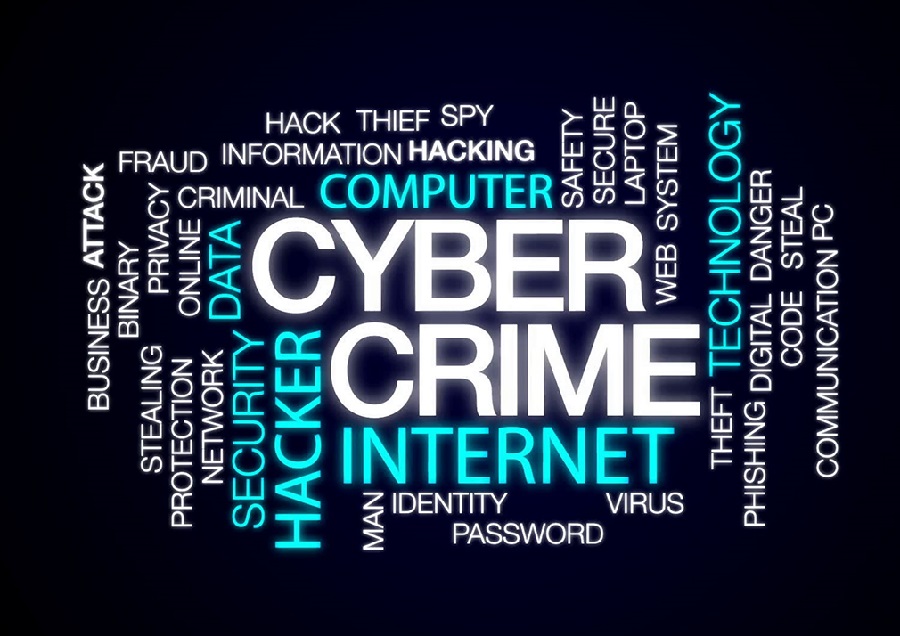
This is a very serious problem of theft on the internet, which is going to become a bigger problem for the people of the country, as technology advances. Hackers and their way of hacking is also getting advanced.
The Internet, technology and advancement are for making our life easy. One should use it smartly, because it depends on us whether we make this advancement of technology as a bane or boon for ourselves.
The Indian rupee refers to India’s national currency and is represented by ISO code INR. It is regulated by the Reserve Bank of India (RBI), the country’s central bank. The Indian rupee is named after the “rupiya,” a silver coin issued for the first time in the 16th century.
India’s economy used to be cash-based, resulting in the circulation of counterfeit currencies by those involved in criminal activity. Over the years, RBI was compelled to change and upgrade INR notes with new security features. Generally, large denominations are the most forged bills. In 2016, the Government of India declared the demonetization of all notes in denominations of 500 INR and 1000 INR of the Mahatma Gandhi Set.
At the beginning of 1830, the English exerted a significant influence in India. The Coinage Act of 1835 made a standardized coinage possible in the country. The new version of the coins featured the effigy of William IV on the original side and the denomination on the reverse, written in Persian and English.
On the other hand, coins issued after 1840 bore a portrait of Queen Victoria. In 1862, the first coin issued under the crown was authorized. The Coinage Act of India, which regulates the establishment of mints and the issuance of coins, was passed in 1906 and is still in force today.
Historically, the rupiya was a silver coin. It resulted in significant implications in the 19th century when the world’s largest countries were under the gold standard. The discovery of huge volumes of silver in the European colonies and the U.S. sparked the panic of 1873. It led to the devaluation of silver compared to gold, resulting in a fall in India’s standard currency value.
The condition during the Second World War led to Quaternary Silver Alloy replacing the regular rupee. The coins produced in 1940 were substituted in 1947 by pure nickel coins. India gained its independence on August 15, 1947. However, the prevailing currency remained frozen until January 26, 1950, when the country adopted its own constitution. In 1957, India introduced a decimal currency scheme where 100 paise formed a rupee.
In 2016, the government decided to demonetize 500 and 100 INR notes, arguing that it would curb the underground economy, rendering it even more difficult to use illicit and counterfeit cash to finance crime and terrorism. Following the move, the RBI declared the issuance of new notes of denominations 500 and 2000 INR in a new Mahatma Gandhi series.
As of April 2019, the latest circulated notes included denominations of 5 INR,10 INR, 20 INR, 50 INR, and 100 INR notes of the Mahatma Gandhi Old Series and the 10 INR, 20 INR, 50 INR, 100 INR, 200 INR, 500 INR and 2000 INR notes of the Mahatma Gandhi New Series. The new series of INR notes contains various micro-printed texts, such as “Bharata” and “RBI,” in different locations.
Officially, INR’s exchange rates are determined by the market. However, the RBI aggressively deals in the USD/INR currency market to influence the exchange rate. As a result, the currency system in place for INR compared to the USD is a regulated exchange rate. It is often called a “managed float.”
Other exchange rates, such as INR/JPY and EUR/INR, are subject to fluctuations characteristic of floating exchange rates. As a result, it generates arbitrage opportunities against the exchange rates.
Successive governments through RBI prefer not to pursue a strategy of pegging the INR to a particular foreign currency at a specific exchange rate. RBI’s interference in currency markets is primarily intended to make sure that the exchange rate volatility is low.
Now, before going any further with our mountains, let us first see the various types of interactions possible between our 2 types of tectonic plates- The Oceanic crust and the Continental crust: The 3 basic interactions are converging boundaries, diverging boundaries and transform boundaries.
Converging- It is defined as the two plates moving towards each other, colliding in the process. Now, there are 3 possibilities-
Continental-continental collision- Here, two continental landmasses( eg.- The North American plate or the Eurasian plate or collision of Australia, South America and New Zealand (It formed the Great Australian Dividing range)) collide and the two plates fold over one another and lead to the formation of fold mountains. Try using a paper bringing it closer from the opposite ends. The raised structure represents the fold mountains. They have no volcanic activity (though earthquakes are possible). Examples are the Urals, the Atlas, The Rockies, the Alps, the Himalayas
Oceanic- Oceanic Collision- In these types of collision, the heavier oceanic plate subducts under the lighter oceanic plate(forming trenches- eg. Mariana Trench). Due to subduction, it reaches the area of high pressure and temperature in the mantle and thus melts converting to magma. This magma later rises and when it finds an opening (like the one created by the diverging limbs) in the oceanic crust, it comes out. It, hence, forms oceanic volcanoes, ridges and later volcanic islands like those of Indonesia and the Phillipines.
Continental Oceanic Collision- When a continental and an oceanic plate collide, it leads to the formation of either fold mountains(Rockies) or trenches(Philippines Trench) or both(Andes and the Peru- Chile Trench).
Diverging- When two plates or landmasses move away from each other ,in the opposite directions, it is known as diverging. Even here, there are 2 possibilities-
Continental continental diversion- When two continental plates move away from each other, it leads to the formation of rift valleys and plateaus. Examples are- The east African rift valley (formed due to the drifting apart of Arabian peninsular plate from African plate- they were connected millions of years ago).
Oceanic oceanic diversion- It occurs when two oceanic plates move away from each other, creating a ridge in its wake. The Atlantic ocean is divides by a ridge known as the Mid oceanic ridge (named so because it passes through the middle of Atlantic ocean). Here, the plate boundaries of Africa, Eurasia, North America , South America diverge from each other. The Pacific and the Indian ocean are the other two oceans that have ridges.
Transform – When one tectonic plate moves past another, it forms transform plate boundary. These plate movements most commonly produce earthquakes as during movements the plates experience friction and intermolecular force of attraction due to which one plate might find itself bounded to another plate. Then, when the plates move past one another it requires a lot of energy and produces heat and waves. Example- the boundary between Pacific plate and North American plate in Western California.
Now, that we know about tectonic plates, studying the formation of mountains becomes a lot easier. Stay tuned for the 3rd part where we will look into the formation of various mountains and the tectonic plates and movements involved . Till then, take care (a smiley emoji).
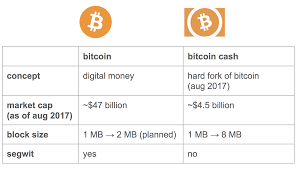
Bit coin cash is a crypto currency, from a fork of Bit coin that was created in August 2017. Bit coin cash was created to accommodate a larger block size compared to Bit coin, allowing more transactions into a single block.
Later in November 2017 it split into 2 crypto currency
Bit coin Cash ABC and
Bit coin Cash SV (Satoshi Vision)
Despite their philosophical differences, both Bit coin and Bit coin cash share several similarities.
1 BITCOIN CASH = 36683.18 INDIAN RUPEE
HISTORY OF BIT COIN TO BIT COIN CASH:
Bit coin was meant to be a peer-to-peer crypto currency that was used for daily transactions. But over the years it became an investment vehicle instead of a currency. Its block chain witnessed scalability issues because it could not handle the increased number of transactions. The confirmation time and fees for a transaction was urged. It’s due to 1MB block size limitation for bit coin which results in queued transactions.
As a remedy to this situation Bit coin cash was proposed by increasing the size of blocks to between 8 MB and 32 MB, thereby enabling more transactions per block. “Bitcoin cash is the version of bitcoin that implemented an increase in the transaction capacity,”
DIFFERENCE IN BIT COIN AND BIT COIN CASH:
Unlike bit coin, bit coin cash uses a separate hash algorithm which eliminates the possibility of a replay between the two block chains.
Bit coin is difficult to beat in terms of price when compared to bit coin cash.
Bit coin cash is well ahead of bit coin in terms of transaction speed.
Bit coin cash has lower transaction cost than Bit coin.
BIT COIN CASH IN INDIA:
Binance is one of the world’s largest and best known crypto currency exchanges. As an Indian trader, one can buy Bit coin cash on binance.
As per reports, Bit coin cash worth will rise to $2000 by the year 2025.Supply of Bit coin is limited to 21 million.
IS IT A GOOD INVESTMENT?
Investing in bit coin is like a roller coaster ride. Bit coin Cash offers the potential for otherworldly profit but at the same time it has high risks and crazy price swings.
CRYPTO CRASH:
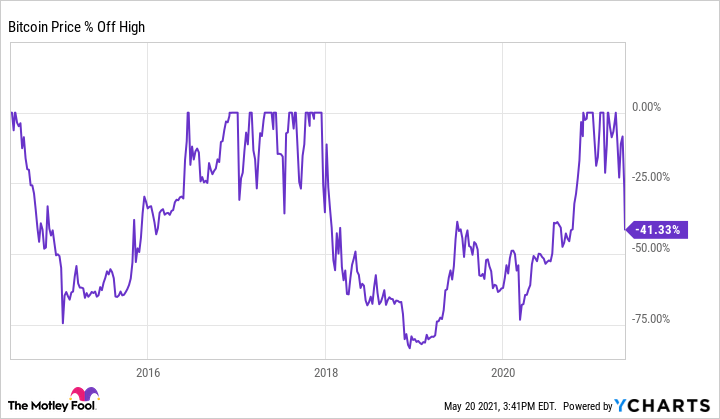
According to Visual Capitalist, Bit coin has crashed 80% or more three different times since 2012. Therefore today’s crypto crash is nothing new. No one knows the future, so no one can say whether Bit coin is going up or down in the near term. However, it is good to say the odds are high that the price of Bit coin will be higher following the next halving event, which is expected in 2024.
TRADING OVERVIEW:
Exchange
Pair
Price
Binance
BCH/TUSD
$ 447.04
Kucoin
BCH/USDC
$ 445.73
Huobi Global
BCH/USDT
$ 448.22
UPbit
BCH/KRW
$ 462.65
BIT COIN CASH PRICE CHART:
24 Hour High
24 Hour High
Market Capitalization
476.98 USD
444.80 USD
8,632,223,279.93 USD
CONCLUSION:
If Bitcoin’s history teaches us anything, it’s to expect the unexpected. If Bit coin’s history teaches us anything, it’s to expect the unexpected. If you’re willing to hold a small position for the long term, then it is recommended to buy some Bit coin. But one mustn’t buy today hoping to get rich tomorrow.







 Eduindex
You must be logged in to post a comment.