Global warming.

Since the Industrial Revolution, the global yearly temperature has expanded altogether by somewhat more than 1 degree Celsius, or around 2 degrees Fahrenheit. Between 1880—the year that precise recordkeeping started—and 1980, it rose on normal by 0.07 degrees Celsius (0.13 degrees Fahrenheit) like clockwork. Since 1981, nonetheless, the pace of increment has dramatically increased: For the most recent 40 years, we’ve seen the global yearly temperature ascend by 0.18 degrees Celsius, or 0.32 degrees Fahrenheit, each decade.

The outcome? A planet that has never been more blazing. Nine of the 10 hottest years since 1880 have happened since 2005—and the 5 hottest years on record have all happened since 2015. Climate change deniers have contended that there has been a “stop” or a “lull” in rising global temperatures, however various investigations, including a 2018 paper distributed in the diary Environmental Research Letters, have invalidated this case. The effects of global warming are now hurting individuals all throughout the planet.

Presently climate researchers have presumed that we should restrict global warming to 1.5 degrees Celsius by 2040 in case we are to stay away from a future wherein regular daily existence all throughout the planet is set apart by its most exceedingly terrible, most destroying impacts: the outrageous dry seasons, rapidly spreading fires, floods, hurricanes, and different calamities that we allude to by and large as climate change. These impacts are felt by all individuals somehow yet are capable most intensely by the oppressed, the financially minimized, and ethnic minorities, for whom climate change is regularly a vital driver of neediness, dislodging, yearning, and social agitation.

What causes global warming?

Global warming happens when carbon dioxide (CO2) and other air toxins gather in the climate and ingest daylight and sunlight based radiation that have bobbed off the world’s surface. Ordinarily this radiation would escape into space, yet these contaminations, which can keep going for quite a long time to hundreds of years in the climate, trap the warmth and cause the planet to get more sultry. These warmth catching poisons—explicitly carbon dioxide, methane, nitrous oxide, water fume, and engineered fluorinated gases—are known as ozone harming substances, and their effect is known as the nursery impact.

However regular cycles and variances have made the world’s climate change a few times in the course of the most recent 800,000 years, our present time of global warming is straightforwardly inferable from human action—explicitly to our consuming of petroleum derivatives like coal, oil, fuel, and flammable gas, which brings about the nursery impact. In the United States, the biggest wellspring of ozone harming substances is transportation (29%), followed intently by power creation (28%) and mechanical action (22%).

Controling perilous climate change requires exceptionally profound cuts in discharges, just as the utilization of options in contrast to non-renewable energy sources around the world. Fortunately nations all throughout the planet have officially dedicated—as a feature of the 2015 Paris Climate Agreement—to bring down their outflows by setting new principles and creating new arrangements to meet or even surpass those norms. The not very great news is that we’re not working quick enough. To stay away from the most noticeably terrible effects of climate change, researchers reveal to us that we need to decrease global fossil fuel byproducts by as much as 40% by 2030. For that to occur, the global local area should take prompt, substantial strides: to decarbonize power age by evenhandedly progressing from petroleum derivative based creation to sustainable power sources like breeze and sun oriented; to jolt our vehicles and trucks; and to amplify energy productivity in our structures, apparatuses, and enterprises.

How is global warming connected to outrageous climate?

Researchers concur that the world’s rising temperatures are energizing longer and more smoking warmth waves, more continuous dry spells, heavier precipitation, and all the more impressive typhoons.

In 2015, for instance, researchers reasoned that an extensive dry season in California—the state’s most noticeably awful water deficiency in 1,200 years—had been strengthened by 15 to 20 percent by global warming. They additionally said the chances of comparable dry seasons occurring later on had generally multiplied over the previous century. Furthermore, in 2016, the National Academies of Science, Engineering, and Medicine declared that we can now certainly ascribe some outrageous climate occasions, similar to warm waves, dry spells, and weighty precipitation, straightforwardly to climate change.

Gender Identity and Gender Roles.

Gender roles in society means how we’re expected to act, speak, dress, groom, and conduct ourselves based upon our assigned sex. For example, girls and women are generally expected to dress in typically feminine ways and be polite, accommodating, and nurturing. Men are generally expected to be strong, aggressive, and bold.

Every society, ethnic group, and culture has gender role expectations, but they can be very different from group to group. They can also change in the same society over time. For example, pink used to be considered a masculine color in the U.S. while blue was considered feminine.

How do gender stereotypes affect people?

A stereotype is a widely accepted judgment or bias about a person or group — even though it’s overly simplified and not always accurate. Stereotypes about gender can cause unequal and unfair treatment because of a person’s gender. This is called sexism.

There are four basic kinds of gender stereotypes:

  • Personality traits — For example, women are often expected to be accommodating and emotional, while men are usually expected to be self-confident and aggressive.
  • Domestic behaviors — For example, some people expect that women will take care of the children, cook, and clean the home, while men take care of finances, work on the car, and do the home repairs.
  • Occupations — Some people are quick to assume that teachers and nurses are women, and that pilots, doctors, and engineers are men.
  • Physical appearance — For example, women are expected to be thin and graceful, while men are expected to be tall and muscular. Men and women are also expected to dress and groom in ways that are stereotypical to their gender (men wearing pants and short hairstyles, women wearing dresses and make-up.

Hyperfemininity is the exaggeration of stereotyped behavior that’s believed to be feminine. Hyperfeminine folks exaggerate the qualities they believe to be feminine. This may include being passive, naive, sexually inexperienced, soft, flirtatious, graceful, nurturing, and accepting.

Hypermasculinity is the exaggeration of stereotyped behavior that’s believed to be masculine. Hypermasculine folks exaggerate the qualities they believe to be masculine. They believe they’re supposed to compete with other men and dominate feminine folks by being aggressive, worldly, sexually experienced, insensitive, physically imposing, ambitious, and demanding.

These exaggerated gender stereotypes can make relationships between people difficult. Hyperfeminine folks are more likely to endure physical and emotional abuse from their partners. Hypermasculine folks are more likely to be physically and emotionally abusive to their partners.

Extreme gender stereotypes are harmful because they don’t allow people to fully express themselves and their emotions.  For example, it’s harmful to masculine folks to feel that they’re not allowed to cry or express sensitive emotions. And it’s harmful to feminine folks to feel that they’re not allowed to be independent, smart or assertive. Breaking down gender stereotypes allows everyone to be their best selves.

Economy of Ireland.

Introduction
In this research paper we are going to be discussing about the micro-economic issues of Ireland, The economy of Ireland is a highly developed knowledge economy; a knowledge economy focuses on the production of goods and services induced by knowledge intensive activities. In the case of Ireland , it is focused on services in high-technology , life sciences, financial services and agriculture including agrifood . Ireland is also an open economy (6th on the Index of Economic Freedom), an open economy means that the country not only posses domestic actors but is also engaged in trade of products in the form of managerial exchange and technology transfers .  In the global GDP per capita tables, Ireland ranks 4th of 186 in the IMF (international monetary fund) , table and 4th of 187 in the World Bank rankings. Foreign-owned multinationals make up a significant percentage of Ireland’s GDP. The “multinational tax schemes” used by some of these multinational firms contribute to a distortion in Ireland’s economic statistics; including GNI, GNP and GDP.
Despite the two jurisdictions using two different currencies (the euro and pound sterling), a growing amount of commercial activity is carried out. This has been possible by the two jurisdiction’s shared membership of the European Union, business communities and policymakers are all for the creation of an “all-Ireland economy” to take advantage of cost and boost competitiveness
There are two multi-city regions on the island of Ireland:

Dublin – Belfast corridor
Cork – limerick – Galway corridor

Current micro-economic status of Ireland
Since the end of the EU-IMF in 2013, Ireland has experienced steady economic growth, and has proven itself to be the fastest growing European economy. In 2019, the Irish economy continued to grow at a rapid pace, but experienced a slowdown ahead of the UK’s departure from the Euro zone. It experienced a 8.3% increase of GDP in 2018, then a growth slowdown of 5.5% of GDP in 2019 according to the IMF. The national economy has been supported by strong domestic demand and by the activities of multinational companies operating in the country. According to the updated International monetary fund reports from 14th April 2020, due to the outbreak of the COVID-19, GDP growth is expected to fall to -6.8% in 2020 and pick up to 6.3 %, subject to the post-pandemic global economy recovery, this might also be the conclusion of post-Brexit transition period.
The IMF expects the unemployment trend to be heavily affected by the negative economic impact of the COVID-19 pandemic, the rate being currently estimated to increase to 12.1% in 2020 and decrease slightly to 7.9% in 2021.

INTERESTING FACTS ABOUT GIRLS:YOU SHOULD KNOW.

  • Girls like guys with a sense of humor and hate guys who always brag about themselves. 
  • Girls can either jokingly or seriously get jealous over your pubg game. 
  • It is really hard to trace why girls are unpredictable.
  • Girls spend one year of their lifetime just in deciding what to wear. 
  • A girl cannot keep a secret for more than 47 hours. 
  • Instead of a girl telling her feelings to a guy, her favorite song would convey it better. 
  • Girls usually compete unconsciously among themselves especially when it comes to beauty.
  • A woman can tolerate double the pain compared to a man.
  • Girls spend 120 hours in a year looking at themselves in the mirror.
  • In every 100 girls, only one would become the wife of her lover, remaining 99 would remain as passwords for Gmail and Facebook accounts of their lovers.
  • You should let her cool first before you say sorry, otherwise, she won’t accept your apology. 
  • Girls like guys who can protect and defend them.
  • If a girl says “no” believe her. She wouldn’t give you a no if she likes you.
  • Girls love receiving letters and surprises. 
  • When a girl is talking and if a boy says ”OK bye”, they hate him a lot. 
  • Girls like boys who ask for advice.
  • Girls hate it when you make them wait. 
  • If you’re thinking that girls are very particular with a guy’s looks, then its time for you to make a shift. It’s the attitude that they fall for
  • There is no guarantee that a girl would get impressed however we respect her, praise her, love her and care for her, but in the case of guys sly leer and a smile would suffice.
  • There would be a dark secret in every girl’s life which is not even shared with her best friend. 
  • Girls don’t enjoy talking dirty as much guys do.
  • Girls love to feel special even though they might not show it.
  • Being serious can turn a girl off.
  • When a guy says something really sentimental, a girl will remember it forever and ever.
  • Girls know how to control their emotions.
  • Girls daydream about their Crushs all the time even though they don’t show it.
  • Girls like to hear compliments, but usually not have to react to them.
  • Don’t try to guess girls feeling, Ask her.
  • If a girl calls you or expect a call from you stay with her.
  • Hearing the words “I love you” to a girl is great expression to agirl that she is beautiful.
  • Girls want nothing more than to feel love.

As humans, Women’s are beautiful, incredible, and powerful in their own right. They can achieve anything they set their minds to. Having to deal with oppression and inequality for centuries, there have been a ton of things women have had to fight for and change the future for succeeding generations of equally amazing women. therefore we should respect women.

Types of social movements.

There is no single, standard typology of social developments. As different researchers center around various parts of developments, various plans of order arise. Henceforth any friendly development might be portrayed as far as a few measurements.

Numerous endeavors at order focus on the goal of the development. The social foundation in or through which social change is to be achieved gives one premise to sorting social developments as political, strict, monetary, instructive, and such. It could be contended that all developments will in general be either political or strict in character, contingent on whether their technique targets changing political designs or the virtues of people.

An ordinarily utilized yet exceptionally abstract qualification is that among “change” and “progressive” developments. Such a qualification infers that a change development advocates a change that will save the current qualities however will give further developed method for carrying out them. The progressive development, then again, is viewed as pushing substitution of existing qualities. Perpetually, in any case, the individuals from a purported progressive development demand that it is they who value the genuine upsides of the general public and that it is the adversaries who characterize the development as progressive and incendiary of essential, customary qualities.

A few endeavors to portray developments include the course and the pace of progress pushed. Modifiers like revolutionary, traditionalist, moderate, liberal, and moderate are regularly utilized for such purposes. In this setting the assignments “progressive” and “change” are frequently utilized in a fairly unexpected sense in comparison to that portrayed above, with the ramifications that a progressive development advocates fast, steep change while a change development works for moderate, transformative change.

The American humanist Lewis M. Killian progressed still another typology dependent on the bearing of the change supported or went against. A traditionalist development advocates the rebuilding of a past condition of get-togethers, while a reformist development contends for another social game plan. A moderate development goes against the progressions proposed by different developments, or those appearing to create through social float, and promoters conservation of existing qualities and standards.

Killian and the American analyst Ralph H. Turner contended that it is helpful now and again to arrange social developments based on their public definition, the personality of the resistance evoked, and the method for activity accessible to the development. This plan is intended to kill the abstract assessment of objectives intrinsic in such classes as reformist and progressive. A development that doesn’t seem to undermine the qualities or interests of any critical portion of society is freely characterized as decent. In case there is no contending development supporting a similar goal, it is additionally nonfactional. The good nonfactional development should fight principally with the issues of lack of engagement and token help, yet it approaches genuine method for advancing its qualities. A decent factional development should battle with contending developments pushing a similar general target yet additionally approaches real method for expanding its impact. A development that seems to compromise the upsides of incredible and critical vested parties inside the general public is freely characterized as progressive and experiences savage concealment. Thus, it is denied admittance to real method for advancing its program. Another kind of development is characterized as neither good nor risky yet as exceptional; this sort, seen as odd yet innocuous, experiences disparage and has restricted admittance to genuine means.

Social developments may likewise be ordered based on the overall person of their methodology and strategies; for example, regardless of whether they are authentic or underground. The well known qualification among extremist and moderate developments mirrors this kind of arrangement. An undeniable contrast between kinds of developments relies upon their dependence upon rough or peaceful strategies. However, a peaceful development may likewise be characterized as progressive or revolutionary since it acknowledges common defiance, as opposed to legitimate or parliamentary moving, as a significant element of its procedure. It ought to be added that the qualification among vicious and peaceful developments is a relative one in light of the fact that a development might move quickly from one to the next as it creates.

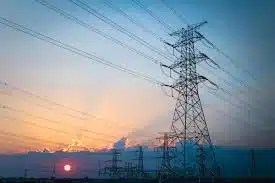
Electrical world: How Electricity changes the way and view of human society

  •                     

Electricity which is used as a power resource or fuel from years is now showing us a picture of a world where literally everything is based upon electricity and its effects, And it’s not wrong to say that this picture is starts taking shape from many small companies to unicorn startup everyone is in race of electrical era which is quite good, and also challenging because its not initially easy to for us to adapt this change and meet such a  tremendous consumption of electricity but some of the companies are already shows us the revolutionary projects which blows up our hearts like, Tesla.

I think every body is aware of the revolution the it regains in the world of electricity TESLA is one the leading company that has made very successful electrical cars for long range distances with some modern technology and features. And this is not only up to the electrical cars which leads us to the second example there are companies  that works on the electrical drones which is also a major part of todays world. Similarly there are a number of companies which take the uses of electricity beyond the levels.

  ELECRICAL COMSUPTION AND ITS FORMATION

If we thing about the world where we see our future in electricity then it is also very important to look some of the futuristic way for the production of electricity. So to meet a good consumption of electricity we cannot rely on the few way of its production that’s why many scientists from the various parts of world are trying to discover some new and advance methods to produce electricity but as per the rising number of humans in the world the production is not only the way to meet the consumption bar, the another and the most important thing is humans have to make a mindset to conserve the electricity, And we have to do this from today not only for us but also for the upcoming humans society, because the process of saving the energy is much cheaper and easier rather process it .

ADVANTAGES OF THIS ELECTRICAL FUTURE

There are a number of advantages of such a electrical future, first we use most of the vehicle and machines which are pollution free which is  not good for us but also for our society , if we talk about electrical cars than, electric cars run on electrically powered engines, and hence there is no need to lubricate the engines, anything related to the combustion engine or a ton of maintenance tasks that are usually associated with a gas engine. And if we look at some other machines which plays an important role in your life such as satellite which helps us to collect basic to advance data may also contain hybrid engines which uses electricity to run and for that we use the solar power, which is also a example that electrical energy and easier to interchange with other source of energy.

DISADVANTAGES OF THIS ELECTRICAL FUTURE

Although the evidence of the positives has become very clear, there are also some downsides that needs to consider so if we talk in case of electrical cars than some most possible disadvantages are:-

1.Recharge Points

2. Electric fueling stations are still in the development stages. Not a lot of places you go to on a daily basis will have electric fueling stations for your vehicle, meaning that if you’re on a long trip or decide to visit family in a rural area and run out of charge, it may be harder to find a charging station. You may be stuck where you are.

However, until charging stations are more widespread, be sure to have a charging station maps where you live and where you frequently go so that you’ll be able to charge your new EV when you need to.

3. If we move to such a world where we fully depend upon electricity then a short power cut can send us in trouble. People have to face difficulties in the areas who suffering from lack of electric power. So whatever the future is we have to remember a think that in the race or era where technology in its peak we also have to save this planet for upcoming generations.

Social Movements.

Social movements seek to bring in social change in our everyday society and our everyday lives, Social movement’s role in society is not necessarily to achieve an agenda or solely change laws. Social movement’s role is to allow people the opportunity to come together, speak their mind, and make people aware of an issue that is close to their heart. Social movements often arise with the aim of bringing about changes on public issues which concern a specific group. Social movements are a prime example of our democratic rights. Being able to practice free speech, organize peaceful protests and having the power to make a difference in our government are all great privileges of living in our country. Social movements have achieved many great things like women’s rights, environmental rights, rights for backward caste and classes and Dalit’s. People can practice their constitutional rights, while making a difference in the world they live in.

Across India, the post-independence movements of women, students, SCs, STs and peasants had a particular significance as they were deprived in the British Period of some fundamental rights and remained largely non-beneficiary of development gains. Social movements in India, contribute to the emergence of a radically new social, economic and political structure. The majority of social movements strive to create new ideas which are expected to be adopted and implemented by the leaders of the party. We had some hope for the upliftment of the Indian Constitution and subsequent legislative initiatives. Now they are motivated to suit the affluent sectors of Indian society. The revolution that started in India’s struggle for liberty centered on throwing the British Empire out of control by becoming self-sufficient Swadesh. This motivated people to speak against their authority and the courage to share their opinions.

 Sometimes, these social movements don’t work or are ineffective but, just because their main goals aren’t met or nothing was achieved on their “agenda” does not mean the social movement was not successful.  For a social movement to be successful, all they have to do is make someone aware of an issue, that they were not aware of before. Overall, social movements have played an integral role in our societal advancement and have ensured that the people have the power to make a difference in their government, one of the great privileges that come along with living in our country.

Social development, an approximately coordinated however supported mission on the side of a social objective, ordinarily either the execution or the counteraction of an adjustment of society’s construction or qualities. Albeit social developments contrast in size, they are on the whole basically aggregate. That is, they result from the pretty much unconstrained meeting up of individuals whose connections are not characterized by rules and strategies however who simply share a typical attitude toward society.

Aggregate conduct in groups, alarms, and rudimentary structures (processing, and so on) are of brief term or wordy and are directed generally by motivation. At the point when brief motivations offer approach to long haul points, and when supported affiliation replaces situational groupings of individuals, the outcome is a social development.

Qualities of social developments

A development isn’t just a propagated swarm, since a group doesn’t have authoritative and persuasive instruments fit for supporting enrollment through times of inaction and pausing. Besides, swarm components can’t be utilized to accomplish correspondence and coordination of movement over a wide region, like a country or landmass. A development is a combination of association and suddenness. There is typically at least one associations that give character, initiative, and coordination to the development, however the limits of the development are never coterminous with the associations.

Cyber Crimes and Privacy.

Words and expressions that barely existed 10 years prior are presently essential for our regular language, as hoodlums utilize new advancements to submit cyberattacks against governments, organizations and people. These violations know no boundaries, either physical or virtual, cause genuine mischief and posture genuine dangers to casualties around the world.

Cybercrime is advancing at an amazingly high speed, with recent fads continually arising. Cybercriminals are turning out to be more spry, abusing new advances with lightning speed, fitting their assaults utilizing new strategies, and helping out one another in manners we have not seen previously. Complex criminal organizations work across the world, planning multifaceted assaults surprisingly fast. Police should in this manner stay up with new advancements, to comprehend the conceivable outcomes they make for hoodlums and how they can be utilized as apparatuses for battling cybercrime.

There are numerous protection concerns encompassing Cybercrime when classified data is caught or revealed, legally or something else. Globally, both legislative and non-state entertainers take part in cybercrimes, including secret activities, monetary burglary, and other cross-line wrongdoings. Cybercrimes crossing worldwide boundaries and including the activities of no less than one country state are now and then alluded to as cyberwarfare. Warren Buffet portrays Cybercrime as the “number one issue with mankind.Computer extortion is any untrustworthy distortion of reality expected to let another to do or shun accomplishing something which causes misfortune. In this specific circumstance, the misrepresentation will bring about acquiring an advantage by:

Changing in an unapproved way. This requires minimal specialized ability and is a typical type of robbery by workers modifying the information before section or entering bogus information, or by entering unapproved directions or utilizing unapproved measures; Changing, obliterating, stifling, or taking yield, as a rule to hide unapproved exchanges. This is hard to distinguish , Changing or erasing put away information Government authorities and data innovation security experts have archived a huge expansion in Internet issues and worker examines since mid 2001. There is a developing worry among government offices like the Federal Bureau of Investigations (FBI) and the Central Intelligence Agency (CIA) that such interruptions are important for a coordinated exertion by cyberterrorist unfamiliar insight administrations, or different gatherings to plan potential security openings in basic frameworks. A cyberterrorist is somebody who threatens or forces an administration or an association to propel their political or social destinations by dispatching a PC based assault against computers, organizations, or the data put away on them.

Cyberterrorism, as a rule, can be characterized as a demonstration of psychological warfare submitted using the internet or PC assets (Parker 1983). Thusly, a basic publicity piece on the Internet that there will be bomb assaults during special times of year can be viewed as cyberterrorism. There are additionally hacking exercises coordinated towards people, families, coordinated by bunches inside networks, having a tendency to cause dread among individuals, exhibit power, gathering data important for demolishing people groups’ lives, burglaries, extorting, and so on.

Man Does Not Live By Bread Alone

This is a Biblical quotation. The full quotation reads: “Man shall not live by bread alone; but by every word that proceedeth of the mouth of God”. Food is necessary to exist but mere existence cannot be the be-all and end-all of life. We eat in order to live but life is a means and not an end itself. Bread is like a staff and support to help us reach our destination. Man does not live simply to eat and drink. Eat, drink and be merry cannot be the aim and objective of life. We share the need of food and shelter with all other animals. But man is the crown of creation. God has created man in his own image. His intellectual and spiritual capacities and capabilities are limitless. There cannot be more majestic, wonderful, awe-inspiring and valuable thing than man in the whole creation. He signifies the ultimate in creation. Then, how can he be satisfied with mere bread?

Man is an intellectual being. His intelligence urges him to probe the mysteries of nature, To conquer the elements, reach to the moon and planets and go beyond them. It wants to unravel the mystery of life, death and creation. It inspires and stimulates him to evolve higher and higher and still higher till perfection is achieved. His Hunger for knowledge and thirst for enlightenment know no bounds. Even the sky is not the limit for him. His spiritual, ethical, aesthetic, social, cultural and technological urges are two strong to be resisted. He wants to create wonderful, fantastic and very beautiful things. He dreams of making a perfect example. Satisfaction, in ordinary sense, is not his cup of tea. It belongs to animals and beasts.

Had he being satisfied with the gratification of his senses alone, there would not have been such great religions, literature, piece of wonderful art, cultures ever reaching to greater heights and so wonderful technological, scientific and industrial advancements. He could have then not planted his foot on the moon or probed Mars and sent flying machines far beyond the planets. Today he is master of all that he surveys only because of these deep urges to reveal the secrets of nature and spirit. No doubt, man was at first a savage animal like all other animals. Then he lived in caves, under trees, covered himself with barks and leaves and satisfied his hunger by eating flesh of the animals. But is was just a beginning Of the long and triumphant march- a march from savagery to civilization, culture and great spiritual heights.

Obviously, Bread is important but not all important. Bread sustains us, but the purpose of life is far higher, nobler, subtle, refined and wonderful. Life becomes worthy of its name when it is dedicated to nobler aims, activities, achievements and struggles. Man is by nature a dreamer, an idealist and prophet. He wants to translate his dreams into a reality. He does not treat life as an empty dream. It is not a walking shadow or a poor player signifying nothing. He is ready to lose his life to discover its real meaning, to lace it with a nobler purpose and significance. Life of man anticipates all these and much more. Food, shelter, clothing are a mere Staff and man never wants to turn them into a crutch. He knows the difference between a mere tool and the higher goals it is meant to serve. He can never be satisfied with a good length of life but believes in quality, in its meaningfulness and which is why there is so much struggle, efforts, exertion and sweat. Man search for the truth, the ultimate reality leads him to higher and higher steps of evolution. He knows how to live but still better he knows how to die. He eats to live but never lives to eat.

MAGIC IN A CUP OF TEA!!!

Every morning won’t be complete without a cup tea right? Many people can’t do their work without a cup pf tea. Tea gives us refreshness and make us active. Though many like coffee, there are people who love tea too. The reason for me to talk about tea is nothing but today’s topic revolves around tea. Let me tell you an essay written by Eric Arthur Blair about a cup of tea.

Eric Arthur Blair, known by his pename George Orwell, was an English Novelist, journalist and a critic. He opposed totalitarianism and supported democratic socialism. He is best known for the Allegorical novella ‘Animal farm” and the dystopian novel “Nineteen Eighty Four”. He wrote an essay about ‘A nice cup of tea’ and it was published in London Evening Standards in 1946. It is about the discussion of the art of making tea. He states ten rules to be followed while making tea. Let me tell you about his essay.

Eric Arthur Blair (George Orwell)

The author said that there are no cookery books that has the preparation of tea as a recepie. Countries like Eire, NewZealand and Australia which has tea as a part of civilization. He says that Chinese tea has virtues but there is no much stimulation in it. So the author prefers Indian or Ceylonese tea.

  • The first rule is that one should prefer Indian or Ceylonese tea. One does not feel wiser or more optimistic after drinking it. ‘A nice cup of tea’ literally means Indian tea.
  • Second rule is that tea should be made in small quantities in a tea pot. The teapot should be made of China or earthenware. Silver and birtannia ware tea pots produce inferior tea and enamel parts are worse. In the army, the tea is made in a big cauldron, tastes of grease and whitewash.
  • Thirdly, the pot should be warmed beforehand rather than placing it with water in it.
  • Fourthly, the tea should be strong. He states that one strong cup of tea is better than twenty weak ones. All tea lovers not only love a strong tea but like it a little longer with each year that passes.
  • Fifthly, the tea should be put straight into the pot. Don’t use strainers or muslin bags to imprison the tea. One can swallow tea-leaves in considerable quantities without ill effect and if the tea is not loose in the pot it never infuses properly.
  • Sixthly, one should take teapot to the kettle and no other way about. The water should be boiling at the time, one should keep it on the flame while pouring it.
  • Seventhly, after making the tea, one should stir it, or better give it a good shake allowing the leaves to settle.
  • Eighthly, one should drink it out in a cylindrical type of cup rather than a shallow type of cup. The shallow cup will have the tea half cold before one starts, drinking it.
  • Ninthly, one should pour the cream off the milk before using it for tea. Milk with cream gives a sickly taste.
  • Tenthly, one should pour tea into the cup first and then add milk. By pouring the tea first, one can regulate the amount of milk to be added to the tea. He also says that one should drink tea without adding sugar. Adding sugar, destroys the taste of the tea. He also asks the question to the tea lovers, How can you call yourself a tea lover if you destroy the flavour of your tea by adding sugar into it? He also says that adding sugar is similar to drinking a hot water.

The points said by him are quite controversiable. But try to drink a cup of tea without sugar for a fortnight, and you will never ruin your tea by adding sugar to it. Think about yourself guys. This essay is quite interesting. I like this essay and how about you guys?

Read more;

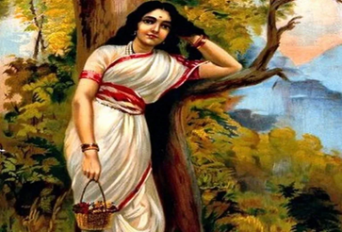
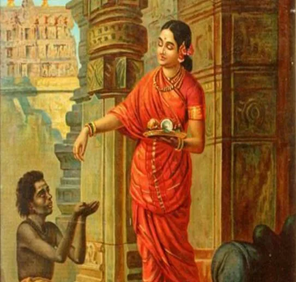
Panchakanya- The story of 5 Eternal Virgins despite being married.

अहिल्या, तारा, मंदोदरी, कुंती दृापदी स्मरणं, नित्यं, महापातक नाशनाम.

Ahalya, Tara, Mandodari, and Sita, while Draupadi and Kunti from the Mahabharata. Sita and Kunti are often replaced by each other according to people’s beliefs.

These five women were born in  Kanya Rashi or the constellation of Virgo. The word ‘Kanya’ is used to denote a woman who is a ‘Virgin’. These women were the symbol of “Purity” and were considered the Eternal Virgins group despite being married.

Virgin women were supposed to have great powers of ‘Tapa’. So, all these women, despite being married, had the power of Tapa. These panchakanya are ones who owned their virginity and could revive it. The panchakanya’s were so pure that even through the fire they could pass unharmed.

Ahalya

The Bala Kanda of the Ramayana mentions that Brahma molds Ahalya out of pure creative energy. Brahma created her out of the water as the most beautiful woman in order to break the pride of Urvashi, the foremost celestial nymph. Brahma places her in the care of Gautama rishi until she reaches puberty. When that time arrives, the sage returns Ahalya to Brahma, who, impressed by Gautama’s sexual restraint and asceticism, bestows her upon him. Indra, who believes that the best women are meant for him, resents Ahalya’s marriage to the forest-dwelling ascetic.

In another tale, it is said Ahalya is created from the ashes of the sacrificial fire by the Saptarishi (seven seers) and gifted to sage Gautama.

The king of the gods, Indra, was infatuated with her beauty and comes disguised as Gautama when the sage was away, and requests to have physical relationships with Ahalya. In some versions, Ahalya sees through his disguise but still complies out of “curiosity” and because her husband would neglect his matrimonial duties. In later versions, Ahalya falls prey to Indra’s trickery and does not recognize him. In all narratives, Ahalya and her lover Indra are cursed by Gautama. Gautama then curses Ahalya to remain invisible to all beings for thousands of years, fast by subsisting only on-air, suffer and sleep in ashes and be tormented by guilt. Nevertheless, he assures her that her sin will be expiated once she extends her hospitality to Rama, who will visit the ashram. Thereafter, Gautama abandons the ashram and goes to the Himalayas to practice asceticism. Indra was cursed to be castrated or be covered by a thousand vulvae that ultimately turn into a thousand eyes.

The Ayodhya prince Rama, with his brother Lakshmana and their guru, the sage Vishvamitra pass Gautama’s desolate ashram while travelling to King Janaka’s court in Mithila. As they near the ashram, Vishvamitra recounts the tale of Ahalya’s curse and instructs Rama to save Ahalya. Ahalya is said to have been touched by Rama’s feet and rises from her stone state to human form and goes to her abode, the Gautama’s hermitage.

Tara

Tara was the wife of the monkey king Bali who was presumed dead after a battle with a demon after which she married his twin brother Sugriva according to the custom of the time. The lack of the description of formal marriage suggests that Tara’s relationship to Sugriva is neither widow re-marriage nor polyandry, but simply appropriation by Sugriva. In the references of the coronation of Sugriva as king, Angada is also described as the heir-apparent crown prince, while Tara is mentioned as Sugriva’s wife. The Adhyatma Ramayana declares that Sugriva acquires Tara.

It turns out that Bali isn’t killed in reality. When Bali returned, he was livid and abducted Sugriva’s first wife, Ruma, as revenge. As battle lines between the brothers were drawn, wise Tara counseled her first husband to return Ruma to his brother. Tara said Sugriva had not snatched her but married her legitimately only because Bali’s death had been confirmed. Tara, the mother of Bali’s son Angad, finally managed to wrest a promise from him that he would not kill his own brother. The brothers fought a duel in which Bali was killed by Sugriva’s mentor Rama. Sugriva was crowned king of the kingdom of Kishkindha. As dowager queen, Tara diplomatically left the question of the ascension of her son to the throne for his stepfather to resolve. She knew well that the guilt-ridden uncle Sugriva would not deny her son his right to the throne.

In his dying breath, Bali reconciles with Sugriva and instructs him to follow Tara’s wise counsel in all matters.

While all was well with the king and his lustful nature got the best of him and he eventually ignored his promise to Rama to help him win Sita back. Lakshaman was livid to find Sugriva had backtracked on his words. He entered Sugriva’s personal chambers to bring upon his wrath on the king but Queen Tara very diplomatically pacified the prince.

Thus she was instrumental in saving the king from the wrath of the Lakshmana and brought coherence in the Rama camp to fight the great war to avenge Sita.

Mandodari

Mandodari is the daughter of Mayasura, the king of the Asuras, who are god-like demons. He rescued a beautiful girl child from the well. He and his, wife, Hema, adopted her and named her Mandodari. She was taught aspects of architecture by King Mayasura. He taught Mandodari about the various landforms of Bharatvarsh which were Swarga (heavenly plateaus), Bhoomi (plains) and Patala (underworld). When she turned fifteen, he started involving her in his projects and eventually met Ravana when he came to seek her counsel.

Valmiki’s Ramayana describes Mandodari as a very beautiful, pious and noblewoman whose appearance once led Hanumana to mistake her for Sita. She was known to be extremely patient with Ravana’s attitude towards women, but always questioning his actions and rebuking his choices.

Despite Ravana’s faults, Mandodari loved him and was proud of his strength. She was aware of Ravana’s weakness towards women. A righteous woman, Mandodari tried to lead Ravana to righteousness, but Ravana ignored her advice.

Draupadi

Draupadi is also referred to as Panchali (meaning one from the kingdom of Panchala), Yajnaseni (meaning one born from a Yajna or fire-sacrifice), Mahabhaaratii (great wife of the five descendants of Bharata) and Sairandhri (an expert maid, her assumed name during her second exile in which she worked as Virat kingdom’s queen Sudeshna’s hair-stylist).

Panchali is the Dharma Pathini of the Pancha Pandavas. The concept behind her marrying five people is that she is the Shakthi Roopa of the five devas, Dharma – Yudhishthira, Vayu – Bheema, Indra – Arjun, Nakul and Sahadev – Ashwini Kumaras.

No woman ever faced the trials and tribulations that Draupadi faced in her life. Even after being born out of the fire to Drupada, even if she had heroic husbands, she had to undergo Vastra harana, exile, Agnata. Post-war she was faced to watch her entire clan being killed.

Kunti

She is one true Matriarch of the Saga of Mahabharata. Kunti or Pritha was the daughter of Shurasena and the foster daughter of his cousin Kuntibhoja. She is the sister of Vasudeva. She was married to King Pandu of Hastinapur and was the mother of Karna and the first three Pandava brothers Yudhishthira, Bhima, Arjuna. She was the paternal aunt of Krishna, Balarama, and Subhadra. She was the stepmother or foster mother of Nakula and Sahadeva.

Kunti’s marital life was also unusual. Having chosen Pandu as her husband in a svayamvara ceremony, she never had a child by Pandu. Her husband had received a curse from the sage Kimdama that he would die on having intercourse with his wife because he had shot the sage with an arrow when he was copulating with his wife in the guise of a deer. Deeply hurt by the turn of events, Pandu decided to retire into the forest and live the life of renunciation. Kunti accompanied him. She invoked her boons for herself and Madri and had 3 children of her own and two for Madri. Pandu dies unable to abstain.

BUILDING A GOOD RELATIONSHIP WITH YOUR COLLEAGUES

Building Good Work Relationships:

     "Making Work  Enjoyable and Productive"

How good are the relationships that you have with your colleagues?

According to the Gallup organization, people who have a best friend at work are seven times more likely to be engaged in their jobs. But it doesn’t have to be a “BFF.” Gallup found that people who simply have a good friend in the workplace are more likely to be happy. What’s more, good work relationships are linked to better customer engagement and increased profit.

In this article, you’ll learn why it’s important to have good working relationships, how to build and maintain them, and even find ways to work with people that you don’t get on with.

Why Have Good Work Relationships?

Human beings are naturally social creatures. And when you consider that we spend one-third of our lives at work, it’s clear that good relationships with colleagues will make our jobs more enjoyable.

The more comfortable co-workers are around one other, the more confident they’ll feel voicing opinions, brainstorming, and going along with new ideas, for example. This level of teamwork is essential to embrace change, create, and innovate. And when people see the successes of working together in this way, group morale and productivity soars.

Good work relationships also give you freedom. Instead of spending time and energy dealing with negative relationships, you can, instead, focus on opportunities – from winning new business to focusing on personal development.

And having a strong professional circle will also help you to develop your career, opening up opportunities that otherwise might pass you by.

Defining a Good Relationship:

A good work relationship requires trust, respect, self-awareness, inclusion, and open communication. Let’s explore each of these characteristics.

Trust: when you trust your team members, you can be open and honest in your thoughts and actions. And you don’t have to waste time or energy “watching your back.”

Respect: teams working together with mutual respect value one another’s input, and find solutions based on collective insight, wisdom, and creativity.

Self-awareness: This means taking responsibility for your words and actions, and not letting your own negative emotions impact the people around you.

Inclusion: don’t just accept diverse people and opinions, but welcome them! For instance, when your colleagues offer different opinions from yours, factor their insights and perspective – or “cultural add” – into your decision-making.

Open communication: all good relationships depend on open, honest communication. Whether you’re sending emails or IMs, or meeting face-to-face or on video calls, the more effectively you communicate with those around you, the better you’ll connect.

Which Work Relationships Are Important?

Although you should try to build and maintain good working relationships with everyone, some deserve extra attention. Like the relationship between a boss and employee. Gallup found that a manager alone can account for up to 70 percent of a team’s engagement.

Regular one-on-ones let managers build relationships with employees. At these catch ups, you can show how an individual’s work fits with the organization’s “bigger picture,” understand their strengths, and help them identify areas to develop.

You can also explore managing upwards, to analyze how your own manager prefers to work, anticipate their needs, and adapt your approach for a smoother relationship.

You’ll also benefit from developing good work relationships with key stakeholders. These are the people who have a stake in your success or failure, such as customers, suppliers, and your team. Forming a bond with them will help you to ensure that your projects – and career – stay on track. A Stakeholder Analysis helps you to identify who these people are so you can devote time to building these partnerships.

How to Build Good Work Relationships:

As you’ll know from your oldest friends, building close connections with people can take time. But there are also steps you can take today to get on better with your colleagues.

1.Identify Your Relationship Needs:

Do you know what you need from others? And do you know what they need from you? Understanding these needs can be instrumental in building better relationships.

2.Develop Your People Skills:

Good relationships start with good people skills. Take our quiz How Good Are Your People Skills? to test how well you collaborate, communicate, and deal with conflict. The quiz will also point you toward useful tools to improve any weak areas.

3.Focus on Your EI:

Emotional intelligence (EI) is your ability to recognize your own emotions, and better understand what they’re telling you. By developing your EI, you’ll become more adept at identifying and handling the emotions and needs of others.

4.Practice Mindful Listening:

People respond better to those who truly listen to what they have to say. By practicing mindful listening , you’ll talk less and understand more. And you’ll quickly become known as trustworthy.

5.Schedule Time to Build Relationships:

If possible, you could ask a colleague out for a quick cup of coffee. Or give a “one-minute kindness” by commenting on a co-worker’s LinkedIn post you enjoyed reading. These little interactions take time but lay the groundwork for strong relationships.

6.Manage Your Boundaries:

Make time, but not too much! Sometimes, a work relationship can impair productivity, especially when a friend or colleague begins to monopolize your time. It’s important to set your boundaries and manage how much time you devote to social interactions at work.

7.Appreciate Others:

Everyone, from your boss to the intern, wants to feel that their work is appreciated. So, genuinely compliment the people around you when they do something well. Praise and recognition will open the door to great work relationships.

8.Be Positive:

Focus on being positive. Positivity is contagious and people gravitate to those that make them feel good.

9.Avoid Gossiping:

Office politics and gossip can ruin workplace relationships. If you’re experiencing conflict with someone in your group, talk to them directly about the problem. Gossiping with other colleagues will only exacerbate the situation, accelerating mistrust and animosity.

Handling Difficult Work Relationships:

Sometimes, you’ll have to work with someone you don’t get on with. With the rise of virtual workspaces, many colleagues are benefiting from some time apart. But even communicating virtually can cause misunderstandings or tension.

While it’s natural to avoid people who cause friction, it’s not always feasible or for the good of your team. So, here are a few tactics to mend or maintain a professional relationship.

1.Reflect on your positive history: If a good relationship has taken a turn for the worse after an incident, research shows that reflecting on positive experiences with a co-worker can strengthen a broken bond. Another option is to use an impartial mediator to bridge the divide and find a quick resolution.

2.Look to yourself: When we feel negative about someone, we can become impatient, get angry, and demotivate others. And others can direct those negative behaviors back at us. The Betari Box can help to break this cycle of conflict, stopping these harmful attitudes and behaviors in their tracks.

3.Find mutually beneficial goals: Have you considered that a difficult relationship might be due to a power imbalance? You can use professor John Eldred’s power strategies model to identify any conflicting goals or power imbalances, and devise a method to communicate better and improve your relationship.

8 Movies Based On Time Travel To Stream Right Now

When we talk about “Time Travel” movies, the 1985’s classic Back to the future has its place reserved at the top. And with good reason—considered one of the best films ever made, this sci-fi flick paved the way for several other time travel films that followed. Also, the classic Bill & Ted’s Excellent Adventure has reserved a place in our hearts forever. But there are countless other great time travel flicks that deserve our attention too. So, here is a list of 10 movies based on Time Travel that you should add on to your watch list right now.

1. The Terminator and Terminator 2: Judgement Day

The Terminator (1984) - Trailer (HD) - YouTube

Terminator 1 and 2 are really quite different movies. In the first sequel, Arnie—the terminator starring Arnold Schwarzenegger, acts as the bad guy. He’s sent back in time by a machine overlord to kill a woman who will give birth to a child that will lead the human resistance to victory. It’s a dark and weird story; a classic action film made on a stringent budget. The second, in contrast, is a big-budget, featuring perhaps the greatest special effects in movie history relative to their time. Here, Arnie, now a blockbuster star, demanded to play the good guy: He’s still a robot, but he’s defending the key kid from the icy, and more advanced, T-1000 robot.

2. Donnie Darko

Donnie Darko: Director Richard Kelly explains the cult classic's appeal,  Jake Gyllenhall, and the new 4k theatrical release — Quartz

You’ll probably never look at rabbits as some cute animal after you see this. The cult classic follows a troubled, sleepwalking teenager who barely escapes a jet engine crashing into his room. But after the accident, he has several visions of a creepy, black, giant rabbit; Frank, who claims to be from the future and reveals that the world will end soon.

3. Looper

Looper • Movie Review • Movie Fail

Looper marked Johnson’s first swoop into the sci-fi genre, and he did so with vigor, offers a twisty time-travel story rooted in character foremost. The film takes the presupposition of, “What would you do if you went back in time and met your younger self?” and spins it on its head, adding in terrifically tense action sequences and heady moral quandaries for good measure.

4. Interstellar

Interstellar Review | Movie - Empire

The thrilling scenes and thought-provoking plot will blow to be fair. This one feels more like a sci-fi space movie, but it has some time travel elements too. Set in the year 2067, where humanity is struggling to survive, Interstellar tells the story of a group of volunteers who travel through a wormhole near Saturn, hoping to find a safer world in a distant galaxy. The star-studded cast includes Matthew McConaughey, Anne Hathaway, Jessica Chastain and Matt Damon.

5. Groundhog Day

Groundhog Day Movies - The New York Times

This classic starring Star Bill Murray and directed by Harold Ramis has our hearts. Philosophical along with comedy and humour is always a win-win. Murray reportedly wanted the film to be more philosophical, while Ramis was always pushing the comedy. But it’s the push-and-pull between these two ideas that makes Groundhog Day a stone-cold classic. It’s hilarious, featuring some of Murray’s best comedic moments, but it’s also profoundly sad. The film doesn’t disregard the inherent loneliness of the premise—being stuck in the same day repeatedly.

6. 12 Monkeys

12 Monkeys (1995) | MUBI

Nearly four decades after a deadly virus gets released, destroying nearly all of humankind, James Cole (Bruce Willis), a criminal from the future, is chosen to travel back in time and help scientists create a cure. The movie also stars Madeleine Stowe, Brad Pitt and Christopher Plummer.

7. Primer

Primer (2004) | MUBI

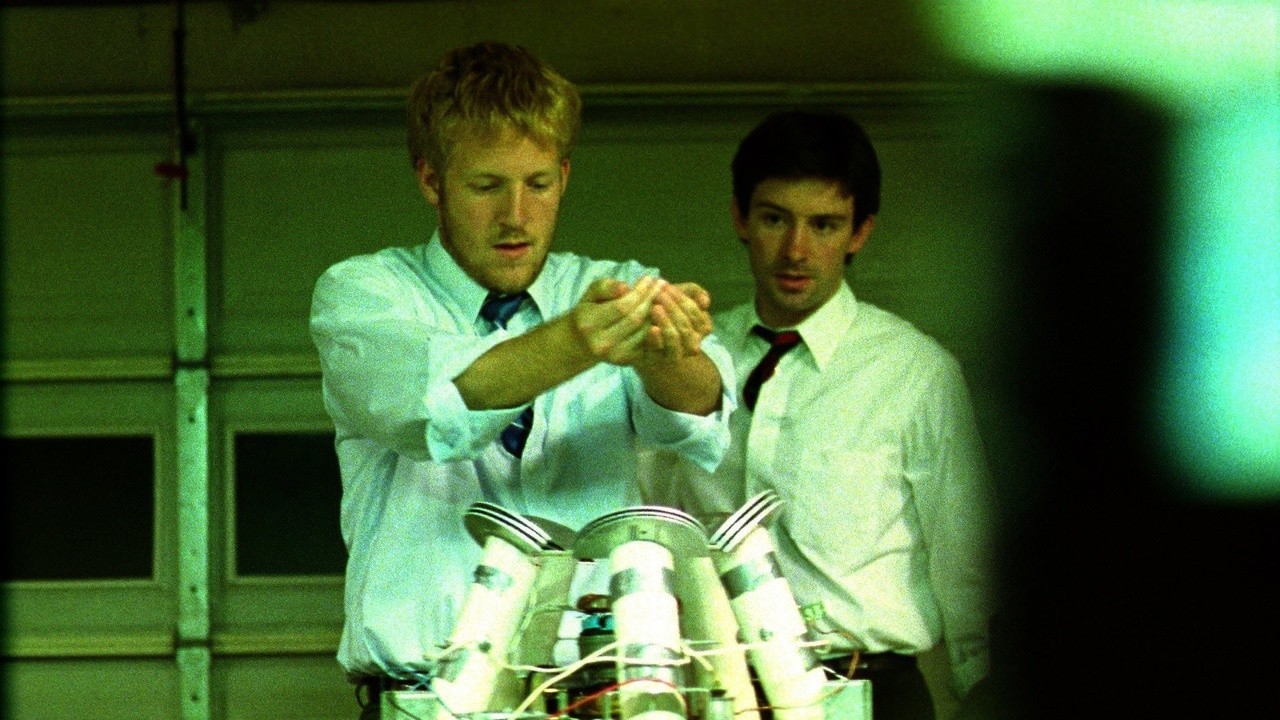
Although this film was made on a small budget (just $7,000), Primer is one of the smartest and most thought-provoking time travel films you’ll ever see. Two engineers, Aaron (Shane Carruth) and Abe (David Sullivan), accidentally invent a time machine, causing them to experiment with a technology that allows humans to time travel. However, it’s only a matter of time before they realize the consequences of their actions.

8. About Time

About Time' Review: Richard Curtis' Charming Time-Travel Romance - Variety

About Time is certainly the most emotional entry on this list. The time-travel genre offers the opportunity to wax philosophical about death and regret, and About Time seizes it uniquely by focusing on a very earnest relationship between a father and a son. The romantic comedy portion between Domhnall Gleeson and Rachel McAdams is the hook, but the relationship between time-traveling father and son Gleeson and Bill Nighy is this film’s tear-jerking heart.

HISTORICAL EVENT ON JULY 27th.

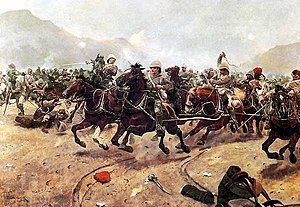
Battle Of Maiwand on July 27th.

On 27th July, 1880, the Battle of Maiwand was fought between nation soldiers and also Afghan army, during the Second Anglo-Afghan War. during this battle, the Afghan forces, headed by Mohammad Ayub Khan, turned triumphant against Brits army.

2000 Fiji George Speight on July 27th.

The Rebel coup leader George Speight who led the coup to overthrow Fiji’s democratically elected government in May by taking Fiji’s Indian Prime Minister, Mahendra Chaudhry, and members of his multi-racial government hostage for 8 weeks has been arrested and can possibly face treason charges. He was found guilty of treason and is currently serving a term of captivity for his role within the overthrow of the constitutional government.

Oldest companies

Today the Indian market has uncountable brands and parent companies. It is a highly competitive world where new brands are trying to establish themselves in the market, the companies are trying to overtake one another and new start-ups with unique ideas are launched frequently. While the Indian customers witness the rise and fall of many companies, some are the golden players who have mastered the art of business and running successfully even today, no other company stands close in competition to them. Here is a list of some of the oldest companies in India-

Wadia group of companies
One of the oldest and most reputed company of India. Wadia group was founded by Lovji Nusserwanjee Wadia in 1736. Initially, the company made contracts with British to start the business and it prospered in the later years.
The company has significantly contributed in making Bombay (Mumbai) a port city for trading import export. It is almost 200 years old and was started before India got independent.

Parry’s
Parrys was established in the year 1788 by Thomas Parry’s who bought his business idea to India.The company is based in Tamil Nadu, Chennai where the headquarters is also located. Parry’s deal in Sugar and Nutraceuticals and is functioning for more than 200 years now.
They established the first sugar plant in India in the year 1852 also introduced farm centric model for the first time in 1845. They are working at a large scale specially in South India and Parrys Pure is the only sugar brand to receive the status of ‘super brand’ in India. Additionally, they are into fertiliser business as well.

Otis elevator company
The King of elevator companies it has achieved great heights and earned fame in the market. It is a joint venture between an Indian and American company. It is in India since 1892 they have installed their elevators in none other than Burj Khalifa located in Dubai, one of the most massive sky scrapers of the world. They are still functioning in India manufacturing elevators. There first project was installation of elevators and escalators in New York city’s world trade centre.

Aditya Birla group
Aditya Birla group is an Indian Multinational company. Founder Seth Shiv Narayan started the company in 1857, the starting was based on cotton trading and later the business expanded in the textile sector, as they served during 1850s. After a successful establishment of the name Birla, they went on expanding the business in metals, cement, mining, retail, telecommunication, and other industries. Today, they have highest number of customers and over one lakh employees and number of retail units operating worldwide.

Jindal group
Jindal group is another massive industry group whose presence is in different sector, it initially started as Jindal Steels. The success they achieved as steel producer led to the expansion of company in other areas like mining and power generation. Till date they are biggest steel producer known for the quality and large-scale production. Om Prakash Jindal the founder of Jindal industries with Jindal steels and power in 1979.