Cabbage for Our Health

Cabbage is one of the common vegetables. It is a leafy vegetable. It is usually of color green, but it also comes in white, red, purple and deep green. Cabbage comes from Brassica oleracea or wild cabbage species. Like other vegetable it also has many nutrients and very good for our health. Cabbage are very closely related to cauliflower broccoli.

Some Types of Cabbage from All Around the World:
Cabbage comes with different color, sizes and different types leaf. Let’s discuss about them ––

1)Common green cabbage: Scientific name — Brassica oleracea .It is the most commonly used head cabbage and it is available everywhere in world. The leaves of this cabbage are medium green. They are round shaped and thickly packed by leaves in a layer. The medium green color leaves are eaten cooked and the young and light white green color leaves can be eaten either cooked or uncooked as salad.

Common green cabbage

2)Red cabbage: Scientific name — Brassica oleracea . It is a same as common green cabbage, but the color is red purple or magenta. It is very similar to common cabbage. It is usually eaten as salad or with tacos. It has anthocyanins antioxidants in a huge amount.

Red Cabbage
Red Cabbage Plantation
Red Cabbage Salad

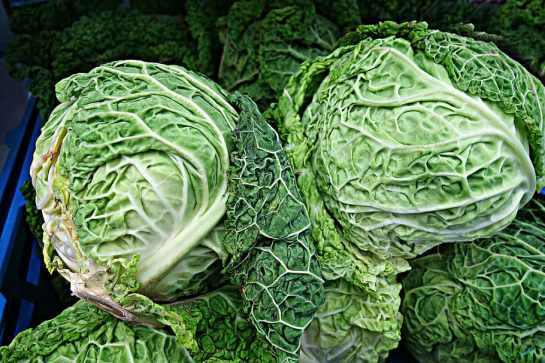
3)Savoy cabbage: scientific name – Brassica oleracea var. sabanda L. It is same as the common cabbage except the leaves of these cabbage is very curly and wrinkly not like the smooth leaves of a common cabbage. It is eaten as salad or stir-fried .

Savoy Cabbage Plant
Savoy Cabbage

4)Nape or Chinese cabbage: It is cabbage, but it is quite long like not as round as a common cabbage. It is famous for Korean traditional Spicy dish kimchi. Scientific name – Brassica Rapa ‘perkinensis’.

Nape Cabbage Plant
Korean Traditional Spicy Dish — Kimchi

5)Bok choy: Scientific name –Brassica rapa chinensis. It is also one type of Chinese cabbage, but it is quite different. It has long green leaves and this cabbage is not round shaped. These leaves have excellent amount of Vitamin A, vitamin k and Vitamin C and some amount of Vitamin B6.

Bok Choy in Market
Bok Choy
Bok Choy Plantation

6)January King cabbage: It is a head cabbage like common cabbage, but has unique color. The leaves of these cabbage are purple and green. Scientific name –Brassica oleracea Sabuda.

January King cabbage Plantation
January King cabbage

Apart from these there are white cabbage or Dutch cabbage, Kale or Leaf cabbage, Tuscan cabbage, Portuguese cabbage, Cannonball cabbage, Gonzales cabbage, Brussels sprouts, pointed cabbage. Cauliflower and broccoli are the also sometime considered as cabbage.

Kale
Kale Leaves
White Cabbages
Tuscan cabbage

Present nutrients:

100-gram raw common cabbage has flowing nutrients –

  1. It contains 5.8 gm of carbohydrates.
  2.  3.2 gm Sugars.
  3.  2.5g dietary fibers.
  4.  0.1g fat.
  5. 1.28 gm protein.
  6. Vitamin containing –— 1)0.2 mg vitamin B3. ; 2)36.6 mg Vitamin C. ; 3)76 microgram vitamin K. ; 4)0.2 mg of vitamin B5. ; 5)0.04 mg of vitamin B2. ; 6)0.12 mg of Vitamin B6.
  7. Minerals containing —- 40 mg calcium. ; 0.18 mg zinc. ;170mg potassium. ;26mgphosphorus. ;12 mg magnesium. ; 0.4mg iron. ;0.1mgmanganese. ;18mg sodium.
  8. It contains almost 92 gram water.
  9. It gives us 103 kilojoule or 25 Kcal energy.
  10. It has antioxidants in high amount.
  11. Various types of cabbage contain these nutrients in various amount but the nutrient elements are same for every cabbage .
Healthy Cabbage Salad

Benefits for health:

  1. Vitamin C is a major nutrient in cabbage which prevent common cold, cough and other ordinary health symptoms.
  2. Cabbage also fight against some chronicle disease like cancer.
  3. It also prevents the risk of inflammation due to containing of Vitamin C.
  4. Cabbage have lots of isolable fiber which is good for our digestive and our health and improve our digestion power.
  5.  It also helps to maintain the level of blood pressure and blood sugar in our body and prevent the heart problems.

Mountains- A history(Part-1)

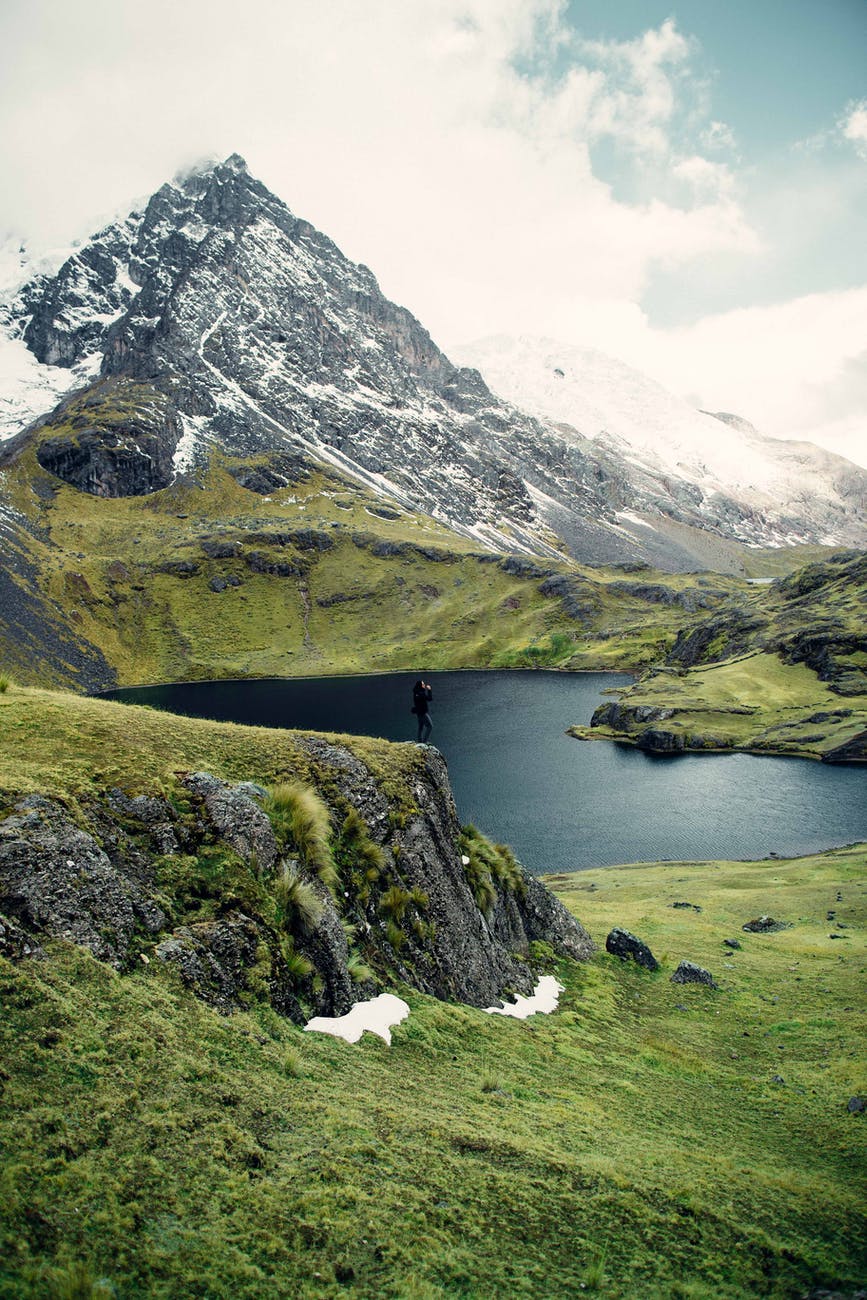
Photo by Sam Kolder on Pexels.com

We have all seen mountains or hope to see them, after all they are a very famous holiday destination. All of us certainly have a wonderful mountain destination in our bucket list- be it the Himalayas, The Rockies, The Alps, Mt. Fuji or the Swiss Alps. But have you ever wondered how these mountains came into being? How is it that a flat piece of earth rose so high, almost touching the sky? Well, if you have, then here is the answer. And if you haven’t, even then a little extra knowledge never hurts anybody, right?

So, the mountains were formed millions and even billions of year ago (the oldest one-the Barberton Greenstone Belt in South Africa, is 3.6 billion year old) when the continents were being formed. The most widely accepted theory, currently, believes that the earth’s mantle(the astenosphere layer- a semi-solid) has convection current flowing through them(a result of differential heating- the lighter material rises whereas the denser material sinks ). This current belt in the astenosphere moves with it the lithosphere(continental crust, oceanic crust and the top-most part of mantle(upper mantle)). These movements in the lithosphere are the movements of continents and oceans that lead to earthquakes , volcanoes, tsunamis and the formation of volcanic islands, plateaus (all these for some other day) and fold mountains as well as volcanic mountains.

These convection currents move with them large pieces of land, ocean or both and these large pieces are termed as tectonic plates. There are currently 7 major and some minor tectonic plates. The major tectonic plates are-

  1. Indo-Australian plate
  2. North American plate
  3. South American plate
  4. Pacific plate
  5. Antarctic plate
  6. Eurasian plate
  7. African plate

The minor plates are-

  1. Fillipino plate
  2. Nazca plate
  3. Scotia plate
  4. Caribbean plate
  5. Indian plate
  6. Arabian plate
  7. Cocos plate
  8. Juan-de-fuca plate

Let us first see the types of mountains. There are 4 types of mountains-

  1. Fold mountains- These mountains are formed when one tectonic plate folds over the other, due to collision of two plate boundaries. The plates need not be continental as is in the case of the Alps , the Atlas and the Himalayas. An oceanic and a continental plate boundary collision can also form a fold mountain. The examples of such fold mountains are the Rockies and the Andes
  2. Block mountains- These mountains are formed due to the diverging plate boundaries. When two boundaries diverge, it creates a crack on the surface between them known as a rift. Later, the surrounding raised plate undergoes erosion and takes the shape of a mountain. Examples are The East African Rift Valley, The Rhine Valley, The Vindhyas and Satpuras .
  3. Volcanic mountains- Mountains formed due to fissures in the earth’s surface, that lead to release of magma. The examples are Mt. Fuji, Mt. Mayon. Also, they are known as mountains of accumulation.
  4. Residual mountains- Mountains that are either formed due to the erosion of existing mountains (denudation) or plateaus(dissection) by agents such as rivers, winds, glaciers. Examples are Mt. Manodnock (The Appalachians) , Highlands of Scotland, Scandinavia and Deccan Plateau.

The movement of the tectonic plates creates one of the above or even a combination of the above kind of mountains. Stay tuned for the next part to know how are many of the world mountains created and where are they located? Is there something common about their location? What is the reason for exceptions?

Anomalies that occur in the Stock Market

A market anomaly is a price action that contradicts the expected behaviour of the stock market.

Days of the week: Research and past history has shown us that stocks tend to move more on Fridays more than mondays and that there is generally a bias toward positive market performance on Fridays. On a logical level, there is no particular reason that this should be true. Some psychological factors could be at work. Perhaps an end-of-week optimism permeates the market as traders and investors look forward to the weekend. Alternatively, perhaps the weekend gives investors a chance to catch up on their analysis on the market, and develop pessimism going into Monday.

Small firms: Firms with a smaller capital amount often outperform larger companies. A company’s economic growth is the driving force behind its stock performance, and smaller companies have much longer runways for growth than larger companies. A company like Google may need to earn an extra $3 billion in revenue to grow by 10% whereas a smaller company may need only an extra $10 million in revenue to grow the same amount. This is why smaller firms tend to perform better.

The January effect: What happens is that stocks that underperformed in the fourth quarter of the prior year tend to outperform the markets in January. Investors will often look to drop underperforming stocks late in the year so that they can use their losses to offset capital gains taxes. This “tax selling” can push these stocks to levels where they become attractive to buyers in January. Likewise, investors will often avoid buying underperforming stocks in the fourth quarter and wait until January to avoid getting caught up in the tax-loss selling. As a result, there is excess selling pressure before January and excess buying pressure after January 1st, which causes this effect.

Reversals: Stocks that either perform extremely well or extremely poorly in a fiscal year usually do a complete 180 and follow a reverse course in the next period. If a stock is a top performer in the market, odds are that its performance has made it expensive. Likewise, the opposite is true for underperformers. It is then expected that the over-priced stocks would underperform (bringing their valuation back in line) while the under-priced stocks outperform. If enough investors habitually sell last year’s winners and buy last year’s losers, that will help move the stocks in exactly the expected directions.

Low book value: Extensive research has shown that stocks with below-average price-to-book ratios tend to outperform the market. Numerous test portfolios have shown that buying a collection of stocks with low price/book ratios will deliver market-beating performance. Cheap stocks should attract buyers’ attention and revert to the mean. This is a relatively weak anomaly. It takes very large portfolios of low price-to-book stocks to see the benefits.

GRATITUDE

Gratitude is a wonderful method to improve our life. It refers to the feeling and attitude of gratitude and appreciation for all that we have in life. It has been scientifically shown that expressing gratitude to others makes us feel happier and calmer. As a result, it allows kindness into our lives. It makes you pleased, for example, when a stranger holds the door for you or greets you. 

Gratitude, in layman’s terms, is the trait of showing gratitude to someone for an act of compassion or assistance. It’s the same trait that makes you remember someone’s kindness to you and makes you want to repay the favour. If you have a strong want to repay someone who has aided you, this desire is nothing more than appreciation. Only gratitude motivates you to express thanks or write a thank you note to your teacher. 

Why is it Important To Express Gratitude To Your Parents?

Feeling grateful has many benefits for your body, mind, and relationships, according to Robert Emmons, a world-renowned scientist and authority on the issue of gratitude.You must understand that when you were a child, your parents were the closest people to you and the ones with whom you spent the most time. This may not apply to everyone, but it does to the vast majority of individuals.

Kindness and success both begin at home. Another thing to keep in mind is that you, too, will become a parent at some point. As a result, how you treat your parents will have an effect on your relationship with your children. If you are grateful for your parents and always express gratitude for the good they have brought into your life, you will feel the same way when you become a parent.

How to Make Gratitude a Habit:

Gratitude can be practiced in a variety of ways, including:

1.Make a daily list of all the nice things that happen to you and who is responsible for them.

2.Make plans to repay the favour at a later date.

3.Recognize the value of everything around us, including nature, animals, and plants.

4.When feasible, express gratitude to various community helpers such as the washerman, gardener, policemen, sweepers, and others.

5.Every day as you wake up, thank God for such a beautiful day.

6.Thank God once more for all the trials you’ve faced today that have made you wiser and stronger.

Advantages of Gratitude:

Gratitude provides a variety of advantages in both your personal and social lives.

Relationship Strengthening: Gratitude improves the quality of your relationships with others. Being grateful is a lovely sensation and experience that enhances both parties bonds. It promotes the sense of being recognised and acknowledged, as well as the trust element.

Makes You Smile: Gratitude has a joyful quality to it. When you express appreciation or receive it, you feel glad for doing something nice or for having something good done to you. People who feel grateful are known to have lower stress levels.

Makes Society More Sensible: The happiest and most rational society is one in which people express thanks for one another. People are considerate and never miss an opportunity to express gratitude to others. A Intelligent society will inevitably progress in the correct direction.

Reduces comparisons and increases acceptance: When you express gratitude for others, you don’t make comparisons based on their financial situation or other things. You’re merely grateful to everyone and proud of their accomplishments.

INDIAN AIR HOSTESS

Wanna fly with birds and get paid for that. Just jump and Start your career as Air Hostess .If you have a pleasing character then that’s it half is in your hand to get this Job . Let’s see the brief details about Air Hostess below.

Responsibility of An Air Hostess:

An air hostess has many responsibilities on a plane. Air hostess typically do the following tasks:

  • Greets the passengers and guides them to settle down in their seats.
  • attending a pre-flight briefing.
  • Answering passenger questions during the flight.
  • Serving meals and refreshments to passengers.
  • Prepares flight report.
  • Provides medical care to the passengers if needed.
  • Instruct  passengers on all safety procedures.

Courses offered in India:

  1. Degree courses: Degree courses are taken the duration of three years after 12th in any stream. The list of degree courses:
  • BBA (Aviation )
  • MBA (Aviation )
  • Post Graduate Diploma in Aviation and Hospitality Services
  • Post Graduate Diploma in Airport Ground Services
  • Post Graduate Diploma In Aviation, Hospitality, Travel & Customer Service

Top Colleges in India offer Air Hostess courses:

  • Rajiv Gandhi Memorial College of Aeronautics, Jaipur
  • Air Hostess Academy, Pune
  • Avalon Academy, Dehradun
  • Air Hostess Academy, Delhi
  • Frank Finn Institute of Air Hostess Training, Delhi
  • Frank Finn Institute of Air Hostess Training, Mumbai
  • Universal Airhostess Academy, Chennai.

Technology and it's influence on society.

Technology can be defined as the modification of science and scientific research that has interfered with the day to day life of an individual and aim to enhance the quality as well as standard of life. World has witnessed technological advancement at very fast pace from last century and is yet to modernise even more. Citing picture of the present world without technology is next to impossible because of its involvement in every aspect of it life be it education, health, tourism etc. However, there is downside of it all as well.

Technology has helped human in many way and made interaction easier and collaborative. World has shrunk because everyone has access to the things that is otherwise seems impossible. Connecting and creating social life has became lot more easier with the help of social media and access to internet 24×7. The advancement in technology has brought about new meaning to learning and field of education by creating vibrant environment, one and for all. Rather than searching a hella huge library for one single paper, you just need one click to have access to books, journals, research papers that saves a lot of money and time as well. Students can take exams or quizzes more easily and teachers can take classes online from anywhere in the world. Imaginig world without technical advances ,in light of pandemic or catastrophe that we are facing since 2020, in nothing less than a nightmare. World would have gone under complete shutdown without aid of otherwise called as classic cliche.

Aside from education, there is profound effect in the field of health and travelling altogether. There are thousands of health apps that you can install on your android as well as windows and can have virtual appointment with doctor, deitics, or fitness coach. Likewise, you can get your air ticket or train ticket done in no time with the help of apps. Since boon and bane comes hand in hand so is the downside of the technology.

Since we are doing everything online these days so there is extended screen time that can lead to health ramifications such as insomnia, eyestrain, migraine as well as increased anxiety and depression. As whole world is confined in the screen of the mobile phone, loneliness among youngsters has multiplied several times causing serious health issue. Without technological advancements, our way of life would not be as complex. Technological influences shape the way humans act today.

CYBER ATTACK

CYBER:

Cyber is the relation between internet and information. It can be related to all aspects of computing, including storing data, protecting data, accessing data, processing data, transforming data, linking data etc.

Cyber Attack:

A vulnerability is a weakness in design implementation, operation, or internal control. Most of the vulnerabilities that have been discovered are documented in the Common Vulnerabilities and Exposures database.

Backdoor: A Backdoor in a computer system, a cryptosystem or an algorithm, is any secret  method of bypassing normal authentication or security controls. They may exist for many reasons, including by original design or from poor configuration. They may have been added by an authorized party to allow some legitimate access, or by an attacker for malicious reasons; but regardless of the motives for their existence, they create a vulnerability. Backdoors can be very hard to detect, and detection of backdoors are usually discovered by someone who has access to application source code or intimate knowledge of Operating System of the computer.

Denial of Service Attack: Denial of Service Attack(DoS) are designed to make a machine or network resource unavailable to its intended users. Attackers can deny service to individual victims, such as by deliberately entering a wrong password enough consecutive times to cause the victim’s account to be locked, or they may overload the capabilities of a machine or network and block all users at once. While a network attack from a single IP Address can be blocked by adding a new firewall rule, many forms of Distributive Denial of Service (DDoS) attacks are possible, where the attack comes from a large number of points – and defending is much more difficult.

Phishing: Phishing is a process to track sensitive information such as username, password and credit card detail directly from users by deceiving the users. Phishing attacks are mainly happened by suspicious email and redirect users to a fake website whose look and feel are almost same to a legitimate one. Attackers are using creative ways to gain access to real accounts. A common scam is for attackers to send fake electronic invoices to individuals showing that they recently purchased music, apps, or other, and instructing them to click on a link if the purchases were not authorized.

Spoofing: Spoofing is a act of masquerading as a valid entity through falsification of. Data, in order to gain access to information or resources. That one. Is otherwise unauthorised to obtained.

Email Spoofing, where an attacker forges the sending (From, or source) address of an email.

IP Address Spoofing, where an attacker alters the source IP address in a network packet to hide their identity or impersonate another computing system.

MAC Spoofing, where an attacker modifies the Media Access Control (MAC) Address of their network interface to obscure their identity, or to pose as another.

Biometric spoofing, where an attacker produces a fake biometric sample to pose as another user.

Malware: Malicious software (malware) installed on a computer can leak personal information, can give control of the system to the attacker and can delete data permanently.

DRUG ADDICTION AMONG TEENAGERS

Medication and substance maltreatment among young people is a worldwide hazard. A large number of adolescents are truly captivating in medication and substance misuse representing a danger to the group of people yet to come. Young people across the world have now tried a wide range of medications including cigarettes and liquor to hard medications like cocaine, cannabis, and heroin .The paces of chronic drug use have been expanding throughout the long term. World medication report gauges specify “More than 153 million and 300 million individuals matured 15-64 of the total populace have devoured unlawful medications” (United Nations Office on Drug and Crime 48). A few associations and drives have accentuated on this issue and attempted to put systems to deal with it. Illicit drug use among adolescents and teens has been prominent in practically all nations on the planet slicing across created nations to agricultural nations including popular nations and states like the US, Germany, and China.

As per Newcomb, Scheier, and Bentler (215), a portion of the usually mishandled drugs by young people incorporate liquor, cigarettes, cannabis, and cocaine. Adolescents have been taking medications and hence making genuine compulsion that further meddles with their own just as influencing individuals near them. Notwithstanding recognizing the unfavorable impacts of substance addiction, adolescents have persistently continued manhandling drugs. Subsequently, this exposition tries to recognize significant circumstances and end results identified with drug abuse in teens.

There are various reasons for chronic drug use recognized and tried experimentally, viz. peer pressure, parental impact, and financial viewpoints among others. Starting with peer pressure, a few investigations have analyzed how friend pressure is a contributing component in young substance addiction. Traditionally, people as a rule are ordinarily characterized with what occurs inside their current circumstance. Most adolescents like partner themselves with bunches usually known as friend gatherings.

The United Nations Office on Drug and Crime specifies, “The vast majority acquire their first portion of unlawful medications from a companion, relative, or significant other” (91). In this unique situation, few medication clients in a gathering will presumably impact the remainder of the individuals into devouring medications. Much of the time, people are significantly affected by the living climate where they invest the greater part of their energy. Friend bunches create inside one’s nearby climate and in youth schools, neighborhoods and social clubs will in general impact the development of companion gatherings.

Family construction and family conduct impact individual credits. Most current families will in general receive exquisite living styles impacted by westernization. A family living with customary habits is generally connected with naivety. In this advanced world, social qualities have dissolved therefore prompting a decrease in accepted practices.

Bahr, Hoffman, and Yang noticed social hypotheses and presumed that family and companion connections are significant in inspecting reasons for illicit drug use, since they assume huge parts in deciding the mentalities and practices of people (530). Truth be told, with the expanding relocation and urbanization rates, solid customary family ties are bit by bit consuming and the conventional worth frameworks are losing their significance in the modernized world. Most guardians are these days spotted drinking liquor and straightforwardly utilizing drugs within the sight of their youngsters. Pressed metropolitan communities additionally power this association.Socio-monetary status is another denotative reason for illicit drug use. Internationally, populace rates are developing at disturbing rates with a few affordable difficulties experienced. Joblessness is one of the major compelling elements for drug dealing and illegal illicit drug use. Because of the current circumstance of joblessness across the globe, particularly in agricultural nations, individuals are searching for elective method for endurance.

Accordingly, people wind up taking part in drug dealing organizations hence diminishing the hole between worldwide nobles and nearby medication merchants and therefore making the medications effectively open to youngsters. The high paces of joblessness among young people have subsequently constrained them to participate in drug dealing and unlawful chronic drug use.

Nonetheless, joblessness isn’t the just financial factor that drives young people and adolescents into illicit drug use and habit. Others remember disparities for income and removal subsidizes given to adolescents in created nations, which impact illicit drug use in many youths. The supports given to youngsters are an impetus for illicit drug use and dependence if not utilized suitably with due duty. On imbalance in profit, individuals procuring pitiful pay rates might be enticed to participate in drug dealing as aforementioned.Drug misuse is a risky movement that is related with a few destroying repercussions. Individuals acclimated with chronic drug use experience the ill effects of mental to social results. As far as wellbeing, chronic drug use prompts mental issues. Newcomb, Scheier, and Bentler set, “Psychological well-being issues are regularly seen in among drug victimizers” (215). The mental effects of chronic drug use can show up promptly or significantly later in the victimizer’s life. Clinically analyzed there is an incredible connection between illicit drug use and psychopathology.

Clinical proof shows that extraordinary medication use has psychopathology impacts previously, during, and surprisingly in the wake of getting treatment and going through restoration (Newcomb, Scheier, and Bentler 215). Since the young adult stage is an essential stage in human turn of events, illicit drug use among adolescents and youngsters thusly brings about mental issues including posttraumatic messes and enthusiastic disorders among others. These problems influence self-awareness and development and can bring about unfavorable long haul adverse consequences on their grown-up life.

Illicit drug use has on various events related with the spread of the most undermining irresistible illnesses like HIV/AIDS. As per the United Nations Office on Drug and Crime, “of the assessed 16 million individuals who infuse drugs, around 3 million are living with HIV” (16). Individuals have wound up reaching the destructive sickness while affected by drugs. Aside from securing irresistible infections while an individual is under impact, substance addiction includes the sharing of individual things.

As indicated by a new world report, “Infusing drugs conveys a high danger of disease with blood-borne infections like HIV, hepatitis C, and hepatitis B, and the sharing of tainted needles and needles is a significant method of transmission for those infections”. On a few events, specialists and doctors have distinguished substance addiction as one of the significant reasons for the spread of irresistible illnesses. Illicit drug use for the most part prompts indiscreet living in this manner compelling people to participate in other risky exercises including unprotected sex, prostitution, wrongdoing and brutality, which increment the danger of HIV infection.Globally, substance addiction has affected medication related passings among adolescents, prominently known as unexpected losses. Illicit drug use has been the significant reason for passings that outcome from mishaps that happen when young people are driving, or in any event, having a good time. Principle coincidental passings identifying with illicit drug use incorporate self-destructive cases, street mishaps coming about because of driving affected by drugs, murder cases, unexpected excess, accidental diseases, and even injury (United Nations Office on Drug and Crime16).

Adolescents associated with illicit drug use will in general acquire the certainty to take part in dangerous exercises as a result of the impact of visualizations brought about by drug utilization. As per the United Nations Office on Drug and Crime, the world medication report appraises that, internationally, between 99,000 to 253,000 passings coming about because of mishaps in the year 2010 came about because of illicit drug use . It is very damaging to recognize that of these passings, over 77.9 instances of such passings were individuals matured between 15-64 years, adolescents inclusive.Drug maltreatment among youth is certainly a worldwide issue. A few variables have impacted teens to participate in illicit drug use. Friend pressure is a contributing component towards adolescent chronic drug use with those used to illicit drug use affecting others into it. Family construction and family conduct impacts illicit drug use since most guardians have embraced western culture prompting disintegration of accepted practices, which are significant in molding youth practices. Globalization and rustic metropolitan relocation have been adding to this situation.

Financial components including joblessness have affected chronic drug use among youths, with a few jobless residents discovering conceivable methods of enduring. Joblessness prompts people drawing in themselves in chronic drug use and dealing. Medications misuse brings about a few unfortunate results. Such repercussions might incorporate psychopathology problem, posttraumatic messes, expanded dangers of HIV/AIDS disease and surprisingly an increment in death-related mishaps. Chronic drug use is as yet the most difficult thing and may stay irksome if the important specialists won’t put tough measures to capture the circumstance.


INDIRA GANDHI

History of Indira Gandhi

Indira Gandhi was a famous Indian politician and the third Prime Minister of India. She was the daughter of the first Prime Minister of India, Pandit Jawarharlal Nehru. Her charismatic personality and intelligence made her a powerful statesperson and extremely popular amongst the common people.

Birth and Early Life

Indira Gandhi was born on 19 November 1917 in Allahabad to Kamala and Jawaharlal Nehru. Since Indira was born in a family that had roots in politics, she was exposed to politics right from a tender age. Many important leaders, including Mahatma Gandhi, used to visit her house in Allahabad. Indira often used to interact with Mahatma Gandhi and was deeply influenced by his ideologies.

College and Marriage

She garnered her initial education from Pune University and was then sent to Rabindranath Tagore’s educational institute, Shantiniketan, in West Bengal. Later, she went abroad to pursue her higher studies. In 1936, Indira came back to India and joined the Indian National Congress. Here, she met Feroze Gandhi, a young Parsi boy, who was also an important member of the Youth Wing of Congress. In 1941, despite Pandit Nehru’s objections, she married Feroze Gandhi. In 1944, Indira gave birth to Rajiv Gandhi and two years later, Sanjay Gandhi, her second son, was born.

Involvement in Politics

After independence, Pandit Jawaharlal Nehru became the first Prime Minister of India. During this time, Indira remained busy in taking care of her family and became a little less active in politics. Thereafter, one tragedy after another hit her: on 8 September 1960, Feroze Gandhi passed away after suffering a major heart attack and in 1964, Pandit Nehru passed away. After the sudden demise of her husband and father, Indira decided to join the active politics. She contested the next elections and won with a comfortable margin over her opponents. She was appointed as the Information and Broadcasting Minister under the then Prime Minister Lal Bahadur Shastri.

After the death of Lal Bahadur Shastri on 11 January 1966, the Congress high-command unanimously selected Indira as their leader and she thus became the Prime Minister of India. In 1971, in order to stop the infiltration of Bangladeshi refugees, Indira Gandhi extended military support to East Pakistan and helped it achieve freedom from West Pakistan. India’s victory in the 1971 Indo- Pakistan war augmented the popularity of Indira Gandhi as a far-sighted and wise political leader.

In 1975, Indira faced severe resistance and criticism from the opposition over the issues of unchecked corruption, growing inflation and other irregularities in the government set-up. A ruling of Allahabad High Court was released ordering her to vacate her seat with immediate effect. In view of the growing political chaos, on 26 June, 1975, Indira Gandhi declared ‘political emergency’. During this period, her political rivals were arrested, constitutional rights of the citizens were taken away and the press was kept under strict scrutiny. In 1977, fearing military coup, Indira Gandhi called for general elections and, as anticipated, she lost them by a big margin.

Later Life and Death

Indira Gandhi came back to power in 1980 and started working for the welfare of the country.  In September 1981, a Sikh terrorist group demanding a separate state of ‘Khalistan’ entered into the sacred premises of the Golden Temple, Amritsar. Indira Gandhi ordered the army to launch ‘Operation Blue Star’ and barge into the holy shrine in a bid to take out the militants. This action deeply hurt the sentiments of the Sikh community.

On 31 October 1984, Indira Gandhi was assassinated by her own bodyguards and we lost a great leader. Indira Gandhi will always be remembered for her praiseworthy efforts towards the development and progress of science, space exploration, agriculture and implementing several important policies related to the country’s economy.

3 Facts about Indira Gandhi

  1. Indira Gandhi’s middle name was Priyadarshini.
  2. Indira Gandhi was the only woman Prime Minister of India.
  3. In her last public address, Indira had said, “I don’t mind if my life goes in the service of the nation. If I die today every drop of my blood will invigorate the nation”.

Top 5 Major types of Farming.

Types of agriculture in India:

Agriculture is one of the most important fields in India as well as everywhere on earth. Without agriculture, we can’t imagine the world. So, it is compulsory to know the importance of various types of agriculture in India.

1. Primitive Subsistence farming

Primitive Subsistence Farming: This type of farming is practiced on small patches of land. Primitive tools and family/community labour are used in this type of farming. The farming mainly depends on monsoon and natural fertility of soil.

2.Dry farming

Dry farming or Dry Land Farming refers to an improved system of cultivation whereby maximum amount of water is conserved by soil and water management. It involves efficient system of soil and crop management in the regions of low land and uneven distributed rainfall.

3.Wet farming

Wet Farming is practiced in the areas of alluvial soils where annual average rainfall is more than 200cm. Here, more than one crop is grown in a year because enough amount of moisture in the soil is available. Rice and jute are the main crops of these types of farming.

4.Shifting agriculture

Shifting agriculture is a system of cultivation in which a plot of land is cleared and cultivated for a short period of time, then abandoned and allowed to revert to producing its normal vegetation while the cultivator moves on to another plot.

5.Mixed and Multiple Agriculture

Mixed cropping is the practice of cultivating more than one crop, that is growing of two or more crops simultaneously in the same field

M karunanidhi: A man who shaped Tamil nadu politics for over 50 years

Muthuvel Karunanidhi was an Indian politician who served as the chief minister of Tamil Nadu on five separate occasions. He was born on 3 June 1924. He served as the president of the Dravida Munnetra Kazhagam (DMK), a major Dravidian political party in the state of Tamil Nadu. Karunanidhi led the party since its founder, C. N. Annadurai, passed away in 1969. The DMK chief also worked as a playwright and screenwriter for Tamil cinema. He was known as ‘Kalaignar’ (meaning ‘artist’) by his supporters. He breathed his last on 7 August 2018, just a few days after he completed 50 years as DMK’s president.

Political Career of M. Karunanidhi

Karunanidhi got inspired to enter into the realm of politics at a mere age of 14 and this was believed to be after hearing a speech of Justice Party’s Alagiriswami. His political career commenced with his involvement in Anti-Hindi agitations. He also formed an organisation in his locality for the local youth and circulated ‘Manavar Nesan,’ a handwritten newspaper, among its members.

Subsequently, he founded ‘Tamil Nadu Tamil Manavar Mandram,’ a student organisation. It was the first student wing of the Dravidian Movement. Karunanidhi got engaged in social work along with other organisation members. He started a newspaper which grew into ‘Murasoli’, the DMK party’s official newspaper today.

Karunanidhi’s journey in Tamil Nadu politics started with his involvement in the Kallakudi agitation in 1953. The original name of this town was Kallakudi but it was later changed to Dalmiapuram in order to name it after a cement baron who had constructed a cement plant there. The DMK was eagerly protesting to switch the name back to the previous one. During the protest, Karunanidhi was arrested and two people died.

Karunanidhi was first elected to the Tamil Nadu legislative assembly in 1957 from Kulithalai seat of Tiruchirapalli district. In 1961, he became the DMK treasurer and the following year, he assumed the position of deputy leader of opposition in the state assembly.

When the DMK came to power in 1967, he became the minister for public works. After the death of C.N. Annadurai in 1969, Karunanidhi became the Chief Minister of Tamil Nadu. He has held a number of positions in both government and party during his political career in Tamil Nadu.

Karunanidhi suffered many poll defeats against his main opponent M.G. Ramachandran’s ADMK until the death of the latter in 1987. Karunanidhi became the Chief Minister of Tamil Nadu in 1996. After completing a full term, his party suffered lost to J. Jayalalithaa’s AIADMK in 2001 elections.

He was, however, back in power 5 years later after his coalition party won from J. Jayalalithaa in the 2006 polls. After completing a full term in office, Karunanidhi suffered defeat from Jayalalitha’s AIADMK in the Assembly elections of 2011. He also represented Tiruvarur constituency in Tamil Nadu legislative assembly. He has been elected to the Tamil Nadu Legislative Assembly 12 times and once to the erstwhile Tamil Nadu Legislative Council.
Last Updated on 17 August, 2018

Youngest Skateboarder at Olympics.

Skateboarding is one of the four newly added sports in Tokyo Olympic 2020, other three being Surfing, Karate and Sport Climbing. This new sport is dominated by the host ie Japan. Gold medal in skateboarding both in men’s and women’s category is won by Japan.

Japan’s 13-year-old Momiji Nishiya became one of the youngest gold medalist in the history of Olympics. She is only months older than current female record holder Majone Gestring who won gold in diving at the age of 13 years and 267 days, at Berlin Olympics 1936. Nishiya is also now the youngest gold medalist of Japan , it was previously held by Kyoko Iwaski , who at the age of 14 won gold for swimming at Barcelona Olympic 1992.

This 13 year old Champion also participated at Summer X Games in the women’s street event where she scored 90.00 and achieved a silver . She also secured a silver at 2021 street Skateboarding World Championship with a score of 14.17. She is truly a rising star of Japan and has more to come.

Horigame Yuto is equally impressive as Nishiya. He rocked the Olympics by securing gold at skateboarding in its debut. His all tricks scored 9.5 in the final round and made him the winner.

How does blogging gain you money?

Is it not interesting when you get income by pursuing your passion? Bloggers are people who write blogs and put forth their opinions or pen their thoughts which are incorporated into websites. While blogging was initially an opportunity to outbring an individuals writing skills like a diary or journal, it has grown more over the years from which you can even acquire income. These days blogging has taken in its form in a video material called video blog or video log condensed to vlog. Blogging has grown by 12% since 2015 and presently there are roughly over 1.9 billion web pages. Bloggers come up with a wide range of contents like food blogging, travel blogs, fashion blogs, fitness blogs, DIY blogs, finance blogs, business blogs, parenting, news blogs, gaming, and many such things that fascinates our interest. People visit such blogging pages when they are looking out for ideas and information about a particular area of field where there is a lack of grip and that’s where the blogging becomes a popular tool, bloggers bring the outside world more closer to us, of things which we may not be aware of and want to acquire knowledge about. This is how the bloggers bring traffic to their page and gain profit.

A blogger can earn anything between $100 and $10000 per month. On an average a typical blogger earns around $300-$400 per month. If the blogger is more experienced they can earn up to $30000 + also. There are various income streams and lets have a look at some of them.

  • One of the most common ways to make money is affiliate marketing. It is just promoting other’s products on your blog and when someone makes a purchase of that product, you get paid for it, like a paid promotion not necessary that bloggers have to come up with their products/services.
  • When you a have a large amount of followers on your page people offer advertisements and pay the website owners based on how many people have seen their ads. Cost per click ads are usually banners that bloggers place in their content/sidebar. Each time a reader clicks on the ad, they are paid for that click. Click per impression are ads that pay the bloggers a fixed amount of money based on the views.
  • Bloggers also make ventures by introducing their own products through the websites and gain money by selling them online.
  • Paid reviews are also one of the common modes of gaining income. This is making a review about the product that the bloggers use and get paid for making such reviews in their videos, the bloggers need to be mindful about the products reviewing on the blog.
  • Launching online courses is a very consistent way to make income. It is a form of selling what you know which just needs an investment in time and work. The topics that can be covered in the online courses is very vast including language, educational courses, parenting, make up artistry, technology, marketing, finance etc.
  • There are also social media applications which can provide you income just on the views you bring to your blogs or vlogs.

So there are numerous streams to make money through blogging. The most prominent factor to dwell as a successful blogger is the consistent work and the quality of content. You should have a well built connection and never be reluctant or cease building great connections, acquire adequate knowledge about the websites and the topic. It may take time to become successful in the field, all you need is endurance, real focus, SEO knowledge, flexibility, strong work ethics and be passionate and the victory is never afar.

'Netaji'

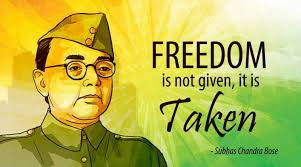
Subhash Chandra Bose is fondly remembered as one of the greatest freedom fighters of India, and popularly known by the name of ‘Netaji’ (Respected Leader). He was strongly influenced by Swami Vivekananda’s teachings, and also believed that the Bhagavad Gita was a great source of inspiration for the struggle against the British. Bose was an Indian nationalist, and a prominent figure of the Indian independence movement. The leader spearheaded the revolutionary Indian National Army during World War II. He always pitched for complete and unconditional independence of India from the British Rule.
S. C. Bose was a twice-elected President of the Indian National Congress (INC), founder and President of the All India Forward Bloc, and founder and Head of State of the Provisional Government of Free India, which he led alongside the Indian National Army from 1943 until his demise in 1945. Spoken as a part of a motivational speech for the Indian National Army at a rally of Indians in Burma in July 1944, Bose’s most famous slogan was “Give me blood, and I shall give you freedom!”

Early Life of S. C. Bose

Subhash Chandra Bose, popularly known by the name of ‘Netaji’ (Respected Leader), was born to Prabhavati Devi and Janakinath Bose on January 23 in 1897 in Odisha. He took admission into the Protestant European School which was run by the Baptist Mission. He did B A in Philosophy from the Presidency College in Calcutta, and was later expelled for assaulting Professor for the latter’s anti-India remarks. After the incident, Bose was considered as one of the rebel-Indians. During his college days, he gradually developed nationalistic temperament, and became socially and politically aware. He found Britishers’ insults to Indians in public places as offensive. In December 1921, Bose was arrested and imprisoned for organising a boycott of the celebrations to mark the Prince of Wales’s visit to India. Bose left for England in 1919 to appear for Indian Civil Service Examination. 

Political Life of Subhash Chandra Bose

After a few years, Bose returned to India as he resigned from his civil service job in April 1921, and later joined the Indian National Congress to fight for the independence of India. Subhash Chandra Bose started the newspaper known as ‘Swaraj’, and took charge of publicity for the Bengal Provincial Congress Committee. In 1923, Bose was elected as the President of All India Youth Congress and as the Secretary of Bengal State Congress. He was also editor of the newspaper called ‘Forward’, founded by his mentor Chittaranjan Das, and he served as the CEO of the Calcutta Municipal Corporation. By December 1927, Bose was appointed as the General Secretary of the INC. In November 1934, he wrote the first part of his book ‘The Indian Struggle’, which was about nationalism and India’s independence movement during 1920–1934, but the British government banned the book. By 1938, he agreed to accept nomination as the Congress President, and presided over the Haripur session. However, due to his strong differences with Mahatma Gandhi and Jawaharlal Nehru, he resigned in 1939. 

Subhash Chandra Bose’s Role in India’s Independence

S C Bose was always in favour of armed revolution in order to expel the Britishers from India. During the time when the Second World War took place, Bose revived the Indian National Army (INA) with the help of the Imperial Japanese Army, and also founded an Indian Radio Station called ‘Azad Hind Radio’. A few years later, he travelled to Japan, where more soldiers and civilians joined the INA. Even when faced with military reverses, Bose was able to maintain support for the Azad Hind movement. In Europe, S C Bose sought help from Adolf Hitler and Benito Mussolini for the liberation of India. Bose had struck an alliance with Japan and Germany as he felt that his presence in the East would help India in the freedom struggle against the British. 

Subhash Chandra Bose’s famous quotes

S C Bose’s most famous slogans/quotes are “Give me blood and I will give you freedom”, Dilli Chalo (“On to Delhi)!” This was the call he used to give to the INA army to encourage them. “Jai Hind”, or, “Glory to India!” was another slogan used by him, and later adopted by the Government of India and the Indian Armed Forces. Another slogan coined by him was “Ittefaq, Etemad, Qurbani” (Urdu for “Unity, Agreement, Sacrifice”). INA also used the slogan “Inquilab Zindabad”, which was coined by Maulana Hasrat Mohani. In July 1944, in a speech broadcast by the Azad Hind Radio from Singapore, Bose addressed Mahatma Gandhi as the “Father of the Nation”. 

Death of Subhash Chandra Bose

Subhash Chandra Bose is believed to have died in a plane crash in Taiwan in 1945, but his body was never found. There have been several theories regarding his disappearance. The government had set up a number of committees to investigate the case and come out with the truth.

FRICTION: A NECESSARY EVIL

We often come across advertisements of tyres where bikes stop immediately when the brakes are applied without any time lag. Also, most of us must have seen children playing with cycle tyres, rolling them across the floor with a stick. And remember when our parents used to pull the bag of luggage across the floor when looking for a taxi when we were all set for a vacation?

But how do phenomena like these and many others work? How are we able to walk and run? How is a bus able to move smoothly on the road?

The phenomenon at work here is friction. An important characteristic of friction is that it always opposes the applied force. When we apply force on an object in the left direction, the friction acts in the opposite, i.e. the right direction and that is the reason why pushing or pulling heavy boxes across the floor comes out as a strenuous task.

What factor affects friction?- Just as no human is perfect, similarly no object is devoid of irregularities. A glass slab that may look completely new, smooth, and shiny too contains a large number of irregularities on its surface. It is these irregularities that cause friction to come into play. Irregularities on the two surfaces lock into each other and when we have to move any object, we have to apply a force large enough to break the interlocking of the surfaces. The force required to overcome friction at the instant an object starts moving from rest is a measure of static friction. On the other hand, the force required to keep the object moving at the same speed is a measure of sliding friction.

Friction: A necessary Evil – It might seem that friction is not important and it only creates hurdles such as in moving objects. But that is not the case. Friction indeed plays an important role in carrying day-to-day activities.

Given below are few pointers that prove that friction might be evil, but is a necessity.

  1. Stopping moving objects– If there were no friction, an object that once started moving or was once set into motion, would never stop. The concept of ‘irregularities’ helps stop a moving object.
  2. Vehicles to be driven– It is due to friction that we can move forward and backward our vehicles.
  3. It would not have been possible to hammer a nail or tie a knot if there were no friction.

Demerits of friction –  Friction alongside playing the role of friend also has some demerits. It is responsible for the wearing out of materials whether they are screws, ball bearings, or soles of shoes. Friction also produces heat which can be both useful as well as dangerous.

Is it in our control to increase or decrease friction? Sure it is.

This can be done by using treaded tyres in vehicles for a better grip. The use of lubricants also makes surfaces smooth to some extent (not wholly though) and form a thin layer thereby preventing the two rough surfaces to come in contact. 

Friction is both, a friend and foe and it is inevitable.