SEE NEW BLOG ON:- 

👉

TOP 5 COURSES TO DO IN YOUR 20s…

link:-     sahil vashistha  👈

YOUTUBE LINK      subscribe  👈

for free courses click on

👉   Udemy


👉  Coursera

THANK YOU 

HAVE A NICE DAY
HimAGee
NOTE:- FOR MORE INFORMATION CLICK ONSAHIL 
OR DM ME ON MY EMAIL.SAHIL
JAI BABA KI
🙏🙏🙏🙏🙏🙏🙏


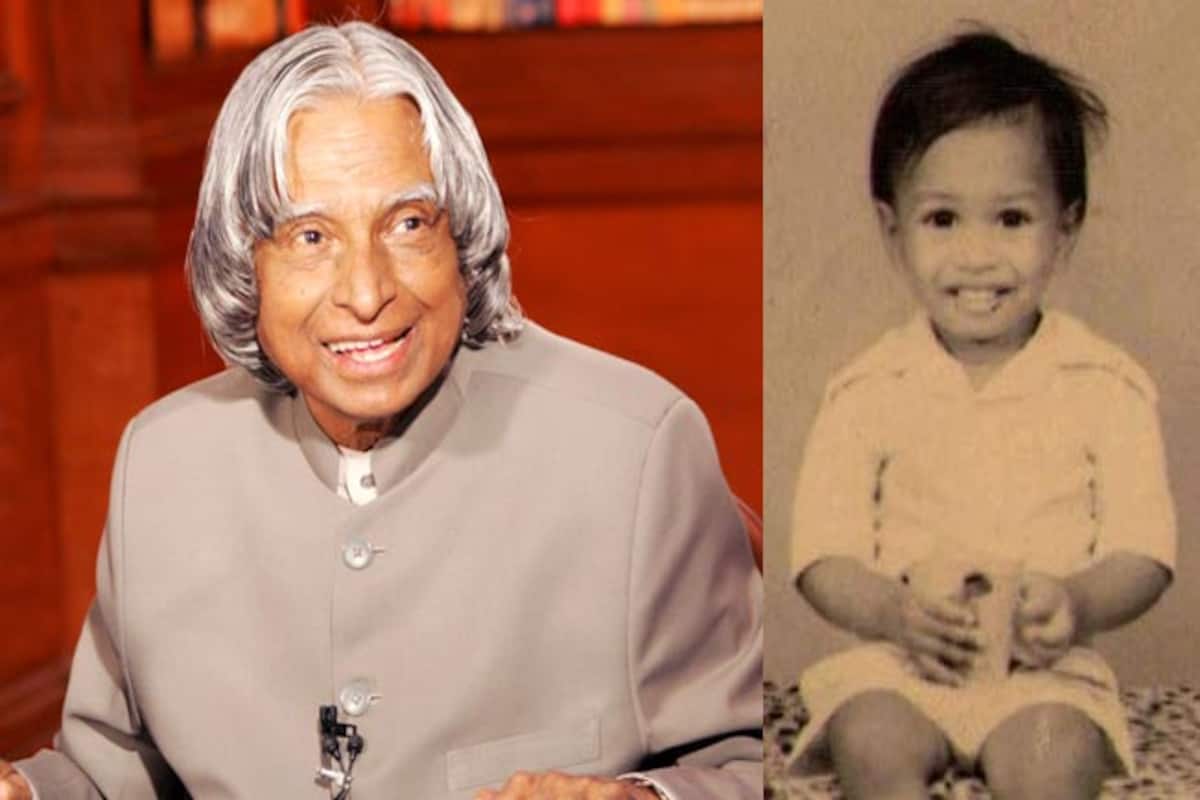
Most Powerful Biography of Dr.A.P.J. Abdul Kalam

Dr.A.P.J. Abdul Kalam, the star of the youth’s hope, is hailed as an unparalleled dawn in the political sky.

Birth and Adolescence of Abdul Kalam  

He was born on 15 October 1931 in Rameswaram, Tamil Nadu, the son of Jainulabdeen Marakayar and Ashiamma. His primary education took place in Rameswaram. He completed his engineering education in Chennai. 

Continuing Works of Abdul Kalam 

Not only did he tell others to dream, he also made it his policy to dream. The dream is not about selfishness. It is about her motherland, which includes the development of others. So he has a lot of work to do in relation to it. He first worked for an airline manufacturing and development company. At that time he developed the jet called “Nandi”. Realizing his uniqueness, the Indian Space Research Organization hired him. At that time, he was also known for his ability to launch satellites and launch missiles. Next he moved from the space company to the field of nuclear research and became successful. He next held the top post in the Indian Ministry of Defense and rose to the position of Scientific Adviser to the Prime Minister of India. Similarly, his work in the field of information and security is immeasurable.

Abdul Kalam Became the President of the Republic 

Among the positions held by Abdul Kalam, his crowning achievement was his position as the President of our Republic of India. Not only was he a good energetic scientist but also a great patriot, the position was only five years from 25.07.2002 to 2007. Although the benefits of this position were immeasurable. The benefits of the 12th President of India and his position are not to be underestimated. 


Kalam Received Titles and Awards 


Abdul Kalam was presented with several awards in recognition of their service. He has received many awards including Von Braun Award, Om Prakash Bass Award, Padma Vibhushan Award, Padma Bhushan Award, Nehru National Award, Indira Gandhi Award and special doctorate degree from various universities. Above all, he is proud to have been awarded the Bharat Ratna, India’s highest award, in 1998.

The Path Paved by Abdul Kalam

Abdul Kalam is the one who realizes that pride comes when knowledge and energy combine. He was exalted and sought to bring his country to the forefront of world history. Abdul Kalam passed away on July 27, 2015. 

Kalam, who has been not only a great leader but also a great volunteer in action, will guide us if we look at his picture and study the lesson and walk in his footsteps.

The Missile Man

Introduction

Dr. APJ Abdul Kalam was famously known as the “Missile Man” of India. He was also known for his humility. All the citizens of India are remembering him on his death anniversary on July 27th, when in 2015 he passed away because of a heart attack he suffered in Shillong. He is known to be the people’s President because of his simplicity and humility. He was one of the few Presidents every citizen loved and was fond of. He was the only President of India who did not have a political connection, that is, came from a non-political background. He was the 11th President of India, from 2002 to 2007. This year, July 27th, 2021 is his 6th death anniversary.

About Him

His full name was Avul Pakir Jainulabdeen Abdul Kalam. He was born on 15 October 1931. He was an Indian scientist and politician who played a major role in developing India’s missile and nuclear weapons programs. He was born into a Tamil Muslim family in the pilgrimage center of Rameswaram on Pamban Island, which was then in the Madras Presidency, which now is the State of Tamil Nadu. His father was a boat owner and an imam of their local mosque and his mother was a homemaker. He was the youngest of four brothers and one sister in his family. His ancestors were wealthy Marayakar traders and landowners but the family had lost all fortunes during the poverty-stricken time. Marayakar is a Muslim ethnic found in Tamil Nadu and Sri Lanka who are claimed to be descendants of Arab traders and local women. As a young boy, he sold newspapers to help his family in contributing income.

During his school years, he scored average grades but he was said to be a bright and hardworking student with a desire to learn. He spent a lot of his time studying, especially Mathematics. On completing his education, he went to Saint Joseph’s College, Tiruchirappalli, which was at that time affiliated with the University of Madras. He graduated from there in Physics in 1954. In 1955, he moved to Madras to study aerospace engineering from Madras Institute of Technology. Once while he was working on a senior project, the Dean was dissatisfied because of the lack of progress and he threatened Kalam to either finish the project in three days or get his scholarship revoked. To his surprise, Kalam met the deadline and impressed the Dean. His dream was to become a fighter pilot which he missed by one place.

Career as a Scientist

He had joined the Defense Research and Development Organization (DRDO) in 1958 as a senior scientific assistant. Later on, in 1969, he joined the Indian Space Research Organization (ISRO) where his responsibility was as the project director of the SLV-III, which is known as the first satellite launch vehicle.

He then rejoined DRDO in 1982 as the director. This is when he got the name of the “Missile Man” because of the implementation of the Integrated Guided Missile Development Program. He was then appointed as the senior scientific adviser to India’s defense minister in 1992. He also played an eminent role in the Pokhran-II tests in May 1998.

Awards

He won various awards:

  • Padma Bhushan – 1981
  • Padma Vibhushan – 1990
  • Bharat Ratna – 1997
  • Indira Gandhi Award for National Integration – 1997
  • Veer Savakar Award – 1998
  • SASTRA Ramanujan Prize – 2000
  • Von Braun Award – 2013

Conclusion

We should take a look at his inspiring quotes on this death anniversary and follow the great inspiration that he is to all of us. One of the most important one is “We are all born with a divine fire in us. Our efforts should be to give wings to this fire and fill the world with the glow of its goodness.”

References

Plea for south bench of the Supreme Court

Bar Council heads of the southern States including Telangana, Andhra Pradesh, Tamil Nadu, Kerala, and Karnataka have appealed to Vice-President M. Venkaiah Naidu, and the Chief Justice of India N.V. Ramana to consider setting up the long pending demand of a Supreme Court bench in the south on Monday.

The delegation consisting of TS BC chairman A. Narasimha Reddy, AP BC chief G. Rama Rao, TN BC chief P.S. Amal Raj, Karnataka BC chief L. Srinivasa Babu, Kerala BC chief K.N Anil Kumar along with ex-MLC N. Ramchander Rao met both the dignitaries at Delhi where they presented a memorandum highlighting the need for such a step listing out the advantages. Pointing out that there were 65,000 cases pending in the SC, they argued for immediate reforms like establishing permanent regional centres of the Apex Court for the north, south, east and west at Delhi, Kolkata, Chennai and Mumbai as it was the need of the hour to ensure accessible and speedy justice to the people. Over the decades, several standing committees of the Parliament, Law Commissions, Bar Councils and several others have made several representations in this regard. In fact, the Law Commission in 2009 recommended setting up of a Constitution Bench with seven judges in Delhi and four Cessation Benches in Chennai/Hyderabad, Mumbai and Kolkata with four to six judges each. These were to work as appellate courts arising out of orders of the SC.

Though this was rejected in 2010 by SC the time has come to revisit this, they asserted. They also stated that Article 130 of the Constitution empowers the CJ to constitute with the consent of the President these regional benches. It would not only allow common people who cannot afford to make trips to Delhi to appeal to the highest courts but will also open up opportunities for the legal fraternity besides helping in reducing the pendency of cases in the courts.

“The present system of working of the SC needs to be changed if the delayed justice notion is to be changed,” they said and claimed in a press release later in the evening that both the VP and CJ had “responded positively”.

Words of the former law minister; Ravi Shankar Prasad

Law Minister Ravi Shankar Prasad, in a letter to Rajya Sabha member and Marumalarchi Dravida Munnetra Kazhagam (MDMK) chief Vaiko, said that though the matter of setting up a Southern Bench of the Supreme Court of India is pending in the top court, the issue has so far not found favour. The letter, dated February 12, responded to a query raised by Mr. Vaiko in Parliament, in which he asked if a Bench of the Supreme Court of India can be set up in south India.

“As as you must be aware, according to Article 130 of the Constitution, the Supreme Court shall sit in Delhi or in any other place or places as the Chief Justice of India may, with the approval of the President of India, from time to time, appoint. Representations have been received at various times from various quarters for the establishment of Benches of the Supreme Court in various parts of the country,” Mr. Prasad said in his letter.

LIFE-GIVING GANGA'S PLIGHT

“Best of rivers, born of all the sacred waters,” the Ganges, Described in the Mahabharata.

Ganga river, also deemed as the Ganges River, flows 2,700 km from the Himalayas mountains to the Bay of Bengal in northern India and Bangladesh The Ganga rises from the Gangotri glacier about 4,000 metres above sea level on the southern slopes of the Himalayan Alps. The Bhagirathi is joined by the tributaries Alaknanda and Mandakini to form the Ganga in the Himalayan region. Its river basin covers over 1 million square kilometres and is home to more than 650 million people. The Ganges is vital for the survival of millions of people and a diverse range of biodiversity.

The Ganga and its tributaries support a diverse range of fauna and flora. The Ganges supports 104 species of Rotifers, or minute creatures, 378 species of fish, eleven amphibian species, twenty-seven reptile species, eleven types of mammals, and 177 species of aquatic birds, according to the Zoological Survey of India. The Ganges River dolphin, the Sundarbans’ Royal Bengal tiger, freshwater turtles, Gharial crocodiles, Sarius Crane, egrets, herons, and terns are just a few well-known species.

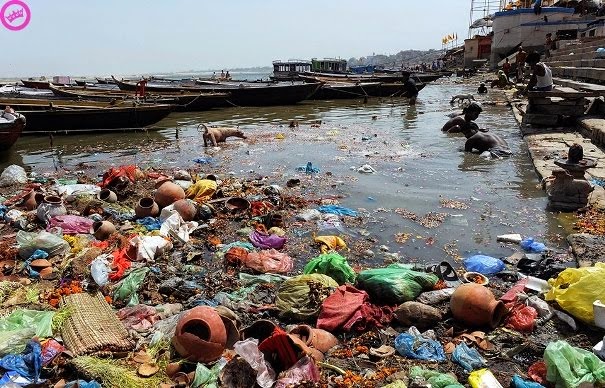
But due to the rapid rise of urbanization, farming, and commercialization in recent decades, the Ganges currently faces serious concerns. The Ganga has now become one of the five highly polluted rivers on the planet. Excessive water drawn-out for cultivation and other purposes, barrages, dams hindrance in the natural movement of the Ganges, and trash from households and industries have irreparably damaged this once pure and mighty, free-flowing river.

River pollution’s key sources

  • Hazardous trash from textile mills, slaughterhouses, abattoirs, hospitals, distilleries, and chemical facilities, being discharged into the river in large quantities.
  • The massive number of fertilizers and pesticides regularly employed in agriculture activities is washed into the Ganga with rainwater, endangering marine life.
  • Dams disrupting the river’s natural movement are also responsible for polluting the Ganga.
  • Open defecation on the river banks, some 70% of those living in rural areas have no access to toilets.
  •  Disposal of lost loved ones’ remains in the river since it is a river worshipped by a larger religious community.

Sewage- the most prominent contaminant

A report published by The Inter-Ministerial Group, established by the Indian government to study the pollution sources in the Ganga River, revealed that sewage and contaminated water dumped in the river are the principal sources of pollution in the Ganga. It also discovered a significant disparity between the quantity of garbage produced along the Ganga and the scale of waste treatment. It identified that plenty of cities along the Ganga’s banks, such as Kanpur, Varanasi, and Allahabad, lack any kind of sewerage systems at all. Approximately 2.9 billion liters of sewage, residential, and industrial wastewater are discharged straight into the Ganga daily. Millions of people who rely on the Ganga for all of their water needs are harmed by pollution. Many of these individuals have little choice but to continue to rely on the Ganga’s contaminated waters for survival, exposing themselves to waterborne diseases like dysentery, cholera, diarrhea, and typhoid.

OVerburdened Sewage Treatment Plants (STPs)

Among wastewater treatment capacity and ‘official estimated’ production, there is an 80% disparity. As per the Central Pollution Control Board, sewage is produced at a rate of 6,087 million liters per day (MLD), with a treatment capacity of 1,208.8 MLD. Since most cities are already established and overpopulated, constructing new conveyance and treatment systems isn’t just a difficult but an enormously expensive undertaking. Many of the already set up STPs are no longer functional or are underused due to a lack of financing from cities and local municipalities.

INDUSTRIAL & COMMERCIAL WASTE

More than 500 million liters of industrial wastewater is thrown straight into the Ganga daily. With toxic chemicals and pollutants flooding its waters at levels far past any form of permissible or safe levels, the Ganga has now become a toxic supplier of drinking and bathing water. 764 of the factories, approximately utilize 1123 MLD of water and dump 500 MLD of contaminated water in the Ganga’s mainstream. Tanneries produce the most hazardous types of toxins, and in a location like Unnao, more than 790 times the permitted level of chromium (about 1,125 tonnes), is dumped into the river. Small-scale companies continue to pollute the Ganga with over a billion gallons of toxic chemicals due to the lack of efficient and economical treatment methods.

FLAWED SOLID WASTE MANAGEMENT 

Many cities along the Ganga and its tributaries lack solid waste management systems, & even if they have, they are never adequate to handle the volume of waste generated each day. This solid trash is carried into the Ganga and its tributaries, either deliberately or because of rains during the monsoon. Vast quantities of biodegradable debris in the water consume a lot of oxygen as it breaks down, inflicting illness or death in aquatic animals like the threatened Gangetic dolphin. There were once tens of thousands of Ganges River dolphins in the river, but there are currently only about 1,200-1,800 left. Non-biodegradable materials float through rivers, obstructing the natural flow of air and gradually releasing their harmful toxins into the river. Aquatic species frequently eat these items obliviously and perish as a consequence. The general public lacks environmental awareness and education, inadvertently throwing their litter into the surroundings, utterly oblivious to the effects.

INAPPROPRIATE AGRICULTURAL PRACTICES

Over 80% of the river’s water is used for irrigation, while numerous hydro-power projects dry out vast swathes of the river, upping levels of pollution drastically. Evaporation and other variables cause around half of the water drawn from the Ganga for irrigation to be wasted before it can nurture a single crop. Out-of-date infrastructures, such as damaged and poorly assembled pipes and unsustainable farming techniques, are to blame for much of this damage. Groundwater depletion as a consequence of over-extraction for irrigation purposes.

The Ganges River nurtures the entire country and is crucial for everyone’s survival. Therefore, it must be rescued from its current plight. The public must be educated and made aware of the problem; efficient drainage systems must be built; and illegal dumping of harmful and hazardous materials by industries and households must be prohibited, promotion of water conservation for irrigation, Enactment of rules to keep dangerous chemical run-off out of the Ganga, Increasing farmer awareness of the practices and benefits of sustainable, organic farming, Solid waste collection and treatment at the source, minimizing and repurposing solid waste need to be done.

Importance and Benefits of Reading Books.

Growing up we all have learned basic skills and out of all the skills, our ability to read is the most significant. Whatever you read, it ends up enlightening you. And when it comes to books, each book that you read is an opportunity to learn something new. By reading you can broaden your vocabulary, improve your writing skills, train your mind, enhance your wellness, lower stress, and most important thing you can discover something new about yourself. 

Why is reading important?

It has been said that a person who can read can educate themselves in any field of life they’d like to. In this modern era, everything is flooding with fresh information. And reading is the best way to clarify and relate to further information. 

Although you can find it easier to watch a Youtube video or listen to a podcast, reading still tastes the cake when it comes to comprehension and enhancing your education. 

What are the benefits of reading books? 

If you are a bookworm, you already know many of the benefits of reading books. And if you are not then you are reading the right article. Mentioned below are some of the benefits of reading books:-

I) Improves Concentration

Reading requires concentration, time, and patience. In simple words, reading forces you to use your brain. According to One World Literacy Foundation, “when you read, you need to reason things out that are unfamiliar to you.”

II)  Broaden Vocabulary 

If you read, you uncover new words, that allow understanding on a greater level. If you read an hour per day, you’ll end up exposing yourself to approx 4 million words in a year. Isn’t it amazing?

III) Reduces Stress

According to a study by Sussex University, reading can reduce stress by 68%. When you read you involve your mind in reading, which takes away your focus from all the worries.  

David Lewis​ (a cognitive neuropsychologist) said, “It doesn’t matter what book you read. By losing yourself in a thoroughly engrossing book you can escape from the worries and stresses of the everyday world and spend a while exploring the domain of the author’s imagination.”

IV) Makes You A Better Communicator

When you learn new vocabulary, you become a far better communicator. With all the new vocabulary, you’ll know which word is right for which context. For example, when you feel bad, it can be anything like you are feeling hungry, you have a fever, you have a headache, etc. But if you say that I am feeling bad then you are not specifying the feelings, which results in another person not understanding what are you going through. In that case, your vocabulary can help, that you learn by reading.

V) It Helps Your Writing

With all the creativity, vocabulary, and communication skills gained from reading, imagine what you can do with your writing skills. By reading other’s work you can experience their way of explaining a feeling or certain situation. Hence, you learn how to use other writers’ experiences to improve yours.

VI) Reading Improves Empathy

Empathy is being able to put yourself in someone’s else shoes. Reading fiction or non-fiction can bring you as close as you’ll ever be in someone”s shoes. Studies have shown that readers have a better sense of empathy. 

There is a saying, “Books are man’s best friend.” I believe every one of us should follow this and start reading. 

The President

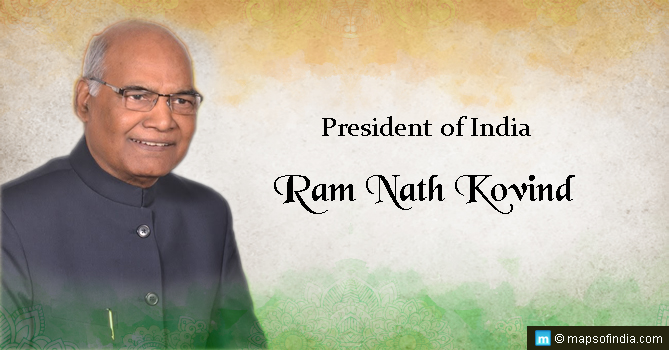
At the head of the Union Executive stands the President of India.

Election of the President of India:- The President of India is elected by indirect election, that is, by an electoral college, by the system of proportional representation using the single transferable vote. The electoral college shall consist of the following:

(a) the elected members of both the House of Parliament;

(b) the elected members of the Legislative Assembly of the state; and the elected members of the Legislative Assembly of the Union Territories [Article 54].

The system of indirect was criticized by some as falling short of the democratic ideal underlying universal franchise, but the indirect election was supported by the framers of the Constitution, on the following grounds-

(i) Direct election by an electorate of some 510 million people would mean an enormous loss of time, energy, and money.

(ii) Under the system of responsible Government introduced by the Constitution, real power would vest in the ministry; so, it would be bizarre to elect the President directly by the people without giving them real power.

Qualification of the President:- In order to be qualified as President of india, one must –

(a) be a citizen of India;

(b) has completed the age of 35 years;

(c) be qualified for election as a member of the House of the People; and

(d) must not hold any office of profit under the Government of India or the Government of any of the state or any local or other authority subject to the control of any of the said Government [Article 58].

Term of Office of President:- The President holds his office for five years from the date of the appointment in the office, and he is eligible for re-election [Article 56-57].

Appointment of the President:- The President is appointed by the Prime Minister into his office.

Termination:- The President’s office may terminate within the term of five years in either of the two ways-

(a) by written resignation in his handwriting, addressed to the Vice President of India.

(b) by removal for the violation of the Constitution [Article 61(1)].

Procedure for the impeachment of the President:- An impeachment is a quasi-judicial procedure in Parliament. Any of the House may charge for the violation of the Constitution, before the other, and shall either investigate the charges by themselves or may stimulate once to be investigated. But the charge cannot be preferable unless-

(a) a resolution passed by the any House of the Parliament with not less than 1/4 of the total members of that House within 14 days of notice.

(b) the resolution was then passed by a majority of not less than 2/3 of the members of both the House of the Parliament.

Employments Allowances of the President:- The President shall be entitled without payment of rent to the use of his official residence and shall also be entitled to such emoluments, allowances, and privileges as may be determined by the Parliament. The emoluments and allowances of the President cannot be diminished till he holds his office [Article 54(4)].

A PIECE OF HEAVEN ON EARTH- ANDAMAN AND NICOBAR ISLAND.

In this article, I am going to take you to the middle of the sea. Wondering where? The island which is very famous because of our freedom fighters where they had to spend years behind the bars. Yes, you are guessing right, I am talking about Andaman and Nicobar Island. This place is heaven on the earth if you haven’t visited yet after reading this blog about Andaman and Nicobar Island, I am sure that you all will be going to book your tickets now! So, let’s start our online trip to Andaman and Nicobar.

I am going to talk about the places where I had visited in Andaman and Nicobar.

  1. Havelock
  2. Neil island
  3. Cellular Jail
  4. Ross Island

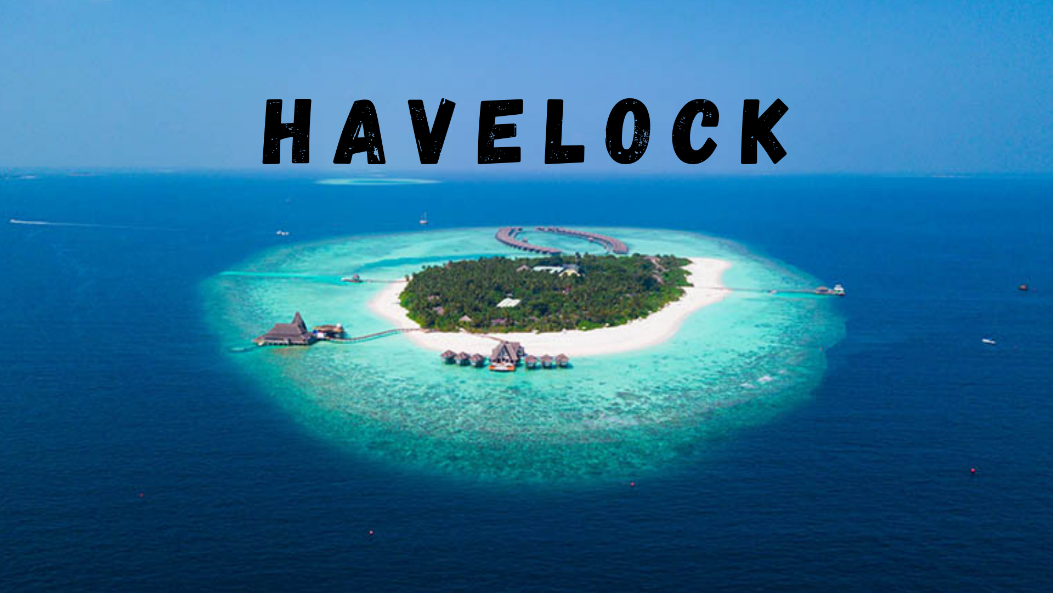
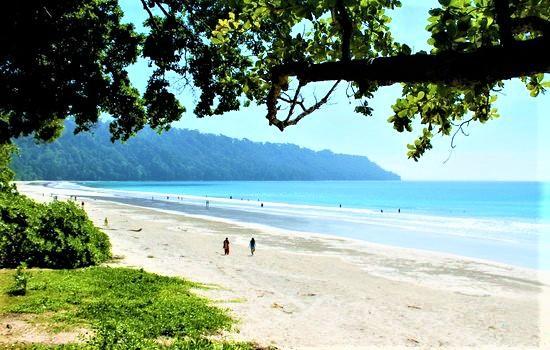
Havelock is the spotlight of the Andaman and Nicobar tourism, it is very famous for the beaches and greenery, in short, it is the feast for the eyes. Clyster clear water, white sand will definitely soothe your eyes. In 2018 our prime minister Narendra Modi has changed the name of havelock to swaraj deep. Yes I know you all want to know how to reach there, you have to book ferries and it will take 90 min to reach there. Places to visit in havelock are:

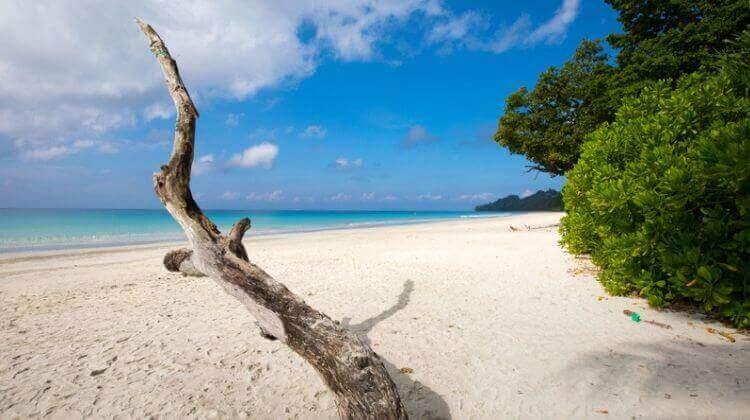
  1. RADHA NAGAR BEACH:

Radha Nagar beach is one of the most well-known beaches in Andaman and Nicobar and  the best beach in Asian  described by the Time magazine. sky blue sea with crystal clear water and white sand where you and enjoy your day you can play in the water you can swim in the water you can also take sun-bath there. There are large numbers of huts, benches and wooden chairs where you can sit and relax there and can enjoy the beauty of nature.

They also provide you with changing rooms where you can change you wet cloths.

  1. ELEPHANT BEACH 

Don’t judge this place by its name, you might be thinking that there must be many elephants but it is not like that. Elephant beach is very famous for water sports, it gives you numerous water activities. Let’s discuss in more details about water sports.

  • SCUBA DIVING : 

In scuba diving, you are taken under-water where you can see the breath-taking view of aquatic life. You can see untouched coral reefs, vibrant fishes, under-water vegetation and under-water ecosystem.

  • SNORKELING :

Snorkelling is little bit same as scuba diving but it doesn’t allow you to go deep inside the water, you can only go to the surface of the water and can see through your goggles, and also can swim.

  • SEA WALKING: 

Yes, you heard right you can walk under the sea, sea walking is most unique and very adventurous. Diving and swimming are okay but have you ever imagined walking under the sea. Once you reached the bottom of the sea you will see that you will get surrounded by hoards of fishes you can actually feed them, isn’t it really exciting?

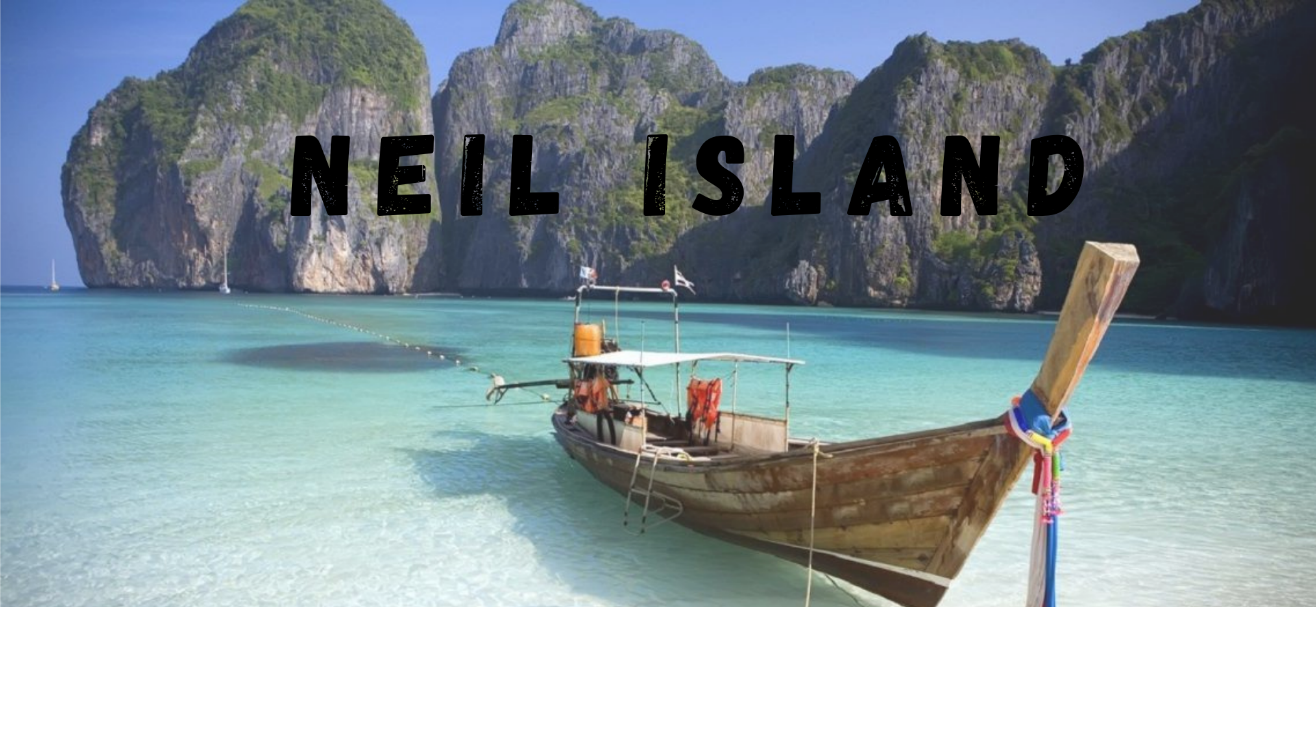
It is another island full of beaches, this island is for those who want to be far from noise, disturbance as you can find a smaller number of vehicles, market and less population. Here also you can find water sports activities like jet skiing and a glass bottom boat ride. Let me make you more clear about these water sports.

  • JET SKIING:

Jet skiing is one of the most enjoyable water sports activity as it can be enjoyed by anyone and it is available at Bharatpur Beach in Neil. It will give you a unique feeling that you are riding a bike on water. Timing for this activity is from 9AM to 4PM. I personally advise you to book jet ski as it is always available and t is cheaper than other water sports activities.

  • GLASS BOTTOM BOAT RIDE:

this activity is appropriate for those who don’t want to get wet or doesn’t want to go into the water. By the name itself, it is clear that you will be travelling on a boat which will have a see-through glass from which you can see the underwater life, you can see fishes, corals and many more.

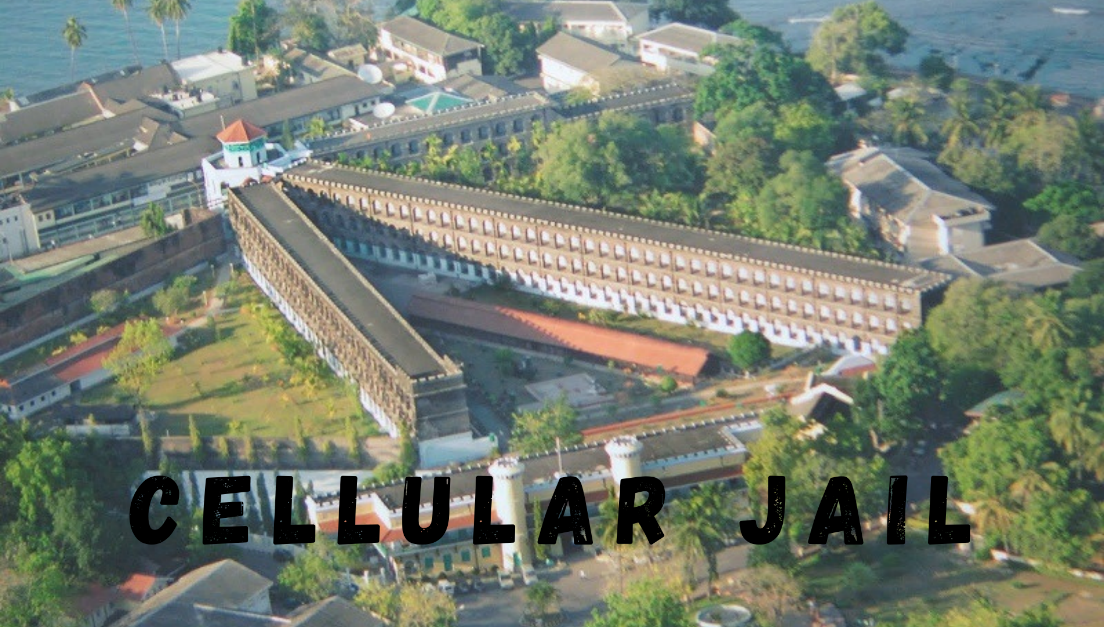
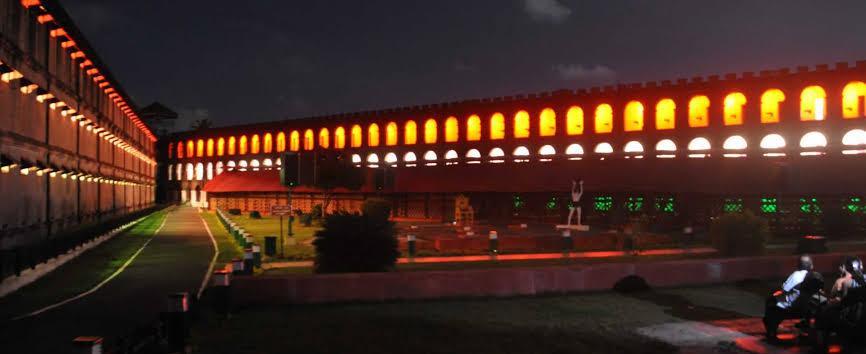
Cellular jail is one of the most historic monuments in Andaman and Nicobar, also known as kaala Pani, it will definitely give you goosebumps while exploring the jail. Every wall of the jail will tell you the story of our soldiers. There you will see how much sacrifice has been done by our freedom fighters. Britishers used to send the soldiers in this whenever they try to protest against them. You can visit the jail at 9AM to 12:30PM and 1:00PM to 5PM (except on Mondays and on national holiday)

Cellular jail will provide you light and sound show, in this you will get narrated the whole story of how freedom fighters lived there how they survived there and how has been treated there. It is a must-watch show. The show is in both Hindi language and in the English language. You can enjoy this show at 6PM    (Hindi) and 7:15PM (English).

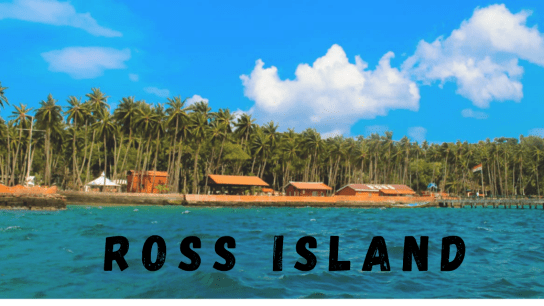
The one who is a nature lover, Ross island is a perfect place to visit. There you are surrounded by nature. There you can see animals and the best part is that they are not caged they will roam here and there. You will see rabbits, deer, peacocks roaming here and there and you can experience the beauty of the nature. You can sit there for hours in cool breeze and can also enjoy the beach view. In 2018 our Prime Minister Narender Modi has changed the name of RossIsland to Netaji Shubhas Chandra Bose island.

Next question you all will get that how one can reach there?

You can get a boat from phoenix bay jetty and it will help you to reach in 15 mins, the people over there will provide you with a life jacket also or else you can choose a helicopter tour. 

Yes, this is the short and adventurous trip of mine to Andaman and Nicobar, I am sure that after reading this article and you will definitely plan your future trip to Andaman and Nicobar. I personally suggest you to visit Andaman and Nicobar during summer months. 

DOPING IN SPORTS

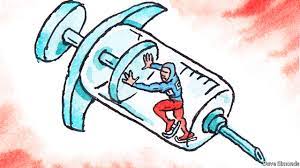
Do athletes always abide to the “spirit of the sport”?. While most of them do, there are some who go against it and fall as a prey to some unethical and wicked act such as doping.

“Doping” refers to the use of prohibited medications, drugs, or treatments by athletes with the intension of improving the athlete’s performance. The idea of doping has been in practice by athlete’s centuries ago but recently its rate has been increased due to the wide variety of potential in upcoming athletes. It has found to be unethical and banned by most of the sports organization.

HISTORY:

Doping was first noted at the Olympic Games, in 1904, in a runner who was injected with strychnine to assist with speed and therefore giving him the strength to finish the race. It adverse outcomes and effects lead to the first ban on doping by the International Association of Athletics Federation in 1928.Later in 1967 the International Olympic Committee (IOC) banned doping, and in 1999 the IOC led the initiative to form the World Anti-Doping Agency (WADA).

SUBSTANCES USED FOR DOPING:

Doping substances are used to increase muscle mass, decrease recovery time, increase energy and endurance, and also mask the presence of other drug. Some of the drugs used for doping are

  • ERYTHROPOIETIN (EPO)
  • SYNTHETIC OXYGEN CARRIERS
  • CERA
  • DIURETICS

WHY IS DOPING SUCH A BIG DEAL?

It is indeed a big deal because it has many substances that can be harmful and has a long lasting effects on health of the person who uses it. It can also put an individual’s life at risk. Doping leads to several issues in human health such as

  • Abnormal growth
  • Diabetes
  • Blood cancers
  • Arthritis
  • Enlarged heart and

In the worst case it also leads to premature death.

TESTING:

A urine and/or blood sample will be collected from an athlete. In case of urine sample, the athlete will collect the sample himself/herself. However, to ensure that the sample has been provided from the athlete’s body and that no other dishonest practice has been committed, a specialist of the same gender as the athlete will be present during the sample collection. These samples will be collected and tested to find out if any doping substances are used.

WADA and the IOC aim to decrease the incidence of doping and eliminate its use in sport. But its not all about it. Its also in the hands of the individual and the athletes taking part in sports and promise an oath to themselves not to involve in unethical and immoral activities that goes against the spirit of the game.

NOTE: In Tokyo Olympics 2020, INDIAN player MIRABAI CHANU stands chance to get gold if Chinese weightlifter fails in dope test.

THE MOST TERRIBLE VARIANT TILL TODAY- THE DELTA PLUS VARIANT OF COVID-19

With the decrease in the number of the corona cases in India, we the people of India started to experience that the devastation has finally came to an end. But sadly, the moment we started to go out again, the new variant of virus had emerged – the Delta Plus Variant, which gave another shock to the people of India.

The muted variety of Delta Variant- Delta Plus Variant has spread widely across the country, Indian.

THE SPREAD

49 cases of Delta+ variant had been recorded by 12 states of India till date. Maharashtra been one of the states again got hit badly with highest number of cases.

The Delta+ variant has already broadened in 85 countries around the world and South Africa is the reason behind the spread of this infection.

REASON TO BE CONCERN ABOUT DELTA+ VARIANT

Delta+ variant a.k.a AY.1, it is 60% more infectious when compared to previous version. Considerably it is more threatening for the lungs of patients who are already facing problems with their lungs.

The Indian Council of Medical Research (ICMR) declared that these mutations have raised the capacity of transmission and with this the spread from one person to other has become easy. This mutation made the virus job easy to get into the cells of the patients.

The reason to be concern about the variant is that the specialist of epidemiology and communicable diseases stated that Delta+ variant is dangerous variation of corona virus till date.

HOW TO TRACE

The Delta+ variant shows both the symptoms of delta variant as well as beta variant. And the symptoms are:

Headache, Chest pain, Fever, Cough, Skin rash, Shortness of breath and Diarrhoea.

PREVENTION

The World Health Organization (WHO) has already warned that the Delta variant of corona virus is one of the reasons to be extra caution about it. Maintain social distancing is one of the essential while going out.

And other measures to be taken are:

Going out when it is really an emergency, wearing of mask every time you out, maintain 6 feet distance in crowd, use of sanitizer is a must, wash hands every time you come back home and the last but most important get yourself vaccinate as soon as possible.

TREATMENT

Till now there is no such way to treat the Delta Plus variant infection. Antibodies are the only way till now to treat this as per doctors. Get vaccine to ensure the safety of your as well as your family. Till now there is no such treatment found by doctors or scientist to cure this variant as of now.

TAKEAWAY

With is spread of Delta+ variant across India, again have to face the uncomfortable situation where we again got to lock up ourselves in 2 walled room, facing lockdown for months again and the worst was the shortage of beds at hospitals, oxygen cylinder and lifesaving medication. If we do not want to get in this trouble again lets, follow the instructions and protocol established by the government. Let’s pledge will not show our careless behaviour and ensure the safety of ourselves and others.

Difference between Robbery and Dacoity

Although they may appear similar in common usage, they are two distinct crimes under criminal law. What exactly is the legal meaning of robbery and dacoity? What are the requirements for a criminal act to be classified as a robbery or a dacoity? What is the distinction between robbery and dacoity? What are the punishments for these crimes under the Indian Penal Code? When you read the title, these thoughts may arise. This blog will attempt to answer these questions as thoroughly as possible.

Robbery

Robbery is a particular and intensified kind of theft or extortion that implies felonious stealing from the person of another or in his presence against his will, by violence or putting him in terror, and it becomes Dacoity when five or more people co-jointly do it.

When theft becomes robbery— Theft is “robbery” if, in order to commit the theft, or in committing the theft, or in carrying away or attempting to carry away property obtained by the theft, the offender voluntarily causes or attempts to cause death, hurt, or wrongful restraint to any person, or fear of instant death, hurt, or wrongful restraint.

When extortion becomes robbery.— Extortion is “robbery” if the offender is in the presence of the person put in fear at the time of committing the extortion, and commits the extortion by putting that person in fear of instant death, instant hurt, or instant wrongful restraint to that person or to some other person, and induces the person so put in fear then and there to deliver up the thing extorted.

Illustrations:-

(a) A restrains Z and steals Z’s money and diamonds from Z’s clothing without Z’s consent. In this case, A has committed theft and, in order to perpetrate that theft, has voluntarily restrained Z. As a result, A has committed robbery.

(b) A encounters Z on the high roads, brandishes a gun, and demands Z’s pocketbook. As a result, Z gives over his purse. Here, A has extorted the purse from Z by placing him in fear of immediate harm and conducting the extortion in his presence. As a result, A has committed robbery.

(c) On the highway, A encounters Z and Z’s child. A seizes the child and threatens to throw it down a cliff unless Z returns his purse. As a result, Z hands up his purse. Here, A has extorted the money from Z by making Z fearful of inflicting immediate harm to the kid who is present. As a result, A has committed robbery on Z.

Dacoity

When five or more people co-jointly commit or attempt to commit a robbery, or when the total number of people co-jointly committed or attempting to commit a robbery, as well as those present and aiding such commission or attempt, totals five or more, each person committing, attempting, or aiding is said to commit Dacoity.

In the case of Poolan Devi vs. State of Madhya Pradesh, Smt. Phoolan Devi has been in jail since February 12, 1983, when she claims to have willingly surrendered in the State of Madhya Pradesh despite having a criminal record. On this premise, it is argued that the petitioner’s custody for eleven years is sufficient to fulfil the criteria, and that all prosecutions pending against her in Uttar Pradesh courts should be dismissed. According to the petitioner, she is facing around 55 criminal trials in Uttar Pradesh courts for allegedly committing horrific crimes such as dacoity and murder.

Points of Difference between Robbery and Dacoity 

Robbery and Dacoity can be differentiated on the basis of various grounds:

Definition:

Robbery has been defined in Section 390 of IPC and Dacoity has been defined in Section 391 of IPC.

Essential Ingredients:

Essential ingredients of the offence of Robbery are as follows:

  • Theft as described in Section 378.
  • The offender caused or tried to cause the following to certain people: fear of death, bodily harm, or wrongful restraint.
  • Fear of sudden death, instant harm, or instant unlawful restraint.
  • The offender did not do such an act.
  • In order to commit theft.
  • While committing the theft.
  • In taking or attempting to take away the goods.

Essential ingredients of the offence of Dacoity are as follow:-

  • The accused commits or attempts robbery;
  • The number of people committing or attempting to commit robbery, as well as those present and assisting, must not be less than five.
  • All of these people should work together.

Note: The term “conjointly” refers to a coordinated or concerted action by five or more people in the act of committing the offence. In other words, five or more people must be involved in the commission of the crime and must commit or attempt to commit robbery.

Number Of Persons:

In Robbery the number of persons are less than five. It may be committed by a single person.

In Dacoity, the number of persons are five or more.

Seriousness:

Robbery is less serious in nature.

Dacoity is more serious offence than robbery because of the terror caused by the presence number of offenders.

Position of Abettors:

In Robbery, the abettors are liable independently.

In Dacoity abettors who are present and aiding when the crime is committed are counted in the number.

Jurisdiction of Court

In case of robbery, the offence is cognizable, non-bailable, non-compoundable and triable by Magistrate of the first class.

In case of dacoity the offence is cognizable, non-bailable, non-compoundable and triable by Court of Session.

Punishment:

Whoever commits robbery shall be punished with rigorous imprisonment for a term which shall not be less than three years, nor more than ten years and shall also be liable to fine.

Whoever commits dacoity shall be punished with imprisonment for life, or with rigorous impris­onment for a term which may extend to ten years, and shall also be liable to fine.

In the case of Ashfaq vs State, the Supreme Court ruled that weapon with which the offender is armed is a deadly weapon within the meaning of this section, if it is within the vision of the victim and is capable of creating terror in the mind of victim. It is also sufficient to satisfy the word ‘uses’ for the purpose of section 397 IPC.

Position In Highway:

If robbery is committed on the highway, the imprisonment may be extended to fourteen years.

The fact that the Dacoity is committed on the highway does not change the position or punishment. 

Conclusion

To summarise, the concept of robbery requires an accused to have the purpose to deprive another person of property from the start, and to that goal, either harm is caused or a person is placed. Under improper constraint, or it must be proven that the victim was put in immediate danger of death, bodily harm, or wrongful detention when the same conduct is committed by five or more severe offenders.


Ready Player One: Explained

With our world growing even closer to being a virtual reality connecting everyone, this movie gives a sneak peak in a very possible future. Our world is moving toward virtual reality at an alarming rate, technology is being developed to completely immerse a person in VR. LucasVRTech is a young youtuber that is developing cheap alternatives to VR technology, he is developing an open source haptic feedback glove for VR enthusiasts. Corporations have jumped at every trend possible, VR is no different. People have been finding a short escape from reality using video games for a long time, VR is just helping the escape feel more real.

The movie is set in 2045 where people use OASIS a virtual reality simulation to escape reality. The simulation is created by James Halliday and Ogden Morrow, after Halliday’s death his avatar announces a contest that promises ownership of OASIS to the winner. The prize is locked behind three gates, the keys can be obtained by completing three challenges. The contest draws thousands of participants known as egg hunters or gunters. The contest also draw the interest of Nolan Sorrento the CEO if IOI who seeks to control the OASIS, IOI has employees known as the sixers who participate in the competition on Nolan’s behalf.

The movie follows Wade Watts an avid gunter that goes by the moniker Parzival, he is a super fan and spends most of his free time trying to defeat the challenge. He manages to crack the first challenge by driving backwards on a race track instead of going forwards, this maneuverer is copied by Art3mis, Aech, Daito and Sho. They are known as the high-5 on the contest leader boards. Sorrento intends to find out Parzival’s real name and bribe him to win the competition on his behalf.

Sorrento enlists bounty hunter i-R0k to learn about Parzival’s real identity. Wade and Art3mis work together in the Halliday archives, they find a clue that could lead them to the second key. The duo visit a virtual nightclub to find more clues, Wade reveals his real name to Artemis. They are ambushed by IOI, Art3mis reveals that her father died in debt to IOI and abandons Wade. i-R0k who had been eavesdropping their conversation learns Parziwal’s identity and conveys it to Sorento. Wade is contacted by Sorento with his offer, Wade refuses and is nearly killed when Sorento bombs his building. Wade survives and is taken by Samantha Cook the player behind Art3mis to her hideout.

The High 5 search a recreation of the overlook hotel from the Shining for the second key, and retrieve it. Sorrento’s subordinate Zandor locates and captures Samantha, she is imprisoned in IOI headquarters to pay off her father’s debt. Wade is saved by rest of the High 5 Members Aech, Daito and Sho in Aech’s truck. The group hacks Sorento’s personal rig to save Art3mis, she escapes confinement but stays at IOI. The final challenge is located at castle Anorak on planet doom, where contenders must guess Halliday’s favourite game to earn the final key. i-R0k creates a forcefield around the castle preventing players from entering it while IOI tries to beat the final challenge, Art3mis who stayed behind uses the opportunity to disable the forcefield.

The High 5 lead an army of players into the castle to battle IOI, Wade kills Art3mis which allows her to flee from IOI while rest of the High 5 pick her up. Sorrento activates a weapon that wipes out everyone, Wade survives using a coin give to him by the curator that gives him an extra life. Wade beats the final challenge and comes before Halliday’s avatr Anorak, he offers wade a contract. Wade refuses when he remembers that Morrow the co-creator signed a similar contract, Anorak transforms to Halliday and explains Wade his regrets before giving him the ownership of OASIS. Morrow appears and reveals himself as the curator, he talks to Wade about the ownership. Wade decides to run OASIS with his friends and Morrow joins as a consultant. OASIS now under the new management of High 5 bars IOI loyalty centres from accessing it, it also shuts down the servers every Tuesday and Thursday to make people spend more time in the real world.

This was a really amazing movie with a pretty real concept. Our world might move in a similar direction in a few years, people are unsatisfied by reality and prefer Virtual world where they control most of its aspects. I’m an avid gamer and would love a virtual reality despite the known drawbacks. In a situation like a pandemic, games and VR is something that allowed people to interact with each other. Every coin has 2 sides we must decide to focus on the better aspects.

Why We Need A Worldwide Plan for Corona Virus.

The second important choice we confront is between nationalist isolation and global solidarity. Both the epidemic itself and therefore the resulting depression are global problems. they will be solved effectively only by global cooperation. First and foremost, so as to defeat the virus we’d like to share information globally. That’s the large advantage of humans over viruses. A coronavirus in China and a coronavirus within the US cannot swap recommendations on the way to infect humans. But China can teach the US many valuable lessons about coronavirus and the way to affect it. What an Italian doctor discovers in Milan within the early morning might well save lives in Tehran by evening. When the United Kingdom government hesitates between several policies, it can get advice from the Koreans who have already faced an identical dilemma a month ago. except for this to happen, we’d like a spirit of worldwide co-operation and trust. Countries should be willing to share information openly and humbly seek advice, and will be ready to trust the info and therefore the insights they receive. We also need a worldwide effort to supply and distribute medical equipment, most notably testing kits and respiratory machines. Rather than every country trying to try it locally and hoarding whatever equipment it can get, a coordinated global effort could greatly accelerate production and confirm life-saving equipment is distributed more fairly. Even as countries nationalize key industries during a war, the human war against coronavirus may require us to “humanize” the crucial production lines. an upscale country with few coronavirus cases should be willing to send precious equipment to a poorer country with many cases, trusting that if and when it subsequently needs help, other countries will come to its assistance. We might consider an identical global effort to pool medical personnel. Countries currently less affected could send medical staff to the worst-hit regions of the planet, both so as to assist them in their hour of need, and so as to realize valuable experience. If afterward the main target of the epidemic shifts, help could start flowing within the other way. Global cooperation is vitally needed on the economic front too. Given the worldwide nature of the economy and of supply chains, if each government does its own thing in complete disregard of the others, the result is going to be chaos and a deepening crisis. we’d like a worldwide plan of action, and that we need it fast. Another requirement is reaching a worldwide agreement on travel. Suspending all international travel for months will cause tremendous hardships, and hamper the war against coronavirus. Countries got to cooperate so as to permit a minimum of a trickle of essential travelers to continue crossing borders: scientists, doctors, journalists, politicians, businesspeople. This will be done by reaching a worldwide agreement on the pre-screening of travelers by their home country. If you recognize that only carefully screened travelers were allowed on a plane, you’d be more willing to simply accept them into your country. Unfortunately, at the present countries hardly do any of those things. A collective paralysis has gripped the international community. There seem to be no adults within the room. One would have expected to ascertain already weeks ago an emergency meeting of worldwide leaders to return up with a standard plan of action. The G7 leaders managed to organize a videoconference only in the week, and it didn’t end in any such plan. In previous global crises — like the 2008 financial crisis and therefore the 2014 Ebola epidemic — the US assumed the role of worldwide leader. But the present US administration has abdicated the work of its leader. it’s made it very clear that it cares about the greatness of America much more than about the longer term of humanity. This administration has abandoned even its closest allies. When it banned all travel from the EU, it didn’t bother to offer the EU such a lot as an advance notice — including consult the EU that drastic measure. it’s scandalized Germany by allegedly offering $1bn to a German drug company to shop for monopoly rights to a replacement Covid-19 vaccine. albeit the present administration eventually changes tack and comes up with a worldwide plan of action, few would follow a pacesetter who never takes responsibility, who never admits mistakes, and who routinely takes all the credit for himself while leaving all the blame to others. If the void left by the US isn’t filled by other countries, not only will it’s much harder to prevent the present epidemic, but its legacy will still poison diplomacy for years to return. Yet every crisis is additionally a chance. We must hope that the present epidemic will help humankind realize the acute danger posed by global disunity. Humanity must make a choice. Will we travel down the route of disunity, or will we adopt the trail of worldwide solidarity? If we elect disunity, this may not only prolong the crisis, but will probably end in even worse catastrophes within the future. If we elect global solidarity, it’ll be a victory not only against the coronavirus, but against all future epidemics and crises which may assault humankind within the 21st century

Klopp hints at Van Dijk return as Liverpool gear up for Hertha Berlin friendly

Jurgen Klopp has hinted Virgil van Dijk is in line for a return as Liverpool gear up for their latest friendly clash, against Hertha Berlin.

Van Dijk hasn’t played for Liverpool since undergoing successful surgery on his cruciate ligament knee injury in October last year.

The 30-year-old missed the majority of the 2020-21 campaign as result and decided against lining up with the Netherlands at the European Championships in order to focus on his recovery, and Klopp has now revealed he is nearing a long-awaited comeback.

The Netherlands international could be in line to make his long-awaited return to action this week after a full recovery from knee surgery

The Emergency Pudding

 One of the issues we face in understanding where we stand on surveillance is that none folks know exactly how we are being surveilled, and what the approaching years might bring. Surveillance technology is developing at breakneck speed, and what seemed science-fiction 10 years ago is today old news. As an idea experiment, consider a hypothetical government that demands that each citizen wears a biometric bracelet that monitors blood heat and heart-rate 24 hours each day. The resulting data is hoarded and analyzed by government algorithms. The algorithms will know that you simply are sick even before you recognize it, and that they also will know where you’ve got been, and who you’ve got met. The chains of infection might be drastically shortened, and even cut altogether. Such a system could arguably stop the epidemic in its tracks within days. Sounds wonderful, right? The downside is, of course, that this is able to give legitimacy to a terrifying new closed-circuit television. If you recognize, for instance, that I clicked on a Fox News link instead of a CNN link, which will teach you something about my politics and maybe even my personality. But if you’ll monitor what happens to my blood heat, vital signs and heart-rate as I watch the video clip, you’ll learn what makes me laugh, what makes me cry, and what makes me really, really angry. It is crucial to recollect that anger, joy, boredom and love are biological phenomena a bit like fever and a cough. an equivalent technology that identifies coughs could also identify laughs. If corporations and governments start harvesting our biometric data end bloc, they will get to understand us much better than we all know ourselves, and that they can then not just predict our feelings but also manipulate our feelings and sell us anything they need — be it a product or an official. Biometric monitoring would make Cambridge Analytica’s data hacking tactics appear as if something from the Stone Age. Imagine North Korea in 2030, when every citizen has got to wear a biometric bracelet 24 hours each day. If you hear a speech by the good Leader and therefore the bracelet picks up the tell-tale signs of anger, you’re finished. You could, of course, make the case for biometric surveillance as a short-lived measure taken during a state of emergency. it might get away once the emergency is over. But temporary measures have a nasty habit of outlasting emergencies, especially as there’s always a replacement emergency lurking on the horizon. My home country of Israel, for instance, declared a state of emergency during its 1948 War of Independence, which justified a variety of temporary measures from press censorship and land confiscation to special regulations for creating pudding (I kid you not). The War of Independence has long been won, but Israel never declared the emergency over, and has not abolished many of the “temporary” measures of 1948 (the emergency pudding decree was mercifully abolished in 2011). Even when infections from coronavirus are right down to zero, some data-hungry governments could argue they needed to stay the biometric surveillance systems in situ because they fear a second wave of coronavirus, or because there’s a replacement Ebola strain evolving in Central African Republic, or because . . . you get the thought. an enormous battle has been raging in recent years over our privacy. The coronavirus crisis might be the battle’s tipping point. For when people are given a choice between privacy and health, they’re going to usually choose health.