The Olympic Games are an international sports festival which is held every four years. The goal of these games is to cultivate human beings through sports and contribute to world peace. The Summer and Winter Games are held separately. The last Olympics was held in Brazil. After that, it was supposed to be held in 2020 but because of the pandemic, it got postponed to 2021 and is being held in Japan from 23rd July to 8th August 2021.
History
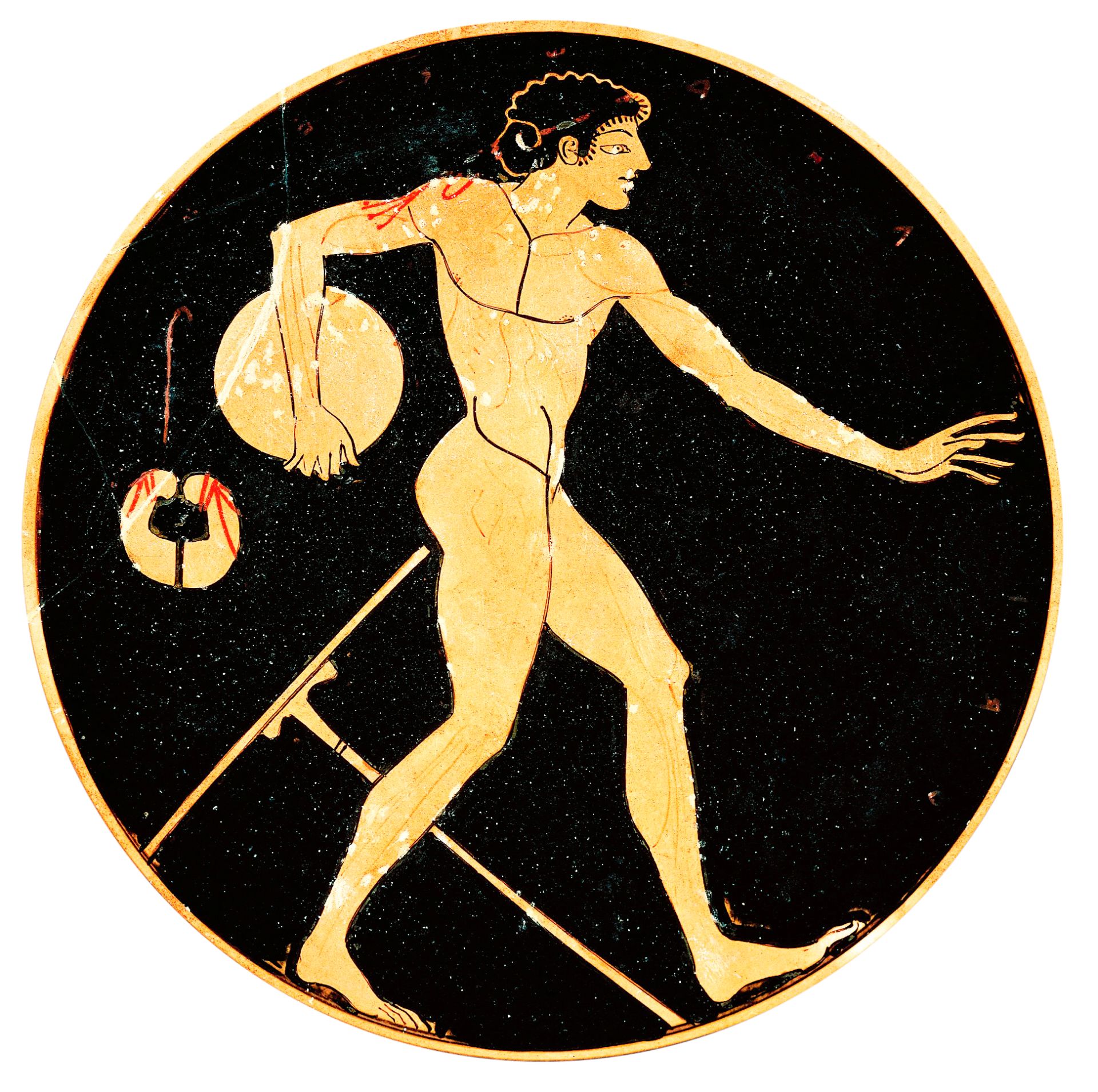
The Olympic games originated in ancient Greece which would make it as old as 3,000 years. From then it was revived in the late 19th century. The Games were held every four years in Olympia from the 8th century B.C. to the 4th century A.D. Olympia was located in the western Peloponnese peninsula, honouring the god Zeus. They used to be held from August 6 to September 19. It became such an important part of the culture that people start measuring time by the interval between the Olympics, this measurement of time is called the “Olympiad”. These games were an intrinsic part of a religious festival in honour of Zeus and the first recorded champion is known to be Coroebus of Elis, who was a cook. He won the sprint race in 776 BCE.
In 776 BCE, there was just one event, that of a footrace which was known as “stade”. This very word is the origin of the modern English word “stadium”. Other competitions were added over the decades. Wrestling and pentathlon were introduced in 708 BCE, boxing was introduced in 688 BCE.
In ancient Olympics, all events were held on one day, from that they later shifted to covering all events in four days. It is also said that the participants followed the practice of participating in the nude. This practice has been tried to explain and the top explanations are that nudity bespoke a rite of passage, nudity was a holdover from the days of hunting and gathering, the Greeks believed that nudity had a special power to ward off any harm, public nudity used to be a costume of the upper class and to be nude in public without erection showed a high level of self-control.
Women in Olympic Games
There were no women participants in the ancient Olympics, although some names of women can be seen on the official list of Olympics victors as the owners of the stables for the chariot entries.
Demise of Olympics
In the middle of the 2nd century BCE, Greece had lost its independence to Rome. The Romans did not think kindly of athletics. They thought that stripping naked and competing in public was a degrading act.
Modern Olympic Movement
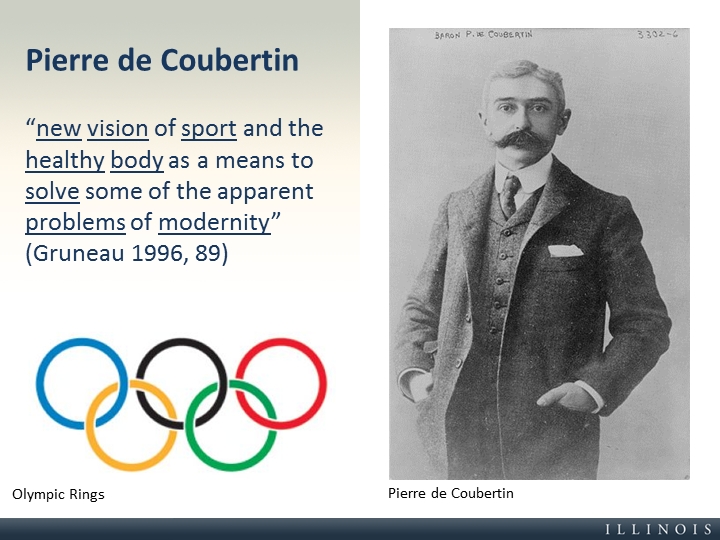
The architect of the modern Games was Pierre, baron de Coubertin who was born in Paris. In 1890, he traveled to England where he met Dr. William Penny Brookes who had been trying to revive the ancient Olympic Games for decades. He got the idea from a series of modern Greek Olympiads held in Athens since 1859. Brookes first attempt at British Olympiad in 1866 was successful but the subsequent attempts were unsuccessful. In the 1880s Brookes started arguing to begin an international Olympics in Athens. But Coubertin stole Brookes’ idea and proposed the same in 1892 at a meeting of the Union des Sports Athletiques in Paris. Coubertin faced a lot of problems in the establishment of this, like refusal by the Greek Prime Minister but when a new Prime Minister took place, Coubertin and his colleague were able to convince him and the Games were held in the first week of April 1896.
Conclusion
Coubertin said the spirit of the Olympic Games is “The elevation of the mind and soul, overcoming differences between nationalities and cultures, embracing friendship, a sense of solidarity, and fair play; ultimately leading to the contribution towards world peace and betterment of the world.”
Friendship is one of the greatest bonds anyone can ever wish for. Lucky are those who have friends they can trust. Friendship is a devoted relationship between two individuals. They both feel immense care and love for each other. Usually, a friendship is shared by two people who have similar interests and feelings.
Friendship is important in life because it teaches us a great deal about life. We learn so many lessons from friendship which we won’t find anywhere else. You learn to love someone other than your family. You know how to be yourself in front of friends.
You meet many along the way of life but only some stay with you forever. Those are your real friends who stay by your side through thick and thin. Friendship is the most beautiful gift you can present to anyone. It is one which stays with a person forever.
A person is acquainted with many persons in their life. However, the closest ones become our friends. You may have a large friend circle in school or college, but you know you can only count on one or two people with whom you share true friendship.
There are essentially two types of friends, one is good friends the other are true friends or best friends. They’re the ones with whom we have a special bond of love and affection. In other words, having a true friend makes our lives easier and full of happiness.
Most importantly, true friendship stands for a relationship free of any judgments. In a true friendship, a person can be themselves completely without the fear of being judged. It makes you feel loved and accepted. This kind of freedom is what every human strives to have in their lives.
In short, true friendship is what gives us reason to stay strong in life. Having a loving family and all is okay but you also need true friendship to be completely happy. Some people don’t even have families but they have friends who’re like their family only. Thus, we see having true friends means a lot to everyone.
Friendship never leaves us in bad times. You learn how to understand people and trust others. Your real friends will always motivate you and cheer for you. They will take you on the right path and save you from any evil.
Similarly, friendship also teaches you a lot about loyalty. It helps us to become loyal and get loyalty in return. There is no greater feeling in the world than having a friend who is loyal to you.
Moreover, friendship makes us stronger. It tests us and helps us grow. For instance, we see how we fight with our friends yet come back together after setting aside our differences. This is what makes us strong and teaches us patience.
Therefore, there is no doubt that best friends help us in our difficulties and bad times of life. They always try to save us in our dangers as well as offer timely advice. True friends are like the best assets of our life because they share our sorrow, sooth our pain and make us feel happy.
A person acquainted with diverse people in their life, they might be a part of a vast friend circle, but they would depend on just one or maximum two people whom they trust to their personal space and emotions. That bond created with those special people is true friendship. There are two basic types of friendships one develops- good friends and best friends. An authentic and special bond friendship grows with the true or best friend who makes life easier and happier.
Friendship holds significant stature in life as it teaches unforgettable life lessons. Some valuable lessons that will change your life, how to love others apart from family, how to behave in front of people or friends. Friendships never create bad times; instead, give one the best memories to live upon. Friendships teach you to understand and trust people. Real friends will constantly motivate and cheer; sometimes, they will even direct you the paths and save you. However, one should know how to differentiate between toxic and beneficial friendships.
Similarly, friendship teaches the importance of loyalty and reliability. There is no greater feeling in the world than a loyal, trustworthy friend by your side. However, friendship isn’t a one-way path, to experience loyalty and trust; one needs to return the mutual feelings to complete the circle of friendship. Moreover, friendships build a strong relationship bond and aids to grow. For instance, despite fights and arguments, friends set the differences aside and come back together. This teaches patience and develops a strong bond.
Therefore, friendships are real-life connections. Real friends help each other during tough times and the difficult phases of life. They are only life-savers during a rough period, but also the best timely-advisers. True friends are the most assets of life who share the space of sorrow, happiness, and pain. They are the filler breaks of the monotonous life.
A good friendship needs communication. Good friends share each problem, difficulties, and sort out differences. They can help to mold the character, and one needs to be careful while befriending someone. That’s why friendships are a special gift from God.
“A good friend is like a four-leaf clover; hard to find and lucky to have.”
The Picaresque novel is a famous technique in earlier periods. These techniques were used to record the Kings’ and other person’s victories in and out of the battlefields even during his adventures. This form of literature helped in recording the real historical heroes and events from various perspectives. Many authors adapted these techniques and succeeded in making new epic fictions, mythologies, and other real events and incidents.
The Picaresque Novel originated in Spain. The term ‘Picaresque’ is derived from the Spanish ‘picaro’ meaning an anti-hero or rogue. A Picaresque novel is generally an autobiography account of the hero’s fortunes, sufferings and wanderings. It is a combination of episodic tales arranged as journeys. They episodes generally depict low life in a rambling manner and come to an abrupt ending.
The first prose fiction in the nature of the picaresque was John Lyly’s ‘Euphues’ published in 1578 detailing the loves and adventures of a young Athenian called Euphues. Six years later, Thomas Nash published his ‘Unfortunate Traveller’, a more perfect picaresque romance dealing with the travels and adventure of a page called Jacky Wilton. Defoe’s ‘Moll Flanders’ published in 1722 had an affinity with the picaresque mode of writing. But Smollett’s ‘The Adventure of Ferdinand Count Fathom’ is a more perfect form of the picaresque. However, it was Fielding’s ‘Tom Jones’ which established the respectability of the picaresque novel. Fielding’s novel describes through 18 book’s the adventures and several love affairs of The Young anti-hero Tom Jones. Elements of the picaresque can be found in Dickens’s Nicholas Nickleby and in Joyce Cary’s “The horse’s mouth.”
The object of the picaresque novel is to take a central figure through a succession of scenes and adventures, introduce a great number of characters around him and thus build-up picture of society. In the eighteenth century and before travel was the only way to get acquainted with social life. That is why heroes in the Picaresque novels are travelling heroes. The hero in a picaresque novel is always in the Whirlpool of adventures and he has to be present in several human situations. The picaresque hero often transcends the level of the rogue into a tragic figure with human attributes as in the case of Fielding’s Tom Jones.
Another feature of the picaresque novel is the dynamic movement of the hero. He should run through a succession of scenes as Tom does during his journey to London. The novelist constructs the picture of society through the narration of the hero’s wanderings. Smollett sends his hero Roderick Random not only to London but also to France and for a ship journey. The picaresque novel may go deeper into a contemplation of the more intricate relationship between good and evil. They also reveal the strange truth that generous impulses exist even in those whom society considers as rougues. Tom Jones is a generous and manly youth in spite of the rouguish elements in his character.
Until now this technique is used by various authors for various books in the name of Mythologies, fiction, and other Genres.
Ethos of Vedanta are based on supreme truth & supreme soul. If you do good to someone , you will get good . If you are good , the whole world is good to you . Management ethics is the ethical treatment of employees, stockholders, owners and the public by a company. A company, while needing to make a profit, should have good ethics. Employees should be treated well, whether they are employed here or overseas. By being respectful of the environment in the community a compound ethics, and good, honest records also show respect to stockholders and owners. Most of us would agree that it is ethics in practice that makes sense; just having it carefully drafted and redrafted in books may not serve the purpose. Of course all of us want businesses to be fair, clean and beneficial to the society. For that to happen, organizations need to abide by ethics or rule of law, engage themselves in fair practices and competition; all of which will benefit the consumer, the society and organization.
When ethics are used in management , organization grow at a different level .
In these days of globalization, Vedanta-based values will surely have to make a sympathetic assessment of values of those brought up according to Islamic or Christian faith. However desirable it may be to universalize the teachings culled from the Vedanta philosophy, ultimately one will have to find in that same school the lessons of co-existence with alien cultures and roots.
Ethics are about making choices that may not always feel good or seem like they benefit you but are the ‘right’ choices to make. They are the choices that are examples of ‘model citizen’ and are the examples of ‘golden rules’ like; don’t hurt, don’t steal, don’t be dishonest, don’t lie. But if we take Ethics as a subjective philosophy then what will happen to these golden rules. Especially at the time of facing any ethical dilemma how one should decide-what is ethical and what’s unethical? Organization provides rules, regulations, code of conduct, protocols which provide guidelines to work, it shows how to walk, but it does not show the correct path to walk on. Ethical dilemmas faced by managers are often more real to life and highly complex with no clear guidelines, whether in law or often in religion. Ethics gives us a message to always look forward , which gives a message to look at a long go . Ethics teaches a management the most important thing that is forward looking approach . With this forward looking approach , it teaches to be always true to the organization .
Some of the principles of Indian ethos are :
Know who you are & what is your purpose of existence , this concept is used in management because a management’s main motive is to know what who they have to manage & what they have to deal through
Holistic approach : We should behave with others in the manner which we expect from them . Effectiveness & efficiency of an organization increases when the employees are highly motivated.
Service motive : A person should have service motive & at the same time should have a smiling face while providing that service . An organizations main motive is to provide service to other , & they should not be profit oriented .
Self sacrifice : One should have self sacrifice attitude , means sacrificing self ego , & should always be helpful to others
Coco, Zaya, and the last dragon those are such of brilliant animated movie we are obsessed off, showing a story differently with updated techniques but who started it, how an animated movie was back when it started forming.
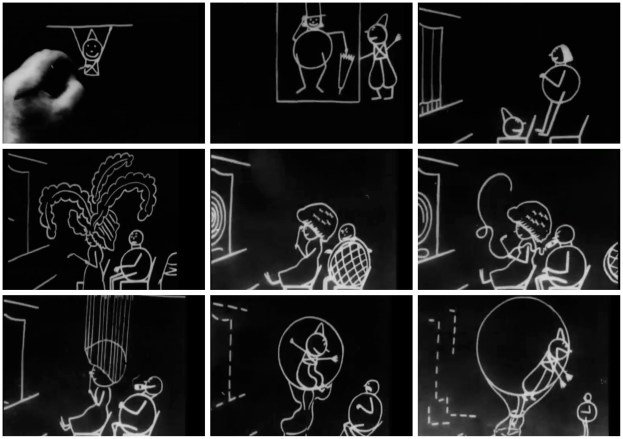
On 17 August 1908 a movie was released not a normal one it was the world’s first fully animated movie ‘Fantasmagorie’, created by Emile Cohl in a hand-drawn style, released by the Gaumont Company in Paris. The movie was a tribute to the Incoherent Art Movement which was banished by that time. The name was derived from the Fantasmograph, a 19th-century lantern that projects shadowy images on the wall. The word ‘Fantasmagorie’ means a constantly shifting complex succession of things seen or imagined.
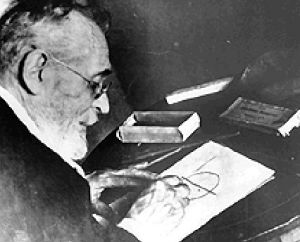
Emile Cohl did not have a very privileged Childhood his artistic capabilities were discovered at the age of seven at the boarding school he was enrolled in. With the Franco-Prussian war in progress, he came under the influence of political caricature and puppet Drama, in the 1880s or 90s he developed himself as a writer, caricaturist, and cartoonist. he worked as the assistant for caricaturist Andre Gill, later he joined to Goumant company and directed many films before moving to animation. It took five months for Emile Cohl to create the movie, he made 700 drawing for 1 minute 20 seconds, he used an illuminated glass plate and traced consecutive drawings with the variations needed for the consistent movement and continuity among the drawings, it was projected at a rate of 16 frames per second, he made eight drawings for each second photographed each twice. The drawings were placed one by one on a lightbox and photographed. The movie ’Fantasmagorie’ is about the interaction of a Stick man with different objects.This movie made a hit in the time ’90s, which led to the creation of new techniques for the problems that arise while makes such movies.
Union Minister for Road Transport and Highways Nitin Gadkari has proposed to increase the speed limit of vehicle on highways up to 20kmph . In a meeting with his officials , Gadkari stated that the conditions of highways have improved overtime and can bolster faster travel . Gadkari also mentioned putting mechanism for uniformity of speeds limit on certain stretches rather than effect frequent changes in notified speed limits even on short stretches . This comes alongside the Ministry’s efforts to the Government has planned to shift public transport and logistics to 100 percent clean energy sources , Union minister said that asserting that India has made significant progress towards improving green energy access over last decade . Addressing a virtual event organised by industry body CII , the road transport and highways minister said India is already on track to reach its goal of 175GW of installed renewable capacity by 2022.They have stated that conditions of highways have improved overtime and can bolster faster travel times .The minister said to reduce congestion on corridors and enhance logistic efficiency , 35 locations have been identified for the development of multimodal logistics parks . These logistics parks would also trigger the development of manufacturing clusters in adjacent rural and tier 2 urban. Godkari said ” Society should be livable , workable , and sustainable for all with an important focus on ethics, ecology, and the environment .”
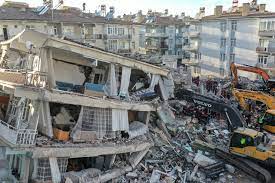
India is a large country. It ranks seventh in the world. Also, it is the second-most populous country in the world. It is home to large biodiversity and a large proportion of people live in the lap of nature. Indeed, nature has provided ways and means for the sustenance of life on earth. Alongside, it is also one of the biggest sources of destruction. It can be due to earthquakes, floods, droughts, landslides, and many more. These are termed natural hazards and can cause great damage to human habitations.
This article is concerned with the mechanism of Earthquakes and how to manage and sustain them in case one arrives in our vicinity.
What is an earthquake? – Sudden movements under the earth’s crust cause shaking or vibrations of a part of the earth’s surface. These vibrations are called earthquakes. The shaking movements sent out by an earthquake are called seismic waves and the study of this phenomenon is called seismology.
The place of origin of an earthquake is called its focus and the place which is directly above the focus on the surface of the earth is called the epicentre. The effect of an earthquake is usually felt the strongest near the epicentre and it is most likely that the major part of the damage will also be caused in the surrounding areas.
Near about a million earthquakes are experienced on the earth every year. Most of them are just minor tremors and go unnoticed.
A natural question may arise that if we have so much information about earthquakes, don’t we need to devise a method to track the movement and damage of an earthquake?
Well, much effort isn’t needed because a sensitive device named a seismograph is used to detect the occurrence of an earthquake.
Seismograph explained – Seismic waves are the vibrations from earthquakes that travel through the earth. They are recorded on instruments called seismographs, which follow a zigzag trace that shows the varying amplitude of ground oscillations beneath the instrument. The sensor part of a seismograph is referred to as the seismometer, while the graphing capability was added as a later invention. Sensitive seismographs, which greatly magnify these ground motions, can detect strong earthquakes from sources anywhere in the world. The time, location, and magnitude of an earthquake can be determined from the data recorded by seismograph stations.
The intensity of an earthquake is measured using an instrument known as the Richter scale. The Richter magnitude scale was developed in 1935 by Charles F. Richter of the California Institute of Technology as a mathematical device to compare the size of earthquakes.
What to do in case of an earthquake? – As already mentioned, not all earthquakes are life-threatening. But it is important to safeguard ourselves and the people around us from such a disaster. Given below are steps that need to be kept in mind while dealing with an earthquake.
1) Moving to an open area helps. In case of a high-intensity earthquake, the buildings may fall and cause hurt. It is best to find an open spot.
2) Basic first-aid functions need to be learned in case of injuries suffered to you or people around you.
3) In case you are trapped in a building, try remaining close to an interior wall and protect your head with your arms ( in case the ceiling may fall). Also, avoid using a lift.
4) If you are already outdoors, keep away from trees, signboards, poles, and electric wires.
5) Never take shelter inside a car or a bus.
These are methods that are simple and easy to follow. But if you panic in such situations, chances are you wouldn’t be able to recall them. Hence the key tip is to remain calm and composed and then follow the steps.
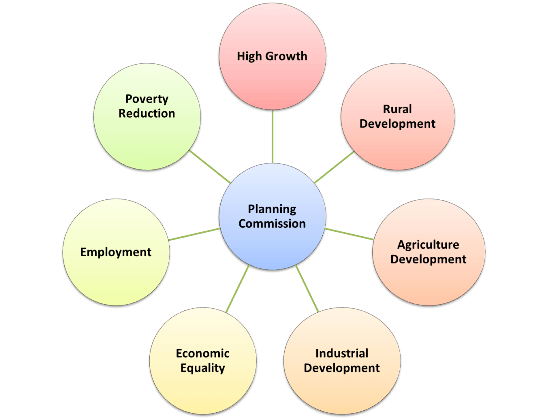
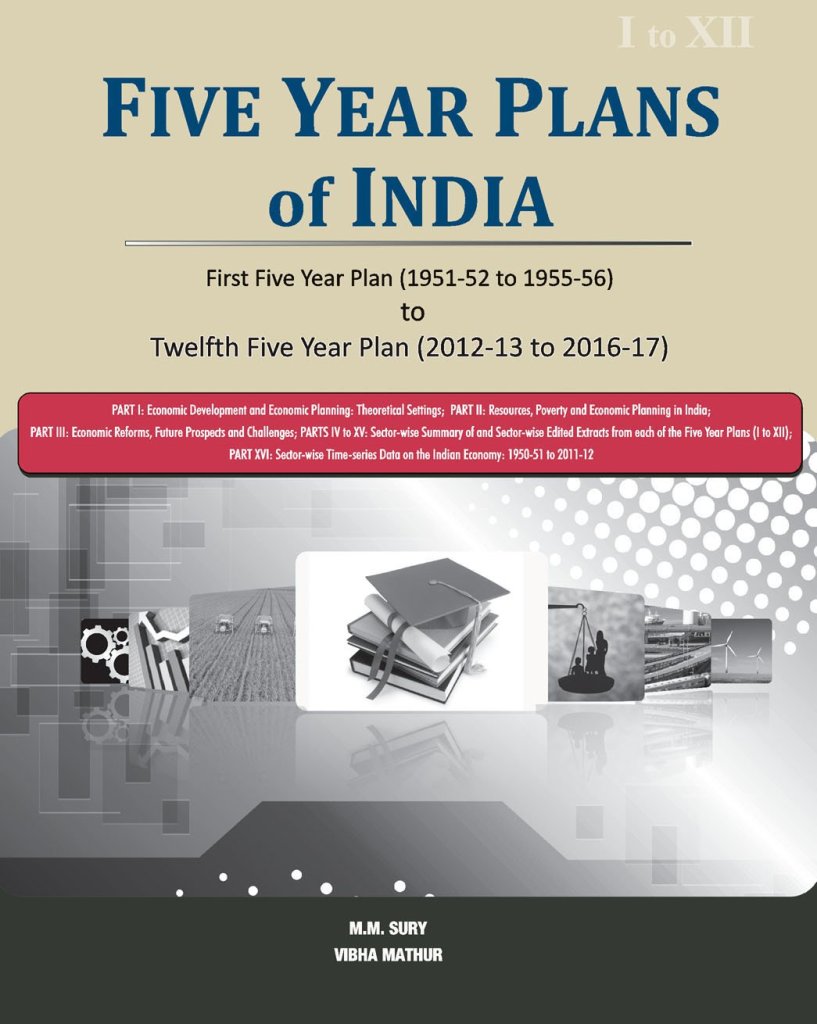
From 1947 to 2017, the Indian economy was premised on the concept of planning. This was carried through the Five-Year Plans, developed, executed, and monitored by the Planning Commission (1951-2014) and the NITI Aayog (2015-2017). With the prime minister as the ex-officio chairman, the commission has a nominated deputy chairman, who holds the rank of a cabinet minister. The first year plan was Harrod – Domar model of development economics. FYP had a target of 2.1% PA growth in national income. Top priority was given to the development of agricultural sector. The idea was agricultural development would lead to higher rate of economic growth.
FIRST PLAN (1951-1956)
Based on Harrod-Domar model. There were arrival of large number of refugees, severe food shortage and mounting inflation confronted the country at the onset of the first five year plan. High priority was given to agriculture, price stability, power and transport. It was a successful plan primarily because of good harvest in the last two years of the plan. Objectives of normal life of refugee, food self-sufficiency and control of prices were more or less achieved. The target growth rate was 2.1 and actual growth rate achieved was 3.7.
SECOND PLAN (1956-61)
Second plan was prepared by Prof. P.C. Mahalanobis. It has s also called Mahalanobis plan. Second plan was conceived in an atmosphere of economic stability. The plan was focused on rapid industrialization by setting up of heavy and basic industries. Importance was given to the public sector. The industrial policy was based on establishment of a socialistic pattern of society as the goal of economic policy. The target growth rate was 4.5 and the actual growth rate achieved was 4.3.
THIRD PLAN (1961-1966)
When this plan was started it was felt that Indian economy has entered a “takeoff stage”. Therefore it’s aim was to make India a self-reliant and self- generating economy. Based on the experience of first two plans, agriculture was given top priority to support the the exports and industry. The plan was thorough failure in reaching the targets due to Chinese aggression (1962), Indo-Park (1965), severe drought (1965-66), food shortage, inflation and adverse balance of payments, Devaluation of the rupee happened in 1966. The target growth rate was 5.6 and the actual growth rate achieved was 2.8.
ANNUAL PLANS (1966-69)
Failure of Third plan and that of the Devaluation of rupee along with inflationary recession led to postponement of fourth FYP. Three annual plans were introduced instead. During the Annual plan a whole new agricultural strategy called the High Yielding Variety Program also known as Green Revolution was implemented.
FOURTH PLAN (1969-74)
The main objective of the fourth plan was “growth with stability” and “progressive achievement of self- reliance. First two years of the plan saw record production. The plan was to improve the standard of living of the weaker sections of the society through employment programmes. The target growth rate was 5.7 and the actual growth rate achieved was 3.3.
FIFTH PLAN (1974-79)
The fifth plan was prepared and launched by D.P. Dhar in the backdrop of economic crisis arising out of run-away fuelled by hike in oil prices and failure of the Government takeover of the wholesome trade in wheat. The two main objectives of this plan is ‘removal of poverty’ (Garibihatao) and ‘attainment of self-reliance’. But due to high inflation, cost calculations for the plan proved to be completely wrong. The target growth rate was 4.4 and the actual growth rate achieved was 4.8.
ANNUAL PLANS (1978-80) AND HINDU RATE OF GROWTH
There were two annual plans 1978-79 and 1978-80. The objectives of first plan were removal of unemployment and provision of basic necessities of drinking water, primary education and health care. Second plan was focused on the rural sector with importance accorded to agriculture.
The phrase Hindu rate of growth, economist Raj Krishna who used it to describe India’s unsatisfactory growth trend in 1950-80 was stuck at 3.5 to 4 per cent per year. The word ‘Hindu’ was used to refer the inactive growth rate of Indian economy.
SIXTH PLAN (1980-85)
The plan was focused in national income and modernization of technology. Sixth plan was considered as success as most of the target were realised even though during the last year (1984-1985) many parts faced severe famine conditions and agricultural output was less than the record output of previous year. The target growth rate was 5.2 and the actual growth rate achieved was 5.7.
SEVENTH PLAN (1985-90)
The plan aimed at accelerating food grain production, increasing employment opportunities and raising productivity with focus on food, work and productivity. The plan was successful. The target growth rate was 5 per cent and the achieved growth rate was 6.
ANNUAL PLAN (1990-92)
The eight plan was postponed by two years because of political uncertainty at the centre. The focus of the plans was to increase employment opportunities and social transformation.
EIGHTH PLAN (1992-97)
There was issues during the launch of plan were Worsening Balance of Payment position, rising debt burden, widening budget deficits, recession in industry and inflation. The plan undertook drastic policy measures to combat the bad economic situation and to undertake an annual average growth of 5.6 percent under Prime Minister of Shri P V Narasimha Rao. The annual growth rate was 6.5 per cent and the achieved growth rate was 34 percent.
NINTH PLAN (1997-2002)
The plan prepared under United Front Government focused on “Growth with Social Justice and Equality”. The plan aimed to demand predominantly on the private sector, India as well as foreign (FDI). It assigned priority to agriculture and rural development with a view to generate productive employment and eradicate poverty. The target growth rate was 6.5 and the actual growth rate achieved was 5.4.
TENTH PLAN (2002-2007)
Other than the economical growth, tenth plan had set “monitorable targets” in reduction in gender gaps in literacy and wage rate, reduction in infant and maternal mortality rates, improvement in literacy, access to potable drinking water cleaning of major polluted rivers. The target growth rate was 8.0 and the actual growth rate achieved was 7.6.
ELEVENTH PLAN (2007-2012)
Eleventh Plan was aimed “Towards Faster and More Inclusive Growth”. The vision of Eleventh Plan included several inter related components like rapid growth reducing poverty and creating employment opportunities. Access to essential services in health and education, specially for poor, extension of employment opportunities using National Rural Employment Guarantee Programme, environmental sustainability and reduction of gender inequality. Its growth rate was 8.1 per cent but it achieved only 7.9 per cent.
TWELFTHFIVE YEAR PLAN (2012-2017)
The Twelfth Plan commenced at a time when the global economy was going through a second financial crisis. This crisis affected all countries including India. Growth rate slowed down to 6.2 per cent. Therefore the plan emphasizes that the first priority must to bring economy back to rapid growth in all fields. The aim was bring back economic growth faster, more inclusive and with sustainable growth. The target growth rate was 8.0
With the Planning Commission dissolved, no more formal plans are made for the economy, but Five-Year Defence Plans continue to be made. The latest would have been 2017–2022. However, there is no Thirteenth Five-Year Plan.
Biotechnology is the technology that uses living organisms or parts of living organisms to develop and create various products. It harnesses cellular and biomolecular processes to develop technologies and products that help improve our lives and the health of our planet. Today, biotechnology covers many different fields (eg. genetics, biochemistry, molecular biology, etc.). New technologies and products are developed every year within the areas of eg. medicine (development of new medicines and therapies), agriculture (development of genetically modified plants, biofuels, biological treatment) or industrial biotechnology (production of chemicals, paper, textiles and food). Biotech is being used in the medical field to reduce rates of infectious diseases, create tools for precise disease detection and combating everyday biological threats.
In the agricultural field, biotech is being used to improve crop insect resistance, enhance crop herbicide tolerance and it also facilitates the use of more environmentally sustainable farming practices. Through this, higher crop yields are being generated and food produced is free of any allergens or toxins. Biotech has also reduced the amount of input needed for a good yield, helped produce crops that need fewer applications of pesticides and helped develop crops with enhanced nutrition profiles that solve vitamin and nutrient deficiencies.
Biotech has also immensely helped the industrial world. It uses biological processes such as fermentation and harnesses biocatalysts such as enzymes, yeast, and other microbes to become microscopic manufacturing plants. It has helped streamline chemical manufacturing processes and has improved the efficiency of manufacturing processes. This has saved companies millions of dollars in operating costs. Biofuels are being used much more today and have cut greenhouse gas emmissions by over 50%. Hence, the dependance on and usage of petrochemicals has reduced significantly. Biotech is also helping decrease water usage and waste generation and is tapping into the full potential of biomass waste products.
Overall, the revenues of U.S. and European biotechnology industries roughly doubled over the five-year period from 1996 through 2000. Rapid growth continued into the 21st century, fueled by the introduction of new products, particularly in health care. By 2020 the biotechnology market size was estimated at $752.88 billion globally, with new opportunities for growth emerging in particular from government- and industry-driven efforts to accelerate drug development and product-approval processes. Recent advances in biotechnology are helping us prepare for and meet society’s most pressing challenges. It is no doubt, very important for the future of our species as well as the planet.
🌟A large numver of computers are interconnected by copper wire, fiber optic cable, microwave and infrared or though satellite. 🌟A system consisting of connected nodes made to share data, hardware and software is called a Computer Network.
Application of Network:
The following are the areas where computer networks are employed.
🔸️Electronic data interchange 🔸️Teleconferencing 🔸️Cellular telephone 🔸️Cable Television 🔸️Financial services, marketing and sales 🔸️Reservation of Airlines, trains, theater and busses 🔸️Telemedicine 🔸️ATM 🔸️Internet banking
Several educational institutions, businesses and other organizations have discovered the benefits of computer networks. Users can share data and programmes. They can co-operate on projects to maximize the usage of available expertise and talent.
Benefits of Network:
🔹️Effective handling of personal communications 🔹️Allowing several users to access simultaneously important programs and data. 🔹️Making it easy for the users to keep all critical data ok shared storage device and safeguard the data. 🔹️Allowing people to share costly equipment.
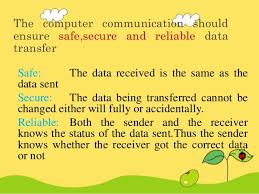
The computer communication should ensure safe, secure and reliable data transfer.
🌟Safe : The data received is the same as the data sent 🌟Secure : The data being transferred cannot be damaged either will fully or accidentally. 🌟Reliable : Both the sender and the receiver knows the state of the data sent. Thus the sender knows whether the receiver got the correct data or not.
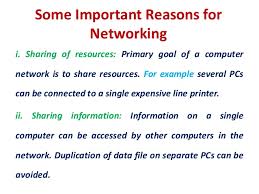
Some Important Reasons for Networking:
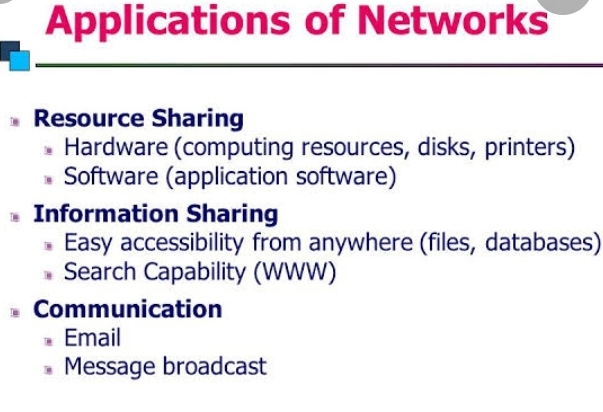
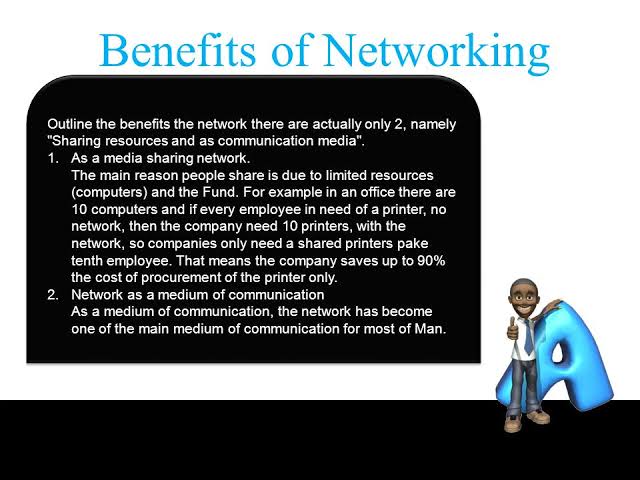
♦️Sharing of resources : Primarily goal of a computer network is to share resources. For example several PCs can be connected to a single expensive line printer.
♦️Sharing information : Information on a single computer can be accessed by other computers in the network. Duplication of data file on separate PCs can be avoided.
♦️Communication : When several PCs are connected to each other, messages can be sent and received. From a remote location, a mobile salesman can relay Important messages to the central office regarding orders. Relevant databases are updated and the business commitment are fulfilled.
Kargil Vijay Diwas is celebrated every year on July 26th to remember the sacrifice of the Indian soldiers during the Kargil war of 1999 with Pakistan. The brave-hearted men of the Indian army had aided the Indian air force in defeating Pakistan on this very day 22 years ago.
Kargil War
The war was fought between India and Pakistan from May to July 1999 in the district of Kargil which is in Kashmir, along the Line of Control (LOC). It is also known as “Operation Vijay”. India launched “Operation Vijay” to clear the Pakistani infiltration in the Kargil sector. A huge part of this war was the Indian Air Force’s role in acting along with the Indian Army ground troops. Indian Air Force’s role was to flush out the regular and irregular troops of the Pakistan Army. This operation of flushing out the Pakistani troops was given the codename “Operation Safed Sagar” which means “White Sea”.
Cause of the War
This war was caused because the Pakistani troops infiltrated the Indian side of the Line of Control acting as Kashmiri militants. The Line of Control is the de facto border between India and Pakistan in Kashmir. In the starting stages of the war, Pakistan blamed Kashmiri militants for all the fighting but later they messed up and left some documents because of casualties which showed clear involvement of the Pakistani paramilitary forces. Adding to that, later a statement by the then Prime Minister of Pakistan, Nawaz Sharif, and the Chief of Army Staff, General Pervez Musharraf, confirmed the involvement of the Pakistani paramilitary which was being led by General Ashraf Rashid. With the help of Operation Vijay and Operation Safed Sagar, the Indian Army recaptured most of the area. Adding to that, Pakistan was facing international diplomatic opposition so they had to withdraw their forces as well.
This War is the most recent example of high-altitude warfare in mountainous terrain which for obvious reasons posed logistical challenges.
World’s Opinion
Pakistan was greatly criticized for instigating war. They claimed they did not start the war and that it was the Kashmiri militants but a lot of evidence contradicted their claim and nobody believed them, for one, the war was at heights where only trained soldiers could fight, and not some simple freedom fighters.
Pakistan’s Prime Minister, Nawaz Sharif had flown to the United Stated to ask the US President Bill Clinton for support, who showed his clear disapproval and asked him to withdraw his soldiers from the Indian territory.
The G8 nations at that time, Canada, France, Germany, Italy, Japan, Russia, United Kingdom, and the United States supported India. Even the European Union opposed Pakistan’s violation of the LoC. China who is known as a long-time ally of Pakistan also suggested retreating and settling the issue peacefully. Even ASEAN supported India.
Gallantry Awards
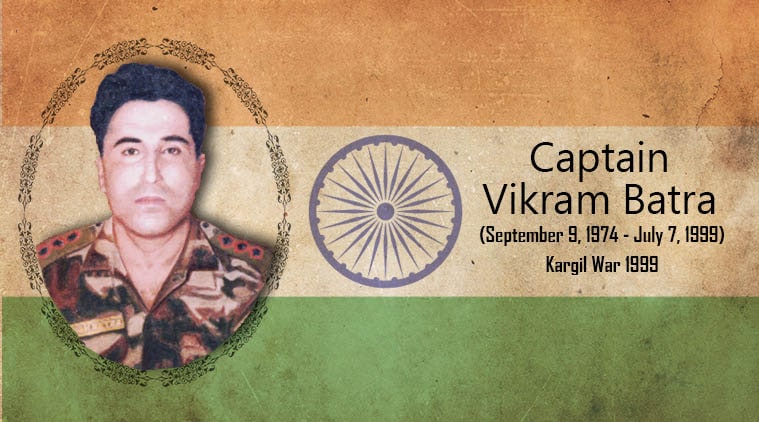
Four Param Vir Chakras were awarded to – Grenadier Yogendra Singh Yadav, Lieutenant Manoj Kumar Pandey, Captain Vikram Batra, and Rifleman Sanjay Kumar. And eleven Maha Vir Chakras were awarded.
Facts
The war was fought at a height of 8,780 feet.
The soldiers had to fight at a temperature of minus 10 degrees Celsius.
Operation Safed Sagar was the first time the Air Force conducted an operation at the height of 32,000 above sea level.
The pilots and engineers of the Air Force were given just one week to train.
As many as 527 Indian soldiers laid their lives and the Indian Army built a memorial wall with all the names of the soldiers who lost their lives.
Conclusion
The victory of the success of Operation Vijay meant a lot to India and all the Indians. Till now, every year Indians remember July 26th as the day of victory and remember the sacrifice their fellow Indians paid for the safety of all.
An aquarium is a container made of glass,or with glass walls.It permits watching the fishes swimming easily and for prolonged periods of time.It is a hobby which appeals to young and old and has opened up a flourishing business in all big cities.
And also,next to birds,fishes are perhaps the most colourful of animals.They are graceful in their shape,body form and movement.
Setting up an aquarium tank
Tank selection: The choice of an aquarium tank,depends largely on where it is to be housed,the extent of one’s enthusiasm and the money one wants to spend.While selecting a tank it is very important to note that it is of good construction.Shallow and wide tanks are preferable as they have more surface area to facilitate oxygenation through atmospheric contact.Further such tanks can accommodate more number of fishes.
Before setting up the tank,a suitable place has to be selected.In order to get a good view of both fishes and plants in an aquarium tank,the light should come obliquely.Hence, instead of the window sill,a place nearer to its side may be selected.To avail maximum sunlight an eastern exposure is preferable.The support or table for positioning the tank must be strong and in level.It is also essential to have a cover with a provision for installing lights and feeding.
If the tanks are purchased they should be checked for leakage.Their sides should be cleaned with 1% potassium permanganate solution, besides repeated washing with tap water.The next step in the setting up of an aquarium is the collection of sand that is necessary to make the bed at the bottom of the tank.The sand for the tank bottom can be collected from the sea shore or a river.This sand has to be washed to remove the dirt.It is advisable to put the sand in a shallow pan or aluminium vessel and heating it.The cleaned sand may be exposed in the bright sun.These processes ensure the killing of all bacteria or germs.The cleaned sand should be spread evenly in the tank bottom.Over the top layer of sand a thin layer of stone chips or very small pebbles may be placed.
Quality of water for Aquarium tank
Rain water free from contaminants or tap water is ideal for aquarium tanks.A tap water of domestic supply is likely to have chlorine which is harmful to fish.This water may be stagnated for about one or two days before use.If the water is hard it must be properly treated.The tank should be filled with the desired water without disturbing the bottom sand.
Planting:The aquarium tank after being filled with water can be planned with selected varieties of aquatic plants.The plants provide shade, shelter and sanctuary for fish.Besides decorating the aquarium tank,they also help in spawning and as food for certain fishes.The plants provide oxygen through photosynthesis.Over crowding of plants has to be avoided to ensure an adequate supply of oxygen to fishes.
Lighting:Light besides beautifying the aquarium helps in the photosynthesis of aquarium plants.Fishes also require light to trace their food.Further the light is known to influence the growth of fish.Strong sunlight destroys bacteria and keeps the tank healthy.For a moderate tank bulbs of 60 watts each may be lit for eight hours a day.It is better to use fluorescent lighting for promotion of plant growth and for even distribution of light.
Introduction of fish in an aquarium tank
The number of fishes suitable for stocking in an aquarium tank depends mainly on the surface area of the tank,it’s dissolved oxygen content and size of the fish.It is reported that 1 cm long fish may lead about 75 cm^2 of the surface area.The fishes are generally introduced two or three days after planting when the water would be clear and well oxygenated by plants.Before introduction into the Aquarium tank,the fish may be treated with 2 percent potassium permanganate solution to avoid parasitic attack.
Feeding: Fishes may be fed once or twice a day according to their preference and satiation.Excess food and detritus may be removed 30 minutes after feeding,by siphoning out using rubber tubing.If the level of the water gets reduced in course of time it should be restored by the addition of some rain water or chlorine free tap water.
A large number of fishes are cultured in aquaria for their beauty and graceful movements.The movement of colour fishes in an aquarium would certainly please the ailing and convalescing people.The aquarium may gladden one’s heart.
Telangana’s Ramappa Temple’s made it to UNESCO’s World Heritage List Ramappa Temple , a 13th century temple named after its architect , Ramappa , was proposed by Government as its only nomination for the UNESCO World Heritage site tag for the year 2019 . Even so , the temple has been in UNESCO tentative list since 2014 . The Famous 800 year-old Ramappa Temple conferred World Heritage site . The culture Minister said on Sunday . Rudreswara Temple also known as Ramappa temple , located at Palampet , Mulugu District , Near Warangal in the state of Telangana, which is about 200 km North of Hyderabadand has made it to UNESCO World Heritage List . The decision was taken at 44th session of the World Heritage Committee of UNESCO held on Sunday in China . Apart from the Ramappa temple , the World Heritage Committee inscribed Quanzhou : Emporium of the World in Song-Yaun China (China) , The Trans- Iranian Railway (Iran) , and Paseo del Prado and Buen Retiro , a landscape of Arts and sciences (Spain ) on UNESCO’s World Heritage it means the ” Outstanding universal value ” . This signifies “cultural and or natural significance which is so exceptional as to transcend national boundaries and to be common importance for present and future generations of all humanity “. To be included , sites must meet at least one of ten selection criteria . Even temple has been in UNESCO’s tentative list since 2014 . On Sunday , over 17 of the 21 member nations supported the inscription . With this , India now has 39 sites on UNESCO’S and Archaeological Survey of India is now the custodian of 23 World heritage sites.
Are you staring at your plate right now with suspicious eyes? If so, then relax and take off that crease from your forehead. If you are worried about lead being present in your dishes, then we are here for you. Here all your doubts about how to test dinnerware for lead will be addressed and you don’t have to worry.
Safety is the first thing anyone wants while buying any product. You wouldn’t have thought about searching for lead in your dinnerware. Did you? Dinnerware is the most regularly used item in our homes, but to find that unsafe for us is disappointing. And also you shouldn’t be even asking this question. Think about it, you bought a nice dinner set from a respectable company, but here you are getting suspicious? Don’t worry any further. We will clear all your suspicions. Come on, let’s have a look at how to test your dinnerware for lead?
Why is Lead unsafe?
Lead is a harmful toxin that if ingested, may cause serious damage to the body systems. Children and pregnant women stay at a higher risk of health issues from the toxic effects of lead. You may have heard of lead poisoning too. It is very real and lethal.
Lead does not leave your body after entering. It accumulates there and due to this, even small amounts are harmful to health. You need to remove lead from your dinnerware so that you can eat your food safely.
Why is Lead Used in Dinnerware?
Lead is used in dinnerware for glazes and bright colors. It is basically used to beautify the dishes. The glazes that make the dishes shine like glass, the bright red color designs, these all are lead. It seems nice but it’s lethal. Lead also provides strength to the dishes and prevents them from moisture.
How Does Lead Enter Our Body?
There are many ways in which lead can enter our bodies. Let us point them out for you.
If hot food is served on plates with glaze, the heat tends to extract the traces of chemicals from the surface and enter the food.
If you heat your food in the microwave, it can get lead into it. So don’t heat too many times.
Serving too much acidic food on a plate can also cause lead to enter the food. Acids tend to fast forward the process.
What Type of Dishes Contain Lead?
Dishes come in many varieties, so it can be hard to figure out the safest one. But we have something for you that can help. Now try to avoid the following things when looking for dishes:
Antique dishes that may be passed down in your family from generations.
Heavily designed dishes, especially with bright colors like red, yellow, or orange.
Used dinnerware found in thrift stores or second-hand dishes you bought at a lower price.
Terra cotta dishes which are heavily glazed
Handmade dishes or pots.
Any dish with corroded glaze, or old dishes with worn-out designs.
Dishes with designs made above the glazed surface.
How to Test For Lead in Dishes?
You didn’t think you can check for the lead with plain sight, did you? No, you can’t. But there are some ways to test dishes for lead. One of them is to avoid the above mentioned types of dishes. Another useful way is by testing the dinnerware by home kit for testing lead in dinnerware.
Home Kit for testing lead in dinnerware is mainly useful for high content lead testing. It does not detect if there are only small amounts of lead in the dishes.
Another way is to send the dishes to a laboratory. But this may be a bit of absurd advice considering everyone doesn’t have access to labs and it is a bit expensive as well.
Method to Test For Lead With Home Kit
Buy the chemically tested swabs, which are not very expensive.
Clean your dish with the swab.
If your dish contains lead, the lead detector on the swab with turn bright red indicating the presence of lead in your dish.
Or use a small chipped section of the glaze from the dish.
Peel a small part of the glaze and test it with the swab for more accuracy.
This method doesn’t tell you the exact amount of lead present in the dish. It is not much use but is fine for testing at home.
Method For Testing Lead in Laboratories
Laboratories use X-ray systems to test for lead in dishes.
This method tells the accurate amount of lead present in the dish by using some electron reactions (which you don’t need to know about).
There are many ways to test for lead in laboratories. But some of them might damage the dish in the process. So this method is not feasible.
How to Reduce Exposure to Lead From Dishes?
The following points might be of some help:
Stop using antique dishes
Don’t heat food in contaminated dishes
Don’t use highly glazed dishes for regular use
Stop storing food in contaminated dishes for a long time
Don’t wash the dishes containing lead in the dishwasher
Don’t serve acidic food on dishes containing lead. It speeds up the process.
Safest Lead Free Dinnerware
Choosing lead-free dinnerware for your safety is not that hard as it sounds. Just keep some points in mind next time while shopping for dishes.
Choose the dishes with minimum designs
Dishes with less glaze will be safe
Plain white plates or dishes is definitely a winner
Try to find less bright colored dishes
We recommend more glass dishes. With them, you can be sure they are lead-free.
If you are an appreciator for old, vintage dishes, you may want to restrict to the plain white ones.
Melamine is considered to be the safest as it is more plastic than a glazed surface.
Now you are just a step away from buying lead-free dinnerware. Step out, go to that store, keep these few points in mind and find the perfect dinner set for you. And we hope now you know how to test for lead in dinnerware.
Academic freedom can be defined as a right to educate and learn any diverse course without intervention or any objection. Academic freedom is a very broad spectrum topic that has different meanings when used at different strata. Institutional academic freedom is referred to the right of an institution to teach any diverse course without interference from the government. Whereas the right of an individual professor to teach his/her curriculum without undue interference from university is known as individual academic freedom.
According to the All India Survey in 2018-19, India has 993 universities, 39,931 colleges and 10,725 standalone institutions. Of these, 385 universities and 78% of the colleges are privately managed while 394 universities and 60.53% of the colleges are located in rural areas. The enrolment in higher education in India is 37.4 million persons (19.2 million males and 18.2 million females). The Gross Enrolment Ratio (GER) in higher education in India is 26.3%. Certain categories of citizens have less access to higher education – for instance, Scheduled Castes have a GER of 23% and Scheduled Tribes have a GER of 17.2% as compared to the national GER of 26.3%. Muslims constitute only 5.2% of the student population, compared to their overall percentage of about 14.2% in the population.
A new education policy (NEP) has been introduced in the year 2020 that promises, certain reforms in the field of education in India. Under this policy 5+3+3+4 structure will be followed and rigid separation between science, arts and commerce stream will not be there in the education system. Furthermore, internships and vocational courses, as well as workshops, will be included in the study module after 5th grade. And coding would be a must for 6th grader. No doubt, NEP could help up to very extent to reform the education in India if it would be implemented as stated.
Academic freedom becomes challenging when authorities put limitations on the right to express ideology. To protect favoured position, officials or authorities deny the rightfulness of academic enquiry which makes it even more complex. Scholars, researchers and institutions should be free to conduct research and publish papers in whatsoever field that is suitable and convenient for the study. Academic freedom is necessary and it must be protected.















 Eduindex
You must be logged in to post a comment.