Freedom fighters of India

On 15th August 1947, India got its independence. India’s freedom movement was against the British. India got its independence through many struggles and scarifies. Freedom fighters have the main role in India’s independence. In this blog, we are going to see some of the freedom fighters of India.

Freedom fighters of India

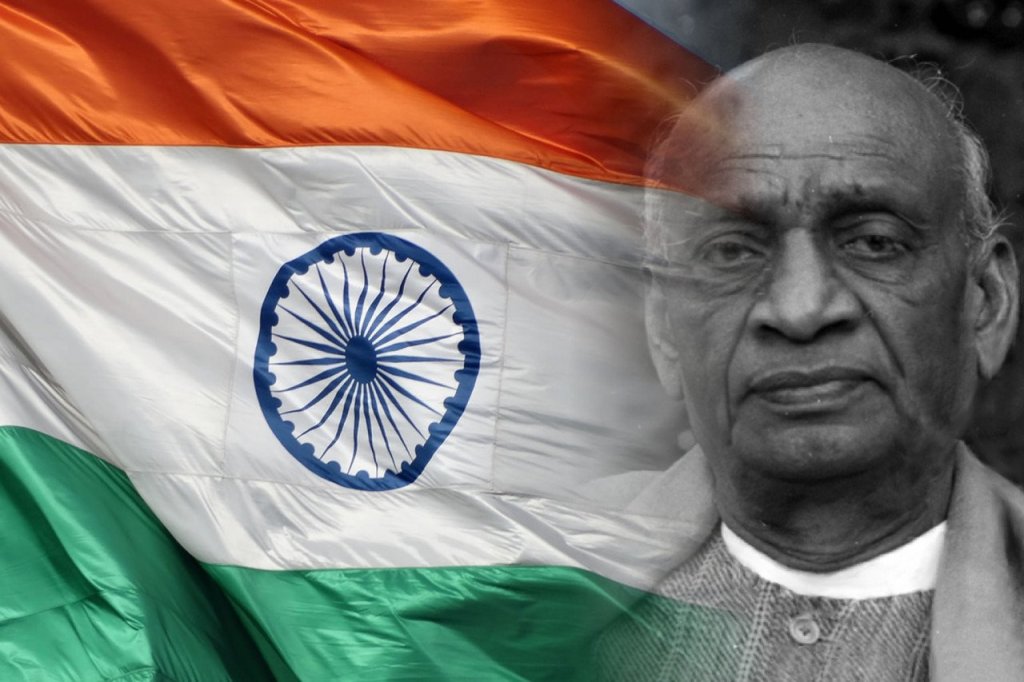
  1. Sardar Vallabhbhai Patel

Vallabhbhai Jhaverbhai Patel was born in 1875, he is a very brave man from a very young age. He earned the tittle Sardar after his heroic contribution in BardoliSatyagrah. Originally his profession was lawyer, but he left his profession and joined freedom movement to represent against British. He is also called the ‘Iron man of India’. After the independence of India, he became deputy PM of India.

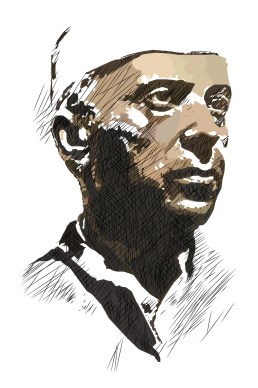
2. Jawaharlal Nehru

Jawaharlal Nehru was born on 14 November, 1889. He is the only son of his father and mother. He served as the first Prime Minister of India. His passion for India’s independence influenced many people. He is considered one of the greatest statesmen in India. He joined freedom struggle, he became popular as India’s freedom fighter. His birthday is celebrated as Children’s day in India.

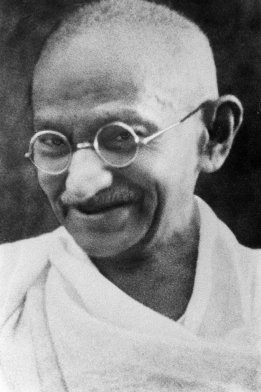
3. Mahatma Gandhi

Mohandas Karamchand Gandhi was born on 2nd October he was raised in a Hindu family in Gujarat, 1869. He studied Law in London and went to South Africa to practice. He was entitled the ‘Father of Nation’ of India. After 21 years living in South Africa, he returned to India in 1915, when he was 45 years old. Gandhi ji led many non violent national campaigns for easing poverty, ending untouchability, expanding women rights, and Swaraj. He started Dandi Salt March against the British for imposing salt tax. He started Quit India Movement for British to leave India and many more. He has done many hunger strikes to stop religious fights.

4. Lal Bahadur Sastry

Lal bahadur Sastry was born on 2nd October, 1902. He is a silent freedom fighter. He was participated in many freedom movements such as Quit India movement, Salt Satyagraha Movement, Civil Disobedience movement etc led by Mahatma Gandhi. He served as the Home Minister of India and later as a Prime Minister in 1964. He received the tittle ‘Shastri’ after he completed his education at Kashi Vidyapeeth.

5. Rani Lakshmi Bai

Rani Lakshmi bai was born on 19 November, 1828, Varanasi. She is the queen of Jhansi, She is an important member in 1857 revolution. She became the symbol of resistance to the British raj for Indians. She is the wife of Maharaja Gangadhar Rao. After the dealth of Maharaja Gangadhar Rao, she defended her kingdom jhansi from British force invading it.

6. Bhagat Singh

Bhagat Singh was born on 28th September, 1907 in Banga(Present Pakistan).He was born and raised in a Sikh family of freedom fighters in Punjab. He is a famous revolutionary in India’s independence movement. He joined Non-cooperation movement in 1921 led by Gandhi ji. Chauri Chaura Incident changed him and makes him extreme in his fight against British.

7. Begum Hazrat Mahal

Begum Hazrat mahal was born on 1820, Faizabad. She worked with leaders like NanaSaheb and maulavi. She has participated in 1857 revolution. She single handed defended lucknow from leading troops. She also fought many wars for nepal.

That’s all from my side. I hope you like it.

UNKNOWN FACTS ABOUT HARRY POTTER

Harry potter doesn’t need an introduction. Speaking of Harry Potter, Potterheads are one of the biggest fandom in the world. Harry Potter and its eight movie parts were  adapted from the Harry potter books by J.K. Rowling.

FACTS:

1. Harry potter’s parents James and Lily are soulmates because the patronus charm is a physical representation of one soul. Because James sister and Lily’s is a doe they are a perfect fit together. Professor Snape was in love with Lily his patronus transformed into a doe when she died.

2. Rowling has said that if voldemort saw a boggart it would embody his own corpse since death was always his greatest fear. Boggart is immortal shape shiffting non being that will took on the form of its observers worst fear.

3. Dumbledore is an old English word foe “bumblebee”. Rowling said she chose this name because she pictured Dumbledore humming to himself.

4. Rowling has said that she almost reneged on her promise to herself to keep the Golden Trio alive (Harry Potter, Hermione Granger, Ronald Weasley) and almost killed Ron in Deathly Hallows. That time when she “wasn’t in a very happy place” in her life. She now believes that she wouldn’t really have been able to go through with it, but at that time she considered it “out of sheer spite” or to desire to harm someone.

J.K. ROWLING

5. When Fred and George Weasley bewitched snowballs to hit Professor Quirrel’s turban they were unwittingly hitting Voldemort in the face.

6. On the 10 year anniversary of Harry’s parents’ death and the first time Voldemort was defeated, 31st October 1991, he and Ron saved Hermione from the troll in the bathroom. This is generally regarded as the day the trio became friends.

7. Sirius Black and Fred Weasley, two tricksters from different generations, both died laughing.

8. In Prisoner of Azkaban, Trelawney refuses to sit at a table with 12 other characters because she would be the 13th and the first one to get up after that would die. In Order of the Phoenix, 13 members of the order are sitting and Sirius is the first to stand.

9. In Deathly Hallows, Harry notes that Ron and Hermione had fallen asleep holding hands. Hermione’s Patronus is an otter, which sleep holding hands with other otters. Incidentally, Ron’s Patronus is a Jack Russell Terrier, known for chasing otters.

10. Rowling has admitted that Dementors are a physical depiction of her own debilitating experience with depression during her twenties.

10.The first Harry Potter book was published in 1998, the same year the final Battle of Hogwarts was fought. Rowling has said, “I open at the close”.

11. Harry Potter books might not have come to fruition if her mother hadn’t died. “The books are what they are because she died … because I loved her and she died.”

12. Controversial author J.K. Rowling’s “Harry Potter” books-turned-movies are a cultural phenomenon.

13. Rowling found inspiration for the setting of “Harry Potter” in Edinburgh, Scotland.

14. The Hogwarts School Motto is Draco Dormiens Nunquam Titillandus which translates as “never tickle a sleeping dragon”.

15. The only spells and incantations that appear in Harry Potter & The Philosopher’s Stone are Wingardium Leviosa, Petrificus Totalus, Alohomora and Locomotor Mortis.

16. In the books Harry Potter is described as having green eyes but Daniel Radcliffe has blue eyes. He tried wearing green contact lenses but found it uncomfortable and trying to make his eyes green post production didn’t look convincing. JK Rowling said the only thing that mattered was that his eyes should be same colour as his mother’s.

17. Harry Potter & The Philosopher’s Stone contains 77,869 words. There are 1,100,086 words in the entire series.

18. There were three owls on set for the first film all of them playing the role of Hedwig. There were seven different owls used in the films overall; Gizmo, Kaspar, Oops, Swoops, Oh Oh, Elmo and Bandit.

19. Having only written four of the books at the time filming started, Rowling was brought on as a creative consultant to make sure the movie did not contradict her plans for the remainder of the series. To this end, she revealed plot elements she had not yet written to Alan Rickman, whom Rowling had hand-picked to play Snape. This included the reveal of Snape’s love for Lily Evans, from the climax of “Deathly Hallows.”

20. If all the Harry Potter books sold were laid out in a line they would go around the equator over 1.6 times. And the line gets longer by the day!

Hustle culture

More people need to make their own well being a priority.

To some people self care means face masks, bubble baths, and a glass of malbec. To others it means spending more quality time with your family, friends, or pets.

But one thing seems universal: the need to spend less time grinding and more time enjoying.

How do we do this when we are told to idolize “the hustle?” Told to follow the grind wherever it leads us? Told that we are only successful if we put everything we have into our work?

Over the last few years we have fallen victim to what is now being called “hustle culture.” 

Hustle culture does not sleep. Hustle culture does not take lunch breaks. Hustle culture is waking up Saturday morning and making spreadsheets instead of pancakes.

Hustle culture does not take into account what your goals in life really are.

If you have a goal in mind, you need to put your foot on the gas and strategize how you’ll achieve it A S A P., Or else it’s just an idea and a waste of time.

The idea is that we find our value and sense of self in our output or how much work we can get done. So much so that we glamorize the idea of being a “workaholic” and are obsessed with Hyperproductivity.

The bottom line becomes, if you’re not constantly delivering something of perceived value, you’re doing it wrong.

People often admire the “hustle.” “Don’t knock on the hustle,” they say. True enough, in some instances having a hustle culture is a good thing, in a workplace environment the opposite is generally true. Especially in today’s highly competitive and fast-paced lifestyle, hustle culture is becoming the norm for more and more people in the workforce today.

Millennials in particular — especially fresh graduates and singles — are particularly keen on the kind of workaholism that hustle culture perpetuates. It’s all about how “busy” they are, how many million things they’re juggling at the same time. Hustle culture has become the standard for many to gauge things like productivity and performance.

The thing is, hustle culture isn’t really as great as it’s made out to be. It’s dangerous, both to individuals and to a workplace environment in general. It may seem like a good thing on paper, but in practice, there is a lot to at least be extremely cautious about.

In a nutshell, hustle culture (as the name also implies) means constant working. It means devoting as much of your day as possible working — hustling. There is no time out or time in at work. Work is done in the office, outside the office, at home, at coffee shops — anywhere. And in a world constantly on the go and equipped with the tools to achieve that, working constantly on the go is very possible.

Hustle culture is the societal standard that you can only succeed by exerting yourself at max capacity professionally. Everyday.

Hustle Culture pushes the idea that you are only valuable, worthy, or capable of success if you are performing at your maximum capacity at all times.

And it’s a mindset, a philosophy and a life embraced by many, both by individuals and even companies. When you talk of hustle culture, the more you work, the more celebrated you are. Never mind that you miss meals, sleep, and other important events. In hustle culture, taking a break is for the weak. Your brain becomes trained to always be active and always churning out idea after idea after idea.

Caste System in India

Indian society is split into several sects and classes. This is due to the existing caste structure in the nation. The origins of the caste system may be traced back to the ancient Vedas, which divided individuals based on varna, or vocation. It has brought about a slew of calamities in society. The government is continuously working to address the system’s flaws and achieve real equality among the people. The caste system is the bane for the Indian society. It divides the Indian society into sectarian groups and classes. Even today, it plays a predominant role in our society despite the growth of culture and civilization.

The official words used in government papers to designate erstwhile untouchables and tribes are ‘Scheduled Castes and Scheduled Tribes’ (SC/ST). However, after noticing that the term ‘Dalit’ was being used interchangeably with the official term ‘Scheduled Castes,’ the National Commission for Scheduled Castes asked state governments to stop using the term ‘Dalit’ in official documents, calling it ‘unconstitutional,’ and to replace it with the term ‘Scheduled Caste’ instead.

The caste system’s origins may be traced back to prehistoric times. While one school of thought distinguishes castes as higher and lower castes based on their origin, another school of thought links the origins of castes to varnas, which classify the caste system based on their roles. Since then, it has been discovered that those with an advantage and a say in the community have taken unfair advantage, resulting in discrimination and exploitation of the group’s weaker members.
People from Scheduled Castes and Scheduled Tribes, sometimes known as “untouchables,” account for one-sixth of India’s population, approximately 160 million people; they face prejudice and segregation.

Evil faces of this system:-

Untouchability:- Many communities are divided by caste, and they are not permitted to cross the line separating them from the upper castes. They may also not drink from the same wells or visit the same tea shops as higher castes.

Discrimination:- In lower caste neighbourhoods, they frequently lack access to power, sanitation, and water pumps. Higher castes are denied access to better education, housing, and medical services.

Division of labour:- They are restricted to certain occupations like sanitation work, plantation work, leather works, cleaning streets, etc.

Slavery:- They are subjected to exploitation in the name of debt, tradition, etc., to work as labourers or perform menial tasks for generations together.

Government Initiatives

The Indian government has passed legislation to abolish untouchability and has implemented several reforms to enhance the quality of life for the poorer parts of society. Among them are the following:

  • Fundamental human rights are guaranteed by the constitution.
  • In 1950, the term “untouchability” was abolished.
  • Act to Prevent Atrocities Against Scheduled Castes and Tribes, 1989.
  • Reservations in locations such as educational institutions, career possibilities, and so forth.
  • Creating social welfare ministries and national committees to look after the interests of scheduled castes and tribes.

The government’s initiatives have provided some assistance to the weakest sectors of society. The metropolitan regions have had a significant influence and have showed some progress. People in rural areas and villages, on the other hand, continue to experience severe prejudice. We still have a long way to go in terms of eradicating and abolishing prejudice based on caste and creed. It now rests on our efforts, and a shift in our attitude will almost certainly result in a permanent shift, bringing equality to all.

Right to Equality

The fundamental fights are guaranteed to protect the basic human rights of all citizens of India and are put into effect by the courts, subject to some limitations. One of such fundamental rights is the Right to Equality. Right to Equality refers to the equality in the eyes of law, discarding any unfairness on grounds of caste, race, religion, place of birth sex. It also includes equality of prospects in matters of employment, abolition of untouchability and abolition of titles. Articles 14, 15, 16, 17 and 18 of the Constitution of India highlight the Right to Equality in detail. This fundamental right is the major foundation of all other rights and privileges granted to Indian citizens. It is one of the chief guarantees of the Constitution of India. Thus, it is imperative that every citizen of India has easy access to the courts to exercise his/her Right to Equality.

Various articles under the Right to Equality are explained as follows:

Equality Before Law :- Article 14 of the Constitution clearly defines equality before the law, ensuring that all citizens are equally protected by the country’s laws. It means that the state would not discriminate against any Indian person based on their gender, caste, creed, religion, or even location of birth. The state cannot deny equality before the law and equal legal defence to any individual on Indian territory. In other words, no one or group of individuals may expect preferential treatment. This privilege pertains not only to Indian nationals, but to all individuals living on Indian territory. The right to social equality and equal access to public areas is explicitly stated in Article 15 of the Indian Constitution, which states that no one should be treated favourably on the basis of colour, caste, creed, language, or other characteristics. Everyone must have equitable access to public sites such as public wells, bathing ghats, museums, and temples. The State, on the other hand, has the authority to make special provisions for women and children, as well as for the development of any socially or educationally disadvantaged class, scheduled castes, or scheduled tribes. This article solely pertains to Indian nationals.

Equality in Matters of Public Employment:- Article 16 of the Indian Constitution states unequivocally that the state must treat all citizens equally in job concerns. In any occupation or position under the State, no citizen must be discriminated against on the grounds of race, caste, religion, creed, descent, or place of birth. Every Indian citizen is eligible to apply for government employment. There are, however, certain restrictions to this right. The Parliament may adopt legislation stating that certain positions can only be filled by individuals who live in a specified area. This qualification is mostly for positions that demand knowledge of the location and language.

Abolition of Untouchability:- Article 17 of the Constitution of India abolishes the practice of untouchability in India. Practice of untouchability is declared as a crime and anyone doing so is punishable by law. The Untouchability Offences Act of 1955 (and now Protection of Civil Rights Act in 1976) states punishments for not allowing a person to enter a place of worship or from taking water from a well or tank.

Abolition of Titles:- Article 18 of the Indian Constitution forbids the state from bestowing any titles. Citizens of India are not permitted to accept titles from other countries. The British administration also eliminated titles such as Rai Bahadurs and Khan Bahadurs. Nonetheless, academic and military awards can be bestowed to Indian nationals. The awards of ‘Bharat Ratna’ and ‘Padma Vibhushan’ cannot be used as a title by the recipient and are not forbidden under the Indian Constitution. Since December 15, 1995, the Supreme Court has upheld the legality of such rewards.

To conclude, the ‘Right to Equality’ should not only remain on papers. This right should be properly exercised; otherwise it will lose its essence if all the citizens of India, especially the weaker and backward classes do not have equal rights and equality before law.


Empathetic Postion in my life.

Empathy
The subject of Empathy is something that I heard throughout my life and had a general understanding of what it was, but definitely one of those things that you things actually don’t understand fully until you experiencing it.

“Empathetic is ability to understand and share the feeling of another.’’

THE IMPORTANCE OF EMPATHY.

The Empathy is one of the most important interpersonal good quality in human. Because it can help you to connect with someone that personaly very easily.

• There is a difference between sympathy and Empathy.

I can see how important this is to you”
“I know this can be frustrating”
“I know this process can be confusing “
“I’m sorry to see that you’re in this situation “
“I’d like to help you if I can”
“let’s see if we can slove this together”

Now lets see the empathetic postion in my life.”

(stranger life Postion)

It is pleasure to begin with an introduction of myself, well, I’m Jacklin, doing my final year UG.I’m just a girl with big dream that I fight for.I would like to take challenge for it because I know that I’m able to attain my dream and that I can take both success&failure in a balanced manner I’m just an introvert sometimes and I love to be alone because I would be positive wheneverd I was alone I could have figured things out better and the best when I was alone. I spread positivity whenever I would be and well, I think that’s my best behavior. I have some hobbies, I love music the most, and I sing well too and I love to plat football.

And now, a friend of mine, she was my classmate too. She had a habit of worrying all the time about her future. Whenever she calls me, she will not disconnected the call without blabbering about her future. The future things like, what I will do? what it will be? is that will make me good or bad bla bla bla…..Yeah, because her basic problem is that she have no plans. That time, I was like what is it? 🙄And why these bla bla…!! I just simply calm her down and tell that. she have to enjoy the pressed moments and work for the present life. And not to worry all the time. “I try to understand her” and try to figure things out in every possible happy ways like cracking jokes and like motivating, boasting her up, also, doing those conversations, I would feel better and motivating her makes me some more confident about myself too….

Yeah here I shared a small postion of Empathetic situation happened in my life.

I always wish to tell the people around in me…. Just speard the Empathy.

“understand others by being socially aware. The first step in social awareness is Empathy”

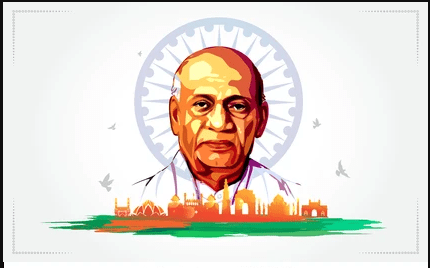
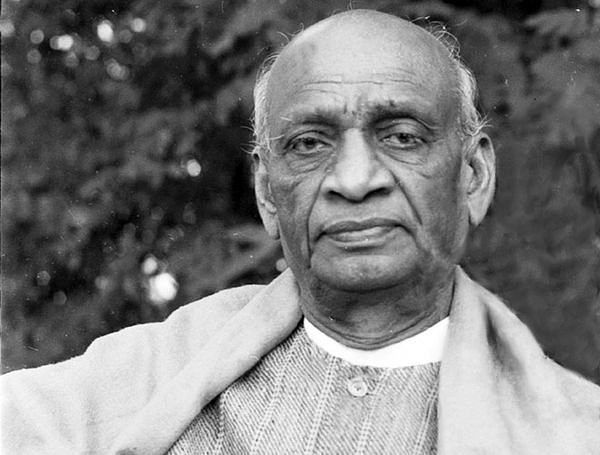
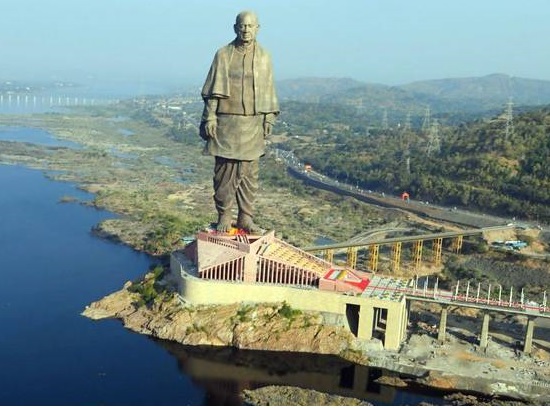
The Iron Man of India!

Do you know who is the iron man of India?

It is Sardar Vallabhbhai Patel

A few Golden traits of Sardar Vallabhbhai Patel

  • A Leader: Sardar Vallabhbhai Patel has set the example of unity by integrating 500 princely states into an independent Indian Union. And this is the reason, Patel’s Birthday is celebrated as “Rashtriya Ekta Divas”- The National Unity Day.
  • Vallabhbhai Patel initiated a movement inspired by Mahatma’s ideology through which he motivated farmers to be the part of this non-violent protest against taxes. As an outcome of the protest, that year the British Government gave them a tax holiday. Hence, Gandhi ji, awarded the title of “Sardar” to Vallabhbhai Patel
  • A Man of his word: During Congress elections in 1946, thirteen out of sixteen states chose Sardar Patel as their president, who was the more popular candidate and would have eventually become the first Prime Minister of independent India. But upon Gandhi’s request, he stepped down as a candidate and endorsed Jawaharlal Nehru instead.
  • Epitome of Sincerity: Sardar Patel was in the court, cross examining a witness when he got the news of his wife’s death. Patel, read the noted, pocketed it and continued the case and won it. This shows his sheer dedication and commitment towards his duties. He was only 33 years old, but he loved her deeply and so, never remarried.
  • A Man of principle: He was offered a job on multiple occasions by British government after his return from England and practice in Ahmadabad. Patel turned down all the offers.
  • A True Friend: Despite the doctor’s instructions, he cared for his friend suffering from Plague. This Bubonic Plague effected Patel too but he survived. The Bubonic Plague swept 12 million lives across India and China.
  • A Man of Determination: Patel wanted to become a lawyer and spent years studying on his own with books borrowed from other lawyers. He cleared his examination within two years. Later, he became one of the most successful barristers of the country.
  • Patron saint for civil servants: As he always thought that being the country of extensive diversity, multiple culture and traditions, numerous languages, India requires a strong bureaucratic service. He played an effective role in the initiation of Indian Administrative Services (IAS).

Our brave freedom fighter, The Iron Man of India Sardar Vallabhbhai Patel died on December 15, 1950 in Mumbai.

Sardar Vallabhbhai Patel was posthumously awarded the Bharat Ratna in 1991.

“Every Indian should now forget that he is a Rajput, a Sikh or a Jat. He must remember that he is an Indian and he has every right in his country but with certain duties,” Patel had famously said.

Are Electric cars green

With a few exceptions, the majority of research studies conducted in various parts of the world find the answer to this question to be mostly affirmative.
Though electric automobiles appear to be uncharted ground for most people, it’s startling to learn that the first electric car was invented in 1828 by a Hungarian engineer named Anyos Jedlik. Even though there is no evidence to corroborate this, the majority of people believe Nikola Tesla was the one who invented modern electric cars.
Electric cars are partially or fully powered by electricity generated from the grids. The rechargeable batteries installed in these cars store this electricity, to power the electric motor which turns the wheels. even though the initial cost of an electric car is greater in comparison to its fueled counterpart
The situation seems more favorable for the electric owner in the long run. The fact that electrical cars have limited parts and so it doesn’t have a constant replacement, cannot be ignored. The electrical battery usually comes with an 8-10 year guarantee, and also the average operating cost of electric cars is lesser than fossil fuel-enabled automobiles. A study conducted in the US found that the average operating cost of an electric car is 485$ and that of a non-electric car is 1117$. If we look at this from an environmental perspective then one electric car can save up to 1.5 million grams of CO2.
A recent study by the Carbon Brief organization concluded that lifetime emissions of driving a Nissan Leaf EV were three times lower than that of average conventional cars. A recent study in Germany also concluded that emissions from EVs are up to 43 % lower than fueled vehicles.
Now as I mentioned earlier the most important component in the EV would be its batteries which are made up of some rare earth elements including Lithium, Cobalt, Neodymium and they can be extracted through mining in turn causing harm to the fragile ecosystems present in those areas, the Democratic Republic of Congo faced many toxic spills due to Lithium mining, Nickel mining caused heavy pollution in the Arctic. Lithium-ion batteries are expected to make up 90% of the battery market by 2025 this could result in more carbon emissions than fuel-powered cars. The bigger the electric car and its range, the more battery cells would be needed to power it, resulting in more carbon being produced. Though the EV has a higher carbon footprint at the start, it becomes lower once it comes to use.
Another disadvantage would be the fact that very few efforts are undertaken to recycle the used batteries by the countries which cause dumping of the same in landfills and they remain there for years to come. Although companies like Nisan and Volkswagen are upping their efforts to increase their recycling process, newer technologies are being experimented with to make it less tedious and more eco-friendly.
We also need to acknowledge the fact that if managed appropriately these waste batteries can be a secondary source of procuring critically endangered materials. Nevada-based Redwood materials aim to become the world’s top battery recycling company. Li-cycle also has a similar approach in recycling lithium batteries by recovering 95% of minerals found in them.
In a more path-breaking discovery companies like Toyota and Tesla have started using motors that do not require these rare earth metals.
Another major issue that needs to be addressed with EVs is regarding the source of the electricity used in them, this electricity could be generated through coal and other fossil fuel and those emissions could be worse than the non-electrical solution. For example, the majority of china electricity comes from coal, similarly, 60% of electricity in California has generated via fossil fuel also in Germany 40 percent of the energy mix is produced by coal and 30 percent by nonrenewable sources But this problem could be tackled by applying a heavily decarbonized system, adopted by countries like Sweden, France which use large amounts of renewable sources of energy for this purpose. As power generation processes around the world are becoming increasingly sustainable we can safely assume that the EVS market will continue to grow and the Forbes study’s prediction that more than half of the world’s cars could be electric by 2050 has all chances of coming true. Ev cars may not be the perfect flag bearer for the environment but it does surely have the catholicon for a greener pollution-free world. When the manufacturing systems of these cars become sustainable only then we would be able to unlock their true green potential.

What is water scarcity?

Water scarcity is defined as the lack of freshwater resources to meet the standard demand for water. We are facing a crisis of water in the global scenario, although the earth’s surface is filled with over 75% of water, only around 5-10% of this water is fit for drinking. On top of this, the resources of water are unequally distributed i.e., one part of the globe has surplus resources and the other part has almost no resources. This uneven distribution is mainly caused due to the erratic climate change for which we are solely responsible. Further, the World Economic Forum in 2019, stated that in the coming decade the global risk is due to water. Droughts, famine, floods are going to be the future of our planet.

Major reasons for this everlasting scarcity are the geographic features and the increasing population of the world. Further reasons, can be improvising standards of living, everchanging consumer market and expansion of agriculture. These factors are currently uncontrollable, a government cannot force down people to compromise on their standard of living or control population, one must realize these effects and take up their measures.

There are many types of scarcity like Physical water scarcity, economic scarcity and water stress. Let’s briefly see all these different types of scarcity; Physical scarcity is the type where there isn’t any water to meet the demands of a particular region. This type of scarcity usually occurs due to inadequate sources of water or poor management of the available sources. This can be tackled by constructing projects like dams, canals and irrigation tanks to store water.

Coming to economic scarcity, this type of scarcity usually occurs when the country is going through an economic crisis or war is going on a neighboring nation. Over 20% of the countries in the world are going through an economic scarcity of water. This can be overcome by accepting aids from foreign countries and even taking a loan from the world bank.

Whatever the scenario of a country, whether it is experiencing a scarcity or not. In the coming future, every country will face a crisis if the resources are not maintained and the population is not kept under control. Hence we must stand together in this fight to save water.

Directive Principles of State Policy

Part IV of the Constitution under Article -( 36 to 51 ) contains the Directive Principles of State Policy.

Classification of the Directives-

(1) Certain ideals, particularly economic, which according to the framers of the Constitution, the State should strive for.

(2) Certain guidance to the Legislature and the Executive aimed in what counts the State should use their legislative and executive powers.

(3) Certain rights of the citizens which shall not be enforceable by the courts like the “fundamental rights”, but which the State shall nevertheless aim at securing, by regulation of its legislative and administrative policy.

Scope of the Directives– It shall be the duty of the State to follow these principles both in the matters of administration as well as in the making of laws. They embody the object of the State under the Republican Constitution, namely that it is to be a “Welfare State” and not a mere “Police State”. Most of these Directives, it will be seen, aim at the establishment of the economic and social democracy which is pledged for in the Preamble.

The 42nd Amendment- However, it should be noted that the objective of the State has been formulated to live ‘socialist’, by the amendment of the Preamble by the 42nd amendment. By the same amendment, certain other changes have also been introduced they are:

(i) Article 43A has been inserted to ensure the State provides free legal aid to the poor and to take other suitable steps to achieve equal justice for all, given by the Preamble.

(ii) It has been inserted to direct the State to ensure the participation of the workers in the management of industry and other undertakings. This is a positive step in the advancement of socialism in the sense of economic justice.

The 44th Amendment- The Janta Government sought to implement the promise of economic justice and equality of opportunity assured by the Preamble, by inserting a clause (2) in Article 38 by the 44th Amendment Act, 1978 carried– The State shall, in particular, strive to minimize the inequalities in income, and endeavor to eliminate inequalities in status, facilities, and opportunities, not only amongst individuals but also amongst groups of people residing in different areas or engaged in different vocations.

The 86th Amendment- The Constitution 86th Amendment Act, 2002 substituted Article 45 making provision for early childhood care and education to children below the six-year of age provides provision for free and compulsory education until they complete fourteen years of age.

The 97th Amendment- Article 43B in Part IV of the Constitution has been put to promote the voluntary formation of cooperative societies. Article 43B provided that: The State shall endeavor to promote voluntary formation, autonomous functioning, democratic control, and professional management of cooperative societies.

DPSP and Fundamental Rights-

The dpsp has to conform to and run as a subsidiary to the Chapter Fundamental Rights. Nevertheless, in determining the scope and ambit of the Fundamental Rights relied on by or on behalf of any person or body the court may not entirely ignore these Directive Principles of State Policy laid down in Part IV of the Constitution but should adopt the principle of harmonious construction and should attempt to give effect to both as much as possible.

SCHOOL LIFE!!!!

I think everyone have the memories of your school life which never fades. The most cherished and enjoyed part of our life would definitely be our school life, right? Though, we go to college or job but the happiness might not be equal to the happiness in school life. Am I right guys? But the children these days do not know the happiness of this school life. This would be a great regret in their life. This pandemic has affected our daily lives. This affected our life greatly. Due to this, the children miss their school life and focussed on the online classes which is the greatest regret of the parents these days. The usage of mobile phone in such a young age may develop the habit of laziness in children. They may have eye problems. Let me tell you about school life now and then. Yes, I will share you how I enjoyed my school life. We were the last batch to complete school life before the pandemic started. We feel lucky for that.

School Life - children off the 60s
School days before Covid-19

As I said, the most unforgettable part in our life is our school days. Yes, school makes one built their character and knowledge of life. The most things can be learnt only in school days. This is a palce where every student tries to be the best in his work and want to use the school life the most to be a successful person. There they learnt to be disciplined and how punctuality matters a lot. Punished for being late teaches them to be a punctual person and this can be applied wherever he goes. Schools shape our character, mold our mental attitudes and fashion the basic principles of life. Most of us would have spent the most happiest days in school only. Think about it.

Are school days the best days of our life? - Quora

The children fight among themselves to prove they are the best in the class. The attention of students towards teachers are very high those days. Though they didn’t do their homework or didn’t work hard, during the time when examination dates are announced they show their strength to the fullest. Yes, the competition to be the first is always a fire in their mind. School teaches us how to respect others and befriendly with everyone. School is the place where we first identify our talents. There were many competitions which encourage them to prove themselves. This brings out dancing ability, singing, etc. Some children are interested in sports and teachers help them to be the best in their sports. To say bluntly, teachers are the pillars of school life.

How Teachers can Help Students Set and Achieve Personal Goals
The best companion of School life

The loyal and life long friends can be made only in your school life. Yes, the school friends are the ones who befriend with you without any expectations. Everyone can’t be able to forget the attrocities done with your friend right? At times, getting punishments together or making your friend a scapegoat and these cannot be forgotten. Sharing food and snacks are the best parts. This teaches us to be friendly and generous to the people around us. In every class, there will always be a group of gang and fight between them for silly things are unforgettable. Possesiveness over your friend and ego clashes between them are the most enjoyable things in school life. But the children these days miss the school days and this pandemic has made the situation worst.

Group Of School Friends Holding Hands With Rear View On White.. Stock  Photo, Picture And Royalty Free Image. Image 79586669.
Friends

Days goes, trend changes. This pandemic has made things difficult for children. They have become lazy and didn’t know about their school at all. They are studing through online class. Will it cultivate all the good habits ? No, puntuality and other things can only be taught in school. They are sure to miss this. Attending classes online may bring health issues and eye problem etc., But we should adjust this and be safe for now. I hope the pandemic will end soon and the children will be able to attend their live classes and cultivate their character. Doctor advices children to hear the online classes rather than seeing the mobile or laptop for the full day.

Education now

Read more;

https://www.iaspaper.net/school-life-short-essay-children/

The Bright Future of Technology

From the moment we wake up, to the moment we go back to sleep, technology is everywhere. The highly digital life we live and the innovations in our technological world has become the new normal. According to The International Telecommunication Union (ITU), almost 50% of the world’s population uses the internet, with over 3.5 billion daily searches on Google and more than 570 new websites being launched every minute. Adding to that, over 90% of the world’s data has been created in just the last couple of years!

A recent report predict that the COVID-19 pandemic will bring the public’s attention on the need to take action to deal with threats to our health and to prevent outbreak of future pandemics. Public attention will drive government policy, with carbon footprint becoming a subject of worldwide concern. Individuals, companies and countries will seek the quickest and most affordable ways to elimination of their carbon footprint. The creation of a sustainable, net-zero future will create energy transformation that significantly reduces the world’s carbon emissions. The report suggests that in just a few years the carbon management industry is going to emerge as one of the largest industries in the world, which will cause more and more players entering the market, thus creating rapid growth towards a sustainable planet.

By 2025, quantum computing will be able tackle meaningful, real-world problems. One major application of this new kind of computer will be the simulation of complex chemical reactions, a powerful tool that opens up new possibilities in drug development. Right now, the development of pharmaceuticals depends massively on trial and error, and a time-consuming and terribly expensive process. Quantum computers may soon be able to change this.

Of cause with this rapid evolution of technology, it makes perfect sense why most people are concerned. But the fear we developed from Hollywood films where artificial intelligence will outsmart humans and take over the world, is most likely not going to happen. Rather than viewing digital disruption as worrisome and challenging, we should be embracing the uncertainty and advances in new technologies, data analytics and artificial intelligence will bring that will benefit billions of people in healthcare and better lifestyle and living conditions for those who are deprived of that at the moment.

These days the biggest threat to humans in the digital world is cybercrime and hacking. Privacy is a topic that is being more and more popular by the day. Individuals and companies are working hard to counter the issue of hacking by working on years of research to enhance cybersecurity that will protect people from any potential danger.

With data growing faster than ever before, the future of technology is even more interesting than what is happening now. We’re just at the beginning of a revolution that will touch every life on this planet.

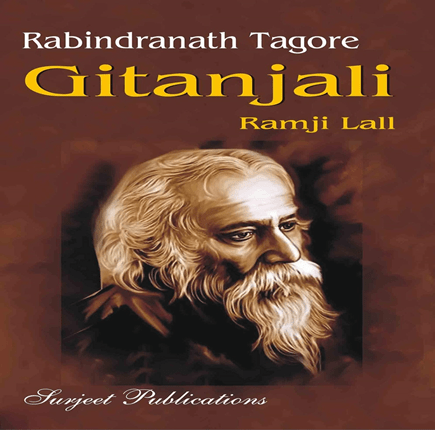
Tagore's Humanism and Gitanjali

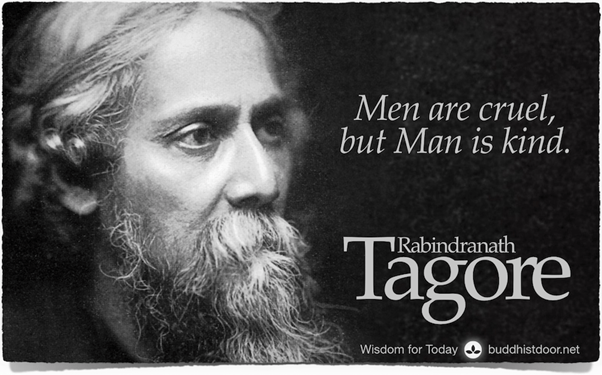
The famous Gitanjali written by Rabindranath Tagore is a collection of poems. ―Gitanjali‖ is collection of poems which are originally in Bengali under the title ‘Prathana’ meaning Prayer but are later translated into English. It appears in the volume called ‘Naibebya’ in the year 1901. The poems of Gitanjali highlight simplicity of thoughts which are filled with Divine emotions. They are the thoughts about the offering of one own heart at the feet of God. No thought seems to be far away from Tagore‘s pen, from the famous Gitanjali ‘he focus on exploring Divine thought like a devotee finds his God, a seeker finds his master an explorer finds his destination, a lover find his beloved in this poems’. The main focus of his what to teach humans that service to mankind is service to God. He taught us that God lies in the poor and the wretched and we can see and feel God through our service to mankind. According to him man‘s life is a journey, and our destination is to reach the God. The only way to reach God is our kind/heartedness, generosity, love and help to our fellow human being.

Tagore that helps to develop Spiritualism and Humanism in one‘s heart and soul and service to mankind is the pure recognition of God. He also wants to highlight in his poems that human’s life shall be consider worth full and the main concern of one should be devotion towards their work and dedication towards goals. In Rabindranath Tagore‘s Gitanjali he explores the ideas that how he dreamed of a Nation which is free from all the evils and the thoughts that lead to destruction of oneself as well as for the whole nation. He prays to God that each human life shall be filled with happiness and peace and there shall be the spirit of brotherhood among the country men. He strongly criticized the feeling of fear in one‘s life and prays that a soul should be fearless and self-dignified. 

Where the mind is without fear

Where the mind is without fear

and the head is held high,

where knowledge is free.

Where the world has not been broken up into fragments by narrow domestic walls.

Where words come out from the depth of truth,

where tireless striving stretches its arms toward perfection.

Where the clear stream of reason has not lost its way into the dreary desert sand of dead habit.

Where the mind is led forward by thee into ever widening thought and action.

In to that heaven of freedom, my father,

LET MY COUNTRY AWAKE!

Summary of the poem 

It is one of the most popular and best known poems in the anthology called Gitanjali which was published in the year 1912 and won the prestigious Nobel Prize for literature in 1913. In the very first line of the poem ― “Where the mind is without fear”,  the poet prays to the Almighty that his country man should be free from any oppression, where no fear is bounded with any fourth compulsion and every head is held high with dignity and respect. He wishes of a country where every person should be fearless and the sense of self dignity in filled in once heart. Then he dreams of a nation where knowledge must be free for everyone. He also believes that there should be no restrictions for spreading knowledge on the basis of cast or class and every citizen shall be allow acquiring it. In the ongoing line he talks about the power of unity and desires unity not only for his country man but should be world wise. There should be no discrimination on the basis of cast, creeds, color, religion, as well as superstition should not be promoted to divide people and break the unity. Then he dream of truthful Nation where words should, come out from the heart of oneself. He motivates the reader that everyone should work so hard that they can achieve their goal with perfection. People should not be lazy and ignore their work and one must gain the spirit of dedication towards their job or work. Tagore very beautifully compares Reason or Logical thinking with ‘Clear Stream’. Then he compares ‘Dreary Desert’ with ‘Dead Habits’. Then he conveys to the reader that people should not believe blindly on negative aspect of life as well as baseless thoughts. From his poem he wants the reader to Good Bye the negative thinking or the thoughts that demotivate them as well as leads to a falling apart and should promote one thought that should be monitored by rational or positive thinking. In the ongoing line, he wishes the country men to be progressive and broad minded and one shall have the ability to do something extraordinary and overcome the narrowness of mind. Then he comes to the finale line or the poem in which Tagore wants to convey a message to the reader he is praying the Almighty God to awake his countrymen that they come out from the darkness, disunity and all evil traits that one have in their heart. 

In this concluding line he addresses “God as Father” and wants the people shall be free from heart so that they can attain freedom. He also wishes to lift up his country to such height where freedom would be realized in best form. Thus we can conclude that from this poem Tagore very beautifully and gracefully covey the message to his reader that one must have the spirit of fearlessness and a broad minded thinking in our heart and mind. He also discourages the superstition thoughts and believes that ultimately leads to division in the worldwide. He Prays to the Almighty that knowledge can be free from everyone and each head is held high with dignity and proud.

WHY CELLPHONE SHOULD NOT BE ALLOWED IN SCHOOL ?

Cell phones are extremely helpful. They assist us to contact with individuals. We can get different data about different things by means of web. Yet, are cellphones that vital in an understudy life that he/she can take that to class ? The appropriate response is no a result of the accompanying reasons:

1.Interruption/Distraction

While Cell telephones are in your grasp the entire day, warnings will continually go off. You’re compelled to looked without figuring it out. Understudies get diverted all for the duration of the day without seeing they are. The entirety of the data from their instructors go in one ear out of the other, and fail to remember all that they were educated. Many time understudies will have games on their telephones and consider passing a level and attempt and have a go at deduction they will complete it and afterward work, however without seeing when they finish a level the class is going to be done and you have no work done.

Distraction-Blocking Apps to Become a Better, More Productive Salesperson -  Salesforce Canada Blog

2.Grades Falling

At the point when children are on their telephones for the majority of their days, they don’t take care of job and grades drop drastically. At the point when you take a gander at your telephone it typically requires around 5 minutes to zero in again on whatever they were doing previously. Data isn’t being put away in your cerebrum so work isn’t possible.

More students got F's in first term of school year - The Washington Post

3.Can make understudies get vexed

With the pace of Cyberbullying going up numerous children will get singled out over web-based media and keep taking a gander at various things for the duration of the day and get vexed and not have the option to focus on their work. Likewise, say you and a companion or a beau/Girlfriend get in a contention, you will be more stressed over that than your school work.

4.Schoolwork

On the off chance that children are continually on their telephones at school, what makes you believe they’re not going to do exactly the same thing at home. In case they’re occupied for the duration of the day and not managing job in school, schoolwork is less inclined to complete at home. Grades continually drop as a result of understudies accomplishing school work, however significantly more due to schoolwork. On the off chance that Cell telephones weren’t permitted in school, understudies may basically have the option to complete their work in school and could decrease schoolwork.

5.Break course

Ordinarily when an understudy doesn’t get something or simply doesn’t have any desire to do it, they’ll go to their telephone as opposed to requesting help or clarification. By this point understudies don’t think often about their work. So they simply forget about it.

6.Insolence

At the point when an instructor is talking and showing something new to understudies, and many are on there telephones while few are attempting to learn, these children on the telephone are diverting the other. Indeed, even without sound being on, in case you’re playing a game or watching a video on quiet, more often than not another person can get an impression and not quit thinking back. This is slighting your instructor who is removing time from their day to show you and help you while you’re on your telephone.

7.Cheating

Kids are standing out enough to be noticed, so with regards to stepping through an exam they have no clue about what the appropriate responses are such countless understudies will cheat and not learn anything. In the event that an understudy is bamboozling they’re not picking up anything and by and by getting into a school turns out to be much harder.

Students caught cheating in Gujarat board exams, FIR lodged against Class  10 student - Education Today News

8.Public activity

I accept an understudies public activity is vital. It encourages children to interface with individuals for when they have some work further down the road. Understudies being secured in their telephones the entire day, they don’t understand there is a genuine world out there. Social connection isn’t simply messaging, it’s going out and verbally conversing with somebody. Commonly, without a genuine public activity it can likewise cause sorrow, it can make somebody think they have no companions and nobody likes them, however truly this is on the grounds that they’re generally on their telephones as opposed to going out and really attempting to interface with somebody.

RESOURCES:

https://www.addictiontips.net/phone-addiction/why-cell-phones-should-not-be-allowed-in-school/

Elon Musk Founder of Tesla Replied to Youtuber Madan Gowri

A question for you before going into the topic. Why did Elon Musk, the second richest man in the world, respond to Madan Gowri of Tamil Nadu?

Don’t know? don’t worry. We now know why Elon Musk responded to YouTuber.

Brief Information About Tesla

Tesla is an American electric vehicle and clean energy company based in Palo Alto, California. Tesla’s current products include electric cars, battery energy storage from home to grid-scale, solar panels and solar roof tiles, as well as other related products and services. Elon Musk, the Tesla company’s founder, has said that Tesla’s car plant will definitely open in India if it offers a temporary exemption from import duty on electric cars. 

Why Elon Musk Replied to Youtuber Madan Gowri

Tamil Nadu celebrity YouTuber Madan Gowri has asked when the American company Tesla will introduce electric cars in India. Elon Musk responded by saying that Tesla was looking forward to the day, but that it was unlikely because India had the highest import duty in the world. He said India should not treat electric cars like petrol and diesel and that it would not be conducive to climate change in India. At the same time, he said that he expects the Indian government to provide a temporary tax exemption for electric cars, and if so, a Tesla car plant would be set up in India.

Meanwhile, government sources say that Tesla has written a letter to the Union Government of India to reduce the import duty on electric cars. It is noteworthy that a few days ago, Union Transport Minister Nitin Gadkari called for “Tesla to open a car manufacturing plant in India”.

What do people think?

The Union government has said it will impose higher taxes on foreign cars to encourage domestic carmakers. But economists blame rising Union Government taxes on rising petrol and diesel prices. The demand of the people is that the Union Government should reduce the tax on petrol and diesel or relax the taxes on electric vehicles and make it possible for them to buy them at cheaper prices.

Hope you now understand why Elon Musk has responded to Tamil Nadu YouTuber Madan Gowri.

Hope you liked this news. We will meet in the next article…

Thank You…!!!

Child labour

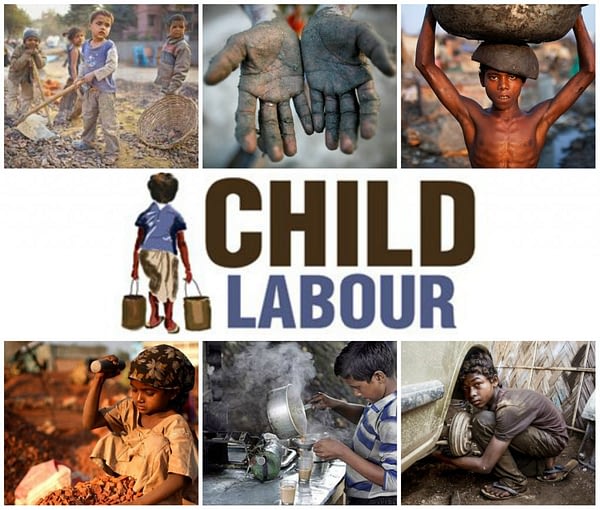
In India, kids are compelled to work wrongfully in numerous enterprises. In any case, Horticulture is the biggest area that utilizes youngsters to add to the family pay. Indian provincial areas utilizes 85% of kids because of different social factors that neglect to meet their way of life.

Not withstanding established arrangements to cancel Youngster Work, numerous kids stay abused under unsafe work conditions. Because of paid Work, youngsters leave their investigations to help their families. They are made to forego every one of the marvels of youth by the heartless world.

Reasons for Kid Work

The main sources of Kid Work in India are social imbalance, absence of training, and destitution. As indicated by UNICEF’s report, youngsters from the ruined and provincial pieces of the world have no accessible choices like educators and schools.
Various common organization’s need good school workplaces and the availability of school. The low paying economy blossoms with minimal expense, simple to recruit, and youngster Work. Other than the disorderly Rural area, kid Work exists in chaotic gathering, sloppy retail works, and sloppy exchange areas.

Different components of youngster Work incorporate the size of the casual economy, the failure of most Indian ventures to increase, absence of present day innovations, and the design and resoluteness of the Indian market.

Fortified youngster Work

Youngsters are utilized because of social commitment, or credits and obligations made by the families. As a rule, kids are compelled to utilize their families in block ovens, stone and quarries, and agrarian areas.

The offspring of the transient laborers and those that have a place with the minimized segments and Dalits in the general public are vowed to work in little creation houses and processing plants in the metropolitan regions. Youngster Workers on the bond are generally exposed to physical, enthusiastic, mental, and sexual maltreatment, in any event, prompting passing.

In Orissa, individuals of the lower segment of the general public sell their girls having a place with eight to 10 years old, as maidservants to the reasonable their obligations.

Absence of execution of Laws

The Youngster Work (Denial and Guideline) Act, 1986, was the lone ordered arrangement by the Indian Constitution against kid Work and its abominations. Various courses of action communicated by the Indian Constitution are:

Article 24 of the Indian Constitution expresses that no kid underneath the age of fourteen will utilize in any dangerous business or processing plant however not in non-unsafe ventures.

Article 39(f)) of the Indian Constitution expresses that youngsters and youthful grown-ups are to be secured against good and material relinquishment or any types of misuse.

Different Laws and the Indian Corrective Code, for example, The Plants Act,1948, The Mines Act,1952, the Adolescent Equity (Care and Assurance) of Youngsters Act-2000, and the Kid Work (Forbiddance and Abrogation) Act-1986 look to forestall the act of kid Work in India.

Shockingly, these laws and guidelines need dynamic and appropriate execution and authorization.