Covid-19 Pandemic and Child Labor

There is no reason. There is no excuse. Child labor is Child abuse.-The FreshQuotes

Child labor and poverty are inevitably bound together and if you continue to use the labor of children as the treatment for the social disease of poverty, you will have both poverty and child labor to the end of time.-Grace Abbott

We have observed many times that at tea shops there are some children are serving tea to the customer or at different shops attending the customers. Some of you may have been served by these “workers”. This is how child labor looks like. The concern is not that children should not work at dangerous places like mines or factories but the concern is that children should not work at any places.
The Covid-19 pandemic led the world to economic and social crises. The most affected by these crises in society are vulnerable. As in the situation of the economic crisis in poor communities, children are at particular risk. The pandemic is forcing the children out of school and into the farms and factories to work.
Child labor has always been a matter of concern globally and the Covid-19 pandemic has worsened the situation. According to a report released by UNICEF and ILO, the progress to end the child labor has stalled for the first time in 20 years, reversing the previous downward trend that saw child labor fall by 94 million between 2000 and 2016. According to a new report by ILO and UNICEF, the number of children in child labor has risen to 160 million worldwide- an increase of 8.4 million children in the last four years- with millions more at risk due to the impacts of Covid-19.
Consequently, two waves of Covid-19 are affecting each stratum of society. The pandemic led to lockdown because of the risk to the life of people, they had to restrict their movement. Due to this many people lost their jobs especially daily wagers and laborers and this led to the economic crisis in their families. They fell into deep poverty. In a situation like this question arises to their survival and as a solution for themselves some family unwillingly sent their children to work which helps them to survive.
The risk of child labor also increased during Covid-19 because schools are closed for an indefinite period of time and it is not sure that when the schools will run offline. Due to the closing of schools children from poor communities are not able to continue their education. Lack of access to the internet and technology many children are unable to participate in self-guided learning during school closures. In India over three-fourths of children did not have access to online learning and over one-third of children did not have access to any learning material. Due to loss of learning some students may have decided to drop out of school permanently. It is always seen that children and youth not enrolled in schools are at a much bigger risk of child labor. After the reopening of schools, parents without jobs may not be able to pay for school fees, supplies, and uniforms.
According to UNICEF, more than 1.5 billion children missed their schooling due to Covid-19 restrictions, which has compelled the children to work to support their families.
In countries like India, it is very crucial to deal with child labor because “children belong to classes not workplaces”. The government needs to come with more effective programs to eradicate child labor. Coming from families with no financial resources, in this pandemic the children and their families are not left with choices. It is to be ensured that at least the affected families are provided with basic needs which will prevent their children from working. NGOs like CRY is providing children with learning material. According to the CEO of CRY in 2020, close to 4000 cases of child labor were prevented or referred to rescue and support. Organizations like these are coming forward but how many can they help? There is a need for large action to protect children from child labor. One most important thing is that mindset of people should be changed as there is a saying that “Garib ka baccha kamaega nahin to khaayega kya”. These kinds of things demotivate children and their families to stand against wrongs and accept things as their fate.
Also, the UN is planning to eradicate child labor by 2025, but the pandemic is impacting every positive step towards change.

Will Getting Up Early In The Morning Make You Happier?

Mornings may be difficult, particularly when you ‘re striving to squeeze in every additional wink of sleep you can. Waking up early, on the other hand, may make you a happier individual and studies suggest that it can enhance your overall health and general feeling of well-being.

Existing studies have found a relationship between chronotype, or a person’s biological predilection for mornings or evenings, and mood. Night owls, for instance, are more vulnerable as morning persons to suffer depression.

Morning people tend to be more in sync with conventional work-rest patterns, but night owls may struggle to adjust. Getting up early has been shown in studies to improve mood, increase satisfaction with life, and reduce mental health issues. Also there is a relationship between getting up early and having a higher level of well-being among elderly people.

Some Of The Advantages of Getting Up Early

Improved Organizational Skills

Because you have uninterrupted time to yourself in the early morning, this is usually the most productive time of day. When you are not distracted, you can do any work more quickly. You may utilise this calm and quiet time to organise your day ahead of time, allotting a certain amount of time to each of your activities. Mentally planning your day before you begin improves your organisational abilities and promotes productivity.

Avoid Heavy Traffic During Your Commute

If you get up really early, you may leave your house before peak traffic hours. You don’t lose time sitting in traffic on your way to and from work.  You’ll also be on schedule for all of your subsequent engagements during the day.

Have a Stress-Free Environment

Getting up early allows you to organise your day ahead of time. You aren’t racing through your day with a crowded head. Preparing ahead of time reduces the anxiety that comes with hurrying to complete tasks. Furthermore, waking up early allows you more time for stress-relieving leisure activities, allowing you to begin your day with a peaceful and focused mind.

Reap The benefits of Quality Sleep

Morning people are more likely to fall asleep quickly. When you get up early, your body becomes fatigued quickly, which leads to great sleep as soon as you go to bed. You become used to the natural circadian rhythm, which causes you to go to bed and wake up early. Heading to sleep early increases your chances of completing all four phases of sleep over the course of four to six sleep cycles, resulting in a well-rested and refreshed feeling the next morning.

Tips to Get Out of Bed Earlier

Begin slowly

Set reasonable goals and don’t begin getting up at an unusual hour. It is better to steadily increase the time. For instance, if you are accustomed to getting up at 7 a.m., set an alarm for 6:45 a.m. When your body has adapted to the change, you can extend it for another 15 minutes. Starting slowly will allow your body to better adjust to the shift.

As Soon as You Wake Up, Get Out of the Bedroom

In the bedroom, your mind has been programmed to feel drowsy. Leaving the bedroom as soon as you wake up prevents you from falling back asleep. While attempting to become early risers, numerous night owls succumb to the urge of going to sleep when they spend some time in the bedroom.

You Should Reward Yourself

You can encourage the system while training yourself to wake up early. You may spoil yourself with your favourite coffee taste or with more time in the shower. Do something out of the ordinary to make yourself feel exceptional for achieving your goal of getting up early. Rewarding oneself encourages you to stick with the exercise.

Maintain Good Sleep Hygiene

Create a nighttime ritual that signals to your body that it is time to sleep. Take a nice shower, read your favourite book, or reflect on the good things that happened to you that day. All of these things assist you to relax and prepare your body for sleep.

Blue Lights Should Be Avoided

Melatonin synthesis might be suppressed by blue light from your television or other devices. Inadequate or delayed synthesis of this sleep-inducing hormone may have a detrimental impact on your sleep quality. To really be regular with waking up early, you must go to bed early. Keeping away from blue lights for at least an hour before sleeping aids in your objective of falling asleep earlier.

Take Care Of Yourself

If you’re feeling unwell or weary, ease up on yourself and don’t force yourself to get out of bed too early. This adaptability will keep you from hating the thought of getting up early.

Citizenship

Meaning of citizenship– Citizen are the member of the political community to which they belong. They are the people who compose the State.

Constitutional Rights and Privileges of the Citizens of India-

Citizens of India have the following rights under the Constitution: (a) Fundamental Rights mentioned under Article-15,16,19

b) Only citizens are eligible for certain offices such as those of the President, Vice-President, Judge of the Supreme Court, or a High Court, Attorney General, Governor of a State, Advocate General.

(c) The right of suffrage for election to the House of the People and the Legislative Assembly of every State and the right to become a member of Parliament and of the Legislature of a State.                                               

Person who became Citizens on 26th January, 1950:

Under Article 5-8 of the Constitution, the following persons became citizens of India at the commencement of the Constitution –

(1) who was born as well as domiciled in the “territory of India”- irrespective of the nationality of his parents A- 5(a).

(2) who are domiciled in the “territory of India”, either of whose parents was born in the territory of India- irrespective of the nationality of his parents or the place of birth of such person A- 5(b).

(3) who or whose father/mother was not born in India, but-

(a) had his domicile, in the territory of India

(b) had been ordinarily residing within the territory of India not less than 5 years soon after preceding the commencement of the Constitution.

(4) A person who had migrated from Pakistan, provided-

(a) He or either of his parents/grandparents was born in India as defined in the Government of India Act, 1935

(b) (i) if he migrated before 19 July, 1948

(ii) if he had migrated on or after 19th 1948, he further had made an application before the commencement of this Constitution for registering himself as a citizen of India by an officer appointed by the Government of India.

(5) Person who had migrated from India to Pakistan after 1 March 1947, but had subsequently returned to India under a permit issued under the authority of the Government of India.

(6) A person who, or any of whose parents/grandparents were born in India as defined in the Government of India Act, 1935 but who is ordin

Acquisition of Citizenship after 26th January 1950

The various modes of acquisition of Citizenship prescribed by the Citizenship Act, 1955 are as follows-

(a) Citizenship by birth

(b) Citizenship by descent

(c) Citizenship by registration

(d) Citizenship by naturalization

(e) Citizenship by incorporation of territory

(f) In 1985 a special provision was also added as to citizenship of persons of Indian origin covered by the Assam Accord. Under section 6A (2) two conditions are required to be satisfied –

(1) persons who are of Indian Origin came before 1 January 1966 to Assam from the specified territory

(2) have been ‘ordinarily resident ‘ in Assam as it existed in 1985 since the date of entry in Assam.

Citizenship Amendment Act, 2019- The migrants of Hindu, Sikh, Buddhist, Jain, Parsi, or Christian communities from Afghanistan, Pakistan, or Bangladesh who had entered India without valid travel documents or if the validity of their documents have been expired were regarded as illegal migrants and were ineligible to apply for Indian citizenship under section 5 and 6 of the Citizenship Act, 1955.

MOST BEAUTIFUL ISLANDS IN THE WORLD

Islands conjure dreams of paradise: an escape from the rat race and a perfect patch of sand where you can relax under rustling palms and gaze at a serene blue sea.

But not all islands are created the same. The beauty of some is defined more by the sea that surrounds them, which can captivate connoisseurs with its crystalline clarity and thriving coral kingdoms.

Other islands feature luxuriant jungles and velvety peaks, and some enchant travelers with their cultural jewels. Whether it’s sublime beaches, stunning topography, or exotic cultures you seek, these islands lie far from the workaday clamor but close to creature comforts.

From the Seychelles to Santorini and the Caribbean to Capri, find your very own Shangri-la in this list of the most beautiful islands in the world.

1.Maldives:

The Maldives are home to some of the world’s most ravishing islands, but it’s the sea, which truly makes these islands shine. Luminous aquamarine waters with a crystal clarity lap upon these dazzling white shores, which barely peek above the Indian Ocean.

Consisting of 26 natural atolls, the Maldives archipelago is the planet’s lowest lying nation, rising no more than three meters above the sea at its highest point, a measurement that shrinks every year.

Beneath the mesmerizing waters, coral reefs flourish, luring divers and snorkelers from around the world. Surfers also flock here to ride the uncrowded breaks.

Back on land, luxury resorts provide the perfect launching points for adventures focused upon the sea, the archipelago’s greatest asset, but also, as the planet’s climate changes, its single greatest threat.

2.Bora Bora, French Polynesia:

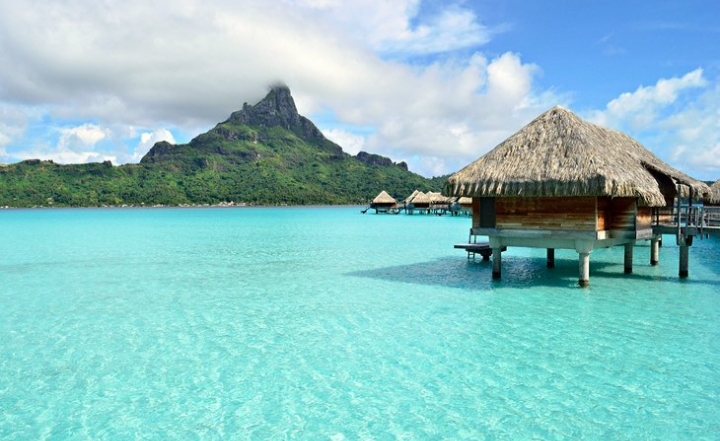
Shaped like a giant sombrero, this lush volcanic island stars in countless South Pacific fantasies. The focal point and best asset of this tropical beauty is its ravishing lagoon in technicolor turquoise. Fish, turtles, sharks, and rays swim in the clear waters, and tiny islets or motus dot the lagoon.

The island, of course, is distinctly French, with mouthwatering cuisine to match. Diving and snorkeling are excellent in the surrounding reefs, and hiking trails weave through the palm-studded forests.

If you can afford it, hide out here in a luxurious over-the-water bungalow and bask in your good fortune as you fall asleep to the gentle slosh of the sea.

3. Palawan, Philippines:

Palawan is the Philippine’s answer to paradise. This island province stretches southwest to Borneo, with lush limestone peaks rising from a jewel-like sea so clear, that you can almost see the expressions on the fish from above the surface.

Slivers of gleaming white-sand beaches fringed with rustling palms rim many of these jungle-clad islands, while under the water, coral reefs teem with an impressive diversity of tropical fish, offering some of the best diving in the world.

Other attractions include the islands’ unique wildlife, emerald lakes, and quaint fishing villages. Coron is home to plush resorts, and El Nido drips with natural beauty and is one of the most alluring islands in the chain. From here, you can island hop around the spectacular Bacuit archipelago.

One of Palawan’s top attractions is the World Heritage-listed Puerto Princesa Subterranean River National Park, an impressive limestone cave system with a long underground river.

4. Seychelles:

Pristine and picture-perfect, the Seychelles are worth traveling for. East of Kenya, this relatively unspoiled archipelago of 115 coral and granite islands is packed with attractions, from UNESCO-listed jungles and thriving coral reefs to palm-lined, powdery beaches flanked by giant boulders.

Almost half the total land area of these equatorial isles is protected, and many of the islands lie within fish-rich marine sanctuaries with excellent diving and snorkeling.

The Seychelles also feature some of the planet’s richest fishing grounds, making this a top destination for anglers. Add some spicy Créole cuisine into the mix, as well as the plush resorts of Mahé, Praslin, and La Digue, and it’s easy to understand the Seychelles’ allure.

5. Santorini, Greece:

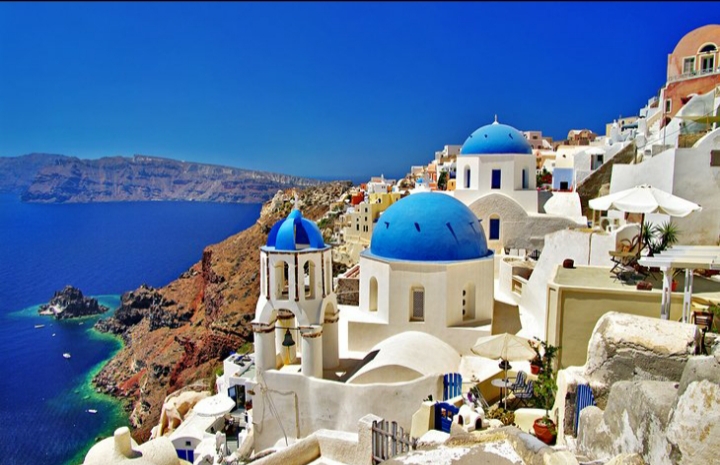
Encircling a sea-filled caldera, spectacular Santorini scores top points for its dramatic beauty. Bleached white villas tumble down volcanic cliffs. Blue-domed churches rise against the sparkling sea, and bright sprays of bougainvillea add to the eye-popping palette of color.

Perched atop the black lava cliffs, the settlements of Firá and Oia are the island’s most picturesque — and pricey, destinations — and Oia ranks among the most photographed locations in the world.

Other highlights of Santorini include Akrotíri Archaeological Site, Ancient Thira, the black sand beach of Perissa, and of course, the sublime sunsets. Sailing into this stunning caldera surrounded by soaring sea cliffs makes an unforgettable first impression.

6.The Cook Islands:

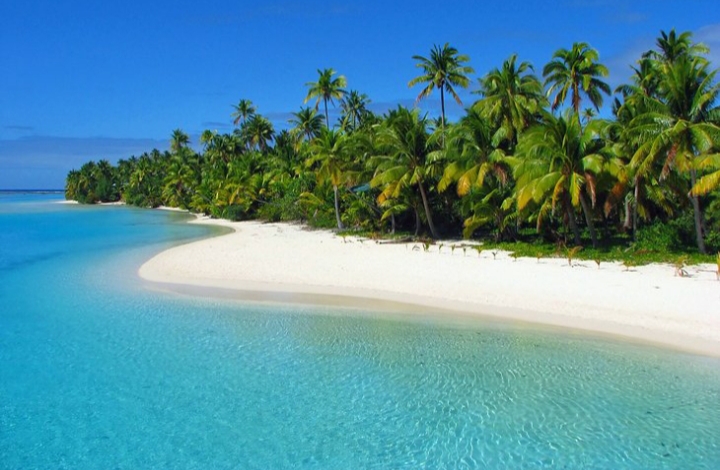
If you’ve ever dreamed of being a castaway in the South Pacific, the Cook Islands are for you. Strung between French Polynesia and Samoa but with strong ties to New Zealand, the archipelago’s 15 islands are among the most beautiful islands in the South Pacific.

Among the islands’ top attractions are enticing aquamarine lagoons, palm-fringed beaches, and volcanic peaks. Best of all, the locals are among the friendliest in the South Pacific.

Rarotonga is the main tourist hub, with its many resorts, lush peaks, and plentiful beaches. Aitutaki is one of the most beautiful islands in the South Pacific. Hibiscus-laced villages snuggle on the hillsides, and 21 motus or small islets lie along its heavenly lagoon, many within kayak distance of the resorts.

Ensconce yourself here in an over-the-water bungalow or hole up in a rustic beach shack on a remote out island and live your Robinson Crusoe fantasies.

7. Bali, Indonesia:

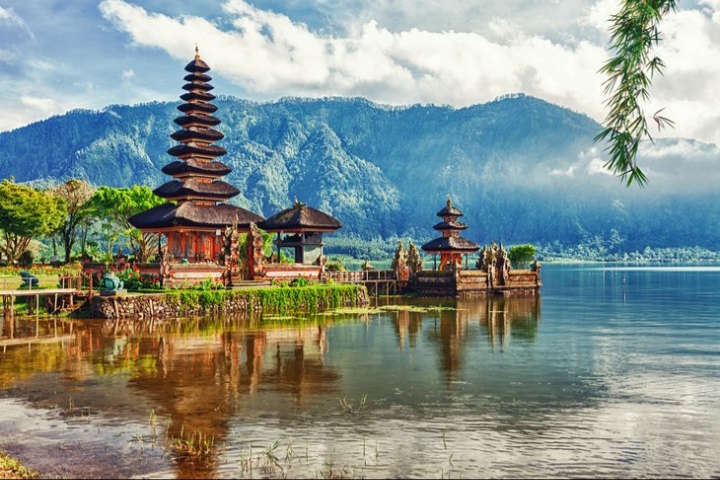
Bali’s intoxicating culture is a feast for the senses. Incense wafts from Hindu temples, rice paddies glow in electric greens, and the food jolts the taste buds. Surfing, swimming, and sunbathing are popular activities at the island’s beautiful beaches, and tourists will find so many other things to do on this exotic isle, from temple hopping and sightseeing in the lush countryside to spa treatments, shopping, and hiking.

Soak up the spiritual side of Bali in Ubud, see Seminyak, and family-friendly Sanur, feel the pumping pulse of touristy Kuta, or explore the attractions on the neighboring volcanic island of Lombok.

Looking for somewhere chic to stay? Choose from beautiful beach resorts, and if you’re bringing the kids, you’ll find plenty of good-value places to stay with the family.

One thing’s for sure: Bali’s enchanting spirit will wash over you like a warm, tropical wave.

Appreciation for cultural diversity is essential for our co-existence

Cultural diversity is the exsistance of a variety of cultural groups within a society. Cultural groups can share many different characteristics. …… Culture, religion, ethnicity, language, nationality, sexual orientation, class, gender, age, disability , health differences, geographic location and lots of other things.

It is about appreciating that society is made up of many different groups with different interests, skills, talents and needs. It also means that you recognise that people in society can have differing religious beliefs and sexual orientations to you.

Cultural diversity is the quality of diverse or different cultures, as oppesed to monoculture, the global monoculture, or a homogenization of cultures, akin to culture evolution.

The term cultural diversity can also refer to having different cultures respect each other’s differences. Moreover, it is often used to mention the variety of human societies or cultures in a specific region, or in the world as a whole.

Cultural diversity

• Cultural diversity supports the idea that every individual has a unique and positive contribution to make in society.

• Valuing cultural diversity comes from learning and understanding others who are not the same.

• Discrimination between people hinders the bloom of cultural diversity.

• Contributions from different cultures make society rich.

CULTURAL DIVERSITY AND IT’S BENEFITS

* Rise people interpersonal skills.

* Increases team work.

* Expand innovative and creativity.

* Different attitudes and behaviors.

* Skills and variety of language spoken.

* Growth company credibility.

* Increases productivity on complex tasks.

HOW SHOPPING CAN MAKE YOU HAPPY ?

Many people find happiness, excitement and pleasure while doing their favorite activity. Some people find happiness while shopping. It might be clothing, books or dresses, hardware’s, machines etc. and the point is not what is being [purchased but the fact that shopping brings happiness and pleasure to them. Shopping can be seen as a kind of therapy for many people ( as long as they don’t waste their money in buying unnecessary things which can bring problems in future). Shopping can help in many ways.

According to a study, which was conducted in 2014, it was found that retail therapy not only brings happiness and joy but it can also fight sadness in a lot of different ways. According to studies, sadness is generally associated with a sense where it can control someone’s life goals and outcomes and bring discouragement and embarrassment. But while shopping, the control over your own choices, necessities and needs can be brought back. By shopping one can restore the feeling of personal control and autonomy. Purchasing the things that you like and personally enjoy help in being more effective (up to 40 times) in giving the sense of pleasure and joy.

There are different ways by which shopping can bring you happiness:

DE-STRESS

While having stressful lives, people often try to find some leisure period and some activities which will make them feel lively and stress free. Stress can cause many mental illness such as depression or anxiety etc. and can also have harsh impact on physical health as well. But when people shop, they get an opportunity to forget everything all stressful things and focus on a particular task. Shopping is not an mindless activity because it required concentration for selecting good products and bargains. While buying something we need to compare them with other similar products and find out which product best suits our interest and needs. The stressors in life have less impact on you when you don’t think about them and thus it you get the opportunity to heal. Shopping will provide you a break from all stresses and worrying and will even help you to come with some solution.

IT TAKES MIND OFF THINGS

Online and offline shopping require concentration and taken time to decide the bet product and most suitable product and when you think about what you want or need and try to find the most appropriate item for meeting your requirements, your mind gets diverted from the stresses in your life.

BOOSTS CONFIDENCE

Perfect pair of shoes for your outfit can make you feel amazing because you feel complete and confident about what you’re wearing. The same goes with everything which is around your and which you use. It gives you the compliment: Yes, you’re amazing ! Its not just the wearing or thing being used which helps you, but it’ll also give a big confidence boost when you feel satisfied about what you’re wearing and using.

CONTROLLED

While shopping, the purchaser is the one who will make all the decisions. If you feel that everything is out of your control, then you can go for shopping and this will help you in relieving your stress. Shopping provides complete control which doesn’t happen to be in every aspects of your life. So, when you get the opportunity then you should grab it. Once again, this will boost your confidence level and a day of shopping or retail therapy will remind you that we can make things right. Researches have found that, shopping decisions help us to have the sense of personal control over our environment and help to overcome sadness.

#5 GET TO SPEND SOME TIME WITH FRIENDS

In today’s busy world it is very difficult to meet and hang out with your loved ones and favorite persons and a shopping trip is the perfect opportunity to get everyone together and have fun. Shopping is something which gives more happiness and joy when done with friends or people you love. Time spent with our favorite people will make you feel more happy and good.

Following tips can be included in you shopping trip to make it more exciting and enjoyable:

  • Include lunch or dinner in the plan (or even breakfast if you’re shopping in the morning)
  • Include movie or some cocktails to relax if you get tired
  • Hangout in your friend’s house and try out the things that you’ve purchased.
  • Spending time with your friends and people you love is a great therapy and when this is done with shopping, then it will make the life more good.

#6 GRATIFYING

In shopping, Gratification comes in two forms:

  • Instant Gratification, which means seeing something that you need or want and then buying it.
  • Delayed Gratification, which means seeing something that you want and not buying it right away and saving up money for buying it and returning home and expecting to buy it some other time.

#7 IMPROVE SELF IMAGE

The way you present yourself to the world is one of the important factors which determine the image which will formed about you in others mind. Effectively creating the image that you want will make you feel good and you can shop according to your own style and image that you want to show to the world. You can buy something wither in online or offline mode to add on or perpetuate your image.

Every time you’re buying something, you are adding to your image and this will make you feel more confident about yourselves.

#8 REFRESHING

Everyone wants to have something and new things now and again. You can shop to enhance your look and image or new look to your room or wardrobe. Shopping always incorporates some thing new into your life and always feels refreshing.

#9 IT BRINGS CHANGE

We do shopping when we want to change anything in our life or want to add something new into our life. This may be because of some life event or we want people to see us differently etc. There are numerous reasons to do shopping and can change their life and outlook towards life.

So there you go and next time when you’ll be feeling down or sad, then boost your mind and spirit by shopping your favorite things with your favorite people.

Tell me your experiences from your last purchase in the comments…

Pneumonia

Pneumonia, according to me is a disease that is taken very lightly but the actual disease is very lethal and kills a lot of people around the world. Infact when people are infected with COVID they get pneumonia and die. Pneumonia is an infection that inflames your lungs’ air sacs (alveoli). The air sacs may fill up with fluid or pus, causing symptoms such as a cough, fever, chills and trouble breathing.

Symptoms

  • Cough, which may produce greenish, yellow or even bloody mucus
  • Fever, sweating and shaking chills
  • Shortness Of breath
  • Rapid, shallow breathing
  • Sharp or stabbing chest pain that gets worse when you breathe deeply or cough
  • Loss of appetite, low energy, and fatigue
  • Nausea and vomiting, especially in small children
  • Confusion, especially in older people

Bacterial pneumonia, which is the most common form, tends to be more serious than other types of pneumonia with symptoms that require medical care. The symptoms of bacterial pneumonia can develop gradually or suddenly. Fever may rise as high as a dangerous 105 degrees F, with profuse sweating and rapidly increased breathing and pulse rate. Lips and nailbeds may have a bluish color due to lack of oxygen in the blood. A patient’s mental state may be confused or delirious.

The symptoms of viral pneumonia usually develop over a period of several days. Early symptoms are similar to influenza symptoms- fever, a dry cough, headache, muscle pain, and weakness. Within a day or two, the symptoms typically get worse, with increasing cough, shortness of breath and muscle pain. There may be a high fever and there may be blueness of the lips.

Changes in the structure of world economy

The Global economy is undergoing a long-term, structural transformation. In the past few decades, the key sectors responsible for the global output shift are the fall of agriculture, the decline of the manufacturing industry, and the rise in services. Next the capital expenditures are reducing.

Alessandro Magnoli Bocchi an Italian economist clearly stated in one of his books that by relying on the internet cheap interfaces with a large number of customers in other words, by inexpensively putting underutilized resources to use, it creates value with little capital cost. As a result, global net investment is close to its lowest level since the Second World War.

Moreover countries are making their economic structure more protective and are making their countries more self-sustained by encouraging industries in their countries to establish in their own country, therefore decreasing the import supply of goods and increasing their export supply to other countries to improve their economy. Currently, the United States is trying to do so. Decreasing their import supply of goods and increasing their export trade. US are going a step ahead by asking industries not to provide jobs to other nationalities.

Most of the countries are protecting their economies by encouraging their countries to establish industries in their own country. For example, Donald J. Trump went against General Motors for sending Mexican made model of Chevy Cruze to U.S car dealers-tax free across border. He says that General Motors must make in U.S.A or pay big border tax! Narendra Modi has encouraged industries to make products in India.

Healthy food

Healthy food refers to food that contains the right amount of nutrients to keep our body fit. We need healthy food to keep ourselves fit.

Furthermore, healthy food is also very delicious as opposed to popular thinking. Nowadays, kids need to eat healthy food more than ever. We must encourage good eating habits so that our future generations will be healthy and fit.

Most importantly, the harmful effects of junk food and the positive impact of healthy food must be stressed upon. People should teach kids from an early age about the same.

Healthy food does not have merely one but numerous benefits. It helps us in various spheres of life. Healthy food does not only impact our physical health but mental health too.When we intake healthy fruits and vegetables that are full of nutrients, we reduce the chances of diseases. For instance, green vegetables help us to maintain strength and vigor. In addition, certain healthy food items keep away long-term illnesses like diabetes and blood pressure.Similarly, obesity is the biggest problems our country is facing now. People are falling prey to obesity faster than expected. However, this can still be controlled. Obese people usually indulge in a lot of junk food. The junk food contains sugar, salt fats and more which contribute to obesity. Healthy food can help you get rid of all this as it does not contain harmful things.In addition, healthy food also helps you save money. It is much cheaper in comparison to junk food. Plus all that goes into the preparation of healthy food is also of low cost. Thus, you will be saving a great amount when you only consume healthy food.

Junk food vs Healthy Food

If we look at the scenario today, we see how the fast-food market is increasing at a rapid rate. With the onset of food delivery apps and more, people now like having junk food more. In addition, junk food is also tastier and easier to prepare.

However, just to satisfy our taste buds we are risking our health. You may feel more satisfied after having junk food but that is just the feeling of fullness and nothing else. Consumption of junk food leads to poor concentration. Moreover, you may also get digestive problems as junk food does not have fiber which helps indigestion.

Similarly, irregularity of blood sugar levels happens because of junk food. It is so because it contains fewer carbohydrates and protein. Also, junk food increases levels of cholesterol and triglyceride.

On the other hand, healthy food contains a plethora of nutrients. It not only keeps your body healthy but also your mind and soul. It increases our brain’s functionality. Plus, it enhances our immunity system. Intake of whole foods with minimum or no processing is the finest for one’s health.

In short, we must recognize that though junk food may seem more tempting and appealing, it comes with a great cost. A cost which is very hard to pay. Therefore, we all must have healthy foods and strive for a longer and healthier life.

Photo by Trang Doan on Pexels.com

The Internet boom and its effects on our environment

On the fifteenth of August 1995, the internet was made available to the public in our country. Today we have billions of active users. The Internet has now become a mere necessity rather than the comfort of luxury. Back then in 1995, internet speeds were just in a couple of kilobytes, but today we are blazing past the net at speeds almost at gigabytes. The cost of the internet has also drastically changed for a speed of 9Kb/s for 250 hours it was charged at almost 2500 rupees!! Now we can suffice all our internet needs at amazing speeds for almost months at the same price. The irony is since then prices of land, water, fuels, precious stones have skyrocketed; but that of communication and the internet have decreased exponentially.

In the year 2015 India had over 300 million users, thanks to the severe competition between network providers and the ever-competitive network battle. Now India has over 9 billion users, not only the network rage has caused this; the pandemic also is a major reason for this. Everyone was forced into their house with no other option but to adapt to this new technology. According to Nasscom since the pandemic hit our nation the network traffic has increased by almost ten manifolds. Companies had to install several servers and network infrastructure to support this erratic change in the consumer market. Although the prices have reduced, connectivity is now at home, comfort at the tips of your hands. We are unaware of the harms of what this could cause.  

We are seriously obsessed with the speed provided by network companies, we frequently complain and crib about the services offered. Forcing companies to either increase their spectrum range or increase their frequency at existing cell towers or construct new towers. This causes serious damage to small birds and insects, sparrows, pigeons all small birds are adversely affected by these rays. We must ensure that these birds must not be affected due to our comforts. We must give them their place on our planet. I agree we need the internet to survive in our daily lives, but we also need to think of the harm we are doing to our environment.

Incredible India

INDIA is filled with culture, traditions, history, mysteries and facts. Many travellers have India in their bucket list for several reasons.

Here are some facts about India which will force you to visit atleast once in your life.

 • India is home to the wettest inhabited place on Earth, Meghalaya, a state in the northeast part of India receives around 12,000 mm of rain every year.

 • Famous board games such as snakes and ladders and chess trace their roots back to India. The inventor of the games is not known but, it was created to teach children lessons about karma.

 • The biggest cricket ground in the world, Narendra Modi Stadium, is situated in Ahmedabad, India. It has the largest sitting capacity in the world.

 • Chenab Bridge, the world’s highest railway bridge is situated in Jammu and Kashmir, India.It is 1178 feet above the water.

 • India was the only source of diamonds from the 4th century BC for around 1000 years. Therefore, India was the first country to mine diamonds. They were found in the Krishna River Delta.

 • The oldest religion in the world is practiced in India. Hinduism started around 1500 BC. Hinduism has no founder in fact it is a way of living life.

 • India has the highest population of vegetarians in the world. Around 30% of the population follows a vegetarian diet. Every restaurant in India will have a vegetarian menu too.

 • Kumbh Mela, the largest gathering in the world happens in India once every 12 years. The gathering is so huge that it is visible from space.

 • The holy city of Varanasi, also known as Banaras or Kashi is the oldest living city in the world. It is believed that it was once the home of Lord Shiva and Goddess Parvati.

 • India is the birthplace of Ayurveda and Yoga. It has healing powers and it is famous worldwide.

 • The word ‘shampoo’ comes from the Sanskrit word ‘champu’ which means to ‘massage’. Previously, various herbs were mixed with water to form a shampoo.

 •  The Statue of Unity is currently the tallest statue in the world. It is 600ft in height. It is situated in the state of Gujarat.

 • India is the first country to extract, refine and consume sugar. It was found and refined around 2500 years ago.

India is a place of 1.3 billion people more than 6 religions speaking more than rationalized mother tongues, 234 identifiable mother tongues, and 22 major languages, this is the only place in this world where parents and teacher shares a place similar to God. A place that gave the world Taj Mahal, Vedas, yoga, medical science, the number zero.

CRISPER

One of the biggest and most important science stories of the past few years will probably also be one of the biggest science stories of the next few years. This is the powerful new gene editing technology known as CRISPR.

If you haven’t heard of CRISPER yet, the short explanation goes like this: In the past nine years, scientists have figured out how to exploit a quirk in the immune systems of bacteria to edit genes in other organisms — plants, mice, even humans. With CRISPR, they can now make these edits quickly and cheaply, in days rather than weeks or months. (The technology is often known as CRISPR/Cas9 also)

This is a powerful new tool to control which genes get expressed in plants, animals, and even humans; the ability to delete undesirable traits and, potentially, add desirable traits with more precision than ever before.

So far scientists have used it to reduce the severity of deafness in mice, suggesting it could one day be used to treat the same type of hearing loss in people. They’ve created mushrooms that don’t brown easily and edited bone marrow cells in mice to treat sickle- cell anemia. Down the road, CRISPR might help us develop drought-tolerant crops and create powerful new antibiotics. CRISPR could one day even allow us to wipe out entire population of malaria- spreading mosquitoes and ressurect once extinct species like the passenger pigeon.

why to read book if you can watch a movie

“BOOKS AND MOVIES ARE LIKE APPLES AND
ORANGES. THEY BOTH ARE FRUIT BUT TASTE COMPLETELY DIFFERENT.”

QUOTE BY STEPHEN KING

Let’s talk about the books vs movies
argument.

If you love books, you’ll likely
emphatically agree that the book version of any story is superior to the film
version. So much of what makes a book or a story come alive on the page is the
use of figurative language and other word play.

Shakespeare’s Romeo and Juliet,
technically a play, is often lost to modern audiences because the language just
doesn’t translate on screen.
We can hear the cadence
of the dialogue, but we can’t fully appreciate the consistent pattern
throughout each line of the play, descriptions and all. But what I think is
sometimes books are better than movies. Books can let you imagine the events
happening in the story. They are also more detailed than movies because movies
sometimes leave out some important details. Being a bookworm, I have
experienced that sometimes the characters shown in a movie are way opposite
than they are described in a book.

Imagination plays a very important role
when we speak of books and movies. Reading allows us to imagine the situation,
environment, characters and their personality. Basically, movies are made from
our imagination.
Reading does improve a person’s creativity
due to imagination: because you are using your brain while reading, your
concentration and focus levels improve. On the other hand, movies leave viewers
with little imagination, but they focus on visual effects.

Now if I talk about movie lovers, A point
that is worth noting is time consumption. A lot of people argue about this
topic. Reading a book from cover to cover takes a lot of time; of course it
depends on the book, the writing style and the wording.
Furthermore,
Entertainment Value is a part of a programme whose goal is to entertain or
attract the audience’s attention. Books do that by enticing the reader by
specific details that engage you. Some people find books more entertaining due
to this reason. A Several people who both read books and watch movies claim
that they were disappointed after seeing the movie as they had a higher
expectations set up when they previously read the book.
When
you read a book, you might take a day, a month or several months to finish it.
You read at your own pace and in your own time.  People often complain that certain characters
or events from a book aren’t in the movie. This upsets them because that
missing part might have had a special resonance with them.

The primary culprit when it comes to
understanding why books are better than movies is your imagination. When you
read a book, mental images of the characters, how the characters sound, how the
landscapes look and what the world is like is created by you, the reader. At
last ,a movie will never be as good as the book, because the book is your
world, while the movie is someone else’s.

Father of Indian Renaissance

Who is the father of Indian Renaissance?

Who is considered the maker of modern India?

It is Raja Ram Mohan Roy

The founder of Bhramo samaj and the person behind the abolition if Sati Pratha

Raja Ram Mohan Roy was born on May 22, 1772, in Bengal. Raja Ram Mohan Roy influenced fields of politics, education, religion and public administration. Raja Ram Mohan Roy was also ranked number 10 in BBC’s poll of greatest Bengali of all time in 2004. He had learnt as many as ten languages – Persian, Arabic, Sanskrit, English, Urdu, Hindi, Hebrew, Greek, Latin and French.

A cosmopolitan thinker as well as a nationalist reformer who believed in rationalist thinking. Through his memoranda, books, public activities for religious, social, educational, economic and political reforms he inaugurated liberal reformist modernisation in India.

His Social Reforms

  • Raja Ram Mohan Roy conceived reformist religious associations as instruments of social and political transformation.
  • He founded the Atmiya Sabha in 1815, the Calcutta Unitarian Association in 1821, and the Brahmo Sabha in 1828 which later became the Brahmo Samaj.
  • He was well known for his pioneering thought and action on the emancipation of women and especially on the abolition of sati and widow remarriage.
  • He attacked child marriage, illiteracy of women and the degraded state of widows and demanded the right of inheritance and property for women.
  • He campaigned against the caste system, untouchability, superstitions and use of intoxicants.

His Educational Reforms

  • Raja Ram Mohan Roy did much to disseminate the benefits of modern education to his countrymen. He supported David Hare’s efforts to find the Hindu College in 1817, while Roy’s English school taught mechanics and Voltaire’s philosophy.
  • In 1825, he established Vedanta college where courses in both Indian learning and Western social and physical sciences were offered.
  • He advocated the study of English, Science, Western Medicine and Technology.
  • He established a number of schools to popularise a modern education system in India
  • He was instrumental in setting up several institutions including the Hindu College in Calcutta in 1817, in collaboration with David Hare; the Anglo-Hindu School in 1822; and the Vedanta College to spread his teachings of Hindu monotheism. 
  • He also helped establish the Scottish Church College in 1830.

His Political Reforms

  • Civil liberties: Roy was impressed and admired the British system of constitutional government for the civil liberties it gave to the people. He wanted to extend the benefits of that system of government to Indian people.
  • Press freedom: Through his writings and activities, he supported the movement for free press in India. When press censorship was relaxed by Lord Hastings in 1819, Ram Mohan found three journals- The Brahmanical Magazine (1821); The Bengali weekly, Samvad Kaumudi (1821); and the Persian weekly, Mirat-ul-Akbar.
  • Administrative reforms: He demanded the Indianisation of superior services and separation of the executive from judiciary. He demanded equality between Indians and Europeans.

His Economic Reforms

  • Taxation reforms: Roy condemned oppressive practices of Bengali zamindars and demanded fixation of minimum rents. He also demanded the abolition of taxes on tax-free lands.
  • He called for a reduction of export duties on Indian goods abroad and the abolition of the East India Company’s trading rights.

Conclusion:

Raja Ram Mohan Roy was one of the few people in his time to realise completely the significance of modern age. He knew that the ideal of human civilisation does not lie in isolation of independence, but in the brotherhood of inter-dependence of individuals as well as nations. His attempt was to establish Indian people in the full consciousness of their own cultural personality, to make them comprehend the reality that was unique in their civilisations in the spirit of sympathetic cooperation.

Education

Education is a very powerful medium to grow in life and perceive something important. In a human’s life, education benefits a lot in decreasing the difficulties of a hard life. The expertise obtained through the education era encourages everybody regarding their life.Education is a way to enter into several doors for possibilities to obtain more real prospects in life to improve career growth. Government is also arranging various programs to educate everyone about education and its benefits in our life especially in rural areas. Education delivers knowledge of equality among everyone in society and encourages the growth and improvement of the nation.

In this modern technology-based era, education performs a supreme role in our life. And in this era, there are so many methods to boost the level of education. The complete criteria of education have now been modernized. And education makes a big impact on anyone’s life.

To say Education is important is an understatement. Education is a weapon to improve one’s life. It is probably the most important tool to change one’s life. Education for a child begins at home. It is a lifelong process that ends with death. Education certainly determines the quality of an individual’s life. Education improves one’s knowledge, skills and develops the personality and attitude. Most noteworthy, Education affects the chances of employment for people. A highly educated individual is probably very likely to get a good job. In this essay on importance of education, we will tell you about the value of education in life and society.

Importance of Education in Life

First of all, Education teaches the ability to read and write. Reading and writing is the first step in Education. Most information is done by writing. Hence, the lack of writing skill means missing out on a lot of information. Consequently, Education makes people literate.

Above all, Education is extremely important for employment. It certainly is a great opportunity to make a decent living. This is due to the skills of a high paying job that Education provides. Uneducated people are probably at a huge disadvantage when it comes to jobs. It seems like many poor people improve their lives with the help of Education.

Better Communication is yet another role in Education. Education improves and refines the speech of a person. Furthermore, individuals also improve other means of communication with Education.

Education makes an individual a better user of technology. Education certainly provides the technical skills necessary for using technology. Hence, without Education, it would probably be difficult to handle modern machines.

People become more mature with the help of Education. Sophistication enters the life of educated people. Above all, Education teaches the value of discipline to individuals. Educated people also realize the value of time much more. To educated people, time is equal to money.

Finally, Educations enables individuals to express their views efficiently. Educated individuals can explain their opinions in a clear manner. Hence, educated people are quite likely to convince people to their point of view.

Importance of Education in Society

First of all, Education helps in spreading knowledge in society. This is perhaps the most noteworthy aspect of Education. There is a quick propagation of knowledge in an educated society. Furthermore, there is a transfer of knowledge from generation to another by Education.

Education helps in the development and innovation of technology. Most noteworthy, the more the education, the more technology will spread. Important developments in war equipment, medicine, computers, take place due to Education.

Conclusion

Education is a ray of light in the darkness. It certainly is a hope for a good life. Education is a basic right of every Human on this Planet. To deny this right is evil. Uneducated youth is the worst thing for Humanity. Above all, the governments of all countries must ensure to spread Education.

Photo by Max Fischer on Pexels.com