Data Management

Data management is the process of absorbing, storing, organising, and managing an organization’s data. Effective data management is a critical component of implementing IT systems that operate business applications and offer analytical information to enable corporate executives, business managers, and other end users to drive operational decision-making and strategic planning. The data management process ensures that data in business systems is correct, available, and accessible. The majority of the needed work is performed by IT and data management teams, while business users are involved in some aspects of the process. This thorough reference explains what it is and offers information on the various fields it encompasses.

History and Evolution

The early blooming of data management was primarily driven by IT experts who concentrated on tackling the problem of garbage in, garbage out in the earliest computers after discovering that the machines drew incorrect conclusions due to erroneous or inadequate data. Beginning in the 1960s, industry groups and professional organisations pushed optimal data management practises, particularly in terms of professional training and data quality criteria. That decade also saw the introduction of mainframe-based hierarchical databases. 

The data warehouse concept was created in the late 1980s, and early adopters started using them in the mid-1990s. Relational software was the dominating technology in the early 2000s, with a virtual monopoly on database deployments. Organizations now have a wider range of data management options because of the emergence of big data and NoSQL alternatives. 

Benefits of data management

By increasing operational performance and allowing improved decision-making, a well-executed data management strategy may help firms acquire potential competitive advantages over their business rivals. Organizations with well-managed data may also become more flexible, allowing them to more rapidly detect market trends and seize new business possibilities.

Effective data management may also assist businesses in avoiding data breaches, data privacy issues, and regulatory compliance difficulties that might harm their brand, add unanticipated expenses, and put them in legal trouble. Finally, the most significant benefit that a sound data management strategy can give is improved company performance.

Importance of data management

Data is increasingly being viewed as a corporate asset that can be utilised to make better business choices, enhance marketing efforts, streamline operations, and save expenses, all with the objective of boosting revenue and profits. However, a lack of appropriate data management may leave businesses with incompatible data silos, inconsistent data sets, and data quality issues, limiting their capacity to operate business intelligence (BI) and analytics applications — or, worse, leading to erroneous conclusions. As organisations are subjected to a growing number of regulatory compliance obligations, including data privacy and protection legislation such as GDPR and the California Consumer Privacy Act, data management has become increasingly important. Furthermore, organisations are gathering ever-increasing amounts of data and a broader range of data kinds, both of which are trademarks of the big data platforms that many have implemented. Without proper data management, such settings may become cumbersome and difficult to traverse.

Tasks and duties in data management

The data management process necessitates a wide range of activities, responsibilities, and abilities. Individual workers in tiny firms with less resources may take on several responsibilities. Data management professionals, in general, include data architects, data modellers, database administrators (DBAs), database developers, data quality analysts and engineers, data integration developers, data governance managers, data stewards, and data engineers, who collaborate with analytics teams to build data pipelines and prepare data for analysis. 

Data scientists and other data analysts may also undertake certain data management activities on their own, particularly in large data systems containing raw data that must be filtered and processed for specific applications. Similarly, application developers frequently assist in the deployment and management of big data environments, which necessitate the acquisition of new skills in comparison to relational database systems. As a result, businesses may need to acquire new employees or retrain established DBAs in order to fulfil their big data management requirements.


Television is chewing gum for the eyes

Television is invented by the scientist J.L.Baird. It is the first electronic appliance that can be used to watch movies, videos, TV shows, and much more. Children prefer to view the TV all the time because of the many entertainment cartoons they show us. The earlier models of the TV were bulky and needed to be placed on a strong and sturdy table.

Telegram television (also known as a TV) is a machine with a screen. Television receive broadcasting signals and change them into pictures and sound. The word “television” comes from the words tele (Greek for far away) and vision (sight). ….A TV can show pictures from many television networks.

Television is a fantastic educational tool. It broadens knowledge of different cultures, promotes tolerance and global understanding of international issues. Through current affairs, discovery, lifestyle, cooking shows and children’s programmes, television encourages scientific and cultural curiosity.

10 LINES ON TELEVISION

1. Television is an audio-visual component by which we can watch our favorite shows, movies and various other programs.

2. Television is a huge industry in India with thousands of programs in more than 800 channels in different languages.

3. Till 2016, there were 857 channels, and out of them, 184 were paid channels.

4. In India, Doordarshan was a part of all India Radio, which separated in 1976.

5. After the 1980’s, ‘Ramayan’ and ‘Mahabarat’ were the two epic shows which entartained people.

6. During economic and social reforms in 1991, the government allowed foreign and private broadcasters to start their TV channels in India.

7. Traditionally, programs used to telecast via antennas, but in 1992, cable Television Network started with better viewing and multiple channels.

8. Now India television has shifted towards DTH (Direct to Home) platform which receives signals via satellite and provides better picture and sound clarity.

9. With the advent of smart phones, programs can also telecast on our phones via the Internet.

10. Nowadays live streaming of new programs on the internet is in high demand.

India is pressuring Twitter with requests for user data and content removal.

This year, Twitter is under a lot of pressure in India. However, even before the country imposed stringent new regulations on tech firms, the corporation was bombarded with requests from the government to delete material or disclose user data.

Indian authorities requested more account information from Twitter in the final six months of 2020 than any other nation, according to the Silicon Valley-based company’s newest transparency report released on Wednesday. The number of requests for content removal submitted by India increased by 152% to over 7,000.

This journalist explains why one of her tweets vanished.

India’s demands for user information amounted to 25% of the total it received during the reporting period, which runs from July 1 to December 31, 2020, according to Twitter (TWTR). Over 99 percent of the requests were ignored by Twitter.

“Notably, this is the first time since we began releasing our transparency report in 2012 that the US is not the top worldwide requester,” the firm stated, adding that the US came in second in terms of global volume.

According to the company, the information requests comprised normal legal demands as well as emergency requests from government agencies and law enforcement authorities.

“Where appropriate, Twitter will push back on requests for account information that are incomplete or inappropriate,” according to the firm, such as those that are “invalid or overbroad in scope.” In the event of an emergency involving the risk of death or serious harm, the firm may reveal account information if sufficient proof is presented that such information will prevent the hazards.

Just over 150 information requests from India were classed as emergencies by Twitter. According to the firm, the United States sent the most such requests in the globe, with 822.

Meanwhile, legal requests from India to delete or withhold information increased by 152% in the latter six months of 2020 compared to the previous reporting period. Just over 9% of the 6,971 demands were met, according to Twitter.

After Japan, which made over 16,000 requests mostly connected to narcotics, obscenity, or money lending, India became the world’s second-highest submitter of such requests. The number of requests from Japan decreased by 16 percent from the previous quarter, but it still accounted for 43 percent of all worldwide requests.

According to the firm, 361 requests for information removal were made on 199 verified journalist and news outlet accounts throughout the world. It went on to say that India accounted for 128 of the requests.

The research excludes 2021 when Twitter is embroiled in a heated standoff with the Indian government over new information technology regulations.

During a series of farmer demonstrations in February, the business fought with the Ministry of Electronics and Information Technology over accounts that the agency wanted to be taken down. Some of the requests were granted, but Twitter declined to take action against accounts belonging to journalists, activists, or politicians.

Weeks after the feud, India issued new rules requiring social media companies to establish three roles in the country: a “compliance officer” who will ensure that their platforms comply with local laws, a “grievance officer” who will handle complaints from Indian users about their platforms, and a “contact person” who will be available to Indian law enforcement 24 hours a day, seven days a week. They are all required to live in India. If authorities demand it, companies must track out the “first originator” of messages.

In May, the firm raised worries about “fundamental components of the new IT Rules” as well as the country’s “potential threat to freedom of speech.” It promised to fulfill the new standards a few days later.

A Delhi court recently chastised Twitter for failing to comply with the new guidelines promptly. In a court filing last week, the business stated that it had appointed an interim compliance officer. It also stated in the filing that it will “attempt in good faith to make an offer of employment to a qualified candidate” for all of the positions within eight weeks.

The company’s website featured a complaints officer and a Bangalore location where Twitter could be reached as of last weekend.

Status Signalling among birds

Paragraph 1

Many birds that form flocks compete through aggressive interaction for priority of access to resources such as food and shelter. The result of repeated interactions between flock members is that each bird gains a particular social status related to its fighting ability, with priority of access to resources increasing with higher status. As the number and intensity of interactions between birds increase, however, so increase the costs to each birds in terms of energy expenditure, time, and risk of injury. Thus, birds possessing attributes that reduce the number of costly interactions in which they must be involved, without leading to a reduction in status, are at an advantage. An external signal, such as a plumage type, announcing fighting ability and thereby obviating the actual need to fight, could be one such attribute.

Paragraph 2

The zoologist Rohwer assented that plumage variations in “Harris sparrows” support the status signaling hypothesis (SSH). He reported that almost without exception birds with darker throats win conflicts with individuals having lighter plumage. He claimed that even among birds of the same age and sex the amount of dark plumage predicts relative dominance status.

Paragraph 3

However, Rohwer’s data do not support his assertions: in one of his studies darker birds won only 57 out of 75 conflicts; within another, focusing on conflicts between birds of the same age group or sex, darker birds won 63 and lost 62. There are indications that plumage probably does signal broad age-related differences in status among Harris sparrows: adults, usually dark throated, have higher status than juveniles, who are usually light throated; moreover, juveniles dyed to resemble adults are dominant over undyed juveniles. However, the Harris sparrows’ age-related plumage differences do not signal the status of individual birds within an age class, and thus cannot properly be included under the term “status signaling.”

https://www.google.com/url?sa=t&source=web&rct=j&url=https://www.researchgate.net/publication/247193944_Plumage_Coloration_as_a_Signal_of_Social_Status&ved=2ahUKEwjlsZqa2ufxAhW7zzgGHYn5BbAQFnoECCAQAQ&usg=AOvVaw3yf5mNLgJJUHPQqo0l7lNS

https://www.google.com/url?sa=t&source=web&rct=j&url=https://www.jstor.org/stable/1369578&ved=2ahUKEwjlsZqa2ufxAhW7zzgGHYn5BbAQFnoECAgQAQ&usg=AOvVaw10FfMYrcscYgJr0eqziwI_

Why Digital Marketing Matters

introduction

Remember billboards? I do.As a young kid in California, my experiences from the back seat of our car mostly alternated between: “Mom, when are we there?” and “Uh, look, McDonald’s, can we go?” whenever one of those 10-foot billboards popped up on the side of the road.Growing up with Indian parents, the answer to both of those would, most times, be the same: “not yet.”Sometimes, big brands would even start a billboard war, like this one between Audi and BMW, which got quite a few laughs:

In 2015, a ton of my clients still spent hundreds of millions of dollars on billboard advertising.Unfortunately or fortunately, billboard advertising is mostly dead.Just think of it this way: Google and Facebook generate more revenue than any traditional media company because they control more eyeballs. That’s why digital marketing matters; it’s where the attention is.The reason why billboards, like the ones above, will die, is because the future of driving will look like this:

Although driverless cars already exist, drivers still have to pay attention; in the future, as the technology improves, not a single passenger will spend their time looking at the road.Do me a favor, the next time you drive and are giving a friend a ride, take a peek at the passenger seat. Even now, chances are they’ll be looking at their phone. If no one is looking at the road anymore, who’s supposed to see those advertisements?That means you don’t have much time to figure out this digital marketing stuff before you can power down your old school printing press and close up shop.

Unemployment

Unemployment has become one of the biggest problems around the world. When an individual is an implied, he or she will know very less about the mankind. It is so difficult to face situation and handle situations when the individual is unemployed. Unemployment leads to many silly mistakes. And an unemployed person cannot take over the family and lead the family as well. There is a huge competition in highly populated countries like India. In order to be employed, the only method is to study hard and improve the skills and score better. Basically, the students are not showing good amount of interest towards the studies. Let us now see how to motivate them.

Covid crisis has made many people unemployed. It has taken away the basic need of living. Many people are left with the unfilled stomachs. Some people are dead about by not finding a way to live.

Types of unemployment :

There are four main types of unemployment in an economy frictional, structural, cyclical, and seasonal and each has a different cause.

1. Frictional unemployment :

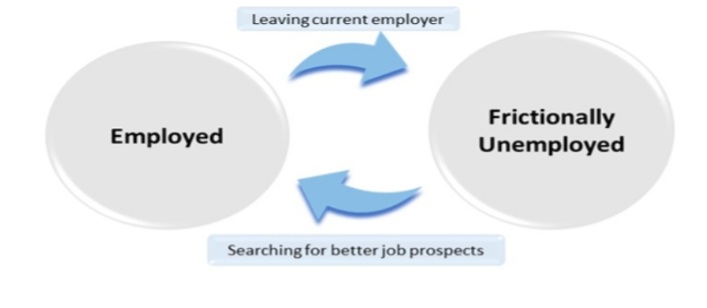
Frictional unemployment is caused by temporary transitions in workers lives, such as when a worker moves to a new city and has to find a new job. Frictional unemployment also includes people just entering the labor force, such as freshly graduated college students. It is the most common cause of unemployment, and it is always in effect in an economy.

2. Structural unemployment :

Structural unemployment is caused by a mismatch in the demographics of workers and the types of jobs available, either when there are jobs available that workers don’t have the skills for, or when there are workers availabes but no jobs to fill. Structural unemployment is most obvious in industries undergoing technological advancements.
3. Cyclical unemployment :

Cyclical unemployment is caused by declining demand. When there is not enough demand in an economy for goods and services, businesses cannot offer jobs . According to keynesian economics , cyclical unemployment is a natural result of the business cycle in times of recession: if all consumers become fearful at once, consumers will attempt to increase their saving at the same time, which means there will be a decrease in spending, and businesses will not be able to employ all employable workers.

4. Seasonal unemployment :

Seasonal unemployment is caused by different industries or parts of the labor market being available during different seasons. Fot instance, unemployment goes up in the winter months, because many agricultural jobs end oncr crops are have harvested in the fall, and those wotkers are left to find new jobs.

Consequences of unemployment in an Economy :

Low unemployment is key to economic stability High and long- term unemployment can cause significant stress on a nation in three key areas.

* Individuals :

Unemployed people have no ability to fulfill their financial obligations and can become mentally stressed, ill, and even homeless.

* Economic efficiency :

During times of high unemployment many job seekers will accept new jobs below their skill level, a situation called “underemployment ” which translates to a loss of human capital for an economys labor market. Unemployed workers will also significantly decreases their consumer spending, which is one of the driving forces of economic growth. Without consumer spending, the economy will slow dramatically.

* socio- political stability :

If unemployment remains high, citizen dissatisfaction can rise to the point of widespread civil unrest.

Possible solutions for Unemployment :

Solving unemployment is a hotly debated topic, and no economists agree on one simple way to do it. However, in the U.S ,if unemployment rises noticeably, the government usually steps in with specific policies designed to lower the total number of unemployed people.

1. Monetary policy :

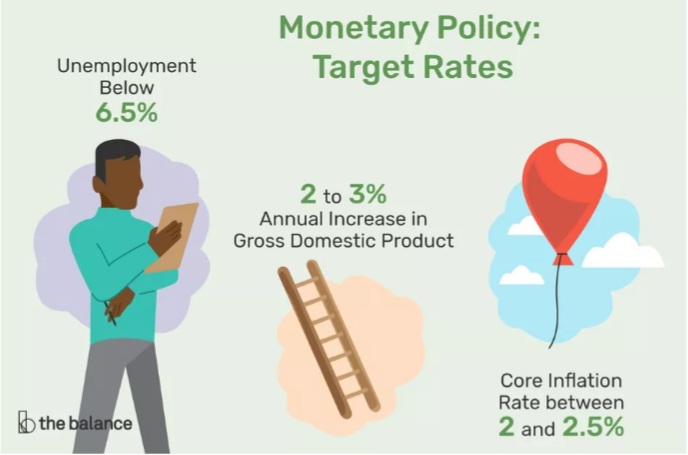
Monetary policy is financial influence implemented by a central bank . Monetary policies usually come in the form of lower interest rates, which increase the total money supply within an economy by allowing banks and businesses more access to loans and therefore, more accessible spending power.

2. Fiscal policy :

If expansionary monetary policy doesn’t adequately lower the unemployment rate government agencies will turn to fiscal policy. Fiscal policy is fiscal stimulus implemented by the national government and fiscal policies include spending on infrastructure, proposingtax cuts , increasing the minimum wage, or implementing unemployment benefits. These methods are designed to inject more demand into private economy and strengthen economic activity.

Let us now see some of the ways to motivate the students to study and get employeed.

Make things easier :

Showing the things easier and explaining them with clarity helps the students to show better interest on the subject and makes them to pay more attention on what the teacher is trying to convey. When the topics are shown easier for the students, they start learning them and they feel achieved and they pay more attention to study. When a student learns a particular topic or a question, he/she feels comfortable and happy for getting it. Once if they start reading, they develop the interest in them and they continue to read more and more.

Tell the importance :

The students must be motivated with good number of words to understand the need of studying and what happens if they don’t study. A student is like a bird without the wings when they don’t study. So, it is very important to motivate students to study and to make them understand the need of the situation. Motivation brings the right change in the students who are not interested in learning. It develops the interest in them to study.

It seems good if the government provides good number of jobs.

Is mathematics a kind of language

What it means to “explain” something in science often comes down to the application of mathematics. Some thinkers hold that mathematics is a kind of language–a systematic contrivance of signs, the criteria for the authority of which are internal coherence, elegance, and depth. The application of such a highly artificial system to the physical world, they claim, results in the creation of a kind of statement about the world. Accordingly, what matters in the sciences is finding a mathematical concept that attempts, as other language does, to accurately describe the functioning of some aspect of the world


At the center of the issue of scientific knowledge can thus be found questions about the relationship between language and what it refers to. A discussion about the role played by language in the pursuit of knowledge has been going on among linguists for several decades. The debate centers around whether language corresponds in some essential way to objects and behaviors, making knowledge a solid and reliable commodity; or, on the other hand, whether the relationship between language and things is purely a matter of agreed-upon conventions, making knowledge tenuous, relative, and inexact.

Lately the latter theory has been gaining wider acceptance. According to linguists who support this theory, the way language is used varies depending upon changes in accepted practices and theories among those who work in particular discipline. These linguists argue that, in the pursuit of knowledge, a statement is true only when there are no promising alternatives that might lead one to question it. Certainly this characterization would seem to be applicable to the sciences. In science, a mathematical statement may be taken to account for every aspect of a phenomenon it is applied to, but, some would argue, there is nothing inherent in mathematical language that guarantees such a correspondence. Under this view, acceptance of a mathematical statement by the scientific community–by virtue of the statement’s predictive power or methodological efficiency–transforms what is basically an analogy or metaphor into an explanation of the physical process in question, to be held as true until another, more compelling analogy takes its place.

https://www.google.com/url?sa=t&source=web&rct=j&url=https://www.mathnasium.com/southtowns/news/httpswwwthoughtcocomwhy-mathematics-is-a-language-4158142textin20order20to20be20consideredthis20definition20of20a20languagetextmath20is20a20universal20languageevery20country20of20the20world%23:~:text%3DIn%2520order%2520to%2520be%2520considered,than%2520spoken%2520form%2520of%2520communication.&ved=2ahUKEwjJnY6r2efxAhVpxDgGHcNZB8AQFjABegQIBBAF&usg=AOvVaw2TPelQCqxZ_C_u4XYX52ah

https://www.google.com/url?sa=t&source=web&rct=j&url=https://www.cut-the-knot.org/language/MathIsLanguage.shtml&ved=2ahUKEwjJnY6r2efxAhVpxDgGHcNZB8AQFnoECA4QAQ&usg=AOvVaw27gzEEM6urdLNhpvwaJxAJ

Creativity Is A Process , Not An Event

In 1666, one of the most influential scientists in history was strolling through a garden when he was struck with flash of creative brilliance that would a change the world. While standing under the shade of apple tree, Sir Issac Newton saw an apple tree fall to the ground . “Why should that apple always descend perpendicularly to the ground”, Newton wondered . “Why should it not go sideways , or upwards , but constantly to earths center? Assuredly the reason is, that the earth draws it. there must be a drawing power in matter “. And thus the concept of gravity was born . The story of falling apple has become one of the lasting and iconic examples of creative moment. It is a symbol of the inspired genius that fills your during those ” eureka moments” when creative conditions are just right. What most people forget, however , is that newton worked on his ideas about gravity for nearly twenty years until, in 1687 , he published his groundbreaking book , “THE PRINCIPIA: MATHEMATICAL PRICIPLES OF NATURAL PHILOSOPHY.” The falling apple was merely the beginning of a train of thought that continued for decades .

CREATIVITY IS A PROCESS, NOT AN EVENT.
Creative thinking requires our brains to make connections between seemingly unrelated ideas.

Education

Education is very important role on the our life this is a part of our life

It helps people become better citizens, get a better-paid job, shows the difference between good and bad. Education shows us the importance of hard work and, at the same time, helps us grow and develop. Thus, we are able to shape a better society to live in by knowing and respecting rights, laws, and regulations.

An education can greatly improve your quality of life. Keeping your mind sharp with new and interesting information can potentially decrease your risk of Alzheimer’s disease and dementia. … With a good education, you could also become well-informed about healthy living, making you more likely to live longer.

You gain knowledge, skills and experience to help you both in your career and in life in general. On top of that, by gaining additional skills in communication and problem solving and achieving your goals, you can also increase your confidence.

educate to everyone learning New things

Forms of Government

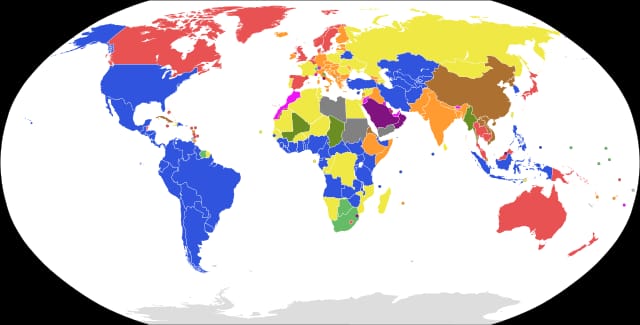
The governance of nations differs significantly based on who has power. There are different forms of government.
✓Aristocracy
✓Monarchy
✓Autocracy
✓Oligarchy
✓Theocracy
✓Democracy
✓Republic

Aristocracy

A form of government in which power is in the hands of a small previleged ruling class (nobels).
Example: United Kingdom, Spain

Monarchy

A system of government in which one person reigns supreme, usually a king or queen (constitutional monarchy).
Example: Bhutan, Oman, Qatar

Autocracy

A system of government by one person with absolute power.
Example: North Korea, Saudi Arabia

Oligarchy

A small group of people having control of a country or organisation.
Example: Former Soviet Union, China, Venezuela, North Korea

Theocracy

A system of government in which religious doctrines form the basis of government headed by a priest who rules in the name of God or proclaims himself as a God.
Example: Vatican

Democracy

A system of government in which eligible members in the population vote to elect their elected representatives, and the party or individual who obtains the majority votes forms the government.
Example: India, USA, France

Republic

A state in which supreme power is held by the people and their elected representatives and which has an elected or nominated President rather than a monarch.
Example: India, Australia

Health Education

A sound mind lives in a sound body’.

Introduction

Health education is a profession of educating people about health. Areas within this profession encompass environmental health, physical health, social health, emotional health, intellectual health, and spiritual health, as well as sexual and reproductive health education.

Health education teaches about physical, mental, emotional and social health. It motivates students to improve and maintain their health, prevent disease, and reduce risky behaviours. It also focuses on emotional, mental and social health too. Educating students on the importance of health builds their motivation.

Health education is one strategy for implementing health promotion and disease prevention programs. Health education provides learning experiences on health topics. Health education strategies are tailored for their target population. Health education presents information to target populations on particular health topics, including the health benefits/threats they face, and provides tools to build capacity and support behavior change in an appropriate setting.

History

From the late nineteenth to the mid-twentieth century, the aim of public health was controlling the harm from infectious diseases, which were largely under control by the 1950s. By the mid 1970s it was clear that reducing illness, death, and rising health care costs could best be achieved through a focus on health promotion and disease prevention. At the heart of the new approach was the role of a health educator.

Code of ethics

The Health Education Code of Ethics has been a work in progress since approximately 1976, begun by the Society for Public Health Education (SOPHE).

“The Code of Ethics that has evolved from this long and arduous process is not seen as a completed project. Rather, it is envisioned as a living document that will continue to evolve as the practice of Health Education changes to meet the challenges of the new millennium.”

Importance of Health Education .

Health education builds student’s knowledge, skills, and positive attitudes about health. Health education teaches about physical, mental, emotional and social health. It motivates students to improve and maintain their health, prevent disease, and reduce risky behaviours.

Health education curricula and instruction help students to learn skills so that they will use to make healthy choices throughout their lifetime.

Health education teaches people of all ages about how diet and exercise contribute to a healthy lifestyle. It also encourages positive changes in behaviour and lowers the risk of addiction to drugs, alcohol and unsafe sexual practices. The majority of schools around the country have courses aimed at teaching health education to students. These courses often revolve around the body, healthy eating, sex and exercising. Some students are taught basic health and physical fitness early on. More in-depth courses are designed for middle and high school students.

Health education encourages a person to make healthy choices. They are instructed to avoid unhealthy habits. ‘A sound mind lives in a sound body’. Rabindranath Tagore and C.V. Raman, if they were confined to sick bed, could not have won the Nobel Prize. In fact, a sickly student with all his talents and abilities lags behind in the race of life.

Health education also teaches about the emotional and mental health of the student. A healthy person is the happiest person in the world.

Link

Child labour – A CURSE

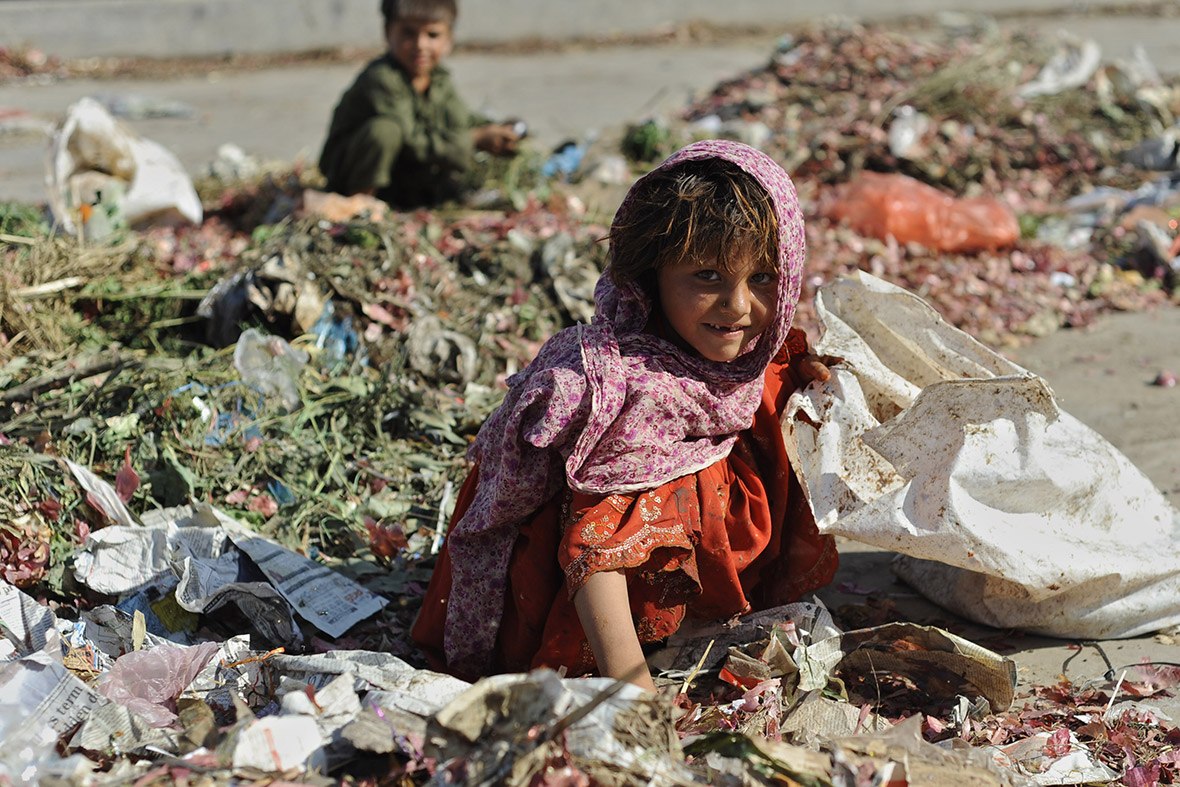
child labour” is often defined as work that deprives children of their childhood, their potential and their dignity, and that is harmful to physical and mental development.

Various causes of child labour like the curse of poverty, lack of educational resources, Social and economic backwardness, Addiction, disease or disability, The lure of cheap labour, Family tradition, Discrimination between boys and girls.

Why does child labour happen?

POVERTY
When families cannot afford to meet their basic needs like food, water, education or health care, they have no choice but to send their children to work to supplement the household income.

LACK OF ACCES TO QUALITY EDUCATION
School needs to be a welcoming environment, with appropriate class sizes, a curriculum designed for the local context, and affordable for rural communities.

LIMITED UNDERSTANDING OF CHILD LABOUR
When families do not understand the dangers of child labour, and how these impact on the health, safety, well-being and future of their child, they are more likely to send their children to work.

Child labour act in India

Article 24 of the Indian constitution clearly states that, “No child below the age of fourteen years shall be employed to work in any factory or mine or employed in any hazardous employment.”

The Children (Pledging of Labour) Act, passed into law in 1933, is the first acknowledgment of the problem of child bondage.

ONE EDUCATED CHILD CAN CHANGE THE WORLD

Women in the pandemic

Women , the primary caregivers of almost every family of our country, tend to be the most discriminated against in almost every sphere- whether social, economic, political and especially health. And now as we are stuck in the pandemic, we are bound to bounce back decades on our progress made on poverty, education and healthcare. (Source:  https://unstats.un.org/sdgs) , and the women will , once again, be on the frontline.

Photo by vivek on Pexels.com

LOSS OF LIVELIHOOD-

With the female LFPR of 20.8% in 2019(fallen from 30.27% in 1990) that was not even half the global average of 47% and the women’s share in new formal payrolls below 20% in August 2020, India was no country for working women even before the pandemic. And now, due to the pandemic, women who earlier accounted for only 24% of the total workforce, now share 28% of the total number of jobs lost.

Reasons:

  1. According to Mckinsey study, women did 75% of the world’s total unpaid work. With people being stuck in homes due to the pandemic, the household workload on women increased indefinitely, which is why many of them left their jobs.
  2. Either due to pregnancy and related reasons or due to vaccine hesitancy, fewer women were taking vaccine jabs.
  3. Women are more likely to engage in unorganized sector, hence, being more prone to loosing jobs in such times of crisis. (eg.- tailoring and stitching, house-help)

Post pandemic, women are 11 times more unlikely to return to work and women comprise 48.04% percentage of the population. For a country that wishes for a speedy economic recovery as well as future growth, a 79.8% (and increasing) working population being a liability on the economy doesn’t align well with its economic ambitions.

Degrading social status-

With increased news publishing related to domestic violence, child marriages, sexual abuse and women trafficking during the pandemic, it’s hardly an assumption that the conditions of women will deteriorate further in days to come.

Reasons:

  1. With decreasing family incomes, women school dropout rate has increased and will continue to do so in the near future.
  2. With everything going online, children with no digital equipment accessibility lag behind. The households that are able to afford internet connectivity and mobiles give preference to their male child.
  3. Due to being stuck in the house, the female members spend a larger amount of time doing house-hold work. So, they find less time to devote to studies that now require more effort. Also, it tends to align them more towards house-hold work as well as present them primarily as caregivers amongst the younger generations.
  4. Women increasingly suffer from online harassment. In such cases, it takes a larger amount of time to track down the perpetrator as the person’s identity is unknown.
  5. With the administration occupied with covid-19 management, the cases of child marriage, trafficking and domestic violence are on rise. Women, being stuck in the same house as their molester and many-a-times being financially dependent on them due to job-loss during pandemic, find it difficult to file a complaint.

Health Concerns-

In India, women already suffer from malnutrition, morbidity and various maternal as-well-as reproductive health issues. In addition to this, women are more prone to mental health issues as well. As of July 2005, women represented approximately 40 percent of HIV/AIDS cases in India. These situations of pandemic are bound to worsen the already poor conditions of female health.

Reasons:

  1. The reduction in supply of food due to reducing incomes affect the food security of women the most when compared to any other member of the family.
  2. Women can, now, no longer afford menstrual sanitation products and contraceptives
  3. Being a victim of domestic violence or even stress, a woman’s mental as well as physical well-being will be neglected.
  4. Women with underlying health conditions have, due to declining economic resources, experienced worsening health conditions as a result of skipping medical care.

What can be done??

  1. The PDS system should be expanded to provide dry ration for a longer duration as well as larger amount. It should also include sanitary napkins .
  2. Through ASHA workers, the government should spread awareness related to reproductive health, hygiene and mental health as well.
  3. The government can grant free internet as well as set up mobile towers in areas of low connectivity. Also, internet cafes following proper covid-19 norms should be set up to provide digital equipment to those who cannot afford them.
  4. MGNREGA scheme should be expanded to incorporate the increased number of unemployed with special provision for women, including larger number of working days for all and social schemes should be set up for informal sector workers.
  5. Social awareness about letting girls continue their studies, as well as, motivating women to join workforce when situation stabilize is an important step.
  6. A national helpline number bringing together all NGOs who have come forward to help should be set up. It will make identifying those in need easier, with a uniform toll-free number as well as added government expertise.

Conclusion:

Women can be the backbone of economic development in times of crisis. Making right developments towards women’s issues now could prove to be beneficial to the country’s economy as well as society in the long run.

Brief History of Hindi Cinema.

In the course of its long history, the Hindi Cinema has gone through constant evolutions and is still witnessing massive socio-cultural changes, however, from substantive and insular point of view; the Hindi Film Industry still retains its own unique and peculiar characteristics. Since the beginning, the Hindi Cinema has drawn its inspiration from the styles and aesthetics of the mega diverse Indian culture.

In general great emphasis has been put on classical Indian traditions over the years including Indian storytelling, epics, and poems and like. Although movies came to India in July 1896 as famous French Lumiere Brothers screened their short films in Watson Hotel, Mumbai, the first ever Indian film was ‘Raja Harishchandra’, a mythological film released in 1913 directed by Dada Saheb Phalke, who is often called as the father of Indian Cinema.

Film Poster of Raja Harishchandra, 1913.

Raja Harishchandra being a silent film had Hindi, Marathi and English interfiles. In 1905, filmmaker Hiralal Sen documented “Swadeshi Movement of India” and screened it at Town Hall, Calcutta on 22nd of September which is considered as India’s first political film. H.S. Bhatavdekar’s first movie and the first film by an Indian Filmmaker was shot in 1899 in which he shot a Wrestling Match in Mumbai’s Hanging Gardens. By the 1930s, the industry was producing 200 films per year and it was in 1931, the industry had its first sound film named ‘Alam Ara’ by director Ardeshir Irani which had a mixture of both Hindi and Urdu.

Alam Ara, India’s first Sound Film. (1931)

Since then the talkie films quickly were in high demand by the audience mostly in big cities and hence the industry permanently switched to sound films. The first ever Hindi color film was released in 1937 by Ardeshar Irani named “Kisan Kanya ”, however the colour films became popular among the audience only in late 1950s and early 1960s. The industry has also witnessed the breakdown of the studio system and complete on location shooting over the years. At present, Hindi Cinema produces over 1000 movies per year.

A still from Kisan Kanya (1937).

The Song and Dance Sequences

As mentioned earlier, the Hindi movies have always been a reflection of Indian culture and so hasn’t been any Hindi movie without a song till date. Two of the major characteristics of Hindi Cinema are songs and dance sequences. In fact, these two unique features are considered as the ‘peculiarities’ of Hindi Cinema which separates it from Hollywood or any other foreign film industry. In earlier times whenever there was a requirement of steamy scenes in movies, the protagonists, that is the hero and the heroine used to indulge into a song and dance sequel. The song and dance sequences pop up here and there according to necessary requirements and situations. The 1932 movie Indra Sabha was one of the first Indian movies with over 70 songs.

Film Poster of Indra Sabha (1932).

Truly, Hindi Cinema has entertained audiences worldwide for more than a century now. Informally and popularly known as Bollywood, Hindi Films will always have a special place in hearts of millions of Bollywood fans!

Drug Abuse.

Drug abuse is referred to the excessive use of psychoactive substances such as alcohol, stimulant, pain reliever etc in the amount that is detrimental to the physical, social as well as emotional well being of an individual. Case of drug abuse is increasing at an alarming rate among teenagers and adults under the age of 30 that affect people all across the globe and from all walks of life. In the United States, the annual death rate due to drug abuse is much more than the road traffic accidents and gunshots combined. Nearly 8% of the States population are trapped in this vicious cycle due to the majority of reasons, considering it as an easiest escape. Overuse of drugs not only affects the brain cells but also do heavy damage to the heart, nerves, limbs etc that often leads to seizure and paralysis, shutting the entire body followed by death eventually.

Cause of Drug abuse.

There are several reasons behind drug abuse among which the common causes are listed below.

  • Many people develop drug problems due to mental conditions such as depression, stress disorder, anxiety and other mental illness.
  • Low self-esteem, peer pressure of society, and a chaotic lifestyle are also common reasons.
  • At times, people try certain substances out of excitement that turns into a habit in no time because of its highly addictive nature.
  • Sometimes, prescribed medication usually barbiturates turned into drug addiction and cause serious health problems.

Apart from the aforesaid reason, there can be multiple reasons that lead to such substance abuse.

Types of Drugs:

  • Depressants: It is the most commonly used drug worldwide that works by suppressing the central nervous system and gives momentarily happiness while under the influence. Usage of such dopes develops various symptoms such as sleep, relaxation, drowsiness, anaesthesia, coma and even death.
  • Stimulant: Stimulants are class of drug that creates a sense of euphoria by making body alert and extra awake. It speeds up the brain’s receptive capacity that often leads to a panic attack, anxiety, seizures, aggression and paranoia when used in excess amounts.
  • Hallucinogenic: These are a diverse group of drugs that creates a hallucination and sensations leads to seeing things that seems real due to brain malfunction. People often use such pills to deal with stress or just to feel differently. Commonly used hallucinogenic drugs are LSD, Peyote, DMT etc.

There are millions of different variety of drugs available in the developing and developed world apart from these wide range of drugs mentioned above, that entraps countless youngsters every other day. Uprooting such menace isn’t as easy as we assume because of the withdrawal syndrome that is linked with it. That is why it is absolutely necessary to build up rehabilitation centres and promote drug education at the socio-economic strata.