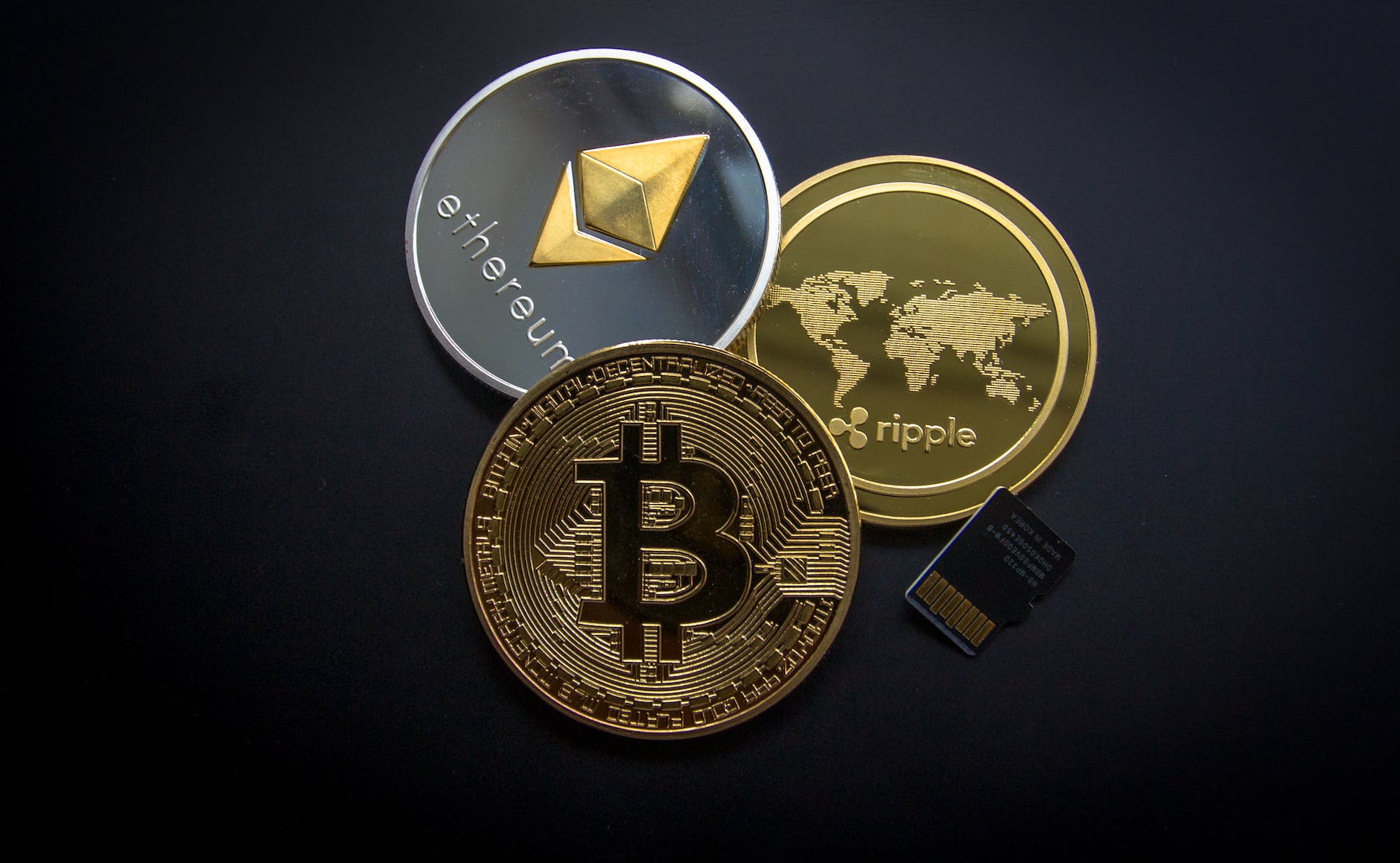
Bitcoin As An Alternative Payment Mechanism

 In recent years, the popularity of Bitcoin has increased significantly, & many businesses are now considering accepting Bitcoin as a form of payment. But for those unfamiliar with Bitcoin, getting it can seem daunting. In this piece, we will see how a business can accept Bitcoin as payment & why it may be a wise decision. Know more at Register now.

Photo by Karolina Grabowska on Pexels.com

Why Accept Bitcoin as Payment?

It is crucial to recognize the advantages of accepting Bitcoin as payment before delving into the specifics of how to do so. Unlike traditional credit card transactions that can be disputed or reversed, Bitcoin transactions are cryptographically secure and cannot be altered, making them highly resistant to fraud and chargebacks.

Another advantage of Bitcoin payments is their speed and cost-effectiveness. This makes Bitcoin a highly attractive option for merchants looking to reduce the cost and time associated with processing transactions. This decentralization provides businesses with greater economic freedom & independence, as they can transact globally without being subject to the regulations & restrictions of traditional banking systems.

Finally, accepting Bitcoin as payment can attract a new customer base of tech-savvy individuals who value the privacy & security that Bitcoin provides.

How to Accept Bitcoin as Payment

There are several ways a business can start accepting Bitcoin as payment. Once you have a wallet, you can display your Bitcoin address on your website, & customers can send payments directly to that address.

However, displaying your Bitcoin address can be complicated for customers who are unfamiliar with Bitcoin. One solution is a Bitcoin payment processor, which can simplify the payment process for you & your customers.

Bitcoin payment processors are third-party services that process Bitcoin payments on behalf of businesses. These processors typically charge a small fee for their services, but they provide a range of benefits, including simplified payment processing, automatic conversion to fiat currency, & fraud protection.

These processors typically integrate with popular e-commerce platforms such as WooCommerce, Magento, & Shopify, making it easy to accept Bitcoin payments on your website.

In addition to payment processors, businesses can also use Bitcoin payment gateways, which are similar to payment processors but allow companies to accept Bitcoin payments in person. These gateways typically use QR codes to process payments, allowing customers to scan the code with their Bitcoin wallet & send payment directly to the business.

Finally, businesses can also use Bitcoin ATMs to accept Bitcoin payments. These ATMs allow customers to deposit cash & receive Bitcoin in return, providing businesses with a physical location where customers can purchase goods or services with Bitcoin.

Tips for Accepting Bitcoin as Payment

While accepting Bitcoin as payment can provide many benefits, there are some important things to keep in mind to ensure a smooth payment process. First, it’s essential to stay up to date on the current exchange rate of Bitcoin to ensure that you receive fair payment for your goods or services.

Second, it’s crucial to ensure that your payment processing system is secure & that you are taking the necessary precautions to protect your Bitcoin wallet from hacking attempts. This can include using multi-factor authentication & regularly backing up your wallet. Finally, it’s a good idea to educate your customers on how to use Bitcoin & provide them with resources to learn more about cryptocurrency. This can include tutorials on setting up a Bitcoin wallet & sending & receiving Bitcoin payments.

Conclusion

Accepting Bitcoin as payment can provide businesses with various benefits, including increased financial freedom, faster & cheaper payment processing, & access to a new customer base. To start accepting Bitcoin, companies can create a Bitcoin wallet, use a payment processor, payment gateway or Bitcoin ATM, & take steps to ensure a smooth payment process.

Furthermore, by accepting Bitcoin payments, businesses can tap into a rapidly growing market of tech-savvy and financially literate consumers who prefer to use digital currencies for their transactions. After going through every bit of the above article, it must be clear to you by now that bitcoins do come in handy in various payment processes all the time. Besides, it is your responsibility to figure out the best option of payment among all, in the first place. Thus, without wasting any further time, delve into the researches to stick to the most efficient option. 

A Guide To: Crypto Tutorial for Beginners

 Cryptocurrencies, with Bitcoin leading the way since its inception in 2009, have surged in popularity worldwide, presenting investors with a unique and intriguing investment opportunity. In this guide, we will provide a concise overview of the history of cryptocurrencies, explain their functioning, and guide you on how to initiate your first investment in Bitcoin. If you are getting tremendously confused upon how to use cryptocurrencies or how do they work, then you can keep an eye on this website for more information https://q-profit-system.com/.

Photo by RODNAE Productions on Pexels.com

Understanding cryptocurrency 

To maintain the trustworthiness of financial transactions and govern the creation of new units, cryptocurrencies employ cryptography. The blockchain, a transparent ledger that logs all cryptocurrency transactions, was introduced alongside the first cryptocurrency. Each transaction in the blockchain is subjected to authentication and encryption by a network of computers responsible for sustaining the blockchain. This network employs complex algorithms that ensure the security and accuracy of the blockchain, allowing it to operate autonomously without the need for intermediaries. By decentralizing the financial system in this way, cryptocurrencies offer an alternative to traditional banking structures and promote financial transparency and inclusivity. 

How Does Cryptocurrency Work? 

Cryptocurrencies function using a decentralized technology, which enables them to operate without the involvement of traditional intermediaries such as banks or governments. The decentralized nature of cryptocurrencies is made possible through the use of distributed ledger technology, which ensures that every participant in the network has access to a copy of the blockchain, a public database that logs all transactions. This mechanism ensures the transparency and security of cryptocurrency transactions, while also promoting financial autonomy and inclusivity for users around the world. 

Types of Cryptocurrency 

As a decentralised system, cryptocurrency doesn’t need authoritative third parties like banks or governments to function. It entirely leaves the entire transaction system in the hands of the investors and traders. Hence, the moment you start using the cryptos which fall under the decentralized system, you would not have to worry about the third party interferences at all. 

Benefits & Risks of Cryptocurrency 

Bitcoin, Ethereum, & Litecoin are just some of the many cryptocurrencies now in circulation. Bitcoin was the first & is now the most widely used cryptocurrency, with a market worth of over $1 trillion. Ethereum is an open-source platform for developing distributed applications with built-in smart contract functionality. Litecoin, like Bitcoin, is a decentralised, peer-to-peer digital money, but it boasts cheaper transaction costs & shorter confirmation times.

Getting Started with Cryptocurrency

Steps to Invest in Cryptocurrency 

  • Open a account on a crypto exchange.
  • Verify your identity & complete the KYC (know your customer) process
  • Link a payment method, such as a credit card or bank account
  • Buy the cryptocurrency of your choice
  • Store your cryptocurrency in a secure wallet

Choosing a Cryptocurrency Wallet 

A crypto wallet is a digital wallet that stores, send, & receives cryptocurrencies. 

Understanding Cryptocurrency Exchanges 

If you are new to the crypto field now, it might be impossible for one to have any knowledge based on cryptocurrencies and the exchange platforms. Thus, the following points below will surely help you understand every bit of it proficiently. It serves as a marketplace where individuals and entities can transact with one another, often using fiat currencies or other cryptocurrencies as a means of exchange. Centralized exchanges are operated by a central authority and provide a platform for users to trade cryptocurrencies. Peer-to-peer exchanges facilitate direct transactions between buyers and sellers, often utilizing smart contracts or escrow services to ensure the secure and efficient transfer of digital assets. 

Researching Cryptocurrencies 

It’s important to research the cryptocurrency you want to invest in before buying. It would help if you looked at the market capitalization, the price, the trading volume, & the supply of the cryptocurrency. It would help if you also looked at the development team behind the cryptocurrency & the technology it uses. Some several websites & resources provide information on cryptocurrencies, such as CoinMarketCap, CoinGecko, & CryptoCompare.

Conclusion

Cryptocurrency is a new & exciting investment opportunity that offers several benefits, such as decentralization, security, privacy, & low transaction fees. By following these steps & keeping your cryptocurrency secure, you can participate in the world of cryptocurrency & potentially profit from this new & exciting asset class.

Everything You Need to Know About Ethereum

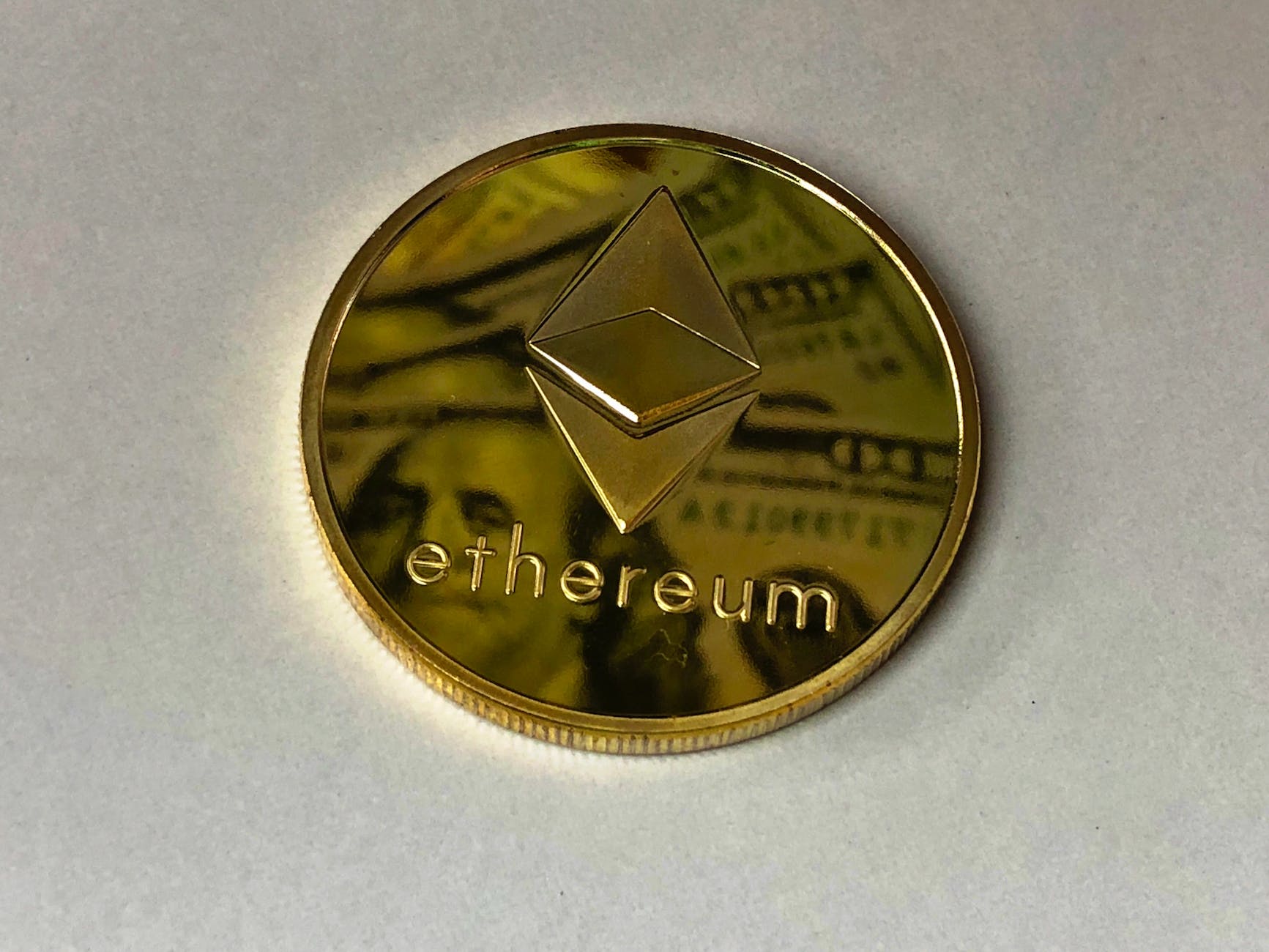
 Ethereum is a decentralized platform in the crypto world which has recently introduced the MERGE in the trade market. If you do not have much idea on Ethereum and other related cryptocurrencies then you can keep an eye on the following article to know more. Click to sign up & start trading ethereum. Learn more.

Photo by David McBee on Pexels.com

The Entire Background on Ethereum

Ethereum is an open-source, publicly accessible, and decentralized blockchain platform that is designed to support the development and deployment of decentralized applications, or dApps. This essay will provide a comprehensive overview of Ethereum, including its historical context, underlying technology, potential applications, and future potential. By delving into these critical aspects of the platform, readers will gain a deeper understanding of the unique features and capabilities of Ethereum, as well as the broader implications of this emerging technology for the world of blockchain and decentralized applications.

Ethereum’s Past

Vitalik Buterin, inspired by Bitcoin’s blockchain technology, introduced Ethereum in 2013. He saw a network capable of hosting both a digital money and a network of decentralized programmes. In 2014, the Ethereum platform was created after its creators successfully crowd funded $18 million. 

Ethereum’s Decentralized Technology

Ethereum is a blockchain-based distributed application (dApp) platform. Ethereum is a platform that allows developers to construct smart contracts and decentralised apps on top of its blockchain, whereas Bitcoin is mostly used as a digital money. They get rid of the need for middlemen like banks, brokers, and attorneys.

Proof of Stake (PoS), the consensus method used by Ethereum’s blockchain, is more energy-efficient than Bitcoin’s Proof of Work (PoW). In contrast to PoW, which relies on processing power, PoS enables validators to produce and verify new blocks on the blockchain depending on the number of coins they own. Since validators stake their bitcoin and stand to lose it if they engage in harmful activity, they have an incentive to keep the network secure.

Potential Applications of Ethereum

Ethereum’s blockchain is used to power dApps, or decentralized apps. Trust and security-critical use cases are well-suited to these open-source, transparent, and tamper-proof solutions. The most popular applications of Ethereum include:

Ethereum is the backbone of the DeFi movement, which seeks to build a global, borderless, decentralized financial system. 

With Ethereum, developers may create games that run on the blockchain and provide players the ability to purchase, sell, and trade virtual items. These items are kept on the distributed ledger and may be utilized in a wide variety of video games and app stores.

Ethereum’s identity tools may be used to build private, secure, and user-managed digital ID systems. These decentralised methods of identity verification remove the requirement for third parties like governments or companies.

Blockchain technology, such as Ethereum’s, makes it possible to construct an immutable log of a product’s travels through the supply chain. Businesses and customers alike will benefit from being able to verify the legitimacy and provenance of goods.

Ethereum may be used to build ad-hoc, censorship-resistant social networks without the need for a governing body or third-party moderators. Using these systems, individuals are in charge of their own information and may safeguard their own privacy.

What’s Next for Ethereum

The outlook for Ethereum is bright, owing in large part to the dedicated development team that is continuously striving to enhance the platform and introduce new features. Among the most eagerly anticipated updates is Ethereum 2.0, which promises to replace the existing Proof of Work (PoW) consensus mechanism with Proof of Stake (PoS), as well as incorporate novel features like sharding to improve the network’s scalability. As a result of these improvements, Ethereum is poised to become more robust and faster, capable of handling a greater volume of transactions and supporting a broader range of decentralized applications. These developments hold great potential for advancing the state of the art in blockchain technology and driving further innovation in the space. 

One of Ethereum’s primary benefits is that it can run smart contracts, which is a kind of computer programme. This implies that decentralized apps (including online marketplaces, voting systems, and more) may be built on the Ethereum blockchain and utilized for a wide range of purposes. A smart contract is a computer-generated agreement that is pre-set to go into effect under certain circumstances. The trust and openness it affords are unparalleled in the world of legal transactions.

Ethereum also has the added advantage of having speedier transaction times. In contrast to Bitcoin, where a transaction might take up to 10 minutes to complete, Ethereum transactions normally only take a few seconds. Due to the use of a distinct consensus technique called Proof of Stake, Ethereum is able to process transactions far more quickly.

Conclusion

Ethereum is a groundbreaking platform that has significantly advanced the cryptocurrency industry. Smart contract execution and reduced transaction times are only two ways in which it has the potential to transform the way we do business online. The hazards and difficulties associated with this new technology, however, must be overcome. Users may make well-informed judgments on whether or not to use Ethereum if they have a thorough grasp of the advantages and disadvantages of this cryptocurrency. Ethereum is a major development in the field of decentralized technology and has the potential to drastically alter the way we interact with one another in the digital sphere.

International Conference on Multidisciplinary Research (ICMR) 2023

International Conference on Multidisciplinary Research (ICMR) 2023, is to shed light on the hurdles linked to the practical administration of all the most modern information being produced in educational research, from a multidisciplinary perspective. Today, more than ever, budding academics, scholars, and researchers in the initial degrees of their careers are discovering it to be increasingly difficult to keep up-to-date with advancements that are taking place. This convention strives to assist them in keeping up with all these developments.

The intention of the International Conference on Multidisciplinary Research (ICMR) 2023, is for authorities, academics, professionals, and students involved in educational research from a multidisciplinary perspective, from all over the globe, to gather collectively and bestow contemporaneous research findings that familiarize and enlighten participants concerning the advancements that have been taking place

International Conference on Multidisciplinary Research (ICMR) 2023, supports all researchers (budding and veteran) to present their investigative research outcomes by exhibiting appropriate study articles/presentations/papers at the event, no matter what particular discipline of educational research, they practice in. Those responsible for the most excellent research articles will be rewarded well. They will obtain an unbelievable chance to have their research conclusions and outcomes distributed in prime publications and magazines known and recognized throughout the world. This will not only assist them in obtaining the required exposure that they require to spread the word about their investigative work amongst international research societies but additionally pave the way to a host of unbelievable possibilities for funding and carrying out advanced research projects.

Submission Guidelines

The following paper categories are welcome:

  • Educational Administration
  • Creative Technologies in Education
  • Technology Management in Education
  • Teaching and Instruction
  • Curriculum Design
  • Pedagogy
  • E-Learning
  • Social Media in Education
  • Buddhist and Psychological Education
  • Social Science Education
  • Professional Learning Community
  • Educational Research
  • Measurement and Evaluation
  • Artificial Intelligence (AI) in Education
  • Buddhist Studies
  • Buddhist Psychology
  • Buddhist Management
  • Linguistics
  • English Studies
  • Meditation Innovation
  • Public Administration
  • Social Sciences
  • Social Development
  • Economics
  • Peace Studies
  • Humanities
  • Political Sciences

Important Dates

  • Important Dates

    Date for Submission of Papers

    20 March 2023 (without Late fee)

    30 March 2023 (with late fee)

    Acceptance Mail for Papers

    10 April 2023

    Date of Online Conference

    20-22 April 2023

Website 

For more details Visit: https://icmr.edupub.org

Email id for Submission of Papers

Email: icmr2023@edupub.org

Special Issue for Conference Papers

Visit conference Official Site at https://icmr.edupub.org/

ISBN for Conference Proceedings 

Do we have enough resources ?

In the name of family so many people are still giving birth to children. Without even realising while they themselves are suffering for livelihood they are still increasing population. And in population growth not only poor and illiterate are involved perhaps rich and educated people also have this kind of mentality.

People have to understand that they don’t have any right to give birth to an individual and make them to suffer. Population growth is one of the main reason of poverty in the world. People have to understand “Natural resources are limited” and people have to accept and understand this or else the nature have its own ways to maintain the balance.

International Conference on Multidisciplinary Research (ICMR) 2023

International Conference on Multidisciplinary Research (ICMR) 2023 will be held online globally
ICMR2023 will be a major conference organized with the objective of bringing together researchers, scholars and practitioners from academia and industry working in the area of advanced Engineering, Technology, Computing, Communication Technology, Management, Future computing problems, Advanced Computing and Data science in Digital Era.

Submission Guidelines

All papers must be original and not simultaneously submitted to another journal or conference. The following paper categories are welcome:

List of Topics

  • TRACK 1 : Engineering & Technology- E-Learning, e-Governance, Internet of things,Smart Cities, m-Commerce, Biomedical Technologies
  • TRACK 2 : Future Computing- Big data-oriented computing, Fog-computing,sensing data, Mobile Edge Computing, Water and Soil conservation, Urban computing, Renewable Energies
  • TRACK 3 : Communication Technology- Mobile Apps, Wireless/ Mobile Communication, 3G/4G/5G Network Evolutions, Satellite Communication Systems, Machine to Machine
  • TRACK 4 : Management- Supply Chain Management, Customer Relationship Mgt, International Trade, Financial Sustainability , SMEs, Economics and Demography, Micro Finance, Collaborative Arts & Culture, Entrepreneurship Management, Management Information System
  • TRACK 5 : Multidisciplinary- Machine Learning, Image processing interpretations,High performance computing, Database and Data Mining, Security, Data Science.

“Education can, and must, contribute to a new vision of sustainable global development.”(UNESCO, 2015)

International Conference on Multidisciplinary Research (ICMR) 2023 has to be understood as an integral part of quality education, inherent in the concept of lifelong learning. All educational institutions – from preschool to higher education and in non-formal and informal education – can and should consider it their responsibility to deal intensively with matters of sustainable development and to foster the development of sustainability competencies. ICMR2023 provides an education that matters and is truly relevant to every learner in the light of today’s challenges.

Education for Sustainable Development is holistic and transformational education that addresses learning content and outcomes, pedagogy and the learning environment.  Thus, ESD does not only integrate contents such as climate change, poverty and sustainable consumption into the curriculum; it also creates interactive, learner-centered teaching and learning settings. What ICMR2023 requires is a shift from teaching to learning. It asks for an action-oriented, transformative pedagogy, which supports self-directed learning, participation and collaboration, problem-orientation, interdisciplinary approach and the linking of formal and informal learning. Only such pedagogical approaches make possible the development of the key competencies needed for promoting sustainable development. With the introduction of the New Education Policy 2020, India would like to train our youth to face the global challenges and contribute their best to the society. 

About the Seminar

All educational institutions – from preschool to higher education and in non-formal and informal education – can and should consider it their responsibility to deal intensively with matters of sustainable development and to foster the development of sustainability competencies. 

International Conference on Multidisciplinary Research (ICMR) 2023 on 20-21 April 2023. Submit papers for review to icmr2023@edupub.org before 30th March 2023.

The proposed Seminar aims at integrating the principles and practices of sustainable development into all aspects of education and learning. It also aims to encourage changes in knowledge, values and attitudes with the vision of enabling a more sustainable and just society for all. The Seminar is an effort to provide a forum for Educationists, Teacher Educators, Research Scholars, and Teachers to come together for exchange of views, ideas and experiences and to deliberate upon various issues related to Education for sustainable Development.

Submission Guidelines

All papers must be original and not simultaneously submitted to another journal or conference.

The Abstract/Paper should be typed in MS Word, 12 point Times New Roman and 1.5 line spacing. The Abstract should be limited upto 500 words only and the full paper should be 10-12 pages. Author(s) should mention their designation along with the institutional affiliation and contact details.  Only after the acceptance of the abstract, the prospective paper presenters need to submit their full paper. How-ever the organizing committee will reserve the right to accept or reject the final paper at their discretion. The Plagiarism must not exceed the limit of 20% including References. 

Kindly send your Abstracts and Full length paper on icmr2023@edupub.org

List of Sub-Themes

  • Sustainable Development and Innovative Pedagogic Practices
  • Sustainable Development and Gender Equality
  • Sustainable Development and Multidisciplinary approach to Curriculum
  • Sustainable Development and ICT
  • Sustainable Development and Globalization
  • Sustainable Development and Liberal Learning
  • Inclusive and Equitable Quality Education for Lifelong learning
  • Moral and Global Education of Youth
  • Education and Employment 
  • Global Educational Movements to eradicate illiteracy
  • Issues and challenges in Global and Regional Leadership in Education
  • Social, Environmental and Spiritual Consciousness among Learners
  • Global Social, Economical  and Environmental issues for Sustainable Development

Organizing Committee

Publication

The selected papers will be published in the Special issue of IJR – International Journal of Research at https://ijrjournal.com

Venue

The conference will be held online mode.

Contact

All questions about submissions should be emailed to icmr2023@edupub.org

General Science

General science is a field of study that encompasses a wide range of scientific disciplines, including biology, chemistry, physics, and earth sciences. It is the foundation upon which many scientific discoveries and advancements are made. In this article, we will explore some of the key concepts and branches of general science.

Biology:
Biology is the study of living organisms and their interactions with each other and the environment. It covers a wide range of topics, from the structure and function of cells to the behavior and ecology of entire ecosystems. Biology plays a crucial role in many areas of our lives, including medicine, agriculture, and environmental management.

Chemistry:
Chemistry is the study of matter and its properties. It covers topics such as the structure of atoms and molecules, chemical reactions, and the properties of different elements and compounds. Chemistry is a key discipline in many fields, including materials science, medicine, and engineering.

Physics:
Physics is the study of matter and energy and their interactions with each other. It covers topics such as mechanics, thermodynamics, electromagnetism, and quantum mechanics. Physics is essential to many areas of modern technology, including telecommunications, electronics, and aerospace.

Earth Sciences:
Earth sciences cover a wide range of topics related to the planet we live on, including geology, meteorology, and oceanography. These fields of study help us understand the physical processes that shape the earth’s surface and climate. They are also important in managing natural resources, predicting and mitigating natural disasters, and understanding the impact of human activity on the environment.

Scientific Method:
The scientific method is a systematic approach to scientific inquiry. It involves observing phenomena, formulating hypotheses, testing those hypotheses through experiments, and drawing conclusions based on the results. The scientific method is a key tool for scientists in all fields, allowing them to gather reliable data and draw meaningful conclusions.

Scientific Discoveries:
Science has led to many important discoveries throughout history. Some of the most notable include the discovery of penicillin, the development of the theory of evolution, and the discovery of the structure of DNA. These discoveries have had far-reaching impacts on our understanding of the world and have led to many important advancements in medicine, agriculture, and technology.

Science Education:
Science education is crucial in developing scientific literacy and promoting scientific thinking. It helps individuals understand the natural world and the scientific principles that govern it. Science education is also essential in preparing individuals for careers in science, technology, engineering, and mathematics (STEM) fields.

Conclusion:
In conclusion, general science is a vast field that encompasses many different scientific disciplines. It is the foundation upon which many scientific advancements are made, and it plays a crucial role in our lives. Through the scientific method, scientists are able to make important discoveries and advancements that help us understand the world around us. Science education is also critical in developing scientific literacy and promoting scientific thinking, which is essential in preparing individuals for careers in STEM fields.

By:- Baibhav Raj Maharana

True essence of festival

India is the nation of festivals.We have lots of festivals and very passionately we do celebrate it. For every festival we have great mythological stories . But today we celebrate the festival like rituals only. Somewhere we have lost the essence and its significance in life.

The mythological characters are the role model for the society which teaches you how an individual should behave and the authority should be able to give justice to an individual. Power should be used to bring good change and growth in the society. The character used in mythology are representation of the evils and good in a person. And we should cultivate to control our vices or else it will lead to destruction.

Technological advancements

We are living in a high tech society . Life has become so easier and comfortable even for normal people. Medical advancements have grown but mental health has worsened.Security has increased but at the same time crime and fear has also increased.

Despite having advance technology climate change is main environmental problem.No moral values are left in societies.problems are growing. People are suffering from mental disorders .

Is this advancement we need ?or there is something we need to understand that technology can give us comfort but not satisfaction and security. It comes from moral values and ethical values. And this is sad to know “now values are left only in story books”.

Indian society

India is the symbol of ‘Unity in diversity’ . Lots of different religion and culture exist together.We have different languages and rich heritage also. And we have also ancient knowledge of lots of things.

But today’s generation is more influenced by Western world. Even the young generation is more interested in criminal activities rather than justice oriented.

Even the cinemas have been changed a lot. Indian culture teaches you to be humble, being grounded, justice , forgiveness but young generation is becoming unethical.

This is the time where youngsters need more moral values .

Women empowerment

is empowerment really empowering a woman? The answer we will have not sure because the empowerment is only for highly educated society but common women are still suffering. Whether it is property matter,basic needs or any growth in life, women are still dependent on others.But why it’s happening despite women’s participation in every thing. Some orthodox people are still not happy with the success of women because they think that their male members progress is inversely proportional to female members of the family. So this could be the one of the main reason that females are not getting enough opportunity as they deserve.A men have to take responsibility of their own capabilities and should invest in themselves to grow irrespective of creating hurdles in others path . And a woman should also stop being dependent on men. This both individual should grow individually and should help each other to grow.That is the only way society’s every aspect will flourish in life and so the country will flourish.