

Author: Eduindex News
Visit us for more news at https://eduindex.org
Rishi Sunak – British Prime Minister
Rishi Sunak born 12 May 1980) is a British politician who has served as Prime Minister-designate of the United Kingdom and Leader of the Conservative Party since 24 October 2022. He previously served as Chancellor of the Exchequer from 2020 to 2022 and Chief Secretary to the Treasury from 2019 to 2020. He has been the Member of Parliament (MP) for Richmond (Yorks) since 2015.
Sunak was born in Southampton to parents of Punjabi Indian descent who migrated to Britain from East Africa in the 1960s. He was educated at Winchester College, read philosophy, politics and economics (PPE) at Lincoln College, Oxford, and gained an MBA from Stanford University in California as a Fulbright Scholar. While studying at Stanford, he met his future wife Akshata Murty, the daughter of N. R. Narayana Murthy, the Indian billionaire businessman who founded Infosys. Sunak and Murty are the 222nd richest people in Britain, with a combined fortune of £730m as of 2022. After graduating, Sunak worked for Goldman Sachs and later as a partner at the hedge fund firms the Children’s Investment Fund Management and Theleme Partners.
Sunak was elected to the House of Commons for Richmond in North Yorkshire at the 2015 general election, succeeding William Hague. Sunak supported Brexit in the 2016 referendum on EU membership. He was appointed to Theresa May’s second government as Parliamentary Under-Secretary of State for Local Government in the 2018 reshuffle. He voted three times in favour of May’s Brexit withdrawal agreement. After May resigned, Sunak supported Boris Johnson’s campaign to become Conservative leader. After Johnson was elected and appointed Prime Minister, he appointed Sunak as Chief Secretary to the Treasury. Sunak replaced Sajid Javid as Chancellor of the Exchequer after his resignation in the February 2020 cabinet reshuffle.
As Chancellor, Sunak was prominent in the government’s financial response to the COVID-19 pandemic and its economic impact, including the Coronavirus Job Retention and Eat Out to Help Out schemes. He resigned as chancellor on 5 July 2022, followed by Johnson’s resignation amid a government crisis. Sunak stood in the Conservative party leadership election to replace Johnson, and lost the members’ vote to Liz Truss. Following Truss’s resignation amid another government crisis, Sunak was elected unopposed as Leader of the Conservative Party and is set to become the next British prime minister.
Early life and education
Sunak was born on 12 May 1980 in Southamptonto African-born Hindu parents of Punjabi Indian descent, Yashvir and Usha Sunak. He is the eldest of three siblings. His father was born and raised in the Colony and Protectorate of Kenya (present-day Kenya), while his mother was born in Tanganyika (which later became part of Tanzania). His grandfathers were born in Punjab province, British India, and migrated from East Africa with their families to the UK in the 1960s. His paternal grandfather, Ramdas Sunak, was from Gujranwala (in present-day Pakistan) and moved to Nairobi in 1935 to work as a clerk, where he was joined by his wife Suhag Rani Sunak from Delhi in 193. His maternal grandfather, Raghubir Sain Berry MBE, worked in Tanganyika as a tax official, and had an arranged marriage with 16-year-old Tanganyika-born Sraksha, with whom he had three children, and the family moved to UK in 1966, funded by Sraksha selling her wedding jewellery.
Sunak attended Stroud School, a preparatory school in Romsey, Hampshire, and Winchester College, a boys’ independent boarding school, where he was head boy. He was a waiter at a curry house in Southampton during his summer holidays. He read Philosophy, Politics and Economics (PPE) at Lincoln College, Oxford, graduating with a first in 2001. During his time at university, he undertook an internship at Conservative Campaign Headquarters. In 2006, he gained an MBA from Stanford University, where he was a Fulbright scholar.
Business career
Sunak worked as an analyst for the investment bank Goldman Sachs between 2001 and 2004. He then worked for hedge fund management firm the Children’s Investment Fund Management, becoming a partner in September 2006. He left in November 2009 to join former colleagues in California at a new hedge fund firm, Theleme Partners, which launched in October 2010 with $700 million under management. At both hedge funds, his boss was Patrick Degorce, He was also a director of the investment firm Catamaran Ventures, owned by his father-in-law, the Indian businessman N. R. Narayana Murthy between 2013 and 2015.
Early political career
Member of Parliament
Sunak was selected as the Conservative candidate for Richmond (Yorks) in October 2014, defeating Wendy Morton. The seat was previously held by William Hague, a former leader of the party, Foreign Secretary and First Secretary of State. The seat is one of the safest Conservative seats in the United Kingdom and has been held by the party for over 100 years. In the same year Sunak was head of the Black and Minority Ethnic (BME) Research Unit of centre-right think tank Policy Exchange, for which he co-wrote a report on BME communities in the UK. He was elected as MP for the constituency at the 2015 general election with a majority of 19,550 (36.2%). During the 2015–2017 parliament he was a member of the Environment, Food and Rural Affairs Select Committee.
Appointment
In the weeks before Sunak’s appointment as chancellor of the Exchequer, press briefings suggested that a new economic ministry led by Sunak might be established to reduce the power and influence of Chancellor Javid at the Treasury. Sunak was considered a Johnson loyalist, favoured by Johnson’s chief adviser Dominic Cummings, and was seen as the “rising star” that had ably represented Johnson during the 2019 election debates. In February 2020, The Guardian reported that Javid would remain in his role as Chancellor and that Sunak would remain chief secretary to the Treasury, so that Cummings could “keep an eye” on Javid.
On 13 February, Sunak was promoted to chancellor as part of a cabinet reshuffle. Javid had resigned that day following a meeting with Johnson. During the meeting, Johnson had offered to keep his position on the condition that he dismiss all of his advisers at the Treasury, to be replaced with individuals selected by Cummings. Javid told the Press Association that “no self-respecting minister would accept those terms”. Some political commentators saw Sunak’s appointment as signalling the end of the Treasury’s independence from Downing Street, with Robert Shrimsley, chief political commentator of the Financial Times, arguing that “good government often depends on senior ministers – and the Chancellor in particular – being able to fight bad ideas”.

Sunak at a press conference on 20 March 2020 with Prime Minister Boris Johnson and Deputy Chief Medical Officer Jenny Harries

Sunak as Chancellor in April 2020, in a video concerning government support for businesses amidst COVID-19
On 17 March 2020, Sunak introduced a programme providing £330 billion in emergency support for businesses, as well as a furlough scheme for employees. This was the first time a British government had created such an employee retention scheme. The scheme was introduced on 20 March 2020 as providing grants to employers to pay 80% of a staff wage and employment costs each month, up to a total of £2,500 per person per month. The cost has been estimated at £14 billion a month to run.
Following changes to the scheme at the end of May, the director of the Northern Ireland Retail Consortium said that being asked to pay wages when businesses had not been trading was an added pressure, while the Federation of Small Businesses was surprised that the Chancellor was tapering the scheme when ending it. Northern Ireland’s economy minister Diane Dodds said that changes to the scheme could be very difficult for some sectors uncertain about when they can reopen, particularly in the hospitality and retail sector, whilst finance minister Conor Murphy said that it was too early in the economic recovery. By 15 August 80,433 firms had returned £215,756,121 that had been claimed under the scheme. Other companies had claimed smaller amounts of grant cash on the next instalment to compensate for any overpayment. HM Revenue and Customs officials believed that £3.5 billion may have been paid out in error or to fraudsters.
Fraud against the schemes
In June 2020, David Clarke, chair of the Fraud Advisory Panel charity and a group of top white-collar crime experts wrote a letter to Sunak, the National Audit Office, and others, to alert them the risk of fraud against the government tax-payer backed stimulus schemes. They called for publication of the names of companies receiving Bounce Back Loans to enable data matching to prevent, deter and detect fraud. In September 2020, it emerged that Government Ministers were warned about the risk of fraud against the financial support schemes by Keith Morgan, CEO of the state-owned British Business Bank who had concerns about the Bounce Back Loan Scheme and Future Fund. In December 2020, it was reported that banks and the National Crime Agency also had concerns about fraudulent abuse of the Bounce Back Loan Scheme. In January 2021, the NCA reported that three city workers who worked for the same London financial institution had been arrested as part of an investigation into fraudulent Bounce Back Loans totalling £6 million. The NCA said the men were suspected of using their “specialist knowledge” to carry out the fraud. This form of insider fraud was a risk highlighted in the letter sent to Sunak in June 2020. A 2022 Freedom of Information request to the British Business Bank, the state-run body administering the bounce back loan scheme, found that almost one fifth, or 193,000 businesses had failed to meet their repayment terms as at 27 June 2022. The UK government estimated that £4.9 billion of bounce back loans may have been lost to fraud.
Future Fund
In July, he unveiled a plan for a further £30 billion of spending which included a stamp duty holiday, a cut to value-added tax (VAT) for the hospitality sector, a job retention bonus for employers and the Eat Out to Help Out scheme, aimed at supporting and creating jobs in the hospitality industry. The government subsidised food and soft drinks at participating cafes, pubs and restaurants at 50%, up to £10 per person. The offer was available from 3 to 31 August on Monday to Wednesday each week. In total, the scheme subsidised £849 million in meals. Some consider the scheme to be a success in boosting the hospitality industry, however others disagree. In terms of the COVID-19 pandemic, a study at the University of Warwick concluded that the scheme contributed to a rise in COVID-19 infections of between 8% and 17%.

Boris Johnson and Sunak at the former’s birthday celebration on 19 June 2020; both men later received fixed penalty notices for attending the gathering
In November 2020, Sunak was reported by The Guardian to have not declared a significant amount of his wife and family’s financial interests on the register of ministers’ interests, including a combined £1.7 billion shareholding in the Indian company Infosys. Sunak is required under the ministerial code to declare interests that are “relevant” to his responsibilities and “which might be thought to give rise to a conflict” with his public duties. The independent adviser on ministers’ interests investigated and concluded that Sunak had not broken any rules.
G7 tax reform

Sunak and US Secretary of the Treasury Janet Yellen at the 2021 G7 finance ministers’ meeting
Proposed green levy
As Chancellor, Sunak privately lobbied to impose a green levy, which would have led to higher petrol and diesel prices, to help pay for the plan to reduce greenhouse gas emissions to net zero by 2050. The proposed Fossil Fuels Emissions Trading Scheme, drawn up by the Treasury, sought to levy pollution from road transportation, as well as shipping, building heating and diesel trains, which together make up more than 40% of UK carbon emissions. The proposal was ultimately rejected by Boris Johnson, who instructed officials that he did not want to increase costs for consumers.

Sunak introducing the 2021 autumn budget
In October 2021, Sunak made his third budget statement. It included substantial spending promises to a large extent related to science and education.
Sunak made his spring statement on 23 March 2022. He said that the recovery from the COVID-19 pandemic had been disrupted by the Russian invasion of Ukraine. He cut fuel duty, removed VAT on energy saving equipment (such as solar panels and insulation) and reduced national insurance payments for small businesses and, while continuing with a planned national insurance rise in April, he promised to align the primary threshold with the basic personal income allowance as of July. He also promised a reduction in income tax in 2024. The Office for Budget Responsibility said that the tax burden would reach its highest level since the 1940s. Sunak also provided some funding to help vulnerable people cope with the rising cost of living.
On 8 July 2022, Sunak stood in the Conservative party leadership election to replace Johnson. Sunak launched his campaign in a video posted to social media, writing that he would “restore trust, rebuild the economy and reunite the country”. He said his values were “patriotism, fairness, hard work”. Sunak pledged to “crack down on gender neutral language”.The domain readyforrishi.com was first registered with GoDaddy on 23 December 2021, while ready4rishi.com was registered on 6 July 2022, two days after Sunak resigned as chancellor. The former domain acts as a redirect to the latter. Conservative politicians who had supported Johnson criticised Sunak as “leading the charge in bringing down the prime minister” with key Johnson ally Jacob Rees-Mogg calling him a “high tax chancellor”.
During the campaign, a clip from the 2001 BBC documentary Middle Classes: Their Rise and Sprawl, emerged in July 2022 in which he remarked, “I have friends who are aristocrats, I have friends who are upper class, I have friends who are, you know, working class but… well not working class”. Sunak commented on the clip that “We all say silly things when we are younger”. A video of Sunak speaking to an audience in Tunbridge Wells, Kent, emerged in August 2022 in which he said he changed funding formulas which “shoved” money into “deprived urban areas”, “to make sure that areas like this are getting the funding they deserve.” Sunak responded that he wanted to “level up everywhere” and not just help “very large urban cities”. Following Liz Truss’s victory in the 2022 Conservative Party leadership election, Sunak returned to the backbenches.
October 2022
At the start of 2020, following his appointment as Chancellor of the Exchequer, Sunak arrived in public discourse from relative obscurity. In the early stages of the COVID-19 pandemic, he was popular by the standards of British politics, described by one analyst as having “better ratings than any politician since the heydays of Tony Blair”. Various polls showed Sunak remained overwhelmingly popular among Conservative supporters and many other Britons throughout 2020.
In an Ipsos MORI poll in September 2020, Sunak had the highest satisfaction score of any British Chancellor since Labour’s Denis Healey in April 1978. He was widely seen as the favourite to become the next Prime Minister and leader of the Conservative Party. Sunak developed a cult media following, with jokes and gossip about his attractiveness widespread on social media and in magazines.
Public attitudes towards Sunak remained broadly positive in 2021, though his popularity declined steadily over time. By early 2022, with the cost of living becoming a growing focus of public concern, Sunak’s response, as the Chancellor of the Exchequer, was perceived as inadequate and he received some of his lowest approval ratings. This fall continued as the Sunak family’s financial affairs came under scrutiny.
Personal life
ISRO's new achievement : launches 36 satellite for UK based OneWeb.
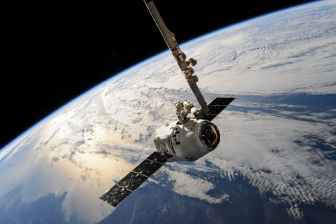
The Indian Space Research Organisation (ISRO) has successfully deployed the latest batch of 36 satellites for satellite operator OneWeb, aboard its heavyweight configuration Geosynchronous Satellite Launch Vehicle (GSLV)-Mk.III rocket. The launch marked the first commercial mission that used ISRO’s GSLV, also known as the Launch Vehicle Mark III (LVM3).
The collaboration is a result of ISRO’s commercial arm NewSpace India Limited’s two service contracts, signed with One Web for launching low Earth orbit (LEO) broadband communication satellites. ISRO said that as part of the contract, 36 satellites will be placed into orbit by one LVM3, from Satish Dhawan Space Centre in Sriharikota in Andhra Pradesh.
The mission marked the second launch of the year for OneWeb, backed by Bharti Enterprises, after the conflict in Ukraine disrupted the UK operator’s plan for completing its satellite launches this year. Prior to the Ukraine-Russia war, OneWeb was using Russia’s central space agency Roscosmos’ commercial launch services through its Soyuz rockets.
However, amid geopolitical sanctions imposed on Russia by nations including the UK, erstwhile Roscosmos head Dmitry Rogozin said that the OneWeb satellites would not be released back to the company — unless the UK government ceded to the nation’s demand of removing the sanctions.
India lost 159 billion dollars in 2021 due to heat waves.

India suffered an income loss of USD 159 billion, 5.4 per cent of its gross domestic product, in the service, manufacturing, agriculture, and construction sectors due to extreme heat in 2021, according to a new report.
Heat exposure in the country led to the loss of 167 billion potential labour hours, a 39 per cent increase, said the Climate Transparency Report 2022 compiled by an international partnership of organisations.
Labour productivity in India is projected to decline by five per cent from the 1986–2006 reference period if global temperatures increase by 1.5 degrees Celsius, it said. The decline in labour productivity will be 2.1 times more if the global temperatures increase by 2.5 degrees Celsius, and 2.7 times at a three degree Celsius scenario.
Losses to earnings from heat-related labour capacity reduction were the highest in India among G20 nations in 2021. Other countries include Indonesia (1.6% of GDP), and Saudi Arabia (1% of GDP).
How US is exporting Inflation to rest of the world.
The Federal Reserve is laser-focused on stemming price increases in the United States, but countries thousands of miles away are reeling from its hardball campaign to strangle inflation, as their central banks are forced to hike interest rates faster and higher and a runaway dollar pushes down the value of their currencies, reported CNN this month.
The Fed’s decision to raise rates by three-quarters of a percentage point at three consecutive meetings, while signalling more large hikes are on the way, has pushed its counterparts around the world to get tougher, too, according to the report.
The dollar is up 18% this year and last month hit a 20-year high, according to the benchmark ICE U.S. Dollar Index, which measures the dollar against a basket of key currencies.
The reasons for the dollar’s rise are no mystery. To combat soaring U.S. inflation, the Federal Reserve has raised its benchmark short-term interest rate five times this year and is signalling more hikes are likely. That has led to higher rates on a wide range of U.S. government and corporate bonds, luring investors and driving up the U.S. currency.
In effect, the US has been exporting inflation during its pandemic rebound. That underscores a profound change in the global economy. In the pre-Covid world, goods were abundant and the challenge was finding buyers.
In the new age of scarcity, that story has been flipped on its head.
Now there are signs that American consumers are dialing it back as the Federal Reserve ratchets up interest rates to cool the economy and combat inflation.
For the rest of the world, that may just create a different headache as the US switches to exporting inflation through another channel: the super-strong dollar.
With rates in the US rising much faster than in the euro zone and Japan, the dollar is soaring.
To be sure, consumer demand is just one cause of the worldwide spike in inflation—arguably not the main one even in the US, where Covid stimulus was largest.
Congratulatory Messages on the Launch of Mission LiFE from Heads of States/Governments
Prime Minister Shri Narendra Modi today launched Mission LiFE (Lifestyle for Environment), in the presence of the UN Secretary General António Guterres, at the Statue of Unity, Ekta Nagar, Gujarat. First proposed by the Prime Minister at COP 26, Mission LiFE is envisioned as an India-led global mass movement that will nudge individual and collective action to protect and preserve the environment.
As many as 10 heads of states, including France President Emmanuel Macron, UK Prime Minister Mary Truss, Guyana President Irfan Ali, Argentina President Alberto Fernandez, Mauritius Prime Minister Pravind Jugnauth, Madagascar President Andry Rajoelina, Nepal Prime Minister Sher Bahadure Deuba, Maldives President Ibrahim Mohamed Solih, Georgia Prime Minister Irakli Garibashvili and Estonia Prime Minister Kaja Kallas extended support to the LiFE movement.
Argentina:
Mr. Alberto Fernandez, President of Argentina
Good afternoon, ladies and gentlemen,
I am here in Buenos Aires but I didn’t want to be absent from this meeting convened by PM Modi. The world is experiencing unusual times. Times marked not only by a pandemic but also by a profound inequality. An inequality that results in concentration of wealth among a few while hunger spreads among millions of the world’s inhabitants. The world is also suffering from a crisis because of the use and wastage of non-renewable resources, which undoubtedly have detrimental effects upon the environment. It is also true that this concentration and the ongoing war has led to a problem of food security around the world that should draw the attention of all the countries and the international community. We must take a look at how to face this reality and that is why I think this initiative, LiFE, can be very helpful for us to find a way—because one of the ways is to ensure that governments and the civil society achieve the necessary consensus so that we can slowly emerge out of the crisis we are enduring. We must ensure that the world develops, that poverty reduces, that social equality is achieved and in order to accomplish that, we should aim at sustainable, innovative and above all environment-friendly production. Knowing that the leading democracy in the world, India, has undertaken the task of seeking a way out, I feel more at ease. And I would be remiss if my country didn’t join this initiative, this pursuit. Here we are supporting the LiFE initiative, so the objectives of Sustainability for Development 2030 can be made possible by everyone, by each inhabitant of this world.
Thank you
Watch the speech here:
Estonia:
Ms. Kaja Kallas, Prime Minister of Estonia
Dear Friends,
Namaste,
The need for collective response to address climate change and biodiversity loss is stronger than ever. We are grateful to Prime Minister Modi for his leadership, together with the UN Secretary General, in launching Mission LiFE. The power of change lies in working together towards a common goal and engaging all the people and communities on the planet. An excellent example of this is World Cleanup Day. It is an extensive one-day action that started in Estonia and has spread to 191 countries. At COP 27, we will call for even more countries to join us. By the way, India has been very active in World Cleanup Day. Last year, an amazing 1.2 million people took part in this initiative in India. That is impressive, thank you! Russia’s war against Ukraine has triggered global energy crises. This further underlines the need to move towards renewable energy and sustainability. We can achieve even more if we combine the green transition with the digital one. We have digitized the energy network in Estonia and see the potential this has for energy savings as well as innovation. It is time for profound change in our lifestyles; we need to place sustainability front and centre. I am glad that climate action is one of India’s G20 presidential priorities and I wish you successful presidency.
Watch the speech here:
France:
Mr. Emmanuel Macron, President of France
I wish I could be with you for this very special moment. The time when our world is subject to increasing geo-political tensions, we have no choice but to choose cooperation over division, for one single reason: No one can address global challenges, and especially climate change, on their own. The LiFE initiative is part of this agenda for stronger cooperation. I want to say a few words to wish you great success in its implementation. At the current pace, the global population will reach 9.6 billion by 2050. The equivalent of almost three planets could be required to provide natural resources needed to sustain current lifestyles. Governments, businesses, people, we must therefore all cooperate in rethinking our models and behaviours. Sustainable consumption is all about doing more—better is less. We are already on that track. The current surge in energy prices is leading many countries in Europe to take the path of sobriety. In France, we will reduce our energy consumption by 10% acting all over the board in transportation, housing, industries and other sectors. We need to meet this challenge together. But this would not be a temporary response before going back to our old ways. What we are talking about is a paradigm shift, because we will not reach Net Zero by 2050 if we don’t act on the demand side and substantially reduce our energy consumption. Beyond the current climate crisis, as the effects of climate change are already unfolding, every citizen should now be aware that it’s no longer possible to use natural resources such as water as if they were inexhaustible. We need to meet this challenge together by promoting ambitious public policies in all sectors, by launching coalitions of the willing. I am pleased, in that regard, that France and India agreed on leading a global initiative on the end of single-use plastic, and by fostering a common partnership between citizens committed to changing their lifestyles and therefore the world. With the LiFE initiative, Prime Minister Modi will give us this opportunity. France looks forward to working with India to make this initiative a success, including in the perspective of the Indian Presidency of the G20 next year. Thank you for this initiative and thank you for your attention and your commitment.
Watch the speech here:
Georgia:
Mr. Irakli Garibashvili, Prime Minister of Georgia
Excellency Shri Narendra Modi, Honourable Prime Minister of India,
Dear ladies and gentlemen and dear friends,
I am honoured and pleased to address this distinguish audience at today’s remarkable event and to congratulate India for taking the lead to launch this extraordinary mission in the beautiful city of Kevadia in India. Georgia welcomes and fully supports this global initiative timely introduced by his Excellency Narendra Modi. We promote an environmentally conscious lifestyle that focuses on the principle of mindful and deliberate utilization. In this regard we have taken significant steps to fulfill our international commitments as well as obligations under the EU-Georgia association agreement. To strengthen environment-related governance in the system, Georgia has improved its environmental-assessment systems and introduced more active public-participation mechanisms at the earliest possible stage of the environmental decision-making process. Major reforms have been carried out recently in the ambient air-protection field to improve air quality throughout the country. Georgia is one of the few countries worldwide where national forests are genuinely high-level national priorities, embedded in national policies and strategies. National forests, what Georgia has experienced, have significant increased. [. . .] 40 percent of my country’s territory is covered by forests, therefore, sustainable forest management is an important priority for our Government. We implement sustainable forest management that will support the ecological stability of forest ecosystems, enhance the socio-economic benefits for the public and reduce the pressure on forests. In order to address the negative consequences of climate change, Georgia in accordance with the Paris Agreement has updated its Nationally Determined Contributions’ document. We set a new 2030 climate-change strategy and an action plan for mitigation measures. I am proud to state that our country stays committed to intensive reforms for the better protection of the environment, biodiversity, and national and international climate goals. I strongly believe that together we can achieve a common goal and save our planet.
Thank You.Watch the speech here:
Guyana:
Mr. Irfaan Ali, President of Guyana
Our planet is under threat, where 75% of earth’s land has substantially degraded. [. . .] Collective action is the need to protect our environment. Here in Guyana, we have started—our forest is the size of England, storing 19.5 gigatons of carbon; we have one of the lowest deforestation rates in the world. So we are leading by example and we are building Guyana on a low carbon development strategy 2030. Those not only look at the environmental value of what we have but also look at how we can improve livelihood options, create new livelihood options for forest and communities and help people to become prosperous and at the same time safeguarding our environment. I wish to extend my best wishes to the Prime Minister of India, Narendra Modi, on the launching of the Mission LiFE logo and document, which seek to mobilize one billion Indians to become Pro Planet People by 2027, who will practice simple environment- and climate-friendly behaviours in their daily lives. Congratulations, India, for taking the lead and pioneering this movement. Guyana is committed to protecting and promoting green economic activity through actions that support the Sustainable Development Goals. Simple actions taken every day by citizens across the globe will help to harness the full potential of this collective action. We must do everything within our power, to protect and preserve the environment by making the necessary lifestyle changes. All of us have an individual and collective responsibility, as a family of humanity, to do our part for protecting and safeguarding our environment, so that future generation can enjoy the beauty of world we live in.
Thank You.Watch the speech here:
Madagascar:
Mr. Andry Rajoelina, President of Madagascar
Your Excellency, Mr. Prime Minister of India, Mr Secretary-General of United Nations,
Ladies and Gentlemen,
Climate change and the preservation and protection of environment are subjects that are particularly close to my heart. As I announced at the 77th United Nations General Assembly, the solutions must come from each nation, each leader and each citizen. But above all, the emitting countries must keep their commitments. This requires a common effort from each country to preserve our planet. We all know that forests are often called the “lungs of the planet”. However, the use of charcoal and firewood remains a common practice throughout the African continent in general, and in Madagascar in particular.
In my country, the use of charcoal for cooking impacts the destruction of 1ha of forest per year. This is devastating. This is why we are launching a fight against deforestation with the promotion of “clean cooking” to drastically reducing the use of charcoal. To do this, we will promote the use of bioethanol stoves as an alternative in every home. It is by changing practices and mentalities that we can change things. I am convinced that LiFE could become one of the turning points in our fight against the climate crisis. I thank India, through its Prime Minister, who is an inspiring leader in environmental protection, for bringing us together for this cause. It is with hope and conviction that I join you in this Mission. Together, let’s commit ourselves to sustainable development, for a better world for our children.
Ladies and gentlemen, it is time to transform our speeches into concrete actions! Thank you for your attention.
Watch the speech here:
Maldives:
Mr. Ibrahim Mohamed Solih, President of Maldives
Greetings,
One of the greatest breakthroughs we have made in recent years is to recognize that a clean, healthy and sustainable environment is a fundamental human right. [. . .] It is time we unpack the lessons left behind by our ancestors. They taught us that love and respect for our natural heritage are essential for a sustainable future. [. . .] Prime Minister Modi’s Mission LiFE couldn’t have come at a more crucial juncture. The ill effects of the climate crisis come at us with full force. [. . .] This ambitious initiative is a call for action. Let’s not end here. You see the best chances of our survival are in our own hands, together, let’s reflect on our lifestyles and make swift changes towards eco-friendly habits. Simple things in our everyday lives such as choosing to walk more on instead of driving, or planting trees wherever we can, can redress environmental degradation. Individual actions may appear insignificant on their own but when pooled together they have the power to spur transformative effects. [. . .] We will do our part to make sure the health and wealth of our planet survive to benefit tomorrow’s generations.
Watch the speech here:
Mauritius:
Mr. Pravind Jugnauth, Prime Minister of Mauritius
Governments are joining hands with businesses around the world to address environmental issues. However, policy reforms and economic initiatives are not enough to save our planet. Lifestyle changes at the individual level and behavioral changes at the community level are needed to reduce the strain on the environment. I, therefore, strongly support the movement launched by Prime Minister Narendra Modi to build on good practices at the level of individuals, communities and institutions in order to accelerate the transition to the most sustainable future. If human activities continue at the present pace, by 2050 we will need free planets to sustain our lives. Business is as usual no longer an option. Allow me to end with a quote of Mahatma Gandhi: “The world has enough for everyone’s needs but not for everyone’s greed.”
Watch the speech here:
Nepal:
Mr. Sher Bahadur Deuba, Prime Minister of Nepal
I congratulate Prime Minister Narendra Modi and the Government of India for advancing the idea for Lifestyle for Environment. This is a pioneering movement that can help in fighting climate change and achieve SDGs. To build on the idea that positive changes, individual actions and behaviors are the key parts of the climate solutions that world urgently needs, I thank the organizer for giving Nepal an opportunity to express our support for the pioneering movement such as LiFE. And express the need to collectively save our planet, for a better future for our people.
Thank you very much.
Watch the speech here:
UK:
Ms. Elizabeth Truss, Prime Minister of the UK
Last year, the world came together to UK to sign the Glasgow Climate Change Pact. It was a landmark deal—it showed that governments are ready to take decisive action on climate change and we must all keep increasing our ambition. Now the energy crises are showing once again that we need to go further and faster. As democracies, we must work together to secure energy independence and protect our economies. That’s why we are turbo-charging our rush to renewables; we are investing with partners like India to help build vital climate infrastructure. And we are working together to turn our Net-Zero commitments into actions. It’s a real pleasure to join Prime Minister Modi in launching their LiFE initiative today and I commend India’s leadership. This is all about helping people make greener choices and live more sustainable lives. So let’s keep making this long-term choices, let’s keep leading the way and let’s take another big step to move forward together. We shall meet next month with India’s G20 presidency next year.
Watch the speech here:
***
set up manufacturing units in India & develop technology collaborations to create a global supply chain free from vulnerabilities
Raksha Mantri Shri Rajnath Singh has invited US companies to set up manufacturing units in India and develop technology collaborations with Indian industries to create a global supply chain free from vulnerabilities and uncertainties. He was addressing a seminar jointly organised by US-India Business Council (UIBC) and Society of Indian Defence Manufacturers (SIDM) as part of the 12th DefExpo in Gandhinagar, Gujarat on October 20, 2022. The seminar was organised on the theme ‘New Frontiers in US-India Defence Cooperation: Next Generation Technology, Innovation & Make in India’.
Shri Rajnath Singh stated that the Indian defence industry has been witnessing transformative changes for the last eight years through progressive reforms. He stressed that these reforms have created a conducive environment for the growth of the Indian Industry through transparency, predictability and institutionalisation of several measures for Ease of Doing Business.
The Raksha Mantri emphasised that the path to ‘Aatmanirbhar Bharat’ is a comprehensive set of policy frameworks that seeks to build indigenous technological and production capacity & capability with cooperation, participation and collaborations with reputed institutions and Original Equipment Manufacturers (OEMs) from friendly nations. He said, the idea is to manufacture in India for the Indian market as well as export to the friendly countries, i.e., ‘Make in India, Make for the World’.
“The main objective is to fulfil the requirements of Indian Armed Forces; and at the same time, create long-term linkages to the global supply chains of the foreign OEMs to meet global demands. Through these linkages, India looks forward to collaborating for a secure and resilient global supply chain for the free world to ensure uninterrupted and reliable access to defence equipment and other strategic materials for our nation and our partners, including the US. As India’s defence base grows, private sector companies from the US can explore the vast potential for ‘Creating in India’ and ‘Exporting from India’,” Shri Rajnath Singh said.
The Raksha Mantri highlighted a number of steps taken by the Government to achieve the objective, including increase in the number of procurement categories to encourage greater participation of the Indian Industry and attract foreign companies to manufacture in India. “We are delighted to work with US, our valued partner, to strengthen our commercial and strategic relationship and to attract US investment for creating a high-technology defence production ecosystem in India. For India, collaboration with US companies would be an important strategic force multiplier, apart from being wealth and job creator,” he added.
Shri Rajnath Singh termed the easing of FDI regulations and introduction of Buy (Global–Manufacturer in India) in Defence Acquisition Procedure 2020 as an invitation for the US businesses to participate in the opportunities offered by the Indian defence industry. He asserted that US companies can now set up manufacturing facilities, individually or in partnership with Indian companies, through a Joint Venture or technology agreement etc., to capitalise on the ‘Make in India’ opportunity. He exuded confidence that the firms will find India to be an attractive investment destination for defence manufacturing.
The Raksha Mantri described the Positive Indigenisation Lists, in which a wide spectrum of equipment/systems are included, as another major step towards creating a mature defence industrial base in the country. The list has also given impetus to domestic Research & Development by attracting fresh investment into technology and manufacturing capabilities by providing a measure of demand assurance to the manufacturers in India, he said.
Shri Rajnath Singh shed light on the importance of defence exports, terming it as a key pillar for the long-term sustainability of the domestic defence industrial base. Domestic demand alone may not always provide economies of scale to make profitable investments and sustain them, he said. The Raksha Mantri added that $5 billion dollar export target set for 2025 reflects the intent of the Government for export-oriented manufacturing.
The Raksha Mantri described the project agreement to co-develop Air-Launched UAVs, under the auspices of the India-US Defence Technology and Trade Initiative, as a welcome development. He stated that industries from both sides can explore additional DTTI projects, such as a counter unmanned aerial systems and an Intelligence, Surveillance, Target Acquisition and Reconnaissance platform.
Shri Rajnath Singh pointed out that Indians have played a stellar role in technological development of US, be it IT sector, bio-technology, space or cyber technology, besides contributing in the fields of business and finance. Stating that the US provides a conducive environment for talent to perform and has reaped the benefits thereof, he urged US business and technology leaders to collaborate with Indian industries to create a similar growth miracle in India. He stressed that developing new avenues to work together at the industrial, scientific and academic levels will be key to ensuring that India-US defence ties remain dynamic.
*******
Russia showed a great gesture of friendship towards India by recognising the disputed area as integral part of Indian region.
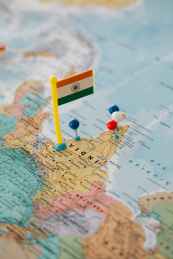
Moscow: India’s friend Russia has recognized Jammu and Kashmir, Ladakh and Arunachal Pradesh as an integral part of India. This has been seen in the map of SCO member countries issued by the Russian government. According to media reports, the map released shows Pakistan-occupied Kashmir (POK) and Aksai Chin as well as the entire Arunachal Pradesh as part of India. Despite Pakistan and China being member countries of the SCO, Moscow has taken this step.
This map has further strengthened the Indian side on the issue of Jammu and Kashmir at the international level and within the SCO.
The Soviet Union and Russia have backed India on Kashmir since 1947 and have used veto in the UNSC to block anti-India resolutions. Moscow has repeatedly said Kashmir was a bilateral issue between India and Pakistan, preventing any internationalisation of the dispute.
Rupee slides to record low at 83 against US dollar.
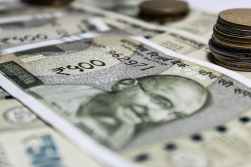
The rupee plunged 61 paise to decline below the 83-mark for the first time against the US dollar on today amid unabated foreign capital outflows and a strong dollar in the overseas markets.
Besides, rising crude prices in the international markets and risk-averse sentiment among investors weighed on the local currency, traders said.
The consumer price index rose 10.1 per cent, compared with 9.9 per cent the previous month, the Office for National Statistics said Wednesday. The new data shows inflation returned to the July peak and is once again at the highest since early 1982. The increase was driven by food prices, which leapt by 14.5 per cent from a year earlier, the biggest jump since 1980, the ONS said.
The US dollar held at a 32-year peak against the yen and rose from a two-week trough against a basket of major peers, underpinned by expectations of aggressive US Federal Reserve interest rate hikes.
What is 'ONDC' initiative by GoI.

To reduce the dominance of e-commerce giants like Flipkart and Amazon, the government rolled out its big initiative — Open Network for Digital Commerce (ONDC) — for public in Bengaluru. With the help of ONDC, government plans to help small retailers and create an alternative to dominant global giants like Amazon and Walmart, who controls over half of India’s fast-growing e-commerce market.
The platform aims to create new opportunities, curb digital monopolies and by supporting micro, small and medium enterprises and small traders and help them get on online platforms. It is an initiative of the Department for Promotion of Industry and Internal Trade (DPIIT) under the Ministry of Commerce and Industry.
The government says existing platforms work in silos and are tightly controlled, keeping out many small players. It expects ONDC to increase competition and foster innovation by start-ups.
It also hopes to bring in logistics firms and others who can collaborate with sellers to deliver products to customers.
The focus would be on small merchants and rural consumers, with apps in Indian languages.
ONDC officials liken the network to a mall with 1,000 gates instead of just two, thereby limiting opportunities for selected sellers to receive preferential treatment – a common accusation against major e-commerce companies. Users will be able to rate service providers on ONDC, which will be applicable and visible across the network. The government says ONDC will help to end “predatory pricing, especially in high-margin, high-value products”. Amazon and Flipkart deny that they have engaged in predatory pricing.
How does ONDC work?
The ONDC platform lies in the middle of the interfaces hosting the buyers and the sellers. So far, the buyer side interface is being hosted by Paytm, whereas the seller side interface is being hosted by other players like GoFrugal, etc.
When a buyer searches for an item on the Paytm app, from where ONDC has gone live, the app will connect to the ONDC platform, which will connect it to seller side interfaces that will list all the companies from where you can buy the particular item.
On ONDC, there will be several other backend partners such as logistics service providers, enterprise resource planners, e-commerce store hosting service providers, etc.
India set a new record by exporting cellphones more than $1 billion worth in september month

Monthly mobile phone exports from India touched the $1-billion mark (over ₹8,200 crore) for the first time ever in September. They were boosted by the government’s production-linked incentive (PLI) scheme, which has pushed global players such as Apple and Samsung to increase local production for the domestic as well as overseas markets.
According to data available, mobile phone exports for April-September more than doubled to $4.2 billion, from $1.7 billion in the corresponding period of 2021. Previously, the highest monthly export of cellphones was in December 2021, when devices worth $770 million were shipped. Exports hovered around $700 million each month during June-August this year.
The growth in exports is primarily driven by Apple contract manufacturers Foxconn, Wistron and Pegatron as well as Samsung; these companies are the leading global participants of the government’s Rs 40,995-crore PLI scheme announced by the government in April 2020.
20th Annual Convocation of NITK Surathkal
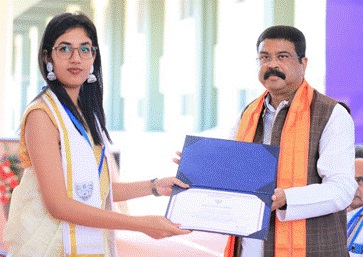
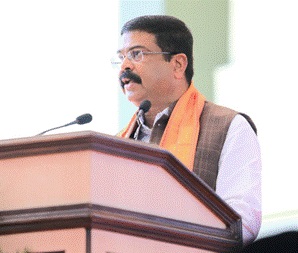
Union Education and Skill Development Minister, Shri Dharmendra Pradhan addressed the 20th Convocation ceremony of NIT Surathkal today.
Speaking about NEP2020, he said that it is the philosophical document of the 21st century that aims to assimilate ancient with the modern and strive to produce well-rounded citizens of the world. He also made a special mention of Swami Vivekananda and his guiding philosophy.
He recalled the Prime Minister Shri Narendra Modi’s call for “Jai Anusandhan” from his last Independence Day address to the nation. The aim is to place India among developed nation by 2047 when the country celebrates a 100 years of independence from British rule, he added.
Shri Dharmendra Pradhan encouraged NIT Surathkal to create a full-fledged Sustainable Energy Department in order to make the technology institute a leading lighthouse in energy transition of the country within a decade.
Shri Pradhan spoke about the key areas like Artificial Intelligence, Machine Learning, data analytics, electronics, genome editing, 3 D Printing that are the way forward for Industry 4.0. He said that India will play a key role in future development of humanity and restore its glory as a Vishwa-Guru.
During this visit, the Minister inaugurated the newly constructed Central Research Facility (CRF) and School of Interdisciplinary Studies [CoEs] building” with a total area of 10,394 square meters and a cost of 48 crores and laid the foundation stone for “Construction of Lecture Hall Complex – Block -D” with the built-up area of 11,246 square meters and a cost of 54.76 crores in the presence of Shri Nalin Kumar Kateel, MP, Dakshina Kannada, Dr. Y. Bharath Shetty, MLA, Mangalore North, & Prof. Prasad Krishna, Chairperson- BOG & Director(A/C) NITK.. The Central Research Facility (CRF) is already established with a loan of 80 Crore rupees from the Higher Education Finance Agency (HEFA) of the Indian government.
This Convocation awarded degrees to a total of 1787 applicants, including 126 Ph.D., 817 PG, and 844 B.Tech candidates. 249 B.Tech students additionally received a Minor in other areas in addition to their B.Tech degrees. NITK awarded B.Tech (Honors) degrees for the very first time. In this convocation, nine B.Tech students and thirty PG students earned the Institute Gold medals and medals sponsored by other entities for achieving the best CGPA. Shri Dharmendra Pradhan presented the medals to the NITK graduands.
*****
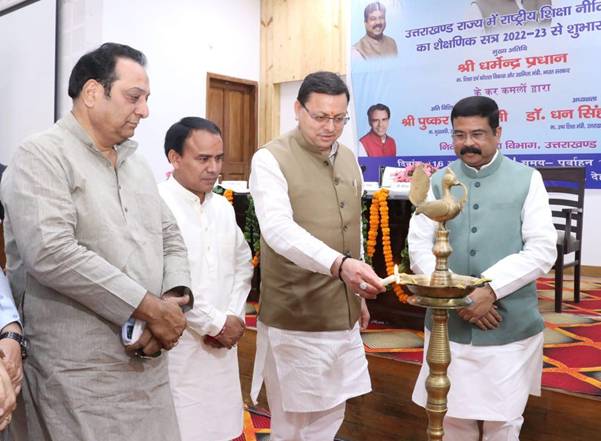
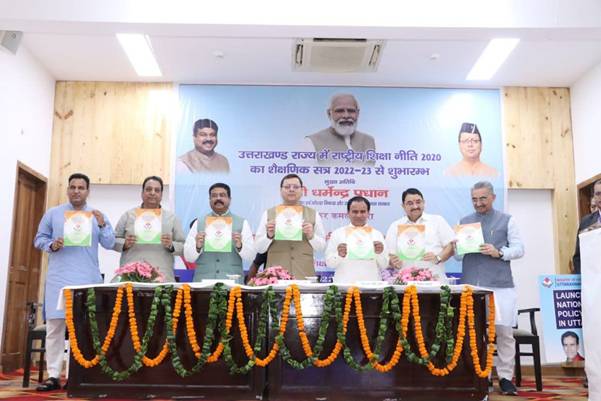
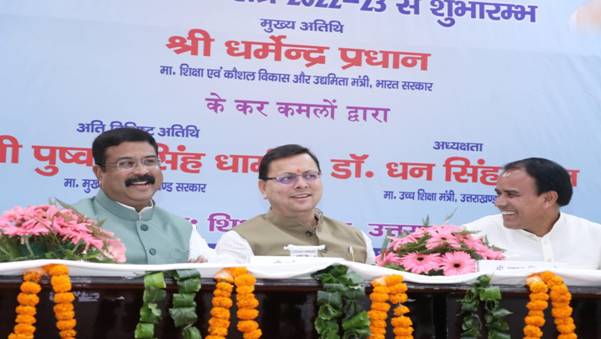
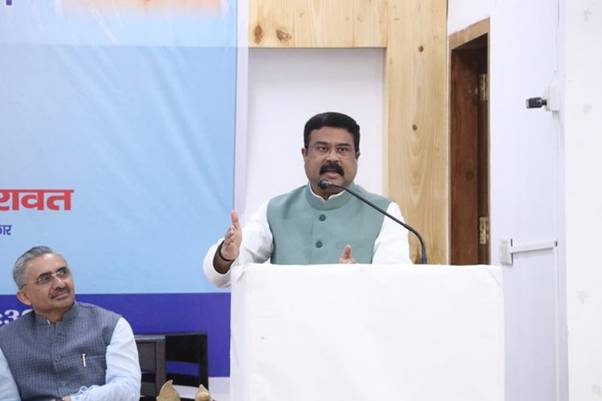
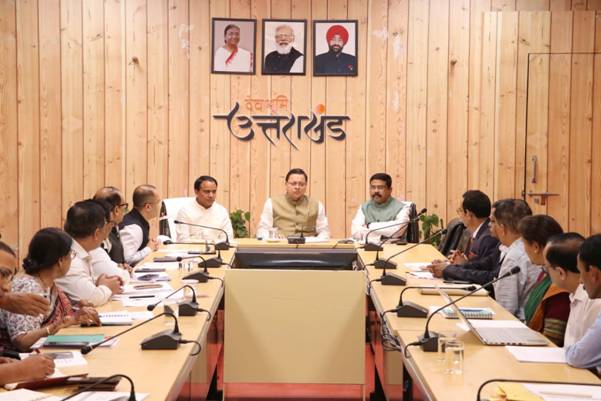
Programme for the implementation of National Education Policy 2020 in Uttarakhand
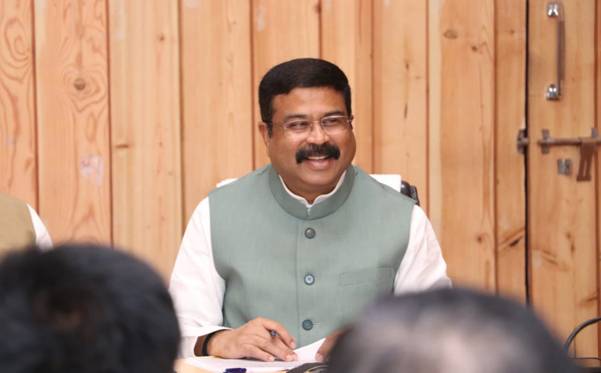
Union Education and Skill Development and Entrepreneurship Minister Shri Dharmendra Pradhan along with CM of Uttarakhand, Shri Pushkar Singh Dhami; Minister of Health, Education and Cooperative of Uttarakhand Dr. Dhan Singh Rawat and senior officials of Government of Uttarakhand, participated in the launch of National Education Policy 2020 in Uttarakhand from the academic session 2022-23.
Global Hunger Index report is an attempt to tarnish India's image : says GoI.
The government has yet again rejected the Global Hunger Index (GHI) 2022 which ranks India 107 among 121 countries and has called it “an erroneous measure of hunger” and an attempt to “taint” India’s image. It also wrongly claims that the ranks are based on an opinion poll.
“Three out of the four indicators used for calculation of the index are related to health of Children and cannot be representative of the entire population,” says the press statement issued by the Ministry of Women and Child Development. This is the second year in a row the government has rejected the GHI rankings.
The GHI scores are calculated using four indicators — undernourishment, child stunting, child wasting and child mortality.
It adds that that the fourth indicator, estimate of Proportion of Undernourished (PoU), population is based on an opinion poll conducted on a very small sample size of 3000 based on “Food Insecurity Experience Scale (FIES)” Survey Module of Food and Agriculture Organisation- a claim that was also rejected last year by representatives of the Global Hunger Index.
The government said the data used to arrive at the rating drawn from a narrow sample for a country of India’s size and through dubious methods is not only wrong & unethical, but it also reeks of obvious bias. It also accused the Concern Worldwide and Welt Hunger Hilfe, the publishing agencies of the Global Hunger Report, of not having done their due diligence before releasing the report.
The central government highlighted the prejudice and erroneous method used by the agency, pointing out how irrelevant, and questions not searching for factual responses were used in the survey to arrive at the Hunger Index.
India has slipped to 107th rank in Global Hunger Index(GHI).

India has slipped to the 107th position in the Global Hunger Index (GHI) in 2022, down from the 101st position in 2021. The GHI, jointly published by Concern Worldwide and Welthungerhilfe, comprehensively measures and tracks hunger at the global, regional, and country levels. Of the 121 countries on the GHI, India is ranked behind its neighbours Nepal (81), Pakistan (99), Sri Lanka (64), and Bangladesh (84).
The Global Hunger Index score is calculated on four indicators – undernourishment, child wasting (the share of children under the age of five with low weight for their height), child stunting (children under the age of five with low height for their age) and child mortality (the mortality rate of children under the age of five).
India’s global hunger index score is 29.1, which puts the country in the “serious” category of hunger problems. India’s score has improved slightly from last year’s 27.5. However, in 2000, India’s score was a much better 38.8 points. NB
The index calculates the hunger levels and malnutrition across the world. This year, the report accessed data from 136 countries but evaluated 121 of them. The report on the index said that sufficient data was not available for the remaining countries.
 Eduindex
You must be logged in to post a comment.