ECLECTIC COUNSELING

ECLECTIC COUNSELLING
INTRODUCTION
Counseling is a generic service of student’s personal work having a wide range of activities and includes faculty advising, counseling in psychological clinics, mental hygiene and other specialized types of counseling. It is a body of techniques which helps young individuals to grow up normally through guided learning. Counseling has proved to be very useful for the development of an individual student. Colleges and Universities, industries and business establishments are becoming increasingly interested in counseling and its potential for improving interpersonal relationships. “Counseling is a dynamic and purposeful relationship between the people in which procedures vary with the nature of the student’s needs, but in which there is always mutual participation by the counselor and the student with the focus up on self-classification and self-determination by the student. ”
Counseling is classified in to different types. This division is done based on the nature of the counseling process and the part of the counselor. There are three main types of counseling. They are directive, non-directive and eclectic counseling. In directive counseling counselor is active. In non-directive, counselor is passive.

ECLECTIC COUNSELING
Eclectic counseling is defined as the synthesis and combination of directive and non-directive counseling. It represents a middle status between the two extremes represented by the ‘non-directive’ technique on one hand and the ‘directive’ technique on the other. In eclectic counseling, the counselor is neither too active as in the directive counseling nor too passive as in the non-directive counseling. He just follows the middle path between these two.
The chief advocate of this type of counseling is Thorne. In eclectic counseling, the needs of a person and his personality are studied by the counselor. After this the counselor selects those techniques, which will be useful for the person. The main techniques used are reassurance giving information, case history, testing etc.
In eclectic counseling the counselor first takes into consideration the personality and need of the counselee. He selects the directive or non-directive technique that seems to serve the purpose best. The counselor may start with the directive technique. When the situation demands, he may switch over to the non-directive counseling and vice-versa. An attempt is made to adjust the technique to the requirements of the situation and the individual.

Steps in Eclectic counseling
The leading exponent of the Eclectic counseling Thorne, suggested the following in the process;
1) Diagnosis of the cause.
2) Analysis of the problem.
3) Preparation of a tentative plan for modifying factors.
4) Securing effective conditions for counseling.
5) Interviewing and stimulating the client to develop his own resources and to assume its responsibility for trying new modes of adjustment.
6) Proper handling of any related problems which may contribute to adjustment.

Assumptions of Eclectic Counseling
1) In general, passive methods should be used whenever possible.
2) Active methods may be used with specific indications.
3) In the early stages when the client is telling his story, passive techniques are usually the methods of choice. This permits emotional release.
4) Until simple methods have failed, complicated methods should not be attempted.
5) All counseling should be client centered.
6) Every client should be given an opportunity to resolve his problems indirectly. Inability of the client to progress through therapy as using passive methods alone is an indication for utilizing more directive methods.
7) Directive methods are usually indicated in situational mal adjustment where a solution cannot be achieved with out co-operation from other persons.

Characteristic of Eclectic Counseling
1) In this, objective and coordinating methods are used.
2) In the beginning of counseling, client-active methods are used and the counselor remains passive.
3) In this, more importance is assigned to the job efficiency and treatment.
4) In this, the principle of low expenditure is emphasized.
5) In such counseling, for the use of all the methods and techniques, the professional efficiency and skill of the counselor are must.
6) Keeping in mind the need of the client, it is decided whether directive method or non-directive methods should be used.
7) Making an opportunity available to the client is insisted so that he may find himself the solution of the problem.

Disadvantages of Eclectic Counseling
1) Some people are of the view that eclectic counseling is vague, opportunistic and superficial.
2) Both directive and non-directive counseling cannot be mixed together.
3) In this, the question arises how much freedom should be given to the client? For this there is non-definite rule.
4) The problem with an eclectic orientation is that counselors often do more harm than good if they have little or no understanding about what is helping the client.

Hierarchy of Eclectic Practices
McBride and Martin advocate a hierarchy of eclectic practices and discuss the importance of having a sound theoretical base as a guide. The lowest or first level of eclecticism is really syncretism – a sloppy unsystematic process of putting unrelated clinical concepts together. It is encouraged when graduate students are urged to formulate their own theories of counseling without first having experienced how tested models work. The second level of eclecticism is traditional. It incorporates “an orderly combination of compatible features from diverse sources harmonious whole“. Theories are examined in greater depth. On a third level, eclecticism is described as professional or theoretical or as theoretical integration.
This type requires that counselor master at least two theories before trying to make any combinations. A final level of eclecticism is called technical eclecticism. In this approach, procedures from different theories are selected and used in treatment.

CONCLUSION
F.C. Thorne, who is the exponent of this view, finds that it is possible for a counselor to alternate between directive and non-directive methods even in the same interview without disrupting the non-directive permissive relationship with the client. He selects the techniques according to the requirements of the situation and the individual. The counselor must be competent and proficient in the use of all available methods. The validity of the results is determined by the skill with which any method is used. The critical factor is not what method is used but rather the skill with which it is used.
(Notes in OHP Sheets)
Eclectic Counseling
– Synthetic and combination of directive and non-directive counseling
– Counselor is neither too active nor too passive
– Chief advocate: Thorne
– Counselor studies the personality and needs of client based on the need of client, eclectic counseling is used
-techniques used are:
· Reassurance
· Giving information
· Case history
· Testing
Counselor starts with directive technique, then switches on to the non-directive technique.

Steps in Eclectic Counseling
1) Diagnosis of the cause
2) Analysis of the problem
3) Preparing tentative plans for modifying factors.
4) Securing effective conditions for counseling
5) Stimulating the client to develop his own resources and trying new models of adjustment.
6) Proper handling of related problems which help in adjustment.

Assumptions of Eclectic counseling
1) Passive methods must be used whenever possible.
2) Active methods are used only with specific indications.
3) In the early stages when the client is telling his stories passive methods are used. It permits emotional release.
4) Complex methods are used only when simple methods fail.
5) Client-centered
6) Client is given opportunity to resolve his problems indirectly.
7) Directive methods are used where co-operations of other persons are needed for the solution.
Characteristics of Eclectic Counseling
1) Objective and coordinating methods are used.
2) In the beginning client active methods are used
3) Counselor remains passive.
4) Importance is given to job efficiency and treatment.
5) Principle of low expenditure.
6) Professional efficiency and skill of counselors are must.
7) Based on the need of client, directive and non-directive methods are used.
8) Provide opportunity to client to find solutions to his problems himself.
Disadvantages of Eclectic Counseling
1) It is vague, opportunistic and superficial.
2) Directive and non-directive cannot be mixed.
3) How much freedom should be given to the client?
4) Lack of skill of counselor can do more harm than good.
[ REFERENCES
1) Guidance and Career Counseling (A.K Nayak., V.K Rao.)
2) Principle of Educational and Vocational Guidance (K .Sharma.)
3) Elementary Guidance and Counseling (Rashmi Agarwal)
4) Fundamentals of Guidance and Counseling (R.A. Sharma)
5) The Basic Essentials of Counseling (Indu Dave)
6) Guidance and Counseling (Indira Madhukas)
]

DIRECTIVE COUNSELLING

DIRECTIVE COUNSELLING
In this type of approach the counselor plays an important role .A major goal is to replace the emotional behavior of the individual with deliberately rationale behavior .Although he avoids dictatorial advice .This approach is also known as counselor-centered. Under this process the counselor plans the counseling process, his work is to analyze the problem, identify the triggers identify the exact nature of the problem and provide various options.
Williamson was a great profounder of this kind of approach as he stated that this approach is good to address the problems relating to educational and vocational adjustment.This type of counseling is a concept,where educational and vocational guidance relate to the personality dynamics and interpersonal relationship.This type pf counseling is more useful where the individual wants information and advice for choice of a career.This approach does not focus its attention on personality development as such.
Steps of Directive counseling:-
Williamson has given six steps Directive counseling:
1)Analysis :It includes collection of information about the individual which can be collected through structured interviews,psychological case history methods, Interaction with family members, friends, etc.
2) Synthesis: After collection of lot data the information is organized in the logical manner to analyse the individual in terms of his qualifications, assets, potentials, liability adjustment, cultural background, habits etc.
3) Diagnosis :The diagnosis consists of the interpretation of the data in relation to the nature and problem, the causes of problems.
4)Prognosis: Under this step a prediction is made about the future development of the problem.
5)Counseling : The counseling here is to bring about adjustment and re-adjustment to the individual in relation to his problem. Attitudes and interest of the individual are considered during the counseling.It emphasis the individual to develop life cycle where an effort in the positive direction could lead to success and success in turn could lead to further efforts and motivations.
6)Follow -up :The sixth step in directive counseling is follow up which is extremely important. An individual may be able to solve immediate problems through counseling but new problems may occur or the original problem may re-occur. Follow-up with the client is extremely necessary. The role of counselor is important as he has to make the individual understand and accept his strength and also his weakness and faults.
That technique is considered as a most economic approach and important for student counseling because it is less time consuming and student who lack experience are easily influenced by the counselor’s experience and specialize knowledge. The students feel that the counselor has superior Knowledge and therefore a professional relation takes place. The relation is the base of this kind of approach. A submissive and highly emotionalized counseling of student can cultivate self-confidence in the individual. A relationship is based on dignity to help the student to reach his goal.
Directive or Counselor-centered or prescriptive counseling: Counselor-centered counseling revolves around the counselor. He tries to lit good relations to the friendship and assistance. In this, the counselor is active and he expresses his ideas and attitudes independently. He evaluates expressions of the client. According to this view point the counseling interview .In this, the counselor asks a series of standardized questions. Each carries a short answer. The counselor does not allow the development of expression and feelings. He leads as an expert, evaluates and gives suggestion vice.
I Basic Assumptions of Directive Counseling :
According to Willy, the following can be the basic assumptions of directive counseling-
a) Competency in giving Advice-: The counselor posses the best training experience and information. He is more competent to provide an advice to problem.
b) Counseling as an intellectual process -: An client’s intellectual is not destroyed as a result of mal-adjustment. Hence counseling is primarily an intellectual process .It stresses upon the intellectual aspects of a person instead of emotional aspects of the personality.
c) Counseling objectives as problem solving situation-: The objective counseling are achieved through problem solving situation.
d) Client’s incapability of solving the process-: The counselor does not posses the capability for solving the problem always.
Advantages of Directive counseling:
1) This method is useful from the time consuming view- point .It saves time.
2) In this type of counseling, there is more focus on the problem and the person.
3) The counselor can look the client directly.
4) Counseling focuses more on the intellectual aspects of the person than emotional aspect of the personality.
5)In this process, the counselor becomes readily available to help which makes the client very happy.
Limitations of Directive counseling-:
1) In this process the client is more dependent. He is also less able to solve new problems of adjustment.
2) As the client is never independent of the counselor, it is not an efficient best guidance.
3) Unless and until a person does not develop some attitude through experiences, he cannot make any decision himself.
4) The counselor fails in serving the client to commit the mistakes in future
CONCLUSION
As the client was in need of some information regarding his vocation, counselor provided that to the best of his knowledge. He wanted to select a direction and the counselor helped him in choosing that the counselor gave some alternatives in the same line so that the client may be able to select avocation according to his choice and can choose a career if he is not able to go for IIT.
During counseling, the counselor tried to explore the reason for his choice of vocation, like why is he motivated towards this job? Is his selection worthy and genuine?

[ References:
1) Elementary Guidance and counseling
-Rashmi Agrawal
2) Guidance and counseling
-R.A. Sharma
3) Guidance and counseling skills
-Ramesh Chathurvedi ]

Couseling at High School

Couseling at High School
Reference:-
1. S.Narayana Rao- Counselling and Guidance,Second edition, (1997)Tata McGraw –Hill Publishing Company Limited.NewDelhi. Page No. 205 – 206
2. Guidence and counseling by S. NageswaraRao, Murugudu Sree Hari, Digumarti Bhaskara Rao (2004), Discovery Publishing House, New Delhi (Page No. 82 – 85)

Aims and Objectives of Counseling

Aims and Objectives of Counseling
Counseling aims at helping the clients understand and accept themselves “as they are”, And counseling is to help the student to help himself.
The main objective of counseling is to bring about a voluntary change in the client. For this purpose the counselor provides facilities to help achieve the desird change or make the suitable choice.
According to Dunsmoor and miller, the purpose of student counseling are :-
1. To give the student information on matters important to success.
2. To get information about student which will be of help in solving his problems.
3. To establish a feeling of mutual understanding between student and teacher.
4. To help the student work out a plan for solving his difficulties.
5. To help the student know himself better-his interests, abilities, aptitudes, and oppurtunities.
6. To encourage and develop special abilities and right attitudes.
7. To inspire successful endeavor toward attainment.
8. To assist the student in planning for educational and vocational choices.
Counseling Goals
The goal of counseling is to help individuals overcome their immediate problems and also to equip them to meet future problems. Counseling, to be meaningful has to be specific for each client since it involves his unique problems and expectations. The goals of counseling may be described as immediate, long-range, and process goals. A statement of goals is not only important but also necessary, for it provides a sense of direction and purpose. Additionally it is necessary for a meaningful evaluation of the usefulness of it.
The counselor has the goal of understanding the behavior, motivations, and feelings of the counselee. The counselor has the goals are not limited to understanding his clients. He has different goals at different levels of functioning. The immediate goal is to obtain relief for the client and the long-range goal is to make him ‘a fully functioning person’. Both the immediate and long- term goals are secured through what are known as mediate or process goals.
Specific counseling goals are unique to each client and involve a consideration of the client’s expectations as well as the environmental aspects. Apart from the specific goals, there are two categories of goals which are common to most counseling situations. These are identified as long-range and process goals. The latter have great significance. They shape the counselee and counselors’ interrelations and behavior. The process goals comprise facilitating procedures for enhancing the effectiveness of counseling. The long range –goals are those that reflect the counselor’s philosophy of life and could be stated as
1. To help the counselee become self-actualizing.
2. To help the counselee attain self-realization.
3. To help the counselee become a fully –functioning person.
The immediate goals of counseling refer to the problems for which the client is seeking solutions here and now. The counselee could be helped to gain fuller self- understanding through self – exploration and to appreciate his strengths and weaknesses. The counselor could provide necessary information but however exhaustive, may not be useful to the client unless he has an integrative understanding of himself vis-a-vis his personal resources and environmental constraints and resources.
There is an inter relation between the long-range and immediate goals as both depend on the process goals for their realization. The process goals are the basic counseling dimensions which are essential conditions for counseling to take place. They comprise empathic understanding, warmth and friendliness which provide for inter personal exploration which in turn helps the client in his self-exploration and self-understanding and eventually lead to the long range goals namely self-actualization, self- realization and self enhancement.
Discussing the goals of counseling, Parloff (1961) distinguishes between immediate and ultimate goals according to him the former refers to the steps and stages in the counseling process which lead to the realization of the ultimate goals. Patterson (1970) suggests a third level of goals namely intermediate goals in addition to mediating and ultimate goals. Ultimate goals refer to the broad and general long term outcomes like positive mental health. Intermediate goals are explained by the reasons for seeking a counselor’s help and immediate goals as those that refer to the present intentions of the counselee. A major criticism leveled is that goals such as self- actualization, actualizing potentialities, etc., are too general and amorphous and hence not useful in actual practice. Krumboltz (1966) holds that an operational definition of terms would be a more useful approach. He suggests that a general concept could be reduced to specific objective and measurable variables. Mediate goals (Parloff, 1967) may be considered as specific steps contributing to the realization of general goals. Behaviorists play much emphasis on mediate goals like reduction of anxiety, acquisition of adaptive habits, etc. The immediate goal of counseling is to motivate a potential counseling to make an appointment with a counselor and go through the counseling process till the mediate goals are realized. It is through the realization of mediate goals that the ultimate goals of self – understanding, self – realization and self – actualization can be reached. The process of self – exploration is perhaps a kind of immediate goal which sets the counseling process in motion. Areas in which change is considered desirable are relations with other individuals, academic achievement, job satisfaction, etc. Some of the major goals of counseling generally accepted by the counselors are given below:-
1. Achievement of positive mental health
It is identified as an important goal of counseling by some individuals who claim that when one reaches positive mental health one learns to adjust and response more positively to people and situations. Kell and Mueller (1962) hold that the “promotion and development of feelings of being liked, sharing with, and receiving and giving interaction rewards from other human beings is the legitimate goal of counseling”
2. Resolution of Problems
Another goal of counseling is the resolving of the problem brought to the counselor. This, in essence, is an outcome of the former goal and implies positive mental health. In behavioral terms three categories of behavioral goals can be identified, namely, altering maladaptive behavior, learning the decision – making process and preventing problems (Krumboltz, 1966).

3. Improving Personal Effectiveness

Yet another goal of counseling is that of improving personal effectiveness. This is closely related to the preservation of good mental health and securing desirable behavioral change(s).

4. Counseling to Help Change
Blocher (1966) adds two other goals. The first, according to him, is that counseling should maximize individual freedom to choose and act within the conditions imposed by the environment. The other goal is that counseling should increase the effectiveness of the individual responses evolved by the environment. Tiedeman (1964) holds that the goal of counseling is to focus on the mechanism of change and that the counselee should be helped in the process of ‘becoming’ – the change which pervades the period of adolescence through early adulthood during which the individual is assisted to actualize his potential. Shoben (1965) also views the goal of counseling as personal development.
5. Decision – Making as a Goal of Counseling
Some counselors hold the view that counseling should enable the counselee to make decisions. It is through the process of making critical decisions that personal growth is fostered. Reaves and Reaves (1965) point out that “the primary objective of counseling is that of stimulating the individuals to evaluate, make, accept and act upon his choice”.
Sometimes the counselees have goals which are vague and their implications are not fully appreciated. It is perhaps one of the primary functions of a counselor to help clarify a counselee’s goal.
6. Modification of Behavior as a Goal
Behaviorally-oriented counselors stress the need for modification of behavior, for example, removal of undesirable behavior or action or reduction of an irritating symptom such that the individual attains satisfaction and effectiveness. Growth-oriented counselors stress on the development of potentialities within the individual. Existentially-oriented counselors stress self-enhancement and self-fulfillment. Obviously the latter cannot be realize without first securing the former, namely, symptom removal or reduction as a necessary pre-condition for personal effectiveness.

Conclusion
The general public tends to view counseling as a remedial function and emphasizes immediate goals, such as problem resolution, tension reduction, and the like. Counselee may refer to the resolution of a particular conflict or problem situation. However, the goals of counseling are appropriately concerned with such fundamental and basic aspects such as self-understanding and self-actualization. These help provide the counselee with self-direction and self-motivation. Counseling in its spirit and essence is generative. It aims at assisting the individual to develop such that he becomes psychologically mature and is capable of realizing his potentialities optimally.
Counseling has no magical solutions. The only meaningful, sensible and realistic view of counseling is that it is not and cannot be everything to everybody. It is concerned with helping individuals find realistic and workable solutions to their problems by helping them gain an insight into themselves so that they are able to utilize their own potentialities and opportunities and thus become self-sufficient, self-directed and self-actualized.
Reference:-
1. S.Narayana Rao- Counselling and Guidance,Second edition, (1997)Tata McGraw –Hill Publishing Company Limited.NewDelhi.(Pg:63-68)

Need for Guidance and Counseling

Need for Guidance and Counselling
The student life is getting complex day by day . Guidance is needed to help the students for optimum achievement and adequate adjustment in the varied life situations. Need analysis of the students in the schools shows the need of Guidance and counseling services , in the education, profession, vocation, social, health, moral, personal, and marital areas.
Guidance and counseling programme needs to be introduced in our colleges and universities to meet the varied needs of the educational system, administration, and students.
1) to help in the total development of the student
Guidance and counseling helps the students to have a bettervself understanding and proper adjustment to self and society. Developing of proper motivation and clarification of goals and ideas to pupils in conformity with their basic potentialities and social tendencies are important. Total development of the student necessitates that individual differences amoung them are expected, accepted, understood, and planned for. And all types of experiences in an institution are to be so organized as to contribute to the total development of the student.
2) To help in the proper choices of courses
3) To help in the proper choice of careers
4) To help the students in vocational development
5) To develop readiness for choices and changes to face new challenges
6) To minimize the mismatching between education and employment and help in the efficient ue of manpower.
7) To motivate the youth for self employment
8) To help freshers establish proper identity
Guidence and counseling service is needed to help students deal effectively with the ormal developmental tasks of adolescence and face life situations boldly.
9) To identify and motivate the students from weaker sections of society.
10) To help the students in their period of turmoil and confusion
11) To help in checking wastage and stagnation
12) To identify and help students in need of special help.
There are such students as the gifted , the backward , the handicapped who need special opportunities . They need special attention and opportunities .
13) To ensure the proper utilization of time spent outside the classrooms.
The manner in which students spend their non-class hours clearly affects their success in achieving both academic competence and and personal development of al types.A positive direction to students should be provided by influencing how they can use those non-class hours.
14) To help in tackling problems arising out of students population explosion
15) To check migration to prevent brain drain
16) To make up for the deficiencies of home.
17) To minimize the incidence of indiscipline.
Majority of the students lack a sense of direction, a sense of purpose and a sense of fulfillment. And indulge in destructive activities, which lead to social damage and loss. Adequate guidance and counseling facilities is the only answer to help and guide the youth to worthwhile channels and help them realize the goals of optimum academic, personal and social development.
Contemporary society needs and trends
Problems and needs in society are nothing new , but today they seem to be proliferating at an unprecedented rate. The unique problems in the changing famly, cities in upheaval, conflicts in values, attitudes, and moral, the new cynicism about politics, economic factors, the changing role of work , new pressure and demands on school, and problems of the youth, all points out the need for the counseling services Guidance and counselling have a challenging role to play in every developing economy, much more so if it is a labour surplus one.
Reference:
-1)A.K. Nayak: Guidance and Counselling ,(1997)APHPublishing Corporation.

Unit Three Counselling (Unit PLan)

UNIT PLAN 3 COUNSELLING
Unit summary
3.1 Meaning , Need, aims and objectives of counseling , Significance of counseling at the secondary level. Types of counseling, Directive, non-directive (client centered) and Eclectic.
3.2 Models of Counselling .Meaning-categories of models(brief description only);1)model emphasizing action (behaviourist school) 2)model emphasizing exploration and understanding (Freud , Rogers, Transactional analysis, Gestalt Therapy).
3.3 Transactional analysis (Eric,Berne) meaning –background-Egostates-Types of transaction-Games-Scripts-Psychological positions.
3.4 Neuro-Linguistic programming(NLP,Richard Bandler &John Grinder)
Content Questions
1. Enumerate various definitions of Counselling.
2. What is counseling? State the objectives of counseling. Explain the significance of counseling at the secondary level.
3. Explain the role of teachers in counseling.
4. In what situation counseling is required?
5. What are the elements of counseling?
6. Differentiate between guidance and counseling.
7. Differentiate between counseling and psychotherapy.
8. What are the needs and requirements of students which require counseling?
9.What is directive counseling?
10.What are the main feature of directive counseling?
11. What are the steps involved in directive counseling?
12.What are the merits and demerits of directive counseling?
13.Differentiate between directive and non-directive counseling.
14.What do you mean by eclectic counseling?
15.Briefly explain different types of counseling models.
16.What is client centred therapy?
17.Explain humanistic approach to counseling.
18.Enumerate the characteristics of behaviouristic approach to counseling.
19. Explain psycho-analytic approach to counseling
20.What is TA (transactional Analysis)?
21. Write short notes on a) Types of analysis in TA b) Script c)Life positions d) merits and demerits of TA e) T A process f) Mechanism of TA psychotherapy.
21.Describe Neuro-Linguistic Programming.
22.Explan Rational Emotive Behaviour Therapy.
23. Explain the major techniques of NLP.
24. Write short notes on –a) swish b)rapport c)Anchoring d)reframing e)ecology and congruency f) parts integration g) Uses of NLP.
Appropriate time needed – 20 hrs.

Welcome to Guidance and Counselling Class

Complementary elective :EDU 706.15
GUIDANCE AND COUNSELLING
FIRST SEMESTER 2009- 2010
UNIT 3 COUNSELLING
Unit summary
3.1 Meaning , Need, aims and objectives of counseling , Significance of counseling at the secondary level. Types of counseling, Directive, non-directive (client centered) and Eclectic.
3.2 Models of Counselling .Meaning-categories of models(brief description only);1)model emphasizing action (behaviourist school) 2)model emphasizing exploration and understanding (Freud , Rogers, Transactional analysis, Gestalt Therapy).
3.3 Transactional analysis (Eric,Berne) meaning –background-Egostates-Types of transaction-Games-Scripts-Psychological positions.
3.4 Neuro-Linguistic programming(NLP,Richard Bandler &John Grinder)
UNIT 4 COUNSELLING PROCESS
Unit summary
4.1.Stages in counseling:1)Beginning(Establishing rapport, gaining trust, defining needs, deciding roles, and limits ) 2)Counseling (attending, integrative understanding , facilitating action)3)End( terminating counseling relationship)
4.2Counselling skills: Attending skills, (attending physically, observing , listening)-Responding skills (probing, reflecting, etc, -Skill of personalizing (go beyond what the client has)-initiating skills(facilitating development)
4.3Rational Emotive Behaviour Therapy
4.4-Qualities of a counselor-(well adjusted personality, self understanding , sincere interest in others, empathy, confidentiality , availability etc.)
UNIT 7 COUNSELLING CHILDREN AND ADOLESCENTS
Unit summary
1.problems and behavior disorders of children and adolescents
2.counselling children with special needs
3.counselling process-(types )
Crisis counselling
Preventive counselling
Facilitative counselling
4. Individual and group counselling
Family and marriage counselling

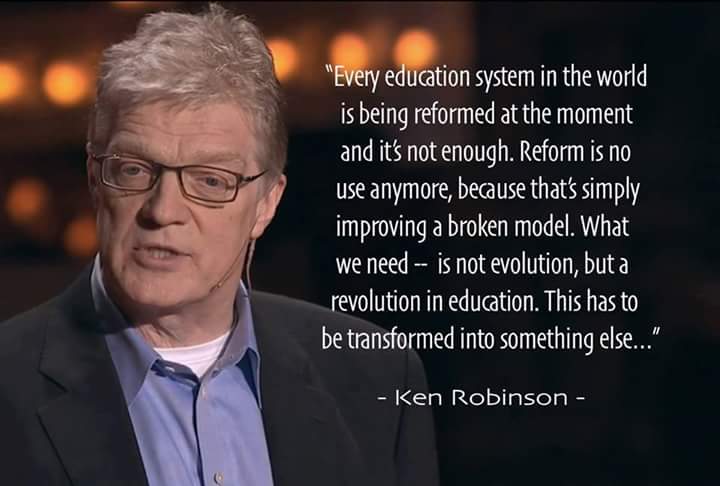
Tired of the impossible assessment workload ? Time to put Sir Ken’s transformational ideas into action.

Time to put Sir Ken Robinson into action
Readings Saturday 25h May 1980
Time to transform education?
Most teachers have heard or read the thoughts ofSir Ken Robinson’s about transforming education ‘from the ground up’  as outlined in his book Creative Schools. He writes, ‘creativity is as important as literacy and numeracy’. We think it is now time now to put his ideas into action.

This is all the more important after hearing on the Sunday Education TV programme where it was  said teachers are spending 60 hours pus a week to cope with what is required of them

Time surely for teachers to get off the current obsessive assessment and associated documentation bandwagon and consider a real alternative. Workload demands seem to be mainly associated with literacy and numeracy, much of it is generated by schools themselves!

Time to make teaching more fun and creative?
We appreciate that our views may only resonate with a minority of teachers but we strongly believers  that a transformation along the lines suggested by Sir Ken (and many others) would make teaching more fun than the current compliance system.


We also appreciate that there are a number of teachers already doing their best to develop interesting ideas: ‘play based learning’ (a modern interpretation of 1950/60s ‘developmental programmes’), ‘passion hours’, ‘wonder walls’, ‘mindfulness’, flexible learning environments (another recycled idea reflecting the open plan schools of the 70s), valuing the importance of ‘agency’, environmental education, place based learning, Project Based Learning ( Dewey again!) the introduction of information technology (the current ‘silver bullet’) , developing a local curriculum, and so on. All worthy but all too often ‘add ons’ to the current system

Need to escape from the current demands.
Current practices such as the amount of time placed on literacy and numeracy, compounded by obsessive assessment and documentation demands, block any real change

Standardised teaching

.Past decades have seen the introduction of formulaic standardised approaches such as WALTs, ‘next steps’ (do we really know enough about next steps or are we limiting our students to what we think?), ‘success criteria’, ‘intentional teaching’, heavy handed feedback, and prescribed learning objectives. And this will be worse with the introduction of PaCT testing where teachers will be expected to assess students against learning expectations in all learning areas – an impossible task

The classroom in the image of Te Papa
What appears to be missing is:  first hand  experiential learning, the valuing of the personal world of students, a lack of focus on developing every learners’ talents and gifts, integrated learning , and, most of all, an appreciation of the idiosyncratic creativity of students.

If teachers provided skills at point of need this would result in quality learning across the curriculum and the creation of room environments that celebrate students’ creativity across the curriculum. We see classrooms as ‘mini Te Papa’ – with the students busy researching questions they feel is important, creating exhibitions (and portfolios), arranging demonstrations and interactive displays all featuring their language and art and making use of information technology.

The spirit of the New Zealand Curriculum
Changes as outlined above would be in the spirit of the New Zealand Curriculum which states, students need to ‘seek, use and create their own knowledge’. As an aside there are those that

believe process is more important than process but we beg to differ – both are important and student can only grow when they can see or feel they are progressing. Students learn through creation; knowledge, in this sense, is a ‘verb, a doing word.

Future ready citizens
In such an environment students are self-educating/assessing, continually developing new knowledge, picking up required skills (including literacy and numeracy) as needed on the job for any project, working in teams as scientists and artists, developing lifelong learning attributes –  entrepreneurship and creativity vital for future success.

All this is nothing new and goes back to such educators like John Dewey who wrote ‘children grow into tomorrow as they live today’. For too long we seem to have followed the standardised ‘assembly line’ approach of Henry Ford fragmenting learning in the process.
The role of teachers.

The challenge for teachers is to set up the condition to encourage learning, to trust students to explore areas of interest to them, and help to them acquire skills as necessary to complete work of pride and, in the process of such learning, ensure students develop the ability to assess their own progress against their previous best. This does not mean leaving learning up to chance. The teachers’ role, as educationalist Jerome Bruner writes, ‘is the canny art of intellectual temptation’ and teachers could provide a range of challenges to ‘tempt’ learning.

If teachers do this then they could amplify the curiosity, resourcefulness, creativity and confidence that are innate human qualities – until they enter formal schooling where teachers determine and assess learning of things the teachers feel is important.
Students are always learning – for better or worse.
 If learning is positive, then all for the good but all too often students dislike what it is they are being taught to learn. The most efficient learning comes when we learn about things we want to learn about and in such situation we need little help. This is ‘learning by doing’. Ironically if students really want to learn something then they are happy to acquire knowledge and skills using the internet or in formal situations from knowledgeable adults. Flexible learning environment have an advantage in this respect if the ‘adults’ a have arrange of personal interests to share such as teaching a new sport, information media, a musical instrument or presenting a play. Finally, the students must become their own teachers.
The artistry of a creative teacher
A true teacher helps students with a light hand, finding out what the learner already know or can do, encouraging them to them answer their own questions, valuing the ideas they bring to the situation, modelling, giving feedback, providing emotional support, encouraging risk taking, always

respecting the student’s efforts, and always ensuring the learner feels in control. This is teaching as a creative act in itself.

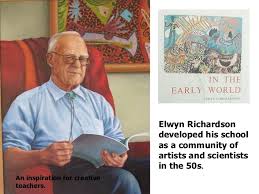
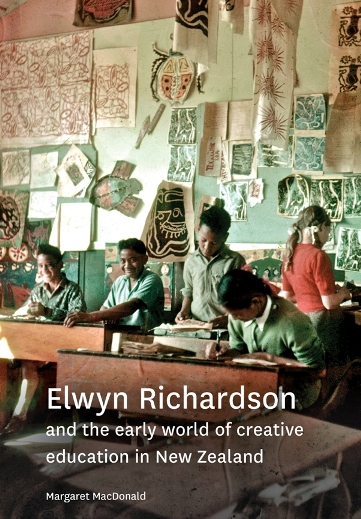
Imagine entering into such a learning environment. Such an environment builds on the ideas of pioneer New Zealand educationalist Elwyn Richardson in his book In the Early World. Elwyn saw his classroom as a community of scientists and artists exploring and expressing ideas about their world.
We see such ideas as transforming education and in the process making it far more attractive to those who want to become teachers. If schools can’t create such ‘tempting’ environments students will bi-pass formal school and learn for themselves – as many are already doing.
Interested teachers could start with Sir Ken Robinson’s book. Sir Ken proposes a highly personalised approach; one that engages all students, develop their individual abilities and their love of learning.

Bruce Hammonds and Allan Alac

Sir Ken Robinson – ‘Creativity is as important as literacy and numeracy’

Includes a number of videos to share with staff and parents,

More from Sir Ken
The video talk will have you laughing as well as seriously reflecting that our education system as currently structured is harming far too many creative students. Decide for yourself after viewing. If you go to the TEDTalk site, you can ‘google’ Sir Ken and then look for his video clip
And more – his address to the PN Inspired Impact Course 2011

What is the most important question for students? Who Am I?


Elwyn Richardson – In the Early World
There was a time when New Zealand  primary education was internationally recognised for

Available NZCER

placing the learner at the centre of learning. When education was driven by a belief in the creative power of the learners themselves; when learning was based on the internal and external lives of the children. But since Tomorrows Schools things have changed.  Today schools have been distracted by assessment, achievement data and measurement by standards.  The evidence is becoming clear in our rush to towards achieving measurable results children’s curiosity has been eroded.

Creativity – its place in education – Wayne Morris
‘The answer must be reform in our educational methods so that students are encouraged to ask about “know-why” as well as “know-how”. Once the arts are restored to a more central role in educational institutions, there could be a tremendous unleashing of creative energy in other disciplines too.’
https://leading-learning.blogspot.com/2013/04/creativity-its-place-in-education_2.html

What is school for?
‘We dont really ask ourselves about the purpose of school or why we send our kids there, its just something we do. But every country should be asking themselves what schools are for. In order to have an idea about what our countries are going to be like in the future, we need to know what the purpose of our schools is. At the moment it appears to be content transmission and testing, and that isnt going to produce the kind of innovators we need.’
On Teaching Reading, Spelling, and Related Subjects
Half Truths About Whole Language, by Alfie Kohn

While there is no precise, universally accepted definition of Whole Language, and no party line f

or its proponents, this much is clear:  it isnt the opposite of phonics, and it doesnt deny the importance of phonics.  Even Kenneth Goodman, a pioneer of the Whole Language movement whose views are sometimes considered extreme, agrees that you cannot read an alphabetic language without using and learning phonics.

Five Ways Design and Making Can Help Science Education Come Alive

‘Design is an artistic endeavor that values the creative and human centered application of

math, science and technology. Using design to help others learn science is not intuitive, however, once practiced you will see how humanistic and authentic it is to incorporate design in any subject. Below is a list of the most promising benefits that I have noticed in the past six years for using design as a framework and making as the engine to empower students as they gain and apply their scientific literacy.’

What is the most important question for students ? And are schools helping provide an answer?

Who am I ?
The question for all learners ; Who Am I? ‘
Readings Sunday 19th May 1980
Years ago New Zealand artist Colin McCahon created a controversial large abstract painting called I Am.
For us the message was answering the question that we all

struggle with – who am I? What things are important to me? What makes me who I am?

The questions above should underpin all the activities in our education system. That so many young people leave education with these questions unanswered ought to be of great concern and worse still leaves students open to becoming to become involved in

Making your mark!!

anti-social behaviour. The outbreak of graffiti in our society is a sign of young people making their mark as a protest against the way many of them feel they have been treated by their school experience. For many students it is schools that are dysfunctional.

It is our belief that an education system premised on the arts would ensure all students leave schooling with a positive learning identity.
The current reactionary emphasis on literacy and numeracy is

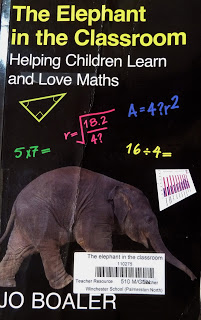
a distraction literacy still  remains a problem for far too many students and, as maths educator Jo Boaler (who has recently presented in New Zealand) has said, far too many students leave schooling suffering from maths anxiety’.

Dr Beeby
It is time for a real change of direction or for many back to the future to the exciting days of Dr Beeby best represented in Elwyn Richardsons book In the Early World first printed in the 1960s and thankfully recently reprinted by the NZCER. This inspirational book gives todays teachers insight into the power of personal creativity through art, language, movement, drama and inquiry learning. Another pioneer teacher Sylvia Ashton Warner wrote in Teacher that students were like a volcano with two vents one vent if tapped led to creativity, the other to violence.
Today we have educationalists like Sir Ken Robinson powerfully asking for schools to place creativity central to learning creativity in its widest interpretation. Sir Ken believes creativity is important as literacy and numeracy but few schools follow his advice.
Sadly, today the arts play a marginal role in our schools and most to be seen is not about personal expression but more facile decoration and, as a result of a formulaic intentional approach to learning, results in art work well done but ‘clone like’ in appearance.
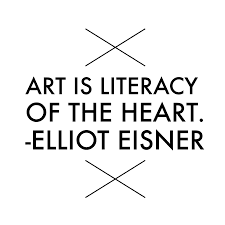
Eliot Eisner, an art educationalist, writes the arts are rooted in mans need to give form to his experience, to come to know the world in ways only the arts can make possible. Learners experience their world through their senses and from such experience curiosity is enlivened, questions asked, and realistic inquiries undertaken. Such realistic studies are open to be solved in all the ways open to being human the arts, media, words, maths, music and drama integrated learning.
Our observation is that literacy and numeracy have all but

Beyond literacy and numeracy – the real

squeezed out the importance of experiential learning and related arts and this is not helped by the destructive use of ability grouping and inquiry learning overly focused on  learning through the internet.

No wonder many students, even the most successful, fail to develop a positive view of themselves.
We see the metaphor for a classroom (whether ILEs or self-contained) as mini Te Papa   – a challenging mix of an science/technology laboratory, a media centre , an arts and drama

Te Papa – a metaphor for a school

studio, and an exhibition centre with students seeking, using and creating their own knowledge as it states in the New Zealand Curriculum. And integral to this providing opportunities to integrate, in realistic contexts, literacy and numeracy. The arts help learners secure new and deeper meanings from experience with students not only makers of their own reality but creators of their own minds

Howard Gardner

(Eisner). This view of learning aligns with the multiple intelligences of Howard Gardner each intelligence providing a frame of reference to interpret experience. 

The teachers role, as Jerome Bruner wisely says, is the canny art of intellectual temptation providing a learning environment that captures students curiosity and, when students become involved, providing guidance lightly, and helping individual gain missing skills to allow them to achieve their

Eliot Eisner

personal bestEisner writes ‘teachers need to help without being hurtful and to guide without being overbearing, and to explain without being pedantic’. Most of all teachers give their students achievements the attention and respect it deserves. Teaching in this respect is an art in itself the highest form of creativity.  Elwyn Richardson saw his students as a community of artist and scientists exploring their environment and personal worlds, and also said that his students were as much his teacher as he was theirs.

This vision is the opposite to the teacher dominated formulaic assessment environment currently is to be seen an environment that is not helping students ( nor teachers) express who they are. Imagine an education system premise on developing the gift and talents of all learners.
For teachers interested in developing arts based programmes our last blog has some good reads. 
Another blog full of great readings
Looking back to the early days of NZ Creative Education 
All too often we can get so mired in the present that we are unable to see beyond whatever is taking our attention. Teachers, trying to interpret what is currently expected of them, are in such a position. All it causes is stress and confusion. Having some sort of insight into the past can put the present into perspective and better still give ideas for future directions.’
For those interested in Play Based Learning might be interested in the forgotten genesis of progressive early education
Since ‘Tomorrows Schools’ (1986) teachers would be excused if they thought all ideas about teaching and learning came from those distant from the classroom – and more recently imposed by technocrats and politicians. This was not always the case. Play based learning was once a feature of junior classes.’
Art has long been recognized as an important part of a well-rounded education — but when it comes down to setting budget priorities, the arts rarely rise to the top despite the many studies showing that exposure to the arts can help with academics too. A few schools are taking the research to heart, weaving the arts into everything they do and finding that the approach not only boosts academic achievement but also promotes creativity, self-confidence and school pride.’
Reclaiming the joy of learning the philosophy of Elwyn Richardson
Art from Elwyn’s school
It seems proper when thinking of creativity our classrooms to reflect on the writings of 1950s pioneer creative teacher Elwyn Richardson. His ideas are to be found in his inspirational book In the Early World first published by the NZCER in 1964 (reprinted 1994).
A World of Difference: the philosophy of a Taranaki pioneer creative teacher – Bill Guild
I believe that schools must be learning communities where

students learn, with our assistance, the things they want to learn; when they want to learn them; how they want to learn them; and why they want to learn them; all through their own curiosity’

Why is teaching kids to draw not a more important part of the curriculum?
Drawing plays a big role in our cognitive development. It can help us learn to write and think creatively, develop hand-eye co-ordination, hone analytic skills, and conceptualise ideas.But drawing is rarely used as a tool for learning in schools. Generally, most  school teachers arent trained in visual education.’
Why drawing isnt just an art
There’s a growing understanding that drawing is much more than an art form: it’s a powerful tool for learning.’
Are technologies making us smarter? Wiser? More compassionate?
By Jamie McKenzie
50 years ago and the potential of computing to enhance learning was enormous but also virgin territory. Since then we have seen many foolish and wasteful efforts along with some that were magical and quite beneficial. Half a century later, it seems worthwhile to pause and reflect upon the impact computers and computing have had upon schools, learning, and the society as a whole.’
Differentiating by Offering Choices
Elementary students have a better chance of showing what theyve learned when they have a choice about how to show it.’
 Innovative Learning Environments
‘If well-designed environments improve learning for students, what are the features of a well-designed environment? Research suggests that when the following elements are in place, student learning is likely to accelerate.
Education reform has led to the “death of the teacher” new book argues.
‘Just when you think you have a firm grip on the theories, politics, practices and trends affecting education in Australia, a book like Flip the System Australia arrives to shake you out of your comfort zone. Thats what happened to me when I read this book, which stems from what appears to be a global education movement against neoliberalism. The Flip the System organisation holds that the neoliberal shift in reform has led, in a more postmodern sense, to the death of the teacher. That hooked me.’
Cultivating Creative Thinking

‘By encouraging our children to approach situations as problem solvers, and giving them the tools to think for themselves, we will grow adults who arent afraid to ask tough questions of politicians, doctors, college professors, and anyone else. And, they will take an active role in understanding situations before forming opinions or voting.’

Warning, these readings may contain educational heresy


Readings for creative teachers

 Saturday 11th May 1980

Bruce and I have long left the ‘chalkface’ but we still have a passion for an education system that is based on democratic classrooms that focus on developing the gifts and talents of all students.
Sadly most classrooms are neither democratic (valuing the identity, voice, questions, theories and culture of students) nor focused on

talent development. If anything education has become standardised and formulaic focused on assessing and documenting achievement in literacy and numeracy.

So maybe our views are irrelevant but we take heart that we know there are still creative teachers out their battling for views that align with the holistic, creative and integrated learning that we hold.
For us we see the book In the Early World written by Elwyn Richardson as central to the provision of a creative education

Thankfully it has been reprinted by the NZCER and the new foreword itself is worth a read. Elwyn saw his class as a community of artists and scientists exploring their environment and personal concerns and he believed they were his teachers as much as he was their teacher.  There was nothing formulaic or standardised in his classroom.
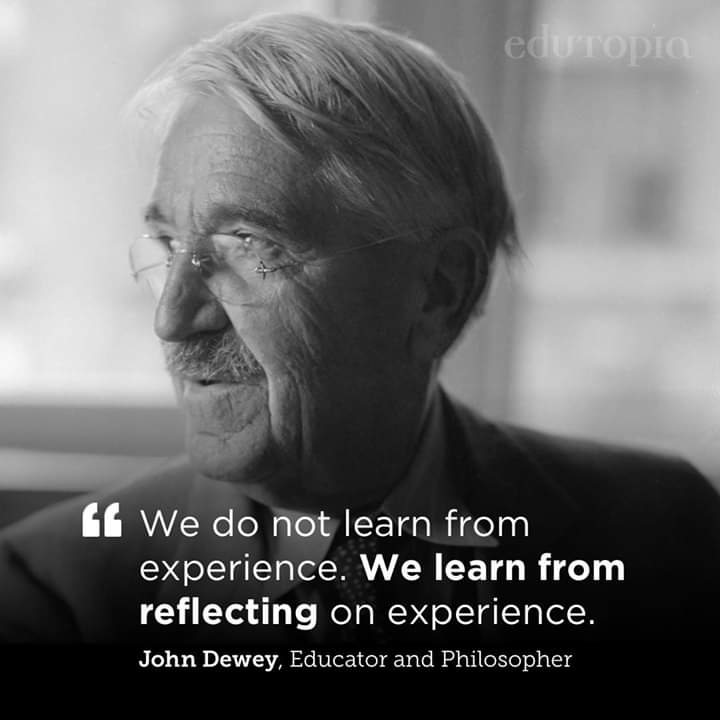
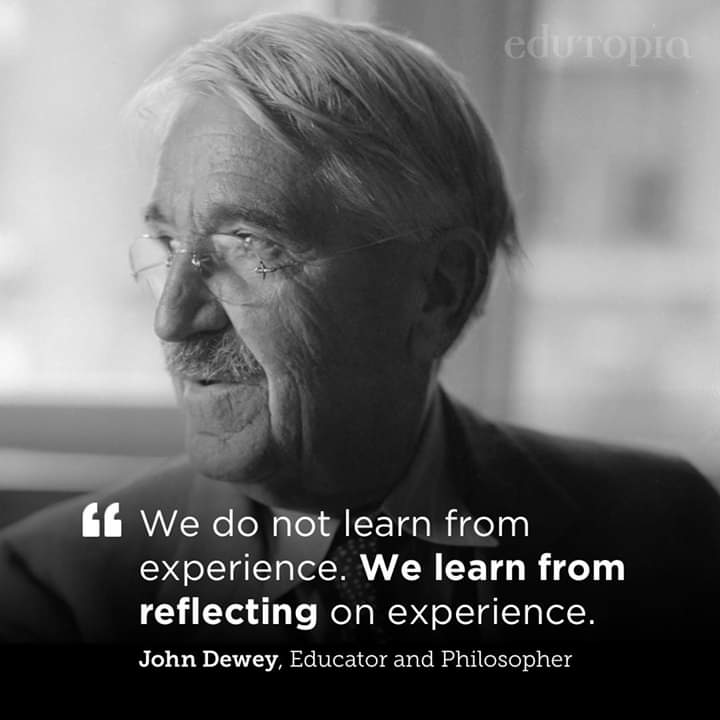
We are not sure of who current teachers hold as important in their educational philosophies but we think we are in good company. John Dewey who wrote about progressive democratic education early last century wrote ‘children grow in to tomorrow as they live today’ and although he believed in experiential learning he also wrote that it’s not just experience it reflecting on experience that is vital to learning.
There are a number of other educationalists that back up our own beliefs. Jerome Bruner who wrote that ‘teaching is the canny

art of intellectual temptation’ giving teachers the challenge of creating learning environments that challenge students by providing  ‘tempting’ displays from all learning areas; displays that as students become involved sees  their  research, language and art added.

An MLE !!

We see classrooms as a mini Te Papa – an amalgam of an artist’s studio, a science technology laboratory, a media centre andexhibitions to celebrate, challenge and inform. An important thing, we believe, is to do fewer things well and judge success by students achieving their personal best in any area of learning.

These are aspects the vision that we hold to. We believe, as Frank Smith (our reading guru)  writes, we learn from the company we keep; we learn to read if we want to not just because someone thinks we should. Smith’s book

Reading” is a must read for any open minded teacher. Look online for this. Also check the link below for a pdf version of another Smith book.

We learn anything if we see the point – the title of Guy Claxton’s book ‘What’s the point of School’.
In our ideal classroom students enter the classroom to pick up work they have previously committed to. When teachers see a need to provide assistance with missing skills they come alongside the learners (or work with a small groups) to provide the help needed so students can return to’ the game of learning’ (the advice of David Perkins). No need for ability groups in maths and literacy to get in the way taking up valuable learning time.  

When it comes to talent development the views of Sir Ken Robinson are well known, admired by many teachers but in practice largely ignored. Sir Ken believes in educational transformation. The idea that we all have our own mix of talents and gifts brings us to the multiple intelligences of Howard Gardner. Another educator with an interest in the creative arts, Eliot Eisner, makes the point that each art form interprets the world in its own way and that all are important.

Elwyn Richardson

All this brings us back to the ideas of Elwyn Richardson and the art advisers of yesteryear who led the way into developmental creative related arts programme.

l lifelong learners, confident in their own unique talents. We both believe we do not have an achievement gap but rather an opportunity gap.
With current discussions about play based and place based learning, about students’ agency, environmental awareness, the need to trust learners, the valuing of cultural differences, inquiry learning integrating a sensible use of new technology, and the new flexible learning environments,  maybe the revolution is beginning?
We hope so. This is why we take the time to collect and share reading that emphasize creative teaching.
Allan Alach and Bruce Hammonds


 Today’s Readings
Creative Teaching And Teaching Creativity: How To Foster Creativity In The Classroom
Creativity is often paid lip service, but in reality, most schools are currently experiencing a “creativity gap”—with significantly more creative activity occurring outside of school. Numerous psychologists argue that creativity is not just an enrichment or add-on in the classroom: It is a set of psychological skills that enhance learning and will be necessary in the 21st-century workforce.’
Treating Reflection as a Habit, Not an Event
Regular reflection helps students learn, and some simple strategies can make it a regular and meaningful routine.’
Six Key Takeaways from A Day with Professor Jo Boaler
Claudelands Event Centre was buzzing on April 24th, with 520 motivated mathematics educators who were eagerly awaiting Professor Jo Boaler and youcubed co-director Cathy Williams to deliver their new workshop Limitless: The 6 keys that unlock potential and transform pathways.
Jo Boaler

Seven is the age of wonder, not the age for formal testing

We must also ask why. What are the tests for? So we can measure and monitor students’ progress? So we can pigeon hole who they are and who they will become early on? So we can fiddle the books and make our school brochure statistics look even glossier in the competitive culture that is devouring our national education system?’
Dalai Lama: We need an education of the heart
My wish is that, one day, formal education will pay attention to the education of the heart, teaching love, compassion, justice, forgiveness, mindfulness, tolerance and peace. This education is necessary, from kindergarten to secondary schools and universities. I mean social, emotional and ethical learning. We need a worldwide initiative for educating heart and mind in this modern age.’
Dave Armstrong: Don’t stop the music at school

Having visited the school recently, I’m aware it has a comprehensive music programme and understands the value of students learning not just the “basics” of numeracy and literacy, but music and the other arts as well.’

What is a truly creative education?
( An earlier blog that relate to today’s theme)
 ‘Links to New Zealand creative teachesr, early influences  and the writings of John Dewey, Sir Ken Robinson, John Holt, Guy Claxton,  et al.’
Can reading problems affect mental health?
“Slow reading acquisition has cognitive, behavioral, and motivational consequences that slow the development of other cognitive skills and inhibit performance on many academic tasks. . . . The

longer this developmental sequence is allowed to continue, the more generalized the deficits will become, seeping into more and more areas of cognition and behavior. Or . . . ‘reading affects everything you do.’

Teaching Students to Read Metacognitively
‘A mini-lesson and anchor chart for showing early elementary students how to monitor their comprehension as they read.’
Comprehension And Learning by Frank Smith
This is primarily a book about children. It is addressed to teachers and written from the point of view of a cognitive psychologist. In this book I attempt to analyze those mysterious and complex

facets of human thought that are labelled “comprehension” and ‘learning”, by drawing on insights from a number of specialized disciplines while endeavoring to maintain a coherence that will be both comprehensible and useful to practising or prospective teachers.’

National Writing Project:Digested reads: Frank Smith.
“As long as writing remains a natural and purposeful activity, made available without threat, then children will be willing to practice it and consequently will learn.
3quotes from Freire
Freire is critical of the transmission method found in schools, in which what he calls the ‘banking concept’, is consistently applied. This is where teachers play the role of the ‘knowledgable’, and students adopt the role of the ‘ignorant’. It’s a prevalent technique that teachers everywhere can fall into the trap of perpetrating on their students.’

Encouraging teacher collegiality and the importance of the creative arts.

Educational Readings 
Friday 3rd May 1980
 The hubs – a return to collegiality?
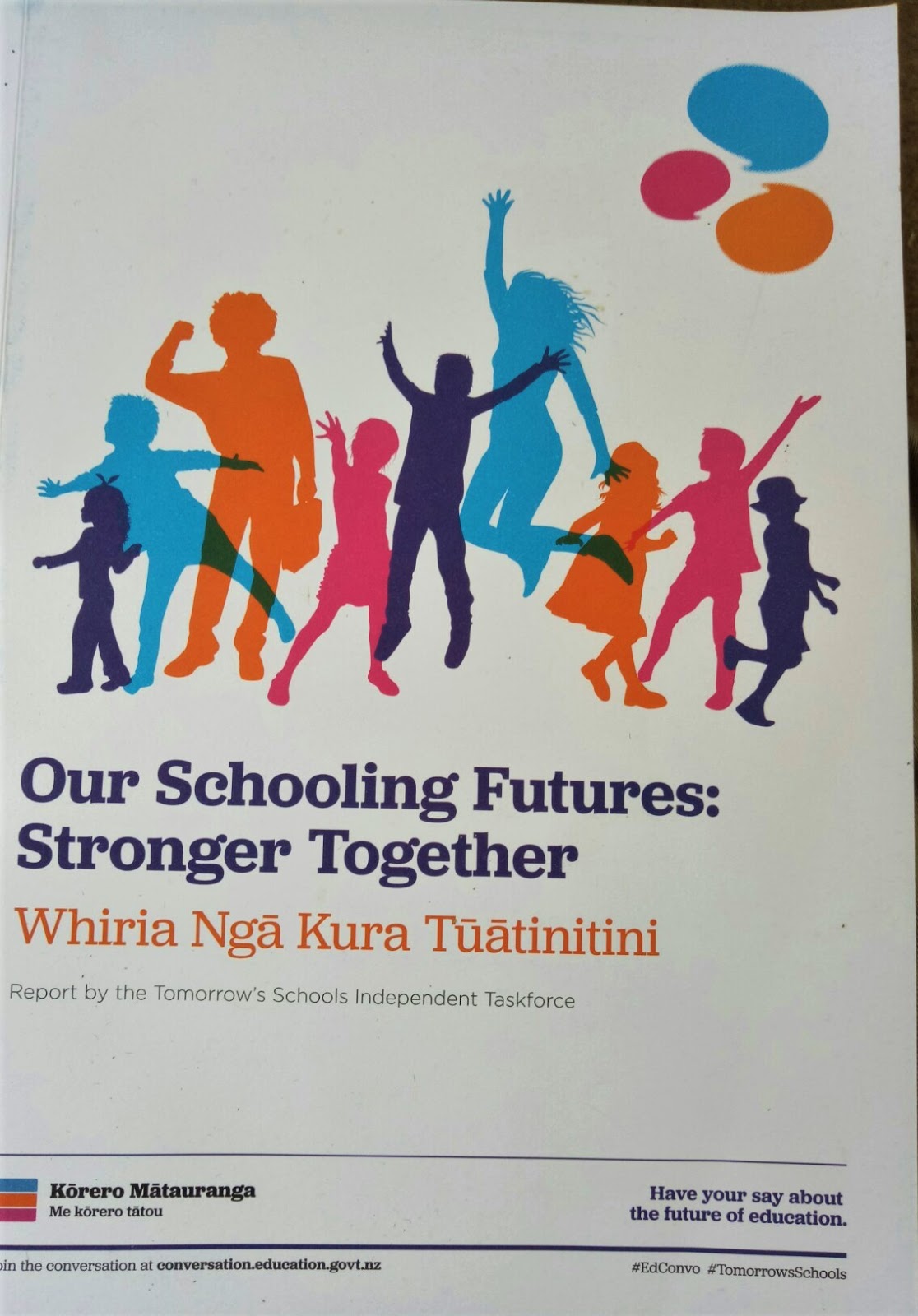
The recent publication of the Tomorrows Schools Review hasn’t seemed to have hit the headlines and Allan and Bruce were wondering how schools have reacted to it.  The main premise of

the review was to develop greater equity in our school system for children who come from disadvantaged homes. There is no doubt that schools from higher socio economic areas have done well – their BOTs are able to call on all the expertise they need.

Bruce attended a meeting to hear the views of the opposition (Nikki Kaye). Few local educators were present nor adults with school aged children. The main issue was focused on the idea of developing Education Hubs to provide services to schools  – it was felt by those  opposed as an unnecessary layer of

‘bureaucracy’ that would take away the independence of schools.

The idea of groups of schools under the support of a ‘hub’ relates back to the days before Tomorrows Schools when primary schools were administered by Education Boards. Bruce worked as a school adviser for an education board and was a principal during the change over to the self-managing system we have today. Allan moved to the principal ranks in 2002, having taught and developed his skills in the education board days. As the school

advisors had not been axed in 2002 he made full use of them in developing his principal skills and the school’s learning programme.

Very few current principals or teachers experienced the education board system and possibly can’t see the point of making any changes. Few would not say that the education board concept didn’t need to be ‘modernised’ and that schools needed to be given greater ‘self-management’ but in the change process many good ‘babies were thrown out with the bathwater’.
The one area we both feel has been lost is collaborative nature

Time for some real learning

of schools working together sharing expertise through having the professional support of school inspectors (reframed today as ERO) and the advisory services.

The inspector’s role was to ensure all school were providing a suitable education (now ERO’s responsibility) and to grade and appoint teachers (now a BOT responsibility). 
In later years inspectors also took responsibility for professional development, elected teachers to go on courses and created curriculum groups in areas not covered by the advisory services – notably in language and social studies to share ideas.

They also gave advice for those interested in principal positions – and appointed them in association with the education board. While Allan concedes that there were some useful aspects of school inspectors, he was rather pleased to see them go.

The loss of the localized advisory team, who visited all schools to prove help and, equally importantly, identify and share the work of creative classroom teachers, was the greatest loss. There were advisers in art and craft, science, Maori, music, physical

education, reading, rural schools and junior schools.  No doubt areas like ICT could have been added as required. The winding down of the advisory service was arguably the greatest loss of the move to ‘self governing schools.’

It is the provision, in some form, of such advisory service the ‘hubs’ would provide that is most exciting and, we think,  would return schools to a collaborative and sharing educational environment. An advisory service would also provide exciting career opportunities for teachers. We both believe that creative

classroom teachers ought to be the source of real innovation. And, we both believe, it will ensure localised curriculum and diversity and not the conformity the critic suggest.

Not all schools might require financial and building assistance etc., but all schools would benefit from supportive advisory services?
The Review, we believe, is not about imposing control over schools as critics suggest, but all about cooperation and creativity – a move away from standardisation and compliance of the past decades.
Sadly Kelvin Smythe died shortly before the report was released, so we will never know what he thought. However he had some main hopes when the review was established: no more National Standards, a return to the ‘holistic curriculum’ of the pre Tomorrow’s School era, the replacement of ERO in its present form, reducing the role of Boards of Trustees, and the re-establishment of the advisory service. Given that, we think he would have given his general approval to the review.
Worth thinking about?
We think so.
Allan Alach and Bruce Hammonds
See if you can find this inspirational book in your school

Readings – a return to the creative arts
More and more people are writing about the importance of art and creativity  as technology take over our lives. Time to make personal discovery and creativity central to our curriculums – through the arts humans creates themselves.
Michael Rosen
National Poetry Day? Week? Month? Year?
Most people will know about Michael Rosen who wrote ‘We are going on a bear hunt’. He provides ideas to introduce poetry to your class. If you’re a teacher reading this, Rosen suggests that you think up as many different ways of ‘serving up’ poems as you can.’
Why an education in visual arts is the key to arming students for the future
Visual skills are essential for a sophisticated workforce, yet we offer so little education in the vital skills of learning to see and developing the ability to interpret and critique our image-saturated world.’
10 Points About Arts Education by Elliot Eisner
Elliot Eisner was a visionary in the field of arts and education. He maintained that the arts were critical to developing skills in young students.’
Standardisation broke education. Here’s how we can fix our schools
We are all born with fathomless capacities, but what we make of them has everything to do with education. One role of education is to help people develop their natural talents and abilities; the other is to help them make their way in the world around them. Too often, education falls short on both counts.  We have the resources and the expertise, but now we need the vision and commitment.’
Play-based learning: producing critical, creative and innovative thinkers.
‘Go inside any primary school classroom and look for the ‘play’. Where is it? When did we become so serious with our students and forget to include play? It was only 15 years ago that we could go into any Year 1 classroom and find children playing with play-dough and creating the most

spectacular creatures, painting a masterpiece or gluing together toilet rolls to make a spaceship. They were engaging with each other, negotiating, sorting out arguments and establishing friendships. They were imagining, exploring and inventing. It was through taking risks, discovering new ideas and putting these ideas into action that learning took place. Now it seems such acts of play are a thing of the past.

Playing to Learn
‘How a pedagogy of play can enliven the classroom, for students of all ages.’
This is what powerful professional development looks like in an Australian School
It’s the start of the school year here in Australia, and most schools schedule one or two days of professional learning for all faculty before students return. Princes Hill runs an inquiry-based

program for students 5 to 12 years old. Both days of the retreat were focused on the school’s Principles of Learning, and the implications they had for the school’s programs for the next twelve months. The agenda simply said “2018 Princes Hill Primary School Collective Inquiry: A Community of Learners Developing an Evolving Community of Practice.” Everyone certainly knew what to expect.’

Four Inquiry Qualities at the Heart of Student-Centered Teaching
Whether it be project-based learning, design thinking or genius hour, it’s easy to get confused by the many education buzzwords floating about. But at their heart these pedagogies are all student-cantered and there are commonalities across them that are the key to their success and far more critical than keeping the jargon straight.’
Yes, we know what great teaching looks like — but we have an education system that ‘utterly fails to support it.’ What’s wrong and how to fix it.
You could be forgiven if you have gotten the impression that we are still trying to figure out exactly what great teaching looks like. In recent years, the teaching profession has been under assault by those who have sought to deprofessionalize it.’
Make your mark: the enduring joy of drawing
Drawing is democracy. Everyone does it. You doodle in the margins of this newspaper. I sketch the view while hanging on the phone. We draw on our hands, on walls, on the back of envelopes (like Monet), on office notepaper (like Van Gogh), on restaurant napkins (like Picasso and Warhol). We draw to pass the time, to catch the moment, to remind ourselves what we saw, felt or thought. We draw to see what life looks like in two dimensions. We draw because we can.’
Three of Bruce’s ‘oldies’ about the creative arts
Creative teaching – an alternative to the political press for standardisation
The authors write that we need to look to the creative work going on in real classrooms, particularly in the writings of New Zealand’s pioneer creative teachers, rather than importing

failed overseas programmes such as National Standards and Charter Schools. The authors write that ‘we know that students’ learn best when engaged, challenged and inspired. We know that many important skills in numeracy and literacy are learned in various contexts and not in relation to set targets. We also know that integrated and negotiated curriculum provides students with ways to achieve ownership of their learning. Children have an innate curiosity about the world around them, and learning invariably follows when their curiosity is piqued.’

What has really changed on our school the past 50 years?
The other day I had the opportunity to visit a school I began my career visiting in 1960. During a discussion with the principal she mentioned the classrooms had been developed into innovative (or flexible) learning environments. I couldn’t help suggest that  I bet the daily classroom

programmes/timetables haven’t changed much since I first visited the school 40 plus years ago ( with exception of availability of information technology). If anything the current emphasis on literacy and numeracy had reinforced the timetables of earlier times taking up the morning time with the rest of the Learning Areas squeezed into the afternoon period. Hardly flexible teaching? Hardly progress?’

Why art is important in education? A talk to student and parent
A while ago Bruce was asked to give a talk to teacher, parents and students at a students art opening – it forced him to think about the importance of the creative arts.

Jo Boaler and math education and inquiry learning

 Jo Boaler: Math teaching is about 
developing positive attitudes towards the subject
 Educational Reading Friday 20 April 1980

Easter Friday
Holidays are a time to catch your breath and to think about how to make teaching better for both teachers and students. Allan and I are no longer involved in teaching but we hear enough

from teacher friends, and reading comments on Facebook, to know that all is not well.

We both caught an interview on Q&A with Jo Boaler (Professor of Mathematics at Stanford University) someone both of us have long admired. To us, her short interview about maths teaching holds an answer to educations problem in particular with maths.
Maths has always been a difficult area. Many teacher are

themselves not that confident and are easily convinced to take on board any number of math schemes but sadly our position on International Tables has steadily fallen.

Its thus worth listening to what Boaler has to say.
Boaler says that current approaches leave far too many  students with maths anxietyand this, in particular, applies to girls. Her video  was about ensuring students develop positive

Jo Boaler

attitudes towards maths or any learning area. For too long schools have focussed on achievement and one dimensional programmes and this has resulted in an obsessive and exhausting assessment and documentation regime. What has been missing is not paying enough attention to student attitudes towards maths.

When qustioneed about the success of Asian students Boaler made some important points. The key point underpinning Asian success is the belief by parents, teachers and students,

that all everyone can do maths (or any area of learning). In Western cultures, Boaler says, ability is seen as important some people are just better at maths and girls not so much!  Western teachers also use ability grouping while in Asian classes (as observed by Boaler) children are taught as a class in discussion groups and only cover a few problems a lesson they do fewer things well. As a result positive attitudes are developed.

Bruce reflected back to his time as a class teacher where he

determined not to use text books, work sheets, or ability grouping – all common practice at the time. He made every attempt to make maths both enjoyable and challenging studying with his class maths patterns, triangular numbers, measuring, counting, tessellation,  history of number, number in other cultures, keeping rainfall data, transects in science, magic numbers,  math cooking, maths and art …….. The classroom

Graph number of eed in a pod

displayed a variety of maths activities. And maths was related, where possible, to whatever study area the class was involved in. Bruce wanted his class to appreciate what maths was really all about and for all to have positive attitudes towards the subject.

Unfortunately it didnt work out so well. When his students went on to Intermediate school a couple of boys came back to tell him the teacher at the intermediate had said all the kids from his class couldnt do math! Bruce asked if the boys were in ability groups. They said they wereand in the top group!! He then asked

the boys how come this was the case if students couldn’t do maths? The boys were confused and the next day they returned with the answer the teacher said none of the students could use a text book!’ One of the boys was a member of the recent tax review group!!

The next year he introduced textbooks in the last months to avoid the issue but his students were given the message that realmaths is doing maths and text book are to be seen only aspracticemaths.

Bruce and Allan both wish they knew about Boaler in their teaching days.
Teaching students learn and love maths
Facing up to the elephant in the classroom – the mind changing ideas of Jo Boaler
‘Jo Boaler makes two main points maths can be a fun activity for all students but to achieve this needs the removal of an approach based on ability grouping.  The one in five currently failing in our schools, (notwithstanding the effects of poverty) see themselves as failures, as defined by numeracy and literacy, and the premise of this book that  this is, in good part, to the result of the use of ability grouping. Jo Boalers book reports on the depressing research to back her position on ability grouping.’
Learning to love maths – moving away from ability grouping. Prof Jo Boaler
Links to excellent resources.
Jo Boaler writes,far too many students hate maths. As a result adults all over the world fear maths and avoid it at all costs. Its the subject that can make them feel both helpless and stupid.Maths more than any subject has the power to crush childrens confidence.
Mathematics in education and ability grouping
To develop developing maths understanding and an appreciation of the power of maths through teaching maths through activities and investigations preferably integrated with the classes current inquiry study(ies).
Why Kids Should Keep Using Their Fingers to do Math
‘Stanford professor Jo Boaler writes in The Atlantic about the neurological benefits of using fingers and how it can contribute to advanced thinking in higher math.’
Think youre bad at math? You may suffer frommath trauma
Teachers may like to reflect on this when carrying out those pointless timed Numeracy assessmenst.
Tying speed with computation debilitates learners. People who struggle to complete a timed test of math facts often experience fear, which shuts down their working memory. This makes it all but impossible to think which reinforces the idea that a person just cant do math that they are not a math person.’
‘Schools have forgotten about fun for fun’s sake’
‘We make a mistake trying to inject fun into lessons – we should simply aim to make schools more fun in general.’
Exploring literacy: How six schools lifted achievement?
‘How can schools support students to make progress in reading and writing? To explore this question, the project identified schools that have sustained positive achievement in literacy over five years, and asked what they did to achieve this. The goal was to uncover common themes which might help other schools work towards similar lifts in literacy achievement and no mention of phonics!!!!
Future focused education at Taranaki high school takes flight
Once the biggest school in Taranaki, Spotswood’s roll has been in slow decline for two decades as it struggled to remain an attractive option against the city’s four single-sex high schools. More liberal and less bound by tradition than those high schools, it is undergoing a radical transformation that could completely change the way the school is viewed both from within and without. It is one of just six schools in New Zealand using the progressive Disrupted programme.’
5 Ways to Boost Science in the Classroom
‘At the core of science is the wonderment of inquiry. Encouraging this inquiry is how you bring science into the classroom, transforming your kids into budding scientists who want to discover the whys hiding behind everyday phenomena. Luckily, there are ways to turn your classroom into a laboratory of discovery without fire and explosions! Here are our favourite ways to boost science in the classroom.’
What is inquiry based learning?
In our quest as educators to prepare our kids to enter the world to thrive and succeed, we constantly strive to empower them with the best aptitudes for doing so in a rapidly-changing world. These are the abilities of independent and critical thinking, creativity, curiosity, and the drive to learn anywhere at anytime. Ultimately, few instructional methods accomplish this quite like inquiry-based learning
Will Education Be Pointless 30 Years from Now? — Part One
Its too late for evolution. Its time for disruption!’
#3quotes from Montessori
‘Maria Montessori is a controversial figure in education. She is considered by many to be a true visionary, while others consider her methods to be detrimental. She was highly critical of formalised education systems and believed they actually obstructed children’s potential to learn. She saw transmission methods of teaching as a great travesty, and worked incessantly to create alternative methods of education that were more child centred and which led to greater levels of engagement with learning.’

What is a creative education? – Elwyn Richardson, Sir Ken , Guy Claxton, John Holt

What is a truly creative education?
Creative teaching Readings
  Friday 12th April
Bruce and I spend time each week gathering articles that encourage a creative approach to education.  This of course begs the question what makes a classroom creative?
Bruce has been involved in encouraging creative approaches to education for decades. First as a

science adviser, as a teacher, an art adviser, principal and an independent education adviser.

At the beginning of this year Bruce was asked to give a session at the school he was once principal of at their TOD to share the main ideas arising from his experience over the decades.
Perhaps the main idea Bruce mentioned was to develop your classroom, or school, as a community of learners.
 Bruce drew the attention of the staff to the philosophy of Elwyn Richardson who saw his classroom as a community of artists and scientists exploring their immediate environment and personal experiences. To us both Elwyn’s book In the Early World (recently republished by the NZCER) is still the best example of creative teaching. All schools and teachers should have a copy.
As a Science Adviser (and even earlier as a Nature Study Specialist) Bruce said that exploring the natural world is as important as ever and, as part of this, it is important to help students learn through sensory awareness.  Such awareness and appreciation provides motivation for expression

through a range of media but will contribute for students to protect and value the environment.

In the mid 80s Bruce was involved in the Waikato School of Education’s Learning in Science Project (LISP). Essentially this was based on finding out what students know and then to challenge their understandings ; to value their question  and current theories and to note how their view had changed (or not) due to learning experiences. Contrary to current views knowledge is as important as the learning process. Classrooms should reflect the before and after views of students.
As an art adviser Bruce focussed on helping students express ideas through art and valued the idiosyncratic expression of every learner.  Much of what many teachers today call creativity is craft at best and decoration at worst – and, all too often, little can be seen to differentiate each learners efforts.
Bruce’s teaching experience followed a long career giving advice. The main message he learnt was that giving advice and doing it are two different things.  Having to cover the whole curriculum was a real challenge and took him time to come to terms with.   Bruce made the point

that take advice with care – many who provide advice have had little practical experience of what they talk about.

So these were the points Bruce shared which align with my own views. We both believe that in an education that focuses on accepting learners for what they can do and building on their strengths – to develop their unique passions and talents.
 We both believe that all students will learn if it makes sense to them, if they can see the point of what they are doing.
We both believe that the teacher’s role is to create classrooms as communities of learners full of challenging experiences to attract student’s curiosity. As Jerome Bruner has written ‘teaching is the canny art of intellectual temptation’. If we see our classrooms as a subtle mix of an artist’s studio ( in including all media), a scientist’s laboratory, a work room and an art gallery then students will learn to do, in meaningful contests, the very things teachers currently spend far too much time on – literacy and numeracy. Too much valuable teacher time and energy is wasted on assessment and

documentation

Two last points. Teachers should do fewer things well and, strangely in this fast paced world, to slow the pace of students work to both encourage in-depth thinking and to give time for teachers to come alongside learners to help as required. Students, all too often, think that first finished is best and by rushing develop fragile learning.
Students are born to learn. We mustn’t let schools get in their way. If in doubt read Elwyn Richardson’s book and also watch the two videos about his work at Oruaiti School.
Allan Alach

For those interested in Elwyn Richardson’s book

Reclaiming the joy of learning : In the Early World ( NZCER)

‘Oruaiti School functioned as a community of artists and scientists who turned a frank and searching gaze on all that came within their gambit. Curiosity and emotional force led them to explore the natural world and the world of their feelings…..Studies and activities grew out of what preceded them. New techniques were discovered and skills practiced as each achievement set new standards’

In the Early World
Here’s a movie, filmed by Elwyn Richardson in 1961, with his added commentary, that shows some of the amazing art work produced by his pupils.
Song of the Bird
Following on, here’s another video that looks at Elwyn Richardson’s work and which includes Richardson talking about his teaching.
A gifted Taranaki teacher Bill Guild implements Elwyn’s ideas
Bill Guild was a key figure of a group of Taranaki teachers that had gained reputation for the  creative programmes they were implementing.  Bill – who by the way turns 93 this year and is as enthusiastic about creativity as he ever was and a whiz on his Apple  Computer
John Dewey an educator for the 21stC
The progressive ideas Bruce and I hold relate to the writings of John Dewey. So many of the ideas talked about today have their genesis in the writings of Dewey .

Dewey placed a premium on student meaningful activity in learning and participation in classroom democracy. His belief that students must be ‘invested’ in what they are learning echoing calls today for school to present ‘rich, real and relevant learning’ to combat growing student disengagement.’

Guy Claxton’s  book ‘What’s the  Point of School’
This book is powerful and timely examination of why our schools are built to fail, and how to redesign them to meet the needs of the

modern world.’ The challenge of redesigning schools is a big ask but the book gives lots of very practical advice about how to create enthusiastic learners and more effective teaching. In particular the ‘learning power’ ideas gives guidance to how New Zealand teachers can implement the ‘key competencies’ of the new curriculum.’

Time to re-read John Holt –
The Joy and Sorrow of Rereading Holt’s “How Children Learn” Here, summed up, are John Holt’s great insights about children’s learning.
We must reverse the ‘outcome oriented’ educational monster we have unleashed
Our students need to be content creators, not memorisers As the New Zealand Curriculum says students need to ‘seek, use and create their own knowledge’.”
What Students Do Better Than Teachers

Moving from exchanging words to exchanging ideas is a big shift that doesn’t happen just because there is a question and answer exchange. There is a certain trust inherent in any meaningful communication.’

9 Elephants in the (Class)Room That Should “Unsettle” Us
I’ve been collecting a list of these “things that we don’t really want to talk about in education” in hopes that it might challenge us to bring those elephants out into the open and ignite some much needed conversation about how to deal with them. Here are nine of them.’
The Artistry of Teaching

‘There is one goal [of education] that, if not achieved, makes the achievement of all other goals very unlikely. That goal is to create those conditions that make students want to learn; not have to learn but want to learn more about self, others, and the world. The overarching purpose of schooling and its governance is to support that goal, i.e., to create and sustain contexts of productive learning supportive of the natural curiosity and wonder with which children start schooling.’

Seven Myths Keeping Teachers from Implementing Creative Projects
Every year, I ask my pedagogy students about their most memorable learning experience as a student. Inevitably, it involves a creative project. These were the moments when learning stuck and often it was when they fell in love with the subject. But these were also the experiences that taught them collaboration, project management, flexible thinking, and a growth mindset.’
#3quotes from Rogers – Steve Wheeler:
‘Although he originally practised as a psychotherapist, Carl Rogers was intensely interested in education. His 1969 publication Freedom to Learn is now considered a classic of education. It was certainly required reading during my own teacher training. Rogers’ approach to both psychotherapy and education was humanistic and thus person-centred. His view on learning was that children needed to be fully engaged rather than passive in the classroom.’
4 Ways to Develop Creativity in Students
‘When Benjamin Bloom identified what he called the taxonomy of the cognitive domain, he ranked
synthesis (creativity) as one of the most difficult skills to master because a person has to use all of the other cognitive skills in the creative process. Since, according to Bloom, creating is the highest

order of thinking, it should be in the forefront of all learning environments and an end goal. When students create what they imagine, they’re in the driver’s seat.’

Sir Ken Robinson: How to Create a Culture For Valuable Learning
‘Robinson believes education is “to enable students to understand the world around them, and the talents within them, so that they can become fulfilled individuals and active, compassionate citizens.” He doesn’t deny that learning information about the world is important, but he says it’s equally important for students to understand their own talents, motivations and passions if they are going to lead lives that satisfy them. The current system of conformity and compliance leaves no space for this type of self-exploration.’

The need to identify and share teacher expertise

Educational Readings
6th April 1980
The need to identify and share teacher expertise
We’ve always believed that the real experts in education are those that actually do it. Obviously such teachers gain support from those distant from the classroom but if it doesn’t happen in the

classroom it doesn’t happen. And I also believe the further experts are away from the classroom the easier it is to give advice.

A long time ago, before the introduction of self-managing schools, there were plenty of opportunities for schools to collaborate. Teachers were chosen to attend and contribute to national and local in-service courses.
Today the focus in on our school not our schools. 
In the last year or so an attempt was made to introduce a community of schools approach but all too often this was simply a means to introduce Ministry dictates such as National Standards. It

was, at least, a start to move to more collaborative environment.

The Tomorrow’s School Review has at its core the idea of hubs which would introduce the idea of our schools rather than our school. Time will tell if this eventuates but one idea regional principals groups could do is to identify teachers with recognised, expertise in local schools and to share this expertise by means of a website with all schools in the area. There may be schools with beginning teachers coping well that other beginning

teachers could visit; there might be teachers with expertise in the creative arts, technology, physical education, mathematics science, inquiry learning, integrated studies, and play based approaches to learning etc.

There may be the need to select principals/teachers to act as an organising committee and a need also to employ a person with

website development skills.

Something along these lines would not only enable the sharing of ideas between schools but also to return teachers expertise central to educational development.
Bruce Hammonds
Allan Alach
Last week we shared readings both for and against the ideas included in the Tomorrows School Review.
Here is one more to consider
I’m a school principal – here’s why I support the Tomorrow’s Schools changes
‘The independent taskforce report on Tomorrow’s Schools recommends big changes to school governance, and a lot of principals are up in arms. Auckland high school principal Claire Amos explains why she’s not one of them.’
The Art of Looking: Eleven Ways of Viewing the Multiple Realities of Our Everyday Wonderland
An invitation to the art of observation: Together, we became investigators of the ordinary, considering the block — the street and everything on it—as a living being that could be observed.In this way, the familiar becomes unfamiliar, and the old the new.’
Drawing isn’t just an art form, it’s also a tool.
We often think of drawing as something that takes innate talent, but this kind of thinking stems from our misclassification of drawing as, primarily, an art form rather than a tool for learning.Researchers, teachers, and artists are starting to see how drawing can positively impact a wide variety of skills and disciplines.Drawing is not an innate gift; rather, it can be taught and developed. Doing so helps people to perceive the world more accurately, remember facts better, and understand their world from a new perspective.’
They Say There’s No Such Thing As A Stupid Question
They say there’s no such thing as a stupid question, but I beg to differ. We hear stupid questions almost every time adults and young children are together.’
High School Doesn’t Have to Be Boring
Debate, drama and other extracurriculars provide the excitement many classrooms lack. And they can help overhaul the system.’
How to Teach Students Historical Inquiry Through Media Literacy And Critical Thinking
Today, most people look up information they don’t know on the internet, including students. So it’s even more important that students have tools they can use to make educated decisions about what they trust online.’
How to unlock students’ internal drive for learning
One of the key components of engagement is students’ excitement about what they learn. Yet most schools extinguish that excitement.’
Learner Agency. What’s it about?
Learner agency is about having the power, combined with choices, to take meaningful action and see the results of your decisions. It can be thought of as a catalyst for change or transformation. Within a school context, Learner Agency is about shifting the ownership of learning from teachers to students, enabling students to have the understanding, ability, and opportunity to be part of the learning design and to take action to intervene in the learning process, to affect outcomes and become powerful lifelong learners.’
Learning Is Different Than Education
…all our problems tend to gather under two questions about knowledge: Having the ability and desire to know, how and what should we learn? And, having learned, how and for what should we use what we know?”
International Women’s Day: What factors are at play when girls are excluded from mathematics?Jo Boaler:
‘In a recent survey National Numeracy asked a sample of adults

how they felt about maths. This showed that more than twice the proportion of women (30%) than men (14%) said that maths made them feel uneasy.  Why might this serious gender disparity exist – even in the 21st century?’

#3quotes from Holt Steve Wheeler:
Holt was best known for his progressive approach to education, and his criticisms of state-funded

school systems. I have drawn three quotes from his 1983 classic How Children Learn (first published in 1964) and have added some additional commentary.’

 A couple of Oldies
Tapping into the student’s world
Every student brings with them memories and ideas gained from the experiences they have had. All too   often this personal form of motivation is overlooked by teachers who seem to think they have better ideas to use – their own. It is as if students come to school as blank slates ( tabula rosa) when instead they come with a wealth of ideas to share but to do their ideas need to be valued.’

Importance of observation
Drawing is an ideal way to break through habitual ways of thinking. All too often our students see but they do not look. Observational drawing has long been an important means for some teachers to develop deeper consciousness in students – to assist students see through their habitual ways of seeing and to develop new awareness.’

Teachers – your future is at stake. Please read and add your voices to the debate

Educational Readings Friday 29th March 1980
Teachers:  Your future is at stake!


The 7th April is the last day  to make your views known about the proposals included in the Tomorrow’s Schools Review report  ‘Our Schooling Future: Stronger Together’.

The report outlines the possibility of the biggest change in our education system since the introduction of the original Tomorrow’s Schools over three decades ago.

Before Tomorrow’ Schools primary schools were administered by regional Education Boards. These Boards appointed teachers, provided advisory help and looked after school finance and grounds. Alongside the Boards were Education Department Inspectors who assessed teacher and school performance. There was no doubt that these Boards needed revision but, in the change to self-managing schools, a ‘few babies were thrown out with the bathwater’.
For those involved in Tomorrow’s Schools they were exciting times. BOTs members had to be appointed and were soon involved in preparing Charters and writing endless policies and facing up to

building and grounds issues. Sadly not all schools were equal and some found it difficulty gaining expertise from BOT members.

It’s important to note that the changes were not a response of community dissatisfaction, far from it, but were part of a political shift towards a market forces led society based on a belief in business efficiency being applied to all areas of government would have positive results. After three decades we

are now paying the price and the inequality resulting from the changes sees schools now enrol students disadvantaged by this inequality. It is also true to say many citizens gained in wealth and some schools (mainly it seems large secondary schools) in high socio economic areas thrived – and today, understandably through self-interest, are resisting any changes.

The ‘self-managing’ aspect of schooling was also lost to a degree when the National government introduced the New Zealand Curriculum along with a set of Learning Area documents, each of which outlined strands, level of achievement

and an impossible number of learning objectives to be assessed and reported on. In 2007 a Labour government saw the light of day and introduced (in 2007) a totally revised New Zealand Curriculum which had (has) broad acceptance. Sadly before this could be ‘bedded in’ a new National government introduced their reactionary National Standards along with assessment and documentation demands enforced by ERO.

So that brings us to today. A new government and no National Standards and the Review.
Things need to change. 
Promised levels of student achievement have not eventuated and

the system is not working well enough for our most disadvantaged.

We need a different way to think about our schooling system.
Please read the Review document and the voices below speaking out for and against. Make an email submission of your concerns and view to tomorrows.schools@education.govt.nz
Further information about the Review is available
Allan Alach   Bruce Hammonds
Take a quick look at the articles below both for and against.

Tomorrow’s Schools quick submission guide from the NZEI and their response to the Review.

The government is currently reviewing Tomorrow’s Schools – the name given to the reforms that dramatically changed our schools nearly 30 years ago – and the NZEI wants to make it easy for you to have your say about the future of education.’

Tomorrow when the war began
Auckland Grammar – against!!

Analysis: A growing group of schools across the country have launched a coordinated opposition to the Tomorrow’s Schools proposed changes, but the campaign is full of misinformation.On Tuesday, a group of 49 (and growing) primary and high schools officially launched the Community Schools Alliance.The alliance took out full-page ads in the NZ Herald and Dominion Post, as well as sending out a press release, setting up a website, a Twitter account and a Facebook page.’

Claire Amos – for

Claire Amos interview by Jack Tame on Breakfast TV

A very balanced review of the Tomorrow’s Schools Review in which she faces up to the criticism of the Auckland Alliance of large secondary schools against the proposals. Claire is concerned with every school, not just those that have done well under the current system.’
Choice vs Equity: A Personal Response to Tomorrows’ Schools Review
I have been quite surprised to see the response from some to “Say no to the Haque Plan”. First of all, it is not the Haque Plan, rather it is the Tomorrow’s Schools Review Report and should be

Maurie Abraham – for

referred to as such.Secondly, it contains many recommendations falling under 8 key issues, making it very difficult to give the whole report a blanket ‘Yes’ or ‘No’. Anyone with an open-minded approach would find favour with some of the recommendations, would be unsure about some and would want to explore further, and would be quite opposed to others. A consultation process allows such a range of responses to be submitted and considered.’

Education Hubs sensible and overdue
Opinion: I notice some of my principal colleagues have taken against the recommendation of the Tomorrow’s Schools

A principal’s opinion

Taskforce to introduce Education Hubs, a regional structure that will take over some of the jobs done by principals and boards of trustees.  Here’s why I think Hubs are a sensible and overdue change to the way we run our school system.’

Schools launch $20,000-plus campaign against Tomorrow’s Schools reforms
The “Community Schools Alliance”, backed by 43 of the country’s 2431 state and integrated schools, opposes a scheme by a task force led by former principal Bali Haque for about 20 regional “hubs” to take over most powers from elected school boards.’
Dr Liz Gordon – the result of 30 years of Tomorrow’s Schools
Two main societal effects occurred in the 30 years of school choice.  First, ‘exclusive’ schools became larger and larger, milking their social cachet as the top schools in the country for financial and reputational gain.  That such status was so patently unearned, forged from the social and educational characteristics of their privileged, ready-to-learn, white students and large parental donations, was a source of particular angst for me Second, schools at the ‘top’ and ‘bottom’ of the social spectrum faced increasing social separation.’
Cathy Wylie outlines new wave of change for New Zealand Schools 2012!
Cathy Wylie – for

In 1986 an ‘earthquake ‘hit education in the form of ‘Tomorrows Schools’; following the publication of the Picot Report self-managing schools were born. Now, almost three decades later, A  NZCER  chief researcher Cathy Wylie has written a definitive and compelling story of school self-management called ’Vital Connections: Why We Need More Than Self-managing Schools’.”

Trust Teachers—They’re the Experts
His subsequent book, What School Could Be Ted Dintersmith,

describes the best of what he saw—and highlights his fervent belief in the value of teacher expertise, student agency, and locally derived solutions. Taken as a whole, the book is a rallying cry for an overhaul of the American educational system.’