The Roots of STEM Talent of India

Credit: Dreamstime

Introduction

The Information Technology sector in India has built its reputation by providing cost-effective solutions and providing employment to millions of people in the process. However, the full-time research workforce in India was estimated to be just 2,00,000 in 2015 by UNESCO. Are we, as a nation, adequately promoting careers in Science, Technology, Engineering, and Mathematics (STEM) subjects, and are we even able to generate enough talent for our own demand? Are we losing some of our best minds to other countries because of a lack of support and opportunities?

What is STEM?

STEM, in full science, technology, engineering, and mathematics, field, and curriculum centered on education in the disciplines of science, technology, engineering, and mathematics (STEM). The STEM acronym was introduced in 2001 by scientific administrators at the U.S. National Science Foundation (NSF). The organization previously used the acronym SMET when referring to the career fields in those disciplines or a curriculum that integrated knowledge and skills from those fields. In 2001, however, American biologist Judith Ramaley, then assistant director of education and human resources at NSF, rearranged the words to form the STEM acronym.

Women in STEM

Under-representation of women and gender pay gaps are well-recognized global challenges in STEM sectors. While Indian Technology firms can still boast of a relatively better female-to-male ratio, according to UNESCO estimates, only 14 percent of the researchers in India are women. Even engineering colleges have skewed gender ratio in favor of male students, and according to a Kelly Global Workforce Insights (KGWI) survey, 81 percent of the women in STEM fields in India have perceived a gender bias during performance evaluation.  The annual ‘Girls in Tech’ MasterCard research indicates that while interest in STEM careers is increasing gradually, women are still less likely than men to pursue a STEM career and less likely to remain in the field for their entire career owing to male dominance in the fields. 

STEM Sector in India

The focus on building the scientific prowess of the masses, and bet on specialized educational institutions to do the same, institutions like the Indian Institute of Technology (IIT), Indian Institute of Science (IISc), and All India Institute of Medical Science (AIIMS) was founded and promoted to develop the country’s scientific and technical manpower, and in the process help the society and economy prosper. However, with time, these institutes have largely been reduced to stepping stones for a well-paying career. Especially in the last two decades, the relentless quest of students, and their parents, to ensure admission to such premier institutes has given rise to an astronomical coaching classes industry as well. A particular blow to STEM education came when the All India Council for Technical Education (AICTE) liberally allowed the setting up of engineering institutes across the country a few years ago. The move was undertaken in anticipation of a huge demand for engineering studies. However, this not only eroded the value conferred on an engineering degree but also compromised the quality of education and training provided on a fundamental level.

Making STEM a Priority

The first step towards fixing what’s broken is the identification and acknowledgment of the present challenges and understanding the context in which they arise. In other words, the government and the private education sector must make a genuine attempt at understanding their shortcomings, and reflect on why so few Indian institutes are recognized for quality STEM education and training. Establishing global partnerships with countries that have built sophisticated STEM expertise is critical to paving the way for knowledge exchange and skill development. While American and European universities are known for their focus on STEM education, countries in the networks of BRICS and ASEAN could also prove to be beneficial partners. This also needs to be backed by healthy funding to develop independent institutes that focus on research, pure sciences, and other derivatives of STEM subjects. The Indeed survey showed that job seekers in the age group of 21-25 were 12 percent more inclined towards jobs in STEM sectors than in others. Inculcating innovation and creativity in young minds and encouraging them to pursue dedicated courses right from the moment they stepped into the formal education system is essential. However, in the present system, STEM studies might simply be added as an additional layer to the existing curriculum and would increase pressure on students and teachers alike.

References

Why does the World Need to Decarbonize Transport?

Credit: ITF

Introduction

Moving people and goods accounts for one-quarter of global energy use, and the demand for energy from this sector is continuing to grow. This is due mainly to the increasing number and size of vehicles on our roads: more than 1.42 billion are currently in use, with an expected two billion by 2040. Road vehicles, most still powered by fossil fuels, account for nearly 75 per cent of total transport-related greenhouse gas emissions. Emissions from aviation and shipping are also projected to sail upwards between now and 2050. Flying contributes 12 per cent of the world’s total carbon dioxide emissions, while the marine sector, if it were a country, would be ranked between Germany and Japan as the sixth-largest source.

Why to Decarbonize the Transport?

Climate change cannot be stopped without decarbonizing transport. Transport emits around 23% of the energy-related CO2 that feeds global warming. Without immediate action, its share could reach 40% by 2030. Transport emissions have grown faster than those of any other sector over the past 50 years. Demand for transport will continue to grow massively in the coming decades. As a result CO2 emissions from transport activity will not fall, but could increase by 60% by 2050. And because transport relies on oil for 92% of its energy, it is particularly hard to decarbonize. 

Ambition of the Initiative

The Decarbonising Transport initiative helps governments and industry to translate climate ambitions into actions. Specifically, it:

  • Builds a catalogue of effective CO2 mitigation measures: the Transport Climate Action Directory.
  • Provides targeted analytical assistance for countries and partners to identify climate actions that work.
  • Gathers and shares evidence for best practices that will accelerate the transition to carbon-neutral mobility.
  • Shapes the climate change debate by building a global policy dialogue and by bringing the transport perspective to the broader climate change discussions.

Stream of the Initiative

 The Decarbonising Transport initiative is organised in five work streams:

  • Tracking progress: The initiative evaluates how current mitigation measures contribute to reaching objectives for reducing transport CO2.
  • In-depth sectoral studies: The initiative identifies effective policies for decarbonizing urban passenger transport, road freight transport, maritime transport, aviation and inter-urban transport.
  • Focus studies: The initiative analyses specific decarbonization issues and feeds the results into other work streams.
  • National pathways: The initiative assesses available policy levers for decarbonizing transport from a country perspective. Projects may also examine regional or sub-national levels.
  • Policy Dialogue: The initiative organizes global dialogue on transport and climate change through high-level roundtables, policy briefings and technical workshops. It acts as a conduit for transport sector input to climate change negotiations.

Conclusion

The Decarbonizing Transport initiative was launched in 2016 with core funding from the ITF’s Corporate Partnership Board (CPB). Other funding partners currently include the governments of France, Korea, Ireland and the Netherlands, the World Bank, the European Commission, the Climate Works Foundation, the Fédération Internationale de l’Automobile (FIA), the FIA Foundation, the International Road Transport Union (IRU) and the Swedish Shipowners’ Association. In recognition of the work of its Decarbonizing Transport initiative, the UN Climate Change Secretariat (UNFCCC) has named the International Transport Forum a focal point for transport under its Marrakech Partnership. In this role, the ITF acts as a conduit for the exchange of information between the transport sector and the UNFCCC, as well as providing inputs to the UNFCCC process.

References

Action plan for inclusive and equitable quality education

 The National Education Policy 2020 envisages an inclusive and structural change in the educational system. It focuses on ‘Equitable and Inclusive Education’ which reverberates the idea that no child should be left behind in terms of educational opportunity because of their background and socio-cultural identities. It has taken into account the concerns of the Socio-Economically Disadvantaged Groups (SEDGs) which includes female and transgender individuals, Scheduled Castes, Scheduled Tribes, OBCs, minorities and other categories. This policy aims at bridging the social category gaps in access, participation, and learning outcomes in school education.

Department of School Education and Literacy (DoSEL), Ministry of Education is implementing Samagra Shiksha scheme, effective from 2018-19. Bridging gender and social category gaps at all levels of school education is one of the major objectives of the scheme. The  Scheme reaches  out  to  girls,  and  children  belonging  to  SC,  ST,  Minority  communities  and transgender.  The Scheme also focuses on the identified Special Focus Districts (SFDs) on the basis of adverse performance on various indicators of enrolment, retention, and gender parity, as well as concentration of SC, ST and minority communities.

Under Samagra Shiksha, there is a provision of Kasturba Gandhi Balika Vidyalayas (KGBVs). KGBVs are residential schools from class VI to XII for girls belonging to disadvantaged groups such as SC, ST, OBC, Minority and Below Poverty Line (BPL).  The KGBVs are set up in Educationally Backward Blocks. The objective behind establishing KGBVs is to ensure access and quality education to girls from disadvantaged groups by setting up residential schools and to reduce gender gaps at all levels of school education. 

Currently there are 5627 sanctioned KGBVs across the country in which 6,65,130 girl students belonging to various disadvantaged groups are enrolled.

The Scheme also covers Children with Special Needs (CwSN) from pre-primary to senior secondary level across the country. There is a dedicated Inclusive Education component for the education of CwSN as an integral part of Samagra Shiksha. In keeping with the principle of inclusion, CWSN are provided support through specific student oriented interventions i.e. aids and appliances, teaching aids, assistive devices, identification and assessment camps, teaching and learning materials, orientation program for the parents, education administrators, community, sports events, world disability day, braille books/kits, corrective surgeries, transportation allowances, escort allowances, uniforms (under RTE), stipend for girls, training of general teachers, financial assistance for special educators, use of ICT etc.

Under Student Oriented Component assistance is provided to States/Union Territories @ Rs. 3500/- per Child with Special Needs for both school going and children who cannot attend school (home based education) pertaining to the severity of the disability.

Girls with disabilities receive special focus and efforts under the scheme to help them gain access to schools, as also to provide motivation and guidance for developing their potential. An amount of Rs. 200 per month for 10 months ( Rs.2000/- PA), through Direct Benefit Transfer, is given to girls as stipend to encourage them to come to school.

In the year 2021-22, girls’ stipend is provided to 6.12 lakhs girls with special needs. The total outlay approved was Rs.122.57 Crores.


Access to education during lockdown

 Education is in the concurrent list of the Constitution and majority of the schools are under the domain of respective State and UT Governments. However, in order to ensure that every student of the country gets continued access to education, a multi-pronged approach has been adopted. Regarding school education, to facilitate the online learning by all students a comprehensive initiative called PM eVIDYA has been initiated as part of AtmaNirbhar Bharat Abhiyaan on 17th May, 2020, which unifies all efforts related to digital/online/on-air education to enable multi-mode access to education. The initiative includes:

  • DIKSHA the nation’s digital infrastructure for providing quality e-content for school education in states/UTs:  and QR coded Energized Textbooks for all grades (one nation, one digital platform)
  • One earmarked SwayamPrabha TV channel per class from 1 to 12 (one class, one channel)
  • Extensive use of Radio, Community radio and CBSE Podcast- Shiksha Vani
  • Special e-content for visually and hearing impaired developed on Digitally Accessible Information System (DAISY) and in sign language on NIOS website/ YouTube


Further, an Alternate Academic Calendar has been prepared for providing learning solutions for grade 1 to 12 and ‘Students’ Learning Enhancement Guidelines’ prepared by NCERT suggest models for the following three types of scenarios to ensure that no child is deprived of reach of education:

a)         Learning Enhancement during COVID-19 for students without digital devices;

b)         Learning Enhancement during COVID-19 for students with limited accessibility to digital devices &

c)         Learning Enhancement during COVID-19 for students with digital devices.


Also, PRAGYATA guidelines issued to States/UTs to facilitate continued education through various modes. The guidelines inter-alia includes situations where internet connectivity is not available or available with very less bandwidth where resources are shared through various platforms like television, radio etc that do not depend on internet.

Where the digital facility (mobile device/ DTH television) is not available, Ministry of Education has taken many initiatives like Community Radio Stations and a podcast called Shiksha Vani of CBSE, Textbooks, worksheet supplied to residence of learners, Handbook on 21st Century Skills and community/mohalla classes are organized. Innovation Funds of the Department are used to set up mobile school, virtual studios, virtual class rooms in schools, Continuous Learning Plan (CLP) for States/UTs has been initiated in all States/UTs, pre-loaded tablets in various states and UTs are effectively used in remote/rural areas where online classes are difficult.

Under the BharatNetprogramme, the CSC e-Governance Services India Ltd (CSC-SPV) of MeitY has been assigned the task of providing Fibre to the Home (FTTH) connectivity to the Government Institutions, including schools.

Due to the COVID pandemic, since schools were closed, all enrolled children are eligible for Food Security Allowance comprising of food grains and cooking cost. Some States/UTs have provided food grains alongwith payment of cooking cost into the beneficiary’s bank accounts/through cash while other States/UTs provided food grains and dry ration like pulses etc equivalent to cooking cost since 2020-21. About 11.80 crore children are benefited under the scheme studying in 11.20 lakh school during this period.

Additional classes and opportunities for students

 Education is in the concurrent list of the Constitution and majority of the schools are under the domain of respective State and UT Governments. Schools were closed as a precautionary measure to protect the students from Novel COVID-19 (Corona) virus across the world. This has interrupted the learning of students from pre- school to grade 12. During the pandemic, Ministry of Education has held several consultations with the States and UTs to assess the various aspects of the COVID-19 pandemic. After discussion with the States and UTs, a multi-pronged approach has been adopted to enable multi-mode access to education. Based on the UDISE Plus report 2019-20, 22% schools had access to internet. The Government has taken various steps to provide education amidst COVID-19 pandemic. These include PRAGYATA Guidelines on various modes of digital education including online mode that depends more on availability of internet, partially online mode that utilizes the blended approach of digital technology and other offline activities, partial and offline mode that utilizes television and radio as a major medium of instruction of education. The guidelines can be accessed at:

https://www.education.gov.in/sites/upload_files/mhrd/files/pragyata-guidelines_0.pdf


The State governments have been asked to act based on the situation prevailing at every place to meet the demands of all students for providing them with the digital access required for learning digitally. In order to enable online education benefit to the children of every category and teachers, Learning Enhancement Guidelines have been issued. The guidelines can be accessed at:

https://www.mhrd.gov.in/sites/upload_filehs/mhrd/files/Learning_Enhancement_0.pdf


With a view of addressing the issues related to gaps and/or loss of learning among students, during and after the lockdown, National Council of Education Research & Training (NCERT) has prepared ‘Alternative Academic Calendar’ which is a Week-wise plan for grades 1 to 12 and has been developed. It consists of interesting activities and challenges related to topics/themes in the syllabus. It maps the topics/themes with the learning outcomes & facilitates teachers/parents to assess the progress in students’ learning in a variety of ways. NCERT has also developed bridge course for children including lots of activities which are helpful for bridging the learning gaps across classes 1-8 and the States/UTs have also been requested to prepare and implement School Readiness Module/Bridge Course in classrooms for initial one or two months for each grade. When  school reopens, the grade related syllabus should be undertaken only after the bridge course is completed, so that students can adjust to the changed school environment and do not feel the stress or being left out, especially students who did not have access to alternate means of education. Further, Vidya Pravesh has been launched for class 1st students. This is a play preparation 3 months program which prepare students for school through playschools. This scheme aims at spreading the concept of playschools to the remotest parts of the country. It aims to ensure that no student is deprived of education.  


How International Exchange of Rate Decided

 The relative price of a country’s currency, that is its exchange rate, is the protagonist in debates on international spillovers of monetary policy and international trade competitiveness. Yet, the popular discourse on how exchange rate fluctuations impact inflation and trade is often quite simplistic. An exchange rate depreciation is perceived to be inflationary as the price of imported goods rise, and is perceived to improve a country’s trade balance as it becomes more competitive. What appears to be absent is a systematic notion of why inflation in some countries may be more sensitive to exchange rate fluctuations than others.

 The International Price System (IPS) has several implications for monetary policy and for the international spillovers of monetary policy. Firstly, it has positive implications for inflation stabilization. The IPS implies that inflation stabilization in response to exchange rate fluctuations (that arise from external shocks) is a smaller concern for the U.S. as compared to countries like Turkey. Using input-output tables to measure the import content of consumer goods expenditureI estimate the direct impact of a 10% dollar depreciation to cumulatively raise U.S. CPI inflation overtwoyearsby0.4-0.7percentagepoints.Ontheotherhanda10%depreciationoftheTurkish Lira will raise cumulative inflation by 1.65-2.03 percentage points. See how prices of coins like Lebanese lira rate is affected in the international market. 

As the U.S. considers raising interest rates one concern often expressed is the consequence of the dollar appreciation on inflation. According to the IPS moderate dollar appreciations are unlikely to generate major disinflationary concerns for the U.S. but important inflationary concerns for a country like Turkey as its currency depreciates relative to the dollar.

On the flip side, dampening (raising) inflation to meet targets via contractionary (expansion- ary) monetary policy receives much less support from the exchange range channel for the U.S. than it does for Turkey.

The nominal exchange rate is the rate at which currency can be exchanged. If the nominal exchange rate between the dollar and the lira is 1600, then one dollar will purchase 1600 lira. Exchange rates are always represented in terms of the amount of foreign currency that can be purchased for one unit of domestic currency. Thus, we determine the nominal exchange rate by identifying the amount of foreign currency that can be purchased for one unit of domestic currency.

The real exchange rate is a bit more complicated than the nominal exchange rate. While the nominal exchange rate tells how much foreign currency can be exchanged for a unit of domestic currency, the real exchange rate tells how much the goods and services in the domestic country can be exchanged for the goods and services in a foreign country. The real exchange rate is represented by the following equation: real exchange rate = (nominal exchange rate X domestic price) / (foreign price). 

Full text: Dubliners

Let’s say that we want to determine the real exchange rate for wine between the US and Italy. We know that the nominal exchange rate between these countries is 1600 lira per dollar. We also know that the price of wine in Italy is 3000 lira and the price of wine in the US is $6. Remember that we are attempting to compare equivalent types of wine in this example. In this case, we begin with the equation for the real exchange rate of real exchange rate = (nominal exchange rate X domestic price) / (foreign price). Substituting in the numbers from above gives real exchange rate = (1600 X $6) / 3000 lira = 3.2 bottles of Italian wine per bottle of American wine.

By using both the nominal exchange rate and the real exchange rate, we can deduce important information about the relative cost of living in two countries. While a high nominal exchange rate may create the false impression that a unit of domestic currency will be able to purchase many foreign goods, in reality, only a high real exchange rate justifies this assumption.

Net Exports and the Real Exchange Rate

An important relationship exists between net exports and the real exchange rate within a country. When the real exchange rate is high, the relative price of goods at home is higher than the relative price of goods abroad. In this case, import is likely because foreign goods are cheaper, in real terms, than domestic goods. Thus, when the real exchange rate is high, net exports decrease as imports rise. Alternatively, when the real exchange rate is low, net exports increase as exports rise. 

The International Fisher Effect (IFE) states that the difference between the nominal interest rates in two countries is directly proportional to the changes in the exchange rate of their currencies at any given time. Irving Fisher, a U.S. economist, developed the theory.


International Fisher Effect (IFE) Theme


The International Fisher Effect is based on current and future nominal interest rates, and it is used to predict spot and future currency movements. The IFE is in contrast to other methods that use pure inflation to try to predict and understand movements in the exchange rate.


How the International Fisher Effect was Conceptualized

The International Fisher Effect theory was recognized on the basis that interest rates are independent of other monetary variables and that they provide a strong indication of how the currency of a specific country is performing. According to Fisher, changes in inflation do not impact real interest rates, since the real interest rate is simply the nominal rate minus inflation.

The theory assumes that a country with lower interest rates will see lower levels of inflation, which will translate to an increase in the real value of the country’s currency in comparison to another country’s currency. When interest rates are high, there will be higher levels of inflation, which will result in the depreciation of the country’s currency.

Increasing enrolment of girls in school

 Department of School Education and Literacy (DoSEL), Ministry of Education is implementing the scheme of Samagra Shiksha, effective from 2018-19 to support States and UTs in implementation of the RTE Act, 2009. Ensuring equity and inclusion at all levels of school education is one of the major objectives of Samagra Shiksha.

As per the data available on Unified District Information System for Education (UDISE) / UDISE+, Gross Enrolment Ratio (GER) of girls for 2018-19 and 2019-20 shows an increase in the enrolment of girls at all levels of school education, details of which are as under:

Year

Primary

Upper Primary

Secondary

Higher Secondary

2018-19

101.78

88.54

76.93

50.84

2019-20

103.69

90.46

77.83

52.40

(Source: UDISE/UDISE+)

Bridging gender and social category gaps at all levels of school education is one of the major objectives of the Samagra Shiksha. Under Samagra Shiksha, to ensure greater participation of girls in education, including in the state of Uttar Pradesh, various interventions have been targeted which include opening of schools in the neighbourhood to make access easier for girls, free uniform and text-books to girls up to Class VIII,  additional teachers and residential quarters for teachers inremote/hilly areas, appointment of additional teachers including women teachers, Stipend to CWSN girls from class I to class XII, separate toilets for girls, teachers’ sensitization programmes to promote girls participation, gender-sensitive teaching-learning materials including text books etc.

To reduce gender gaps at all levels of school education, there is a provision of Kasturba Gandhi Balika Vidyalayas (KGBVs) under Samagra Shiksha. KGBVs are residential schools from class VI to XII for girls belonging to disadvantaged groups such as SC, ST, OBC, Minority and Below Poverty Line (BPL). A total of 5627 KGBVs have been sanctioned under Samagra Shiksha as on 28.02.2022, in which 665130 girls have been enrolled. 

In the state of Uttar Pradesh 760 KGBVs are operational having an enrolment of 78820 girls.

Discussion on Demand for Grants for Ministry of Development of North East Region

 Key Highlights:

  • A new phase of peace and prosperity has begun in the North East Region as Prime Minister’s agenda of Transforming India and North East region has been made a priority
  • Peace and stability have been established in the region because of which massive infrastructural development and connectivity projects are being undertaken
  • There is an increase of around 110% in total Gross Budgetary Support of 54 Central Ministries to the North East Region amounting to 76,040 crore
  • Massive efforts are being undertaken towards improving rail, road, air, water and telecom connectivity in the region enabling increase in economic development, trade and investment opportunities
  • During 2014-2021, Rs 39,000 crore was spent for improving rail connectivity
  • Regular visits of Union ministers to the North East are bringing a change in effective implementation of Central Sector and Centrally Sponsored Schemes in the North East along with political connectivity with the State Governments of the North East


Replying to a discussion on the working of the Ministry of Development of North Eastern Region (DONER) in the Upper House, Union Minister of Development of North East Region, Tourism and Culture Shri G Kishan Reddy today emphasised that a new phase of peace and prosperity has begun in the North East Region. He said that as part of Prime Minister’s agenda of Transforming India, North East region has been made a priority.

The Union Minister underscored that peace and security were pre-requisites for development. With several landmark initiatives taken to improve the security situation and resultant stability in the region, massive infrastructural development and connectivity projects are being undertaken. Unlike in the past, today there are no road blockades, protests, curfew and firing in the North East, he added.

The Minister pointed out that there was a notable decline in insurgency related incidents from 824 in 2014 to 163 in 2020. He also stated that there was a significant decline in death of civilian and security forces. At the same time, he also pointed out that several historic agreements have been signed with rebel groups to restore peace and stability along with grants of financial packages for their rehabilitation.

Noting the improvement in security, international and domestic businesses are now looking to take advantage of the untapped potential of the NER for investments, Shri Reddy added.

Further, he added that the budget for the region has been massively increased to accelerate the pace and development. He observed that there is an increase of around 110% in total Gross Budgetary Support of 54 Central Ministries to the North East Region, from 36,108 Crores in 2014 to 76,040 Crores in F.Y 2022-23. He further expressed that the newly announced Prime Minister’s Development Initiative for North-East, PM-DevINE, with an outlay of 1500 Crores will accelerate the growth momentum in the spirit of Gati Shakti by supporting infrastructure development and enabling livelihood activities.

Shri Kishan Reddy also spoke on the significant strides made towards enhancing, road, rail and air connectivity. He further stated that to make the North East the growth engine of the country, massive efforts are being undertaken to develop rail connectivity. He further added that during 2014-2021, Rs 39,000 crore was spent for improving rail connectivity.

The Union Minister also said that best of scientific and engineering standards are being adopted and not even the harsh terrain and topography of the region have deterred the efforts of the government. He cited the example of Manipur – Jiribam Imphal rail line, which has made the world record of highest pier bridge of 141 meters.

He also emphasized that the capital connectivity project will add a new chapter in the development of North East region. He pointed out that prior to 2014, only Assam’s capital Guwahati was connected. Today three States have already been connected and remaining five Capital Rail Connectivity projects are ongoing at the cost of Rs. 45016 crore.

He also highlighted that road and highway network of the region is also being strengthened at an unprecedented rate. He pointed out that Government of India has spent Rs 41,546 crore till date. He also said that air connectivity through UDAN and Krishi UDAN has received a lot of boost in the last few years and because of which tourism, trade and investment in the region has received a fillip. Further, he added that over the last 7 years, Rs.3466.10 crore have been spent under 10% GBS to enhance telecom connectivity in the region.

The Minister emphasised the “Act East policy” of the Government, whereby attention is being paid to the important projects of international connectivity in the Northeast like the Agartala – Akhaura Rail Link with Bangladesh, Kaladan Multimodal project with Myanmar and the India-Myanmar-Thailand trilateral highway.

Shri Reddy said that the Centre has worked on developing power infrastructure with an expenditure in excess of 10,000 crore since 2014, which has worked in promoting electrical connectivity and facilitates industrialisation in the North Eastern Region.

The Minister also noted that Development of National Waterway-2 (River Brahmaputra, 891 km) Sadia to Bangladesh Border and National Waterway-16 (River Barak, 121 km) Bhanga-Lakhipur stretch including Indo-Bangladesh Protocol (IBP) route are ongoing projects in the NER and reminded the Hon’ble members that recently MV Lal Bahadur Shastri cargo vessel, carrying 200 MT of food grains for FCI reached Pandu, Guwahati via Bangladesh, which was a landmark event in the growth story of NE region.

He also highlighted the importance of Agriculture for North Eastern Region and the recent National Mission on Edible Oils – Oil Palm (NMEO-OP) approved for 2021-22 to 2025-26 with more than 50% of the a total outlay of Rs. 11,040 crore with the target to cover 3.38 Lakh Hectare in NER against the existing 38,000 Hectare.

The Minister also deliberated on the importance that the government accords to the aspirations of the youth. He added that recognizing the potential of the youth in sports, National Sports University at Manipur is being set up at the cost of Rs.643 crore.

He further informed the House that in the Health sector, Government has spent Rs.25589.72 crore since 2014-15, including Rs. 548.32 crore by Ministry of DoNER to develop health infrastructure in the North East Region and most recently to fight the Covid-19 pandemic. The Minister highlighted the upcoming AIIMS in Guwahati (to be completed in 2022) with a cost of 1,123 crore.

The Union Minister also called upon all the members to work jointly towards development of the North East Region while expressing that India cannot develop unless North East is developed.


Measures to augment domestic availability and stabilize prices of essential food commodities

 The Union Minister of State for Consumer Affairs, Food and Public Distribution, Shri Ashwini Kumar Choubey in a written reply to a question in Lok Sabha today informed that there is a strong correlation between retail inflation measured by year-on-year changes in Consumer Price Index (CPI) and food price inflation measured by the year-on-year variations in Consumer Food Price Index (CFPI) as CFPI carries a weightage of 47.25% in the CPI. As per the CPI data released by the Ministry of Programme Implementation, retail inflation has remained more or less stable during the past one year.

 The Department of Consumer Affairs monitors the daily retail and wholesale prices of 22 essential food commodities submitted by the 179 price monitoring centres that have been set up with Central assistance by State Governments and UT Administrations across the country.

   Taking into account price trends, the Government takes various measures from time to time to augment domestic availability and stabilize prices of essential food commodities. These steps, inter alia, include releases from the buffer to cool down prices, imposition of stock limits, monitoring of stocks declared by entities to prevent hoarding as also requisite changes in trade policy instruments like rationalization of import duty, changes in import quota, restrictions on exports of the commodity etc.

    In May 2021 advisories were issued to States/UTs to monitor prices of essential food commodities and to ensure disclosure of pulses stocks held by millers, importers, and traders under the Essential Commodities Act, 1955. Imposition of stock limit on all pulses except Moong was notified on 2.7.21. Thereafter, an amended order was issued on 19.7.21 imposing stock limits on four pulses, namely, Tur, Urad, Masur, Chana for a period up to 31.10.2021.

  To improve availability and stabilise prices of pulses, the Government has allowed the import of Tur, Urad and Moong under the ‘Free category’ w.e.f 15.5.2021 till 31.10.2021. The Free regime was thereafter extended in respect of Tur and Urad till 31.3.2022. This policy measure has been supported with facilitation measures and close monitoring of its implementation by the concerned Departments/organisations to ensure smooth and seamless imports. The import policy measures have resulted in a substantial increase in import of Tur, Urad, and Moong as compared to the corresponding period for the past two years. In order to soften the impact of higher international prices on domestic consumers, the Government reduced duty on Masur to zero till September 30, 2022, and waived off the penalty on pulses import consignments from methyl bromide phased out countries for not being fumigated with methyl bromide in the country of origin till June 30, 2022. To augment the availability of pulses in the market, 3 Lakh Metric Ton of Chana stock has been released between June and August 2021 through open market sales and to stabilise prices, futures trading in Chana has been suspended from August 16, 2021. State Governments have been supplied pulses from the buffer on an ongoing basis for their nutrition and welfare programmes.

   In order to stabilise retail prices of onion, a buffer stock of 2.08 LMT had been built in 2021-22. Open market releases of onion from the buffer were targeted towards States/Cities where prices were increasing over the previous month. Releases were also made in source markets to augment the availability in these key mandis and thereby reduce retail prices. States/UTs had also been offered onion at Rs.21/kg ex-storage locations.

   In order to improve the domestic availability of edible oils and to keep prices under control, the Government has rationalized the duty structure on edible oils by reducing the effective duties. As per the notification dated 14.10.2021, the total duty on crude palm oil has been reduced from 22.5% to 7.5%, and on crude soyabean oil and sunflower oil, it has been reduced from 22.5% to 5%. The basic duty on RBD palmolein, refined soyabean oil, and refined sunflower oil has been reduced from 32.5% to 17.5%. Thereafter, the basic duty on refined palm oil has been further reduced from 17.5% to 12.5% w.e.f 21.12.2021, and duty on crude palm oil reduced from 7.5% to 5% w.e.f 13.2.2022. Futures trading in essential commodities relating to food security had been suspended to curb speculative trading. Stock limits on edible oils and oilseeds have been imposed for a period up to 31.3.2022 to prevent hoarding.

    Further, the Government has issued an advisory to States/UTs to set up the State-level Price Stabilisation Fund (PSF) corpus with central assistance and has requested States which have set up the Fund already, to make appropriate interventions for cooling down retail prices of essential food commodities.

Pune Airport to get new terminal building with enhanced capacity

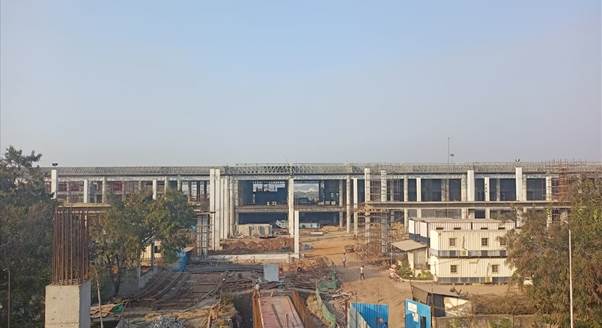
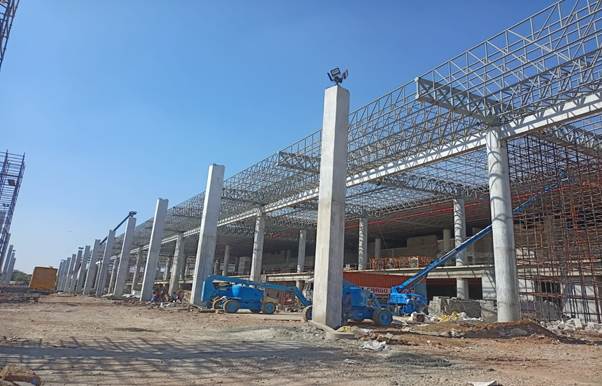
 New Integrated Terminal Building with enhanced capacity and world-class facilities is under construction at AAI’s Pune Airport, which will reduce congestion during peak hours at the airport.AAI has undertaken the construction of the Terminal Buildingat the cost of Rs. 475Cr.More than 55% of the work has been completed and construction of the new building is likely to be completed by August 2023.

The existing terminal building with built-up area of only 22,300sqm.has the capacity to handle passengers up to Seven Million Passengers per annum (MPPA).AAI has undertaken the work for construction of the state-of-the-art New Terminalwith massive built up area of more than 5,00,000 sq.ft. The new terminal integrated with the existing terminal, will have a built-up area of 7,50,000 Sq.ft. with passenger handling capacity of 16 MPPA.

The swanky new integrated terminal building (including old building) will be centrally air conditioned with provision of 10 passenger boarding bridges, 72 Check-in Counters and In-line Baggage handling system. The building will be an energy efficient building with Four-Star GRIHA rating. Provision of 36000 sq. ft. space for F&B and retail outlets has been reserved for refreshment/pleasure of the passengers. A huge canopy on city side of the existing building & new building together will give a magnificent look to the airport from city side.

The strongest intention of the project for new terminal building is the search for unity and continuity between the old and the new. Stretching over 360 meters in length, the Verandah is a unifying façade that not only provides protection from sun and rain but also serves as a grand urban fresco telling the story of rich social, historical, artistic and immaterial culture of Pune & Maharashtra. The facia of the public area below the great Verandah is supported with beautiful Maratha arches and decorated columns with a finish of local dark stone which is commonly seen in most of the heritage structures around Maharashtra. The new forecourt garden design is directly inspired by one of the most recognisable landmarks of Pune – The Shaniwar Wada Gardens.

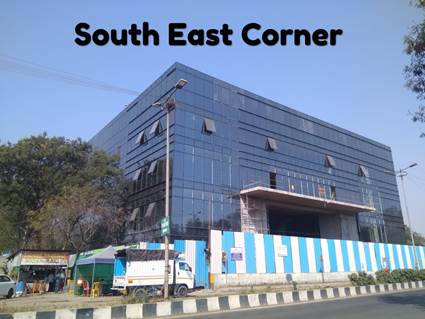
To give a permanent solution to the parking issue, a multilevel car park (Ground plus three storeyed &two basementfloors) with a cost of Rs. 120 Cr. is also under construction and is likely to be commissioned by July 2022.The multi-level car parking will have capacity for parking of 1024cars and will be connected to the departure area of existing building with a sky bridge with provision of staircase, escalators & elevators at building side for dropping/ going up.

Hon’ble PM has recently highlighted the significance of modern infrastructure and transport facilities for Pune city, which has reinforced its identity in the fields of Education, Research & Development, IT and Automobile.The revamped terminal building of Pune airport will be an addition to his vision of infrastructure led growth under PM-Gati Shakti National Master Plan.


Status of Terminal Building Work at Site


Status of Terminal Building Work at Site


Status of MLCP Work at Site


Perspective Design – New Integrated Terminal Building (Elevation- City side view)


Perspective Design – New Integrated Terminal Building (Elevation- Air side view)


*************

Educational Journal – IJR

 International Journal of Research (IJR) is a peer-reviewed and open access journal, which aims to provide profound contributions to operations management theories and applications. The journal prefers the submitted manuscript, which meets the internationally accepted criteria and the style of the journal for the purpose of both reviewing and editing. This journal is committed to providing a platform for educators, scholars, researchers and practitioners, with an international collection of all operations management research facets. 

For publication in this scholarly open-access journal, send papers to ijr@ijrjournal.com 

The topics related to this journal include but are not limited to:

Computational Intelligence
Computing and Information Technologies
Continuous and Discrete Optimization
Database Management Systems 
Decision Support Systems 
Engineering Management
Financial Engineering
Heuristics
Industrial Engineering
Information Management
Information Technology
Inventory Management
Knowledge Management
Knowledge Management Systems 
Learning Management Systems 
Logistics and Supply Chain Management
Manufacturing Industries
Marketing Engineering
Markov Chains
Military and Homeland Security
Networks
Office Information Systems
Operations Management
Organizational Behavior
Planning and Scheduling
Policy Modeling and Public Sector
Political Science
Production Management
Queuing Theory
Revenue & Risk Management
Simulation
Sociology
Statistics
Stochastic Models
Strategic Management
Systems Engineering
Telecommunications
Transaction Processing Systems

Use of Electronic Media for Educating Farmers

 The Department of Agriculture & Farmers Welfare (DA&FW), Ministry of Agriculture & Farmers Welfare is educating farmers through use of following electronic media to upgrade their knowledge on modern agriculture technologies:

  1. The scheme ‘Mass Media Support to Agriculture Extension of ‘Sub-Mission on Agriculture Extension’ is under implementation to create awareness among the farming community and educate the farmers on improved agriculture technologies. The programmes are telecast through DD Kisan, DD Regional Kendras (18) and broadcast through 96 FM Stations of All India Radio. The ‘Focused Publicity & Awareness Campaign’ is also being undertaken through electronic and print media for creating awareness among the farmers and other stakeholders on technological aspects of agriculture.
  2. Social media platforms like Twitter, Facebook, Instagram and YouTube are being used to educate farmers.
  3. The ICAR institutes and KVKs have developed 283 mobile apps on different agriculture commodities for providing advisory to the farmers. ICAR has also created an electronic platform ‘Kisan Sarathi’ for supporting agriculture at local niche with national perspective to provide a seamless, multimedia, multi-ways connectivity to the farmers with the latest agricultural technologies, knowledge base and the pool of large number of Subject Matter Specialists.

The Government is implementing following schemes and activities to impart training and educate the farmers to adopt modern agriculture techniques:

  1. A Centrally Sponsored Scheme on ‘Support to State Extension Programmes for Extension Reforms’ popularly known as ‘Agriculture Technology Management Agency (ATMA)‘ is under implementation in 691 districts of 28 States & 5 UTs of the country. The extension activities under ATMA, inter-alia, include Farmers’ Training to upgrade their knowledge and technical skills on modern and innovative agricultural technologies.
  2. The ‘Mission for Integrated Development of Horticulture (MIDH)’, a Centrally Sponsored Scheme is under implementation in all States/UTs for holistic growth of the horticulture sector covering fruits, vegetables, root and tuber crops, mushrooms, spices, flowers, aromatic plants, coconut, cashew, cocoa and bamboo.
  3. The ‘National Food Security Mission (NFSM)’ is under implementation in identified districts of 28 States and 2 UTs viz. Ladakh and J&K of the country to increase the production and productivity of rice, wheat, pulses, coarse cereals and nutri- cereals (millets) through area expansion and productivity enhancement.
  4. Under ‘Sub-Mission on Plan Protection & Plant Quarantine’ the ‘Farmer Field Schools (FFSs)’ are conducted to educate farmers on various aspects of Integrated Pest Management.
  5. Four Farm Machinery Training & Testing Institutes (FMTTIs) located at Budni (Madhya Pradesh), Hisar (Haryana), Anantapur (Andhra Pradesh) and Biswanath Chariali (Assam) are engaged in imparting training to various categories of trainees including farmers, in the field of Farm Mechanization in agriculture sector.
  6. Indian Council of Agricultural Research (ICAR) has established a network of 729 Krishi Vigyan Kendras (KVKs) in the country mandated with Technology Assessment and Demonstration for its Application and Capacity Development. KVKs organize demonstrations, training programms and skill development programs for the benefit of farmers and farm women, rural youth and in-service extension personnel.

Tips for Product Review Writing Websites

 In this article, we will give you some tips for running successful Product review blogs. So let’s start learning about the different aspects of a good product review blog. Read the article till end to learn more and practice it. 

1. Pick Your Niche

If you are creating a product review blog, you should either have expertise in that industry or hire writers who are knowledgeable about that space.

In my opinion, nothing is worse than reading a review of a product by a writer who obviously either has no qualifications to review the product or didn’t actually use the product.


Product review topics can be very diverse and fall in a wide range of niches. Topics include:

  • Beauty
  • Fitness
  • Consumer
  • Food
  • Health
  • Digital
  • Computers and technology
  • Software

… to name just a few.

How to pick your niche is a topic in itself. But you should choose wisely and determine your niche before you proceed to the next steps.

If I were picking a topic for product reviews today, I would pick a niche about which I had a decent amount of knowledge and into which I also believed I could add more insight than the average writer.

2. Start a Blog

After you’ve determined your niche, the next step is creating your blog. (If you’re looking for detailed steps, check out my how-to start a blog article.)

I recommend Bluehost. It’s perfect for someone starting out with a product review blog.

If you order Bluehost through me, I will install and set up WordPress for you for free!You’ll get my recommended theme and plugins. You’ll also get access to my first Ready, Set… Blog! course for FREE.

3. Use a Product Review Template

The success of your product review blog depends on the layout you use and the details you include in each review. I recommend creating a standardized format for each review (or at least for all the reviews in the same category). This allows you to create a standard operating procedure that makes each review easier to write (and also easier to delegate to other reviewers).

Below is the product review template I recommend you use. It has taken me years of testing and looking at heat maps to perfect.

These are the recommended sections every review on your blog should contain:

As with any template, use it as a guideline. Your audience may have different needs. If so, adjust your template accordingly.

Psychology plays a critical part in the review template design. As a reviewer, you want your reviews to be the best-created articles on those products. You want the buyer to be sure they’ve made an informed decision on which product is right for them. To do this, you must get into the shoes of a prospective buyer.

A product may not be right for you personally. You can state that in a review, but realize that, for other buyers, the product might be perfect. Their decision-making process might be different than yours.

A well-designed review website helps three people in the transaction:

  1. The buyer — You help them purchase the best product for them
  2. The merchant — You send the best buyer to their product while directing other buyers to competing products that are more appropriate for their needs
  3. You (the blogger) — You get a commission for each affiliate transaction


You want to satisfy both types of visitors, but their needs are very different. On the web, most people skim content. So you want your review template to be easy to read and set up so the visitor can quickly gather the information they’re looking for.

There are many “Summary Susans” who just want quick answers to their problems. “Don’t make me think; just tell me the answer” is their thought process. You want to make sure you create a clear path to help them determine if the reviewed product is right for them. If the product you are reviewing isn’t right for them, you need to direct them to the alternatives.

The second type of visitor (“Detailed Dave”) wants to be sure they are making the right decision. The purchase may be a huge financial commitment for them, or it may have other social implications. Their job could be on the line, or a spouse could criticize the purchase for years to come.

For this type of visitor, this is where the layout, presentation, and content should shine. Just like “Summary Susan,” “Detailed Dave” is looking for you to be the expert in this niche.

The reader of your review wants to assure themselves they are making the right decision before they buy. Your review is the last step before they take the plunge.

This is one of the reasons why a good review format is so critical.

Not only does it help the reader, but — if you write a detailed review — they will purchase through the link given to them.

How to Write a Product Review

You should create a product review template that’s standard across your site.

A product review should contain nine components:

  1. Title/Brand Logo
  2. Summary
  3. Features
  4. What Is X?
  5. Pros and Cons
  6. Screenshots
  7. Pricing
  8. Alternatives
  9. Recommendation

What order you put these sections in can vary. Remember, this is meant to be a guideline.

As the reviewer, your subheadings should answer consumers’ common questions about the product or service.

Some niches have other additional keyword searches. If so, you should add them to your product review template.

Let’s break down each section in detail.

The first part of any review should make the reader sure they’re on the right page. You want it to be clear that they are seeing the review for the brand or product they’ve searched for. That means the headline for each review should start off with “Brandname Review” or some variant of this.

An optional subheading should highlight a key feature or aspect of the product. It can be a good or even a bad attribute.

If you can, also add a logo image of the brand to make it clear to the reader that they are looking at the right review.

Summary

The purpose of this section is to quickly capture the attention of your visitor to:

  • Help them decide if they want to read your review
  • Identify whom the product is for
  • Identify whom the product is NOT for
  • Potentially give a call to action

This section could display:

  • The brand logo
  • The name of the reviewer
  • The date the review was created
  • (Optional) The date review was last updated
  • An opinion of whom the product is best for
  • An overall rating
  • A product description
  • Whether the product is recommended or not
  • (Optional) Supplemental ratings
  • (Optional) A call to action

Rating

People want a visual representation of how good (or bad) the product you’ve reviewed is. They like to see how the review in question compares to other reviews you’ve done. It makes it easy for the reader to assess your review and decide if it’s worth reading further.

I highly recommend that you add a rating to each of your reviews.

This rating can also show up in a Google search (otherwise known as SERP).

Pros and Cons

The next important part of your product review is the pros and cons section. Readers want to find out about the good and bad features of the product.

No product is perfect, so if your review is listing only the positive aspects without discussing the negative… it’s not a review. It’s a puff piece, and your audience will realize that.

Your review will be more authentic and genuine if it includes the negative aspects of the product.

Features

Visitors to your blog want to see a list of the reviewed product’s features. Are there any aspects unique to the product?

I prefer bullet points or an HTML table that lists the attributes and the benefits. Remember, you are writing a review to help your visitor decide if they want to use or not use the product.

What Is “BRANDNAME“?

From my SEO research, I’ve found this to be one of the more common searches with a similar intent to the review itself. You replace “BRANDNAME” with the name of the brand in an H2. For example, I used the subhead “What Is ThriveCart?” in my review for the shopping cart service.

People are searching for the product and want to find out more about the product. You should answer the question directly.

Ideally, if you are looking for a featured snippets position in Google search, you should try to limit your description to around 50-60 words.

A variant of this is “How Does BRANDNAME Work?” Which subhead to use depends upon your niche and should be researched.

Screenshots

Before individuals buy a product, they want to see what it it looks like. If it’s a physical product, prospects like to see what it looks like in use. You’re better off creating your own product shots than relying on the stock photos supplied by the manufacturer.

However, if you don’t have the budget or the time, start off with photos from the maker.

I prefer placing all of the screenshots in one area using a slider. I dislike showing images all throughout the review and prefer to have one place for the reader to see the various aspects of the product.

In any product decision, price is an important factor. You must include pricing information in your review. “Pricing” is not only a common search term but including it in a subhead helps Google make sure you have the details on what the product you are reviewing costs.

Not every product sold has an easy-to-understand pricing structure. If the product has different price options or levels, be clear about what’s included in each one.

Does the vendor have a discount if you buy in bulk or long-term? Does the product come with any guarantees or warranties? Where can they buy the product? (Hint: via an affiliate link.)

Alternatives

People love to think in terms of comparisons. In fact, when we are already familiar with one product, it’s natural and easy for us to associate it with another possible product to use.

For the sake of simplicity, I would not recommend listing or recommending more than three alternative products. More options typically lead to more confusion.

However, you can offer and present other key features of various products to help differentiate them.

While people like to compare similar products on the market, they also want to be clear on how they are different. What key features do the alternatives offer that the reviewed product does not? Are they competitive in price only?

It’s more than likely you can find key distinctions for those other products to point out. And it’s probable those other products also have affiliate links available as well. So it would make sense to also offer a link to them as well. You get bonus points if you create a review for the alternative product and link to it.

The review may be the entry point to your brand, but it doesn’t have to end there. More often than not, a visitor will enter your blog via one review but wind up purchasing a competing product because of your detailed articles. They’ll use your comparison to find out the alternative product is a much better fit.

As an influencer, your goal is to make everyone — the vendor, the visitor, and you — happy with the affiliate marketing transaction.

You make the vendor happy because you sent the best visitor to its product.

You make the visitor happy because they bought the best product for them.

And of course, you make yourself happy because you get a commission for the purchase.

If you are using Amazon for your products, AAWP also has the ability to create nice-looking comparison tables similar to what was on my blog.

Disclosure

A disclosure isn’t part of the format I gave you up top, but it’s critical you include one in your product reviews. In fact, it should be the first section of your review.

If you are in the United States, per FTC guidelines, you must disclose links on an article that are monetized. According to the FTC, the disclosure must be “clear and conspicuous.” It cannot be a hidden legal disclaimer that you must expand with a button click or live at the bottom of the page.

I’m not a lawyer — nor do I play one on TV — so please consult counsel on the matter. However, there are some good articles out there on the basics.

4. Grow Your Search Traffic

One of the disadvantages of monetizing via affiliate links is the need to acquire traffic for your product reviews.

The primary method is via organic search traffic. That means SEO for bloggers is critical.

The reason why most product review blogs rely on SEO traffic is simple: Most merchants do not allow members of their affiliate marketing programs to bid on paid traffic for their brand.

So you must build your traffic organically. After all, if you are creating a review, it’s the only way you can get brand search terms like:

  • BRANDNAME Review”
  • BRANDNAME Alternatives”
  • BRANDNAME Pricing”
  • “What Is BRANDNAME?”

All of these are common search terms, and because of my recommendations, you have a better chance of ranking for these SEO terms.

5. Update Blog Post Reviews

Unlike other types of blog posts, review posts are evergreen. They have an unlimited timespan and can exist in perpetuity.

But as opposed to what many other affiliate marketing gurus will tell you, a product review blog is not passive income. From my experience, a review blog post is not “set it and forget it.”

On my previous blog, about 80% of our editorial calendar involved updating old articles and reviews. That’s because products were constantly adding new features and functionalities.

Nothing is worse for someone searching for a review than finding one that’s months (or years) out of date. You can create a better user experience if you keep your reviews current. Google will also reward you for it with higher SERP.

Unfortunately, many merchants don’t tell you about updates and you must seek out the product changes. I suggest subscribing to the company’s press releases and monitoring their various social media channels for product updates.


Scheme for Minority People of North Eastern States

 The Government has implemented various schemes for the welfare and upliftment of every section of the society including minorities especially the economically weaker & lesser privileged sections of the society with schemes like Pradhan Mantri Jan Arogya Yojana (PMJAY), Pradhan Mantri Mudra Yojana (PMMY), Pradhan Mantri Kisan Samman Nidhi (PM KISAN), Pradhan Mantri Ujjwala Yojana (PMUY), Pradhan Mantri Awas Yojana (PMAY), Beti Bachao Beti Padhao Yojana, etc. Ministry of Minority Affairs also implements programmes/ schemes across the country including North Eastern States for socio-economic and educational empowerment of the six (6) centrally notified minority communities namely Christians, Sikhs, Buddhists, Muslims, Parsis and Jains. The schemes/programmes implemented by the Ministry in brief are as under: –


(A): Educational Empowerment Schemes:            


(1) Pre-Matric Scholarship Scheme- Scholarship is provided to minority students from Class I to X, out of which 30% scholarship are earmarked for girls.


Post-Matric Scholarship Scheme- Scholarship is provided to minority students from Class XI to PhD., out of which 30% scholarship are earmarked for girls.


Merit-cum-Means based Scholarship Scheme- Scholarship is provided to minority students for Professional and Technical courses, at Under Graduate and Post Graduate level, out of which 30% scholarship are earmarked for girls.


All the three Scholarship schemes are on boarded on the National Scholarship Portal (NSP) and the scholarship amount is disbursed through Direct Benefit Transfer (DBT) mode.


 (2) Maulana Azad National Fellowship Scheme – Under the scheme fellowship in the form of financial assistance is provided to minority candidates who clear the UGC-NET or Joint CSIR UGCNET examination.


 (3) Naya Savera – Free Coaching and Allied Scheme – The Scheme aims to provide free coaching to students/candidates belonging to minority communities for qualifying in entrance examinations of technical/ medical professional courses and various Competitive examinations.


 (4) Padho Pardesh – Under the scheme interest subsidy is provided to students of minority communities on educational loans, for overseas higher studies.


(5) Nai Udaan – Support is provided to minority candidates clearing Preliminary examination conducted by Union Public Service Commission (UPSC), State Public Service Commission (PSC), Staff Selection Commission (SSC) etc.


(B): Employment Oriented Schemes:

(6) Seekho Aur Kamao – Skill development scheme for youth of 14 – 35 years age group and aiming at providing employment and employment opportunities, improving the employability of existing workers, school dropouts etc.


(7) USTTAD (Upgrading the Skills and Training in Traditional Arts/Crafts for Development)- An effective platform to provide self-employment, market and opportunity to traditional artisans and craft persons from the minority communities. Hunar Haats are being organised across the country to provide employment opportunities and markets to artisans/craftsmen.


 (8) Nai Manzil – A scheme for formal school education & skilling of school dropouts or educated in community educational institutions like Madrasas.


(9) Nai Roshni – Leadership development of women belonging to minority communities and non-minority communities (not exceeding 25% of each batch).


(C): Special Schemes

 (10) Jiyo Parsi – Scheme for containing population decline of Parsis in India.


 (11) Hamari Dharohar- A scheme to preserve rich heritage of minority communities of India under the overall concept of Indian culture.


(D): Infrastructure Development Programme:


 (12) Pradhan Mantri Jan Vikas Karyakram (PMJVK) – The scheme aims to provide basic infrastructure such as Schools, Colleges, ITIs, Polytechnics, Hostels, Sadbhav Mandap, Skill Development Centres, Drinking water and Sanitation facilities, Health Projects including hospitals, Sport facilities, Smart classrooms, Aanganwadi Centers etc. in deprived areas of the country. The scheme is implemented in the identified areas having minimum of 25% minority population and backwardness parameters below the national average in respect of socio economic or basic amenities or both.


(13) Also, Maulana  Azad  Education  Foundation  (MAEF)  implements  education  and  skill related  schemes  as  follows:-  (a)  Begum  Hazrat Mahal  National  Scholarship  for Meritorious  Girls  belonging  to  the  economically  weaker  sections  of  Minorities  (b)  Gharib Nawaz  Employment  Scheme  started  in  2017-18  for  providing  short  term  job  oriented skill development training  to youth (c) Grant-in-aid  to NGOs for infrastructure development of educational institutions.


(14) Equity to National Minorities Development and Finance Corporation (NMDFC) for providing concessional loans to minorities for self-employment and income generating ventures. 

The details of the schemes mentioned at S. No.(1) to (12) are available on the website of this Ministry  (www.minorityaffairs.gov.in) and those at serial No.(13) and (14) are available on the website of MAEF (www.maef.nic.in) and NMDFC (www.nmdfc.org) respectively. 


As per Section 2 (c) of the National Commission for Minorities (NCM) Act, 1992, six communities namely Christians, Sikhs, Muslims, Buddhists, Jains and Parsis have been notified as minority communities.  As per Census 2011, population of minority communities in the country are:- Muslims – 17,22,45,158, Christians – 2,78,19,588,  Sikhs –  2,08,33,116,  Buddhists – 84,42,972,  Jains  – 44,51,753   and   Parsis – 57,264.


No State-wise allocation of funds is made in the budget of this Ministry. However, during last five years an amount of Rs. 21,934.38 Crores had been allocated for schemes being implemented by this Ministry.

Schemes for Upliftment of Minorities

 The Government has implemented various schemes for the welfare and upliftment of every section of the society including minorities especially the economically weaker and deprived sections of the society with schemes like Pradhan Mantri Jan Arogya Yojana (PMJAY), Pradhan Mantri Mudra Yojana (PMMY), Pradhan Mantri Kisan Samman Nidhi (PM KISAN), Pradhan Mantri Ujjwala Yojana (PMUY), Pradhan Mantri Awas Yojana (PMAY), Beti Bachao Beti Padhao Yojana, etc. Ministry of Minority Affairs also implements programmes/ schemes for socio-economic and educational empowerment of the six (6) centrally notified minority communities namely Christians, Sikhs, Buddhists, Muslims, Parsis and Jains. The schemes/programmes implemented by the Ministry in brief are as under:


(A): Educational Empowerment Schemes:


(1) Pre-Matric Scholarship Scheme- Scholarship is provided to minority students from Class I to X, out of which 30% scholarship are earmarked for girls.


Post-Matric Scholarship Scheme- Scholarship is provided to minority students from Class XI to PhD., out of which 30% scholarship are earmarked for girls.


Merit-cum-Means based Scholarship Scheme- Scholarship is provided to minority students for Professional and Technical courses, at Under Graduate and Post Graduate level, out of which 30% scholarship are earmarked for girls.


All the three Scholarship schemes are on boarded on the National Scholarship Portal (NSP) and the scholarship amount is disbursed through Direct Benefit Transfer (DBT) mode.


(2) Maulana Azad National Fellowship Scheme – Under the scheme fellowship in the form of financial assistance is provided to minority candidates who clear the UGC-NET or Joint CSIRUGC-NET examination.


(3) Naya Savera – Free Coaching and Allied Scheme – The Scheme aims to provide free coaching to students/candidates belonging to minority communities for qualifying in entrance examinations of technical/ medical professional courses and various Competitive examinations.


(4) Padho Pardesh – Under the scheme interest subsidy is provided to students of minority communities on educational loans, for overseas higher studies.


(5) Nai Udaan – Support is provided to minority candidates clearing Preliminary examination conducted by Union Public Service Commission (UPSC), State Public Service Commission (PSC), Staff Selection Commission (SSC) etc.


(B): Employment Oriented Schemes:


(6) Seekho Aur Kamao – Skill development scheme for youth of 14 – 35 years age group and aiming at providing employment and employment opportunities, improving the employability of existing workers, school dropouts etc.


(7) USTTAD (Upgrading the Skills and Training in Traditional Arts/Crafts for Development) – An effective platform to provide self-employment, market and opportunity to traditional artisans and craft persons from the minority communities. Hunar Haats are being organised across the country to provide employment opportunities and markets to artisans/craftsmen.


(8) Nai Manzil – A scheme for formal school education & skilling of school dropouts or educated in community educational institutions like Madrasas.


(9) Nai Roshni – Leadership development of women belonging to minority communities and non-minority communities (not exceeding 25% of each batch).


(C): Special Schemes


(10) Jiyo Parsi – Scheme for containing population decline of Parsis in India.


(11) Hamari Dharohar- A scheme to preserve rich heritage of minority communities of India under the overall concept of Indian culture.


(D): Infrastructure Development Programme:


(12) Pradhan Mantri Jan Vikas Karyakram (PMJVK) – The scheme aims to provide basic infrastructure such as Schools, Colleges, ITIs, Polytechnics, Hostels, Sadbhav Mandap, Skill Development Centres, Drinking water and Sanitation facilities, Health Projects including hospitals, Sport facilities, Smart classrooms, Aanganwadi Centers etc. in deprived areas of the country. The scheme is implemented in the identified areas having minimum of 25% minority population and backwardness parameters below the national average in respect of socio economic or basic amenities or both.


(13) Also, Maulana  Azad  Education  Foundation  (MAEF)  implements  education  and  skill related  schemes  as  follows:-  (a)  Begum  Hazrat Mahal  National  Scholarship  for Meritorious  Girls  belonging  to  the  economically  weaker  sections  of  Minorities  (b)  Gharib Nawaz  Employment  Scheme  started  in  2017-18  for  providing  short  term  job  oriented skill development training  to youth (c) Grant-in-aid  to NGOs for infrastructure development of educational institutions.


(14) Equity to National Minorities Development and Finance Corporation (NMDFC) for providing concessional loans to minorities for self-employment and income generating ventures. 

The details of the schemes mentioned at S. No.(1) to (12) are available on the website of this Ministry  (www.minorityaffairs.gov.in) and those at serial No.(13) and (14) are available on the website of MAEF (www.maef.nic.in) and NMDFC (www.nmdfc.org) respectively. 


During the last three financial years w.e.f 2018-19 to 2020-21 an amount of Rs. 13113.47 Crore (Revised Estimate) has been allocated for implementation of various schemes of the Ministry.


During last three financial years an amount of Rs. 6547.88 Crore has been sanctioned for providing scholarship to more than 1.96 Crore Minority students under Pre-Matric, Post-Matric, Merit-cum-means and Begum Hazrat Mahal scholarship schemes.


There is no State-wise fund allocation under above mentioned schemes. However, an amount of Rs. 13113.47 Crore (Revised Estimate) has been allocated during the last three financial years i.e 2018-19 to 2020-21 out of which an amount of Rs. 12083.76 Crore has been utilised for the above mentioned schemes etc, benefitting  more than 2 Crore beneficiaries from various states  including the states of Karnataka and  Maharashtra.


The Budget Estimates (BE) of the Ministry for financial year 2022-23 is Rs.5020.50 Crore against BE of Rs. 4810.77 crore for the current financial year i.e 2021-22.