United Nations World Food Programme: I

The Nobel Peace Prize is one of the 5 Nobel Prizes established by the will of Swedish inventor Alfred Nobel, along with the prizes in Chemistry, Physics, Physiology or Medicine, and Literature.The Nobel Peace Prize has been awarded 101 times to 135 Nobel Laureates between 1901 and 2020, 107 individuals and 28 organisations. The International Committee of the Red Cross has been awarded the Nobel Peace Prize 3 times. The Office of the United Nations High Commissioner for Refugees has been awarded the Nobel Peace Prize 2 times . The most recent prize was awarded to the World Food Programme in 2020; nominations for the 2021 prize closed in January 2021. WFP was established in 1961, when George McGovern, director of the US Food for Peace Programmes, proposed establishing a multilateral food aid programme. WFP launched its 1st  programme in 1963, in Sudan. WFP operations are funded by voluntary donations principally from governments of the world, and also from corporations and private donors. In 2019, funding was  recorded around US$8 billion, of which the largest donors were the United States ($3.4 billion) and Germany ($886.6 million).

The Motto of the UN World Food Programme stands for, “Saving Lives – Changing Lives become substantial.  In 2015 the global community adopted the 17 Global Goals for Sustainable Development to improve people’s lives by 2030. With priority of achieving  Goal 2 – Zero Hunger –which pledges to end hunger, achieve food security, improve nutrition and promote sustainable agriculture, 

This is the WFP’s vision – 5 steps to Zero Hunger.

a. Put first those who are furthest behind 

b. Pave the road from farm to market

c. Reduce food waste

d. Encourage a sustainable variety of crops

e. Make nutrition a priority

For more than 50 years, the World Food Programme (WFP) has provided emergency food assistance, often in conflict, post-conflict or disaster situations. WFP has  evolved to combine frontline action with the quest for durable solutions.

This also includes – Cash transfers, that is Empowering the people through provision of cash and/or value vouchers, In-kind food distribution to most vulnerable household.

Please read the following post for more information.

Screen-sharing is the new Movie Theatre

And it’s so much better than what you’d initially have ever thought of. 

When the initially was introduced to me, the most apprehensive of situation that I had to face was the fact that would it even be enticing enough to make me watch whatever that’s been screen-shared to me for such a long time? 

But trusting the fact that with all the apprehension considered it has proved to be such a delight. Yes, network issues would occur, or there might be delay or error with the video that has been shared, but beyond that — the time you’d invest in watching something new, something that you enjoy — it could never distract you, however its also a commitment not just halfhearted commitment but a promising act. 

We could even go beyond Zoom, and talk about options such as Amazon Watch Party for those who have laptops accessible or check out websites that are available and trustworthy, this process could be lengthy to have a site that you trust enough, but make no mistake that it’s enjoyable none the less.. sorry if you’d find me just redundantly reiterating it. 

Moving on, for someone who is secured within themselves and don’t really like social interaction or outings, this seems just so appropriate without the whole pandemic upon our heads. We are comfortable on our own couches or beds a comforter over us, we could even chit chat about the movie or show that you’re watching with your group, and comments on sections without being yelled at by someone else .. which you can’t do, while in a theatre. 

Also, without everything aside, you can still after the entertainment is done and dusted, you can still stay connected and converse with your friend over a cup of coffee — within the confines of your own home.

So, if you’ve not yet tried this method with your friend (s), make sure t=you create a small time in your schedule to unwind, even if it is for 30 minutes, and let me know how it goes. 

Studying International Relations

Go for it, if you are curious of the process of International Relations among nations.

I’ve already provided my simplest version of the answer, but to dig deeper into this notion of taking up such an interesting, and recently developing subject choice has to do so much with the socio-political situation alongside the increasing globalisation we have encountered  with changing times. 

The subjects holds weird fascination to me, when I first encountered it, and I hope it does the same to you. 

But do make your self aware that you won’t directly jump into knowing what Russia or China is handling it’s relations with India, there isn’t anything direct that could give you an eureka movement, but there are these tiny steps you get to take to understand each and every detail when it come to the subject of International Relations.

From Realism, and Trade Policies to tonnes of agreements, and UN and it’s branches, you slowly understand the subject and then next you deal with Diplomacy and its multitudinous types to how a mere decision over their actions on a global scale is surely going to affect someone else. This leads to another set of trials and tribulations but nonetheless the whole idea or the fascination behind this subject lies, for me, is in the knowledge that someone could hole so much power to change something, or some region could change course to appease and pacify another region, all as an act to not create a situation that is surely going to get out of hands, if not monitored. 

Demystifying my version of Bombay

Bombay/Mumbai city of dreams, I get that, at a certain age my grandfather was such a believer too, and it didn’t disappoint him either, but does this belief still stand such waves of life and reality?

The answer is pretty simple to me, and that is a NO. Mind you, I am not demotivating the zeal that you have to come here, probably would take it as once in a lifetime opportunity to do and be better, and still for some it may hold true too. 

Having being in conversations with people who came here to study, while also get their experience of Bombay, they are quite disappointed with what they have seen. A city with barely any space and hidden opportunities, that is difficult to tap into. So what is worth it? The experience perhaps, to live in a metropolitan region, to experience a diverse and translucent culture, to celebrate this divergence, but beyond that I don’t find a lot that makes me wanna stay in this city of shared nightmares. 

Safety is an issue that we’ve never addressed with this region because it never sleeps, but someone who hasn’t ever slept has faced issues that tears at them, and similarly with this region security is something that isn’t even close to what it should ever be. 

Moreover, I could just be a bitter biased person, because I stay here but since I have stayed here, I find that there isn’t much that city could offer me, and the thing that makes me stay here are connections, but I could just move on and find a better place and better opportunity that could suit my need and wouldn’t force me to be a certain way just so that I could stay at a certain place, there are definitely lot of factors to be considered and majority of which is personal and subjective to everyone of us. 

So, do you consider that I wrap it up, k honestly can’t there is too much for me to say that might offend someone because I’m subjectively biased and therefore I’d ask you to let me know what you think of your own experience ad possibly change my prejudice. 

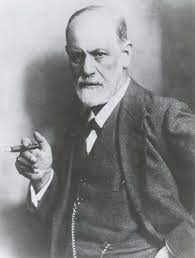
Sigmund Freud: II

Please ensure to read the Part I of my section on Freud.

3 Psychic Zones, Id, Ego, Super Ego. [Butter paper effect – Conscious Subconscious and Id (entirely unconscious),Ego, Super Ego (slightly conscious]) Reservoir – primes source of psychic energy, place where Libido exists, exists or function according to the pleasure principle, wants to fulfil its needs, characterised by great amount of vitality and energy, very amorphous zone, “Obscure inaudible past of our personality .. in accordance with the pleasure principle”. Needs and instincts to fulfil these needs, no morality/values/good/evil, nothing, source of aggression/desires/ deep rooted impulses, lawless, no social cues reckon by Id, function to gratify instincts without any implication of ones action, and if not kept under control and could be taken to any level, self destructive, satisfy for pleasure for the self, to gratify its instincts. Ego, a regulating agency; individual protective in certain way, a rational, governing agent of the psychic. All those needs may be released, in specific ways, the ego will control the id such that we don’t indulge in destructive ways, the untrained id is kept aside by ego governed by reality Principe; regulated by the Outer World. Super go – values like morality, notions of right and wrong, moral senses, reckons moral restriction and plays an important role in the drives and thrusting them back to the unconscious, and so you can’t be overly aggressive – a parental influence of mind and that good things would be rewarding and bad be punished, morality principles. Passes by phase of erotic development; phased passed erogenous zones, the oral the anal and the genital – not only just pleasure, but processes, eating – oral, elimination with anal and reproduction with genital. Pleasure and need quiet new with infant and children – Freud said it. Your gratification if frustrated, your development can be arrested, stuck/fixated unbalanced a phase, and fixation can manifest itself very significantly in your personality – Castration – Castration anxiety. 

Dreams – recurring but sometimes what we commonly see – flying/falling(edge of a cliff)/drowning/running – being chased/ dead people coming back and taking to them that feels real – Freud talks about this entire world of dreams. 

Sigmund Freud: I

Father of Psychoanalysis.

Civilisation, and the study of humanities associates lots of things with him, someone people keep talking about, amused by his theories, pass a lot of judgement, he’s a “crazy” man himself – belief. Freud can be or has been debunked now, his theories insightful, but not necessarily useful. The most influential western thinkers – timeline of publications 20th Century(?) – The clinical days when Lacan and Freud worked are important, both were medics. Human Nature/Sexuality/Dream/Children/Conflict/Desires – Freud Works his insights was controversial. Psychoanalytic’s a framework based on originated in Clinical Observation Freud made in his work. Freud often associated as an originator of these theoretical idea, he’s not the only Psychoanalysts [Jung and Freud didn’t see eye to eye on occasions & Lacan revisited Freud – reconceptualising aspects of theory.]. 

Psychoanalysis —  Method of treating mental disorder and mental illness; a treatment approach – treats mental disorder. The therapeutic aspects that help distressed people, to use psychoanalytic tool to try and make them feel better.Its a theory of human psyche – attempts to explain how human mind works. Psychoanalytic to interpret culture,  mass media and more, the understanding of psychoanalysis that people have offered is broad not just therapeutic but more. The potential the theory has to applicate in the cultural understanding of Psychoanalysis. 

Freud came along and created ripples amongst people which made them squeamish – actions controlled by areas of human mind where we have limited or no control which control our actions; human mind as ice berg, what we see is just the tip, the wight, the bulk, density is what we aren’t aware of. Freud about the unconscious and human actions — people found in uncomfortable because people believed human beings as rational and cognisant to their choice, and thus man was different from other animals, but Freud, that most rational of people are controlled by their unconscious. [Infantile Sexuality]  We are obligated to assume the effects of the unconscious – way of affecting our behaviour/actions/what we say and conduct our selves making us assume the condition of our unconscious — you don’t know that when your behaviour/actions being impacted. Freudian Slip – Humour and the unconscious.

Expend the considerable amount pf energy – the material from the unconscious will appear in the conscious mind, no certainty — the preconscious and unconscious, the union; that domain that it may not change or if it does, great difficulty is followed. This is a premise that the idea that most of the individual mental process is unconscious; Carl Jung and Alfred Adler, did not agree with this premise, that all human behaviour is motivated by Sexuality – Libido; & all human behaviour is greatly motivated by this. There are social taboos created and attached with these sexual practices, and thus many of our desires are Repressed not allowed to take any form in conscious awareness. 

Psychoanalysis, and everything in between.

Why and what infatuates someone with the subject of psychology and its importance and acceptance to human existence.

What was it that got me curious about the idea of psychoanalysis, is the part where you tap into someone’s psyche  or at least lear about the process and what could it unravel. The idea of psychopathology and beyond what society perceives psycho therapy lies an abundance of resources one must always find a way to study or understand that. The notion of psychoanalysis needs to adapted as a common practice, too, since it gives everyone a more peacefully aware and woke outlook towards life and people they engage with. 

The generation now is pretty invested in Psychology, just based on the prejudices they have over the subject, their prejudice seemingly creates a very systemic fascination and it helps in understanding a group or an individual alike. 

But beyond this is works in clinical psychology or behavioural psychology that has interested scholars and led many thesis work. 

But why is such curiosity in people to take on this subject? Is it to better understand your s/o, that seems almost like a common consensus, but is it that people feel allured to analyse someone? Mostly to justify their actions, no matter how absurd, such analysis help cover their wrongs, to help them get better, perhaps. The motif seems sufficient but we aren’t here to cure everyone, we are to push them, or to give them impetus toward a direction that would help them for a better way forward, and that’s what Psychoanalysis is, it is a way — a scientific way — to have a better action plan, call it therapy, but the stigma around that word has created a wave that has saddened people, but we in lieu of respecting psychoanalysis and all that it entail, we need to create a purer atmosphere for us, our peers and one way to do so it having a open approach to this field of study.

Freud, Lacan and many more enable us with tools to understand a fraction of this field but make no mistake that the field is broader and intense and relieving if we take up the patience and understanding of it. 

The Restoration Period: Verse (Part 2)

Please ensure to read the part 1 of the Restoration Literature.

  1. Restoration Tragedy  – Heroic Tragedy – combination of Epic and tragedy; Tragedy – a tragic flaw but Heroic Tragedy, not because of tragic flaw but by Failure, hero failing by his failure may be in a duel/battle, in Restoration Tragedy – hero’s failure isn’t something inherent from the beginning of the play, but when he tries something –an act, he fails – Nicholas Rowe, John Dryden, Thomas Otway.
  2. Epic – a lengthy poem – often poets never able to completely write it, due to its extreme length – a stylised life off a person, dictated in a formal manner, not a person existing alone but connected to society – it begins in media rest – not a liner progression of events but could begin anywhere. Alexander Pope wrote a Mock Epic, written using the style of the Epic, making fun of it.
  1. Restoration Comedy – Comedies in Elizabethan Period – love and its tribulations – romances written in the Elizabethan Period is congratulatory praises the Monarch – Elizabeth mainly. With restoration, comedy comes back, but a different set; a class bound comedy – to deal with the upper classes, Shakespearean plays enacted by Shakespearean Company, which in Jacobean period the company was renamed under Jing James – ‘Kings Men’ – which catered to the needs on general people and not aristocracy, but was later seen to align to the needs of Aristocracy, therefore the comedies written during Restoration was class bound, and lot of upper class people were represented in that way. Metropolis – London, urbanised metropolitan – filled with stereotypes – innocent with faulty characters; ‘predatory widows’ looking for men with money, as well as men looking for women with good estates – money. Restoration Comedy emphasis on love triangle and rivalries, among parallel plots. Restoration Comedy – marriages are regarded as a boring restrictive system, ‘looking for estates’ as well as a boring restrictive system. Both narratives existed the latter was unique, where women had a voice of their own and men objecting towards the institution of marriage. Adultery/Carnality/Folly and Vices/ Proviso Scene – ‘Way of the World’ by William Congreve  – a prenup – a marriage bargaining scene. William Congreve, George Etherege, William Wycherley, George Fraquhar, John Vanburgh – Big five of Restoration Comedy – portraying the upper class yet critiquing – subverting them.  London – the urban side is a setting for all of them and there would be a juxtaposition between the urban and rural side of London.Attacks on Immorality – genre of drama is declining, Theatre Licensing Act of 1737, granting license to any play or refuse on any grounds – the initial half of 18th Century; revival of this particular form of writing – 1770’s Restoration Comedies – Oliver goldsmith – 1773, ‘She stoops to Conquer’ and Sheridan in 1775 and 1777 ‘Rivals’ ways in which the RC is revived in the 1770’s. And Oscar Wilde in ‘the Importance of Being Ernest’.

The Restoration Period: Prose (Part 1)

Restoration Period is during 1660 and the monarch and its influence in England. This period marked the return of Charles II as King (1660–85) following the period of Oliver Cromwell’s Commonwealth

  1. history writing – a significant contribution made during the Restoration Period, documenting the religious and political history of England. The English Prose written to popularise Science – in Renaissance – emergence of new cosmos and science able to release from the clutches of religion, and during the Restoration Period – The Royal Society of London – for the improvement of Natural Knowledge – a learned society thinking about rationality, factual interpretation, empirical reasoning, clearly the opposite of the Medieval Period, where we don’t question authority – a significant thread carried forward in the Restoration is the spirit of Science and Technology. The Royal Society of London – a scientific advisor to the British Government, a principal advisor as well. Thomas Sprat – history piece, on The History Royal Society of London.  Gilbert Burnet.
  2. Diary writingPepys and Evelyn diaries- social documents –  presenting grant details, gossip and rumours of 17th Century intellectuals, discussing events like  – coronation of Charles II, Fire of London (1666) Plague of England (1665), wars fought.  Evelyn’s work Fumifugium – smokiness of London, how it was becoming increasingly populated , Sylva – reforestation, and pollution, how river Thames was becoming increasingly populated.
  3. Travel Writing – sponsored by The Royal Society of London to make a systematic documentation and collection of natural knowledge, funding foreign travels – only condition is to report the travels. Samuel Smith, Benjamin Walford, William Dampier – traveler belonging to the Restoration Period, connection is restoration science and travellers as they work hand in hand, beyond providing data  but also their direct interaction with a new land would impact – direct experience of the new land and not just the marvels of travel documentation. Richard Haklyut and Thomas Roe (India is a very rich country and they sell Jewels on the streets of India).
  4. Biographies – secular as well as religious people as well – Izeak WaltonLives’, John Dryden the History of particular mens life. Hagiography – biography of a christian Saint – the pious life of a saints life.

Should reading be an important part of our life?

Let me start it here by pointing out that, if you’re here already and reading, it simultaneously becomes an activity you engage into.. so yes, reading is important.

But the question is how important; am I right? Education doesn’t have to be what you have studied over the years inside an institution; it could be beyond that — books, per se, they have the ability to enable you with a education that knows no bounds, be it a sci-fi comic, a text on Newton’s thesis, or just some legal content; the best thing about reading is you get to choose what you like, what you prefer, what interests you, beyond institutionalised barriers. Reading is essentially a generic term, panning across undefined boundaries, anything could be considered a text, and you just read it. Nothing is good or bad, you have to just invest yourself into it, and surely over a period of time human brain will adapt into what is becoming the ew normal, and you’ll noting changes — good changes, within yourself. You’ll be moving towards a plane where you have the level of objectivity, where you are aware, and won’t be swayed by anyone around you, you will have the power for yourself to act like how you want to.. and isn’t that almost an ultimate goal amongst us beings, to be liberated and be this autonomous being?

Its also significant to not label what you read, because no matter what genre, or what kind of a text you read, the essence of it would always be to analyse it, not just absorb the words at face value, but rather delve deeper into what or why an author writes the way they do, or what does if a certain section written differently could do to a text, brush up your imagination, glide smoothly with any text you adopt, but absorb a lot more, nothing can ever be set-in-stone, people change, time changes, though written words can’t; they have the potential to be perceived the way someone wants to perceive it, and no one can fight over one’s views, that’s counterproductive to what we’ve been trying to establish. However, don’t forget; if someone’s entitled to their opinion, you are entitled to yours and you have the power to keep on bettering it, to be better and as much you exercise reading into your daily existence, you are stepping closer to what I would consider is being a better being — for that, make sure to keep your eyes and brain open, and not rigid. 

John Milton’s Paradise Lost

OF MAN’S first disobedience

Paradise Lost referring to mythical concept, what is a myth? A symbol, elaborated in the form of a story. Myth embodies the nearest approach to absolute truth which perhaps cannot be expressed in rational words and best presented in a story – Coomaraswamy. To say that something is a myth – in this way – profound/theological sense, which is beyond just the actual facts of history, it could of happened. Almost precious possession .. sacred, exemplary, significant. May be based on a historical event, may be based on entirely fictional imaginings, but is either case, it carries an other-that-literal meaning that is open to interpretation. Myth becomes part of a collective unconscious, it’s not just a legend – need not embody any kind of truth, rather it’s a myth – which is true. 

Adam and Eve – in the Garden of Eden – Paradise – Masculine God – ‘it’s all yours, to cherish, to nurture, to grow, to develop, and only one thing I ask, is you to not eat the fruit from the middle tree – the tree of the knowledge of Good and Evil’ and now Satan who wants to get back at God – any by attacking these Humans whom God loves so much – to lead them away from Virtue – who then attacks Eve – and convinces her, on why must God not want them to eat of the tree, for he had eaten it and noting happened, so if you eat you may become like me – god – she lures Adam into the plan – God realises this catastrophe and casts them out of the paradise, now doomed to death, struggling to ear their food, and all the natural thing became much more arduous, laboured. Our transition from moving from the animal state to the human – part of it is understanding right v/s wrong, death, seriousness of life; therefore every race of humanity have moved through this stage – as part of growing up we began to realise the cause and effect – the pain. That recognition a a part of growing up, it becomes part of the way we think, we are conditioned, we are reenacted it psychologically as we grow into an adult. And after the realization, we still act on the negatives, then that is punishable.

Beyond the prejudice towards American Hip Hop

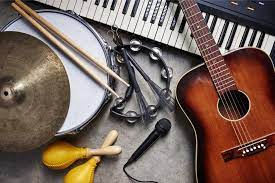
From Dr. Dre to Drake, and many more, the Rap genre is something for parents, a spot that needs to be shaded from — to be ceased to exist, this predominantly stems from institutionalised racism. The notion that is perceived as a sensible reaction is how the drugs that these people have consumed — irrespective of the truth— is something that can’t be shaken off of anyone’s mind. No one bothered to listen or hear these pieces out, like any form of musical expression, be it classical music or pop culture, music is always a tool to express, and let your emotions dance for itself, to the musician and the audience alike. 

But culturally, classical music just by its nomenclature and more, is given hight importance, and priority, making it a shining star; this definitely requires us to actively engage in discussions on your views of high and low culture, which I would be excited to hear, because the prevailing idea to control societies with these dichotomy needs to end, preferably now. 

Rap or other form of expressions need to be universally accessibly without it’s prejudiced taboo, the artists needs to be who they are, to hold their identity as thy want and we all need to understand their angst and respect it, and not just being apathetic about it, but validating them and regarding them with the same Honore given to Mozart, Bach, Beethoven, et cetra. 

Let’s hear what A$AP Rocky, Eminem, Lil NasX, and other have to represent, because since beauty lies in the eye of the beholder, let’s appreciate the beauty that these artists have birthed, the passion, the emotions that they have put behind it.

 And trying to not drag the same argument again and again, isn’t it prerogative for all of us to know these artists as well to better understand them, to acknowledge their struggle, to celebrate their success as well, because they deserve it; this doesn’t mean we could ignore the works of artists like David Bowie, Freddie Mercury, or even bands, from Fleetwood Mac, AC/DC, Nirvana and then some, these people are deserving of much more, but 2Pac, Fifty Cent, are also names that we can’t ignore. 

We can’t ignore histories or pick-and-choose which history we need to show our support to, we need to bring all the collective history together, uplift them for everyone to see and carry the tradition without bigoted views about topics pertaining to the genre of rap.

How does mobile games finds you relief?

I wasn’t one to believe that playing popular interactive (group) mobile games were a type that proves to be helpful to anyone, rather a huge waste of time that could be invested in something constructive. Over the course of the Pandemic with the certain and every persistent highs and lows of my Mental Health, it has presented this sort of way to let go of what is around me, and calm myself down. 

This definitely comes with an impact for the fact that we may never know to just shut down and stop playing your choice game, which leads to string of another problem, addiction being top of that. Here, our smartphones may be smart enough to help us; by setting app limits, like so, if you need to use your favourite app for 60 minutes you can do so, and then your phones may shut the app off for the day; a great way to imply restraints in our life. A consistent and not addictive pattern of using applications makes you not enslaved to it, and consistency is always a good practice with regard to struggles with Mental Balance. 

But what if your parents get behind, nagging at you ? Oh.. yes they will be nagging, thus creating boundaries with your device becomes prominent also once in a while improving our small talk skills and conversing healthily with our family or people around us, is certainly refreshing, it helps in being emotionally more available and present and aware of someones problem more respectfully because you yourself are very clearheaded. 

But probably this still won’t be convincing, to someone who believe to strongly detach themselves from such ‘juvenile’ apps because a common misconception is that the violent video games are detrimental but, these games, are just mere stimulants, not necessarily violent, probably some word puzzle that would help you rewind after a stressful, tiresome day. 

However we all know how tech companies are capitalising on such gas production, which wants you to be hooked, but we need to acknowledge the fact that these games can’t have us hooked unless we consent to it, give them the power to it, be subservient to it, which we’ll not be, because we are above and better than that, and this is something each one of us needs to know and fundamentally give our selves credit for it.

Therefore from self-help to self-restraint and even an enabler, such moderated use, of any application, not just games, but anything in general, would always be useful. The key to it is, to not let anything overrule you, and you’re good to go.  

Does this Pandemic could co-exist with Good Education ?

The answer is: YES!

It has been quite a salacious topic as to how everyone who studied in a Zoom class is nothing but suffering. But are we really? Teacher’s who aimed at delivering their best and optimising the tools they had over the course of this year have certainly made this experience memorable. Graduating batch of 2021, what a load of expectations we had carried upon us, planned to do all the fun stuffs, even study, because its important but the situation didn’t clearly permit such flexible ideas to help nurture. However, we were able to still get-out-of-the-rut that the University’s put us in with just End Semester Exams, an extremely futile practice, and we were suddenly, introduced to a more integrated system, with Assessments throughout the course of semester.

Seems like a big task when first introduced, but now standing at the end of the tunnel and looking back, it was the best thing to shape us, our personality, as well as give us a glimpse of what a true education,  which is not just inclusive but better in terms of helping understanding the Course as well as giving the students the autonomy to act upon their discretion and prove themselves looks like. Heavy, but ’tis not, some may say it’s ‘toxic’ that the ‘pressure of submissions gets too unbearable’ but if contemplated upon the same, we came out better than a lot of our previous batches, a fresh start — a new page to the system of passive education we are unapologetically fed.

For years, there have been discussion on the pros and cons of examination, consisting at least 80% of a students grade; a cemented archetype that made sense to some, but was shattering to the student itself, and unequivocally created nothing short of unhealthy standards and competition with its tendency to be an open exhibition, but having given 50-50 opportunity to have multiple assessments alongside a small examination gave us the chance to prove ourselves, apply the theory we understood, and what’s not good about this entire method of testing, grading, and evaluating a student? I would like to hear about it in the comments, because such methods help us cope from the shame of being labeled as being cheaters in online examination.

Teachers, most likely than not, on one hand may say that they are burdened with additional hours of work, yes, there are some administrational hurdles that we will face, but if we could resolve it, the result for the effort would be a better, stronger education to the citizens of a country, who have plenty of children to educate and have a future to invest in, in order for a stronger, labor intensive population who can carry their own burden proudly. 

So, the pandemic, gave me a new outlook, a more desirable way to pursue education whilst in India, and instilled a hope to prove myself as a better student by the work I submit, also inculcate qualities to work on deadline, and meet new challenges. So, can’t we receive such opportunities with nothing but welcoming arms?

Raymond Willams 

Raymond Willams 

Raymond Williams, the overlooked Marxist but an impactful figure to the study of Literature and Linguistics. When we are introduced to Karl Marx, we often times overlook how Friedrich Engles, plays a jarringly critical roles and how he has enabled Marx with the support and opportunity he needed to move with what Marx believed and simultaneously wrote about. Similarly, Williams became this figure– unless you’ve touched subjects directly under his expertise– he’s the one we’ve turned a blind eye towards. 

Keywords, by Raymond Williams, a treatise and not a dictionary where he presented us the historical transformation 109 words which have underwent as a part of socio-political, ethno-cultural and economical transcendence and haven being privileged enough to read one of his impactful works, it’s just baffling to see how less of a influence he has outside of his field. It’s not extrapolating information that is thrown at you just for the heck of it, but rather an insistence to know who and what Raymond Williams’ stands for. He has redefined/ restructured what Antonio Gramsci has called Hegemony, and even went on further with his works in tearing down era’s through his works and critiquing the existence and work of aristocrats and ownerships in his works The English Novel from Dickens to Lawrence and in Culture and Society: Coleridge to Orwell with his highlights on class struggle; from his comments overarching and inclusive of architecture, fashion, food, and even leisure, he has lured literary critics. 

Williams was one of the pioneers to question about the greatness of culture, the association of High Culture to the Bourgeoise and propagated skeptically the notion of something with no inherent value to be associated and put into pedestal, a notion he worked to deconstruct by questioning the elites and it’s control over the means of production as well as its hegemonic power over what is to be named as culture, and more.

This British man, also was very actively engaging in discussion of what Language is, and how it is a reflection of society, that has been nothing short of a lopsided tale serving a particular class; he question the use of language in reality, and how it has shaped the area of Literature, and constricted it, almost white-washed it. He persists upon altering generic views towards literature, to understand categories like arts, humanity, creativity, science and more. He also spoke about the politics of Speech Writing and how narrowed or culture centric it has to be in order to act as a tool of aid to the speaker to give him impetus, this all significantly spotlights William’s need to bring Language to the forefront of the existence and continuation of human society, not as a crutch, but more like a base for the super-structure to stand tall on; not a closed, rigid system, but something that could be reimagined and conceptualised to constantly regenerates, this is Raymond Williams’ basic as a Marxist Cultural Critic.