🔅Influence by the ideas of Kal Marx, Lenin believed that the way for freedom was through mass action. 🔅The social Democratic Party, spilt on the issue of organisation and strategy. Lenin gained the support of a small majority (bolshinstvo), known as Bolsheviks, which became the Boloshevik Party. His opponents, in minority (menshinstvo), were called Mensheviks.
Failure of Provisional Government🇷🇺:
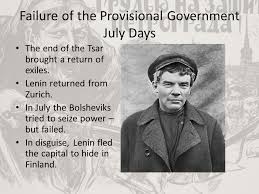
🌟Lenin was in Switzerland when the revolution broke out. Lenin wanted continued revolution. 🌟His slogan of ‘All power to the Soviots’ soon won over the worker’s leader. The people were attracted by the slogan of ‘Bread,Peace and Land’.
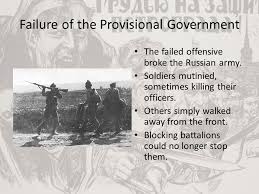
🌟The Provisional Government made two grave mistakes. First, it postponed a decision on the demand for the redistribution of land and the other was Government decided to continue with the war. 🌟Frustrated peasant soldiers deserted their posts and joined those who had resorted to land grabbing. This intensified the rising in Petrograd led by Bolsheviks. The government banned Pravda and addressed all Bolsheviks.
Takeover by the Bolsheviks Party under Lenin’s 🇷🇺:
🔅In October Lenin persuaded the Bolsheviks Central Commitee to decide on immediate revolution. 🔅Trotsky prepared a detailed plan. On 7 November the key government buildings were seized by armed factory workers and revolutionary troops.
🔅On 8 November 1917 a new Communist government was in office in Russia. It’s head this time was Lenin. 🔅The Bolshevik Party was renamed the Russian Communist Party.
Outcome of the Revolution🇷🇺:
🔅The Russian Communist Party eliminated illiteracy and poverty in Russia within a record time . 🔅Russian industry and agriculture developed remarkably women were given equal rights, including rights to vote. 🔅Industries and banks were nationalised. Land was announced as social property and was distributed to poor peasants.
🔅Lenin thought the most important factor for the all of Provisional Government was its failure to withdraw from World War. So Lenin immediately appealed for peace. 🔅Unmindful of the harsh terms dictated by the Central Powers, Lenin opted for withdrawing from the War to concentrate on the formation of new government. 🔅In March 1918 the Treaty of Brest – Litovsk was signed.
Based on performance, size,cost and capacity, the digital computers are classified into four different types: 🔅Super computers 🔅Mainframe computers 🔅Mini computers 🔅Macro computers
Super Computers:
🌟The mightiest computers but at the same time, the most expensive ones are known as Super computers. 🌟Super computers process billions of instructions per second. 🌟In other words, Super computers are the computers normally used to solve intensive numerical computers. 🌟Examples of such applications are stock analysis, special effects for movies, weather forecasting and even sophisticated artworks.
Mainframe Computers:
🌟Mainframe computers are capable of processing data at very high speeds- hundreds of million instructions per second. 🌟They are large in size. 🌟These systems are also expensive. 🌟They are used to process large amount of data quickly. 🌟Some of the obvious customers are banks, airlines and railway reservation system, aerospace companies doing complex aircraft design, etc.
Mini Computers:
🌟The Mini computers were developed with objective of bringing out low cost computers. 🌟Ther are lower to Mainframe computers, in term of speed and storage capacity. 🌟Some of the hardware available in Mainframe were not included in the Mini computer handled by hardware in Mainframe computers were done by software in Mini computers.
🌟Hence the performance of Mini computers is less than that of the Mainframe. 🌟However, the Mini computer market has diminished somewhat as buyers have moved towards less expensive but increasingly powerful personal computers.
Micro computers:
🌟The invention of microprocessor (single chip CPU)gave birth to the micro computers. 🌟They are several times cheaper than mini computers. 🌟The micro computers are further classified into, 🔅workstation 🔅personal computers 🔅 laptop computers 🔅smaller computers
🌟Although the equipment may vary from the simplest computer to the most powerful, the major functional units of the computer system remain tha same : 🔅input 🔅processing 🔅storage 🔅output
Workstations:
🌟Workstations are also desktop machines mainly used for intensive graphical applications. 🌟They have more processor speed than that of personal computers. 🌟Workstations use sophisticated display screens featuring high – resolution colour graphics. 🌟Workstations are used for executing numeric and graphic intensive applications such as Computer Aided Design (CAD), simulation of complex systems and visualizing the results of simulation.
Personal Computers:
🌟Today the personal computers are the most popular computers systems simply called PCs. 🌟These desktop computers are also known as home computers. 🌟They are usually easier to use an more affordable than Workstations. 🌟They are self-contained desktop computers intended for an individual user. 🌟Most often used for word processing and small database applications.
Laptop Computers:
🌟Laptop computers are portable compilation fit in a briefcase. 🌟Laptop computers, also called notebook computers, are wonderfully portable and functional, and popular with travelers who need a computer that can go with them.
Getting Smaller Still:
🌟Pen-based computers use a pen like stylus and accept handwritten input directly on a screen. 🌟Pen-based computer are also called Personal Digital Assistant (PDA). 🌟Special engineering and hardware design techniques are adopted to mske the portable smaller and light weight computers.
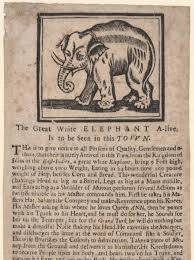
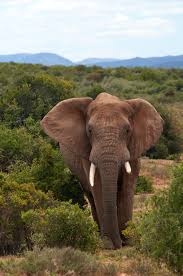
💫The elephant is the largest and one of the most powerful and intelligence animals. Even though blue whales are the largest animals for they grow up to 30 elephant reaches a height of 4 meters and a weight of 6 metric tones.
💫The most remarkable feature of the elephant is its tusks and trunk. The tusks, in fact, are two of its upper teeth that have grown on the outside and become enlarged. A tame or trained elephant uses its tusks to support heavy loads while wild elephants use them as weapons of attack. Tusks are made of ivory which is highly valuable. And it is for tusks that elephants are hunted down and killed. Even though Articles made of ivory are banned in most countries they are available in the black market, and this leads to elephant poaching.
💫The trunk is another intersection feature of the elephant. It serves as an arm and a hand for picking up twigs and leaves and pushing them into its mouth. The trunk is actually the elephant’s lengthened nose and upper lip. It is thick and well-protected on the outside but has a tender inside.
💫There are two kinds of elephants – the Asian elephant and the African elephant. The Asian elephant is relatively smaller than its African counterpart. While the Asian elephant is 2.75 meters tall and weight 3.5 metrics tons, the African is 3.5 meters tall and weight about 5 metric tons, and is darker than the Asian species. Moreover, the Asian elephant can be easily themed or trained and it sleeps lying down while the African elephant is wild and sleeps upright.
🐘facts about elephants🐘:
🔅They’re the world’s largest land animal. …
🔅You can tell the two species apart by their ears. …
🔅Their trunks have mad skills. …
🔅Their tusks are actually teeth. …
🔅They’ve got thick skin. …
🔅Elephants are constantly eating. …
🔅They communicate through vibrations. …
🔅Calves can stand within 20 minutes of birth.
🐘Quotes🐘:
🌟greatest glory in living lies not in never falling, but in rising every time we fall. -Nelson Mandela
🌟The way to get started is to quit talking and begin doing. -Walt Disney
🌟Your time is limited, so don’t waste it living someone else’s life. Don’t be trapped by dogma – which is living with the results of other people’s thinking. -Steve Jobs
🌟If life were predictable it would cease to be life, and be without flavor. -Eleanor Roosevelt
🌟If you look at what you have in life, you’ll always have more. If you look at what you don’t have in life, you’ll never have enough. -Oprah Winfrey
⭐ Ramakrishna was a simple priest of Dakshineswar near Kolkata. ⭐He emphasised the spiritual Union with God through ecstatic practices such as singing bhajans. ⭐He declared that the manifestations of the divine mother was infinite.
Ramakrishna Mission:
🔅 Ramakrishna’s primary achievement was his ability to attract educated youth who were dissatisfied with the rational orientation of religious reform organizations such as the Brahmin Samaj. 🔅After his death in 1886, his discipline undertook the task of making his life and teaching known in India and abroad. 🔅Vivekananda established the Ramakrishna Mission which was actively involved in social cause such as education, health care and relief in times of calamities.
Swami Vivekananda:
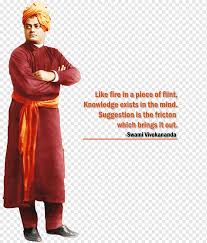
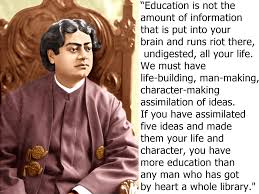
🔅Swami Vivekananda, was the prime follower of Ramakrishna Paramahamsa. 🔅Dissatisfied with conventional philosophical positions and practices, he advocated the practical Vedanta of service to humanity. 🔅He attacked the tendency to defend every institution simply because it was connected with religion. 🔅He emphasized a cultural nationalism and made a call to Indian youth to regenerate Hindu Society.
🔅His ideas bred a sense of self – confidence among Indians who felt like inferior in relation to the materialist achievement of the West. 🔅He was condemned by orthodox Hindus for suggesting that the lower castes should be allowed to engage in the Hindu ritual from which they were traditionally excluded. 🔅Vivekananda’s activist ideology rekindled the desire for political change among many Western – education young Bengalis. 🔅Many of the youths who were involved in the militant nationalist struggle during the Swadeshi movement following the Partition of Bengal were inspired by Vivekananda.
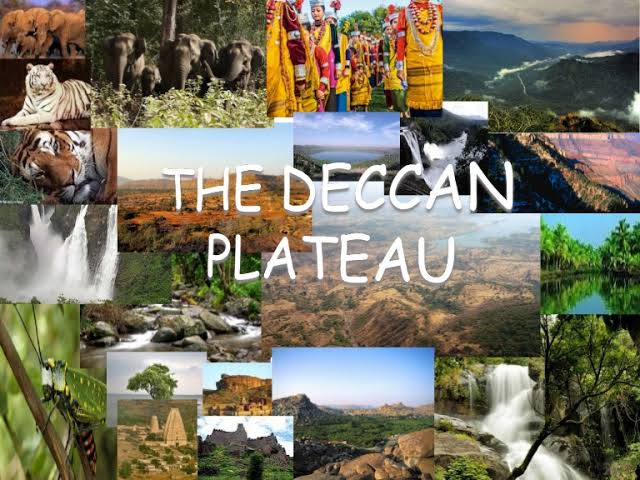
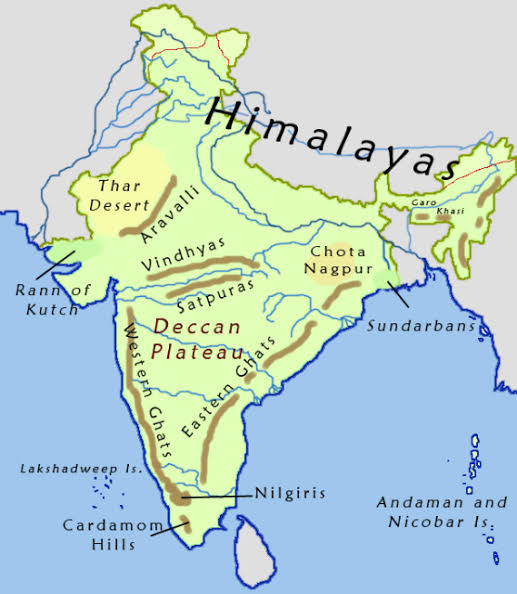
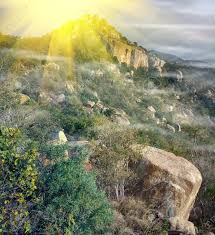
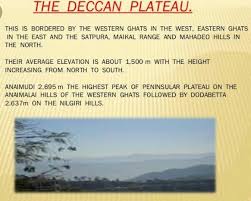
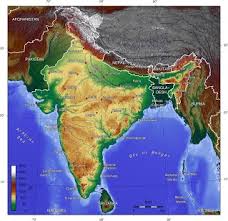
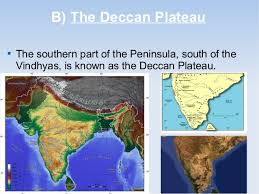
⭐This physiographic division is the largest part of the plateau region India. The shape of this plateau is roughly triangular. ⭐ One of the sides of this triangle is marked by the line joining Kanyakumari with Rajmahal Hills and this line passes through the Eastern Ghats.
⭐The second arm is marked by the Satpura Range, Mahadeo Hills, Maikal Range and the Rajmahal Hills. ⭐The third arm is marked by the Western Ghats. ⭐The area of this plateau is about 7 lakh square km and the height ranges from 500 to 1000 m above sea level.
⭐The Western Ghats forms the Western edge of the Panisular Plateau. It runs parallel to the Arabian Sea coast. ⭐The northern part of this range is called as Sahyadris. The height of the Sahyadris increases from North to South. ⭐Anaimudi is a sort of tri-junction of the Anaimalai Range, the Cardamom Hills and the Palani Hills.
⭐Kodaikanal is a beautiful hill resort situated on the Palani Hills. ⭐ Eastern Ghats run from Southwest to Northeast from the eastern edge of this Plateau. ⭐The range is also called as Poorvadri.
⭐The Eastern Ghats join the Western Ghats at the Nilgiri hills, bordering Karnataka and Tamil Nadu. ⭐The Eastern Ghats are not continuous like the Western Ghats. ⭐The rivers of Mahanadi, Godavari, Krishna, Pennar and Kaveri have dissected this range at many places.
🌟In their Judicial capacity, the High Courts of the President towns Bombay, Calcutta and Madras have original and appellate jurisdiction, while other High Courts have mostly appellate jurisdiction. 🌟Only in matters of admiralty, probate, matrimonial and contempt of Court, they have original jurisdiction.
Appellate Jurisdiction👨⚖️:
As Courts of appeal, all High Courts entertain appeals in civil and criminal cases from their subordinate Courts as well as on their own.
Writ Jurisdiction👩⚖️:
🌟Under Article 226 of the Constitution, the High Courts are given powers of issuing writs not only for the enforcement of the Fundamental Rights, but also for other purposes. 🌟The writs issued through Writ Jurisdiction are,
🔅Habeas Corpus 🔅Mandamus 🔅Prohibition 🔅Quo Warranto 🔅Certiorari
Supervisory Jurisdiction👨⚖️:
High court has the power of superintendence over all courtsvand tribunals functioning in its terrorial Jurisdiction. Thus, it may
🌟Call for returns from them; 🌟Make an issue, general rules and prescribe forms for regulating the practice and proceedings of them. 🌟Prescribe forms in which books, entries and accounts are to be kept by them. 🌟Settle the fees payable to the sheriff, clerks, officers and legal practitioners of them.
Control over Subordinate Courts👩⚖️:
🌟It is consulted by the governor in the matters of appointment, posting and promotion of district judges and in the appointment of persons to the Judicial service of the state. 🌟It deals with the matters of posting, promotion, grant of leave, transfer and discipline of the members of the Judicial service of the state.
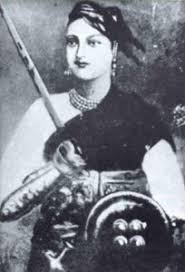
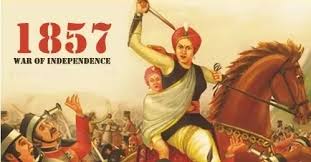
🌟On 10 May 1857 the Indian Rebellion started in Meerut; when news of this Reached Jhansi the Rani asked the British political officer, Captain Alexander Skene, for permission to raise a body of armed men for her own protection and Skene agreed to this. The city was relatively calm in the midst of unrest in the region but the Rani conducted a Haldi Kumkum ceremony with pomp in front of all the women of Jhansi to provide assurance to her subjects, [when?] And to convince them that British were cowards and not to be afraid of them.
🌟Till this point, Lakshmibai was reluctant to rebel against the British. In June 1857 a few men of the 12th Bengal Native Infantry seized the fort containing the treasure and magazine,and massacred the European offices of the Garrison along with their wives and Children. Her involvement in this massacre is still a subject of debate.
🇮🇳AUGUST 1857 – JUNE 1858🇮🇳
🌟From August 1857 to January 1858 Jhansi under Rani’s rule was at peace. The British had announced that troops would be sent there to maintain control but the fact that none arrived strengthened the position of a party of her advisers who wanted Independence from British rule. When the British forces finally arrived in March tech found it well defended and the fort had heavy guns which could fire over the town and nearyby countryside. Sir Hugh Rose, commending British forces, demanded the surrender of the city; if this was refused it would be destroyed. After due deliberation the Rani issued a proclamation: “We fight for Independence. In the words of Lord Krishna, we will if we are victorious, enjoy the fruits of victory, if defeated and killed on the field of battle, we shall surely earn eternal glory and salvation”. She defended Jhansi against British troops when Sir Rose besieged Jhansi on 23 March 1858.
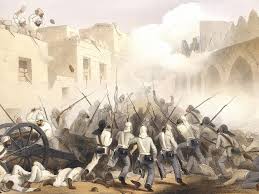
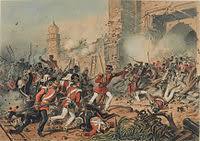
🌟The bombardment began on 24 March but was met by heavy return fire and the damaged defences were repaired. The defenders sent appeals for help to Tatya Tope! an army of more than 20,000 headed by Tatya Tope, was sent to relieve Jhansi but they failed to do so when they fought the British on 31 March. During the battle with Tatya Tope’s forces part of the British forces continued the siege and by 2 April it was decided to launch an assault by a breach in the walls. Four columns assaulted the defense at different points and those attempting to scale the walls came under heavy fire. Two other columns had already entered the city and were apporaching the palace together. Determined resistance was encouraged in every Street and in every room of the palace. Street fighting continue into the following day and no quarter was given, even to women and children. “No maudlin clemency was to mark the fall of the city” wrote Thomas Lower. The Rani withdrew from the palace to the fort and after taking counsel decided that since resistance in the city was useless she must leave and join either Tatya Tope or Rao sahib (Nana Sahib’s nephew).
🌟The place for where Rani Lakshmibai jumped on her horse, Badal. According to tradition with Damodar Rao on her back she jumped on her horse Badal from the fort; they survived but the horse died(28) the Rani escaped in the night with her son, surrounded by guards.
🌟After her death a few local people cremated her body. The British captured the city if Gwalior after three days. In British report of this battle, Hugh Rose commented the Ram Lakshmibai is “personable, clever and beautiful” and she is “the most dangerous of all Indian leaders”. Rose reported that she had been buried “with great ceremony under a tamarind tree under the Rock of Gwalior, where I saw her bones and ashes”. Her tomb is in the phool Bagh area of Gwalior.
🌟Twenty years after her death Colonel Malleson to wrote the in the History of Indian Mutiny, vol.3; London,1878 whatever her faults in British eyes may have been, her countrymen will ever remember that she was driven by ill-treatment into rebellion, and that she lived and died for her country.
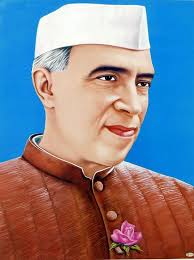
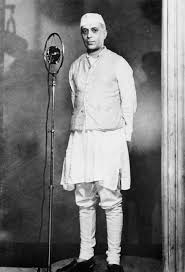
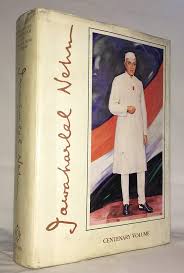
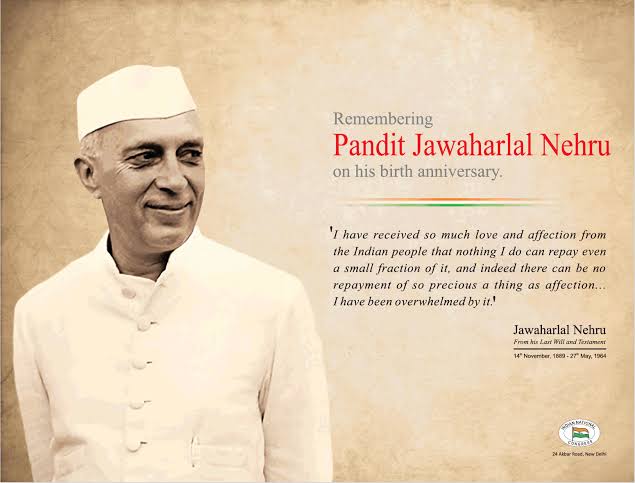
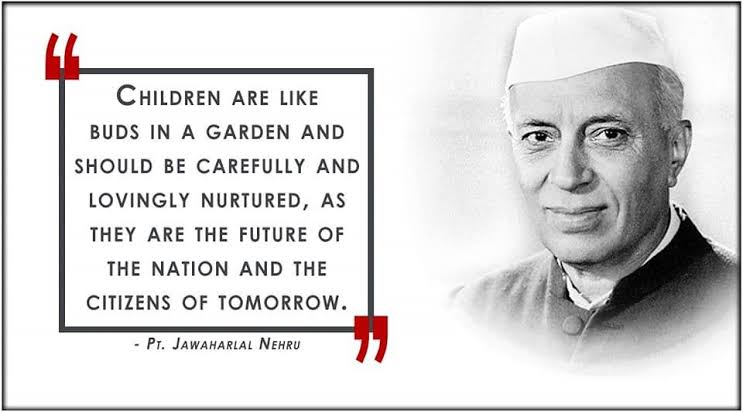
🌟Born in a wealthy, aristocratic Kashmir Brahmin family as the only son of Pandit Motilal Nehru, a flourishing law practitioner in Allahabad, Uttar Pradesh (UP), Jawaharlal received the best of education first in India and later in England where he attended at Harrow and Trinity colleges, Cambridge.Later still, he qualified as a barrister at the Inner Temple. After completing his higher studies Jawaharlal returned to India in 1912. Being a highly cultivated and sensitive individual, he was more interested in public affairs affairs rather than in practising law, specially so since his father was already deeply involved in Congress politics. In 1916,at the of 27,he was married to Kamala, daughter of Jawaharlal Kaul, another distinguished Kashmiri Brahmin descendant. After marriage,the couple went to Europe for their honeymoon. Soon a daughter was born to them, Indira Priyadharshini, who was to become India’s third prime Minister in 1967. Nehru’s family life was short-lived. As her husband plunged into politics and was hailed by the British in 1921, kamala also started participating in public life. Constant travel and rigiorous schedule made her I’ll and she had to spend several months in Switzerland for treatment. She returned to India in 1928, and again engaged herself in public life, often with her husband. When her health deteriorated,she had to go to Switzerland once again. But this time the journey was fatal. She succumbed to her illness on 28 February 1936,when Nehru was only 47 and Indira just 19. Nehru did not marry again. His life was totally dedicated to the National cause and to bring up his only daughter.
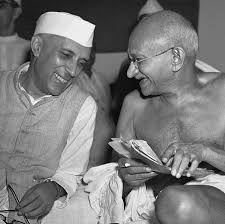
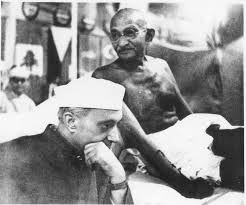
🌟Nehru’s political initiation took placeat his father’s home ‘Anandbhavan’ itself. Many Senior politicians visited Anadhabavan to hold discussions with Motilal Nehru. The young Jawaharlal got acquainted with many of them. He also came to have glimpses into the prevailing political situation. Later, he became more active in UP politics. The defining moment of Nehru’s political career came soon when he met Gandhiji in 1919. Gandhiji had already become a prominent leader of the nationalist movement. They got attracted to each other instantly. The occasion also was right. In Amristar, Punjab, the British troops had opened fire on a unarmed crowd on 13, April 1919 killing and wounding thousands of men and women. The whole nation was shocked. Innumerable protest meetings were held all over the country. Jawaharlal was among the leaders who organized protests. In the 1920 session of the Indian National Congress, Gandhiji put forward the idea of non-cooperation. Though there were differences of opinion on this novel political weapon, Nehru staunchly backed the idea. After coming into code contact with Gandhiji Tere was no respite for Nehru. In 1927, there were widespread demonstrations ad strikes against the Simon Commession sent to India by the British Government to study Constitutional reforms in the country. Jawaharlal who led the protests in Allahabad was beaten by the police. The opposition to the Simon Commession wa not only in respect of it’s terms of reference but aso to the fact that the commission had no Indian as a member. Nehru was asked to prepare an alternative ‘constitutio’ for India. This Nehru himself was elected as the President of ye Congress at the Lahore session. It as a rare honour for the young leader, for the previous session in 1928 was presided over by his father Motilal Nehru. It was also in this session that the Congress declared that complete independence was it’s avowed goal. The car the famous salt ‘satyagraha’ whereby Gandhiji exhorted people to extract salt from see water violating British ban on it. Nehru was arrested along with so many others for participating in the salt agitation. It was a series of agitations and jail terms that followed. The grand finale was the Quit India Movement when Gandhiji asked Britain and to leave India and let the Indians take over the country’s governance. Again, all the leaders including Nehru was arrested and jailed. Altogether Jawaharlal had to spend a period of more than decade and a half in British Indian jails on various occasions.
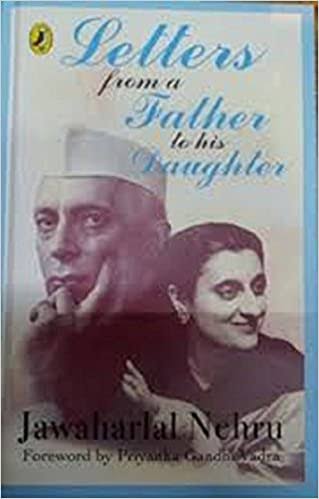
🌟But such harsh measures could not silence the man. Instead it brought to light another brilliant quality of the multifaceted personality – the writer in Nehru. He wrote some of the most historically reliable and literature- wise brilliant books during his prison days. ‘Dicovery of India’, ‘Glimpses of World History’, ‘Letters to His Daughter’, ‘An Autobiography’, Etc. are some of them. They are considered literary masterpiece in English language, and are in good demand even now.
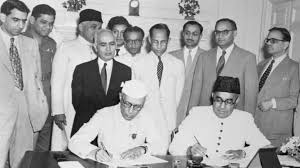
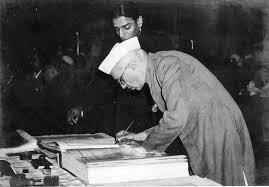
🌟By the end of the Second World war, Britain had recognized the need for settling the questions of India’s demand for Independence. The labour Government that came to power after the war sent in 1946 a Cabinet Mission under sir Stafford Crips to negotiate with Indian leaders on issues connected with the transfer of power. They spent weeks in India talking with political leaders of various shades. Nehru played a prominent role in these discussions as he had been once again elected President of the Congress Party. The talks were practically inconclusive as the two main political parties, the Indian National Congress and the Muslim League, could not agree to any formula put farward. Finally as a prelude to transfer of power Britain set up an interim Indian Government under the premiership of Jawaharlal Nehru. Though the Muslim League did not join at the beginning, they joined The Cabinet at a later stage, effectively making it a coalition ministry. The relationship of the two parties had been very complex and often antagonistic. British Government was partly responsible for their mutual hatred and suspicion. In their anxiety to prolong their rule in India, they had tacitly encouraged communal division between Hindus and Muslims, the dominant segments of the India’s population. As the political agitations for Independence intensified and on the British departure became imminent, the meetinggrounds between the divided political foes became unbridgeable. British solution was division of the country into India and Pakistan a state to be newly carved out in the Indian subcontinent. Like his mentor, Mahatma Gandhi, Jawaharlal Nehru was also dead opposed to the idea of country’s partition. But the brief experience in the interim Cabinet with Muslim League during 1946 – 1947 convinced him that the partition could not be avoided. Vital portfolios were shared by rival parties and there were bickering almost daily on the decision-making process and on the allotment of funds to various administrative and development activities. The overcome this running agony and to make the administration a creative smooth affair, partition of the country was agreed upon. India became free on 15, August 1947 after Pakistan was granted freedom a day earlier. Jawaharlal Nehru was sworn in as the first prime Minister of free India when the clock struck the midnight hour that day. He was 58.
🌟As the Prime Minister of free India, Nehru’s task was stupendous. There was the immediate problem of communal mayhem and whole- scale slaughter following mass migration between the two countries. More vital was the agenda for long term development of the country. Congress Party had laid down broad outlines of National priorities. But it had to be drafted into policies and put into implementation. It was the towering personality of Jawaharlal Nehru that saved the situation. Mahatma Gandhi had already proclaimed him to be his political heir, and Nehru had a clear vision about the future of the country. He was an idealist ,but not a prisoner of ideologies. He was a top class intellectual,but he always respected the opinion of others of that decisions of national importance were made after due consultations.
🌟Nehru envisaged a planned developed for the country. With this in view, he formed planning commission which was entrusted with the preparation of the First Five Year Plan. Though the first plan was a modest one, as the years passed the plans grew in size and ambition. One can stay with certainty that whatever growth the development India attained during the fifties and sixties had their origin in Nehru’s ideas on planned progress. Nehurvian developmental vision guided this vast country in it’s tryst with destiny.
🌟Probably, Nehru’s more basic contribution was in the field of social and political developmenrs. India inherited a diversified and layered society and polity. Tendencies for internal feud and dissensions wre aplenty. Nehru’s inclusive Vision and policy of accommodation held this immense country together and helped it to evolve into a vibrant secular democracy. He remained accessible to everyone irrespective of religion, caste, region, language or other differences.
🌟Nehru’s achievement on the international arena was no less great. The post-war world was divided into a pro-socialist bloc of the contries under the USSR and a pro-capitalist bloc under the USA. In this divided world Nehru took an independent stand. Dubbed as non-alignment,the policy attracted many newly emergent, Independence countries of Asia, Africa and Latin America. A third bloc of nations soon got organized under the banner of Non-Alignment. Nehru was regarded a leader of the Non-Alignment Movement (NAM) along with President Nasser of Egypt, President Sukarno of Indonesia and President Tito of Yugoslavia. Peaceful coexistence was the pillar of his foreign policy. Non-Alignment policy helped India and other third World countries to exert an influence out of proportion to their Military or economic strength.
🌟At the domestic front, Jawaharlal showed great insight on Developmental priorities. He knew that heavy industries like steel, cement, ship building, locomotives, fertilizer, machine tools, etc. we’re the backbones for any meaningful industrialization. If heavy industries were not founded on strong basis, other industries would not follow. A similar principal was followed in the case of development of science and technology. The Council of Scientific Industrial Research (CSIR) was started as a nodal agency for promoting institutional level research efforts in various fields. As a result, some of the world class research laboratories grew up in the country. Steps were taken to establish atomic research centres and space research centres. University Grants Commission was founded for rapid expansion of higher education facilities in the country. Nehru Paid equal attention to the flowering of human talents in social sciences, arts and literature. Various national level councils such as Indian Council for Historical Research (ICHR), Indian Council for Social Science Research (ICSSR), etc. were set up to encourage pursuits of quality studies in social sciences. Various academic such as kendra Sathiya Academy, Lalith Kala Academy, National Book Trust, Children’s Books Trust, etc. also owe their existence to Nehru’s deep concern for the cultural, artistic and intellectual development of the people of this vast country.
🌟Jawaharlal travelled widely both within the country and outside. In India there would be hardly a town or village where he had no visited at least once. Also, he carried India’s message across the world by visiting almost all important countries. In USA and the USSR, India’s leader was given reception that stunned even the host countries. For example,it was reported that when he visited New York in 1949, the welcome received by him was comparable only yo that received by General Mac Arthur, the 5- starred homecoming hero of the Pacific War.
🌟Nehru was a man of the masses. He was in his element when he moved with them or addressed them. He drew inspiration,even ideas from the lives of ordinary, faceless common people. For him they represented real India.
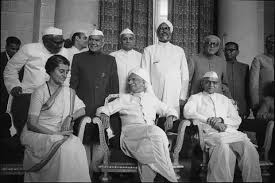
🌟A fairly long period of 16 years as head of the Government of a cast country with nearly one-sixth of world’s population should have been exhaustive and tiring for any leader. Yet, Nehru remained a relentless fighter for peace and development. However, in the summer of 1964 while he was on a hectic tour of the Himalayan districts, Jawaharlal fell ill. He was in the hospital for less than two weeks. Aged 75 ,he breathed his last peacefully on 27 May 1964 and bade good bye to his beloved people. As a token a affection to the departed leader, the ashes for his mortal body were apportioned and taken to various rivers and seacoasts across the country for immersion. Even in death, the titanic leader wanted to remain united with his country and it’s people. A simple mausoleum on the banks of the river Yamuna in Delhi was erected to preserve part of his mortal remains. It is apply named ‘Shantivan’, the adobe of peace or rather ‘peaceful woods’.
🌹Jawaharlal Nehru will be remembered by posterity as one of the greatest statemen that India has produced. His place in historyis assured as the supreme architect of modern India🌹.
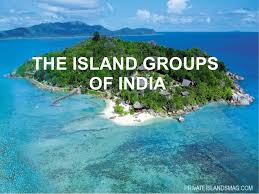
🌟India has two major Islands groups namely Andhaman and Nicobar and lakshadweep. 🌟The former group consists of 572 islands and are located in Bay of Bengal,and the later one has 27 islands and is located in Arabian Sea. 🌟India’s only active volcano is found on Barren Island in Andaman and Nicobar group of Islands, while the islands of the Arabian Sea are mainly coral origin.
🏝️Andhaman and Nicobar Islands🏝️:
🌟These islands are located in an elevated portion of the submarine mountains . Since these islands lie close to the equator, the climate remains hot and wet throughout the year and has dense Forests. 🌟The area of the Islands group is about 8,429 Sq.km. The entire group of Islands is divided into two. 🌟They are Andhaman in the north and the Nicobar in South. 🌟Port Blair is the administrative capital of the Andhaman and Nicobar Islands. 🌟The Ten Degree Channel separates Andhaman from Nicobar group. The southernmost tip, the Indira point is a part of Nicobar Island.
🏝️ Lakshadweep Islands🏝:
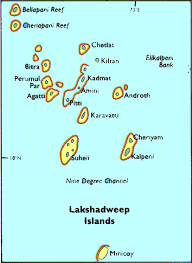
🌟This is a small group of coral islands located off the west coast of India. It covers an area of 32 Sq.km. 🌟Kavaratti is its administrative capital. 🌟Lakshadweep Islands are separated the Maldive islands by the Eight Degree Channel. The uninhibited “Pitt Islands” of this group has a bird sanctuary. 🌟Earlier, it had three divisions namely Laccadive, Mimicry, and Amindivi. It was named as Lakshadweep in 1973.
🏝️ Offshore Islands🏝:
🌟Besides the two group of Islands, India has a number of islands along the western coast, Eastern Coast, in the delta region of Ganga and in the Gulf of Mannar. 🌟Many of these islands are uninhabited and are administrated by the adjacent states.
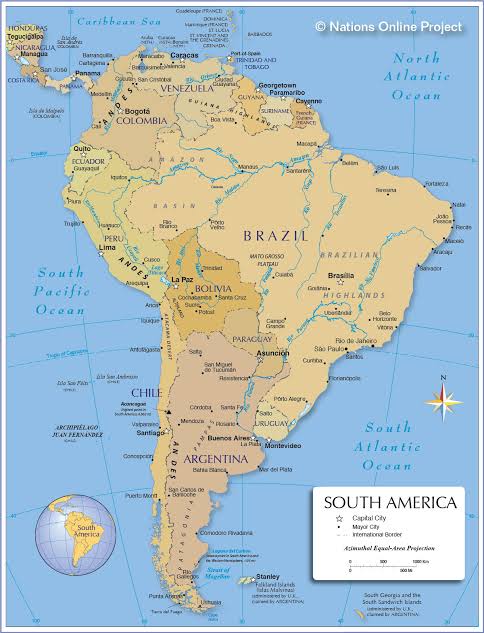
🌟Before the European discovery of America three centres of civilisation existed there in Mexico in Central America and in peru in South America. 🌟The Maya,the Inca and the Aztec Civilizations were highly advanced. 🌟There were several statin each of these areas of civilisation. 🌟Well organized and strong governments existed. 🌟Around the eleventh century, large cities formed into a league of Mayapan (centre of Maya civilisation of native American Indians).
🌟For over hundred years the League of Mayapan lasted.Though Mayapan was destroyed towards the close of twenty century, other cities continued. 🌟Aztecs from Mexico conquered the Maya County in the fourteenth century and founded their capital city of Tenochtitlan. 🌟For nearly two hundred years the Aztecs ruled their empire. 🌟In the sixteenth century when the Aztecs were at the height of their power, the whole empire collapsed before a handful of adventures led by a Spaniards named Hernan Cortes. 🌟Mexican Civilisation collapsed. With the great city of Tenochtitlan also perished.
🌟This is one of the world’s worst genocides. The other famous Conquistador was also a Spaniard by name Francisco Pizarro. 🌟He led the conquest of the Incan Empire. Later the Spaniards made peru a part of their dominions. 🌟By the late 18th century, demand for political freedom, administrative autonomy and economic self – determination was articulated throughout Latin America. 🌟There were bloody conflicts between Haitian slaves, colonists, the armies of the British and the French colonizers. 🌟These struggles led by Toussaint L’Ouverture during 1791-1804 ended in the Haitain people’s independence from the colonial control of France.
🌟Haiti thus became the first Caribbean country to throw off slavery and French colonial control. 🌟When the world War ll broke out, the United Party spilt on the issue of South African support for British in the war against Germany. 🌟Smuts opposed Nazism and wanted South Africa to help Britain. Herzog was sympathetic towards Hitler, and favoured a policy of neutrality.
🌟The Parliament, however, decided in favour of war,and Herzog resigned. 🌟Smuts continued to function as the Prime Minister until 1948, With the passing away of Herzog, many in the party led by him joined the Nationalists. 🌟The 1948 election gave the Reunified National Party a majority over the truncate United Party.
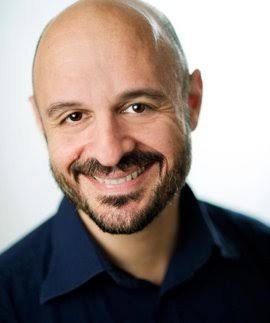
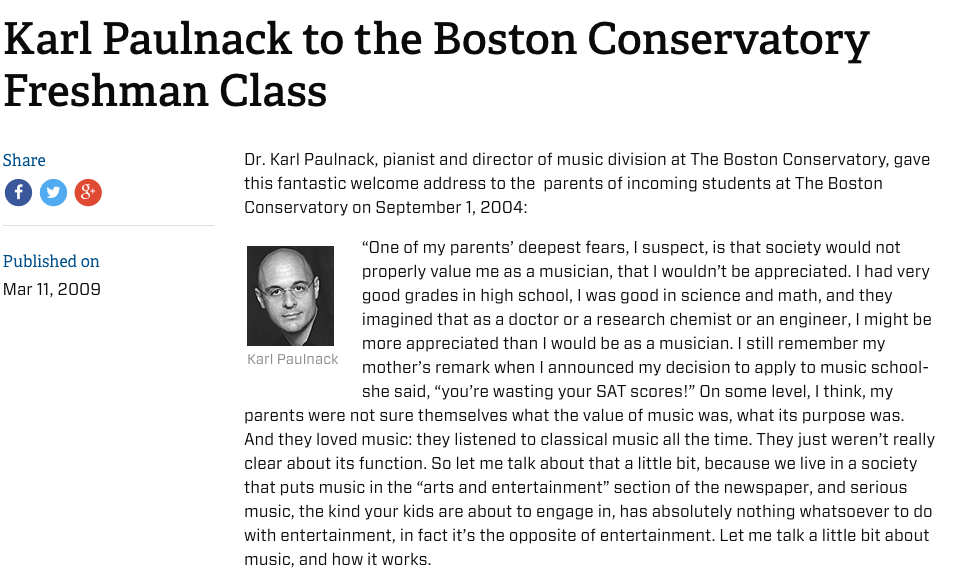
🎵🎼🎵Hailed by the Roston Globe as “a firecracker of a pianist” and “master of his instrument” Karl paulnack has partnered vocal and instrumental soloists, chamber groups,orchestras, conductors and opera companies in nearly a thousand concerts throughout North America, Bulgaria, Estonia, France, Macedonia, Norway, Romania and Russia. Engagements of recent and current seasons include the festivals of Bard College, Madeline Island, Round Top, Royaumont, Sonic Boom and Tangle wood, as well as the Bridge, Noe Valley, Stillwater, Walker Museum, Williams College, UC Davis, UT Austin and University of Oregon concert series. He has appeared in concert at Alice Tully, CAMI, Carnegie, Merkin and Weil recital halls, and also at Tangle Wood’s Ozawa Hall,the Library of Congress and the Hollywood Bowl. His regular recital partners include violinist Jorja Fleezanis, soprano Lucy Shelton and numerous chamber ensemble. A frequent performer of new music, Paulnack has been privileged to work closely with many of the important composers of our time including John Adams ,Elliott Carter George crumb ,Karel Husa, steva Reich and Joan Tower in preparating performance s of their works. In describing the Tangle wood premiere of Elliott Carter’s “of Of Challenge and of Love” with Lucy Shelton,the Boston Globe’s Richard Dyar cited Paulnack’s “commanding” performance as “a standard to aspire to”. Paulnack has appeared as a featured guest on such public radio programs a St. Paul Sunday, Performance Today, and Morning Pro Musica ,as well as on Minnesota Public Radio and BBC Television.
🎵🎼🎵Recording of his performance may be found on the Koch, Seamus, Innova and Capstone Labels. Early in his career, Paulnack served as rehearsal pianist and musical assistant to conductors Sir Charles Grove, Christopher Hogwood, Kurt Masur, Sriji Ozawa, Otto Werner Mueller and Michael Tilson Thomas. With the Los Angeles Opera Theater, he was assistant/cover conductor for his mentor Henry Holt, and served on the opera coaching and conducting staff of University of Southern California (USC) and the los Angeles Philiharmonic Institute. His work in opera includes conduction and coaching position at several universities as well as the Tangle wood Music Center,Where he was a member of the team responsible for the historic 50th anniversary performance of Peter Grimes, an event marking Tangle Wood’s renewed commitment to opera in it’s Fellowship programs. Committed to a diverse comprehensive practice of collaborative musicianship as an artist teacher for more than two decades, Paulnack has served as music division director of The Boston Conservatory since 2002. He also serves as music director and conductor of the contemporary opera Lab of Winnipeg and chef de chant of the Orchestra de Picardie in Amiens, France. He co-chaired the highly acclaimed accompanying and coaching department of the University of Southern California, Ithaca College and Music Academy of the West. He holds an undergraduate degree in solo piano from Eastman and completed theM.M. and D.M.A. degree at USC , where his teachers included Gwendolyn Kolofsky and Brooks Smith.
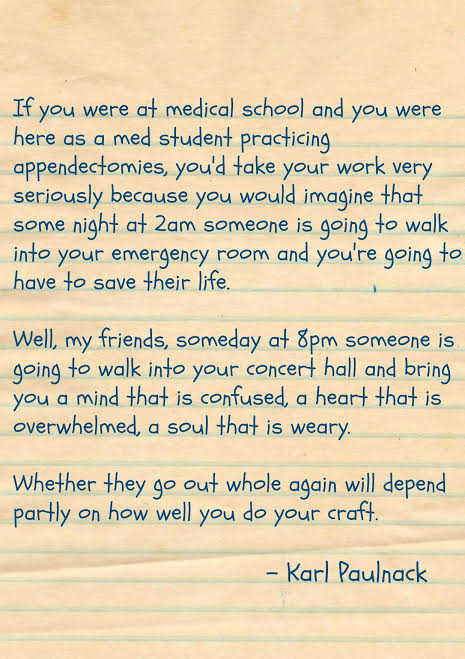
🎵🎼🎵As an advocate for music and the arts, Dr. Paulnack is increasingly in demand as keynote speaker and lecture. His speech “Why Music Matters” ,has been translated into six languages and appeared on nearly 50,000 web pages, in print publications such as the Christian Science Monitor, and in the program books of numerous symphony orchestras and concerts series around the world. In spring 2009, Linda Ronstadt quoted his speech during her official testimony to the United States Congress on behalf of funding for the arts.
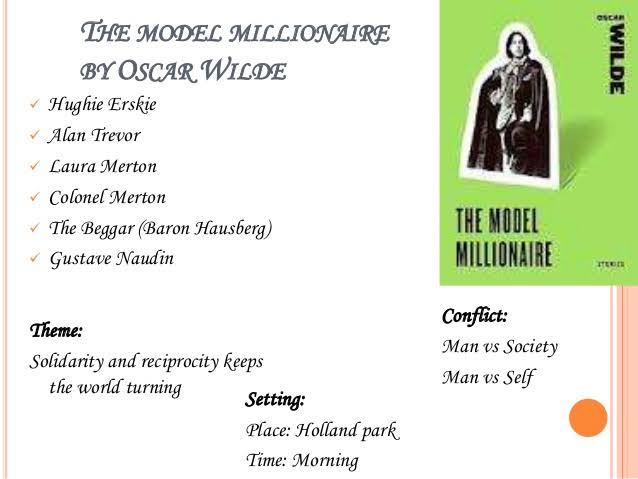
⭐Osar wild’s ‘The Model Millionaire’ gives a philanthropic (love for charity) view of life through his two characters,Hughie and The Baron. ⭐Hughie was a good looking youth who captivated (attracted) all with his clear profile, get eyes and crisp hair. He succeeded in everything but not in making money. This left him with two disadvantages- as a buoyant (delightful) handsome but ineffectual (worthless) youth ad not able to win hs lady love, Laura Merton’s hand in marriage. Laura’s father, retired Colonel was very frim that Hughie should prove his worth as a professional. Hughie should have ten thousand pounds of his own before he talked of engagement. Hughie could not forgive himself for his inability to do what the colonel wanted.
⭐On his way to Holland Park one morning, he called on his friend, Alan Trevor, a painter. Trevor was quite unlike Hughie. He had a freckled face with a red ragged beard. But with his brush,he could produce portraits(sketches) that fetched him a good price. ⭐ Hughie found Trevor was about the finish a life-size portrait of a beggar. The model was standing looking pathetic (pitiable) in a corner of the studio on a platform. ⭐The beggar stood leaning on a rough stick with a coarse brown cloak flung on hisshoulders, a pair of petched boots and a hat held out as if asking for alms(charity). The cloak and the hat were battered and tattered (worn-out). His wrinkled old face and parched dry skin would have wrung (to cause great distress) any body’s heart.
⭐ Hughie commented that it was sad that the model earned only a shilling for every hour and the painter earned a fortune for the painting. ⭐Just then Travor was called as the frame-maker had come to see him. Trevor told Hughie not to leave till his return. ⭐Hughie could not help feeling sorry for the begger who was resting on a ench during Travor’s abanse. He Haggard (miserable) appearane and forlorn (lonely, forsaken) expression touched Hughie. He found some Copper coins and a sovereign in his packet. He slipped the sovereign into the beggar’s hands and the man(the beggar) expressed his gratitude.
⭐Hughie left after Trevor returned. ⭐The following day,at Trevor’s place, Hughie was surprised to hear that the model was very much interested to know everything about him. But Hughie was not very happy when he heard that Travor had revealed Hughie’s financial (money) status. He told Hughie that the beggar was his friend, Baron Hausberg ,one of the richest men in Europe. ⭐ Learning the true identity of the beggar Hughie felt embarrassed that he had given him a sovereign out of pity. It made Trevor burst into laughter. Also it explained the model’s interested in Hughie.
⭐The following morning, Hughie had a visitor from Baron Hausberg. Hughie stammered (stuttered) out his apologies (sorry). A letter was handed over to him with the words “A wedding present to Hugh Erakine- Hughie and Laura — from an ‘old beggar’. Hughie was surprised to find a cheque for ten thousand pounds — the Money he had to show to Laura’s father.” ⭐When his friend Travor heard of this, he remarked :-“Millionaires model are rare enough— Model Millionaires are rarer still !“
⭐ According to Alan Travor, a millionaire used to o dress richly and luxuriously and would seldom pose as a beggar for a portrait. But in Hughie’s case, a millionaire who could be referred as a model (an example) of magnanimity (generosity) was extremely uncommon. To pay the price of ten thousand pounds in exchange for a sovereign (all that Hughie had, then) showed the good – heart of a rich man.
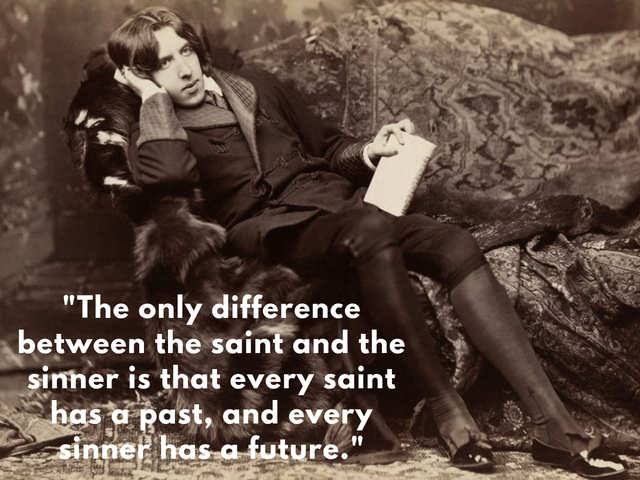
❣Oscar Wilde’s short stories always have surprised end, ad also convey some philosophy of life.❣
Subhash Chandra Bise was born on 23rd January 1897 in Cuttak, a part of Bengal Presidency to Janakinath Bose an advocate and Prabhavati Devi. He was admitted in a big European School and at the age of twelve,he was shifted to another school. Beni Madhav Das was his headmaster, kinded the spirit of pratiosim in him. He started to respect wearing Indian Clothing. He also started helping the poor and needy. Bose looked upon his teachers Beni Madhav Das as his Guru. When the village was hit by small pox, he led a group of volunteers and personally looked after the sick.
⭐When he was 15,he came under deep and strong influence of an outstanding spiritual leader, Swami Vivekananda and deeply impressed with his teaching. He also stated practicing yoga to discipline himself. He understood the saying “Work is Worship”. ⭐He was deeply upset by the rude behavior of one of the British teachers, Professor oaten with Indian student. They were called stupid natives and barbarians or primitive people. The professor thought true civilization had been brought in only by the British. Nethaji protested against this view.
⭐More than a thousand students join him to ask for better treatment from their British teachers.After three days professor Oaten finally apologized to the boys. ⭐Later,as Head of Department of the public Instruction in Bengal , Professor Oayen also appreciated Nethaji for his exemplary performance in the University Military Training Crops. This was the forerunner of our NCC training today.
⭐Nethaji also organized a ‘Nursing Brotherhood’ ,to serve the poor and the sick who did not have a any access to medical care. ⭐On landing at Bombay,he called on Mahatma Gandhi and expressed his desire to work for the freedom of India. It became clear to Mahatma Gandhi that Nethaji had questions about his principle if ‘Non- Violence’ , Meanwhile,with his brilliant academic achievement and background,Bose became the principal of the National College, Calcutta.
⭐He made Khadi, or homespun cloth, the official dress of the corporation. He also encouraged the production and sale of other goods made in India. ⭐Nethaji was arrested ad sent to a prison in Ragoon,Burma. The conditions at the jail were horrible. There was no shelter from the sun or the rain. Nethaji was also upset that he had not even been given a chance to explain his point of view. A huge number of people protested his imprisonment. He was released. Nethaji felt that only an armed struggle would liberate India.
⭐Subhash is called ‘Neta’ or leader because he was a true and passionate leader of the Indian struggle for freedom. The Indian Government awarded ‘Bharath Ratna’ to him posthumously. ⭐Nethaji formed the Indian National Army( INA) in 1941 in Singapore with the help of the Indian prisoners who were released by the Japanese. Nethaji told them, ‘Every down is preceded by a thick darkness. The dawn is therefore close at hand . So cheer up! Hold the Indian flag aloft on! on 21st October 1943 Azad Hind Governments was set up on foreign soil. It was here that Nethaji cloned the rousing words of salutation to our motherland — “Jai Hind”.
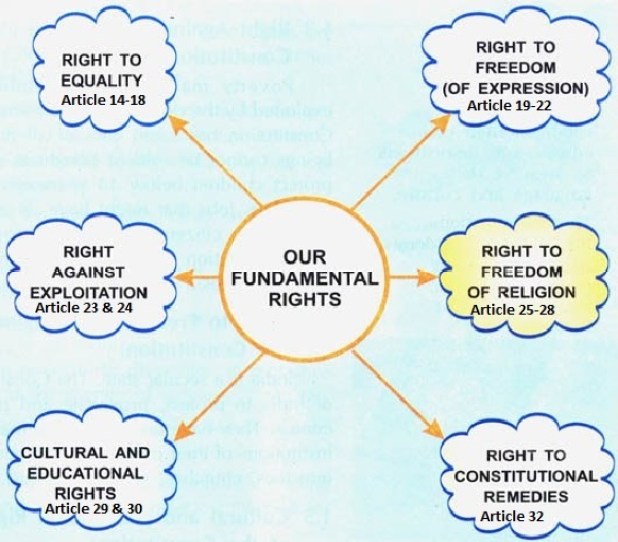
The Fundamental Rights are enshrined in Part ||| of the Constitution from Articles 12 to 35 At present, there are six Fundamental Rights.
🌟 Right to Equality :
🔹 Art.14 – Equality before law 🔹 Art.15 – Prohibition of discrimination on grounds of religion,race,caste,sex or place of birth. 🔹 Art.16 – Equality of opportunity in matters of public employment. 🔹 Art.17 – Abolition of Untouchability. 🔹 Art.18 – Abolition of titles except military and academic.
🌟 Right to Freedom :
🔹 Art.19 – Freedom of speech and expression, assembly, association, movement, residence and profession. 🔹 Art.20 – Production in respect of conviction for offences. 🔹 Art.21 – Production of life and personal liberty. 🔹 Art.21A – Right to elementary education. 🔹Art.22 – Protection against arrest and detention in certain cases.
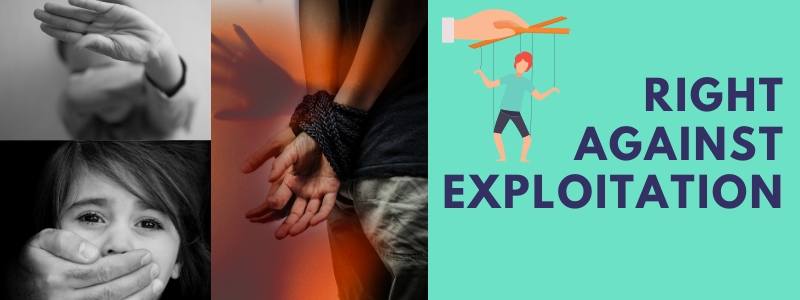
🌟 Right Against Exploitation :
🔹 Art.23 – Prohibition of traffic in human beings and forced labour. 🔹 Art.24 – Prohibition of employment of children in factories, etc.
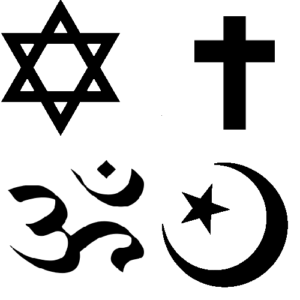
🌟 Right to Religion :
🔹 Art.25 – Freedom of conscience and free profession,practice and propagation of religion. 🔹 Art.26 – Freedom to manage religious affairs. 🔹 Art.27 – Freedom from payment of taxes for promotion of any religion. 🔹 Art.28 – Freedom from attending religious instruction or worship in certain educational institutions.
🌟 cultural & Education Rights :
🔹 Art.29 – Protection of language, script and culture of minorities. 🔹 Art.30 – Right of minorities to establish and administer educational institutions.
🌟 Right to constitutional remedies :
🔹 Art.32 – It allows individuals to seek redressal for the violation of their Fundamental Rights.
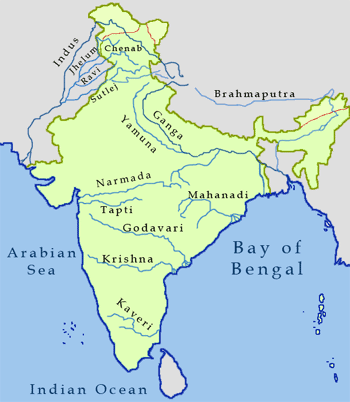
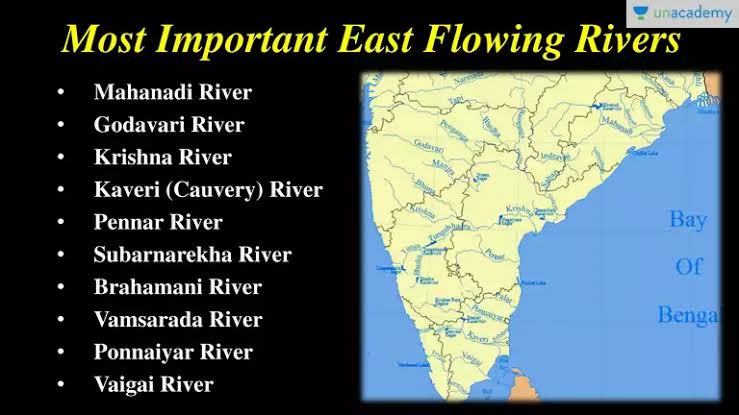
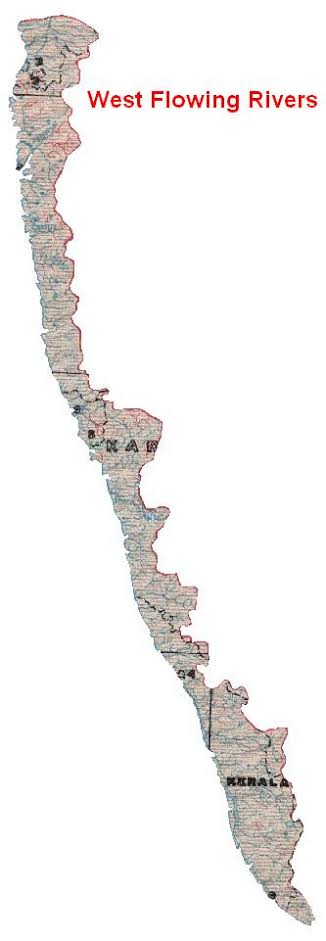
Based on the direction of flow,the Peninsular rivers are divided into the west flowing and East flowing rivers.
East flowing rivers 🏞🌊:
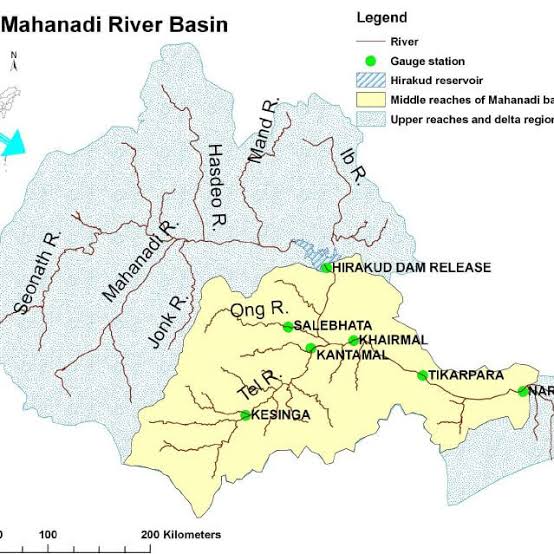
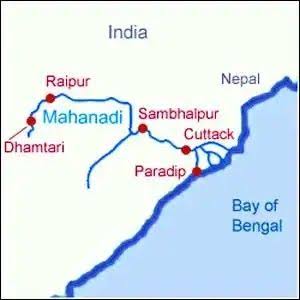
Mahanadi🌊🏞 :
🌟It originates nera Sihawa in Raipur district of Chattisgarh and flows through Odisa. 🌟It’s length is 851km. 🌟Seonath, Telen,Sandra and Ib are its major tributaries.
🌟Paika, Birupa, Chitartala, Genguti and Nun are is distributaries. 🌟The Mahanadi empties its water in Bay of Bengal.
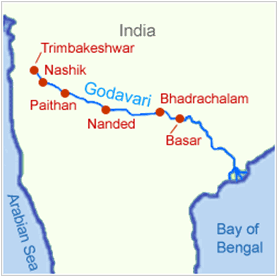
Godavari 🏞🌊:
🌟Godavari is the longest river(1,465 km) with an area of 3.13 lakh km^2 among the Peninsular rivers . It is also called Vridha Ganga. 🌟It flows through the states Telangana and Andhra Pradesh. Purna, Penganga, Pranitha, Indravathu, Tal and Salami are its major tributaries. 🌟Kolleru, a fresh water lake is located in the deltaic region of the Godavari.
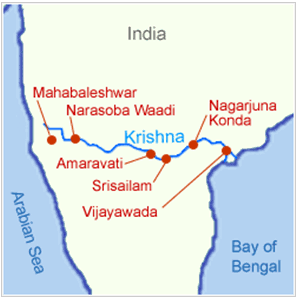
Krishna 🌊🏞:
🌟It Originates from a spring at a palace called Mahabaleshwar in the Western Ghats of Maharashtra. 🌟It’s length is 1,400 km and an area of 2.58 lakh Sq km. 🌟Bhima, Peddavagu, Musi, Koyna and Thungabhadra are the major tributaries of this river.
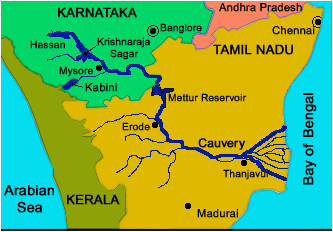
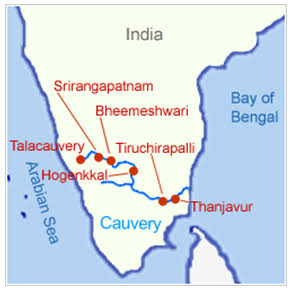
Kaveri 🏞🌊:
🌟It originates at Talakaveri, Kudagu hills of Karnataka. 🌟It’s length is 800 km. The river Kaveri is called Dhakshin Ganga or Ganga of South. 🌟Harangi, Hemavati, Kabini, Bhavani, Arkavathy , Noyyal, Amaranthi etc are the main tributaries of the river Kaveri. 🌟In Karnataka the river bifurcates twice ,forming the sacred islands of Srirangapatnam and Sivasamudram. 🌟In Tamilnadu, it continues through a series of gorges until it reaches Hogenakkal Falls.
West flowing rivers🌊🏞 :
Narmada 🏞🌊:
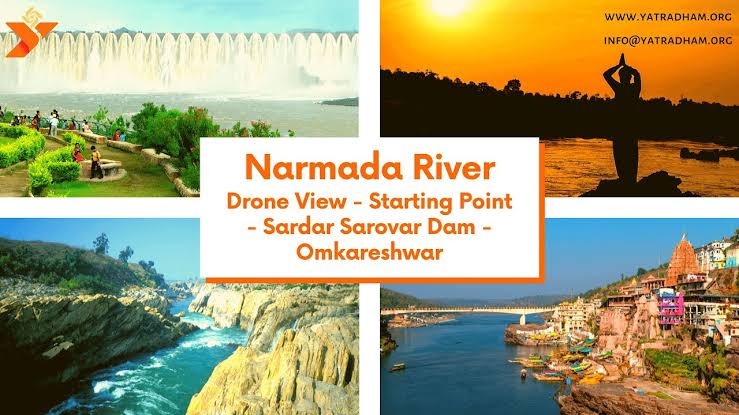
🌟It rises in Amarkanatak Plateau in Madhya Pradesh at an elevation of about 1057m and flows for a distance of about 1,312km, it covers an area of 98,796 Sq km and forms 27 km long estuary.
🌟It is the largest among the west flowing rivers of Peninsular India. 🌟It’s principal tributaries are Burhner, Halon, Haran, Banjar, Dudhi, Shakkar, Tawa, Barna and Kolar.
Tapti🌊🏞 :
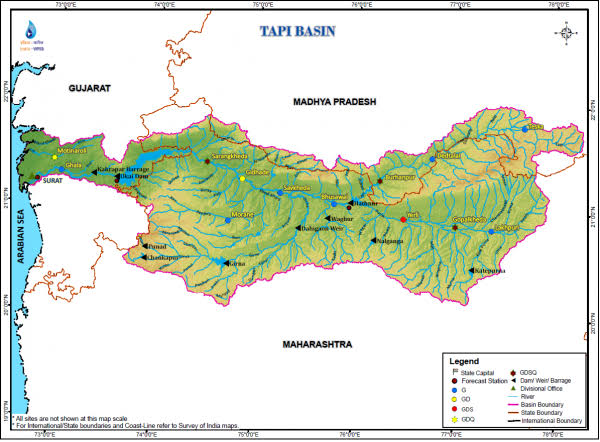
🌟It is one of the major rivers of Peninsular India with the length of about 724km and covers an area of 65,145 Sq km. 🌟It is one of only the three rivers in Peninsular India that rum from east to west – the others being the Narmada and the Mahi.
🌟The major tributaries are Vaki, Gomai, Arunavathi,Aner, Nesu, Buray, Panjhra and Bori. 🌟It outfalls into the Arabian Sea through the Gulf of Cambay.






.jpeg)
.jpeg)










































 Eduindex
You must be logged in to post a comment.