1999 Super Cyclone

The 1999 super cyclone was the foremost intense recorded tropical cyclone within the North Indian Ocean and among the foremost destructive within the region. The 1999 Odisha cyclone organized into a tropical depression within the Andaman Sea on 25 October, though its origins might be traced back to a neighborhood of convection within the Sulu Sea four days prior. The disturbance gradually strengthened because it took a west-northwesterly path, reaching cyclonic storm strength subsequent day. Aided by highly favorable conditions, the storm rapidly intensified, attaining super cyclonic storm intensity on 28 October, before peaking on subsequent day with winds of 260 km/h . The storm maintained this intensity because it made landfall in Odisha on 29 October. The cyclone steadily weakened thanks to persistent land interaction and dry air, remaining quasi-stationary for 2 days before slowly drifting offshore as a way weaker system; the storm dissipated on 4 November over the Bay of Bengal.
The storm was the foremost severe to strike Odisha within the 20th century, raking the state and adjacent areas with high storm surge, powerful winds, and torrential rainfall. The storm’s impacts exacerbated the damage caused by a really severe cyclone that struck an equivalent region but fortnight earlier. The 5–6 m surge brought water up to 35 km inland, carrying along side it coastal debris and inundating towns and villages. The surge combined with heavy rains to supply widespread flooding, damaging around 1.6 million homes and causing rivers to breach 20,005 flood embankments. The storm’s effects destroyed numerous crops, including sugar cane, rice, and other winter-time harvests. Although estimates of the price varied significantly—at times suggesting 30,000 fatalities—the Government of India enumerated 9,887 fatalities within the country, of which a majority were caused by storm surge; over 8,000 deaths occurred in Jagatsinghpur. the entire damage cost of the destruction wrought by the super cyclone amounted to US$4.44 billion.
The state of Odisha sustained the foremost catastrophic damage related to Cyclone BOB 06, which was considered the state’s severest cyclone of the 20th century. The damage was compounded by the sooner impact of a really severe cyclonic storm that struck nearby areas just 11 days earlier. Twelve districts of Odisha suffered severe damage, reporting complete breakdown of essential services: Balasore, Bhadrak, Cuttack, Dhenkanal, Jagatsinghpur, Jajpur, Keonjhar, Kendrapara, Khurda, Puri, Mayurbhanj, and Nayagarh. Among these, the blocks of Erasma and Kujang in Jagatsinghpur were the worst affected. In total, 12.9 million people were suffering from the storm; estimates for the storm’s price vary significantly, though the India Meteorological Department indicated that around 9,887 were killed, with a further 40 persons missing and a couple of ,507 others injured. the bulk of those deaths occurred in Jagatsinghpur. where 8,119 were killed.
Approximately 11,000 schools were either significantly damaged or destroyed. All major district roads within the area were either washed out or blocked by felled trees. In Bhubaneswar, 60% of trees were flattened by the winds and rain; aerial surveys revealed that the whole city was submerged by floodwaters. Adjacent areas were nearly stripped of all tree cover. Until 8 November, the town remained without power. The inundation induced by the far-reaching storm surge and heavy rain kept Konark submerged in knee-deep water for 6 days after landfall. Over the course of 4 days, the excessive rainfall caused the flooding of the Baitarani, Brahmani, Budhabalanga, Kharasua, and Salandi rivers, leading to 20,005 flood embankment breaches and therefore the damaging of 6 headworks. Thousands of individuals suffered chemical burns after the flooding mixed industrial chemicals into bathing ponds
Recovery efforts were extensive following the storm’s passage. the govt of India allocated ₹3 billion (US$69.3 million) to the Odisha government , supplementing earlier contributions made towards relief from the sooner cyclone. Various branches of the Indian soldiers were dispatched to assist the recovery efforts. Contributions from foreign governments amounted to just about US$13 million, with quite half allocated by the us . Alongside foreign and domestic government contributions, between 12 and 14 international aid agencies concurrently participated in relief efforts within the storm’s aftermath.

The disappearance of Amelia Earhart

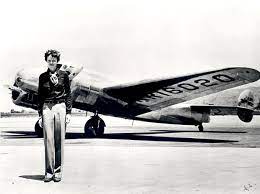
On July 2, 1937, the Lockheed aircraft carrying American aviator Earhart and navigator Frederick Noonan is reported missing near Howland Island within the Pacific. The pair were attempting to fly round the world once they lost their bearings during the foremost challenging leg of the worldwide journey: Lae, New Guinea , to Howland Island, a tiny island 2,227 nautical miles away, within the center of the Pacific . The U.S. Coast Guard cutter Itasca was in sporadic radio contact with Earhart as she approached Howland Island and received messages that she was lost and running low on fuel. Soon after, she probably tried to ditch the Lockheed within the ocean. No trace of Earhart or Noonan was ever found.
Amelia Earhart was born in Atchison, Kansas, in 1897. She took up aviation at the age of 24 and later gained publicity together of the earliest female aviators. In 1928, the publisher George P. Putnam suggested Earhart become the primary woman to fly across the Atlantic . The previous year, Charles A. Lindbergh had flown solo n”art-10″>In June 1928, Earhart and two men flew from Newfoundland, Canada, to Wales, Great Britain. Although Earhart’s only function during the crossing was to stay the plane’s log, the flight won her great fame, and Americans were enamored of the daring young pilot. The three were honored with a ticker-tape parade in ny , and “Lady Lindy,” as Earhart was dubbed, was given a White House reception by President Coolidge .
Earhart wrote a book about the flight for Putnam, whom she married in 1931, and gave lectures and continued her flying career under her maiden name. On May 20, 1932, she took off alone from Newfoundland during a Lockheed Vega on the primary solo n”art-15″>She was bound for Paris but was blown astray and landed in Ireland on May 21 after flying quite 2,000 miles in only under 15 hours. It was the fifth anniversary of Lindbergh’s historic flight, and before Earhart nobody had attempted to repeat his solo transatlantic flight. For her achievement, she was awarded the Distinguished Flying Cross by Congress. Three months later, Earhart became the primary woman to fly solo n”art-19″>In 1935, within the first flight of its kind, she flew solo from Wheeler Field in Honolulu to Oakland, California, winning a $10,000 award posted by Hawaiian commercial interests. Later that year, she was appointed a consultant in careers for women at Purdue University, and the school bought her a modern Lockheed Electra aircraft to be used as a “flying laboratory.”
On St Patrick’s Day , 1937, she took faraway from Oakland and flew west on an around-the-world attempt. It would not be the primary global flight, but it might be the longest–29,000 miles, following an equatorial route. Accompanying Earhart within the Lockheed was Frederick Noonan, her navigator and a former Pan American pilot. After resting and refueling in Honolulu, the trio prepared to resume the flight. However, while beginning for Howland Island, Earhart ground-looped the plane on the runway, perhaps due to a blown tire, and therefore the Lockheed was seriously damaged. The flight was called off, and therefore the aircraft was shipped back to California for repairs.
In May, Earhart flew the newly rebuilt plane to Miami, from where Noonan and she or he would make a replacement around-the-world attempt, this point from west to east. They left Miami on June 1, and after stops in South America, Africa, India, and Southeast Asia , they received Lae, New Guinea, on Saints Peter and Paul . About 22,000 miles of the journey had been completed, and the last 7,000 miles would all be over the Pacific Ocean. The next destination was Howland Island, a tiny U.S.-owned island that was just a couple of miles long. The U.S. Department of Commerce had a weather station and a airstrip on the island, and therefore the staff was ready with fuel and supplies. Several U.S. ships, including the Coast Guard cutter Itasca, were deployed to assist Earhart and Noonan during this difficult leg of their journey.
As the Lockheed approached Howland Island, Earhart radioed the Itasca and explained that she was low on fuel. However, after several hours of frustrating attempts, two-way communication was only briefly established, and therefore the Itasca was unable to pinpoint the Lockheed’s location or offer navigational information. Earhart circled the Itasca‘s position but was unable to sight the ship, which was sending out miles of black smoke. She radioed “one-half hour fuel and no landfall” and later tried to offer information on her position. Soon after, contact was lost, and Earhart presumably tried to land the Lockheed on the water.
If her landing on the water was perfect, Earhart and Noonan may need had time to flee the aircraft with a Carling float and survival equipment before it sank. An intensive search of the vicinity by the Coast Guard and U.S. Navy found no physical evidence of the fliers or their plane.

The legend of Teke Teke

Teke Teke  a Japanese urban legend about the ghost of a schoolgirl who is claimed to possess been tied by her bullies onto a railway line, where her body was cut in half by a train. She is an onryō, or a vengeful spirit, who lurks in urban areas and around train stations in the dark .
The Teke Teke is universally portrayed as a woman or a girl , usually with long, black hair. She is usually portrayed as having claws rather than fingernails or fingers, as these help her drag her torn body around. The legend is named “Teke Teke” due to the sound she makes while “walking” and carrying the scythe.
Like most urban legends, there are numerous versions of the Teke Teke story that it’s impossible to understand what the first story was or where it began from.
Every locality has its own version with different details. In some stories, the Teke Teke was the victim of a tragic accident; in others, it had been suicide. In some stories, certain magic charms can protect you from its wrath; in others, nothing can protect you and you’ll certainly die. In some versions, the Teke Teke’s victims become Teke Teke themselves. There are many things in common between these variations, and the most common ones point towards a woman from Hokkaidō named Kashima Reiko.
In the years after war II, an office worker in Muroran, Hokkaidō was assaulted by military personnel. She was left injured on the rail tracks and was hit by a train which stop her body in half. The severe cold of the Hokkaidō night caused her blood vessels to contract and prevented her from bleeding out quickly. Instead, she squirmed and wriggled around for help for several minutes. She was seen by an attendant. Instead of trying to assist her, the station attendant just covered her with a bag . She died a slow, agonising death.
According to legend, three days after hearing this story, you’ll see the ghost of a lady with no lower half. The ghost will attempt to catch you, and escape is impossible even during a car; the ghost can crawl at a speed of up to 150 km per hour. Some say that the ghost is checking out her missing legs. Others say that she is just bent slaughter as many of us as she will .
Another version of the story suggests that the legend was designed to discourage people from bullying, abusing or assaulting others. In many variations of the legend, the Teke Teke was mistreated by others in life and this ill-treatment directly caused her death. The only reason why she rose from the grave was to get revenge on others, albeit rather indiscriminately.

Tomino’s Hell- The cursed Japanese poem

Tomino’s Hell may be a notorious damned poem believed to curse or maybe kill anyone who reads it aloud . Saijo Yaso, a famous Japanese poet, wrote the poem after the top of war I. Many believe he explained his suffering through the poem as his father died during the war.
On the contrary, others have given different meanings to the poem and related Tomino’s descent to hell because the suffering of a soldier during a war. The poem gained notoriety when people suffered losses after reading the poem.
It is also believed that a lass died few moments after reading the poem. People complained of getting sharp headaches, muscular spasms, or malaise after reading the poem; hence, declaring the poem cursed.
Saijo Yaso was a Japanese poet who wrote the famous poem, Tomino’s Hell. His work was crammed with strange symbolism and unsettling wordplay, greatly influenced by French arts and history. Additionally, his primary audience was children.
In 1919, Saijo released his 27th collection of poetry known as Sakin,Tomino’s Hell or Tomino no Jigoku was one of the poems from Sakin. The poem became quickly famous when it troubled those reading it.
Saijo lost his father during World War I and penned the poem after the war. Initially, it had been largely believed that Tomino’s Hell was a symbolic depiction of Saijo’s feelings of loss. Saijo may need been during a constant state of suffering after losing loved ones, and he explained the tough emotions within the poem. However, later people gave several explanations to the dark poem.
The poet efficiently left the reason of the dark poem to the reader’s imagination; that’s why there are humungous explanations to the poem. Tomino’s gender isn’t identified within the poem; hence, some descriptions portray Tomino as a woman while others depict him as a boy.
It is a widely accepted myth that Tomino was a woman who belonged to an abusive family. She wrote all her agonies during a poem that her parents read and eventually locked her during a cellar. They did not feed the poor girl for weeks leading to Tomino’s death from bronchitis. Tomino’s poem has since haunted anyone who read the poem aloud .
In another tale, Tomino was a woman whose sisters tormented her. Tomino was immensely hurt by her sister’s torture and wrote the poem explaining how she felt a day together with her sisters. She explained that living together with her sisters was like living within the lowest level of hell.
Another tale depicts Tomino as a murderer girl who killed her parents. The poem says that Tomino was heading towards “mugen Jigoku,” which is the Japanese translation of “Avīci”. In Buddhism, Avīci is the lowest of hells, and the one who falls in Avici, their torment lasts for eternity.
In another myth, the poem depicted a boy sent to the Buddhism’s lowest level of hell for an unknown crime. However, some also say that the boy was a soldier during war I. He pictured his life as a living hell using twisted words within the poem. The boy loved his three sisters, and upon his departure, the sisters threw up their soul.
The boy further explained his horrible journey, metaphorically relating it to his descent into the last level of hell. He explained seeing sharp, bloodied needles during his way right down to hell. Myths relate the pointed needles covered in blood to “Senninbari.”
During war time, the Japanese women gave soldiers a bit of fabric called Senninbari, made with thousand stitches. It was believed to guard the soldier from harm. Mothers, sisters, girlfriends, or wives would stitch the cloth 1000 times and give it as a good luck charm to the man.

Jatinga birds’ Mystery

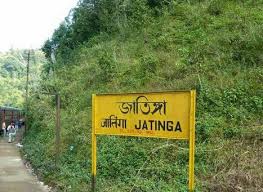
Jatinga, alittle tribal village, is understood for the mysterious suicide of birds during certain weeks of the year.
At the top of the monsoon months especially on moonless and foggy dark nights between 6 p.m. and 9:30 p.m., birds aren’t disturbed by the locals but out of the dark northern skies will start to descend as they’re interested in lights. These dazed birds are captured using bamboo poles by the locals. The local tribals first took this phenomenon to be spirits flying from the sky to terrorize them. This phenomenon isn’t confined to one species, with tiger bittern, black bittern, Egretta garzetta , pond heron, Indian pitta, and kingfishers all being affected, also as hill partridge, green pigeon, emerald dove, necklaced laughingthrush, black drongo.
The late naturalist E. P. Gee brought this phenomenon to global attention within the 1960s. He drove to Jatinga with famed ornithologist late Salim Ali. The explanation for it’s likely to be disorientation at high altitudes and high speed winds thanks to the widespread fog characteristic at the time. The zoological survey of India sent Sudhir Sengupta to unravel this mystery. The most recent description of the phenomenon and its comparison with similar incidents elsewhere in Malaysia, Philippines, and Mizoram is found within the book The Birds of Assam by Anwaruddin Choudhury. He concluded that the birds, mostly juveniles and native migrants, are disturbed by high velocity winds at their roost. When the disturbed birds fly towards lights as refuge they’re hit with bamboo poles and killed or injured.
Conservation groups and wildlife officials in India have taken steps to stop wanton killing of birds across India, creating awareness within the illiterate villagers. Bikash Brahma, Additional Principal Chief Conservator of Forests of Dima Hasao, stated the killings also because the number of birds arriving at the village has been declining gradually since the last few years. Much of this is often thanks to loss of habitat caused by “development and environment degradation”.
OVER THE LAST 100 YEARS, thousands of birds have flown to their death over alittle strip of land in Jatinga. In a town of only 2,500 people, this bizarre Bermuda Triangle of avian death remains largely unexplained.

Déjà vu

“Is déjà vu actually the specter of false timelines that never happened but did, casting their shadows upon reality?”
― Blake Crouch, Recursion

The mind may be a wonderful thing – there’s such a lot , which remains a mystery to the present day. Science is able to describe strange phenomena, but cannot account for their origins. We all have some experience of familiar feelings, which involves us occasionally, about what we are saying and do, what we all know and see, what we listen and listen to . When you walk into the house of a replacement friend, you realise something strange. The place looks familiar though you’ve got not been there and therefore the people look familiar though you’ve got not seen them.

You have been there before, but not exactly in person. A serious recollection causes you to realise that it had been during a dream, a dream that completely portrayed with every small detail the precise room you’re now standing in. Sounds familiar? This is an experience that’s not as rare as most of the people think. For many, these arbitrary feelings of extreme familiarity, known as déjà vu, come through dreams that some say predict the future. These reminder feelings are all of the dreams that we’ve each night that we cannot remember. You feel as if you’ve got already been there because you’ve got , in your dreams. The things that dreams show may not be significant, just a random moment proposed to happen somewhere in the near or far future. There have also been accounts where the dreamer claims they saw a catastrophic event occur before the incident actually happened. The frequency of reminder decreases with age and is commonest among people from 15 to 25 years old. High income and well educated people have more déjà vu experiences. Déjà vu appears to be related to stress and fatigue. Those who travel have more reminder experiences. Some people report that reminder experiences appear to repeat prior dreams.

In a nutshell,any person who has strong senses and clear mind can differentiate between past and present happenings efficiently and won’t feel reminder ever in life. Déjà vu is an interesting and unusual experience where something feels very familiar, but we know it should not feel as familiar as it does. The experience is vital because it shows us that remembering happens with a series of steps, a number of which may fail . Young people have reminder the foremost , and this might actually be a symbol that children are excellent at spotting when their brains start telling them that things are more familiar than they ought to feel. It is very hard to do experiments to make people have déjà vu and we still do not know what actually causes it, but this makes it a very interesting topic for scientists to investigate

Hanko San-Japanese Urban Legend

Legends about Hanko-san have achieved some popularity in Japanese schools, where children may challenge classmates to undertake to summon Hanko-san. The character has been depicted during a kind of media, including films, manga, anime, and video games.
Hanko-san, or Toire no Hanko-san may be a Japanese urban legend about the spirit of a lass named Hanko-san who haunts school toilets. Like many urban legends, the tiny print of the origins of the legend vary relying on the account; different versions of the story include that Hanko-san is that the ghost of a war II-era girl who was killed while playing hide-and-seek during an air raid , that she was murdered by a parent or stranger, or that she committed suicide in a school toilet.
According to legend, Hanko-san is that the spirit of a lass who haunts school toilets, and may be described as a yōkai or a yūrei. The details of her physical appearance vary across different sources, but she is usually described as having a bobbed haircut and as wearing a red skirt or dress. The details of Hanko-san’s origins also vary counting on the account; in some versions, Hanko-san was a toddler who was murdered by a stranger or an abusive parent in a school toilet; in other versions, she was a woman who committed suicide during a school toilet; in still other versions, she was a toddler who lived during war II, and who was killed during a n air attack while hiding in a school toilet during a game of hide-and-seek.
To summon Hanko-san, it’s often said that individuals must enter a girls’ toilet (usually on the third floor of a school), knock 3 times on the third stall, and ask if Hanko-san is present. If Hanko-san is there, she is going to reply with some variation of “Yes, I am.” counting on the story, the individual may then witness the looks of a bloody or ghostly hand;[4][5] the hand, or Hanko-san herself, may pull the individual into the rest room , which can cause Hell; or the individual could also be eaten by a three-headed lizard who claims that the individual was invading Hanko’s privacy.

Inunaki-The Cursed Village of Japan

There is a village in Japan where the voices of individuals screaming are always kept on hearing, and where if an individual has gone accidentally, disappeared forever, because the villagers usually kill him ruthlessly. The stories of this village are published in many newspapers in Japan but actually , it’s very difficult to seek out this village because it’s not present on any Japan’s map.
Inunaki may be a village in Japan that’s considered cursed by people and is additionally counted together of the foremost haunted places there. It is said that if you’re browsing the old Inunaki tunnel then a brief way from there results in the Inunaki village and since this path is quite small and hidden, it’s quite difficult to seek out it. At the doorway of the village, you’ll find a signboard on which it’s clearly written that the japanese constitution and laws don’t apply beyond now . Moving a touch further, you’ll find a broken-down house, ahead of which are the remains of a couple’s dead bodies who were unfortunate enough to enter the village and never return. If you continue to go further, you’ll find many such deadly traps which will kill you, and if you continue to manage to flee further, then you’ll need to face the people of this deadly town who will catch you and brutally kill you.
But all the people in Inunaki village are considered dead and here only their evil spirits are wandering, who don’t like all visitor to enter this village. This village is isolated from the surface world and its existence always remains unsure . In a movie called Howling Village, it’s told that by entering Inunaki village, people undergo a time portal in order that they reach the time when the village actually existed. A very famous anecdote associated with the idea of the Inunaki tunnel being a time portal is of an individual who first told people about this village intimately . So it had been in 1999 when a Tele-Networking company from Japan received a letter from an anonymous person, titled “The Village in Japan That Isn’t a part of Japan.” Whatever was described about Inunaki during this letter remains alive as a legend of Inunaki village exactly as we all know it today. Now, who had sent this letter, why and from where it had been sent, nobody has been ready to determine nor has anyone been conscious of it.
It was only clear to the folks that the writings utilized in this letter were almost like the old Japanese scriptures and about an anonymous one that went into detail about the path leading to Inunaki village. According to him, alittle path goes through the Inunaki tunnel, which gets even shorter because it moves further. At the top of it, there’s a village that doesn’t exist on maps and where there’s also a signboard which we’ve discussed earlier. Now after crossing this signboard, one can enter the Inunaki village. Through this letter, the person has also stated that the villagers of Inunaki are insane and that they always still perform some quite rituals. They do not love it in the least that anyone can enter their village and thus they are doing not let any visitor remain alive after coming here. He had also requested the channel to research it as soon as possible to understand its reality and warn others to never go there.
Now many questions also arose on who was that one that knew such a lot about Inunaki, does it mean that the person came from the Inunaki village. It is also said that within the auld langsyne , the people that wont to sleep in this area were began to considered as attackers by the opposite communities, and gradually the people of the Inunaki community were forced to measure on the outskirts of the town. After which those people started cohabitation during a village called Inunaki and gradually they became violent, after which they didn’t allow people of the other community to enter their area. Today, the place where Inunaki is tried to identify can actually be found underwater, because a dam has been constructed thereon spot. And if there ever was an Inunaki village here, now it’s submerged in water.
Now consistent with another story associated with this village, there’s a phone booth near the Inunaki bridge on which a call comes from Inunaki village at exactly 2 o’clock every night, and whoever answers that decision , the thanks to this village automatically opens for them. Death is for certain after getting to this village and albeit someone comes back from there alive, he surely returns being cursed from there. Due to this curse, an individual loses control of his body and mind and eventually dies. Now within the Howling Village movie, Inunaki is described as a village whose people were tortured tons and were killed. But actually , the assumption which is most famous about Inunaki is that the people of this village actually started worshiping evil entities and since of this the land of Inunaki became cursed.

They had completely lost control over themselves, and that they wont to sacrifice their visitors to the devil once they accidentally came to their village, and consistent with many stories, they used to eat them as well. They had thrown those dead bodies on the Inunaki tunnel in order that others wouldn’t attempt to enter this village fearing it. But people still keep checking out this village thanks to their curiosity and explore the world round the Inunaki tunnel. Now, these are all prevalent stories, but now we’ll attempt to skills the rumors of the Inunaki tunnel and Inunaki bridge started spreading.
So the clearest clarification of this we get from an event in 1988, in fact, in 1988 an area gang group in Fukuchi town kidnapped a mill-hand and murdered him a few days later. Now they threw away his body near the tunnel of Inunaki, and as this tunnel was supported a foreign location, this place had become a spot of dead bodies disposal for many such gangs. Until 2000, countless dead bodies were continuously thrown here, after which the police sealed the doorway of this tunnel.
Now, where this news spread sort of a shock among people, on the opposite side, some people began to believe that the police is hiding something from them and hence they have sealed this tunnel. Now though the police sealed this tunnel for the protection of the people, but still some people started making their own theories associated with it, after which many of us went inside the sealed tunnel to seek out out the reality .
Now as far because the existence of Inunaki cares , a proof about this is often that around 1691 a true village named Inunaki existed which merged with a close-by village Yoshikawa in 1889. Now over the years, Yoshikawa merged once more with Miyawaka City and hence there are not any records of it in maps.
Now many of us believe that the stories of Inunaki village are nothing but self-proclaimed stories and on the opposite hand, many of us associate it with the time portal and therefore the conspiracy of the government. And to seek out out the truth , many explorers keep visiting this place, thanks to which it’s become even more famous. As far because the Inunaki curse cares , there’s no solid proof that the people whose death is being connected by the Inunaki curse have ever visited the Inunaki tunnel or not. As long because the village of Inunaki is related to the theories of conspiracy, its legends will remain alive among the people within the same way. It also seems that the stories spoken about the Inunaki village and villagers are self-made and maybe no such village exists actually . But what’s the particular truth, nobody knows.

The dark side of Artificial Intelligence

There are predictions that by 2029, computers will have the power and capacity to outsmart humans. This means that the computers will be able to learn from experiences and comprehend several languages. Just like computers, robots also are likely to evolve faster than humans, thus outsmarting us.
The good thing about artificial intelligence is that it is always bringing together a combination of modern technologies to make life better. These technologies include driverless transportation and targeted treatments within the healthcare sector. However, this innovation is also impacting the way we live today and how we will live in the future. For instance, AI technologies are taking up most of our jobs and increasing data privacy concerns.

Opportunity for Cyber Attacks: Cyber security is one among the IT vectors that AI technologies seem to be targeting. However, there are concerns that hackers are using an equivalent approaches that AI developers are using to style cyber security mechanisms to develop malicious bots. Hackers find it easy to interrupt AI systems because the used codes have flaws and are usually a mixture of several programming methodologies.
AI technologies can also create room for computer users to reveal their passwords to unsuspecting users. They may allow the hacker to send downloadable malware files to a person that seeks to steal login credentials. This technique also can allow hackers to realize access to autonomous devices.

The “Black-box” Problem: AI applications believe machine-learning algorithms or neural networks to mimic the functioning of the human brain. The problem is that it’s impossible to elucidate how these algorithms manage to supply accurate results. This “black-box problem” is one among the dark sides of AI and machine learning. It is sad that folks don’t get access to the knowledge regarding the automated decision-making that AI applications subject them to.

Lack of Transparency: There are concerns regarding the decision of AI system designers refusing to reveal to us the type of input data they feed into the AI systems. For instance, the engineers of the Google program don’t reveal how the program usually ranks search results. They may be considering such processes as company trade secrets. What they are doing is contrary to our expectations of AI applications being transparent.
Lack of transparency in AI applications is beginning to raise speculations regarding how these technologies can really positively change our lives. As much as program designers are arguing that their AI designs are proprietary, it’s time for them to form their processes more transparent. Their failure to stay to the present simple policy may force most of the people to lose their trust in future AI technologies.

Values and Morale: People from different walks of life are raising ethical questions regarding the future of AI. There are data laws in other jurisdictions that protect the rights of people based on how AI technologies affect them. In some countries, when companies and individuals fail to stick to those strict policies, they’ll be susceptible to prosecution or penalties.

Increased Data Privacy Concerns: One problem with the new wave of AI applications is that they demand too much data from people. It is good to note that through AI, machine-learning technologies simplify the process of analyzing large data sets by looking for specified patterns. However, when the method of extracting the info invades the privacy of individuals , then it’s time that these technologies stop being invasive. The data extraction process should only happen when people consent thereto .

It is unfortunate that the info collectors usually ask people to sign contracts with many pages before taking their data. Since most of the people receive most of those agreement policies online, it’s going to take time for them to read and understand the whole document. Most of them end up clicking ‘accept’ before carefully reading what the agreement document entails thus agreeing to share their personal information.
AI technologies may be manipulative if proper oversight is not in place. It is up to market participants, lawyers and policymakers to work together when coming up with an effective regulatory statute that can guide AI-related decision-making processes. Since these technologies directly interact with us, we should also join these stakeholders in regulating AI decision-making. We should be on the verge of setting up an AI watchdog to ensure that the usage of AI programs is fair. Before the programs collect data from us, we’ve the proper to consent to them or deny them the permission.

Reincarnation in Hinduism

It’s hard to believe this wide universe that there’s just one chance to measure during a lifetime. There are many controversial issues surrounding the topic of reincarnation. Who created those ideas? Were these ideas created to steer people faraway from their religion?
What is reincarnation? Answer to the present question are often different for various people, but the essential meaning of reincarnation is Life before the life that we live in. Reincarnation may be a select process for the role the person will need to live. A person may reincarnate immediately after death, or could also be assigned to a dimension of life, which may be a plane before heaven, until it’s time for the person’s reincarnation
Hinduism believes in body and soul. Your soul returns to your body after your death. Your status or caste in next life depends on your deeds of the previous life. This is called Reincarnation in Hinduism. According to Hinduism a soul reincarnates again and again on earth till it becomes perfect and reunites with it Source. And, also being has got to live many lives and under go many experiences before it attains perfection and becomes one with the Divine. The Hindu theory of creation suggests that creation begins when the individual souls becomes separated from the undifferentiated One. It continues because the evolution of life and consciousness in matter progresses. During this process a number of souls journey back to God through the transformation of matter or prakriti during which they were hidden. The remaining souls continue their existence and rejoin Him within the end, not through transformation but through a process of great destruction. Thus the good cycle of creation, stretching over many years, involves its logical end.
Once the creative process is switched on, the individual soul hides behind the false personality called jiva, the subtle body and an outer personality called the mind and therefore the body or the ego. The Jiva is made up of the subtle body, the subtle mind and a little bit of discretionary intelligence called buddhi. The ego is formed from the gross human body , the surface consciousness consisting of innumerable desires and impulses. Since the Jiva and therefore the ego haven’t any idea of Truth or reality, they suffer from ignorance and illusion. They give way to illusion and suffer from the delusion of the outer mind. They behave selfishly as if they’re different from the remainder of creation and find yourself with suffering, indulging in acts of self perpetuation.
In order to explain how the effects of past actions of man are preserved in the atman after the death of the body and how these effects produce their fruit in a future rebirth, the Hindu theologians make a distinction between two types of body: the gross body (sthula-sarira) and the subtle body (sukshma-sarira or linga- sarira).9The gross body is that which is visible and tangible, consists of the eternal senses, of organs, etc. The subtle body, instead, isn’t visible nor tangible, and consists of subtle elements, like: buddhi (intelligence), manas (mind), ahamkara (ego), etc. The subtle body encircles the atma as a connection between the soul and the gross body. Every action of man leaves its imprint (sanskara) on the subtle body and remains as a seed which has to mature and produce in due time its proper fruit. While the gross body disintegrates at death, the spirit continues to be in touch with the subtle psychic body which it carries forward. The subtle body together with all the tendencies, merits or effects of karma is said to migrate with the soul (atman) at death. At the top of every life, the human body and therefore the gross mind return to the weather of the world . But the Jiva and therefore the soul survive death. Depending upon the nature of their past deeds, and the number of subtle bodies it has developed, the Jiva either ascends to the heaven or descends into the hell. Hiding the indwelling spirit in its core, the Jiva stays in these worlds till it exhausts the fruits of its good or bad actions. Having learned some new lessons, it then returns to the world again to require another birth. Thus the Jiva undergoes innumerable births and deaths. It becomes sure to the mortal life and therefore the laws of nature. Death provides temporary relief, but exposes the individual Jiva to the danger of falling into greater depths of suffering.
Hinduism speaks of the existence of heavens above and hells below. The former are sun filled, inhabited by gods and innumerable divine souls. The latter are dark worlds (asurya lokas) and populated by all the dark and demonic forces. The individual souls enter these worlds consistent with their deeds. But they are doing not stay there permanently till the top of destruction. They go there basically as a consequence of their actions, either to enjoy or to suffer. In either case they learn the lesson and are available back to earth to start out a replacement earthly life everywhere again.
Thus consistent with Hinduism, life in heaven could also be longer, but still it’s a mortal life only. There, a Jiva may enjoy extreme pleasures, but it might not last for ever. Once its karma is exhausted, the Jiva is thrown back from the heights of heavenly glory into the turmoil of unstable earthly life. As the soul moves from one body to a different , it carries forward something along side it, which is nothing but what it’s accumulated performing various deeds. This can be thought of as a worldwide account that every soul is related to , regardless of the place it’s in currently. This account would have both the logs of excellent and bad deeds it performed almost like the credit and liabilities. This account is what’s called karma.

HAPPINESS

HAPPINESS IS NOT SOMETHING THAT YOU KEEP FOR FUTURE, IT IS THAT MAGIC WHICH YOU DESIGN FOR THE PRESENT

HAPPINESS IS A WORD EASILY USED,BUT HARD TO DEFINE. IT IS A STATE OF BLISS.IF WE TRAIN OUR MIND TO BE HAPPY,IT WOULD BE.BECAUSE ITS OUR  MIND AND ITSTOTALLY OUR DECISION.HOWEVER,ITS NOT AS ESY IT SEEMS.HAPPINESS IS NOT SOMETHING THAT COULD BE BOUGHT.IT COULD BE ONLY FELT.IT COULD REFLECT IN THE SMILE IN OUR FACE OR THE THE WAY IN WHICH WE VIEW OUR LIFE.

IF YOURE HAPPY AND YOU KNOW IT CLAPS YOUR HANDS! AS WE ONCE SANG,CLAPPED,STOMPED AND SHOUTED ALONG WITH THIS RHYME WE COULD PROBABLY RECOGNIZE THE ACTUAL HAPPY TIMES.HAPPINESS MIGHT BE EXPERIENCED DIFFERENTLY AT DIFFERENT TIMES-WELL IT’S A WARM SENSE OF CONTENTMENT OR A JOY BUT IT’S A PLEASANT FEELING.

HAPPINESS IS MORE THAN A STATE OF MIND THAN THE EXTERNAL ACTION OR AN INCIDENT THAT OCCURS.EVERYONE HAS THEIR OWN WAY OF EXPRESSING THEIR HAPPINESS.WELL LIFE IS MUCH BETTER WHEN YOU LAUGH.HAPPY PEOPLE ARE MORE FOCUSSED, PRODUCTIVE ADND CONFIDENT.THEY LIVE LIFE WITH A SENSE OF PURPOSE TO FIND HAPPINESS IN LITTLE THINGS.AT THIS STAGE OF LIFE WE ARE CRANKY,FRUSTRATED WITH EVERYTHING,AT TIMES PESSIMISTIC, GUYS LETS SPRING TO SOME WAYS WHICH WOULD HELP TO RESTORE OUR BEAUTIFUL SMILES BACK.FRIENDS HAVE YOU EVER ADMIRED THE PLANTS AND FLOWERS IN A PARKOR RELISH THE DAMP SCENT OF FRESH EARTH AFTER RAIN OR ENJOYED THE SILENCE OF EARLY MORNING. I REQUEST, TRY IT ATLEAST ONCE BELIEVE ME YOU WOULD ENJOY IT.

RECALL A SITUATION OR A PERSON WHO YOU THINK NEEDS YOU’RE HELP. HELP HIMWITHOUT EXPECTING ANYTHING IN RETURN.YOUR ACT WILL MAKE YOU FEEL GOOD ABOUT YOUR OWNSELF.IT IS RIGHTLY SAID, “YOU WILL FIND TRUE HAPPINESS IN LIFE WHEN YOU REALIZE IT ONLY TAKES YOU TO BE HAPPY. TRUE HAPPINESS LIES WITHIN OURSELVES,IT DOESN’T COMES FROM OTHERS.”REMEMBER ALL OUR PAST MOMENTS AND DECISIONS BROUGHT HAPPINESS AND REJOOICE THEM.BE THANKFUL TO GOD FOR BESTOWING SUCH JOYOUS MOMENTS.

SPEAKING TO THE PERSON WHOM YOU LOVE CAN WORK AS A CHERRY ON TOP. A FEW WORDS FROM THAT SOMEONE CAN BRING A SMILE STRAIGHT FROM YOUR HEART WHEN YOUR WORLD’S CRASHING DOWN,A GENUINE COMPLIMENT OR COMPLIMENTING A FRIEND CAN WORK AS A MAGIC AND THAT FEELING WILL ENSURE INSTANT BURST OF HAPPINESS.

SITTING BACK AND RECALLING SOME OF OUR HAPPY MOMENTS OF OUR LIFE. VISUALIZINGHAPPY FACES AND INCIDENTS, LITTLE MOMENTS THAT WE CHERISH WILL BRING BACK OUR SMILE EVEN IF WE ARE CRYING.

THIS WERE SOME SIMPLE WAYS TO MAKE YOURSELF BOUYANT AND DESTRESS YOURSELF.THERE IS NO WAY TO HAPPINESS, HAPPINESS IS THE ONLY WAY.

Raja –The Festival that celebrates WOMANHOOD

To celebrate the arrival of monsoon, the joyous festival of Raja is arranged for 3 days by the people of Odisha.
Raja is the only festival in the world which celebrates WOMANHOOD or MENSTRUATION. The term RAJA came from RAJASWALA meaning a menstruating woman. It is believed that mother earth menstruates for three days in the mid of June. It is believed that the mother Goddess Earth or the divine wife of Lord Vishnu undergoes menstruation during the primary three days. The fourth day is named Vasumati Snana, or ceremonial bath of Bhudevi. In the medieval time, the festival became more popular as an agricultural holiday marking the worship of Bhudevi, who is the wife of lord Jagannath. A silver idol of Bhudevi is to be found in the Puri Temple beside Lord Jagannath .The Odia people don’t do any kind of agricultural activity like ploughing or sowing as mother earth is predicted to be browsing rejuvenation.
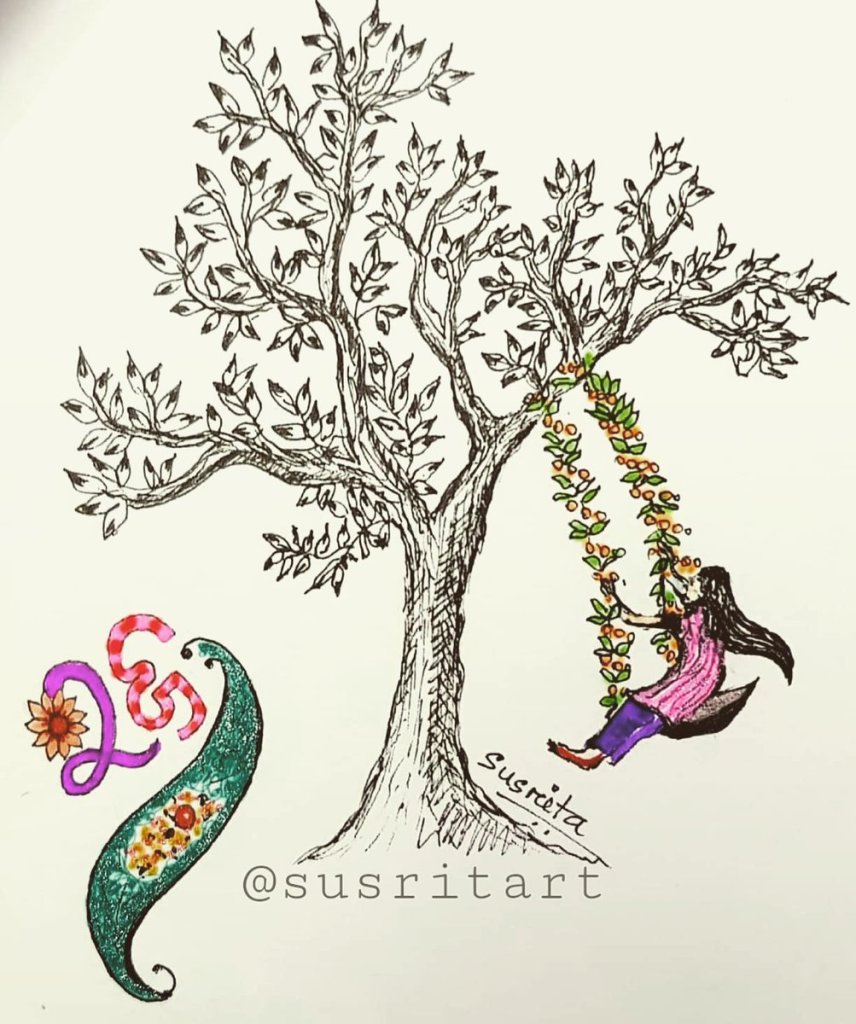
The first day is named Pahili Raja, second day is Mithuna Sankranti, third day is Bhudaaha or Basi Raja. The final fourth day is named Basumati snana, during which the women bath the grinding stone as a logo of Bhumi with turmeric paste and adore with flower, sindoor etc. All type of seasonal fruits is offered to mother Bhumi. The day before first day is called Sajabaja or preparatory day during which the houses, kitchen including grinding stones are cleaned, spices are ground for three days. During these three days women and girls take rest from work and wear new Saree, Alata, and ornaments. According to popular belief as women menstruate, which is a sign of fertility, so also Mother Earth menstruates. So all three days of the festival are considered to be the menstruating period of Mother Earth. During the festival all agricultural operations remain suspended. As a mark of respect towards the world during her menstruation days, all agricultural works involves a standstill during lately . Significantly, it’s a festival of the unmarried girls, the potential mothers. They all observe the restrictions prescribed for a menstruating woman. The very first day, they rise before dawn, do their hair, anoint their bodies with turmeric paste and oil and then take the purificatory bath in a river or tank. Peculiarly, bathing for the remainder two days is prohibited. They don’t walk bare-foot don’t scratch the world , don’t grind, don’t tear anything apart, don’t cut and don’t cook. During all the three consecutive days they’re seen within the better of dresses and decorations, eating cakes and rich food at the homes of friends and relatives, spending long cheery hours, moving up and down on improvised swings, rending the village sky with their merry impromptu songs.

Ratha Yatra – A Journey of Faith

Jagannathdham,Puri is the ultimate destination of pilgrims. Rath Yatra features a lot of importance in Hinduism. This is organized from the Jagannath Temple in Puri, Odisha. According to the Hindu calendar, Rath Yatra takes place per annum on the second day of Shukla Paksha within the month of Ashadha.

This Rath Yatra of Puri may be a symbol of harmony, brotherhood and unity. Thousands of devotees come here from different corners of the country to require part during this yatra and obtain good luck by pulling the chariot of the Lord. It is said that whoever participates within the Rath Yatra, gets all types of happiness and prosperity.
The nine day annual grandeur: RATHA YATRA is known to attract millions of devotees from across the globe to Puri Dham of Lord Jagannath.Procession of the architectural marvels of the three chariots –The Nandighosha of Sri Jaganath,The Darpadalana of Devi Shubhadra and The Taladhwaja of Lord Balabhadra would have been pulled by millions from badadanda/the grand road to Gundicha temple.
The three chariots of Lord Jagannath, Lord Balabhadra and Lord Subhdra are newly constructed every year with wood of specified trees like phassi, dhausa, etc. They are customarily brought from the ex-princely state of Dasapalla by a specialist team of carpenters who have hereditary rights and privileges for an equivalent. The logs are traditionally set afloat as rafts within the river Mahanadi. These are collected near Puri then transported by road. The three chariots are decorated as per the unique scheme prescribed and followed for centuries stand on the Bada Danda, the Grand Avenue. The chariots are lined across the wide avenue ahead of the temple on the brink of its eastern entrance, which is additionally referred to as the Sinhadwara or the Lion’s Gate.Around each of the chariots are nine Parsva devatas, painted wooden images representing different deities on the chariots’ sides. Each chariot features a charioteer (Sarathi) and 4 horses.
In the current time, not more than 500 persons including temple officers and police.The complete Mahostav was live streamed across national media for the devotes to observe all the rituals.With devotees barred from taking part in the festivities owing to the pandemic for the second successive year and the supreme court upholding the state government’s ban on conducting the rath yatra anywhere other than puri.However, while usually tourists throng the temple premises during the festival, this year, due to the Covid-19 restrictions, no devotees were allowed during the much awaited Rath Yatra, whilst Lord Jagannath is that the one among the principal deities within the state of Odisha. Moreover, the chariot pullers who participated within the procession are tested negative for COVID-19 with the assistance of an RT-PCT test, and have also been fully vaccinated, the officials said. Apart from this, the Lord Jagannath Temple administration in Puri said that about 1,000 officials, aside from police personnel, were deployed.

MSD:The Greatest Of All Time

“Dhoni finishes off in style. A magnificent strike into the crowd.India lifts the world cup after 28 years.”

This piece of commentary is etched in the minds of every Indian cricket fan. The person, on whom this was commented, is the darling of the country, a role model for the billion or so Indians.

He is none other than Padma Bhusan Sri Mahendra Singh Dhoni aka Mahi.

Dhoni was born on 7 July 1981 in Ranchi, Jharkhand to Pan Singh and Devaki Devi. He has a sister Jayanti and a brother Narendra Singh Dhoni. Originally his family belonged to Almora district of Uttarakhand. He had studied at the DAV Jawahar Vidya Mandir School in Ranchi, Jharkhand.MS Dhoni got married on the 4th of July 2010, to Sakshi Singh Rawat. And was blessed with a baby girl , Ziva .

Initially, during his school days, he used to play badminton and football and in fact was the goalkeeper of his football team. Once, he was sent by his football coach to play cricket for a local cricket club. It was in this match that he impressed everyone with his wicket-keeping skills which resulted in getting him a regular post of the wicketkeeper at the Commando Cricket Club. From 2001 to 2003, he worked as a Train Ticket Examiner (TTE) at the Kharagpur Railway Station under South Eastern Railway in Midnapore (W)(myeducorner.in).

He made his test debut on 2nd December 2005 against Sri Lanka,And since then Dhoni has played 90 Tests scoring 4876 runs with his highest being 224 against Australia at Chennai in 2013.He played his last test match on 26 December 2014 against Australia.

In the ODI scenario, Dhoni made his ODI debut on 23 December 2004 in a  match against Bangladesh, and so far has played 337 matches scoring 10414 runs, with his highest being a staggering 183 not-out against Sri Lanka, in Jaipur, 2005-06. His ODI wicket-keeping statistics include 311 catches and 119 stumpings. India won the 2007 ICC World Twenty20 , 2011 ICC Cricket World Cup, 2013 Champions trophy among others, under his captaincy .He is also the captain of the Chennai Super Kings in IPL and under his captaincy, CSK has won three titles and four runner-up finishes. He became so deeply associated with the city Chennai ,that he even became a co-owner of a Chennai-based football franchisee.

According to espncricinfo.com,His 10 sixes in an innings are the sixth highest in ODI cricket.He broke the record of Adam Gilchrist for the highest score made by a wicket keeper-batsman by scoring 183 runs. India reached their highest test score of 726-9, under his captaincy. And guys do you know what, he is the only ODI captain to have played at number seven and scored a century. One more interesting fact awaits you,that Mahi is the first Indian wicketkeeper to reach 4000 tests runs.

Apart from being the best finisher, he has also been awarded with numerous accolades for his exploits on the field like ICC ODI Player of the Year  in 2008 and 2009. He was recognized for LG People’s Choice Award in 2013.The golden feather on his cap of Rajiv Gandhi Khel Ratna,India’s highest honor in the field of sports was given for his achievements in the year 2007–08.

On 15 August 2020,he leaves cricketing world overwhelmed with emotions announcing his retirement through a social media post. His measage read: “Thanks a lot for ur love and support throughout.from 1929 hrs consider me as Retired”

Mahendra Singh Dhoni is not just a mere cricket player. He is a lesson and motivation. His ability to maintain balance and focus in times of troublesome situations made him heroic. His biographical film ‘M S Dhoni: The Untold Story’ helps us to know more about his attitude of responsibility. Life of Dhoni is a story of hard work just like any famous personality. And the beauty of all success and glory he brought to Indian cricket team lies in his simplicity which made him everyone’s favorite.

Rasagulla : The “Sweet” battle of it’s origin

Sweets from the Indian subcontinent are the confectionery and desserts of the world.If tomorrow ,India has to choose a national sweet dish, the most likely contender should be the Rasagulla.

Rasagulla is an Indian syrupy dessert popular in the Indian subcontinent . It is made up of ball-shaped dumplings of chhena (an Indian cottage cheese) and semolina dough, cooked in light syrup made from sugar(chashni). This is done until the syrup permeates the dumplings.

From the bypaths of Kolkata and the temples of Puri to the powerful corridors of Rashtrapati Bhawan, Rasogollla remains one of India’s preffered  succulent inventions. The Bengalis stake their claim on it. The Odias believe it’s their invention.

History tracks down the origin of Rasagulla to Puri in Odisha, where this 700-year-old sweet dish was part of a ritual,known as Khira mohana due to its almost white appearance back in the 11th century, it was customary to offer this chenna sweet dish to Goddess Mahalakshmi as prasad, especially on the last day of the Rath Yatra, also called Niladri Vijay.According to mythology, Lord Jagannath, an avatar of Vishnu, to appease Lakshmi, his accompaniment on returning from Gundicha temple after a nine-day vacation (Rath Yatra) had offered her rasagulla as a gift to urge entry into his home. Since then, it’s a ritual that’s followed annually.

The spongy white rasagulla is believed to have been originated in present-day West Bengal in 1868 by a Kolkata-based confectioner named Nobin Chandra Das. Das started making rasagulla by processing the mixture of chhena and semolina in boiling sugar syrup in contrast to the mixture sans semolina in the original rasagulla in his sweet shop located at Sutanuti (present-day Baghbazar). His descendants claim that his recipe was an original, but according to another theory, he modified the traditional Odisha rasagulla recipe to produce this less perishable variant.

A year after West Bengal walked away with geographical indication (GI) tag recognition for rasagulla, the Odisha government reopened the battle for ownership of the delicacy and won the rights over ‘Odisha rasagulla’.The bitter war over the rasagulla appears to have ended in a draw—the geographical indicator (GI) was granted to Odisha On 29th July 2019 for the ‘Odisha rasagulla’, less than two years after West Bengal won its own GI tag for the delectable eastern sweet.