Need of World Ozone Day

 World Ozone Day

World Ozone day is celebrated on 16th September every year . The year 2022 marks the 35th year of the implementation of the Montreal Protocol. The UN is observing the Ozone Day with the theme “Montreal Protocol@35” and the worldwide collaboration safeguarding life on earth is the topic for this year’s World Ozone Day. World Ozone Day is celebrated to commemorate the signing of the Montreal Protocol that came into force on this day in 1987. World Ozone Day is celebrated every year to spread awareness among people about the depletion of Ozone Layer and the measures taken and to be taken to preserve it.

“ The principal aim of the Montreal Protocol is to protect the ozone layer by taking measures to control total global production and consumption of substances that deplete it, with the ultimate objective of their elimination on the basis of developments in scientific knowledge and technological information. It is structured around several groups of ozone-depleting substancesFor each group or annex of chemicals, the Treaty sets out a timetable for the phase-out of production and consumption of those substances, with the aim of eventually eliminating them completely.

The timetable set by the Protocol applies to consumption of ozone depleting substances. Consumption is defined as the quantities produced plus imported, less those quantities exported in any given year. There is also a deduction for verified destruction. There are a few exceptions for essential uses where no acceptable substitutes have been found, for example, in metered dose inhalers (MDI) commonly used to treat asthma and other respiratory problems or halon fire-suppression systems used in submarines and aircraft.

In 1994, the United Nations General Assembly proclaimed 16 September the International Day for the Preservation of the Ozone Layer, commemorating the date of the signing, in 1987, of the Montreal Protocol on Substances that Deplete the Ozone Layer (resolution 49/114).

Implementation of the Montreal Protocol

Implementation of the Montreal Protocol progressed well in developed and developing countries. All phase-out schedules were adhered to in most cases, some even ahead of schedule. Attention focused initially on chemicals with higher ozone-depletion potentials including CFCs and halons. The phase-out schedule for HCFCs was more relaxed due to their lower ozone-depletion potentials and because they have also been used as transitional substitutes for CFCs.”

Citation from United Nations https://www.un.org › observances

International Day for the Preservation of the Ozone Layer | United Nations

Need of Studying Abroad

 Need of studying Abroad

The need for higher studies and the trend of going abroad for enhancing student career and opportunities have increased in current scenario. Students should study courses abroad as it helps them to to develop  Intercultural Communication and Language. Each country have their own teaching methods and approaches. Studying abroad can help one grow academically and develop skills that will allow one to adapt to various educational environments. Most universities abroad offer merit-based scholarship programs and offer funding to international students to support their studies and day to day expenses, especially in terms of housing. This support is provided once students gain acceptance in the course of study.Depending on your topic of study, studying in a different country opens up more job prospects. Students can achieve their career and will enhance great opportunities for future career. Students will also get chance to do research in their fields. Students will become self sufficient and will be able to live an independent life without parents support.Living and studying in a different country will help you grow into an individual that thrives and embraces life as it comes. 

Abroad courses and programmes

 Abroad courses and programs

Most of the educational consultants insist students who wishes to study abroad programs should consider their attitudes, abilities,interest , goals and their expectations before pursuing course abroad. Most of the students are interested to pursue undergraduate, graduate, and doctoral programmes abroad. According to experts selecting the country, universities, administration of tests and visa processes are more important. Countries such as the UK, USA, Australia, Canada, New Zealand, Germany, France, The Netherlands and Ireland have a lot of opportunities. Decisions on funding options must be taken judiciously. Options for getting scholarships, assistantships and fellowships can be given more emphasis. It requires good academic merit and test scores. The initial task is to get good scores in English proficiency examinations like IELTS, and TOEFL. All the countries are providing post-study work visas for up to two years. Statement of purpose and motivation letters play a key role in facilitating admission process. Courses like quantum computing, climate tech, green technologies, health care technologies, life science courses, clean tech, manufacturing, psychology, data science, automation, energy, digital marketing, accounting, and management courses have lot of opportunities abroad.

• Students should prepare for proficiency tests and can join undergraduate programmes immediately after Plus Two. Degree students can prepare during their final year term itself for going abroad. Some of the top universities are Harvard University . Massachusetts Institute of Technology Stanford University.,California Institute of Technology, University of Cambridge,. Princeton University ,University of Oxford, Yale University.  Some of countries which are cheaper for Indian students are Germany, France, Mexico, Poland, Argentina  etc.

why should we donate to charity?

 why should we donate to charity?

Donation is a great way to provide the resources to those who need them the most as it could not completely fulfill their needs but it could be a support to them or help in a way. sometimes we also feel to give or help someone but we usually don’t know the ways or routes that’s why we are not able to support them. there are end of charitable institutions exist in our country through them we can help the needy ones but if know any kind of foundation or volunteer then you can even directly help them.

what could be the reason for the donation?

  • donation gives happiness 

 it is found that people usually give donation because it gives them happiness as we are humans who have some emotional side also which encourage us to help the needy one as we feel they also have the right to have every kind of accessibility as we have in way of food, money, etc.

  • for saving tax 

there are many organizations that donate their money just for the sake of saving it form tax as they don’t want to pay tax to the government so they thought the donation is a great way to spend that amount of money on needy ones and it creates the favorable image of that organization in front of the society.

  • ease in giving

before it was not easy for people to reach out to people who are in need or charitable institutions but with digitization, it has become easy for people to connect with them now they can even donate online and provide their funds to them.
  • awareness have raised 
before people were not that much aware of what is happening in the world but now because of the internet, we get instant updates about issues or problems which people are facing or suffering so because of knowing about contingencies people could contribute towards that and it has become the citizen more responsible towards their duty.

  • social media impact

social media also play a significant impact on raising awareness and contributing towards donation as everyone is active on social media platforms so their people get information about who is in need as sometimes we get to know through our connection people so we can easily help and support them.

conclusion –

so these were some reasons but it could be more the ultimate motive of donation is self-satisfaction as people get happy when they see the smile on another person’s face because of us so the motive could be different but the objective is someone same in all cases.

  b b SEO services    

suppose you run a business that offers a variety of products and services. In that case, you might wonder how to make your business visible in front of customers without spending money (organically ). Here SEO will play a significant role in growing your business and making it visible in front of the right audience.

what is b to b SEO? 

b to b SEO means optimizing your website pages for ranking on keywords that are being searched on google as much as your business will be visible on google the chances of reaching more audiences will increase. 

what could be the strategy for b-to-b SEO?

  • firstly search the keywords which is relevant to your business that people are searching for the most.
  • after searching the keywords you need to optimize your website pages as per the keywords so you can target your users easily.
  • now after doing the on-page of the website it’s time to link your website with another website for generating traffic to your website.

some ideas for making a strong b-to-b strategy 

  • build buyer persona:

buyer persona depicts the user like who will be my customer or who can be it basically anticipation which every company does nowadays as it includes all the information about our customer which helps in targeting them easily . the info is collected on the basis of some forecasting or past records or by doing our own research. it is an efficient tool for analyzing the customer in making planning.

  • keyword research :

there are hundreds of keywords you can find but every keyword does not go with your business or represent your business so before using any keyword for your business you need to do good keyword research and need to find the perfect one which describes your business and is relevant for that there are tools available in which google search console if the one which is free provided by google which will help you in finding the right keyword.

  • build link:

linking is the most effective and organic way to generate traffic to your website as there are many websites with whom you can link your website but you need to find those who are performing the same kinds of function as your business do there are two ways of linking first is interlinking which includes linking your own website pages with other or linking which includes link your website with other sites.

8 Best Retro Games on Ps4

1. Ms.
Pac-Man

Ms.
Pac-Man is a well-liked arcade game. The North American publisher of Pac-Man,
Midway Manufacturing Corporation, with headquarters in Illinois, created it. Of
all the time
Ms. Pac-Man, is the most well-known arcade video game. It was
launched in North America, January 1982
. Because of its success,
Namco, the company that made the Pac-Man video game, which was published in the
US in the latter part of 1980, decided to use it as the official title. In
contrast to the original Pac-Man, Ms. Pac-Man included a female protagonist,
fresh labyrinth designs, and various other gameplay enhancements. The most
popular arcade game made in America, Ms. Pac-Man, sold 115,000 arcade cabinets.

2. Bubble
Bobble

Taito’s 1986 arcade game Bubble Bobble was later ported to
several personal computers and video game platforms. The action-platform game,
which features the identical Bubble Dragons Bub and Bob, sends players through
100 distinct levels while they blow and burst bubbles, avoid monsters, and
gather various goodies. A lengthy list of sequels and spin-offs were produced
as a result of the game’s huge popularity. Saving Bub and Bob’s ladies from the
Cave of Monsters is the game’s main objective. It is a pioneering instance of a
game with many endings that change based on how well the player performs and
uncovers mysteries.

3. Puzzle
Bobble

The arcade tile-matching game Puzzle Bobble, created and
released by Taito in 1994, is also known globally as Bust-a-Move. It features
motifs and characters from the classic arcade Bubble Bobble from 1986 as its
inspiration. Its arcade popularity led to a number of sequels and home gaming
system versions thanks to its distinctly adorable Japanese animation &
music, as well as its game mechanics and level designs.

4. Ikari
Warriors

Ikari Warriors, also known as Ikari (, “Fury”) in
Japan, is an operated shooter arcade game that was created and published by SNK
in 1986 and distributed by Tradewest in North America. The game was launched at
a period when the market was flooded by Commando imitations. Rotating joysticks
as well as a two-player mode set Ikari Warriors apart. [10] The rotating
joystick controls were based on TNK III, an earlier game from SNK (1985). Ikari
was initially supposed to be a legally recognized version of the 1985 movie
Rambo: First Blood Part II, but SNK was unable to first get the film’s rights.

5. City
Connection

Jaleco created and released the platform arcade game City
Connection[a] in 1985. Kitkorp distributed it under the name Cruisin’ in North
America. Clarice, who is being controlled by the player, must cross hills on
her Honda City hatchback in order to paint the roads. Clarice is frequently
pursued by cop cars, which she is able dispatch by firing oil cans towards them
to briefly knock them out of commission before driving into them using her
vehicle. When creating the game, Jaleco drew inspiration from maze-chasing
action games like Pac-Man (1980) as well as Crush Roller (1981).

6.Metal Slug 4

Run-and-gun video game Metal Slug 4 was developed by
Mega Enterprise and Noise Factory for the Neo-Geo play station platform. The
remastered edition with in Metal Slug series, it was launched in 2002 again for
Neo-Geo MVS arcade system. Playmore released Metal Slug 4 on platforms two
years later. The with addition of new opponents, bosses, weapons,
vehicles, and a reward combo system, Metal Slug 4 keeps the very same gameplay
as its predecessors. In Japan and Europe, it was released on Xbox and PS 2 as
just a standalone title, whereas in North America & S. Korea, it was
released as a compilation with Metal Slug 5. In 2018, the Switch’s version was
made available.
 

7. Riding
Hero

A hybrid racing and performance arcade video game called
Riding Hero was created and first released in 1990, July
24 by SNK.   It was the first game to enable “Multi
Play,” which enabled systems to be linked via a phone jack port built into
each cartridge rather than LAN play, both on the Neo Geo MVS and Neo Geo AES
platforms. Players in the game have the option of competing in battles
against other human players, taking on the role of a protagonist who sets out
on a journey to join the Suzuka 8 Hours endurance race, or taking part in a
global grand prix tour versus AI-controlled opponents.

King
of The Monsters 2

SNK launched the fighting/wrestling game King of the
Monsters 2 on May 5, 1992. It is a follow-up to King of the Monsters,
which debuted in 1991. [1] The Earth is threatened by enormous extraterrestrial
creatures in this game, which features three of the monsters from the previous
game that survived. Later, Takara released ports of the game for the Super NES
and Sega Genesis.

Why should you have health insurance?

Health Insurance 

Usually, the first thought that comes to mind when entering a hospital is how much lighter your wallet will be when you leave. In a high-tech world, medicine is at the forefront, and technology comes with a cost. It’s not uncommon for routine check-up bills to run into the thousands of dollars. A lengthy hospital stay will inevitably set you back hundreds of thousands of dollars. Having reliable comprehensive health insurance can save you a day and your wallet, at least if you’re in the hospital for treatment.

What is health insurance?

If you choose health insurance, your medical expenses will be covered by your insurance company and you will instead have to pay an annual membership fee called a “premium”. This can also be paid in monthly installments. Depending on which policy you choose and who provides it, health insurance protects your wallet by covering medical bills, hospital bills, ambulance bills, test bills, and other related costs. Some policies also cover lost earnings compensation.

Why should you have health insurance?

A WHO report outlines the need for expanded health insurance coverage in India, which is staggering as 68% of India’s healthcare costs are out-of-pocket (OOP). Also, only 18% of urban and 14% of rural India have health insurance. Getting health insurance at a young age is a wise decision as premiums are much lower. Please note that many policies do not cover pre-existing illnesses or illnesses that occur within 30 days of obtaining the policy, except for accidents.

If you do not yet have health insurance or are considering it, here is a list of reasons why you should recognize the importance of health insurance.

• Cashless treatment: All major health insurance companies have many popular hospitals in their networks, so-called network hospitals. When you get treatment at one of these hospitals, all you have to do is present your health insurance card (or just your insurance number), fill out a few forms if necessary, and then you’re all set. However, if you decide to go to an out-of-network hospital, you will have to pay for treatment and later apply for a refund. Cashless treatment is therefore one of the biggest benefits of health insurance. Because few people can arrange a large amount of money in a short period of time for medical purposes.

• Rising health care costs and illnesses: According to cancer statistics in India, there were 11,57,294 registered cancer patients in 2019. In the last 26 years, cancer incidence has almost doubled in India. Other life-threatening diseases such as tuberculosis and diabetes are also on the rise. With medical and treatment costs continuing to rise, look no further than why health insurance is a must.

• Free Health Checks and Additional Benefits: Many insurers offer their customers free health checks every year (but only if you haven’t filed a claim in the last few years). Some companies do). You are also eligible to receive a No Claim Bonus (NCB). H. If you do not have insurance other than outpatient insurance during the insurance period, the insurance amount will increase by a certain amount. In addition, ambulance costs, pre-hospital and post-hospital costs are some of the other benefits offered by insurance companies.

• Tax Incentives: Section 80D of the Income Tax Act provides tax incentives for health insurance premiums. Under the age of 60, INR 50,000 for parents under the age of 60 (INR 25,000 for self-employed persons, spouses and dependent children and INR 25,000 for parents), for parents over the age of 60 can claim a deduction of Rs 75,000. (Self-employed person, spouse and dependent children Rs 25,000 for her and Rs 50,000 for parents). In total he can claim a deduction of Rs 1,00,000 if both the individual and the parents are above her 60 years of age.

• Peace of Mind: Well-planned back insurance can be a great peace of mind, especially when life-threatening diseases have increased at an alarming rate in recent decades. It can save you and your family during a medical emergency, and most importantly, one less thing to worry about in your busy daily schedule.

Now that you understand the importance of health insurance, let’s take a look at what to consider when choosing health insurance.

Points to note when looking for health insurance 

• As mentioned above, it is better to get health insurance when you are young. Insurance premiums tend to increase with age, as does the risk of health problems.

• Look for insurance that covers terminal illness. These are the things that weigh most on our finances, so it makes no sense not to include them in the covered list.

• Do not choose insurance with expensive copay clauses. Your copay is the part of your bill that you have to pay out of your own pocket in the event of a claim. The insurance company will pay the rest according to the terms of the policy.

• You may select passenger/additional features related to health insurance to contribute to the overall insurance coverage network.

Types of Health Insurance

•Compensation Plan: In this case, the patient pays a fixed amount for hospital expenses and the insurance company pays the rest of the bill. You can choose the doctor you want to see, and your insurance company doesn’t have to decide which hospital or whether you need to see a doctor. But this autonomy is only up to a point. In an emergency, emergency room admission still requires insurance clearance unless you are incapacitated. If you choose a coverage plan, first pay the full amount out of your own pocket and then request a refund. is needed.

•Exclusive Provider Organization (EPO): Members of the EPO plan must use a defined network of physicians and primary care physicians (PCPs) who issue referrals to the network’s specialists for treatment. However, this condition does not apply in emergency situations. You will also be required to make a small donation yourself.

•Point of Service (POS): Similar to EPO Pan, POS also offers PCP with a choice of network providers. In such cases, higher compensation is available. However, if you choose to go to an out-of-network hospital, you may be subject to a deductible (out-of-pocket) and have less insurance coverage. You may also need to prepay and then request a refund.

In summary, the importance of health insurance cannot be overestimated. Get health insurance for yourself, your spouse, your children, and your parents early.

Need of Hindi Day

 Hindi Day

Hindi Diwas or National Hindi Day is celebrated every year on September 14 to mark the adaptation of Hindi (written in Devanagari script) as the official language by the Constituent Assembly on September 14, 1949. The first Prime Minister of the country, Jawaharlal Nehru, decided to celebrate Hindi Diwas on September 14. September 14 to spread awareness about the importance of the Hindi language in the country. The Hindi language is one of the oldest languages that obtains much of its academic terminology from the Sanskrit language written in the Devanagari script. All schools, colleges, offices, and organizations to showcase the importance of the day and the language. The day commemorates the event when Hindi was adopted as one of the official languages of India. The most interesting fact about Hindi is that “Hindi” is basically a Persian language word and the first Hindi poem was written by the eminent poet “Amir Khusro”.The first literature on the history of the Hindi language was composed by a French writer “Grasim the Taisi”.

Modelling: Career

 Modelling

Modelling offers a glamorous career with tremendous opportunities to travel and meet various people. An established model gets good income. Modelling involves a lot of hardworking, dedication and perseverance. It is highly competitive field. In this field, physical attributions and personal qualities are more important. They are types of modelling like ramp modeling, television modeling and print modeling. There are no specific qualifications or age limit to enter this field. The model coordinating agency or a fashion designer will help to enter to this field if they are satisfied with one’s portfolio. Other way to enter to modelling field is through participating in contests sponsored by magazines, cloth manufacturers, cosmetic companies etc. and to take part in beauty pageants. Model learn on the job. Training programs include beauty care, make up, hair styling, diet and exercise, presentation skills etc. The main attributes required to become a model is good and healthy complexion and energetic expression.

Salient Features of NEP, 2020

Salient Features of NEP, 2020

The National Education Policy 2020 was unveiled on July 29, 2020. The National Education Policy 2020 makes a number of changes to both higher education and secondary education, including technical education. The National Education Policy 2020 lists a number of action items/activities that should be implemented in both higher education and schooling.

The following are specifics of NEP 2020’s key features:

• Ensuring universal access at all educational levels, from preschool to grade 12;

• Ensuring that all children between the ages of 0 and 3 receive high-quality early care and education;

• New Pedagogical and Curricular Framework (5+3+3+4);

• There are no clear distinctions between the humanities and sciences, academic and extracurricular pursuits, or career paths;

• Launching a national initiative on basic literacy and numeracy;

• Promoting multilingualism and Indian languages as a priority; The home language, mother tongue, local language, or regional language will be used as the primary medium of teaching until at least Grade 5, but ideally until Grade 8 and beyond.

• Assessment reforms, including up to two Board Exams per school year, one for the main exam and one for improvement, if requested;

• The establishment of the PARAKH (Performance Assessment, Review, and Analysis of Knowledge for Holistic Development) National Assessment Center;

• Educational equity and inclusion, with a focus on Socially and Economically Disadvantaged Groups (SEDGs);

• Special Education Zones and a specific gender inclusion fund for underprivileged areas and groups;

• Effective and open procedures for hiring teachers and performance evaluations based on merit;

• Ensuring that all resources are accessible via school complexes and clusters;

•State School Standards Authority (SSSA) establishment 

• Promotion of vocational education throughout the K–12 and tertiary systems of instruction;

• raising GER to 50% in higher education;

• Multidisciplinary, all-encompassing education with numerous points of access and departure;

• NTA will conduct a Common Entrance Exam for HEI Admission;

• The founding of an academic bank of credit

•Multidisciplinary Education and Research Universities (MERUs) establishment ;

•The National Research Foundation (NRF) was established.

•”Light yet Tight” regulation 

• The Higher Education Commission of India (HECI), a single overarching umbrella organisation, with independent bodies for standard setting (the General Education Council), funding (the Higher Education Grants Council), accreditation (the National Accreditation Council [NAC]), and regulation (the National Higher Education Regulatory Council [NHERC]), is responsible for promoting the higher education sector, including teacher education but excluding medical and legal education;

• Growing open and distant education to boost the gross enrollment ratio (GER).

• Globalization in Education

• The higher education system will include professional education as a core component. The goal of institutions in these and other sectors, including independent technical universities, law schools, medical schools, and agricultural colleges, is to become multidisciplinary institutions.

• 4-year integrated stage- and subject-specific teacher education degree in education

• Creating a National Mentoring Mission.

•The establishment of the National Educational Technology Forum (NETF), an independent organisation that would serve as a forum for the unrestricted discussion of ways to use technology to improve instruction, evaluation, planning, and administration.

•The appropriate use of technology in all educational levels.

•Objectives Reaching 100% adult and juvenile literacy.

• The commercialization of higher education will be fought and stopped by a number of methods with checks and balances.

• As a “not for profit” company, all educational institutions will be held to the same standards of audit and disclosure.

• The Center and the States will collaborate to boost public spending on education so that it reaches 6% of GDP as soon as possible.

• The Central Advisory Board of Education should be strengthened to maintain coordination and to put more of an emphasis on quality education overall.

By 2030, the NEP, 2020 aims to raise the GER in preschool through secondary education to 100%, while it will rise from 26.3% in 2018 to 50% in higher education, including vocational education.

Fiscal Deficit


Fiscal Deficit

Fiscal deficit is the difference between the government’s total expenditure and the total non debt creating receipts. Revenue receipts, recoveries of loan and other receipts are all non debt creating. The government doesn’t have to borrow to generate these sources of income. Revenue receipts include both tax and non tax revenue of the government of India. Tax revenue means revenue that government gets by collecting taxes like personal income tax, corporate tax and goods and services tax. Non tax revenue include stamp duty and dividends earned from public sector units. Dividend is the return on capital invested by the government in PSU’s. Fiscal deficit arises when the government has expenditure higher than the revenue it generates. To bridge this expenditure revenue deficit government starts borrowing. This borrowing is called Fiscal Deficit. Fiscal deficit is usually expressed in terms of percentage of the country’s Gross Domestic Product (GDP). A high and rising Fiscal deficit is bad for the general state of the economy, trade balance and currency exchange rates. A high fiscal deficit means that the governments borrowing are high. When the government borrows money from the general public , it creates demand for money. A high fiscal deficit can be dangerous it affect general economic activity it will reduce business and economic activity. It will reduce income and employment generation. It lead to reduction of exchange rates and rises the trade deficit.

Workshop on “Interventions Required for Strengthening the PPP Ecosystem (Partners in Progress)”

 The Government of India envisions a major role of Public Private Partnership (PPP) to leverage private sector investment and operational efficiencies in the provision of affordable, qualitative, and sustainable public assets and services.

The Government of India has taken several interventions to encourage private sector investors to participate, leverage their resources, technology, and management skills to increase infrastructure investment and improve the delivery of public goods and services with a high level of efficiency and quality in light of the rising demand of infrastructure facilities.

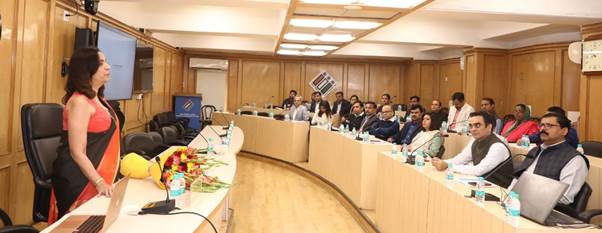
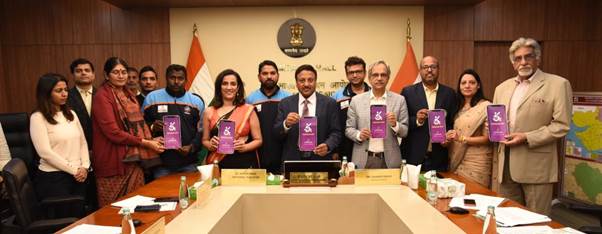
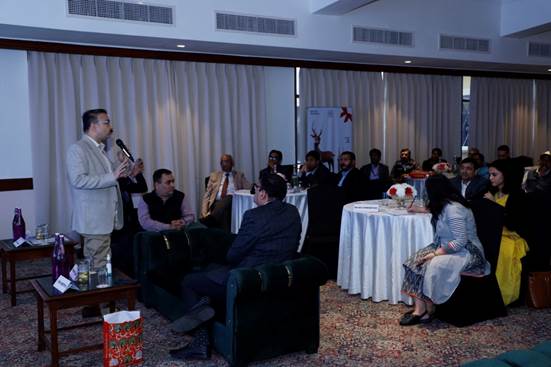
Continuing with the interventions to encourage the private sector investment, Infrastructure Finance Secretariat, DEA with the support of British High Commission (BHC) organised a workshop on 14.9.2022, with an intent to provide a platform to the key stakeholders (specially the private players) to share their views about the current PPP landscape, their areas/ sectors of interest, and suggest interventions/initiatives required to further strengthen the current PPP ecosystem. The workshop, included sector specific sessions on Health, Education and Sports, Water Supply and Municipal Solid Waste Management, Urban Transport and Roads & Airports.

The Workshop was inaugurated by Shri Ajay Seth, Secretary, DEA, Ministry of Finance (MoF) with welcome address from Shri B Purushartha, Joint Secretary, (ISD), Infrastructure Finance Secretariat.  Special Addresses were also delivered by Dr. V. Anantha Nageswaran, Chief Economic Adviser, MoF, Ms. Sally Taylor, Minister Counsellor (Director Development, Climate, Science and Technology), and Ms. Wendy Werner, Country Head India, International Finance Corporation, World bank Group.

During the Sessions, the private players presented key issues/constraints faced by them during structuring and execution of PPP projects and suggested key interventions that may be required for enhancing private sector investments in the infrastructure sector.

The Workshop witnessed presenters  from infra sector private  players viz., Olympiados, Max Healthcare,  Apollo Hospitals,  Krsnaa Diagnostics,  Medanta,  GenWorks,  Apex Hospitals, Jindal Urban Infrastructure,  Vishwaraj Infrastructure,  VA Tec Wabag,  SUEZ India,  Re Sustainability Co.,  Tata Projects,  Abellon Green Energy,  Megha Engineering,  GreenCell Mobility,  Reliance Infrastructure Limited,  Hindustan Construction Company,  Cube Highways,  IRB Infrastructure,  GMR Infrastructure,  Noida International Airport,  Gammon India, Fortis Memorial Research Institute, and attendees from  Shapoorji Pallonji, L&T Infrastructure, PNC Infrastructure, Ashoka Buildcon, Boehringer Ingelheim, Kishan Agro Industries, Incredible Medtech LLP, Dynatom International GmbH, Innovative Technologies and Projects, Aggcon Equipments, Sekura, etc.

During the workshop Project Sponsoring Authorities (PSAs) presented successful PPP Projects executed in aforementioned sectors. Shri Manu Srivastav, Principal Secretary, Government of Madhya Pradesh presented successful REWA project. IDA Bihar gave a presentation on Jayaprabha Hospital on PPP mode, , Goa Waste Management Corporation presented on Solid waste management facility, Housing &Urban Development Department, Government of Odisha on Bhubaneswar Water Supply , Indore Municipal Corporation on Urban Public Transport , Pune Metro Rail Development Authority (PMRDA) on Pune Metro project , Uttar Pradesh Expressways Industrial Development Authority (UPEIDA)  on road projects undertaken on PPP mode  and Airport Authority of India (AAI)  on Leasing of Airports on PPP mode.

Each session was concluded by senior officials of the respective Central Infra Line Ministries wherein they assured full support from the Government in overcoming the existing challenges while implementation of PPP projects including remarks from, Shri Amit Ghosh, Additional Secretary of the Ministry of Road Transport and Highways, Shri Vishal Chauhan, Joint secretary, Ministry of Health and Family Welfare, Shri Kunal Kumar, Joint Secretary, Ministry of Housing And Urban Affairs, Smt. Rubina Ali, Joint Secretary, Ministry of Civil Aviation and Shri Vishwajeet Kumar, Director, Dept. of Higher Education, Ministry of Education.

The workshop witnessed an active participation of 150+ participants that include participants from Private sector infra players, representatives from FICCI, CII, ASSOCHAM , NIIF, Senior Government officials from Central Ministries and State Governments , officials from British High Commission and International Finance Corporation and Transaction Advisers empanelled by DEA.

****

Ease of Doing Business further and reduce compliance burden on “small companies"

 The Ministry of Corporate Affairs (MCA) has taken several measures in the recent past towards ease of doing business and ease of living for the corporates.  These included decriminalisation of various provisions of the Companies Act, 2013 & the LLP Act, 2008, extending fast track mergers to start ups, incentivising incorporation of One Person Companies (OPCs) etc. Earlier, definition of “small companies” under the Companies Act, 2013 was revised by increasing their thresholds for paid up capital from “not exceeding Rs 50 lakh” to “not exceeding Rs 2 crore” and turnover from “not exceeding Rs 2 crore” to “not exceeding Rs 20 crore”. This definition has, now, been further revised by increasing such thresholds for paid up Capital from “not exceeding Rs. 2 crore” to “not exceeding Rs. 4 crore” and turnover from “not exceeding Rs. 20 crore” to “not exceeding Rs. 40 crore”.

Small companies represent the entrepreneurial aspirations and innovation capabilities of lakhs of citizens and contribute to growth and employment in a significant manner. The Government has always been committed to taking measures which create a more conducive business environment for law-abiding companies, including reduction of compliance burden on such companies.

Some of the benefits of reduction in compliance burden as a result of the revised definition for small companies are as under:

  • No need to prepare cash flow statement as part of financial statement.
  • Advantage of preparing and filing an Abridged Annual Return.
  • Mandatory rotation of auditor not required.
  • An Auditor of a small company is not required to report on the adequacy of the internal financial controls and its operating effectiveness in the auditor’s report.
  • Holding of only two board meetings in a year.
  • Annual Return of the company can be signed by the company secretary, or where there is no company secretary, by a director of the company.
  • Lesser penalties for small companies.

The relevant notification issued by the Ministry of Corporate Affairs is available on the Ministry’s website at the following link:

https://www.mca.gov.in/bin/dms/getdocument?mds=tiMs9IFJ8xuPm%252B%252Foxc6fUw%253D%253D&type=open

Click to see the notification: Small Companies Notification


GOA

 GOA

Goa was formed on 30th May 1987. The capital of Goa is Panaji. The chief languages spoken by people are Marathi and Konkani. The main towns of Goa are Panaji, Margaret, Vasco, Ma- pusa and Ponda. The wildlife sanctuaries are Dr. Salim Ali Bird Sanctuary, the Bondla wildlife sanctuary, Molem National Park etc. The main beaches are Bogmalo(water sports), Varca, Candolim, Baga, Anjuna, Morjim,Candolim etc. The main waterfalls are Aravelam adjacent to Rudreshwara temple and rock cut caves, the Dudsagar waterfalls downward to it is Devil’s canyon suitable for trekkers and hikers. Tiracol is fort built by Marathas in 1745. Aguada fort built by Portuguese 1609 – 1612. Now used as central prison.Paddy is the main agriculture grown here.Ragi, cashew, coconut are also grown in Goa. Fishing is also main occupation of people. Main sweets of Goa are Bebinca, Dodol,Sanna and delicacies include Bangra, pork vindaloo, sorpotel, chourisso. Other attractions are the Secretariat building, Church of St. Francis of Assisi,Church of St. Austin,Church of St. Monica, Basilica of Bom Jesus,Goa state museum,Colma,Palolem etc.

Need of Engineers Day

 Engineer’s Day

“It is better to work out than rust out” – Sir M Visvesvaraya

Engineers play a crucial role in the development of a nation. On September 15, the country celebrates Engineer’s Day to appreciate the contribution of engineers. The day is celebrated as a tribute to the first, and one of the greatest ever engineers hailing from India Sir M. Visvesvaraya. Visvesvaraya’s contributions to the field of engineering and education are significant. Since 1968, India has celebrated Engineer’s Day on this date every year. 1883.

September 15 is observed as Engineer’s Day in India to mark the birth anniversary of Mokshagundam Visvesvaraya – considered a pioneer in the field of engineering in India. M. Visvesvaraya was also the Diwan of Mysore from 1912 to 1918. In fact, he was the brain behind the Krishnaraja Sagar dam in Mysore as well as the chief designer of the flood protection system for the city of Hyderabad. For 2021, the theme was “Engineering for A Healthy Planet- Celebrating the UNESCO Engineering Report.” As per reports, India has the second largest number of engineers in the world. Often at times, India is also referred to as the country of engineers. The day serves as a reminder to all engineers, especially civil engineers, to make Sir Visvesvaraya their role model and work towards accomplishing goals for the betterment of the country.