IIT Ropar develops first-of-its-kind Oxygen rationing device

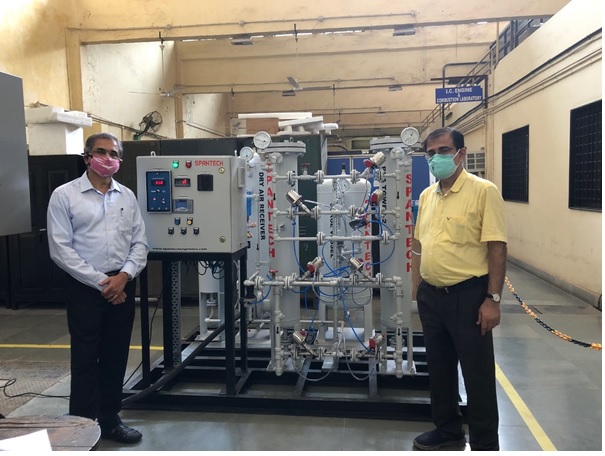
 To increase the life of medical oxygen cylinders three fold, the Indian Institute of Technology, Ropar has developed a first-of-its-kind Oxygen Rationing Device – AMLEX that supplies a required volume of oxygen to the patient during inhalation and trips when the patient exhales CO2. This process saves oxygen which otherwise unnecessarily get wasted.

So far, during exhalation, the oxygen in the oxygen cylinder/pipe is pushed out along with the exhaled CO2 by the user. This leads to wastage of a large volume of oxygen in long run. In addition to this, a large volume of oxygen escapes from the openings of the mask to the environment in the resting period (between inhalation and exhalation) due to continuous flow of life saving gas in the mask. As we have seen the demand of medical oxygen has jumped manifold amid the second wave of Covid-19, the device would help in stopping the unwanted wastage of the same. 

“The device can operate on both portable power supply (battery) as well as line supply (220V-50Hz)”, said Director, IIT, Ropar, Prof. Rajeev Ahuja.


It has been developed by PhD students of Biomedical Engineering Department of the institution – Mohit Kumar, Ravinder Kumar and Amanpreet Chander under the guidance of Dr. Ashish Sahani, Assistant Professor, Department of Biomedical Engineering.


“Made specifically for oxygen cylinders, AMLEX can be easily connected between oxygen supply line and the mask worn by the patient. It uses a sensor which senses and successfully detects inhalation and exhalation of the user in any environmental condition”, said Dr Sahani. This ready to use device works with any commercially available oxygen therapy masks having multiple openings for air flow. 


Appreciating the innovation, Dr GS Wander, Director, Research and Development at Dayanand Medical College, Ludhiana, said that in the present pandemic times we all have learnt the importance of effective and pertinent use of life saving Oxygen. He said though many hospitals are increasing their oxygen production capacity, a device like this can really help in limiting the use of oxygen in small rural and semi urban health centers.


Prof. Rajeev Ahuja said that the country now needs rapid but safe solutions to combat Covid-19. Since the virus is affecting the lungs and subsequently breathing system of the patient, the institution has not intended to go in for patenting of the device. He said rather the IIT would be happy to transfer this technology free of cost, in the interest of the nation, to those interested to go in for mass production of the device. 


Steps taken by the government to ensure equal access to education

 The Right of Children to Free and Compulsory Education (RTE) Act, 2009, mandates the appropriate Government to provide free and compulsory elementary education to every child of the age 6 to 14 years in a neighbourhood school. During the pandemic, the Ministry of Education has taken various steps for providing children remote access to education, which are available to each category of students including SC/ST irrespective of their region or economic standard.

A comprehensive initiative called PMeVidya has been started which aims to unify all efforts related to digital/online/on-air education to enable multi-mode access to education. The initiative includes all forms of digital modes to provide wide access – DIKSHA (online), SWAYAM (online), SWAYAM PRABHA (TV), other TV Channels including use of Doordarshan and AIR Networks. Further, PRAGYATA guidelines were issued to States/UTs to facilitate continued education through various modes. The guidelines inter-alia include situations where internet connectivity is not available or available with very less bandwidth, these resources are shared through various platforms like television, radio etc that do not depend on internet. An Alternate Academic Calendar has been prepared for learning solutions for grade 1 to 12 for both children with and without device. Besides these, community radio, worksheets & textbooks supplied to residence of learners, home visits by teachers, community classes, toll free numbers, SMS based requests for audio content, localised radio content for edutainment etc have been used. The steps taken by all the states and UTs are shown in the – India Report Digital Education June 2020, which is available at the following link:

https://www.education.gov.in/sites/upload_files/mhrd/files/India_Report_Digital_Education_0.pdf.

Steps taken by the government to promote IT based education

 A comprehensive initiative called PM eVIDYA has been initiatedas part of Atma Nirbhar Bharat Abhiyaan on 17th May, 2020, which unifies all efforts related to digital/online/on-air education to enable multi-mode access to education. The initiative includes:

  • DIKSHA (one nation, one digital platform)is the nation’s digital infrastructure for providing quality e-content for school education in states/UTs and QR coded Energized Textbooks for all gradesare available on it.
  • One earmarked Swayam Prabha TV channel per class from 1 to 12 (one class, one channel).
  • Extensive use of Radio, Community radio and CBSE Podcast- Shiksha Vani.
  • Special e-content for visually and hearing impaired developed on Digitally Accessible Information System (DAISY) and in sign language on NIOS website/ YouTube.

In order to promote online education, UGC has notified necessary regulation, which facilitates the Universities to offer full-fledged Online Program. Further, the current provisions of 20 per cent Online courses in a programme, as per provisions of UGC SWAYAM and ODL Regulations to be enhanced up to maximum 40 per cent for implementation considering “National interest during COVID-19” and also to ensure effective utilization of e-resources.

Various digital initiatives are also undertaken by Ministry of education viz. SWAYAM (“Study Webs of Active-Learning for Young Aspiring Minds”), SWAYAM Prabha, National Digital Library (NDL), Virtual Lab, e-Yantra, NEAT (National Education Alliance for technology), FOSSEE (Free Open-Source Software for Education) etc to ensure quality education to the students. 

To improve the internet connectivity in rural areas the CSC e-Governance Services India Ltd (CSC-SPV) of MEITY has been assigned the task of providing Fibre to the Home (FTTH) connectivity to the Government Institutions, including schools.

Central Board of Secondary Education (CBSE) has launched a ‘Cyber Security Handbook’ to ensure safe and healthy digital habits among students. The ‘Cyber Security Handbook’ can be accessed at this link:

http://cbseacademic.nic.in/web_material/Manuals/Cyber_Safety_Manual.pdf.


An Integrated Teacher Training Programme called NISHTHA has been launched it is a capacity building programme for “Improving Quality of School Education through Integrated Teacher Training“.NISHTHA can be accessed from the below link:https://itpd.ncert.gov.in//


Schemes of the Government to ensure education for all Citizens

 During COVID-19 Pandemic, Government of India has held various consultations with the States and UTs at different levels. Also, a brain storming session was held with Civil Society Organizations (CSOs) in January, 2021 for taking their views/ perspectives to assess and to bridge the learning gap in the Covid-19 pandemic period. 

Education is in the concurrent list of the Constitution and majority of the schools are under the domain of respective State and UT Governments. However, to ensure thatevery student gets continued access to education, a multi-pronged approach has been adopted. A comprehensive initiative called PM e-VIDYA has been initiated as part of Atma Nirbhar Bharat Abhiyan on 17th May, 2020, which unifies all efforts related to digital/online/on-air education to enable multi-mode access to education. The initiative includes: 

  • DIKSHA (one nation, one digital platform) is the nation’s digital infrastructure for providing quality e-content for school education in states/UTs and QR coded Energized Textbooks for all grades are available on it. 35 of the 36 states and UTs have on boarded on DIKSHA platform and contextualised the content as per the local need.
  • One earmarked Swayam Prabha TV channel per class from Class 1 to 12 (one class, one channel).
  • Extensive use of Radio, Community radio and CBSE Podcast- Shiksha Vani.
  • Special e-content for visually and hearing impaired developed on Digitally Accessible Information System (DAISY) and in sign language on NIOS website/ YouTube.

Besides, the Ministry has undertaken a proactive initiative, named, ‘MANODARPAN’ covering a wide range of activities to provide psychosocial support to students, teachers and families for Mental Health and Emotional Wellbeing during the COVID outbreak and beyond.

The Central Government is constantly advising States/UTs through guidelines and meetings with respect to interventions for reducing impact of pandemic on education. The guidelines issued so far are given below:


S.No.

Interventions

Links of Guideline

1.

Guidelines for Children of Migrant Labourers

https://www.education.gov.in/sites/upload_files/mhrd/files/Migrant%20labour%20guideline.pdf

2.

Guidelines for Out of School Children and Mitigation of Loss of Learning

https://www.education.gov.in/sites/upload_files/mhrd/files/guidelines_oosc.pdf


3.

PRAGYATA Guidelines on Digital Education

https://www.education.gov.in/sites/upload_files/mhrd/files/pragyata-guidelines_0.pdf

4.

Learning Enhancement Guidelines for Continuous Learning

https://ncert.nic.in/pdf/announcement/Learning_%20Enhancement_Guidelines.pdf 


5.

Covid-19 Related Health and Safety Sop/Guidelines for School Re-Opening

https://www.education.gov.in/sites/upload_files/mhrd/files/SOP_Guidelines_for_reopening_schools.pdf

6.

Covid Action Plan for School Education

https://www.education.gov.in/sites/upload_files/mhrd/files/Covid_Action_Plan.pdf

7.

Alternate Academic Calendar

Secondary- https://www.education.gov.in/sites/upload_files/mhrd/files/Academic%20Calender%20-%20Secondary%20-%20Eng.pdf

Primary- – https://www.education.gov.in/sites/upload_files/mhrd/files/Eight_Weeks_AAC_Primary_%28English%29%5B1%5D_0.pdf

8.

Guidelines for JNV –Residential Schools 

https://drive.google.com/file/d/1LAc4iKQTqTJkNVDGc5glEDsrDGdAXwC8/view


9.

Guidelines for parents on Home Based Education

https://www.education.gov.in/sites/upload_files/mhrd/files/MoE_Home_Learning_Guidelines.pdf

10.

Guidelines for orphaned Children

In this regard, a joint DO letter No. 13-10/2021-IS-11 dated 16.06.2021 from Secretary DoSEL, MoE and Secretary, MWCD has been issued to all States and UTs.

11.

Guidelines for developing E-content for CWSN

https://www.education.gov.in/sites/upload_files/mhrd/files/CWSN_E-Content_guidelines.pdf

12.

CBSE competency-based assessment framework

http://cbseacademic.nic.in/web_material/Manuals/Safal_handbook.pdf

13.

NCTE Guidelines for TEIs

https://ncte.gov.in/WebAdminFiles/RecentAnnouncement/0_20_08_2020_637335320672297662.pdf


The details of the major schemes to promote education in the country implemented by the Government of India are as follows:

(I) Samagra Shiksha: The Government of India launched Samagra Shiksha-an Integrated Scheme for school education, w.e.f 2018-19, as an overarching programme for the school education sector extending from pre-school to class XII, which aims to ensure inclusive and equitable quality education at all levels of school education, across the country including the rural areas. The scheme has now been aligned to NEP, 2020 recommendations and extended till 2025-26. The scheme provides support to States and UTs for strengthening of infrastructure in schools, universal access, bringing gender equality, promoting inclusive education, quality of education, financial support for teachers’ salary, digital initiatives, entitlements under the Right of Children to Free and Compulsory Education (RTE) Act, 2009 including uniforms and textbooks, pre-school education, vocational education, sports and physical education and strengthening of teacher education institutions. 

(II) Mid-Day-Meal (MDM):  Mid-Day Meal Scheme (MDMS) is an on-going Centrally-Sponsored Scheme which provides nutritional supplement to all school children studying in Classes I-VIII of Government, Government-Aided schools, Special Training Centres including Madarsas and Maqtabs.

(III)     Padhna Likhna Abhiyan:  A centrally sponsored scheme of Adult Education namely, “Padhna Likhna Abhiyan (PLA)” was implemented during 2020-21 with a physical target of imparting functional literacy to 57 lakh adult illiterates in the age group of 15 and above under basic literacy programme. The scheme was extended upto 31.07.2021. 

 (IV)    Rashtriya Uchchatar Shiksha Abhiyan (RUSA): Rashtriya Uchchatar Shiksha Abhiyan (RUSA), a Centrally Sponsored Scheme (CSS) is an overarching scheme, operating in mission mode for funding the State Government Universities and colleges to achieve the aims of equity, access and excellence.The funding to states being made on the basis of critical appraisal of State Higher Education Plans, which describe each state’s strategy to address issues of equity, access and excellence in higher education.

Further, in order to improve the education standards in the country, the Government has taken several steps:- 

  1. Central RTE Rules have been amended on 20th February, 2017 to include reference on class-wise, subject-wise Learning Outcomes at Elementary level. 
  2. National Achievement Survey (NAS) is conducted to enable States/UTs to identify gaps in learning outcomes, and take remedial steps.
  3. A 70 indicator based matrix Performance Grading Index (PGI) has been developed to grade the States/UTs.
  4. NISHTHA (National Initiative for School Heads and Teachers Holistic Advancement), an Integrated Teacher Training Programme has been introduced.
  5. Learning Outcomes for Secondary level have been notified.
  6. The National Institute of Open Schooling (NIOS) was entrusted to conduct teachers training through ODL (Open Distance Learning) mode, which has been completed by about 9.58 lakh teachers.

Also, the National Education Policy, 2020 focuses on improving the standard of education through various measures such as introduction of New pedagogical and curricular structure, Early Childhood Care and Education, Foundational Literacy and Numeracy, Transforming Assessment for Student Development, Experiential and Competency based Learning etc.

Digital educational resources for children with disabilities

 To facilitate the online learning by all students a comprehensive initiative called PM eVIDYAhas been initiated as part of Atma Nirbhar Bharat Abhiyaan on 17th May, 2020, which unifies all efforts related to digital/online/on-air education to enable multi-mode access to education. The initiative includes:

  • DIKSHA (one nation, one digital platform)is the nation’s digital infrastructure for providing quality e-content for school education in states/UTs and QR coded Energized Textbooks for all gradesare available on it.
  • One earmarked SwayamPrabha TV channel per class from 1 to 12 (one class, one channel).
  • Extensive use of Radio, Community radio and CBSE Podcast- ShikshaVani.
  • Special e-content for visually and hearing impaired developed on Digitally Accessible Information System (DAISY) and in sign language on NIOS website/ YouTube.

All these schemes/programmes are available to all the students across the nation.

In order to promote online education, UGC has notified necessary regulation, which facilitates the Universities to offer full-fledged Online Program. Further, the current provisions of 20 per cent Online courses in a programme, as per provisions of UGC SWAYAM and ODL Regulations to be enhanced up to maximum 40 per cent for implementation considering “National interest during COVID-19” and also to ensure effective utilization of e-resources.

Various digital initiatives are also undertaken by Ministry of education viz. SWAYAM (“Study Webs of Active-Learning for Young Aspiring Minds”), SWAYAM Prabha, National Digital Library (NDL), Virtual Lab, e-Yantra, NEAT (National Education Alliance for technology), FOSSEE (Free Open-Source Software for Education) etc to ensure quality education to the students.

World Bank Group and the Consumer Technology Association's Global Women's HealthTech Awards

 NIRAMAI Health AnalytixPvt. Ltd. and InnAccel Technologies Pvt. Ltd., two start-ups supported by DBT-BIRAC), have received the World Bank Group and the Consumer Technology Association’s Global Women’s Health Tech Awards, which recognises innovative startups that leverage tech to improve women’s health and safety in emerging markets.

NIRAMAI Health AnalytixPvt. Ltd, a recipient of BIRAC’s Women in Entrepreneurial ResearchAward 2019, was selected for its novel software-based medical device that detects early-stage breast cancer in a simple and private way on women of all age groups and breast densities, addressing a critical unmet need in cancer screening. The solution developed is a low cost, accurate, automated, portable, contactless, radiation-free, and painless cancer screening tool with no known side effects. The core innovation is a machine learning and AI-based Computer Diagnostic Engine called Thermalytix that uses artificial intelligence algorithms to interpret thermal images and generates a quantitative report for breast health and likely abnormalities. So far, over 45,000 women have been screened through the startup’stie-ups with over 30 hospitals and diagnostic centres across India. The product can help 2 Billion women in the world to regularly screen for cancer and can potentially save 90,000 lives every year in India alone.

InnAccel Technologies Pvt Ltd., a recipient of DBT and BMGF’sGrand Challenges Exploration-India 2019, was adjudged a winner of the Global Women’s Health Tech Awards for Fetal Lite, a next-generation, AI-powered fetal heart rate (FHR) monitor based on fetal ECG signal extraction technology for mothers in labour or post 37 weeks of gestation. Fetal Lite has next-gen ECG signal processing and is more accurate, reliable, and easier to use thanthe conventional Doppler-based devices while being comfortable for the mother. Fetal Lite is European CE Certified and has completed 2 clinical trials of 60+ patients with excellent results and completed the demo in 30+ Hospitals. The device can be used for both active and remote monitoring in the in-hospital and in-home settings. So far, the device has helped doctors to monitor 5000 cases, including in tribal areas, and has the potential to save 1.2 million lives per year across the world.

“We are pleased to receive this recognition from World Bank. It’s a validation of the applicability of our Indian innovationto the world,” said Geeta Manjunath, Founder,NIRAMAI.”The support from BIRAC has been crucial for our journey of idea to benefitting the patients with European regulatory approval. It is not just funding but mentoring and handholding that has helped us mitigate risks,” said Nitesh Jangir, Co-founder, InnAccel.

“I am delighted to hear about this global recognition to two of the startups supported by the Department. As a funding agency, these success stories are a validation about the impact we have created by nurturing a vibrant startup ecosystem for solving the pressing challenges being faced by humanity,” said Dr Rajesh Gokhale, Secretary, DBT

As per a statement by the World Bank, this year, the Awards attracted over 70 companies from 35 countries, which submitted their innovative products and services under three categories: reproductive health and pregnancy, general women’s and adolescent health, and women safety and security.

About Department of Biotechnology:

The Department of Biotechnology (DBT), established in 1986, is an Indian Government department under the Ministry of Science and Technology. DBT is responsible for administrating development and commercialisation in modern biology and biotechnology in India. The Department has made significant achievements in the growth and application of biotechnology in the broad areas of agriculture, health care, animal sciences, environment, and industry. The proven technologies at the laboratory level have been scaled up and demonstrated in the field. For more information, visit, http://dbtindia.gov.in/

About BIRAC:

Biotechnology Industry Research Assistance Council (BIRAC) is a not-for-profit Section 8, Schedule B, Public Sector Enterprise, set up by the Department of Biotechnology (DBT), Government of India as an Interface Agency to strengthen and empower the emerging Biotech enterprise to undertake strategic research and innovation, addressing nationally relevant product development needs. For more information, visit, https://birac.nic.in/

Emergence of Lok Adalat as the most efficacious tool of Alternative Dispute Resolution

 National Legal Services Authority (NALSA) is committed to deliver prompt and inexpensive justice to the citizens. Recently, it has decided to lay more emphasis on contribution of National Lok Adalat in effectively reducing the number of pending cases through Alternative Dispute Mechanisms.

To achieve this goal, the Legal Services Authorities shifted to dynamic preparation strategies for organization of the Lok Adalats. As a preparatory measure, NALSA started organization of prior consultative and review meetings with all the State Legal Services Authorities to guide them towards the maximum disposal during such Lok Adalats. Before the organization of each National Lok Adalat, multiple interactions were organised with the Executive Chairpersons of all the State Legal Services Authorities, wherein one-to-one interactions were made to take a stock of the preparations as well as to boost the morale of the stakeholders tasked to organize the Lok Adalats.

A cumulative effect of all the preparatory and mobilization measures resulted in extraordinary disposal figures during the year 2021. Across the country, a total number of 1,27,87,329 cases were disposed of in four National Lok Adalats, which included a huge number of pending cases i.e., 55,81,117 and a record number of pre-litigation cases i.e., 72,06,212. Through these activities the Legal Services Authorities disposed off a large number of cases giving relief to the common citizens by ending or preventing long lasting legal battles.

Achieving these unprecedented disposal figures was not an easy task. A major contribution to this success can be attributed to the technological advancements. In June 2020, the Legal Services Authorities integrated technology with the conventional modes of dispute settlement and introduced virtual Lok Adalats also called as ‘E-Lok Adalats’. Since then, all the Lok Adalats including National Lok Adalats are organized through virtual and hybrid modes. To provide an unhindered experience during the proceedings, the Legal Services Authorities across the country are continuously upgrading their digital infrastructure.

Due to these technological advancements, Lok Adalats have reached to the doorsteps of the parties. The parties are now able to join the Lok Adalat proceedings from their homes or workplaces, saving them the hassle of travelling and reserving a full day for an affair, which gets over within minutes. The Authorities have witnessed that a large number of persons joined the virtual proceedings sitting hundreds of kilometers away from the physical location where the Lok Adalat was organized. Technology has also provided effective ways of supervision and monitoring of Lok Adalats.

The other major factor in the success of Lok Adalats was the formulation of decisive strategies at the National level. Under these strategies, the State Legal Services Authorities were instructed to conduct meetings with various stakeholder across every level with an objective to ensure their full cooperation and coordination. The authorities were guided to follow a litigant friendly approach as well as to persuade such litigants to settle the cases involving settled propositions of law.

Moreover, certain areas of law having greater possibilities of settlement such as NI Act cases, Bank recovery cases along other financial matters were highlighted and authorities were instructed to explore all the possibilities of compromise in such cases. The authorities were advised to proactively monitor the issuance and completion of processes in such financial matters as well as to conduct pre-Lok Adalat sittings to take a matter to a settlement.

There is no doubt regarding the fact that the number of pending cases surged during the ongoing pandemic. However, with a large number of disposals through Lok Adalats, a balance was created by the Legal Services Authorities in the judicial administration of the country. There is no gainsaying that the Lok Adalats settled greater number of cases than any other dispute resolution mechanism and emerged as the most efficacious tool of Alternative Dispute Resolution Mechanism.

During the year, the category wise list of the disposed cases was topped by the Criminal Compoundable Cases, wherein a total number of 17,63,233 such pending cases and 18,67,934 pre-litigation cases were disposed. The second in line were the Revenue cases consisting of 11,59,794 pre-litigation and 14,99,558 pending cases. Apart from these, the other disposed of cases were cheque bounce cases under NI Act, Bank Recovery Cases, Motor Accident Claims, Labour Disputes, matrimonial cases, etc.

****


Enhancing supply chain management by Community Based Organizations (CBOs)

 In the rural areas, challenges such as scattered market, irregular demands, and transportation bottlenecks often impede farmers and entrepreneurs from getting the right value for their products. In order to overcome these challenges, North Eastern Region Community Resource Management Society (NERCRMS) and the Changlang Community Resource Management Society (CCRMS) formed the Community Based Organizations (CBOs). At present, these CBOs are working towards enhancing the supply chain management at the district level.

Replacing the vicious chain of middlemen, the CBOs source raw spices such as ginger, turmeric directly from the individual farmers. This gives the farmers a ready platform to sell their produce at competitive market prices. As the raw materials are sourced directly from the field to the processing unit, their quality and freshness also remains intact, giving the final products an edge over the other competition in the market.

Post production and labelling, CCRMS in collaboration Changlang Co-operative Society Ltd. market the products through networks of local vendors and also through Rural Marts & Haats of NABARD. Adding to the campaign of Vocal for Local, the initiative is giving a major boost to the promotion of local products & strengthening the business eco-system at the district level.    

Collection of Ginger by Community Based Organizations (CBOs) at Spice Processing Unit, Neotan Village, Namphai Circle, Miao – Khagam Block


*****

Promoting Investor Education and Financial literacy among youth through Gyan Darshan channel

 The Investor Education and Protection Fund Authority (IEPFA) under the aegis of Ministry of Corporate Affairs has signed a Memorandum of Understanding (MoU) with Indira Gandhi National Open University (IGNOU) through a virtual event here today. The objective for signing the MoU is to achieve the mandate of Investor Education, Awareness and Protection by utilizing the tele-lecturing facility of Gyan Darshan Channel.

This association with IGNOU/Gyan Darshan channel will help in propagating the message of Investor Education and Awareness among a large group of present and prospective stakeholders. The panel of resource persons for the lecture series would include experts from professional institutions such as ICAI, ICSI & Senior officials from IEPFA, Ministry of Corporate Affairs and other regulators. The proposed lecture series of 75 episodes will be live tele-lecturing series on 24×7 Gyan Darshan TV channel and is a part of the ongoing celebration of the yearlong activity commemorating the 75th anniversary of India’s Independence under “Azadi ka Amrit Mahotsav”.

26 Episodes of the tele-lecturing series were earlier rolled out in the year 2021 which were appreciated by all stakeholders. The repository of the tele-lectures is available on IEPFA’s official YouTube channel.


      Description: A picture containing text, indoor, wall, personDescription automatically generated


Shri Rajesh Verma, Secretary, Ministry of Corporate Affairs (MCA) and ex-officio Chairperson of IEPFA in his keynote address said, “All of us are here with the common goal of educating people. The entire nation is celebrating 75 years of Azadi ka Amrit Mahotsav to celebrate the spirit of a self-reliant, progressive nation, India has become. This day is also celebrated as National Youth Day to commemorate the birth Anniversary of Swami Vivekananda, the youth ICON and influencer of global stature. With all these noble events falling together, today’s event has become even more apt and relevant. Both IEPFA & IGNOU have the common objective of imparting education and making people aware about subjects affecting their lives. IEPFA intends to create awareness among all the stakeholder groups and specially the youth”.

Prof. Nageshwar Rao, Vice Chancellor, IGNOU, in his remark stated that IGNOU and IEPFA with this initiative shall reach out to youth and other stakeholders at large which would be productive in fulfilling the vision and mission of both the organizations.

Sh Manoj Pandey, CEO IEPFA Authority, Prof. Satyakam, Pro-VC Vice Chancellor, IGNOU, Sh Nihar Jambusaria, President ICAI, Sh Nagendra D. Rao, President ICSI and other Senior officials from IEPFA, IGNOU and Ministry of Corporate Affairs also graced the occasion.

Investor Education and Protection Fund Authority (IEPFA) has been established under Section 125 of the Companies Act 2013 for administration of the IEPF fund as per section 125 (3) of Companies Act 2013. The main objective of the authority includes to promote Investor Education, Awareness & Protection, refund unclaimed shares, dividends and other amounts transferred to it under sections 124 and 125 of the Companies Act 2013 to the rightful claimants. IEPFA works under the administrative control of Ministry of Corporate Affairs.


****

Educational Infrastructure in North-Eastern States

 University Grants Commission (UGC) is implementing schemes, awards, fellowships, chairs and programmes under which financial assistance is provided to institutions of higher education as well as faculty members working  in North Eastern States to undertake quality research covering areas of knowledge across disciplines. Some of the initiatives taken for improving quality of higher education are (i) Choice Based Credit System (CBCS); (ii) Universities with Potential for Excellence; (iii) Centre with Potential for Excellence in particular area; (iv) Consortium for Academic Research and Ethics(CARE) (v) Basic Science Research (vi) Scheme for Trans-disciplinary Research for India’s Developing Economy (STRIDE) (vii) Deen Dayal Upadhyaya (DDU) Kaushal Kendras (viii) Scholarship Scheme (ISHAN UDAY) for North-Eastern Region; (ix) New Methodology of Grading by NAAC (x) UGC (Minimum Standards and Procedure for award of M.Phil/Ph.D Degree) Regulations, 2016; (xi) UGC (Credit Framework for Online Learning Courses through SWAYAM) Regulation, 2016. 

All India Council of Technical Education (AICTE) has taken several steps over the years for framing appropriate policies on technical education needed to design and implement various schemes for educational advancement and achieving the objective of creating favorable environment to ensure speedy socio-economic development in North East States. This includes equipping all necessary infrastructure upgradation of colleges, special coaching, educational concessions, better teaching learning material and infrastructure for North East region students. Some of the Schemes are (i) Research Promotion Scheme for North East Region; (ii) Short Term Training Programme for NER; (iii) Faculty Development Programme for NER; (iv) Scheme of Funds for Regeneration of Traditional Industries (SFURTI); (v) Post Graduate Scholarship Scheme; (vi) Doctoral Fellowship; (vii) Pragati Scholarship Scheme; (viii) Saksham Scholarship Scheme; (ix) Campus Accommodation & Facilities Enhancing Social Experience; (x) Grant for Augmenting Infrastructure in NER; (xi) Scheme for Promoting Interests, Creativity and Ethics among Students; (xii) Grant for Organizing Conference; (xiii) Establishment of Idea Development, Evaluation & Application Laboratory in Institutions; and (xiv) E-Shodh Sindhu (Subscription to e-Journals). 

Career Guidance for Students

 Central Board of Secondary Education (CBSE) organizes a two day capacity building programme for the teachers on career guidance of students. The trained teachers take sessions with senior students in their respective schools. The programme focuses on dimensions of career information, strategies and resources used in imparting career information, setting up a career resources room in a school, role of a teacher in imparting career guidance and understanding career development.

In Kendriya Vidyalaya Sangathan (KVS) services of counselors are engaged on part time contractual basis in all Kendriya Vidyalayas across the country. There is also a provision of inviting experts from different fields to sensitize students about the career options available for them to pursue.

In Jawahar Navodaya Vidyalayas (JNV) career guidance sessions are conducted regularly by the Counselors, Teachers and Vice Principals. Special sessions are also conducted for students in JNVs by inviting eminent experts of various fields.

National Scholarship Portal (NSP) is one-stop solution through which various services starting from student application, application receipt, processing and disbursal of various scholarships to students are enabled. The main objective of NSP is to ensure timely disbursement of scholarships to students and to provide a common portal for various scholarships schemes of Central and State Governments. National Means-cum-Merit Scholarship Scheme (NMMSS) of D/o SE&L is on-boarded on NSP. The details are available on the NSP Portal. The link is as follows: https://scholarships.gov.in


Steps taken by the government to promote the Languages in Eighth Schedule

 The policy of the Government of India is to promote all Indian Languages.  Central Institute of Indian Languages (CIIL), Mysore works for the promotion of all Indian languages including Scheduled/Non-Scheduledand Classical languages. There are separate organisations for development and promotion of Hindi, Urdu, Sindhi and Sanskrit languages.  Sanskrit Language is promoted through three Central Universities viz, Central Sanskrit University, New Delhi, Shri Lal Bhahdur Shastri National Sanskrit University, New Delhi and National Sanskrit University, Tirupati. Hindi is promoted byKendriya Hindi Sansthan     (KHS) Agra, Central Hindi Directorate (CHD), New Delhi and Commission for Scientific and Technical Terminology (CSTT), New Delhi. 

Sindhi is promoted through National Council for Promotion of Sindhi Language (NCPSL), New Delhi and Urdu is promoted through National Council for Promotion of Urdu Language (NCPUL), New Delhi. In addition to promote all Indian languages, Central Institute of Indian Languages (CIIL), Mysore also works for the promotion of four Classical Languages namely Kannada, Telugu, Malayalam and Odia.  Development and promotion of Classical Tamil is done by Central Institute of Classical Tamil (CICT), Chennai.   CIIL works and collaborates with   various     stakeholders      including    Universities, Institutes, State Governments, etc for development of languages through its various schemes like National Translation Mission, Linguistic Data Consortium of Indian Languages, Bharatavani, etc for development and promotion of languages.

National Webinar on Multidisciplinary and Holistic Education

 As part of the celebration of one year of transformative reforms under National Education Policy, 2020, Government of India is organising a series of theme-based webinars on different aspects of National Education Policy, 2020. Multidisciplinary and Holistic Education being one of the biggest thrust area of NEP, University Grants Commission organised a National Webinar on Multidisciplinary and Holistic Education today. Minister of State for Education Dr. Subhas Sarkar delivered the address. Senior officials from Ministry of Education and University Grants Commission attended the Webinar.

National Webinar on Holistic and Multidisciplinary Education on 02.08.21 from 12:30PM onwards https://t.co/9xsRiYjYmw

— UGC INDIA (@ugc_india) August 2, 2021

Delivering the inaugural address, Minister of State for Education, Dr. Subhas Sarkar emphasised upon the long tradition of holistic and multidisciplinary learning, from the times of Takshashila and Nalanda. The Minister said, in ancient India, attention was given to overall personality development. He stressed upon the need to re-build the model of education where one is empowered in every aspect of life. Further elaborating on the Multidisciplinary Education, the Minister mentioned, now the student will not be limited by the boundaries of science, commerce and humanities. On holistic education, the Minister said 21st century skills like active learning, out of box thinking, critical thinking, effective communication, collaboration, technological skills and life skills must be developed in our learners. Dr. Sarkar also reminded the academia about their responsibility of giving wings to the aspirations of new generation. 

Shri Amit Khare, Secretary, Higher Education in his opening remarks shed light on the formulation and fundamentals of National Education Policy, 2020. Shri Khare focused on the role of NEP, 2020 in realising a self-reliant India and illustrated the role of collaboration among institutions, glue grants and inter section of disciplines in realising multidisciplinary education.

Prof. D.P. Singh, Chairman, UGC welcomed the Minister and other dignitaries. Stressing upon the vision of Swami Vivekanand in envisioning holistic perspective of education and stressed upon value-based education to learners. Prof. Singh during his concluding remarks highlighted different aspects of holistic education and flexibility through multiple entry-exit system.

The Webinar on Multidisciplinary and Holistic Education provided an opportunity to bring members of the committee on draft NEP, educationist, scientists and educational administrators on one platform. The first session of the Webinar was on the theme “Holistic Education” and was addressed by Prof. Rama Shankar Dubey, Vice Chancellor of Central University of Gujarat. Prof. Dubey focused on social and emotional literacy.  He also focused on assessment of student on high order skills, such as analysis, critical thinking and conceptual clarity to ensure better learning outcomes. 

Prof. M.K. Sridhar, Member, Committee for draft NEP and Member, UGC addressed the Webinar on the theme of “Multidisciplinary Education” in the second session. Prof. Sridhar provided an insight into the critical role of multidisciplinarity. He emphasised upon multidisciplinary education not as a replacement of existing disciplinary importance but as a supplement for having boundary crossing competencies along with deep competencies in one discipline among our students.

The thematic discussion moving on to the final session was on ‘Multiple Entry Exit through Academic Bank of Credit’ and featured Prof. V.K. Jain, Vice Chancellor, Tezpur University as the speaker. Prof.  Jain illustrated about qualification levels, credit requirements and other aspects of UGC Regulations on Academic Bank of Credits (ABC) and Guidelines for Multiple Entry-Exit System.

Prof. Nageshwar Rao, Vice Chancellor, IGNOU, Prof. Sunaina Singh, Vice Chancellor, Nalanda University, Prof. Badri Narayan, Director, G.B. Pant Social Science Institute, Prof. Anup Kumar Singh, Director General, Nirma University, Prof. Bhimaraya Metri, Director, IIM, Nagpur and Prof. Avinash Chandra Pandey, Director, IUAC made their remarks in different sessions. 

The Webinar was joined by academia, industry and Higher Education Institutions from across the country. Officers from different Ministry, UGC, AICTE and NCTE were also present in the Webinar.

Dissemination of the takeaways of the Webinar like competencies beyond discipline, innovative intervention of holistic education and features of multiple entry-exit and Academic Bank of Credits among the stakeholders will contribute in the realisation of the goals of NEP, 2020 in delivering holistic and multidisciplinary education and bringing in much needed flexibility into the higher education system.

Samagra Shiksha Scheme for School Education

 The Cabinet Committee on Economic Affairs, chaired by Prime Minister Shri Narendra Modi, has given its approval for continuation of the revised Samagra Shiksha Scheme for a period of five years i.e., from 2021-22 to 2025-26 with a total financial outlay of Rs.2,94,283.04 crore which includes Central share of Rs.1,85,398.32 crore.

Benefits:

The scheme covers 1.16 million schools, over 156 million students and 5.7 million Teachers of Govt. and Aided schools (from pre-primary to senior secondary level).

Details:

The Samagra Shiksha scheme is an integrated scheme for school education covering the entire gamut from pre-school to class XII. The scheme treats school education as a continuum and is in accordance with Sustainable Development Goal for Education (SDG-4). The scheme not only provides support for the implementation of the RTE Act but has also been aligned with the recommendations of NEP 2020 to ensure that all children have access to quality education with an equitable and inclusive classroom environment which should take care of their diverse background, multilingual needs, different academic abilities and make them active participants in the learning process.

The major interventions, across all levels of school education, proposed under the scheme are: (i) Universal Access including Infrastructure Development and Retention; (ii) Foundational Literacy and Numeracy, (iii) Gender and Equity; (iv) Inclusive Education; (v) Quality and Innovation; (vi) Financial support for Teacher Salary; (vii) Digital initiatives; (viii) RTE Entitlements including uniforms, textbooks etc.; (ix) Support for ECCE; (x) Vocational Education; (xi) Sports and Physical Education; (xii) Strengthening of Teacher Education and Training; (xiii) Monitoring; (xiv) Programme Management; and (xv) National Component.

Following new interventions have been incorporated in the revamped Samagra Shiksha based on the recommendations of the National Education Policy 2020:

  • In order to enhance the direct outreach of the scheme, all child centric interventions will be provided directly to the students through DBT mode on an IT based platform over a period of time.
  • The scheme will have an effective convergence architecture with various Ministries/ developmental agencies of the Centre and State Governments. The expansion of vocational education will be done in convergence with the Ministry of Skill Development and Entrepreneurship and other Ministries providing funding for Skills. The existing infrastructure of schools and ITIs and Polytechnics will be used to ensure optimum utilization of the facilities, not only for school going children but also for out of school children.
  • Provision of training of Master Trainers for training of Anganwadi workers and In-service teacher training for ECCE teachers.
  • Provision of upto Rs 500 per child for Teaching Learning Materials (TLM), indigenous toys and games, play based activities per annum for pre-primary sections in Government Schools.
  • NIPUN Bharat, a National Mission on Foundational Literacy and Numeracy to ensure that every child achieves the desired learning competencies in reading, writing and numeracy at the end of grade III and not later than grade V has been launched under the scheme with provision of TLM upto Rs 500 per child per annum, Rs 150 per teacher for teacher manuals and resources, Rs 10-20 lakh per district for assessment.
  • Specific   training   modules   under   NISHTHA  by NCERT to train Secondary teachers and Primary teachers.
  • Strengthening of infrastructure of schools from pre-primary to senior secondary, earlier pre-primary was excluded.
  • Incinerator and sanitary pad vending machines in all girls’ hostels.
  • Addition of new subjects instead of Stream in existing senior secondary schools.
  • Transport facility has been extended to secondary level @ upto Rs 6000 per annum.
  • For out of school children at 16 to 19 years of age, support will be provided to SC, ST, disabled children, upto Rs 2000 per child per grade to complete their secondary/senior secondary levels through NIOS/SOS.
  • Financial support for State Commission for Protection of Child Rights @ Rs 50 per elementary school in the state, for protection of child rights and safety.
  • Holistic, 360-degree, multi-dimensional report showing progress/ uniqueness of each learner in the cognitive, affective, and psychomotor domains will be introduced in the form of Holistic Progress Card (HPC).
  • Support for activities of PARAKH, a national assessment centre (Performance, Assessments, Review and Analysis of Knowledge for Holistic Development)
  • Additional Sports grant of upto Rs. 25000 to schools in case atleast 2 students of that school win a medal in Khelo India school games at the National level.
  • Provision for Bagless days, school complexes, internships with local artisans, curriculum and pedagogical reforms etc included.
  • A new component Appointment of Language Teacher has been added in the scheme- components of training of teachers and bilingual books and teaching learning material added, besides support for salary of teachers.
  • Provision made for all KGBVs to be upgraded to class XII.
  • Enhanced financial support for existing Stand-alone Girls’ Hostels for classes IX to XII (KGBV Type IV) of uptoRs 40 lakh per annum (earlier Rs 25 lakh per annum).
  • Training for 3 months for inculcating self-defence skills under ‘Rani Laxmibai Atma Raksha Prashikshan’ and amount increased from Rs 3000 to Rs 5000 per month.
  • Separate provision of stipend for CWSN girls @ Rs. 200 per month for 10 months, in addition to student component from pre-primary to senior secondary level.
  • Provision of annual identification camps for CWSN at block level @Rs. 10000 per camp and equipping of Block Resource centres for rehabilitation and special training of CWSN.
  • Provision for Establishment of New SCERT has been included and new DIETs in districts created upto 31st March 2020.
  • Setting up of assessment cell preferably at SCERT to conduct various achievement surveys, develop test materials & item banks, training of various stakeholders & test administration, data collection analysis and report generation, etc.
  • The academic support of BRCs and CRCs has been extended for pre-primary and Secondary level also.
  • Support   under   Vocational   Education   extended   to Government aided schools also in addition to Government Schools and grant/number of job roles/sections linked to enrolment and demand.
  • Provision of Classroom cum workshop for Vocational Education in schools serving as Hub for other schools in the neighbourhood. Provision of transport and assessment cost for schools serving as spokes has been made.
  • Provision of ICT labs, Smart classrooms including support for digital boards, smart classrooms, virtual classrooms and DTH channels have been provided.
  • Child tracking provision included for students of Government and Government aided schools
  • Support for Social Audit covering 20% of schools per year so that all schools are covered in a period of Five years.


Implementation Strategy and Targets:

The Scheme is implemented as a Centrally Sponsored Scheme through a single State Implementation Society (SIS) at the State level. At the National level, there is a Governing Council/Body headed by the Minister of Education and a Project Approval Board (PAB) headed by Secretary, Department of School Education and Literacy. The Governing Council/body will be empowered to modify financial and programmatic norms and approve the detailed guidelines for implementation within the overall Framework of the scheme. Such modifications will include innovations and interventions to improve the quality of school education.

In order to enhance the direct outreach of the scheme, all child centric interventions will be provided directly to the students through DBT mode on an IT based platform over a period of time.

The Scheme covers 1.16 million schools, over 156 million students and 5.7 million Teachers of Government and Aided schools (from pre-primary to senior secondary level) by involving all stakeholders of the school ecosystem i.e. Teachers, Teacher Educators, Students, Parents, Community, School Management Committees, SCERTs, DIETs, BITEs, Block Resource Persons, Cluster Resource Persons, Volunteers for providing quality, inclusive and equitable education. Further, the scheme will have an effective convergence architecture with various Ministries/ developmental agencies of the Centre and State Governments. As envisaged in NEP 2020, there will be a greater focus on imparting skills among the students. The expansion of vocational education will be done in convergence with the Ministry of Skill Development and Entrepreneurship and other Ministries providing funding for Skills. The existing infrastructure of schools and ITIs and Polytechnics will be used to ensure optimum utilization of the facilities, not only for school going children but also for out of school children.


Major Impacts:

The Scheme aims to universalize access to school education; to promote equity through the inclusion of disadvantaged groups and weaker sections, and to improve the quality of education across all levels of school education. The major objectives of the Scheme are to Support States and UTs in: 

  1. Implementing the recommendations of the National Education Policy 2020 (NEP 2020); 
  2. Implementation of Right of Children to Free and Compulsory Education (RTE) Act, 2009; 
  3. Early Childhood Care and Education; 
  4. Emphasis on Foundational Literacy and Numeracy; 
  5. Thrust on Holistic, Integrated, Inclusive and activity based Curriculum and Pedagogy to impart 21st century skills to the students; 
  6. Provision of quality education and enhancing learning outcomes of students; 
  7. Bridging Social and Gender Gaps in School Education; 
  8. Ensuring equity and inclusion at all levels of school education; 
  9. Strengthening and up-gradation of State Councils for Educational Research and Training (SCERTs)/State Institutes of Education and District Institutes for Education and Training (DIET) as nodal agency for teacher training; 
  10. Ensuring safe, secure and conducive learning environment and maintenance of standards in schooling provisions and 
  11. Promoting vocational education.


AtmaNirbhar Bharat:

Recognizing the crucial role of Foundational skills in the national development, it was announced under the ‘AtmaNirbhar Bharat’ campaign that a National Foundational Literacy and Numeracy Mission will be launched, for ensuring that every child in the country necessarily attains foundational literacy and numeracy in Grade 3 by 2026-27. In this context, “National Initiative for Proficiency in Reading with Understanding and Numeracy (NIPUN Bharat)” has been launched on 5th July 2021 under Samagra Shiksha.

Details and progress of scheme if already running:

The Scheme is being implemented as a Centrally Sponsored Scheme in partnership with State and UT Governments to support  the   States  and  UTs  in  universalizing  access  and improving quality of school education across the country. The achievements of Samagra Shiksha are as follows:


•      During 2018-2019 to 2020-2021, 1160 schools have been upgraded at Elementary, Secondary and Higher Secondary level, 54 new residential schools/ hostels have been opened, 41180 schools have been strengthened (including Additional classrooms), 13.51 lakh schools have been provided library facilities, 13.14 lakh schools have been provided sports equipment facility, 12633 schools have been covered under ICT & Digital initiatives, 5579 schools have been covered under vocational education, 783 KGBVs have been upgraded from class VIII to class X, 925 KGBVs have been upgraded from class VIII to class XII and 11562 separate girls toilets have been constructed.

•      In addition, during 2018-2019, 4.78 lakh out of school children have been provided special training at elementary level, 4.24 lakh children have been provided transport and escort facility, 16.76 lakh children have been covered under Section 12(l)(c) of the RTE Act, 6.96 cr children have been provided free uniforms, 8.72 cr children have been provided free textbooks at elementary level, 0.74 cr children have been provided remedial teaching, 14.58 lakh teachers have been trained, 69173 schools provided self defence training to girls, 3.79 lakh CWSN girls have been provided stipend and 23183 special educators have been provided financial assistance.

•      Also, during 2019-2020, 5.07 lakh out of school children have been provided special training at elementary level, 6.78 lakh children have been provided transport and escort facility, 21.58 lakh children have been covered under Section 12(l)(c) of the RTE Act, 6.89 cr children have been provided free uniforms, 8.78 cr children have been provided free textbooks at elementary level, 1.76 cr children have been provided remedial teaching, 28.84 lakh teachers have been trained, 166528 schools provided self defence training to girls, 3.22 lakh CWSN girls have been provided stipend and 24030 special educators have been provided financial assistance.

•      Also, during 2020-2021, 3.23 lakh out of school children have been provided special training at elementary level, 2.41 lakh children have been provided transport and escort facility, 32.67 lakh children have been covered under Section 12(l)(c) of the RTE Act, 6.57 cr children have been provided free uniforms, 8.84 cr children have been provided free textbooks at elementary level, 1.44 cr children have been provided remedial teaching, 14.32 lakh teachers have been trained, 81288 schools provided self defence training to girls, 3.52 lakh CWSN girls have been provided stipend and 22990 special educators have been provided financial assistance.


Background:

Union Budget, 2018-19 has announced that school education would be treated holistically and without segmentation from pre-primary to class XII. It is, in this context, that the Department launched the Integrated Scheme for School Education, Samagra Shiksha in 2018 by subsuming the erstwhile Centrally Sponsored Schemes of Sarva Shiksha Abhiyan (SSA), Rashtriya Madhyamik Shiksha Abhiyan (RMSA) and Teacher Education (TE). The scheme treats school education as a continuum and is in accordance with Sustainable Development Goal for Education (SDG-4). The scheme not only provides support for the implementation of the RTE Act but has also been aligned with the recommendations of NEP 2020 to ensure that all children have access to quality education with an equitable and inclusive classroom environment which should take care of their diverse background, multilingual needs, different academic abilities and make them active participants in the learning process.

*******

Introducing Indian Values in School Education

The National Council of Educational Research and Training (NCERT) has developed the National Curriculum Framework (NCF) 2005, which emphasizes on ethical development, inculcating the values, attitudes and skills required for living in harmony with oneself and with others.  NCERT has developed curriculum, syllabi, textbooks and other curricular materials for elementary and secondary stages, integrating different aspects of value education and at the same time providing adequate space to study the contents of different subjects. NCERT textbooks have integrated concerns related to environment, peace oriented values, gender, SC/ST Minority in all its textual materials and supplementary reading materials.  The module prepared on Pedagogy on Social Sciences at the elementary and secondary stage for NISHTHA Programme also attempts to inculcate Indian values through participatory approaches in the teaching and learning of Social Sciences. 

The National Education Policy (NEP), 2020 provides to include in the curriculum ethical reasoning, traditional Indian values and all basic human and Constitutional values (such as seva, ahimsa, swachchhata, satya, nishkam karma, shanti, sacrifice, tolerance, diversity, pluralism, righteous conduct, gender sensitivity, respect for elders, respect for all people and their inherent capabilities regardless of background, etc. The NEP, 2020 also provides that all curriculum and pedagogy, from the foundational stage onwards, will be redesigned to be strongly rooted in the Indian and local context and ethos in terms of culture, traditions, heritage, customs, language, philosophy, geography, ancient and contemporary knowledge, societal and scientific needs, indigenous and traditional ways of learning etc. – in order to ensure that education is maximally relatable, relevant, interesting, and effective for our students. 

The Ministry of Education through NCERT organizes Kala Utsav every year to promote indigenous arts and culture in education, by nurturing and showcasing the artistic talent of school students in the country. Kala Utsav is a unique celebration of its kind where students get an opportunity to understand, and celebrate cultural diversity at school, district, state and national levels and helps in creating awareness of our regional cultural heritage and its vibrant diversity among different stakeholders of education. Since Kala Utsav involves all schools of States and Union Territories (UTs), it covers Madhya Pradesh also. 

The “Ek Bharat Shrestha Bharat” programme, launched by the Hon’ble Prime Minister on Rashtriya Ekta Diwason 31st October, 2015 to commemorate the birth anniversary of Sardar Vallabbhai Patel, aims to celebrate the Unity in Diversity of our Nation,promote the spirit of national integration through a deep and structured engagement between all Indian States and UTs, and showcase the rich heritage and culture, customs and traditions of either State for enabling people to understand and appreciate the diversity that is India, thus fostering a sense of common identity. The States carry out activities to promote a sustained and structured cultural connect in the areas of language learning, culture, traditions & music, tourism & cuisine, sports and sharing of best practices, etc.The State of Madhya Pradesh is paired with the States of Manipur & Nagaland and students of these States are encouraged to learn about each other’s culture, Arts, etc., through activities in schools in accordance with the guidelines for the programme.