Author: Admin
DOCTORINE OF HOLDING OUT & DOCTRINE OF FEEDING THE GRANT BY ESTOPPLE
WHAT IS GIFT UNDER TRANSFER OF PROPERTY ACT, 1882
Difference between Private Company, Public Company and One Person Company
PRIVATE COMPANIES
Top 5 tourist places in Odisha
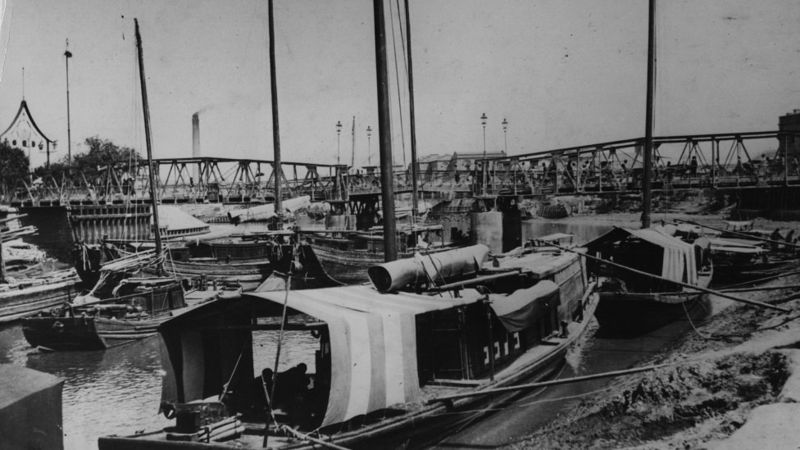
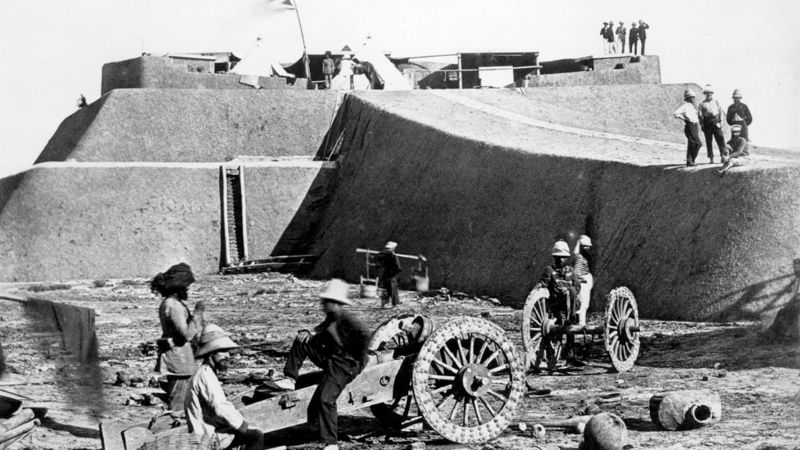
The time when Britain-China clashed over India's Opium -> Opium War 1840
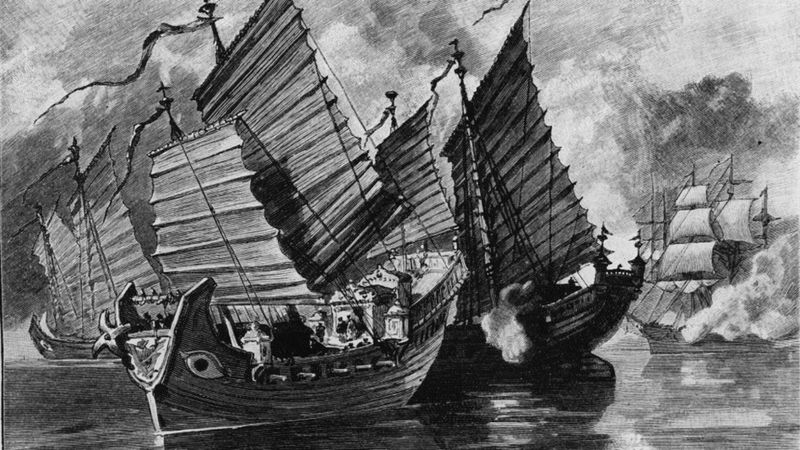
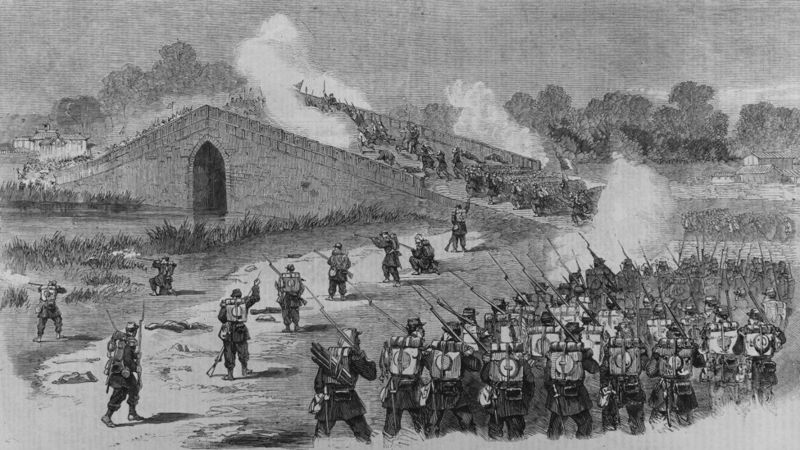
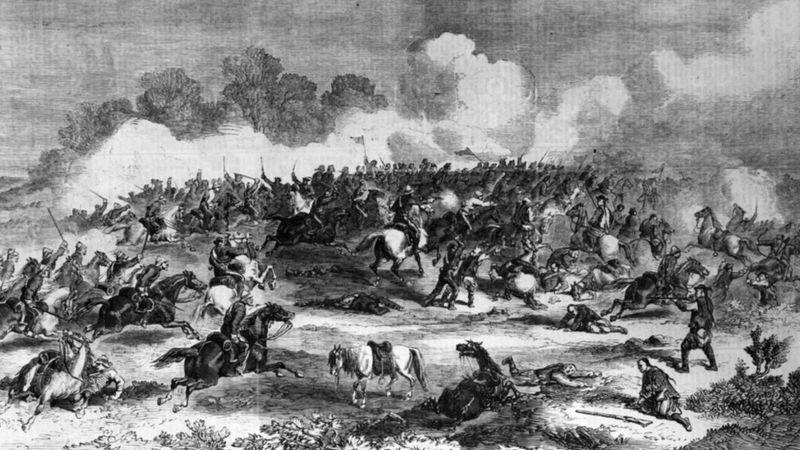
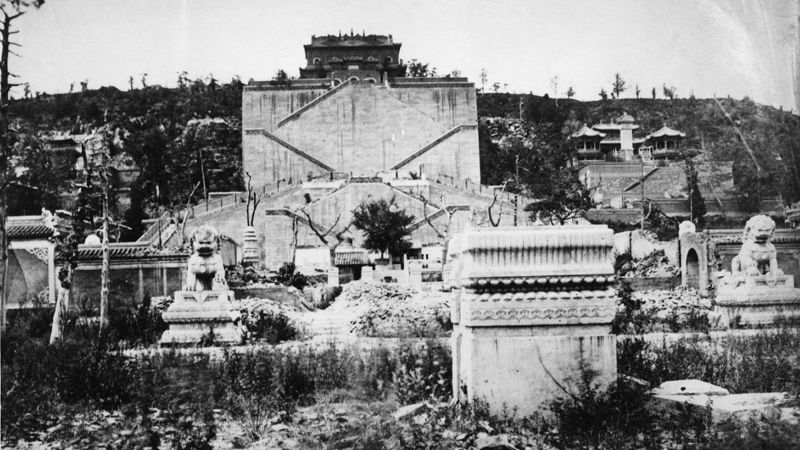
It was in June 1840 when a fleet of British warships went to China’s Pearl River Delta and started war. The security system of China’s coastal areas was weak. China could not last long in front of this British attack and it knelt down.
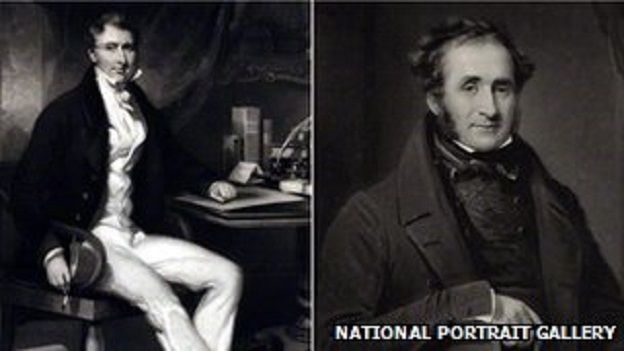
This was the first Opium War in which thousands of people were killed and that too in the name of free trade. The opium trade in China was a profitable business but it was also illegal. Two Scottish men were involved in this business and both played a major role at the start of the war.
William Jardine was a doctor by profession and also a businessman.
Foreigners were allowed to do business only in this area of China. They used to trade opium instead of tea. There was a great craze for tea in Britain. By the end of the 18th century, Britain was importing 6 million pounds of tea from the canton every year.
Business in Silver :
But soon Britain started facing problems in this business because China’s condition was that it would take only silver as the price of tea. Britain offered things like carved utensils, scientific instruments and woolen cloth as the price of the tea. But China refused to take it.
Qian Long, the then emperor of China, wrote in a letter to King George III, “We have all those things and are of better quality. I do not value such useless things and we have no use for things made in your country.”
Smuggling of Opium :
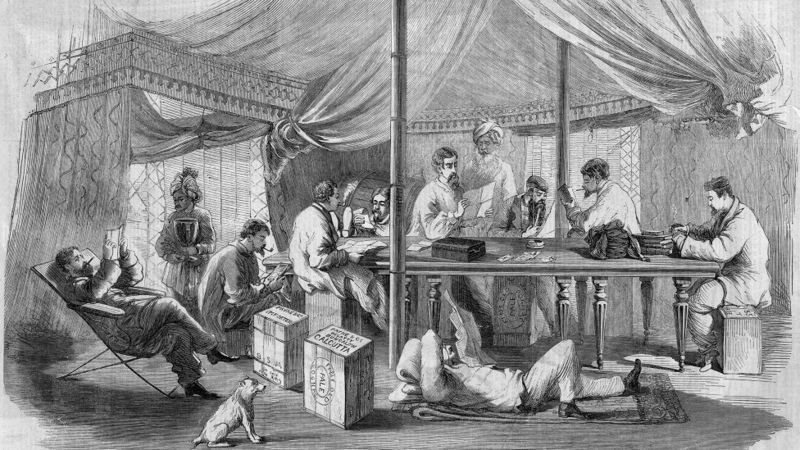
At least legally it was so. But British businessmen in India saw it as an opportunity. Opium was grown on a large scale in the Bengal region. Although opium was banned in China, opium has been used in Chinese medicine for thousands of years.
Ban in China :
But by the time of the fifteenth century, Chinese people started using it for intoxication by mixing it with tobacco. Soon a large section of Chinese society became addicted to opium and fell into its grip. Its social side effects also started coming to the fore. The victims of opium addiction started selling their valuables for it.
In 1729, Emperor Yongzheng of China completely banned the sale and sale of opium and its use as a drug. But after a hundred years had passed, the craze for opium of the Chinese had not diminished in the slightest and the British started exploiting their addiction.
Eastern Part of India :
By the year 1836, 30,000 boxes of opium started reaching China every year from India. Jardine, Matheson & Company held a quarter of this business. By breaking the government order banning opium in China, Britain had found a way to increase its income from China.
According to Professor Jan Carroll of the University of Hong Kong, “The British realized that opium is grown in the eastern region of India and that smuggling it into China can make a lot of profit.” And this was made easy for Britain by the coastal position of Canton city of China.
China’s action :
Professor Jan Carroll said, “They easily carried opium in small boats to the shores of the canton. There was always someone there to help them on the shore. From an economic point of view, it was making a lot of profit.”
But breaking the law of Britain in this way did not remain hidden for long. In 1839, Emperor Daoguang of China declared war on drugs. An order was given to launch a raiding campaign against Western businessmen.
British Government :
Following this seizure, Pershan left for London from William Jardine Canton, where he pleaded with the British Foreign Minister, Lord Palmerston, to retaliate against China. Opium played a major role in the British’s revenue from India, so it did not take long for the British government to decide to send a navy to China.
China’s Defeat :
In June 1840, Britain sent 16 warships and 27 ships to China’s Pearl River Delta. There were 4000 people on these ships. The fleet also had the iron warship Nemesis, on which rocket launchers that could be fired up to two miles were stationed.
Although the Chinese were ready for this attack, they did not have the ability to counter the British power. His cannon could last only four to five hours in front of Britain. For the next two years, the British Navy started moving through the Chinese coast towards Shanghai.
Treaty of inequality :
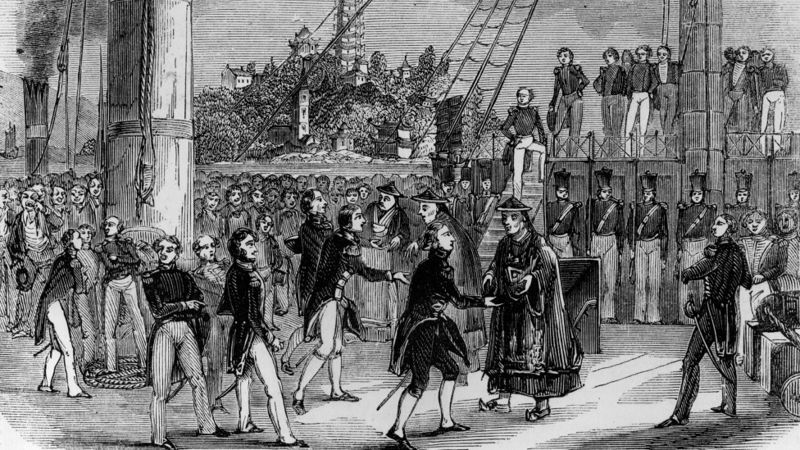
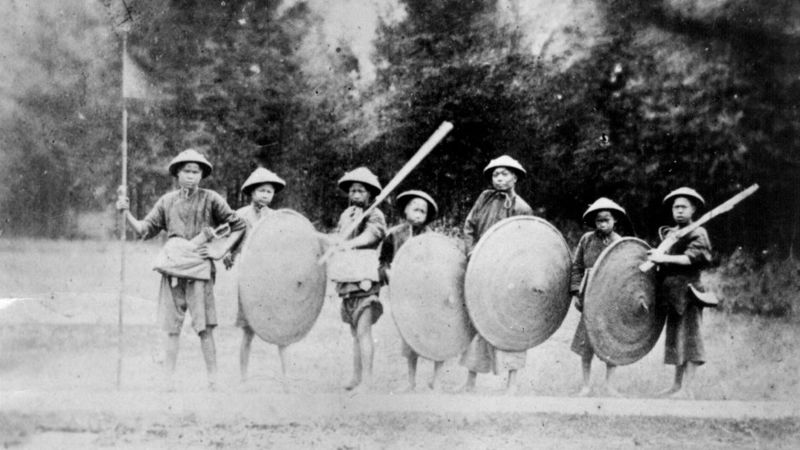
Most of the Chinese soldiers were victims of opium addiction and were defeated everywhere. There were 20 to 25 thousand Chinese casualties in this war while Britain lost 69 soldiers. After this war, China was completely shaken. In August 1842, on HMS Cornwallis near Nanking, the British signed an agreement with the Chinese, which the world knows as the ‘Equal Treaty’ or ‘Treaty of Equality’.
China had to open five ports to foreign trade and paid 201 million silver dollars to Britain as damages caused by the opium trade and the war. Britain got possession of Hong Kong from this treaty, which was to be used to increase the opium trade in China.
Plight of Victim in Criminal Justice System
(Photo: The Daily Guardian)
You want to report,
but that could get your family in danger… And if you snitch on a real gang
leader…. they can get you bad… [The] police don’t have your back unless
you’re like someone on the news or whatever, and they will kind of give you
witness protection. But that doesn’t happen in the real world.
–FEMALE,
SACRAMENTO
The expression
‘victims of crime’ has been defined in section 2 of the code of criminal
procedure, 1973. Initially, the criminal justice system in India was focused on
punishment as part of the crime without much attention on the suffering of
victims of crime. The rights of prisoners were protected even after their
conviction whereas little concern was shown for the rights of victims of crime.
Though there is a wealth of data on victims of reported crime nationally, as
well as various services and programs intending to meet their needs, there
remains a dearth of clear information on how to interrupt cycles of violence
and the persistence vulnerability that keeps such an overwhelming percentage at
high risk of experiencing more crime.
However, with the
emergence of public interest litigation, the higher courts’ attention was drawn
to this lacunae in the existing criminal justice system by social activists,
and the courts started granting compensatory relief to victims of crime, but
comprehensive legislation on this aspect of criminal justice was still awaited.
In recent times, among the many reforms canvassed for improving the criminal justice
system is the one that advocates a victim orientation to criminal justice
administration. Though there are some provisions under the Indian constitution
and some sections in the code of criminal procedure, 1973 to protect the rights
of the victims and for providing compensation, the criminal courts at the lower
level in India have ignored those provisions for a long time and not utilized
them during their sentencing processes.
Victim plays an
important role in the criminal justice system but his or her welfare is not
given due regard by the state instrumentality. Thus, the role of high courts or
the supreme court in our country in affirming and establishing their rights
holds much importance. “Tears shed for the accused are traditional
and trendy but has the law none for the victim of crime, the unknown martyrs“?
This remark by the Hon’ble Justice VK Krishna Iyer aptly describes the plight
of victims in the criminal justice system in our country. The victim is almost
a forgotten entity in the criminal system rather the irony is that the victim
sets the wheel of justice moving by giving information to the state
instrumentalities without which the entire system would collapse.
“Victims
should come first“…
It is of
course an indisputable fact that victims of crime have long been a forgotten
group, a group that suffered for centuries not only from society’s neglect but
also from the exploration of their rightful dias by the state. It is also true
that they had their conflicts stolen by professionals and by the criminal
justice system. However, the exceptional speed with which they were
rediscovered and their cause adopted by the politicians, let alone the
political climate that prevailed at the time of their rediscovery, is bound to
raise questions about the real interests and motives behind what has been
portrayed as a genuinely humanitarian and disinterest cause.
A comprehensive
legal code for victim compensation is a dire necessity. The time has come for
the legislature to stop shirking its duty. Hence, a comprehensive legal code
should be enacted providing for fair treatment, assistance, and adequate
compensation to victims of crime. Only on embarking on this step can justice in
its more altruistic forms be obtained. It should be made mandatory for the
state to pay compensation to the victims of the crime of not only the private
criminal wrongs but also for the criminal acts perpetrated by its agencies.
This mandatory duty of the state gains importance from two points of view
namely as a welfare state committed to the constitutional goal of social
justice and secondly, for its failure to protect the life, liberty, and
security of its citizens.
Therefore, I would
like to conclude with this quote-
“Too
much money…. often resulted in further crimes which were fatal to innocent
victims who need not have been victims if justice had been put first and mercy
second.”
–Agatha Christie
How Psychology has affected my life?
It takes the
innocence out of everything. You don’t see love (or any other feeling) as love
but dig deep to uncover a subconscious need. Of course, that usually turns out
to be true, in which case it worsens the lack of spontaneity. A psychologist
will define it or forever be in pursuit of the meaning behind it. Some people’s
brains are like that. They’re good at it. But nobody likes to be under a
scanner all the time. It’s unnerving.
Psychology softens
one’s understanding of oneself. But the same distance or unattached
empathy has to be maintained to achieve that. At first, psychology and its
study is a way to answer personal conflicts. Studying psychology has affected
and taught me to recognize and check my biases. I used to think that I was fair
and unbiased in how I viewed other people and myself. I have learned about
various psychological errors and biases which made me realize how wrong I was.
Psychology is all
about observing how we behave and why behave that way in every situation of our
life. It changes your way of approaching a problem or situation drastically and
you can find a solution easily to any problem. It changed my way of thinking
and increased my maturity level to better standards. Now I’m able to receive
people as they are without judging them and able to find out the root causes of
my emotional problems and carefully editing my emotions.
It’s an old saying:
“For the world, a psychologist is crazy; for a psychologist, the
whole world is crazy.” This is so true. We consider a psychologist as
a mental. We fail to understand the benefits which we can derive from a
psychologist or simply by studying psychology. In today’s world of rush, it’s
hard to keep yourself calm and your mind in peace. Psychology helps you to deal
with that. So, it is very much needed in today’s world.
They say that
knowledge is power, and indeed it’s true that studying certain subjects gives
you an edge over others, and in life in general. Psychology proved to be one of
those. It helps in inculcating various skills that are relevant in today’s
world. Along with my problem, psychology has helped me in developing five major
skills which are: communication skills, critical thinking skills, insight into
people’s behavior skills, research skills, and understanding skills.
In a nutshell, a
mind is a powerful tool, and psychological insight can hone it into something
invincible. It has the power to change your perspective and outlook. It has the
power to change you into a better person. Studying psychology has proved to be
a blessing for my life and it has affected my life positively.
What's happening in Afghanistan?
Afghanistan is again under the control of the Taliban, a fundamentalist group that ruled the nation for five years before U.S.-led forces ousted them in 2001. Refugees fleeing the group’s ultraconservative brand of Islam have swelled the population of Kabul, the airport has been besieged by Afghans desperate to find a way out, and worries are spreading that the Taliban’s return might encourage Islamist movements elsewhere in Central Asia more than two decades after Osama bin Laden first sought refuge under their protection.
Q1) What is happening in Kabul?
Taliban forces entered the capital of Kabul on Aug. 15, effectively ending a 20-year effort by the U.S. and other Western nations to remodel Afghanistan as a modern democracy. They were buoyed in part by an agreement with the Trump administration in February last year for U.S. forces to leave the country, with President Biden subsequently setting Aug. 31 as the exit date. With Afghan government forces losing air cover and plagued by desertions, the Taliban quickly expanded their footprint before taking the last remaining cities, including Kabul.
Their arrival in the capital sparked panic. Afghans who worked with Western armed forces or agencies rushed to Hamid Karzai International Airport seeking a way out. Western embassies moved their staff to the airport, which is under U.S. military control. In chaotic scenes there, crowds of Afghans ran alongside military transport planes as they prepared for takeoff, with some people trying to cling to the sides of the aircraft. Afghans and Westerners stranded in Kabul trickled into the airport for evacuation, but entry remained difficult, with Taliban fighters manning checkpoints and no clear system to bring people in. On Friday, military personnel fired tear gas to control the crowds trying to get in to board evacuation flights and clear to space for families authorized to leave.
Q2) Why did Afghanistan’s capital fall so quickly?
Afghanistan’s national army and police forces, theoretically numbering 350,000 men and trained and equipped at huge cost by the U.S. and Western allies, were supposed to be a powerful deterrent to the Taliban. They were trained to match the way American forces operate, combining ground operations with air power and using aircraft to resupply far-flung outposts and collect intelligence.
But following Mr Biden’s withdrawal plan, the U.S. pulled its air support, intelligence and contractors servicing Afghanistan’s planes and helicopters. That meant the Afghan military couldn’t function anymore. In many instances, soldiers simply changed out of the uniforms into civilian clothes. Speaking at the White House on Aug. 16, Mr Biden said he stands “squarely behind” his decision to withdraw U.S. troops from Afghanistan, though he acknowledged that the Taliban took control far more quickly than he expected. He cast much of the blame on the Afghan military for failing to take up the fight with the insurgents.
The Taliban have put the three conditions before the people of Afghanistan – Either they accept Sharia law or leave Afghanistan or die. To all the readers of this very article, let’s pray for the safety of the people of Afghanistan.
What is Dyslexia? – Student's Problems
Hello Friends !.. . Take a moment to read the following. How was that? Frustrating? Slow? What were those sentences about? They’re actually a simulation of the experience of dyslexia, designed to make you decode each word. Those with dyslexia experience that laborious pace every time they read. When most people think of dyslexia, they think of seeing letters and words backwards, like seeing “b” as “d” and vice versa, or they might think people with dyslexia see “saw” as “was”. The truth is people with dyslexia see things the same way as everyone else.
Dyslexia is caused by a phonological processing problem, meaning people affected by it have trouble not with seeing language but with manipulating it. For example, if you heard the word cat and then someone asked you, “Remove the ‘c’,” what word would you have left? At. This can be difficult for those with dyslexia. Given a word in isolation, like fantastic, students with dyslexia need to break the word into parts to read it: fan, tas, tic. Time spent decoding makes it hard to keep up with peers and gain sufficient comprehension. Spelling words phonetically, like s-t-i-k for stick and f-r-e-n-s for friends is also common. These difficulties are more widespread and varied than commonly imagined. Dyslexia affects up to one in five people. It occurs on a continuum.
One person might have mild dyslexia while the next person has a profound case of it. Dyslexia also runs in families. It’s common to see one family member who has trouble spelling while another family member has severe difficulty decoding even one syllable words, like catch. The continuum and distribution of dyslexia suggests a broader principle to bear in mind as we look at how the brains of those with dyslexia process language.
Neurodiversity is the idea that because all our brains show differences in structure and function, we shouldn’t be so quick to label every deviation from “the norm” as a pathological disorder or dismiss people living with these variations as “defective.” People with neurobiological variations like dyslexia, including such creative and inventive individuals as Picasso, Muhammad Ali, Whoopi Goldberg, Steven Spielberg, and Cher, clearly have every capacity to be brilliant and successful in life. So, here’s the special way the brains of those with dyslexia work.
The brain is divided into two hemispheres. The left hemisphere is generally in charge of language and, ultimately, reading, while the right typically handles spatial activities. fMRI studies have found that the brains of those with dyslexia rely more on the right hemisphere and frontal lobe than the brains of those without it. This means, when they read a word, it takes a longer trip through their brain and can get delayed in the frontal lobe. Because of this neurobiological glitch, they read with more difficulty.’
But those with dyslexia can physically change their brain and improve their reading with an intensive, multi-sensory intervention that breaks the language down and teaches the reader to decode based on syllable types and spelling rules. The brains of those with dyslexia begin using the left hemisphere more efficiently while reading, and their reading improves.
The intervention works because it locates dyslexia appropriately as a functional variation in the brain, which, naturally, shows all sorts of variations from one person to another. Neurodiversity emphasizes this spectrum of brain function in all humans and suggests that to better understand the perspectives of those around us, we should try not only to see the world through their eyes but understand it through their brains.
OREO — GLOBAL BRAND
OREO IN INDIA- LAUNCHING AND ESTABLISHING A GLOBAL BRAND IN INDIA USING INTEGRATED MARKETING COMMUNICATIONS EFFECTIVELY
INTRODUCTION
For most of its 100 years existence, Oreo was consistently America’s best loved cookie, but today it is a well established global brand. Mondelez International moved it into emerging markets quickly learning the rules of success in these unfamiliar markets, changing and refining the brand strategy and ultimately triumphed in winning over customers. This is the case demonstration how Oreo brand’s successful entry into the Indian market was well orchestrated using the Communication Mix elements such as Advertising, Sales Promotion, Events and experiences and Public relations to establish the brand during the launch phase and subsequently stabilizing the brand in India.
MARKET BACKGROUND AND BRAND STRATEGY
Market was present in India by chocolates, beverages and candy categories. The company entered into Rs. 17,000 crore as a competitive India Biscuit with their lead brand Oreo in 2011. It entered into the Cadbury brand in India as it is the strongest brand in India, and initially focusing on awareness and rapid trials. The key objectives of the launch were
- Gain a 1% share of the Biscuit category in the first year.
- Build awareness, 40% trials and 40% repeat purchase in priority markets.
OREO BRAND ADVERTISING AND COMMUNICATION
Communication and advertising have been consistent across many markets as the customer and the brand truths remain the same. The company focused on the “moments of togetherness” proposition for Oreo in India, with the television forming the main medium of communication. In addition, other media platforms were tapped as well. It also presented with the digital media as well as with the Facebook page,adding fans at a rapid rate. It created “oreo togetherness bus” which toured cities and made togetherness concept. It made a strategy with the consumer preferences with the brand.
ADERTISING THEME: BRINGING PEOPLE TOGETHER THROUGH THE OREO RITUAL OF TWIST, LICK AND DUNK -‘TLD’
Rituals play an important role in the lives of Indians, and they follow them with zeal and enthusiasm. Rituals also help in bringing people together. So, this created an opportunity for Oreo to bring familiar in the families together. The twist, lick and dunk became a platform to concept with the people beyond the product, and bring about taste, joyousness and family bonding.
Oreo’s communication message focused on creating,
1. A RITUAL OF PLEASURE for the child, centered on the joy of consumption
2. A RITUAL OF EMOTION for the parent, that sparks these slowed messages of togetherness and enhances the bonding between child and parent.
HOW THEY ABLE TO DO THIS?
COMMUNICATION STRATEGY
We would see in the ice cream biscuit segment, mothers are the buyers. Kids are the majority of the consumption. It warms the mother’s heart by seeing the joyous moment in their kids eyes.
Unlike the mother, father spends less time with their kids and so the twist, lick and dunk concept grasped the opportunity around the people. The Oreo dunked into the Indian hearts.
THEY WON THE HEARTS
Oreo has been able to get a vey firm foothold in the highly competitive biscuits market in India by creating compelling differentiation at every level- in product offering in store in the tradtional and Modern trade channels by leveraging a unique consumer insight, addressing desires of them and establishing a new ritual. Marketing is all about creating differentiation and they won the hearts of the people by doing that and they are now the highly crowded and fiercely competitive biscuit market in India.
What Is Inflation – The Truth behind Inflation | Real Burglar Of Money
Hello friends! If I gave you a hundred rupee note in the year 1958 and you kept it hidden under your bed for 60 years And if you took out that note today and used it in the market, then the value of that note would have reduced to a mere 1 rupee 20 paise in comparison to 1958 Let me explain it to you from another angle, if you did not understand If you buy something worth 100 rupees today, it would have cost 1 Rupee 20 paise back in 1958 That is 100 rupees of today is equal to 1 rupee 20 paise of 1958 This is because of inflation Inflation means dearness of things that makes things costlier for all of us every year Why does inflation occur and what are the reasons behind this? Is it really a bad thing? And how is inflation related to unemployment and other economic factors? We will talk about all of this in today’s video where I will explain this “ghastly” inflation to you Come, let us see First of all, a very important question- Why does inflation happen and who is causing it to happen? Are some government officials increasing the prices of things arbitrarily? It is not so .
There are several reasons for inflation but I’d like to discuss 4 main reasons for inflation in this article The first reason is very simple- An economic boom That is, a good economic growth When the economic growth is good, then there’s more money in the hands of the people who can spend it on different items When there’s more money in the hands of the people, they can spend it on different items That is, the demand for everything would go up in the economy When demand goes up, the businesses and companies that manufacture these products seek to increase the prices in a bid to earn more profit since so many people are willing to buy So they increase the price of the goods which will then lead to inflation Explaining this with an example- Imagine an aeroplane with 100 seats and 100 passengers have to board that plane But there are only 10 first class seats and 90 economy class seats Now if the passengers are given more money If they’re all given enough money to be able to afford a first class seat, they’ll all want to book a first class seat. But the number of seats are only 10 Not all of them can have a first class seat So what would happen as a response? In response, the airline would hike the prices of its first class seats so that only those who have more money can afford to book a first class seat So basically there is an inflation This type of inflation is called a “demand pull inflation”.
A demand pull inflation is when the inflation rises with the rise in demand The second reason is the increase in the prices of the raw materials due to different reasons For example, if the prices of wheat and rice rise due to a bad monsoon season, the prices of oil rise or a new tax imposed by the government lead to a rise in the price of one of the raw materials then the companies that manufacture products using these raw materials they’d have to hike the prices of the products to make profits since manufacturing them would become costlier which would ultimately lead to inflation This inflation is called “cost push inflation” The third reason is increase in the salaries No, I’m not joking: When the companies or governments raise the salaries of their employees, then they have to increase the price of their products as well to be able to still make profits .This inflation is called “wage push inflation”.
There could be other reasons for this as well If unemployment levels are at very low levels in a country, then it is extremely difficult for the companies to replace their employees and if they aren’t replaced, their salaries would have to be raised and this again, triggers inflation And finally, the fourth reason is currency depreciation This can happen due to several different reasons, out of which one of the most important reasons is printing of more notes by the government which leads to the currency losing its value And this is a very dicey reason This could also potentially trigger hyper inflation which is happening in Venezuela today and happened in Zimbabwe in 2008 If the inflation rate touches even 10% in our country, then it would cause the people to comment that things are becoming extremely dear very fast But in Venezuela, between 2016- 2019, the inflation rate was more than 5 crore percent!
Taking the example of Zimbabwe, Around 2008, the currency of Zimbabwe was losing its value at such a rapid pace that the government began printing 1 million dollar and 1 billion dollar notes! And there existed even a 1 trillion dollar note in Zimbabwean dollars And do you know what the value of that 1 trillion Zimbabwean dollar note was? Just 1 US dollar! This is the extent to which money can lose its value in a case of hyper inflation But this is a very long topic on its own and I will make a video on it in the future because there are several political reasons behind it, apart from the economic ones Talking about the present, the inflation rate in most of the countries today is going down Think about why this is happening It is because of the shrinking demand in the wake of the lockdowns that have been imposed around the world People are buying fewer things and travelling less .
The people do not have money to spend because their businesses have shut down And so, there has been a decline in overall demand And the opposite of the “demand pull”(which I told you about as the first reason) is happening Since the demand is going down, so is the inflation As a response to this, some countries have decided to transfer cash to the people- distribute it for free Now, some people state that doing this would cause the inflation to increase What do you think will happen? I discussed the same logic in this video on Universal Basic Income that the biggest criticism of the Universal Basic Income and the free distribution of money is that it will cause the inflation to spike What do you think? Write down your explanations in the comments below And I will give the answer to this question later in the video I’d like to pose another interesting question before you Is inflation necessary?
What if there was 0% inflation? Observing superficially, you could think that this would be great as things would stop becoming costlier and that it is good for you as you will be able to afford it for cheap You would be able to save up more and overtime, the value of money would not depreciate either So this would be another great thing! Analyzing deeply upon the reasons that lead to inflation then you would understand that 0% inflation is actually not a good thing This would mean that companies would not raise your salaries Your salary would remain constant And since salaries never go down, therefore, in general, inflation always stays in the positive .
And there is a third reason as well If there is deflation, that is, the prices of things keep decreasing every year, then the people would not want to spend money. They would want to save up First of all, the value of money is increasing, If deflation continues to happen, then five years on, the item that one wishes to buy would come for cheaper So they would want to buy it five years later instead of buying it now This would cut down the overall public expenditure Lesser expenditure would mean that the businesses would start incurring losses The businesses incurring losses would translate to people losing their jobs which would then cause the unemployment to rise I’ve told you about a very long and convoluted connection- You might wonder if it actually happens so Yes it does There is a very interesting relation between unemployment and inflation .
This shows us the inverse relation between unemployment and inflation If there’s economic growth, there will be an increase in inflation and unemployment would go down and unemployment will rise if inflation goes down And this is a very interesting explanation because one would not expect this to happen, but it does in reality But as obvious, there are some extreme limits where this graph is not valid For example, in the case of hyperinflation It isn’t that Venezuela today has 100% employment and 0% unemployment Some other factors come into play there. For instance, political factors which cause inflation to spike But generally, this graph is valid A question arises- Excessive inflation is bad because it would cause hyperinflation and increase dearness Nominal inflation is also bad because it would cause unemployment to rise So, what is the optimum level of inflation that a country should maintain? What could it be? This figure is 2% for the developed countries .
The central banks and the governments of the developed nations have decided that they should maintain an inflation rate of about 2% If it is more, then they would try and reduce it And if it is less, they would try and increase it For India, this rate is 4% with a margin of ±2% So the ideal inflation rate in India should be around 2-6% This keeps the prices stable and keeps the levels of unemployment at their lowest It ensures maximum employment So, if a government wants to control inflation, how can it do that? There can be several ways to do this Generally, the central bank of a country is responsible for controlling the inflation rate and normally, the central bank- RBI, in the case of India- controls the inflation rates by increasing/decreasing its interest rates If RBI increases it interest rates (which are called repo rates) which is charged on loans given to other banks.
Then fewer banks would want to take loans And these banks in turn, would increase their interest rates as well which would reduce the number of people wanting to take loans This would result in lesser money being circulated in the economy And if this happens so, then inflation would go down And if RBI slashes its interest rates, then indirectly, through other banks, more people would want to take loans and this would push the inflation up So inflation rate can mainly be controlled by increasing or decreasing the interest rates But there are other ways as well- Inflation can also be controlled by printing of more notes Printing of more notes would obviously cause inflation to rise.
The government can control inflation by imposing more taxes as I had explained in the reasons earlier in this video The government can also control inflation by spending more or by spending less, if there is a recession in a country and there’s no economic growth, then inflation would also decline This happens on a general basis, but not always Sometimes, it also happens that a country’s economic growth is going down and the country is going into recession but inflation is going up This situation is called “Stagflation”. This is a disastrous thing indeed.
Why does this happen? The reason for this is- Assume that there is a recession within a country, but the cost push factors- the second reason for the rise of inflation that we talked about- The cost of the raw materials is rising For example, the rise of oil prices all across the world so the oil imported would then cost more so the inflation would rise because of cost push factors but there is recession within the country There is another exception from the other side- If there is deflation in a country, but simultaneously, there is economic growth in the country This happened in the USA between 1870-1890 This period is referred to as “The Great Deflation”.
The cost of the goods were falling by around 2% every year and there was deflation, but there was also an economic boom Both the people and the businesses were making more money and employment was on the rise The reason behind this attributed to the rise in productivity This was a time when there was technological progress at such a rapid pace and new technologies were being developed that it compensated for the deflation Reverting to our original question- if people are given money for free in today’s times during this recession then would it lead to a rise in inflation? In my opinion, the answer of this is no. Inflation would not rise because handing out money wouldn’t amount to such a huge increase in wealth that people become capable to buy things that are not being supplied It would not be so. Because it would push up the demand very slightly.
And demand has fallen so low that giving out paltry sums of money would not alter the demand drastically So I do not think that the distribution of money for free would trigger any sort of inflation No matter how much importance inflation holds for the entire economy, but if we come down to personal consequences and how it personally affects you, then you could say that it has a negative consequence The money that you save up would lose value over time the prices of the things keep going up and dearness would always be on the rise .
This is why people invest their money in different things rather than stashing it under their bed For example, they buy gold with it. Because the price of gold rises overtime The value of money keeps diminishing due to inflation but the value of gold keeps rising Similarly, some people buy real estate/ Property to avoid this And some people invest in cryptocurrencies like Bitcoin , Ethereum ,etc.
TAMIL COMMUNITY AND CASTE
CASTE
Why caste? Who formed caste system? What for it is? For whom does it benefit? Who were all affected?
There arises an uncountable number of questions when we start a conversation on caste. As there is no origin or an individual discoverer of caste, making it even more complex. It just evolved and attained various forms in the society, in general, it is time variant in nature. Each defines himself as a top caste and compares it only with a caste/ community lower than his/hers. It doesn’t mean like only privileged communities, boost themselves rather, people used it as a upgrading tool wherever required. Like, if they are benefitted by showing up their caste, they would outbreak it via asking their native land.
Natives of the State
As in Tamil Nadu, to say in real each district has its own dominated community. Coimbatore- Gounder, Vanniyar; Thirunelveli – Nadar; Ramanathapuram – Mukkulathor; Madurai- Thevar and so on. These information almost are known to every tamilian who has an idea and impact of community in their life, in fact they can’t even sustain in society without knowing these.
Politics
This might sound pretty unethical to outsiders who are unaware of the candidates of each dominant party selecting their elective members for a particular ward/ district. Keenly observing, each party will hold a diversity in its selection of leading members. But actually people are fine with it, Tamil Nadu is the only state in India, which has been ruled by state-level parties either single-handedly or in alliance with the national parties. Majority parties are only DMK and AIADMK, other parties could neither match the outstanding competition between them nor sustain in the battle.
Unity in Diversity
Behind all the scenes, when it comes to tamil culture and language, they are all one in a hand. The ideology of language and heritage seems to be same for all tamilians. Being the longest surving language in the world, it outstandes in its poetry and literature which is most experienced when written in its true style “Pure Tamil”.Tamilians value heritage and tradition and stand united when issues arise especially on jalli kattu protest, NEET exam and many others.
Can we imagine living without community?
MTR FOODS – A MARKETING MARVEL
MTR FOODS-A MARKETING MARVEL
MTR foods is a successful company due to their continuous marketing activities by focusing on what the customer requirement is! It is a marketing oriented company and also shows the legacy by catering the needs of customers and providing their matching products.
Any company or business unit is successful in strategy when it is able to map its internal resources with external environment and create value for customers in the process of revenue of the company. MTR is the legacy of MARKETING STRATEGY THINKING in the food industry for seven and a half decades.
It is a marvel because it has the ability to stand in the environmental demand drives that dominates food industry with the appropriate marketing mix
EVOLUTION OF MAVALLI TIFFIN ROOMS:
The MAVALLI TIFFIN ROOMS commonly called as MTR foods is the brand name of food related Enterprise located in India. Having it’s origin in Banglore, it has a restaurant now in Lal Bagh Road, Banglore and in 6 branches of the city, as well as Singapore, Dubai and Muscat. This restaurant was closed in the period of Indian Emergency which was in mid of 1970 when the food control act was made profitable to serve food items until it reopened in 1984. This made the beginning of the entry into the convenience and instant food business, in sense a turning point. MTR foods is also the first company in the world to have frozen dosa, which can be heated and eaten. It is believed that MTR is the one who brought the Ice cream vending machine to India.
MARKETING MIX PERSPECTIVE OF MTR FOODS
Product – Marketing Mix
MTR foods is a food product company offering a diversified range of packaged food products. It includes items for breakfast, meals and in between meals like Frozen foods. It innovates continuously based on the products which matches the customers needs, wants and demand. The framework of customer vs product matching of this company can be understood as marketing Marvel Company.
Place – Marketing Mix
Place in marketing mix means distribution or channel for selling the products. It spreads it’s business from Banglore, exports to several countries like Singapore, Malaysia, Mauritius, Japan, Middle East, New Zealand, Australia, Germany, United Kingdom, Canada and United States. Their products are easily available in supermarkets, hypermarkets, discount rates, convenience stores and grocery stores. MTR foods have also launched it’s E commerce platform from Banglore as a venture to move with changing times.
Promotion – Marketing Mix
Promotion is a tool in marketing to make the customer aware, inform and create a positive attitude towards company and products. The tool is advertising, personal – selling, sales promotions and publicity. It has organized sampling activities at popular places and launched several campaigns.
Price – Marketing Mix
Price is the last one marketer but it is difficult when compared to all marketing elements. MTR foods are estimated as rupees 700crore company with growth rate at 18%CAGR. Its export is nearly 20% and sales in Southern states to 60% of its total revenue. It has launched it’s web portal as much needed initiative to earn larger profits to cut down distribution costs.
Win Marketing, be a Marvel!
ECO CIRCUIT OF BIHAR


You must be logged in to post a comment.