Benefits of Private Jobs

  Private jobs offer various benefits, which contribute to their popularity among job seekers. Here are some common advantages associated with private sector employment:

  1. Higher Salaries: Private companies often provide competitive salaries and performance-based incentives. Employees may have the potential to earn more than their counterparts in similar roles in the public sector.

  2. Career Advancement Opportunities: Private companies typically have more fluid organizational structures, allowing employees to climb the career ladder more quickly based on merit and performance.

  3. Innovative Work Environment: Private sector organizations often focus on innovation and efficiency to stay competitive. This can create a dynamic and challenging work environment that encourages employees to think creatively and stay up-to-date with industry trends.

  4. Flexible Work Arrangements: Many private companies are more open to flexible work schedules, remote work options, and other work-life balance initiatives, providing employees with greater flexibility in managing their professional and personal lives.

  5. Employee Benefits and Perks: Private sector employers often offer comprehensive benefits packages, including health insurance, retirement plans, and various other perks such as gym memberships, wellness programs, and more.

  6. Merit-Based Compensation: Performance and merit are often key factors in salary increases, bonuses, and promotions in the private sector. Employees who consistently perform well may see faster career progression and financial rewards.

  7. Diverse Job Opportunities: The private sector encompasses a wide range of industries and job roles, offering employees the chance to explore diverse career paths and industries throughout their working lives.

  8. Investment in Training and Development: Private companies tend to invest in the continuous training and development of their employees to keep them updated with the latest skills and technologies, benefiting both the individual and the company.

  9. Innovative and Dynamic Industries: Private sector companies are often at the forefront of technological advancements and market innovations. Working in such industries allows employees to be part of groundbreaking developments.

  10. Job Security through Performance: While private sector jobs may not offer the same level of job security as some public sector roles, strong performance and adaptability to changing market conditions can contribute to long-term job security and career stability.

It’s important to note that the specific benefits can vary widely depending on the industry, company size, and individual circumstances. Additionally, job satisfaction is subjective, and what may be considered a benefit for one person may not be the same for another.

Bridging Continents: Opportunities for African Scholars in Asian Scholarships

 In recent years, the global landscape of higher education has witnessed a surge in opportunities for international students, particularly African scholars, seeking to broaden their academic horizons. Asia, with its diverse cultures, rich history, and rapid economic development, has become a hub for educational exchange. This essay explores the various scholarship opportunities available for African scholars in different Asian countries, highlighting the unique offerings each destination provides.

Scholarships in Singapore:

Singapore, a thriving city-state known for its innovation and technological prowess, has emerged as a beacon for African scholars. The government of Singapore, in collaboration with prestigious institutions like the National University of Singapore (NUS) and Nanyang Technological University (NTU), offers scholarships covering a wide array of disciplines. These scholarships not only support academic pursuits but also provide exposure to cutting-edge research and technology.

Opportunities in China:

China, with its ancient civilization and modern dynamism, presents an array of scholarships for African scholars. The Chinese government, through initiatives like the Belt and Road Scholarship, invites students from Africa to study in fields such as engineering, medicine, and the humanities. Renowned institutions like Tsinghua University and Peking University actively engage in fostering international collaboration, creating a melting pot of knowledge and cultural exchange.

Scholarly Pursuits in Japan:

Japan, a nation known for its technological innovations and traditional values, attracts African scholars through various scholarship programs. The Japanese Government (MEXT) Scholarship, offered at multiple levels, supports students in diverse fields. Additionally, universities like the University of Tokyo and Kyoto University provide research opportunities and academic mentorship, fostering a rich learning environment.

Educational Avenues in India:

India, with its vast and diverse academic landscape, welcomes African scholars through numerous scholarship schemes. The Indian Council for Cultural Relations (ICCR) Scholarship and various programs from Indian universities open doors in fields ranging from science and technology to arts and humanities. Institutions like the Indian Institutes of Technology (IITs) and Indian Institutes of Management (IIMs) offer world-class education and research facilities.

Malaysia’s Melting Pot of Cultures:

Malaysia, known for its multicultural society and economic vibrancy, invites African scholars through scholarship programs such as the Malaysia International Scholarship (MIS). Universities like the University of Malaya and Universiti Teknologi Malaysia offer opportunities in fields like business, engineering, and social sciences, contributing to a rich cross-cultural academic experience.

While I can provide information on some well-known scholarships, it’s essential to note that scholarship offerings may change, and it’s advisable to visit official websites for the most up-to-date information. Here are a few scholarship programs for international students, including those from Africa, along with their official links:

  1. Chinese Government Scholarship:

  2. Japanese Government (MEXT) Scholarship:

  3. Singapore International Graduate Award (SINGA):

  4. Indian Council for Cultural Relations (ICCR) Scholarship:

  5. Malaysia International Scholarship (MIS):

    • Official Link: MIS
  6. Taiwan Scholarship Program:

  7. South Korean Government Scholarship Program (KGSP):

  8. Commonwealth Scholarship and Fellowship Plan (CSFP):

  9. Australia Awards Scholarships:

  10. New Zealand Scholarships:

Please note that this list is not exhaustive, and there may be additional scholarship opportunities available. Always refer to the official websites for the most accurate and current information. Additionally, consider checking with specific universities in the respective countries, as they often offer their scholarship programs for international students.

Conclusion:

The diverse scholarship opportunities for African scholars in Asia reflect the continent’s commitment to fostering global collaboration in education. Each country, with its unique cultural tapestry and academic strengths, provides a platform for African scholars to not only gain knowledge but also contribute to the global academic community. As these scholarship programs continue to flourish, they build bridges across continents, creating a harmonious exchange of ideas, cultures, and perspectives. The future of education lies in such collaborative endeavors, where scholars from Africa and Asia come together to shape a world enriched by diversity and intellectual synergy.

The Magical Adventure of Little Lily

 Once upon a time in the quaint town of Rainbowville, there lived a sweet and curious little girl named Lily. Lily was an imaginative third-grader with a heart full of wonder and excitement. She had a special love for colors, and her favorite place in the whole world was the enchanted forest just beyond her school.

One sunny afternoon, after finishing her classes, Lily decided to explore the magical forest. As she skipped along the winding path, she noticed something peculiar – a rainbow-colored butterfly dancing through the air. Without a second thought, Lily followed the butterfly, her eyes sparkling with delight.

Deeper into the forest, the colors seemed to come alive. Vibrant flowers whispered tales of magical adventures to the little girl, and the trees hummed tunes that only Lily could understand. The rainbow butterfly led her to a hidden clearing where a wise old owl named Oliver perched on a branch.

“Hello, little one! You must be Lily,” hooted Oliver, his eyes twinkling with wisdom.

Lily nodded, her heart pounding with excitement.

“Today, my dear, you are in for a magical adventure,” proclaimed Oliver. “But to embark on this journey, you must pass through the Rainbow Arch.”

Lily looked around and saw a magnificent arch made of shimmering colors. With a deep breath, she stepped through it, feeling a surge of energy envelop her. The moment she crossed, the world transformed.

Suddenly, Lily found herself in a land where everything was made of candy! The ground was made of chocolate, the trees were lollipops, and the rivers flowed with sweet syrup. A candy unicorn trotted by, inviting Lily for a ride through the sugary meadows.

As Lily giggled with joy, she met a friendly group of marshmallow creatures who taught her a magical dance. Every step made the flowers bloom, and every twirl created a shower of candy confetti.

After hours of delightful exploration, Lily found herself back at the Rainbow Arch. With a grateful heart, she bid farewell to her candy wonderland and stepped through the arch once more.

As she emerged back into the familiar forest, the rainbow butterfly returned, landing gently on Lily’s shoulder.

“You’ve experienced the magic of colors, dear Lily. Carry it with you always,” whispered the butterfly before fluttering away.

With a heart full of enchanting memories, Lily skipped back to Rainbowville, her ordinary town now filled with an extraordinary sparkle. From that day forward, every time she looked at a rainbow, Lily knew that magical adventures awaited those with curious hearts and colorful dreams.

And so, the sweet little girl named Lily continued to explore, her world forever touched by the magic of the enchanted forest.

Benefits of Research Writing and Publication

 by Shashikant Nishant Sharma 

Research is the cornerstone of academic and scientific progress, and the dissemination of research findings through publication is a crucial step in advancing knowledge across various fields. Research publication serves as a conduit for sharing discoveries, insights, and innovations with the global community. Here are some key benefits of research publication:

1. Contribution to Knowledge:
Publishing research allows scholars to contribute new knowledge to their respective fields. It is through these publications that researchers share their findings, theories, and experimental results, enriching the collective understanding of a subject.

2. Academic Recognition:
Research publications are a testament to a researcher’s academic contributions. They are a valuable metric for assessing the impact and significance of a researcher’s work. Publication in reputable journals and conferences enhances academic recognition and credibility within the scholarly community.

3. Dissemination of Findings:
The primary purpose of research is to uncover new insights and solutions. Publication facilitates the widespread dissemination of these findings, ensuring that others in the field, as well as the broader public, have access to the latest advancements and discoveries.

4. Collaboration Opportunities:
Research publication serves as a bridge for collaboration among researchers, institutions, and industry professionals. When findings are accessible, it opens avenues for interdisciplinary collaboration, fostering a rich exchange of ideas and expertise.

5. Professional Development:
For researchers, publishing is an integral part of professional development. It not only contributes to the growth of the researcher’s body of work but also enhances skills in scientific writing, critical analysis, and effective communication of complex ideas.

6. Impact on Policy and Practice:
Research findings often have implications for policy-making and real-world applications. By publishing research, scholars can influence decision-makers, practitioners, and policymakers, contributing to evidence-based policies and practices.

7. Career Advancement:
Research publications play a vital role in career advancement within academia. They are often considered in promotion and tenure decisions. Additionally, a strong publication record can enhance opportunities for research grants, collaborations, and invitations to conferences.

8. Peer Review and Quality Assurance:
The peer-review process, an integral part of research publication, ensures the quality and validity of scholarly work. By subjecting research papers to rigorous evaluation by peers in the field, the publication process upholds standards and helps maintain the integrity of academic research.

9. Global Impact:
Published research has the potential for a global impact, reaching scholars, professionals, and students worldwide. It contributes to the international dialogue on critical issues and fosters a shared understanding that transcends geographical boundaries.

10. Documenting Progress and History:
Research publications serve as a historical record of scientific and academic progress. They document the evolution of ideas, methodologies, and technologies, providing future generations with a foundation upon which to build and innovate.

11. Intellectual Property Protection:
Research publications establish a researcher’s claim to their intellectual property. By publishing findings, researchers can protect their discoveries and innovations, establishing a record of ownership and priority.

In conclusion, research publication is a cornerstone of the academic and scientific landscape, offering a multitude of benefits that extend far beyond the individual researcher. It is a dynamic process that not only shapes the present understanding of various fields but also lays the groundwork for future breakthroughs and advancements. Embracing the publication of research is an essential and rewarding aspect of the scholarly journey.

References

Aitchison, C., & Lee, A. (2006). Research writing: Problems and pedagogies. Teaching in higher education11(3), 265-278.

Dehalwar, K., & Sharma, S. N. (2023). Fundamentals of Research Writing and Uses of Research Methodologies.

Gosden, H. (1992). Research writing and NNSs: From the editors. Journal of Second Language Writing1(2), 123-139.

MacArthur, C. A., Graham, S., & Fitzgerald, J. (Eds.). (2008). Handbook of writing research. Guilford Press.

Role of NGO in Social Transformation

 Non-Governmental Organizations (NGOs) play a pivotal role in social transformation by addressing various issues and working towards positive change in communities. Their impact extends across a spectrum of areas, contributing significantly to societal development. Here are key roles that NGOs play in fostering social transformation:

  1. Community Empowerment:
    NGOs often work at the grassroots level, empowering communities by providing them with resources, knowledge, and skills. Through education, vocational training, and awareness campaigns, NGOs enable individuals to take charge of their lives and contribute to the overall development of their communities.

  2. Advocacy and Awareness:
    NGOs act as advocates for social issues, raising awareness about pressing concerns such as poverty, gender inequality, environmental issues, and human rights violations. By amplifying marginalized voices, NGOs work to influence policies and bring about positive change on a broader scale.

  3. Education and Skill Development:
    Many NGOs focus on education as a key driver of social transformation. They establish schools, organize workshops, and provide educational resources to underserved communities. Additionally, NGOs often emphasize skill development programs to enhance employability and economic independence.

  4. Healthcare Initiatives:
    NGOs play a crucial role in healthcare, especially in regions with limited access to medical facilities. They organize health camps, provide medical services, and conduct awareness programs on issues such as hygiene, sanitation, and preventive healthcare measures.

  5. Human Rights Protection:
    NGOs actively work towards protecting human rights and ensuring justice for marginalized or vulnerable groups. They may offer legal aid, advocate for policy changes, and raise awareness about human rights violations to bring about social justice.

  6. Environmental Conservation:
    Many NGOs are dedicated to environmental causes, working to address climate change, deforestation, pollution, and other ecological issues. By promoting sustainable practices and engaging in conservation efforts, NGOs contribute to a healthier and more sustainable future.

  7. Gender Equality and Women’s Empowerment:
    NGOs champion gender equality by addressing issues such as gender-based violence, unequal access to education and healthcare, and economic disparities. Through awareness campaigns, training programs, and policy advocacy, NGOs strive to create a more equitable society.

  8. Poverty Alleviation:
    Poverty remains a pervasive challenge, and NGOs are actively involved in poverty alleviation programs. These initiatives may include microfinance projects, vocational training, and community development programs aimed at uplifting economically disadvantaged populations.

  9. Disaster Relief and Rehabilitation:
    NGOs play a crucial role in providing immediate relief and long-term rehabilitation in the aftermath of natural disasters or conflicts. Their rapid response teams often work on the ground, providing essential services, shelter, and support to affected communities.

  10. Crisis Intervention and Social Services:
    NGOs provide essential social services, including counseling, rehabilitation, and support for individuals facing crises such as domestic violence, substance abuse, or mental health challenges. They contribute to building resilient communities through their intervention programs.

In summary, NGOs serve as catalysts for social transformation by addressing multifaceted challenges and fostering sustainable development. Their diverse roles contribute to building inclusive, equitable, and thriving societies, making them indispensable agents of positive change.

Excel in Your Content Writing Internship at Track2Training: A Guide to Success

 Congratulations on securing a content writing internship at Track2Training! As you embark on this exciting journey, here are some key strategies to ensure that you make the most of this opportunity and leave a lasting impression:

1. Understand the Audience:
Before you start creating content, take the time to understand Track2Training’s target audience. Familiarize yourself with the organization’s mission, values, and the type of content they currently publish. Knowing the audience will help you tailor your writing style to engage and resonate with readers.

2. Research Thoroughly:
In the world of content writing, well-researched articles stand out. Dive deep into the topics you’re assigned and gather information from reputable sources. Ensure your content is accurate, up-to-date, and provides value to the readers.

3. Embrace the Tone and Style:
Every platform has its unique tone and style. Pay attention to the content published by Track2Training to understand the preferred writing style. Whether it’s informative, conversational, or professional, adapting to the established tone will help your content seamlessly integrate with the platform.

4. Communicate Effectively:
Clarity is key in content writing. Practice concise and effective communication. Make your sentences clear, avoid jargon when unnecessary, and ensure your message is easily comprehensible to a diverse audience.

5. Collaborate with the Team:
A successful content writer is not just an individual contributor but also an effective team player. Collaborate with fellow interns, editors, and other team members. Seek feedback, share ideas, and contribute to a positive and creative work environment.

6. Meet Deadlines:
Timeliness is crucial in the world of content creation. Stick to deadlines diligently. This not only showcases your commitment but also ensures a smooth workflow for the entire team. If you anticipate challenges in meeting a deadline, communicate proactively with your supervisor.

7. Hone Your Editing Skills:
Editing is an integral part of content writing. Before submitting your work, review it for grammatical errors, clarity, and coherence. A well-edited piece reflects professionalism and dedication to quality.

8. Stay Open to Feedback:
Feedback is a valuable tool for improvement. Embrace constructive criticism with an open mind. Use feedback as a guide to enhance your writing skills and better align your content with Track2Training’s objectives.

9. Be Proactive:
Take initiative in identifying potential topics, suggesting improvements, and contributing fresh ideas. Proactive involvement demonstrates enthusiasm and a genuine commitment to adding value to the organization.

10. Showcase Creativity:
While maintaining professionalism, don’t shy away from injecting creativity into your writing. Engage readers with interesting anecdotes, visuals, or unique perspectives that make your content memorable.

11. Learn and Grow:
Internships are learning experiences. Take advantage of the opportunity to expand your knowledge, learn about content marketing strategies, and gain insights into the industry. Attend training sessions, webinars, and actively seek to enhance your skill set.

By incorporating these strategies into your approach, you’ll not only thrive in your content writing internship at Track2Training but also lay the foundation for a successful and fulfilling career in content creation. Good luck!

Dumitru Baleanu

 Lebanese American University,Beirut, Professor at Institute of Space Sciences,Bucharest

TITLE

CITED BY

YEAR
New fractional derivatives with nonlocal and non-singular kernel: theory and application to heat transfer model

A Atangana, D Baleanu
Thermal Science 20 (2), 763-769
3328 2016
Fractional calculus: models and numerical methods

D Baleanu, K Diethelm, E Scalas, JJ Trujillo
World Scientific
2906 2012
A new collection of real world applications of fractional calculus in science and engineering

HG Sun, Y Zhang, D Baleanu, W Chen, YQ Chen
Communications in Nonlinear Science and Numerical Simulation 64, 213-231
1219 2018
Fractional dynamics and control

D Baleanu, JAT Machado, ACJ Luo
Springer Science & Business Media
904 2011
New trends in nanotechnology and fractional calculus applications

D Baleanu, ZB Güvenç, JAT Machado
Springer 10, 978-90
849 2010
A new study on the mathematical modelling of human liver with Caputo–Fabrizio fractional derivative

D Baleanu, A Jajarmi, H Mohammadi, S Rezapour
Chaos, Solitons & Fractals 134, 109705
604 2020
Local fractional integral transforms and their applications

XJ Yang, D Baleanu, HM Srivastava
Academic Press
529 2015
New properties of conformable derivative

A Atangana, D Baleanu, A Alsaedi
Open Mathematics 13 (1), 000010151520150081
524 2015
Anomalous diffusion expressed through fractional order differential operators in the Bloch–Torrey equation

RL Magin, O Abdullah, D Baleanu, XJ Zhou
Journal of Magnetic Resonance 190 (2), 255-270
505 2008
Discrete fractional logistic map and its chaos

GC Wu, D Baleanu
Nonlinear Dynamics 75, 283-287
499 2014
Caputo-type modification of the Hadamard fractional derivatives

F Jarad, T Abdeljawad, D Baleanu
Advances in Difference Equations 2012, 1-8
430 2012
On a new class of fractional operators

F Jarad, E Uğurlu, T Abdeljawad, D Baleanu
Advances in Difference Equations 2017 (1), 1-16
423 2017
Fractal heat conduction problem solved by local fractional variation iteration method

XJ Yang, D Baleanu
Vinca Inst Nuclear Sci
350 2013
A Hamiltonian formulation and a direct numerical scheme for fractional optimal control problems

OP Agrawal, D Baleanu
Journal of Vibration and Control 13 (9-10), 1269-1281
329 2007
Stability analysis of Caputo fractional-order nonlinear systems revisited

H Delavari, D Baleanu, J Sadati
Nonlinear Dynamics 67, 2433-2439
326 2012
A review of the Adomian decomposition method and its applications to fractional differential equations

JS Duan, R Rach, D Baleanu, AM Wazwaz
Communications in Fractional Calculus 3 (2), 73-99
321 2012
Integration by parts and its applications of a new nonlocal fractional derivative with Mittag-Leffler nonsingular kernel

T Abdeljawad, D Baleanu
arXiv preprint arXiv:1607.00262
308 2016
About Lagrangian formulation of classical fields within Riemann-Liouville fractional derivatives

D Baleanu, SI Muslih
International Design Engineering Technical Conferences and Computers and …
301 2005
Caputo-Fabrizio derivative applied to groundwater flow within confined aquifer

A Atangana, D Baleanu
Journal of Engineering Mechanics 143 (5), D4016005
292 2017
On some new properties of fractional derivatives with Mittag-Leffler kernel

D Baleanu, A Fernandez
Communications in Nonlinear Science and Numerical Simulation 59, 444-462

4.03 lakh Foreign Tourist visits Goa during January-November 2023

 The details of Foreign Tourist Visits (FTVs) in the State of Goa during 2019-2022 is given below:


Year

FTVs (in Lakh)

Growth over previous year (%)

2018

9.34

2019

9.37

0.32

2020

3.03

-67.66

2021

0.22

-92.74

2022

1.75

695.45

2023(Jan-Nov)*

4.03

130.29

Source: State Tourism Department

*Provisional


As per the inputs received, Tourism department of Government of Goa has launched and notified the below mentioned schemes to recover from Covid-19 pandemic:


(i)      “Tourist Trade Support (Working Capital Interest Subvention) Scheme 2021”: to support the MSME’s in tourism industry which has been adversely affected due to pandemic by subsidizing the working capital loans for 6-month period. Under the said scheme, there is a provision of reimbursement of interest up to maximum of 5% on working capital loans amounting to a maximum of INR 25 Lakhs for 6 months in one single claim wherein the maximum burden on Government per eligible entity shall be Rs.62,500/- and maximum number of beneficiaries covered under the scheme are 800. All registered B, C, D category hotels/accommodation and Travel & Tour Operators are eligible for benefit of the said scheme.

(ii)     “International Charter Support (Waiver of Landing Fees) Scheme 2021”: to provide relaxation in landing charges of International Charters to Goa in order to attract higher number of charters by reducing the burden on cost of operation of international chartered flights. Under the said scheme, reimbursement to charters up to maximum of INR 1 lakh per international charter flight on landing charges excluding GST at Dabolim Airport, Goa during the period of the Scheme. The said scheme was in force from October 2021 to March 2022.

(iii)    Department is undertaking all possible statutory, remedial and preventive measures to ensure increase in tourist traffic in the State.  As a part of promotional campaign, the State Department of Tourism along with the travel trade participates at important international and domestic travel Marts/Exhibitions.  In addition, Road Shows are also organized in international and domestic markets.  The Department prints, distributes brochures in foreign as well as English language. In order to create awareness about Tourism in the State, this Department releases advertisements in various National and International magazines, newspapers, etc.  Besides, advertisement is also released in national and international TV channels in English and local foreign languages.


Goa Tourism shall continue its efforts of promotion of Goa in International markets by participating in various prominent international Travel Marts/exhibitions such as WTM, ITB, BTL, ATM, MITT, OTDYKH etc. & shall organised series of international roadshows to boost the inflow of foreign tourists in the State.

The Ministry of Tourism promotes the tourist destinations and tourism products of the country in a holistic manner. It endeavors to position India as a preferred tourism destination in the tourism generating markets, under the Incredible India brand, to promote various tourism products and destinations in the global tourism market through an integrated marketing and promotional strategy and a synergized campaign in association with the Travel Trade, State Governments and Indian Missions overseas.

Tourism Ministry notifies 57 destinations in the country for development under Swadesh Darshan 2.0

 The Ministry of Tourism is the nodal agency for the formulation of national policies and programs and for the co-ordination of activities of various Central Government Agencies, State Governments/UTs and the Private Sector for the development and promotion of tourism in the country. Major functions of the Ministry of Tourism are:


i.          All policy matters

ii.         Planning

iii.        Co-ordination with other Ministries, Departments, State/Union Territory Administrations

iv.        Regulation

v.         Infrastructure & Product Development

vi.        Research, Analysis, Monitoring and Evaluation

vii.       International Co-operation and External Assistance

viii.      Legislation and Parliamentary Work

ix.        Overall Review of the Functioning of the Field Offices

x.         Marketing & Promotion Work

The Ministry of Tourism promotes the tourism destinations and tourism products of the country in a holistic manner both within the country and overseas markets. Promotions are also undertaken through the Website and Social Media platforms of the Ministry. The tourist destinations in the country are also amplified through the different promotional materials, films and other collaterals developed by the Ministry. Ministry of Tourism also participates in travel fairs/exhibitions held in overseas markets to showcase India’s tourism destinations and products. In addition, Ministry of Tourism releases media campaigns in important and potential markets overseas and within the country under the “Incredible India” brand – line, to promote various tourism destinations and products of the country.

The Ministry of Tourism launched the Swadesh Darshan Scheme for development of theme-based tourist circuits. A total of 76 projects have been sanctioned. The Ministry of Tourism has revamped the Swadesh Darshan Scheme as Swadesh Darshan 2.0 (SD2.0) with the objective to develop sustainable and responsible tourism destinations, following a destination & tourism-centric approach. In line with the scheme guidelines, the respective State/UT prepares State Perspective Plan and the Ministry of Tourism selects destination for development accordingly. The Ministry has notified 57 destinations in the country for development under SD2.0. The details of the projects sanctioned under the Swadesh Darshan 1.0 Scheme and the destinations notified under SD2.0 Scheme are at Annexure-I.

The Ministry of Tourism launched National Mission on Pilgrimage Rejuvenation and Spiritual Heritage Augmentation Drive (PRASHAD) Scheme with the objective of integrated development of identified pilgrimage destinations. The scheme aimed at creation of pilgrimage/spiritual tourism infrastructure development at the identified destinations. A total of 46 projects have been sanctioned under the scheme. The details of projects sanctioned under the PRASHAD Scheme is given at Annexure-II.

The reply was given by Union Minister of Tourism Shri G.K Reddy in Lok Sabha today.


ANNEXURE-I

Circuit wise list of projects under Swadesh Darshan Scheme from FY 2014-15 till 21.01.2024

(Amount Rs. in Crore)

Sr. No.

Name of the Theme

Number of projects

Amount Sanctioned

1.

Buddhist Circuit

05

319.01

2.

Coastal Circuit

10

631.39

3.

Desert Circuit

01

50.01

4.

Eco Circuit

06

415.44

5.

Heritage Circuit

10

742.85

6.

Himalayan Circuit

07

587.92

7.

Krishna Circuit

02

153.19

8.

North-East Circuit

10

816.13

9.

Ramayana Circuit

02

196.66

10.

Rural Circuit

02

101.62

11.

Spiritual Circuit

13

672.61

12.

Tirthankar Circuit

01

33.96

13.

Tribal Circuit

04

371.47

14.

Wildlife Circuit

02

186.78

15

Wayside

01

15.07


TOTAL

76

5294.11


List of Destinations notified under Swadesh Darshan Scheme 2.0

S.N.

States/Union Territory

Destinations Notified

1

Andhra Pradesh

Gandikota, Arakku-Lambassingi

2

Arunachal Pradesh

Nacho, Mechuka

3

Assam

Jorhat,  Kokrajhar

4

Bihar

Gaya,  Nalanda

5

Chhattisgarh

Bilaspur,  Jagdalpur

6

Goa

Porvorim,  Colva

7

Gujarat

Dholavira, Dwarka

8

Haryana

Panchkula (Morni)

9

Himachal Pradesh

Pong Dam

10

Jammu & Kashmir

Basholi

11

Jharkhand

Chandil

12

Karnataka

Hampi, Mysuru

13

Kerala

Kumarakom,  Kozhikode (Beypore)

14

Madhya Pradesh

Gwalior, Chitrakoot

15

Maharashtra

Sindhudurg, Ajanta-Ellora

16

Manipur

Moirang (Bishnupur)

17

Meghalaya

Shillong,  Sohra

18

Mizoram

Aizawl,  Champhai

19

Nagaland

Niuland,  Chumukedima

20

Odisha

Koraput,  Debrigarh along with special attraction of ‘Khinda Village’

21

Punjab

Amritsar, Kapurthala

22

Rajasthan

Bundi (Keshoraipatan), Jodhpur

23

Sikkim

Gangtok, Gyalshing

24

Tamil Nadu

Mamallapuram, The Nilgiris

25

Telangana

Bhongir,  Ananthagiri

26

Tripura

Agartala,  Unakoti

27

Uttar Pradesh

Prayagraj,  Naimisharanya

28

Uttarakhand

Pittoragarh,  Champavat

29

Chandigarh

Chandigarh

30

Lakshadweep

Lakshadweep

31

Puducherry

Puducherry, Karaikal

32

Ladakh

Leh, Kargil


Total

 57


ANNEXURE-II


State wise list of projects sanctioned under PRASHAD Scheme from FY 2014-15 till 31.01.2024.

(Amount Rs. in Crore)

S. No.

Name of State/ UT

Number of Projects

Sanctioned Amount

1

Andhra Pradesh

3

124.89

2

Arunachal Pradesh

1

37.88

3

Assam

1

29.80

4

Bihar

2

45.81

5

Chhattisgarh

1

48.44

6

Gujarat

5

205.53

7

Haryana

1

48.53

8

Jammu & Kashmir

1

40.46

9

Jharkhand

1

36.79

10

Karnataka

1

45.71

11

Kerala

1

45.19

12

Madhya Pradesh

2

93.92

13

Maharashtra

1

52.92

14

Meghalaya

1

29.29

15

Mizoram

1

44.89

16

Nagaland

2

43.44

17

Odisha

1

50.00

18

Punjab

2

37.97

19

Rajasthan

1

32.64

20

Sikkim

1

33.32

21

Tamil Nadu

2

18.85

22

Telangana

3

142.28

23

Tripura

1

37.80

23

Uttar Pradesh

6

130.28

25

Uttarakhand

3

145.28

26

West Bengal

1

30.03


Grand Total

46

1631.93

***

Black-necked Crane

 The Wildlife Institute of India and the Zoological Survey of India have been carrying out assessment of the black-necked cranes. As per the survey conducted by Wildlife Institute of India in 2016-2017 in Ladakh region, the population size of black necked crane was around 66-69 individuals.In Arunachal Pradesh, a small population of approximately 11 individuals arrives during winter months.

The important steps taken to protect bird species include:

  1. The Black-necked Crane (Grus nigricollis) is listed in Schedule I of the Wild Life (Protection) Act, 1972, thereby according them the highest degree of protection.
  2. The species is also listed in Appendix I of Convention on International Trade in Endangered Species of wild fauna and flora and the Convention on conservation of Migratory Species.
  3. The important habitats of Black-necked Crane have been notified as a Protected Areas, for example, Changthang Sanctuary, Ladakh.
  4. The Tso Kar Wetlands Complex, an important foraging and breeding ground for Black-necked Crane has been designated as a Ramsar Site in December 2020.
  5. The National Wildlife Action Plan (2017-2031) released by the Ministry in October 2017 provides for specific Chapters and priority actions on various aspects of wildlife conservation like,  conservation of threatened species, mitigating human wildlife conflict, conservation of inland and coastal and marine ecosystems, landscape level conservation, etc.
  6. The Central Government provides financial assistance to State/Union Territory Governments under the Centrally Sponsored Schemes ‘Development of Wildlife Habitats’ for management of wildlife and its habitat in the country.
  7. In accordance with provisions contained under Section 33 of the Wild Life (Protection) Act, 1972, the Ministry has issued guidelines for the process of management planning for Protected Areas.
  8. The Government of India has initiated Mission LiFE (Lifestyle for Environment) programme, that aims to generate public awareness about the environment, and conservation.
  9. Important days such as World Wildlife Day,  Wetlands Day, Migratory Bird Day, etc. and  Wildlife Week are celebrated to bring in more awareness on wildlife and biodiversity among the public.


This information was given by Union Minister of State for Environment, Forest and Climate Change Shri Ashwini Kumar Choubey in a written reply in the Lok Sabha today.

***

Closure of Pollution emitting Industries

 The Central Pollution Control Board (CPCB) has devised a ‘Standard Protocol for Conducting Inspections, Report Preparation and Action’. The action against violators is taken based on the guidelines prescribed in this protocol.

In general, for minor non-compliances, show-cause notice is issued to unit, in line with the principles of Natural Justice and to give an opportunity to the unit, before issuance of closure directions under Section 5 of the Environment (Protection) Act, 1986. However, closure directions under Section 5 of the Environment (Protection) Act, 1986 are issued directly to the unit if it is found grossly non-complying with regard to prescribed environmental standards and other shortcomings which have potential to cause grave injury to the environment. Some of such gross non-compliances include the following:

  1. Any bypass discharge of partially treated or untreated effluent and emission observed.
  2. Injection of treated or untreated water or both into ground water (reverse boring).
  3. Operating unit having defunct Effluent Treatment Plant (ETP) or Air Pollution Control Device (APCD) and/or operating without installation of ETP or APCD.
  4. Unauthorized disposal or dumping of hazardous waste likely to cause grave injury to the Environment.

 Based on Online Continuous Effluent/ Emission Monitoring Systems (OCEMS), CPCB has inspected 215 industrial units since 2020, out of which 83 units were found non-complying with environmental norms. Based on the severity of violations, closure directions were directly issued to 7 units without issuance of show-cause notice. All these 7 units have later complied with prescribed environmental norms. The list of 7 units to which closure directions were issued directly by CPCB is as below:

S. No.

Name of the unit

Sector

1

M/s. Mithila Dugdh Utpadak Sahkari Sangh Limited (Samastipur Dairy), Samastipur, Bihar

Dairy

2

M/s Hema laboratories, Raichur, Karnataka

Pharmaceutical

3

M/s Niox Speciality Paper Mill, Mehsana, Gujarat

Pulp & paper

4

Jagruti Sugar & Allied Industries Ltd, Devni, Maharashtra

Sugar

5

Dharashiv Sakhar Karkhana Ltd., Osmanabad, Maharashtra

Sugar

6

Astik Dyestuff Pvt Ltd, Ankleshwar, Gujarat

Dye & Dye Intermediate

7

M/s Athani Sugars Ltd., Maharashtra

Sugar


This information was given by Union Minister of State for Environment, Forest and Climate Change Shri Ashwini Kumar Choubey in a written reply in the Lok Sabha today.

***

Smart Food Grain Storage System transferred to Industry

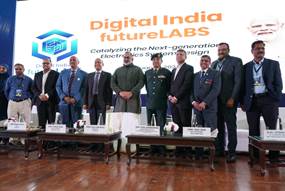
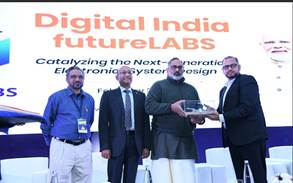
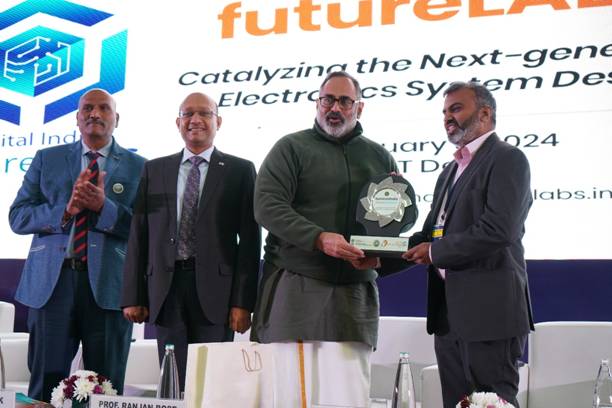
 During the launch event of “Digital India FutureLABS Summit 2024” held at IIIT- Delhi, the technology for Smart Food Grain Storage System (SAFEETY) which includes conveyorized loading & unloading of grain bags having RFID for traceability, online weight and moisture measurement with Radio Frequency Based Removal of Moisture from Grain has been developed by SAMEER under the aegis of MeitY. The technology has been transferred to M/s Paras Defense and Space Technology Ltd for manufacturing and supply of the systems. The system has capacity to handle almost one truckload (approx. weight: 28 tons) of grains in 40 minutes.

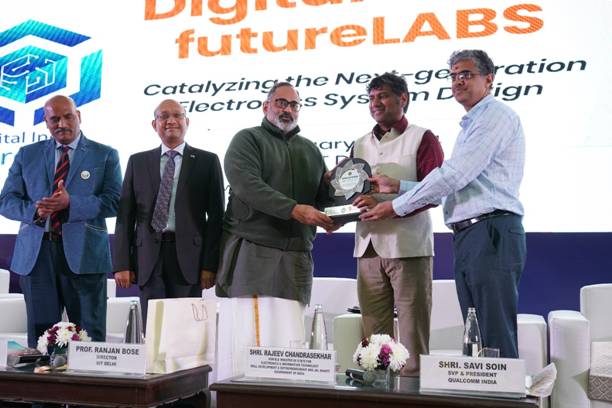
The exchange of technology transferred documents were made in the presence of Minister of State for Electronics & Information Technology, Skill Development & Entrepreneurship and Jal Shakti, Shri Rajeev Chandrasekhar; Smt Sunita Verma, GC R&D in E⁢  Dr P. H. Rao, DG-SAMEER; Shri Rajesh Harsh, CI, SAMEER, Mumbai; Dr Om Krishan Singh, Scientist ‘D’, MeitY; Shri Amit Mahajan, Director Paras Defense and Space Technologies Ltd and the Senior officials in Government.

Inauguration of Smart Food grain Storage System

Transfer of proto model of SAFEETY system by Hon’ble Minister of State, MeitY Shri Rajeev Chandrasekhar to Shri Amit Mahajan, Director, Paras Defense and Space Technologies Ltd

*****

futureDESIGN start-up companies under SemiconIndia Design Linked Incentive (DLI) Scheme

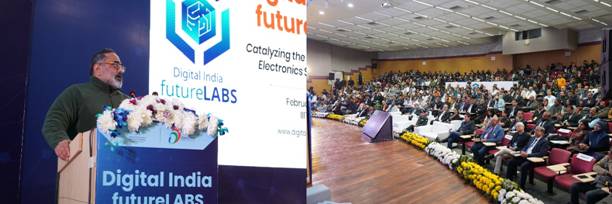
 An announcement on two futureDESIGN semiconductor fabless companies under the Semicon India Design Linked Incentive (DLI) scheme was made by Minister of State for Electronics & IT, Skill Development and Entrepreneurship, and Jal Shakti, Shri Rajeev Chandrasekhar during the launch of “Digital India FutureLABS” at IIIT Delhi. The Digital India FutureLABS Summit 2024 also witnessed announcement of 20 MoUs with Industry for implementation of the futureLABS in 6 verticals – Automotive, Compute, Communication, Strategic Electronics, Industrial Electronics/ IoT and Design & innovation.

A group of people in a roomDescription automatically generated

These two Karnataka based futureDESIGN semiconductor fabless companies announced for financial support under the DLI Scheme has been providing range of chipsets and solutions for communication and med-tech sectors.

Parag Naik, founder, Saankhya Labs, mentioned that – “Saankhya Labs is a wireless communication and semiconductor solutions company, designing a full spectrum of next-gen communication solutions for the present and the future. This includes products and solutions for broadband, satellite and broadcast applications including 5G NR, Direct to Mobile (D2M) Broadcast, rural broadband connectivity, satellite communication modems for IoT applications and multi-standard DTV modulators and demodulators.”

A group of men standing around a tableDescription automatically generated

Vijay Muktamath, founder, Sensesemi Technologies mentioned that – “As part of the DLI Scheme, Sensesemi will be developing the SoC for IoMT and IoT devices, that shall have MCU and wireless IP integrated with ultra-low power analog front end with AI inferencing IP. Sensesemi aims to drive India’s semiconductor capabilities by providing connected SoC for everything from smart wearables, med-tech sector and other connected devices.”

A group of men standing togetherDescription automatically generated

Earlier the ChipIN Centre setup at C-DAC under the SemiconIndia DLI Scheme announced the following support for state-of-the-art chip design tools from global companies-

  1. Support to academic institutions:
    1. EDA tools for academia from Synopsys to ‘pan-India academic institutions’, Cadence Design Systems to ‘150 institutions and Siemens-EDA & Ansys to ‘120 institutions’. At present, thousands of researchers & faculty members at 100+ academic institutions across the country are using these tools from ChipIN Centre to design their semiconductor chips.
    2. FPGA Hardware Boards from Xilinx to 100 academic institutions.
    3. Tapeout support to academia & start-ups for fabricating their designs at SCL foundry & overseas foundries.
  2. Support to start-ups: EDA tools for pan-India startups from Synopsys, Cadence Design Systems and Siemens-EDA to design their semiconductor chips.

In addition to these global companies, ChipIN is exploring to engage with other leading design & solution companies like- Keysight technologies & Silvaco for CAD/ EDA solutions and Qualcomm & NXP Semicondcutors for startup mentorship & support and enabling a global platform to start-ups. Engaged with over 125 academic instituions and 15 start-ups at present, ChipIN intends to become the one-stop center for chip designers across the country.

The Digital India futureLABS, coordinated by C-DAC, aims to tap into the trillion-dollar opportunity presented by the Electronics System Design and Manufacturing (ESDM) sector. The initiative seeks to move up the value chain, fortify domestic R&D, and create a collaborative ecosystem for the development of IPs, standards, and the next-generation Electronics System Design in the country.

Digital India futureLABS initiative announced by Minister Shri Rajeev Chandrasekhar combined with SemiconIndia futureDESIGN and futureSKILLS will define the #IndiaTechade and make India #ElectronicsProductNation and SemiconductorProductNation”.

***

two-day ULLAS Mela in New Delhi

 Union Minister of Education and Skill Development & Entrepreneurship, Shri Dharmendra Pradhan will inaugurate the two-day ULLAS Mela on 6th February 2024 at the National Bal Bhavan, New Delhi. Union Minister of State for Education Smt. Annpurna Devi will also be present as the Special Guest.

To achieve the target of 100% literacy by 2030, the Government of India is implementing a centrally sponsored innovative scheme called Nav Bharat Saksharta Karyakram or New India Literacy Program for the period of FYs 2022-2027. The scheme is popularly known as ULLAS: Understanding of Lifelong Learning for All in Society, upholding the motto “Jan-Jan Sakshar”. The scheme is targeted at all non-literates of age 15 years and above. The scheme, in line with NEP 2020, targets adults (aged 15 and above) who could not go to school or attain formal education. It focuses on imparting Foundational Literacy and Numeracy (FLN), through critical life skills, such as Digital Literacy, Financial Literacy, Legal Literacy, Environmental Literacy, Health & Hygiene, etc. Implemented in a hybrid mode, States/UTs have flexibility in offline, online, or combined approaches.

The scheme consists of five components: (i) Foundational Literacy and Numeracy; (ii) Critical Life Skills; (iii) Basic Education; (iv) Vocational Skills; and (v) Continuing Education. ULLAS is to be implemented through VOLUNTEERISM, encouraging citizen participation, emphasizing DUTY or Kartavya Bodh towards nation-building. The scheme contributes to India’s growth, by making India जन जन साक्षर. The ULLAS App has been developed to register learners, volunteers and also containing teaching learning material for them. The learners are certified as literate by way of twice-a-year assessments in September & March.

There have been substantial activities carried out under ULLAS in most of the States/UTs. Department of School Education and Literacy, Ministry of Education is organising ULLAS Mela on 6th-7th February, 2024 in collaboration with CNCL, NCERT to showcase various National and State level activities under ULLAS- Nav Bharat Saksharta Karyakram. The event will comprise various activities including felicitation of Neo-literates from the States/UTs who have successfully certified in the Foundational Literacy Numeracy Assessment Test (FLNAT), the launch of the ULLAS Concise Primers of the states/UTs in local languages, sessions on ‘Best Practices’, panel discussion, Prize distribution to the winners of poster-making competition held during the International Literacy Week. Seven hundred participants from various States/UTs along with more than 100 dignitaries from the Ministry of Education, States/UTs and various organizations will be participating in the event.  

The live broadcast links for both days are:

1. Live Streaming Link: 6th Feb 2024: https://www.youtube.com/watch?v=ySaBTI9jumE

2. Live Streaming Link: 7th Feb 2024: https://www.youtube.com/watch?v=cDvXqM4jh94

***

G20 Education Working Group Meeting under Brazilian Presidency

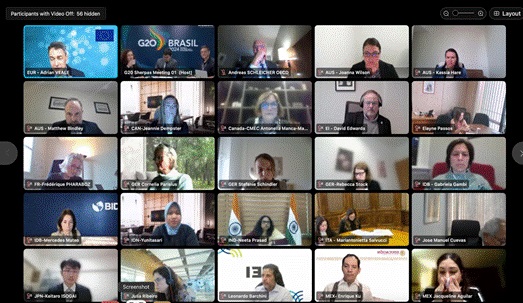
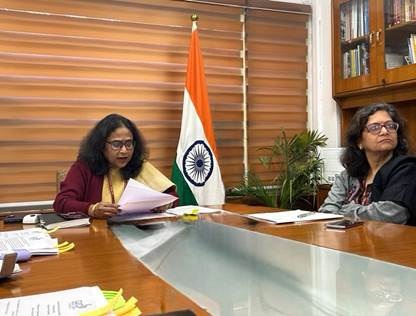
 Day one of the first Education Working Group (EdWG) meeting under Brazilian G20 Presidency was held virtually today wherein, the Indian delegation reiterated the government’s commitment to enhance the global education agenda.  The delegation highlighted the importance of capacity building for educational professionals, innovative teaching-learning processes and emerging trends and on making tech-enabled learning more inclusive, qualitative and collaborative at every level and highlighted the crucial role of education in achieving SDGs, particularly through LiFE (Lifestyle for Environment) initiative.


Sharing inputs on the priorities, the Indian delegation of senior Ministry officials highlighted India’s best practices on the identified priorities as guided by the National Education Policy 2020. Initiatives included SWAYAM, SWAYAM PRABHA, Academic Bank of Credit, SAMARTH,  National Professional Standards for Teachers, 4-year Integrated Teacher Education Programme, DIKSHA, NISHTHA, Malviya Mission Teacher Training Programme,  National Mission for Mentoring, industry collaboration for training courses and equipping educators in emerging technologies.

As part of the EdWG track, Brazil has identified  the following 3 priorities for the meeting deliberations:

    1. Valuing and Building Capacity of Education Professionals: what can we collectively do?
    2. Connecting Managers of Digital Resource Platforms: the sharing of education material on Education for Sustainable Development.
    3. The G20 Award for School-Community Engagement


The first EdWG discussions will continue on  day two of the meeting to be held on 6th February 2024.  Discussion will centre on the second and third priority that is, digital resource platforms and award for school-community engagement.


***