CSIR – NIScPR and KAMP: Workshop on Science Communication

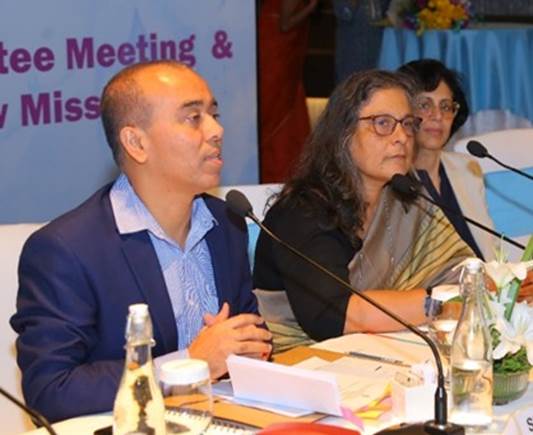
 In the Day 3 of One Week One Lab program of CSIR-NIScPR. A workshop on science communication was organised where more than 50 teachers joined the event and received the training of various facets of science communication by the experts. In the workshop, Shri C. B. Singh, Head, Jigyasa, Training and HR Division of CSIR-NIScPR delivered a welcome address. In her keynote address in the workshop addressing the science teachers Chief Guest Prof. Sharmishtha Banerjee, University of Hyderabad, emphasized teaching interdisciplinary science to the students. She said that all the subjects including biology, chemistry, physics and mathematics are inter-related and we have to tell this to our students in an effective manner.


Ms. Arika Mathur, Head – Operations and Assesments, KAMP captivated the audience with her in-depth presentation on the Knowledge and Awareness Mapping Platform (KAMP) – an initiative of CSIR-NIScPR and NCPL. KAMP aims to unearth the innate talents and skills in our students, and the teachers were visibly enthusiastic about this endeavor.

Explaining Science Communication and Citizen Responsibility at the workshop, Shri Hasan Jawaid Khan, Chief Scientist, CSIR-NIScPR and Editor of ‘Science Reporter’ magazine, said, “It’s a responsibility of every citizen of the country to create more awareness about misinformation and fake news about science.

Ms. Sonali Nagar, Associate Editor, Science Reporter magazine showed a presentation to the teachers training them in the nuances of Popular Science Writing. The workshop ended with the Popular Science Writing assignment given by Shri Hasan Jawaid Khan.

About CSIR-NIScPR and KAMP:

CSIR-National Institute of Science Communication and Policy Research (CSIR-NIScPR) is one of the constituent laboratories of the Council of Scientific and Industrial Research (CSIR) under the Ministry of Science & Technology, Government of India. It specializes in the fields of science communication, Science, Technology, and Innovation (STI) focused on evidence-based policy research and studies.


KAMP is an Initiative and Knowledge Alliance of the Council of Scientific & Industrial Research (CSIR) – National Institute of Science Communication and Policy Research (NIScPR) and industrial partner M/S Nysa Communications Pvt. Ltd. (NCPL), it intends to develop creativity, meaningful learning, critical reading and thinking skills that brings out the inherent abilities of the students.


Events on Grassroot Innovations, Science Communication Workshop and Student Science Connect Program organised

 CSIR-National Institute of Science Communication and Policy Research (CSIR-NIScPR) organized the day 3 of its One Week One Lab (OWOL) programme yesterday at CSIR-NPL Auditorium, Pusa, New Delhi. ‘Grassroot Innovations & Skill Development Conclave for Rural Development’ event was dedicated to our farmers. The event commenced with great enthusiasm with the inauguration of exhibition by the Chief Guest, Dr. Shekhar C. Mande, Former DG, CSIR and Guest of Honour, Dr. Sanjay Kumar, Chairman, Agricultural Scientists Recruitment Board (ASRB).

Address by Dr. Shekhar C. Mande (Left) & Dr. Ranjana Aggarwal (Right)

In the welcome address, Dr. Ranjana Aggarwal, Director, CSIR-NIScPR said, “Today’s event for rural development is one of the links of the one week one lab week-long event, from 11th to 16th September 2023. This idea of sowing seed at the time of COVID-19 has been sown by Dr. Shekhar C. Mande, Former DG, CSIR.”

The Guest of Honour, Dr. Sanjay Kumar in his speech mentioned that the “cost of the production of technology must be acceptable and affordable to the stakeholders and the technology should make a country powerful.”

The Special Invitee Shri Praveen Ramadas, Secretary, Vijnana Bharati (VIBHA) addressed the audience, and talked about “Bharat Ke Liye Vigyaan,” and remembered former VIBHA National Organising Secretary, Late Shri Jayant Sahasrabuddhe. Shri Praveen Ramadas stated “Until our villages are not self-reliant, our farmers are not self-reliant; our India will not be self-reliant”. He also emphasised on the use of CSIR relevant technologies in villages.

Chief Guest Dr. Shekhar C Mande reiterated PM Shri Narendra Modi’s dream, “In 2047, we want to see India one of the most developed countries, development of rural people is most important for realizing this dream”.

During the Technical Session of the Scientist-Farmer Interaction, Dr. Yogesh Suman, the Coordinator of OWOL, served as the moderator for a panel discussion centered on CSIR technologies and laboratories. The esteemed panelists included Dr. Vivek Kumar, a Professor from CRDT at IIT Delhi, and Dr. Mahendra P. Darokar, the Chief Scientist from TMD at CSIR-HQ. Additionally, several other scientists from various CSIR labs participated in the discussion, emphasizing the crucial role of bridging the gap between laboratory experiments and society. They highlighted the significance of technology appropriateness, rather than solely focusing on technology readiness level. The scientists shared insights into their respective experiments conducted in their labs, and afterwards, the session was opened up to the general public for further discussions.

Dr. Sanjeev Kumar Majumdar, Senior Manager, NRDC (New Delhi) shared his personal experience, revealing that even the pulses we consume, is a result of the research conducted in one of the CSIR laboratories. He emphasized that all the research carried out by CSIR scientists is ultimately aimed at serving the public interest.

In the Training Session on the Kisan Sabha App, Dr. Vinayak, Senior Scientist from CSIR-NIScPR, introduced the app and explained how it can greatly benefit farmers. Dr. Shiv Narayan Nishad, Senior Scientist from NIScPR and a co-developer of the app, expressed his gratitude towards NIScPR for their contribution in shaping the Kisan Sabha App. He further informed the audience that currently, around 10 lakh clients, including farmers and consumers, are actively using this app. The app provides access to real-time market information and various agricultural services. For instance, farmers can easily check Mandi prices through the app.

Dr. Shekhar Mande inaugurating the Graasroot innovation exhibition

An exhibition on CSIR technologies for rural livelihood was also organised in which more than 10 CSIR labs participated. This exhibition was inaugurated by Dr. Shekhar C. Mande, Former DG, CSIR.

In the workshop on science communication, more than 50 teachers joined the event and received the training of various facets of science communication by the experts. In the workshop, Shri C B Singh, Head, Jigyasa, Training and HR Division of CSIR-NIScPR delivered welcome address. In her keynote address in the workshop addressing to the science teachers honourable Chief Guest Prof. Sharmishtha Banerjee, University of Hyderabad, emphasized on teaching interdisciplinary science to the students. She said that all the subjects of including biology, chemistry, physics and mathematics are inter-related and we have to tell this to our students in effective manner.

A glimpse of Science Communication for Teachers workshop

Explaining Science Communication and Citizen Responsibility at the workshop, Shri Hasan Jawaid Khan, Chief Scientist, CSIR-NIScPR and Editor of ‘Science Reporter’ magazine, said, “It’s a responsibility of every citizen of the country to create more awareness about misinformation and fake news about science.

Ms. Sonali Nagar, Associate Editor, Science Reporter magazine shown a presentation to the teachers training them in the nuances of Popular Science Writing. The workshop ended with the Popular Science Writing assignment given by Shri Hasan Jawaid Khan.

Student Science Connect Programme

Under the ‘Jigyasa’ initiative of CSIR, ‘Student-Science Connect’ programme  was organized in Vivekananda Hall of CSIR-NIScPR campus. In his welcome address, Shri C.B. Singh, Head, Jigyasa programme, CSIR-NIScPR said how NIScPR is reaching out to the common people through science communication.

On this occasion, Director of CSIR-NIScPR, Dr. Ranjana Aggarwal said that NIScPR is working like a bridge. Keeping in mind the vision of the Hon’ble Prime Minister on ‘International Year of Millets’, he gave information about millets. PM also told how CSIR- NIScPR initiative ‘SVASTIK’ is providing a scientific approach to traditional knowledge.

During this programme, Dr. Shekhar C. Mande, Former Director General, CSIR also graced the occasion. He said that questions like when, where, how, why should come in your mind. Science develops only when we think and discuss about it. Dr. Sanjay Kumar, Former Director, CSIR-IHBT, Palampur, said that we need to adopt scientific thinking through stories how mathematics and science can be read and understood in an interesting manner.

Dr. Suman Ray, Principal Scientist, CSIR-NIScPR, gave information about millets. Dr. Charu Lata, Principal Scientist, CSIR-NIScPR and Coordinator of SVASTIK said that India has a rich heritage of science and technology. Traditional knowledge develops our three-dimensional personality.

The program received participation of Kendriya Vidyalaya, Vikaspuri and Sector-8, Dwarka, M.M. Public School, Shakurpur. During this programme, students participated in the quiz competition. On this occasion, a puppet show was performed by Dr. Vikas Mishra and his team.

About CSIR-NIScPR

CSIR-National Institute of Science Communication and Policy Research (CSIR-NIScPR) is one of the constituent laboratories of Council of Scientific and Industrial Research (CSIR) under the Ministry of Science & Technology, Government of India. It specializes in the fields of science communication, Science, Technology, and Innovation (STI) focused on evidence-based policy research and studies. It publishes various journals, books, magazines, newsletters, and reports on science and technology. It also conducts research on science communication, science policy, innovation systems, science-society interface, and science diplomacy.

For more information, please visit https://niscpr.res.in/ or follow us at @CSIR-NIScPR.         

<

Swachhata Special Campaign 3.0 Portal

 Union Minister of State (Independent Charge) Science & Technology, MoS PMO, Personnel, Public Grievances, Pensions, Atomic Energy and Space, Dr Jitendra Singh today launched the dedicated web-portal for Swachhata Special Campaign 3.0, https://scdpm.nic.in, at a function in New Delhi for monitoring of the Swachhata campaign.

Speaking on the occasion, Dr Jitendra Singh said the Special Campaign is being launched at a time when the nation is in upbeat mood following the unprecedented success of G20 Summit under the leadership of Prime Minister Shri Narendra Modi and India’s Space feats of Chandrayaan-3 and Aditya L1 solar mission.

Dr Jitendra Singh said the Swachhata campaign, the first mass awareness campaign launched by PM Modi on August 15, 2014 soon after taking over charge in May, 2014, has achieved four primary objectives, –

  • Change of Work Culture and that has been amply demonstrated by flawless execution of successful hosting of the G20 Summit.
  • Over 90% file work has been made online under eOffice portal; visualised by the Prime Minister and his Digital India Mission helped tide over the Covid crisis.
  • Use of Open Spaces for productive use as some of the Departments like Posts have converted junkyard to courtyard.
  • Archive Culture; the process of archiving files also gained momentum. 

The Union Minister said PM Modi transformed the Swachhata campaign into a mass movement within a few months.

“Same administration, same officials, only the leadership was lacking. Prime Minister turned the mission on hygiene cleanliness into a Jan-Andolan and it was imbibed by the people as a Social Reform Movement. This demonstrated the intent of the government that it will address the fundamental issues facing the common man in a mission mode,” he said.

Dr Jitendra Singh appealed to all citizens to join hands together, particularly the media in creating awareness. DARPG has launched a compendium of 300 Best Practices which will be implemented by all Government Ministries and Departments and published widely through media, highlighting ‘Whole of Government’ and ‘Whole of Science’ approach,” he said.

“Coming close on the heels of successful Chandrayaan-3 landing, the successful launch of Aditya L1 is also a testimony to the ‘whole of science and the whole of nation’ approach which we have sought to adopt in our world culture,” said Dr Jitendra Singh.

The Special Campaign 3.0 will be preceded by the Preparatory phase from 15th September to 30th September 2023. During this period, Ministries/Departments will identify the pendency in selected categories and finalize the campaign sites.

The Government of India has announced Special campaign 3.0 from 2nd October, 2023 to 31st October, 2023 with focus on Swachhata and Reducing Pendency in Government Offices with a saturation approach. The Cabinet Secretary has addressed all Secretaries of Government of India on 25th August, 2023 and DARPG guidelines for the same were issued on 1st September, 2023.

Special Campaign 3.0 will focus on field/outstation offices responsible for service delivery or having public interface, in addition to the Ministries/Departments and their attached/subordinate offices. Department of Administrative Reforms and Public Grievances (DARPG) is the Nodal Department for implementation of Special Campaign 3.0.

Secretary, DARPG and Dept. of Pensions and Pensioners’ Welfare, Shri V. Srinivas; Secretary, Posts, Shri Vineet Pandey; Secretary, Railway Board, Shri Milind K Deuoskar and Shri Arun Singhal, DG, National Archives of India also addressed the function. The launch ceremony was attended by Nodal Officers of Public Grievances and Appellate Authorities in all the 84 Ministries/Departments of Government of India. 

***

Administrative Reforms and Public Grievances

 -Shashikant Nishant Sharma

Ministry of Panchayati Raj, encouraged by the resounding success and transformative outcomes of the previous editions of Special Campaign, is all set to act as an active partner during Preparatory Phase (15–30 September, 2023) and Implementation Phase (2–31 October, 2023) of Special Campaign 3.0 steered by Department of Administrative Reforms and Public Grievances (DARPG).The Special Campaign conducted in Ministry of Panchayati Raj primarily focuses upon encouraging clean and pro-environment workplaces for its officials and staff–members and welcoming reception areas for visitors. The major outcomes of perpetual Best Practices adopted by the Ministry of Panchayati Raj under the Special Campaign for a conducive work environment are as follows:

Execution of 100% file work through e-Office

✅ Efficient management of office spaces

✅ Enhancement and productive use of office spaces

✅ Environmental friendly Practices

✅ Maintaining a clean and hygienic workplace at all times

✅ Ensuring 100 % electronic scrape disposal

✅ Zero Pendency of Public Grievances

Additional Secretary, Ministry of Panchayati Raj, Dr. Chandra Shekhar Kumar chaired a meeting with Divisional Heads on 11th September, 2023 to discuss the Work Plan/ Action Plan for the Special Campaign 3.0 to be organized from 2ndOctober, 2023 to 31st October, 2023 under the aegis of Department of Administrative Reforms and Public Grievances (DARPG), Ministry of Personnel, Public Grievances and Pensions, Government of India. Emphasizing the importance of institutionalizing Swachhata and minimizing pendency in Government offices, Dr. Chandra Shekhar Kumar advised all the Divisions to work in a concerted and collaborative manner for the best results as per the parameters identified by DARPG for Special Campaign 3.0, which is a campaign having an overarching goal to promote Good Governance through Swachhata.

In view of the importance of the Special Campaign 3.0, Dr. Chandra Shekhar Kumar suggested that senior officers in the Ministry may provide leadership in implementing Special Campaign 3.0 activities effectively. The meeting was attended by Joint Secretary, Smt. Mamta Varma, Joint Secretary, Shri Alok Prem Nagar,Economic Adviser, Dr. Bijaya Kumar Behera, Director,Shri Ramit Maurya, Director, Dr. Sriramappa V. and representatives of other Divisions/ Sections in the Ministry of Panchayati Raj.

Dr. Bijaya Kumar Behera apprised that efforts are on to raise awareness, mobilize officials and ensure their active participation in making Special Campaign 3.0 a grand success by the way of making Swachhata “everyone’s business” and “a way of life”. Citing some remarkable results in respect of cleanliness campaigns, space freed, files weeded out, revenue earned by scrap disposal and public grievances disposed of during the period from December 2022 to July 2023, Dr. Behera made a reference of 5541 public grievances spreading over all States and UTs redressed during December 2022 – July 2023, and stated that State-specific engagement of Nodal Officers and dedicated Public Grievances Redressal Cell helped in disposal of public grievances within a month’s time and thus there was no pendency.

The discussions during the meeting were focused on various activities and aspects of Special Campaign 3.0 and it was centered around conducting special cleanliness drives and mobilizing the government functionaries to streamlining processes and procedures to strengthen grievance redressal mechanism to ensure fast disposal of grievances at all levels. Special Campaign 3.0 in the Ministry of Panchayati Raj will focus on creating healthier workspaces, keeping workplace tools in working order, increasing efficiency / improving productivity i.e. speed and quality of work and boosting the morale of the employees / staff-members (regular, contractual and outsourced) through a clean, tidy and organized work environment. Clean Desk / Clean Office / Clean Corridor / Clean Workstation and other best practices will be promoted through social media on regular basis.

Ministry of Panchayati Raj will organize a mini-workshop with the record officers for their capacity building on record keeping and helping them for categorization of files for preservation, distribution and retention etc. as per Record Retention Schedule. Necessary action will be taken to give feel-good environment by placing flower pots, sapling pots etc. in both the office premises of Jeevan Bharati Building and Jeevan Prakash Building. Special emphasis will be given on behavioural / attitudinal changes towards cleanliness and sanitation for tackling workplace hygiene issues considerately along with disposal of pending matters such as references from Members of Parliament, Parliamentary Assurances, References received from State Governments, Inter-Ministerial Consultation, Public Representations/ Grievances, better record management, review and weeding out papers on regular basis as we move towards a more sustainable future for everyone.

*****

International Conference on Dam Safety at Jaipur, Rajasthan


The Vice-President of India, Shri Jagdeep Dhankhar inaugurated the International Dam Safety Conference themed “Safe & Secure Dams Ensure Nation’s Prosperity” in Jaipur today. Shri Dhankhar also flagged off the vinyl-wrapped Kamakhya Express from Varanasi station through video conferencing. Under the ‘Pani Ki Rail’ initiative of the National Water Mission, two trains, the Himsagar Express & Kamakhya Express have been vinyl wrapped in collaboration with Ministry of Railways, to amplify the message of water conservation, river rejuvenation, and the significance of clean drinking water and sanitation. As these trains traverse across the length and breadth of the nation, they will act as a moving billboard for promoting the vital message of water conservation and management. The VP also unveiled a National Register of Large Dams which is a compilation of the large dams in the country prepared in consultation with the concerned State Government/Authority.

Addressing the inaugural session, Vice-President elaborated on the importance of dams by referring to them as “silent sentinels that ensure our access to the lifeblood of our planet”. “Dams are monuments to human ingenuity, perseverance, and the spirit of cooperation”, he added. Highlighting the intrinsic connection of India with water management, the Vice-President expounded that the Indian civilization has thrived for thousands of years on the banks of rivers, deriving life and sustenance from their waters. Shri Dhankhar also noted that ancient texts, including the Vedas and Arthashastra, mention the systematic management of water resources through the construction of dams and reservoirs to combat water scarcity. Shri Dhankhar commended the enactment of the Dam Safety Act (DSA) 2021, which strengthens India’s commitment to safeguarding its dams. He also praised the successful completion of Phase I of the Dam Rehabilitation and Improvement Project (DRIP) and expressed hope that the recently launched Phase-II & III would further enhance dam safety across several states in India.

Vice President’s Secretariat Press Release: https://pib.gov.in/PressReleasePage.aspx?PRID=1957410

Addressing the august gathering, the Union Minister for Jal Shakti, Shri Gajendra Singh Shekhawat highlighted the diverse benefits of the dams and how they have been instrumental in India’s water management, electricity generation, and flood control. Elucidating on the importance of dam safety, Shri Shekhawat spoke about the enactment of the Dam Safety Act in 2021 under the guidance of Prime Minister Shri Narendra Modi to ensure key regulatory institutional framework and set of unified protocols for all dam owners.

Image

The Union Minister further stated that in India there are about 280 dams which are almost 100 years old and out of them more than 80% are 25 years old. He expressed confidence that this conference will serve as a platform to deliberate and share knowledge on Dam safety measures among various stakeholders. He also thanked all the states for providing support to the ministry of Jal Shakti in Dam Safety management. The Union Minister also inaugurated the National Centre for Earthquake Safety of Dams at MNIT Jaipur, earlier today. The centre will enhance the Structural and Earthquake Safety of Dams in India.

The Secretary, Department of Water Resources, RD & GR, Ministry of Jal Shakti, Shri Pankaj Kumar, explained the roles and functions of various organisations like National Dam Safety Authority (NDSA), National Committee on Dam Safety (NCDS), State Committee on Dam Safety (SCDS) and State Dam Safety Organisation (SDSO) involved in Dam Safety aspects. He also shared achievements of the Dam Rehabilitation & Improvement Project (DRIP -Phase I) and elaborated on the key features of ongoing Phase II and Phase III of DRIP. He spoke about establishment of Centre of Excellence at IIT Roorkee & IISc Bengaluru and launch of M- Tech courses for the Capacity Building of the concerned stakeholders in Dam Safety.

Image

The event started with the traditional ‘Jal Kalash’ ceremony.  A 1-minute silence was observed for the tragedy and destruction which has happened in Libya. An exhibition has been organised on the sidelines of the conference, where various government and private organisations displayed products, charts, banners and photographs showcasing the latest developments, technological interventions, innovations and solutions in various areas of dam safety. The exhibition was also inaugurated today.

Other dignitaries who graced the inaugural session were Shri Manik Saha, Chief Minister of Tripura; Shri D. K. Shivakumar, Deputy Chief Minister of Karnataka; Shri Mahendrajeet Singh Malviya, Water Resources Minister of Rajasthan; Smt. Usha Sharma, Chief Secretary of Rajasthan; and Shri Pankaj Kumar, Secretary, Department of Water Resources, RD & GR, Ministry of Jal Shakti. Foreign and national delegates and senior officers from various concerned departments were also present on the occasion.

The conference is being attended by more than 800 delegates from the central and state governments, academicians, officials from the World Bank, representatives from foreign countries, public and private sectors, and other dam proprietors. Approximately 40 international delegates from 15 countries are also participating in the event.

******

Hindi Diwas

 Union Home Minister and Minister of Cooperation Shri Amit Shah has extended his best wishes to the countrymen on the occasion of Hindi Diwas. In his message, the Home Minister said that India has been a country of diverse languages. Hindi unites the diversity of languages in the world’s largest democracy. He said that Hindi has been a democratic language. It has honoured different Indian languages and dialects as well as many global languages and adopted their vocabularies, sentences and grammar rules.

Union Home Minister said that the Hindi language played an unprecedented role in uniting the country during the difficult days of independence movement. It instilled a feeling of unity in a country divided into many languages and dialects. Hindi, as a language of communication, played an important role in carrying forward the freedom struggle from East to West and North to South in the country. Shri Shah said that the movements for achieving ‘Swaraj’ and ‘Swabhasha’ were going on simultaneously in the country. Considering the important role of Hindi in the freedom movement and after independence, the architects of the Constitution had accepted Hindi as the official language on 14 September 1949.

Home Minister said that original and creative expression of any country is possible only through its own languageMentioning the renowned litterateur Bharatendu Harishchandra’s famous poem “निज भाषा उन्नति अहैसब उन्नति को मूल”, he emphasized that the progress of our language is the basis of all-round progress. Shri Shah said that all our Indian languages and dialects are our cultural heritage, which we have to carry with us. He added that Hindi neither ever has competed and nor will compete with any other Indian language. Only by strengthening all our languages, a strong nation will be created.Home Minister expressed his belief that Hindi will become a medium to empower all the local languages.

Shri Amit Shah said that Indian languages have received due recognition and respect at national and global forums, under the leadership of Prime Minister Shri Narendra Modi. He added that the Department of Official Language of the Ministry of Home Affairs is making continuous efforts, by leveraging modern technology, to enrich the Indian languages to establish them as language of publicadministration, education and scientific use. He said that under the guidance of the Prime Minister, public welfare schemes are being implemented effectively by establishing communication between the government and the public in Indian languages.

Union Home Minister said that the Parliamentary Committee on Official Language was constituted to periodically review the work done in the official language in the country. It was given the responsibility to review the progress made in the use of Hindi in government work across the country and prepare its report and present it to the President. Shri Shah added that he is happy to inform that the 12th volume of this report has been presented to the President. Only 9 volumes of the report were submitted till 2014, but we have submitted 3 volumes in the last 4 years only. Since 2019, Hindi Advisory Committees have been formed in all 59 ministries and their meetings are also being organized regularly. From the point of view of increasing the use of official language in various areas of the country, a total of 528 Town Official Language Implementation Committees (TOLIC) have been formed so far. Even in foreign countries, Town Official Language Implementation Committees have been formed in London, Singapore, Fiji, Dubai and Port-Louis. India has also taken initiatives to promote the use of Hindi language in the United Nations.

Union Home Minister said that a new tradition of organizing ‘All India Official Language Conference’ has also been started by the Department of Official Language. The first All India Official Language Conference was organized in Banaras on 13-14 November, 2021 and the second conference was organized in Surat on 14 September 2022. This year the third All India Official Language Conference is being organized in Pune. He said that in order to develop the official language according to technology, the Department of Official Language has created a memory-based translation system ‘Kanthastha’. Taking a new initiative, the Department of Official Language has also created the dictionary ‘Hindi Shabd Sindhu’. This dictionary is being continuously enriched by including words from Indian languages included in the 8th Schedule of the Constitution. The department has also made an ‘e-Mahashabdkosh’ mobile app comprising a total of 90,000 words and an ‘e-Saral’ dictionary of about 9,000 sentences.

Union Home Minister said that the principle of language change says “language moves from complexity to simplicity.” Shri Shah said that in his opinion, simple and clear words of Hindi should be used in office work. He expressed confidence that with these efforts of the Department of Official Language and by assimilating from all the mother tongues, Hindi, with people’s acceptance, will achieve scientific and technological acceptance and will emerge as rich official language. Once again, congratulations to all on the occasion of Hindi Diwas.

Second Edition of ICAR-CIBA’s Shrimp Farmers Conclave-2023 at Navsari, Gujarat

 Union Minister of Fisheries, Animal Husbandry and Dairying, Shri Parshottam Rupala inaugurated Second Edition of ICAR-CIBA’s (ICAR-Central Institute of Brackish water Aquaculture) Shrimp Farmers Conclave-2023 at the Navsari Agricultural University Campus in Gujarat today. About 410 aqua farmers across the coastal districts of Gujarat participated in the conclave.

In his address, Shri Parshottam Rupala conveyed his gratitude to Prime Minister Shri Narendra Modi, for approving the Pradhan Mantri Matsya Sampadan Yojana with the financial outlay of Rs. 20,050 crores for the sustainable development of fisheries and aquaculture sector. This paved the way for developing a project implemented by ICAR-CIBA on Genetic improvement program of Penaeus indicus (Indian white shrimp)-Phase-I” with an outlay of Rs.25 crores under the Pradhan Mantri Matsya Sampada Yojana (PMMSY) to establish a National Genetic Improvement Facility for shrimp breeding. Union Minister Shri Rupala congratulated CIBA scientists for developing a therapeutic EHP-Cura-I for the control of EHP disease in shrimp and asked them to make available the farmers at the earliest. The Minister also launched the Shrimp Crop Insurance scheme developed by the Agricultural Insurance Company (AIC) with the support of ICAR-CIBA during the occasion in the presence of the Chairman cum Managing Director of AIC, Smt. Grija Subramanian.

Two Memorandums of Understanding (MoU) were signed between CIBA and National Fisheries Development Board (NFDB); CIBA and Fish Farmers Producer Organization (FFPO) of Gujarat respectively for implementing the crop insurance for aquaculture with premium subsidy offered by the NFDB and technology support for the FFPO. Shri Rupala also handed over a sum Rs.40.05 Lakhs income earned by the SC, ST and Cage Culture beneficiaries of Navsari region through adoption of CIBA technologies for the livelihood development supported by NGRC-CIBA scientists. Navsari-Gujarat Regional centre of CIBA is doing good services to the aqua farmers of Gujarat and other inland saline areas of Rajasthan, Punjab and Haryana and Shri Rupala advised the Department of Fisheries of Gujarat to extend all the facilities and support required for the centre to grow it as a full-fledged research facility for the entire west coast. Union minister Shri Rupala also visited the exhibition of live shrimps and finfish species, CIBA hatchery produced shrimp and fish seeds. He also handed over the CIBA produced Asian sea bass fish seeds to the farmers.

Member of Parliament, Navsari constituency, Shri C.R. Patil participated in the Conclave as Guest of Honour. He appreciated ICAR-CIBA for conducting this mega event in Navsari and assured the  Navsari-Gujarat Regional centre of CIBA for all the  support. Deputy Director General (Fisheries) of ICAR, Dr. J. K. Jena in his address highlighted that shrimp is the major item contributing about 70% Indian seafood exports in value terms worth Rs.35,000 crores. However, in the recent years due to the supply of more quantities of shrimp from the Ecuador, the import of Indian farmed shrimp in the international markets has been showing a declining trend which in turn reduced the market price at the local level. Therefore, innovative strategies are the need of the hour both at the market as well as in the farming sectors to overcome this issue. Similarly, diversification of brackish water aquaculture with other species like SPF tiger shrimp and genetically improved Indian white shrimp may give an advantage to the Indian shrimp farmers in the days to come.

The registration of shrimp farms with the Coastal Aquaculture Authority (CAA), Govt. of India for availing any government schemes and reforms brought out in the registration were clearly articulated by Member Secretary, CAA, Dr. V. Kripa. She assured the farmers that CAA will work for consideration of aquaculture as a farming activity and inclusion of it as a farming sector in national disaster management list.

Director, ICAR-CIBA, Dr. Kuldeep K Lal in his welcome address set the stage for the conclave by articulating the importance of the shrimp farmers conclave, the present scenario of brackish water aquaculture in the country and specifically in the state of Gujarat, the efforts of CIBA in addressing the issues in shrimp farming, diseases monitoring, diversification of the systems and species, feed formulations with alternative protein sources and technical backstopping in developing regulatory guidelines, developmental policies and societal development.

During the technical session of the conclave the shrimp export present scenario and immediate prospects, disease prevention and management with special reference to Hepatopancreatic microsporidiosis (HPM) caused by a microsporidian (Enterocytozoon hepatopenaei (EHP), crop insurance for shrimp farming, development of Genetically Improved Indian White Shrimp (Penaeus indicus) and diversification of brackish water aquaculture with Mudcrab and Asian Seabass fish were discussed.

Director, ICAR-CIBA, Dr. Kuldeep K Lal said that the Govt. of India under the Prime Minister’s Matsya Sampada Yojana (PMMSY) funding the National Disease Surveillance Programme for Aquatic Animal Diseases (NSPAAD) for reporting of emerging disease pathogens in the country and a “Report Fish Disease APP” was developed for reporting of existing and emerging pathogens by the farmers was demonstrated to the farmers during the conclave. Subsequently, a vivid presentation was made on the Hepatopancreatic microsporidiosis (HPM) caused by a microsporidian (Enterocytozoon hepatopenaei (EHP), its diagnosis and Management in shrimp farms was made by Scientist of ICAR-CIBA, Dr. T. Sathish Kumar. During his presentation, the promising results given by a therapeutic developed by CIBA to manage the EHP pathogen in shrimp farms was also detailed.

Subsequently, a special session on ‘Shrimp Crop Insurance’ was convened wherein the Agricultural Insurance of Corporation of India, United India Insurance Corporation of India and the mediator Alliance Insurance Brokers along with Principal Scientist, CIBA, Dr. T. Ravisankar, and the Chief Executive of the National Fisheries Development Board, Dr. L. Narashima Murthy participated and explained about the insurance product developed by the United India Insurance for shrimp farming and the premiums for basic and disease cover and the 20-30% subsidy component provided by the NFDB. The farmers were optimistic about the scheme and expressed their willingness to participate in that. 

Shrimp farmers expressed their issues, requirements especially on shrimp seed quality, shrimp price, electricity tariff etc. before an inter-departmental panel of officials and got appropriate advisories which was coordinated by the Coordinator of the Farmers Conclave Dr. M. Kumaran. Later, Dr. M. Kailasam and Heads of Departments, CIBA, Dr. C. P. Balasubramanian presented on diversification of brackish water Aquaculture respectively with Asia sea bass and Mud crab and their farming practices.

The conclave was conducted with the financial support of the National Fisheries Development Board (NFDB), Govt. of India under the PMMSY scheme, NABARD, SCAFi and Agricultural Insurance Corporation Ltd. The scientific team led by Dr. Akshaya Panigrahi, Mr. Pankaj A Patil and Mr. Jose Antony of the NGRC of CIBA coordinated the conclave. Various officials, technicians, faculty and students were also participated in the event in large number.

*****

Endorsement of G20 Policy Recommendations for Advancing Financial Inclusion and Productivity Gains through DPI and G20 FIAP 2023

 The Fourth G20 Global Partnership for Financial Inclusion (GPFI) Meeting is being held in Mumbai from September 14-16, 2023. It will involve discussions on the remaining work of the on-going three year FIAP 2020 which is in its terminal year and is being implemented by the GPFI. Discussions will take place on the deliverables related to Digital Financial Inclusion and Small and Medium Enterprises. Ahead of the meeting a Symposium on Digital Public Infrastructure for energizing MSMEs was held on September 14, 2023. This is one of the series of side events on Digital Public Infrastructure and financial inclusion that have been organised by the G20 India Presidency under the GPFI working group. Shri Ajay Seth, Secretary (Economic Affairs), Ministry of Finance, Shri T. Rabi Sankar, Deputy Governor (RBI) and Mr. Mohamed Gouled, Vice President (International Finance Corporation) and Dr. Arjun Kumar Karki, Global Coordinator-LDC Watch and Former Ambassador of Nepal to USA addressed the Symposium. 

The Symposium saw panel discussions involving international experts around two key themes “Energizing MSMEs for Higher Economic Growth through Digital Public Infrastructure” and “Credit Guarantees and SME ecosystems”. The first panel discussion on energizing MSMEs through DPI was moderated by Mr. Matthew Gamser, CEO, SME Finance Forum and the panelists were Mr. Sivasubramanian Ramann, Chairman & Managing Director, Small Industries Development Bank of India (SIDBI), Mr. Ashwini Kumar Tewari, Managing Director, State Bank of India, Mr. B G Mahesh, Co-Founder & CEO, Sahamati, Mr. Michael Jongeneel, CEO, FMO, Ms. Jane Prokop, Executive Vice President, Small and Medium Enterprises, Mastercard. The enriching discussions provided valuable insights into the role of DPI in rapidly advancing the financial inclusion of MSMEs. 

The second panel discussion on credit guarantees and SME ecosystems was moderated by Ms. Nagla Bahr, Managing Director, Credit Guarantee Company (CGC) Egypt. The panelists were Ms. Katrin Sturm, Secretary General, AECM, Mr. Sandeep Varma, CEO, CGTSME, Mr. Homam Hashem, CEO, Kafalah and Mr. Wooinn Park, Deputy Director, KODIT. 

The World Bank also presented the G20 Policy Recommendations for Advancing Financial Inclusion and Productivity Gains through Digital Public Infrastructure developed under G20 India Presidency which were recently endorsed by the G20 Leaders in the G20 Summit held in New Delhi. 

Over the course of the next two days, the GPFI members will discuss GPFI work regarding implementation of G20 GPFI High Level Principles for Digital Financial Inclusion, Update of National Remittance Plans and SME best practices and innovative instruments to overcome common constraints in SME financing. A Symposium on “Advancing Financial Inclusion through Digital Public Infrastructure: Empowering Consumers through Digital and Financial Literacy and Consumer Protection” will also be held on September 16, 2023 as part of the GPFI Meeting.

In a pre-event Press Conference, Economic Advisor, Department of Economic Affairs, Ministry of Finance, Chanchal Sarkar, stated that it is  a remarkable achievement for the GPFI working group as recently, at the G20 Leader’s Summit held in New Delhi, the leaders endorsed two significant documents produced by GPFI under the India Presidency, namely the G20 Policy Recommendations for Advancing Financial Inclusion and Productivity Gains through Digital Public Infrastructure (DPI) and the G20 Financial Inclusion Action Plan (FIAP) 2023. 


* * *

Finalisation of the G20 Sustainable Finance Report, 2023

 The 4th and the last meeting of the G20 Sustainable Finance Working Group (SFWG) held under India’s G20 presidency, successfully concluded in Varanasi today. The two-day meeting witnessed proactive engagement from over 80 delegates from G20 member countries, invitee countries and International Organisations including World Bank, New Development Bank, among others. Many other organisations joined the meeting virtually.

The G20 Sustainable Finance Working Group (SFWG) aims to mobilise sustainable finance to help ensure global growth and stability, and promote the transition towards greener, more resilient and inclusive societies and economies. The main purpose of the Group is to advance international work to help scale up private and public sustainable finance and in doing so, accelerate the implementation of the Paris Agreement and 2030 Agenda for Sustainable Development. The G20 Sustainable Finance Roadmap, as finalized in 2021, is the core around which the SFWG functions and takes up future work.

Towards this end, the SFWG in 2023 carried out work for enabling finance for SDGs along with the mobilisation of timely and adequate resources for climate finance as agenda priorities. The SFWG during India’s G20 presidency has made recommendations on the following six areas, viz, (1) Mechanisms for Mobilisation of Timely and Adequate Resources for Climate Finance; (2) Policy Measures and Financial Instruments for Catalysing the Rapid Development and Deployment of Green and Low-Carbon Technologies; (3) Scaling-up the adoption of social impact investment instruments; (4) Improving Nature-related Data and Reporting; (5) G20 Technical Assistance Action Plan; (6) Overcoming data-related barriers to climate investments. In addition, the members have finalised the compendium of case studies on financing SDGs and the compendium on non-price policy levers to support sustainable investments.

The G20 New Delhi Leader’s Declaration 2023 which was adopted in the Leader’s Summit held recently, has welcomed the work undertaken by the SFWG under India’s G20 presidency. The four Sustainable Finance Working Group (SFWG) meetings were held in Guwahati, Udaipur, Mahabalipuram and Varanasi. The two-day meeting in Varanasi aimed at jointly agreeing on the final G20 Sustainable Finance Report 2023 that assimilates the work carried out by the SFWG in the form of recommendations for the identified priority areas. The 4th meeting also discussed the progress made by G20 members and International Organizations (IOs) on the G20 Sustainable Finance Roadmap.

Achieving sustainable development requires collective efforts from all member countries. All through the SFWG meetings, both the Co-Chairs, US and China, members and invitee countries, as well as international organizations actively participated and contributed in the finalization of deliverables as key outcomes under the SFWG this year.


*****

Government e-Marketplace (GeM); Contributes 16 percent of the overall Gross Merchandise Value

 The Ministry of Defence has emerged as the leading Ministry amongst a total of 56 Ministries/Departments participating in the Government eMarketplace (GeM), holding the top position in both order value and order quantity. Since its inception, the Ministry has contributed significantly to the Gross Merchandise Value (GMV) of GeM, which has reached an impressive Rs. 73,225.30 Cr as of 12 September 2023.

In the current financial year, the procurement through GeM has already reached an impressive Rs. 18,790.60 Cr as of 12 September 2023. The order value of the Ministry in fiscal year 2022-23 was Rs, 28,732.90 Cr, while it amounted to Rs 15,091.30 Cr in the fiscal year 2021-22. Under the aegis of the Department of Defence Production, the Defence Public Sector Undertakings (DPSUs) had sold Goods and Services worth Rs. 2,642.66 Cr on GeM in FY 2022-23.

The significant milestone of procuring goods and services worth over Rs. 18,000 Cr, underscores an outstanding average daily order value of Rs 109 Cr in the current financial year. The remarkable achievement in the current fiscal results from the active participation of more than 19,800 buyers across the country, collectively placing over 3 lakh orders.

The Ministry of Defence’s contribution to the overall GMV of GeM has consistently remained strong, standing at approximately 15% since its inception and increasing to 16% for the current financial year. Furthermore, since inception, out of the 17,026,945 orders placed on GeM, the MoD has played a significant role, accounting for nearly 28% of a total of 4,761,585 orders.

The GeM was started in August 2016 to revamp the old tender process and bring greater probity and transparency in government procurement through digitisation. In the last seven years since its inception, the MoD has been committed towards the digital drive.

The MoD’s impressive procurement through GeM underlines the platform’s effectiveness and efficiency in facilitating transparent and streamlined procurement operations. The widespread embrace of GeM by various defence entities further underscores its success in simplifying and enhancing the overall procurement landscape.

****

Bharat becomes the 13th country in world that can issue Internationally Accepted OIML (International Organization of Legal Metrology) Certificates

 OIML is an Intergovernmental organization which was established in 1955.  Bharat became it’s member in 1956. It has 63 Member States and 64 Corresponding Members.  Bharat has now become authority for issuing internationally accepted OIML certificate for selling weights & measures anywhere in the world.  To sell a weight or measure in the International market an OIML Pattern Approval certificate is mandatory, which Department of Consumer Affairs can issue now. 

Bharat follows OIML recommendations and procedures of testing and calibration of weights and measures.  The reports prepared by the Legal Metrology’s Regional Reference Standards Laboratories are now acceptable to the OIML issuing authorities. Now, Bharat is an authority for issue of OIML pattern approval certificates and can act as support system for indigenous manufacturers.  The domestic manufacturers can now export their weighing and measuring instrument worldwide without incurring additional testing fees, resulting in significant cost savings.

Bharat can also support the foreign manufacturers by issuing OIML pattern approval certificates from our certified RRSLs.  By issuing the OIML approval certificates of weighing & measuring instrument to the foreign manufacturers Bharat will also generate forex in terms of fees etc.

Bharat may now influence the OIML’s policies and provide input to the OIML Strategy. This system allows OIML Certificates issued by OIML Issuing Authorities in OIML Member States to be accepted by other participants as the basis for issuing national or regional type approvals for measuring instrument.  The other OIML Members can thus issue national type approval certificates without the need for expensive test facilities by relying on these certificates.

Bharat now joins an exclusive group of nations, including Australia, Switzerland, China, Czech Republic, Germany, Denmark, France, United Kingdom, Japan, Netherlands, Sweden, and Slovakia, as the 13th country worldwide, authorized for issuing OIML approval certificates.

Today, we proudly announce Bharat’s ascent to the ranks of globally recognized OIML Certificates Issuing Authorities, a testament to our nation’s commitment to quality standards and international trade facilitation.

Secretary (Consumer Affairs), Shri Rohit Kumar Singh, shared this significant achievement with the press during a conference, where a presentation and video were presented to illustrate the importance of this accomplishment.

Mr. Paul Dixon, Executive Secretary, OIML-CS, also joined from OIML’s Paris Headquarters for the briefing, re-affirming Bharat’s role as an OIML Certificates Issuing Authority and assuring continued cooperation.

***

Registration of Consumer Organisations (Amendment) Regulations, 2023

 Telecom Regulatory Authority of India (TRAI) had notified the Registration of Consumer Organisations Regulations, 2013 (1 of 2013) [hereinafter referred to as the “principal regulations”] on 21st February 2013.

Presently, the Authority, under the principal regulations are registering consumer organisations state-wise who can assist Authority by performing the roles mentioned in the regulations.

In a rapidly evolving digital landscape, emerging technologies like 5G, 6G, Artificial Intelligence (AI), Internet of Things (IoT) etc. hold immense potential for the betterment of the lives of consumers. The use cases of these technologies can be helpful for different sections of society.  AI and IoT offer communities various opportunities to access real-time market information, optimise resource management, and enhance crop yields. AI-powered weather forecasts coupled with IoT sensor aids may help farmers to take informed agricultural decisions.

The 5G-enabled high-speed connectivity empowers businesses and startups with AI-driven analytics to improve production, supply chains, and customer experiences, fostering global competition. Online education and remote healthcare through 5G enhanced services in remote areas, while IoT-driven disaster prediction and response systems boost environmental sustainability and disaster resilience for vulnerable communities. These technologies, when harnessed effectively, can drive inclusive growth, enhance accessibility, and bridge socio-economic gaps.

Consumer organisations can play a supporting role in raising awareness about the benefits accrued out of these emerging technologies, particularly to the marginalised communities, people in rural areas for bridging the digital divide. For conducting theme-based events, these organisations can assist TRAI explaining the use cases of these technologies, educate consumers of different sections such as women, farmers, fisheries, students etc. about their potential benefits, and also propagate cyber hygiene and make consumers aware of data privacy.

The Authority felt a need to register national level consumer organisations, having presence in multiple states/ UTs having capability and experience in campaigning and conducting theme-based events by developing awareness material can provide an interface between consumers and Authority. The proposed amendment would enable Authority to register capable consumer organisations having wider reach to work in more than five states/ UTs under national level registration. It simplifies the registration process for such consumer organisations.

The draft regulation is accessible on TRAI website www.trai.gov.in and shall be open for comments of the stakeholders up to 4th October 2023. In case of any clarifications, Shri Anand Kumar Singh, Advisor (CA&IT), TRAI may be contacted at Telephone: 011-23210990 or email ID: advisorit@trai.gov.in.

***

Digital Inclusion in the Era of Emerging Technologies

 Telecom Regulatory Authority of India (TRAI) has released a Consultation Paper (CP) on “Digital Inclusion in the Era of Emerging Technologies” today 14th Sept 2023. The consultation paper aims to explore and address the challenges and opportunities presented by the rapid advancement of emerging technologies, with a focus on ensuring inclusivity for all segments of society and industries particularly Micro Small and Medium Enterprises (MSMEs).

In today’s world, being connected online has become a way of life. Connectivity works as an essential tool for everyday functions such as accessing information, receiving basic services, working remotely, pursuing education, conducting financial transactions, and staying connected with loved ones. TRAI recognizes that digital inclusion is crucial empowerment of every citizen of the country at right moment, failing which the gaps in access of digital services may widen further and thereby depriving large segments of the society from an inclusive growth along with others who are well connected and availing the benefits of the digital services. In the consultation paper, TRAI emphasizes the need for a robust policy framework and collaborative efforts among stakeholders to ensure participation of individuals in digital economic activities.

India has made remarkable progress in digital transformation, emerging as the world’s second-largest telecom market in terms of subscribers. The country has experienced significant growth in mobile broadband subscriptions and internet usage, along with a substantial reduction in data costs. The government’s initiatives such as Digital India, National Digital Communications Policy 2018, National Broadband Mission 2019, BharatNet, Common Service Centres (CSCs), and Universal Service Obligation Fund (USOF) have played a pivotal role in expanding connectivity and promoting digital inclusion across the nation.

The success story of Digital Public Infrastructure (DPI) for an inclusive financial society has been well acknowledged across the world. The Jan Dhan-Aadhaar-Mobile (JAM) trinity has played a pivotal role in transparent direct benefit transfers of welfare subsidies to bank accounts of the underserved. UPI has empowered users to conveniently transfer money from one bank account to another in real-time. Despite these achievements, it is observed that disparities in internet broadband penetration and its effective usage across different sections of society and geographies still persist. There are concerns related to accessibility, affordability and effective & safe usage of the services and applications working on broadband connections, specially by the persons with marginalised communities, woman & girls and participation of micro or small entrepreneurs operating at remote and difficult terrains or in villages, which need to be addressed in a timebound manner.

In the consultation paper, TRAI has analysed various gaps in digital inclusion present in the country such as the mobile internet usage gap, rural-urban internet penetration disparities, gender gaps in internet access, etc. as well as gaps identified from some global indices. Proactively prioritizing inclusion can create an ecosystem that benefits every individual, fostering a more equitable and accessible digital economy.

The rapid pace of technological advancements and launch of 5G enabled services including Artificial Intelligence / Machine Learning based services and the associated costs of adopting and utilizing these technologies can widen the digital divide further, particularly for marginalized communities and underserved regions. Unequal access of infrastructure, limited digital literacy, and affordability issues could hinder the equitable distribution and utilization of emerging technologies, exacerbating existing disparities in digital inclusion. To ensure comprehensive digital inclusion, it is imperative to address the gaps which are likely to arise due to emerging technologies.

The TRAI has also identified various challenges being faced by Micro, Small and Medium Enterprises (MSME) sector in the country from the adoption of new and emerging digital technology solutions. As MSME sector contributes significantly towards the nation’s economy, it is imperative that the MSMEs are empowered to contribute more towards the digital economy through new emerging technology solutions, especially the micro-enterprises as majority of the MSMEs are micro-enterprises.

The Consultation Paper, for seeking inputs from the stakeholders, has been placed on TRAI’s website (www.trai.gov.in). Written comments on the issues for consultation are invited from the stakeholders by 16 October 2023 and counter comments by 31 October 2023.

The comments and counter-comments may be sent, preferably in the electronic form on email: advisorit[at]trai[dot]gov[dot]in, with a copy to Ja-cadiv[at]trai[dot]gov[dot]in. For any clarification/ information, Shri Anand Kumar Singh, Advisor (CA&IT) may be contacted at Tel. No. +91-11- 23210990.                                                         

***

National Logistics Policy

 To complement PM GatiShakti National Master Plan (NMP) , the National Logistics Policy (NLP) was launched on 17th September 2022 by the Prime Minister, Shri Narendra Modi. While the PM GatiShakti NMP addresses integrated development of the fixed infrastructure and network planning, the NLP addresses the soft infrastructure and logistics sector development aspect, inter alia, including process reforms, improvement in logistics services, digitization, human resource development and skilling.

Vision

The vision of NLP is to drive economic growth and business competitiveness of the country through an integrated, seamless, efficient, reliable, green, sustainable and cost-effective logistics network by leveraging best in class technology, processes and skilled manpower. This will reduce logistics cost and improve performance.

Targets

The targets of the NLP are to: (i) Reduce cost of logistics in India; (ii) improve the Logistics Performance Index ranking – endeavor is to be among top 25 countries by 2030, and (iii) create data driven decision support mechanism for an efficient logistics ecosystem.

Comprehensive Logistics Action Plan (CLAP)

To achieve these targets, a Comprehensive Logistics Action Plan (CLAP) as part of the NLP was launched covering eight action areas including (i) Integrated Digital Logistics Systems; (ii) Standardization of Physical Assets and Benchmarking of Service Quality Standards; (iii) Logistics Human Resource Development and Capacity Building; (iv) State engagement; (v) EXIM Logistics; (vi) Services Improvement Framework; (vii) Sectoral Plans for Efficient Logistics (SPEL); and (viii) Facilitation of Development of Logistics Parks.

Outreach Events/meetings:

Since the launch of the NLP, significant progress has been made with respect to the implementation of the Policy. By means of regional conferences, one-on-one interactions, and inter-Ministerial meetings, DPIIT has facilitated the implementation of NLP. An overview of these outreach activities is given below.

1. Inter-Ministerial meeting on 28th July 2023

  • On completion of ten months of the launch of the National Logistics Policy (NLP), an inter-Ministerial meeting to review the progress of its implementation was held by DPIIT, on 28th July 2023. During the meeting measures taken by different Ministries to improve logistics efficiency in the country were showcased.
  • The meeting saw participation from eleven infrastructure and user Ministries including M/o Road Transport & Highways (MoRTH), M/o Port Shipping and Waterways (MoPSW), M/o Coal, D/o Food & Public Distribution, M/o Civil Aviation (MOCA), M/o Steel, D/o Commerce, D/o Fertilizer, D/o Revenue, M/o Skill Development and Entrepreneurship (MSDE) and M/o Power and, National Industrial Corridor Development Corporation Limited (NICDC).
  • The meeting was Chaired by Special Secretary (Logistics). Secretary DPIIT had joined during the closing session. The meeting was divided into two sessionsSession, I focussed on review of measures undertaken by DPIIT and Session II covered progress in implementation of the NLP by participating Ministries.

2. Regional Workshops (between 20th March and 12th April 2023)

  • DPIIT organised five regional workshops between 20th March and 12th April 2023. All workshops had a dedicated session on NLP, wherein key features and progress of NLP was showcased and participating States/UTs presented the status and key highlights of respective State Logistics Policy and other interventions.
  • Over 500 participants covering Officials from all 36 States/UTs and concerned line Ministries/Department, and representatives from knowledge partners and multilateral organisations, attended these workshops.


3. Other one-on-one Interactions / Meetings:

  • Meetings on Logistics Performance Index (LPI): In an endeavor to further improve India’s ranking in the LPI, DPIIT has undertaken several measures. To apprise the World Bank team about the several initiatives and reforms of the Government of India and draw their attention on need for greater emphasis on objective based methodology for LPI scoring, Secretary, DPIIT met senior officials of World Bank Group at their headquarter in Washington DC.
    • In continuation with that DPIIT held a series of meetings with the World Bank Group [Logistics and Infrastructure India team] and concerned line Ministries.
    • dedicated Unit is being set up within the Logistics Division to develop and implement an action plan for improving India’s LPI ranking.
    • In addition, concerned line Ministries are setting up a dedicated cell for a focused project-based approach to improving India’s performance across the six LPI parameters.
  • Services Improvement Group (SIG) meetings: In line with approved institutional mechanism for the NLP, an Inter-Ministerial SIG was constituted on 14th March 2023Chaired by SS (Logistics), this group comprises of representatives from MoRTH, MoR, MoPSW, MNRE, MoP, DoT, MoPNG, MoCA, NITI Aayog, MoEFCC, MoHUA, DoR and DoC.
  • Objective: The SIG has been constituted to facilitate speedy resolution of logistics services and processes related issues of the industry, in a coordinated manner. Resolution of issues through SIG shall promote inter-operability; eliminate fragmentation in documentation, formats, processes, liability regimes and reduce gaps in regulatory architecture.
  • E-LoGs portal (digital system for registering logistics related issues by logistics sector associations): As on date 29 logistics sector associations are registered on the E-LoGs portal, with total 71 issues, of which 34 issues have been resolved.
  • Regular roundtables with industry players and SIG meetings are held.  Till date, six meetings of SIG, along with industry associations have been held.


Progress on Implementation of NLP & CLAP

Since the launch of the NLP, progress made in implementation of the CLAP is summarised below:

  • Unified Logistics Interface Platform (ULIP): For digital integration in logistics sector and to provide single sign to users who are trading goods and using multiple modes of transport – the Unified Logistics Interface Platform (ULIP) was launched along with the NLP.
    • ULIP is an indigenous data-based platform which integrates 34 logistics-related digital systems /portals across Ministries / Departments. It is worth noting that GST data is also being integrated with ULIP.
    • ULIP provides opportunities to private sector to develop use cases on ULIP. By signing Non-Disclosure Agreements (NDAs) and after due diligence, data on ULIP can be accessed through API integration and private players can develop apps/use cases.
      • Over 614 industry players have registered on ULIP.
      • 106 private companies have signed NDAs
      • 142 companies have submitted 382 use cases to be hosted on ULIP.
      • 57 applications have been made live.


  • EXIM Logistics: To promote trade facilitation and streamline EXIM logistics, following measures have been undertaken:
    • Infrastructure gaps are being addressed and digital initiatives undertaken (under National Committee on Trade Facilitation);
    • An EXIM Logistics Group has been constituted;
    • A Comprehensive port connectivity plan developed by M/o port shipping and waterways, to address last and first mile infra gaps and promote seamless movement of goods to ports. 60 projects of MORTH and 47 of Railways have been sanctioned to improve last mile connectivity to ports.
    • To improve port productivity and address issues, several meetings have been held with MOPSW, port authorities, etc.; Port Processes studies have been conducted at 3 Major Ports (Chennai, JNPT and Vishakhapatnam); Visit to ports are being undertaken by DPIIT.
    • The Logistics Data Bank (LDB) is an application that tracks and traces of EXIM cargo. greater predictability, transparency and reliability, logistics cost will come down and wastages in supply chain will reduce.
      • Using LDB data, new analysis of port-wise vessel turnaround time is being prepared. Congestion between port and nearest check post is provided in the form of Port to CFS/ICD (For import cycle); CFS/ICD to Port (For export cycle); Port to nearest toll plaza. Using these analytics, port authorities are taking measure to improve performance.


  • Human Resource Development
  • To promote professionals in the sector, Government is notifying qualification packs for different job roles in the sector.
  • Webinar with Capacity Building Commission, Central Training Institutes (CTIs) and State Administrative Training Institutes (ATIs) was held in July 2023.
  • To further give traction to training and capacity building in Logistics and Infrastructure Development, Syllabus and training modules is being developed.
  • Sectoral Plan for Efficient Logistics (SPEL)
  • To address sector-specific needs in the logistics sector and streamline movement of bulk and break-bulk cargo in the country, Sectoral Plans for Efficient Logistics (SPEL) are being developed by user Ministries. These include sector specific action plans /interventions necessary for seamless movement of goods across different origin-destination pairs.
  • So far, Comprehensive Port Connectivity Plan (CPCP) to bridge last mile gaps to ports, has been developed by M/o Port, Shipping and Waterways. The CPCP consisting of 107 Port connectivity projects (47 of MoR and 60 of MoRTH) has been notified.
  • A Coal Logistics Plan for efficient coal evacuation has been developed by M/o Coal.
  • M/o Steel is also developing its sectoral plan.


  • State Engagement
  • State Logistics Policy: To bring holistic focus on ‘logistics’ in public policy at State level, States/UTs are developing State Logistics Plans (SLPs) aligned with NLP. So far, 22 States have notified their respective State Logistics policies.
  • Logistics Ease Across Different States (LEADS): An indigenous logistics performance index on lines of the World Bank’s LPI, called ‘Logistics Ease Across Different States (LEADS)’ index for logistics performance monitoring across states has been developed. The survey is conducted annually and States are ranked according to their performance. The main objective is to identify areas of improvement and support State Governments to undertake adequate infrastructure, services and regulatory reforms to improve their logistics performance. The LEADS 2023 report will be unveiled soon.
  • Logistics Cost Framework
  • Logistics Division, DPIIT, has initiated an endeavour to estimate Logistics cost, since no official estimates available and they vary from 8-14% of GDP.
  • In the past studies in private sector (Armstrong & Armstrong and NCAER):
      • Armstrong & Armstrong – 13% of GDP;
      • NCAER, 2018 – 8.10% of GDP.
  • Hence a need was felt for developing accurate estimates based on holistic data and relevant statistical models.

STEPS TAKEN:

  • In March 2023, Government organized a workshop with international experts to brainstorm on best practices.
  • Task Force with members including Senior Officials from concerned line Ministries and experts from academia, industry and think tanks, notified in March 2023.
  • Several meetings of Task Force held.
  • Using secondary data available in public domain baseline estimates for logistics cost achieved (using MOSPI’s Supply Use Tables). A long-term survey-based framework for logistics cost calculation developed.
  • Despite data limitations (data available in public domain is mainly aggregated estimates of transportation cost). This estimate will be used as a baseline for carrying out comprehensive trend analysis in future. This long-term survey-based study will help in arriving at robust logistics cost estimates at a disaggregated level so that targeted interventions across sectors / modes can be undertaken.

***

PM GatiShakti recommends six infrastructure projects

 The 55th Network Planning Group (NPG) meeting was held on 12th September 2023, under the chairpersonship of Special Secretary, Logistics, Department for Promotion of Industry and Internal Trade (DPIIT), Smt. Sumita Dawra at New Delhi. The meeting saw active participation from member Departments and Ministries, viz. Ministry of Road Transport and Highways, Ministry of Civil Aviation, Ministry of Railways, Ministry of Ports, Shipping and Waterways, Ministry of Power, Ministry of New and Renewable Energy, Ministry of Environment, Forest and Climate Change, Department of Telecommunications and NITI Aayog.

Special Secretary highlighted that the adoption of a ‘whole-of-government’ approach has added a new dimension to project planning and implementation, breaking the silos among various Ministries and Departments for expeditious delivery of projects. Various benefits of PM GatiShakti plan were also highlighted during the meeting, such as digital surveys on NMP, reduction in time taken for DPR preparation, efficient project governance through tech-enabled platforms, and comprehensive planning for infrastructure and social sector assets, which are yielding results.

During the meeting, six projects including three projects of the Ministry of Railways (MoR) and three projects of the Ministry of Road Transport and Highways (MoRTH), with a total project cost of Rs. 14,081 Crore were assessed. This takes the total number of projects assessed by NPG to 106 with a total value of about Rs 11 Lakh Crore, since the launch of PM GatiShakti approach.

In its 55th meeting, the NPG assessed three railway line projects with the total project cost of Rs. 5374.5 Crore. One Greenfield railway line project alignment passes through West Bengal, Odisha and Jharkhand while another Greenfield railway line is located in Odisha, which will be an alternate and shorter alignment to existing railway line and shall help in decongestion of existing track. The third railway line is located in Gujarat State. These railway lines are expected to benefit the Steel, Cement and Power industries by easing the transportation of Coal, Limestone, Iron Ore and finished products, such as Iron & Steel, Cement etc., apart from benefitting the passenger transportation. These railway projects are also expected to reduce the overall logistics cost by providing shorter routes and reducing the traffic congestion on existing railway lines.

Apart from this, the NPG also discussed three road projects with a total project cost of Rs.8706 Crore. One road project (Dhubri bridge – Goeragre) is located in State of Meghalaya and shall connect under-construction 4-lane Dhubri-Phulbari bridge connecting East-West Road Corridor. This is a part of the Government initiative to connect the North-Eastern part of the country with easy connectivity. This project will not only benefit the agro-products transportation but also facilitate international trade at India-Bangladesh border region. Another Greenfield road project (Kharagpur- Moregram) is part of Kharagpur Siliguri Road Corridor. The project shall reduce the overall distance between Kharagpur to Siliguri by 112 km and travel time by upto 7 hrs. The project will not only benefit aspirational districts enroute but also Left-Wing Extremism (LWE) affected districts of Paschim Medinipur. The project will help in overall socio-economic upliftment of the region. The road will also benefit international trade via Haldia/Kolkata Port. The third road project i.e; Deoghar Bypass is expected to reduce city traffic congestion and benefit the local industrial parks and clusters.

The Special Secretary highlighted that keeping in view the guiding principles of PM GatiShakti National Master Plan, these projects would provide multimodal connectivity for socio-economic development enabling area development and decongest the existing city and rail infrastructure.

***