Production Linked Incentive Scheme for Food Processing Industry (PLISFPI)

 The Production Linked Incentive Scheme for Food Processing Industry (PLISFPI) was approved by the Union Cabinet on 31st March 2021 with a budget of Rs. 10,900 crores, to be implemented from 2021-22 to 2026-27. It consists of three components: incentivizing manufacturing in four major food product segments, promoting Innovative/Organic products of SMEs, and supporting branding and marketing abroad for Indian brands. Additionally, the PLI Scheme for Millet-based Products (PLISMBP) was launched in FY 2022-23 with an outlay of ₹800 crore, utilizing savings from PLISFPI. The scheme boosts the capacity of the food processing industry by supporting food manufacturing entities that are willing to expand their processing capacity, incentivizing the growth of strong Indian brands, enhancing the presence of Indian food brands in the global market, creating more employment opportunities, and ensuring higher income for farmers.

The Ministry is actively implementing three major schemes to promote the food processing sector: Pradhan Mantri Kisan SAMPADA Yojana (PMKSY), Pradhan Mantri Formalization of Micro Food Processing Enterprises (PMFME) scheme, and Production Linked Incentive (PLI) Scheme. These schemes offer comprehensive support across the entire food processing value chain, aiding the food industry in meeting international quality and safety standards for their food products. One of the objectives of the R&D scheme under PMKSY is to promote research and development in the field of food quality and safety standards in the food processing sector. Through this scheme, financial support is provided through grant-in-aid, covering 50% of equipment costs in general areas and 70% in difficult areas. Under another component scheme of PMKSY, known as “Food Safety and Quality Assurance Infrastructure,” financial assistance is provided to Central/State Government and private sector organizations/universities for the establishment and enhancement of food testing laboratories across the country. This initiative plays a crucial role in ensuring compliance with FSSAI regulations, which, in turn, facilitates the maintenance of high-quality and safety standards of processed food products to meet global demands.

To increase ethanol production, the Government is implementing the Ethanol Blended with Petrol (EBP) Programme nationwide. Various Ethanol Interest Subvention Schemes were introduced from 2018 to 2022, encouraging entrepreneurs to establish new distilleries or expand existing ones. The scheme offers an interest subvention of 6% or 50% of the interest charged by banks/financial institutions for five years, whichever is lower, along with a one-year moratorium, to promote ethanol production growth. Ethanol production from grain was also included under these schemes in 2021 to further promote ethanol production.

The Ministry of Food Processing Industries (MoFPI) has been implementing the Pradhan Mantri Kisan Sampada Yojana (PMKSY), which addresses the infrastructure challenges being faced by SMEs and promotes technology adoption in the food processing sector. PMKSY supports establishment of cold chains, and other processing facilities, which contribute to improving the supply chain and storage capabilities in the food processing sector. 1,281 projects have been approved under PMKSY.

The PMKSY provides significant support and incentives to food processing SMEs, encouraging their growth and development. Through financial assistance and other benefits, PMKSY facilitates the establishment of modern infrastructure/ technology, and capacity expansion for SMEs. This has led to increased processing levels, improved product quality, and enhanced market access for these SMEs. The Yojana has significantly boosted employment opportunities, particularly in rural areas, assisting in the generation of jobs for 13.09 Lakh people.

The Ministry is implementing three major schemes – PMKSY, PMFME scheme, and PLI Scheme – to promote the food processing, thereby reducing food losses and promoting sustainability. The R&D Scheme under PMKSY aims to enhance production, including tech- based food processing innovation, quality, safety, and trade while promoting sustainability. The PLI Scheme for Food Processing Industry incentivises MSMEs that focus on innovative products, boosting innovation in the food processing sector. Additionally, the PLI Scheme for Millet-based Products promotes millets, which are special grains that need less resources to grow, provide excellent nutrients, and can withstand changes in the weather, which helps in achieving the goal of sustainability.

 To promote “Brand India” globally, the PLI Scheme for Food Processing Industry supports companies with branding and marketing abroad, boosting emergence of strong Indian brands. Companies receive 50% financial incentives for expenditure on international branding, capped at 3% of food product sales or ₹50 Crore per year, whichever is less. Presently, 77 applications are covered under this PLI component.

13th BRICS Trade Ministers' Meeting

 Union Minister of Commerce and Industry, Consumer Affairs, Food & Public Distribution and Textiles, Shri Piyush Goyal attended the 13th BRICS Trade Ministers’ Meeting held yesterday under the BRICS Presidency of South Africa virtually. The theme of BRICS this year is “BRICS and Africa: Partnership for Mutually Accelerated Growth, Sustainable Development and Inclusive Multilateralism”. Shri Piyush Goyal, touched upon issues related to WTO, Supply chain, Digitalisation, MSMEs and on the issue of Mispricing and under-invoicing in the meeting.

The Minister lauded the South African Presidency on having an ambitious Agenda and successfully completing outcome oriented activities under the Contact Group on Economic and Trade Issues (CGETI). He extended strong support to BRICS spirit of equality, openness, inclusiveness, consensus, mutual respect and understanding.

Shri Piyush Goyal stressed upon building trust among each other and expressed strong belief in small, achievable, incremental steps towards WTO Reform. He also expressed how India wishes to see invigorated, improved, inclusive WTO as it completes three decades, talking about ’30 for 30’, which is an effort to bring at least 30 operational improvements to the WTO before the Organization completes 30 years, i.e., by 1 January 2025.

Reflecting India’s efforts to meet its commitments towards global efforts to fight the climate related challenges, the Minister apprised the BRICS Member countries about India’s achievement and its recent ranking at 5th position as per Climate Change Performance Index, published by German Watch. In this context, he also mentioned that India was the only G20 country in the top 10 rank. As BRICS members are also a part of G20, he sought cooperation for significant outcomes under the ‘Trade and Investment Working Group’ of G20 under India’s Presidency.

Shri Goyal also made it clear that for collective efforts amongst the BRICS countries, the utmost important issue would be to work in a trust based open atmosphere through transparency and sharing information. In this context, he also expressed disappointment that even within BRICS membership, a few Members had expressed concerns on Transparency. There are concerted efforts to bring in non-tariff barriers through the use of non science based Sanitary and Phyto-Sanitary measures to stall the collective efforts of the BRICS countries, which is the core of collaborative efforts for trade. Our efforts to get the agreement amongst the Members to be fair under the prevailing system, unfortunately did not bring in the desired result. He made it clear that unless trade and investment activities are carried out cooperatively in a transparent manner, it would not yield the desired results.

On Supply Chains, Shri Goyal stressed that the principles of trust and transparency along with security and diversification being the most important factors for resilient and robust supply chains. This will be the foundation for an ensuring early warning system amongst BRICS countries which would play an important role in preventing wide ranging disruptions as were experienced during COVID-19.

On digital economy, while acknowledging that technology is a great equalizer and not a source of division, the Minister expressed deep concern over deprivation of the access to virtual platforms, tele-medicine, distance education and e-payments. He mentioned about pro-active actions and concerted decision taken by India to adopt whole- of-society approach to digital technology and improved public services. Shri Goyal mentioned the initiatives taken by India under the able leadership of the Prime Minister, Shri Narendra Modi, aiming at bridging the digital divide by leveraging cost-effective technology-based solutions.

As MSME’s are an integral part of the BRICS Members, Shri Piyush Goyal brought the importance of cooperation and collective efforts to the foreground for MSME’s. He expressed the need to focus on key areas like, exploring cooperation in the form of Research and Development, Technology transfers and joint Ventures as well as the Business development opportunities for possible partnerships in the future.

On Mispricing and underinvoicing, the Minister expressed his concern about the negative impact trade mis-pricing and under-invoicing has on the economies. He even mentioned that India had acknowledged its importance under its Chairship in 2021 and included it as an outcome through Capacity Building Workshop. He commended the efforts made by the South African Presidency for conducting a workshop in the continuity on the initiative taken by India.

In conclusion, the Minister laid stress upon the importance of collaborative efforts and commitment along with resilience, unity and transparency to face challenges under the principles of compassion, empathy and understanding, for a common brighter future.

***

5th India-Vietnam Joint Trade Sub-Commission meeting in New Delhi

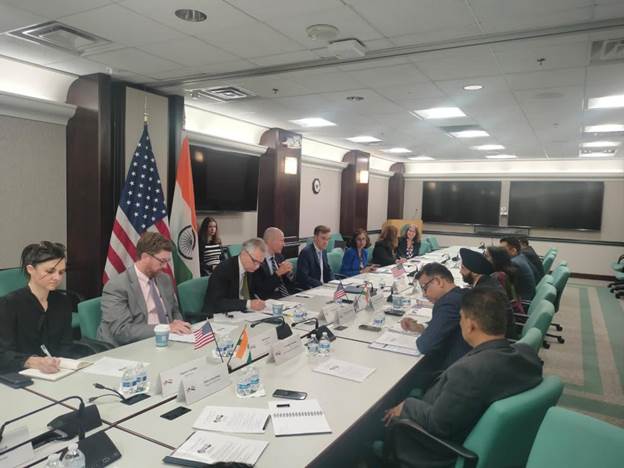
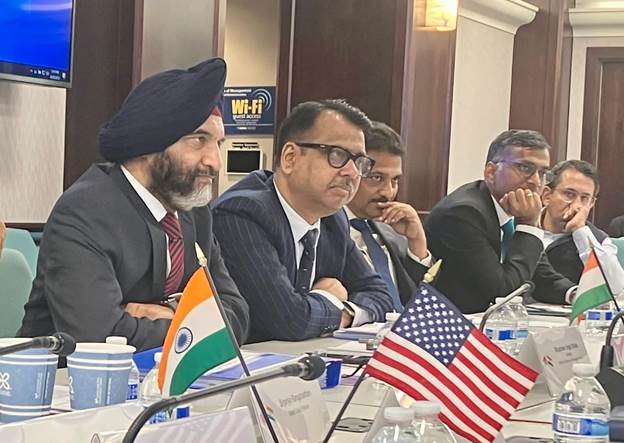
 The 5th meeting of India-Vietnam Joint Trade Sub-Commission (JTSC) was held in New Delhi today. The meeting was co-chaired by the Additional Secretary, Department of Commerce, Ministry of Commerce & Industry, Shri Rajesh Agrawal from the Indian side and Deputy Minister, Ministry of Industry and Trade, Ms. Phan Thi Thang from the Vietnam side. This meeting was held after a gap of more than four years since 4th JTSC meeting held in January 2019, on account of COVID-19 pandemic and other factors.


Vietnam is the 23rd largest global trade partner of India and the 5th largest among ASEAN countries with bilateral trade of USD 14.70 Bn during 2022-23. Vietnam accounts for 11.2% of India’s total trade with ASEAN. Vietnam is an important destination for India’s iron & steel and agricultural and animal products mainly meat products, animal fodder, cereals and marine products.


Both sides reviewed the progress on bilateral trade and economic cooperation and discussed ways to unlock the vast untapped potential in bilateral trade to enable the business communities from the two sides to benefit from the partnership of two of the fastest growing economies.

Both sides identified potential sectors such as agriculture, fisheries, textiles, footwear, pharmaceuticals, chemicals, fertilizers, machinery and equipment, consumer products, energy and automobile industry, for expanding trade cooperation and agreed to work together to resolve market access issues and technical barriers faced by the exporters through regular and sustained bilateral discussions.

The Indian side raised the issues of pending registration of Indian fishery and meat establishments for export, restricted market access in public procurement of drugs for Indian pharmaceutical companies and high anti-dumping duties imposed on Indian polyster filament yarn products and sorbitol.

The Indian side highlighted the potential in service sector cooperation and suggested cooperation in IT, financial services, education sector, tourism, healthcare, tele-medicine, medical tourism and start-up ecosystem. The Indian side also suggested Mutual Recognition Agreements (MRAs) on professional services, internationalization of RuPay card, QR based payment system, and domestic currency trade settlement.

Both sides discussed logistics challenges affecting bilateral trade and agreed to continue efforts for exploring direct shipping services, collaboration in freight movement and improving air connectivity.

 ***

Promotion of Organic Farming

 Government has been promoting organic farming on priority in the country since 2015-16 through the schemes of Paramparagat Krishi Vikas Yojana (PKVY) and Mission Organic Value Chain Development for North Eastern Region (MOVCDNER). Both the schemes stress on end-to-end support to farmers engaged in organic farming i.e. from production to processing, certification and marketing and post-harvest management. Training and Capacity Building are integral part of the scheme. Incentives to farmers for producing and using organic fertilizers/manure are inbuilt in these schemes as on-farm and off-farm organic inputs.  Direct Benefit Transfer (DBT) is provided to the farmers for using organic inputs including organic fertilizers. PKVY is being implemented in all the States other-than North Eastern (NE) States across the country whereas MOVCDNER scheme is being implemented exclusively in the NE States.

Under PKVY, an assistance of Rs.50,000 per ha for a period of three years is provided to States including States of Tamil Nadu & Rajasthan for promotion of organic farming to cover different components like Training & Capacity Building, Data Management, PGS Certification, Value Addition, Marketing and Publicity. Out of this, assistance of Rs. 31,000 per ha for a period of three years is provided to farmers through DBT for on- farm /off –farm organic inputs. Whereas under MOVCDNER, an assistance of Rs. 46,575/ha for 3 years is provided for creation of FPO, support to farmers for organic inputs, quality seeds/ planting material and training, hand holding and certification.  Out of this, assistance @ Rs. 32500/ ha for 3 years is provided to farmers for off -farm /on –farm organic inputs under the scheme including Rs. 15,000 as DBT to the farmers and Rs. 17,500 for the planting material to be given to the farmers by State Lead Agency  (SLA) in kind.

In view of the increasing demand of organic farming products of India in the global market, Government is facilitating value addition, certification and marketing. As per requirement of International market, Government has initiated third party certification under National Programme for Organic Production (NPOP) in 2001.

Under PKVY assistance @ Rs 8800/ha for 3 years is provided to facilitate value addition, marketing and publicity to all the states/UTs including Tamil Nadu. Assistance is provided for certification and training, handholding & capacity building respectively @ Rs 2700/-ha for 3 years and Rs 7500/- ha for 3 years under PKVY for farmers of all the States including Rajasthan. Where  as under MOVCDNER scheme assistance is provided @ Rs 10,000/-ha for 3 years for training, capacity building & certification.

The scheme-wise and state-wise details of funds allocated, released and utilized under organic farming (under PKVY & MOVCDNER) schemes during the year 2022-23 are given at Annexure –I.

A long-term experiment, at selected sites, for comparative evaluation of organic and conventional management conducted by Indian Council of Agriculture Research (ICAR) indicated that yield was found to be higher during kharif and rabi /summer crops for coarse/ basmati rice based cropping systems, soybean-based systems compared to inorganic approaches indicating better suitability of these systems under long-term organic management approaches. Soil organic carbon was found to be significantly higher under long-term organic approach for coarse rice, basmati rice and soybean-based systems.

To disseminate information on organic and natural farming as well as on on- farm production and use of various kinds of organic fertilizers, National Center for Organic and Natural Farming (NCONF) and its Regional Center for Organic and Natural Farming (RCONF) located at Ghaziabad, Nagpur, Bangalore, Imphal and Bhubaneswar are organizing various trainings namely, One Day Farmers’ Training, Two Days Training for Extension Officers/Staff, Two Days Training on PGS, 30 Days Certificate course, One day Jaivik evam Prakratik Kisan Sammelan for 500 participants, One Day Stakeholder consultations/ conferences on Natural Farming for 100 participitants, Orientation Program on Natural Farming and awareness programmes across the country. NCONF and RCONF also organize online awareness campaign and training programmes on organic and natural farming and production and use of organic and bio-fertilizers.

The ICAR also imparts trainings, organizes front-line demonstrations, awareness programs etc. to educate farmers on organic farming and organic fertilizers.

Scheme-wise (PKVY & MOVCDNER) and State-wise details of funds allocation, released and expenditure under organic farming during the year 2022-23.

Rs in lakh

S. No.

Name of the State

2022-23

Allocation

Release

Expenditure*

PKVY

1

Andhra Pradesh

826.35

0.00

0.00

2

Bihar

2830.65

1547.68

789.75

3

Chhattisgarh

3504.93

0.00

571.03

4

Gujarat

20.50

0.00

0.00

5

Goa

1025.10

0.00

283.05

6

Haryana

10.25

0.00

0.00

7

Jharkhand

1397.27

0.00

0.00

8

Karnataka

1045.61

512.55

256.35

9

Kerala

1971.12

1712.07

647.52

10

Madhya Pradesh

5925.51

0.00

1375.93

11

Maharashtra

745.90

449.67

776.74

12

Odisha

741.44

370.72

311.97

13

Punjab

222.46

0.00

0.00

14

Rajasthan

2452.64

1783.26

3363.94

15

Tamil Nadu

704.87

0.00

170.56

16

Telangana

30.75

0.00

0.00

17

Uttar Pradesh

12972.55

5089.32

2111.16

18

West Bengal

555.39

555.39

240.41

19

NE (Aspirational & Committed liabilities)

0.00

0.00

7.58

20

Himachal Pradesh

1121.36

0.00

1124.32

21

Uttarakhand

6030.68

5969.00

7652.94

22

All Union Territories (UTs)

893.02

193.55

0.00


Total

45028.35

18183.20

19683.25

MOVCDNER

S. No.

Name of the State

2022-23

Allocation

Release

Expenditure*

1

Assam

2681.80

2059.15

2059.15

2

Manipur

2915.37

2915.36

2815.36

3

Meghalaya

2011.88

621.57

524.33

4

Nagaland

1961.01

1390.60

1289.60

5

Mizoram

1604.25

1140.90

876.63

6

Arunachal Pradesh

1860.77

1642.17

1526.26

7

Sikkim

4005.10

1538.83

1398.25

8

Tripura

2759.82

3000.26

2819.01


Total

19800.00

14308.84

13308.59

*Expenditure column also includes expenditure incurred from the releases made in the previous years


National Food Security Mission

 In order to increase the production and productivity of rice, wheat, pulses, coarse cereals (maize and barley), nutri-cereals (Shree Anna) and to fulfil the objectives of the National Food Security Mission (NFSM), assistance is being provided to the farmers through States/Union Territories for interventions like cluster demonstrations on improved package of practices, demonstrations on cropping system, seed production and distribution of high yielding varieties/hybrids, improved farm machineries/resource conservation machineries/tools, efficient water application tools, plant protection measures, nutrient management/soil ameliorants, processing &post-harvest equipment, cropping system based trainings etc. Initiatives like distribution of seed minikits of newer varieties of pulses, production of quality seed, creation of seed hubs at Indian Council of Agricultural Research (ICAR) Institutes/ State Agricultural Universities (SAUs)/ Krishi Vigyan Kendras (KVKs), technological demonstrations by KVKs have also been included under NFSM.

To meet the objectives of NFSM-Oilseeds,incentives/ subsidies are being provided for purchase of breeder seeds, production of foundation seeds & certified seeds, distribution of certified seeds, distribution of seed mini kits, demonstrations (block demonstrations /front line demonstrations /cluster front line demonstrations), farmers field school, training, supply of water carrying devices, plant protection equipments, soil ameliorates, micro-nutrients, weedicides, insecticides, bio-fertilizer/bio agents, etc. 

Government of India has launched a separate Mission i.e. National Mission on Edible Oils – Oil Palm (NMEO-OP) in August 2021 to promote oil palm cultivation with the aim to augment the availability of edible oil in the country by harnessing area expansion, increasing crude palm oil production and productivity with the aim to reduce the import burden.

Per Drop More Crop (PDMC) is being implemented from 2015-16 in the country to focus on enhancing water use efficiency at farm level through Micro Irrigation namely Drip and Sprinkler Irrigation systems. Indian Council of Agricultural Research (ICAR) has developed cost effective, location specific scientific technologies viz. rainwater harvesting and recycling, precision technologies for irrigation and farming practices, adoption of modern agronomic practices, diversifying cropping pattern from water guzzling crops like low land rice and sugarcane to pulses, oilseeds, maize and agro-forestry etc. Further, ICAR imparts training and organizes field demonstrations to educate farmers in these regard.

Under the Command Area Development & Water Management (CADWM) programme of Pradhan Mantri Krishi Sinchayee Yojana (PMKSY) implemented by the Department of Water Resources, River Development & Ganga Rejuvenation (DoWR, RD & GR), lined field channels are constructed and wherever possible underground pipeline network is laid for providing last-mile connectivity to the irrigation system to enhance irrigation efficiency. The DoWR, RD & GR has set up Bureau of Water Use Efficiency (BWUE) on 20.10.2022 for promotion, regulation and control of efficient use of water in irrigation, industrial and domestic sector. The Bureau facilitates promotion of improving water use efficiency across various sectors namely irrigation, drinking water supply, power generation, industries etc. in the country. National Water Mission (NWM) launched the ‘SahiFasal’ campaign in 2019 to nudge farmers in water stressed areas to grow crops which are not water intensive but use water efficiently and are economically remunerative, healthy and nutritious and suited to the agro-climatic-hydro characteristics.

The net irrigated area in the country has increased from 692.70 lakh hectare in the year 2016-17 hectare to 777.29 lakh hectare in the year 2020-21.

This information was given by the Union Minister of Agriculture and Farmers’ Welfare, Shri Narendra Singh Tomar in a written reply in Lok Sabha today.

******

Public Private Partnership Mode

 Government has constituted a Screening Committee on leveraging agriculture innovations for farmer to facilitate combined implementation on pilot scale of selected technologies/interventions by Private companies/startups to develop and refine products based on field-level observations, data and inferences for a fixed period.

Further, government has built Digital Public Infrastructure for Agriculture as an open source, open standard at interoperable public goods as per budget announcements for the 2023-24. In this regards, Architecture of three core registries i.e. Farmer registry, Geo referencing of village map registry, crop sown registry has been finalized. These registries can be used to develop various farmers centric solutions by the state governments as well as private sector entities.

Expenditure Finance Committee has approved a Central Sector Scheme for blended Capital Support to finance startups for agriculture and rural enterprise relevant for Farm Produce Value Chain.

Looking into the unique advantages of Drone technologies in agriculture, the Department of Agriculture & Farmers Welfare has released the Standard Operating Procedures (SOPs) for use of drones in pesticide and nutrient application in public domain in December 2021, which provide concise instructions for effective and safe operations of drones. In order to make this technology affordable to the farmers and other stakeholders of this sector, financial assistance @ 100% for purchase of agricultural drones and its attachments (actual cost of expenditure and its attachments or Rs. 10.00 lakhs, whichever is lower) together with the contingent expenditure is extended under Sub-Mission on Agricultural Mechanization (SMAM) to the Farm Machinery Training & Testing Institutes of Indian Council of Agricultural Research, Krishi Vigyan Kendra (KVK) and State Agricultural Universities (SAUs) and @ 75% to FPO’s for its demonstration on the farmer’s fields. In order to provide agricultural services through drone application, financial assistance @ 40% of the basic cost of drone and its attachments or Rs. 4 lakhs, whichever is less also provided for drone purchase by existing and new Custom Hiring Centers (CHCs) and also a general category farmers and @ 50% of the basic cost of drone and its attachments or Rs. 5 lakhs for SC/ST/women/small and marginal farmers and the agriculture graduates.

A component called “Innovation and Agri-Entrepreneurship Development” has been launched under Rashtriya Krishi Vikas Yojana (RKVY-RAFTAAR) in 2018-19 with the objective of promoting innovation and agri-entrepreneurship by providing financial support and nurturing the incubation ecosystem. Under this programme, start-ups are encouraged to use innovative technologies to resolve challenges faced in agriculture and allied sectors. A total of 1176 start-ups have been selected in various areas of agriculture and allied sectors under this programme for providing financial support through Knowledge Partners and Agri Business Incubators appointed by the Department for implementation of this programme.

The Indian Council of Agriculture Research (ICAR) has been supporting Agri-based startups under the project called National Agriculture Innovation Fund (NAIF) initiated in year 2016-2017. It has two components viz. (I) Innovation Fund; (II) Incubation Fund and National Coordinating Unit (NCU):

Component I: 10 Zonal Technology Management Units and 89 Institute
Technology Management Units (ITMUs) established in 99 ICAR institutes provide a single-window mechanism to manage innovations, showcase intellectual assets, and pursue matters related to intellectual property (IP) management and transfer/commercialization of technologies in these institutes.

Component II: Agri-business Incubator Centres (ABICs) are set up to speed up the delivery of the new technologies to stake holders. The ABICs are the nodal point to provide the desired link for Agriculture Research &Development (R&D) Institutions for incubation/ commercialization of the validated technologies. So far, 50 Agri-Business Incubation Centers have been established and are operational in the ICAR network under the NAIF scheme.

This information was given by the Union Minister of Agriculture and Farmers’ Welfare, Shri Narendra Singh Tomar in a written reply in Lok Sabha today.

******

Flesh & Blood So Cheap


Flesh & Blood So Cheap cover

I liked this book. People who are interested in national disasters and US history as well as immigration will most probably be interested in reading this book.

Readers can gain knowledge of what it was like to work in New York City in the early 1900s. One of the things that was especially interesting was that there were no safety laws at work. Also, there was a big contrast between the rich and the poor. Some people may not like this book because it is very depressing, but it is an important event in history to remember.

This book was very well written. It has black and white photos along with descriptions of the photos. These photos give us a better idea of what people’s lives were like. This book is suitable for 9-20 year olds.

I give this book 5 stars.

Story of the Manufacturer Agilis Jet Tenders

 Qualitative jet tender should not only perform its main function – transfer guests and owners from shore to yachts, but also be customized in accordance with all requirements and taste preferences of the owner. We introduce to you Agilis Jettenders GmbH – a manufacturer well knowledgeable in personalization of jet boats.

“A jet tender should meet all your needs”, Maxym Starchenko is convinced. He is the owner and founder of Agilis, thus he knows exactly what he is talking about.

Agilis Jettenders GmbH is headquartered in Jülich, Germany and the company supplies luxury jet tenders all over the world now, but everything started as a family business. Mr. Starchenko was passionate about boats since his childhood; hence he created a business out of his passion and with the family support, he developed his company into a world leader among jet tender manufacturers.

“We try to meet diverse needs of our customers and comply with world-class quality standards, using only materials from leading global suppliers and cutting-edge technologies” – Maxym Starchenko.

In 2017 first model Agilis 355C was presented at the boat and watersports fair Boot Düsseldorf. The jet tender quickly found its admirers and buyers thanks to innovative technologies, luxury and high-quality materials, little accessories for greater convenience and a piece of soul invested in it. Afterwards these characteristics became an integral part of all subsequent Agilis jet tenders. There are eight models in the range now. Each model from compact and agile Agilis 280 to the most luxurious and spectacular Agilis 560D can be customized in Configurator. It`s a special Agilis application which helps to choose the different colors and materials of teak, deck, hull and other parts of boat, pick the diverse type of lights and add useful devices and accessories.

“Custom, luxury, jet. These three words fully describe Agilis tenders and our product strategy” – Maxym Starchenko emphasizes.

The safety of the customers and environment is in the first place for Agilis, that`s why it cooperates only with time-tested suppliers of spare parts and chooses only the best components for jet tenders. Agilis is responsible for product quality, thus if you choose Agilis jet tender you can be sure in everything from trouble proof engine operation to long service life of the tube’s material.

In summary, only in a few years from family business Agilis Jettenders becomes the world known jet tender`s manufacturer which is inextricably associated with customization, luxury and quality yacht tenders.

Different Types of Referencing Styles


In the academic and scholarly world, proper referencing is essential for acknowledging the sources of information and ideas used in research. Referencing styles serve as standardized systems that guide writers in citing their sources accurately and consistently. These referencing styles play a crucial role in ensuring academic integrity, allowing readers to trace the origins of the information and verify the credibility of the work. In this essay, we will explore some of the most commonly used referencing styles, their unique characteristics, and their applications in various academic disciplines.

Modern Language Association (MLA) Style:

The Modern Language Association (MLA) style is predominantly used in the fields of humanities, arts, and literature. It emphasizes clear and concise citations in parenthetical (in-text) format and a comprehensive Works Cited page at the end of the paper. The MLA style requires the author’s name and page number for in-text citations, making it easy to locate the exact reference in the source list.

American Psychological Association (APA) Style:

The American Psychological Association (APA) style is widely used in the social sciences, including psychology, sociology, education, and economics. APA formatting provides in-text citations with the author’s name and publication year, making it easier to identify the source. The APA style also requires a detailed reference list at the end of the document, listing all the sources cited in the paper.

Chicago Manual of Style (CMS):

The Chicago Manual of Style (CMS) is favored in history, humanities, and some social science disciplines. CMS offers two main citation systems: the notes-bibliography system and the author-date system. The notes-bibliography system uses footnotes or endnotes for in-text citations and a corresponding bibliography, while the author-date system utilizes parenthetical in-text citations and a reference list similar to APA style.

Harvard Referencing Style:

The Harvard referencing style is commonly used in various academic fields and is popular in the sciences and social sciences. In-text citations in Harvard style include the author’s name and the publication year. A separate reference list at the end of the document provides complete details about each source cited.

Vancouver Style:

The Vancouver style is primarily used in medicine and biomedical sciences. It employs a numeric system for in-text citations, with each source assigned a unique number. The corresponding reference list includes sources in the order they appear in the text, along with their assigned numbers.

IEEE (Institute of Electrical and Electronics Engineers) Style:

The IEEE style is specifically designed for the fields of engineering, computer science, and other technical disciplines. In-text citations include numeric references within square brackets, corresponding to a numbered reference list at the end of the document.

Harvard Business Review (HBR) Style:

The Harvard Business Review style is utilized in business-related academic writing. It follows the author-date format for in-text citations and includes a reference list at the end of the paper.

Conclusion:

In academic writing, adhering to appropriate referencing styles is critical for maintaining credibility, avoiding plagiarism, and facilitating further research. Different disciplines often prefer specific referencing styles, as each style has its own unique requirements and conventions. Understanding and correctly implementing the chosen referencing style are crucial skills for scholars, researchers, and students alike, contributing to the overall quality and integrity of academic work.

What is Plagiarism and How to Avoid it

Plagiarism is the act of using someone else’s work, ideas, or intellectual property without giving proper credit or permission, presenting it as your own original creation. This includes copying text, images, music, videos, code, or any other form of content, whether from published sources, online material, or another person’s work. Plagiarism is considered unethical and is a violation of academic, professional, and creative integrity.
To avoid plagiarism, follow these guidelines:
Understand what needs citation: Any time you use someone else’s ideas, words, or creations, you must provide proper attribution. This includes direct quotes, paraphrased information, and even ideas that are not common knowledge.
Cite your sources: When using external information, cite the original source using the appropriate citation style (e.g., APA, MLA, Chicago). Include in-text citations for direct quotes and attributions for paraphrased content.
Use quotation marks: When directly quoting someone else’s work, enclose the text in quotation marks or use block quotes for longer passages to distinguish it from your writing.
Paraphrase properly: If you need to explain someone else’s ideas in your own words, ensure that you do so without copying the original structure or wording. Paraphrase in a way that reflects your understanding of the material.
Attribute ideas: When presenting concepts or ideas that are not common knowledge, attribute them to their original source. Even if you reword the information, credit the initial author or researcher.
Be cautious with online sources: With the vast amount of information available on the internet, it’s essential to verify the credibility of sources and properly attribute any information you use.
Use plagiarism detection tools: Utilize plagiarism detection software or online tools to check your work before submission. These tools can help identify unintentional instances of plagiarism and give you an opportunity to correct them.
Create your own content: Whenever possible, rely on your knowledge, analysis, and original ideas. Providing unique insights will showcase your understanding and creativity.
Seek permission for copyrighted material: If you want to use copyrighted material beyond what is allowed under fair use, seek permission from the original creator or copyright holder.
Manage your time effectively: Procrastination can lead to hasty writing and an increased risk of unintentional plagiarism. Plan ahead to have enough time to research, write, and properly attribute sources.
By following these practices and respecting the intellectual property of others, you can maintain academic and professional integrity and avoid issues related to plagiarism. Always remember that giving credit to the original creators not only helps you avoid plagiarism but also acknowledges their contributions and fosters a respectful and collaborative academic or creative community.

Paving the Path to Success: Securing an Internship at Track2Training

In today’s competitive world, internships have become invaluable stepping stones for students and aspiring professionals to gain real-world experience and enhance their skillsets. Track2Training, a renowned and esteemed organization, offers exciting opportunities for internships in various fields. This essay will outline the essential steps and strategies to successfully secure an internship at Track2Training.

Step 1: Understand Track2Training’s Mission and Values
Before embarking on your journey to secure an internship at Track2Training, take the time to understand the organization’s mission, values, and areas of expertise. Familiarize yourself with their website, blog posts, and social media channels to grasp their work culture, achievements, and ongoing projects. This knowledge will not only demonstrate your genuine interest but also help you align your goals with the company’s vision.
Step 2: Tailor Your Application Materials
Crafting a tailored and compelling application is crucial to stand out among other applicants. Carefully review the internship requirements and qualifications, and highlight your relevant skills, experiences, and achievements. Customize your resume, cover letter, and any additional documents to showcase your passion for the field and demonstrate how your unique attributes align with Track2Training’s values.
Step 3: Network and Connect
Networking plays a pivotal role in the internship application process. Leverage your existing connections, join relevant online communities, and attend career fairs or events where you might meet Track2Training representatives or employees. Engage in meaningful conversations, express your interest in the organization, and seek advice from individuals who have previously interned at Track2Training or worked in a similar capacity.
Step 4: Demonstrate Your Skills and Expertise
In addition to your application materials, consider showcasing your skills and expertise through a portfolio or personal website. Depending on the field you are interested in, you can share relevant projects, articles, or creative works that reflect your capabilities. A well-curated portfolio can leave a lasting impression on recruiters and demonstrate your dedication to your craft.
Step 5: Prepare for the Interview
If your application stands out, you may be invited for an interview. Thoroughly research Track2Training’s current projects, recent achievements, and the internship role you applied for. Prepare thoughtful questions to ask during the interview, showcasing your genuine interest and enthusiasm. Practice common interview questions and rehearse your responses to present yourself confidently and professionally.
Step 6: Showcase Your Passion and Enthusiasm
During the interview, emphasize your passion for the field and your eagerness to contribute to Track2Training’s mission. Demonstrate your ability to adapt, learn, and collaborate with others in a team-oriented environment. Highlight any previous experiences that align with the internship’s responsibilities, and share your long-term career goals to showcase your commitment to personal and professional growth.
Conclusion:
Securing an internship at Track2Training is an exciting opportunity to grow, learn, and contribute to a reputable organization in your field of interest. By understanding Track2Training’s mission, tailoring your application materials, networking, showcasing your skills, and preparing diligently for the interview, you can increase your chances of standing out among other applicants and secure the coveted internship position. Remember that persistence, dedication, and an authentic passion for your chosen field will undoubtedly be noticed and appreciated by the selection committee. So, take the leap, and let your journey to success with Track2Training begin!
Send your resume to contact@track2training.com