PARTNERSHIP ACT

INTRODUCTION

The Indian Partnership Act, 1932 came into effect on the 1st day of October 1932 and was passed in 1931. This Act replaces the previous Indian Contract Act, Chapter XI, 1872.

It’s not comprehensive legislation. It is aimed at defining and amending the law of partnership. A partnership arises from a contract and thus the partnership agreement is not only governed by the provisions of The Indian Partnership Act, 1932 in that context, but also by general contract law in cases where no specific provision is made under The Indian Partnership Act, 1932. The Indian Partnership Act, 1932 expressly provides that unrepealed provisions of the Indian Contract Act, 1872, remain in force except in cases where it is inconsistent with express provisions under this Act. The provisions of the Indian Contract Act also apply for a partnership contract, hence the provisions on offer and acceptance, consideration, free agreement, legality, etc. On the other hand, the minor’s position is governed by the provisions of The Indian Partnership Act, 1932, a special provision is contained in Section 30 of the Indian Partnership Act, 1932.

SCOPE OF THE INDIAN PARTNERSHIP ACT

 the scope of a partnership is primarily a matter of partners’ intentions. The application of the powers it chooses to exercise at any time is not restricted except prohibition on illegal, immoral or fraudulent behavior that applies equally to individuals.

  1. If consent is given by the constituent company’s partners, a partner may itself be a member of another company.
  2. If the contract appears to be authorized or ratified by all partners, there usually is no further question as to its validity.

The cases where the partnership contract validity issue arises is where one partner made the contract without specific authority from his co-partners. Their implicit scope of partnerships may be divided into non-trading and commercial classes. Partners of either type can exercise certain powers in partnership. A partner can thus retain a lawyer to safeguard the interests of the company.

ESSENTIAL ELEMENTS OF PARTNERSHIP ACT

he essential elements of a partnership are the features that must be present to validate a partnership:

  • Association of two or more persons

To form a partnership, there must be at least two people. All partners must be contractually competent. Therefore, the company is said to be dissolved if the number of partners in a company is reduced to one.

There are no limitations on the maximum number of companies in The Indian Partnership Act, 1932. Nevertheless, the Indian Companies Act 2013 establishes a limit on the number of  partners in a company as follows:

  • For banking business, partners must be less than equal to 10.
  • For any other enterprise, partners must be less than equal to 20.
  • The partnership becomes illegal if the number of partners exceeds the limit.
  • Agreement among the Partners

Section 5 of The Indian Partnership Act, 1932 states that “The partnership does not arise from the status of the law or the operation of the law but is the result of the agreement”.

The partnership is established by an agreement between two or several persons, i.e. a partnership agreement. An agreement may be either express (oral or written) or implied. Therefore, a partnership does not exist by status but by agreement. Rights and Duties of partners are defined as per agreement.

  • Existence of Business Activity

The business has to be ongoing and legally binding. The partnership’s main motto is to operate and make profits. Partnerships are therefore not considered for people who work together for social or charitable work.

  • Sharing of Profits

The main goal of a company is to earn a profit. These profits are shared in a pre-decided ratio among the partners.

If a person is not entitled to share income, he cannot be called a partner. But a partner is not liable according to an agreement to share the losses.

  • Mutual Agency

Relations with a mutual agency means that all or any partner must conduct a company’s business. A partner is an agent of the other partner and can thus bind another partner through his act. A partner is also principally responsible for the actions of the other partners of the company

  Types of partnership

  • Partnership at Will

If there is no clause to establish a partnership at the expiry of such a partnership, it is referred to as a partnership at will. In accordance with Section 7 of The Indian Partnership Act, 1932, two conditions have to be met for a partnership to be a partnership at will and they are:

  • There is no agreement on a fixed period for the existence of a partnership.
  • No provision is made for establishing a partnership.

If a partnership has been established and continues to operate beyond the fixed period, the partnership will become a partnership at will after the end of that term.

  • Particular Partnership

A partnership can be formed for ongoing business or for a particular purpose. If the partnership is only formed to carry out one company or complete one undertaking, it is known as a particular partnership.

The partnership will be dissolved after the completion of the said venture or activity. The partners may, however, come to an agreement to continue the said partnership. But in the absence of this, when the task is complete, the partnership ends.

  • Partnership for a Fixed Term

Now, during the establishment of a partnership, the partners may agree on the duration of this arrangement. This would mean that the partnership was established for a fixed period of time.

Therefore, such a partnership will not be called a partnership at will, it will be a partnership for a fixed term. The partnership ends after the expiration of such a duration.

However, there may be cases where the partners continue their business even after the expiry of the duration. They continue to share profits and there is a component of a mutual agency. Then in such a case, the partnership will be at will.

  • General Partnership

When the purpose of forming the partnership is to carry out the business in general, it is said to be a general partnership.

Unlike a particular partnership, in a general partnership, the scope of the business to be carried out is not defined, so all the partners are accountable for all the actions of the partnership.

NATURE OF PARTNERSHIP

When two or more people join hands to set up an enterprise and share its gains and losses, they are said to be in partnership. Section 4 of the Indian Partnership Act 1932 states partnership as the ‘association between people who have consented to share the profits of an enterprise carried on by all or any of them acting for all’.

People who have entered into a partnership with one another are independently termed as ‘partners’ and comprehensively termed as ‘firm’. The name under which the trade is carried is called the ‘name of the firm’. A partnership enterprise has no distinct legal entity, apart from the partners comprising it. Hence, the vital features of the partnership are:

  • Two or More Persons: In order to manifest a partnership, there should be at least two persons possessing a common goal. To put it in other words, the minimal number of partners in an enterprise can be 2. However, there is a constraint on their maximum number of people. By the uprightness of Section 464 of the Companies Act 2013, the Central Government is authorised to stipulate a maximum number of partners in an enterprise; however, the number of partners cannot exceed 100. The Central government has stipulated the maximum number of partners in an enterprise to be 50, under Rule 10 of the Companies (Miscellaneous) Rules, 2014. Hence, a partnership enterprise cannot have more than 50 people (partners)
  • Agreement: It is the outcome of an accord between 2 or more people to regulate business and share its gains and losses. The agreement (accord) becomes the basis of the association between the partners. Such an agreement is in the written form. An oral agreement is evenhandedly legitimate. In order to avoid controversies, it is always good if  the partners have a copy of the written agreement.
  • Sharing of Profit: Another significant component of the partnership is, the accord between partners has to share gains and losses of a trading concern. However, the definition held in the Partnership Act elucidates – partnership as an association between people who have consented to share the gains of a business, the sharing of loss is implicit. Hence, sharing of gains and losses is vital.


Case study on WWF1 vs Union of india

                                              INTRODUCTION

The wildlife Institute of India (WWF) an autonomous institution under the ministry of Environment and forests, Govt of India geared to provide data which would help for the better management of the long term conservation of lions at the Gir and cheetah and reintroduce the same to the following places. 1. Darrah- Jawaharsagar wildlife sanctuary ( Rajasthan) 2. Sitamata Wildlife Sanctuary (Rajasthan) 3. Kuno Wildlife Sanctuary (MP)

                                    FACTS OF THE CASE

The Wildlife Institute of India (for short ‘WII’), an autonomous institution under the Ministry of Environment and Forests (for short ‘MoEF’), Government of India, through its wildlife Biologists had done considerable research at the Gir Forest in the State of Gujarat since 1986. All those studies were geared to provide data which would help for the better management of the Gir forest and enhance the prospects for the long term conservation of lions at Gir, a single habitat of Asiatic lion in the world. The data collected by the Wildlife Biologists highlighted the necessity of a second natural habitat for its long term conservation. Few of the scientists had identified the Asiatic lions as a prime candidate for a re-introduction project to ensure its long term survival. In October 1993, a Population and Habitat Analysis Workshop was held at Baroda, Gujarat. Various issues came for consideration in that meeting and the necessity of a second home for Asiatic lions was one of the issues deliberated upon in that meeting. Three alternative sites for re- introduction of Asiatic lions were suggested for an intensive survey, the details of which are given below:

The Research Advisory Committee of WII recognized the need for a prior survey to assess the potential of those sites. Accordingly, a field survey was conducted. Surveys of the three sites were made during winter as well as summer, to assess water availability during the summer and also to ascertain the changes in human impact on the habitat during the seasons. The surveyors concentrated on ascertaining the extent of forest area in and adjoining the chosen protected areas with the aim of establishing the contiguity of the forested habitat. Attempts were also made to establish the relative abundance of wild ungulate prey in the three sites based on direct sightings as well as on indirect evidence. An assessment of the impact on the people and their livestock on habitat quality in all three sites was also made. Of the three sites surveyed, Kuno Wildlife Sanctuary (for short ‘Kuno’) was found to be the most suitable site for re- introduction in establishing a free ranging population of Asiatic lions. A draft report to that effect was prepared by eminent Scientists like Ravi Chellam, Justus Joshwa, Christy A. Williams and A. J. T. Johnsingh on behalf of WII. The report revealed that the Kuno was a historical distribution range of Asiatic lions. Report also highlighted the necessity of a long term commitment of resources, personnel, the necessity of a comprehensive rehabilitation package, adequate staff and facilities. Committee did not consider the presence of tigers in Kuno to be a major limiting factor, especially since the tigers occur in such low numbers and density. Since lions live in stable social units, report highlighted that it is important to take lions for the translocation also from a single pride. Further, it was also pointed out that genetic consideration would not be a major factor, provided fresh male lions are moved from Gir to Kuno every three to five years and the resident males in Kuno selectively captured for Zoos.

 State of Madhya Pradesh then undertook a massive rehabilitation package for the villagers settled in and near Kuno so as to push forward the scheme of relocation of Asiatic lions in Kuno. It was noticed that about 1545 families of 24 revenue villages were living inside Kuno and they had to be rehabilitated outside the sanctuary. Since suitable and sufficient revenue land was not available in adjoining areas, it was decided to relocate those villages on degraded protected forests. Since proposed site of resettlement fell in various blocks of protected forest, the use as a rehabilitation purpose involved a legal obligation to obtain prior sanction from MoEF under Section 2 of the Forest (Conservation) Act, 1980.

 The Secretary (Forests), Government of Madhya Pradesh, therefore, sent a letter dated 24.7.1996 to MoEF seeking final approval of the Central Government in accordance with the Forest (Conservation) Act, 1980. MoEF, after examining the request of the State of Madhya Pradesh, conveyed its approval under Section 2 of the Forest (Conservation) Act, 1980 for diversion of 3720.9 hectare of forest land for rehabilitation of 18 villages located inside the Kuno, subject to fulfillment of certain conditions. Out of 3720.9 hectare of the 13-forest compartments, 3395.9 hectare forest area of 12 compartments was finally approved by the Government of India for de-notification. Compartment No. P-442 of Umarikaia forest block was left out from the original proposal by Government of India letter dated 1.2.2000 and hence, the released area in first phase had been de-notified after due permission from the Government of India. Forest area of 1263.9 hectare released in the second phase could not be de-notified for want of permission from the Government of India. The Government of India constituted a Monitoring Committee for the effective implementation of the Asiatic Lion Reintroduction Project at Kuno which met on 10.3.2004. The Survey report of WII was discussed in the meeting and it was noticed that Kuno Paipur Sanctuary of M.P. was identified as the project site/and a 20 year project was conceived in three phases as below:

a. Phase I (1995-2000 A.D.) Village relocation and habitat development.

b. Phase II (2000-2005) Fencing at the side, translocation, research and monitoring.

c. Phase III (2005-2015) Eco-development.

               ARGUMENTS OF THE CASE

  • We heard Shri Raj Panjwani, learned senior counsel appearing for the applicant, who submitted that this 20-year project is hanging on fire due to the indifferent attitude of the Gujarat Government. Learned senior counsel submitted that the necessity of re-introduction of Asiatic lion at Kuno has been keenly felt and the scientific world has unanimously advocated for translocation of this endangered species to Kuno for its long term survival and preservation. Learned senior counsel pointed out that NBWL, the expert technical body at more than one occasions has approved and granted technical sanction to go ahead with the project, but could not pick up expected momentum due to the indifferent and defiant attitude of the State of Gujarat.
  • . Ms. Vibha Datta Makhija, learned counsel appearing for the State of Madhya Pradesh, highlighted the steps taken by the State of Madhya Pradesh for pushing the project forward. Learned counsel referred to the various counter affidavits filed by the State of Madhya Pradesh for completing the first phase of the project. Necessary sanction has already been obtained to declare Kuno as Sanctuary under the Wildlife Protection Act. MoEF has already granted its approval under Section 2 of the Forest (Conservation) Act for diversion of 3395.9 hectare of forest land for the rehabilitation of eighteen villages located inside Kuno, subject to fulfillment of certain conditions. The area at Kuno was increased to 1268.861 Sq. Km in April 2002 by creating a separate Kuno Wildlife Division. For the above purpose, a total amount of Rs.1545 lakh had been granted by the Government of India and utilized by the State Government. Learned counsel also pointed out that altogether 24 villages and 1543 families were relocated outside Kuno by the year 2002-2003 and the lands abandoned by them have been developed into grass lands.

 JUDGEMENT

MoEF, in our view, has not conducted any detailed study before passing the order of introducing foreign cheetah to Kuno. Kuno is not a historical habitat for African cheetahs, no materials have been placed before us to establish that fact. A detailed scientific study has to be done before introducing a foreign species to India, which has not been done in the instant case. NBWL, which is Statutory Board established for the purpose under the Wildlife Protection Act was also not consulted.

 We may indicate that our top priority is to protect Asiatic lions, an endangered species and to provide a second home. Various steps have been taken for the last few decades, but nothing transpired so far. Crores of rupees have been spent by the Government of India and the State of Madhya Pradesh for re-introduction of Asiatic lion to Kuno. At this stage, in our view, the decision taken by MoEF for introduction of African cheetahs first to Kuno and then Asiatic lion, is arbitrary an illegal and clear violation of the statutory requirements provided under the Wildlife Protection Act. The order of MoEF to introduce African Cheetahs into Kuno cannot stand in the eye of Law and the same is quashed.

 MoEF’s decision for re-introduction of Asiatic lion from Gir to Kuno is that of utmost importance so as to preserve the Asiatic lion, an endangered species which cannot be delayed. Re-introduction of Asiatic lion, needless to say, should be in accordance with the guidelines issued by IUCN and with the active participation of experts in the field of re- introduction of endangered species. MoEF is therefore directed to take urgent steps for re-introduction of Asiatic lion from Gir forests to Kuno. MoEF has to constitute an Expert Committee consisting of senior officials of MoEF, Chief Wildlife Wardens of the States of Madhya Pradesh and Gujarat. Technical experts should also be the members of the Committee, which will include the Secretary General and Chief Executive Officer of WWF. Dr. Y.S. Jhala, senior scientist with Wildlife Institute of India, Dr. Ravi Chellam, senior scientist, Dr. A.J.T. Johnsingh, since all of them had done lot of research in that area and have national and international exposure. Any other expert can also be co-opted as the members of the Committee. Needless to say, the number of lions to be re-introduced would depend upon the density of prey base and other related factors, which the Committee will assess.

 I.A. is allowed as mentioned above. The order be carried out in its letter and spirit and within a period of 6 months from today. We record our deep appreciation for the assistance rendered by all the senior counsel and learned amicus curiae Shri P.S. Narasimha and also Dr. Ravi Chellam who was present in the Court throughout and made valuable suggestions with regard to the various environmental and scientific issues.

 We are also inclined to highlight the necessity of an exclusive parliamentary legislation for the preservation and protection of endangered species so as to carry out the recovery programmes before many of the species become extinct and to give the following directions:

(a) NWAP (2002-2016) has already identified species like the Great Indian Bustard, Bengal Florican, Dugong, the Manipur Brow Antlered Deer, over and above Asiatic Lion and Wild Buffalo as endangered species and hence we are, therefore, inclined to give a direction to the Government of India and the MoEF to take urgent steps for the preservation of those endangered species as well as to initiate recovery programmes.

(b) The Government of India and the MoEF are directed to identify, as already highlighted by NWAP, all endangered species of flora and fauna, study their needs and survey their environs and habitats to establish the current level of security and the nature of threats. They should also conduct periodic reviews of flora and fauna species status, and correlate the same with the IUCN Red Data List every three years.

(c) Courts and environmentalists should pay more attention for implementing the recovery programmes and the same be carried out with imagination and commitment.

But the court held that the MoEF has not conducted any detailed study before passing the order of introducing foreign Cheetah and Gir lion and no expert advice was taken from NBWL, (A statutory board established for the purpose under the Wildlife Protection Act. It was also held that various steps have been taken for the last few decades but nothing transpired so far. So the decision taken by MoEF for introduction of African cheetahs first to Kuno and hen Asiatic lion is arbitrary and illegal and clear violation of the statutory requirements provided under the wildlife protection act, and the same was quashed.

Impact of online classes on children’s mental health

There’s a good side to online classes and a bad side too. Schools that are able to provide engaging online classes along with co-scholastic activities and regular peer-to-peer interaction have seen better mental health among students. For others, it has become monotonous, which has led to a rise in anxiety and hyperactivity among children. Especially children between the age of 6-15. It has been more of a boon for children which has led to problems such as anxiety for children.

Dr Kannan Gireesh, psychiatrist, psychotherapist and founder, Live Life Education says, “What they are lacking is peer-to-peer learning. Social learning is not happening as they do not have friends to talk to and build new friendships. Building friendships is very important especially in the lower age groups, which gives them security and self-esteem that gives them a sense of belonging.”

“Many children have become bored with online classes. In certain schools, online classes are very monotonous. Hence, what these students are doing is switching off the camera and are doing other activities. It’s like a time pass for them. Not only mental health, but they are also facing some health problems like eye strain, headaches and fatigue from seeing the screen for such a long time. Besides, sports education and extracurricular classes have also stopped. As most of the parents are working and the child is all alone in the house, there is no way the children can interact with anyone,” he adds.

UK-based internationally recognised parenting expert, broadcaster, speaker and author of Parenting Made Easy — How to Raise Happy Children (2012) Sue Atkins explained, “With the sudden halt to in-person learning, many students have missed their friends, yearned to be out of the house, developed erratic sleep habits and drove their (often working) parents crazy. On top of that, many were dealing with the trauma of a sick or dying family member, economic hardship and major changes to the life they once had.

As the pandemic drags on, it’s clear that not all kids are alright. According to a survey by Gallup, nearly 3 in 10 parents said their child is experiencing emotional or mental anxiety because of social distancing and school closures.”

“Schools should think about using the virtual learning environment to create a new relationship between teachers and children, not just one where kids can get help with maths, but where children are talking to teachers about what’s going on & the focus is on their well-being & mental health. 

Parents can support their children by actively listening, creating new routines that create a feeling of predictability in an uncertain world and nurturing self-esteem and self-care by playing, talking and eating with them. Collaboration between schools, families, community leaders and health officials will be even more critical to support children’s needs in and out of school as the world grapples with controlling the virus,” Atkins adds.

“As educational practitioners, we are committed to the wholesome development of the child and as we know, learning is not only about book knowledge, but also the physical, emotional, social and mental wellbeing of the child,” says Prema Muralidhar, principal of Ajman-based Woodlem Park School.

She adds, “As such, to help mitigate the effects of being endlessly homebound, at WPS we integrated more holistic approaches and more activity-based learning during our virtual sessions to help break the monotony and to keep the students engaged. Our students were introduced to breakout rooms that consist of smaller groups of students and provide the opportunity for them to interact briefly or to brainstorm with their peers during classes.

Incorporating regular PE and Karate sessions have helped to break the sedentary lifestyle and to encourage exercise. Our wellness programme is equally conducted for half an hour, twice a week where students practice breathing exercises, talk about anything of interest outside the normal curriculum, and share their thoughts and talents. The STTT (student-teacher talking time) also presents a brief interlude at the beginning of the day when the teacher can have a chat with the students to find out how they are generally doing.

AIR POLLUTION IN INDIA

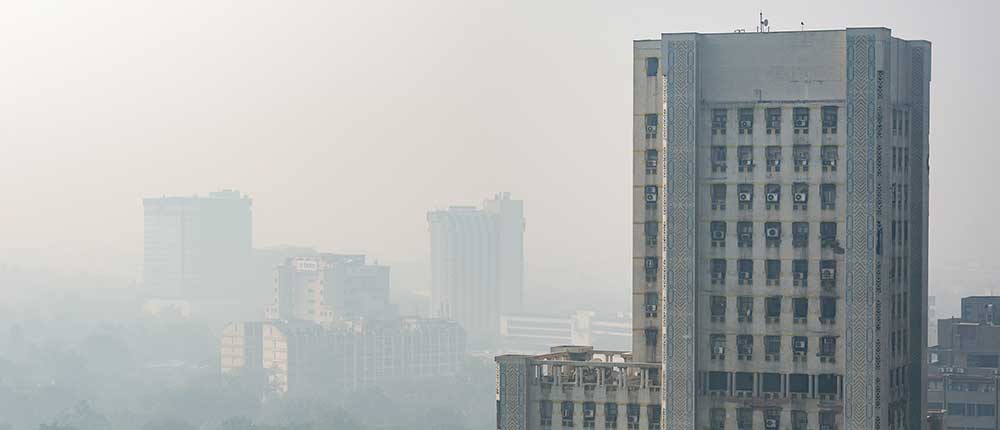
This article foregrounds the challenges India is currently facing in bringing the level of air quality to a certain standard. It also discusses solutions that could be adopted to combat the national crisis.

Air pollution

Rising urbanisation, booming industrialisation, and associated anthropogenic activities are the prime reasons that lead to air pollutant emissions and poor air quality. It is expected that by 2030, around 50% of the global population will be residing in urban areas (Gurjar, Butler, Lawrence, et al. 2008). More than 80% of population in urban areas is exposed to emissions that exceed the standards set by World Health Organization (WHO 2016). Air pollution is one of the key global health and environmental concerns (Nagpure, Gurjar, Kumar, et al. 2016) and has been ranked among the top five global risk factors of mortality by the Health Effects Institute (HEI 2019). According to HEI’s report, particulate matter (PM) pollution was considered the third important cause of death in 2017 and this rate was found to be highest in India. Air pollution was considered to cause over 1.1 million premature deaths in 2017 in India (HEI 2019), of which 56% was due to exposure to outdoor PM2.5 concentration and 44% was attributed to household air pollution. As per WHO (2016), one death out of nine in 2012 was attributed to air pollution, of which around three million deaths were solely due to outdoor air pollution.

The rising trends in population growth and the consequent effects on air quality are evident in the Indian scenario. For example, the megacities of Delhi, Mumbai, and Kolkata combined holds a population exceeding 46 million (Gurjar, Ravindra, and Nagpure 2016). Over the years, there has been a massive-scale expansion in industries, population density, anthropogenic activities, and the increased use of automobiles has degraded the air quality in India (Gurjar and Lelieveld 2005). In the last few decades, the greenhouse gas (GHG) emissions and other emissions resulting from anthropogenic activities have increased drastically (Gurjar and Nagpure 2016).

As per WHO (2016) estimates, 10 out of the 20 most populated cities in the world are in India. Based on the concentrations of PM2.5 emissions, India was ranked the fifth most polluted country by WHO (2019), in which 21 among the top 30 polluted cities were in India. The Indian cities, on average, exceeded the WHO threshold by an alarming 500%.

The consistent population growth has led to an excessive strain on the energy consumption, thereby affecting the environment and the air quality of the megacities (Gurjar and Nagpure 2016). Kumar, Khare, Harrison, et al. (2015) calculated the increase in the total energy demand for both mobile and point sources and inferred that in Delhi, the energy demand had grown by 57.16% from 2001 to 230,222 TJ in 2011. A subsequent rise in energy consumption can be expected in the coming years, with no reliable sources available for monitoring the rate of energy consumption.

The continuous degradation of ambient air quality in the urban centres of India demands effective measures to curb air pollution. Though various policy measures are being introduced by the Government of India (GoI) to reduce the vehicular and industrial emissions, the extent to which these measures are implemented is questionable. The lack of infrastructural facilities, inadequacy of financial resources to implement advanced infrastructural innovations, difficulty in relocation of the industries from the urban centres even after mandatory court decisions, and above all, the behavioural patterns among people in accepting the green solutions are some of the crucial impediments on the road to environmental protection that our country seems to be struggling to overcome today.

AN ANALYSIS ON VIJAY MALLYA SCAM

Introduction

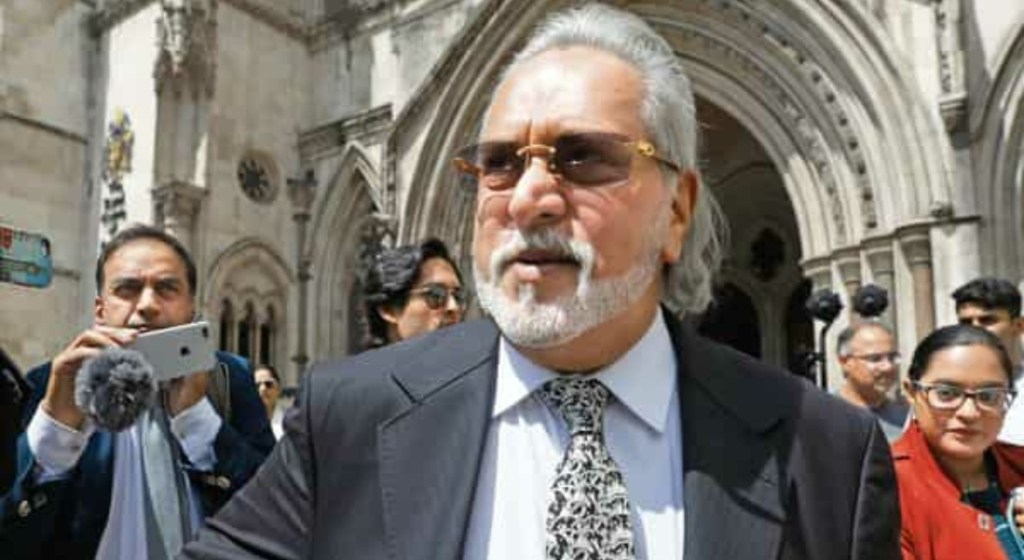
The business tycoon, owner of the kingfisher brand and an IPL team (RCB), a former member of parliament (Rajya sabha) Vijay Mallaya caught everyone in surprise when his outstanding debt of 9,000 crores came to the limelight. He owed them money to 17 Indian banks and was accused of money laundering and fraud. In the fear of arrest, Mallya left the country to find refuge in Britain on 2nd March 2016. India had requested for the extradition of Mallya here and to try cases on him. This article discusses the greatest scam of the country and the law, which was invoked to try him for the offences he has committed. The extradition act, 1962 governs the extradition of a fugitive from a foreign country or vice versa where the process can be done either by treaty or arrangement. This article would collectively discuss more on the case and the act.

Vijay Mallya scam

Mallya who took over the business of his father after his demise at the age of 28 only saw his graph going high and there isn’t any turning back meanwhile. He turned the business into a successful one and expanded his business by investing in the airlines and liquor sector. His Kingfisher airlines have become the number 1 airline company and every passenger opted for the airlines to travel.  The global aviation industry in the year 2012 hit the ground because of various factors like tumultuous financial markets and the slowdown economically. Kingfisher had attracted its passengers with its all-economy, single-class layout aircraft and quality eatables and entertainment had faced its worst phase because of the collapse happening in global aviation. India’s civil aviation already had downfalls and every airline is incurring losses, but the 2005 policy decisions in the sector had made it worse. And in this scene of the collapse, Molly took the high step of buying Air Deccan in 2007 which caused financial backlash to the company and molly.

His lavish lifestyle, a king-like living had made him become the brand icon and kingfisher airlines were the result of it, its first take-off was in 2003 and within 2 years the airlines started commercial operations as well. From 4 flights at the start to 104 flights, the airlines glitter in gold and got satisfying responses from the passengers. So, after his decision to buy air Deccan, the kingfisher without having known of its fate entered its pothole. In 2008, various speed breakers were made to run the airlines in non-profitable routes too, hike in fuel price and the airlines succumbed to it. The airlines which once were celebrated over the world had been debt- trapped and when it took measures to prevent the collapse it was too late. All the international and domestic flights were canceled, shares steeped low and 2012 recorded 7,000 crore loss to the company. Meanwhile, the staff went on strike due to the non-payment of salaries to them since 2008. Critics hold that the merging of kingfisher with air Deccan was the main reason for its complete shutdown. Indian express in 2015 reported that as a result of all the poor decisions and inefficient company, Mallya owed loans from 17 Indian banks worst be SBI where he has 1600 crore debt. That’s when he fled to Britain to escape the arrest.

India and its extradition plea for Mallya

With the mounting debts and arrest in due, fleeing the country came as a checkpoint to the country and its governance. They termed him as an economic fugitive offender and started legal proceedings to extradite him back to try his case in an Indian court. Following his arrest, SC in 2017 held him guilty of contempt of court after a consortium of cases were filed by the banks on his non-repayment of his dues. When the case was going on, he meanwhile transferred the huge sum of 40 million dollars to his children. They held that such act was in contempt of Karnataka HC interim order which restrained the respondent to transfer, alienate, dispose or create third party rights in any of his movable or immovable property and thus his transfer amounts to contempt. So the SC had before deciding the quantum of punishment gave him the opportunity of being heard.

Since he had fled, India had filed a plea for his extradition. London magistrate court had ordered his extradition to India and gave him 14 days to appeal the decision. Before that, in the year 2017, he had secured bail in an extradition warrant issued by Scotland Yard and since then his extradition has been bouncing up and back and no complete decision could be ascertained till now. In 2019, Mumbai HC had declared him a Fugitive Economic Offender (FEO) becoming the first business in Indian history to be FEO. The final hearing in the court after the admissibility of evidence submitted by Indian authorities didn’t bring a fruitful solution to the yearlong trial. The extradition order was appealed by the respondents and finally, in 2019, the UK home secretary ordered his extradition which was praised by the Indian community.  Even after 2 years of this order, his extradition was stalled. The British government had rationalized the stall as there are secret legal proceedings that caused the delay.

Extradition laws in India

The Vijay Mallya case had constant pleadings of extradition in it. In international law, extradition is a formal and diplomatic process where the request has been made by one country to another to return the custody of a fugitive or criminal. In India, we have extradition treaties with 42 countries and extradition arrangements with 9 countries in order to ease the process of extradition. The said process is governed in India under the Indian Extradition Act, 1962. The government can issue a notification to the other country of extending the said act provisions to it under Section 3. Cases of the country that doesn’t have an extradition treaty with India will also be considered and treated under section 3(4). Under this section, the CG can consider any treaty or convention with another country as an extradition treaty. India is a party to various conventions such as International Convention, 1997, the UN convention against corruption, and the UN convention against transnational organized crime in 2011. Once, the investigative agency filed the charge sheet and cognizance was taken by the magistrate and orders/directions for the accused having committed the crime was given, then a request can be made to the ministry of external affairs on extradition. And such a request should also be accompanied by an open-dated warrant of arrests with it having the details of the offence committed.

Critical analysis

India has a treaty with the UK and the countries are duty-bound under article 1 of the extradition treaty to extradite the person who had committed the crime in their native country and took refuge in the host country. An extradition offence can be punishable by both the contracting parties. As in the present case of Mallya, he was tried in London court for the offences he has committed in India and on the request made by Indian authorities to extradite him to India. If such a person is tried in the requested state court or if he proves the prosecution is unjust, oppressive, prejudiced, or discriminatory, the extradition request can be refused. The extradition of Mallya was delayed for years and various contentions had raised questions about the delay. To answer the apex court, CG had rationalized that there are “secret proceedings” against him in the UK. He was tried in UK court and found guilty though. As India already has a treaty binding the extradition with the UK, it is that the claimed economic fugitive would be extradited and be answerable to the loss he caused to 17 banks. 

Conclusion

The case delay only proves the misuse of laws and proceedings by the rich. The banks, which otherwise acted cautiously, had lost most of their reputation. This case would act precedent to the future. So the government has to make sure that such events do not repeat and should extradite Mallya and set a benchmark for any future cases. The extradition is generally adapted only to lessen the burden of finding guilty of the accused that flee to another country to evade the arrest, so in such cases, the delay even in extradition would only bring further degradation to the law and justice. The Mallya case should be re-corrected and he is tried for the offences he committed in the Indian court and the dues.

CASE ANALYSIS- SUJATA SHARMA V. MANU GUPTA

Deciphering the Contours of Sujata Sharma v. Manu Gupta

  1. Introduction:
    Sujata Sharma v. Manu Gupta was the first case in which the Hon’ble Delhi High Court granted the 1
    right to become a Karta to the eldest female Coparcener of the Hindu Undivided Family (hereinafter
    referred to as “HUF”). Such an approach by the Hon’ble Delhi High Court has generated a positive
    impact by removing gender discrimination yet the same approach was not taken by satisfactory
    means. The positive and negative component of the judgement is discussed at the length in the
    present case comment.
  2. Facts & Procedural History:
    In the present case, the controversies were around the HUF named D.R.Gupta & Sons-HUF and Mr
    D R Gupta was a Karta of this HUF. The said HUF has some movable properties and shares and a
    long term lease on a bungalow situated in Delhi. Mr D R Gupta died on October 1, 1971, leaving
    behind 5 sons and their families. Mr Kishan Mohan Gupta, the eldest son was then named Karta. Mr
    Kishan Mohan Gupta’s eldest daughter is the plaintiff. All 5 sons died over time, and the 1st
    defendant, who was the son of one of Mr Kishan Mohan Gupta’s younger brothers, proclaimed
    himself as a Karta of the HUF by virtue of being the eldest living male member of the said HUF. After
    the Hindu Succession (Amendment) Act of 2005 (hereinafter referred to as “2005 Amendment”), the
    dispute arose between the plaintiff and defendant relating to who should be the Karta of the HUF. The
    position of the law relating to whether the female Coparcener can become a Karta of the HUF was not
    clear and the dispute came before the Hon’ble Delhi Court.
  3. Issues:
    This case involved numerous question of facts and mixed questions of facts and law. However, a
    significant issue of law was as follows:
    Whether, by virtue of the introduction of the 2005 Amendment, daughter being the senior-most
    member of HUF can become a Karta?
  4. Arguments:
    4.1 Arguments from the side of Plaintiffs-
    The learned counsel for the plaintiff heavily based her initial argument on the effect of the 2005
    Amendment. By drawing attention to the said effect, she categorically argued that the effect of the
    2005 Amendment is such that now the daughter is legally recognised as a Coparcener and shall be
    having the same right in the coparcenary property that of a son . In addition to this, she also 2
    established that there is an absence of controversy relating to the plaintiff being the eldest member of
    the HUF. Thereafter, with an aim to establish the required qualification to become a Karta of the HUF

Conclusion:
The 2005 Amendment created a lot of confusion and by going through the fundamental change it also
generated the various dispute between the family members. Giving the extended effect to the 2005
Amendment, the Court in the case of Sujata Sharma v. Manu Gupta aimed at establishing gender
equality in the Hindu societal set-up. But by the given reflection of the judgement, it is axiomatically
established that the approach taken by the Court is not in consonance with the legal principles and it
suffered from incompleteness. Hence, the author is of the view that:

UP Population policy

According to UP’s proposed policy, those who do not adhere to the two-child norm will be left out of government welfare schemes (Reuters Photo)
Get notifications on latest India News

NEW DELHI: Uttar Pradesh, the most populous state in the country, has announced that it wants to control population to promote sustainable development with more equitable distribution. The BJP government in the state has floated a proposal that focuses on disincentivising couples from having more than two children and rewards those who have only one child.READ ALSO

Chief minister Yogi Adityanath unveiled the draft Bill of the UP Population Policy

 2021-2030 on the World Population Day. The proposed legislation for population control has become a major political flashpoint in the state which is all set to go to polls next year.

Not just UP, several other states are also working to implement population control measures. However, some experts cite the decreasing total fertility rate to argue that India may not need such drastic measures to control population.

image (30)

What are the main provisions of the UP population control policy?

The UP CM has said the sole aim of the draft policy is to align the state’s reproductive rate to its development goals.

It also aims at bringing down the gross fertility rate among women to 2.1 by 2026 and to 1.9 by 2030.

In the draft of the Uttar Pradesh Population (Control, Stabilization, and Welfare

) Bill-2021 issued by the State Law Commission, ‘Bacche Do He Acche’ has been highlighted.

The proposed policy announces several incentives for parents who follow the two-child policy or have only one child.
Here’s a look at some of them:

image (31)

Similarly, for those who do not adhere to this norm, there will be several disincentives according to the proposed draft bill.

image (32)

Which other states have a two-child policy?

Two BJP-ruled states, Assam and Karnataka are moving towards implementing a two-child policy.

At least 12 states had at some point in time implemented the two-child policy for government employees. The states included Bihar, Himachal Pradesh, Madhya Pradesh, Rajasthan, Haryana, Andhra Pradesh, Odisha, Chhattisgarh, Gujarat, Maharashtra and Uttarakhand.

However, Madhya Pradesh, Chhattisgarh, Haryana, and Himachal Pradesh later revoked the policy.

The opposition in Uttar Pradesh has hit out at the Yogi government over the proposed population policy, terming it as “election propaganda” to divert people’s attention from failures on various fronts ahead of assembly elections next year.

Samajwadi Party (SP) MP from Sambhal, Shaqfiqur Rahman Barq said the state government should ban marriages if it wants to stabilise the rising population.

“A lot of births are taking place in China and you (India) are stopping people from having children. A time will come when we will be very few. If there is a war, then from where will you bring people to fight,” Barq said.

image (33)

VHP

 working president Alok Kumar sent a missive to the state law commission saying UP should avoid giving incentives to parents with a single child as this can affect the state’s demography. He cited the cases of Assam and Kerala, where Muslim population growth has surpassed that of Hindus.

Bihar chief minister Nitish Kumar, whose JD(U) is an ally of the BJP, opposed population control policy and said that merely framing a law would not serve any purpose as far as the issue of population control is concerned. He stressed the need for proper education and awareness among women to achieve the objective.

Work like you don't need the money. Love like you've never been hurt. Dance like nobody's watching. (14)

Why we may not need a population control law

Is there a merit in opposition claims against population control laws? While increasing population has been a bane for the country, data shows that the trend of population rise is reversing in many states including Uttar Pradesh. Two indicators, TFR, replacement TFR

 show that population in several states is already on the decline. At least 18 states have already attained below replacement total fertility rate (TFR).

While the fertility rate indicates the average number of children that each woman will give birth to during her reproductive years, replacement level fertility is the level of fertility at which a population exactly replaces itself from one generation to the next.

It is assumed that for a country’s population to remain stable, the total fertility rate should be 2.1.

In 1950-55, India’s total fertility rate was 5.9. The rate has declined steadily since 1975 to touch 2.2. Experts believe that the fertility rate in India is projected to fall to 1.93 by 2025.
https://toi-infographics.indiatimes.com/graphs/zn1Sc/3/#amp=1

As per the Fifth National Family Health Survey (NFHS) the total fertility rate has decreased across the majority of the states.

According to the data, only three states — Manipur (2.2), Meghalaya (2.9) and Bihar (3.0) — have TFR above replacement levels.
Uttar Pradesh fertility rate

Data from the National Family Healthy Survey done in 2019-20 (NFHS-5) has not yet been released for Uttar Pradesh. But going by National Family Health Survey-4 (NFHS-4) (2015-16), the fertility rate in Uttar Pradesh has declined from 4.1 to 2.7 during 1998 to 2016.
https://toi-infographics.indiatimes.com/graphs/V2DXJ/1/#amp=1
https://30f30eab428774dd4544c522e4c5bca3.safeframe.googlesyndication.com/safeframe/1-0-38/html/container.html?n=0

However, this decrease is not uniformly spread, the rural areas have marginally high TFR.

As per NFHS-4 data of 2015-16, the total fertility rate for urban areas in Uttar Pradesh was 2.1 while for rural areas it was 3.0. UP’s TFR was 3.8 in 2005-06 (NFHS-3). In 1998-99, UP’s total fertility rate was 4.01.

Religion-wise, the fertility of Hindus was 2.7 in 2015-16 and that of Muslims was 3.1.
Why the two-child policy law might be a problem

Given these statistics, some experts feel population control laws could lead to problems of imbalance in the future.

China had enforced a one-child norm in the 1980s. However, it was forced to abandon the policy because of the skyrocketing aged dependents, insufficient people of working age, and a huge excess of aged people needing costly medical care. China now urges couples to have more children.

The NFHS-4 data on birth order showed that the highest proportion of births was among women with no schooling.
https://toi-infographics.indiatimes.com/graphs/rvsZd/1/#amp=1

The lowest proportion of births of the third or fourth child or beyond was among women who had completed 12 years of schooling. According to the census, Muslims have the lowest literacy level (37%).

Experts have said the two-child policy could have worrying impacts including sex-selective and unsafe abortions, worsening sex ratio and will fuel economic disparity.

In December last year, in response to a PIL seeking a population control law based on the China model, the government told the Supreme Court that India was on the verge of achieving a replacement level of fertility rate of 2.1 through various voluntary birth control measures.

It further said that international experience like the China model showed that any coercion to have a certain number of children was counterproductive and would lead to demographic distortion.

The Centre had listed a dozen schemes being implemented to achieve a replacement fertility rate of 2.1 by 2025.

Either way, UP’s draft policy on population control has opened up the debate on the two-child policy once again. If enacted, the provisions of the proposed legislation titled ‘The Uttar Pradesh Population (Control, Stabilization and Welfare) Bill, 2021’ will come into force after one year from the date of publication in the Gazette.

The draft bill is open for public suggestions till July 19.

What is Zika virus that has now been detected in Kerala

WHAT IS ZIKA VIRUS?

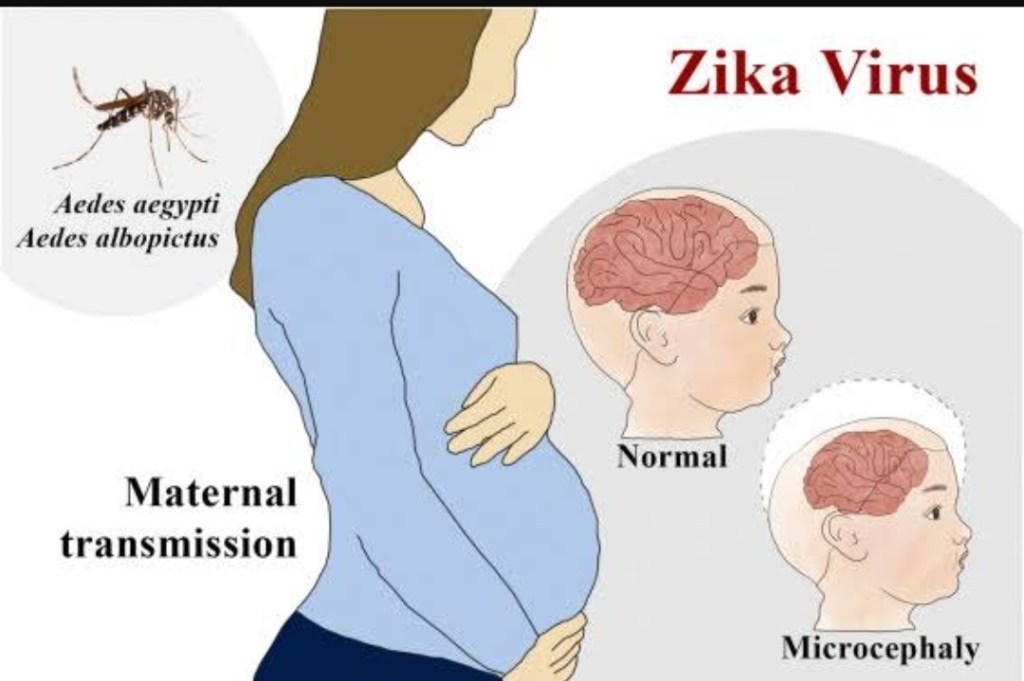
Zika is a mosquito-borne virus that spreads through the bite of an infected Aedes species of mosquito named Aedes aegypti. According to the World Health Organisation (WHO), the Aedes mosquitoes usually bite during the day, peaking during early morning and late afternoon or evening. This is the same mosquito that transmits dengue, chikungunya and yellow fever.

WHEN WAS ZIKA IDENTIFIED?

The virus was first identified in Uganda in 1947 in monkeys and was later found in humans in 1952 in Uganda and the United Republic of Tanzania. Since then, outbreaks of the virus have been seen in Africa, America, Asia and the Pacific, while rare cases of human infections were found across Africa and Asia.

The first reported outbreak of Zika was on the Island of Yap in 2007. A massive outbreak was recorded in 2013 in French Polynesia

The outbreak in Brazil in 2015 became a real scare making headlines across the globe. Soon cases were seen in the US, Africa, and other regions of the world.

According to the WHO, so far 86 countries have reported evidence of mosquito-transmitted Zika virus.

SYMPTOMS AND TREATMENT

According to the US Centre for Disease Control (CDC), many people infected by the virus won’t have symptoms or show mild symptoms that include fever, rash, headache, joint pain, red eyes, muscle pain. The symptoms can last for several days, and if it continues for long, they might need hospital care.

Diagnosis of the Zika virus can only be confirmed by blood tests or other through body fluids, such as urine or semen.

There is no specific medicine for the treatment of Zika virus infection. There is no vaccine for protection from Zika virus. There is a Zika-appropriate behaviour protocol that is recommended to stay safe and be prevented from this viral infection.

Precautions recommended against Zika virus infection include:

  • Wearing long-sleeved shirts and long pants
  • Staying in places with air conditioning and windows
  • Mosquito-netting can be used to cover babies younger than two months
  • Not using products containing oil of lemon eucalyptus or para-menthane-diol on children younger than three years

According to the WHO, pregnant women living in areas with known Zika virus transmission or who develop symptoms of Zika virus infection should seek medical attention for laboratory testing and other clinical care.

COVID R FACTOR

Why is it a matter of concern now?

According to a PTI report, researchers at the Chennai-based Institute of Mathematical Sciences (IMSc) revealed that the R-value for coronavirus has gone up for the country.  Their analysis revealed that it has gone from 0.78 on June 30 to 0.88 in the first week of July. This is despite the nationwide tally of new cases remaining low. 

What is the cause of worry?

This analysis has added to the worries and concerns about the pandemic as it comes amid the unlocking process by many states trying to restore a semblance of normalcy as the deadly second wave, which infected lakhs and killed thousands during its peak in April-May, shows signs of ebbing.

Sitabhra Sinha, who led the team of researchers said the ‘R’ for India is still below one, so the number of active cases is decreasing at a much slower rate. The same trend of slowing down in the rate of decline in active cases is also seen in many states.

“Kerala showed a brief spike in cases and its R continues to hover close to 1. The northeast region is of great concern. Manipur, Arunachal Pradesh and possibly Tripura are showing a rise in the number of cases,” Sinha pointed out.

What does the analysis say?

When the second wave of the coronavirus infection was at its peak, the overall R-value in the country was estimated to be 1.37 between March 9 and April 21. It declined to 1.18 between April 24 and May 1 and then to 1.10 between April 29 and May 7, according to the analysis.

Between May 9 and 11, the R-value was estimated to be around 0.98. It then came down to 0.82 from May 14 to May 30. The R-value was 0.78 from May 15 to June 26 and 0.88 from June 20 to July 7.

In Kerala, the R-value is estimated to be around 1.10. As for the northeastern states, the R for Manipur is 1.07, Meghalaya 0.92, Tripura 1.15, Mizoram 0.86, Arunachal Pradesh 1.14, Sikkim 0.88, Assam 0.86.

Rising Covid-19 cases in Kerala, coupled with the recent outbreak of the Zika virus, is a matter of concern for the health authorities as the southern state battles to bring down daily new infections.

What does the change in R value mean now?

“India’s R has increased a bit to 0.88 from June-end after being at the lowest ever value of 0.78 (since the pandemic began in March last year) from mid-May till late last month,” PTI quoted Sinha.

This means, every 100 infected people on average pass on the infection to 88 other individuals. If R is lesser than 1, it means the number of newly infected people is lower than the number of infected people in the preceding period which means the disease incidence is going down, the lead researcher said.

“The smaller the value of R is, the faster the disease is on decline. Conversely, if R is greater than 1, the number of infected people is increasing in each round—technically, this is what we call the epidemic phase. The bigger the number is than 1, the faster the rate of spreading of the disease in the population,” Sinha added.

On Tuesday, PM Modi urged people not to compromise on Covid protocols to prevent a third wave of coronavirus.

SUPREME COURT

The Supreme Court of India is the country’s highest judicial court. It is the final court of appeal in the country. It is hence, an extremely important topic in the UPSC exam polity and governance sections.

  1. 15th February 2021: Former Supreme Court Judge, Justice PB Sawant Passed Away on this day.
  2. Supreme Court is examining a petition relating to the Social Media Firm Facebook and its Messaging Application WhatsApp over their terms of service and privacy policy that were to be out on February 8th, 2021.
  3. 13th February 2021: Statement from Supreme Court while dismissing a review petition on the anti-citizenship law protests held in Delhi’s Shaheen Bagh in 2019 – “Right To Protest Cannot Be Anytime, Everywhere.”
  • The Federal Court of India was created as per the Government of India Act 1935.
  • This court settled disputes between provinces and federal states and heard appeals against judgements of the high courts.
  • After independence, the Federal Court and the Judicial Committee of the Privy Council were replaced by the Supreme Court of India, which came into being in January 1950.
  • The Constitution of 1950 envisaged a Supreme Court with one Chief Justice and 7 puisne Judges.
  • The number of SC judges was increased by the Parliament and currently, there are 34 judges including the Chief Justice of India (CJI). 

Supreme Court of India – Functions

  • It takes up appeals against the verdicts of the High Courts, other courts and tribunals.
  • It settles disputes between various government authorities, between state governments, and between the centre and any state government.
  • It also hears matters which the President refers to it, in its advisory role.
  • The SC can also take up cases suo moto (on its own).
  • The law that SC declares is binding on all the courts in India and on the Union as well as the state governments.

Supreme Court Jurisdiction

The jurisdiction of the SC is of three types:

  1. Original – Read in detail about Original Jurisdiction of the Supreme Court in the linked article. 
  2. Advisory – Notes on Advisory Jurisdiction of the Supreme Court are given in the linked article. 
  3. Appellate 

Supreme Court Composition

  • Including the CJI, there are 34 judges in the Supreme Court.
  • The judges sit in benches of 2 or 3 (called a Division Bench) or in benches of 5 or more (called a Constitutional Bench) when there are matters of fundamental questions of the law is to be decided.

The Procedure of the Supreme Court of India

The Supreme Court of India has powers to consult the President to regulate the practice and procedure of the Court.

The Constitutional Cases are usually decided by a bench consisting of five judges whereas other cases are decided by a bench of at least three judges.

The seat of Supreme Court

As per the Constitution of India, Delhi is declared as the seat of the Supreme Court of India. However, the Chief Justice of India has the power to assign another place (s) as the seat of the Supreme Court. This is only an optional provision and not mandatory.

SC Judge Eligibility

As per Article 124, an Indian citizen who is below 65 years of age is eligible to be recommended for appointment as a judge of the SC if:

  1. he/she has been a judge of one or more High Courts, for at least 5 years, or
  2. he/she has been an advocate in one or more High Courts for at least 10 years, or
  3. he/she is in the opinion of the President, a distinguished jurist.

Independence of Judiciary

The Constitution has many provisions to ensure the judiciary’s independence. They are discussed below:

  1. Security of tenure: The judges of the SC are given security of tenure. Once appointed, they will retain their office until the age of 65 years. They can be removed only by a presidential order on grounds of proven misbehaviour and/or incapacity. This requires a Special Majority according to Article 368. Read more about the types of majorities in Parliament in the linked article.
  2. Salaries and allowances: The judges of the SC enjoy good salaries and allowances and these cannot be decreased except in the case of a financial emergency. The expenses of the High Court are charged on the Consolidated Fund of the State, which is not subject to vote in the state legislature.
  3. Powers and Jurisdiction: The SC’s powers and jurisdiction can only be added by the Parliament and not be curtailed. 
  4. The conduct of any judge of the Supreme Court in the discharge of his/her duties cannot be discussed in the legislature.
  5. The SC has the power to punish any person for its contempt, as per Article 129. (Read about Contempt of Court in India in the linked article.)
  6. Separation of the Judiciary from the Executive: A Directive Principle of State Policy says that the state shall take steps to separate the judiciary from the executive in the public services of the state. According to Article 50, there shall be a separate judicial service free from executive control.

Who is the Chief Justice of India in 2021?

The Current Chief Justice of India (CJI) is Sharad Arvind Bobde. He took the office of Chief Justice of India on 18 November 2019.

How many supreme courts are there in India?

There is only 1 Supreme Court in India. And, there are 25 High Courts.

What are the powers and functions of the Supreme Court?

SC is the highest judicial court in India. It upholds the rule of law and also guarantees and protects citizens’ rights and liberties as given in the Constitution. Therefore, the Supreme Court is also known as the Guardian of the Constitution.

How many judges are there in Supreme Court?

At present, there are 34 judges in the SC including the CJI.

Can Supreme Court overrule President India?

Technically, the President cannot overrule the SC. Only Parliament can amend any law to overcome the decision of the SC. The President has the pardoning power, which he can exercise on the advice of the Council of Ministers. Even here, the President does not overrule the SC. The judgement of the Court remains, only, the President can “pardon” the punishment.

RACIAL ABUSE AND EUROS

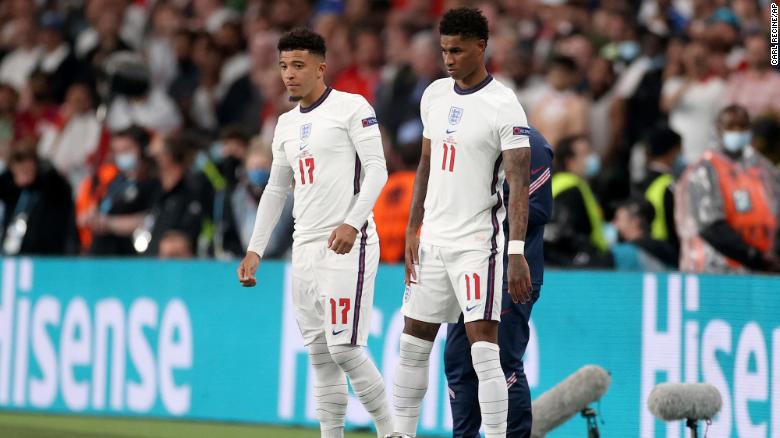
The online racial abuse of some England players following Sunday’s Euro 2020 final defeat by Italy has been described by the team’s manager Gareth Southgate as “unforgivable” and “just not what we stand for.”Marcus Rashford, Jadon Sancho and Bukayo Saka were targeted on social media after they missed penalties in the 3-2 shootout defeat at Wembley Stadium.”For some of them to be abused is unforgivable,” said Southgate, who was speaking at a virtual press conference on Monday. “Some of it has come from abroad, we have been told this, but some of it is from this country.

“We have been a beacon of light to bring people together and the national team stands for everybody. We felt the energy and positivity from the fans and I’m incredibly proud of that,” Southgate added.

Before and during the Euro 2020 tournament, the England players have knelt before each of their matches in a display of unity in the fight against racism and inequality.That was an act that caused anger among sections of the England fanbase, with some supporters choosing to boo as the players knelt.London’s Metropolitan Police said it was investigating the “unacceptable” social media comments on both Instagram and Twitter, while UK Prime Minister Boris Johnson also condemned the racist abuse.England's Jadon Sancho and Marcus Rashford get ready to come onto the pitch during the Euro 2020 final between England and Italy.England’s Jadon Sancho and Marcus Rashford get ready to come onto the pitch during the Euro 2020 final between England and Italy.”This England team deserve to be lauded as heroes, not racially abused on social media,” Johnson said on Twitter.”Those responsible for this appalling abuse should be ashamed of themselves.”In recent weeks, Johnson — along with other lawmakers in his government such as Home Secretary Priti Patel — have been specifically asked to condemn the England fans who have booed players taking the knee before kick-off but failed to do so.Gary Neville, former England international, criticized Johnson for not condemning those who booed the players in their battle for equality when he had the chance.”Gareth Southgate and the players a few weeks ago, about five days on the trot told us that they were taking the knee to promote equality and it was against racism,” Neville told Sky News.”The Prime Minister said it was ok for the population of this country to boo those players who are trying to promote equality and defend against racism.”It starts at the very top.””The fact of the matter is, there is an issue obviously in football, there is an issue in society where we feel it’s acceptable basically to criticize players for sporting actions because of the color of their skin,” added Neville.Ahead of Euro 2020, Southgate penned an open letter to the country, outlining why he thought it was important for players to continue using their voice for good.”This is a special group. Humble, proud and liberated in being their true selves,” wrote Southgate in the Players Tribune.Prince William said he was “sickened” by the discriminatory abuse while the Football Association in England said in a statement it was “appalled.”The English national team’s Twitter account tweeted its support for the players on Monday.”We’re disgusted that some of our squad — who have given everything for the shirt this summer — have been subjected to discriminatory abuse online after tonight’s game. We stand with our players.”
E-CONTRACTS- EXPLAINED

INTRODUCTION TO E-CONTRACT

Since the internet is no more secluded for just mere communication or computing and analysing of data, online contracts are now the order of the day and there are no differences between online and offline contracts. Hence, online contracts are still contracts and all the rules of contracts will still apply.

The online contract formation uses a communication technology which involves numerous intermediaries such as Internet Service Providers (ISPs). Imagine a contract that an Indian exporter and an American importer wish to enter into. One option would be that one party first pulls up two copies of the contract, signs them and couriers them to the other, who in turn signs both copies and couriers one copy back. The other option is that the two parties meet someplace and sign the contract.

In the electronic age, the whole contract can be completed in seconds, with both parties simply attaching their digital signatures to an electronic copy of the contract. There is no need for delayed couriers and additional travelling costs in such a situation. There was initially a hesitation amongst the legislatures to recognize this modern technology, but now many countries have passed laws to recognize electronic contracts.

WHAT IS E CONTRACT?

E-contract is any kind of contract formed in the course of e-commerce by the interaction of two or more individuals using electronic means, such as e-mail, the interaction of an individual with an electronic agent, such as a computer program, or the interaction of at least two electronic agents that are programmed to recognize the existence of a contract[3].

E-contract is a contract modelled, specified, executed and deployed by a software system[4].

The 2 main parties to an e-contract are- The Originator and the Addressee.

– Originator according to the IT Act, 2008 is a person who sends, generates, stores or transmits any electronic message to be sent, generated, stored or transmitted to any other person and does not include an Intermediary.

An Addressee according to the IT Act, 2008 is a person who is intended by the originator to receive the electronic record but does not include any Intermediary

NATURE OF E-CONTRACT

1. The parties do not, in most cases, meet physically.
2. There are no physical boundaries.
3. No handwritten signature and in most times, no hand writing is required.
4. Since there is no utmost security, risk factor is very high.
5. Jurisdictional issues are a major setback on e-contracts in case of breach.
6. There is no single authority to monitor the whole process especially in shrink wrap contracts.
7. Digital Signatures are used and electronic records are used as evidences in court n when need arises.
8. The three main methods of contracting electronically are e-mail, World Wide Web (www), and Cyber contracts (Click to agree/online contract).
9. The subject matter includes:

(A). Physical goods, where goods are ordered onlineand paid over internet and physical delivery is made.

(B). Digitised products such as software which can also be ordered for.

(C). Services like electronic banking, sale of shares, financial advice etc.

ELEMENTS OF E-CONTRACTS

Since electronic contracts are presently taken as seriously as offline contracts, the same principles which apply to a valid contract will apply here. The law already recognizes contracts formed using facsimile, telex and other similar technology. An agreement between parties is legally valid if it satisfies the requirements of the law regarding its formation, i.e. that the parties intended to create a contract primarily. This intention is evidenced by their compliance with 3 classical cornerstones i.e. offer, acceptance and consideration.

A. OFFER

Under section 2(a) of The Indian Contract Act, speaks of offer. “When one person signifies his willingness to do or to abstain from doing anything with a view to obtain assent of that other to such act or abstinence, he is said to make a proposal[5] ”. Advertisement on website may or may not constitute an offer as offer and invitation to treat are two distinct concepts. Being an offer to unspecified person, it is probably an invitation to treat, unless a contrary intention is clearly expressed. The test is of intention whether by supplying the information, the person intends to be legally bound or not. When consumers respond through an e-mail or by filling in an online form, built into the web page, they make an Offer. The seller can accept this offer either by express confirmation or by conduct. When dealing with business websites, it is important to establish whether the content of that business website amounts to an “offer” or merely an “invitation to treat”. An invitation to treat is not capable of being turned into a binding contract by simply accepting its terms. Rather, it is an invitation to others to make an offer of their own. By contrast, an offer is an expression of willingness to enter into a binding contract with another party[6].

B. ACCEPTANCE.

One difficult task about entering electronic contract is to know when an agreement has been reached. Once an offer is accepted, a contract is concluded except the postal acceptance rule applies. The postal acceptance rule is an exception to the general rule that acceptance of a contract must be communicated to the offeror before a contract can be in existence. Under the rule, acceptance of a contract is said to occur at the time the acceptance is posted. Hence, the communication of acceptance is complete against the proposer when it is put in the course of transmission to him and as against the acceptor when it comes to the knowledge of the proposer, that is, when the acknowledgement enters into the into the designated computer resource. There is no disparity between Indian and Common law in this regard as seen in Lalman Shukla v. Gaurie Datta Sharma[7] where in spite of the fact that he found the boy whose uncle had promised Rs. 501 to anyone who finds was denied the reward seeing that he came to know only after finding the boy.

C. LAWFUL CONSIDERATION

The Indian Contract Act of 1872 reads that “

In the present scenario, once an item has been supplied and the price has been paid, the consideration is executed and the requirement is satisfied. Problems may arise at a time when the consideration is merely executory[10]. This arises when the seller’s computer has done no more than “promise” to supply that item. A key intention that lies behind such promises is, of course, the intention to be bound by that promise in other words, the intention to create legal relations. The Contract law cannot entirely apply in e-contracts as in sometimes when an autonomous computer is used.

D. LAWFUL OBJECT

The purpose of such contract must be a lawful one. Courts will not enforce contracts that are illegal or violate public policy. Such contracts are considered void. An agreement which calls for the commission of a crime is illegal and therefore void. For example, a person could not enforce an agreement with another party to burn a house down. Also, an agreement that calls for the commission of a civil wrong (such as a tort) is illegal and void.

E. COMPETENT PARTIES TO CONTRACT

It is generally accepted that both natural persons and legal persons are capable of entering contracts, Computers are clearly not natural persons ,and neither American nor English contract law, at present, deem them to be legal persons. Computers, therefore, are not capable of being parties to contracts. In our scenario, both the buyer and the seller are natural persons, and consequently, are capable of being parties to the transaction. The autonomous computer, however, clearly cannot be a contractual party as the law now stands.

F. FREE CONSENT

The consent of the both parties must be free from any deceit, mistake, fraud etc. E contracts can be broadly categorized into:

– Shrink Wrap Agreements
– Click Wrap Agreements

Shrink Wrap agreements are those which can only be read and accepted by the consumer after the opening of a particular product. The term is described after the shrink wrap plastic wrapping that is used to cover software or other boxes. Installing software from a CD into your PC is an example of a shrink wrap agreement.

Click Wrap agreements are mostly found in the software installation process. The user has to click either ‘Accept’ or ‘Decline’ to accept or reject the agreement respectively. These agreements lack a certain amount of bargain power. Choosing to make payments online or choosing to reject it is an example of using a click wrap agreement.

Either ways, the consent to such must be free. This is quite difficult to determine because sometimes the margin used to determine the strict rule of free consent gets narrower.

G. CERTAINTY OF TERMS

Keeping a record of the contract as agreed is vital. This can be difficult if there have been several email exchanges (perhaps each attaching documents intended to form part of the terms of the contract) including counter offers and negotiations between the contracting parties. As noted above, it may be difficult in such a scenario to determine who is the offeror and who has accepted the final offer, which may determine which party’s terms and conditions apply. In any event, it is important to ensure that the parties are clear on the content of the final contractual terms.

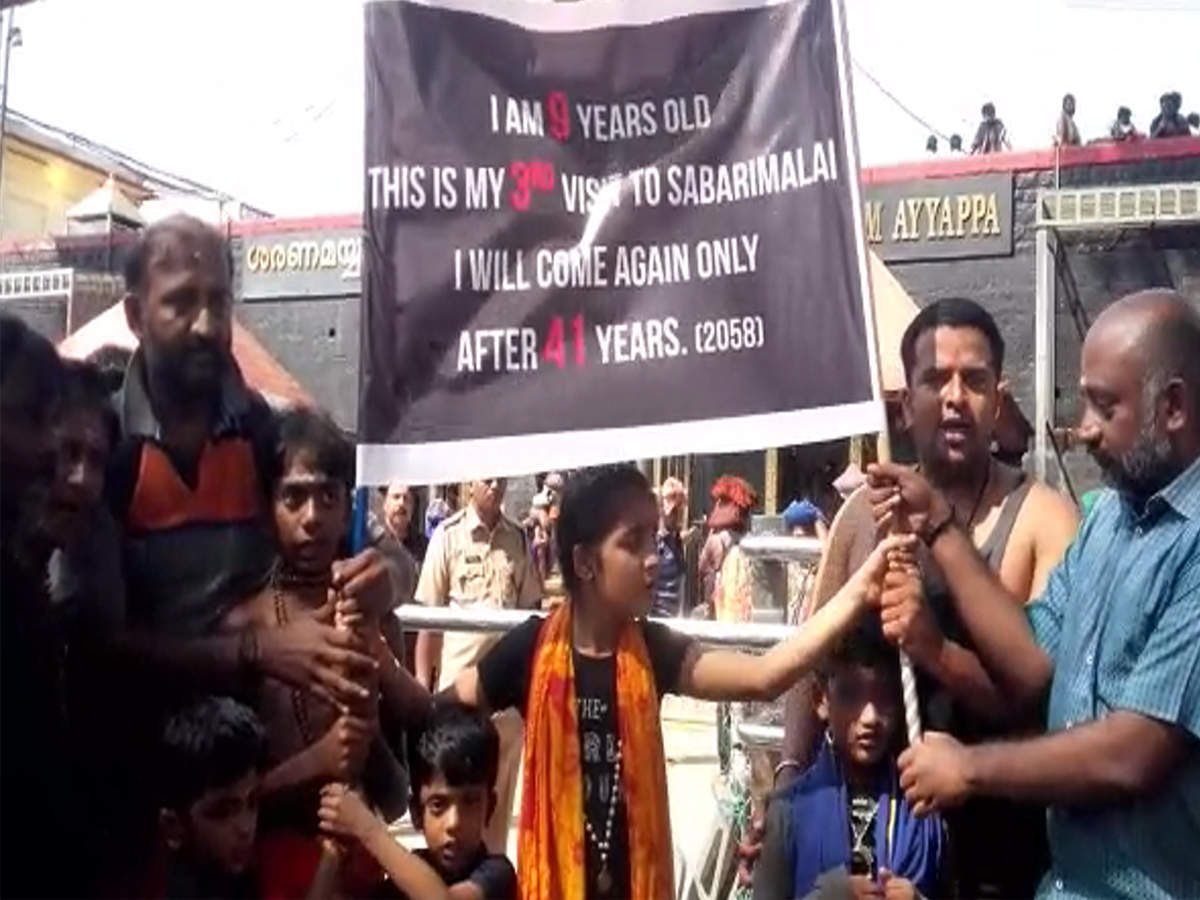
CASE ANALYSIS-THE SABARIMALA CASE[Indian Young Lawyers Association and Ors vs. The State of Kerala and Ors.]

INTRODUCTION

Sabarimala temple is situated at Sabarimala in Pathanamthitta district, Kerala. It is a Hindu temple dedicated to Lord Ayyappa and their followers Ayyappan. This temple is managed and administered by statutory body Travancore Devaswom Board created under the Travancore-Cochin Hindu Religious Insitution Act, 1950. In the past women devotees between age of 10 to 50 years were not permitted to exercise their right to worship[1] in this temple.

This restriction on women is justified on the ground that Lord Ayyappa is ‘Naishtik Brahmachari’ and for preservation of character of deity Ayyappa it is necessary. So, as per notification by Travancore Devaswom Board, women belonging to age of 10 to 50 years are not permitted to enter into the temple. On the other hand, some gender right activist thinks that this exclusionary practice which is based upon the biological factor exclusive to the female gender amount to discrimination and violates various fundamental right guaranteed under Indian Constitution.

Sabarimala Temple row is all about the conflict between tradition and women rights. As per traditions and customs, women between 10 and 50 years of age were not allowed to enter into Sabarimala Temple but this restriction is not in accordance with the constitutional morality. Constitutional morality and Individual or social morality is different things. In a democratic country like India, if there is any conflict between constitutional morality and societal morality, farmer should prevail over later.

FACTS OF THE CASE


In 1990, a petition was filed in Kerala High Court seeking a ban on entry of women inside the Sabarimala temple. The Kerala High Court had upheld the restriction of women of certain age entry inside the holy shrine of Lord Ayyappa. In 2006, A petition under Art 32 of Indian Constitution was filed in the Supreme Court by the registered association of Indian Young Lawyers seeking entry of women between 10 to 50 years.

In 2008 after two years matter was referred to three-judge bench. In January 2016 Supreme Court of India raise questions against such restriction and said that this is not in accordance with constitutional morality. In April 2016, Kerala government replied that it is under obligation to protect the right to practice the religion[2] of Sabarimala devotees. In 2017 Supreme Court of India referred the case to Constitutional bench.

In writ petition it was argued that Rule 3(b) of Kerala Hindu places of public worship (authorisation of entry) rules, 1965 (hereinafter referred as 1965 rules) framed in exercise of the powers conferred by section 4 of the Kerala Hindu places of public worship (authorisation of entry) act, 1965 (hereinafter referred as 1965 Act) is unconstitutional because it violates Articles 14,15,25 and 51A(e) of Indian Constitution.

CONCLUSION


There is a sharp distinction between the societal morality/individual morality and constitutional morality. I case where, there is violation of fundamental right, we should have to focus on the constitutional morality. Whether any practise is essential part of the religion or not? It can be found out only through the documentary evidences. So, as Indu Malhotra j. right observed that this case involves the mix question of fact and law and question of fact can not be decided in writ petition hearing.

Question of fact need to be solved by competent court of civil jurisdiction. There is also lack of documentary evidences with regard to the question whether devotees of Lord Ayyappa constitute a religious denomination under art 26 or not? So there are various lacuna in this judgment, so review petition was filed later and 5 judge bench (3:2) referred this matter to 7 judge bench.

CASE ANALYSIS-K.M. Nanavati v. the State of Maharashtra

INTRODUCTION

The judgment in the K. M. Nanavati case was passed on 24th November 1961 but it has managed to stay fresh in the minds of people even today. The facts and circumstances of this case received unprecedented media coverage and inspired a lot of books, serials, and movies over the years[i].

The accused/appellant Nanavati was a naval officer who was put on trial under section 302 of IPC for the alleged murder of his wife’s paramour[ii]. This case is considered to be one of the important landmark judgments not just because of the popularity it gained amongst the masses but because of the important legal points, it raised such as plea of general exception, the burden of proof, grave and sudden provocation test, and power of the high court in deciding the competence of reference made by Sessions Judge.

The K. M. Nanavati case is also widely recognized as being responsible for the end of jury trials.

Facts

  • Accused/appellant K. M. Nanavati was second in command of the Indian naval ship “Mysore”. He was married to a woman named Sylvia and had three children with her. Due to the nature of his service, Nanavati and his family had lived in many different places before shifting to Bombay. It was in Bombay that they were first introduced to the deceased Prem Ahuja through common friends.
  • Nanavati had to go away from Bombay regularly as part of his service, leaving his wife and children behind. In his absence, a friendship developed between Sylvia and Ahuja which later took the form of an illicit relationship.        
  • When Nanavati returned from his ship after April 18, 1959, he, on multiple occasions, tried to be affectionate to his wife to which she was not being responsive. On April 27, 1959, once more his advance was met by her unresponsiveness. But this time Nanavati asked his wife if she had been faithful to him. She merely shook her head to indicate that she was not. He guessed that her paramour was Ahuja and decided to settle this matter with him.
  • First, Nanavati drove his children and wife to the cinema and promised to pick them up later. He then drove to his ship from where he obtained a revolver and six rounds on a false pretext. He put these inside a brown envelope and from there drove to Ahuja’s office. On not finding him there, Nanavati drove to his flat.
  • On reaching Ahuja’s flat, he confirmed his presence from a servant. After receiving the confirmation, he went to Ahuja’s bedroom while also carrying the brown envelope which had the revolver.
  • Nanavati closed the bedroom door behind him and asked Ahuja about his intentions concerning his wife and children. When he didn’t receive the honourable and desired answer, he is alleged to have shot Ahuja which resulted in his death. From there Nanavati rushed to the nearest police station to confess about his crime.Nanavati was declared not guilty by a jury verdict of 8:1.
  • However, the Sessions Judge disagreed with this decision of the jury and believed that no reasonable body of men could reach that verdict based on the evidence produced. The matter was referred to a Division Bench who held the accused/appellant guilty.

Hence, this appeal was made to the Hon’ble Supreme Court of India by special leave.

Judgement

The Honourable Supreme Court explained that in case the judge does not agree with the verdict of the jurors, he can under subsection (1) of section 307 of CrPC refer the case to the High Court. The two conditions necessary for the same are: (1) the judge shall disagree with the verdict of the jurors, and (2) he shall believe that the verdict of the jury was such that no reasonable men could have reached. The order of referral would be competent if and only if these two conditions are met otherwise it would be termed as incompetent and thus rejected by the High Court.

When the order of reference is found to be competent, the High Court is bound to discharge its duties as specified under subsection (3) of section 307 of CrPC. Under this subsection, the High Court shall consider the entire evidence, give due weight to the opinions of the judge as well as the jury and thereafter acquit or convict the accused. The opposite construction as argued by the learned counsel of the defendant would defeat the purpose of this section.

CASE ANALYSIS-NAVTEJ SINGH JOHAR V. UNION OF INDIA

Introduction

India has acquired a place among the 28 countries of Asia to legalize homosexuality and to recognize LGBT rights. The judgment passed in Navtej Singh Johar v. Union of India has changed the life of many in the country. Prior to this judgment, the Lesbian Gay Bisexual Transgender Community didn’t have such rights as Homosexuality was a punishable offence under sec-377 of the Indian Penal Code, 1860.

Facts of the case

The central issue of the case was the constitutional validity of Section 377 of the Indian Penal Code, 1860 (Section 377) insofar as it applied to the consensual sexual conduct of adults of the same sex in private. Section 377 was titled ‘Unnatural Offences’ and stated that “Whoever voluntarily has carnal intercourse against the order of nature with any man, woman or animal shall be punished with imprisonment for life, or with imprisonment of either description for a term which may extend to ten years, and shall also be liable to a fine.”

The Petitioner in the present case, Navtej Singh Johar, a dancer who identified as part of the LGBT community, filed a Writ Petition in the Supreme Court in 2016 seeking recognition of the right to sexuality, right to sexual autonomy and right to choice of a sexual partner to be part of the right to life guaranteed by Art. 21 of the Constitution of India (Constitution). Furthermore, he sought a declaration that Section 377 was unconstitutional. The Petitioner also argued that Section 377 was violative of Art. 14 of the Constitution (Right to Equality Before the Law) because it was vague in the sense that it did not define “carnal intercourse against the order of nature”. [p.25, para 26] There was no intelligible differentia or reasonable classification between natural and unnatural consensual sex. Among other things, the Petitioner further argued that (i) Section 377 was violative of Art. 15 of the Constitution (Protection from Discrimination) since it discriminated on the basis of the sex of a person’s sexual partner, (ii) Section 377 had a “chilling effect” on Article 19 (Freedom of Expression) since it denied the right to express one’s sexual identity through speech and choice of romantic/sexual partner, and (iii) Section 377 violated the right to privacy as it subjected LGBT people to the fear that they would be humiliated or shunned because of “a certain choice or manner of living.” [p. 22, para. 21]

The Respondent in the case was the Union of India. Along with the Petitioner and Respondent, certain non-governmental organizations, religious bodies and other representative bodies also filed applications to intervene in the case.

The Union of India submitted that it left the question of the constitutional validity of Section 377 (as it applied to consenting adults of the same sex) to the “wisdom of the Court”. [p. 270, para. 8] Some interveners argued against the Petitioner, submitting that the right to privacy was not unbridled, that such acts were derogatory to the “constitutional concept of dignity” [p. 32, para. 39], that such acts would increase the prevalence of HIV/AIDS in society, and that declaring Section 377 unconstitutional would be detrimental to the institution of marriage and that it may violate Art. 25 of the Constitution (Freedom of Conscience and Propagation of Religion).

Conclusion

So now homosexuality has been decriminalized but the reaction of society and different organisations is still a challenge for the LGBT community. Though there are organisations such as All India Muslim Personal Law Board and the Jamaat-e-Islami Hind who expressed their disappointment towards the verdict given by the Apex Court on section-377. There also exist organisations and parties who are satisfied with the given verdict, namely, Amnesty International, RSS, CPI(M) and UN. According to the surveys conducted by various LGBT activists in different parts of the country, life is much better and simple for the LGBT group. Every society needs time to accept any change. The time is not so far when the society will accept the LGBT community and their rights.